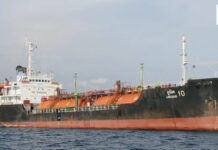
































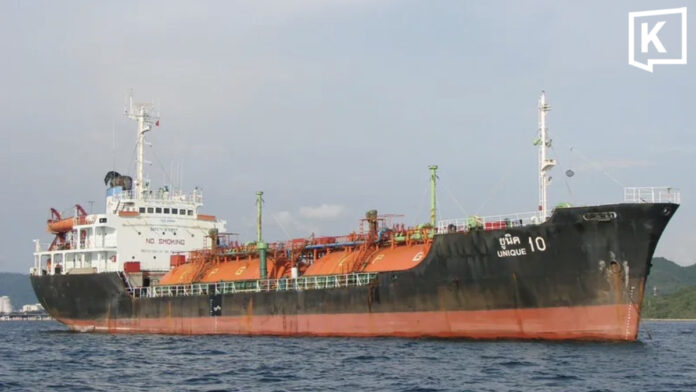
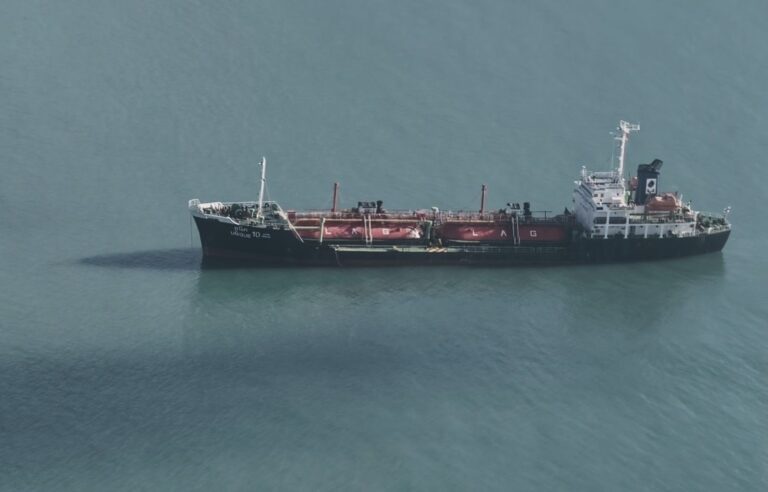
SURAT THANI — 24 November 2026, maritime authorities are coordinating efforts to salvage a large liquefied gas tanker that ran aground on coastal rocks approximately 650 metres off Koh Phaluai in Koh Samui district, Surat Thani province. The vessel sustained damage to its hull, but an aerial inspection found no signs of an oil spill.
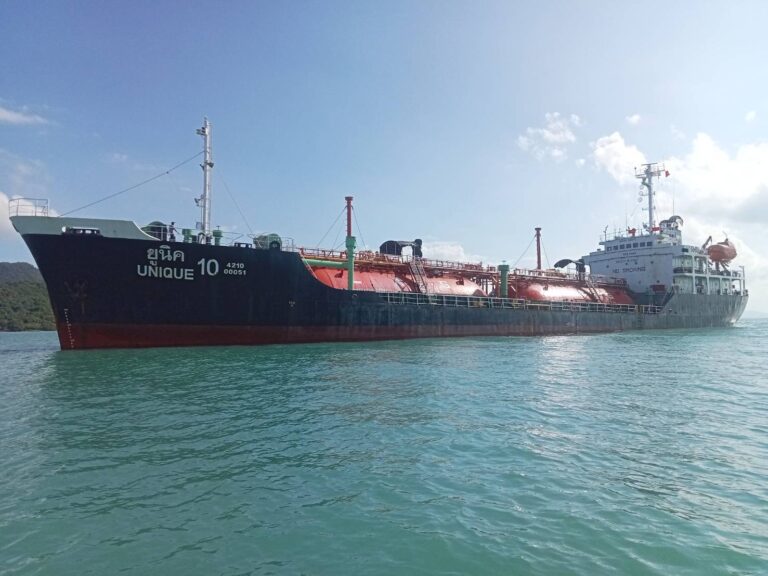
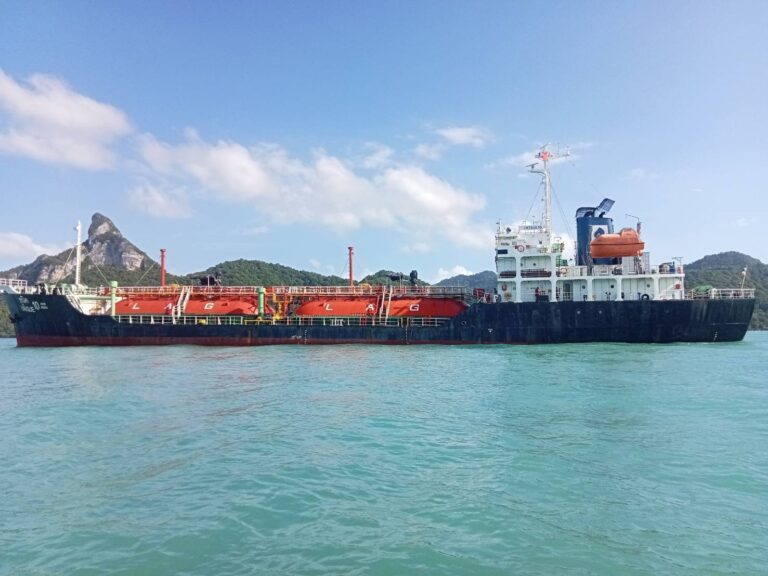
Capt. Nattaphon Sinphunphon, deputy director of the Thai Maritime Enforcement Command Centre (Thai-MECC) in Surat Thani, said authorities were working with Thai-MECC Region 2 and relevant agencies to respond to the grounding of the Unique 10, a liquefied gas tanker measuring 2,703 gross tonnes.
The vessel ran aground while waiting to enter port, sustaining damage to the underside of its hull.
Thai-MECC coordinated with local maritime authorities, Marine Department offices in Surat Thani and Koh Samui, and local fishing vessel networks to prepare for emergency response operations.
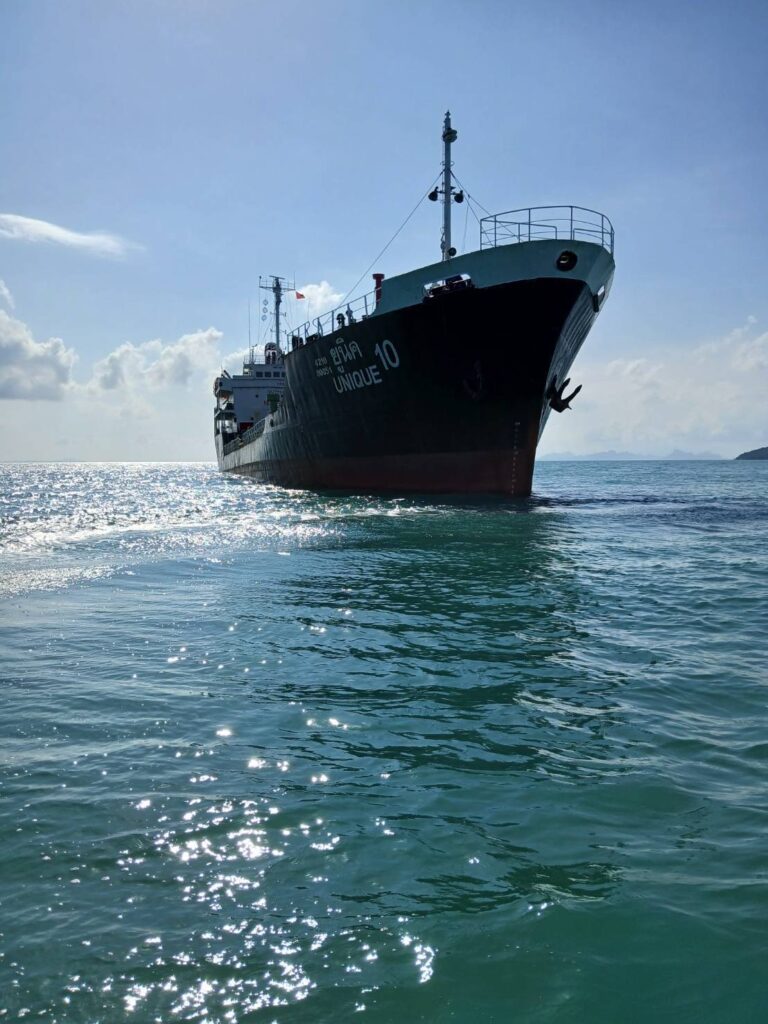
No oil leakage detected during aerial inspection
Thai-MECC Region 2 deployed a reconnaissance aircraft to survey the area and document the condition of the grounded vessel.
The aerial inspection found no visible signs of oil leaking from the tanker.
The Marine and Coastal Resources Office 4 in Surat Thani has been informed of the situation and is prepared to implement measures to protect conservation areas and environmentally sensitive zones.
The Central Gulf of Thailand Marine and Coastal Resources Research Centre is also preparing to assess potential damage to marine resources once the vessel has been removed from the rocks.
Marine authorities are preparing oil spill trajectory modelling in case a leak occurs.
Divers inspect hull ahead of salvage operation
At 10:00 on 24 November, the vessel’s owner, Siam Bucky Marine, deployed divers to inspect the underwater section of the hull and assess the damage ahead of the salvage operation.
The company also dispatched another tanker from Bang Pakong to transfer the ammonia cargo aboard the grounded vessel.
The second tanker was expected to arrive at approximately 12:00 on 25 November.
Meanwhile, maritime authorities and the Marine Department prepared oil spill response equipment as a precaution.
Thai-MECC Region 2 also provided the company with information on available oil containment booms, which could be deployed around the vessel during the salvage operation.
Salvage plan depends on extent of hull damage
Authorities outlined two possible approaches to recovering the grounded tanker, depending on the findings of the underwater inspection.
If the damage is minor, the breach will be sealed before tugboats pull the vessel away from the rocks. The ammonia cargo will then be transferred at sea before the tanker is taken to the Asian Marine Services shipyard in Surat Thani for repairs.
If the hull damage is more extensive, the ammonia cargo will be transferred before the vessel is moved. The transfer operation could take approximately 10 hours.
Tugboats would then guide the vessel away from the rocks and towards the shipyard for repairs.
Navy asked to prepare for potential emergencies
Thai-MECC Region 2 assessed that the salvage operation could pose risks to coastal areas and nearby vessels not involved in the operation.
The centre has coordinated with the Second Naval Area Command to have naval vessels and aircraft ready to respond to potential emergencies during the recovery operation.