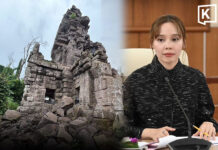



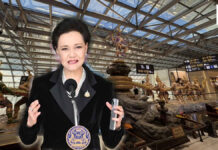






















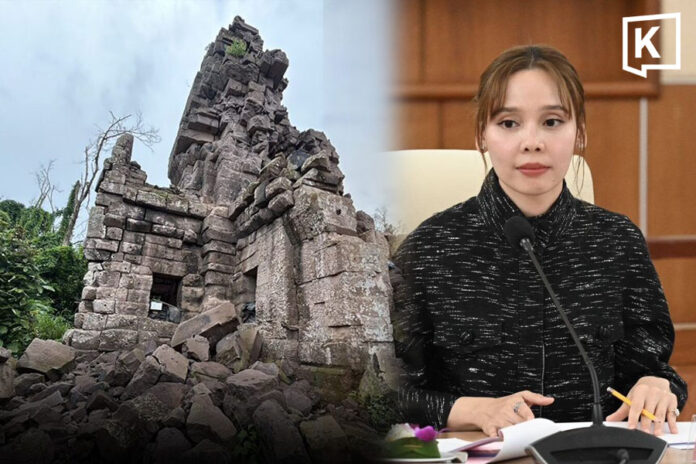
Culture Minister Sabida Thaiseth said Thailand considers Prasat Ta Kwai and Prasat Khana to be Thai historic sites and will formally explain its position to Cambodia following claims and demands concerning cultural heritage along the Thai-Cambodian border.
Sabida said on Sunday, 25 October, that Thailand places importance on protecting and preserving historic sites and antiquities that form part of the country’s cultural heritage, based on facts, historical and archaeological evidence, and relevant laws.
Her comments came after the Ministry of Culture received a letter dated 22 October 2026 from Cambodia’s Ministry of Culture and Fine Arts containing claims and demands concerning historic sites and antiquities in the Thai-Cambodian border area.
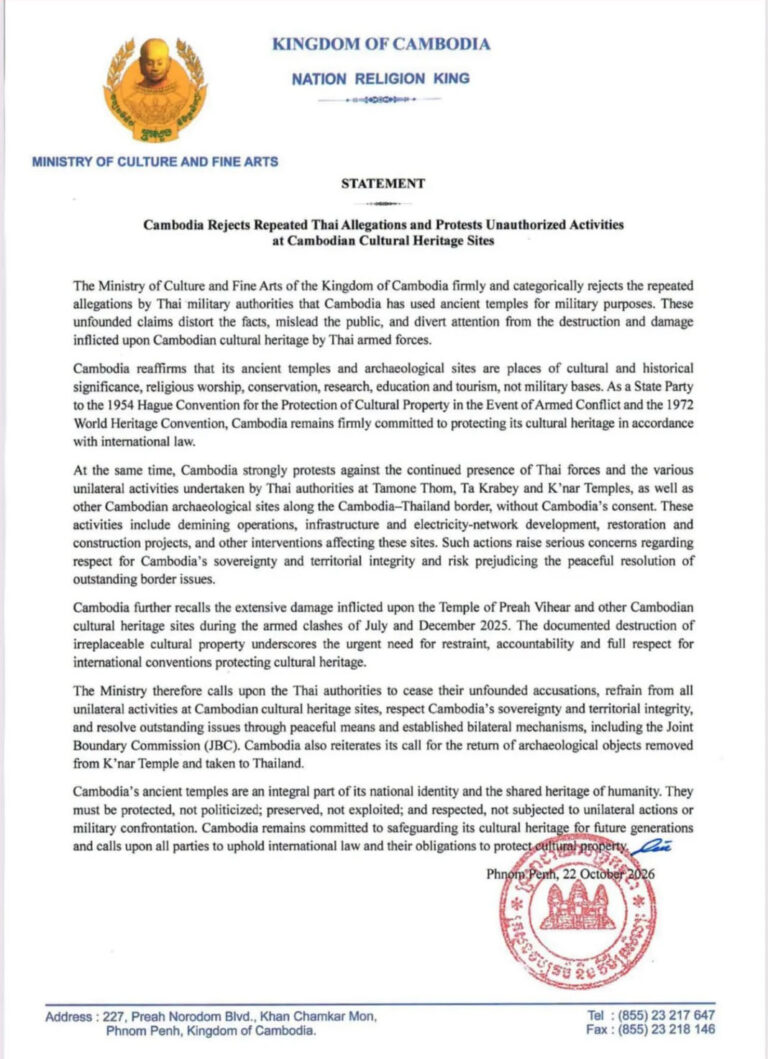
Sabida said Prasat Ta Kwai and Prasat Khana have been registered as historic sites under Thai law. She said the work of relevant Thai agencies is therefore aimed at protecting and preserving the sites and antiquities within the framework of Thai law, taking into account their historical, archaeological and cultural value.
Regarding Prasat Khana, the Fine Arts Department carried out a survey of the area with Border Patrol Police officers around 2001, she said. At the time, no Cambodian military personnel or civilians were found in the surveyed area, and there was no objection or obstruction from the Cambodian side.
She said the information forms part of the historical record of surveys conducted by Thai agencies and could be considered when assessing the relevant facts.
Following the fighting and subsequent ceasefire, Thai agencies have maintained the area and related cultural heritage sites. The Fine Arts Department surveyed and catalogued antiquities found around Prasat Khana and moved them to a secure location to prevent loss, destruction or future damage, Sabida said.
Regarding Cambodia’s demand for the return of antiquities found at Prasat Khana, Sabida said Thailand considers the objects to be Thai antiquities. She said the Fine Arts Department had surveyed and catalogued them before moving them to a secure location for protection.
She said Thailand could not accept a demand for the objects to be returned based solely on Cambodia’s claims without clear supporting evidence and a legal basis.
Thailand would continue to protect and preserve what it considers its cultural heritage based on facts, evidence and relevant laws, she said.
Sabida also rejected allegations that historic sites had been used for military purposes or deliberately damaged. She said Thai agencies had acted to preserve and protect cultural heritage, not to use historic sites for military purposes or intentionally damage them.
The Fine Arts Department is also preparing conservation and restoration work for historic sites damaged during the fighting, she said.
The work will require surveys and assessments of the damage, as well as appropriate conservation methods, to ensure that restoration is carried out carefully while preserving as much of the sites’ historical and archaeological value as possible.
Sabida said the Culture Ministry would send an official letter to Cambodia’s Ministry of Culture and Fine Arts explaining Thailand’s position, including the registration status of the historic sites, the history of surveys in the area, the handling of the antiquities, and plans for conservation and restoration.
“Thailand places importance on preserving cultural heritage and the historical value of historic sites and antiquities. Every action must be based on facts, evidence and relevant laws. We will fully protect and preserve Thailand’s cultural heritage while explaining the facts to the Cambodian side through official channels,” Sabida said.
The Culture Ministry said it would handle the matter carefully and firmly, based on evidence and the law, with the aim of preserving the historical and archaeological value of the sites and antiquities for future generations.