


































CHUMPHON — 2 June 2026, Thai authorities have launched an investigation after marine life deaths and discoloured seawater were reported near the Pak Nam Tako estuary in Chumphon province, with preliminary findings indicating a plankton bloom and unusually low dissolved oxygen levels.
Natural Resources and Environment Minister Suchart Chomklin ordered the Department of Marine and Coastal Resources to assess the cause of the incident, evaluate its impact and develop measures to prevent further damage to marine resources and aquaculture operations in the area.
Department Director-General Pinsak Suraswadi assigned researchers from the Central Gulf of Thailand Marine and Coastal Resources Research Centre to conduct field surveys, test seawater quality and collect plankton samples.
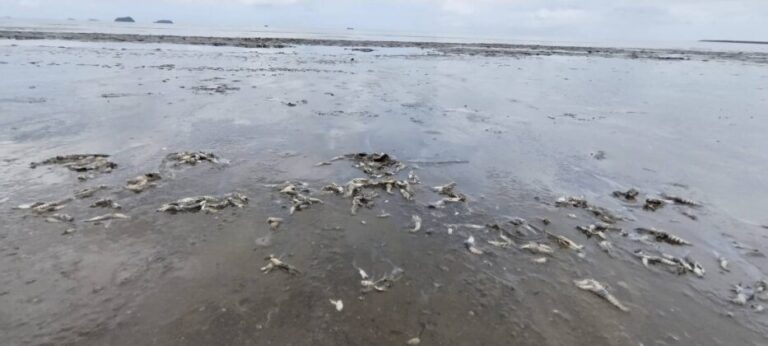
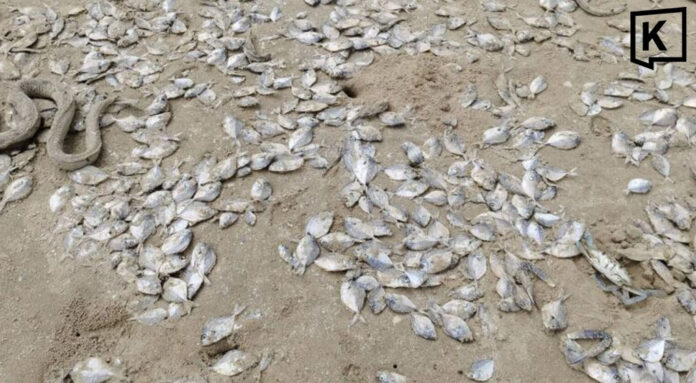
Preliminary surveys found reddish-brown seawater with a strong fishy odour and numerous dead marine animals, most of them fish. Ponyfish were the most commonly recorded species, followed by scad, tonguefish and blue swimming crabs.
Analysis of plankton samples found a bloom of diatoms, with dominant species including Pseudo-nitzschia spp. at an average density of 13,430 cells per litre, followed by Thalassiothrix spp. at 11,650 cells per litre and Pleurosigma spp. at 10,270 cells per litre.
Researchers said the concentrations were high enough to cause seawater discolouration, a phenomenon associated with plankton blooms.
Initial water quality measurements showed pH levels ranging from 7.82 to 8.27, temperatures between 29.7 and 32.5 degrees Celsius, salinity levels of 25 to 32 parts per thousand and dissolved oxygen levels of 3.95 to 6.28 milligrams per litre.
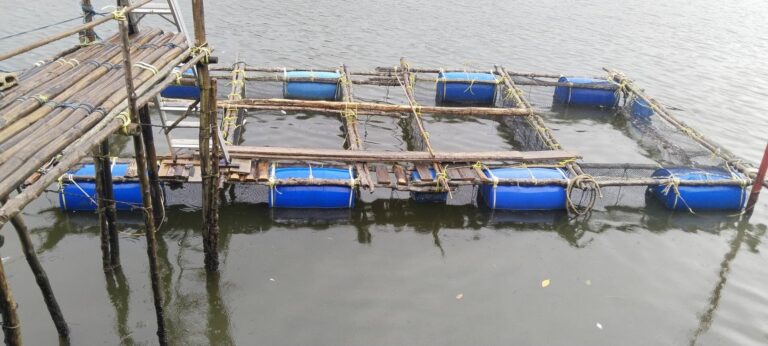
In fish cage farming areas near the Pak Nam Tako estuary, some seabass deaths were reported. Researchers recorded dissolved oxygen levels as low as 3.95 milligrams per litre, which is considered relatively low for sustaining aquatic life.
Officials said seawater discolouration can occur when phytoplankton densities exceed approximately 10,000 cells per litre, depending on species composition and local environmental conditions.
They added that plankton blooms can reduce dissolved oxygen levels, particularly near the seabed, creating stressful conditions for marine animals and potentially contributing to fish mortality.
Authorities said further analysis is under way to determine the full extent of the impact and identify any additional contributing factors.