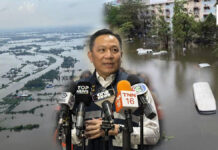




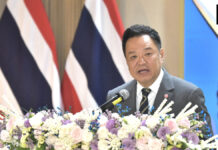






















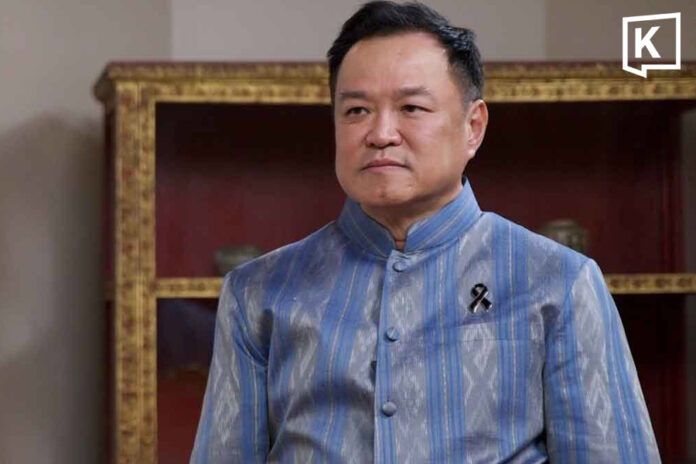
PRACHIN BURI — 28 November 2026, Prime Minister Anutin Charnvirakul said he had ordered illegal e-waste factories in Prachin Buri to shut and vowed to prosecute those involved. He said only two of the seven factories in the area inspected had operating licences, and that some waste had been mixed with soil and given to villagers as fertiliser.
Speaking on his Talk with Prime Minister Anutin programme, Anutin, who is also interior minister, described conditions at the factories as “worse than expected” and questioned how the illegal operations could have continued without the knowledge of state officials.
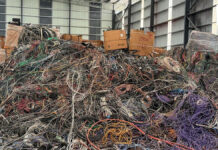
Anutin said inspectors found large volumes of electronic waste. Operators had extracted valuable materials such as copper and aluminium, then ground up some of the remaining waste, mixed it with soil and gave it to villagers, telling them they could use it as fertiliser.
Anutin said industrial waste must be handled properly from the moment it arrives, through sorting and final disposal. Waste that cannot be reused must go to a licensed landfill or incinerator, a process he said was more expensive than passing it on to residents.
“They ground it up, dried it, mixed it with soil and dumped it on villagers. Isn’t that cruel? They acted irresponsibly and broke the law, then passed all that danger on to villagers and told them they could use it as fertiliser,” Anutin said.
He said authorities would review how the factories were licensed and supervised and establish which local agencies were responsible. He said owners, shareholders, directors and operators involved would face prosecution, and that the Department of Special Investigation (DSI) had been told to take up the matter as a special case and investigate possible corruption and related offences.
“An operation like this can’t start and keep going on its own without help from state officials. We’ll get to that point in the investigation. There’s just so much going on, so much that we’ve seen,” he said.
Anutin said Thailand bans e-waste imports, but inspectors found shipments that had been falsely declared. Waste had arrived in shipping containers, some of it compressed into blocks too large to conceal easily. He said some operators used legitimate businesses as a front while breaching import conditions or failing to dispose of waste properly. Complaints from residents prompted inspections, he said.
Foreign nationals who commit serious offences in Thailand would be considered for deportation, Anutin said. He said changes to ministerial regulations would allow the interior minister to act more quickly in such cases. Cases involving people who have acquired Thai citizenship would be considered under the relevant laws.
Chemical export ban and river pollution
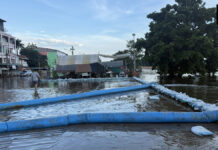
Anutin said the government planned to announce a ban on exports of chemicals used as inputs in mineral smelting around 30 November, as part of its response to contamination in the Kok, Sai and Ruak rivers. It also plans to install water-quality monitoring stations and provide backup supplies for drinking and household use.
He linked the contamination to mining and sediment flowing downstream from Myanmar into Thailand. He said he had told Myanmar it must share responsibility for the impact. He also raised the issue with Chinese leaders during a visit to China, where some of the smelted products are sent. Anutin said China had assured him it did not support industries that harm public health, and that Thailand would follow up through government channels.
Anutin said some readings had exceeded standards on certain days. He said the reports submitted to the government had yet to establish whether the contamination posed a health hazard severe enough to disrupt daily life. He said monitoring would continue.
Deputy Prime Minister Yodchanan Wongsawat has been assigned to oversee the response in northern Thailand, working with technical experts, public health and environmental agencies, and local authorities. Anutin said expanding backup water supplies and increasing tap water production were already part of the Provincial Waterworks Authority’s ongoing plans.
Cross-border haze and refinery fire
On cross-border haze, Anutin said Thailand had stopped buying agricultural products from suppliers that use burning practices that send pollution into Thailand. He said the government could apply further trade pressure while continuing talks with neighbouring countries.
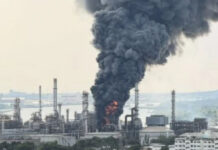
Anutin also addressed the fire at the Bangchak refinery on Sukhumvit Road in Bangkok. He said he had been told during the interview that the fire was out and smoke was still visible. The refinery deployed its emergency response unit, and the government sent teams to help contain the incident and limit the impact on nearby residents.
Anutin said tackling environmental problems, illegal operations and corruption through transparent, accountable enforcement was part of the standards Thailand must uphold as it seeks to join the Organisation for Economic Co-operation and Development (OECD).