



































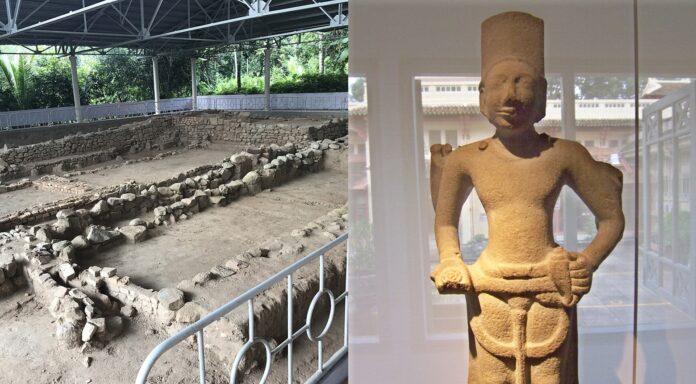
Vietnam is preparing to nominate the Oc Eo–Ba The archaeological site in An Giang province, southern Vietnam, for UNESCO World Heritage status, highlighting its role as a major hub of ancient regional exchange.
The site features temple architecture, stilt-house remains, and wells and reservoirs made of stone, brick and wood. Archaeologists have also found evidence of jewellery production using precious stones, glass and gold.
Authorities describe Oc Eo–Ba The as a significant historical and cultural “crossroads” linking ancient Southeast Asian kingdoms with regions in South Asia, Southwest Asia and Northeast Asia.
According to Vietnam’s provincial heritage management committee, UNESCO’s World Heritage Centre added Oc Eo–Ba The to its Tentative List on 4 January 2022, a key step toward full World Heritage inscription.
The site was first excavated in February 1942 by French archaeologist Louis Malleret, who identified it through aerial photography. Oc Eo is widely believed to have been an inland port city of the ancient Funan kingdom, with trade links between China and India.
Excavations have revealed extensive networks of ancient canals and moats on both sides of Oc Eo, connecting it to inland settlements, including Angkor Borei to the north, now in Cambodia. Artefacts uncovered at the site include Indian-influenced pottery, stone and glass jewellery, Roman-style coins, Sanskrit inscriptions dating to around the 7th century, and various religious statues.