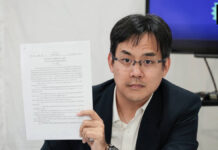
















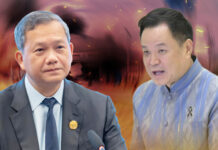








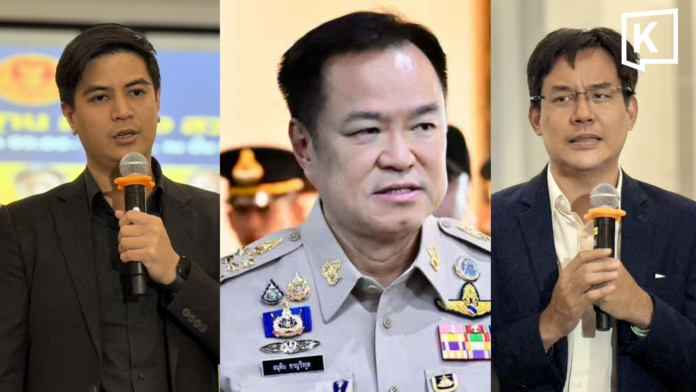
BANGKOK — 26 July 2026, People’s Party MP and opposition whip Parit Wacharasindhu has challenged Prime Minister Anutin Charnvirakul and Bhumjaithai Party figures to explain allegations surrounding an alleged Senate election collusion case, warning that the opposition could take legal action against the Election Commission (EC) if the case is dropped.
Speaking at Parliament at 12:30 on 26 July 2026, Parit responded to Bhumjaithai Party MP Supachai Jaisamut’s claim that a defamation lawsuit against iLaw director Yingcheep Atchanont over the Senate case was ready.
Parit said those who should be preparing themselves were the people accused in the case, rather than the opposition.
He urged Anutin, Deputy Prime Minister Songsak Thongsri, Minister attached to the Prime Minister’s Office Suksomruay Wantanayakul and former deputy House speaker Supachai Phosu to answer questions raised publicly about the alleged Senate election collusion.
Parit said he was confident that the information presented was already contained in case files held by the EC and the Department of Special Investigation (DSI).
He said the evidence was not limited to witness testimony but also included alleged financial trails, flight bookings and hotel reservations that could be independently verified.
He added that claims made by witnesses about meetings at specific hotels and on specific dates could also be checked through objective evidence.
Parit dismissed concerns that some witnesses were Senate candidates with vested interests, saying many were reserve senators or candidates who had already lost in the election and would not become senators even if the entire Senate were removed.
“If the information they provide is untrue, those involved should simply come out and explain it,” Parit said, arguing that the failure to respond could increase public suspicion.
He also warned the EC against selectively pursuing cases based on political affiliations, describing a potential scenario as “sacrificing light blue to protect dark blue” — a reference to allegedly protecting more powerful figures within the Bhumjaithai political network.
Parit said he expected the EC to forward the case to court so that the evidence could be examined through the judicial process.
If the EC drops charges against some or all of the 229 people involved, he said legal action could be considered against EC officials for alleged abuse of authority.
Parit also warned that if Anutin and other government figures failed to answer the opposition’s questions, the opposition could launch a no-confidence debate, while also using parliamentary questions and committee investigations.
Meanwhile, iLaw director Yingcheep Atchanont said he had access to only a small portion of the evidence contained in the EC and DSI files, which he estimated at around 90,000 pages.
Yingcheep said the information available to him represented only about 5% of the EC’s material, while the evidence he had publicly disclosed so far was only a fraction of what he possessed.
He said that if the EC brings charges, the full evidence would be presented in court through the judicial process. If suspects were acquitted despite what he described as clear evidence, he said he would have no choice but to release relevant information publicly.
Yingcheep also challenged those named in the allegations to come forward and explain the facts.
“If they come out and explain everything, then it is over,” he said, adding that the people involved knew far more about the events than he did.
Asked about claims that witness testimony was unreliable, Yingcheep said the public could decide whether to believe the witnesses, but insisted that there were numerous witnesses and financial trails connected to the case.
He said he was prepared to respond to any legal complaints filed against him and would appear to acknowledge any charges if summoned.
Yingcheep also said that if the EC dropped the case and the judicial process ended without charges, he would consider releasing additional financial trail evidence.
However, if the EC quickly brings charges, he said he would stop making public statements and allow the evidence to be presented in court.
He called on the opposition to use parliamentary mechanisms to press the prime minister, ministers and government figures to answer questions about the allegations.