



























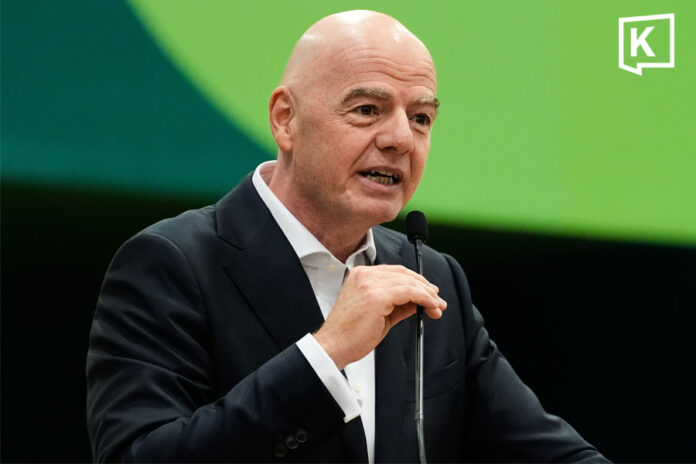
RABAT, Morocco — 6 August 2026, FIFA president Gianni Infantino has apologised to the organisation’s 211 member associations after a failed attempt to sell a stake in the commercial rights to the World Cup triggered the deepest governance crisis of his decade-long presidency, exposing divisions within world football and raising fresh questions about transparency, political influence, and the future direction of the sport.
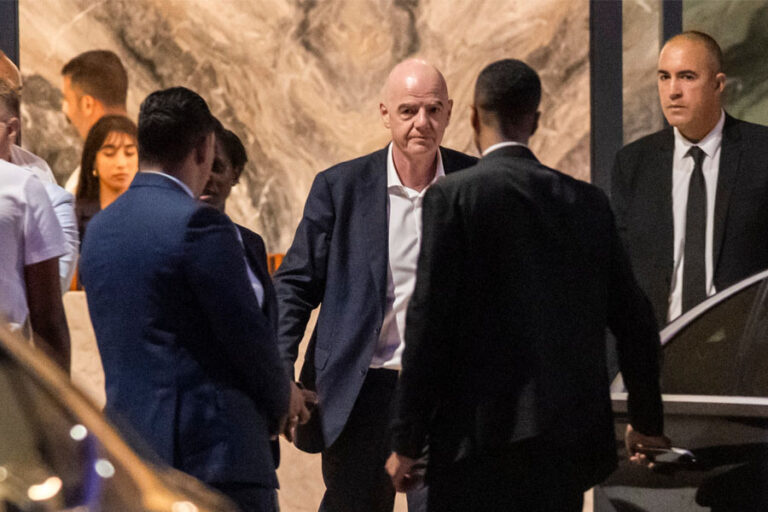
The apology followed an emergency meeting in Rabat, Morocco, attended by Infantino, FIFA secretary-general Mattias Grafström, and members of FIFA’s management board, after days of mounting opposition from continental confederations, national associations, and senior figures inside the organisation. Despite the turmoil, FIFA said its management board reaffirmed its support for Infantino while acknowledging that the proposal had been mishandled.
In a letter jointly signed by Infantino and Grafström, FIFA admitted that “mistakes were made” and apologised for failing to properly consult member associations before unveiling the plan.
“It was certainly not the intention for the FIFA Council and FIFA Member Associations to feel excluded from the process and it should have been handled differently,” the letter said.
It added: “We sincerely apologise for these errors and commit to them not happening again.”
A $4.2 billion plan that unravelled
At the centre of the controversy was FIFA Forward Enterprise (FFE), a proposed commercial subsidiary that would have controlled the governing body’s most valuable assets, including the men’s and women’s World Cups and other FIFA competitions.
FIFA planned to sell roughly a 20% stake in the new entity for an estimated US$4.2 billion while retaining majority ownership, arguing that the structure would unlock new investment and create long-term commercial growth. The proposed company itself was valued at around US$20 billion.
Instead, the proposal collapsed within days.
UEFA condemned the plan, saying that “the soul and governance of football are not assets to trade” and declaring: “None of us are the owners of football. It is not FIFA’s to sell.” Europe’s 55 member associations unanimously backed plans to boycott FIFA competitions if the proposal proceeded. The Asian Football Confederation (AFC) and CONCACAF also criticised FIFA, saying they had not been consulted before the proposal went public.
The backlash ultimately forced Infantino to abandon the proposal before it could proceed further.
Political connections fuel scrutiny
Beyond governance concerns, the proposal attracted political attention because Thrive Eternal was expected to lead the proposed investor group, the investment firm founded by Joshua Kushner, whose brother Jared Kushner served as senior adviser and son-in-law to US president Donald Trump.
Reuters reported that Infantino personally met prospective investors before many senior football officials were informed of the proposal, intensifying criticism that normal consultation processes had been bypassed. While neither FIFA nor Reuters has alleged any wrongdoing by the prospective investors, the reported political connections amplified concerns over transparency and decision-making within the organisation.
The controversy also renewed scrutiny of Infantino’s close relationship with Trump, which had already attracted attention during the 2026 World Cup. The Kushner connection further intensified scrutiny of the proposed deal, even without evidence of improper conduct.
Allies distance themselves
Arsène Wenger, FIFA’s chief of global football development, said he was not involved in the proposal’s development after criticism intensified.
Carlos Cordeiro, the former president of US Soccer and one of Infantino’s senior advisers, resigned during the crisis, saying he could not “stand by while FIFA considers selling a stake in the World Cup”. His departure marked one of the highest-profile casualties of the controversy inside FIFA’s leadership.
Governments weigh in
Canadian Prime Minister Mark Carney said he had lost confidence in Infantino’s leadership, describing the handling of the proposal as a serious governance failure after learning that senior FIFA officials had not been properly consulted.
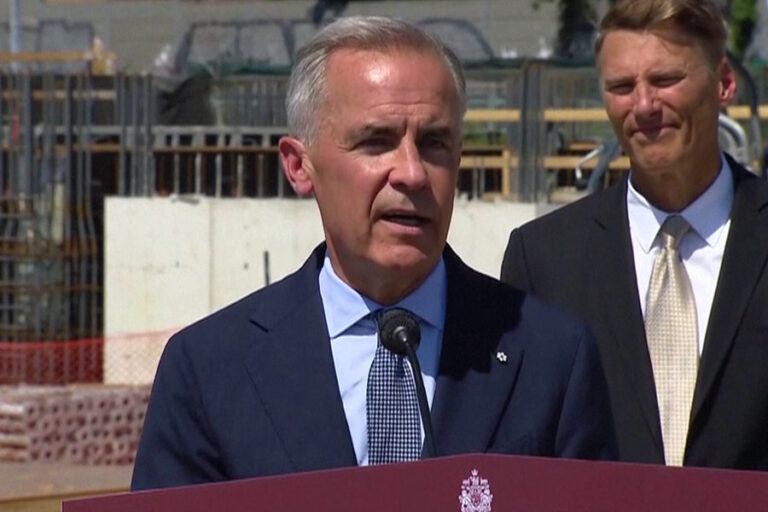
Carney also praised CONCACAF president Victor Montagliani as someone who had demonstrated stronger leadership during the crisis, an unusually direct intervention by the leader of one of the 2026 World Cup’s co-host nations.
Renewed backing after Rabat
The emergency meeting in Rabat allowed FIFA to present a united front after days of internal criticism over the failed FIFA Forward Enterprise proposal.
In a joint letter to the organisation’s 211 member associations, Infantino and FIFA secretary-general Mattias Grafström acknowledged that the process had been mishandled, while FIFA said its management board had reaffirmed its “full support” for the president. The governing body confirmed that the FFE plan was now “off the table” and pledged to review how major commercial initiatives are developed and communicated in future.
The show of unity eased the immediate pressure on Infantino, but it did not erase the divisions exposed by the proposal. European football bodies have continued to question FIFA’s decision-making process, with the controversy highlighting a broader debate over transparency, governance, and the role of private investment in the commercial future of the World Cup.
Infantino’s toughest political test
FIFA’s next presidential election is scheduled for March 2027 in Rabat, with candidates required to submit their nominations by 18 November 2026. Infantino is widely expected to seek a fourth term.
Although Infantino continues to enjoy significant support among many member associations across Africa, Asia, Oceania, and other regions outside Europe, the abandoned FFE proposal has become the biggest challenge of his presidency since he took office in 2016.
Several European football associations have already withdrawn their support ahead of next year’s election, while UEFA is reportedly seeking an alternative candidate to challenge him. However, no formal challenger has yet emerged, leaving Infantino with a viable, though increasingly uncertain, path to a fourth term.
Under FIFA’s one-member, one-vote system, each of the organisation’s 211 member associations has equal voting power regardless of footballing stature. That structure has historically favoured incumbents with broad support beyond Europe, meaning Infantino remains well placed politically despite the controversy.
Whether the failed World Cup rights proposal proves to be a temporary setback or the beginning of a broader challenge to his leadership may become clearer once the nomination deadline passes in November. The failed FFE proposal may be gone, but the battle over who controls football’s future — and how those decisions are made — is only beginning.