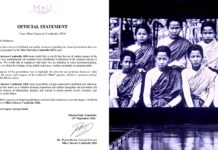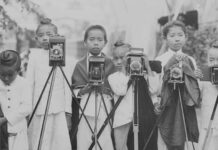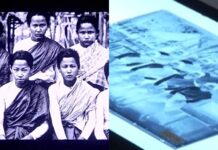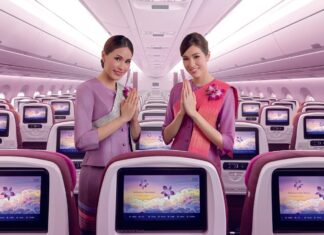







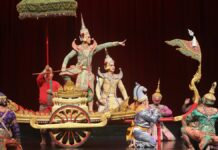







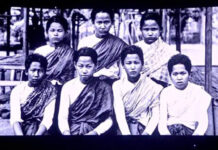













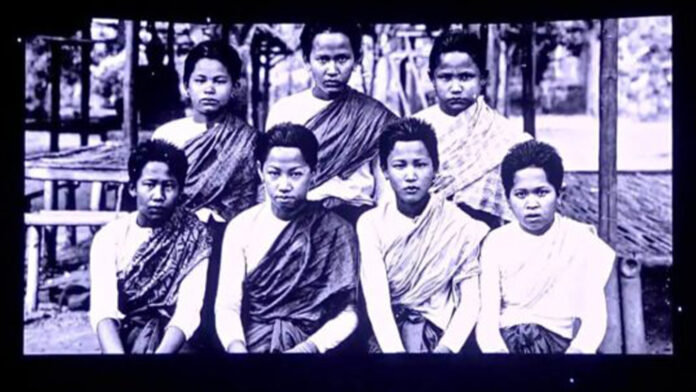
Last year, Thailand and Cambodia could not agree on where their common border lay without resorting to war and killings. This week, they cannot even agree on which traditional costumes belong to Thailand or Cambodia, or which constitute shared heritage, without hurling insults and looking down on each other, after the Miss Universe Cambodia pageant organiser used historical photos of Thai women in traditional attire and presented them as Cambodian.
Amidst the uproar in Thailand, particularly among Thai nationalists, the culture minister has threatened legal action. Yesterday saw the Miss Universe Cambodia organiser issuing a letter acknowledging that mistakes were made, but insisting there was no intention to mislead. There was also no apology.
The relationship — or lack of one — between Thailand and Cambodia has become extremely toxic. This writer can only hope that, at this moment, Thais and Cambodians who still have the presence of mind will exercise patience and work together to find a peaceful way forward, while respecting each other.
To find common ground, I think Thai and Cambodian nationalists alike need to be open-minded and consider how we use the narrow lens of the modern nation-state to examine cultural heritage, which is far more fluid and less exclusive.
To Thai readers:
Thais need to wake up and break away from their narrow nationalist cage and recognise, as well as acknowledge, the deep cultural debt we owe to the Angkorian Empire in what is now Cambodia.
Thai culture, like almost all cultures in the world, is a confluence of appropriated and adapted influences, including Indian, Chinese, Malay, European and, not least, Khmer.
Please stop repeating the unproven conspiracy theory that the people who built Angkor were of a different race from Cambodians today. Please also understand and acknowledge that, once upon a time, what is now Thailand — particularly the Northeast and Central Thailand, where I am writing these words — was at least part of the wider Angkorian cultural sphere, if not the empire itself.
We should recognise that there were no modern nation-states or concrete borders until the 19th century. It remains debatable among scholars to what extent a major political centre such as Lavo, in present-day Lopburi province, was under the influence of the regional centre at Angkor.
Thais should be open-minded about their past cultural heritage. There is nothing to be ashamed of regarding the fact that we Thais have appropriated and adapted from different cultures and civilisations, making those influences ours — if not uniquely ours in some regards.
Look at Japan: they appropriated and adapted the use of Chinese characters from an older civilisation, then eventually mixed them with their locally invented scripts, hiragana and katakana. Yet they acknowledge Chinese characters by referring to them as “kanji”, or the characters of the Han people of China. Yet the use of kanji, mixed with hiragana and katakana over the centuries, has also made the writing system uniquely Japanese.
The time for Thais to acknowledge the cultural debt we owe to Khmer civilisation is long overdue. Fortunately, some Thai scholars are not blinded by a petty, narrow concept of nationalism.
In their seminal book, A History of Thailand, authors Chris Baker and Pasuk Phongpaichit — both Thailand-based and highly respected, with the latter teaching for many years at Chulalongkorn University — clearly acknowledge the cultural debt Thais owe to the ancient Angkorian empire in what is now Cambodia.
The acknowledgment comes early in the book, on page 3 of the third edition, when the two touched upon the times before Bangkok became the Thai capital:
”The magnificent capital at Angkor became a model that was honoured and mimicked by smaller centres scattered westwards across the Khorat Plateau and the Chao Phraya river system.”
Then on page 4 came further elaboration:
”Thai [language] has absorbed so many basic words, grammatical rules, and syntactical principles from Khmer (and possibly from Mon too) that it is sharply different from any other language in the Tai family [in present-day southern China, from where many migrated]… all records are in Khmer or Indian languages until the 15th century, suggesting these languages still commanded prestige.”
To Cambodian readers:
Please understand that the fact that the border between Thailand and Cambodia is mostly settled does not mean much of what is now Thailand was not part of the Angkorian cultural sphere. This remains so despite the areas over which the two militaries were at war twice last year and the maritime boundary now under discussion through UNCLOS. That makes Thais co-inheritors of ancient Khmer cultural heritage as well.
We have internalised Khmer cultural influence over the centuries with appreciation and pride, combining it with elements from our own and other cultures so that it is no longer a copy-and-paste facsimile of Cambodia’s material culture.
Look at the famous stupa at Bangkok’s Temple of Dawn, Wat Arun, a landmark of the Thai capital.This architectural gem owes much to Cambodian influences, just as Cambodia owes much to India: without Hinduism and Indian architectural traditions, there would be no Angkor Wat or its celestial apsaras.
Please try to understand that Thais may have appropriated several cultural aspects of Cambodia over the centuries but they have made them their own — just like how the Angkorians adopted and adapted from what is today the Indian subcontinent.
In ancient times, there were no watermarks or intellectual property rights, and the borders of states and kingdoms were not well defined with precise maps showing exactly where one kingdom ended and another began being less than two hundred years old. Borrowing, adapting, and incorporating elements from elsewhere was therefore perfectly normal and common around the world.
The ancient Angkor civilisation was once highly prosperous and powerful, with its territory and influence extending across what are now Thailand’s Northeast, Central, and Eastern regions.
It is therefore hardly surprising that Sukhothai and Ayutthaya adopted architecture, language, and many other things from the Khmer civilisation. The stupas (prangs) of the Ayutthayan period, for example, are examples of Thai architecture strongly influenced by ancient Khmer structures, but adapted as the central structures of Thai Buddhist temples, symbolising Mount Meru instead.
Although Thais with a narrow and compartmentalised view of nationalism may become angry when the Miss Universe Cambodia pageant uses a photo of a woman from Thai history and casually describes her as Khmer woman, the explanation given in Khmer verbally by the Cambodian male and female MCs contains many words that Thai people can readily understand without ever having to study Khmer, because words such as “ancient times” (samai boran), and more, were borrowed and adopted from Khmer language and have been internalised as part of the Thai language for a very long time.
Even the word “sbai”, referring to the traditional shoulder cloth, may — if Thais are open-minded — be understood as having been borrowed from Khmer, or perhaps linked to Malay, where a similar word carries the meaning of something being carried or draped, and related to the Thai word saphai (สะพาย). A joint study by linguists and historians from both countries would definitely shed more accurate light on this.
I am not saying this because we should return these words and cultural elements to Cambodia. Thai culture has long absorbed and adapted elements from many cultures, blending them together over time until they became Thai.
This is similar to Japanese, Korean, or Vietnamese temples that have been influenced by China. They are neither Chinese nor are they simply crude copies of Chinese temples or palaces.
History moves through periods of prosperity and decline. In the early Bangkok (Rattanakosin) period, for example, Siam was clearly more powerful than Cambodia. Khmer princes were at times compelled to reside in the Siamese royal court in Bangkok, while styles of dress that became fashionable among the Thai and Cambodian elite were shared.
The Royal Palace in Phnom Penh is one example of how Thai-Cambodian cultural relations are not a one-way street.
When King Norodom I of Cambodia (reigned 1860–1904) decided to relocate the Cambodian capital from Oudong to Phnom Penh in 1866, he partly modelled the palace after the one in Bangkok because for decades, Cambodia had been under Siamese (Thai) suzerainty before eventually becoming a French protectorate in 1863. The newer palace in Phnom Penh also features a Temple of the Emerald Buddha, like the one in Bangkok, complete with a Cambodian Emerald Buddha statue.
Norodom spent much of his youth studying at the Siamese court in Bangkok when Siam dominated Cambodia as a major power in rivalry with Annam (Vietnam).
In a historical passage, D.G. Hall, author of A History of South-East Asia, noted on page 691 of the 4th edition that the Cambodian king once told a French envoy that “his kingdom owed its continued existence to the Siamese, who had saved it from Vietnamese dominance.”
The complex relations around that time may also partly explain why the traditional dresses of both Siamese and Cambodian women back then, as well as their short hairstyles, were so similar before Western-styled dress influenced both Cambodia and Thailand and became fashionable.
An important note is that the Grand Palace in Bangkok was an attempt to restore the splendour of the Ayutthaya Palace, destroyed by Burmese invaders in 1767, though it was not an exact replica. Palaces in Ayutthaya, in turn, were influenced by and adapted from ancient Angkorian architecture.
Learning, borrowing, and adaptation have therefore never been a one-way street moving permanently in a single direction.
But today we live in the era of the nation-state, where people with narrow understandings of nationalism and history find it difficult to accept that neighbouring countries may have things that resemble or overlap with their own. They believe that a particular style of dress, or a particular form of architecture, must be either Thai or Khmer. It cannot be something shared or similar.
This inevitably gives rise to waves of “Thai cultural claims” vs “Khmer cultural claims”, accompanied by the use of nationalism to generate political popularity.
Each side accuses the other of “distorting and fabricating information” and of stealing the other’s culture and falsely claiming it as its own.
Some people in Thailand have gone so far as to worry that this is part of a “hybrid warfare” strategy designed to create pressure on the international stage. In Cambodia, there are fears that their culture, including Cambodian traditional dress, will be better known abroad as Thai culture
Thais and Cambodians should not unnecessarily allow this issue to further escalate into something much bigger, nor should it become an excuse for more hatred or abusive comments against people from either country.
In the future, when Thai-Cambodian relations improve, we should consider establishing a joint committee of experts and academics from both countries, including foreign experts where appropriate, to jointly examine traditional clothing: which designs have historical evidence of being Thai or Khmer, which are similar or shared by both cultures, and how the two societies may have influenced or learned from one another.
This would be a more constructive way to understand our shared and intertwined cultural history.