
























32.7 C
Bangkok
Friday, June 19, 2026
Home Blog Page 1005

Soldiers Declare Military Junta in Control in Burkina Faso

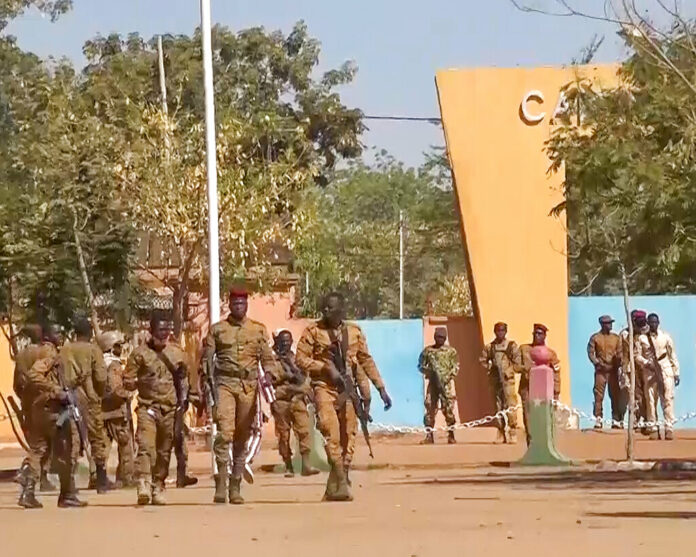
In this image made from video, Burkina Faso mutinous soldiers walk outside the Guillaume Ouedraogo military camp in Ouagadougou, Monday Jan. 24, 2022. Photo: AP

OUAGADOUGOU, Burkina Faso (AP) — More than a dozen mutinous soldiers declared Monday on state television that a military junta had seized control of Burkina Faso after detaining the democratically elected president following a day of gunbattles in the capital of the West African country.

The military coup in a nation that was once a bastion of stability was the third of its kind in the region in the last 18 months, creating upheaval in some of the countries hardest hit by Islamic extremist attacks.

Capt. Sidsore Kaber Ouedraogo said the Patriotic Movement for Safeguarding and Restoration “has decided to assume its responsibilities before history.” The soldiers put an end to President Roch Marc Christian Kabore’s presidency because of the deteriorating security situation and the president’s inability to manage the crisis, he said.

It was not immediately known where Kabore was, and the junta spokesman said only that the coup had taken place “without any physical violence against those arrested, who are being held in a safe place, with respect for their dignity.”

A soldier in the mutiny, who spoke on condition of anonymity due to the sensitivity of situation, told The Associated Press that Kabore had submitted his resignation.

The new military regime said it had suspended Burkina Faso’s constitution and dissolved the National Assembly. The country’s borders were closed, and a curfew was in effect from 9 p.m. to 5 a.m.

Ouedraogo said that the country’s new leaders would work to establish a calendar “acceptable to everyone” for holding new elections without giving further details.

After the televised announcement, crowds took to the streets, cheering and honking car horns in support of the takeover. People hoped that the coup would ease the devastation they have endured since jihadist violence spread across the country.

“This is an opportunity for Burkina Faso to regain its integrity. The previous regime sunk us. People are dying daily. Soldiers are dying. There are thousands of displaced,” said Manuel Sip, a protester in downtown Ouagadougou. The army should have acted faster in ousting the president, he said.

After the overthrow of strongman Blaise Compaore in 2014, several people told the AP they no longer cared if they had a democratically elected leader. They just wanted to live in peace.

The communique read aloud on state broadcaster RTB was signed by the country’s apparent new military leader, Lt. Col. Paul Henri Sandaogo Damiba. He sat beside the spokesman without addressing the camera during the announcement.

United Nations Secretary-General Antonio Guterres called on coup leaders to lay down their arms. He reiterated the U.N.’s “full commitment to the preservation of the constitutional order” in Burkina Faso and support for the people in their efforts “to find solutions to the multifaceted challenges facing the country,” U.N. spokesman Stephane Dujarric said.

The U.N. chief said the military takeover was part of “an epidemic of coups around the world and in that region.”

The U.S. State Department in a statement expressed deep concern about the dissolution of the government, suspension of the constitution and the detention of government leaders. “We condemn these acts and call on those responsible to deescalate the situation, prevent harm to President Kaboré and any other members of his government in detention, and return to civilian-led government and constitutional order,” spokesperson Ned Price said.

In a statement, Kabore’s political party accused the mutinous soldiers of trying to assassinate the president and another government minister and said the presidential palace in Ouagadougou remained surrounded by “heavily armed and hooded men.”

The coup “is a signal of frustration and exasperation on the heels of a growing struggle to stem the threat of militants, cope with the degraded security structure, and an attempt to restore faith in the institution of the military,” said Laith Alkhouri, CEO of Intelonyx Intelligence Advisory, which provides intelligence analysis.

Gunfire erupted early Sunday when soldiers took control of a major military barracks in the capital. In response, civilians rallied in a show of support for the rebellion but were dispersed by security forces firing tear gas. On Monday, groups of people celebrated again in the streets of the capital after reports of Kabore’s capture.

Kabore was elected in 2015 after the popular uprising that ousted Compaore. Kabore was reelected in November 2020, but frustration has been growing at his inability to stem the jihadist violence. Attacks linked to al-Qaida and the Islamic State group have killed thousands and displaced more than an estimated 1.5 million people.

The military has suffered losses since the extremist violence began in 2016. In December, more than 50 security forces were killed and nine more died in November.

Mutinous soldiers told the AP that the government was out of touch with troops. Among their demands are more forces in the battle against extremists and better care for the wounded and the families of the dead.

About 100 military members have planned the takeover since August, according to one of the mutinous soldiers.

The West African regional bloc known as ECOWAS said in a statement that it was following events in Ouagadougou with “great concern.” The bloc has already suspended Mali and Guinea over military coups. Those coup leaders appear in no hurry to return their countries to civilian rule.

Burkina Faso has also seen its share of coup attempts and military takeovers, although it experienced a period of relative stability under Compaore, who ruled for 27 years until his ouster in 2014.

In 1987, Compaore came to power by force. And in 2015, soldiers loyal to him attempted to overthrow the transitional government put into place after his ouster. The army was ultimately able to put the transitional authorities back in power, who led again until Kabore won an election and took office.

___

Story: Sam Mednick. Associated Press writers Krista Larson and Carley Petesch in Dakar, Senegal, and Edith M. Lederer at the United Nations contributed to this report.
Advertisement

US Orders 8,500 Troops on Heightened Alert Amid Russia Worry

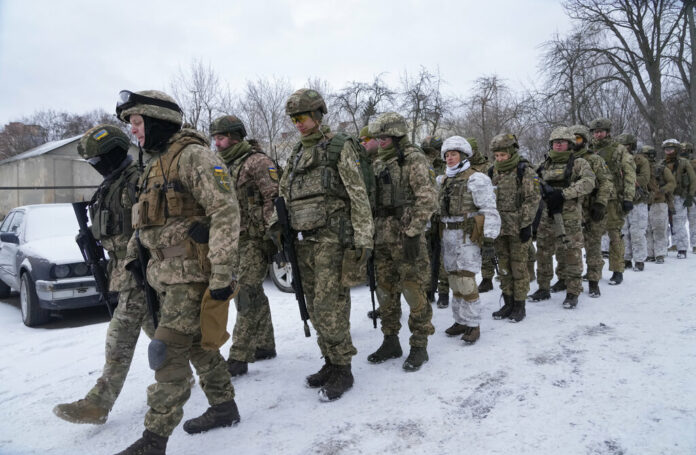
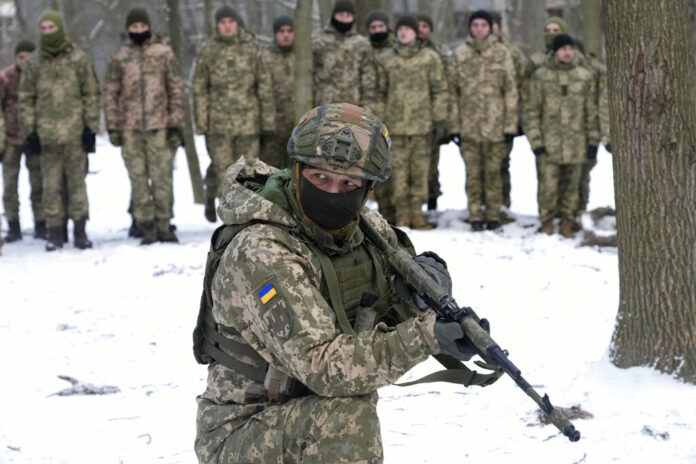
An instructor trains members of Ukraine's Territorial Defense Forces, volunteer military units of the Armed Forces, in a city park in Kyiv, Ukraine, Saturday, Jan. 22, 2022. Photo: Efrem Lukatsky / AP

WASHINGTON (AP) — The Pentagon ordered 8,500 troops on higher alert Monday to potentially deploy to Europe as part of a NATO “response force” amid growing concern that Russia could soon make a military move on Ukraine. President Joe Biden consulted with key European leaders, underscoring U.S. solidarity with allies there.

Putting the U.S.-based troops on heightened alert for Europe suggested diminishing hope that Russian President Vladimir Putin will back away from what Biden himself has said looks like a threat to invade neighboring Ukraine.

At stake, beyond the future of Ukraine, is the credibility of a NATO alliance that is central to U.S. defense strategy but that Putin views as a Cold War relic and a threat to Russian security. For Biden, the crisis represents a major test of his ability to forge a united allied stance against Putin.

Pentagon press secretary John Kirby said about 8,500 U.S.-based troops are being put on alert for possible deployment — not to Ukraine but to NATO territory in Eastern Europe as part of an alliance force meant to signal a unified commitment to deter any wider Putin aggression.

Russia denies it is planning an invasion. It says Western accusations are merely a cover for NATO’s own planned provocations. Recent days have seen high-stakes diplomacy that has failed to reach any breakthrough, and key players in the drama are making moves that suggest fear of imminent war. Biden has sought to strike a balance between actions meant to deter Putin and those that might provide the Russian leader with an opening to use the huge force he has assembled at Ukraine’s border.

Biden held an 80-minute video call with several European leaders on the Russian military buildup and potential responses to an invasion.

“I had a very, very, very good meeting — total unanimity with all the European leaders,” Biden told reporters at the White House. “We’ll talk about it later.”

The White House said the leaders emphasized their desire for a diplomatic solution to the crisis but also discussed efforts to deter further Russian aggression, “including preparations to impose massive consequences and severe economic costs on Russia for such actions as well as to reinforce security on NATO’s eastern flank.”

A day earlier, the State Department had ordered the families of all American personnel at the U.S. Embassy in Kyiv to leave the country, and it said that nonessential embassy staff could leave at U.S. government expense.

Ukraine’s Foreign Ministry spokesman, Oleg Nikolenko, said that U.S. decision was “a premature step” and a sign of “excessive caution.” He said Russia was sowing panic among Ukrainians and foreigners in order to destabilize Ukraine.

Britain said it, too, was withdrawing some diplomats and dependents from its Kyiv Embassy. Prime Minister Boris Johnson said an invasion was not inevitable but “the intelligence is pretty gloomy.”

Ordering even a modest number of American troops to be ready for potential deployment to Europe is meant to demonstrate U.S. resolve to support its NATO allies, particularly those in Eastern Europe who feel threatened by Russia and worry that Putin could put them in his crosshairs.

“What this is about is reassurance to our NATO allies,” Kirby told a Pentagon news conference, adding that no troops are intended for deployment to Ukraine, which is not a member of the alliance but has been assured by Washington of continued U.S. political support and arms supplies.

The Pentagon’s move, which was done at Biden’s direction and on Defense Secretary Lloyd Austin’s recommendation, is being made in tandem with actions by other NATO member governments to bolster a defensive presence in Eastern European nations. Denmark, for example, is sending a frigate and F-16 warplanes to Lithuania; Spain is sending four fighter jets to Bulgaria and three ships to the Black Sea to join NATO naval forces, and France stands ready to send troops to Romania.

In a statement prior to Kirby’s announcement, NATO said the Netherlands plans to send two F-35 fighter aircraft to Bulgaria in April and is putting a ship and land-based units on standby for NATO’s Response Force.

NATO has not made a decision to activate the Response Force, which consists of about 40,000 troops from multiple nations. That force was enhanced in 2014 — the year Russia seized Ukraine’s Crimea Peninsula and intervened in support of pro-Russian separatists in eastern Ukraine — by creating a “spearhead force” of about 20,000 troops on extra-high alert within the larger Response Force.

If NATO does decide to activate the Response Force, the United States will contribute a range of military units, Kirby said.

“It is a NATO call to make,” Kirby said. “For our part, we wanted to make sure that we were ready in case that call should come. And that means making sure that units that would contribute to it are as ready as they can be on as short a notice as possible.”

He said some units will be ordered to be ready to deploy on as little as five days’ notice. Among the 8,500 troops, an unspecified number could be sent to Europe for purposes other than supporting the NATO Response Force, he said. Without providing details, he said they might be deployed “if other situations develop.”

Prior to the U.S. announcement, NATO issued a statement summing up moves already described by member countries. Restating them under the NATO banner appeared aimed at showing resolve. The West is ramping up its rhetoric in the information war that has accompanied the Ukraine standoff.

Russia has massed an estimated 100,000 troops near Ukraine’s border, demanding that NATO promise it will never allow Ukraine to join and that other actions, such as stationing alliance troops in former Soviet bloc countries, be curtailed.

NATO said Monday it is bolstering its deterrence in the Baltic Sea region.

The alliance will “take all necessary measures to protect and defend all allies,” Secretary-General Jens Stoltenberg said. “We will always respond to any deterioration of our security environment, including through strengthening our collective defense.”

In Moscow, Kremlin spokesman Dmitry Peskov said it was NATO and the U.S. who were behind the escalating tensions, not Russia.

“All this is happening not because of what we, Russia, are doing. This is happening because of what NATO, the U.S. are doing,” Peskov told reporters.

The NATO announcement came as European Union foreign ministers sought to put on their own fresh display of unity in support of Ukraine, and paper over concerns about divisions on the best way to confront any Russian aggression.

In a statement, the ministers said the EU has stepped up sanction preparations, and they warned that “any further military aggression by Russia against Ukraine will have massive consequences and severe costs.”


Advertisement

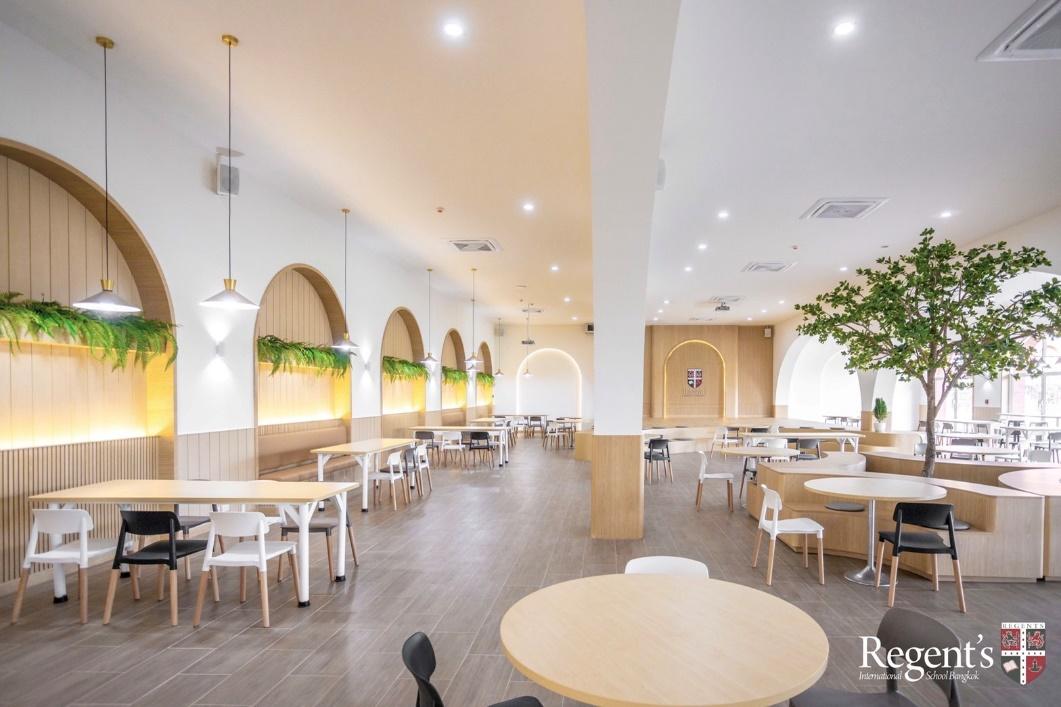
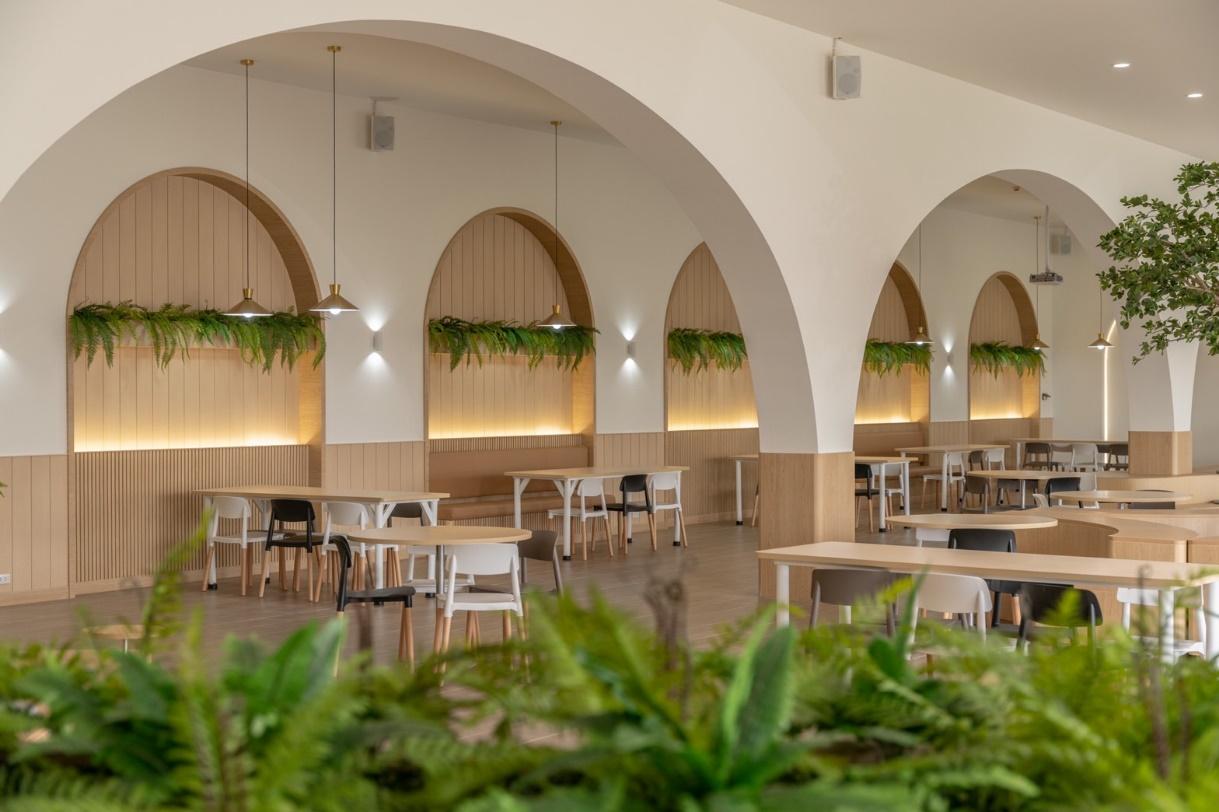
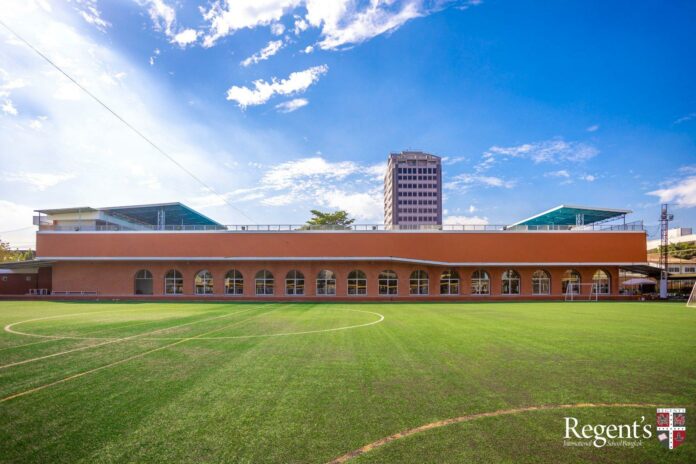
“Jubilee Building” new multipurpose building at Regent’s International School Bangkok

We are delighted to unveil our new multipurpose building at Regent’s International School, Bangkok. This new educational facility – nestled on our 21 rai campus alongside our Early Years, Primary, and Secondary Buildings – provides more than 4,000 square metres of learning space and offers students access to a friendly learning environment, networking opportunities, and a thriving hub of discovery.

image3 6

The Jubilee Building has a spacious canteen that can seat more than 400 people and a Multi-function Room that can accommodate 200 seats for special functions, meetings, and school activities. Also on the ground floor, there is a fully equipped sports room, fitness room, dance studio and golf simulator room. On the second floor, we have the Olympic-size swimming pool; a state-of-the-art pool that will not only be a world-class training and competition facility, but also a place to nurture our young swimmers. This is definitely a space the whole school community can enjoy.

We believe that developing our facilities at Regent’s International School Bangkok is an important factor which gives children the support to become well-rounded students.

We believe in investing in our students and their futures to ensure they have a safe and modern learning environment that enables their success in the classroom and in life.

For more information, please contact our Admissions Office at 0923628888 or Line@regentsschoolbkk

www.regents.ac.th

image2 6

Advertisement

Taliban Talks in Norway Raise New Debate About Recognition

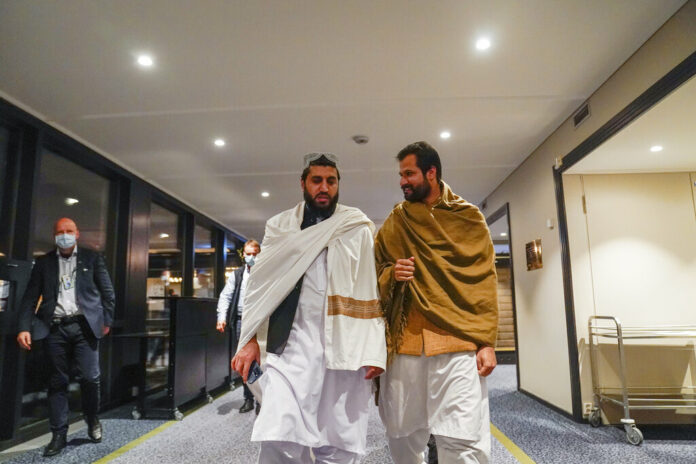
Taliban delegate Shafiullah Azam, Taliban vice director for economic cooperation ministry foreign affairs, right, talks to a delegate at a hotel in Oslo, Norway, Sunday, Jan. 23, 2022. Photo: Torstein Boe / NTB scanpix via AP

OSLO (AP) — A Taliban delegation led by acting Foreign Minister Amir Khan Muttaqi on Sunday started three days of talks in Oslo with Western officials and Afghan civil society representatives amid a deteriorating humanitarian situation in Afghanistan.

The closed-door meetings were taking place at a hotel in the snow-capped mountains above the Norwegian capital and are the first time since the Taliban took over in August that their representatives have held official meetings in Europe.

The talks were not without controversy, however, reigniting the debate over whether they legitimize the Taliban government, especially since they were being held in Norway, a NATO country involved in Afghanistan from 2001 until the Taliban take over last summer.

Speaking at the end of the first day of talks, Taliban delegate Shafiullah Azam told The Associated Press that the meetings with Western officials were “a step to legitimize (the) Afghan government,” adding that “this type of invitation and communication will help (the) European community, (the) U.S. or many other countries to erase the wrong picture of the Afghan government.”

That statement may irk the Taliban’s Norwegian hosts. Earlier, Norwegian Foreign Minister Anniken Huitfeldt stressed that the talks were “not a legitimation or recognition of the Taliban.”

On Sunday, 200 protesters gathered on an icy square in front of the Norwegian Foreign Ministry in Oslo to condemn the meetings with the Taliban, which has not received diplomatic recognition from any foreign government.

“The Taliban has not changed as some in the international community like to say,” said Ahman Yasir, a Norwegian Afghan living in Norway for around two decades. “They are as brutal as they were in 2001 and before.”

Taliban leaders met with some women’s rights and human rights activists on Sunday, but there was no official word about those talks.

Starting Monday, Taliban representatives will meet with delegations from Western nations and will be certain to press their demand that nearly $10 billion frozen by the United States and other Western countries be released as Afghanistan faces a precarious humanitarian situation.

“We are requesting them to unfreeze Afghan assets and not punish ordinary Afghans because of the political discourse,” said Shafiullah Azam. “Because of the starvation, because of the deadly winter, I think it’s time for the international community to support Afghans, not punish them because of their political disputes.”

The United Nations has managed to provide some liquidity and allowed the Taliban administration to pay for imports, including electricity. But the U.N. has warned that as many as 1 million Afghan children are in danger of starving and most of the country’s 38 million people are living below the poverty line.

Faced with the Taliban’s request for funds, Western powers are likely to put the rights of women and girls in Afghanistan high on their agenda, along with the West’s recurring demand for the Taliban administration to share power with Afghanistan’s minority ethnic and religious groups.

Since sweeping to power in mid-August, the Taliban have imposed widespread restrictions, many of them directed at women. Women have been banned from many jobs outside the health and education fields, their access to education has been restricted beyond sixth grade and they have been ordered to wear the hijab. The Taliban have, however, stopped short of imposing the burqa, which was compulsory when they previously ruled Afghanistan in the 1990s.

The Taliban have increasingly targeted Afghanistan’s beleaguered rights groups, as well as journalists, detaining and sometimes beating television crews covering demonstrations.

A U.S. delegation, led by Special Representative for Afghanistan Tom West, plans to discuss “the formation of a representative political system; responses to the urgent humanitarian and economic crises; security and counterterrorism concerns; and human rights, especially education for girls and women,” according to a statement released by the U.S. State Department.

The Scandinavian country, home to the Nobel Peace Prize, is no stranger to diplomacy. It has been involved in peace efforts in a number of countries, including Mozambique, Afghanistan, Venezuela, Colombia, the Philippines, Israel and the Palestinian Territories, Syria, Myanmar, Somalia, Sri Lanka and South Sudan.

___

Story: David Keyton.

Advertisement

Russia Rejects UK Claim of Trying To Replace Ukraine Leader

Members of Ukraine's Territorial Defense Forces, volunteer military units of the Armed Forces, train in a city park in Kyiv, Ukraine, Saturday, Jan. 22, 2022. Photo: Efrem Lukatsky / AP

MOSCOW (AP) — Russia’s Foreign Ministry on Sunday rejected a British claim that the Kremlin is seeking to replace Ukraine’s government with a pro-Moscow administration, and that former Ukrainian lawmaker Yevheniy Murayev is a potential candidate.

Britain’s Foreign Office on Saturday also named several other Ukrainian politicians it said had links with Russian intelligence services, along with Murayev who is the leader of a small party that has no seats in parliament.

Those politicians include Mykola Azarov, a former prime minister under Viktor Yanukovych, the Ukrainian president ousted in a 2014 uprising, and Yanukovych’s former chief of staff, Andriy Kluyev.

“Some of these have contact with Russian intelligence officers currently involved in the planning for an attack on Ukraine,” the Foreign Office said.

Murayev told The Associated Press via Skype that the British claim “looks ridiculous and funny” and that he has been denied entry to Russia since 2018 on the grounds of being a threat to Russian security. He said that sanction was imposed in the wake of a conflict with Viktor Medvedchuk, Ukraine’s most prominent pro-Russia politician and a friend of Russian President Vladimir Putin.

Murayev’s Nashi party — whose name echoes the former Russian youth movement that supported Putin — is regarded as sympathetic to Russia, but Murayev on Sunday pushed back on characterizing it as pro-Russia.

“The time of pro-Western and pro-Russian politicians in Ukraine is gone forever,” he said in a Facebook post.

“Everything that does not support the pro-Western path of development of Ukraine is automatically pro-Russian,” Murayev told The AP.

He also said he supports Ukraine having neutral status and believes that “striving for NATO is tantamount to continuing the war.” Ukrainian forces and Russia-backed separatists have been fighting in the country’s east since 2014, a conflict that has killed more than 14,000.

Ukrainian political analyst Volodymyr Fesenko described Murayev as a significant figure in Ukraine’s pro-Russia camp, but added: “Murayev is a second-place player. I don’t think Murayev has direct connections in the Kremlin.”

The U.K. government made the claim based on an intelligence assessment, without providing evidence to back it up. It comes amid high tensions between Moscow and the West over Russia’s designs on Ukraine and each side’s increasing accusations that the other is planning provocations.

“The disinformation spread by the British Foreign Office is more evidence that it is the NATO countries, led by the Anglo-Saxons, who are escalating tensions around Ukraine,” Russian Foreign Ministry spokeswoman Maria Zakharova said on the Telegram messaging app Sunday. “We call on the British Foreign Office to stop provocative activities, stop spreading nonsense.”

British Foreign Secretary Liz Truss said the information “shines a light on the extent of Russian activity designed to subvert Ukraine, and is an insight into Kremlin thinking.”

Truss urged Russia to “deescalate, end its campaigns of aggression and disinformation, and pursue a path of diplomacy,” and reiterated Britain’s view that “any Russian military incursion into Ukraine would be a massive strategic mistake with severe costs.”

Britain has sent anti-tank weapons to Ukraine as part of efforts to bolster the country’s defenses against a potential Russian attack.

Mark Galeotti, who has written extensively on Russian security services, said: “I can’t help but be skeptical” about the British claim.

“This is one of those situations where it is hard to know whether what we’re facing is a genuine threat, a misunderstanding of the inevitable overtures that were being made to various Ukrainian figures by Russians or ‘strategic communication’ — which is what we call propaganda these days when we’re doing it,” Galeotti, who is honorary professor of Slavonic and East European Studies at University College, London, told the AP.

U.S. Secretary of State Antony Blinken said he could not comment specifically about the British claim, but “we’ve been warning about just this kind of tactic for weeks.”

“This is very much part of the Russian tool kit,” he said in an interview on CNN. “It runs the gamut from a large, conventional incursion or invasion of Ukraine to these kinds of destabilizing activities in an attempt to topple the government. And it’s important that people be on notice about that.”

The U.K. government’s unusual decision to release the thinking of British spies, though not the evidence behind it, comes as Prime Minister Boris Johnson is distracted by a leadership crisis over lockdown-breaching parties by his staff during the coronavirus pandemic.

Keir Giles, a Russia expert at the international affairs think-tank Chatham House, said the British warning was a sign of “the U.K. effectively taking the lead of a strong NATO and European response to Russia’s threats to Ukraine.”

“With the U.S. apparently willing to engage with Russia’s demands on Moscow’s terms, and the EU irrelevant and asleep at the wheel, it has fallen to the U.K. to deal with the challenge both in terms of rhetoric … and in terms of direct action, raising the likely cost of a Russian incursion in Ukraine by providing direct shipments of defensive munitions,” Giles said.

Amid diplomatic efforts to defuse the crisis, U.K. Defense Secretary Ben Wallace is expected to meet Russian Defense Minister Sergei Shoigu for talks in Moscow. No timing has been given for the meeting, which would be the first U.K.-Russia bilateral defense talks since 2013.

The U.S. has mounted an aggressive campaign in recent months to unify its European allies against a new Russian invasion of Ukraine. The White House called the U.K. government assessment “deeply concerning” and said it stands with the duly elected Ukrainian government.

“The Ukrainian people have the sovereign right to determine their own future, and we stand with our democratically elected partners in Ukraine,” National Security Council spokeswoman Emily Horne said.

The assessment came as President Joe Biden spent Saturday at the presidential retreat Camp David outside of Washington huddling with his senior national security team about the Ukraine situation. A White House official said the discussions included efforts to de-escalate the situation with diplomacy and deterrence measures being coordinated closely with allies and partners, including security assistance to Ukraine.

In Washington on Sunday, the U.S State Department ordered the families of all American personnel at the American Embassy in Ukraine to leave the country amid heightened fears of a Russian invasion. The move came amid rising tensions that were not eased during talks Friday between the U.S. and Russia.

___

Story: Jim Heintz and Jill Lawless. Lawless reported from London. AP writers Anna Frants in Moscow and Matthew Lee and Zeke Miller in Washington contributed to this report.
Advertisement

Opinion: Thai Big Brother Watching Iceberg Underwater

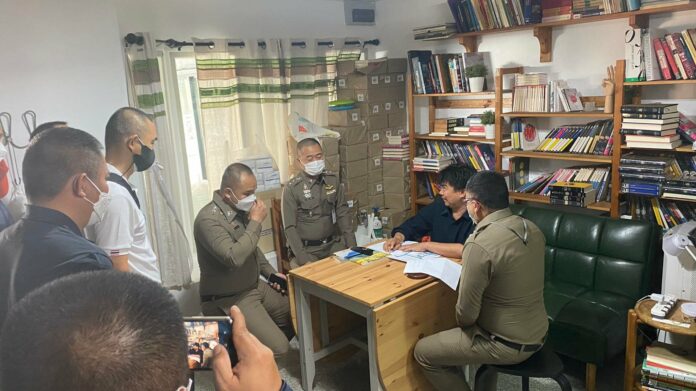
Police officers question Thanapol Eawsakul during a raid of Same Sky Books and Magazine office in Nonthaburi province on Jan. 20, 2022. Photo: Same Sky Books.

Having charged at least 167 people under the lese majeste law over the past year, the regime of Gen. Prayut Chan-o-cha is now trying to find out who are active underground, the shadowy members of the monarchy reform as well as anti-monarchy networks. And their money pipeline.

The raids on Thursday were telling – particularly the one at the office of left-wing Same Sky Books and Magazine in Nonthaburi province just northwest of Bangkok at 10am.

Its publisher and editor, Thanapol Eawsakul, did not see it coming although he told me a day later Friday that some warned him about such a scenario. As many as 30 police officers, many were cyber cops, arrived at his office unannounced looking for copies of a booklet on monarchy reform speech made by now imprisoned protest co-leader Arnon Nampa.

They found none and Thanapol denied being a publisher of the booklet. No charge was lodged against Thanapol, but then police demanded Thanapol to hand over his smartphone, computer, and their passwords.

“Did they point a gun on you?” I asked Thanapol on his newly purchased phone Friday. “No,” he said, but added that with 30 officers behaving in a “mafia-like” manner, treating him as if he was a drug dealer, he felt there was no choice.

“It’s really mafia-like. With all these officers and guns,” Thanapol said. “We’ve been [detained] in a military base before. It’s no different. We were forced to give them access [to the smartphone]. It’s a rogue state’s power,” Thanapol told me, reminding me of the week we spent together with 10 others right after the May 2014 coup at a military base in Ratchaburi province.

We were detained without charges. The public was not informed of our whereabouts while we were kept under a program euphemistically called “attitude adjustment” by the military junta, led by the same Gen. Prayut Chan-o-cha. (BTW, I did not surrender my phone back in 2014 to the junta but handed it to my lawyer and later an officer of the U.N. Office of the High Commissioner on Human Rights for safe keeping, however.)

Thanapol admitted that police’s actions on Thursday at his office were backed by a court’s order, however. He sounded very upset that there was no clarification provided in the written order as to why the court would grant police the power to temporarily confiscate, access, and copy information inside his communication devices.

I later called the Nonthaburi Provincial Court to enquire and was told by a female official that the court, or the judge who signed the order for that matter, does not need to clarify.

“Why should the court have to clarify? If [the affected] person isn’t satisfied, then he can lodge an appeal. The court won’t clarify the matter as the order had been given,” the court officer told me on Friday.

All told, Thanapol said police took the devices away to a nearby police station for three to four hours for cyber cops to examine the information and rang him up afterward to pick it up.

“My attorney said these gadgets, once confiscated by police, should no longer be used again,” Thanapol explained, adding that it could be bugged. “This is the way they deal with drug dealers.”

Thanapol complained that even his private financial info has been compromised. His Facebook account was temporarily offline after the cyber cops took it away and he told me he had no clue what kind of info they got from it and from his email account.

The strings of crackdowns appear to not only aimed at creating a climate of fears and to deter those thinking of continuing to join or support the monarchy reform and/or anti-monarchy movements, but to search for the ‘network’ of lesser known and invisible figures that are involved underground.

In a separate raid in Bangkok, a member of the anti-government Democracy Reform Group (DRG), whose name was only revealed as ‘Note’ by the source was arrested, charged with sedition and computer crimes for being a Facebook page administrator of the group and calling for people to come out to join monarchy-reform protests.

Note’s smartphone and computer were also taken away by cyber cops as well.

Back to Thanapol’s case, part of the court order stated that police are empowered to “examine, access or copy information of Thanapol Eawsakul’s mobile phone in relation to social media communications, photos, GPS locations. If necessary, to decode them and use it as evidence to crimes committed or investigate and search for those committing crimes…”

It’s clear in the court’s order that police are more interested in finding out who were involved in Thanapol’s circle than any booklets, where digital copies are readily available online in Thai and English.

Clearly, the regime believes that there exists a larger clandestine network of conspirators, not publicly exposing themselves, but active in either the monarchy reform or anti-monarchy movement – or both. Thus, they want to access these social media accounts and examine whom people like Thanapol or Note contacted, called, converse with, and check their digital footprints to see where they may have visited.

Thanapol, a figure close to former Future Forward Party leader Thanathorn Juangroongruangkit and secretary general of Move Forward Party Chaitawat Tulathon from their Thammasat University days, is a prime target.

They must want to know whom he has contacted and what was the history of Thanapol’s social media correspondents.

This means after a year of arresting and prosecuting visible monarchy reform leaders and activists – with at least 167 charged with defaming the monarchy, according to the Thai Lawyers for Human Rights group, the regime is now trying to dive beneath the tip of the iceberg to try to find out who are the key people involved.

Such a move will alienate more people who hope to see monarchy reform realized, which did not despite a very public demand. They are being pushed to become more radical and could possibly opt for wanting to see Thailand turning into a republic altogether since they feel not hope in reforming.

This is basic psychology. The regime cannot keep people in fear forever. They may be shocked to find out that the iceberg beneath the sea is not a network, or networks, of conspirators but a collective yearning for a transparent monarchy institution that can be scrutinized and made accountable, like in the United Kingdom and Japan – if not more.

That the crossing of the Rubicon River is a fluid act or shifting sentiments about what’s happening in Thailand and not a top-down organized conspiracy.

The year 2022 has already begun on an ominous move and the raids on Thursday signal the regime’s increasingly paranoid and unwillingness to compromise. It presaged a more troubled time to come and an even more deeply divided ideological struggle in Thailand.

Advertisement

Influential Zen Buddhist Monk Thich Nhat Hanh Dies at 95

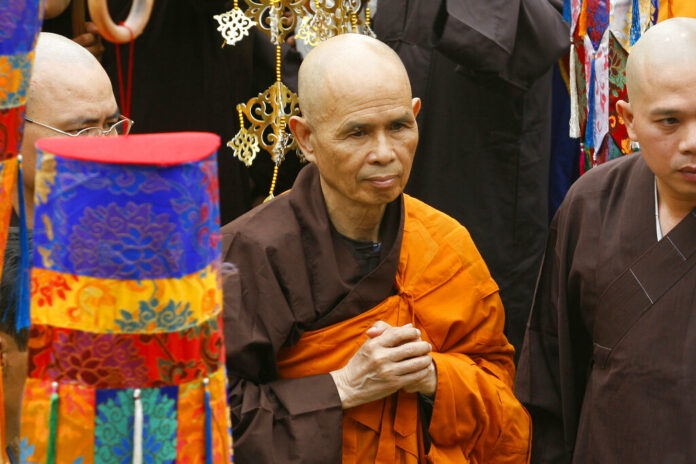
FILE - Vietnamese Zen master Thich Nhat Hanh, center, arrives for a great chanting ceremony at Vinh Nghiem Pagoda in Ho Chi Minh City, Vietnam on March 16, 2007. Photo: AP File

HANOI, Vietnam (AP) — Thich Nhat Hanh, the revered Zen Buddhist monk who helped pioneer the concept of mindfulness in the West and socially engaged Buddhism in the East, has died. He was 95.

The death was confirmed by a monk at Tu Hieu Pagoda in Hue, Vietnam who said that Nhat Hanh, known as Thay to his followers, died at midnight on Saturday. The monk declined to be named because he is not authorized to speak to media.

A post on Nhat Hanh’s verified Twitter page attributed to The International Plum Village Community of Engaged Buddhism also confirmed the news, saying, “We invite our beloved global spiritual family to take a few moments to be still, to come back to our mindful breathing, as we together hold Thay in our hearts.”

Born as Nguyen Xuan Bao in 1926 and ordained at age 16, Nhat Hanh distilled Buddhist teachings on compassion and suffering into easily grasped guidance over a lifetime dedicated to working for peace. In 1961 he went to the United States to study, teaching comparative religion for a time at Princeton and Columbia universities.

For most of the remainder of his life, he lived in exile at Plum Village, a retreat center he founded in southern France.

There and in talks and retreats around the world, he introduced Zen Buddhism, at its essence, as peace through compassionate listening. Still and steadfast in his brown robes, he exuded an air of watchful, amused calm, sometimes sharing a stage with the somewhat livelier Tibetan Buddhist leader Dalai Lama.

“The peace we seek cannot be our personal possession. We need to find an inner peace which makes it possible for us to become one with those who suffer, and to do something to help our brothers and sisters, which is to say, ourselves,” Nhat Hanh wrote in one of his dozens of books, “The Sun My Heart.”

Surviving a stroke in 2014 that left him unable to speak, he returned to Vietnam in October 2018, spending his final years at the Tu Hieu Pagoda, the monastery where he was ordained nearly 80 years earlier.

Nhat Hanh plunged into anti-war activism after his return to his homeland in 1964 as the Vietnam War was escalating. There, he founded the Order of Inter-being, which espouses “engaged Buddhism” dedicated to nonviolence, mindfulness and social service.

In 1966, he met the U.S. civil rights leader Martin Luther King Jr. in what was a remarkable encounter for both. Nhat Hanh told King he was a “Bodhisattva,” or enlightened being, for his efforts to promote social justice.

The monk’s efforts to promote reconciliation between the U.S.-backed South and communist North Vietnam so impressed King that a year later he nominated Nhat Hanh for the Nobel Peace Prize.

In his exchanges with King, Nhat Hanh explained one of the rare controversies in his long life of advocating for peace — over the immolations of some Vietnamese monks and nuns to protest the war.

“I said this was not suicide, because in a difficult situation like Vietnam, to make your voice heard is difficult. So sometimes we have to burn ourselves alive in order for our voice to be heard so that is an act of compassion that you do that, the act of love and not of despair,” he said in an interview with U.S. talk show host Oprah Winfrey. “Jesus Christ died in the same spirit.”

Sulak Sivaraksa, a Thai academic who embraced Nhat Hanh’s idea of socially engaged Buddhism, said the Zen master had “suffered more than most monks and had been involved more for social justice.”

“In Vietnam in the 1950s and 1960s, he was very exposed to young people, and his society was in turmoil, in crisis. He was really in a difficult position, between the devil and the deep blue sea — the Communists on the one hand, the CIA on the other hand. In such a situation, he has been very honest — as an activist, as a contemplative monk, as a poet, and as a clear writer,” Sivaraksa was quoted as saying.

According to Nhat Hanh, “Buddhism means to be awake — mindful of what is happening in one’s body, feelings, mind and in the world. If you are awake, you cannot do otherwise than act compassionately to help relieve suffering you see around you. So Buddhism must be engaged in the world. If it is not engaged, it is not Buddhism.”

Both North and South Vietnam barred Nhat Hanh from returning home after he went abroad in 1966 to campaign against the war, leaving him, he said, “like a bee without a beehive.”

He was only allowed back into the country in 2005, when the communist-ruled government welcomed him back in the first of several visits. Nhat Hanh remained based in southern France.

The dramatic homecoming seemed to signal an easing of controls on religion. Nhat Hanh’s followers were invited by the abbot of Bat Nha to settle at his mountain monastery, where they remained for several years until relations with the authorities began to sour over Nhat Hanh’s calls for an end to government control over religion.

By late 2009 to early 2010, Nhat Hanh’s followers were evicted from the monastery and from another temple where they had taken refuge.

Over nearly eight decades, Nhat Hanh’s teachings were refined into concepts accessible to all.

To weather the storms of life and realize happiness, he counseled always a mindful “return to the breath,” even while doing routine chores like sweeping and washing dishes.

“I try to live every moment like that, relaxed, dwelling peacefully in the present moment and respond to events with compassion,” he told Winfrey.

Nhat Hanh moved to Thailand in late 2016 and then returned to Vietnam in late 2018, where he was receiving traditional medicine treatments for the after-effects of his stroke and enjoyed “strolls” around the temple grounds in his wheelchair, according to the Buddhist online newsletter LionsRoar.com.

It was a quiet, simple end to an extraordinary life, one entirely in keeping with his love for taking joy from the humblest aspects of life. “No mud, no lotus,” says one of his many brief sayings.

___

Story: Hau Dinh, Elaine Kurtenbach, and Hrvoje Hranjski. Kurtenbach and Hranjski reported from Bangkok.

Advertisement

US Charges Belarus With Air Piracy in Reporter’s Arrest

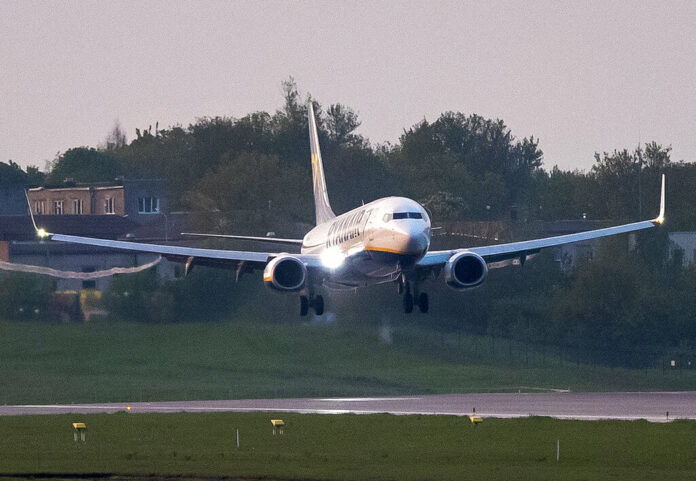
FILE - A Ryanair plane with registration number SP-RSM, that was carrying Belarus opposition journalist Raman Pratasevich from Athens to Vilnius and was diverted to Minsk, Belarus, after a bomb threat, lands at the International Airport outside Vilnius, Lithuania, on May 23, 2021. Photo: Mindaugas Kulbis / AP File

NEW YORK (AP) — U.S. prosecutors charged four Belarusian government officials on Thursday with aircraft piracy for diverting a Ryanair flight last year to arrest an opposition journalist, using a ruse that there was a bomb threat.

The charges, announced by federal prosecutors in New York, recounted how a regularly-scheduled passenger plane traveling between Athens, Greece, and Vilnius, Lithuania, on May 23 was diverted to Minsk, Belarus by air traffic control authorities there.

“Since the dawn of powered flight, countries around the world have cooperated to keep passenger airplanes safe. The defendants shattered those standards by diverting an airplane to further the improper purpose of repressing dissent and free speech,” U.S. Attorney Damian Williams said in a news release announcing the charges.

Ryanair said Belarusian flight controllers told the pilots there was a bomb threat against the jetliner and ordered it to land in Minsk. The Belarusian military scrambled a MiG-29 fighter jet in an apparent attempt to encourage the crew to comply with the flight controllers’ orders.

The journalist and activist who was arrested, Raman Pratasevich, ran a popular messaging app that helped organize mass demonstrations against Belarusian President Alexander Lukashenko. The 26-year-old Pratasevich left Belarus in 2019 and faced charges there of inciting riots.

In August, U.S. President Joe Biden levied new sanctions against Belarus on the one-year anniversary of Lukashenko’s election to a sixth term leading the Eastern European nation — a vote the U.S. and international community said was fraught with irregularities.

Widespread belief that the 2020 vote was stolen triggered mass protests in Belarus that led to increased repressions by Lukashenko’s government on protesters, dissidents and independent media. More than 35,000 people were arrested and thousands were beaten and jailed. The protests lasted for months, petering out only when winter set in.

Those charged in court papers Thursday were identified as Leonid Mikalaevich Churo, director general of Belaeronavigatsia Republican Unitary Air Navigation Services Enterprise, the Belarusian state air navigation authority; Oleg Kazyuchits, deputy director general of Belaeronavigatsia; and two Belarusian state security agents whose full identities weren’t known to prosecutors.

U.S. prosecutors described the defendants as fugitives and said they were facing charges of conspiring to commit aircraft piracy, which carries a mandatory minimum sentence of 20 years in prison. Messages seeking comment were sent to the Belarusian embassy in Washington and the country’s U.N. mission in New York; their phones rang unanswered Thursday evening.

U.S. officials say they have jurisdiction in the case because American citizens were aboard the flight.

After the episode last year, the European Union swiftly banned Belarusian airlines from using airspace and airports in the 27-nation bloc, urged EU-based carriers to avoid flying over Belarus and imposed sanctions on some Belarusian officials. EU Commission President Ursula von der Leyen said the plane incident amounted to a “hijacking.” Lithuania told all incoming and outgoing flights to avoid neighboring Belarus, while Ukraine’s leader moved to ban Ukrainian flights via the neighbor’s airspace.

But Belarus’ key ally Russia offered support, arguing that Belarus acted in line with international procedures for bomb threats and saying the West reacted rashly. Russian President Vladimir Putin welcomed Lukashenko for talks days after the incident and nodded in sympathy as Lukashenko fulminated about the EU sanctions, saying the bloc was trying to destabilize his country.

Advertisement

Russia Announces Sweeping Naval Drills Amid Ukraine Tensions

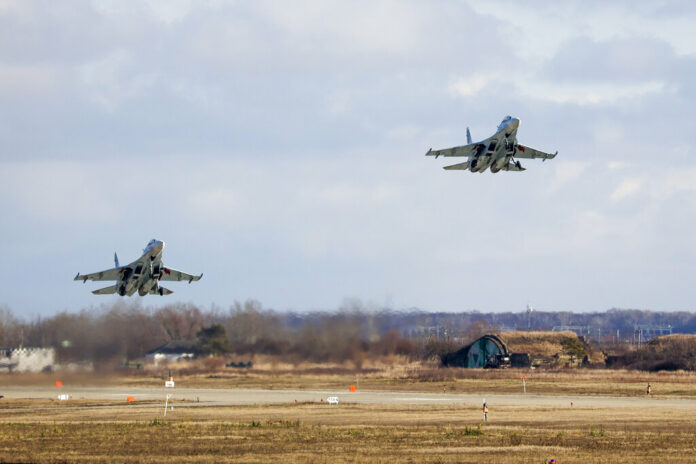
Two Russian Su-30 fighter jets take off taking part in a training mission in Krasnodar Region, Russia, Wednesday, Jan. 19, 2022. Photo: Vitaliy Timkiv / AP

MOSCOW (AP) — Russia on Thursday announced sweeping naval drills in several parts of the world this month, and claimed the West is plotting “provocations” in neighboring Ukraine where the Kremlin has been accused of planning aggressive military action.

Amid a buildup of an estimated 100,000 Russian troops near the border with Ukraine and massive joint war games with Belarus, the Defense Ministry said it will also conduct maneuvers involving the bulk of Russia’s naval potential.

“The drills are intended to practice navy and air force action to protect Russian national interests in the world’s oceans and to counter military threats to the Russian Federation,” the ministry said, adding that they will start this month and run through February.

It said the exercise will involve over 140 warships and more than 60 aircraft, and will be conducted in both littoral waters and more distant “operationally important” areas including the Mediterranean, northeastern Atlantic and the Pacific Ocean.

The ministry said several Russian warships are currently taking part in a joint exercise with China and Iran in the Gulf of Oman that began Tuesday and will last until the weekend.

U.S. President Joe Biden said Wednesday he thinks Russia will invade Ukraine and warned President Vladimir Putin that his country would pay a “dear price” in lives lost and a possible cutoff from the global banking system if it does.

Moscow has repeatedly denied having plans to launch an offensive. But it has sought a set of security guarantees from the West that would exclude NATO’s expansion to Ukraine and other ex-Soviet nations and the deployment of alliance weapons there.

Washington and its allies firmly rejected Moscow’s demands in security talks last week but kept the door open to possible further talks on arms control and confidence-building measures to reduce the potential for hostilities.

Amid the tensions, U.S. Secretary of State Antony Blinken visited Ukraine Wednesday to reassure it of Western support and met with his British, French and German counterparts in Berlin on Thursday to discuss Ukraine and other security matters. Blinken is set to meet Russian Foreign Minister Sergey Lavrov in Geneva on Friday.

Russian Foreign Ministry spokeswoman Maria Zakharova alleged that Ukrainian and Western claims of an imminent Russian attack on Ukraine were a “cover for staging large-scale provocations of their own, including those of military character.”

“They may have extremely tragic consequences for the regional and global security,” Zakharova said.

She pointed to the delivery of weapons to Ukraine by British military transport planes in recent days, claiming that Ukraine perceives Western military assistance as a “carte blanche for a military operation in Donbas.”

Donbas, located in eastern Ukraine, is under control of Russia-backed separatists who have fought Ukrainian forces for nearly eight years, a conflict that has killed more than 14,000 people.

Ukraine said earlier this week that it has taken the delivery of anti-tank missiles from the U.K. It has rejected Moscow’s claims that it plans an offensive to reclaim control of separatist-held areas in the country’s eastern industrial heartland.

Kremlin spokesman Dmitry Peskov said the U.S. threat to cut off Russia from the global banking system could encourage hawkish forces in Ukraine to use force to reclaim control of the rebel east.

“It may implant false hopes in the hotheads of some representatives of the Ukrainian leadership who may decide to quietly restart a civil war in their country,” Peskov said in a conference call with reporters.

In a move that further beefs up forces near Ukraine, Russia has sent an unspecified number of troops from its far east to its ally Belarus, which shares a border with Ukraine, for major war games that run through Feb. 20. Ukrainian officials have said Moscow could use Belarusian territory to launch a potential multi-pronged invasion.

The head of the European Union’s executive arm, European Commission President Ursula von der Leyen reiterated Thursday that the EU “will respond with massive economic and financial sanctions” if Russia invades Ukraine. “We hope an attack won’t happen, but if it does, we are prepared,” von der Leyen said during an online speech to the Davos business forum.

___

Story: Vladimir Isachenkov. Vanessa Gera in Warsaw, Poland, and Lorne Cook in Brussels, contributed to this report.

Advertisement

THE STANDARD, HUA HIN CELEBRATES CHINESE NEW YEAR WITH CREATIVE CUISINE AND ANCIENT HEALING

Guests are invited to a collaborative four-hand, five-course dinner at Praça on 31st January, followed by authentic ear seeding on 1st February, as time-honored traditions fuse with contemporary style

HUA HIN, THAILAND, JANUARY 2022: Chinese New Year is a time to come together with loved ones and honor the past, whilst also looking ahead to an exciting future. To celebrate the dawn of the “Year of the Tiger”, The Standard, Hua Hin’s newest and coolest beach resort, has unveiled a series of sensational festive occasions that fuse the rich traditions of the past with cutting-edge cuisine and timeless mid-century sophistication.

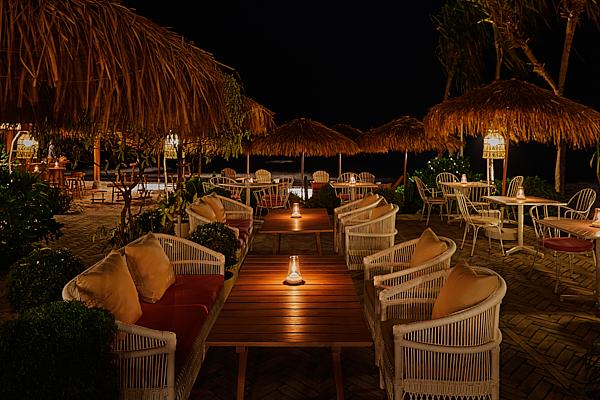
Praça, the upbeat beachside bar and Thai izakaya, will prove that four hands are better than two this Chinese New Year, with a creative culinary journey by two award-winning chefs: Peter Lai, an expert in the art of Cantonese cuisine, and Prasertchai “Jacky” Trongvanichnam, a former Iron Chef champion and master of Thai gastronomy. Previously a teacher and student, Chef Peter and Chef Jacky will now work together to produce a mouth-watering five-course Asian feast, as diners pick from tempting Thai plates prepared by Khun Jacky or delicious Chinese dishes crafted by Chef Peter!

image3 5

Following an enticing amuse bouche of Apple Plum Ice Cream, guests will be served two tempting appetizers: Chef Peter’s Scallop & XO Sauce or Chef Jacky’s Moo Pa-Lo Bao (slow-cooked pork with Chinese five spice in a bao bun). For the third course, Chef Peter’s King Prawns with Truffle & Mushroom will take on Chef Jacky’s Lark Bua Thord (crisp lotus root with nam prik ong), before the main course match-up: Chef Peter’s Chow Mein with Roasted Duck versus Chef Jacky’s Pla Too Yang (grilled mackerel with soy & ginger broth). The evening ends with delicious Thai dessert of Bua Loy (assorted dumplings in a coconut pandan broth).

Staged at Praça for one night only, Monday 31st January 2022 (Chinese New Year’s Eve) from 18.00 hrs, this culinary collaboration is priced at just THB 1,500 net per person, or THB 1,300 net for guests who reserve their table before 24th January. 

To bring the spirit of the Spring Festival to life, the talented Kru Leng Rachanikorn, a Thai Aerial Artist will perform during the night. 

Check it out for more information, https://www.standardhotels.com/hua-hin/happenings/a-four-handed-feast-at-praca

image2 5

To  give guests a lasting reminder of their Chinese New Year celebrations in Hua Hin, The Standard has teamed up with a professional practitioner of traditional Chinese medicine to offer “ear seeding” – an ancient technique designed to treat physical and emotional ailments. On Monday 31st January 2022 from 10.00 a.m. – 4.00 p.m. (Chinese New Year’s Day), Emilie Erlandsson from Apothe Qi will give guests an exclusive opportunity to have small 24 karat seeds and crystals implanted in their ears at The Spa, only THB 1,000 per person. 

A form of acupressure, ear seeds are reputed to help ease conditions such as joint pain, migraines, insomnia, hormonal imbalances, weight gain, skin issues and anxiety. There are few people better qualified to offer this treatment than Emilie, an holistic health mentor who graduated from the Institute for Integrative Nutrition (IIN) in New York before founding Apothe Qi. Every customer will be able to learn about the process with a professional consultation before undergoing this painless therapy. 

Newly-opened in December 2021, The Standard, Hua Hin brings a chic Miami vibe to Thailand’s golden gulf coast. With 199 rooms, suites and villas, an art-deco Lido pool and bar, a restaurant and juice café, all set in exotic gardens, this idyllic seafront hotel is set to attract experience-seeking explorers. The Standard hotels are only present in the planet’s most desirable destinations, from Miami Beach to the Maldives, London to New York, Hollywood to Hua Hin. 

For more information and to celebrate Chinese New Year in style, please contact The Standard, Hua Hin on 032-535-999 or [email protected].


Connect with the hotel via:

Facebook: The Standard Hua Hin

Line: @thestandardhuahin

Web: www.standardhotels.com

Advertisement

Hot News

LATEST NEWS

Bangkok
overcast clouds
32.7 ° C
35 °
32.7 °
68 %
4kmh
99 %
Fri
30 °
Sat
31 °
Sun
35 °
Mon
36 °
Tue
37 °