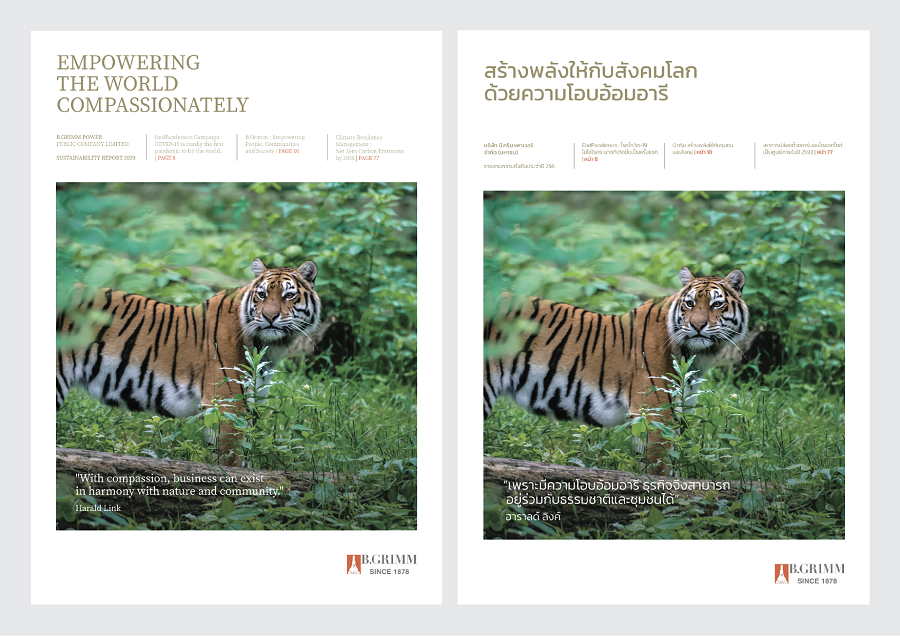
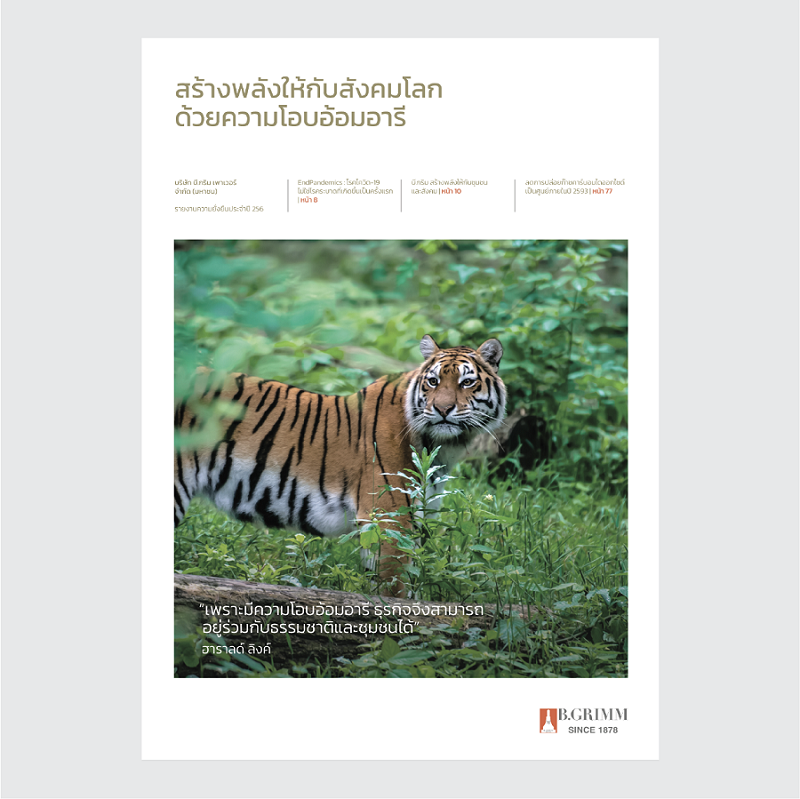
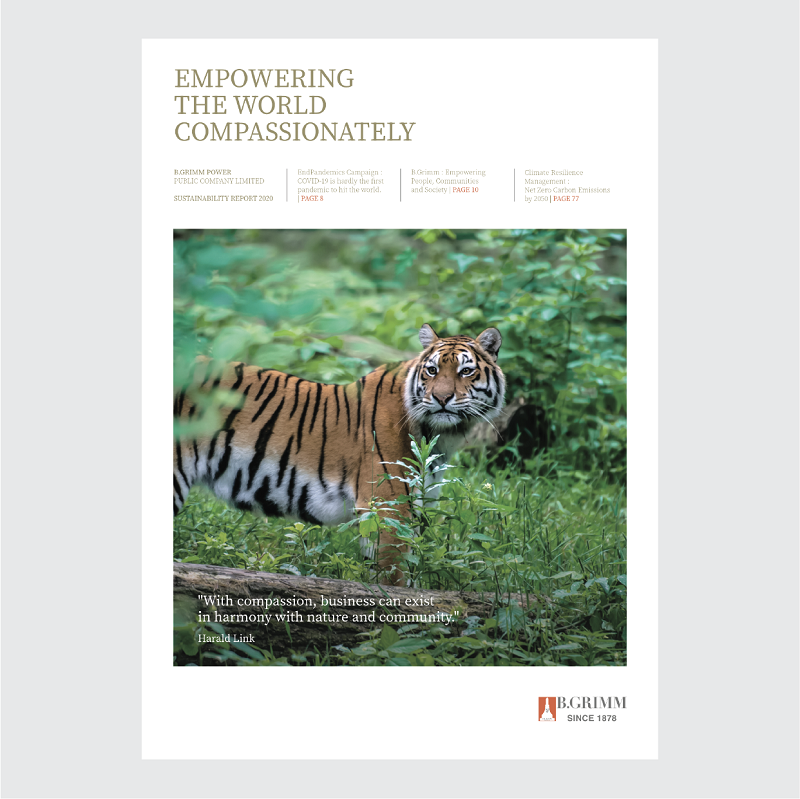
B.Grimm Power PCL (BGRIM), Thailand’s leading industrial power producer, is the only firm in Asia Pacific to earn the Gold award in the Interior Design category from the International ARC Awards 2021 for its “Sustainability Report 2020: Empowering the World Compassionately”. The sustainability report won the top accolade for its creative design, beautiful presentation and information layout which can effectively communicate BGRIM’s vision and missions clearly in an easy-to-understand manner.
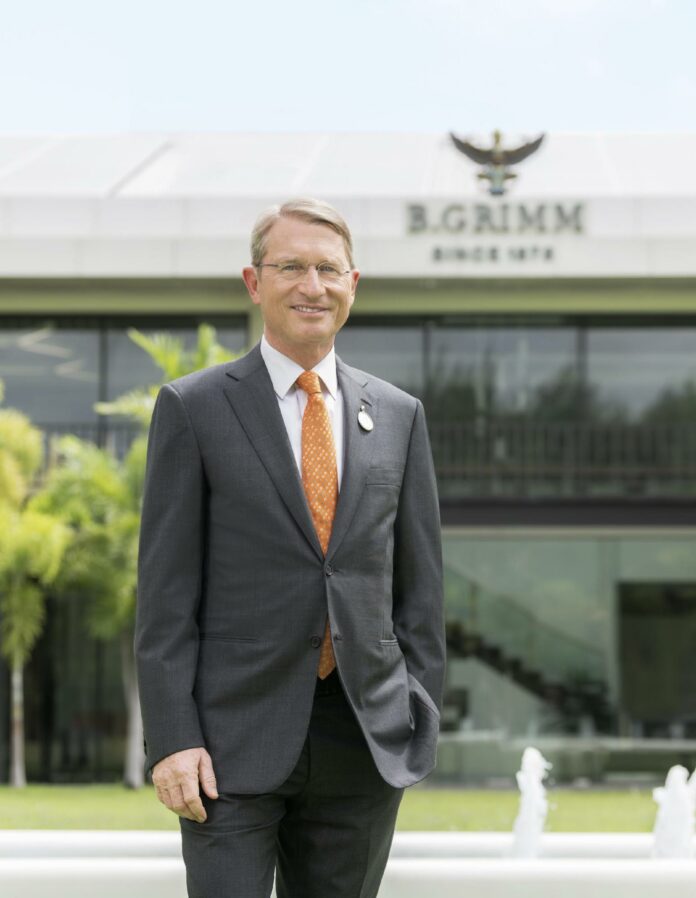
“The award mirrors BGRIM’s determination to promote a sustainable business growth (sustainability) under the principles of good governance as well as responsible value chain management by taking into account the economic, social and environmental impacts,” said Dr Harald Link, Chairman and President of BGRIM.
The International ARC Awards form part of MerComm International Awards Programs organised by MerComm Inc, an independent global firm that promotes excellence in communications and honouring individuals, organisations and companies with outstanding performance in the field.
The awarding has been held continuously for 35 years. Entries evaluated by independent experts in the field of economic information communications and technology from around the world in the form of “blind judges”, with an order of marks according to the criteria of the award, with winners must have a score of more than 70%.
For 143 years, B.Grimm, the parent firm of BGRIM, has been operating in Thailand. With the philosophy of “Doing business with compassion for the development of civilisation in harmony with nature”, the company has focussed on creating benefits for people and society while placing importance on the conservation of the environment and wildlife.
One of the important projects that B.Grimm has been supporting over the past seven years is the conservation and restoration of tiger populations at Mae Wong and Khlong Lan National Parks in Kamphaeng Phet Province.
The company collaborates with the Department of National Parks, Wildlife and Plant Conservation, and the WWF-Thailand to protect tiger habitats from poaching, hunting and helping to restore the nature of the western forests of Thailand. The effort encompasses research and surveys of tiger populations and other wild animals, and support smart patrol system to ensure safety for forest rangers. The company has also played an important role in raising awareness and building a network of tiger and wildlife conservation in Thailand.
In addition, B.Grimm also supports the non-profit organisation Freeland in its “EndPandemics” campaign to end wildlife trafficking through various communication channels, both online and offline, such as staging public seminars through various media to publicise and raise awareness in the wider global community.
Currently, B.Grimm Power has a total of 50 power plants in commercial operation. The company aims to ramp up its total installed capacity from 3,058 MW at the end of 2020 to at least 7,200 MW of secured PPA by 2025 and further to 10,000 MW by 2030 with an annual revenue of more than 100 billion baht being targeted. More importantly, B.Grimm Power is moving strenuously towards realising net-zero carbon emissions by 2050.
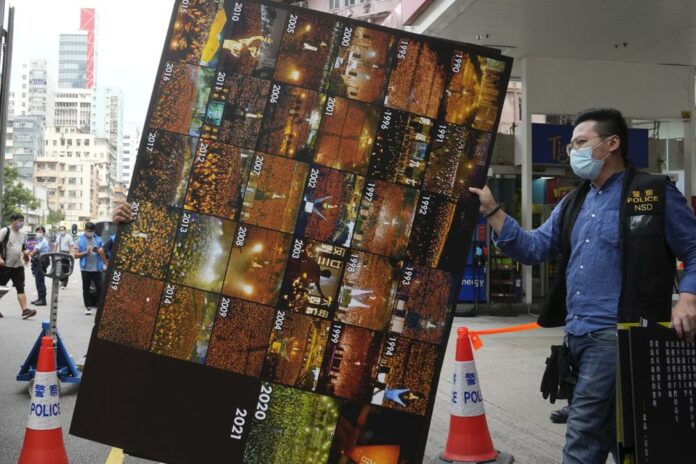
Police officers take away a cardboard featuring pictures of annual candlelight vigil from the June 4th Museum as an evidence, in Hong Kong. Thursday, Sept. 9, 2021. (AP Photo/Kin Cheung)
HONG KONG (AP) — Three leaders of the the group that organized an annual Tiananmen candlelight vigil were being held in custody Friday after they were charged with subversion under Hong Kong’s national security law, as authorities intensify a crackdown on dissent in the city.
The Hong Kong Alliance in Support of Patriotic Democratic Movements of China’s chairman Lee Cheuk-yan, as well as vice-chairs Albert Ho and Chow Hang-tung were charged with inciting subversion of state power under the national security law. The alliance itself was also charged with subversion.
Chow was denied bail, days after she was arrested for failing to comply with a police request for information. Lee and Ho are currently serving jail sentences for their roles in unauthorized assemblies in 2019. The next court hearing for the case is scheduled for Oct. 28.
For the past 30 years, the alliance organized the candlelight vigil that saw tens of thousands of people mass in the city’s Victoria Park to commemorate China’s bloody military crackdown against pro-democracy demonstrations in Beijing’s Tiananmen Square on June 4, 1989.
It was the only large-scale public commemoration of the crackdown on Chinese soil, featuring crowds of people lighting candles and singing songs to support democracy.
Police have banned the vigils for the past two years citing the coronavirus pandemic, although critics believe the ban is part of the crackdown on dissent Beijing and Hong Kong’s leaders have waged following months of anti-government protests in the territory in 2019.
Authorities have now characterized the Hong Kong Alliance in Support of Patriotic Democratic Movements of China as a foreign agent, and sought details about the group’s operations and finances in connection with its alleged activities and links with democracy groups overseas.
Chow and four other leading members of the alliance had refused to cooperate with the police request for information, and were arrested this week for failing to comply.
Police on Thursday confiscated computers, documents and promotional materials from the closed June 4 museum, which was run by the alliance to commemorate the Tiananmen crackdown.
Police said 2.2 million Hong Kong dollars ($280,000) worth of assets belonging to the alliance were also frozen.
On Thursday, a Facebook post was posted on Chow’s account urging Hong Kongers not to “accept their fate.”
“Maybe the other party will crush the ‘obstacle’ that is us, but resistance is about gathering strength in exchange for some time and space, to allow more ‘obstacles’ the opportunity to grow,” the post said.
“As long as we still have the will to fight, we have not lost.”
Over the past year, dozens of pro-democracy activists have been arrested, others have left the city for exile abroad, and the city has amended electoral laws to increase the number of seats for pro-Beijing legislators while reducing those that are directly elected.
The national security law, imposed by Beijing on the city in June last year, criminalizes subversion, secession, terrorism and foreign collusion to interfere in the city’s affairs.
Critics say the national security law, which has been used to arrest more than 100 people, rolls back freedoms promised to the former British colony when it was handed over to China in 1997. Hong Kong had been promised it could maintain freedoms not found on the mainland for 50 years, such as freedom of speech and assembly.
Thailand is an agricultural country as its land is suitable for agriculture and farmers can cultivate several crops that could enormously yield and earn. However, expansion of agriculture has often come at a heavy cost to the natural environment. Climate change may be another factor inducing severe plant diseases and pests, causing major damages to economically important crops. Chemical pesticides have been extensively used in modern agriculture to control diseases and pests. However, overtime, some pests have developed resistance to pesticides used to manage them. Farmers feel the need to increase the amount of chemicals and pesticide use which pose serious threat to the health of both farmers and consumers, as well as the ecosystem. Thailand uses and imports considerable amount of pesticides each year.
Biological control is the use of microbes to control pest organisms such as plant pathogen, insects and weeds. As a natural method, biocontrol does not require the use of chemical which can have an adverse impact to both the environment and human health.Harnessing microbial biodiversity for agricultural sector has long been prioritized by the National Center for Genetic Engineering and Biochemistry (BIOTEC), National Science and Technology Development Agency (NSTDA).
Dr. Boonhiang Promdonkoy, Biocontrol Technology Research Team Leader, reveals that BIOTEC has been working on the development of biocontrol agents for more than a decade. The focus is on utilization of microbial antagonists which are able to effectively attack multiple types of pests such as insect fungi, protein from bacteria and Nuclear Polyhedriosis Virus (NPV). Knowledge accumulated throughout the years have been disseminated and transferred to local farmers, especially organic farming.
Dr. Boonhiang went on to elaborate that currently BIOTEC has developed biological control agents from insect fungi such as Beauveria and Metarhizium. They could be used to effectively control various pests such as rice brown planthoppers (Nilaparvata legens), aphids (Myzus persicae), thrips (Thrips palmi) pink mealy bug (Phenacoccus manihoti), whiteflies (Bemisia tabaci), beetles and blossom midges. The fungi specifically infect and kill insect pests. Spore will be produced and applied in the field. Insects can become infected when they come into contact with fungal spores and pathogenesis developed within a few days. Fungal spores emerged from the insect cadaver could be spread to other insects.
The development of insecticidal protein from a bacterium that kills insects have also long been a topic of interest for BIOTEC. The study is based on the vegetative insecticidal protein (Vip) produced by Bacillus thuringiensis. We have successfully developed a biocontrol prototype “VipPro”. The product is highly effective against Lepidopteran species, such as beet armyworm, common cutworm, diamondback moth and cabbage looper. Field trials have been carried out in several regions of the country including paddy fields, kale, asparagus, shallot, etc. The results demonstrated VipPro offers advantages via biodegradability, fast-acting and environmental safety. Its effectiveness to control insect pests is comparable to synthetic insecticides.
In partnership with both public and private sectors, NSTDA has been working closely with local farmers in several areas of the country to promote the use of biocontrol agents as alternative and cost-effective means for the sustainable agriculture.
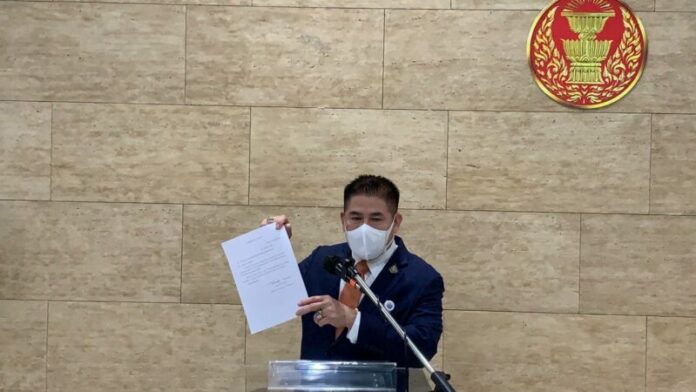
Assistant Agriculture Minister Thammanat Prompao showed his resignation letter to reporters Sept. 9, 2021.
BANGKOK (AP) — Thai Prime Minister Prayuth Chan-ocha sacked two Cabinet members on Thursday, including one who was widely reported to have unsuccessfully plotted for him to lose a parliamentary no-confidence vote last week.
Deputy Agriculture Minister Thammanat Prompao was deeply controversial even before the alleged mutiny attempt for being imprisoned for four years in Australia in the 1990s in a case involving heroin smuggling.
He has also faced other scandals, including a claim that his doctorate in public administration was fraudulently earned. He has rejected all accusations of wrongdoing.
Thammanat won his Cabinet position by being a political power broker capable of turning out the vote in northern Thailand for the governing Palang Pracharath party, and was made party general secretary in June. Because of his reputation, it isn’t clear whether his dismissal will strengthen or weaken Prayuth’s government.
Palang Pracharath is the military-backed party that nominated former army commander Prayuth as prime minister after the 2019 general election. Prayuth led a military government from 2014 to 2019 after staging a coup.
Deputy Labor Minister Narumon Pinyosinwat was dismissed along with Thammanat, according to an official notice published Thursday in the Royal Gazette. Thai media have reported that she also was involved in last week’s failed plot against Prayuth, which neither the prime minister nor Thammanat publicly acknowledged.
Prayuth and five members of his Cabinet defeated censure motions against them, steadying the government despite its continuing unpopularity for failing to secure adequate supplies of coronavirus vaccines.
PM Prayut Chan-ocha inaugurates the formal opening of Phuket Sandbox program on July 1, 2021.
BANGKOK — Prime Minister Prayut Chan-o-cha is confident to move ahead with a plan to reopen five provinces to tourists amid the coronavirus pandemic, a government spokesman said Thursday.
PM Prayut deems “Phuket Sandbox” to be a successful first phase of reopening, and he wants the government to proceed with the second phase of the plan, spokesman Tanakorn Wangboonkongchana told reporters.
The second phase of the reopening will include Bangkok, Chonburi, Petchaburi, Prachuap Khiri Khan and Chiang Mai. Each province will have its own tourism campaign based on local attractions, like “Bangkok Sandbox,” “Hua Hin Recharge,” “Charming Chiang Mai” and so on, Tanakorn said.
The reopening will kick off on Oct. 1, just in time for the high season of tourism, according to Tanakorn.
“Each province is making preparations, like speeding up vaccination for local residents and coming up with campaigns to draw tourists,” Tanakorn said.
The spokesman also said Phuket Sandbox brought 1.6 billion baht of tourist spending throughout the last two months, which proved to be an economic boon for local businesses.
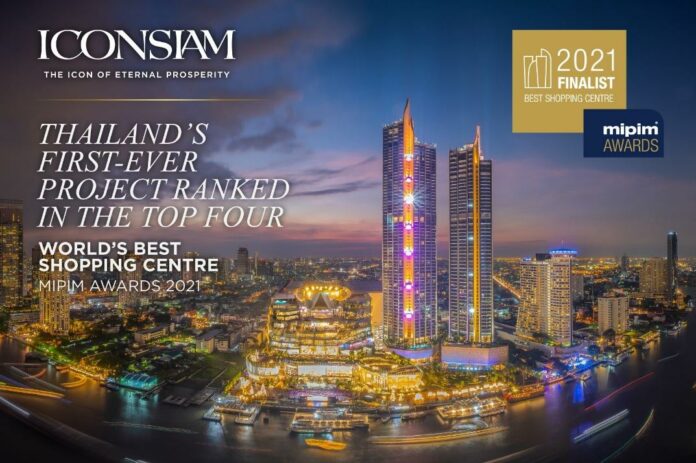
First Thai Project ever recognized by the globally respected MIPIM Awards
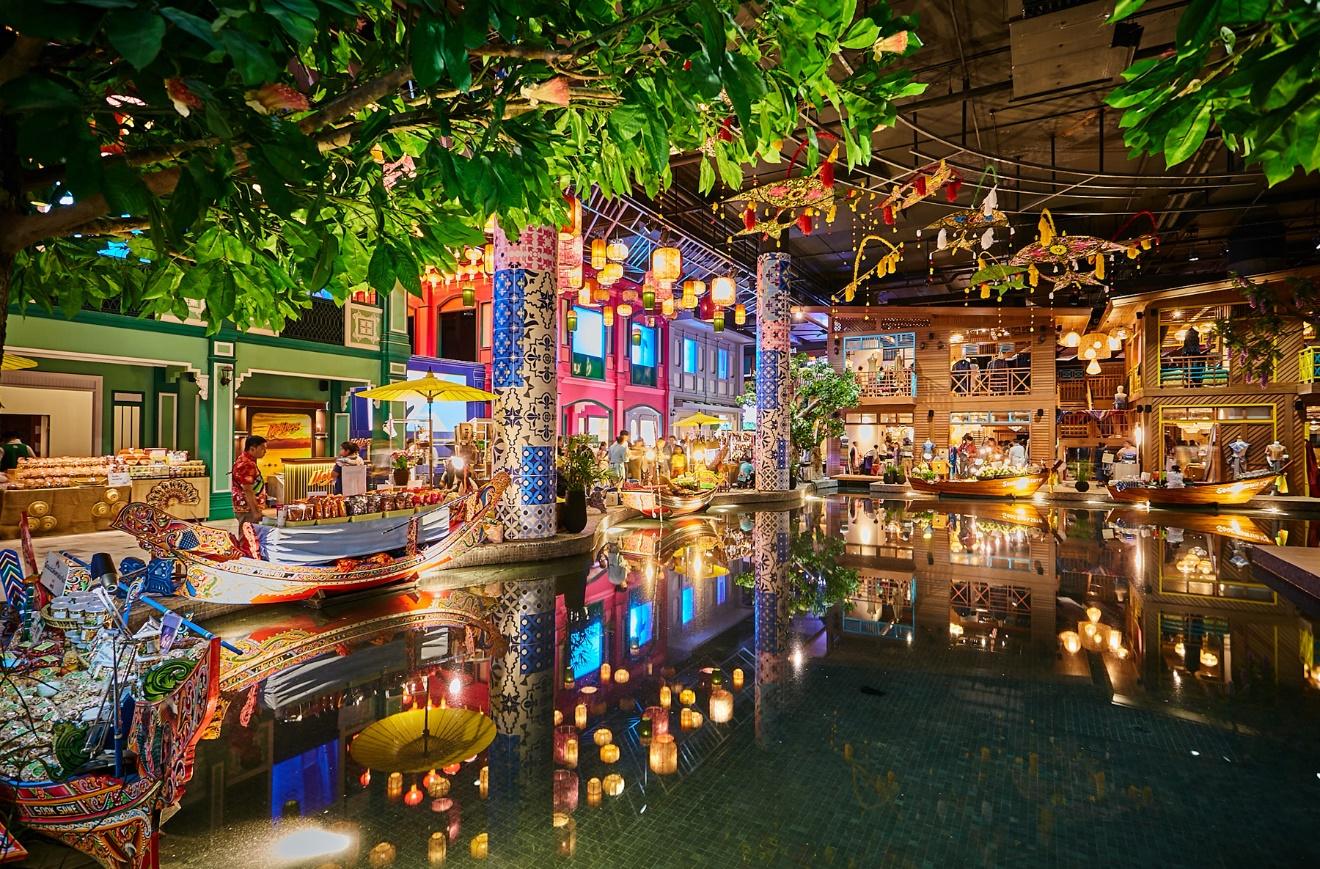
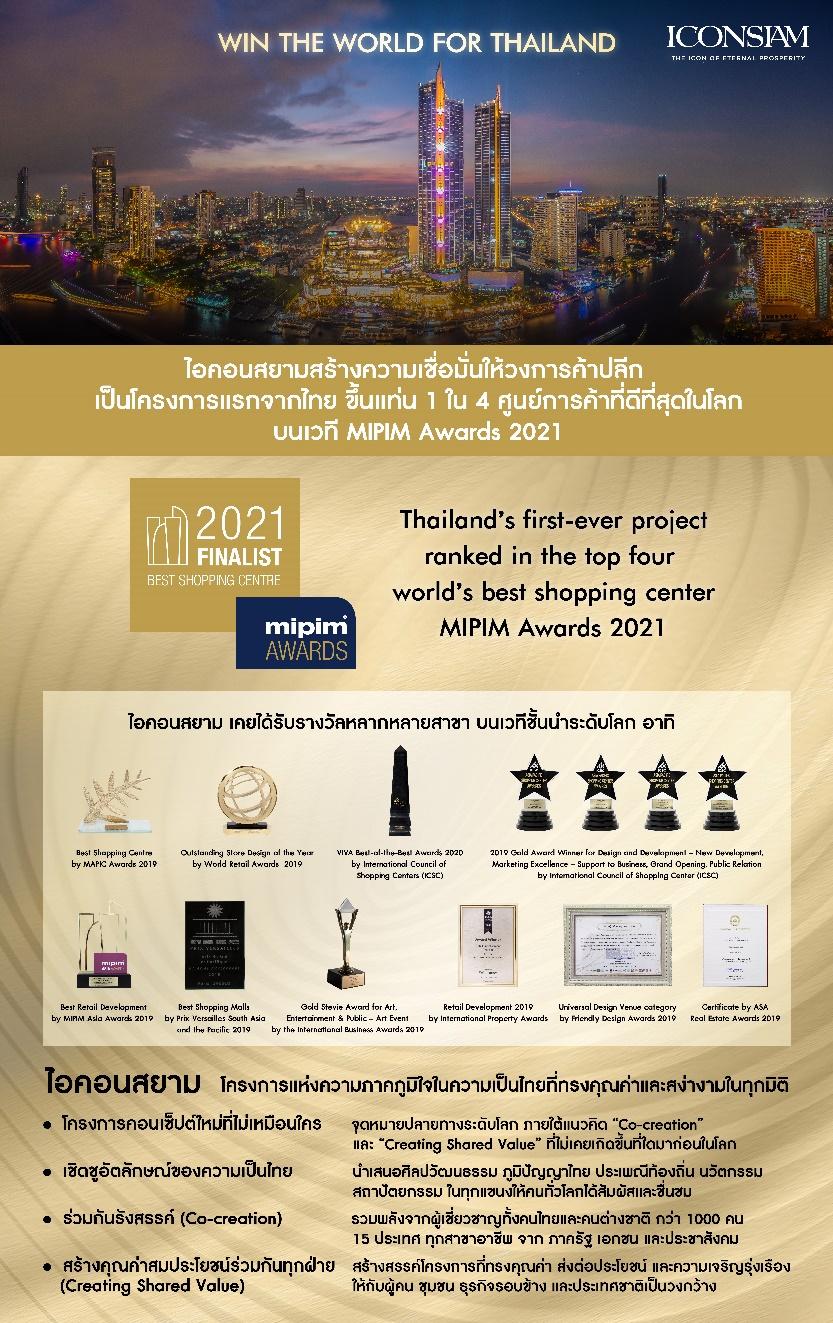
ICONSIAM, the urban lifestyle megaproject of the future under the management of Siam Piwat, with Charoen Pokphand and Magnolia Quality Development Corporation as joint owners and co-developers and Urban Architects Co., Ltd. as architectural collaborator, ranked in the top four in the Best Shopping Center Category at the MIPIM Awards 2021, a world-class real estate competition that has been organized for over 30 years, on September 8, 2021 in Cannes, France. This not only marked the first time for a Thai retail property developer to get an opportunity to vie for this award, but also demonstrates Siam Piwat’s unwavering commitment to all Thais and determination to present to the world the best that Thailand has to offer in order to earn reputation for the country and capture the hearts of people across the globe.
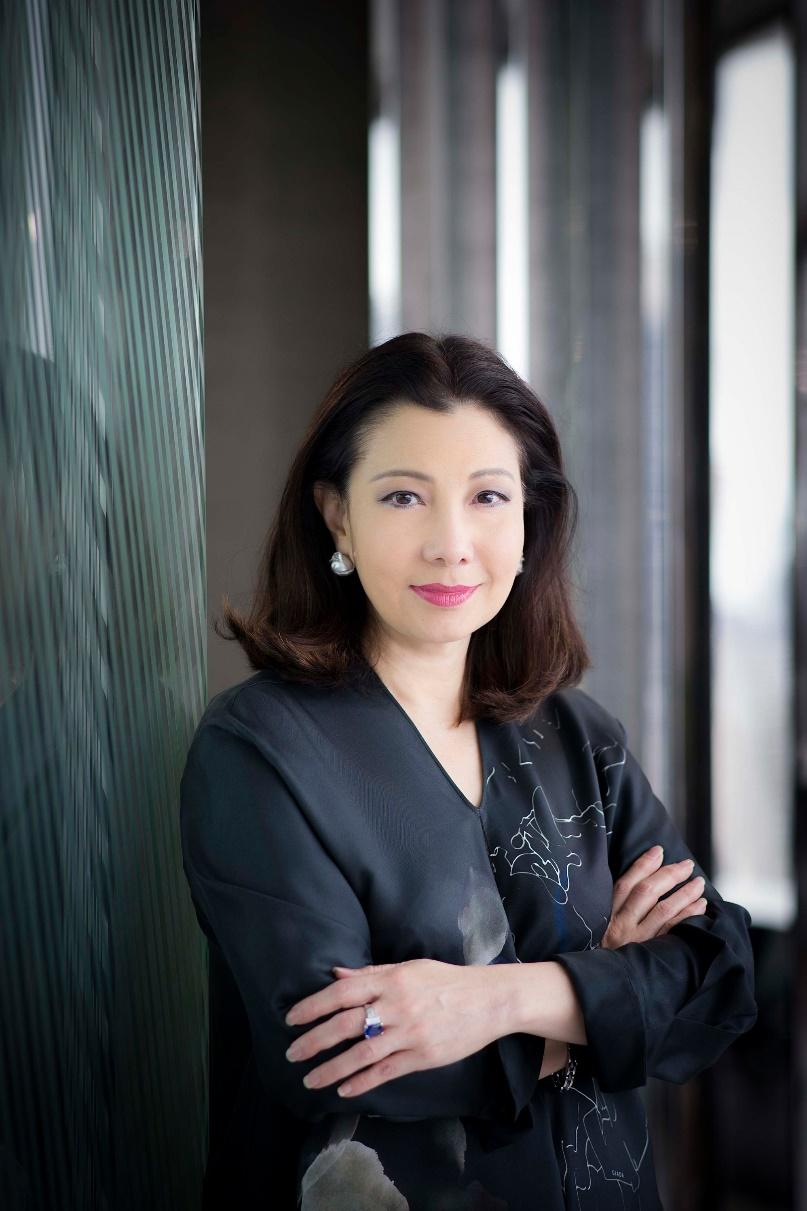
Ms. Chadatip Chutrakul, Chief Executive Officer of Siam Piwat Group, one of the joint venture partners of ICONSIAM, and director of ICONSIAM Co., Ltd., stated, “ICONSIAM is a project whose ultimate goal is to bring together everything Thai and present it for the world to see and experience under the concepts of “Co-creation” and “Creating Shared Value” as well as to unite Thai people across all sectors in an effort to create a project that brings value and benefits to the general public, communities, and the country. Despite business challenges brought on to all sectors by COVID-19, ICONSIAM remains steadfast in its aspiration to provide assistance to business owners, communities, and the general public and enable them to navigate through these difficult times. As Thailand’s first retail developer to ever compete in the world-class MIPIM Awards 2021 in the Best Shopping Center Category, we hope to play a part in building confidence among international business partners and elevate the capability of Thailand to capture the attention of the world again.”
ICONSIAM ranked among the four best shopping centers in the world out of 172 entries from 36 countries at the MIPIM Awards 2021 and is Thailand’s first-ever retail property development to compete in the Best Shopping Center Category in this internationally-recognized real estate competition, which has been organized for over 30 years and dubbed the Academy Award of the property development industry. This honor is a recognition of ICONSIAM’s unprecedented concepts, realized through a large-scale collaboration with experts in different fields from across Thailand and 15 other countries, including architects, engineers, artists, and artisans, as well as with community leaders from various provinces nationwide, government agencies, and over 1,000 retail business owners, who have come together to tell their stories and bring to life a project that reflects every aspect of Thainess, from art and culture all the way to local wisdom and architecture. In addition, this distinction is a testament to the tremendous benefits and prosperity that ICONSIAM has brought to the surrounding communities and businesses, which have previously won ICONSIAM 13 prestigious accolades from various global-level competitions, including the Best Design of the Year at the World Retail Awards 2019 hosted by the World Retail Congress, the first prize in the Best Shopping Center category at the MAPIC Awards 2019 in Cannes, France, and the 2020 VIVA Best-of-the-Best Design and Development Award.
“It is our determination to present the best of Thailand to the world and bring the best of the world to Thailand that has enabled us to compete for such a prestigious award. Earning our place in the world’s most important real estate competition is considered an achievement that Thai people should be proud of. Siam Piwat Group is still just as resolute as ever to enhance Thailand’s reputation and bring benefits to the public as has been its aspiration in order to help Thailand reclaim its position as the ultimate tourist destination and win the hearts of people across the world again,” concluded Chadatip.
ICONSIAM has been selected as Thailand’s key countdown venue for three consecutive years and has been delivering exciting experiences and happiness to Thai and international visitors alike. Today, with the easing of the lockdown, ICONSIAM is ready to dazzle you with fresh experiences by various leading domestic and international brands that have opened their doors despite the pandemic on a space of over 10,000 square meters. These include :-
Starbucks Reserve Chao Phraya Riverfront, Thailand’s largest Starbucks store with a whopping 1,300 sq.m. floor space that incorporates local Thai cultural elements and delivers a vibrant coffee experience; and a new 1,300 sq.m.
MUJI outlet that showcases an awe-inspiring list of 6,193 products across all categories, along with special zones and services, such as Labo, which offers clothing for all occasions; a local treat and delicacy zone, MUJI Coffee Corner; where you can enjoy a cup of coffee made with Doi Tung coffee beans in a relaxing atmosphere; as well as interior design services.
Also opening their doors are a stunning 1,638 sq.m. Experience Center by China’s leading electric and hybrid automobile manufacturer Great Wall Motors
A 4,438 sq.m. world-class indoor playground Mega Harborland, featuring the theme Little Thailand and designed by the world’s leading playground equipment manufacturers, scheduled to open in January 2022.
Visitors can also look forward to the reopening of SookSiam, the ultimate hub of Thai food and products from the 77 provinces of Thailand. An eye-popping range of promotions that are set to help boost sales for the stores and stimulate the Thai economy in the last quarter of the years.
About MIPIM Awards
The MIPIM Awards is an internationally-renowned real estate and retail competition that was established in 1991. Commonly dubbed the Academy Awards of the real estate industry both at the global level and in Asia, the MIPIM Awards honors the most outstanding and accomplished property and retail projects around the world. Aside from this competition, MIPIM has also hosted world-class real estate seminars and events that bring together the world’s most influential players across the real estate industry since 1990.
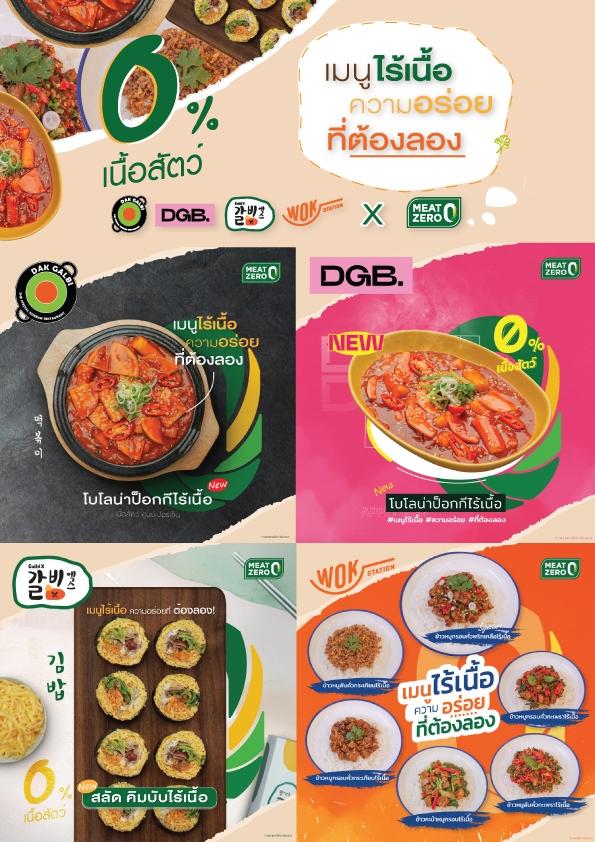
DAK GALBI Group Co., Ltd., restaurant operator of DAK GALBI, DGB, GALBI X and WOK station, has launched a variety of Thai and Korean plant-based dishes from the Meat Zero, an innovative plant-based meat that has the taste and feel like real meat, for attracting health conscience consumers.
Tossaporn Wanichaworapong, Director of Dak Galbi Group, said that plant-based meat is becoming more and more popular in many countries, including Thailand, especially among health conscience consumers, and vegan and Flexitarian. DAK GALBI see opportunity in this upcoming trend and, therefore, joins forces with Thai plant-based producers Meat Zero to produce high quality ingredients for the company.
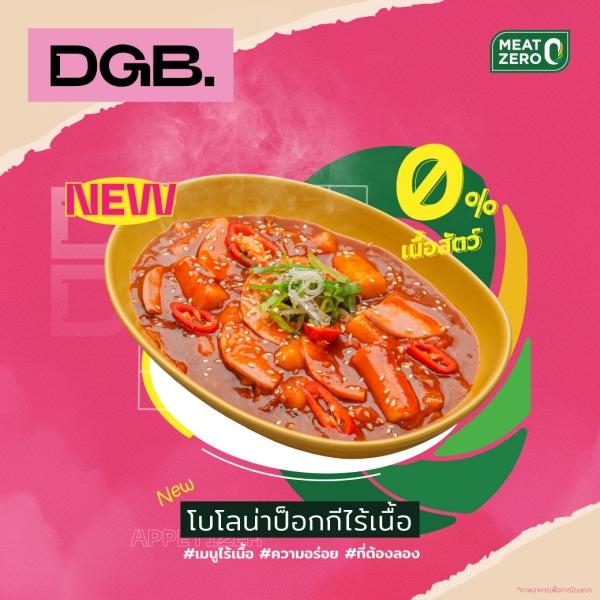
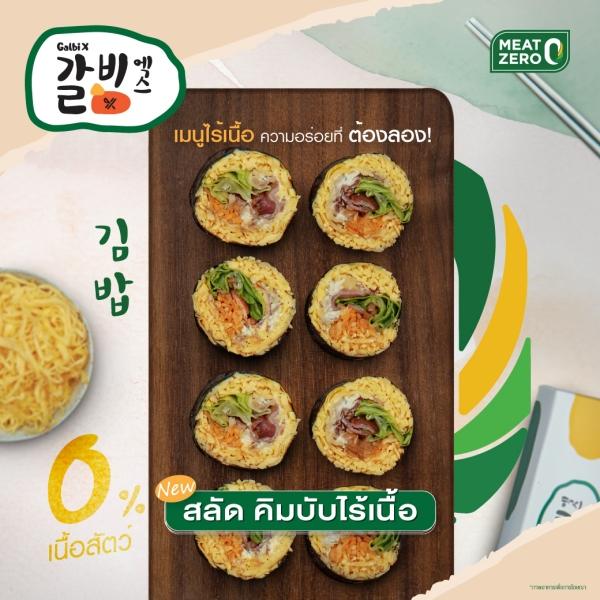
Starting today onwards, Dak Galbi initially creates special menus for the brands Dak Galbi, DGB. and Galbi-X, including Kimbap Zero (Beefless Kimbap Salad and Beef Bologna Pokki), Kimbap Zero 2 (Beefless Kimbap Salad with fish flakes and soup).
Besides, the WOK Station also introduces variety of plant-based menus including WOK Zero Set 1 (Roasted Crispy plant-based Pork with Chili and Salt and plant-based Roasted Pork with Garlic and Roasted Pork on Rice), WOK Zero Set 2 (plant-based Roasted Minced Pork with Holy Basil on Rice) and WOK Zero Set 3 (plant-based Roasted Crispy Pork Belly with Basil and Rice and plant-based Crispy Pork Rice with Fried Egg). These set menus are available at WOK Station nationwide.
CP Foods’ Vice president, Supara Sriboon, added that the company, as a leading food producer, developed the plant-based protein under brand “Meat Zero” to response surge of consumers demand . The brand has created innovative raw materials from plant proteins that is easy to access for all people. Meat Zero’s products are now available via convenience stores, leading department stores and restaurants nationwide.
“The collaboration of Dak Galbi Group and Meat Zero will help both parties to expand its customer base, as well as giving opportunity for consumers to taste delicious and healthy foods. CP Foods plans reach more restaurants and making new delicious products to access consumers of all age groups,” said Ms. Supara
The plant based menus are available via Grab, Lineman and Robinhood, and Line Official of Dak Galbi, DGB, Galbi X, and WOK Station.
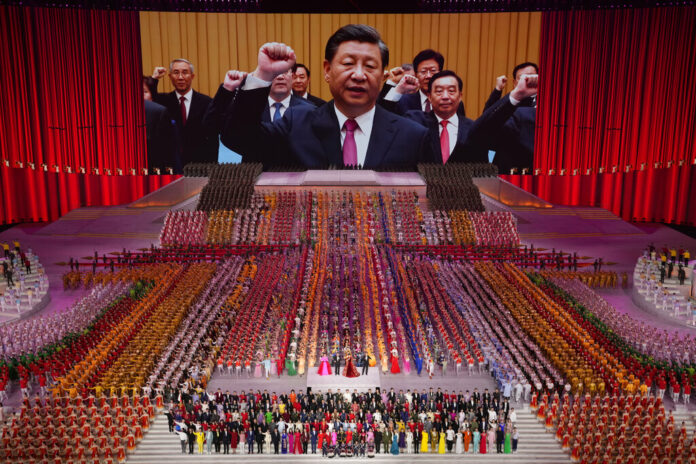
In this June 28, 2021, file photo, Chinese President Xi Jinping is seen leading other top officials pledging their vows to the party on screen during a gala show ahead of the 100th anniversary of the founding of the Chinese Communist Party in Beijing. Photo: Ng Han Guan / AP
BEIJING (AP) — An avalanche of changes launched by China’s ruling Communist Party has jolted everyone from tech billionaires to school kids. Behind them: President Xi Jinping’s vision of making a more powerful, prosperous country by reviving revolutionary ideals, with more economic equality and tighter party control over society and entrepreneurs.
Since taking power in 2012, Xi has called for the party to return to its “original mission” as China’s economic, social and cultural leader and carry out the “rejuvenation of the great Chinese nation.”
The party has spent the decade since then silencing dissent and tightening political control. Now, after 40 years of growth that transformed China into the world’s factory but left a gulf between a wealthy elite and the poor majority, the party is promising to spread prosperity more evenly and is pressing private companies to pay for social welfare and back Beijing’s ambition to become a global technology competitor.
To support its plans, Xi’s government is trying to create what it deems a more wholesome society by reducing children’s access to online games and banning “sissy men”who are deemed insufficiently masculine from TV.
Chinese leaders want to “direct the constructive energies of all people in one laser-focused direction selected by the party,” Andrew Nathan, a Chinese politics specialist at Columbia University, said in an email.
Beijing has launched anti-monopoly and data security crackdowns to tighten its control over internet giants, including e-commerce platform Alibaba Group and games and social media operator Tencent Holdings Ltd., that looked too big and potentially independent.
In response, their billionaire founders have scrambled to show loyalty by promising to share their wealth under Xi’s vaguely defined “common prosperity” initiative to narrow the income gap in a country with more billionaires than the United States.
Xi has yet to give details, but in a society where every political term is scrutinized for significance, the name revives a 1950s propaganda slogan under Mao Zedong, the founder of the communist government.
Xi is reviving the “utopian ideal” of early communist leaders, said Willy Lam of the Chinese University of Hong Kong. “But of course, huge question marks have arisen, because this will hurt the most creative and lucrative parts of the economy.”
In this Oct. 21, 2017, file photo, Chinese women walk past advertisement featuring teen idol Lu Han, also known as China’s Justin Bieber in Beijing. China’s government banned effeminate men on TV and told broadcasters Thursday, Sept. 2, 2021 to promote “revolutionary culture,” broadening a campaign to tighten control over business and society and enforce official morality. Photo: Ng Han Guan / AP
Alibaba, Tencent and others have pledged tens of billions of dollars for job creation and social welfare initiatives. They say they will invest in developing processor chips and other technologies cited by Beijing as priorities.
The party’s anti-monopoly enforcement and crackdown on how companies handle information about customers are similar to Western regulation. But the abrupt, heavy-handed way changes have been imposed is prompting warnings that Beijing is threatening innovation and economic growth, which already is declining. Jittery foreign investors have knocked more than $300 billion off Tencent’s stock market value and billions more off other companies.
“I expect that over the next year or two we are likely to see a very rocky relationship develop between the political elite and the business elite,” Michael Pettis, a finance professor at Peking University’s Guanghua School of Business, said in a report.
Chinese officials say the public, consumers and entrepreneurs will benefit from higher incomes and more regulatory oversight of corporate giants. Parents welcome curbs announced last month that limit children under 18 to three hours of online games a week and only on weekends and Friday night.
“I feel this is a good rule,” said Li Zhanguo, the father of an 8-year-old boy and a 4-year-old girl in the central city of Zhengzhou. “Games still have some addictive mechanisms. We can’t count on children’s self-control.”
The crackdowns reflect party efforts to control a rapidly evolving society of 1.4 billion people.
Some 1 million members of mostly Muslim ethnic groups have been forced into detention camps in the northwest. Officials deny accusations of abuses including forced abortions and say the camps are for job training and to combat extremism.
A surveillance initiative dubbed Social Credit aims to track every person and company in China and punish violations ranging from dealing with business partners that violate environmental rules to littering.
“Our responsibility is to unite and lead the entire party and people of all ethnic groups, take the baton of history and to work hard to achieve the great rejuvenation of the Chinese nation,” Xi said when he and the six other members of the new party Standing Committee appeared in public for the first time in November 2012.
The party Central Committee shifted its economic emphasis “from efficiency to fairness” in late 2020, a researcher at a Beijing think tank wrote in August in Caixin, China’s most prominent business magazine.
The party moved from “early prosperity for some to ‘common prosperity’” and “from capital to labor,” wrote Luo Zhiheng of Yuekai Securities Research Institute. He said leaders are emphasizing science, technology and manufacturing over finance and real estate.
Prominent economists have tried to reassure entrepreneurs.
“It is impossible to achieve common prosperity through ‘robbing the rich and helping the poor,’” the dean of the school of economics at Shanghai’s Fudan University, Zhang Jun, told the news outlet The Paper on Aug. 4.
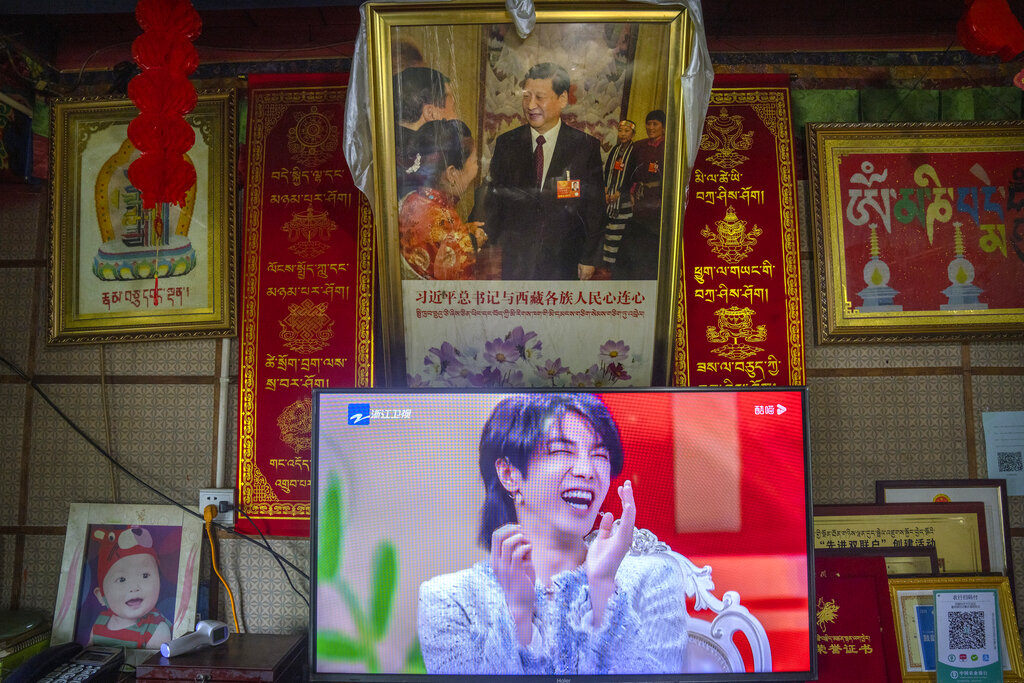
In this June 4, 2021, file photo, a television shows a broadcast of a Chinese talk show program as it sits beneath a photo of Chinese President Xi Jinping in a home converted into a tourist homestay in Zhaxigang village near Nyingchi in western China’s Tibet Autonomous Region. Photo: Mark Schiefelbein / AP
The 1979 launch of market-style economic reform under then-leader Deng Xiaoping prompted predictions abroad that China would evolve into a more open, possibly even democratic society.
The Communist Party allowed freer movement and encourages internet use for business and education. But leaders reject changes to a one-party dictatorship that copied its political structure from the Soviet Union and watch entrepreneurs closely. Beijing controls all media and tries to limit what China’s public sees online.
As the previous decade’s economic boom fades, “Xi sees himself as the only person capable of recreating the momentum,” said June Teufel Dreyer, a Chinese politics specialist at the University of Miami.
Party members who worry reforms might weaken political control appear to have decided China’s rise is permanent and liberalization is no longer needed, said Edward Friedman, a political scientist at the University of Wisconsin.
That means “anti-totalitarian elements of the reform agenda could be rolled back,” Friedman said in an email. “That is what Xi is doing, as manifest in his attack on purportedly gay and girlie culture as a supposed threat to a so-called virile militarism.”
An Aug. 29 commentary by an obscure writer, Li Guangman, described “common prosperity” as a “profound revolution.” Writing on the WeChat message service, Li said financial markets would “no longer be a paradise for capitalists to get rich overnight” and said the party’s next targets might include high housing and health care costs.
The commentary was reposted on prominent state media websites including the ruling party newspaper People’s Daily. That prompted questions about whether Beijing might veer into an ideological campaign with echoes of the violent 1966-76 Cultural Revolution, when some 5 million people were killed.
Hu Xijin, the editor of the Global Times, a newspaper published by People’s Daily that is known for its nationalist tone, responded by criticizing Li’s commentary. Hu warned in a blog post against a return to radicalism.
“The Cultural Revolution was a period of chaos, purposely unleashed by Mao because he felt comfortable in chaos,” Nathan said.
“This is almost the exact opposite,” he said. “It is an effort to create tightly structured orderliness.”
___
Story: Joe McDonald. AP researcher Chen Si in Shanghai contributed to this report.
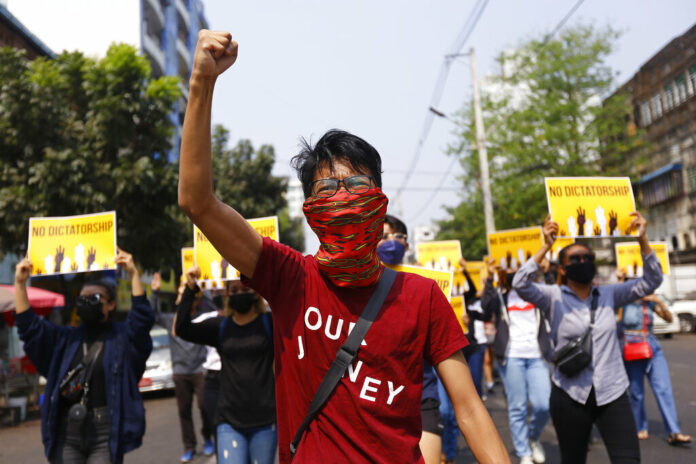
In this March 26, 2021, file photo anti-coup protesters gesture during a march in Yangon, Myanmar. Photo: AP
BANGKOK (AP) — Several prominent former U.N. human rights experts expressed regret Wednesday that a leading resistance organization in Myanmar has called for a nationwide armed uprising against the country’s military government.
The underground National Unity Government declared a “people’s defensive war” on Tuesday to remove the military from power. The group, which claims to be the legitimate government, was established by elected legislators who were barred from taking office when the military seized power in February, toppling the elected government of Aung San Suu Kyi.
The Special Advisory Council for Myanmar, which includes Yanghee Lee, the former U.N. special rapporteur on human rights in Myanmar, said in a statement that it understands the frustration of people in Myanmar “after seven months of brutality by the junta and inaction by the international community,” but said the call to arms was ”unfortunate.”
“Violence is the cause of the suffering of the people of Myanmar, it is not the solution,” council member Chris Sidoti said. “We fear for what will happen as a result of this decision.”
Sidoti and a third council member, Marzuki Darusman, both worked with the U.N. Independent International Fact-Finding Mission on Myanmar, which investigated human rights abuses including the army’s brutal 2017 counterinsurgency campaign that drove more than 700,000 members of the Muslim Rohingya minority to flee to neighboring Bangladesh.
The February military takeover was met by large-scale peaceful protests that security forces suppressed with deadly force. More than 1,000 civilians were killed. In response, some protesters adopted increasingly violent methods, including killings and sabotage.
A low-level insurrection is occurring in urban areas, while more traditional combat is taking place in the countryside, especially between the army and ethnic minority militias, some of which have formed a loose alliance with the National Unity Government.
There were no immediate actions in response to Tuesday’s call for an uprising, though peaceful protest marches were reported by Myanmar media, as well as a continuation of the shootings and sabotage that have gone on for months.
A spokesman for the military, Maj.-Gen. Zaw Min Tun, has dismissed the uprising announcement as an effort to spread rumors and attract attention ahead of next week’s U.N. General Assembly session.
The call to arms was enthusiastically welcomed by many users of social media, who also expressed dismay that the U.N. and other countries have not done more to help opponents of the army’s takeover.
The Special Advisory Council also criticized the international community, saying it “has had ample opportunity to come to the aid of the people of Myanmar but has consistently failed.”
Flash Express and AIF Group Laos announce a joint investment to step into CLMV market and launch Flash Laos – a full service of express logistic by land and air in Laos. Customers will be able to deliver parcels between Thailand and Vientiane Capital to support the growth of E-Commerce business, boost the economics between the two countries and seamlessly connect.
Flash Express Co., Ltd., Thai full service logistic provider, the first Thai start up that becomes an international unicorn by Mr. Komsan Lee-CEO says that Flash service expansion to Laos pride the Thai start up, expanding full service logistic business in CLMV with a strong strategic partner, AIF Group Laos. We will be partners for both land and air full logistic service provider. With economic and social study of CLMV market, Flash foresees an opportunity for full service logistic to our neighbor countries, being well prepared in terms of labors and resources. Moreover, Thai government is continuously developing the infrastructure system between Thailand and neighbor countries which will be an opportunity and good direction for logistic business.“From a successful business model of Flash Express in Thailand and a technology that we have been developing for 3 years, we are now ready to launch “Flash Laos” – a full service logistic by land and air with the same concept we are using in Thailand. The concept is the first and only express logistic service provider that open 365days. We will also provide booking in advance via Flash Express Application where customer can prebook a delivery service, from in-person pick up, receiving parcels, tracking, to checking for service fee by themselves. Thus, the cooperation between Flash Express and AIF Group Laos will have 2 main parts. The first parts, “Flash Laos”, will provide logistic service from Thailand to Vientiane. The second part will be the key cooperation of both companies, expanding the service to cover all areas of Laos. In addition, the second part will include the cross border logistic service between Thai and Laos to support customer demand of B2B, B2C, and C2C. However, the second parts will be launched in November 2021 and will also recruit new local business partners of Flash Laos with the concept of house opening as a parcel pick up. This will provide job and income opportunity for our Laos’ partners.” says Komsan Lee.
Mr. Rithikone Phoummasack, Chairman of AIF Group Laos said: “We are pleased to partner with the first Thai unicorn and rely on both AIF Group and Flash Thailand expertise to bring best practices and ease cross-border deliveries to the fast-growing Laos logistic industry”.
“Flash Laos, a fully integrated digital service provider, will help support the continuous growth of our E-Commerce division, already bolstered by the recent integration of a local marketplace platform within the group activities”, emphasized Mr. Rithikone Phoummasack. “The strategic venture further enhances our capacity to deliver superior digital services and better serve Lao’s fast-growing consumer base” he confirmed, “and leverages AIF Group’s strong understanding and expertise of the Lao and regional markets to enable local consumers to seamlessly exchange goods between Thailand and Laos.
About Flash Express Thailand
Flash Express (Thailand) Company Limited is a Thai full service logistic provider, is the first Thai startup to become an international unicorn under the concept “In mind, In delivery”. The company was established in 2018 by Mr. Komsan Saelee, the Chief Executive Officer and the management team and Thai officers. It is the first express service provider to implement a policy of receiving free parcels at the front door (Door-to-Door Service) and is available 365 days a year. Flash Express is a subsidiary of the Flash Group, a Thai-based fully integrated E-Commerce service provider. Flash Logistics services include large-scale transportation, Flash Fulfillment, product warehousing, and financial services (Flash Money/Flash Pay).
About AIF Group Laos
AIF Group is one of the biggest and the most dynamic business groups in Laos employing more than 3,000 workers across 17 countries. The group’s core business activities include Banking & Financial Services; Energy Utilities; Construction, Property & Infrastructure Development; E-Commerce, Telecom & Technology Services; Trading; as well as Agriculture, with operations in Laos, Vietnam, Cambodia, Thailand, and Singapore.