


























31.7 C
Bangkok
Monday, June 8, 2026
Home Blog Page 1041

Harris Calls on Vietnam To Join Us Opposing China ‘Bullying’

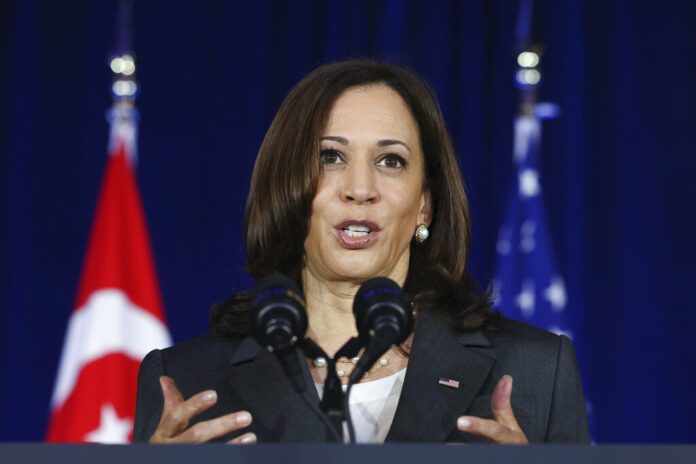
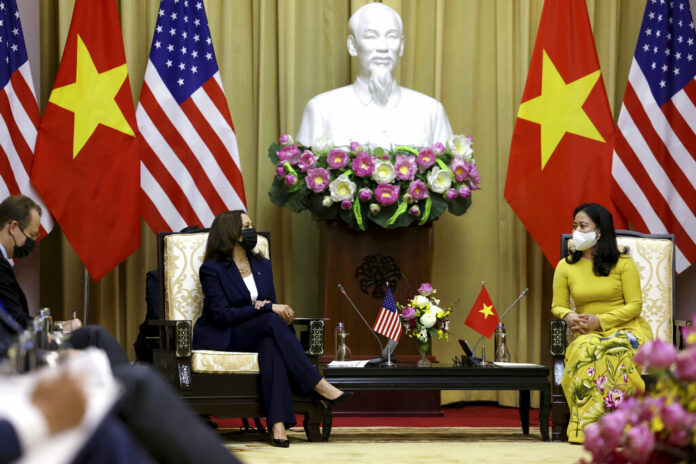
U.S. Vice President Kamala Harris, left, speaks with Vietnam's Vice President Vo Thi Anh Xuan at the Presidential Palace in Hanoi, Vietnam, Wednesday, Aug. 25, 2021. Photo: Evelyn Hockstein / Pool Photo via AP

HANOI (AP) — Vice President Kamala Harris called on Vietnam to join the U.S. to challenge China’s “bullying” in the South China Sea, a continuation of her sharp rhetoric against Beijing as she tours Southeast Asia this week.

“We need to find ways to pressure and raise the pressure, frankly, on Beijing to abide by the United Nations Convention on the Law of the Sea, and to challenge its bullying and excessive maritime claims,” she said, in remarks at the opening of a bilateral meeting with Vietnamese President Nguyen Xuan Phuc.

Her comments follow sharp words towards Beijing during a speech in Singapore Tuesday, where she said their actions in the South China Sea amount to “coercion” and “intimidation.”

On Wednesday in Vietnam, Harris also said that the U.S. supports sending the country an additional U.S. Coast Guard cutter, to help defend its security interests in the South China Sea. And she embraced elevating the relationship with Vietnam from a comprehensive partnership to a strategic partnership, a diplomatic designation that would reflect the deepening relationship between the two former foes.

They’re the latest moves by the Biden administration to strengthen its alliances in the Indo-Pacific region in an effort to counter China’s influence. Harris’ trip there, which included a stop in Singapore earlier this week, is aimed at broadening U.S. engagement with both nations and affirming the U.S. commitment to the region.

Harris, who is the first U.S. vice president to visit Vietnam, told the nation’s president that “our relationship has come a long way in a quarter of a century.”

She also announced the launch of a new Centers for Disease Control and Prevention Southeast Asia regional office. The new CDC office will be one of four regional offices globally, and it’s focused on collaborating with regional governments on research and training to deal with and prevent global health crises.

The announcement comes as Vietnam is grappling with record high coronavirus infections in Vietnam driven by the delta variant and stubbornly low vaccination rates in the country. The surge in cases prompted a recent lockdown in Ho Chi Minh City, the nation’s business hub and the epicenter of the latest outbreak.

Harris is expected to offer further U.S. support to help the nation expand its vaccination rate, which hovers around 2%. She’ll also emphasize the opportunity for greater collaboration to address climate change and economic aid to the country.

In the afternoon, Harris will join a health security event with the health ministers from the Association of Southeast Asian Nations group and Papua New Guinea, where she’ll speak more about the launch of the CDC center.

But even as Harris hopes to keep her focus squarely on those key agenda items in Vietnam, her visit will be shadowed by a recent security scare in Vietnam and the ongoing developments in the U.S. exit from Afghanistan.

Harris’ flight to Vietnam was delayed for hours Tuesday afternoon after the vice president’s office was made aware of an investigation into two possible cases of the so-called Havana Syndrome in Hanoi, according to administration officials. The Havana Syndrome is the name for a rash of mysterious health incidents first reported by American diplomats and other government employees in the Cuban capital beginning in 2016.

Harris has yet to comment publicly on the developments, but they’ll weigh heavily on officials while she participates in a lease signing for the U.S. Embassy in Hanoi, with embassy staff attending.

And her swing through Vietnam is certain to draw some unwanted comparisons between the humiliating withdrawal of U.S. troops in 1975 and the tumultuous effort this week to evacuate Americans and allies from Afghanistan.

U.S. Sen. Bill Hagerty, a Tennessee Republican and a former U.S. ambassador to Japan, noted that those images are unavoidable for many Americans as Harris stops in the country.

“She’s going to have a challenge from a domestic public relations standpoint, because everyone in America right now is associating the images that they’re seeing on TV with the collapse of Kabul, with the images of Americans being lifted from the rooftop of our embassy in Saigon,” he said.

Hagerty also said that Harris will need to reassure the Vietnamese that America remains a “beacon of liberty and freedom in the world” and a “strong partner” in the region.

But Gregory Poling, a senior fellow for Asia at the Center for Strategic and International Studies, suggested that Vietnam could offer the vice president an opportunity to offer a more optimistic vision for what a relationship with a former foe can become.

“Simply by being there and engaging in this process, it shows the remarkable progress in rapprochement between the U.S. and Vietnam,” Poling said. “It’s possibly marginally good for them to show that — who in 1975 would believe that this is where the U.S. economic relationship would be?”

Story: Alexandra Jaffe

Advertisement

Paralympics Open in Empty Stadium — Just Like Olympics

Fireworks are set off during the Paralympic Opening Ceremony over the Olympic Stadium for the Tokyo 2020 Paralympic Games, Tokyo, Tuesday, Aug. 24, 2021. Photo: Bob Martin for OIS via AP

TOKYO (AP) — The Paralympics began Tuesday in the same empty National Stadium — during the same pandemic — as the opening and closing ceremonies of the recently completed Tokyo Olympics.

Japanese Emperor Naruhito got it all started again, this time under the theme “We Have Wings.” Among the few on hand were Douglas Emhoff, husband of U.S. Vice President Kamala Harris, International Paralympic Committee President Andrew Parsons and International Olympic President Thomas Bach.

It was a circus-like opening with acrobats, clowns, vibrant music and fireworks atop the stadium to mark the the start of the long parade of athletes.

“I cannot believe we are finally here,” Parsons said in his opening remarks. “Many doubted this day would happen. Many thought it impossible. But thanks to the efforts of many, the most transformative sport event on earth is about to begin.”

The opening ceremony featured the national flags of the 162 delegations represented, which included the refugee team. In addition, the flag of Afghanistan was carried by a volunteer despite the delegation not being on hand in Tokyo.

Comparisons to the Olympics stop with the colorful jamboree, save for the logistical and medical barriers during the pandemic, and the hollowing out of almost everything else.

Tokyo and Paralympic organizers are under pressure from soaring new infections in the capital. About 40% of the Japanese population is fully vaccinated. But daily new cases in Tokyo have increased four to five times since the Olympics opened on July 23. Tokyo is under a state of emergency until Sept. 12, with the Paralympics ending Sept. 5.

Organizers on Tuesday also announced the first positive test for an athlete living in the Paralympic Village. They gave no name or details and said the athlete had been isolated.

AP21236412060078
Actors perform during the opening ceremony for the 2020 Paralympics at the National Stadium in Tokyo, Tuesday, Aug. 24, 2021. Photo: Eugene Hoshiko / AP

The Paralympics are being held without fans, although organizers are planning to let some school children attend, going against the advice of much of the medical community.

Parsons and Seiko Hashimoto, the president of the Tokyo organizing committee, say the Paralympics can be held safely. Both have tried to distance the Paralympics and Olympics from Tokyo’s rising infection rate.

“For the moment we don’t see the correlation between having the Paralympics in Tokyo with the rising number of cases in Tokyo and Japan,” Parsons told The Associated Press.

Some medical experts say even if there is no direct link, the presence of the Olympics and Paralympics promoted a false sense of security and prompted people to let down their guard, which may have helped spread the virus.

The Paralympics are about athletic prowess. The origin of the word is from “parallel” — an event running alongside the Olympics.

Markus Rehm — known as the “Blade Jumper” — lost his right leg below the knee when he was 14 in a wakeboarding accident, but earlier this year he jumped 8.62 meters, a distance that would have won the last seven Olympics, including the Tokyo Games. Tokyo’s winning long jump was 8.41 meters.

“The stigma attached to disability changes when you watch the sport,” said Craig Spence, a spokesman for the International Paralympic Committee. “These games will change your attitude toward disability.

“If you look around Japan, it’s very rare you see persons with disabilities on the street,” Spence added. “We’ve got to go from protecting people to empowering people and creating opportunities for people to flourish in society.”

AP21236410234711
Actors perform during the opening ceremony for the 2020 Paralympics at the National Stadium in Tokyo, Tuesday, Aug. 24, 2021. Photo: Eugene Hoshiko / AP

Archer Matt Stutzman was born with no arms, just stumps at the shoulders. He holds a world record — for any archer, disabled or otherwise — for the longest, most accurate shot, hitting a target at 310 yards, or about 283 meters.

Wheelchair fencer Bebe Vivo contracted meningitis as a child and to save her life, doctors amputated both her forearms and both her legs at the knees.

“So many people told me that it was impossible to do fencing without any hands,” Vivo said in a recent interview. “So it was so important to me to demonstrate and show people that it doesn’t matter if you don’t have hands, or you don’t have legs or whatever. If you have a dream and you really want to achieve it, just go and take it.”

Stutzman and Vivo are both set to compete in Tokyo and have already won medals in previous games, superstars who told their stories last year in the Netflix documentary about the Paralympics called “Rising Phoenix.”

The rest of the 4,403 Paralympic athletes in Tokyo — a record number for any Paralympics — will be telling their stories until the closing ceremony.

“I feel like I’m meeting movie stars,” said 14-year-old Ugandan swimmer Husnah Kukundakwe, who is competing for the first time.

She acknowledged being a self-conscious adolescent, even more so because of a congenital impairment that left her with no lower right arm, an her left hand slightly misshapen.

“Since it’s the Paralympics and everybody else is disabled, I feel really comfortable with myself,” she said. “In Uganda, there are very few people who have disabilities who want to come out and be themselves.”

Paralympic organizers played a part last week in launching “WeThe15,” a human-rights campaign aimed at 1.2 billion people — 15% of the global population — with disabilities. They’ve also produced a 90-second video to promote the cause of social inclusion.

“Difference is a strength, it is not a weakness,” Parsons said, speaking in the largely empty stadium. “And as we build back better in the post-pandemic world, it must feature societies where opportunities exist for all.”

Shingo Katori, a member of boy band SMAP that had its roots in the 1980s, now works with Paralympic organizers. He acknowledged his early fears of working with people with disabilities.

“Frankly speaking, people in wheelchairs or people with artificial legs — I hadn’t had an opportunity to meet these people and I didn’t know how to communicate with them,” he said. “But through Paralympic sports, such hesitation faded away.”

Stutzman, known as the “Armless Archer,” has a disarming sense of humor — pardon the pun. He jokes about growing up wanting the be like former NBA star Michael Jordan.

“I gave it up,” he deadpans. “I wasn’t tall enough.”

Story: Stephen Wade

Advertisement

Kratom, Popular Plant-Based Painkiller, Legalized

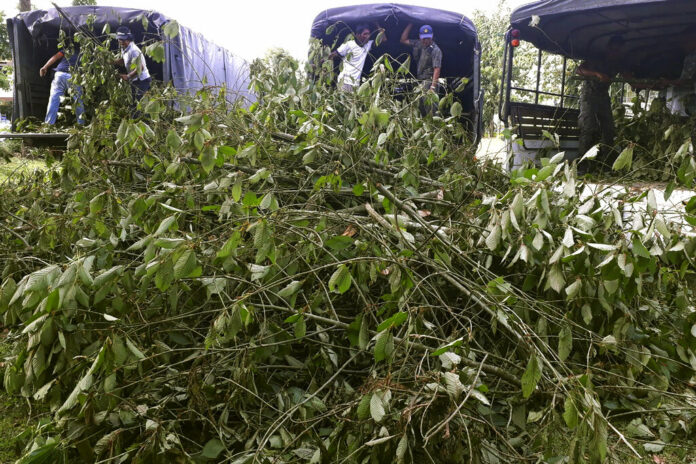
In this July 30, 2019, photo, officers gather illegally-grown kratom plants in Phang Nha province, Thailand. Photo: AP

BANGKOK (AP) — Thailand on Tuesday decriminalized the possession and sale of kratom, a plant native to Southeast Asia whose leaves are used as a mild stimulant and painkiller and which has a following in the United States for its pain-relieving qualities.

Justice Minister Somsak Thepsuthin said thousands of legal cases for the possession or sale of kratom were being dropped, and 121 inmates convicted in such cases would be released immediately. Possession of kratom had been punishable by up to two years in prison and a fine of as much as 200,000 baht ($6,077) for quantities of 10 kilograms (22 pounds) or more.

The decriminalization of kratom, which involved removing the drug from the official list of controlled narcotics, is the country’s latest move to liberalize its drug laws. In the past two years, Thailand has allowed regulated medical marijuana use as well as the licensed buying and growing of marijuana, and permitted households to grow up to six plants. Harsh penalties remain for hard drugs such as heroin and methamphetamine.

Easing pressure on Thailand’s justice system and its overcrowded prisons has been a major impetus for the new drug policy.

When he proposed the action on kratom to the Cabinet last year, Somsak said the move would not only help reduce costs in the legal system, but also allow the drug to be used as a low-cost substitute for expensive painkillers such as morphine and create income for people cultivating the plant, which is mostly grown and used in the impoverished south.

In Thailand, kratom leaves typically would be chewed to give the user a mild energy boost, although it can also be smoked. But it’s sometimes mixed with other drugs to make a narcotic tea, or cocktail, a form in which it remains illegal.

“At low doses, kratom produces stimulant effects with users reporting increased alertness, physical energy and talkativeness. At high doses, users experience sedative effects. Kratom consumption can lead to addiction,” says a website of the U.S. Drug Enforcement Administration that lists kratom among the agency’s “drugs of concern.”

The DEA says people have used kratom to relieve muscle strains and as a substitute for opium; the drug also has been used to manage withdrawal symptoms from opioids.

Nimu Makaje, a Muslim community leader in Thailand’s southern province of Yala, expressed concern about abuse of the plant.

“If we are legalizing it, we need to have proper controlling measures,” he told The Associated Press. “Currently, a lot of people have lost their jobs and they may use it to reduce their stress. This is very dangerous.”

Ramdin Areeabdulsorma, a local politician in nearby Pattani province, said kratom has been part of local people’s daily life since a long ago, helping them feel refreshed.

“To decriminalize kratom is the right thing to do. Local people or patients who need it will be able to access it more easily. However, I am concerned that teenagers will use it in a wrong way, for example, mixing kratom with other narcotics. We have to control this strictly, otherwise, it can cause damage,” he said.

In the U.S., kratom is generally unregulated, although it is illegal in several states. It’s typically found in smoke shops that also sell vaping devices and CBD products, but there is also an industry lobby which promotes its use as a legitimate painkiller that’s a safe alternative to powerful opioids.

___

Story: Chalida Ekvitthayavechnukul. Associated Press journalists Tassanee Vejpongsa and Sumeth Panpetch contributed to this report.

Advertisement

Harris Rebukes China in Major Speech on Indo-Pacific

U.S. Vice President Kamala Harris delivers a speech at Gardens by the Bay in Singapore before departing for Vietnam on the second leg of her Southeast Asia trip, Tuesday, Aug. 24, 2021. Photo: Evelyn Hockstein / Pool Photo via AP

SINGAPORE (AP) — U.S. Vice President Kamala Harris delivered a sharp rebuke to China for its incursions in the South China Sea, warning its actions there amount to “coercion” and “intimidation” and affirming that the U.S. will support its allies in the region against Beijing’s advances.

“We know that Beijing continues to coerce, to intimidate and to make claims to the vast majority of the South China Sea,” she said in a major foreign policy speech Tuesday in Singapore in which she laid out the Biden administration’s vision for the Indo-Pacific. “Beijing’s actions continue to undermine the rules-based order and threaten the sovereignty of nations.”

Harris, who is on a weeklong swing through Southeast Asia, declared that the U.S. “stands with our allies and our partners” in the face of threats from China.

The speech sought to cement the U.S. commitment to supporting its allies in an area of growing importance to the Biden administration, which has made countering China’s influence globally a centerpiece of its foreign policy. And it came during a critical moment for the United States, as the Biden administration seeks to further solidify its pivot toward Asia while America’s decades-long focus on the Middle East comes to a messy end with the chaotic withdrawal from Afghanistan.

Harris underscored this shift, calling the Indo-Pacific “critically important to our nation’s security and prosperity.” She said that while the U.S. is focused on closing out its Afghanistan engagement by evacuating as many people as possible, “it is also imperative that as we address developments in one region, we continue to advance our interests in other regions, including this region.”

Her rebuke to Beijing amounted to her sharpest comments yet on the U.S. foe. And China hit back, with Chinese Foreign Ministry spokesperson Wang Wenbin invoking Afghanistan in his response to a question about Harris’ comments, saying the messy withdrawal from Kabul showed the U.S. had lost credibility. He charged that the U.S. “can smear, suppress, coerce, and bully other countries at will in order to maintain America first, without paying any price.”

“This is the order that the U.S. wants. The U.S. always tries to make use of the rules and order to justify its own selfish, bullying and hegemonic behavior, but who still believe it now?” Wang said.

In her remarks, Harris was careful to emphasize that the U.S. is seeking greater engagement in the Indo-Pacific region not just to counter China, but to advance an “optimistic vision that we have for our participation and partnership in the region.” In deference to Singapore’s staunch neutrality in the U.S.-China dispute, Harris also affirmed that the U.S. isn’t looking to “make anyone choose between countries.”

Speaking in a country that serves as the anchor of the U.S. naval presence in Southeast Asia, Harris emphasized the significance the region holds for U.S. defense. She also emphasized the significant U.S. economic ties there, noting that Southeast Asia represents America’s fourth largest export market.

On Monday, Harris told sailors aboard a U.S. combat ship at the Changi naval base in Singapore that “a big part of the history of the 21st century will be written about this very region” and that their work defending the region was pivotal.

“It is in our vital interest to stand united with our allies and our partners in Southeast Asia in defense of a free and open Indo-Pacific,” she said.

Harris also met Monday with Singapore President Halimah Yacob and Prime Minister Lee Hsien Loong. The vice president’s office announced a number of agreements out of that meeting aimed at combating cyberthreats, tackling climate change, addressing the COVID-19 pandemic and alleviating supply chain issues.

After her speech Tuesday, Harris held a roundtable discussion with business leaders on supply chain issues. Later, she planned to travel to Vietnam, where she’ll meet with top officials Wednesday.

President Joe Biden himself has repeatedly emphasized his focus on China as one of America’s main adversaries. In recent months, his administration has ramped up outreach to the Indo-Pacific region, with Defense Secretary Lloyd Austin and Deputy Secretary of State Wendy Sherman both visiting the area in the spring and summer. Secretary of State Antony Blinken also held a number of virtual meetings with Southeast Asian officials earlier this month.

The chaotic U.S. withdrawal from Afghanistan, however, complicated that message of support to the region, raising questions about the U.S. commitment to its allies. While Biden said last week that an indefinite engagement would have benefited “true strategic competitors” China and Russia, China has seized on the images of violence from the evacuation to slam the U.S. for its engagement there.

But Harris, during a joint news conference with Prime Minister Lee on Monday, said that her presence in the country, combined with the agreements around greater cooperation that the Biden administration has pursued with Indo-Pacific countries, speak “volumes in terms of the integrity of the relationships that the United States has around the world on many issues.”

___

Story: Alexandra Jaffe

Advertisement

Book a Quality Hotel Near Saladang BTS Station

The world-famous traffic jams of Bangkok are still an unfortunate reality. But whether you’re in town for business or pleasure, booking a hotel near the Saladang BTS station can save you hours of valuable commute time.  

The location has a lot of bearing on the popularity of where people stay in the vast metropolis of Bangkok, Thailand. And this matters just as much for residents as it does for tourists and business visitors to the city. Many condo complexes and entire neighborhoods become more valuable as a place of residence because they’re close to a BTS or MRT station in Bangkok. 

Many city residents wouldn’t even think of driving to work if their place of work was anywhere near the center of town. Bangkok’s traffic jams simply make this unthinkable. Luckily commuters, both the BTS Skytrain and the MRT, have made venturing into traffic during commute hours largely a thing of the past.   

Make the Most of Your Time in the City

By booking a hotel near the Saladang BTS station in the Sathorn area of the city, you can take a page from the city’s residents and avoid the notorious traffic jams entirely. They say, “When in Rome, do as the Romans do.” And no old sayings could be any more relevant than this one when it comes to Bangkok traffic.

You can make better use of the time you have to spend in the city by taking advantage of both the BTS Skytrain and the MRT. And both of these systems are interconnected to the Airport Express rail system. This means you can get from Suvarnabhumi Airport to your hotel near the Saladang BTS Station quickly and easily, and more importantly, without having to waste time in traffic.

Business Travelers Target Sathorn and Silom

For business travelers, time is usually of the essence. They typically have a limited amount of time they can spend in town, so they try to book non-stop meetings and engagements. The Saladang Station is right in the heart of the Silom area of Bangkok. This area, along with its next-door neighbour, Sathorn, forms the commercial and financial heart of the city. 

Booking a hotel right near the Saladang BTS station means you’ll be able to maximize your productivity while you’re in town. With several MRT and BTS stations in the Sathorn and Silom areas, you’ll be able to maintain a full schedule of meetings and even host valuable clients at some of the excellent restaurants in the area catering to business people. 

Pleasure Travelers Have Seen Traffic Before

For pleasure travelers, having to sit in traffic means they’re not making the most of their vacation. They’ve seen traffic before, and it’s not why they’re visiting Bangkok. 

By booking a hotel near the Saladang BTS station, they can join the business traveler in making the most of their time in Bangkok. They’ll be able to maximize the time they spend sightseeing and eliminate any thoughts of spending their vacation sitting in Bangkok traffic. 

Advertisement

Taliban Takeover Prompts Fears of a Resurgent al-Qaida

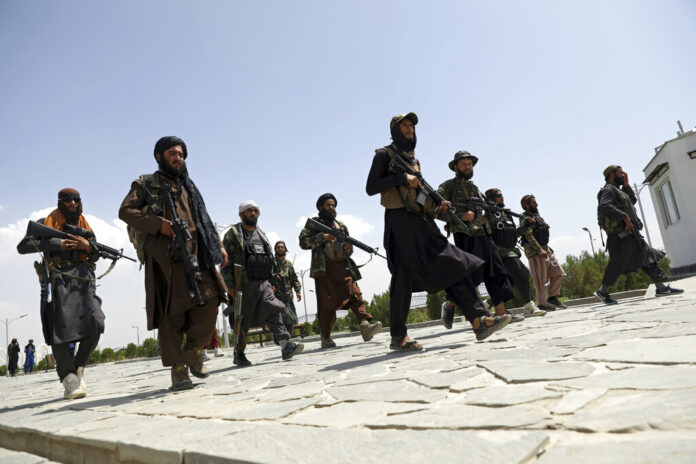
In this Aug. 19, 2021, file photo, Taliban fighters patrol in Kabul, Afghanistan. Photo: Rahmat Gul / AP

WASHINGTON (AP) — The lightning-fast changes in Afghanistan are forcing the Biden administration to confront the prospect of a resurgent al-Qaida, the group that attacked America on Sept. 11, 2001, at the same time the U.S. is trying to stanch violent extremism at home and cyberattacks from Russia and China.

With the rapid withdrawal of U.S. forces and rise of the Taliban in Afghanistan, “I think al-Qaida has an opportunity, and they’re going to take advantage of that opportunity,” says Chris Costa, who was senior director for counterterrorism in the Trump administration.

“This is a galvanizing event for jihadists everywhere.”

Al-Qaida’s ranks have been significantly diminished by 20 years of war in Afghanistan, and it’s far from clear that the group has the capacity in the near future to carry out catastrophic attacks on America such as the 9/11 strikes, especially given how the U.S. has fortified itself in the past two decades with surveillance and other protective measures.

But a June report from the U.N. Security Council said the group’s senior leadership remains present inside Afghanistan, along with hundreds of armed operatives. It noted that the Taliban, who sheltered al-Qaida fighters before the Sept. 11 attacks, “remain close, based on friendship, a history of shared struggle, ideological sympathy and intermarriage.”

Pentagon spokesman John Kirby acknowledged Friday that al-Qaida remains a presence in Afghanistan, though quantifying it is hard because of a reduced intelligence-gathering capability in the country and “because it’s not like they carry identification cards and register somewhere.”

Even inside the country, al-Qaida and the Taliban represent only two of the urgent terrorism concerns, as evidenced by unease about the potential for Islamic State attacks against Americans in Afghanistan that over the weekend forced the U.S. military to develop new ways to get evacuees to the airport in Kabul. The Taliban and IS have fought each other in the past, but the worry now is that Afghanistan could again be a safe harbor for multiple extremists determined to attack the U.S. or other countries.

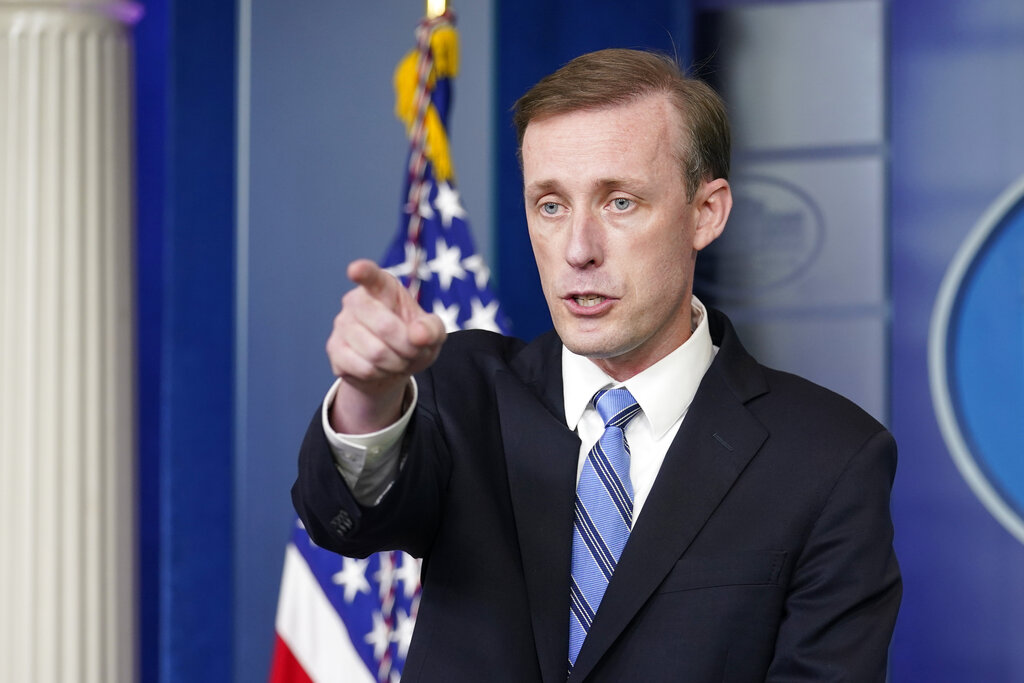
President Joe Biden has spoken repeatedly of what he calls an “over-the-horizon capability” that he says will enable the U.S. to keep track of terrorism threats from afar. His national security adviser, Jake Sullivan, told reporters Monday that Biden has been clear that counterterrorism capabilities have evolved to the point where the threat can be suppressed without a strong boots-on-the-ground presence. He said the intelligence community does not believe al-Qaida currently has the capability to attack the U.S.

The U.S. is also presumably anticipating that strengthened airport screening and more sophisticated surveillance can be more effective than 20 years ago in thwarting an attack. But experts worry that intelligence-gathering capabilities needed as an early-warning system against an attack will be negatively affected by the troop withdrawal.

AP21235688205446
White House national security adviser Jake Sullivan speaks during the daily briefing at the White House in Washington, Monday, Aug. 23, 2021. Photo: Susan Walsh / AP

An added complication is the sheer volume of pressing national security threats that dwarf what the U.S. government was confronting before the Sept. 11 attacks. These include sophisticated cyber operations from China and Russia that can cripple critical infrastructure or pilfer sensitive secrets, nuclear ambitions in Iran and an ascendant domestic terrorism threat laid bare by the Jan. 6 insurrection at the U.S. Capitol.

FBI Director Chris Wray has described that home-grown threat as “metastasizing,” with the number of arrests of white supremacists and racially motivated extremists nearly tripling since his first year on the job.

“My concern is that you can’t compare 2001 to today,” said Bruce Hoffman, a terrorism expert at Georgetown University. There’s a “much vaster and better organized bureaucracy,” he said, but it’s burdened with demands not specifically tied to terrorism.

Hoffman said that although he didn’t think al-Qaida would be able to quickly use Afghanistan as a launchpad for attacks against the U.S., it may re-establish “its coordinating function” in the region to work with and encourage strikes by its affiliates — a patient strategy that may yet be vindicated.

“Terrorist groups don’t conform to train timetables or flight schedules,” Hoffman said. “They do things when it suits them and, as al-Qaida was doing, they quietly lay the foundation in hopes that that foundation will eventually affect or determine their success.”

The concern is resonant enough that Biden administration officials told Congress last week that, based on the evolving situation, they now believe terror groups like al-Qaida may be able to grow much faster than expected. In June, the Pentagon’s top leaders said an extremist group like al-Qaida may be able to regenerate in Afghanistan and pose a threat to the U.S. homeland within two years of the American military’s withdrawal.

The Sept. 11 attacks made al-Qaida the most internationally recognizable terror group, but in the past decade at least, the most potent threat inside the U.S. has come from individuals inspired by the Islamic State, resulting in deadly massacres like the ones in San Bernardino, California, and Orlando.

But al-Qaida hardly disappeared. U.S. authorities alleged last year that a Saudi gunman who killed three U.S. sailors at a military base in Florida in 2019 had communicated with al-Qaida operatives about planning and tactics. Last December, the Justice Department charged a Kenyan man with trying to stage a 9/11-style attack on the U.S. on behalf of the terrorist organization al-Shabab, which is linked to al-Qaida.

Now it’s possible that other extremists will find themselves inspired by al-Qaida, even if not directed by it.

“Until recently, I would have said that the threat from al-Qaida core is pretty modest. They didn’t have safe haven in Afghanistan, their senior leadership was scattered,” said Nathan Sales, former coordinator for counterterrorism at the State Department.

But, now with the Taliban back in control, “all of that could change and could change very rapidly.”

Story: Eric Tucker

Advertisement

Ex-Myanmar Military Leader Than Shwe Recovers From COVID-19

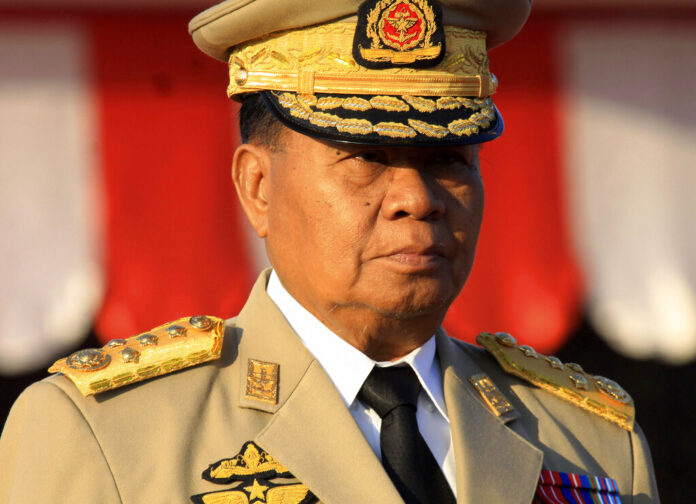
In this Dec. 24, 2010, file photo, Myanmar junta chief Senior Gen. Than Shwe attends the graduation parade of the No. 12 Intake of the Defense Services Medical Academy in Yangon, Myanmar. Photo: Khin Maung Win / AP

BANGKOK (AP) — The former longtime military ruler of Myanmar, Than Shwe, and his wife have been released from a capital city hospital after both being successfully treated for COVID-19, a hospital official said.

The 88-year-old and wife, Daw Kyaing Kyaing, were discharged from the Thaik Chaung military hospital in Naypyitaw on Friday, said the official, who spoke on condition of anonymity because he was not authorized to speak with the press.

Than Shwe was hospitalized earlier this month, and his wife a short time later, and both were treated in a VIP section of the hospital under tight security.

The government has not yet officially commented on their cases, and independent media in Myanmar initially reported that their hospitalization was a precautionary measure as the country grapples with a new wave of the coronavirus, fueled by the virulent delta variant.

But the hospital official confirmed they had both tested positive for COVID-19, though both ended up exhibiting only mild symptoms. He said, for example, neither needed oxygen to help them breathe while they were being treated.

Since their release they have been examined by doctors and continue to do well, he said.

Myanmar has been struggling with one of the worst COVID-19 surges in Southeast Asia, and the military leadership that seized control of the country in February from Nobel Peace Prize laureate Aung San Suu Kyi’s democratically elected government has been accused of making it worse by diverting critical medical supplies to itself and its supporters.

On Monday, the government reported 2,186 new cases and 125 more deaths, bringing Myanmar’s total cases to 375,871 and deaths to 14,499. Many believe the official numbers are significantly lower than reality, due to poor testing and reporting.

At the beginning of August, Myanmar had the region’s highest per capita death rate of the region, but according to the official figures it has been declining steadily and is now lower than several other countries, including Malaysia, Indonesia and Thailand.

Than Shwe ruled from 1992 until 2011, when he handed power to a nominally civilian, pro-military government.

During his rule, he led a feared junta that brutally crushed dissent and routinely jailed political opponents, including Suu Kyi, the face of Myanmar’s pro-democracy movement.

He controlled a 400,000-strong military that turned its guns on myriad ethnic rebellions as well as on university students and Buddhist monks who launched an uprising in 2007.

By the time Than Shwe stepped down, Suu Kyi had spent 15 of the previous 21 years in prison or under house arrest.

Story: David Rising

Advertisement

Bangkok’s City Hall joins forced with CP Foods and partners to give away 2 million meals for communities in need

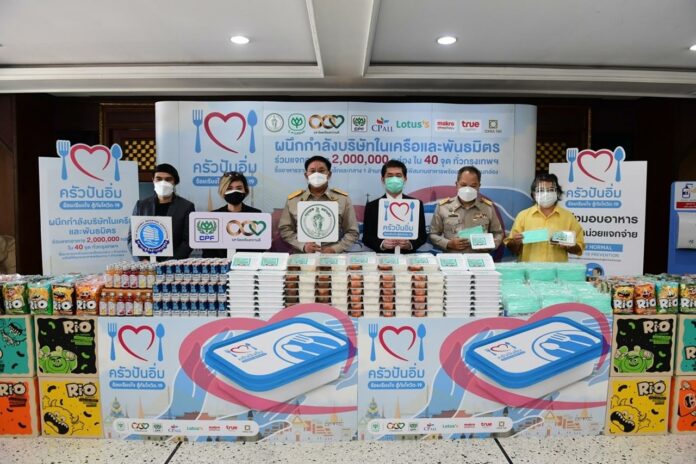
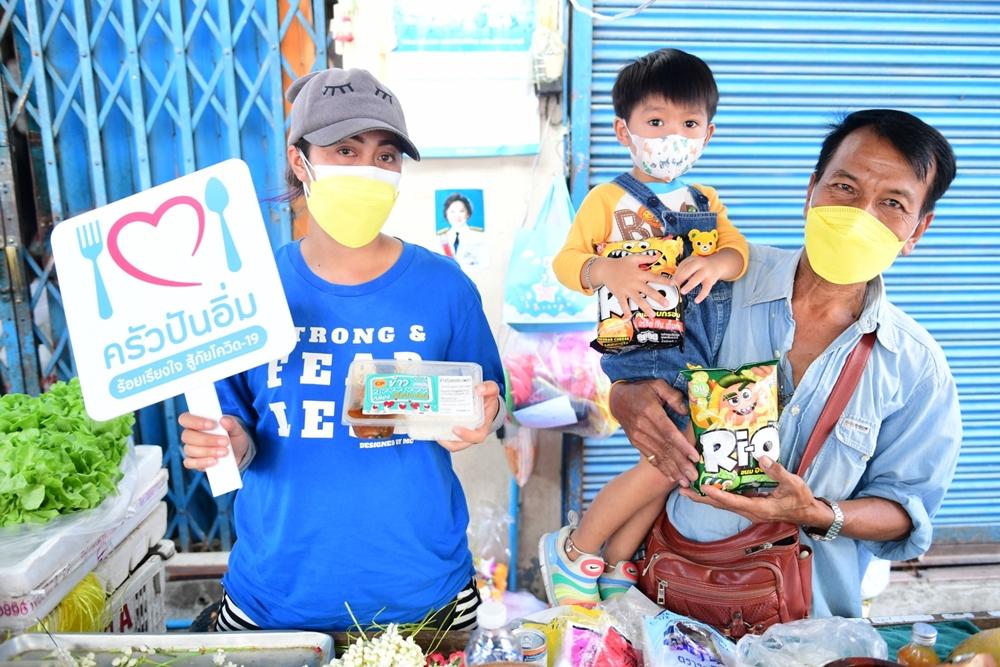
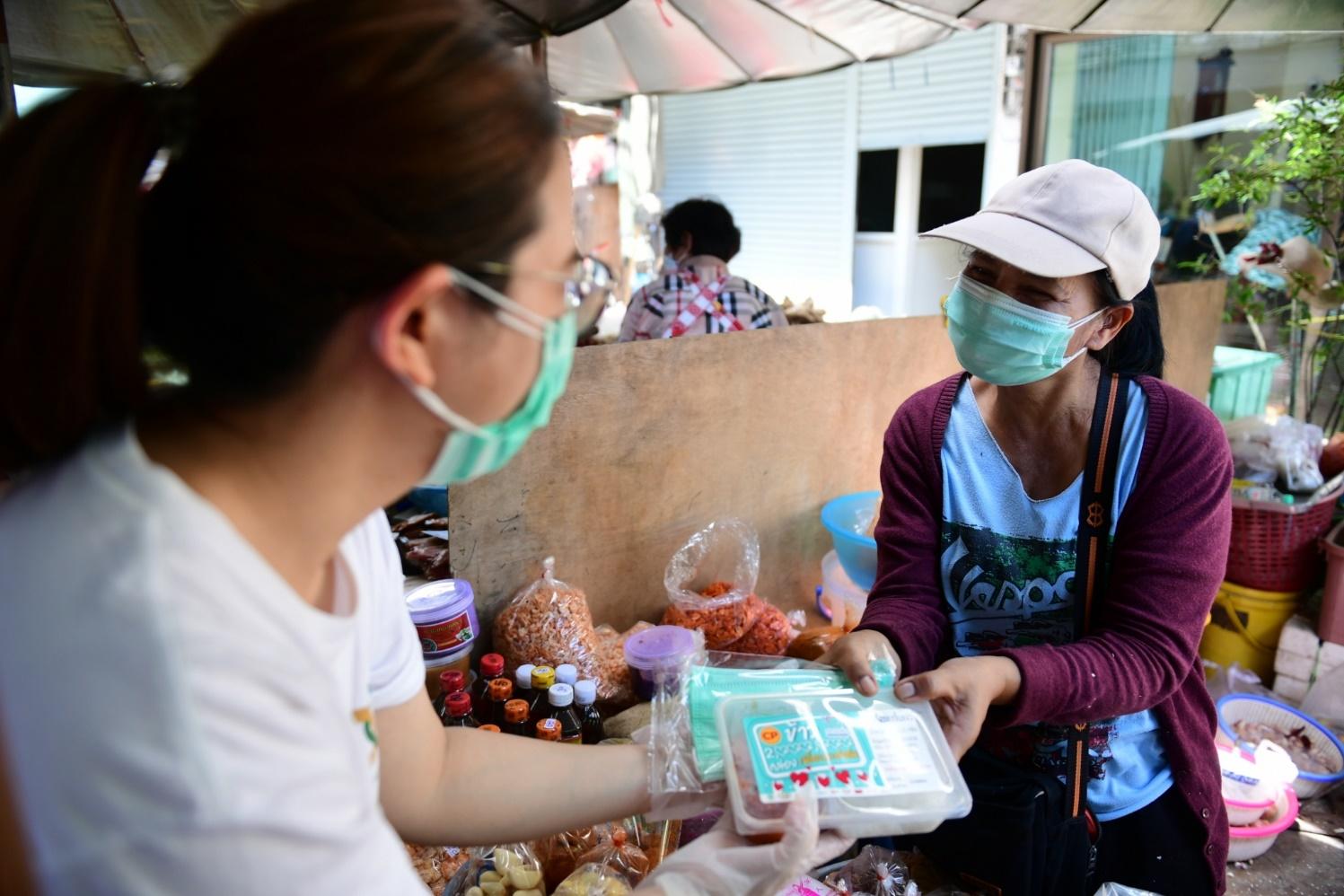
The Bangkok Metropolitan Administration (BMA), CP Group, CP Foods and the Economic Reporters Association jointly deliver lunch boxes, snacks, beverages, and CP surgical masks to communities in need across Bangkok as a part of CP Group’s “Krua Pan Im” project that aims at donating 2 million meal boxes amid the COVID-19 outbreak.

Pol Gen. Asawin Kwanmuang, governor of the Bangkok Metropolitan Administration, representing the communities received the meal boxes, healthy drinks and surgical masks from Mr.Prasit Boondoungprasert CEO of CP Foods and Ms. Pimraphat Siripraiwan, President of the Economic Reporters Association. 

image3 10

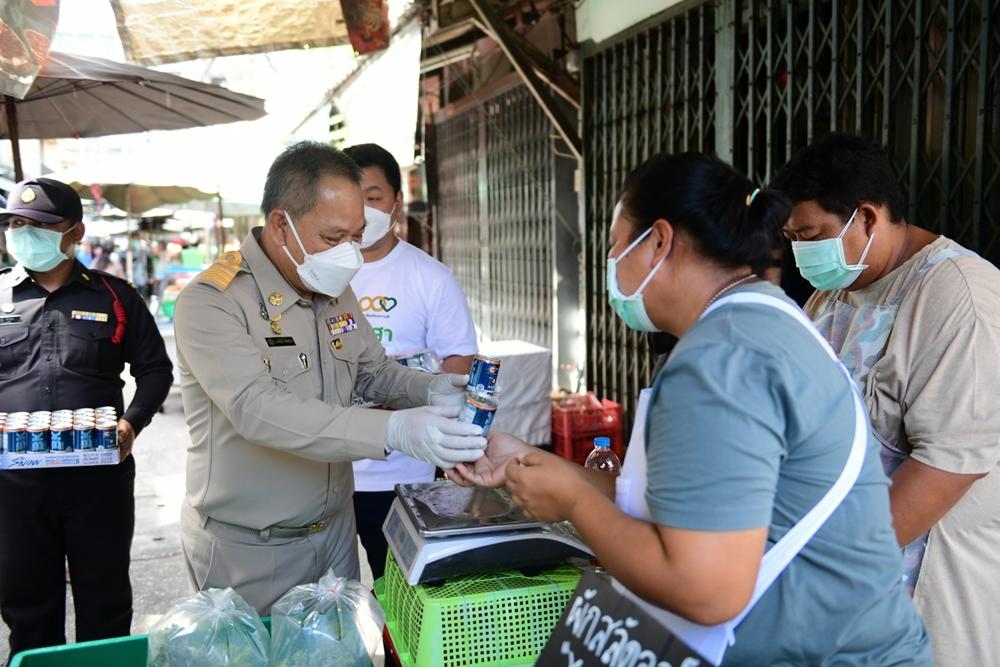
City governor Aswin Kwanmuang said that the essential supplies will be distributed to vulnerable people, including home quarantined patients, bedridden patients, the unemployed, and the elderly, in an effort to alleviate their burden during the pandemic. He also praised the project for allowing small business restaurants to join deliver another 1 millon meal boxes. This will support small food owners to generate more income during the lock down.

image2 13

Meanwhile,CEO at CP Foods, said that CP Group  has launched “Krua Pan Im” and synergize all companies under the group to distribute freshly cooked foods to those who in needs, vulnerable people, healthcare workers, community as well as officers and volunteers from multiple organizations who have selflessly dedicated themselves to tackle COVID-19. He added that the project aims to share delicious, safe foods and newly cooked foods to boost the morale of people in Bangkok in this unprecedented outbreak.

Mrs.Kannikar Yoklek, chairman of the Ratchabophit Pattana community, thanks the Government and private sector such as CP Group and CP Foods for giving away delicious meal boxes to people in the community, adding that her community was severely affected by COVID-19 since many of them have lost significant amount of income. Also, these foods will helps lighten burden of risk groups who are living under home quarantine.

image4 7

“Krua Pan Im” is a COVID-19 relief project initiated by CP Group and over 100 alliances to supply 2 million meal boxes, consisting of a million boxes from local restaurants in Bangkok area and a million more contributed by CP Group, for sharing the fullness and happiness to vulnerable groups, medical staffs and volunteers in the city as well as helping the small businesses to generate income during the crisis.

Advertisement

Every Silver Ring Has the World’s History in It

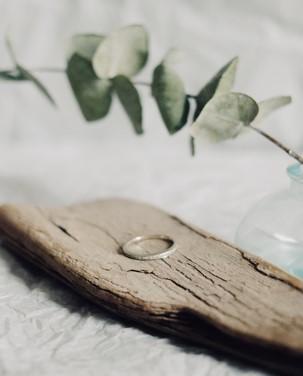
If you’re giving a gift of a silver ring to someone special in your life, you can think of it as giving them the whole world as well as the stars, because every element on earth, including the silver the ring was made from, came from dying stars originally. And silver has made quite an impact on the world since about 4000 BC was it was first discovered.

Lustrous and malleable metals such as gold and silver have always been in high demand as much for their visual appeal as for their ability to be easily moulded into useful items. 

Historical Value of Silver

Silver has also always been relatively scarce, and the rarer an element is, the more valuable it is. Most people think that silver has always placed second behind gold in both value and popularity. But silver has a few other properties that made it more popular and valuable than gold at different eras in history. 

It was at one time the currency of the world. The Mycenaean people of ancient mainland Greece imported vast amounts of silver from what is now Armenia. They used it as a currency and helped accelerate trade all through the Mediterranean region. Silver became the standard currency for centuries. 

But it was scarce in China. So it became the currency of choice for tea, silk, gunpowder and ceramics, and all the other goods China had to offer. All this trade was responsible for creating the famous “Silk Road” between the east and west. When the Spanish discovered silver mines in Peru and Mexico, they started trading it for silk from the Chinese. 

Other Properties of Silver

Did you know that silver also has impressive anti-bacterial properties? The ancient seafaring Phoenicians used to keep their potable liquids in silver vessels because the liquids would stay pure and drinkable during long voyages.

In the 1700s, some babies were fed from silver spoons because silver was considered to be healthier. The practice even led to the phrase for the rich, “being born with a silver spoon in one’s mouth”. Silver is still used today to coat pieces of equipment used by hospitals to fight infections.  

Silver is also the conductor of choice for electrical applications. It’s better than gold or copper, and the electronics industry is one of the major consumers of silver. 

Establishing the 925 Silver Standard

We mentioned that silver was easily moulded into jewellery and other useful items. But a statute that was enacted in 1300 by King Edward the first was intended to create a standard for the composition of silver. It ended up creating a silver that also held up better and resisted dents and dings. This was the 92.5% pure silver standard, also known as 925 silver or sterling silver. 

So when you’re browsing the MNML website looking for the perfect silver ring for that special someone, give a thought to the tremendous part silver played in the history of the world. 

Advertisement

Tokyo Paralympics Press Ahead To Allow Students To Attend

People gather near the National Stadium in Tokyo as Blue Impulse of the Japan Air Self-Defense Force practice ahead of the 2020 Summer Paralympics, Sunday, Aug. 22, 2021. Photo: Ryosuke Uematsu, Kyodo News via AP

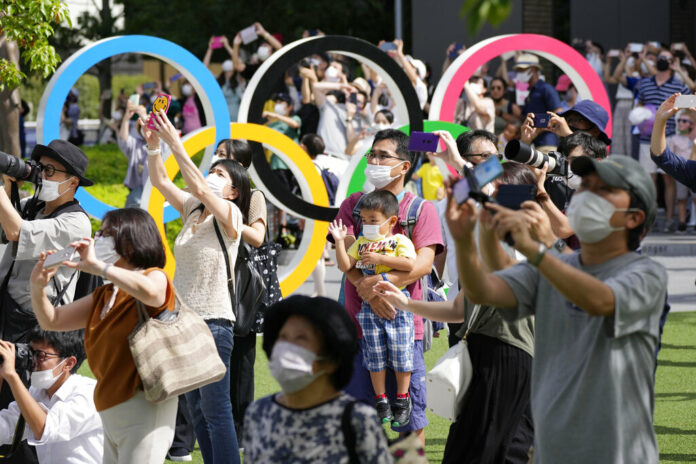
TOKYO (AP) — Plans are afoot to allow tens of thousands of school children to attend the Tokyo Paralympics despite the coronavirus delta variant spreading among teenagers and those even younger who are not vaccinated.

The Paralympics open Tuesday and run through Sept. 5. All other fans have been banned as they were for the Olympics. About 4,400 athletes are expected from about 160 countries and territories.

Tokyo Governor Yuriko Koike has said she is pressing ahead to allow school children to attend the Paralympics, as long a parents and schools are supportive. News reports say the number of students involved is between 130,000 and 140,000.

Tokyo is under a state of emergency through Sept. 12.

About 40% of the Japanese population is fully vaccinated. Tokyo reported 5,074 new cases on Saturday. It marked the first time the capital has logged more than 5,000 cases for four consecutive days. Daily new cases have increased sharply since the Olympics opened on July 23.

Tokyo reported 4,392 new cases on Sunday. Japan has attributed about 15,500 deaths to COVID-19.

Hospital capacity in Tokyo has become so tight that those not deemed ill enough for hospital admission are getting oxygen supplied at home or at makeshift facilities set up for emergencies.

The Tokyo organizing committee and the International Paralympic Committee also back the plan for student fans. They argue it’s important to have students view athletes with disabilities, which could change attitudes in a relatively conservative society like Japan.

“This generation is the one that will sustain our society in the future, and so we are absolutely passionate about providing this opportunity,” Tokyo organizing committee spokesman Masa Takaya said Sunday.

In an interview a few days ago, IPC President Andrew Parsons said he supported the plan — with a caveat.

“We endorse the initiative because we believe it is an important element of legacy by bringing school kids to the games,” Parsons said. “But of course, it is imperative these kids must come to the games in a safe way.”

Opposition is coming from the Japanese government’s top medial adviser. Dr. Shigeru Omi told a parliamentary session a few days ago that the current COVID-19 situation “compared to before the Olympics is significantly worse.

“If you think what it means to allow audience, the decision is quite obvious,” Omi added.

Omi said Tokyo’s high rate of positive tests exceeding 20% suggests that infections are more widely spread than the number of daily cases reported.

In Shizuoka, located about 160 kilometers (100 miles) southwest of Tokyo, all 93 schools have canceled their planned participation because of the state of emergency taking effect in the area beginning on Aug. 20, according the Mainichi newspaper.

Story: Stephen Wade and Mari Yamaguchi

Advertisement

Hot News

LATEST NEWS

Bangkok
overcast clouds
31.7 ° C
32.2 °
28.8 °
73 %
5.1kmh
100 %
Mon
29 °
Tue
37 °
Wed
35 °
Thu
34 °
Fri
32 °