30 C
Bangkok
Thursday, June 18, 2026
Home Blog Page 1072

CP Foods Urges People To Get Vaccinated, Distributing Free Food at Bang Sue Inoculations Site

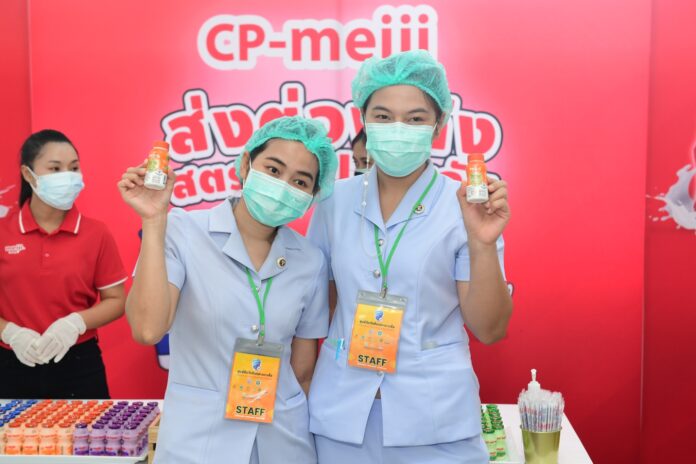
Charoen Pokphand Foods PCL (CP Foods) encourages people to get vaccinated by providing free foods and healthy drinks at Bang Sue Grand Station. The company has provided food under the “CPF’s Food from the Heart Against Covid-19” project for doctors, nurses and volunteers at 140 vaccination points nationwide aiming to support Thailand’s effort to reach herd immunity for COVID-19.

Since 7th June, CP Foods has been working together with companies under CP Group, such as CP-Meiji and CP Intertrade, to provide free foods and healthy drinks to people who received the vaccine at Bang Sue Grand Station. They can present their vaccine certifications at the booth to get free CP’s product.

2

Products from CP Group, such as sausages, ready-to-eat meals, CP Meiji’s product, healthy drink, and newly launched plant based product “Meat Zero” have become incentives for vaccinated people at Covid-19 vaccination at Bang Sue Grand Station, which inoculate more than 10,000 people daily.

CP Foods’s CEO Prasit Boondoungprasert says the company is giving away free foods and drinks to vaccinated people as a part of “CPF’s Food from the Heart against COVID-19” project, using its expertise in food business to support Thai people during the outbreak. This relief project is in accordance with the policy of CP Group’s Senior Chairman Dhanin Chearavanont, who wants all companies in the group to aid the society in the time of COVID-19.

3

As a result, CP Foods has given out more than a million packs of food to 500 locations nationwide, covering hospitals, field hospitals, communities in need, migrant workers, vulnerable groups since the beginning of the outbreak in 2020. The company has extended its Covid-19 relief project to support Thailand’s mass vaccination efforts.

“We are giving away our delicious foods as a token of thanks to all the people joining a mission to build group immunity in Thailand.” he said.

1 2

The company is also delivering food supplies to support the work of medical staff at 140 inoculation sites in Bangkok and other provinces, including  the Emporium department store; 45 vaccination points for Section 33 insured workers and hospitals nationwide.

In the recent event at the Ministry of Public Health, Anutin Charnvirakul, the Public Health Minister, has expressed his thanks to CP Group, including CP Foods, for continuously supplying ready-to-eat food products for medical staffs in hospitals and field hospitals since the first wave of outbreaks. The relief efforts have lightened the task of the medical staff.

He says the delicious and safe foods are a great boost of morale for the team of doctors, nurses, and staff working hard in a fight against the outbreak.

As of now, over 6 million doses of COVID-19 vaccine have been given to people across Thailand.

Advertisement

Opinion: Hopes Shattered, Thai Senators Have Signed Their Death Warrants

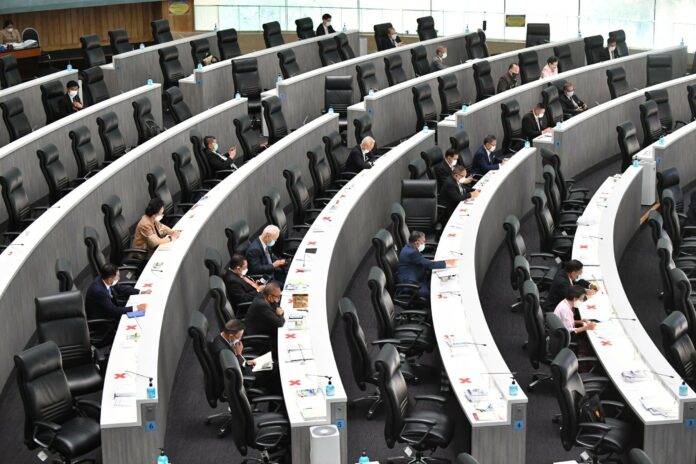
A file photo of a Senate parliamentary session.

By Bunkueanun “Francis” Paothong

In one of the most stunning, and disgusting episodes of Thai politics, Senators voted to reject all constitutional amendments from the opposition parties intended to undo the damage from the 2017 military-drafted constitution while the Governing Coalition hastily scrambled their amendments to reintroduce the voting system from the 1997 Thai Constitution.

With their track of records denying any attempt to democratize Thailand, as well as their wretched and disreputable demeanors, Thailand has no hope to ever change from within the system should the Senate still remain.

In the past two decades, the Senate has always been an elected body to a degree. Their composition, while including appointed members in their ranks at some points, still preferred to be more representative than any of their past variations. With a reasonable amount of powers directed towards the House of Representatives, their place within the legislative process went unquestioned for years. Even when the Senate was brought back after the 2007 military coup, the Senate maintained their quiet, and uninteresting existence for a while, until the Senate’s dissolution seven years later.

At this point, both houses of Parliament were replaced with military-appointed National Legislative Assembly, which to many standards, acted as the junta’s rubber-stamping body, the perception of which had been more or less retained by the present iteration of the Senate.

The Senate, in its present form, were appointed to include members of the conservative elites, mostly the so-called national intelligentsia, various ‘high society’ sycophants who supported the establishment, as well as large numbers of military officers, and accommodating for high-ranking police generals.

The argument behind such a hideous arrangement was to resemble, in one way or another, the British House of Lords, while maintaining powers to elect Prime Ministers, to veto any legislation they find unsuitable, as well as large influence to amend the Constitution. All of which was designed by the military junta to disrupt any attempt to dismantle their constitutional legacies, as well as protecting the interests of the conservative establishment to the highest order.

In the years leading to the crises in the present, the existence of the Senate has been repeatedly questioned by large numbers of Thai citizens. Their role in enabling Prayut Chan-o-cha to continue serving as Prime Minister has been more than controversial. Their chartered powers were, and still are considered to be ‘more powerful’ than that of the lower house, as well as being vocal in opposing any democratizing attempts either from the House of Representatives, and the people’s initiatives.

The idea of an ‘Honorable Senate’ could not have been more than a pipe dream. We come to see the Senate as a more disgusting form of legislative body. To that end, the idea of any upper house will never, ever gain fruition because of such tainted legacies left behind by these parasitic sycophants.

With their refusal to democratize, or to even speak of reform, the Senate has undoubtedly signed their death warrants for eternity.

About the author

Bunkueanun “Francis” Paothong studies international relations at Mahidol University. He is now facing life imprisonment for allegedly endangering Her Majesty the Queen after attending an Oct. 14, 2020 anti-government rally when a royal motorcade drove by. He formerly led the Coalition of Salaya Students activist group at his university.

Advertisement

Opinion: Reopening Thailand in 120 Days Needs a Good Plan, Not Just a Risky Goal

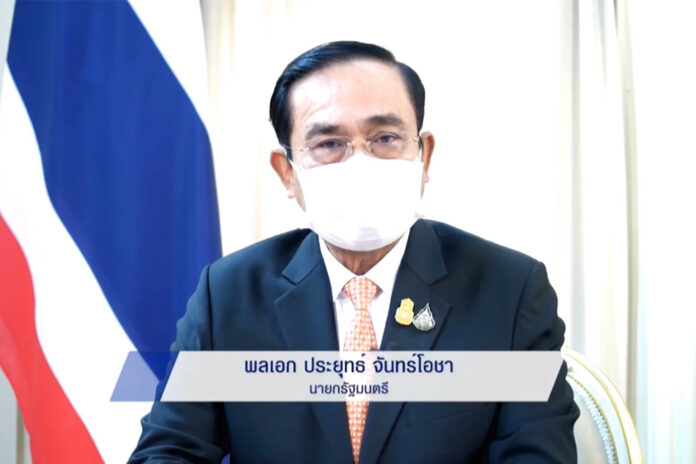
PM Prayut Chan-o-cha speaks in a televised address on June 16, 2021.

Prime Minister Prayut Chan-o-cha is taking a bold and risky step on Wednesday by announcing a goal to reopen the whole of Thailand to foreign tourists within 120 days, or by mid October. This is a big gamble and the target requires good planning and execution.

So far, the massive inoculation drive which partially halted a week after the launch has not been reassuring.

To meet Gen. Prayut’s own target of inoculating 100 million jabs by the end of the year requires roughly 470,000 jabs on average per day every day from now. The partial suspension of massive inoculation on Tuesday saw numbers of daily doses drop to below 300,000 doses on Wednesday, Thursday and Friday after the height of 472,128 doses achieved last week on June 8. This is the daily average the government should maintain.

On Friday, only 215,885 doses were administered instead of the 470,000 plus daily requirement in order to meet the target. For an additional single day of vaccination to slow down, more people run a higher risk of unnecessary infections, serious illness, and death.

Yes, Prayut apologized earlier this week, but the public has not heard a clear explanation as to what went wrong, what causes the delay, and when the inoculation drive will go full speed anew. This is not reassuring at all.

One must then take the new target of opening Thailand within 120 days with a brick of salt.

Hospital beds caring for those seriously ill due to COVID-19 are now near full capacity and one wonders how the country can manage if more foreign tourists and locals become infected and seriously ill. Hopefully foreign tourists won’t as we expect all of them to have two jabs before entering the kingdom in October.

Prayut talks about taking calculated risks to reopen Thailand in his nation-wide address on Wednesday.

He added that by October, 50 million Thais out of nearly 70 million populations are expected to have received their first jab, but that Thailand cannot wait until everyone received two jabs before reopening.

Yes, probably Thailand cannot wait. Most people in the tourism industry and other related businesses have lost their job for over a year now, but it’s a painful reminder of inequality that people like Prayut already had two shots by now. It’s like an obscenely rich person telling poor people to be content with what they have – or don’t have.

Be that as it may, bringing the tourism industry out of perma hibernation will help the economy if it doesn’t lead to a new massive outbreak that would sink Thailand deeper into re-isolation and economic bankruptcy. We need to hear concrete plans about how the government could relatively safely reopen Thailand within four months without risking a full-blown outbreak.

A plan is only as good as its ability to execute it competently. People are questioning the efficacy of Sinovac in preventing infections from spreading and on Thursday, we hear reports that 350 medical professionals in Indonesia have been infected despite having received two jabs of Sinovac, so in the mid-term, we will probably need different vaccines.

Prayut can talk about reopening Thailand all he wants but in the end, if it’s not equipped with credible and reliable plans, it could become very costly, if not disastrous, and backfire for the country in the end.

I wish Prayut all the success for the economic survival of Thailand much depends on a successful and timely reopening of the kingdom to tourism so the millions who depend on the industry could start earning a proper income anew.

Patpong, Bangkok’s infamous red-light district is currently shut. Sex workers’ rights activist Surang Janyam told me in an interview on Tuesday that half of the establishments are closed for good. Elsewhere, many hotels are almost emptied, resembling ‘Hotel California,’ and a visit to Asiatique, a popular riverfront shopping and dining area for Asian and Thai tourists, reminds me of settings from post-apocalyptic films.

If Prayut fails to meet the deadline of 120 days because Thailand would not be ready by then, for whatever reasons, the public must make sure Prayut acts judiciously and not callously.

By then, at least Prayut would have bought more time in office, 120 days to be exact. Maybe, he will apologize again and offer no proper explanation or accountability as to what went wrong. Or if he opened the kingdom to not just tourism but the biggest COVID-19 outbreak of all, then that could be worse.

No matter where you stand politically, we should wish the plan a success. But it needs to have proper plans and should be executed competently.

During the nation-wide address Prayut said: “We must learn to coexist with [COVID-19] like any other diseases.” For a moment I thought he was referring to himself.

We can’t let Prayut throw Thailand like a dice and must scrutinize his plans closely and hold him accountable because it’s a calculated risk not just for him but for all Thais.

Advertisement

Biden Signs Bill Making Juneteenth a Federal Holiday

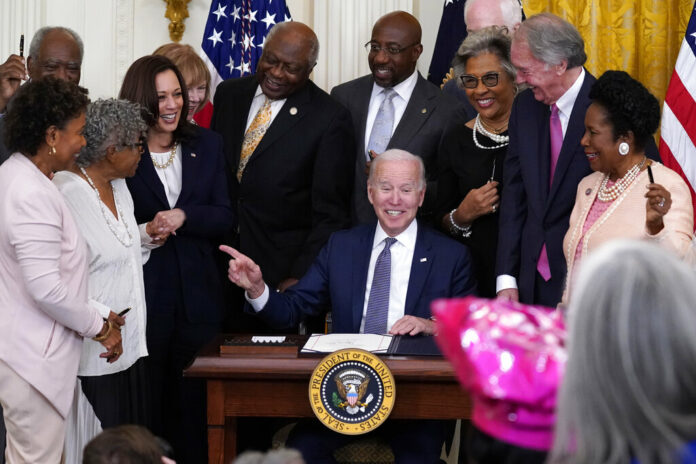
President Joe Biden points to Opal Lee after signing the Juneteenth National Independence Day Act, in the East Room of the White House, Thursday, June 17, 2021, in Washington. Photo: Evan Vucci / AP

WASHINGTON (AP) — President Joe Biden signed legislation Thursday establishing a new federal holiday commemorating the end of slavery, saying he believes it will go down as one of the greatest honors he has as president.

Biden signed into law a bill to make Juneteenth, or June 19, the 12th federal holiday. The House voted 415-14 on Wednesday to send the bill to Biden, while the Senate passed the bill unanimously the day before.

“This is a day of profound weight and profound power, a day in which we remember the moral stain, the terrible toll that slavery took on the country and continues to take,” Biden said.

Juneteenth commemorates June 19, 1865, when Union soldiers brought the news of freedom to enslaved Black people in Galveston, Texas — two months after the Confederacy had surrendered. That was also about 2 1/2 years after the Emancipation Proclamation freed slaves in the Southern states.

It’s the first new federal holiday since Martin Luther King Jr. Day was created in 1983. One of the federal holidays, Inauguration Day, happens every four years.

The U.S. Office of Personnel Management, which is the human resources office for the federal government, tweeted Thursday that most federal employees will observe the new holiday — Juneteenth National Independence Day — on Friday since June 19 falls on a Saturday this year.

Biden noted the overwhelming support for the bill from lawmakers in both parties. He had run for president promising to unite the country and work with Republicans, but his first major legislation to provide more COVID relief to American consumers and businesses was passed along party lines and he has struggled to unite lawmakers to support a major public works bill.

“I hope this is the beginning of a change in the way we deal with one another,” Biden said.

Biden signed the legislation surrounded by members of the Congressional Black Caucus as well as the lead sponsors of the legislation in the Senate, Sens. Edward Markey, D-Mass., and John Cornyn, R-Texas. He was introduced by Vice President Kamala Harris, the nation’s first African-American vice president.

“We have come far and we have far to go, but today is a day of celebration,” Harris said.

The White House moved quickly to hold the signing ceremony after the House debated the bill and then voted for it Wednesday.

“Our federal holidays are purposely few in number and recognize the most important milestones,” said Rep. Carolyn Maloney, D-N.Y. “I cannot think of a more important milestone to commemorate than the end of slavery in the United States.”

Rep. Sheila Jackson Lee, D-Texas, speaking next to a large poster of a Black man whose back bore massive scarring from being whipped, said she would be in Galveston on Saturday to celebrate along with Cornyn.

“Can you imagine?” said Jackson Lee. “I will be standing maybe taller than Sen. Cornyn, forgive me for that, because it will be such an elevation of joy.”

The Senate passed the bill Tuesday under a unanimous consent agreement that expedites the process for considering legislation. It takes just one senator’s objection to block such agreements.

The vote comes as lawmakers struggle to overcome divisions on police reform legislation following the killing of George Floyd by police and as Republican state legislators push what experts say is an unprecedented number of bills aimed at restricting access to the ballot box. While Republicans say the goal is to prevent voter fraud, Democrats contend that the measures are aimed at undermining minority voting rights.

Several members of the Congressional Black Caucus went to the floor Wednesday to speak in favor of the bill. Rep. Bonnie Watson Coleman, D-N.J., said she viewed Juneteenth as a commemoration rather than a celebration because it represented something that was delayed in happening.

“It also reminds me of what we don’t have today,” she said. “And that is full access to justice, freedom and equality. All these are often in short supply as it relates to the Black community.”

Some Republican lawmakers opposed the effort. Rep. Matt Rosendale, R-Mont., said creating the federal holiday was an effort to celebrate “identity politics.”

“Since I believe in treating everyone equally, regardless of race, and that we should be focused on what unites us rather than our differences, I will vote no,” he said in a press release.

The vast majority of states recognize Juneteenth as a holiday or have an official observance of the day, and most states hold celebrations. Juneteenth is a paid holiday for state employees in Texas, New York, Virginia and Washington.

Rep. Clay Higgins, R-La., said he would vote for the bill and that he supported the establishment of a federal holiday, but he was upset that the name of the holiday included the word “independence” rather than “emancipation.”

“Why would the Democrats want to politicize this by coopting the name of our sacred holiday of Independence Day?” Higgins asked.

Rep. Brenda Lawrence, D-Mich., replied, “I want to say to my white colleagues on the other side: Getting your independence from being enslaved in a country is different from a country getting independence to rule themselves.”

She added, “We have a responsibility to teach every generation of Black and white Americans the pride of a people who have survived, endured and succeeded in these United States of America despite slavery.”

The 14 House Republicans who voted against the bill are Andy Biggs of Arizona, Mo Brooks of Alabama, Andrew Clyde of Georgia, Scott DesJarlais of Tennessee, Paul Gosar of Arizona, Ronny Jackson of Texas, Doug LaMalfa of California, Thomas Massie of Kentucky, Tom McClintock of California, Ralph Norman of South Carolina, Mike Rogers of Alabama, Matt Rosendale of Montana, Chip Roy of Texas and Tom Tiffany of Wisconsin.

Story: Darlene Superville and Kevin Freking 

Advertisement

UN Alarmed by Abuse of Civilians in Growing Myanmar Conflict

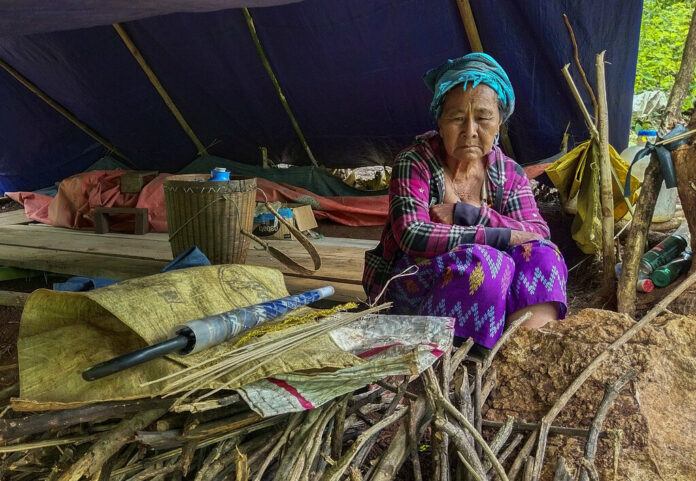
An internally displaced woman sits inside her makeshift tent at Pu Phar Village, Demawso Township, Kayah State on Thursday June 17, 2021. Photo: AP

BANGKOK (AP) — The United Nations’ office in Myanmar expressed concern Thursday about escalating human rights abuses after reports that a group opposed to the junta may have executed 25 civilians it captured and allegations that troops had burned down a village.

The struggle between the military regime that took power in February after ousting the elected government of Aung San Suu Kyi and those opposing it has sharpened in recent months.

Elements of what had initially been a nonviolent civil disobedience movement have evolved into a fledgling armed resistance force in response to harsh repression from police and soldiers who killed hundreds of peaceful protesters and bystanders.

The statement by the U.N. office cited abuses by both sides, calling on “all actors in the current crisis to ensure that international human rights norms and standards are respected.”

“This includes upholding the obligation to minimize collateral harm to civilians and to civilian infrastructure, and prohibiting the application of collective punishments against communities, families or individuals,” the U.N. office said.

The statement noted the discovery of two mass graves in the eastern state of Kayin, also called Karen, containing the human remains of 25 people “who had reportedly been detained on 31 May by the Karen National Defense Organization,” or KNDO.

The KNDO is one of the fighting forces of the Karen National Union, the political organization of the Karen ethnic minority that has been fighting for decades for more autonomy from the central government.

The junta said Sunday that the 25 bodies were those of road construction workers who were detained and killed by the KNDO.

In response, KNDO spokesman Wah Nay Nu was quoted by The Irrawaddy, an independent online news service, as saying the men were not civilians but government military personnel who were spying. Some were shot dead by KNDO forces but others were killed by shelling from government forces, he said.

On Wednesday, however, the Karen National Union said it would investigate and stated that it “follows the Geneva Convention which does not condone the killing of civilians during armed conflict.” The statement added that any wrongdoing could be prosecuted, without providing specifics.

The U.N. statement called for “those responsible for human rights violations to be held accountable, including the perpetrators and their chain of command.”

Also in dispute was the burning of Kinma village in the Magway region in Myanmar’s heartland on Tuesday.

A resident of the village confirmed to The Associated Press accounts in independent media that government troops were responsible for burning down most of the village’s roughly 250 houses, and that an elderly couple unable or unwilling to flee with the rest of the villagers were believed to have died. The villager spoke on condition of anonymity for fear of reprisals by the government.

Government-controlled media, however, reported that “terrorists” had burned the home of someone unsympathetic to their cause, and wind spread the fire to other homes.

The government and its opponents each refer to the other side as “terrorists.”

U.N. Secretary-General Antonio Guterres “is deeply concerned and disturbed” by the reports of government forces burning down villages in Kinma, U.N. spokesman Stephane Dujarric said.

This “reminds us of the systematic burning of villages in North Rakhine state, which we saw in the past and which led to the dramatic exodus of the Rohingya people,” Dujarric said.

“The Secretary-General continues to strongly condemn the continued repression by the security forces against civilians across the country, which again is having major regional ramifications and requires a unified international response,” Dujarric said.

Noting the discovery of the two mass graves, Dujarric said the United Nations calls on all parties to ensure that international human rights standards are respected including minimizing harm to civilians and civilian infrastructure and prohibiting collective punishment against communities, families or individuals.

Story: Grant Peck

Advertisement

Biden, Putin Discuss Ambassadors, Nuclear Weapons and More

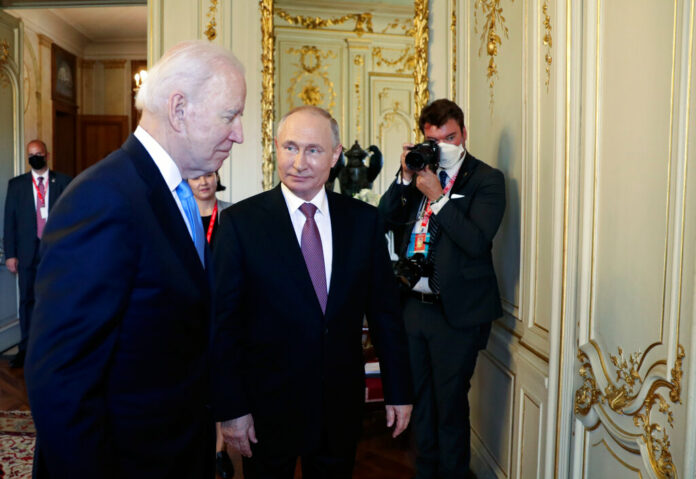
U.S President Joe Biden, left, and Russian President Vladimir Putin walk in a hall during their meeting at the 'Villa la Grange' in Geneva, Switzerland in Geneva, Switzerland, Wednesday, June 16, 2021. Photo: Mikhail Metzel / Pool Photo via AP

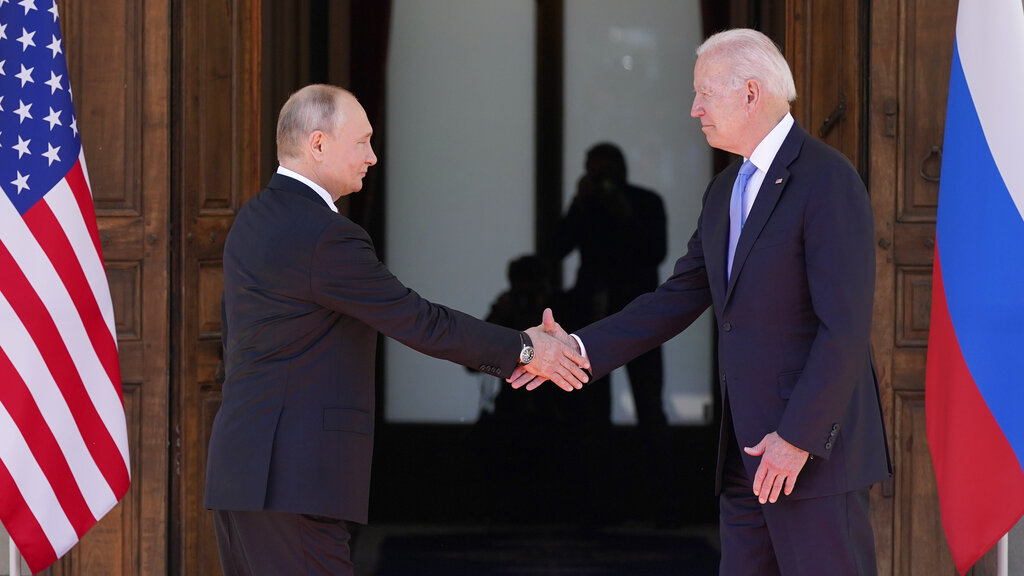
Presidents Joe Biden and Vladimir Putin of Russia spent more than three hours discussing issues Wednesday at their summit in Geneva. They ticked through their respective lists so quickly and in such “excruciating detail,” Biden says, that they looked at each other and thought, “OK, what next?”

The most pressing issues the leaders discussed:

AMBASSADORS

Biden and Putin agreed to return their respective ambassadors to Washington and Moscow in a bid to improve badly deteriorated diplomatic relations between their countries.

Russia’s ambassador to the United States, Anatoly Antonov, left Washington in March amid a row after Biden called Putin a killer in a television interview and imposed new sanctions on Russia over its treatment of opposition figure Alexei Navalny.

John Sullivan, the U.S. ambassador to Russia, flew out of Moscow in April after public suggestions from Russian officials that he should leave to mirror Antonov’s departure.

Both ambassadors were present at Wednesday’s summit.

Putin also said the Russian foreign ministry and the U.S. State Department would begin consultations on other vexing diplomatic issues, including the closures of consulates in both countries and the employment status of Russian citizens working for U.S. missions in Russia.

A senior Biden administration official said Sullivan is likely to return to Moscow next week. A different senior administration official said both governments had begun discussing consulate and local staff issues and the hope was an agreement could be reached in the next two months.

Neither administration official was authorized to comment publicly by name and both spoke on condition of anonymity.

___

CYBERSECURITY

No breakthroughs on this issue were announced, but the leaders agreed to at least talk about what has become a major source of conflict between the U.S. and Russia.

Biden said he and Putin agreed to have their experts work out an understanding about what types of critical infrastructure would be off-limits to cyberattacks. He said the U.S. presented Russia with 16 specific types of infrastructure, including energy, elections, banking and water systems, and the defense industry.

The agreement comes amid a flood of ransomware attacks against U.S. businesses and government agencies, including one in May that disrupted fuel supplies along the East Coast for nearly a week. The disruption was blamed on a criminal gang operating out of Russia, which does not extradite suspects to the U.S.

Other serious incidents include the SolarWinds intrusion discovered last year in which hackers, believed by U.S. authorities to be Russian, penetrated multiple U.S. government networks and prompted Biden to impose additional U.S. sanctions against Russia.

Biden said the U.S. and Russian governments would follow up on certain criminal cases, an apparent reference to cybercriminals operating with impunity from Russian territory.

Putin agreed there is mutual interest in the subject.

Biden also made an implicit threat against Russia, saying the U.S. has “significant cyber capability” it could use against Russia if it were to interfere with U.S. critical infrastructure.

___

NUCLEAR WEAPONS

Biden and Putin instructed their diplomats to begin laying the groundwork for a new phase of arms control.

The“strategic stability dialogue” would be a series of discussions designed to set the table for a negotiation by sorting out what exactly should be negotiated. More broadly, it would aim to reduce the risk of war between the world’s two largest nuclear powers.

Biden said the goal is to work with Russia on “a mechanism that can lead to control of new and dangerous and sophisticated weapons that are coming on the scene now, that reduce the time for response, that raise the prospect of accidental war.” He said this was discussed in detail.

No date was announced for the start of talks.

The basic idea is to identify and sort out the many areas of disagreement over what a future arms control treaty should address. It also would address ways to avoid unintended or accidental moves that could trigger war.

Shortly after Biden took office in January, he and Putin agreed to extend until 2026 the New START treaty that limits long-range nuclear weapons. The challenge now is to work out what a potential follow-on pact would include.

The Russians insist it include defensive weapons, such as U.S. missile defense systems. The Americans argue that it should include so-called tactical nuclear weapons, which are not covered by New START and of which the Russians have a far larger number deployed. It might also include new and emerging technologies such as hypersonic missiles and space weaponry.

___

PRISONER EXCHANGE

Biden said he raised with Putin the plight of two Americans detained in Russia.

Putin had opened the door to possible discussions about a prisoner swap with the U.S. and said those conversations would continue. Biden said he would follow up, too.

The U.S. is holding two prisoners whose release Russia has sought for more than a decade, including arms trader Viktor Bout. The other is Konstantin Yaroshenko, a pilot who was extradited from Liberia in 2010 and convicted the next year of conspiracy to smuggle cocaine into the U.S.

Biden said Americans Paul Whelan and Trevor Reed are being “wrongfully imprisoned” in Russia.

Whelan, who also holds Canadian, Irish and British citizenship, was arrested in Moscow in 2018, convicted of espionage and sentenced to 16 years. Whelan says he was just visiting Moscow.

Reed was convicted of assaulting a police officer while intoxicated and sentenced to nine years. Putin, in a recent interview with NBC News, called Reed a “drunk and a troublemaker.”

___

HUMAN RIGHTS

Biden said he’ll continue to air with Putin concerns about basic human rights because it is a core tenet of what the United States stands for.

Biden said he couldn’t be president of the United States and not raise human rights issues during the summit with Putin. He mentioned the internationally publicized case of jailed Russian opposition leader Alexei Navalny.

But Putin said Navalny got what he deserved when he was handed a stiff prison sentence. Navalny is Putin’s most ardent political foe. He was arrested in January after returning to Russia from Germany, where he’d spent five months recovering from nerve agent poisoning that he blames on the Kremlin. Russian officials deny involvement in Nalvany’s poisoning.

Navalny received a 30-month prison sentence for violating terms of a suspended sentence from a 2014 embezzlement conviction he dismissed a politically motivated.

___

SYRIA

Biden pressed Putin to drop a push to close the last international humanitarian crossing into Syria, making clear the matter was of “significant importance” to the U.S.

No deal was reached to keep it open, however.

Russia is threatening to use its U.N. Security Council veto to close the aid route for millions of Syrians internally displaced by that country’s war.

___

AFGHANISTAN and IRAN

Biden said Putin asked about Afghanistan and expressed a desire that peace and security be maintained there. Biden said he told Putin that a lot of that will depend on him, and that Putin indicated he was prepared to “help” on Afghanistan as well as on Iran.

Biden declined to go into further detail. Biden’s administration is mounting new efforts to get Iran to comply with the terms of a nuclear deal it had once agreed to before Biden’s predecessor, Donald Trump, withdrew the U.S. from the agreement the U.S. and other world powers struck with Iran in 2015.

Putin also talked about preventing a resurgence of terrorist violence in Afghanistan. Biden said it would be very much in Russia’s interest to not see that happen.

___

Associated Press writers Matthew Lee, Ben Fox, Robert Burns, Jim Heintz, Ellen Knickmeyer and Darlene Superville contributed to this report.


Advertisement

Marriott Bonvoy Invites International Travelers to Start Dreaming of Summer in Phuket

With ‘Phuket Sandbox’ due to launch on 1 July 2021, nine SHA Plus-certified Marriott Bonvoy properties prepare to welcome back guests with “Summer Dreaming” promotion

Bangkok, ThailandMarriott Bonvoy, Marriott International’s extraordinary portfolio of 30 hotel brands, award-winning loyalty program, and endless experiences today introduces the “Summer Dreaming” offer. The offer is available across a choice of nine hotels and resorts¹ in Phuket, covering eight world-renowned brands to celebrate the return of cherished international guests from 1 July 2021.

2 5

International guests who have been dreaming of visiting Phuket for the last 15 months will soon be able to return to the “Pearl of the Andaman” following the launch of the ‘Phuket Sandbox’ program. Under this important initiative by the Government, overseas travelers can fly direct to Phuket, stay quarantine-free in world-class hotels and resorts, and soak up the blissful ambiance.

Under the “Summer Dreaming” offer, travelers who book at any participating Marriott Bonvoy property in Phuket will enjoy preferential rates, complimentary breakfast for two, and THB 1,000 (approximately USD 32) of hotel credit per room per night, which can be redeemed for memorable meals at the resorts’ restaurants, sunset drinks at the bars, soothing spa treatments and more. So the longer you stay, the more rewarding your stay becomes!

3 2

To offer extra flexibility to guests, all bookings can be cancelled without charge up to 24 hours before the check-in date, and Marriott Bonvoy members will receive 5,000 bonus points. Signing up as a Marriott Bonvoy member is complimentary.

For truly blissful beachfront breaks, guests who book seven nights or longer under the Summer Dreaming promotion will be treated to a complimentary room upgrade and late 4pm check-out², ensuring that every couple or family can maximize their time in paradise.

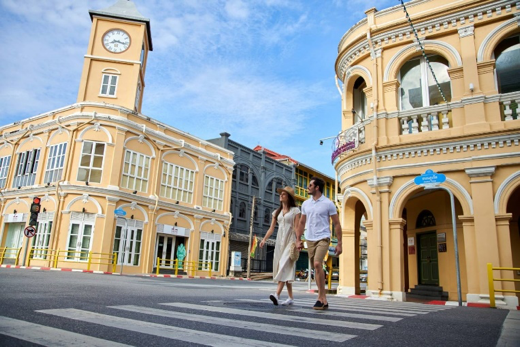
From activity-packed resorts to exclusive island retreats, every guest can discover their own tropical idyll across the nine Marriott Bonvoy properties. The brand-new Courtyard by Marriott Phuket Town, which opens in August 2021, will allow guests to immerse themselves in Phuket’s cultural heritage, surrounded by classical architecture, museums and markets.

4 2

Under the Tourism Authority of Thailand’s (TAT) newly-introduced Amazing Thailand Safety & Health Administration (SHA) Plus³ certification system, inbound visitors to Phuket will be required to stay at a hotel in which at least 70% of staff members have been vaccinated against COVID-19. Guests can rest assured that all of Marriott Bonvoy’s properties in Phuket have achieved SHA Plus certificates.

Marriott Bonvoy properties across the world upholds the highest standards of health and safety under the company’s “Commitment to Clean”. The Marriott Cleanliness Council is redefining cleaning and safety standards, including enhanced cleaning technologies, adhering to social distancing protocols, food safety and more. To learn about how Marriott is keeping its guests safe, please visit clean.marriott.com.

5 2

The Thai government’s Phuket Sandbox program, which comes into effect on 1 July 2021, allows international travelers who have received two COVID-19 vaccinations to fly directly to Phuket without the need to quarantine upon arrival, as long as they show proof of booking at an SHA Plus-certified hotel and when applying for their Certificate of Entry (CoE). For more information, please click here. As one of the largest hospitality companies in Thailand, Marriott International is fully supportive of this initiative and can’t wait to welcome overseas visitors back to Phuket!

The Summer Dreaming promotion is valid for bookings made between 1 June and 31 August 2021, for stays taken between 1 July 2021 and 31 March 2022. Reservations must be made direct via https://hotel-deals.marriott.com/summer-dreaming-thailand-en/phuket/ using the promotional code A1764.

Advertisement

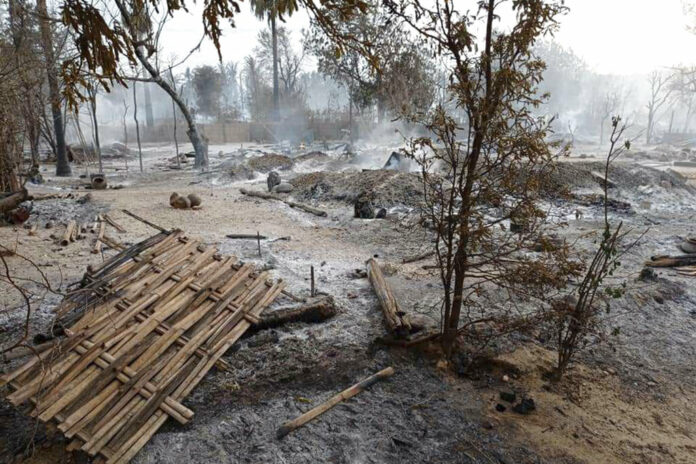
Resident: Junta Burns Myanmar Village in Escalating Violence

Smoke rises from smoldering houses in Kinma village, Pauk township, Magwe division, central Myanmar on Wednesday, June 16, 2021. Photo: AP

BANGKOK (AP) — Government troops have burned most of a village in Myanmar’s heartland, a resident said Wednesday, confirming reports by independent media and on social networks. The action appeared to be an attempt to suppress resistance against the ruling military junta.

Government-controlled media reported the fires were set by “terrorists” the armed troops were trying to arrest. The government and its opponents each refer to the other side as “terrorists.”

The near-destruction of the village is the latest example of how violence has become endemic in much of Myanmar as the junta tries to subdue an incipient nationwide insurrection. After the army seized power in February, overthrowing the elected government of Aung San Suu Kyi, a nonviolent civil disobedience movement arose to challenge military rule, but the junta’s attempt to repress it with deadly force fueled rather than quelled resistance.

Photos and videos of devastated Kinma village in Magway region that circulated widely on social media showed much of the village flattened by fire and the charred bodies of farm animals. One report said the village had about 1,000 residents.

A villager contacted by phone said only 10 of 237 houses were left standing. The villager, who asked that his name not be used because of fear of government reprisals, said most residents had already fled when soldiers firing guns entered the village shortly before noon on Tuesday.

He said he believed the troops were searching for members of a village defense force that had been established to protect against the junta’s troops and police. Most such local forces are very lightly armed with homemade hunting rifles.

The village defense force warned residents before the troops arrived, so only four or five people were left in the village when they began searching houses in the afternoon. When they found nothing, they began setting the homes on fire, he said.

“There are some forests just nearby our village. Most of us fled into the forests,” he said.

The villager said he believed there were three casualties, a boy who was a goat herder who was shot in the thigh, and an elderly couple who were unable to flee. He believed the couple had died but several media reports said they were missing.

Asked if he planned to go back to the village, he said: “No, we dare not to. We think it isn’t over. We will shift to other villages. Even if we go back to our village, there is no place to stay because everything is burnt.”

AP21167377612170
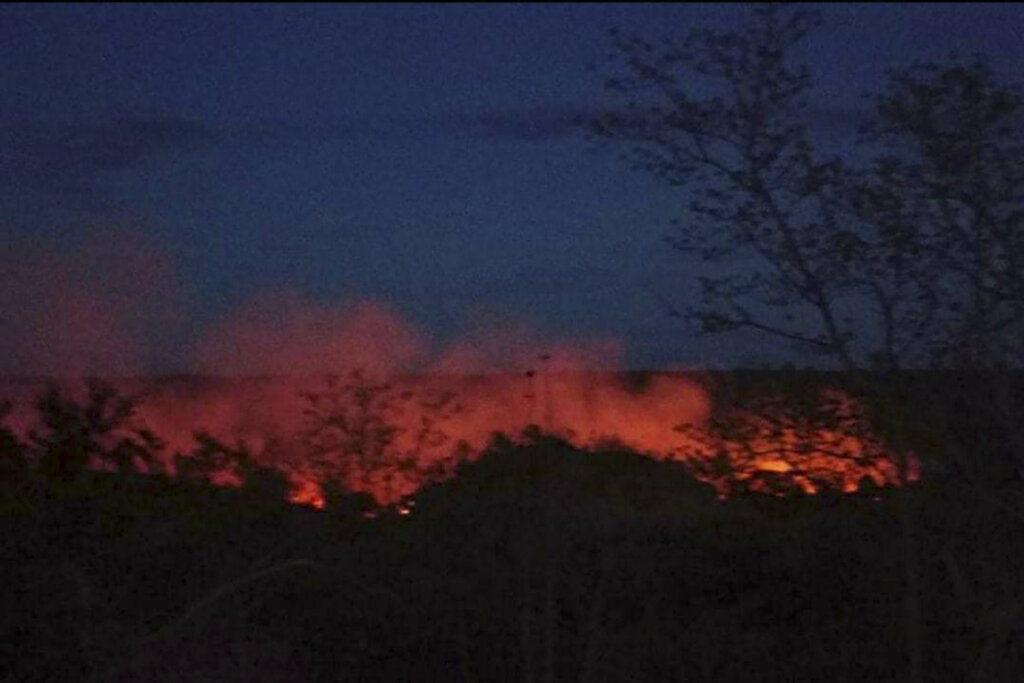
Flame rises from burning houses in Kinma village, Pauk township, Magwe division, central Myanmar, Tuesday June 15, 2021. Photo: AP

A report on Thursday in the state-run Global New Light of Myanmar newspaper blamed “armed terrorists” for the fire. It said security forces had been attacked with guns and grenades Tuesday morning when patrolling on the outskirts of the village, and when they later were able to enter, found the houses on fire. It said an investigation found that “a group of about 40 terrorists” had set fire to one villager’s home, and the wind spread the fire until about 100 houses were destroyed.

“Security forces are working to arrest and prosecute the terrorists who ambushed security forces and set fire to the home of peaceful civilian who did not support their acts of violence,” the story said.

The junta often blames resistance forces for using threats and force to pressure people not to cooperate with the government. Another article on the same page of the newspaper was headlined “Insurgents kill innocent people in some townships.”

“Some media outlets and social media users have been covering the incident with the intention of misrepresenting the public and discrediting the security forces as if security forces had set fire to Kinma village,” said the article.

Village defense forces are committed to forming a future opposition federal army, and some have allied themselves with ethnic minority groups in border areas that have been fighting for decades for autonomy from the central government.

Most of the fiercest fighting takes place in the border regions, where government forces are deployed in areas controlled by ethnic groups such as the Chin in the west, the Kachin in the north and the Karenni in the east.

The incident in Kinma attracted special attention because the Burman, or Barmar ethnic group, the country’s power-holding majority, is predominant in the Magway region and it is unusual for them to be targeted for such severe measures.

The army burned many villages of the Muslim Rohingya minority in 2017 in a brutal counterinsurgency campaign in the western state of Rakhine that drove more than 700,000 to seek safety across the border in Bangladesh.

There is widespread prejudice against the Rohingya and few in Myanmar protested the army’s treatment of them, though international courts are now considering whether it constituted genocide. Some people commenting Wednesday on social media said the burning of Kinma made Rohingya claims of mistreatment more credible.

Story: Grant Peck

Advertisement

Prayuth: Thailand to Reopen to Vaccinated Visitors in Mid-October

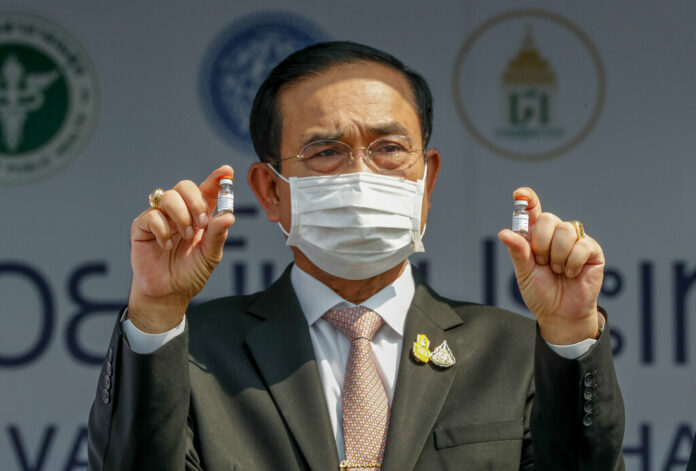
In this Feb. 24, 2021, file photo, Prime Minister Prayuth Chan-ocha holds samples of the Sinovac vaccine during a ceremony to mark the arrival of 200,000 doses in a shipment at the Suvarnabhumi airport in Bangkok. Photo: Sakchai Lalit / AP

BANGKOK (AP) — Thailand plans to fully reopen to vaccinated foreign visitors by mid-October as the government seeks to restart the crucial coronavirus-devastated tourism industry, the prime minister announced Wednesday.

Prime Minister Prayuth Chan-ocha said fully inoculated foreign visitors and returning Thai citizens must be allowed entry “without quarantine or other inconvenient restrictions,” and that his goal is to open up the country within 120 days.

Prayuth acknowledged that the push to re-open might create problems.

“I know this decision comes with some risk because, when we open the country, there will be an increase in infections, no matter how good our precautions,” he said. “But I think when we take into consideration the economic needs of the people, the time has come for us to take that calculated risk.”

Tourism is a major contributor to Thailand’s economy and employs millions of people. The country attracted nearly 40 million foreign arrivals in 2019, which plunged in 2020 because of an entry ban to control the coronavirus.

Prayuth said the government would reconsider the reopening only if a serious situation develops.

The government had previously targeted next January for reopening the country.

Thailand is in the midst of a surge in coronavirus cases that started in April and has accounted for more than 80% of the country’s 204,595 total confirmed cases and 90% of its 1,525 deaths.

The surge has caused special concern because Thailand has been late in securing and deploying vaccine supplies. So far it only has supplies of Sinovac from China and AstraZeneca, which is beginning to be produced locally under license. Just over 7% of the country’s 69 million people have had at least one dose.

Prayuth, who has come under fierce criticism over the vaccine supply situation, said his government is making progress in obtaining other vaccines, including those from Pfizer, Johnson & Johnson and Moderna.

“To date, we have signed reservation and supply contracts for 105.5 million doses to be delivered this year, putting us ahead of our target for vaccine supplies,” he said. “Based on our current plans, we will administer an average of about 10 million shots a month from July, so that by early October almost 50 million people will have had at least their first shot administered.”

Thailand plans to begin a trial project next month in which it will allow fully vaccinated visitors from abroad to enter Phuket without quarantine. But the so-called “Phuket sandbox” still entails restrictions, including a requirement to stay on the island for 14 days before heading to the mainland.

Story: Chalida Ekvittayavechnukul

Advertisement

‘Practical Work’ Summit for Biden, Putin: No Punches or Hugs

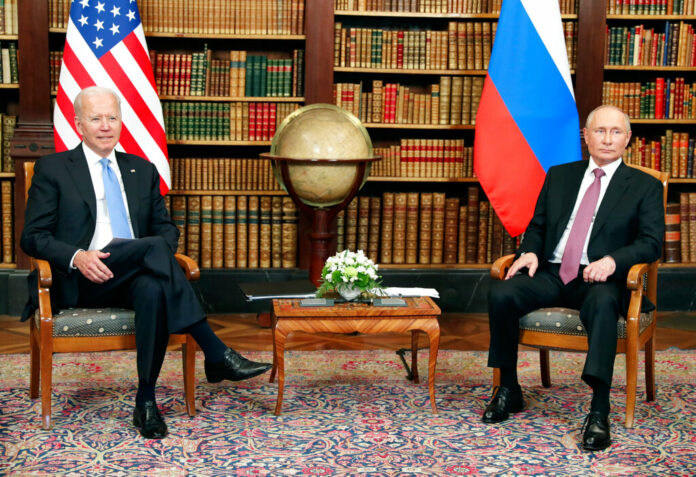
U.S President Joe Biden, left, and Russian President Vladimir Putin pose for media during their meeting at the 'Villa la Grange' in Geneva, Switzerland in Geneva, Switzerland, Wednesday, June 16, 2021. Photo: Mikhail Metzel / Pool Photo via AP

GENEVA (AP) — U.S. President Joe Biden and Russia’s Vladimir Putin exchanged cordial words and plotted modest steps on arms control and diplomacy but emerged from their much-anticipated Swiss summit Wednesday largely where they started — with deep differences on human rights, cyberattacks, election interference and more.

The two leaders reached an important, but hardly relationship-changing agreement to return their chief diplomats to Moscow and Washington after they were called home as the relationship deteriorated in recent months. And Biden and Putin agreed to start working on a plan to solidify their countries’ last remaining treaty limiting nuclear weapons.

But their three hours of talks on the shores of Lake Geneva left both men standing firmly in the same positions they had started in.

“I’m not confident he’ll change his behavior,” Biden said at a post-summit news conference, when he was asked about what evidence he saw that former KGB agent Putin would adjust his ways and actions. “What will change his behavior is the rest of the world reacts to them, and they diminish their standing in the world. I’m not confident in anything.”

Both the White House and Kremlin had set low expectations going into the summit. They issued a joint statement after the conclusion that said their meeting showed the “practical work our two countries can do to advance our mutual interests and also benefit the world.”

But over and over, Biden defaulted to “we’ll find out” when assessing whether their discussions about nuclear power, cybersecurity and other thorny issues will pay off.

Back-to-back news conferences by Biden and Putin after the summit also put in stark relief that getting at the root of tensions between the U.S. and Russia will remain an enormously difficult task — including when the two sides, at least in public comments, sketched dramatically different realities on cyber matters.

Biden came into the summit pushing Putin to clamp down on the surge of Russian-originated cybersecurity and ransomware attacks that have targeted businesses and government agencies in the U.S. and around the globe. But when the summit ended, it wasn’t evident that more than superficial progress had been made.

Biden said he made clear to Putin that if Russia crossed certain red lines — including going after major American infrastructure — his administration would respond and “the consequences of that would be devastating,”

Putin, in turn, continued to insist Russia had nothing to do with cyber intrusions despite U.S. intelligence evidence that indicates otherwise.

“Most of the cyberattacks in the world are carried out from the cyber realm of the United States,” said Putin, also adding Canada, two Latin American countries he didn’t name and Britain to the list.

While the U.S., Canada and Britain all engage in cyberespionage, the most damaging cyberattacks on record have come either from state-backed Russian hackers or Russian-speaking ransomware criminals who operate with impunity in Russia and allied nations.

AP21167519363645
President Joe Biden and Russian President Vladimir Putin, arrive to meet at the ‘Villa la Grange’, Wednesday, June 16, 2021, in Geneva, Switzerland. Photo: Patrick Semansky / AP

In fact, the worst have been attributed by the United States and the European Union to Russia’s GRU military intelligence agency, including the NotPetya virus that did more than $10 billion in economic damage in 2017, hitting companies including shipping giant Maersk, the pharmaceutical company Merck and food company Mondolez.

Putin agreed at the summit that Russia will begin consultations with the U.S. on the matter and acknowledged that ransomware and cyberattacks are big problems. Still, he maintained that the two countries “just need to abandon various insinuations.”

Despite the clear differences, Biden insisted that progress had been made, scolding reporters for being too pessimistic during a chat on the tarmac just before he boarded Air Force One to return home.

“There is a value to being realistic and putting on … an optimistic face, ” the president said.

Biden said the two leaders spent a “great deal of time” discussing cybersecurity and he believed Putin understood the U.S. position.

“I pointed out to him, we have significant cyber capability,” Biden said. “In fact, (if) they violate basic norms, we will respond.”

A disconnect between the two leaders was apparent on other matters, large and small.

Biden raised human rights issues with Putin, including the fate of opposition leader Alexei Navalny. Putin defended Navalny’s prison sentence and deflected repeated questions about mistreatment of Russian opposition leaders by highlighting U.S. domestic turmoil, including the Black Lives Matter protests and the Jan. 6 Capitol insurrection. Biden was having none of it.

“My response is kind of what I communicated” to Putin, Biden said. “That’s a ridiculous comparison.”

Putin held forth for nearly an hour before international reporters after the summit. While showing defiance at questions about Biden pressing him on human rights, he also expressed respect for the U.S. president as an experienced political leader.

The Russian noted that Biden repeated wise advice his mother had given him and that American president also spoke about his family — messaging that Putin said might not have been entirely relevant to their summit but demonstrated Biden’s “moral values.”

Overall, the tone was more businesslike than Putin’s 2018 summit with then-President Donald Trump, who embraced some of Putin’s unlikely statements about election interference but was considered somewhat amateurish and unpredictable by the Russians.

At this faceoff, though Putin raised doubt that the U.S.-Russia relationship could soon return to a measure of equilibrium of years past, he suggested that Biden was someone he could work with.

“The meeting was actually very efficient,” Putin said. “It was substantive, it was specific. It was aimed at achieving results, and one of them was pushing back the frontiers of trust.”

The summit had a somewhat awkward beginning — both men appeared to avoid looking directly at each other during a brief and chaotic photo opportunity before a scrum of jostling reporters.

It ended sooner than expected. Biden said that was because they had covered all the key areas and then “looked at each other like, OK, what next?”

Then Biden answered his own question

“What is going to happen next is we are going to be able to look back, look ahead in three to six months and say ‘Did the things we agreed to sit down and try to work out, did it work?’”

___

Story: Aamer Madhani, Jonathan Lemire, and Vladimir Isachenkov. Associated Press writer Zeke Miller in Washington and AP video journalist Daniel Kozin contributed to this report.

Advertisement

Hot News

LATEST NEWS

Bangkok
overcast clouds
30 ° C
30 °
30 °
75 %
2.9kmh
88 %
Wed
29 °
Thu
36 °
Fri
36 °
Sat
36 °
Sun
36 °