PM Prayut Chan-o-cha holds a vial during the welcoming ceremony for Sinovac vaccines at Suvarnabhumi Airport on Feb. 24, 2021.
BEIJING (AP) — In a rare admission of the weakness of Chinese coronavirus vaccines, the country’s top disease control official says their effectiveness is low and the government is considering mixing them to give them a boost.
Chinese vaccines “don’t have very high protection rates,” said the director of the China Centers for Disease Control, Gao Fu, at a conference Saturday in the southwestern city of Chengdu.
Beijing has distributed hundreds of millions of doses in other countries while also trying to promote doubt about the effectiveness of Western vaccines.
“It’s now under formal consideration whether we should use different vaccines from different technical lines for the immunization process,” Gao said.
The effectiveness rate of a coronavirus vaccine from Sinovac, a Chinese developer, at preventing symptomatic infections has been found to be as low as 50.4% by researchers in Brazil. By comparison, the vaccine made by Pfizer has been found to be 97% effective.
Beijing has yet to approve any foreign vaccines for use in China, where the coronavirus emerged in late 2019.
Gao gave no details of possible changes in strategy but mentioned mRNA, a previously experimental technique used by Western vaccine developers while China’s drug makers used traditional technology.
“Everyone should consider the benefits mRNA vaccines can bring for humanity,” Gao said. “We must follow it carefully and not ignore it just because we already have several types of vaccines already.”
Gao previously raised questions about the safety of mRNA vaccines. He was quoted by the official Xinhua News Agency as saying in December he couldn’t rule out negative side effects because they were being used for the first time on healthy people.
Chinese state media and popular health and science blogs also have questioned the safety and effectiveness of the Pfizer vaccine, which uses mRNA.
As of April 2, some 34 million people have received both of the two doses required by Chinese vaccines and about 65 million received one, according to Gao.
Experts say mixing vaccines, or sequential immunization, might boost effectiveness rates. Trials around the world are looking at mixing of vaccines or giving a booster shot after a longer time period. Researchers in Britain are studying a possible combination of Pfizer and AstraZeneca vaccines.
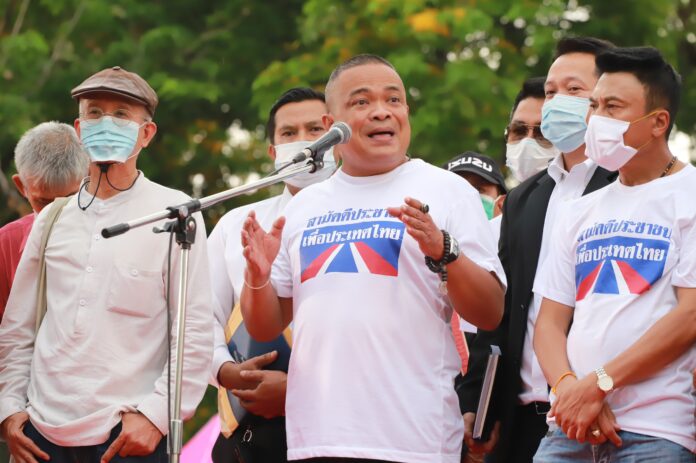
Jatuporn Prompan speaks at a "People's Unity for Thailand" rally at the Black May Memorial on Apr. 7, 2021.
The reappearance of an alliance by some former Red and Yellow shirts to push for the ouster of Prime Minister Gen Prayut Chan-ocha got many people deciphering.
Was this just a widening of anti-Prayut alliance or was there something more? With low levels of political trust, it’s not surprising that some have gravitated towards the latter.
The protest, led by former Redshirt co-leader Jatuporn Prompan, former Yellowshirt leader Piphob Thongchai and former key member of the People Democractic Reform Committee (PDRC) Veera Somkwamkid surprised many when they got together on Sunday to lead an anti-Prayut demonstration.
This shows that people who used to at least tacitly support the 2014 coup led by Prayut, if not more, now want Prayut out. More people wanting Prayut out should be good news for those fed up with Prayut and his cohort, particularly after a year of student-led protests and many of the student leaders themselves now in prison facing trials.
There’s a catch, however. Jatuporn and the rest made it clear that they won’t be touching the issue of monarchy reform, one of the key demands of the student-led movement, which is now losing momentum on the streets. Jatuporn said he is loyal to the crown and won’t be pushing for such demand.
This led to speculations and suspicions whether the group, led by Jatuporn, Piphob and the like, could in fact be intentionally or unintentionally limiting political change to mere regime change in order to prevent a more fundamental change sought by the student leaders over the past year.
Skeptics fear that merely booting Prayut out would change little as the powers that be, the deep state, would simply resort to getting a more presentable replacement to be the face of a new “improved and more democractic” regime.
Since the May 1992 ouster of dictator Gen Suchinda Kraprayoon, Thais have failed to truly send the military back to the barracks for good. And under the current reign of King Vajiralongkorn, concerns about the perceived increase of royal power have led to calls for monarchy reform. These skeptics now feel that a mere change of the government figure head, or Prayut, will not solve anything in the long run.
Many young protesters now desire for fundamental change that includes monarchy reform and some regard the latest appearance of Jatuporn and co with suspicions and distrust.
They fear that Thailand will remain caught in a loop of superficial political change that will not affect real political reform.
These are valid concerns and for three decades, I watched Thailand trapped in this cycle of superficial political change – again and again. Some have lost hope in genuine change and became apolitical. Now the young generations want more fundamental change and they do not deserve to be caught in this cycle of delusions for another three decades or more.
People like Jatuporn, Piphob or Veera had their days. Their call for Prayut ouster now is so hollow and inadequate as to be construed as a call to prevent more fundamental change from taking place. Sometimes when you’ve done your part of the contributions and become a relic of the past, one should not become an obstacle for a more progressive future. Knowing when to retire is key.
If you can’t be part of a future’s solution, do not become part of a present obstacle.
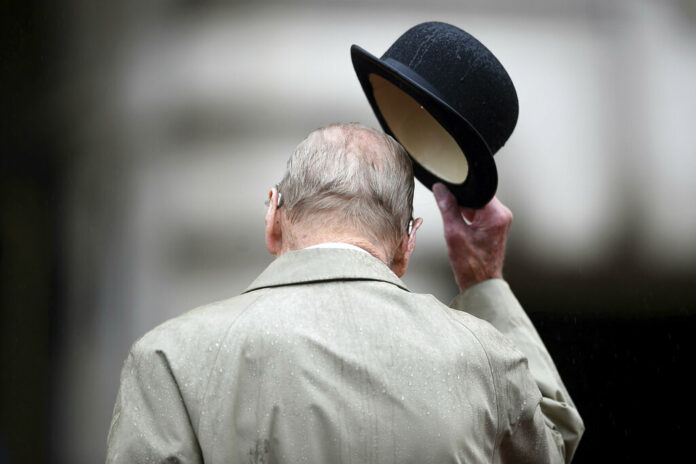
In this Wednesday Aug. 2, 2017 file photo, Britain's Prince Philip, in his role as Captain General of the Royal Marines, attends a Parade on the forecourt of Buckingham Palace, in central London. Buckingham Palace says Prince Philip, husband of Queen Elizabeth II, has died aged 99. (Hannah McKay/Pool via AP, File)
LONDON (AP) — Prince Philip, the irascible and tough-minded husband of Queen Elizabeth II who spent more than seven decades supporting his wife in a role that both defined and constricted his life, has died, Buckingham Palace said Friday. He was 99.
His life spanned nearly a century of European history, starting with his birth as a member of the Greek royal family and ending as Britain’s longest serving consort during a turbulent reign in which the thousand-year-old monarchy was forced to reinvent itself for the 21st century.
He was known for his occasionally racist and sexist remarks — and for gamely fulfilling more than 20,000 royal engagements to boost British interests at home and abroad. He headed hundreds of charities, founded programs that helped British schoolchildren participate in challenging outdoor adventures, and played a prominent part in raising his four children, including his eldest son, Prince Charles, the heir to the throne.
Philip spent a month in hospital earlier this year before being released on March 16 to return to Windsor Castle.
“It is with deep sorrow that Her Majesty The Queen has announced the death of her beloved husband, His Royal Highness The Prince Philip, Duke of Edinburgh,” the palace said. “His Royal Highness passed away peacefully this morning at Windsor Castle.”
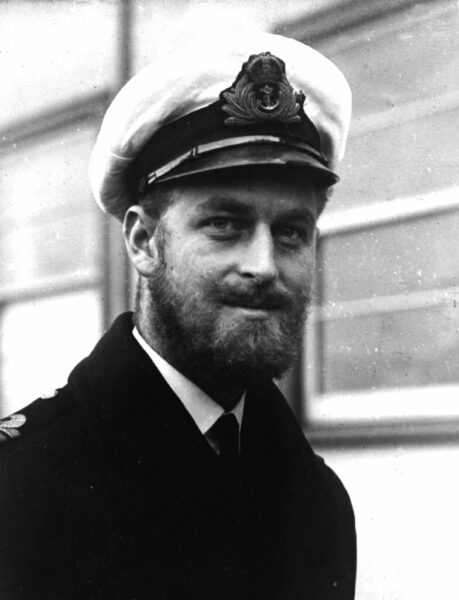
FILE – This Aug. 29, 1945 file photo shows Prince Philip of Greece, during a naval visit to Melbourne, Australia. (AP Photo/File)
Philip, who was given the title Duke of Edinburgh on his wedding day, saw his sole role as providing support for his wife, who began her reign as Britain retreated from empire and steered the monarchy through decades of declining social deference and U.K. power into a modern world where people demand intimacy from their icons.
In the 1970s, Michael Parker, an old navy friend and former private secretary of the prince, said of him: “He told me the first day he offered me my job, that his job — first, second and last — was never to let her down.”
The queen, a very private person not given to extravagant displays of affection, once called him “her rock” in public.
In private, Philip called his wife Lilibet; but he referred to her in conversation with others as “The Queen.”
Over the decades, Philip’s image changed from that of handsome, dashing athlete to arrogant and insensitive curmudgeon. In his later years, the image finally settled into that of droll and philosophical observer of the times, an elderly, craggy-faced man who maintained his military bearing despite ailments.
The popular Netflix series “The Crown” gave Philip a central role, with a slightly racy, swashbuckling image. He never commented on it in public, but the portrayal struck a chord with many Britons, including younger viewers who had only known him as an elderly man.
Philip’s position was a challenging one — there is no official role for the husband of a sovereign queen — and his life was marked by extraordinary contradictions between his public and private duties. He always walked three paces behind his wife in public, in a show of deference to the monarch, but he was the head of the family in private. Still, his son Charles, as heir to the throne, had a larger income, as well as access to the high-level government papers Philip was not permitted to see.
Philip often took a wry approach to his unusual place at the royal table.
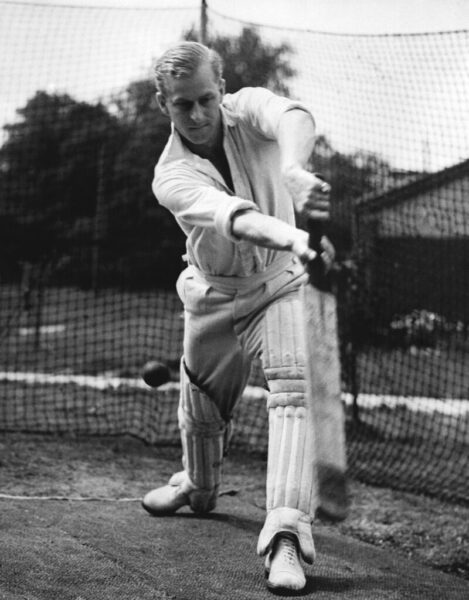
FILE – In this July 31, 1947 file photo, Lt. Philip Mountbatten, whose marriage to Princess Elizabeth has been set for November 20, bats at the nets during cricket practice at the Petty Officers’ Training Center, Corsham, England. Buckingham Palace says Prince Philip, husband of Queen Elizabeth II, has died aged 99. (AP Photo/File)
“Constitutionally, I don’t exist,” said Philip, who in 2009 became the longest-serving consort in British history, surpassing Queen Charlotte, who married King George III in the 18th century.
He frequently struggled to find his place — a friction that would later be echoed in his grandson Prince Harry’s decision to give up royal duties.
“There was no precedent,” he said in a rare interview with the BBC to mark his 90th birthday. “If I asked somebody, ‘What do you expect me to do?’ they all looked blank.”
But having given up a promising naval career to become consort when Elizabeth became queen at age 25, Philip was not content to stay on the sidelines and enjoy a life of ease and wealth. He promoted British industry and science, espoused environmental preservation long before it became fashionable, and traveled widely and frequently in support of his many charities.
In those frequent public appearances, Philip developed a reputation for being impatient and demanding and was sometimes blunt to the point of rudeness.
Many Britons appreciated what they saw as his propensity to speak his mind, while others criticized behavior they labeled offensive and out of touch.
In 1995, for example, he asked a Scottish driving instructor, “How do you keep the natives off the booze long enough to pass the test?” Seven years later in Australia, when visiting Aboriginal people with the queen, he asked: “Do you still throw spears at each other?”
Many believe his propensity to speak his mind meant he provided needed, unvarnished advice to the queen.
“The way that he survived in the British monarchy system was to be his own man, and that was a source of support to the queen,” said royal historian Robert Lacey. “All her life she was surrounded by men who said, ‘yes ma’am’ and he was one man who always told her how it really was, or at least how he saw it.”
Lacey said at the time of the royal family’s difficult relations with Princess Diana after her marriage to Charles broke down, Philip spoke for the family with authority, showing that he did not automatically defer to the queen.
Philip’s relationship with Diana became complicated as her separation from Charles and their eventual divorce played out in a series of public battles that damaged the monarchy’s standing.
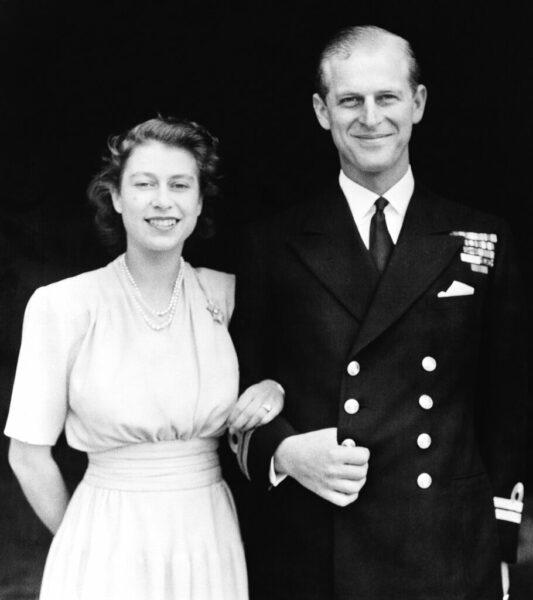
FILE – This file photo dated July 10, 1947 shows the official photograph of Britain’s Princess Elizabeth and her fiance, Lieut. Philip Mountbatten in London. Buckingham Palace says Prince Philip, husband of Queen Elizabeth II, has died aged 99. (AP Photo/File)
It was widely assumed that he was critical of Diana’s use of broadcast interviews, including one in which she accused Charles of infidelity. But letters between Philip and Diana released after her death showed that the older man was at times supportive of his daughter-in-law.
After Diana’s death in a car crash in Paris in 1997, Philip had to endure allegations by former Harrods owner Mohamed Al Fayed that he had plotted the princess’s death. Al Fayed’s son, Dodi, also died in the crash.
During a lengthy inquest into their deaths, a senior judge acting as coroner instructed the jury that there was no evidence to support the allegations against Philip, who did not publicly respond to Al Fayed’s charges.
Philip’s final years were clouded by controversy and fissures in the royal family.
His third child, Prince Andrew, was embroiled in scandal over his friendship with Jeffrey Epstein, an American financier who died in a New York prison in 2019 while awaiting trial on sex trafficking charges.
U.S. authorities accused Andrew of rebuffing their request to interview him as a witness, and Andrew faced accusations from a woman who said that she had several sexual encounters with the prince at Epstein’s behest. He denied the claim but withdrew from public royal duties amid the scandal.
At the start of 2020, Philip’s grandson Harry and his wife, the American former actress Meghan Markle, announced they were quitting royal duties and moving to North America to escape intense media scrutiny that they found unbearable.
Born June 10, 1921, on the dining room table at his parents’ home on the Greek island of Corfu, Philip was the fifth child and only son of Prince Andrew, younger brother of the king of Greece. His grandfather had come from Denmark during the 1860s to be adopted by Greece as the country’s monarch.
Philip’s mother was Princess Alice of Battenberg, a descendent of German princes. Like his future wife, Elizabeth, Philip was also a great-grandchild of Queen Victoria.
When Philip was 18 months old, his parents fled to France. His father, an army commander, had been tried after a devastating military defeat by the Turks. After British intervention, the Greek junta agreed not to sentence Andrew to death if he left the country.
The family was not exactly poor but, Philip said: “We weren’t well off” — and they got by with help from relatives. He later brought only his navy pay to a marriage with one of the world’s richest women.
Philip’s parents drifted apart when he was a child, and Andrew died in Monte Carlo in 1944. Alice founded a religious order that did not succeed and spent her old age at Buckingham Palace. A reclusive figure, often dressed in a nun’s habit, she was little seen by the British public. She died in 1969 and was posthumously honored by Britain and Israel for sheltering a Jewish family in Nazi-occupied Athens during the war.
Philip went to school in Britain and entered Britannia Royal Naval College Dartmouth as a cadet in 1939. He got his first posting in 1940 but was not allowed near the main war zone because he was a foreign prince of a neutral nation. When the Italian invasion of Greece ended that neutrality, he joined the war, serving on battleships in the Indian Ocean, the Mediterranean and the Pacific.
On leave in Britain, he visited his royal cousins, and, by the end of war, it was clear he was courting Princess Elizabeth, eldest child and heir of King George VI. Their engagement was announced July 10, 1947, and they were married on Nov. 20.
After an initial flurry of disapproval that Elizabeth was marrying a foreigner, Philip’s athletic skills, good looks and straight talk lent a distinct glamour to the royal family.
Elizabeth beamed in his presence, and they had a son and daughter while she was still free of the obligations of serving as monarch.
But King George VI died of cancer in 1952 at age 56.
Philip had to give up his naval career, and his subservient status was formally sealed at the coronation, when he knelt before his wife and pledged to become “her liege man of life and limb, and of earthly worship.”
The change in Philip’s life was dramatic.
“Within the house, and whatever we did, it was together,” Philip told biographer Basil Boothroyd of the years before Elizabeth became queen. “People used to come to me and ask me what to do. In 1952, the whole thing changed, very, very considerably.”
Said Boothroyd: “He had a choice between just tagging along, the second handshake in the receiving line, or finding other outlets for his bursting energies.”
So Philip took over management of the royal estates and expanded his travels to all corners of the world, building a role for himself.
From 1956, he was Patron and Chairman of Trustees for the largest youth activity program in Britain, the Duke of Edinburgh’s Award, a program of practical, cultural and adventurous activities for young people that exists in over 100 countries. Millions of British children have had some contact with the award and its famous camping expeditions.
He painted, collected modern art, was interested in industrial design and planned a garden at Windsor Castle. But, he once said, “the arts world thinks of me as an uncultured, polo-playing clot.”
In time, the famous blond hair thinned and the long, fine-boned face acquired a few lines. He gave up polo but remained trim and vigorous.
To a friend’s suggestion that he ease up a bit, the prince is said to have replied, “Well, what would I do? Sit around and knit?”
But when he turned 90 in 2011, Philip told the BBC he was “winding down” his workload and he reckoned he had “done my bit.”
The next few years saw occasional hospital stays as Philip’s health flagged.
He announced in May 2017 that he planned to step back from royal duties, and he stopped scheduling new commitments — after roughly 22,000 royal engagements since his wife’s coronation. In 2019, he gave up his driver’s license after a serious car crash.
Philip is survived by the queen and their four children — Prince Charles, Princess Anne, Prince Andrew and Prince Edward — as well as eight grandchildren and nine great-grandchildren.
The grandchildren are Charles’ sons, Prince William and Prince Harry; Anne’s children, Peter and Zara Phillips; Andrew’s daughters, Princess Beatrice and Princess Eugenie; and Edward’s children, Lady Louise and Viscount Severn.
The great-grandchildren are William and Kate’s children, Prince George, Princess Charlotte and Prince Louis; Harry and Meghan’s son, Archie; Savannah and Isla, the daughters of Peter Phillips and his wife, Autumn; Mia and Lena, the daughters of Zara Phillips and her husband, Mike Tindall; and Eugenie’s son, August, with her husband, Jack Brooksbank.
___
Story: By Jill Lawless and Gregory Katz. Katz and Associated Press writer Robert Barr contributed to this report before their deaths.
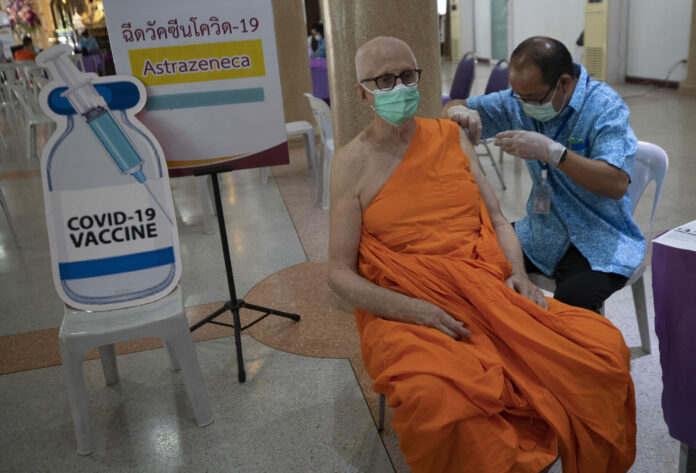
A health worker administers a dose of the AstraZeneca COVID-19 vaccine to a Buddhist monk at Nak Prok Temple in Bangkok, Thailand, Friday, April 9, 2021. Photo: Sakchai Lalit / AP
BANGKOK (AP) — Thai authorities were struggling Friday to contain a growing coronavirus outbreak just days before the country’s traditional Songkran New Year’s holiday, when millions of people travel around the country.
Health officials reported another 559 new infections nationwide on Friday, following increases of 405 new cases and 334 new cases the previous two days. Authorities have responded by ordering that entertainment venues in 41 provinces close for two weeks starting Saturday, while governors in some provinces are placing restrictions on travelers arriving from elsewhere.
Such daily increases in new infections are rare for Thailand, which has weathered the coronavirus pandemic far better than many nations through measures including strict border controls that have decimated the country’s lucrative tourism industry. Thailand has also experimented at times with everything from curfews and alcohol bans to closures of schools, shopping malls and restaurants.
Both travelers and businesses alike had been hoping that this year’s Songkran holiday could go forward without a spike in infections. The official holiday was canceled last year to slow the spread of the disease, as it came as the country was experiencing its first major outbreak.
The national government has so far declined to issue blanket travel restrictions this year, though provincial authorities are allowed to set quarantine rules for people coming from high-risk zones such as Bangkok. Several provinces have done so, throwing many people’s travel plans into question.
The current outbreak is the largest the country has seen since one in December that was centered around a fresh food market that employs a number of migrant workers from Myanmar. This time, however, the outbreak has been traced to a number of bars and nightlife venues in the heart of Bangkok, including many popular with the rich and powerful. Cases are now on the rise in at least 20 provinces, with authorities saying some of those infected have a more contagious variant of the virus first detected in Britain.
The outbreak — which has infected at least one Cabinet minister and forced a number of others into self-quarantine — is increasing criticism of Prime Minister Prayuth Chan-ocha’s government and its handling of the pandemic. While Thailand has only recorded 30,869 infections and 96 deaths since the pandemic began, critics say the government hasn’t done enough with regards to vaccinations or support for people whose livelihoods have been wiped out by the pandemic.
Thailand has vaccinated well under 1% of its 69 million people and has on hand a relatively small supply of the Sinovac and AstraZeneca vaccines. While there have been some high-profile vaccination events — including most recently inoculations for workers at now-closed entertainment venues in areas affected by the latest outbreak — there is still no clear time table for when the general public will be able to get a vaccine.
The government response to the latest outbreak has so far centered on closures of nightlife venues. Bangkok city officials earlier this week ordered all nightspots in three affected neighborhoods to be closed. The country’s central authority managing the coronavirus situation expanded that Friday to bars, nightclubs and karaoke parlors in 41 provinces.
Authorities in Bangkok have set up mass testing sites in some of the affected neighborhoods, drawing large crowds of people who often had to wait hours in line. Efforts to find possible infections have been complicated now that a number of hospitals in Bangkok have said they are suspending COVID-19 testing due to shortages in the chemicals needed to process tests.
The government has ordered preparations to set up field hospitals to accommodate any surge in patients and said vacant rooms in Bangkok hotels could also be converted to accommodate infected people if numbers keep rising.
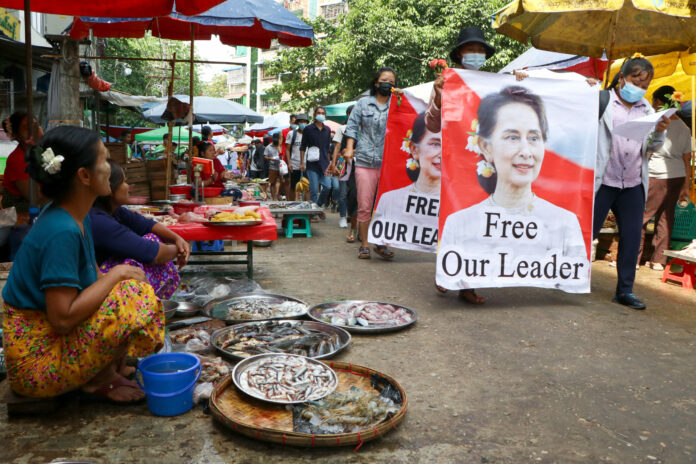
Anti-coup protesters walk through a market with images of ousted Myanmar leader Aung San Suu Kyi at Kamayut township in Yangon, Myanmar Thursday, April 8, 2021. Photo: AP
YANGON (AP) — An information blackout under Myanmar’s military junta worsened Thursday as fiber broadband service, the last legal way for ordinary people to access the internet, became intermittently inaccessible on several networks.
Authorities in some areas have also started confiscating satellite dishes used to access international news broadcasts.
Protests against the Feb. 1 coup that ousted the elected government of Aung San Suu Kyi continued Thursday despite the killing of 11 people by security forces a day earlier.
It was unclear if the internet interruptions for at least two service providers, MBT and Infinite Networks, were temporary. MBT said its service was halted by a break in the line between Yangon and Mandalay, the country’s two biggest cities. But internet users had been complaining for the past week of major slowdowns in the services.
The junta has gradually throttled down internet service since the coup. It initially imposed a largely ineffective block of social media such as Facebook and then cut mobile data service, the most common way of connecting to the internet, but only at night. As the junta increased its use of deadly force against protesters it also imposed a total ban on mobile data use.
At least 598 protesters and bystanders have been killed by security forces since the takeover, according to the Assistance Association for Political Prisoners, which monitors casualties and arrests.
The use of satellite television as a source of information also appeared to be under threat. In Laputta and other towns in the Irrawaddy Delta southwest of Yangon, local government vehicles announced over loudspeakers that it was no longer legal to use satellite dishes and that they must be turned in at police stations. Police also raided shops selling the dishes and confiscated them.
Online news services Khit Thit Media and Mizzima said similar measures were taken in Mon state in the country’s southeast. Satellite TV offers access to international sources of news about Myanmar.
Since the coup, all non state-owned daily newspapers have stopped publishing and online news sites have come under severe pressure. Five popular independent news services had their operating licenses revoked in early March and were told to stop publishing and broadcasting on all platforms, but mostly defied the orders. Other agencies have been sued over their coverage.
About 30 journalists arrested since the coup remain detained. About half of them have been charged with violating a law covering circulation of information that could hurt national security or disturb public order. The offense is punishable by up to three years in prison.
In an open letter to the junta this week, the New York-based Committee to Protect Journalists called for “the immediate and unconditional release of all journalists detained in the aftermath of your February 1 suspension of democracy and imposition of emergency rule.”
The group said that since the military’s takeover, “press freedom conditions have rapidly and drastically deteriorated in your country. News reports indicate journalists have been beaten, shot and injured by live bullets and arbitrarily arrested and charged by security forces while merely doing their jobs of covering the demonstrations and your regime’s retaliatory clampdown.”
Thursday’s protests included demonstrations in Launglone township, in the south of the country, where villagers sang songs and lit candles before dawn and then marched down rural roads, and in the city of Dawei, also in the south, where engineers, teachers, students and others joined in their latest demonstration.
Despite eight killings in Dawei by security forces, opponents of the junta have continued protesting on the streets, avoiding confrontations by varying the demonstrations’ starting times and breaking into smaller groups.
On Wednesday, security forces stormed the town of Kalay in northwestern Myanmar where some residents had used homemade hunting rifles to form a self-defense force.
Security forces killed at least 11 civilians and injured many others, local news reports said. The state-owned Global New Light of Myanmar newspaper reported Thursday that 18 people described as rioters with homemade weapons had been arrested but said nothing about civilian casualties.
U.N. workers on the ground have seen an alarming humanitarian impact from escalating violence in northeastern and southeastern Myanmar in recent weeks, U.N. spokesman Stephane Dujarric said Thursday.
In southeastern Kayin state and Bago region, thousands of people have been forced to flee their homes due to military attacks and airstrikes, as well as army clashes with ethnic guerillas representing the Karen minority. In the northeast, clashes have displaced 3,000 people, while in northern Shan state, fighting has forced more than 8,000 people from their homes, Dujarric said from New York.
On the diplomatic front, Christine Schraner Burgener, the U.N. special envoy for Myanmar who has called for the restoration of democracy, is heading to Thailand this week and hopes to visit other members of the Association of Southeast Asian Nations as well as China, Dujarric said.
Schraner Burgener has called for a robust international response to the crisis and a unified effort by regional countries to use their influence toward Myanmar’s stability, he said.
Schraner Burgener is also continuing efforts to visit Myanmar and hopes the military will provide her access to detained leaders including President U Wint Myint and State Counsellor Aung San Suu Kyi, Dujarric said.
Schraner Burgener is also ready “to resume dialogue with the military to contribute to a return to Myanmar’s democratic path, peace and stability,” he said.
Summer is in full swing with TWG Tea’s new limited-edition green tea blends, Green of Fujian Tea and Sencha Matcha, and the Secret of Siam Tea Set featuring a sensational selection of tea-infused savouries and patisseries served in grand Thai-style.
Green of Fujian Tea
Embark on a Summer splendour with the refreshing Green of Fujian Tea, a blend of
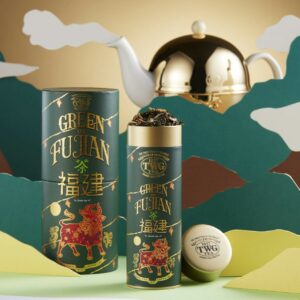
exceptional green teas from a remote garden on the celebrated Tai Mu Mountain of Fu Ding in Fujian Province. Fujian, auspiciously known as “happy establishments”, also symbolises an abundance of success and prosperity in the Year of the Ox.
Boasting precious, downy and pale-green leaves with an extremely delicate infusion, this limited-edition mélange is marvelously buttery with natural hints of honey and night blooming jasmine. Rich in tea polyphenols and vitamin C, the infusion yields notes of wild woodland berries with a zesty aftertaste of cedarwood – a tea that offers balm for body and soul this Summer. The Green of Fujian Tea retails at 1,490 THB at all TWG Tea Salons & Boutiques in Bangkok.
Sencha Matcha
The best of Japanese green tea blended into a cup of purity, this limited-edition Sencha Matcha is composed of Kyushu Island sencha and matcha from the Shizuoka Prefecture – the newest addition to TWG Tea Cotton Teabag Collection.
Grown in celebrated mineral-rich volcanic ash, beautifully crafted leaves of sencha metamorphose into a smooth and silky cup. Matcha completes this blend, providing strength and complexity. An inimitable reinterpretation of a traditional Japanese blend.
Rich in zinc, vitamin C, anti-inflammatory and antioxidant properties, the delicate, grassy infusion is perfect to revel in the warm summer days. Sencha Matcha in the TWG Tea Cotton Teabag Collection retails at 970 THB at all TWG Tea Salons & Boutiques in Bangkok.
Secret of Siam Tea Set
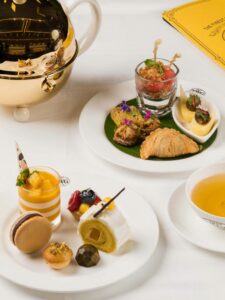
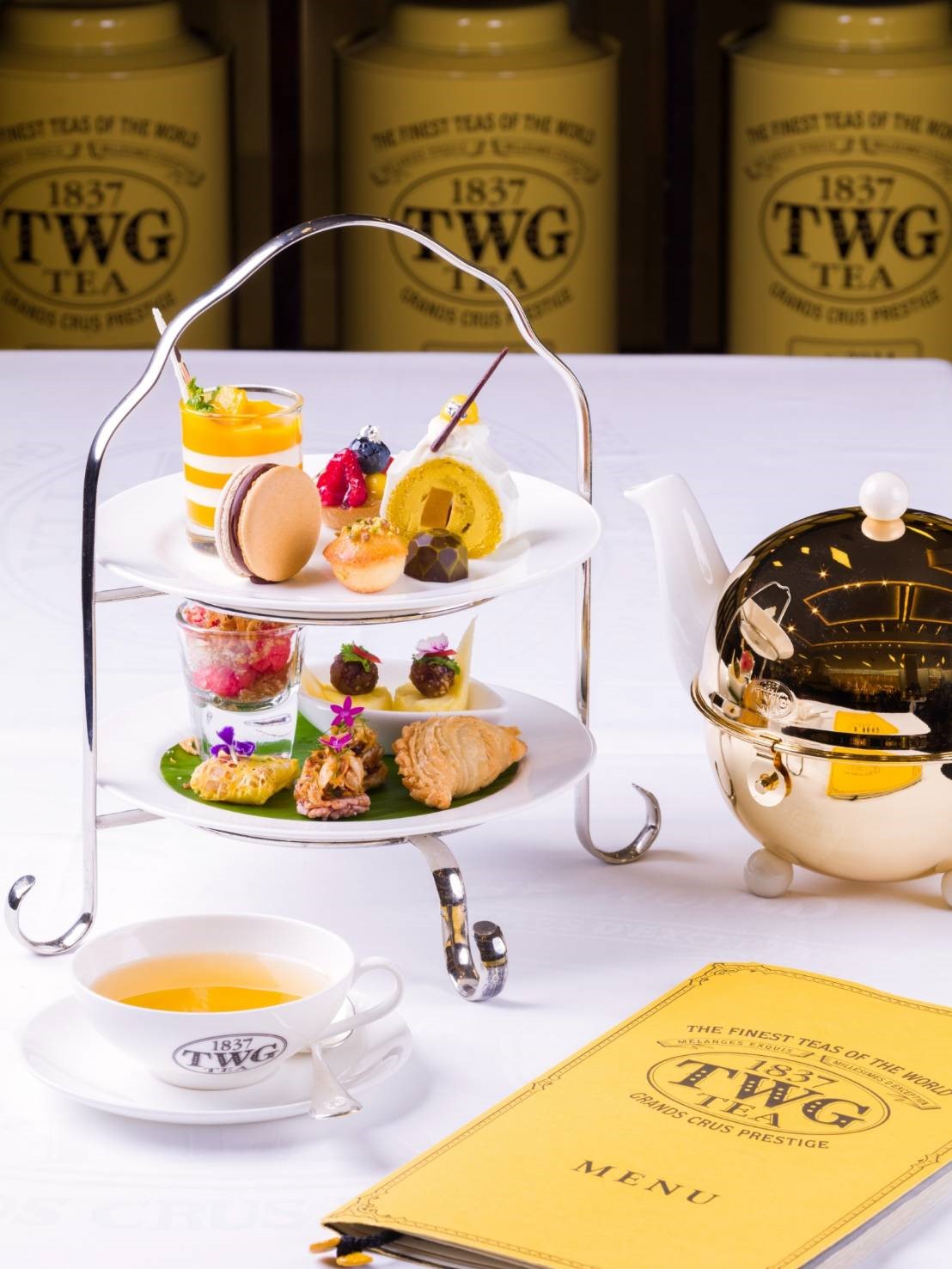
Experience the flavours of summertime with the exquisite Secret of Siam Tea Set, showcasing an enticing two-tier array of Thai-style tea-infused savouries and patisseries, served with your favourite choice of TWG Tea.
Kickstart the summer holiday with five savoury canape and nibbles. Indulge in Ma Hor, fresh pineapple morsel topped with minced chicken and peanut mixture infused with Caramel Tea; Leaetiyong, stir-fried marinated prawn in Spice Route Tea infused oil with vegetables, wrapped in an egg net; and Plarr Crab, blue crab meat on mini rice crispy crackers, tossed with plarr sauce infused with Black Nectar Tea and topped with aromatic Thai herbs.
For a nostalgic taste, try the traditional deep-fried Chicken Curry Puff with chicken and potato filling infused with Comptoir des Indes Tea. Another savoury highlight is the beautiful canape of Sweet Dried Fish with Watermelon, roasted dried fish seasoned with 1837 Black Tea, sugar and mixed crispy shallot, served with fresh watermelon.
Keeping the summer heat at bay, revitalise with six refreshing tea-infused patisseries that include the Pistachio Madeleine, a French pastry infused with Renaissance Tea and topped with crunchies pistachios; and Mango Bon Bon, dark chocolate filled with mango infused with Alfonso Tea.
Delight in the exotic Chocolate Macaron with mango-passionfruit chocolate ganache infused with Grand Wedding Tea; Mixed Fruit Tartlet with almond cream infused with Almond Tea; and Mango Roll Cake, mango sponge cake layered with mango cream and jelly infused with White Sky Tea. Complete the tea time experience with a Vanilla and Mango Verrine, vanilla panna cotta and mango jelly infused with Alfonso Tea, topped with fresh mango and served in a dainty canape glass.
This exclusive Secret of Siam Tea Set is priced at 550 THB per set. Available from 1 April to 31 May 2021 at TWG Tea Salons & Boutiques located at The Emporium and Siam Paragon in Bangkok.
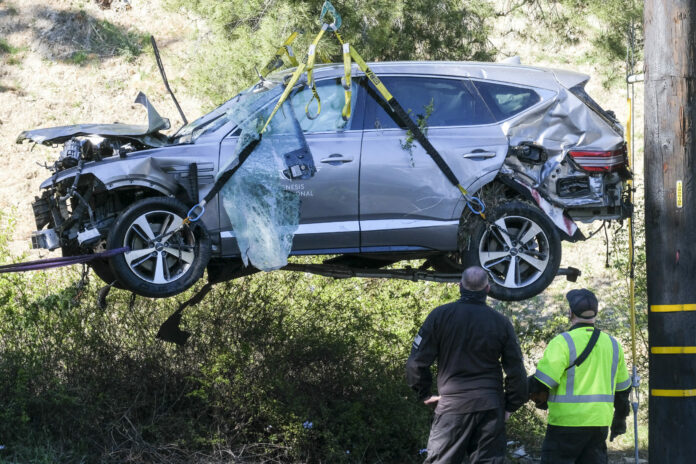
FILE - In this Feb. 23, 2021, file photo, a crane is used to lift a vehicle following a rollover accident involving golfer Tiger Woods, in the Rancho Palos Verdes suburb of Los Angeles. Photo: Ringo H.W. Chiu / AP File
LOS ANGELES (AP) — Tiger Woods was driving more than 80 mph — nearly twice the posted speed limit — on a downhill stretch of road when he lost control of an SUV and crashed in a wreck that seriously injured the golf superstar, authorities said Wednesday.
Sheriff Alex Villanueva blamed the Feb. 23 crash outside Los Angeles solely on excessive speed and Woods’ loss of control behind the wheel. The athlete will not face any citations for his third high-profile collision in 11 years.
“The primary causal factor for this traffic collision was driving at a speed unsafe for the road conditions and the inability to negotiate the curve of the roadway,” the sheriff told a news conference.
Woods was driving 84 to 87 mph (135 to 140 kph) in an area with a speed limit of 45 mph (72 kph), Villanueva said. No one else was hurt, and no other vehicles were involved.
The stretch of road is known for wrecks and drivers who frequently hit high speeds. Due to the steepness of the terrain, a runaway truck escape lane is available just beyond where Woods crashed.
There was no evidence that the golfer tried to brake, and investigators believe Woods may have inadvertently stepped on the accelerator instead of the brake pedal in a panic, said sheriff’s Capt. James Powers, who oversees the sheriff’s station closest to the crash site.
Woods was wearing a seat belt at the time, and the vehicle’s airbags deployed. He told deputies that he had not taken medication or consumed alcohol before the crash, sheriff’s officials said.
Detectives did not seek search warrants for Woods’ blood samples, which could have been screened for drugs or alcohol, or his cellphone. Authorities said there was no evidence of impairment or of distracted driving, so they did not have probable cause to get warrants. Investigators did search the SUV’s data recorder, known as a black box, which revealed the vehicle’s speed.
On Twitter, Woods thanked first responders, as well as the people who called 911.
“I will continue to focus on my recovery and family, and thank everyone for the overwhelming support and encouragement I’ve received throughout this very difficult time,” Woods wrote.
Documents show that Woods told deputies he did not know how the crash occurred and did not remember driving. At the time of the wreck, Woods was recovering from a fifth back surgery, which took place two months earlier.
Woods, who is originally from the Los Angeles area, had been back home to host his PGA tournament, the Genesis Invitational at Riviera Country Club, when the crash happened.
He was driving an SUV loaned to him by the tournament when he struck a raised median in Rolling Hills Estates, just outside Los Angeles. The SUV crossed through two oncoming lanes and uprooted a tree, striking it at 75 mph (120 kph).
Jonathan Cherney, an accident reconstruction expert and retired Irvine, California, police detective, said the sheriff did not explain a fundamental part of the case: Why was Woods driving so fast?
“To just blanket it with an unsafe speed violation is the easy way out,” said Cherney, who walked the crash site. “We still are missing the key factors that kind of explain why or how this whole sequence of events began.”
Cherney questioned whether Woods may have fallen unconscious at some point, citing the lack of evidence of braking, steering or anything else to suggest the driver was “aware of what’s going on or attempting to avoid the crash.” He also said investigators had enough probable cause to seek blood samples.
Woods is in Florida recovering from multiple surgeries, including procedures to repair two broken bones in his lower right leg with a rod in his shinbone. He also has screws and pins in his foot and ankle.
The 45-year-old athlete has never gone an entire year without playing, dating back to his first PGA Tour event as a 16-year-old in high school. He had hoped to play this year in the Masters tournament, which begins Thursday.
Rory McIlroy, a four-time major golf champion who lives near Woods in Florida, said he visited Woods last month and found him to be “in decent spirits.”
“When you hear of these things and you look at the car and you see the crash, you think he’s going to be in a hospital bed for six months. But he was actually doing better than that,” McIlroy said Tuesday from the Masters.
In the days after the crash, the sheriff called it “purely an accident” and said there was no evidence of impairment. Villanueva faced criticism for labeling the crash an accident before the investigation had concluded and pushed back Wednesday against allegations of special treatment for the golf star.
“That is absolutely false,” he said.
Last week, Villanueva said investigators had determined the cause of the crash but would not reveal it. He claimed he needed permission from Woods to do so. The sheriff said Wednesday that Woods — who has a yacht named Privacy — had approved the release of the investigation’s findings.
Villanueva also declined to release footage from deputies’ body cameras, citing the athlete’s privacy.
This is the third time Woods has been involved in a vehicle investigation.
The most notorious example dates back to 2009, when his SUV ran over a fire hydrant and hit a tree early on the morning after Thanksgiving. While Woods was cited for careless driving and fined $164, the crash was the start of revelations that he had been cheating on his wife with multiple women.
Woods also lost major corporate sponsorships in the backlash and went to a rehabilitation clinic. He did not return to golf for five months.
In 2017, Florida police found him asleep behind the wheel of a car parked awkwardly on the side of the road. He was arrested on a DUI charge and said later he had an unexpected reaction to prescription medicine for his back pain.
Woods pleaded guilty to reckless driving and checked into a clinic to get help with prescription medication and a sleep disorder.
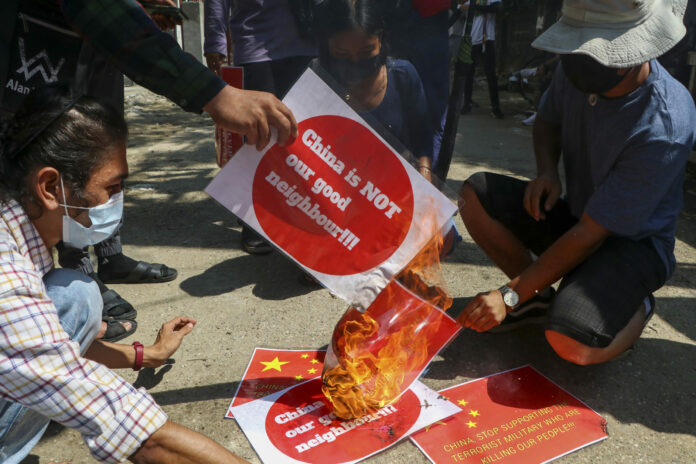
Anti-coup protesters burn a representation of the Chinese national flag during a demonstration in Yangon, Myanmar on Wednesday, April 7, 2021. Photo: AP
YANGON (AP) — Security forces on Wednesday stormed a town in northwestern Myanmar where some residents had used homemade hunting rifles to resist the military’s February seizure of power, killing at least 11 civilians and injuring many others, local news reports said.
If the 11 deaths are confirmed, it would be one of the highest single-day death tolls outside the country’s two largest cities, Yangon and Mandalay.
The online news site Khonumthung Burmese said the attack on Kalay began before dawn. Videos on the site included what appeared to be sounds of rifle fire, high-caliber weapons and grenade explosions. Posts on social media said rocket-propelled grenades were used in the attack, but provided no evidence.
The news site said that in addition to the seven fatalities, many people were wounded and arrested in the town, also known as Kalemyo or Kale. Over half the town’s population are members of the Chin ethnic minority.
Most of the deaths occurred in the morning, but more were reported in the afternoon, bringing the total to 11, according to the news sites The Irrawaddy and Myanmar Now.
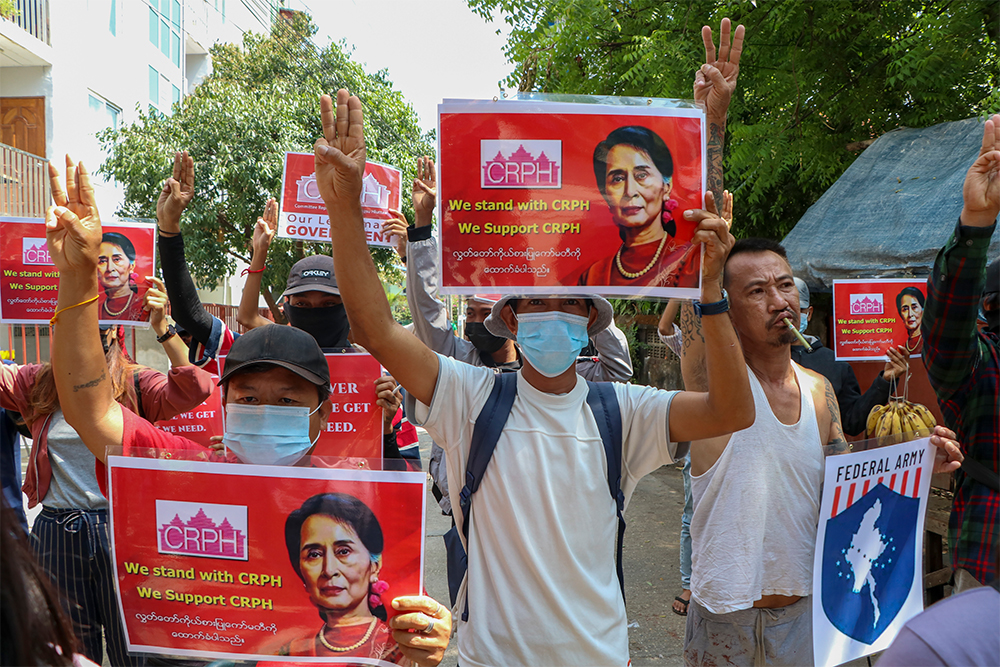
Anti-coup protesters flash the three-fingered symbol of resistance while holding slogans bearing pictures of deposed leader Aung San Suu Kyi during a demonstration in Yangon, Myanmar on Wednesday April 7, 2021. Photo: AP
Security forces have killed at least 581 protesters and bystanders through Tuesday in their crackdown on protests against the Feb. 1 coup that ousted the elected government of Aung San Suu Kyi, according to the Assistance Association for Political Prisoners, which monitors casualties and arrests.
Nearly all of the protests have been nonviolent, but as police and soldiers have increased their use of lethal force, some participants have armed themselves with homemade weapons such as gasoline bombs for self-defense. In Kalay, some residents took up simple but deadly homemade hunting rifles.
Myanmar Now reported Tuesday that protesters in Kalay had set up neighborhood strongholds and inflicted casualties on the security forces.
It said that on March 28, when the army sought to attack Kalay, protesters in the town and nearby villages put up fierce resistance. The attack took place a day after the junta’s forces killed more than 110 people around the country, the highest single-day death toll since the coup.
The report said protesters “more than held their own. Four of them died that night, but so did an equal number of the enemy, including an officer or two. The protesters also managed to wound 17 of their heavily armed attackers.”
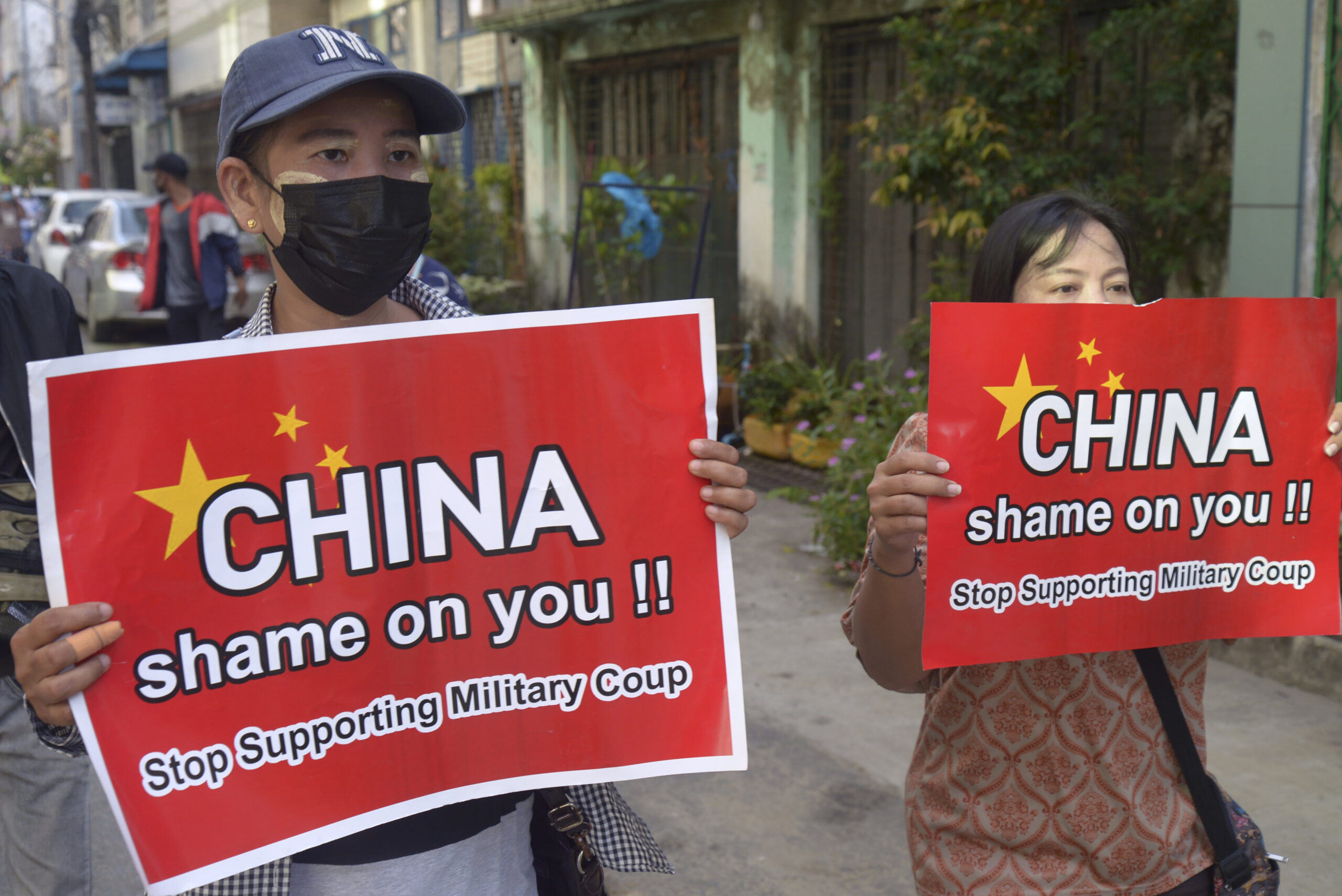
Anti-coup protesters hold slogans against China during a demonstration in Yangon, Myanmar on Wednesday April 7, 2021. Photo: AP
The protesters, who have organized themselves in a “Kalay Civil Army,” inflicted more casualties in the following days, it said.
Daily protests against military rule continued Wednesday in other cities and towns, including Mogok in central Myanmar, and Bago, northeast of Yangon, where social media posts said security forces fired live ammunition at demonstrators. The Irrawaddy news site reported two deaths in Bago.
Dozens burned a Chinese flag and marched in Yangon’s Ahlone township calling for a boycott of Chinese-made products. Many protesters believe that Beijing is backing the military regime with economic and political support, including the threat of a veto at the U.N. Security Council against any international sanctions.
Charoen Pokphand Foods PLC (CP Foods) highlights the “food security” strategy in a bid to achieve responsible operations throughout the supply chain and sustainably deliver sufficient quantity of quality and safe food.
In 2020, crises, such as natural disasters and the COVID-19 outbreak, have taken a toll on the economy, society and people’s livelihood. As a leading agro-industrial and food company, CP Foods is aware of its responsibility towards food security and for Thai society. Therefore, it was among the very first companies that extended assistance to society.
Under the “CPF Food from the Heart against COVID-19” program, safe food has been delivered to the frontline medical personnel and their families, individuals in quarantine, low-income earners, migrant workers, vulnerable people and others. The program was initiated in line with CP Group’ philosophy to ensure sufficient food supply and indicate the commitment to stand by all Thais in times of crisis.
Aside from continuous supply of safe food, CP Foods was the first Thai company that applied maximum safety measures for employees. The company also helped suppliers through the ”Faster Payment” scheme, that provides a 30-day credit to about 6,000 suppliers, to help them maintain liquidity and ability to keep workers.
Mr. Wuthichai Sithipreedanant, Senior Vice President – Corporate Social Responsibility and Sustainable Development of CP Foods, said that the company stressed its emphasis on the 3 pillars towards sustainability – Food Security, Self-Sufficient Society and Balance of Nature. In support of the vision of “Kitchen of the World”, the 3 pillars highlighted efficient and continuous operations, to ensure the production of quality and safe food that meets demands and environmental conservation principles under the Circular Economy concept. The concept emphasized natural resources optimization.
Additionally, CP Foods integrated the United Nations Sustainable Development Goals (SDGs) with the 3 pillars to sustainability. From total 17 goals, CP Foods is committed to accomplish 13 goals. Sustainability strategies have been reviewed regularly, to cope with changing global conditions and new challenges so that the operations can proceed and achieve continuous growth.
Mr. Wuthichai added that the 2020 Sustainability Report also presented CP Foods’ successful resource management in line with the Circular Economy concept. The Company witnessed higher efficiency in natural resource utilization in the past year; for example, raw water usage per unit of product dropped by 36% compared to the 2015 base year while water recycling and reuse increased by 42%. In the year, greenhouse gas emissions were slashed by 586,000 tons of carbon dioxide equivalent, resulted from many activities such as packaging made from 99.9% disposal materials that promises reuse and recycling; energy efficiency; and an increase of renewable energy ratio in the production process to 26%.
In 2020, the company fulfilled 7 sustainability goals including a cut in energy consumption per unit of product, lower dependence on raw water and lower waste to landfill. CP Foods strives to accomplish the remaining goals which include a cut in greenhouse gas emissions. On the path to become a low-carbon organization and help combat the global warming, it plans to continuously lower emissions from the operations, enhance production efficiency, promote renewable energy, create climate-friendly products, improve logistics and reduce food waste and food lost using nature-based solution.
CP Foods has been devoted effort to conserving and restoring mangrove forests including 5,971 rai of Rak Ni-Ves, Pasak Watershed, Khao Phraya Doen Tong Project in Lop buri, 2,388 rai of Grow-Share-Protect Mangrove Forestation Project in Samut Sakhon, Rayong, Chumphon, Phang Nga, and Songkhla provinces. The company also planted 1,720 rai of trees within its farms and operations. These projects have supported food safety and food security at a community level.
Mr. Wuthichai asserted that under the 2030 sustainability strategy, CP Foods will emphasize on food innovations and strengthen personnel’s capability in adjusting to changes and lifetime learning. The Company also strives for “Net-Zero” policy, by reducing greenhouse gas emissions and food waste via the Circular Economy concept. The goal is to lead a change in the national and global level and generate shared value to stakeholders, to become an organization that contributes to global food security in a sustainable manner.
CP Foods has published Sustainability Report since 2011, to communicate the company’s sustainability performance under a vision to be a “Sustainable Kitchen of the World”. This year report is printed with environmental-friendly ink and paper. The full report is published on the Company’s website: https://www.cpfworldwide.com/en/sustainability/report.
BURIRAM — Transport minister Saksayam Chidchob on Wednesday said he tested positive for the coronavirus.
The 58-year-old minister said he was admitted to a hospital in his home province of Buriram this morning after experiencing a high fever. He has since been put in isolation and under medical supervision, he said.
Saksayam became the highest-ranking official to date known to have been infected with the virus. He said he believes he caught the virus from his aide who tested positive earlier and denied news reports that he is the minister who had visited nightlife venues in Bangkok’s Thonglor and Ekkamai areas, where a new cluster of infection was reported among partygoers in recent days.
His official travel history is yet to be published, though his public schedule shows that he attended numerous events, including a Cabinet meeting, over the past 14 days.
The entire score of Bhumjaithai MPs were asked to isolate themselves and refrain from joining the ongoing parliamentary session on a referendum bill after they attended the same party event with Saksayam, who serves as the party’s secretary, on Tuesday.
At least eight Cabinet members also went into self-isolation after coming in contact with Saksayam and other COVID-19 patients. Speaking before today’s virtual Cabinet meeting, PM Prayut Chan-o-cha said he ordered all government-sponsored events to be canceled in order to curb the spread of the virus.
“I don’t feel stressed,” Gen. Prayut said. “I instructed every Cabinet member to share the responsibility and asked them not to make things worse. As for Saksayam, he will receive treatment like any sick citizen. I’m not stressed about it, and we must help build confidence.”
The country has seen yet another surge of infections stemming from Bangkok’s nightlife scene over the past weeks.
Health officials discovered at least 291 positive cases across 15 provinces as of Wednesday.
They urged those who visited entertainment venues, which include Krystal Club, Baan Phahol, Ekamai Beer House, Bar Bar Bar, Dollar Bangkok, The Cassette Ekkamai, Dirty Bar, as well as the EmQuartier and the Emporium shopping malls, last month to get tested immediately.
Earlier this week, the Bangkok City Hall closed 196 entertainment venues in three districts of Klong Toey, Bang Khae and Watthana for two weeks to try to limit the spread of the coronavirus.
The new cluster came ahead of the Songkran festival next week, as people prepare to travel around the country and reunite with their families.
Health minister Anutin Charnvirakul said Tuesday people can still travel freely without the need for self-isolation, though some provinces began to impose travel restrictions for people coming from Bangkok and its four neighboring provinces of Pathum Thani, Nonthaburi, Samut Prakan, and Nakhon Pathom.
“Only those who are infected or at high risk of infection have to go into isolation,” Anutin said.
As of Wednesday, people traveling from Bangkok metropolis to Bueng Kan, Khon Kaen, and Buriram provinces must notify their arrival to local health authorities and go into self-isolation for 14 days.
In today’s news briefing, Thailand’s leading virologist Yong Poovorawan confirmed that the highly contagious B.1.1.7 variant of coronavirus, which was first detected in Britain, was found among 24 partygoers.
“We are surprised to find the U.K. variant, which is 1.7 times more contagious than typical variants,” Yong said. “Even though we have all the measures in place to block the importation of the virus, it still managed to slip through. Therefore, we must minimize movement of people as much as possible.”
The government’s pandemic response center reported 334 new coronavirus infections on Wednesday, with no new fatalities, bringing the total tally to 29,905 cases and 95 deaths.