


























30 C
Bangkok
Monday, June 8, 2026
Home Blog Page 1086

Myanmar Still Mired in Violence 2 Months After Military Coup

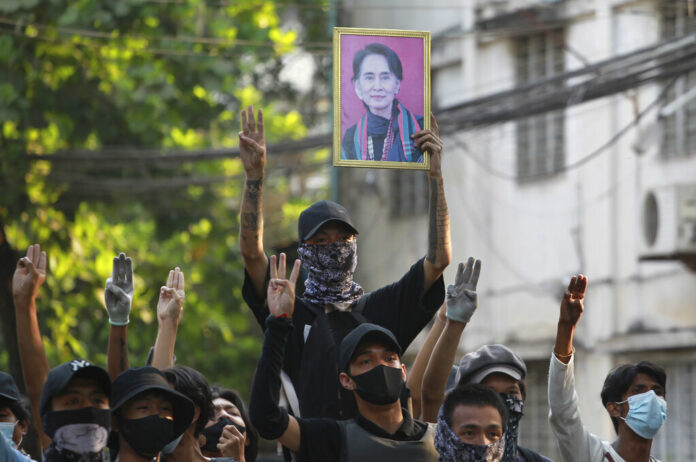
Anti-coup demonstrators raise the three finger of resistance and a portrait of deposed leader Aung San Suu Kyi as prepare to confront police during a protest in Tarmwe township, Yangon, Myanmar, Thursday, April 1, 2021. Photo: AP

YANGON (AP) — Protesters in Myanmar on Thursday marked two months since the military seized power by again defying the threat of lethal violence and demonstrating against its toppling of the country’s democratically elected government.

Security forces have escalated violence and routinely shot protesters but have been unable to crush the massive public resistance to the Feb. 1 coup. International condemnation and sanctions imposed by Western nations on the military regime have failed to restore peace.

In Yangon, the country’s biggest city, a group of young people gathered shortly after sunrise Thursday to sing songs honoring the more than 500 protesters killed so far. They then marched through the streets chanting slogans calling for the fall of the junta, the release of deposed leader Aung San Suu Kyi and the return of democracy.

Protests were also held in Mandalay and elsewhere.

The demonstrations followed a night of violence including police raids and several fires. In Yangon, several retail shops owned in whole or part by Myanma Economic Holdings Ltd., an investment arm of the military, went up in flames. The shops are also targets of boycotts by the protest movement.

The crisis in the Southeast Asian nation has expanded sharply in the past week, both in the number of protesters killed and with military airstrikes against the guerrilla forces of the Karen ethnic minority in their homeland along the border with Thailand. The U.N. special envoy for Myanmar warned the country faces the possibility of civil war, a stark reversal for the country that had been progressing slowly toward greater democracy following decades of brutal military rule.

In areas controlled by the Karen, more than a dozen civilians have been killed since Saturday and more than 20,000 have been displaced, according to the Free Burma Rangers, a relief agency operating in the area.
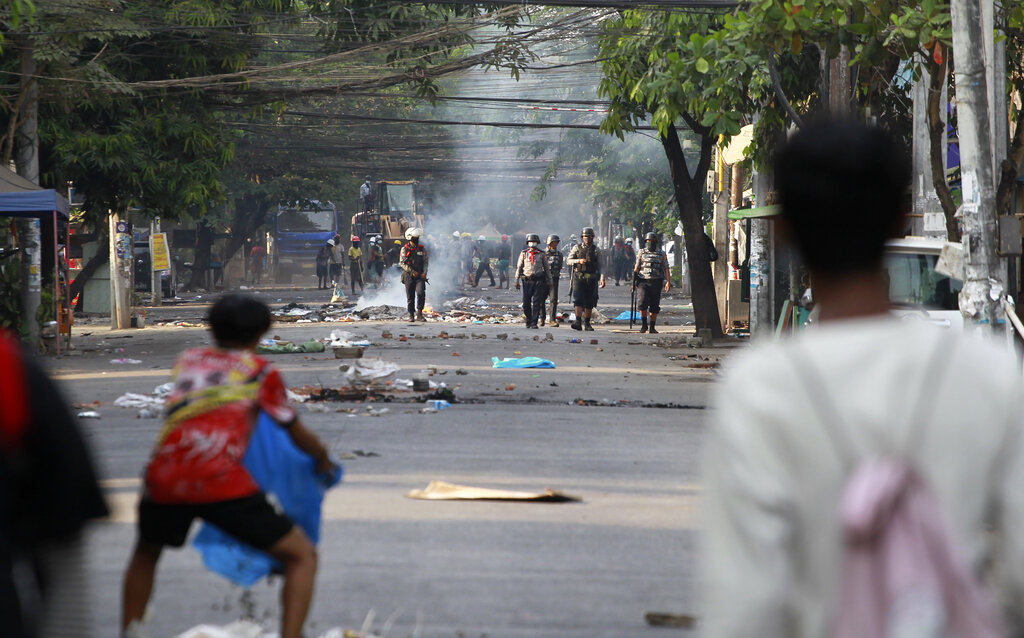
Anti-coup demonstrators prepare to confront police during a protest in Tarmwe township, Yangon, Myanmar, Thursday, April 1, 2021. Photo: AP

The U.N. Human Rights Office for Southeast Asia called on countries in the region on Thursday “to protect all people fleeing violence and persecution in the country” and “ensure that refugees and undocumented migrants are not forcibly returned,” U.N. spokesman Stephane Dujarric told reporters at U.N. headquarters in New York.

The U.N. Security Council late Thursday strongly condemned the use of violence against peaceful protesters. The press statement was unanimous but weaker than a draft that would have expressed its “readiness to consider further steps,” which could include sanctions. China and Russia, both permanent Council members and both arms suppliers to Myanmar’s military, have generally opposed sanctions.

In addition to the deaths reported by the relief agency, an airstrike on a gold mine in Karen guerrilla territory on Tuesday killed as many as 11 more people, according to a local news outlet and an education worker in touch with residents near the site.

Saw Kholo Htoo, the deputy director of the Karen Teacher Working Group, said residents told him five people were killed at the mine and six others at a nearby village. The Bago Weekly Journal also reported the attack.

“Our soldiers know how to escape, but the airstrike killed the civilians,” said Saw Thamein Tun, a central executive committee member of the Karen National Union, the leading political body representing the Karen minority.

About 3,000 Karen villagers have fled to Thailand in recent days, but many have returned under unclear circumstances. Thai authorities said they went back voluntarily after a brief stay, but aid groups say they are not safe and many remain in hiding in the jungle and in caves on the Myanmar side of the border.

An opposition group consisting of elected lawmakers who were not allowed to be sworn into office Feb. 1 has put forth an interim charter to replace Myanmar’s 2008 constitution. By proposing greater autonomy for ethnic minorities, the group’s move could help ally the armed ethnic militias active in border areas with the mass protest movement based in cities and towns.

On Thursday, demonstrators in several areas burned copies of the 2008 constitution to celebrate the move by the Committee Representing Pyidaungsu Hluttaw, the country’s legislature, which calls itself the legitimate government.

In Mandalay, protesters burned pages under the gaze of Buddhist monks who gave their backing with the three-fingered salute adopted by the resistance.

The 2008 constitution ensured military dominance by reserving it enough seats in the legislature to block any charter changes and by retaining control of key government ministries.

In seeking an alliance with ethnic minority armed groups, the ousted lawmakers hope to form a joint army as a counterweight to the government armed forces.
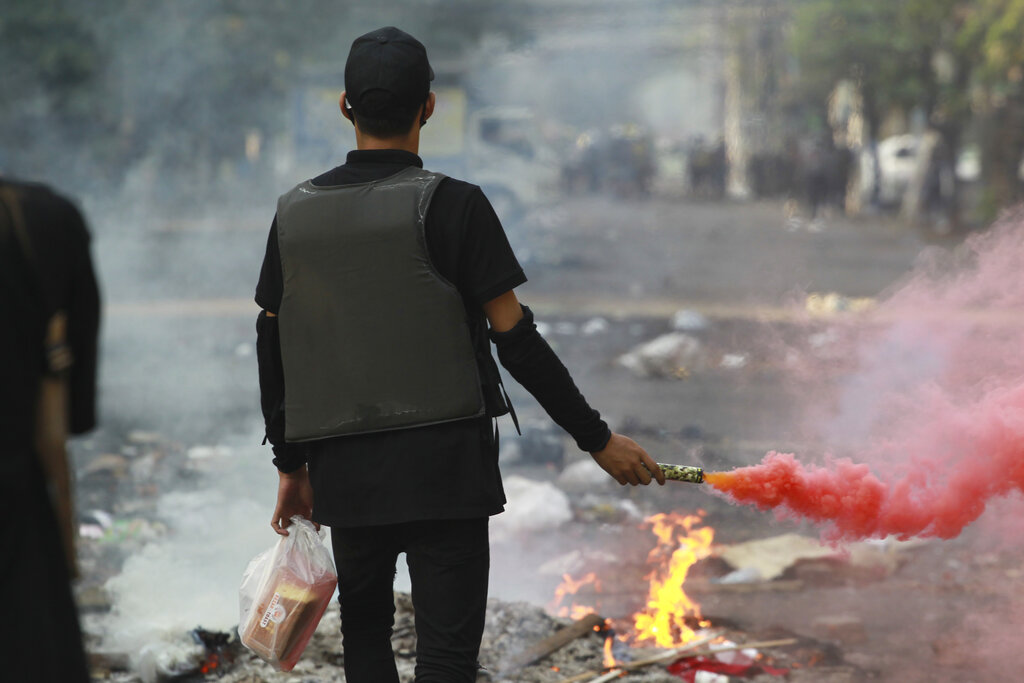
Anti-coup demonstrators prepare to confront police during a protest in Tarmwe township, Yangon, Myanmar, Thursday, April 1, 2021. Photo: AP

More than a dozen ethnic minority groups have sought greater autonomy from the central government for decades, sometimes through armed struggle. Even in times of peace, relations have been strained and cease-fires fragile.

Several of the major groups — including the Kachin, the Karen and the Rakhine Arakan Army — have denounced the coup and said they will defend protesters in their territories.

Ousted leader Suu Kyi, already charged with four minor criminal offenses, is facing an additional one of violating Myanmar’s colonial-era Official Secrets Act, which is punishable by up to 14 years’ imprisonment, said one of her lawyers, Khin Maung Zaw.

He said Suu Kyi and Australian economist Sean Turnell, who served as her adviser and was also detained on the day of the coup, were officially charged on March 25 in a Yangon court. He provided no other details.

The junta has announced it is also investigating Suu Kyi for alleged corruption, and has presented video testimony on state television of a business tycoon and a fellow politician accusing her of accepting large amounts of cash and gold. Her supporters dismiss the accusations as politically motivated and aimed at preventing her return to politics.

A hearing that Suu Kyi attended by video was held Thursday at a court in the capital, Naypyitaw, to discuss her legal representation.
Advertisement

UN Envoy: Myanmar Faces Possibility of Major Civil War

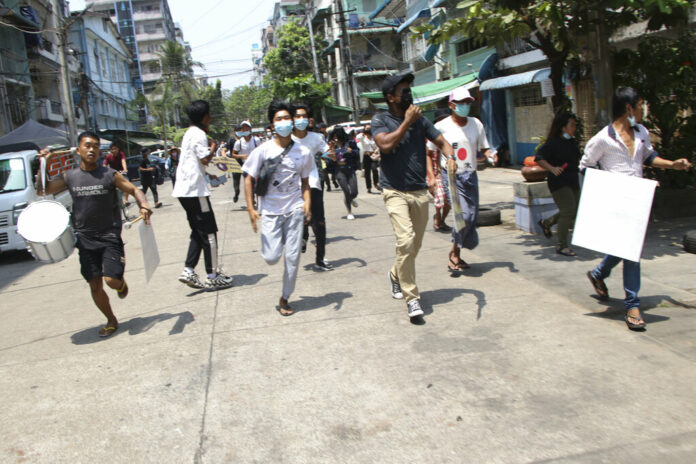
Anti-coup protesters run to avoid military forces during a demonstration in Yangon, Myanmar on Wednesday March 31, 2021. The Southeast Asian nation has been wracked by violence since the military ousted a civilian-led government on Feb. 1 and began to forcibly put down protests. Photo: AP

UNITED NATIONS (AP) — The U.N. special envoy for Myanmar warned Wednesday that the country faces the possibility of civil war “at an unprecedented scale” and urged the U.N. Security Council to consider “potentially significant action” to reverse the Feb. 1 military coup and restore democracy.

Christine Schraner Burgener didn’t specify what action she considered significant, but she painted a dire picture of the military crackdown and told the council in a closed briefing that Myanmar “is on the verge of spiraling into a failed state.”

“This could happen under our watch,” she said in a virtual presentation obtained by The Associated Press, “and failure to prevent further escalation of atrocities will cost the world so much more in the longer term than investing now in prevention, especially by Myanmar’s neighbors and the wider region.”

Schraner Burgener urged the council “to consider all available tools to take collective action” and do what the people of Myanmar deserve — “prevent a multidimensional catastrophe in the heart of Asia.”

A proposed press statement from the council was not issued after the meeting because China, a close neighbor of Myanmar, asked for additional time to consider its contents, likely until Thursday, several council diplomats said, speaking on condition of anonymity because the meeting was closed.

Chinese Ambassador Zhang Jun warned the council in remarks distributed by China’s U.N. Mission that “one-sided pressure and calling for sanctions or other coercive measures will only aggravate tension and confrontation and further complicate the situation, which is by no means constructive.”

He urged all parties to find a solution through dialogue that de-escalates the situation and continues “to advance the democratic transition in Myanmar,” warning that if the country slides “into protracted turbulence, it will be a disaster for Myanmar and the region as a whole.”

The coup reversed years of slow progress toward democracy in Myanmar, which for five decades had languished under strict military rule that led to international isolation and sanctions. As the generals loosened their grip, culminating in Aung San Suu Kyi’s rise to leadership in 2015 elections, the international community responded by lifting most sanctions and pouring investment into the country.

In the virtual meeting, Schraner Burgener denounced the killing and arrest of unarmed protesters seeking to restore democracy. She cited figures from Myanmar’s Assistance Association for Political Prisoners that as of Wednesday, some 2,729 people have been arrested, charged or sentenced since the coup and an estimated 536 have been killed.

The Security Council adopted a presidential statement — one step below a resolution — on March 10 calling for a reversal of the coup, strongly condemning the violence against peaceful protesters and calling for “utmost restraint” by the military. It stressed the need to uphold “democratic institutions and processes” and called for the immediate release of detained government leaders including Suu Kyi and President Win Myint.

The statement is weaker than the initial draft circulated by the United Kingdom, which would have condemned the coup and threatened “possible measures under the U.N. Charter” — U.N. language for sanctions — “should the situation deteriorate further.”

Stressing the urgency of action, Schraner Burgener told council members she fears that serious international crimes and violations of international law by the military “will become bloodier as the commander-in-chief seems determined to solidify his unlawful grip on power by force.”

“Mediation requires dialogue, but Myanmar’s military has shut its doors to most of the world,” she said at the virtual meeting. “It appears the military would only engage when it feels they are able to contain the situation through repression and terror.”

“If we wait only for when they are ready to talk,” Schraner Burgener warned that “a bloodbath is imminent.”

The U.N. envoy called on those with access to the military, known as the Tatmadaw, to let them know the damage to Myanmar’s reputation and the threat it poses not only to its citizens but to the security of neighboring countries.

“A robust international response requires a unified regional position, especially with neighboring countries leveraging their influence towards stability in Myanmar,” Schraner Burgener said, adding that she plans to visit the region, hopefully next week.

Schraner Burgener said intensification of fighting in Kayin State has sent thousands fleeing to neighboring Thailand and Conflict in Kachin State with the Kachin Independence Army near the Chinese border intensified “to its highest point this year.”

Armed ethnic groups on Myanmar’s eastern and western borders are also increasingly speaking out against “the brutality of the military,” she said.

The opposition of ethnic armed groups to “the military’s cruelty … (is) increasing the possibility of civil war at an unprecedented scale,” Schraner Burgener warned.

“Already vulnerable groups requiring humanitarian assistance including ethnic minorities and the Rohingya people will suffer most,” she said, “but inevitably, the whole country is on the verge of spiraling into a failed state.”

Democratically elected representatives to Myanmar’s National Assembly who formed a committee known by its initials CRPH sent a letter to Guterres and to Britain’s U.N. ambassador Wednesday urging the Security Council to impose “robust, targeted sanctions that freeze the assets of not only military leaders but also military enterprises and the junta’s major sources of revenue, such as the oil and gas sector.”

CRPH also urged the council to impose an arms embargo against the military, facilitate humanitarian assistance including cross-border aid, refer the situation in Myanmar to the International Criminal Court “to investigate and prosecute atrocity crimes committed by the military, including genocide, war crimes and crimes against humanity,” and consider whether there is a need to protect Myanmar’s people from such crimes.

British Ambassador Barbara Woodward, who called for the council meeting, said afterward that “we will continue to discuss next steps with other council members” to prevent the military “from perpetuating this crisis.”

“We want to consider all measures that are at our disposal,” she said, which include sanctions.

U.S. Ambassador Linda Thomas-Greenfield told reporters before the council meeting that if the military don’t go back to their barracks and continue to attack civilians “we can’t just step back and allow this to happen.”

“Then, we have to look at how we might do more,” she said.

Russia’s deputy U.N. ambassador, Dmitry Polyansky, told reporters Tuesday that all council members want the violence to stop and a restoration of dialogue and national unity. But he accused some countries and media outlets of “inciting the protesters to continue their protests,” which amounts to interfering in Myanmar’s internal affairs.

“Russia is not a big fan of sanctions” and “punitive measures,” Polyansky said, “We shouldn’t overstep this very thin line between trying to help and interfering into the internal affairs of sovereignty.”

Story: Edith M. Lederer 

Advertisement

5 Activists Indicted Over Alleged Attempt To Harm Queen

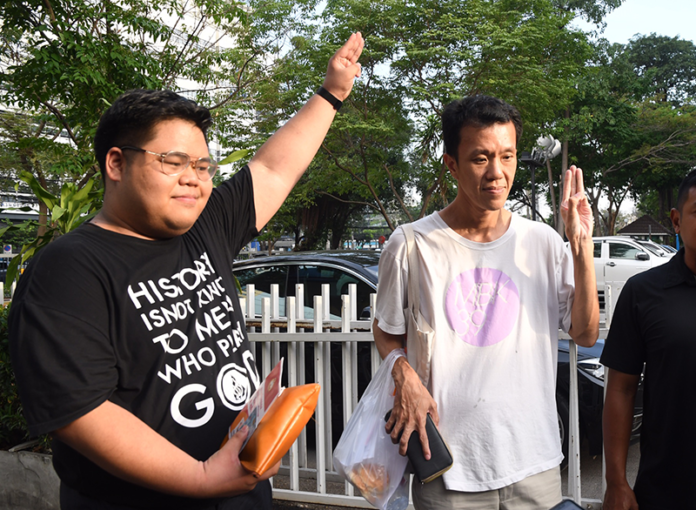
Bunkueanun “Francis” Paothong and Ekachai Hongkangwan on March 31, 2021.

BANGKOK (AP) — Prosecutors in Thailand indicted five pro-democracy activists on Wednesday on changes of attempting to harm the queen during a street demonstration last October in which some protesters shouted slogans critical of the monarchy.

Queen Suthida, the wife of King Maha Vajiralongkorn, was not in any evident danger in the incident, which occurred when a limousine carrying the queen and the king’s son, Prince Dipangkorn Rasmijoti, passed through a small crowd of protesters mixed with supporters of the royal family.

The five are accused of violating Section 110 of the Criminal Code, which says that whoever attempts an act of violence against the queen or the royal heir faces 16-20 years’ imprisonment. They include Ekachai Hongkangwan, a veteran activist and social critic who has been attacked several times by unknown assailants.

All five deny any wrongdoing. After their indictment, they were released on bail of 200,000-300,000 baht ($6,400-$9,600) each.

It is highly unusual for the royal family’s vehicles to be driven near protests. During the Oct. 14 incident, police linked arms on either side of the queen’s car as it passed, keeping onlookers away. Some protesters shouted slogans critical of the monarchy, while monarchists countered with cries in support of the royal institution.

The encounter took place on a day that more than 10,000 people later staged a rally near the same site, outside the offices of Prime Minister Prayuth Chan-ocha, to demand that he and his Cabinet resign.

Police broke up the rally late that night, and the next day declared a state of emergency for Bangkok which included a ban on unauthorized gatherings of more than five people. The ban was ignored and the state of emergency was rescinded shortly afterward.

Thailand has harsh laws guarding the reputation as well as the safety of the royal family. A law prohibiting defamation of the monarch or his immediate family carries a prison term of up to 15 years for each count.

The pro-democracy movement includes reform of the monarchy as one of its core demands. As protest leaders have increased their criticisms of the royal institution, the authorities have reacted by charging them with defaming the monarchy.

The legal aid group Thai Lawyers for Human Rights says at least 81 activists have been charged under the law since last November.

Story: Chalida Ekvitthayavechnukul

Advertisement

CPF Upholds “No Mountain, No Burning, We Buy” Motto, To Use Only 100% Legally-Sourced Maize

Charoen Pokphand Foods PCL. (CPF) maintains its policy to buy maize only from growers who do no harm to the environment, in line with its emphasis on responsible supply chain and traceability. Assistance is available for farmers attempting to meet environmental standards and earn stable income, for sustainable and mutual growth.

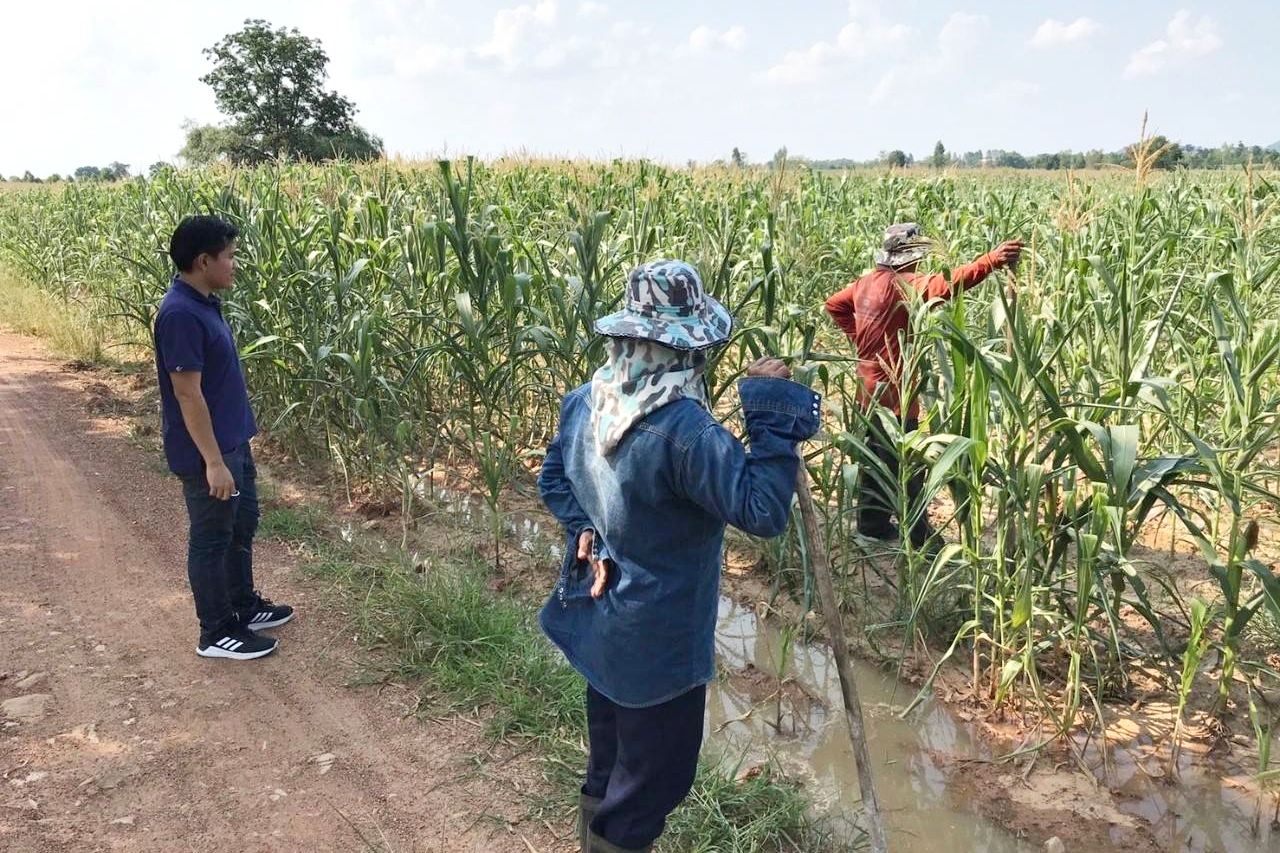
The policy has been exercised through Bangkok Produce PLC (BKP), CPF’s raw material sourcing arm. It highlights socially- and environmentally-responsible business operations under the Sustainable Sourcing Policy, whereby mutual growth of all stakeholder groups is in focus. The policy has been well-honored by maize suppliers who ably identify the plantation areas with 100% legal land deeds under the “no mountain, no burning, we buy” motto. Farmers have also enjoyed supports as CPF strives to achieve the sustainable supply chain.

Corn4

Since 2016, CPF has enforced the Corn Traceability system, to ensure that the corns for its feed mill plants come from the fields that are not located in forest areas or burnt for subsequent plantation activities. The latest move concerns the GPS Tracking system that allows 100% real time tracking of corns from farms to all CPF’s feed mills in Thailand.

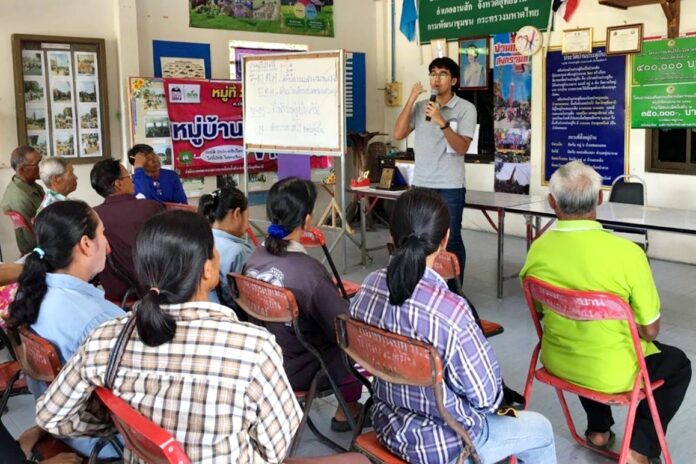
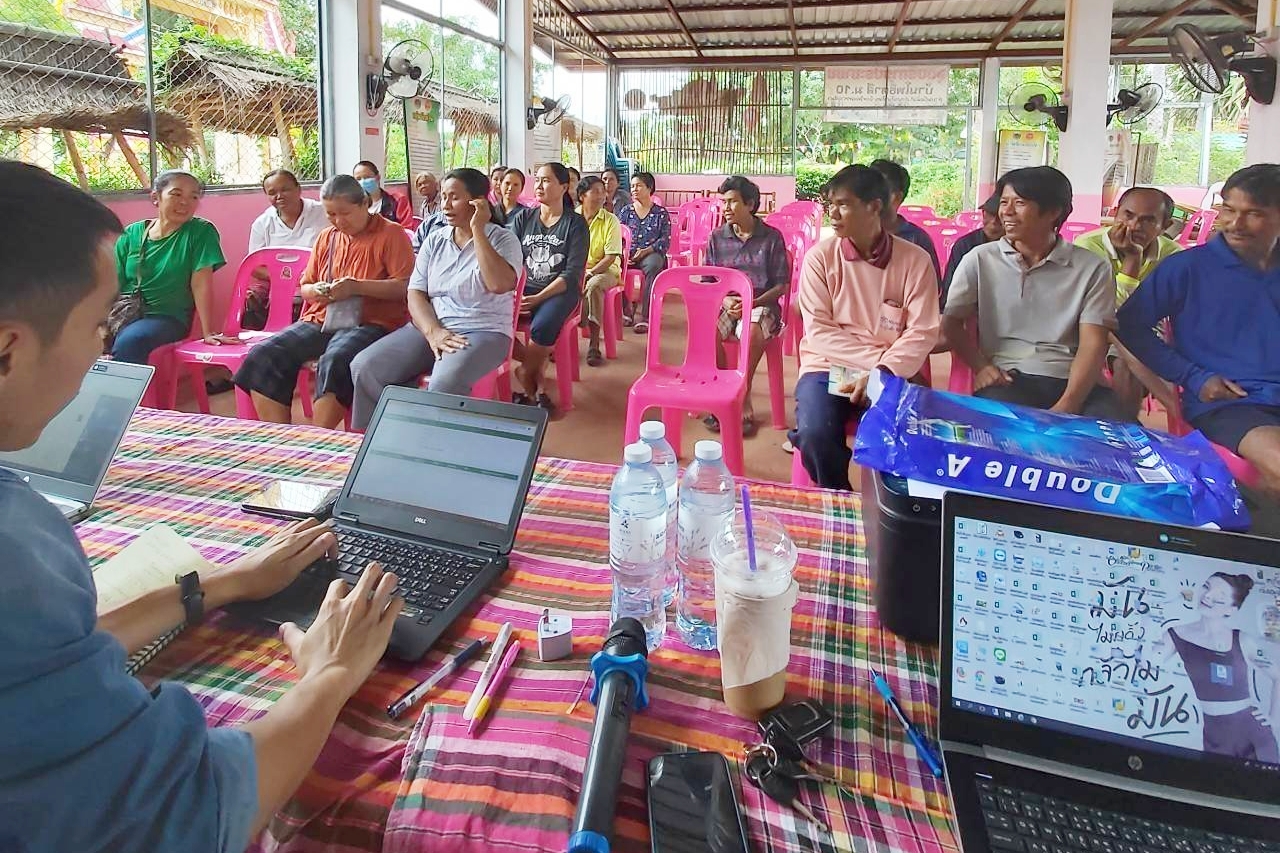
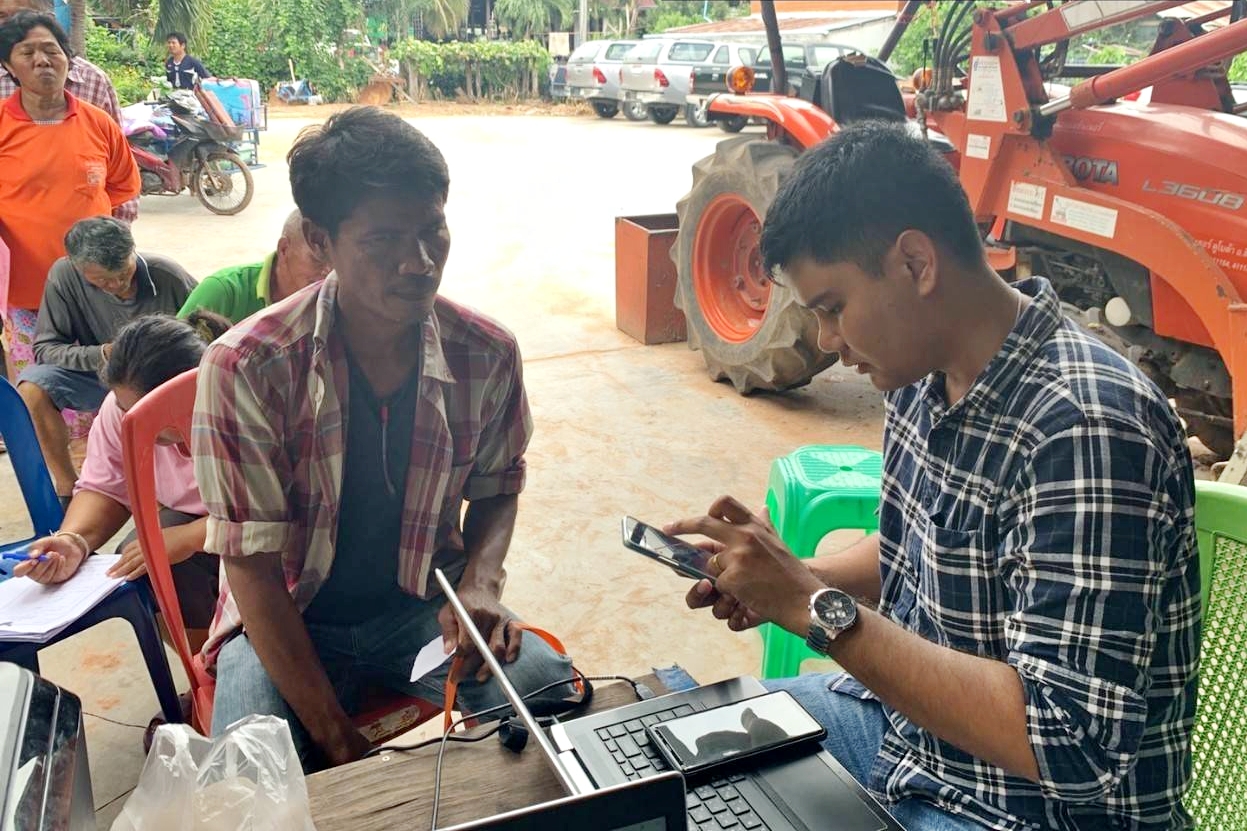
On another front, CPF has proceeded with its efforts to bolster farmers’ strengths for sustainable and mutual growth. The “self-sustaining farmers, sustainable corn” project was launched in 2015, to enhance corn plantation efficiency through close consultation from CPF’s experts. For resource optimization and a cut in production cost, large plantation fields and modern technology like Chat Bot have been promoted, to allow farmers’ access to daily ex-factory maize prices as well as the data of harvest and transportation trucks in their community.

corn2

During the harvest months of October through December, CPF has increased the number of standard maize buying spots in communities near plantation fields as an alternative to farmers.  Able to save transportation cost, farmers enjoy an increase in income as CPF covers partial harvest and transportation expenses for the farmers who sell their produce at the spots.

Since the “self-sustaining farmers, sustainable corn” project was launched 5 years ago, the project has covered 9,554 farmers and 241,220 rai of plantation fields. The average yield per rai in 2020 was 1,200 kg, compared to 909 kg produced by the fields not covered by the project. The increasing yield generated extra income for farmers by Bt29,628 per household on average.

Corn3

Under the Sustainable Sourcing Policy, CPF strives to buy main raw materials like maize, palm oil, tapioca, soybean meal and fish meal only from fully-traceable sources, to ensure natural resource sustainability and raise farmers’ living standard.

BKP has recently extended the Corn Traceability system to cover the fields in neighboring countries. Since 1 April 2020, Myanmar C.P. Livestock Co., Ltd,  a business  unit of Charoen Pokphand Group, has bought maize only from the fields in Myanmar that can present legal land deeds. Farmers with proper land deeds in Myanmar have been registered and taken part in conserving Southeast Asia’s fertile forests and preventing forest fire smoke.

Corn1

Advertisement

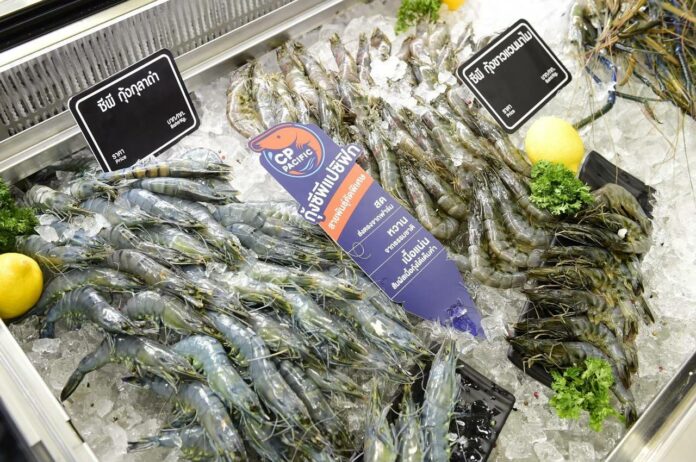
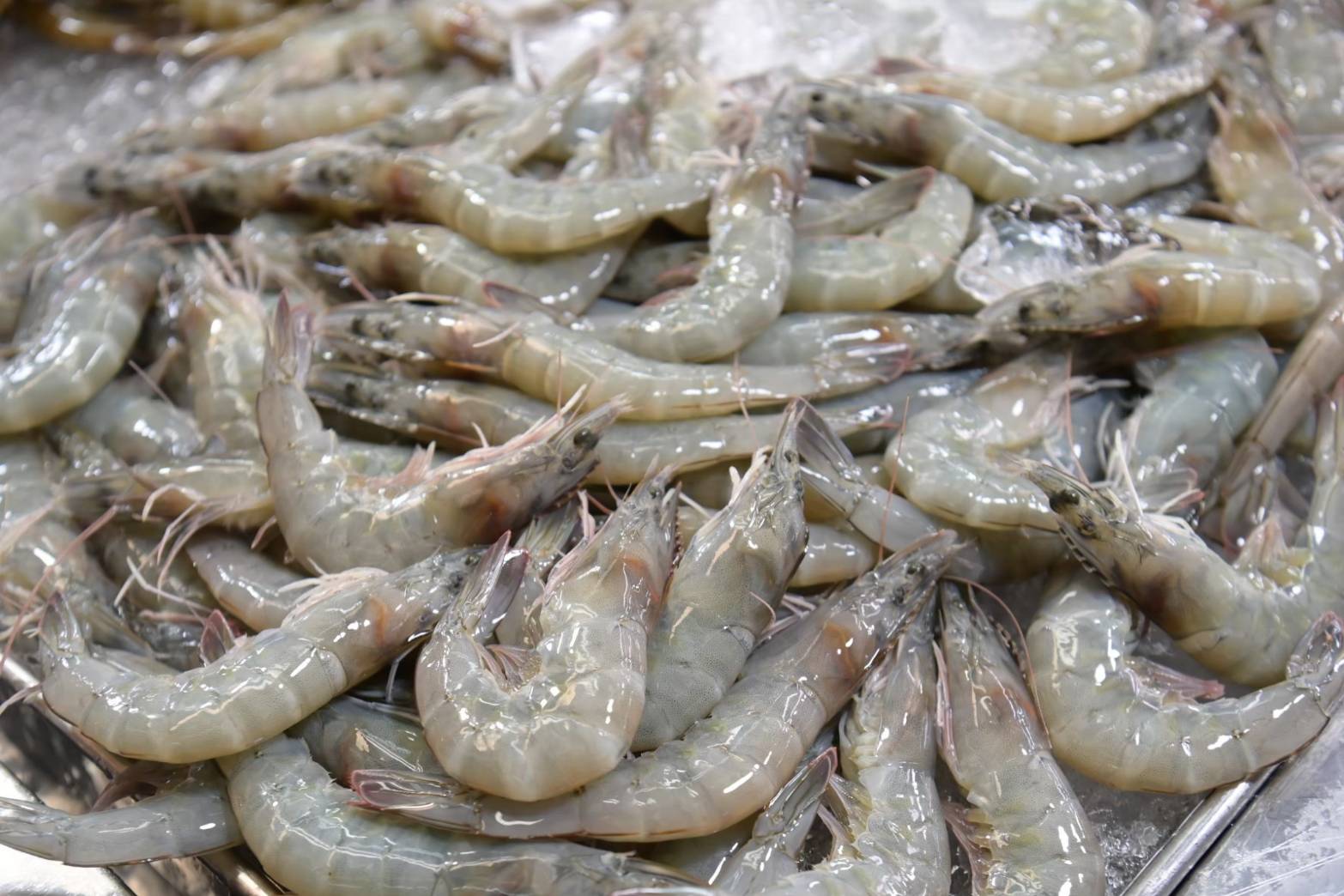
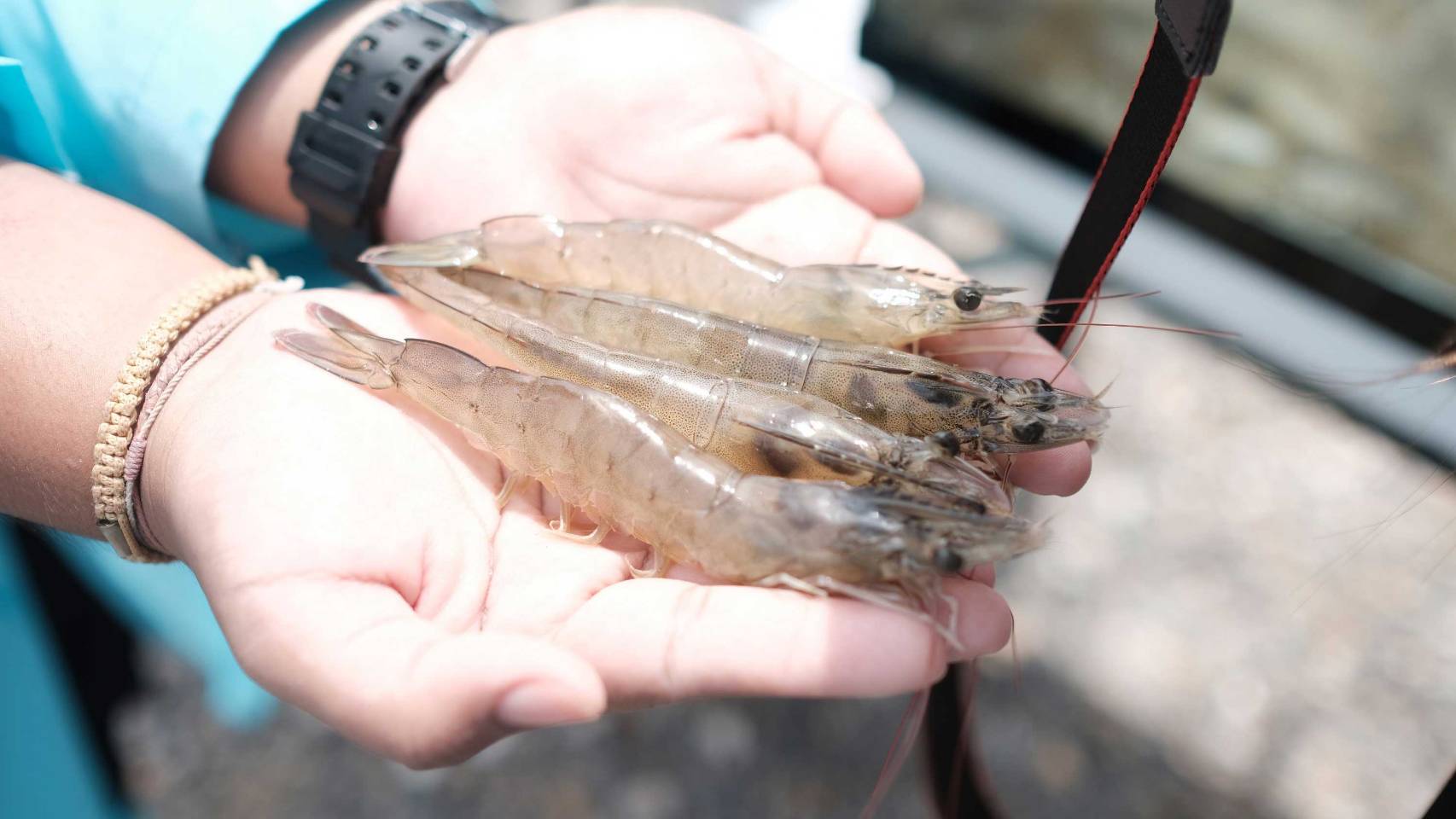
CP Foods Joins Forces With Partners To Shape Sustainable Seafood Supply Chain

Charoen Pokphand Foods PCL (CP Foods) has joined forces with global partners to build sustainable seafood supply chain for Thailand. It also vows to eliminate the use of Illegal, Unreported and Unregulated Fishing (IUU) by encouraging suppliers and fishermen across the country to adopt more sustainable practices.

At present, 100% of fishmeal used for the company’s operations in Thailand has been sourced from by-product of fish processing plants and certified by MarinTrust (Formerly IFFO RS).

Mr.Pairoj Apiruknusit, Executive Vice President at CP Foods, said that the company places great importance on producing shrimp in a responsible and sustainable manner throughout the supply chain.

He added that CP Foods has committed to source fishmeal, a raw material for aquaculture feed, for both Thailand and Overseas productions from legal sources that adhere to international principles and can be traceable.

“It is important to note that CP Foods is a buyer of fishmeal and producer of farmed shrimp as well as shrimp feed; we have never been an operator nor owner of any fishing vessel, and the company do not produce fishmeal. However, as one of the world’s biggest shrimp feed producers, we are committed to supporting and promoting sustainability in the seafood industry to address various concerns including marine resource degradation, unfair labor practices, human rights violation and impacts of illegal fishing on the community.” Mr.Pairoj said.

50147

CP Foods’ operations in Thailand only sources fishmeal from fish by-product e.g., canned tuna production facilities, and fish ball production facilities. All of them must be certified by MarinTrust, an internationally accepted standard on responsilble sourcing, production and traceability for fishmeal.

Aside its own supply chain, the company has joined forces with stakeholders in the seafood industry, including private sector, government, civil society, to initiated Fishery Improvement Program (FIP) to develop a guideline for fishery practices in areas of the Andaman and the Gulf of Thailand.

“Thailand’s Fishery Action Plan (FAP) has been accepted as part of the MarinTrust Improver Programme and all parties are working to achieve the plan,” Mr.Pairoj explained the current status of Thailand’s FIP.

50148

To end the use of Illegal, Unreported and Unregulated Fishing (IUU), CP Foods co-founded Seafood Task Force in 2014. The company supports the Thai Department of Fisheries to improve the efficiency of the Vessel Monitoring System (VMS) to cover tasks for vessel Monitoring, Control and Surveillance (MCS) as well as setting up Fishermen’s Life Enhancement Center to improve quality of life for migrant workers in the industry.

These successful programs are significant to the European Union’s (EU) consideration to lift the yellow card on the Thai fishing industry. Moreover, Thailand’s Seafood Task Force has become a model for other countries.

This year, the company in collaboration with the Sustainable Fisheries Research and Development Institute (SFRD) Foundation, supports the “Catch the Trash” project that promotes and campaigns for fishermen to reduce littering into the sea and help collecting waste from fishing activities, both the consumer waste on the boat and the ghost gears.

Globally, CP Foods joins leading seafood producers from around the world in the Seafood Business for Ocean Stewardship (SeaBOS), an international coalition to protect marine resources and environments, to promote transparent supply chain by implementing technologies and providing a more efficient and regulatory practices for producer, processor, and governments. 

Advertisement

‘I Will Do Everything I Can:’ Miss Grand Myanmar Seeks Refuge in Thailand

Miss Grand Myanmar Han Lay holds up three fingers on March 31, 2021 in Bangkok.

BANGKOK — Speaking through tears Wednesday, a pageant queen who called for international aid onstage said she would be staying in Thailand for the time being out of concerns for her safety.

Miss Grand Myanmar 2020 Han Lay and Nawat Itsaragrisil, director of the Miss Grand Pageant organization said that Han would be working in Thailand with the help of the pageant organizer for at least three months. 

“They asked me, if I can fight for democracy on the stage. I said, yes, I will do everything. I will speak up,” she said, wiping away tears. 

At the Miss Grand International 2020 stage on Saturday, Han Lay spoke onstage asking for urgent international help for the ongoing bloodshed in her home country. On the same day, 114 were killed by security forces, the bloodiest day since the Feb. 1 coup. 

Nawat said Han’s decision to speak out calling for international help for her home country is “of course, under the new laws after the coup. This is illegal. We have to take care of her. …If she goes home, she will be arrested for sure.”

Nawat said the pageant was in the process of securing a work visa for Han Lay to stay in Thailand for at least three months.

“Han Lay is 100 percent under our care,” Nawat said.

Han Lay may apply for a refugee status in the future, and many countries have already offered to give her a new home.

Han said her family in Myanmar was still safe as far as she knew.

Related stories:

Myanmar Pageant Contender Calls for Urgent International Aid

Advertisement

Myanmar Junta Deepens Violence With New Air Attacks in East

An injured ethnic Karen villager from Myanmar rests as she is treated after crossing the Salawin river via boat at Ban Mae Sam Laep Health Center, Mae Hong Son province, Thailand on Tuesday March 30, 2021. Photo: Sakchai Lalit / AP

MAE SAM LAEP, Thailand (AP) — The military launched more airstrikes Tuesday in eastern Myanmar after earlier attacks forced thousands of ethnic Karen to flee into Thailand and further escalating violence two months after the junta seized power.

Thailand’s prime minister said the villagers who fled the weekend airstrikes returned home of their own accord, denying that his country’s security forces had forced them back.

But the situation in eastern Myanmar appeared to be getting more, not less, dangerous.

The Karen National Union, the main political body representing the Karen minority, said the airstrikes were the latest case of Myanmar’s military breaking a cease-fire agreement and it would have to respond.

The attacks came as protests continued in Myanmar cities against the coup Feb. 1 that ousted an elected civilian government and reversed a decade of progress toward democracy in the Southeast Asian country. Hundreds of civilians have been killed by security forces trying to put down opposition to the coup.

The U.S. State Department on Tuesday ordered non-essential U.S. diplomats and their families to leave Myanmar, expecting the protests to continue. The U.S. earlier suspended a trade deal and imposed sanctions on junta leaders as well as restricted business with military holding companies.

Tuesday’s air raids in eastern Myanmar killed six civilians and wounded 11, said Saw Taw Nee, head of the KNU’s foreign affairs department.

Dave Eubank, a member of the Free Burma Rangers, which provides medical assistance in the region, provided the same information on casualties.

AP21089317249179
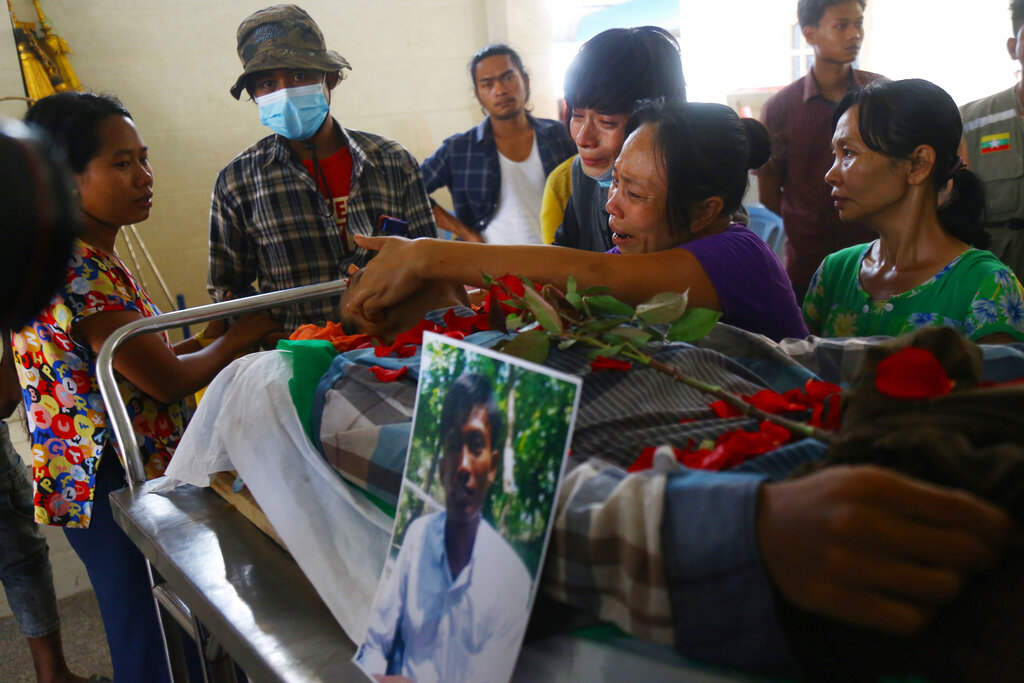
Family members mourn over the death of Aung Myo Thant during his funeral in Yangon, Myanmar, Tuesday, March 30, 2021. Aung Myo Thant was killed Monday during a clash with security forces at a protest against the military’s coup that ousted the government of Aung San Suu Kyi. Photo: AP Photo

The KNU has been fighting for greater autonomy for the Karen people. It issued a statement from one of its armed units saying “military ground troops are advancing into our territories from all fronts” and vowing to respond.

“We have no other options left but to confront these serious threats posed by the illegitimate military junta’s army in order to defend our territory, our Karen peoples, and their self-determination rights,” said the statement, issued in the name of the KNU office for the district that was first attacked on Saturday.

Thai Prime Minister Prayuth Chan-ocha, speaking before the latest air attacks, said his country is ready to shelter anyone who is escaping fighting, as Thailand has done many times for decades. His comments came a day after humanitarian groups said Thailand has been sending back some of the thousands of people who fled.

“There is no influx of refugees yet. We asked those who crossed to Thailand if they have any problem in their area. When they say no problem, we just asked them to return to their land first. We asked, we did not use any force,” Prayuth told reporters.

“We won’t push them back,” he said. ’If they are having fighting, how can we do so? But if they don’t have any fighting at the moment, can they go back first?”

The governor of Thailand’s Mae Hong Son province, where as many as 3,000 refugees had sought shelter, said later that those still on Thai soil were expected to return to their own country in a day or two.

Protests against the junta continued in several Myanmar cities Tuesday despite its lethal crackdown that killed more than 100 people on Saturday alone.

Engineers, teachers and students from the technology university in the southern city of Dawei marched without incident.

The number of protesters killed in the city rose to eight with the announcement of the death of a teenager who was shot by soldiers on Saturday as he rode a motorbike with two friends. According to local media, a hospital certificate attributed his death to “serious injuries as he fell from a motorbike.”

Medical workers in Mandalay, the country’s second-biggest city, honored three of their colleagues who have been killed by security forces. The two doctors and a nurse were remembered in a simple ceremony in front of a banner with their photographs and the words “Rest In Power.”

At a cemetery in the biggest city, Yangon, three families gave their last farewells to relatives killed Monday in a night of chaos in the South Dagon neighborhood. Residents said police and soldiers moved through the streets firing randomly with live ammunition.

At least 510 protesters have been killed since the coup, according to Myanmar’s Assistance Association for Political Prisoners, which counts those it can document and says the actual toll is likely much higher. It says 2,574 people have been detained, a total that includes the deposed civilian leader Aung San Suu Kyi, whose National League for Democracy party was reelected in the November elections by a landslide.

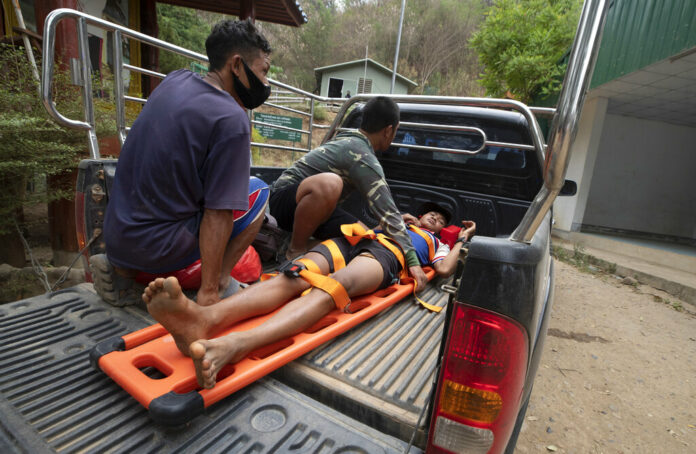
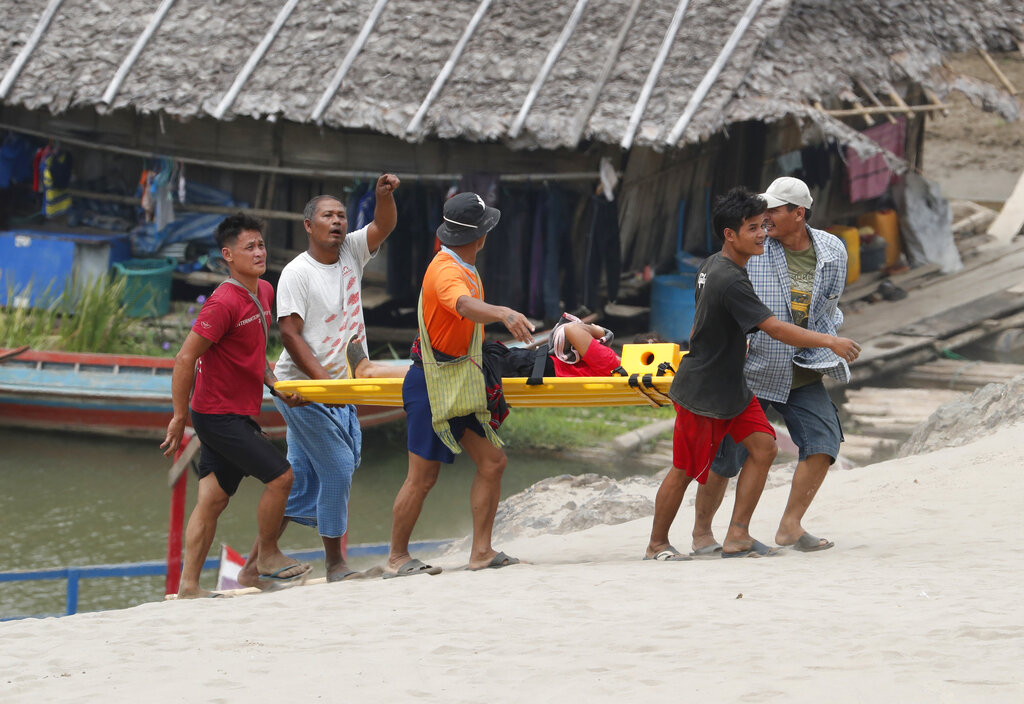
At Thailand’s Mae Sam Laep village along the Salween River, which forms the border with Myanmar, paramilitary Thai Rangers on Tuesday twice waved off a boat that had come from the other side carrying seven people, including one lying flat and another with a bandage on his head. But ambulances soon arrived on the Thai side and it landed anyway.

Thai villagers helped medical staff carry the injured people on stretchers to a small clinic at a nearby checkpoint. One man had large bruises on his back with open wounds, an injury one medical staffer said could have been caused by an explosion.

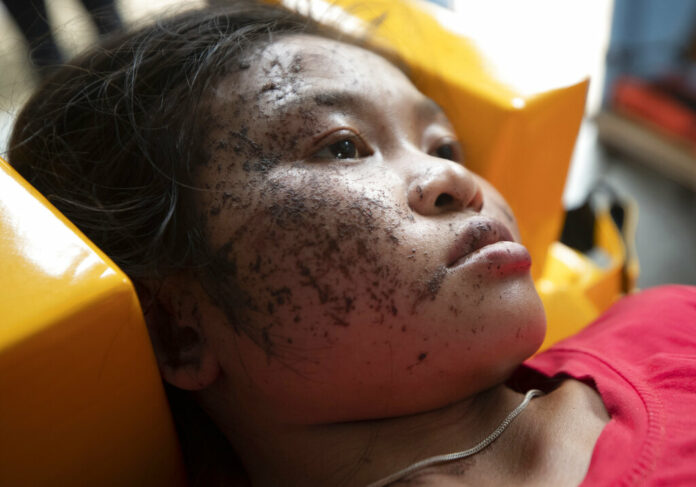
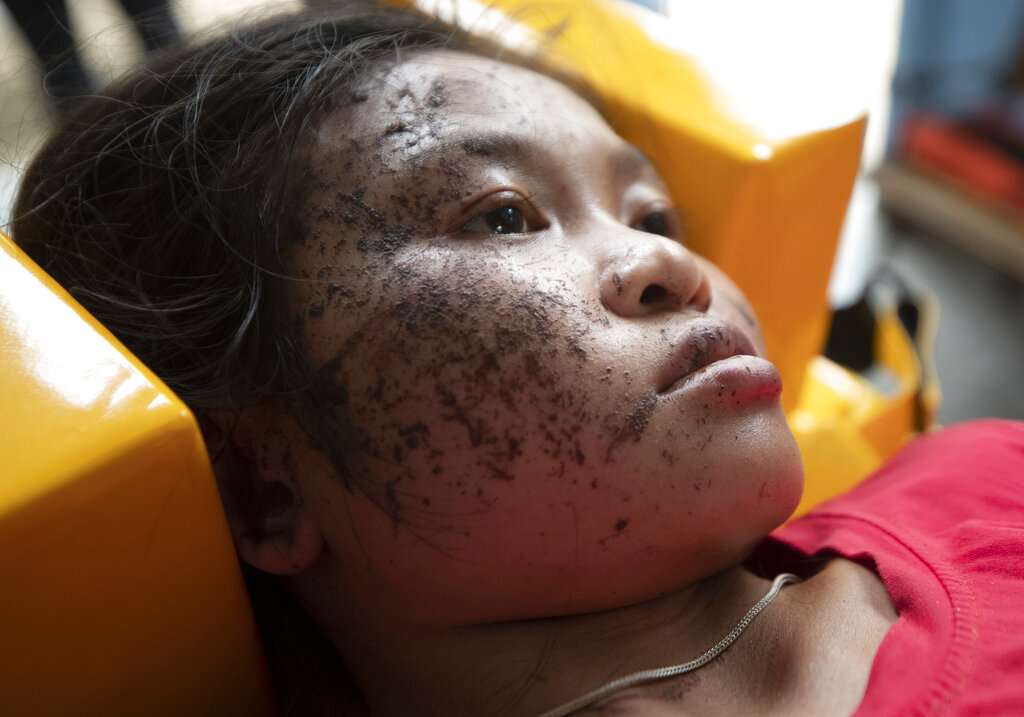
An elderly woman in the group had small cuts and scabs all over her face. Thai nurses in protective gear to guard against COVID-19 attended to her, testing her and others for the coronavirus.

Another villager from the boat, 48-year-old Aye Ja Bi, said he had been wounded by a bomb dropped by a plane. His legs were hit by shrapnel and his ears were ringing, he said, but he was unable to travel to get help until Tuesday.

The airstrikes appeared to be retaliation for an attack by guerrillas under the command of the KNU on a government military outpost in which they claimed to have killed 10 soldiers and captured eight. Tuesday’s KNU statement charged that the strikes had been planned before that.

About 2,500-3,000 refugees crossed into Thailand on Sunday, according to several humanitarian aid agencies who have long worked with the Karen.

They said on Monday, however, that Thai soldiers had begun to force people to return to Myanmar.

“They told them it was safe to go back even though it is not safe. They were afraid to go back but they had no choice,” said a spokesperson for the Karen Peace Support Network, a group of Karen civil society organizations in Myanmar.

The army has restricted journalists’ access to the area where the villagers crossed the border.

Myanmar’s government has battled Karen guerrillas on and off for years — along with other ethnic minorities seeking more autonomy — but the airstrikes marked a major escalation of violence.

Political organizations representing the Karen and Kachin in northern Myanmar have warned in recent weeks that junta forces have been shooting protesters in their regions and threatening a response.

They were joined Tuesday by the Three Brothers Alliance, which represent the guerrilla armies of the Rakhine, Kokang and Ta-ang — also known as Palaung. The alliance said if the killing of protesters did not stop immediately, they would abandon a self-declared cease-fire and join with other groups to protect the people.

The statements from the various ethnic minority groups seemed to suggest their own militaries would respond within their home regions, not in the cities of central Myanmar where the protests and the junta’s repression have been the strongest.

Supporters of the protest movement are hoping that the ethnic armed groups could help pressure the junta. Protest leaders in hiding say they have held talks, but there have been no commitments.

Story: Tassanee Vejpongsa

Advertisement

With Ship Now Freed, a Probe Into Suez Canal Blockage Begins

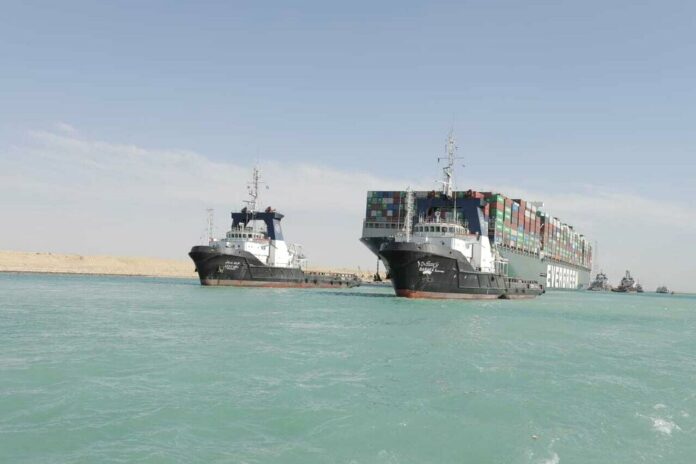
In this photo released by Suez Canal Authority, the Ever Given, a Panama-flagged cargo ship is accompanied by Suez Canal tugboats as it moves in the Suez Canal, Egypt, Monday, March 29, 2021. Salvage teams on Monday set free a colossal container ship that has halted global trade through the Suez Canal, bringing an end to a crisis that for nearly a week had clogged one of the world's most vital maritime arteries. Photo: Suez Canal Authority via AP

SUEZ, Egypt (AP) — Experts boarded the massive container ship Tuesday that had blocked Egypt’s vital Suez Canal and disrupted global trade for nearly a week, seeking answers to a single question that could have billions of dollars in legal repercussions: What went wrong?

As convoys of ships again began traveling through the artery linking the Mediterranean and Red Seas, a canal service provider said more than 300 vessels carrying everything from crude oil to cattle were still waiting for their turn in a process that will take days. Egyptian government officials, insurers, shippers and others similarly waited for more details about what caused the skyscraper-sized Ever Given to become wedged across the canal on March 23.

When blame gets assigned, it will likely lead to years of litigation to recoup the costs of repairing the ship, fixing the canal and reimbursing those who saw their cargo shipments disrupted. Since the vessel is owned by a Japanese firm, operated by a Taiwanese shipper, flagged in Panama and now stuck in Egypt, matters quickly become an international morass.

“This ship is a multinational conglomeration,” said Capt. John Konrad, the founder and CEO of the shipping news website gcaptain.com.

Experts boarded the Ever Given as it idled Tuesday in Egypt’s Great Bitter Lake, just north of the site where it previously blocked the canal. A senior canal pilot, speaking on condition of anonymity because he was not authorized to talk to journalists, told The Associated Press that experts were looking for signs of damage and trying to determine why the vessel ran aground.

There could be significant damage to the the ship, Konrad warned. Stuck for days across the canal, the ship’s middle rose and fell with the tide, bending up and down under the tremendous weight of some 20,000 containers across its 400-meter (quarter-mile) length. On Monday, when workers partially floated the ship, all that pressure came forward to its bow.

“Structural integrity is No. 1. You know, there was a lot of strain on that ship as it was sagging in the waterway,” Konrad said. “They have to check everything for cracks and particularly that rudder and the propeller in the back that’s connected to the engine room.”

“And then they have to go through all the mechanical equipment, make sure they test the engines, all the safety valves, all the equipment, and then determine that it’s safe to sail either by itself or with a tug escort to the next port,” he added.

The ship’s owner, Shoei Kisen Kaisha Ltd., said Tuesday that it would be part of the investigation along with other parties, though it did not identify them by name. It also refused to discuss possible causes of the grounding, including the ship’s speed and the high winds that buffeted it during a sandstorm, saying it could not comment on an ongoing investigation. Initial reports also suggested a “blackout” struck the vessel, something denied by the ship’s technical manager.

The company added that any damage to the ship was believed to be mostly on its keel. It said it was not immediately known whether the vessel will be repaired on site in Egypt or elsewhere, or whether it will eventually head to its initial destination of Rotterdam. That is a decision to be made by its operator, rather than the shipowner, the company said.

The Ever Given was seen to be stationary in the canal lake from the town of Fayed on Tuesday, still stacked with containers, with a specialist tugboat nearby. Other vessels in transit navigated around it.

The grounding of the ship had halted billions of dollars a day in maritime commerce. Analysts expect it could take at least another 10 days to clear the backlog — though Egypt’s president said Tuesday it would take just three. The losses to shippers, as well as any physical damage to the vessel itself, likely will see lawsuits.

Shoei Kisen Kaisha Ltd. is covered with some $3 billion in liability insurance through 13 Protection & Indemnity Clubs. Those clubs are not-for-profit mutual insurers used by the vast majority of global shipping firms.

Global legal firm Clyde and Co. said the Ever Given’s owner likely would pay Egypt’s canal authority for the assistance already rendered to the vessel. The authority also could fine the Ever Given.

“We anticipate a detailed investigation will follow which will determine the cause,” the firm said. ”Evidently the cause will impact upon the legal liabilities of the ship and cargo interests.”

Egyptian President Abdel Fattah el-Sissi traveled Tuesday to the canalside city of Ismailia to praise those who freed the vessel.

Speaking to a small group of reporters on a dock overlooking the waterway, el-Sissi deflected questions about the investigation, saying Egypt would not interfere in a probe that will be left to “the specialists.”

“We want to confirm to all the world, that things are back to as they were,” he added. He stood before a sign that said: “Welcome to the Suez Canal: Egypt’s lifeline of peace, prosperity and development.”

On Monday, a flotilla of tugboats helped by the tides, wrenched the bulbous bow of Ever Given from the canal’s sandy bank, where it had been firmly lodged. The tugs blared their horns in jubilation as they guided the Ever Given through the water after days of futility that had captivated the world, drawing scrutiny and social media ridicule.

The Ever Given had crashed into a bank of a single-lane stretch of the canal about 6 kilometers (3.7 miles) north of the southern entrance, near the city of Suez. That forced some ships to take the long, alternate route around the Cape of Good Hope at Africa’s southern tip — a 5,000-kilometer (3,100-mile) detour that costs ships hundreds of thousands of dollars in fuel and other costs.

The unprecedented shutdown, which raised fears of extended delays, goods shortages and rising costs for consumers, added to strain on the shipping industry already under pressure from the coronavirus pandemic.

___

Story: Samy Magdy and Jon Gambrell. Gambrell reported from Dubai, United Arab Emirates. Associated Press writers Mari Yamaguchi in Tokyo and Isabel DeBre in Dubai contributed to this report.

Advertisement

Trisara Phuket Welcomes World-Class Chefs for “Gastronomic Getaway Weekend,” Celebrating Thailand’s Finest Cuisine and Local Produce

Trisara Phuket, the luxurious private pool villa beach resort, is once again raising the bar for gastronomy in Phuket, with another spectacular culinary festival that features five of Thailand’s finest chefs and a series of exciting epicurean events.

Running from 2nd to 4th April 2021, the “Gastronomic Getaway Weekend” at Trisara Phuket will champion local, seasonal and sustainable produce under the resort’s responsible philosophy: “Dine Good, Do Good”. Three days of dining experiences will be staged across various venues, allowing guests and Thai residents to book seats for individual occasions or combine their chosen culinary event with a sensational stay at the award-winning Trisara Phuket.

2 3

The five highly-acclaimed chefs headlining the “Gastronomic Getaway Weekend” are:

  • Sujira “Aom” Pongmorn, Chef de Cuisine at Sawaan, the Michelin-starred restaurant in Bangkok. Michelin’s Young Chef for 2021, Khun Aom specialises in innovative dishes that pay homage to Thailand’s cultural heritage and native produce.
  • Arisara “Paper” Chongphanitkul, Pastry Chef at Sawaan, the Michelin-starred restaurant in Bangkok. A rising star in the world of pâtisserie, Khun Paper is also the owner of ICI, the popular dessert bar in Bangkok.
  • Jim Ophorst, Chef de Cuisine at PRU, the Michelin-starred restaurant at Trisara Phuket and Thailand’s first and only Michelin Green star restaurant. A Dutch national, Chef Jim is a leading voice in the farm-to-table movement.
  • Kla Prakobkit, Executive Chef at Seafood @ Trisara, the Michelin Plate awarded restaurant that specialises in authentic Thai seafood, inspired by time-honoured recipes passed down through generations.
  • Chandler Schultz, Head Chef of South Philly and formerly of Le Cochon Blanc, the celebrated restaurant in Bangkok that takes pride in its wood-fired cooking and a commitment to sourcing directly from local farmers.

3 1

These five culinary leaders will take it in turns to host a series of enticing events over the course of three days at Trisara Phuket, commencing on Friday 2nd April and concluding on Sunday 4th April.

The Gastronomic Getaway Weekend will get underway on Friday evening (2nd April 2021) at PRU, the first and only restaurant in Thailand to receive the prestigious Michelin Green star, in recognition of its sustainable practices. Chef Jim Ophorst will be serving a five-course menu inspired by the different eco-systems of Thailand. This exclusive event is priced at just THB 5,000++ per person, with an optional THB 3,000++ supplement for a biodynamic wine pairing.

Then on Saturday afternoon (3rd April 2021), Chef Chandler Schultz will showcase his famous wood-fired cooking technique and  fresh local ingredients at Hideaway by JAMPA, an intimate and eco-sensitive dining destination at Pru Jampa farm. In an alfresco setting, surrounded by lakes, guests will be able to savour a mouth-watering five-course menu that focuses on natural ingredients. This intimate gathering is priced at THB 1,800++ per person.

4

Then on Saturday evening, Chef Sujira “Aom” Pongmorn will present a multi-course tasting menu at Seafood @ Trisara, blending the rich heritage of Thai cuisine with contemporary techniques, paired with a fine selection of wines or teas. Guests will have the opportunity to taste why this exciting young chef is considered to  be one of the Kingdom’s brightest culinary stars. The menu is priced at THB 1,900++, with a THB 1,800 supplement for wine pairing or THB 600++ for tea pairing.

Finally on Sunday (4th April 2021), the Gastronomic Getaway Weekend concludes with a special Easter version of SUNDAYS, Trisara Phuket’s signature brunch at The Deck. Chef Kla Prakobkit will deliver a delectable selection of local and international delicacies, all presented in a playful style and accompanied with cool beverages. This celebratory afternoon will also see Chef Chandler fire up his wood barbecue to grill premium meats and seafood.

5

Chef Arisara “Paper” Chongphanitkul will host a pop-up dessert bar, treating diners to some of this acclaimed pâtissier’s most enticing creations. She will be supported by Chef Somboon “Tao” Sakhonjaroean, Trisara’s own Pastry Chef, and Chef Jongkonee “Pun” Wongsinghadacho, who leads the pastry team at PRU, to share their sublime sweet treats, paired with handcrafted cocktails. This Easter brunch experience is available for THB 2,600++ for food only, THB 3,200++ including half a bottle of wine, or THB 3,900++ including half a bottle of Champagne.

For more information about the Gastronomic Getaway Weekend or to make a reservation for any of these events, please contact Trisara Phuket on [email protected] or 076-310-300.

Alternatively, if you want to combine this enticing epicurean weekend with a five-star stay at Trisara Phuket, please contact:

Tel: 076-310-100

LINE Official Account @TrisaraResort or  https://lin.ee/mMUkaGO

Facebook Messenger m.me/trisararesort

Email: [email protected]

6

Advertisement

Thailand Denies Forcing Fleeing Villagers Back To Myanmar

An injured Karen villager from Myanmar is transported at Ban Mae Sam Laep Health Center, Mae Hong Son province, northern Thailand, after crossing Salawin river on a boat, on Tuesday March 30, 2021. Photo: Sakchai Lalit / AP

MAE SAM LAEP (AP) — Thailand’s prime minister denied Tuesday that his country’s security forces forced villagers back to Myanmar who had fled from military airstrikes, saying they returned home on their own accord.

Prime Minister Prayuth Chan-ocha, nevertheless, said his country is ready to shelter anyone who is escaping fighting, as it has done many times in recent decades. His comments came a day after humanitarian groups said Thailand has been sending back some of the thousands of people who have fled a series of Myanmar military airstrikes.

“There is no influx of refugees yet. We asked those who crossed to Thailand if they have any problem in their area. When they say no problem, we just asked them to return to their land first. We asked, we did not use any force,” Prayuth told reporters.

“We won’t push them back,” he said. ’If they are having fighting, how can we do so? But if they don’t have any fighting at the moment, can they go back first?”

The weekend strikes, which sent ethnic Karen people to seek safety in Thailand, were another escalation in the violent crackdown by Myanmar’s junta on protests against its Feb. 1 takeover.

At least 510 protesters have been killed since the coup, according to Myanmar’s Assistance Association for Political Prisoners, which says the actual toll is likely much higher. It says 2,574 people have been detained. Protests continued Tuesday despite the deaths of more than 100 people on Saturday alone.

The coup that ousted the government of Aung San Suu Kyi reversed the country’s progress toward democracy since her National League for Democracy party won elections in 2015 after five decades of military rule.

An injured ethnic Karen villager from Myanmar rests as she is treated after crossing the Salawin river via boat at Ban Mae Sam Laep Health Center, Mae Hong Son province, Thailand on Tuesday March 30, 2021. Photo: Sakchai Lalit / AP

At Thailand’s Mae Sam Laep village along the Salween River, which forms the border with Myanmar, paramilitary Thai Rangers on Tuesday twice waved off a boat that had come from the other side carrying seven people, including one lying flat and another with a bandage on his head. But ambulances soon arrived on the Thai side and it landed anyway.

Thai villagers helped medical staff carry the injured people on stretchers to a small clinic at a nearby checkpoint. One man had large bruises on his back with open wounds, an injury one medical staffer said could have been caused by an explosion.

An elderly woman in the group had small cuts and scabs all over her face. Thai nurses in protective gear to guard against COVID-19 attended to her, giving her and others tests for the coronavirus.

Another villager from the boat, 48-year-old Aye Ja Bi, said he had been wounded by a bomb dropped by a plane. His legs were hit by shrapnel and his ears were ringing, he said, but he was unable to travel to get help until Tuesday.

The airstrikes appeared to be retaliation for an attack by guerrillas of the Karen National Liberation Army on a government military outpost, in which they claimed to have killed 10 soldiers and captured eight. The group is fighting for greater autonomy for the Karen people.

Thai authorities, who claimed weeks ago to be preparing for an influx of refugees, have responded inconsistently. A group of 2,500-3,000 refugees crossed into Thailand on Sunday, according to several humanitarian aid agencies who have long worked with the Karen.

They said on Monday, however, that Thai soldiers had begun to force people to return to Myanmar.

“They told them it was safe to go back even though it is not safe. They were afraid to go back but they had no choice,” said a spokesperson for the Karen Peace Support Network, a group of Karen civil society organizations in Myanmar.

Two other people confirmed that refugees were being sent back to Myanmar. All three spoke on condition of anonymity because of the sensitive nature of the issue.

Thai Foreign Ministry spokesman Tanee Sangrat said in a statement Monday night that claims some Karen were being forced to return to Myanmar were inaccurate and “cite information solely from non-official sources without confirming the facts from official sources on the ground.”

“In fact, the Thai authorities will continue to look after those on the Thai side while assessing the evolving situation and the needs on the ground,” he said.

The army has restricted journalists’ access to the area where the villagers crossed the border.

Myanmar’s government has battled Karen guerrillas on and off for years — along with other ethnic minorities seeking more autonomy — but the airstrikes marked a major escalation of violence.

Political organizations representing the Karen and Kachin in northern Myanmar have issued statements in recent weeks warning the government against shooting protesters in their regions and threatening a response.

They were joined Tuesday by the Three Brothers Alliance, which represent the guerrilla armies of the Rakhine, Kokang and Ta-ang — also known as Palaung — minorities.

The alliance condemned the killing of protesters and said if it did not stop immediately, they would abandon a self-declared cease-fire and join with other groups to protect the people.

Their statement, like those of the Karen and Kachin, seemed to suggest that any military response by them would be in their home areas, not in the cities of central Myanmar where the protests and repression have been the strongest.

Supporters of the protest movement are hoping that the ethnic armed groups could help pressure the junta. Protest leaders in hiding say they have held talks, but there have been no commitments.

An injured Karenni villager from Myanmar is carried as they arrive via boat at Ban Mae Sam Laep Health Center, Mae Hong Son province, Thailand, Tuesday, March 30, 2021. Photo: Sakchai Lalit / AP

The United States on Monday suspended a trade deal with Myanmar, also known as Burma, until a democratic government is restored in the Southeast Asian country.

The office of the U.S. Trade Representative said the country was immediately suspending “all U.S. engagement with Burma under the 2013 Trade and Investment Framework Agreement.″ Under the agreement, the two countries cooperated on trade and investment issues in an effort to integrate Myanmar into the global economy, a reward for the military’s decision to allow a return to democracy — a transition that ended abruptly with last month’s coup.

The announcement Monday doesn’t stop trade between the two countries. Last week, the United States restricted American dealings with two giant Myanmar military holding companies that dominate much of that country’s economy.

___

Story: Tassanee Vejpongsa

Advertisement

Hot News

LATEST NEWS

Bangkok
overcast clouds
30 ° C
30 °
28.8 °
78 %
5kmh
100 %
Sun
31 °
Mon
36 °
Tue
38 °
Wed
35 °
Thu
35 °