35 C
Bangkok
Monday, August 17, 2026
Home Blog Page 11

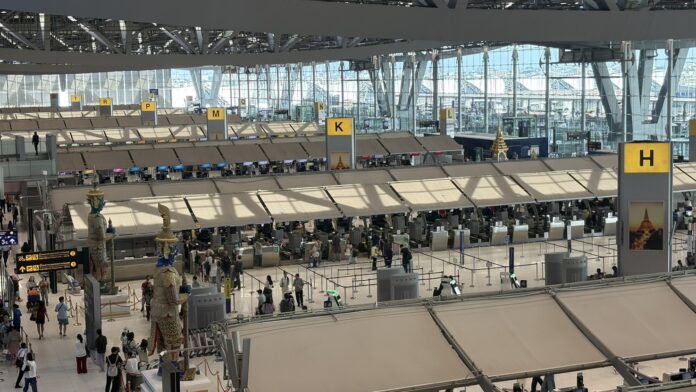
Thai airports can open suspicious bags without you

Suvarnabhumi Airport

Thai airports will be allowed to open and search checked baggage without passengers present from 16 October 2026 under new aviation security regulations issued by the Civil Aviation Authority of Thailand (CAAT).

The regulation, issued on 24 February, authorizes operators of public airports to inspect checked baggage if there are reasonable grounds to suspect it contains prohibited items, explosives, dangerous goods or other items banned from being carried on aircraft.

Security screening officers will be authorized to open suspicious baggage and confiscate prohibited items without returning them to the passenger. Further action will be taken in accordance with relevant laws and regulations.

Passengers will not need to be present when a checked bag is opened. Officers will record the inspection and leave a notice inside the baggage informing the owner that it has been searched.

CAAT recommends that passengers use internationally recognized baggage locks, such as TSA-approved locks, which can be opened by authorized security personnel using a master key or tool. If a bag cannot be opened, officers may break the lock to conduct the inspection, with no compensation required for damage to the lock.

The new rules are intended to strengthen Thailand’s aviation security measures and bring them in line with international standards.

Advertisement

China urges Japanese authorities to stop playing with fire on issue of nuclear weapons: spokesperson

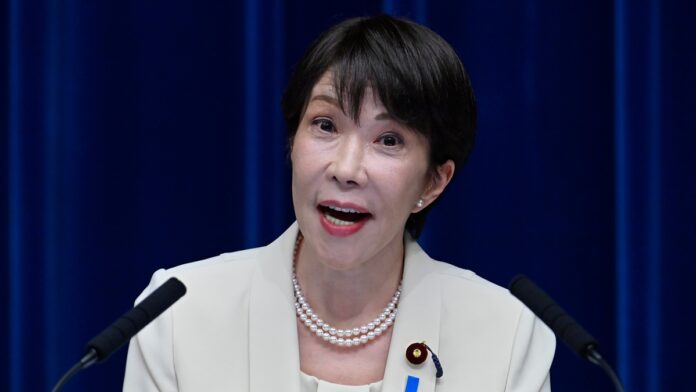
Japan's Prime Minister Sanae Takaichi (David Mareuil/Pool Photo via AP)

BEIJING, Aug. 7 (Xinhua) — The Japanese authorities should listen to the call of the people, fulfill the country’s obligation under international law of not accepting, producing, possessing or proliferating nuclear weapons, and stop playing with fire on the issue of nuclear weapons, a Chinese foreign ministry spokesperson said on Friday.

Spokesperson Lin Jian made the remarks when answering a query regarding a recent survey conducted by the Japan Association for Public Opinion Research.

The survey showed that 76 percent of people in Japan support upholding the country’s three non-nuclear principles of not producing, possessing or allowing nuclear weapons on its territory. The survey also found that 77 percent of the respondents believe Japan should not pursue nuclear sharing, an arrangement under which the United States would station nuclear weapons in Japan.

The fact that nearly 80 percent of people in Japan support upholding the three non-nuclear principles and oppose nuclear sharing speaks to the Japanese public’s overwhelming and clear-cut opposition to possessing nuclear weapons, said Lin, adding that it also reflects how much the Japanese public cherishes peace and prosperity which has not come easy.

Recent moves by those running the Japanese government to clamor for “nuclear option” and seek to violate the three non-nuclear principles only reveal the inflating political and military ambitions of Japanese right-wing forces, who are gambling with the future of over 100 million Japanese people, said Lin.

“The will of the people must not be defied,” Lin said, noting that the Japanese authorities should not repeat the wrong path of miscalculating the historical trend and acting against the people’s will for peace.

Advertisement

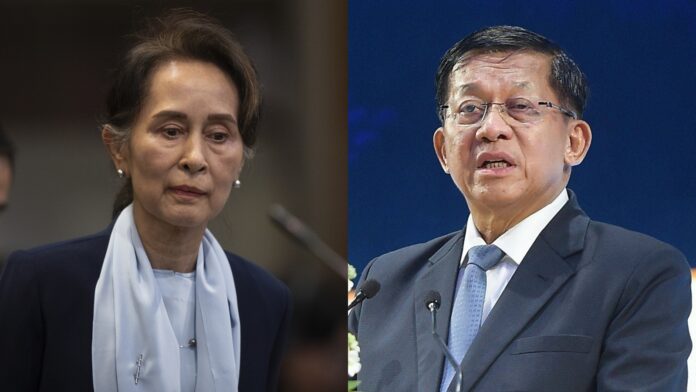
Myanmar rebuffs ASEAN call to free Aung San Suu Kyi, questions need for envoy

BANGKOK (AP) — Myanmar’s military-backed government has rejected the Association of Southeast Asian Nations’ renewed call for the unconditional release of detained former leader Aung San Suu Kyi and dismissed the need for the organization’s special envoy on Myanmar, according to the foreign affairs ministry.

President Min Aung Hlaing, the former army chief who had originally seized power in 2021 from Suu Kyi’s civilian government, has been trying to win political legitimacy since the takeover and resume relations with ASEAN.

ASEAN came up with a peace plan for the Southeast Asian country in April 2021 to end hostilities and initiate dialogue among contending parties, to be facilitated by the special envoy. Min Aung Hlaing has since been barred from attending top-level meetings for failing to comply with the plan.

In an apparent effort to placate critics, the government allowed a representative of the International Committee of the Red Cross to visit 81-year-old Suu Kyi last week, the first known contact with an outside international independent humanitarian organization since her detention five years ago.

Suu Kyi is serving her sentence under house arrest at an undisclosed location in the capital Naypyitaw, on charges that her supporters and rights groups have said are politically motivated.

20260806111341 5991
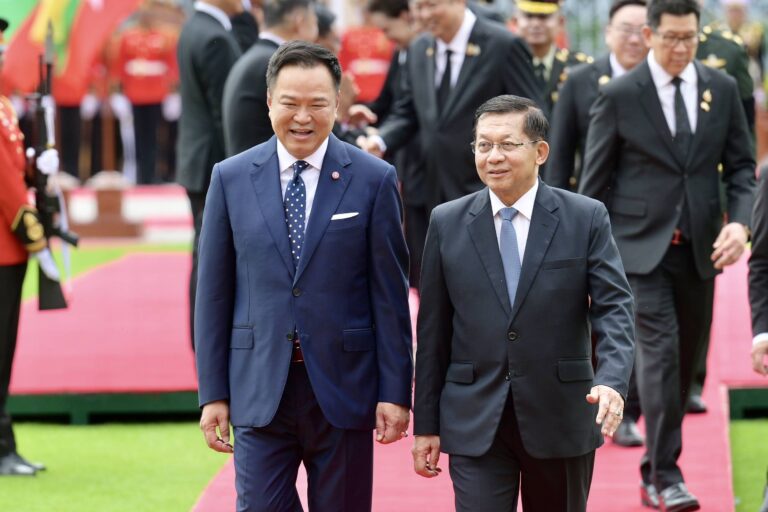
Myanmar leader Min Aung Hlaing during his Thailand visit last week.

The current ASEAN chair, the Philippines, welcomed the meeting as a step toward dialogue and reconciliation on Friday, while urging greater access to political detainees and reiterating its call for Suu Kyi’s “complete and unconditional release.”

Myanmar’s foreign ministry’s statement late Saturday criticized the call.

“Although the government has commuted her sentences based on humanitarian considerations, the matter of a full and unconditional release shall only be carried out in accordance with the law,” it said.

The statement also said the government will continue working with ASEAN’s current special envoy, Philippine Foreign Minister Maria Theresa Lazaro, but doesn’t see the need to continue down that path when Singapore takes over on Jan. 1, 2027.

“At present, the government, which emerged from the multiparty democratic elections reflecting the genuine will of the people, has assumed state responsibility,” the statement said.

In a speech more than three months after being sworn in as president following the elections, Min Aung Hlaing dismissed ASEAN’s peace plan, saying some member states have discriminated against Myanmar and it would respond on a case-by-case basis.

Critics dismissed the elections, which were held in December and January, as a sham designed to consolidate the military’s grip on power while ostensibly restoring civilian rule.

Advertisement

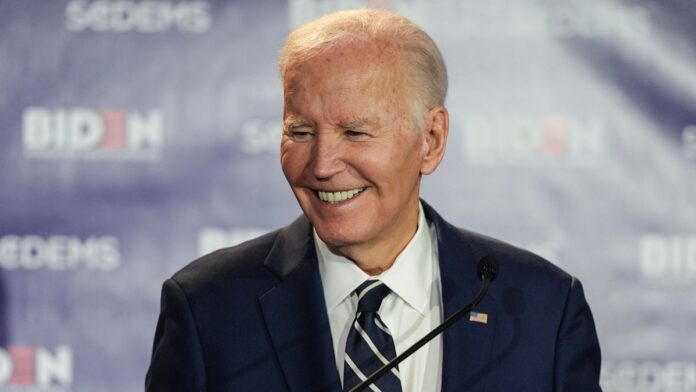
Hunter Biden says his father’s prostate cancer is causing him pain even as he continues to speak out

Former President Joe Biden (AP Photo/Matt Kelley)

LONDON (AP) — Former U.S. President Joe Biden ’s prostate cancer has spread to other parts of his body and is causing him pain, even as he continues to speak out on public issues, his son Hunter said in an interview.

In a wide-ranging interview with the BBC broadcast late on Friday, Hunter Biden grew emotional as he discussed his father’s condition, describing it as very sad to watch.

“The cancer has spread, metastasized into his bones and further,” he said. “It’s very painful and it’s very debilitating in many respects.”

Joe Biden, 83, was the oldest man to serve as U.S. president and his age was a source of concern for much of his four years in office. He and his White House advisers have faced intense criticism for allegedly concealing the extent of his problems, especially after he was forced to abandon his bid for re-election after a disastrous debate with his eventual successor, Donald Trump.

The former president revealed his cancer diagnosis in May of last year, less than four months after he left the White House.

Hunter Biden said the diagnosis had been tough on the family.

“It’s really sad to watch,” Biden said. “The only thing that I’d say about my dad, about his health right now, is I wish he would complain more, because it’s not good.”

But Biden said his father remains “out there,” speaking publicly about the issues that are important to him.

“He’s still doing his thing,” he said. “He so believes in this country.”

The former president will publish a memoir, “Promise Me, America,” after the mid-term elections.

Advertisement

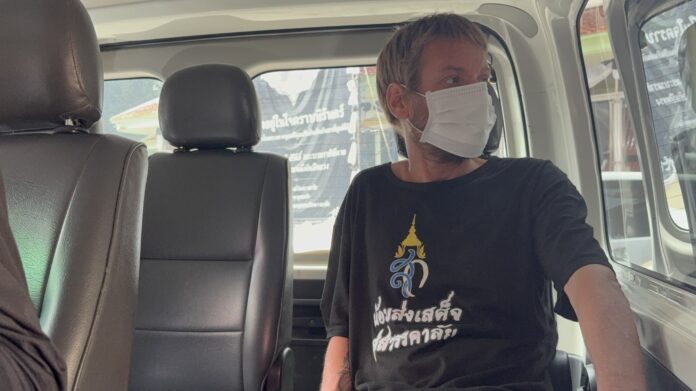
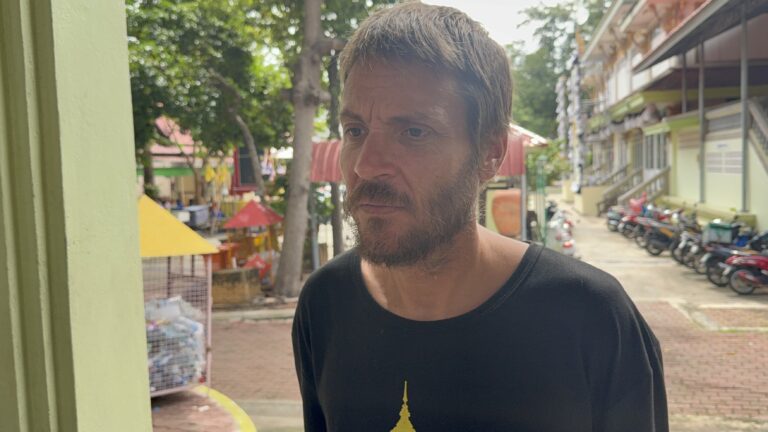
After 2 years living rough in Thailand, Norwegian man finally going home

Odd Stian Hesseberg

A 44-year-old Norwegian man who spent more than two years living rough around Pak Kret in Nonthaburi is finally set to return home after Thai immigration authorities stepped in to help him contact his embassy.

Odd Stian Hesseberg was found living around temples and public areas in Pak Kret after a social media post raised concerns about a foreign man sleeping near the Pak Kret waterfront.

Hesseberg told reporters he came to Thailand alone about two and a half years ago to meet a female friend in Nakhon Sawan but lost contact with her. He later travelled to Nonthaburi, where he said his bag containing his passport and other documents was stolen. Without his documents, he ended up living rough and sleeping at temples and along the waterfront.

news152744 NWPC321eAh1786114841

He said he wanted to return to Norway but did not know who to contact for help.

Immigration officers located Hesseberg at Wat Klang Kret on 7 August and checked his immigration record. He entered Thailand on 3 March 2023 on a 30-day tourist visa and later received an extension until 16 May 2023. His immigration status currently shows an overstay of 1,179 days.

Authorities are now questioning Hesseberg and coordinating with the Norwegian Embassy to arrange his return to Norway in accordance with Thai law.

news152744 wXeR1OtLPM1786114841

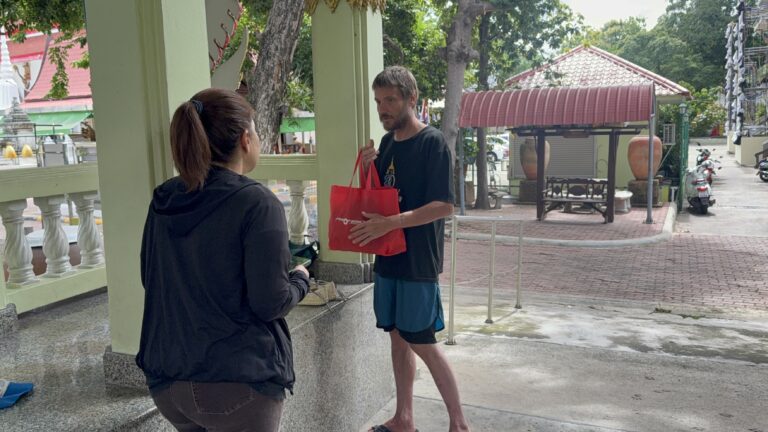
Temple staff said they had previously tried to help him return home, including arranging transport to the Norwegian Embassy about three months ago. They said they were concerned about his wellbeing as he had been living alone and often sleeping in public places.

After being taken by immigration officers, Hesseberg thanked temple staff and local residents who had helped him during his time in Thailand. He said he was happy that he would finally be able to return to Norway, his home country, after more than two years.

Advertisement

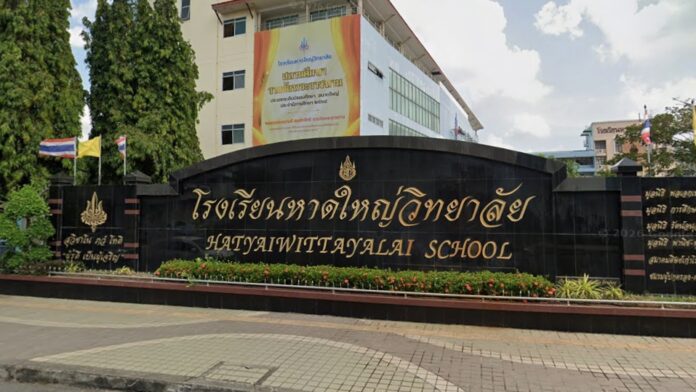
Ex-foreign English teacher posts gun threats, Hatyai school shifts online

Hatyaiwittayalai School in Songkhla will switch to online classes on 10-11 August following alleged threats by a former foreign English teacher who posted images of guns and threatening messages online after his contract was terminated.

The school said on 8 August that it had terminated the contract of a South African teacher in its English Programme on 24 July over alleged conduct that breached the terms of his employment. After the termination, the former teacher allegedly posted images of firearms, messages and audio clips in a LINE open chat group containing provocative and threatening content.

The posts caused concern among school administrators, staff, students and parents, prompting the school to report the matter to Hat Yai Police Station and consider legal action. The school said the temporary switch to online learning was intended to protect students and staff and prevent any incident that could threaten lives, physical safety or property.

Hat Yai police, working with Songkhla immigration officers, said they had checked the former teacher’s records and found that he left Thailand on 19 July and there was no record of him returning. Officers also checked his former residence and found that no one was living there.

Police said they are maintaining security measures around the school and other relevant locations while legal proceedings are underway. The school has also been advised to strengthen security measures and prepare for potential risks.

The school urged students, parents and staff to follow official updates and carefully verify information before sharing it to avoid confusion or panic.

Advertisement

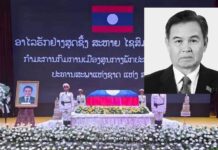
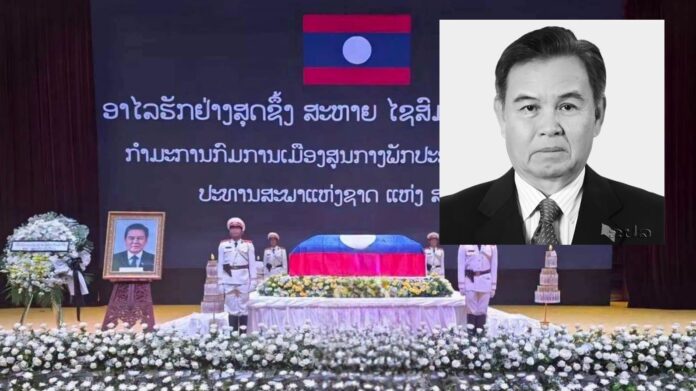
Laos declares five-day mourning after National Assembly president Xaysomphone dies

Xaysomphone Phomvihane, president of Laos’ National Assembly and a member of the Politburo of the Lao People’s Revolutionary Party, died on 8 August at the age of 70, according to an announcement by the Party Central Committee.

Xaysomphone died at 11:18 on 8 August from vasculitis, according to the announcement cited by the Lao News Agency. He was described by the party as a senior leader with extensive experience in government and local administration who had devoted his career to the country’s development and the well-being of the Lao people.

The Lao leadership described his death as a major loss to the Party, the state and the country’s multi-ethnic population. Xaysomphone was the son of former Lao leader Kaysone Phomvihane, one of the country’s most prominent revolutionary leaders.

The Party Central Committee, National Assembly, government and Lao Front for National Development have declared a five-day national mourning period from 9 to 13 August.

His official funeral will be held on 13 August at That Luang Esplanade in Vientiane, according to the announcement.

Advertisement

Chinese embassy urges citizens in Thailand to follow local rules, respect Thai people

The Chinese Embassy in Bangkok has urged Chinese citizens attending cultural performances, sporting events and fan meetings in Thailand to strictly follow local laws and regulations and respect local people, following several recent incidents involving Chinese fans.

In a statement, the embassy reminded Chinese visitors to participate in events in an orderly manner, follow venue rules and respect Thailand’s religious beliefs, customs and cultural traditions. It also urged them to treat Thai people with respect, friendship and tolerance and help preserve the traditional “Thailand-China family” friendship.

The embassy advised visitors to check event rules in advance, including requirements on entry, photography and prohibited items. It also urged Chinese citizens involved in disputes to remain calm and seek help through official channels, including event organisers, staff or local police, rather than taking matters into their own hands.

The reminder comes after incidents involving Chinese fans in Thailand, including fans breaching safety rules while following actors at Suvarnabhumi Airport and a confrontation between Chinese fans and security staff at an event involving Thai actors.

The embassy said Chinese citizens should take part in activities in a “civilised, rational and orderly” manner, strengthen friendly exchanges with Thai people and help promote closer ties between the two countries.

Advertisement

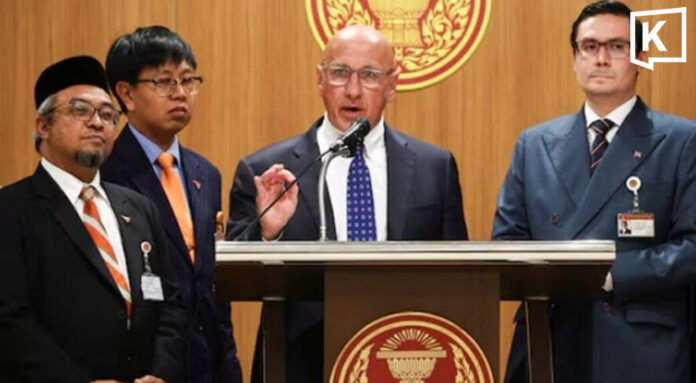
UN envoy says Thailand received draft but did not respond

UN envoy says Thailand received draft but did not respond

BANGKOK — UN Special Rapporteur Tom Andrews has defended his recent statement on the human rights situation in Cambodia, saying the Thai government was given an advance draft of sections concerning the Thailand-Cambodia border conflict but did not respond before its publication.

Andrews made the remarks in a Facebook post on 7 August, responding to criticism from the Thai government over his work following his latest mission to Cambodia.

He said he welcomed comments and feedback on his statement, including views from the Thai government.

“That is why I sent the Thai government a draft of the sections relating to the border conflict two days before the statement was released,” Andrews said.

He said the draft included references to the displacement of Cambodian people.

“While I did not receive a response from the Thai government to that communication, I remain very open and eager to discuss the Thai government’s views,” he said.

Andrews also addressed public criticism from Thai officials over his estimate that around 650,000 Cambodians had been displaced by the conflict, including his reference to some displaced people being in Thailand.

He said he acknowledged Thailand’s position on the figures but maintained that the number came from UN reporting.

His use of the term “displaced” was based on human rights concerns and was not dependent on claims of territorial sovereignty, he said.

Andrews said he would prepare a full report on the human rights situation in Cambodia for submission to the UN Human Rights Council next month.

He said he would contact the Thai government again while preparing the report and hoped to engage with Thai officials to hear their views before the report was published.

The UN rapporteur also stressed the importance of resolving the border conflict quickly and peacefully so that people could return home, live in stable and safe conditions and benefit from economic opportunities created by cross-border trade.

Andrews praised the Thai government for publicly expressing its commitment to promoting and protecting human rights, saying this provided an important foundation for dialogue.

“As I stated in my statement, I am eager to work with both the Cambodian and Thai governments to address the human rights concerns arising from the conflict, including the displacement of civilians,” he said.

“Whether they are Thai or Cambodian, human rights matter.”

Advertisement

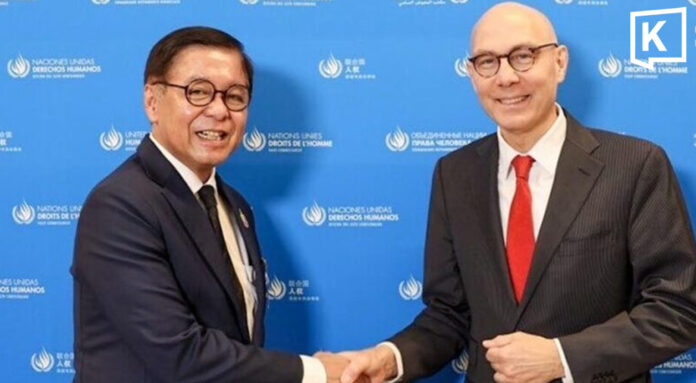
Thailand FM accuses UN envoy of bias in Cambodia rights report

Thailand FM accuses UN envoy of bias in Cambodia rights report

BANGKOK — Thailand has criticised a United Nations special rapporteur’s report on Cambodia, accusing the UN rights mechanism of lacking balance and relying on distorted information while exceeding the scope of its mandate.

In a letter dated 7 August to the UN High Commissioner for Human Rights, Thailand’s Deputy Prime Minister and Foreign Minister, Sihasak Phuangketkeow, said the government was deeply disappointed by the credibility and accountability of the end-of-mission statement issued by Tom Andrews, the UN Special Rapporteur on the situation of human rights in Cambodia, following his official visit to the country from 20-31 July.

Thailand said the statement should have focused primarily on the human rights situation in Cambodia but instead made several allegations against Thailand.

The government said the approach went beyond the mandate granted to the UN Human Rights Council and criticised Andrews for allegedly failing to give Thailand sufficient opportunity and time to present its facts and views before the statement and accompanying press conference were released.

Thailand also accused the statement of containing several distorted claims that had not been adequately verified.

The government said this was inconsistent with the Code of Conduct for Special Procedures mandate holders of the UN Human Rights Council, which requires mandate holders to act ethically and professionally, engage constructively and assess facts objectively based on internationally recognised human rights standards.

Thailand said it had regularly provided relevant information to the Office of the UN High Commissioner for Human Rights through available channels, including letters to the office, statements to the UN Human Rights Council and responses to complaints in June 2026.

The government argued that failing to consider the facts and views of all relevant parties had caused the statement to depart from the principles of neutrality, impartiality and fact-based reporting, as well as the mandate of the special procedures.

It also expressed concern that the statement had subsequently been used to fuel political narratives by interested parties.

Thailand disputes account of Cambodia conflict

Thailand said it had already informed the UN High Commissioner during discussions in Geneva that the conflict between Thailand and Cambodia and its consequences did not originate with Thailand.

According to the letter, Thailand said Cambodia had initiated the conflict by attacking civilian targets and hospitals in Thailand without provocation and without distinction on 24 July 2026.

Thailand said the attacks resulted in Thai civilians being killed and injured and forced hundreds of thousands of people to flee their homes.

The government said these issues were not reflected in the special rapporteur’s statement, which it accused of presenting several distorted facts and statistics.

Thailand said its Ministry of Foreign Affairs had already issued a statement addressing the matter and attached it to the letter for the UN office’s consideration.

Thailand pledges continued cooperation

Thailand said it had continued cooperating with UN Human Rights Council special procedures and mandate holders since the conflict began and expected the same level of cooperation to be reciprocated.

The government said it was regrettable that the special procedures’ approach had shown significant shortcomings in professionalism and impartiality by failing to consider relevant facts and perspectives from all sides in a comprehensive and balanced manner before making the statement public.

Thailand said the approach failed to respect the country as a party directly involved in the matter and risked allowing the special procedures mandate to be used for political purposes.

Despite its criticism, Thailand said that as a member of the UN Human Rights Council, it remained committed to cooperating with the Office of the High Commissioner for Human Rights and the council’s special procedures.


Advertisement

Hot News

LATEST NEWS

Bangkok
light rain
35 ° C
37.8 °
32.7 °
57 %
4.8kmh
100 %
Mon
36 °
Tue
37 °
Wed
31 °
Thu
29 °
Fri
25 °