28.8 C
Bangkok
Wednesday, June 24, 2026
Home Blog Page 1119

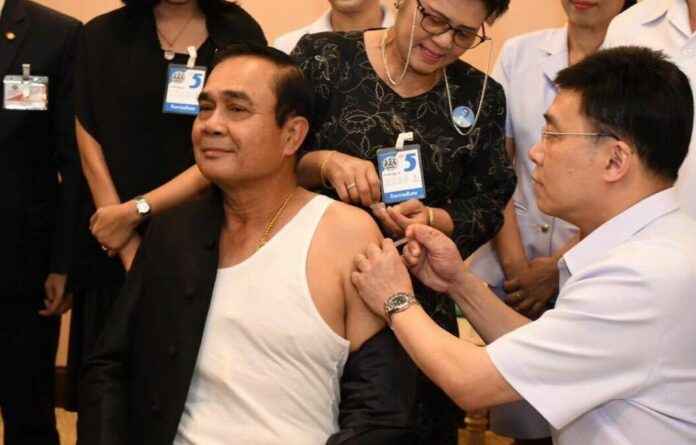
Curb Your Enthusiasm: Prayut Could Be ‘Too Old’ For Sinovac Jab

Gen. Prayut Chan-ocha gets a flu shot on May 30, 2017, at Government House.

BANGKOK — A senior health official on Tuesday poured cold water on Prime Minister Prayut Chan-o-cha’s pledge to be the first Thai to get the COVID-19 vaccine, citing his age.

Although PM Prayut volunteered to be the first to draw up his sleeve and get inoculated with a vaccine developed by Chinese firm Sinovac – the shipment of which is expected to arrive tomorrow – the jabs are recommended for those under the age of 59, said Supaporn Phumiamorn, Director of the Institute of Biological Products.

“Maybe he will get shot with another brand, like AstraZeneca,” she said by phone.

Read: Local Gov’t, Private Hospitals Blocked From Starting Vaccine Drive

It was health minister Anutin Charnvirakul who said on Monday that the 66-year-old Premier insisted on being the first person to get vaccinated, in order to raise confidence about the upcoming inoculation drive against COVID-19.

“He waved his hand and called me over. He said, ‘Noo, if I can get it, I’m getting it, so citizens can be reassured,’” Anutin said. Noo is Anutin’s nickname.

“We have to make it possible, and find the safest way for him to get vaccinated. This is like how other country leaders are getting vaccinated,” he went on. “It’s also for his safety, since government officials like him travel a lot and meet many people.”

Anutin said he didn’t want to set an exact time and date for Prayut’s jab. “Let’s not set a date. If I set a date, we get criticized as soon as we’re two minutes late.”

The first shipment of about 200,000 doses of vaccine are scheduled to arrive in Thailand on Wednesday, Feb. 24. The rest of the 2 million doses will arrive through April, government officials said.

The government has been criticized for delays in rolling out vaccines; inoculation for frontline health workers and vulnerable groups was supposed to start on Feb. 14, but the date has since been pushed back.

“Right now, we’re all working on the basis of fear,” Anutin told reporters. “We’re afraid the airplane’s engine won’t start on Feb. 24. So if the vaccines don’t come, it’s not the government’s fault, because we already did everything on our part.”

When asked when he would be getting the jab, the health minister said, “After my boss, of course.”

But Prayut’s volunteer spirit was soon blocked by Sophon Iamsirithaworn, director of the General Communicable Diseases Department, who told reporters that Sinovac doses will only be tributed to people between 18-59.

“We cannot give it to those under 18 or over 59, since there is no sufficient research data that can back it up,” Sophon said, adding that pregnant women will also be banned from getting the Sinovac doses out of health concerns.

True to his status as a politician, Anutin told reporters later on Tuesday that he merely communicated Prayut’s wish to be the first Thai national to get the vaccine – whether he’ll get it or not is not guaranteed.

“I’ve never said he will get inoculated with Sinovac’s vaccine,” Anutin said. “He was just expressing his wish, in order to make people confident in the vaccine’s safety. Everything will have to go through regulations. No exception.”

In an online statement published Tuesday morning, Prayut insisted the Sinovac shipment will arrive on time, but made no mention of when he’ll get vaccinated. 

“The vaccination will begin for intended target groups within three days,” Prayut said.

Advertisement

Protests Swell After Myanmar Junta Raises Specter of Force

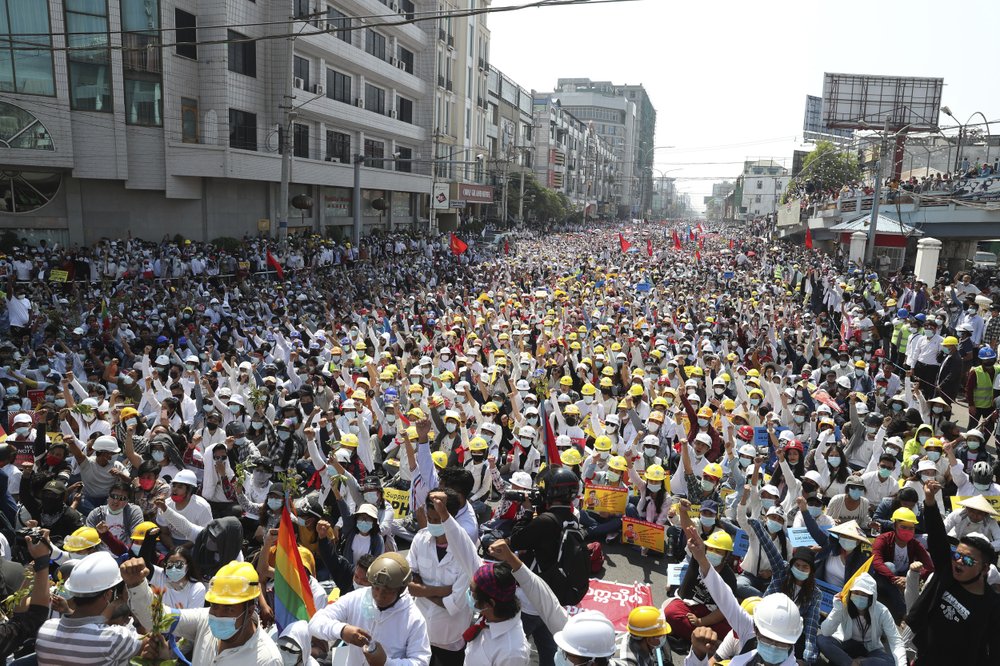
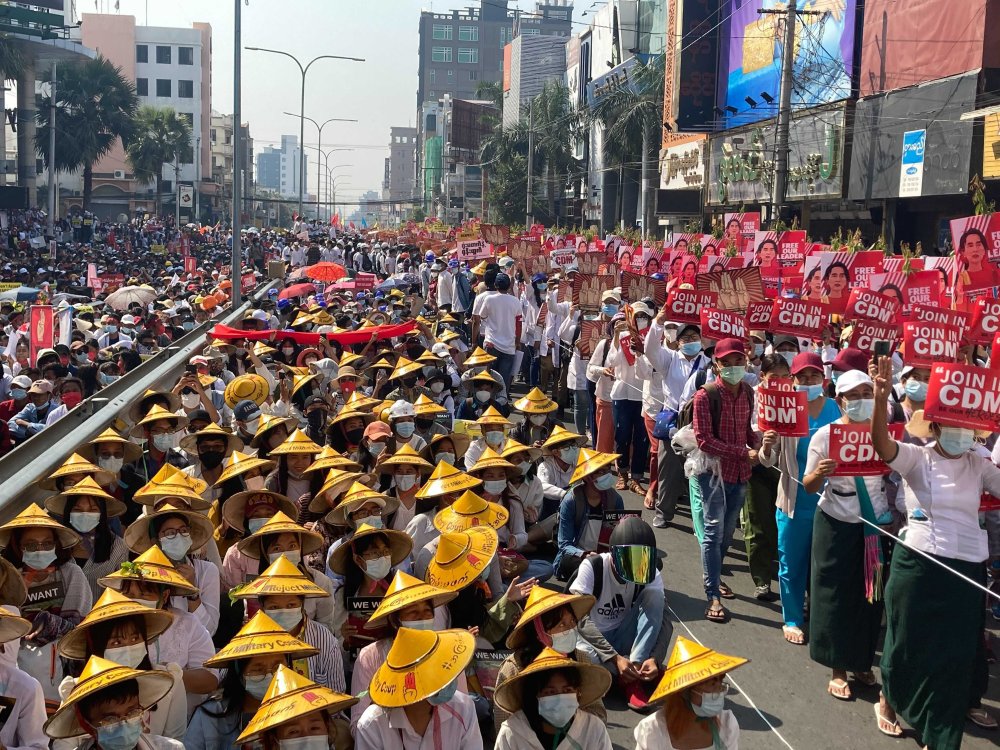
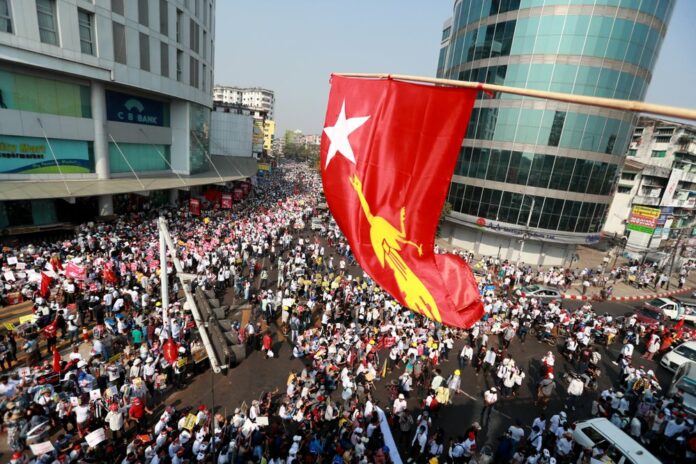
Anti-coup protesters gather outside the Hledan Centre while the flag of the National League for Democracy party is waved from an overhead roadway in Yangon, Myanmar Monday, Feb. 22, 2021. (AP Photo)

YANGON, Myanmar (AP) — Protesters gathered in Myanmar’s biggest city on Monday despite the ruling junta’s threat to use lethal force against people who join a general strike against the military’s takeover three weeks ago.

More than 1,000 protesters gathered near the U.S. Embassy in Yangon despite barriers blocking the way, but left to avoid a confrontation after 20 military trucks with riot police arrived nearby. Protests continued in other parts of the city, including next to Sule Pagoda, a traditional gathering point.

Factories, workplaces and shops were shuttered across the country Monday in response to the call for a nationwide strike. The closings extended to the capital, Naypyitaw.

The junta had warned against a general strike in a public announcement Sunday night on state television broadcaster MRTV.

“It is found that the protesters have raised their incitement towards riot and anarchy mob on the day of 22 February. Protesters are now inciting the people, especially emotional teenagers and youths, to a confrontation path where they will suffer the loss of life,” the onscreen text said in English, replicating the spoken announcement in Burmese.

1000 12 23
Anti-coup protesters raise their hands with clenched fists during a rally near the Mandalay Railway Station in Mandalay, Myanmar, Monday, Feb. 22, 2021. (AP Photo)

The junta’s statement also blamed criminals for past protest violence, with the result that “the security force members had to fire back.” Three protesters have been fatally shot.

Trucks cruised the streets of Yangon on Sunday night, blaring similar warnings.

The protest movement, which seeks to restore power to the elected government of Aung San Suu Kyi and have her and other leaders released from detention, has embraced nonviolence.

The nationwide strike was dubbed Five-Twos, for the five number twos in the numeric form of Monday’s date.

“I am joining the 22222 nationwide protest as a citizen of the country. We must join the protest this time without fail,” said 42-year-old Zayar, who owns a bottled water business in the capital. “So I’ve closed down my factory and joined the demonstration.”

1000 3 24
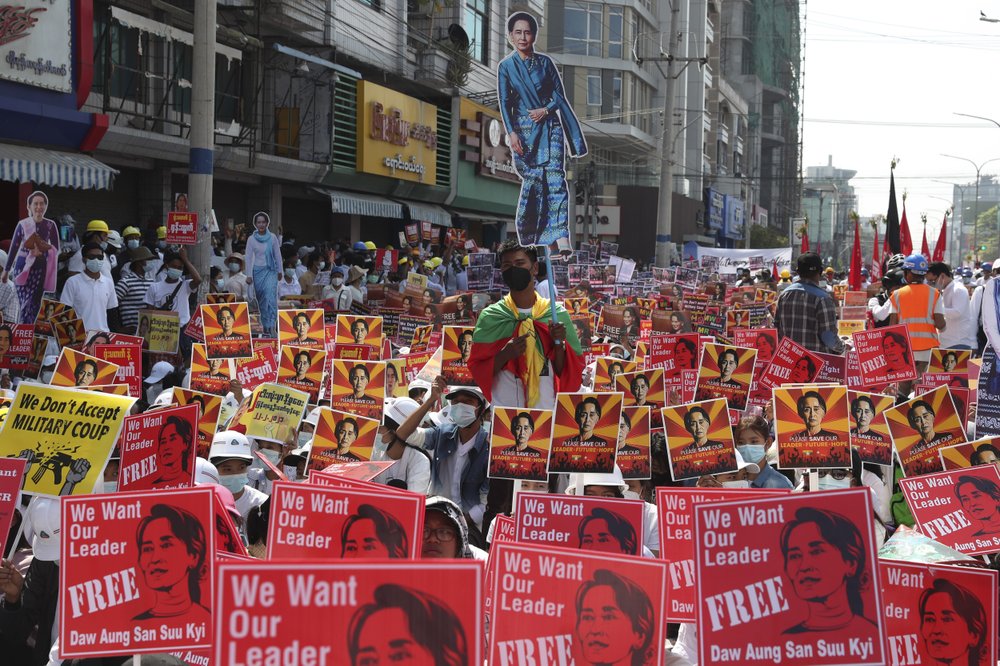
Anti-coup protesters hold up posters with images of deposed Myanmar leader Aung San Suu Kyi during a rally near the Mandalay Railway Station in Mandalay, Myanmar Monday, Feb. 22, 2021. (AP Photo)

Zin Mi Mi Aung, a 27-year-old saleswoman, also joined the strike.

“We don’t want to be governed by the regime,” she said as people marched and chanted behind her. “We will fight against them until we win.”

Thousands of people gathered in the capital’s wide boulevards, many on motorbikes to allow swift movement in the event of any police action.

Reports and photos of protests in at least a dozen cities and towns were posted on social media. Overhead views, some shot from drones, showed massive crowds in six cities appearing to number in the tens of thousands.

There were pictures of a particularly colorful event in Taunggyi, the capital of Shan state, where scores of small red hot-air balloons were set aloft. A bigger one was adorned with a drawing of the three-finger salute adopted by the anti-coup movement. The city is famous for its annual hot-air balloon festival.

1000 5 13
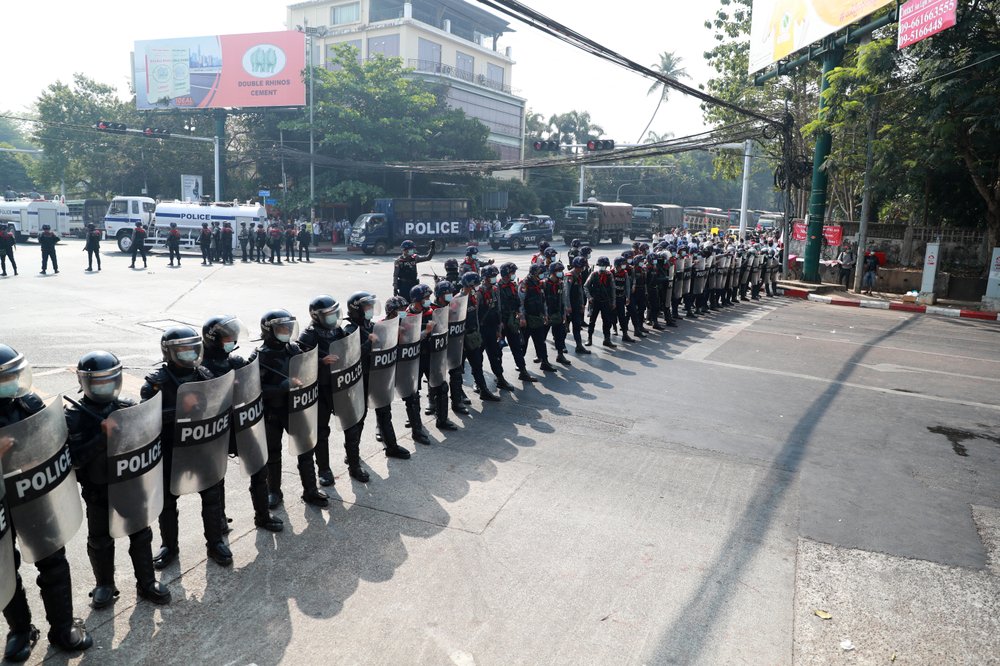
Police security forces form a line to block a road near the U.S. embassy in Yangon, Myanmar Monday, Feb. 22, 2021. (AP Photo)

In Pyinmana, a satellite town of Naypyitaw, police chased people through the streets to arrest them. Reports on social media, including from worried family members, said police had arrested 200 people or more, mostly young people, and sent them to a military base. If confirmed, it would be the biggest mass arrest since the protests started.

The general strike was an extension of actions called by the Civil Disobedience Movement, a loosely organized group that has been encouraging civil servants and workers at state enterprises to walk off their jobs. Many transport workers and white collar workers have responded to the appeal.

On Saturday, a General Strike Committee was formed by more than two dozen groups to provide a more formal structure for the resistance movement and launch a “spring revolution.”

The United States and several Western governments have called for the junta to refrain from violence, release detainees and restore Myanmar’s elected government. On Monday, the U.S. said it was imposing sanctions against more junta members because of killings of peaceful protesters by security forces.

1000 10 5
Anti-coup protesters fill the main road during a rally in Mandalay, Myanmar Monday, Feb. 22, 2021. (AP Photo)

Lt. Gen. Moe Myint Tun and Gen. Maung Maung Kyaw add to other military leaders and entities facing U.S. sanctions, and Britain and Canada have taken similar action since the military takeover.

The U.S. condemned the attacks on protesters, U.S. Secretary of State Antony Blinken said in a statement vowing to take further action if more violence occurred. “We call on the military and police to cease all attacks on peaceful protesters, immediately release all those unjustly detained, stop attacks on and intimidation of journalists and activists, and restore the democratically elected government,” he said.

Myanmar has been ruled by the military for most of its history since gaining independence from Britain in 1948. A gradual move toward democracy in the past decade allowed Suu Kyi to lead a civilian government beginning in 2016, though the generals retained substantial power under a military-drafted constitution.

Her party won last November’s election by a landslide, but the military stepped in before Parliament was to convene on Feb. 1, detained Suu Kyi and other government officials and instituted a one-year state of emergency. It contends the vote was tainted by fraud and plans to reinvestigate those allegations before a new election is held.

Advertisement

Huawei: COVID-19 Closed Many Doors, but Innovation Offers a Window of Hope

Breakthroughs in technical innovation promise to make life better, businesses smarter, and the world more inclusive

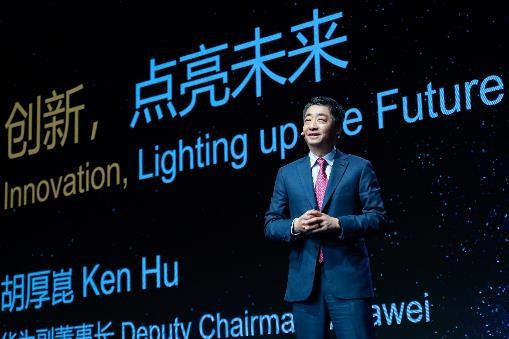
[Shanghai, February 23, 2021] At the opening ceremony of Mobile World Congress Shanghai 2021, Huawei’s Deputy Chairman Ken Hu spoke about the huge impact that COVID-19 has had on countries, enterprises, and people around the world, as well as the role technology plays in combatting the pandemic.

“Innovation isn’t just about solving the challenges we face today,” said Hu. “It’s about lighting up tomorrow. Once we get the pandemic under control, we need to think hard about how we can innovate to improve quality of life, make businesses smarter, and create a more inclusive world.” He explained that, while unequal access to digital technology and digital skills has widened the digital divide, the pandemic has made the situation significantly worse. “We have to focus innovation on bridging the gap between the haves and have-nots, and on driving digital inclusion”.

COVID-19 has created many new requirements for digital infrastructure. Over the past year, Huawei has worked closely with carriers to ensure the stable operations of more than 300 networks across 170 countries. In Indonesia, Huawei employed a new digital delivery technology to rapidly deploy over 50,000 base stations. In Ningxia, China, Huawei’s integrated routers enable multi-cloud access for enterprise users, helping them move to cloud more rapidly – and at lower cost. “As we look towards recovery,” Hu said, “we need to ensure that innovation isn’t just about today. It’s about lighting up tomorrow and creating greater social value.”

Innovating for better quality of life

During his keynote, Hu showed the audience Huawei’s Cyberverse app, an advanced AR application that demonstrates how 5G networks, 5G devices, and AR technology can converge to create a more immersive virtual experience, whether it be a lifelike forest or a simulation in outer space. The new app makes it possible to seamlessly integrate virtual and physical realities with high-precision, centimeter-level positioning capabilities, massive computing power, and high-bandwidth transmission through 5G. Huawei expects Cyberverse to create many new growth opportunities in multiple sectors, including education, entertainment, tourism, transportation, and navigation.

Innovating for smarter business

In recent years, technologies like 5G, cloud, and AI have begun playing an important role in manufacturing, accelerating the transition to more intelligent and flexible operations. Hu explained how Huawei’s own Dongguan South Factory is currently using 5G networks with cloud-based AI applications in its 5G smartphone production lines to drive huge productivity gains.

Opportunities abound in the digital transformation space. Huawei predicts that, by 2025, 97% of all large companies will use AI. Other estimates for 2025 include that 55% of China’s entire GDP will be driven by the digital economy, and 60% of global carrier revenue will be derived from industry customers.  Hu noted that, to achieve these projections, “all industries should focus on improving their capabilities, building out the ecosystem, and creating value with digital technology.”=

As an ICT infrastructure provider, Huawei has been focusing heavily on 5G innovation to help drive the digital transformation of all industries. Hu noted that Huawei’s innovation is focused on three areas: technology, products, and applications.

  • Technology: Huawei’s new 5G Super Uplink solution delivers unmatched uplink speeds, helping companies break through a major bottleneck in industrial Internet.
  • Products: Huawei’s fully converged 5G edge computing products have sped up deployment of edge computing sites by a factor of 10.
  • Applications: Huawei’s Wireless X Labs incubates 5G applications with partners across a wide range of domains like manufacturing, healthcare, finance, and transportation. With these partners, Huawei is exploring how 5G can help different industries go digital more effectively.

Huawei is also working closely with customers and partners to drive innovation in 5G. The company is currently working with ecosystem partners to develop devices targeted at meeting specific industry needs. Through joint innovation and strategic partnerships with its customers, Huawei aims to drive 1 to N expansion of 5G applications for business. The company is also working to coordinate 5G communication and industry standards to more rapidly scale up 5GtoB applications.

Hu reported that, in collaboration with its partners and regional carriers, Huawei has signed more than 1,000 contracts for industrial 5G applications in more than 20 industries.

Innovating for a more inclusive world

While pivoting to address the pandemic, Hu warned that the world faces a real risk of K-shaped economic recovery once COVID-19 is brought under control. He predicts an increasingly wide divide between organizations and people who actively benefit from digital technology and those who do not. In order to avoid unbalanced development, bridge the digital divide, and promote inclusive growth, Hu emphasized that the focus of innovation needs to shift to producing greater social value.

The company has put its money where its mouth is. Through a partnership with Ghanaian operators on a rural network infrastructure project, Huawei currently plans to deploy more than 2,000 RuralStar base stations in remote regions around the country. This will help increase mobile coverage in Ghana from 83% to 95% and bring previously unconnected communities online for the first time.

Similarly, new AI services deployed on HUAWEI CLOUD are being used to help a small company in Malaysia double its production capacity without increasing headcount during the pandemic.

Hu also shared how 5G networks have been used to enable remote ultrasounds and CT scans that help address imbalanced distribution and shortages of medical resources.

Closing out his speech, Hu stressed that, while the pandemic closed many doors, innovation has opened new windows of hope. He concluded that, through ongoing innovation, Huawei will continue to pursue open partnerships with its customers and partners to help industries go digital and make life better, businesses smarter, and the world more inclusive.

At this year’s MWC Shanghai, Huawei is showcasing in Hall N1 seven new ICT network concepts, including Wireless 1+N, Home+, All-optical Bases, and Cloud-network Smart Connections, as well as nine new products and solutions, including ultra-simplified sites, gigabit home broadband, premium private lines, and intelligent cloud networks.

MWC Shanghai 2021 runs from February 23 to February 25 in Shanghai, China. Huawei’s products and solutions can be found at booth E10, E50, and E90 in Hall N1 in the Shanghai New International Expo Centre (SNIEC). For more information, please visit https://carrier.huawei.com/en/events/mwcs2021.

About Huawei

Founded in 1987, Huawei is a leading global provider of information and communications technology (ICT) infrastructure and smart devices. We have more than 194,000 employees, and we operate in more than 170 countries and regions, serving more than three billion people around the world.

Our mission is to bring digital to every person, home and organization for a fully connected, intelligent world. To this end, we will drive ubiquitous connectivity and promote equal access to networks; bring cloud and artificial intelligence to all four corners of the earth to provide superior computing power where you need it, when you need it; build digital platforms to help all industries and organizations become more agile, efficient, and dynamic; redefine user experience with AI, making it more personalized for people in all aspects of their life, whether they’re at home, in the office, or on the go.

For more information, please visit Huawei online at www.huawei.com or follow us on:

http://www.linkedin.com/company/Huawei

http://www.twitter.com/Huawei

http://www.facebook.com/Huawei

http://www.google.com/+Huawei

http://www.youtube.com/Huawei

For media contact, please reach Carl Byoir & Associates:

Suthatip Boonsaeng (08-7685-1695, 0-2627-3501 ext. 102) [email protected]

Sorawis Jumnansilp (08-1494-9339, 0-2627-3501 ext. 211) [email protected]

Advertisement

ONDE Push Thailand Towards ASEAN Digital Hub With National Policy

“We will collaborate with the private sector to focus on sustainable development”: ONDE, MWC Shanghai 2021

22nd February 2021 – National Digital Economy and Society Commission, Ministry of Digital Economy and Society, Thailand (ONDE) said in “MWC Shanghai 2021” event that it will focus on Digital Transformation and improving Digital Economy in Thailand, as well as helping Thailand become a Digital Hub in ASEAN, by utilizing national policy and collaboration with the private sector to lay the foundation of digital infrastructure for 5G, internet, and network innovation for sustainable future.

As the world embarks on recovery from the pandemic, there is growing recognition of the need for a green and inclusive growth. The digital technologies can and will play a critical role to pave the way to net-zero emissions and bring equitable education to more beneficiaries. To tackle the challenge, Huawei, with the participation of UNESCO, and co-sponsored by GSMA, the School of Economics, Fudan University, and The Paper,  hosted “Connected for shared Prosperity”, an online and offline forum aiming to advance sustainable development during the Mobile World Congress Shanghai 2021.

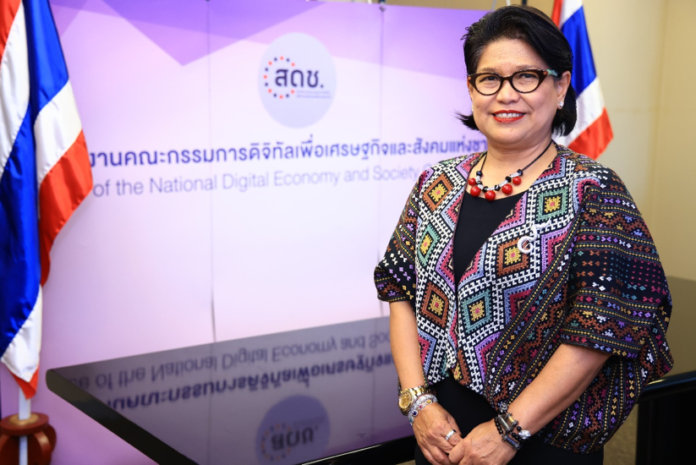
With Thailand having experienced one of the highest digital development advancements, Mrs. Vunnaporn Dehastin, Secretary-General of the National Digital Economy and Society Commission, gave the honor to provide a speech on “National Policy Driving Digital Technology and Sustainable Development: Building Digital Hub of ASEAN”, joined by government representatives from other countries. She also elaborated on Thailand’s policy to advancing the country to become a digital hub in ASEAN, the vision behind it and the aims to boost economy, improve social well-being, and achieve sustainable development.

“We have developed Thailand Digital Economy and Society Development Plan from a national level. This plan acts as a blueprint to revolutionize government operations, business practices, and people’s lifestyle. The plan covers building a country-wide, high-capacity digital infrastructure to provide accessible and affordable internet, digital transformation through initiatives such as Digital SMEs, Digital Agriculture, and Digital Industry, and a collaboration with Huawei on opening 5G Ecosystem Innovation Center (EIC) in Bangkok last year. This center is as a sandbox for digital innovations of 5G applications and services across various industries. These innovations will create new business opportunities for SMEs, startups and educational institutions, paving the way to achieve Thailand 4.0 and build the digital hub in the ASEAN region. This goal must be achieved through cooperation between the public and the private sectors, at both domestic and international level. Together, we can overcome the challenges and build a better future.” she said.

Regarding sustainable development, Mrs. Vunnaporn stated that digital technologies have positively impacted the society, especially during and after the pandemic. Digital economy promises new ways for business to grow, brings social well-being, and aligns with Thailand sustainable development goals and global trends which prioritize tackling climate change, reducing carbon emissions, pursuing new renewable energy resources, and supporting circular economy through green ICT solutions.

Based on the Speedtest Global Index 2020, Thailand ranks at the top out of 176 countries in fixed broadband internet speed testing, also the first country in South East Asia to launch commercial 5G services. In addition, there are many initiatives the government has launched to improve public service, such as Government Data Center and Cloud service (GDCC) project, aiming to improve the efficiency and decrease the government budget for digital infrastructure development. Other initiatives include the Pracharat Internet Project, installing free high-speed internet networks through a total of 24,700 with more than 80,000 km of fiber optic, and Digital Community Center Project, with 2,277 sites in 77 provinces, and over 2,300 volunteer staff.

The “Connected for shared Prosperity” offline and online forum, hosted by Huawei, saw Catherine Chen, Corporate Senior Vice President and Director of the Board, Huawei give an opening speech. She was joined by representatives from other countries, experts in innovation and digital technology. The purpose of the forum is to tackle climate change and advance sustainable development during the Mobile World Congress Shanghai 2021, with the participation of UNESCO, and co-sponsored by GSMA, the School of Economics, Fudan University, and The Paper. In addition, Huawei would like to promote Thailand as a digital transformation role model for other countries in South East Asian region.

About Huawei

Founded in 1987, Huawei is a leading global provider of information and communications technology (ICT) infrastructure and smart devices. We have more than 194,000 employees, and we operate in more than 170 countries and regions, serving more than three billion people around the world.

Our mission is to bring digital to every person, home and organization for a fully connected, intelligent world. To this end, we will drive ubiquitous connectivity and promote equal access to networks; bring cloud and artificial intelligence to all four corners of the earth to provide superior computing power where you need it, when you need it; build digital platforms to help all industries and organizations become more agile, efficient, and dynamic; redefine user experience with AI, making it more personalized for people in all aspects of their life, whether they’re at home, in the office, or on the go.

For more information, please visit Huawei online at www.huawei.com or follow us on:

http://www.linkedin.com/company/Huawei

http://www.twitter.com/Huawei

http://www.facebook.com/Huawei

http://www.google.com/+Huawei

http://www.youtube.com/Huawei


For media contact, please reach Carl Byoir & Associates:

Suthatip Boonsaeng (08-7685-1695, 0-2627-3501 ext. 102) [email protected]

Sorawis Jumnansilp (08-1494-9339, 0-2627-3501 ext. 211) [email protected]

Advertisement

Year of Dissent: Activists Reflect on Anniversary of Street Protests

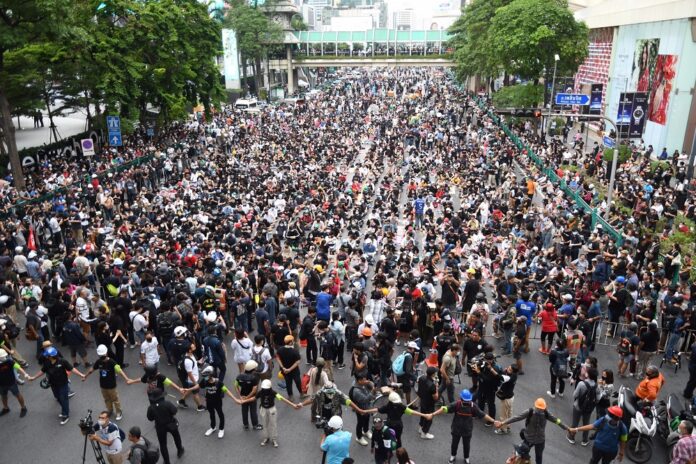
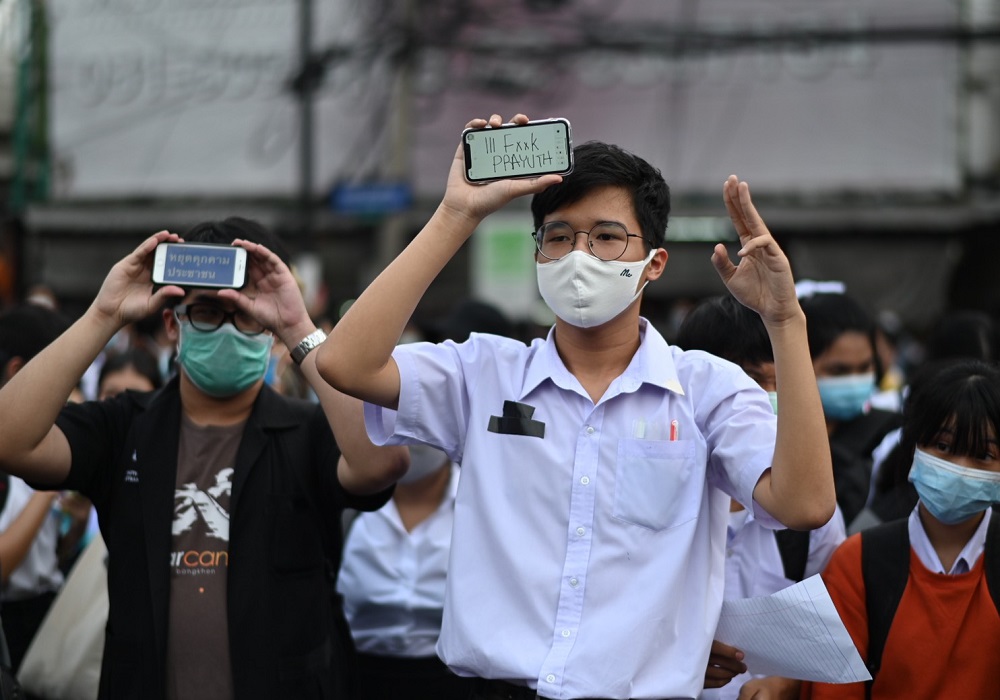
Student-led demonstrators gather at Ratchaprasong Intersection on Oct. 25, 2020.

Top: Student-led demonstrators gather at Ratchaprasong Intersection on Oct. 25, 2020.

BANGKOK — The chain of consequences that led from this day a year ago is certainly incredible in every sense of the word.

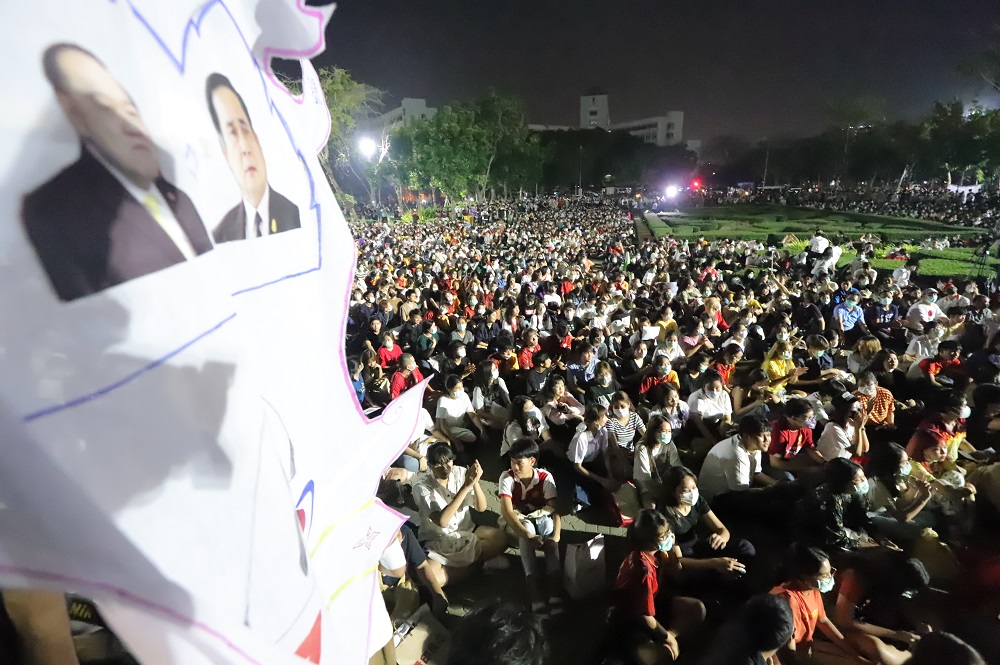
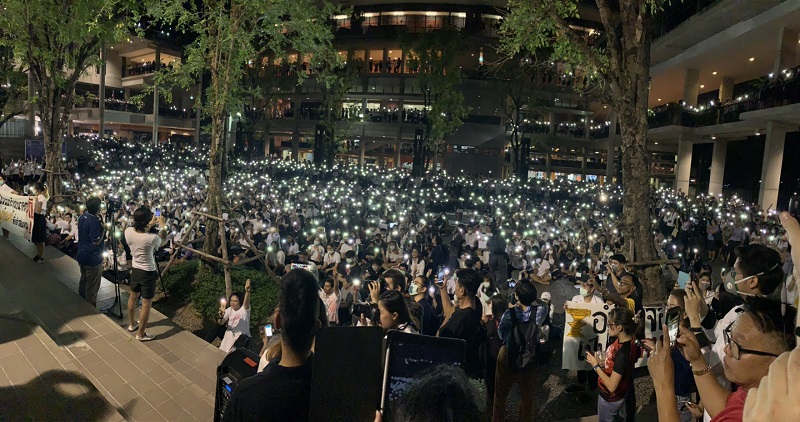
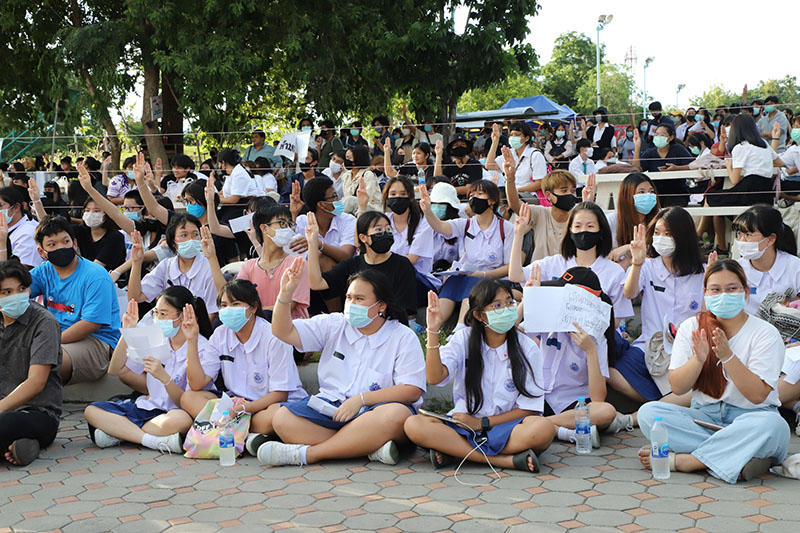
What started as a small protest against the dissolution of the Future Forward Party in several universities soon snowballed into the largest street protests since the military seized power in 2014.

Calls for justice on behalf of the party, which enjoyed widespread support among the younger voters, also evolved into the once-unthinkable quest to debate the royal institution publicly and make it more accountable under the law.

But while all of the activists interviewed for this story agree that they have achieved in raising political consciousness and sparking conversations about monarchy, they differed in the lessons learned from a full year of resistance. Some say the movement needs to be more “leaderless,” others suggest an overhaul of strategies and priorities.

“We have journeyed for a long way,” Thammasat University student and activist Benja Apan, 22, said by phone. “Even though we have disappeared for some months because of COVID, many groups were formed. There are pro-democracy networks in provinces outside Bangkok, too. We have come so far that we have crystallized our three demands.”

The demands are PM Prayut Chan-o-cha’s resignation, charter amendments, and reforms of the monarchy. Benja is a member of the United Front of Thammasat and Demonstration, who organized many of the rallies in the past year.

“One year might be a long time, but we will keep going forward. The awareness about democracy is increasing,” Benja said. “In the past, people wouldn’t dare discuss the monarchy. But people are more conscious now and they’re talking about it more. They can talk about it on dinner tables now.”

EQZWzrMUwAEuqq3 6
Anti-government protest at Thammasat University in Pathum Thani province on Feb. 26, 2020.

Jutatip Sirikhan, a 22-year-old leader of the Free Youth movement, also said the success of the past 12 months was to awaken the political awareness among many groups of Thai society, not just the new generations.

“It makes people interested in problems in our politics, and issues about the monarchy,” said Jutatip, whose organization is responsible for some of the largest protests in the past months.

Free Youth drew controversy in December when it appeared to support communist ideologies, causing allies like the United Front of Thammasat and Demonstration to distance themselves from the activists.

But the group recently clarified it stood for “liberal democracy” and announced it will return to organizing protests, suggesting that the rift has been mended.

บรรยากาศการอภิปรายไม่ไว้วางใจรัฐมนตรีเป็นรายบุคคล 25 2
Protest at Mahidol University Salaya Campus in Nakhon Pathom province on Feb. 25, 2020.

Jutatip the Free Youth leader said she wished the movement relies less on a handful of leaders and expands more in the horizontal way, since many activists have been bogged down by multiple criminal charges for their roles in the protests, including royal defamation.

“Security officers can arrest people who played a large role [in protests], yet people still have to rely on the leaders. This is a problem right now,” Jutatip said. “I want to see the movement truly belonging to the mass. I want everyone to be their own leaders, like what happens in Burma. The movement has to evolve this year.”

Benja, the activist from the Thammasat United Front, said she’s seen many flaws in the past year that she and her peers could learn from, like internal conflicts among different pro-democracy groups, inadequate emphasis on nonviolence, and putting too much focus on monarchy reforms at the expense of two other major demands.

“We might have focused too much on attacking the monarchy, to the point that we neglect our first goal, which is Prayut must go,” Benja said.

S 20603184 copy
Students protest on July 31, 2020 at Silpakorn University.

“This year, we will set new priorities. We will adapt our strategies. We will eat the meal one spoon at a time. We will increase the push for [monarchy] reforms, but we will have to get Prayut to leave first.”
Outside Bangkok, the political awakening has been felt the strongest in the northeast, where 15 out of 20 provinces in the region witnessed at least one protest by student-led groups in the past year.

Phongsatorn Tancharoen, a 19-year-old student activist at Maha Sarakham University, said the level of political awakening in his home province and the Isaan region in general is high, yet they are often ignored by Bangkok-based activist groups.

Maha Sarakham is more than 450 kilometers from the capital. Phongsatorn said the gap, physical and ideological, fails to push the grievances of local communities into national movement.

“There’s a lack of cooperation between Bangkok and the regional levels,” Phongsatorn said by phone. “We still lack a discussion. We still miss the points that can connect our groups together.”

S 3940428
Anti-government protest in Bangkok on Oct. 19, 2020.

He went on, “In many areas, people suffer from crop prices, environmental issues, and the difficulty that Isaan people face when they move in to work in the capital. Yet these issues are not picked up.”

For Chotisak Onsoong, a 39-year-old veteran campaigner who has been protesting military influences in politics since the coup in 2006, said he wishes the student activists are aware that the fight will take longer than many of them had thought.

“Even if they lose in this round, there will be new rounds of fight, in the next 5 or 10 years,” Chotisak said. “Of course, one day they will win, but that may not happen in this round.”

Although Chotisak acknowledged that the student movement achieved a notable feat in popularizing the issue about the monarchy, he said the focus on peaceful methods of resistance is lacking.

“I think their biggest success is making the monarchy a topic that people can talk about more, but the problem is the issue about nonviolence,” he said.

Advertisement

Police ‘Have No Duty’ to Explain ‘Elephant Ticket’ Scandal

Demonstrators toss mock “Elephant Tickets” during an anti-government rally in front of the parliament on Feb. 20, 2021.
Demonstrators toss mock copies of “Elephant Tickets” during an anti-government rally in front of the parliament on Feb. 20, 2021.

BANGKOK — Police top brass remained silent Monday on the bombshell revelation by an opposition MP that police officers can advance up the ranks just by securing a letter signed by powerful figures, without having to go through the formal channels.

Move Forward Party lawmaker Rangsiman Rome showed evidence of the shortcut, known as “The Elephant Ticket,” during a censure debate on Friday, and accused Prime Minister Prayut Chan-o-cha and his deputy Prawit Wongsuwan of turning blind eye to the alleged corruption. But a police spokesman said the force isn’t required to provide any response.

“The opposition MP made the accusations against the government, so the police have no duty to respond,” Col. Kissana Phathanacharoen said. “However, the police may verify the content and authenticity of the police appointment documents published online.”

Another police spokesman, Maj. Gen. Yingyot Thepchamnong, turned down the request for comments about Rangsiman’s accusations, because he was seeing a doctor.

“I’m not available right now,” Yingyot said, before hanging up the phone.

S 5963833
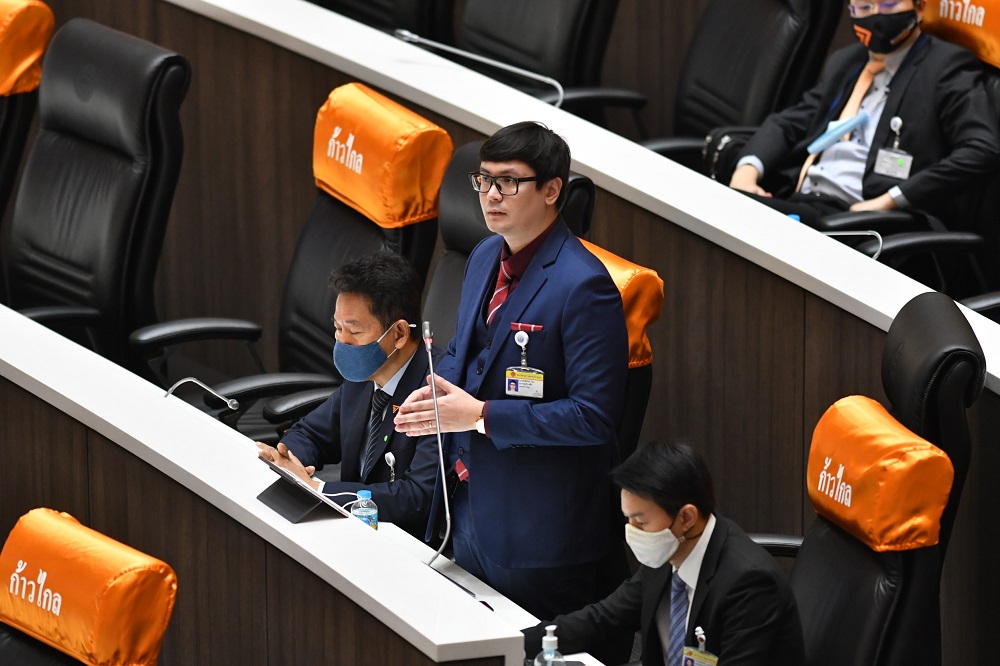
Move Forward MP Rangsiman Rome speaks at the Parliament on Feb. 19, 2021.

Police reform activist Wirut Sirisawasdibut said he is not surprised by Rangsiman’s revelation.

“What’s the fuss about it?” Wirut said. “It’s already existed for decades already, but it was only presented with evidence [by Rangsiman]. Fortune favors the bold, if you don’t pay for your position or approach your boss, you wouldn’t get it.”

Wirut, who served as a police colonel, said the current police appointment regulation is vaguely written and can be easily exploited.

“They want to keep it open,” Wirut said. “What defines competency? They could just say this police officer has the ability to hold this position without getting tested or spending enough time in tenure.”

During Friday’s no-confidence debate, Rangsiman said 20 police officers were exempted from the official criteria for a promotion and fast tracked to a higher position after their names were listed in “The Elephant Ticket.”

The ticket is said to be a document signed by Royal Household Bureau sec-gen Sathitpong Sukvimol, who asked a certain institution for permission to vault those men up their ranks.

The promotions were granted, even though Sathitpong – whose previous positions include the head of the Crown Property Bureau – does not currently have any formal position in the police force.

Mentions of the “Elephant Ticket” appear to be mentioned for the first time in an investigative report by MGR Online news agency back in 2017.

“The best kind of Ticket, or promotion recommendation letter, that has never been refused, no matter what the requested positions are, is called Elephant Ticket,” the article said. “This fact is only known within the police circle.”

At Friday’s debate, Rangsiman presented a similar scheme run by Sathitpong’s brother, Maj. Gen. Torsak Sukvimol, who now serves as the commander of the police’s Central Investigation Bureau. He’s also the chief of the Ratchawallop Police Retainers, King’s Guard 904.

He showed a document signed by Torsak asking then-national police commissioner Chakthip Chaijinda to promote three police officers, citing the fact that they have completed the Royal Volunteer Spirit 904 training course – a program initiated by King Vajiralongkorn.

Rangsiman was forced to mention names by their initials during his speech when presiding House Speaker Supachai Phuso said he is not allowed to reference individuals outside the parliament.

สาดสี2 1
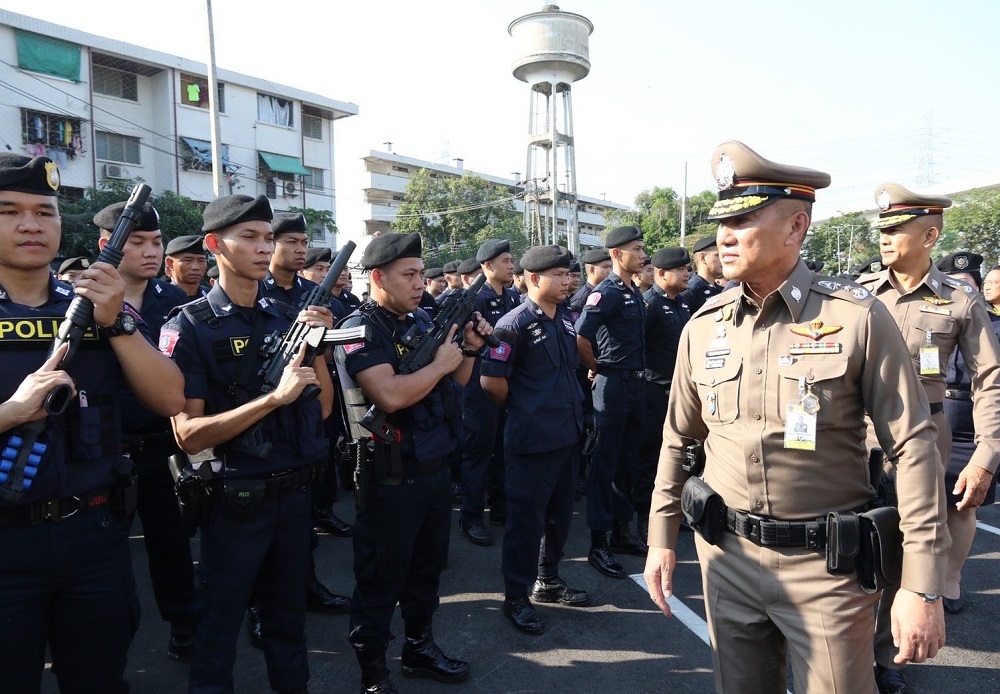
Police present their weapons during an inspection in Bangkok on Dec. 23, 2019.

He was eventually ordered by Supachai to stop his speech after multiple protests by coalition lawmakers, but he continued the presentation at a news conference outside the chamber. Due to legal concerns, Khaosod English cannot discuss Rangsiman’s allegations or the documents he cited in full details, though they were readily available on social media.

A government aide already threatened to press royal defamation charges against Rangsiman for making references to the monarchy.

Prayut, who chairs the Police Commission, which oversees police appointments, responded to Rangsiman’s accusations by saying every appointment under his oversight was done according to laws and police regulations.

However, he did not directly address the “Elephant Ticket” itself.

Pro-democracy activists are set to hold a rally near the national police headquarters on Tuesday evening to call police officers to join force against the alleged corruption scheme within their ranks.

Speaking at a news conference earlier today, police spokesman Yingyot said he does not believe that there will be any officers joining the protest at Ratchaprasong Intersection.

“I think they know what is appropriate or not,” Yingyot said. “Personally, I believe there will be no officers joining, but they may observe it under their duties.”

Advertisement

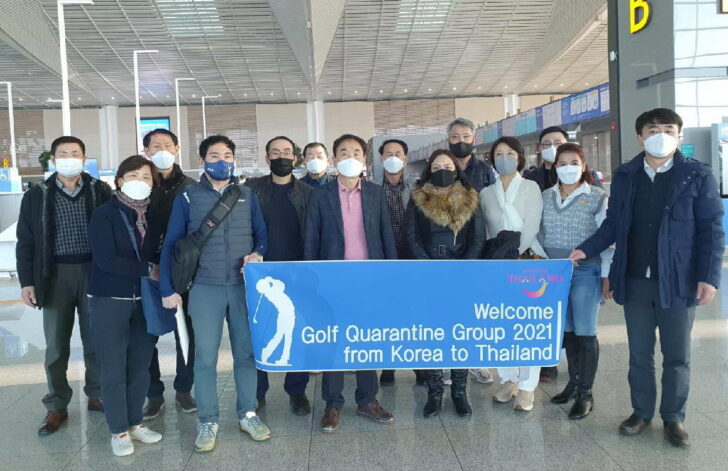
South Koreans Arrive for Thailand’s First ‘Golf Quarantine’

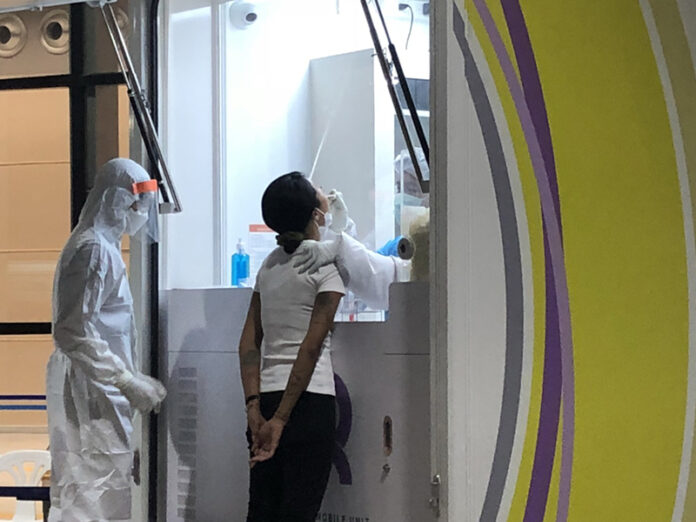
A woman destined for Thailand’s first “villa quarantine” gets a COVID-19 test on Feb. 21, 2021 at Phuket International Airport.

BANGKOK — The government pandemic center announced Monday that a group of 41 South Koreans have landed in Thailand for what is termed as the country’s first ever “golf quarantine.”

The 41 South Korean nationals are currently quarantined at Artitaya Golf Country Club in Nakhon Nayok, having arrived on Thursday,  a center spokeswoman said. The travelers will be confined in their rooms for only five days and allowed to use the country club’s golfing facilities afterward, if they test negative for the coronavirus .

Pandemic center spokeswoman Apisamai Srirangsan said the government is open to suggestions  quarantine experience that would be attractive to foreign travelers.

“Business owners can suggest other quarantine ideas, and even arrange for food delivery and selling items in the quarantine area,” Apisamai said at the news conference. “With this system, the economy can develop while following safety measures.”

Quarantine tourism for the ultrarich travelers appears to be underway. The pandemic center announced last week that a group of around 70 “international socialites” will land in Phuket as part of a travel bubble. On Sunday, 59 of them already arrived on the island via two flights: a private jet carrying 13, and a chartered flight carrying 46, officials said.

The group will undergo a luxury “villa quarantine” at Sri Panwa Resort, whose owner made news in September for lashing out at pro-democracy demonstrators. The cost wasn’t mentioned.

นักกอล์ฟจากเกาหลี 728x471 1
A photo of South Koreans arriving for Thailand’s first Golf Quarantine group released by the government on Feb. 22, 2021.

The border remains closed to tourism in general, however. Although several trade federations have called for the border to reopen to foreign travelers who are already vaccinated against COVID-19, the government has yet to make any formal decision on the matter.

Market Cluster

Health officials also announced Monday that an active case search in Pathum Thani covering 13,000 people have turned up at least 430 infections. Most of them, 413, were linked to an outbreak at Pornpat Market in the province.

But the case number nationwide is falling. According to the coronavirus response center, Thailand logged 89 new infections as of Monday, 73 of them local and the rest found in quarantine for arrivals from overseas.

“We are seeing infections in [just] two digits per day now,” Apisamai said.

Of these numbers, 31 cases were found in Samut Sakhon, 11 in Tak, and 9 in Pathum Thani.

The infections in Tak were traced to a trucker who transports items between Thailand and Myanmar.

Apisamai said markets nationwide should conduct tougher social distancing and screening measures. Many markets currently do not require customers to check in via the government’s app for COVID-19 tracking, or Thai Chana.

Advertisement

‘Miss Grand Mexico’ Criticized For Posing With Buddha Image

BANGKOK — Some of the devout Buddhists on Monday are finding fault with a Mexican beauty queen who took photos and a video of her in a swimsuit next to a Buddha image.

Miss Grand Mexico Angela Yuriar, 19, posted the video on Sunday with the caption, “Thailand here we go,” though she later deleted it. Yuriar is set to attend The Miss Grand International 2020 pageant in Bangkok next month.

“Due to her ignorance of Buddhist culture, she wore a swimsuit and took photos with the Buddha image, creating a scandal about decorum and religious sensitivity,” Beng Nang Ngam, a beauty pageant fanpage, wrote online. 

“Due to her lack of understanding about religion, I think she has to come out and say something. But still sending her our support!”

Hardline Buddhist groups have often expressed outrage against foreigners using the sacred image of the Buddha as kitschy souvenirs, tattoos, or decorative items. A well-funded campaign, called Knowing Buddha, also urges tourists not to buy Buddha images to be used back home as decorations.

“In her country, it might be normal, but here it’s very inappropriate. I saw that once they used the Buddha’s head to make an ashtray. We have to explain to them and they will understand,” Facebook user Here Nat wrote in a comment under a news article.

However, some pointed out that according to Buddhist teachings, the Buddha himself had asked his followers not to worship him or turn him into an idolatry image.

“If we go back in time and tattle to the Buddha, he wouldn’t be angry,” user Chetsada Thamchaikul wrote in a comment. “He rejected worshiping the image. His representation is the Dhamma. We are the ones who created such rituals to worship the person instead of his teachings.”

The 8th edition of the Miss Grand International pageant will take place at Show DC in Bangkok on March 27. It was supposed to be held last year, but postponed due to the coronavirus pandemic. The contestants are expected to start arriving in Bangkok on Feb. 28.

The current titleholder of the Thailand-based franchise is Valentine Figuera of Venezuela. Thailand’s representative in the pageant is Patcharaporn “Nam” Chantarapadit

Advertisement

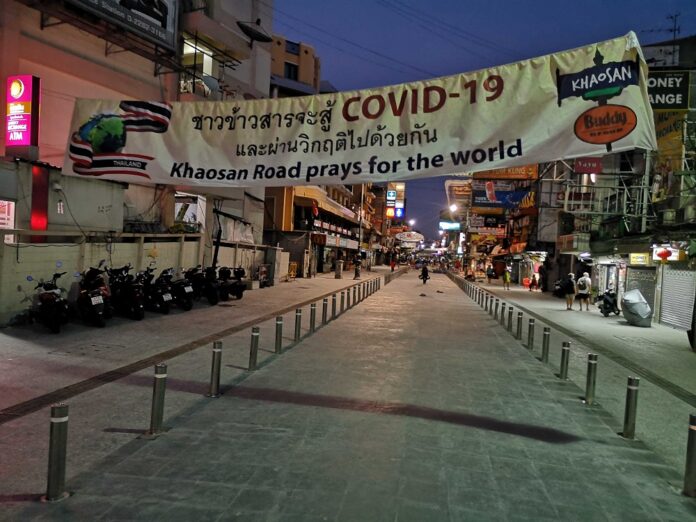
Bangkok Ban on Booze in Restaurants Lifted, Bars Reopen

Khaosan Road is seen on Apri 6, 2020.

Major update: The Centre for Covid-19 Situation Administration approves the proposal to reopen bars and allow alcohol to be sold in restaurants in Bangkok, starting on Tuesday, though they will have to close by 11pm.

BANGKOK — The Centre for Covid-19 Situation Administration, or CCSA, is set to discuss on Monday whether bars in Bangkok will be allowed to reopen and a ban on alcohol sales in restaurants lifted.

The announcement was made by Prime Minister Prayut Chan-o-cha himself, who wrote online Sunday that he’s aware the restrictions were having an impact on small enterprises in the capital.

“One of the issues to be deliberated is the easing of restrictions on consumption of alcohol in restaurants and reopening of nightlife establishments,” Prayut said. “The meeting will discuss this matter in the most careful manner, since it’s an issue that affects many small businesses, restaurants, and business operators.”

The ban was imposed in early January in a bid to curb the new wave of coronavirus infections, which resurfaced in Samut Sakhon province in late December.

The impact is believed to be devastating for many businesses in Bangkok, who were already left struggling in the pandemic throughout 2020, though a number of establishments have begun to serve alcohol discreetly in recent weeks.

Alcohol trade groups have repeatedly urged the government to lift the ban. But health authorities insist the shutdown is necessary to prevent crowds and gatherings that could spread the virus.

The ban is still maintained in the capital even as other cities like Chonburi and Chiang Mai already allowed bars to resume their operations.

The CCSA reports 92 new coronavirus cases on Sunday. Thailand’s total infection number stands at 25,415 as of Sunday, with 83 deaths linked to the coronavirus.

Advertisement

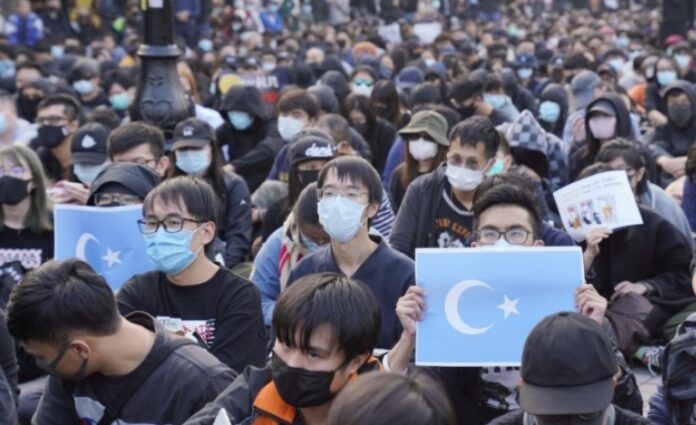
12 Japan Firms Will Kill Business Deals Involving Uyghur Forced Labor

People take part in a rally condemning China's alleged human rights violations against Uyghurs in Hong Kong on Dec. 22, 2019. (Kyodo)

TOKYO (Kyodo) — Twelve major Japanese companies have established a policy of ceasing business deals with Chinese companies found to benefit from the forced labor of the Muslim Uyghur minority in China’s far-western Xinjiang region, a Kyodo News investigation showed Sunday.

Pressure has been mounting on Japanese firms to take action over such human rights abuses in the supply chain after the United States and Britain imposed import restrictions on cotton and other products originating from the autonomous region.

Continue reading the story here.

Advertisement

Hot News

LATEST NEWS

Bangkok
few clouds
28.8 ° C
28.8 °
28.8 °
71 %
4.1kmh
13 %
Tue
29 °
Wed
38 °
Thu
39 °
Fri
37 °
Sat
37 °