29.9 C
Bangkok
Saturday, June 27, 2026
Home Blog Page 1150

Princess Sirindhorn Sent to Hospital After Fall Accident

A file photo of Princess Maha Chakri Sirindhorn.

BANGKOK — Princess Sirindhorn was admitted to a hospital following an ankle injury, the palace said Monday night.

In a statement issued by the Royal Household Bureau, Princess Maha Chakri Sirindhorn fell during morning exercise and injured both of her ankles on Monday.

She was taken to Phramongkutklao Hospital, where the medical team recommended that she put her royal duties on hold for two months.

The 65-year-old royalty is a younger sister of His Majesty the King.

Advertisement

Japan’s Pet Ownership in on the Rise in COVID-19 Pandemic

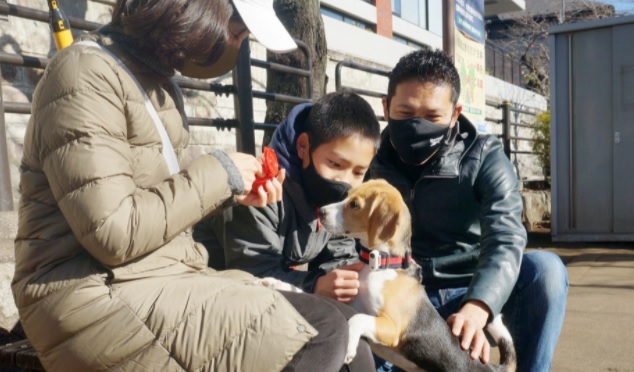
Supplied photo shows family taking a break from walking their beagle Cookie, taken in Tokyo on Dec. 20, 2020. (Kyodo)

TOKYO (Kyodo) — With the coronavirus pandemic restricting human interaction, pet ownership has shot up in Japan as people hunger for companionship in stressful times.

But some animal rights groups warn that the surge could be setting up a dire situation for many of the newly bought pets once peoples’ lives return to normal and less time is spent at home.

Continue reading the story here.

Advertisement

FBI Warns of Plans for Nationwide Armed Protests Next Week

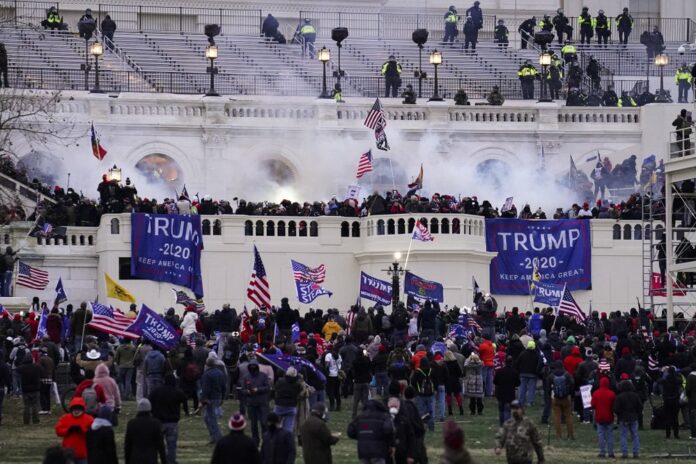
In this Wednesday, Jan. 6, 2021, file photo, violent protesters, loyal to President Donald Trump, storm the Capitol, in Washington. (AP Photo/John Minchillo, File)

WASHINGTON (AP) — The FBI is warning of plans for armed protests at all 50 state capitals and in Washington, D.C., in the days leading up to President-elect Joe Biden’s inauguration, stoking fears of more bloodshed after last week’s deadly siege at the U.S. Capitol.

An internal FBI bulletin warned, as of Sunday, that the nationwide protests may start later this week and extend through Biden’s Jan. 20 inauguration, according to two law enforcement officials who read details of the memo to The Associated Press. Investigators believe some of the people are members of extremist groups, the officials said. The bulletin was first reported by ABC.

“Armed protests are being planned at all 50 state capitols from 16 January through at least 20 January, and at the U.S. Capitol from 17 January through 20 January,” the bulletin said, according to one official. The officials were not authorized to speak publicly and spoke to the AP on condition of anonymity.

The FBI issued at least one other bulletin — they go out to law enforcement nationwide on the topic — before the riots last week. On Dec. 29, it warned of the potential for armed demonstrators targeting legislatures, the second official said.

“While our standard practice is to not comment on specific intelligence products, the FBI is supporting our state, local, and federal law enforcement partners with maintaining public safety in the communities we serve,” the bureau said in a statement. “Our efforts are focused on identifying, investigating, and disrupting individuals that are inciting violence and engaging in criminal activity.”

The FBI said it wasn’t focused on peaceful protests but “on those threatening their safety and the safety of other citizens with violence and destruction of property.”

Army Gen. Daniel Hokanson, chief of the National Guard Bureau, told reporters Monday that the Guard is also looking at any issues across the country,

“We’re keeping a look across the entire country to make sure that we’re monitoring, and that our Guards in every state are in close coordination with their local law enforcement agencies to provide any support requested,” he said.

The riots followed weeks of online calls for violence in the nation’s capital in the waning days of Donald Trump’s presidency. There have been several arrests, and at least two Capitol police officers, one who took a selfie with rioters, and another who put on a Make America Great Again hat, were suspended. At least a dozen more are under investigation, according to lawmakers.

A tweet in which Trump promised that last Wednesday’s event in Washington, D.C., “will be wild” fueled a “month-long frenzy of incitements, strategizing, and embrace of violence against lawmakers,” according to a research group that tracks online extremism activity, In a report issued Saturday, the SITE Intelligence Group also warned that the Capitol attack has emboldened Trump-supporting extremists.

“No matter how all this plays out, its only the beginning,” posted a user on TheDonald message board, according to the report.

Mark Pitcavage, a senior research fellow at the Anti-Defamation League’s Center on Extremism, said authorities in state capitals and other major cities besides Washington should prepare for the possibility of violent protests next week.

“A lot of people were energized by what happened last week,” he said. “State capitals are a natural place where people might want to show up, especially assuming that they think there might be a huge presence of police and military in D.C. because of what happened last week.”

Pitcavage tracks militia, white supremacists and other far-right extremists, but he said the Capitol siege demonstrated the emergence of a new movement of ”Trumpist extremists, so caught up in the cult of personality around Trump that they may be willing to break the law or engage in violence purely in support of Trump and whatever he wants.”

The talk of armed marches next week isn’t limited to “radicalized” Trump supporters. State capital events on Jan. 17 appear to be promoted by supporters of the anti-government, pro-gun “boogaloo” movement. Boogaloo followers advocate for a second civil war or the collapse of society, and they don’t adhere to a coherent political philosophy.

Posts on social media sites also have promoted a “Million Militia March” on the day of Biden’s inauguration. Pitcavage said the event, apparently organized by a promoter of the pro-Trump “QAnon” conspiracy theory, appears unlikely to draw a massive crowd.

Javed Ali, a former FBI senior intelligence officer who teaches courses in counterterrorism at the University of Michigan, said it can be challenging for law enforcement to identify the line between people exercising their constitutionally protected rights to bear arms and free speech and those who pose “a real operational threat.”

“The FBI just can’t passively sit in websites and forums and social media platforms, waiting to see who’s going to present a direct threat versus just someone who is being highly radicalized,” he said. “There has to be an investigative predicate for the FBI to then start even the lowest form of an investigation.”

David Deitch, an attorney who was a prosecutor in the Justice Department’s counterterrorism section from 2003 to 2007, said law enforcement must recognize a “tenuous balance” between protected free speech and speech that intends to incites violence.

“It’s a very fact-based, case-by-case determination,” he said. “There’s no one factor that’s going to determine all of it. It’s certainly going to be a judgment call on the part of law enforcement about whether and when to intervene.”

___

Kunzelman reported from College Park, Maryland. Associated Press writer Matthew Daly contributed to this report.

Advertisement

Anutin Defends Barring Infected Lawbreakers From Free COVID Treatment

Public Health Minister Anutin Charnvirakul receives a flu shot on May 8, 2020.

BANGKOK — Health minister Anutin Charnvirakul on Monday doubled down on his threat to ban coronavirus patients who broke the law from receiving free medical treatment, despite its potential breach of the Thai Constitution.

The controversial minister said he has instructed officials to look into ways to charge patients who were found to have contracted the virus during illegal activities, such as participating in gambling dens and crossing the border illegally. Anutin said his idea is fully legal – though government critics disagree.

“This doesn’t mean that we’re taking precautions after damage has been done,” Anutin said. “We just want people to weigh in on ways to prevent another wave of infections, which may result from the same vicious cycle of letting the disease snuck in from overseas.”

Read: HealthMin Sorry for Flouting His Virus Mask Rule at Party

“The national communicable disease committee has set up a sub-committee to deliberate on my proposal,” Anutin added.

The health minister publicized his idea upon having completed his self-isolation for coming in close contact with Samut Sakhon Gov. Veerasak Vijitsaengsri, who was found infected with the coronavirus on Dec. 28. Veerasak remains in critical condition.

“The money which should have been used to treat innocent people have been spent on those who broke the law,” Anutin wrote online Saturday.

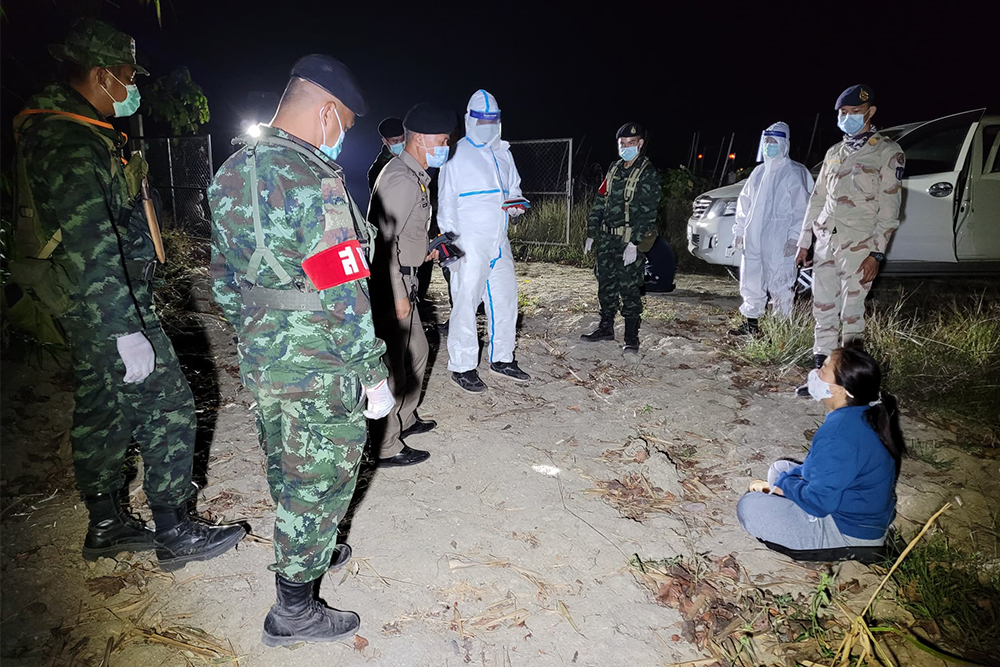
Security officials intercept a group of foreign nationals as they attempt to cross the border into Tak province on Jan. 8, 2020.
Security officials intercept a group of foreign nationals as they attempt to illegally cross the border into Tak province on Jan. 8, 2020.

“Should the state pay for their treatment? If yes, should the cost be collected from those who imported the disease? The patient and those who smuggled them in must be responsible for all the cost.”

Every Thai citizen and foreign national residing in Thailand is currently eligible for a free coronavirus treatment at hospitals. Anutin’s threat to take that welfare away drew much criticism from government critics, who voiced concerns that his idea may scare people off getting tested.

“If the state signals that it wants to prosecute infected people or put the burden on them,” Move Forward MP Wiroj Lakkhanaadisorn wrote online Sunday. “What will inevitably happen is that many of them will try to hide their history and evade treatment.”

Wiroj went on, “It reflects the vision of the health ministry that he wants to lay blame on everything rather than prioritizing disease control measures.”

Thira Woratanarat, a medicine professor at Chulalongkorn University, also warned that Anutin’s idea may escalate the ongoing outbreak to become even more out of control.

“On the surface, it seems to be a good idea. What goes around, comes around, but that will make the situation worse,” Thira wrote online Sunday. “Those who are in the dark will remain in the dark. The treatment of these people is necessary to cut the chain of infection. This is an investment for prevention.”

ddf 1
A file photo of Public Health Minister Anutin Charnvirakul

It remains unclear how the government can get away with charging infected Thais without running into legal challenges, since the state is required by the Constitution to provide free public health services to the people.

“A person shall have the right to receive public health services provided by the State,” Section 47 of the 2017 Constitution says. “An indigent person shall have the right to receive public health services provided by the State free of charge as provided by law.”

The same section also says, “A person shall have the right to the protection and eradication of harmful contagious diseases by the State free of charge as provided by law.”

Anutin often found himself in hot water by making controversial remarks, only to be forced to apologize later by public outrage.

Among some of the things said in public by the health minister – who has no background in medical field – include Western tourists should be kicked out of Thailand for not wearing face masks, Westerners pose more risk in the coronavirus pandemic because they “do not shower,” and frontline healthcare workers who caught the coronavirus should be punished.

Advertisement

Police Seek to Strip Parina of Immunity, Charge Her for Land Encroachment

A file photo of Phalang Pracharath Party MP Parina Kraikupt.

BANGKOK — The law enforcement is in the process of stripping pro-government MP Parina Kraikupt of her legal immunity so she can face charges on public land encroachment, lawmakers briefed on the matter said Monday. 

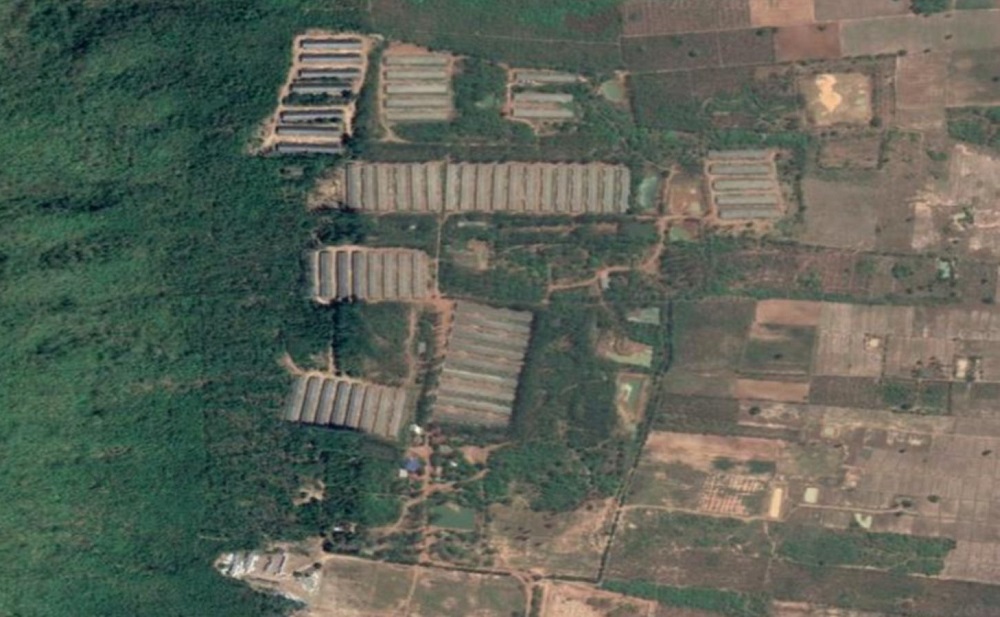
Police will reportedly send a letter to the House Speaker asking him to hold a vote and suspend the immunity granted to the Phalang Pracharath Party MP, who’s accused of building a poultry farm on a restricted land in Ratchaburi province.

“We invited the police twice to give us the update,” Apichat Sirisoontorn, chairman of the House Committee on the environment, said by phone. “After police investigated, they concluded that they will charge Parina and forward the case to the Office of the Attorney General.”

The latest meeting took place on Dec. 16, said Apichat, who serves as an MP for the opposition Move Forward Party.

Parina, an MP for Ratchaburi, stands accused of building a chicken farm on government land reserved for impoverished farmers in the province. She has repeatedly denied the accusations.

รพ.สนามธรรมศาสตร์ ๒๑๐๑๑๑ 1
Authorities say this aerial photograph confirms that the poultry farm in Ratchaburi province owned by MP Parina Kraikup encroaches on the forest land.

There has been little action taken against Parina since the scandal broke out in November 2019.

Under the laws, MPs cannot be arrested or prosecuted while the Parliament is in session, unless the majority of the House of Representatives votes to suspend the immunity.

Apichat said there’s “no guarantee” that the government coalition parties will go along with the attempt to strip Parina of her legal immunity.

“If they vote in favor of Parina, we could lose,” Apichat said.

Anti-corruption activist Veera Somkwankid has been pursuing the case since late 2019. Veera said he will take action against the law enforcement if there is no progress in their attempt to prosecute Parina.

“The letter is probably with the national police chief. It shouldn’t take long, but I won’t rush them,” Veera said. “Let them examine the matter well.”

A police investigator involved with the case confirmed the news and said the letter is in the pipeline. The officer, who asked not to be identified because they were not authorized to speak to the media, said even if Parina did retain her immunity, police will simply wait until the House’s current session is over in February.

“There is no reason why she would not meet the Attorney General,” the officer said. “The case will be completed when the person and the charge are brought forward to the AOG.”

Police spokesman Col Kissana Phathanacharoen was not available to comment on the case as of press time.

Advertisement

YouTuber Donated to a Rural Village, Upsetting Local Gov’t

Photo: Pimrypie / YouTube

CHIANG MAI — A local government office in Chiang Mai province took steps to ban donations, then reversed the controversial order two days later, after a YouTuber released a video publicizing poverty at a far-flung village.

The video posted by Pimradaporn “Pimriepie” Benjawattanapat ahead of the National Children’s Day on Saturday showed her donating solar cells and other necessities to Mae Kerb village in Om Koi district, 300 kilometers from the city center. But local authorities apparently weren’t happy with her portrayal of the impoverished village.

Wilailak Sooksai, the director of Om Koi’s Office of Non-Formal and Informal Education, issued an announcement Saturday telling the village teachers to not ask for any donations.

“Large amounts of information on online communities like Facebook, Line, e-mail, and Twitter are affecting the office in both positive and negative ways,” the announcement read.

They were also banned from expressing “any negative views on social media” and receiving “any donations from any outside sources.”

After much ridicule and criticism online, Wilailak issued a new order Monday saying that the previous announcement was voided, citing unspecified “miscommunications.”

Repeated calls to the education office went unanswered.

‘Children Don’t Have Dreams’

Mae Kerb is a rural village in Om Koi district, located in the far southwest of Chiang Mai province. Pimrypie said in the video that the village has no electricity, no one finished their education beyond the middle school level, and there is no internet connection.

Mice are a delicacy to eat, and most people only eat chili paste made of salt, MSG, and chili, the YouTuber said in her video, which has been viewed more than 4.8 million times and is currently the top trending video on Thailand’s YouTube. 

“The children here have no dreams. They cannot imagine it. They cannot imagine what it’s like to continue their studies,” village teacher Jet Sonthikun told Pimrypie. “They live in their narrow world.”

One interviewed woman said she had never eaten an omelette. Agricultural knowledge is lacking. Children shower with their clothes on as a way to do laundry.

“I thought I was just going to give them Mama noodles and canned fish, but this is a big deal,” Pimrypie, 30, said. “They are cavemen. They don’t have electricity. …I never thought there would be this kind of place in Thailand.”

The video then shows the blogger and her team donating solar cells, planting a vegetable garden, installing a TV, and handing out shoes and flashlights to the local children.

Pimrypie shared a Facebook post that said she donated 500,000 baht, while supporters pitched in an additional 290,000 baht, amounting to 790,000 baht.

“I never thought I would do something so worthwhile in my life. That 500,000 was so worth it,” Pimrypie says in the video.

Screen Shot 2021 01 11 at 4.12.21 PM copy
Photo: Pimrypie / YouTube

Although the social media influencer received widespread praise for her video, some suspected that she was doing it for the views. In a Facebook live on her page Sunday, Pimrypie clapped back at the critics.

“Don’t stick your nose where it doesn’t belong, hia. If they didn’t want the stuff, they would just toss it away,” she said. “Donating to charity in your homeland creates drama. Why don’t I just stick a Portuguese or Turkish flag here?”

More Drama?

There’s also a blowback from transparency gadfly Srisuwan Janya, who said that the village Pimrypie donated to was infringing on Om Koi Wildlife Sanctuary.

“That village was built only five to six years ago,” Srisuwan said by phone. “I want to know from related government agencies, such as national parts and resources, how they allowed a group of tribespeople to build dwellings here.”

The activist said he had studied maps and aerial photographs ranging over the past several years. Allowing residential houses in national parks areas sets a bad precedent, he said.

Since the residential houses shouldn’t even be there in the first place, that could be a reason why there’s no electricity, said Srisuwan, who planned to submit a complaint to environment minister Varawut Silpa-archa on Wednesday.

But Srisuwan said that his criticism was all for the government, and he had only praise for the blogger.

“I’m not criticizing Pimrypie, she did very well. It doesn’t matter if they are there legally or not, she did her job for humanity, which is admirable,” he said.

Advertisement

Chiang Mai Walks Back Promise to Pay Infected Tourists 100,000 Baht

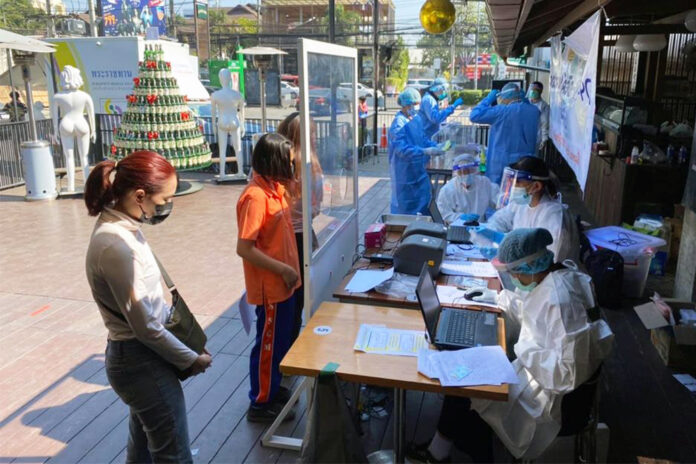
People line up for coronavirus tests at a screening station in front of Warm Up Cafe in Chiang Mai City on Jan. 5, 2021. Photo: Warm Up Cafe / Facebook

CHIANG MAI — No cash handouts will be given to tourists who contracted the coronavirus while visiting the northern province as promised earlier, a tourism business guild said Monday.

The pledge to pay 100,000 baht to any visitor who caught the virus in Chiang Mai was made in December, but the head of Chiang Mai Tourism Industry Council said today that the promotional campaign only applies to the previous cluster of infections in early December, and it is not related to the ongoing wave of outbreak.

“The campaign was rolled out in response to the case of infected Thai workers who worked at 1G1 Hotel in Myanmar and imported the virus into the country,” Phanlop Sae-chiew said. “We just wanted to build assurance to tourists back then, but the campaign doesn’t cover infections from Warm Up Cafe or any other cases.”

Warm Up was identified as one of the nightlife venues in Chiang Mai responsible for a large cluster of coronavirus infections. As of Sunday, at least 19 confirmed cases were linked to the clubs.

Officials said an infected woman from Bangkok also went to multiple bars in the city on the night of New Year’s Eve, including Tha Chang Cafe, Warm Up Cafe, Pretty Club Xclusive, Infinity Club, and DC Chiang Mai.

Another cluster of infections was found at Riverside Bar, which was visited by the same group of partygoers who previously went to Warm Up in the same night.

Warm Up Cafe was one of the business establishments who announced online in December that anyone found to have contracted the virus there would be paid 100,000 baht – and 1,000,000 baht if the infection results in death.

However, the post has since been removed, after one of its customers complained that she never received the compensation.

“I called Warm Up Cafe and they told me that it was just a PR campaign,” Shanunphat Chaowchaiyut wrote on her Facebook. “They didn’t mean to be serious. They told me that if I really want the money, I must ask the Governor. Is that how you answer your customer?”

The bar could not be reached for comments as of publication time.

Chiang Mai deputy governor Weeraphan Dee-on said Sunday the campaign is not endorsed by or related to the government.

He also said that authorities had already filed charges against the owners of Warmup Cafe for defying the permitted business hours stipulated by the emergency decree.

“The shop must be responsible for what they posted,” Weeraphan said. “The campaign was initiated by the Chiang Mai Tourism Industry Council when cases related to the 1G1 Hotel in Myanmar were found and ended after the situation settled down.”

He suggested that the coronavirus patients file a cybercrime charge against the bar for its false promise.

“The victim may gather evidence to relevant authorities since this may be considered as an importation of false information to the computer system,” Weeraphan said.

Advertisement

Gadfly Raises Concern Over CP’s Hand in Coronavirus Vaccine Deal

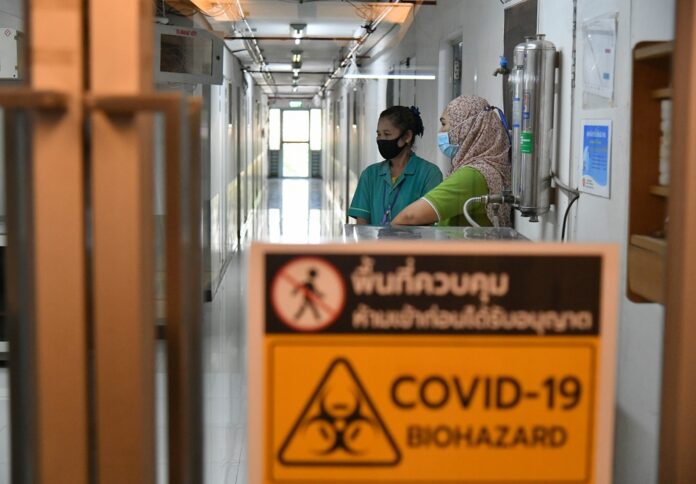
Medical workers are seen at Thammasat University Field Hospital for coronavirus patients on Jan. 11, 2021.

BANGKOK — A transparency activist on Monday demanded an investigation into whether the government is favoring large conglomerates in its bid to vaccine Thailand’s population against the coronavirus.

In a petition submitted by Srisuwan Janya to the Office of the Ombudsman, the campaigner said CP, one of Thailand’s largest corporations, has its hand deep in the sales and distribution of Chinese-made coronavirus vaccines and is therefore a potential conflict of interest – an allegation denied by CP.

Srisuwan said he had his concerns after news emerged that the vaccines developed by Beijing-based Sinovac Ltd, where CP recently acquired a 15 percent ownership, are set to be rolled out before the doses made by British pharmaceutical company AstraZeneca.

“Did the government give some benefits to Sinovac, since jao sua has stocks in it?” Srisuwan said by phone, using a term that refers to CP founder and tycoon Dhanin Chearavanont. “I’m suspicious as to whether there is some kind of connection behind that.”

Exclusive: City Hall Scrubs 7-Eleven Stores From Coronavirus Travel History

Thailand’s nationwide vaccination effort will be undertaken in three phases, according to the Department of Disease Control, starting with the 2 million Sinovac doses destined for “vulnerable groups” in Chonburi, Samut Sakhon, Trat, Rayong, and Chanthaburi.

The first 200,000 doses of Sinovac’s vaccines will be shipped by the end of February, 800,000 more in March, and the remaining million in April.

Phase 2 will vaccinate “vulnerable groups” in the rest of the country in May and June. Finally, the last phase will be to vaccinate the general public by early 2022. Phase 2 and 3 will use the Oxford-Astrazeneca vaccines, which will be produced here in Thailand per a knowledge sharing agreement, according to health officials.

Srisuwan said that Sinovac coming first in the queue could delay AstraZeneca vaccines being rolled out, by government channels or otherwise.

“Private companies are ready to buy the vaccines now,” the gadfly said. “If this was allowed, then people with money can get vaccinated at hospitals, taking the load off of the government. So instead of vaccinating 60 million people, they may only have to vaccinate 40 million.”

Public Health Ministry perm sec Kiattiphum Wongrajit said on Monday the government has set aside a budget of 1 billion baht for the 2 million doses from Sinovac, meaning that each dose will cost about 500 baht.

The Chinese vaccine will be filed to the Food and Drug Administration for a formal approval on Feb. 14, Kiattiphum told reporters.

‘Routine Investment’

In a statement released to the media on Monday, CP said it spent 15 billion baht to buy 15 percent of stocks in Sinovac back in December to boost the company’s vaccine production capacity from 300 million doses per year, to 600 million.

CP has been running a pharmaceutical business in China since 2000 through its subsidiary, called Sino Biopharmaceutical. The company dismissed the accusations that CP would wield any influence over the vaccine campaign in Thailand through its partial ownership of Sinovac.

“Compared to [Sinovac]’s production capacity of 600 million doses for global distribution, Thailand’s purchase order of 2-million doses is merely 0.33 percent of the production capacity,” the statement said. “Therefore, it is not the reason behind CP’s investment.”

It added, “CP would like to affirm that this investment only grants Sino Biopharmaceutical a minority in shareholding, or only 15 percent, in Sinovac.”

“CP’s entry to pharmaceutical business is nothing new, because we’ve been working in the field for 22 years. We have manufactured and marketed medicines for hepatitis, and diseases related to the heart and brain, in China. Sino Biopharmaceutical’s revenues in 2019 were 4.2 billion yuan, or 112 billion baht. The investment in Sinovac Ltd. is a routine investment.”

Thais First

Thailand also inked a 6 billion baht agreement that would allow a Thai company wholly owned by the Crown Property Bureau to produce 26 million doses of the coronavirus vaccines developed by British-based AstraZeneca.

If the government’s published information is to be believed, that’s about 230 baht per dose; the United States paid USD4 per shot, or 120 baht, from AstraZeneca. But a health official maintained that the price is already considered affordable for Thailand.

“Of course this is saving on costs since we are transferring technology from Astrazeneca to Siam Bioscience,” Supaporn Phumiamorn, Director of Institute of Biological Products at the Department of Medical Science, said by phone.

“After that we will be able to be a base of vaccine distribution in all of ASEAN.”

Supaporn said the vaccines will be available to the general Thai public for free, though the government has not discussed whether foreign residents or migrant workers will be eligible.

“The policy is to vaccinate Thais first,” she said. “But after the vaccines get certification from the Food and Drug Administration, then the government won’t stop private companies or hospitals from administering the vaccine.”

Srisuwan, the transparency activist, said he did not have any concerns about Siam Bioscience’s vaccines.

“I’m not worried at all, because it’s owned by the King,” he said.

Correction: The vaccine agreement between the Thailand and AstraZeneca was budgeted at 6 billion baht, not 600 million baht. We regret the error. 

Advertisement

China: WHO Experts Arriving Thursday for Virus Origins Probe

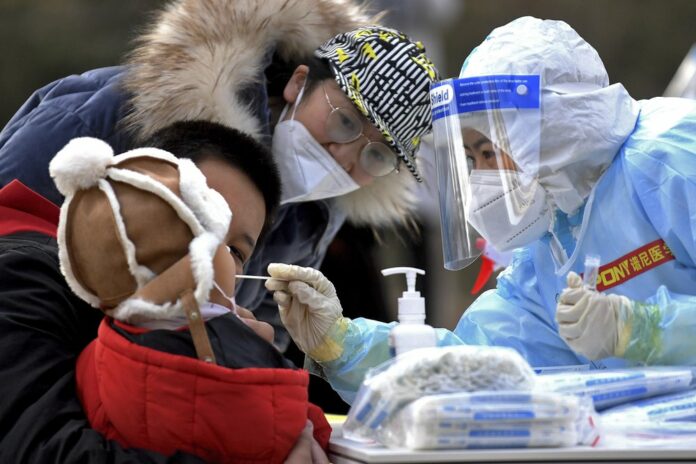
In this photo released by Xinhua News Agency, a medical staff in a protective suit takes a swab from a child near a residential area in Shijiazhuang in northern China's Hebei Province on Sunday, Jan. 10, 2021. (Wang Xiao/Xinhua via AP)

BEIJING (AP) — Experts from the World Health Organization are due to arrive in China this week for a long-anticipated investigation into the origins of the coronavirus pandemic, the government said Monday.

The experts will arrive on Thursday and meet with Chinese counterparts, the National Health Commission said in a one-sentence statement that gave no other details.

It wasn’t immediately clear whether the experts would be traveling to the central Chinese city of Wuhan, where the coronavirus was first detected in late 2019.

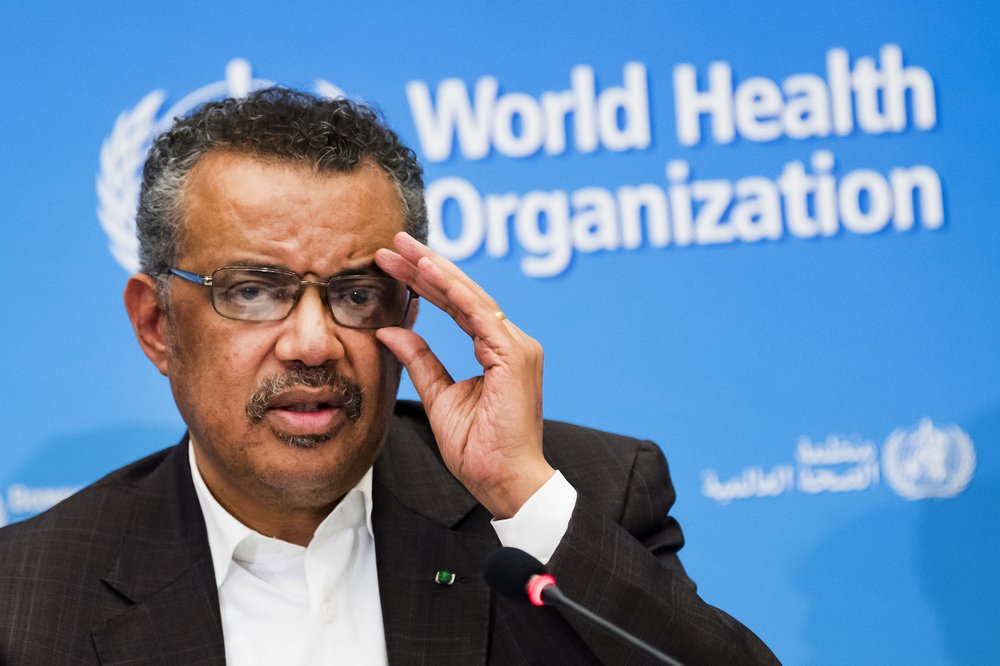
Negotiations for the visit have long been underway. WHO Director-General Tedros Adhanom Ghebreyesus expressed disappointment last week over delays, saying that members of the international scientific team departing from their home countries had already started on their trip as part of an arrangement between the WHO and the Chinese government.

1000 13 3
In this Jan. 30, 2020, file photo, Tedros Adhanom Ghebreyesus, Director General of the World Health Organization (WHO), talks to the media at the World Health Organization headquarters in Geneva, Switzerland. (Jean-Christophe Bott/Keystone via AP, File)

Foreign Ministry spokesperson Zhao Lijian said China had approved the visit following consultations between the sides and called it an opportunity to “exchange views with Chinese scientists and medical experts on scientific cooperation on the tracing of the origin of the new coronavirus.”

“Along with continuous changes in the epidemic situation, our knowledge of the virus deepens, and more early cases are discovered,” Zhao told reporters at a daily briefing, adding that the search for the origin will likely involve “multiple countries and localities.”

China’s government has strictly controlled all research at home into the origins of the virus, an Associated Press investigation found, while state-owned media have played up fringe theories that suggest the virus could have originated elsewhere.

The AP investigation found that China’s government is handing out hundreds of thousands of dollars in grants to scientists researching the virus’ origins in southern China. But it is monitoring their findings and mandating that the publication of any data or research must be approved by a new task force managed by China’s Cabinet, under direct orders from President Xi Jinping, according to internal documents obtained by the AP.

1000 14 1
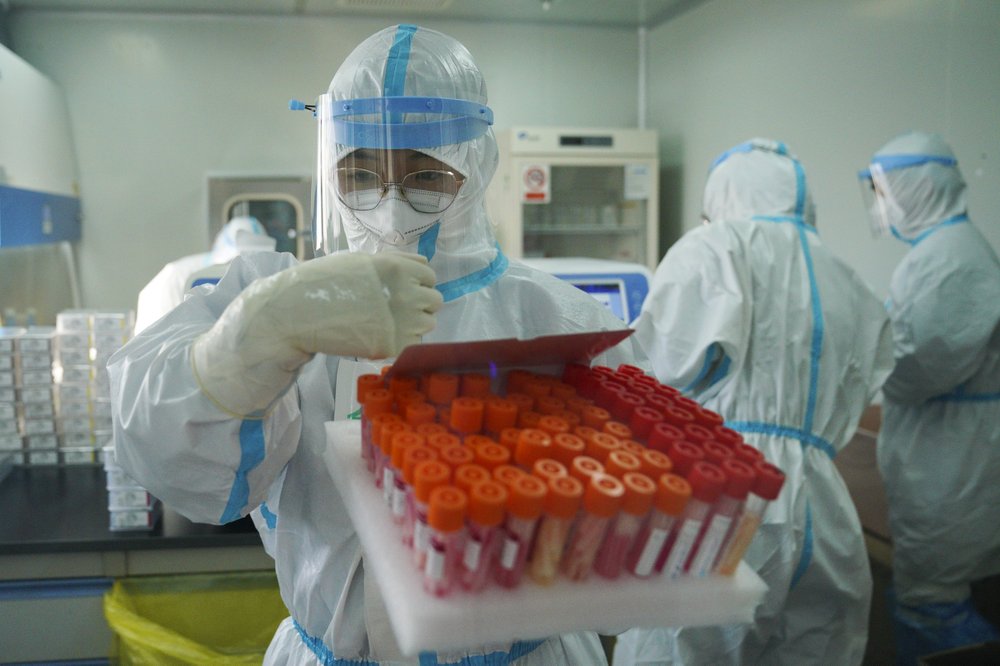
In this photo released by Xinhua News Agency, Yang Hongke checks on test samples at a testing lab of KingMed Diagnostics Group Co., Ltd. in Shijiazhuang in northern China’s Hebei Province on Saturday, Jan. 9, 2021. (Mu Yu/Xinhua via AP)

The culture of secrecy is believed to have delayed warnings about the pandemic, blocked the sharing of information with the WHO and hampered early testing. Australia and other countries have called for an investigation into the origins of the virus, prompting angry responses from Beijing.

There was no immediate comment from the WHO on Monday’s announcement, but U.N. spokesperson Stephane Dujarric had earlier told reporters at U.N. headquarters in New York that Secretary-General Antonio Guterres “is fully supportive of Dr. Tedros’ and WHO’s efforts to get a team in there.”
“It’s very important that as the WHO is in the lead in fighting the pandemic, that it also has a leading role in trying to look back at the roots of this pandemic so we can be better prepared for the next one,” Dujarric said. “We very much hope” that China’s reported comments that it is working with the WHO and looking for a smooth visit “will happen.”
The virus’ origins have been the source of intense speculation, much of it centered around the likelihood that it was carried by bats and passed to humans through an intermediary species sold as food or medicine in traditional Chinese wet markets.

China has largely stemmed new cases of domestic transmission, but said Monday that scores of people have tested positive for the coronavirus in Hebei province, bordering Beijing.

1000 12 2
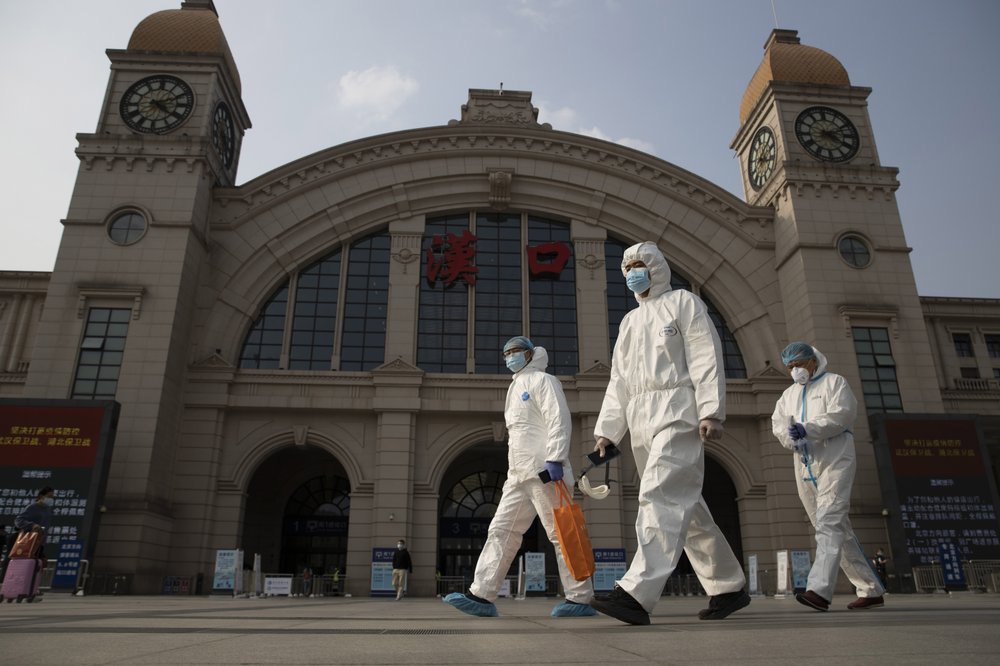
In this April 7, 2020, file photo, workers in protective suits walk past the Hankou railway station on the eve of its resuming outbound traffic in Wuhan in central China’s Hubei province. (AP Photo/Ng Han Guan, File)

That outbreak comes amid measures to curb the further spread of the virus during next month’s Lunar New Year holiday. Authorities have called on citizens not to travel, ordered schools closed a week early and conducted testing on a massive scale.

China has recorded 87,536 total cases of the virus, including 4,634 deaths. Hospitals are currently treating 673 people for COVID-19, while 506 others are in isolation and under observation after testing positive without showing symptoms, officials said.

The Hebei outbreak has raised particular concern because of the province’s proximity to Beijing. Parts of the province are under lockdown and interprovincial travel has been largely cut off, with those entering Beijing to work having to show proof of employment and a clean bill of health.

Beijing has also seen a handful of new cases, prompting authorities to lock down some suburban communities and require residents to show negative test results to access grocery stores and other public spaces.

Advertisement

About 80% Favor Canceling, Postponing Tokyo Olympics in Summer: Poll

Image: Kyodo.

TOKYO (Kyodo) — Around 80 percent of people in Japan believe the postponed Tokyo Olympics and Paralympics, planned for the summer, should be canceled or rescheduled, a Kyodo News survey showed Sunday, with the novel coronavirus pandemic continuing to cast a cloud over the sporting event.

The weekend telephone survey was conducted as Japan is struggling with a resurgence of infections that have increased the strain on the country’s medical system.

Continue reading the story here

Advertisement

Hot News

LATEST NEWS

Bangkok
overcast clouds
29.9 ° C
31.1 °
28.8 °
90 %
2.8kmh
97 %
Sat
37 °
Sun
36 °
Mon
36 °
Tue
33 °
Wed
34 °