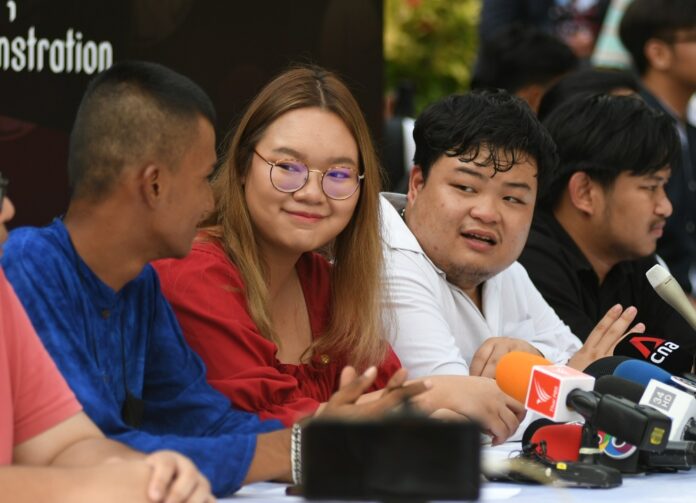
Panusaya “Rung” Sithijirawattanakul and other activists speak at a news conference at Thammasat University on Sept. 9, 2020.
Top: Panusaya “Rung” Sithijirawattanakul and other activists speak at a news conference at Thammasat University on Sept. 9, 2020.
When student-led protests broke out in February, they were sparked by the disbandment of a popular opposition party. The movement soon gained momentum, spurred onward by discontent among the younger generations with PM Prayut Chan-o-cha, who has been in power since he staged a coup in 2014.
The protests were paused due to the coronavirus outbreak in March. They resumed again in July, with even larger turnouts. The sight of young people taking to the streets to demand PM Prayut’s resignation captivated the country and beyond.
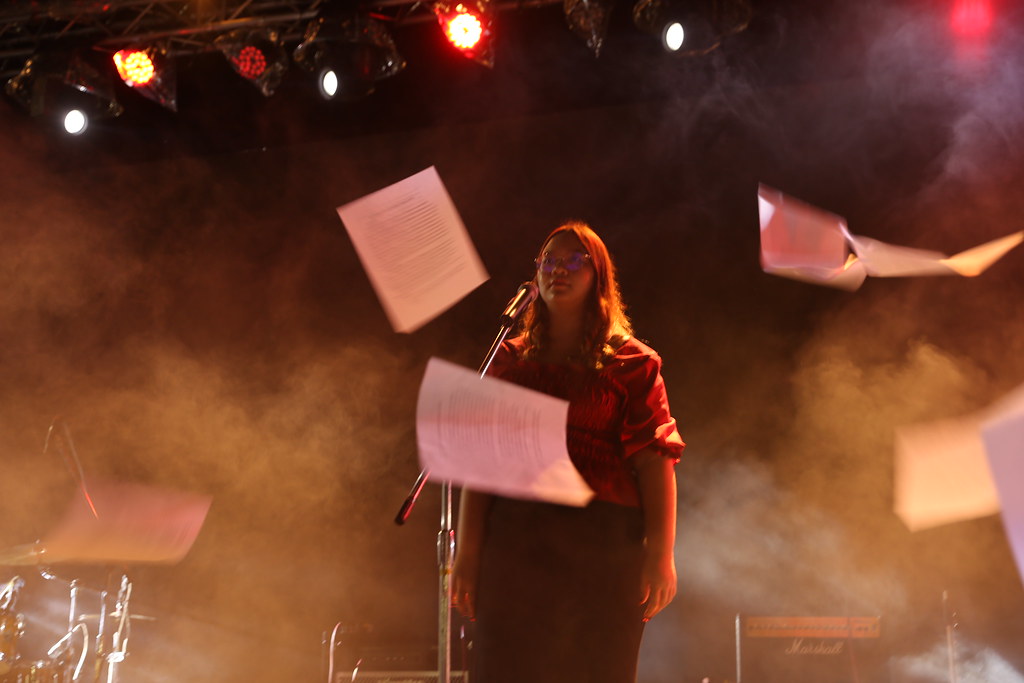
But the demonstrations truly took a historic turn that shocked all when a 22-year-old student named Panusaya Sithijirawattanakul, or Rung, stepped onto a stage at Thammasat University’s Rangsit Campus on Aug. 10. There, she read a 10-point manifesto that challenged the institution at the very top of Thailand’s social strata.
Panusaya “Rung” Sithijirawattanakul throws the scripts of her speech after reading the 10-point demands for monarchy reforms on the stage at the rally inside Thammasat University on Aug. 10, 2020. Image: Prachatai.
“We came up with the ten demands as a group,” fellow activist Parit “Penguin” Chiwarak recalled of that fateful night. “However, Panusaya volunteered to read it out on stage. I asked her, ‘Are you sure, since it’s very radical?’ and she insisted on doing so.”
Speaking onstage to loud cheers, Panusaya listed out demands to reform the monarchy, from bringing the crown assets under civilian control to abolishing the royal defamation law. Although the campaign faced stiff resistance from foes and allies alike at first, reforming the monarchy soon dominated the protests, eventually becoming one of their core demands.
Calls to reform the institution aren’t exactly new. As far back as 2010, historian Somsak Jeamteerasakul issued a similar manifesto that sought to democratize the royal institution, and protest leader Arnon Nampha in July said the movement should not stop at ousting the government. But it was Panusaya’s bold statement on that night in Thammasat that finally tipped the scales.
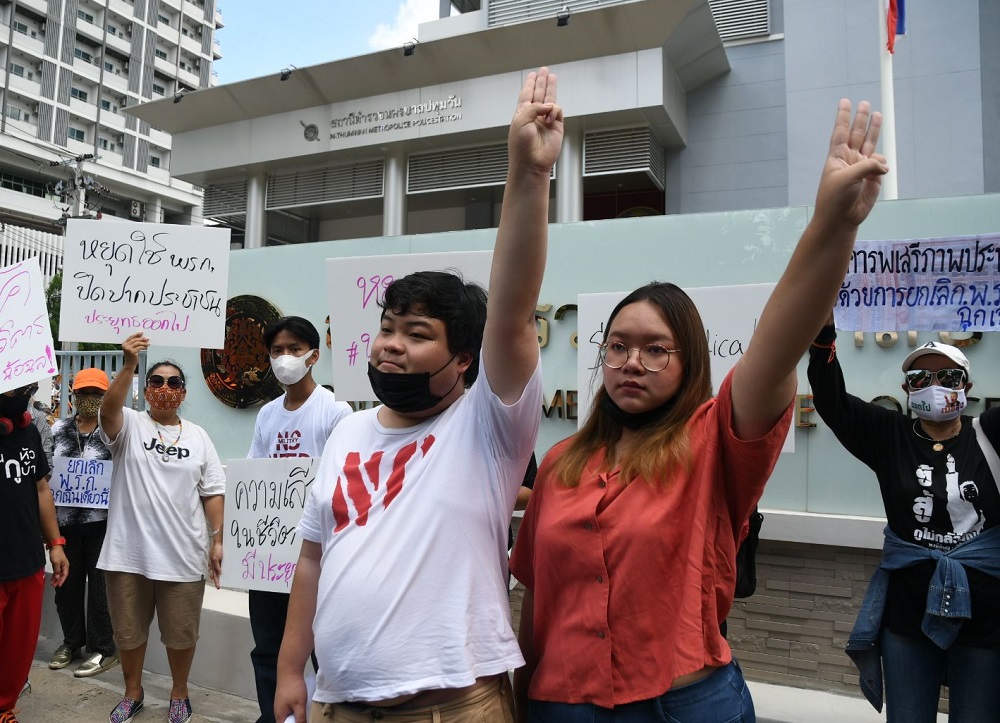
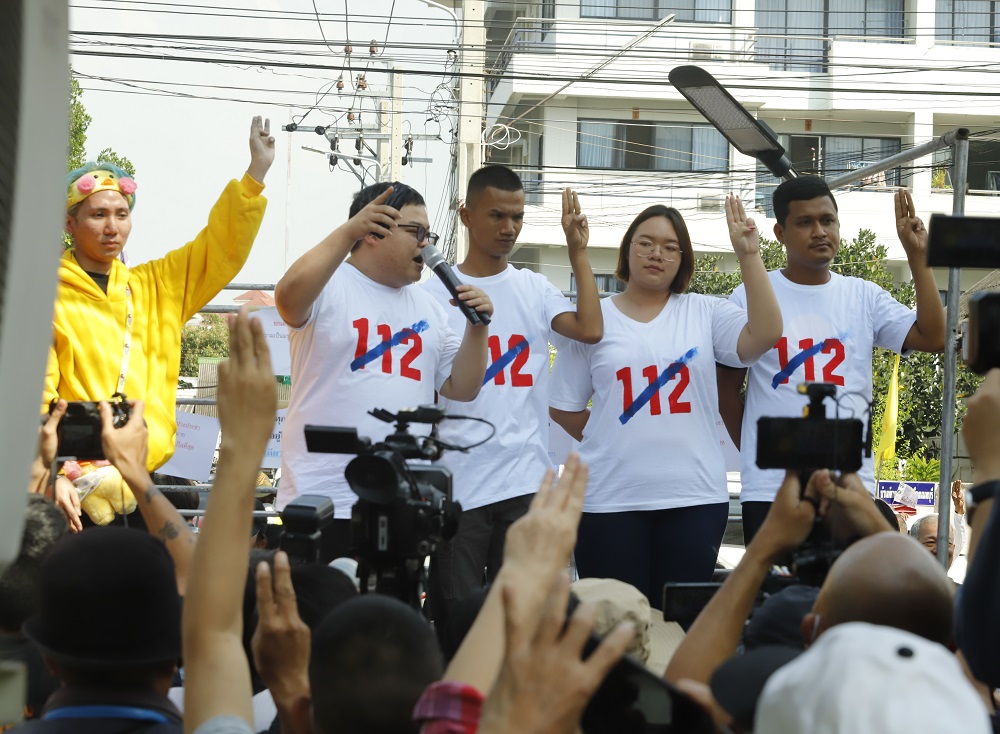
Panusaya “Rung” Sithijirawattanakul and Parit Chiwarak flash the “three finger salute” in front of a police station in Bangkok on July 8, 2020, to demand the end of emergency rule.
“The magnitude was way beyond our expectations,” Parit said. “Everyone is talking more openly about the monarchy. It has long been an issue in Thai society, but no one was talking about it since they were all afraid.”
He added, “We shattered that ceiling.”
A Controversial Figure
Frank discussions about the monarchy remain a taboo in Thailand. Panusaya’s bid to escalate the ongoing anti-government protests alarmed many allies who feared it would alienate large portions of Thai public. Opposition politicians, who had been supporting the protests until that point, sought to distance themselves from the budding movement.
Pro-establishment figures also seized on the turn of events to question whether the protest leadership had a hidden agenda to sabotage the Royal Family. PM Prayut Chan-o-cha himself called Panusaya’s speech inappropriate and said she has stepped “out of line.”
“I think she may not understand Thai society and its roots,” said Warong Dechgitvigrom, leader of royalist Thai Phakdee Group – which was formed in response to Panusaya’s reform campaign. “What she’s doing is overthrowing the monarchy institution, and they are close to becoming communists.”
“This will fulfill the desire of those masterminding the protests from behind,” Warong continued.
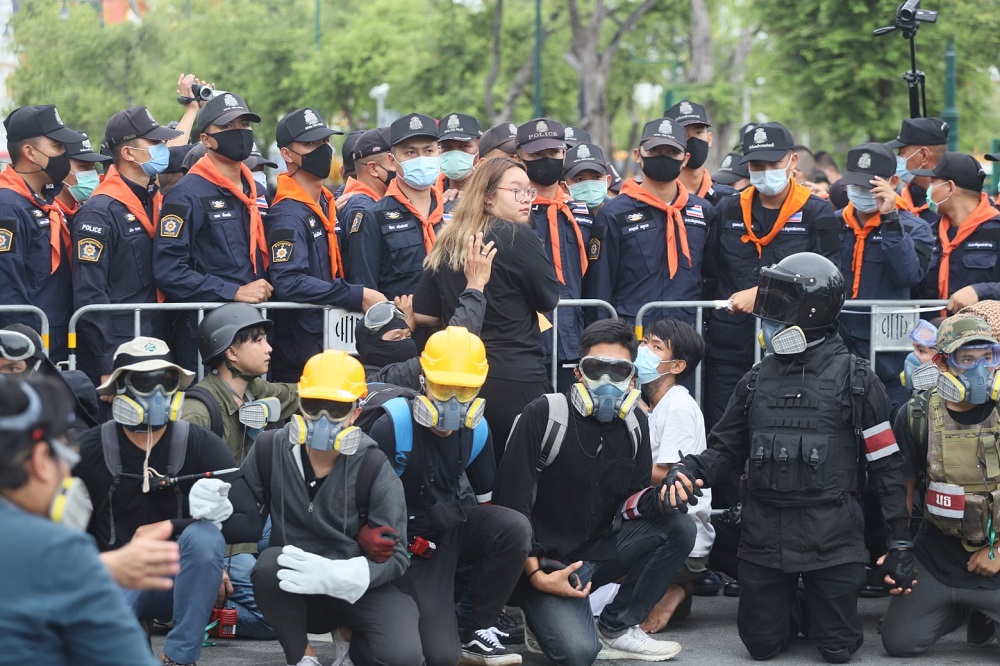
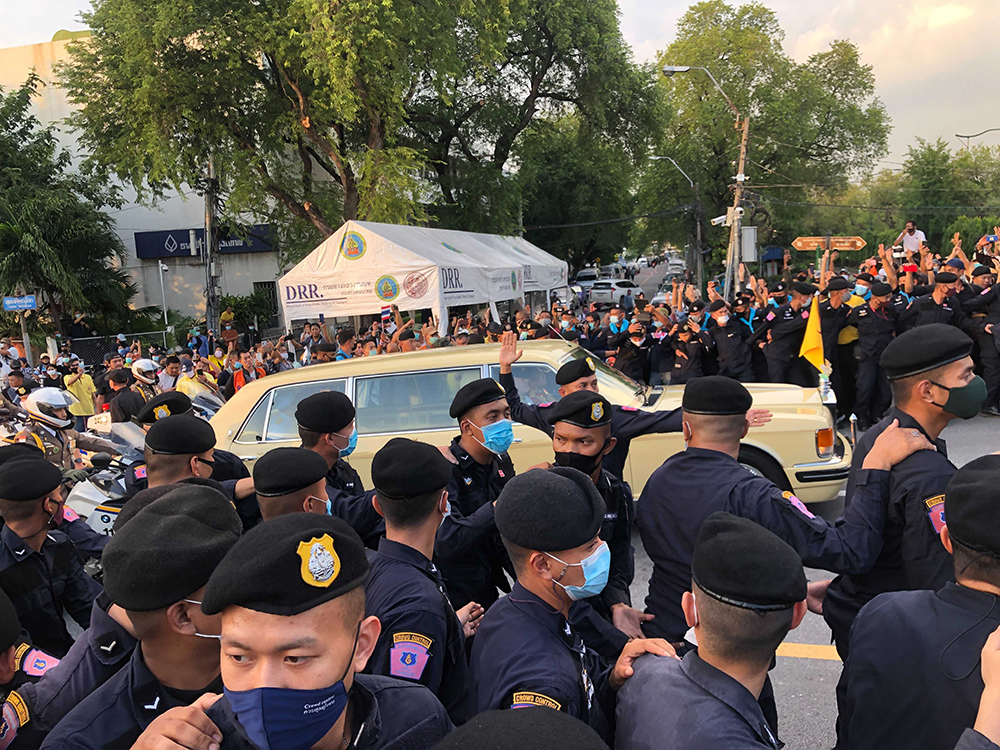
Panusaya “Rung” Sithijirawattanakul negotiates with the police during a demonstration close to the Grand Palace on Sept. 20, 2020.
Apparently fearful of reprisals, Thammasat University issued a statement that its administration was not aware of what Panusaya planned to say onstage when it permitted her group to use the campus for the protest on Aug. 10.
Titipol Phakdeewanich, a political scientist from Ubon Ratchathani University, agreed that the monarchy reform campaign is a double-edged sword for the protesters. On one hand, It provokes discussion among the new generation who “already have doubts” about the institution, but at the same time invites backlash from conservatives, he said.
“They [the calls for monarchy reform] undermine the legitimacy of the movement, but that’s normal in democratic society where different opinions exist,” Titipol said.
There were also legal consequences. Starting in late November, police slapped the reformists, Panusaya included, with a flurry of lese majeste charges– the very same offense that the activists sought to abolish.
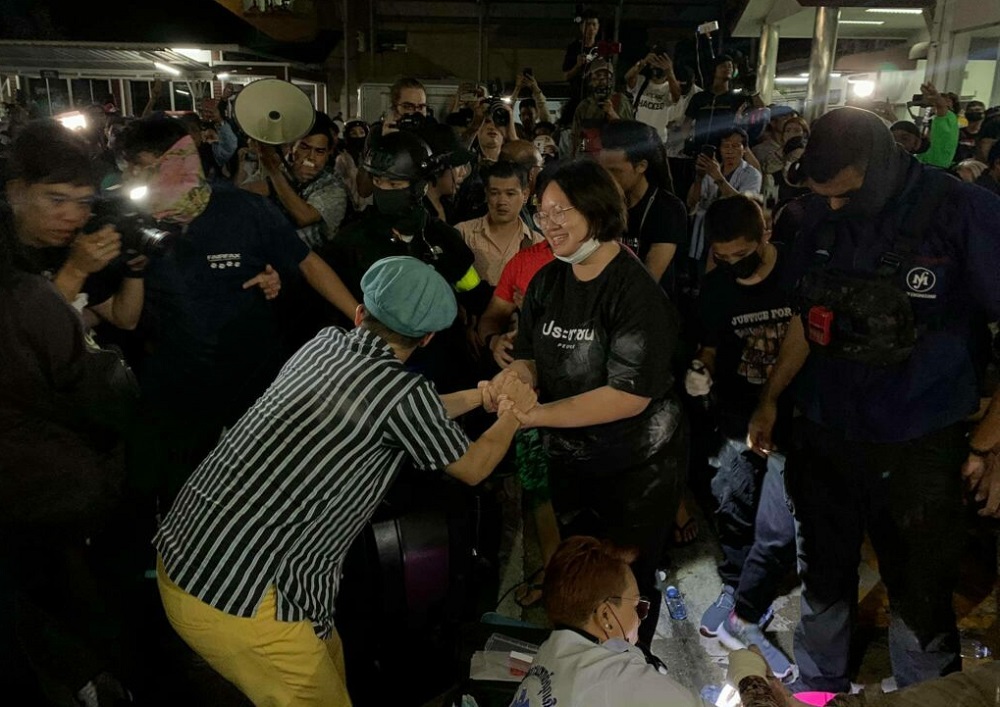
Panusaya “Rung” Sithijirawattanakul greets her supporters upon her release from prison on Oct. 30, 2020.
Panusaya alone faces four counts of lese majeste. Each of them can land her in prison up to 15 years. But that does not seem to deter Panusaya from pursuing the campaign, despite the fact that she already spent 16 days in jail in October for her roles in organizing the anti-government protests.
“She was strong and brave enough to keep her own fears in check so those around her won’t tremble in fear,” her lawyer Sirikan Charoensiri said. “Even while she was imprisoned, Rung told me she wanted to see prison reforms and demand various rights for convicts.”
‘She is Very Ambitious’
The youngest of three daughters, Panusaya was born on Sept. 15, 1998, in Nonthaburi province, where she completed her high school education. She is currently enrolled in Thammasat University’s Faculty of Sociology and Anthropology.
In previous interviews with the media, Panusaya said she became involved in activism upon joining Thammasat University, and mentioned that her father supported her interest in political matters. Panusaya is also a member of Dome Revolution Party, a university group that seeks to instill a sense of political awakening among students, where she met Parit.
“She’s full of vigor. She always suggests her ideas whenever we discuss what to do next,” Parit said. “Outside of politics, she’s very kind. She always shares food with me and others whenever she goes out to buy something.”
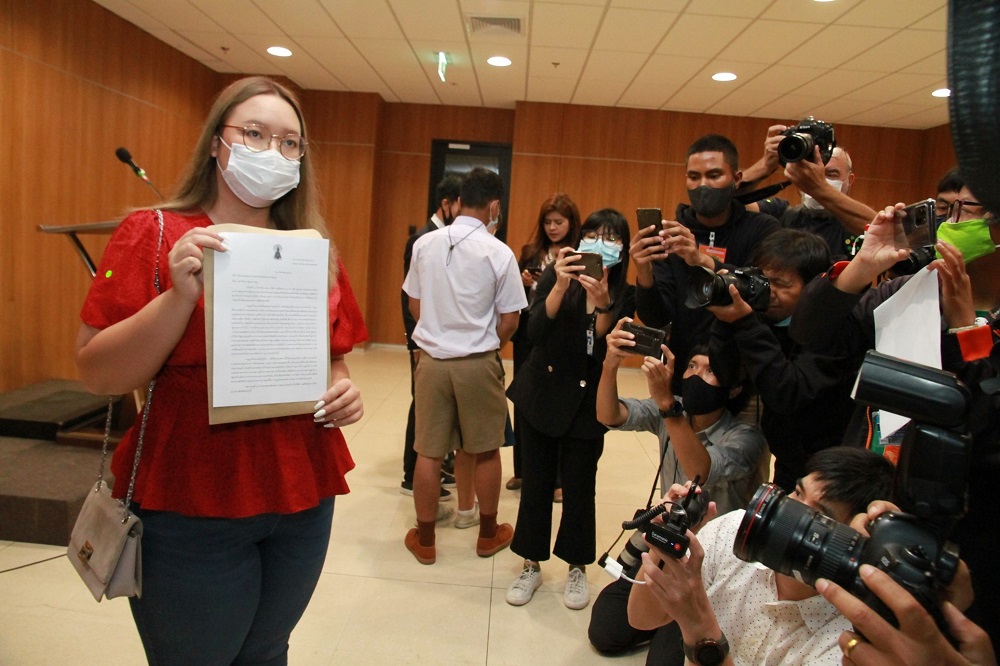
Panusaya “Rung” Sithijirawattanakul submits her demands to reform the monarchy to the House Committee on Political Participation at the Parliament on Aug. 26, 2020.
In spite of her reputation as the face of the pro-democracy movement, Panusaya described herself as shy – a verdict shared by those close to her.
“In reality, Rung is a rather shy girl, gentle and nagging, befitting being the youngest daughter in the family,” Sirikan, who often met with Panusaya alone during her imprisonment, said.
“Her persona on the protest stage and role as a protest leader is not all who she is,” Sirikan went on. “When she takes off that hat, she’s just an ordinary girl, but special in the sense that she’s interested in politics and society.”
She is also a unique representation of women in what is traditionally regarded as the men’s stage. Panusaya is often the sole woman in news conferences held by the protest leaders. This is hardly exclusive to the pro-democracy causes, however, since most of the political movements in Thailand are mostly led by male politicians and activists.
Panusaya “Rung” Sithijirawattanakul and other ativists report to the police to hear lese majeste charges lodged against them in Bangkok on Dec. 8, 2020.
Her gender role does not go unnoticed. Just last month, Panusaya was listed by the BBC as one of the 100 most inspiring and influential women of 2020.
“Having women like Panusaya makes more women, especially high school students, feel more comfortable joining the movement,” political science lecturer Titipol said. “It also improves the image of the movement and brings up gender issues, such as abortion rights and sex worker welfare, to wider public discussion.”
Panusaya and her fellow activists have yet to announce when the next protest will be held. But when they do, they will face their toughest challenge yet.
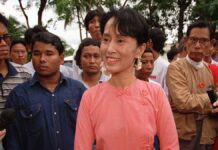
Top: A BBC Thai interview with Panusaya “Rung” Sithijirawattanakul and her sister.
The second wave of coronavirus pandemic has spread to at least 40 provinces, and the government said it would ban any gatherings in order to contain the outbreak. The police may also file yet more charges against Panusaya and her friends, bogging them down in endless legal complaints.
However, there is no sign that Panusaya will call it quits anytime soon.
“It has always been her ambition to fight for democracy and address the issue of monarchy. She’s very ambitious,” Parit said. “She believes it’s time to push her agenda forward.”
Honorable Mentions
We decide to recognize groups of individuals, instead of specific persons, for this year’s entry to reflect the efforts of the many to achieve a common goal.
Protesters
A hardline royalist protest in Bangkok on Oct. 12, 2020.
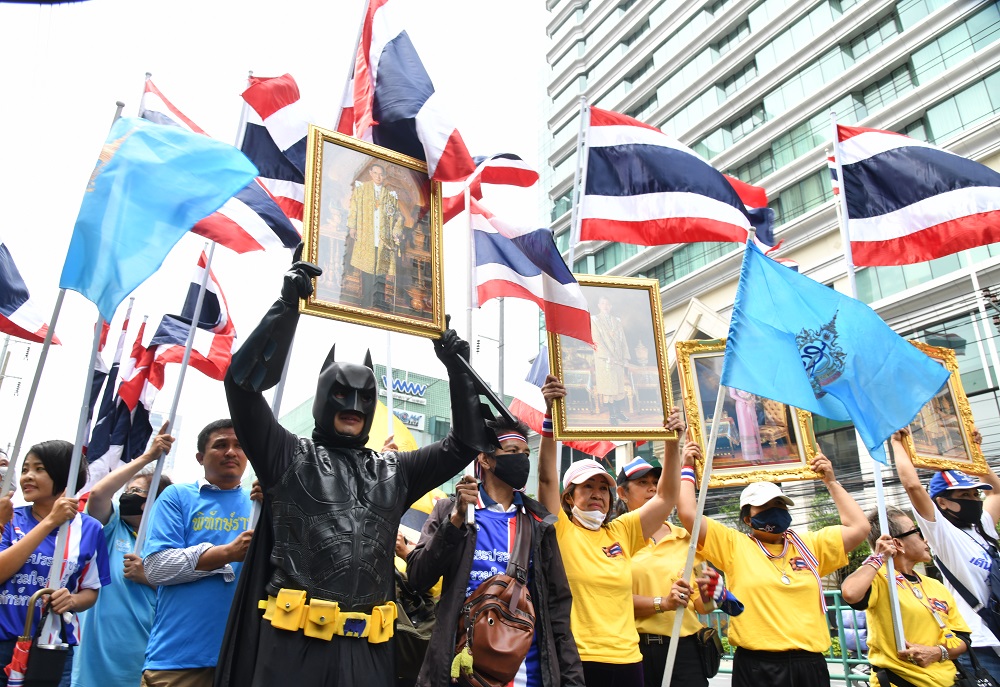
Although anti-government protests captured much of the news coverage, many other ideologies and interests made their voices heard throughout 2020, such as students raging against uniforms, pro-monarchy supporters, farmers, and local residents fighting for their communities.
Riders
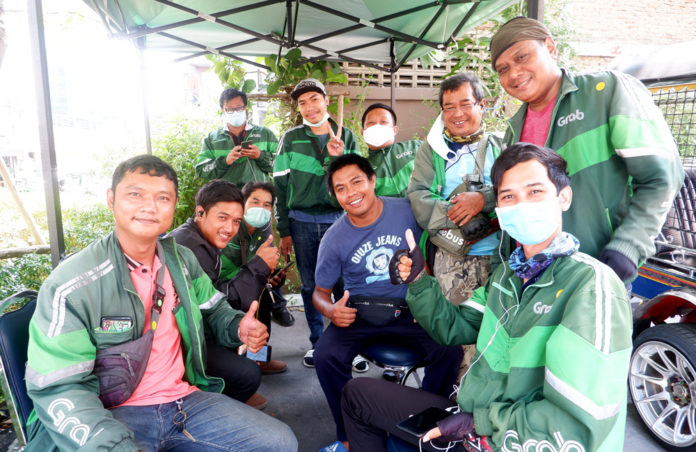
A file photo of delivery riders for Grab Food.
We rely more on the delivery services, whether foods or other essential goods, than ever this year due to the coronavirus pandemic that forced many to stay indoors. Props to the ‘riders’ who keep us fed and well stocked.
Aor Sor Mor
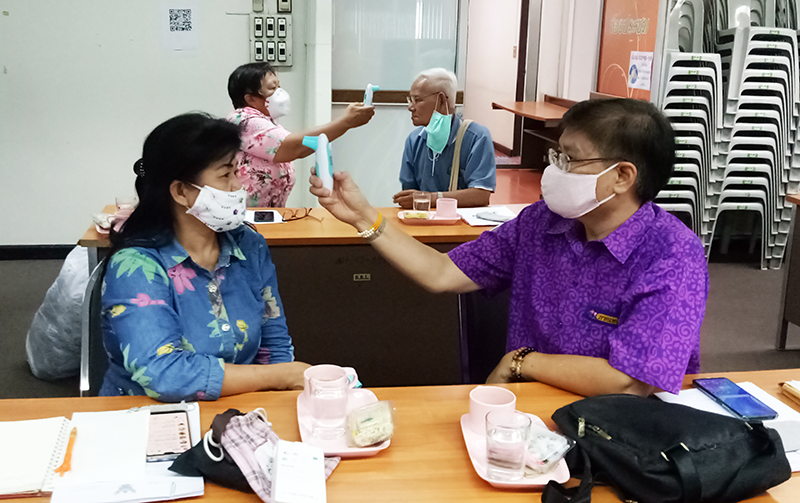
Village Health Volunteers in Lampang attend a training session on using non-contact thermometers on May 5, 2020.
Uncles and aunties check on their neighbors, keep track of travel records in their communities, and alert the health authorities as soon as there’s sign of virus danger. These 1-million strong rural health volunteers are widely credited with keeping the pandemic in check.
First responders in Korat massacre
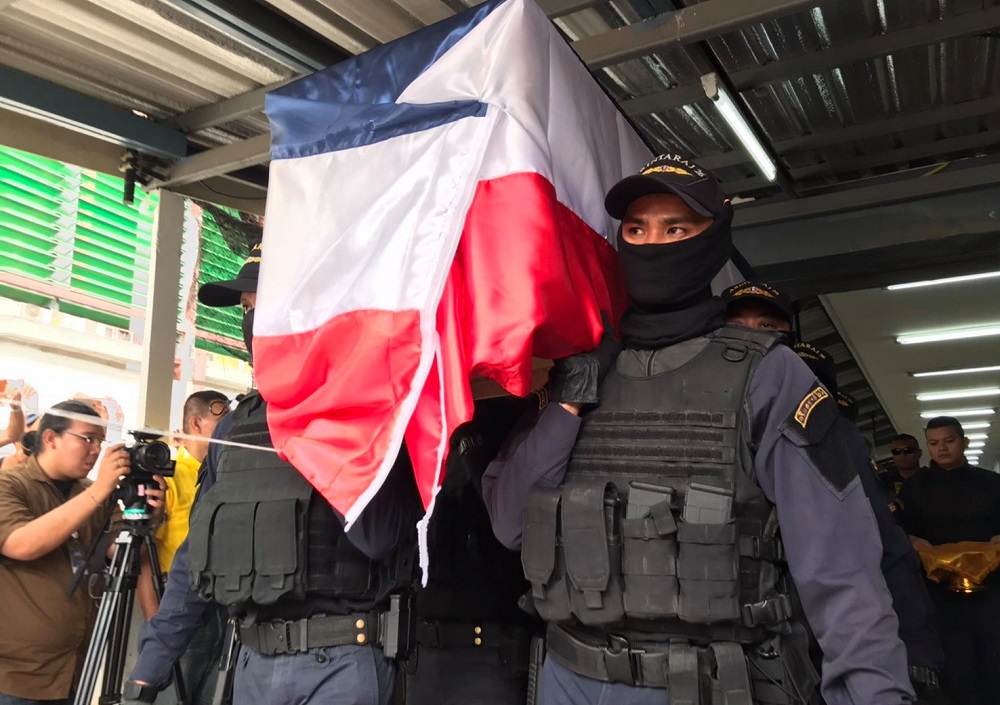
Police commandos on Feb. 10, 2020, carry the coffin of team member Petcharat Kamchadphai, who was shot dead during an assault on Korat’s Terminal 21 shopping mall on Feb. 9, 2020, to take down a mass shooter that killed 30 people.
Thirty people were killed in February when a disgruntled soldier went on a shooting spree in Korat before he was eventually shot dead by security officers. It was the worst mass shooting in Thailand’s history.
The death tolls would have been even more grim had it not been for police, rescue workers, and bystanders who rushed to rescue the wounded and shepherd those caught in crossfire to safety – some of them sacrificing their own lives in doing so.
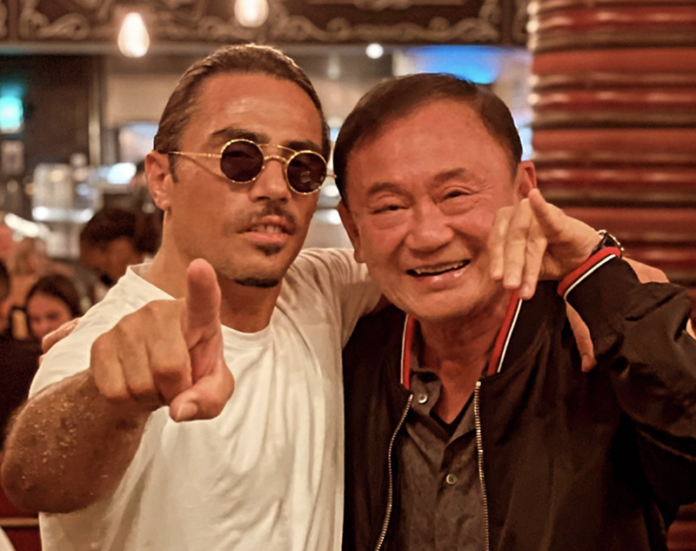
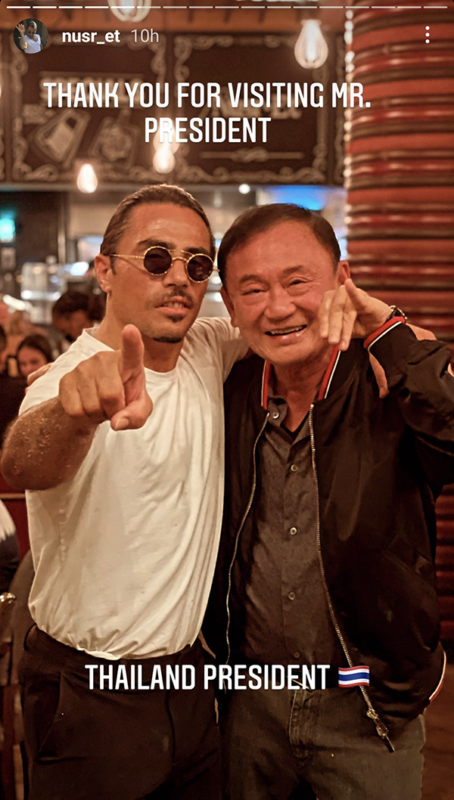
Nusret Gökçe and Thaksin Shinawatra on Dec. 29, 2020 at Nusr-Et restaurant in Dubai. Photo: Nusr_et / Instagram
DUBAI — The face behind a meat-salting internet meme met an ousted former prime minister of Thailand at a luxury steakhouse Tuesday night local time.
The photo of Thaksin “Maew” Shinawatra and Nusret Gökçe, better known as Salt Bae, was posted on Instagram by the restaurant Nusr-Et Dubai around 9pm local time… though something might have been lost in translation.
“Thank you for visiting Mr. President,” the Instagram story’s caption said. “Thailand President.”
Thaksin is not the President of Thailand – though many of his royalist opponents routinely accused him of having such ambition. The former telecom tycoon served as the Prime Minister from 2001 to 2006, when he was toppled in a military coup. Thaksin later fled the country shortly before a corruption verdict in 2008, which he insisted was politically motivated.
Thaksin has several residences around the world, including in London, Dubai, and Hong Kong. The self-exiled 71-year-old reportedly caught the coronavirus in October in Dubai but eventually recovered.
Turkish butcher Salt Bae skyrocketed to internet fame in January 2017 in a viral video of him sprinkling salt on steak. Messages sent to the Nusr-Et Instagram account have gone unanswered as of press time.
He owns the Nusr-Et chain of steakhouses, which has branches in Dubai and Abu Dhabi in the United Arab Emirates, Turkey, Saudi Arabia, Greece, Miami, New York, and Boston.
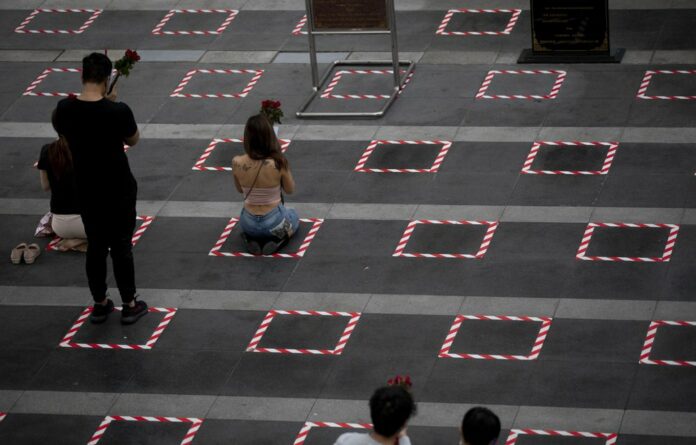
Devotees pray as they stay inside marked areas for social distancing at a shrine for Hindu god Ganesh, outside a shopping mall in Bangkok, Thailand, Tuesday, Dec. 29, 2020. (AP Photo/Gemunu Amarasinghe)
BANGKOK (AP) — Officials in the Thai capital have announced new restrictions, including the closure of some entertainment facilities during the New Year’s holiday, as infections continued to rise following a recent coronavirus outbreak.
After months of seeming to have the COVID-19 situation under control, Thailand has seen two major clusters developing since mid-December that threatened to undo its progress. One has mainly infected hundreds of migrant workers from Myanmar at a seafood market near Bangkok, the capital, while in recent days a cluster has grown connected to a gambling den in an eastern province.
As part of the restrictions announced Monday, hostess bars, gambling venues and massage parlors in Bangkok were ordered by the city government to close from Tuesday until Jan. 4. Bars and restaurants will be allowed to remain open during this period, but must close at midnight and adhere to social distancing requirements.
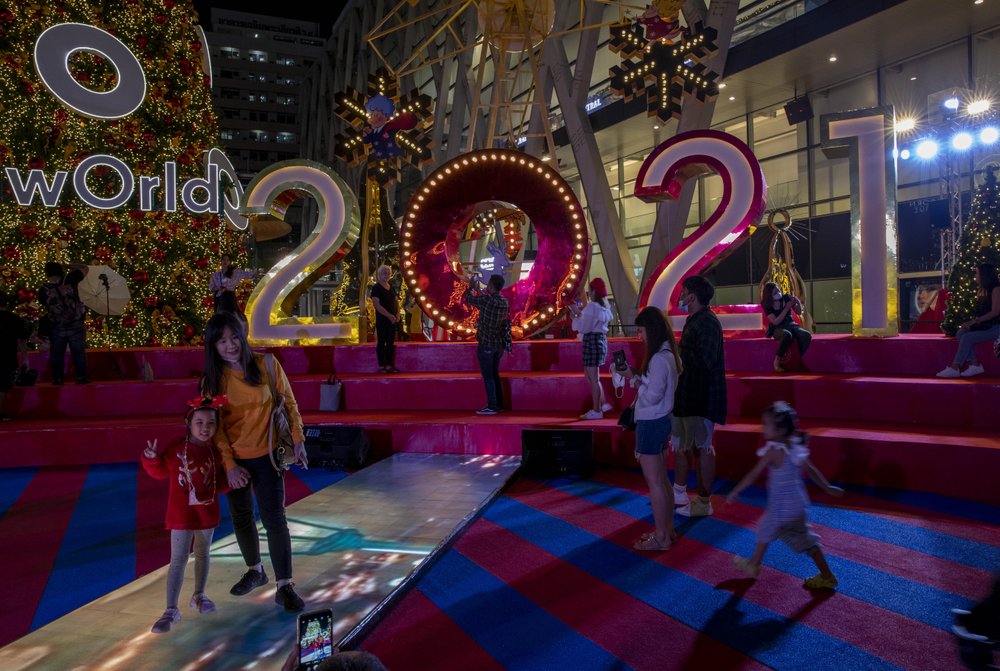
People pose for pictures with decorations made for New Year countdown celebrations outside a shopping mall in Bangkok, Thailand, Tuesday, Dec. 29, 2020. (AP Photo/Gemunu Amarasinghe)
Thailand reported 155 new coronavirus infections on Tuesday morning. Of those, 134 were local transmissions, 11 were migrant workers and 10 were from state quarantine, according to the government’s COVID-19 coordinating center.
Meanwhile, the latest COVID-19 death in nearly two months in Thailand was confirmed on Monday. The victim was a 45-year-old parking attendant at an illegal gambling den in Rayong province, on Thailand’s eastern seaboard. Rayong Gov. Channa Ieamsang confirmed at least 148 active cases linked to the gambling den on Tuesday afternoon.
The man who died had chronic heart disease and diabetes and his coronavirus test came back positive on Sunday, according to Deputy Public Health Minister Satit Pitutecha, On Monday morning, he became tired and gasped for air before he stopped breathing on the way to a hospital.
In response to the outbreak in Rayong, officials have announced a widespread shutdown, including schools, bars and other entertainment venues, massage and beauty parlors and department stores. Restaurants in the province will be allowed to operate for takeaway only.
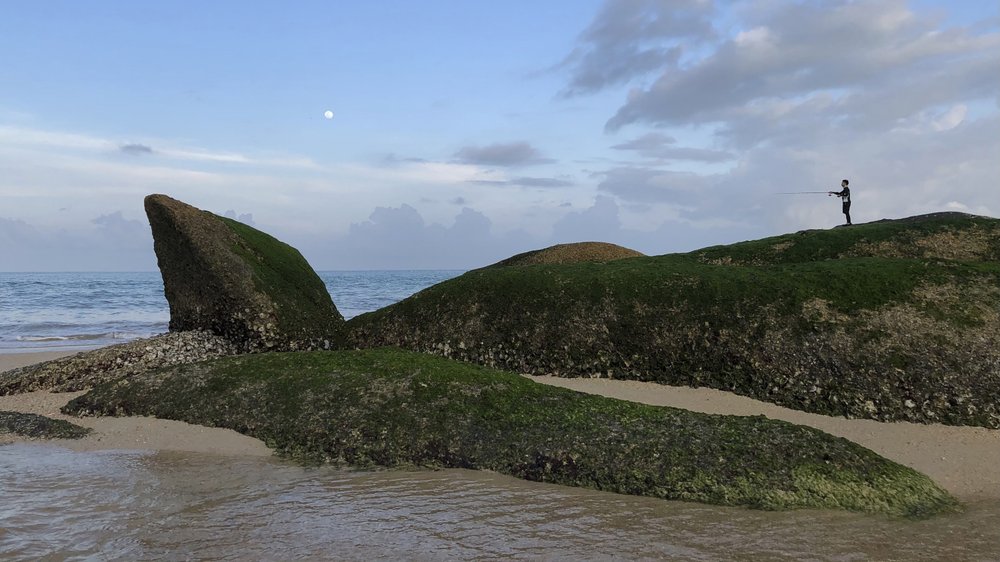
A man fishes on Monday, Dec. 28, 2020 on the resort island of Koh Phangan, Thailand, where tourist businesses are struggling because of coronavirus pandemic restrictions preventing most foreigners from entering the country. (AP Photo/Adam Schreck)
The early closing times for bars and restaurants in Bangkok means that New Year’s celebrations are likely to be strongly muted. Some popular midnight-countdown venues, including in the city’s central shopping district and along the riverside, had already canceled live concerts and other activities, but some fireworks displays are scheduled to go ahead as planned.
“During the New Year’s holiday we won’t impose travel restrictions, but there will be measures put in place in many provinces,” said Prime Minister Prayuth Chan-ocha, who visited Rayong on Tuesday to discuss the situation there.
Kiattiphum Wongrajit, permanent-secretary of the Public Health Ministry, said the government would impose checkpoints at entry and exit points to some provinces seeking to prevent further spread of the virus. He also said migrant workers would not be allowed to travel outside of their residential and work areas.
Thailand generally has been viewed as successful in combating the coronavirus, due partly to its well-regarded public health infrastructure and people’s adherence to mask-wearing and other protocols.
But cases have jumped significantly since an outbreak was detected last week among migrants from Myanmar working at a seafood market in Samut Sakhon province. Millions of low-wage jobs in Thailand are filled by workers from less affluent neighboring countries, especially Myanmar.
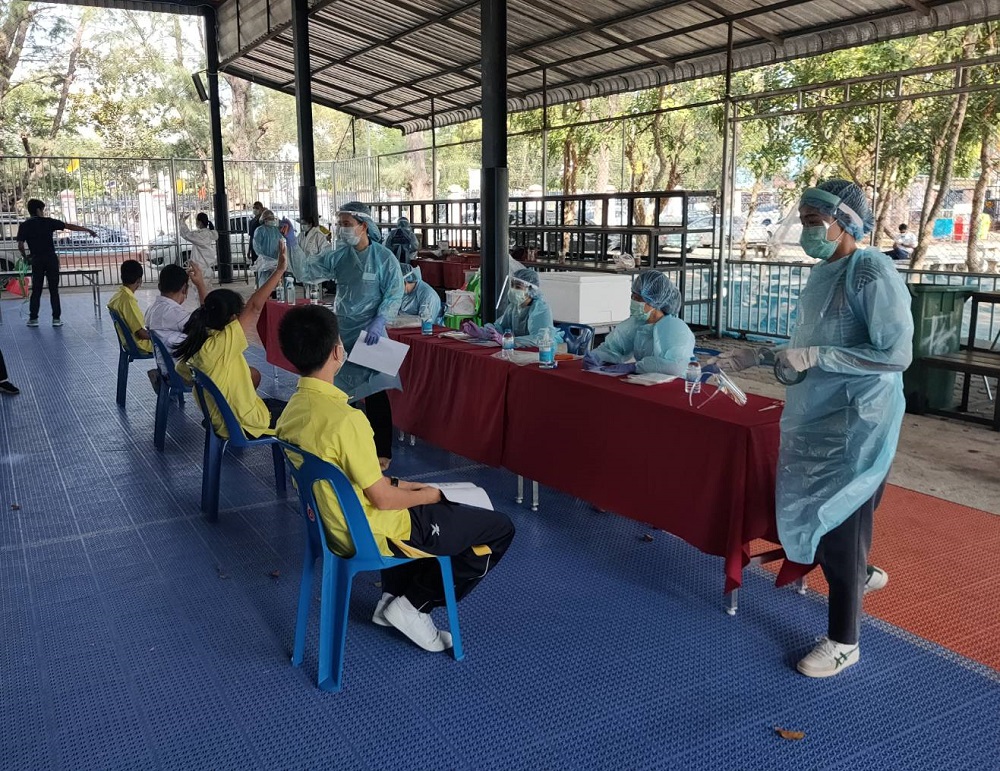
School students receive coronavirus tests in Rayong province on Dec. 30, 2020, after one of the teachers tested positive for the virus.
Samut Sakhon Gov. Weerasak Wijitsaengsri tested positive for the virus after meeting Sunday with senior health officials including Deputy Prime Minister and Public Health Minister Anutin Charnvirakul.
More than 20% of Thailand’s total of 6,440 confirmed cases are migrant workers in Samut Sakhon, and cases connected to the cluster have been found in 44 other provinces.
Samut Sakhon was put under lockdown on Dec. 19, followed by Samut Songkhram and Samut Prakarn.
A government spokesperson warned Tuesday that the number of new daily coronavirus cases could rise to more than 10,000 in January under a worst-case scenario if the government does not do enough now.
If authorities impose moderate intervention measures, the number of daily infections could rise to around 8,000 by the end of January, while under the strictest measures the number would likely not exceed 1,000, according to the spokesperson, Dr. Taweesilp Visanuyotin of the COVID-19 coordinating center.
___
Associated Press writer Bill Bredesen contributed to this report.
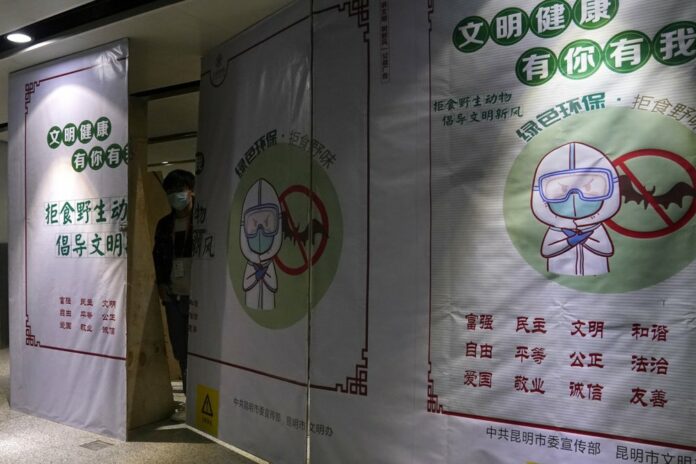
A worker wearing a mask peeps out behind construction barrier with a notice depicting a bat and advocating for people not to eat wild animals at the airport in Kunming in southern China's Yunnan province on Thursday, Dec. 3, 2020. (AP Photo/Ng Han Guan)
MOJIANG, China (AP) — Deep in the lush mountain valleys of southern China lies the entrance to a mine shaft that once harbored bats with the closest known relative of the COVID-19 virus.
The area is of intense scientific interest because it may hold clues to the origins of the coronavirus that has killed more than 1.7 million people worldwide. Yet for scientists and journalists, it has become a black hole of no information because of political sensitivity and secrecy.
A bat research team visiting recently managed to take samples but had them confiscated, two people familiar with the matter said. Specialists in coronaviruses have been ordered not to speak to the press. And a team of Associated Press journalists was tailed by plainclothes police in multiple cars who blocked access to roads and sites in late November.
More than a year since the first known person was infected with the coronavirus, an AP investigation shows the Chinese government is strictly controlling all research into its origins, clamping down on some while actively promoting fringe theories that it could have come from outside China.
The government is handing out hundreds of thousands of dollars in grants to scientists researching the virus’ origins in southern China and affiliated with the military, the AP has found. But it is monitoring their findings and mandating that the publication of any data or research must be approved by a new task force managed by China’s cabinet, under direct orders from President Xi Jinping, according to internal documents obtained by The AP.
A rare leak from within the government, the dozens of pages of unpublished documents confirm what many have long suspected: The clampdown comes from the top.
As a result, very little has been made public. Authorities are severely limiting information and impeding cooperation with international scientists.
“What did they find?” asked Gregory Gray, a Duke University epidemiologist who oversees a lab in China studying the transmission of infectious diseases from animals to people. “Maybe their data were not conclusive, or maybe they suppressed the data for some political reason. I don’t know…I wish I did.”
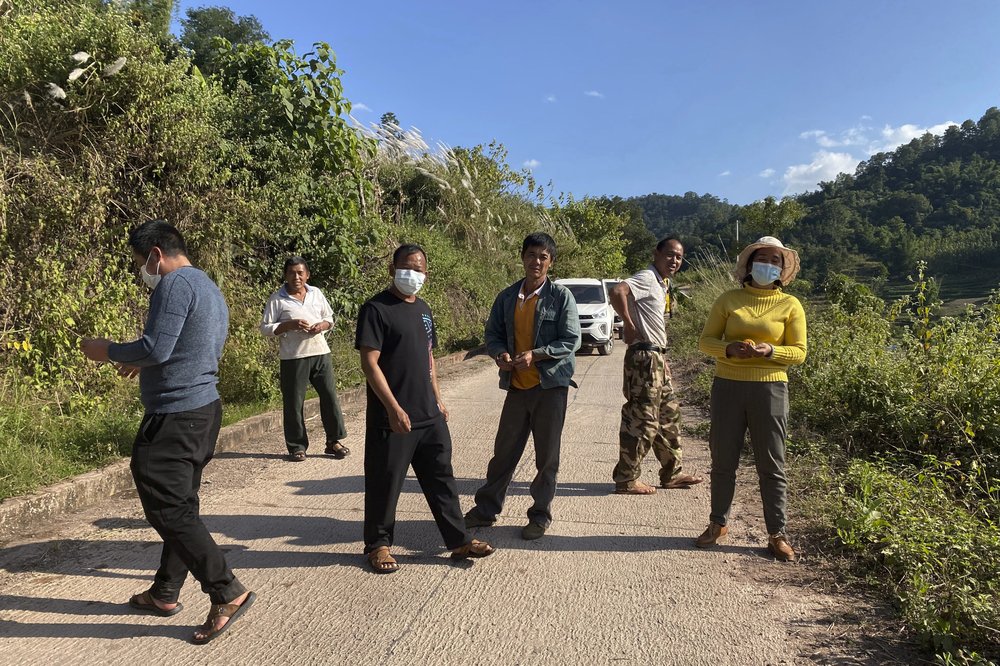
A group claiming to be local villagers use vehicles to block the roads leading to a mineshaft near Danaoshan in southern China’s Yunnan province on Tuesday, Dec. 1, 2020. (AP Photo/Ng Han Guan)
The AP investigation was based on dozens of interviews with Chinese and foreign scientists and officials, along with public notices, leaked emails, internal data and the documents from China’s cabinet and the Chinese Center for Disease Control and Prevention. It reveals a pattern of government secrecy and top-down control that has been evident throughout the pandemic.
“They only select people they can trust, those that they can control,” said a public health expert who works regularly with the China CDC, declining to be identified out of fear of retribution. “Military teams and others are working hard on this, but whether it gets published all depends on the outcome.”
The pandemic has crippled Beijing’s reputation on the global stage, and China’s leaders are wary of any findings that could suggest they were negligent in its spread. The Chinese Ministry of Science and Technology and the National Health Commission, which are managing research into the coronavirus’ origins, did not respond to requests for comment.
“The novel coronavirus has been discovered in many parts of the world,” China’s foreign ministry said in a fax. “Scientists should carry out international scientific research and cooperation on a global scale.”
Some Chinese scientists say little has been shared simply because nothing of significance has been discovered.
“We’ve been looking, but we haven’t found it,” said Zhang Yongzhen, a renowned Chinese virologist.
China’s leaders are far from alone in politicizing research into the origins of the virus. In April, President Donald Trump shelved a U.S.-funded project to identify dangerous animal diseases in China and Southeast Asia, effectively severing ties between Chinese and American scientists and complicating the search for virus origins. Trump also has accused China of setting off the pandemic through an accident at a Wuhan lab — a theory that some experts say cannot be ruled out but as yet has no evidence behind it.
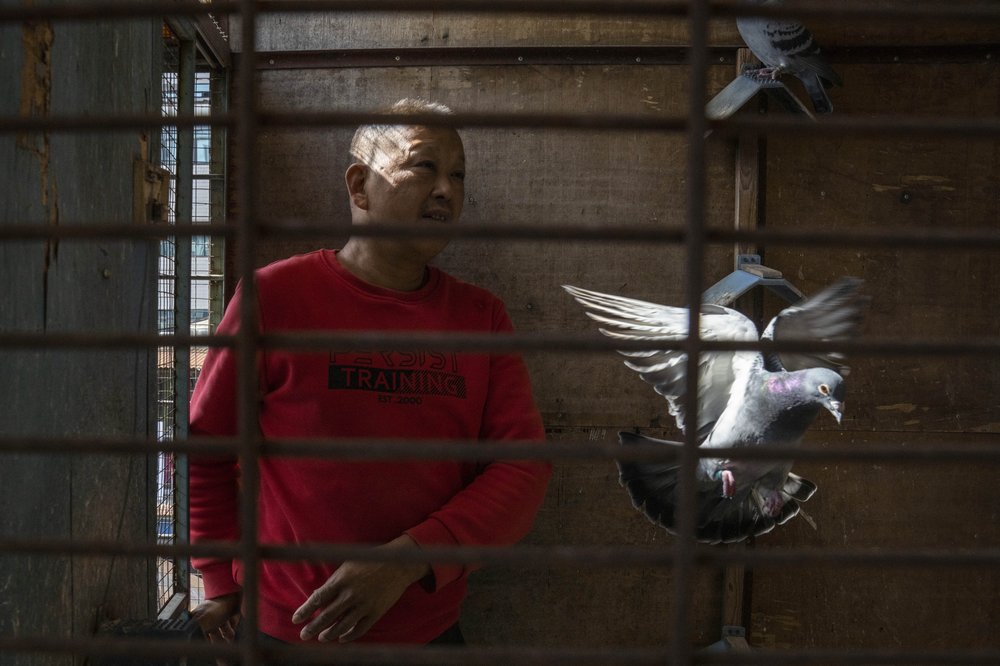
Huanan market vendor Jiang Dafa tends to his pigeons at home in Wuhan in central China’s Hubei province on Oct. 22, 2020. (AP Photo/Ng Han Guan)
Research into COVID-19’s origins is critical to the prevention of future pandemics. Although a World Health Organization international team plans to visit China in early January to investigate what started the pandemic, its members and agenda had to be approved by China.
Some public health experts warn that China’s refusal to grant further access to international scientists has jeopardized the global collaboration that pinpointed the source of the SARS outbreak nearly two decades ago. Jonna Mazet, a founding executive director of the UC Davis One Health Institute, said the lack of collaboration between Chinese and U.S. scientists was “a disappointment” and the inability of American scientists to work in China “devastating.”
“There’s so much speculation around the origins of this virus,” Mazet said. “We need to step back…and let scientists get the real answer without the finger-pointing.”
_______
The hidden hunt for the origins of COVID-19 shows how the Chinese government has tried to steer the narrative.
The search started in the Huanan Seafood market in Wuhan, a sprawling, low-slung complex where many of the first human coronavirus cases were detected. Scientists initially suspected the virus came from wild animals sold in the market, such as civet cats implicated in the spread of SARS.
In mid-December last year, Huanan vendor Jiang Dafa started noticing people were falling ill. Among the first was a part-time worker in his 60s who helped clean carcasses at a stall; soon, a friend he played chess with also fell ill. A third, a seafood monger in his 40s, was infected and later died.
Patients began trickling into nearby hospitals, triggering alarms by late December that alerted the China CDC. CDC chief Gao Fu immediately sent a team to investigate.
At first, research appeared to be moving swiftly.
Overnight on Jan. 1, the market suddenly was ordered shut, barring vendors from fetching their belongings, Jiang said. China CDC researchers collected 585 environmental samples from door handles, sewage and the floor of the market, and authorities sprayed the complex down with sanitizer. Later, they would cart out everything inside and incinerate it.
Internal China CDC data obtained by the AP shows that by Jan. 10 and 11, researchers were sequencing dozens of environmental samples from Wuhan. Gary Kobinger, a Canadian microbiologist advising WHO, emailed his colleagues to share his concerns that the virus originated at the market.
“This corona(virus) is very close to SARS,” he wrote on Jan. 13. “If we put aside an accident…then I would look at the bats in these markets (sold and ‘wild’).”
By late January, Chinese state media announced that 33 of the environmental samples had tested positive. In a report to WHO, officials said 11 specimens were more than 99% similar to the new coronavirus. They also told the U.N. health agency that rats and mice were common in the market, and that most of the positive samples were clustered in an area where vendors traded in wildlife.
In the meantime, Jiang avoided telling people he worked at Huanan because of the stigma. He criticized the political tussle between China and the U.S.
“It’s pointless to blame anyone for this disease,” Jiang said.
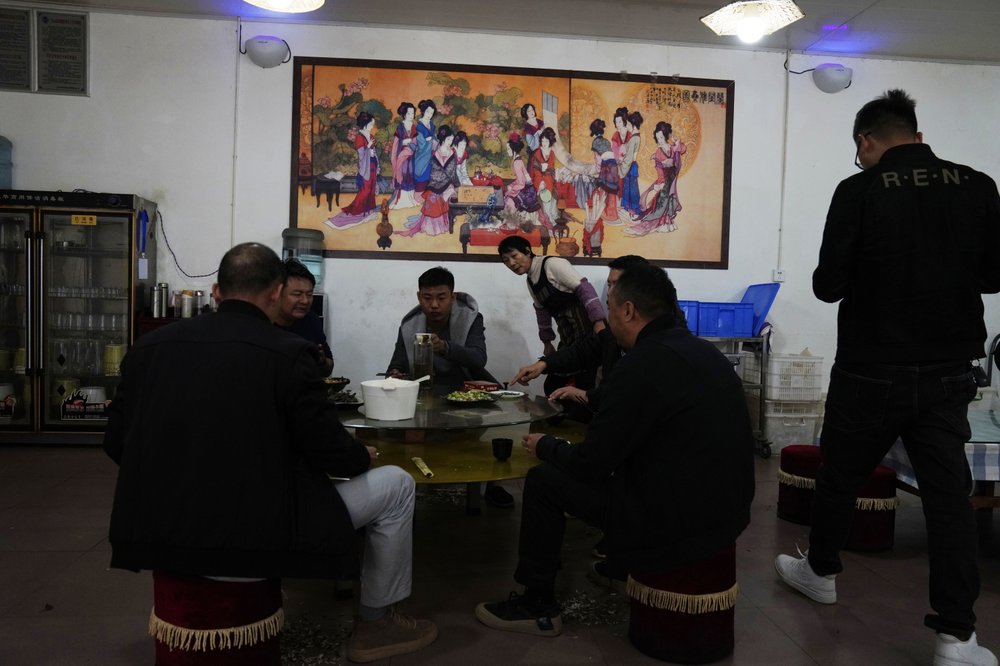
People eat in a restaurant outside of Kunming in southern China’s Yunnan province on Monday, Nov. 30, 2020. (AP Photo/Ng Han Guan)
As the virus continued spreading rapidly into February, Chinese scientists published a burst of research papers on COVID-19. Thena paper by two Chinese scientistsproposed without concrete evidence that the virus could have leaked from a Wuhan laboratory near the market. It was later taken down, but it raised the need for image control.
Internal documents show that the state soon began requiring all coronavirus studies in China to be approved by high-level government officials — a policy that critics say paralyzed research efforts.
Then on March 2, Xi emphasized “coordination” on coronavirus research, state media reported.
The next day, China’s cabinet, the State Council, centralized all COVID-19 publication under a special task force. The notice, obtained by the AP and marked “not to be made public,” was far more sweeping in scope than the earlier CDC notices, applying to all universities, companies and medical and research institutions.
The order said communication and publication of research had to be orchestrated like “a game of chess” under instructions from Xi, and propaganda and public opinion teams were to “guide publication.” It went on to warn that those who publish without permission, “causing serious adverse social impact, shall be held accountable.”
“The regulations are very strict, and they don’t make any sense,” said a former China CDC deputy director, who declined to be named because they were told not to speak to the media. “I think it’s political, because people overseas could find things being said there that might contradict what China says, so it’s all being controlled.”
After the secret orders, the tide of research papers slowed to a trickle. Although China CDC researcher Liu Jun returned to the market nearly 20 times to collect some 2,000 samples over the following months, nothing was released about what they revealed.
On May 25, CDC chief Gao finally broke the silence around the market in an interview with China’s Phoenix TV. He said that, unlike the environmental samples, no animal samples from the market had tested positive.
The announcement surprised scientists who didn’t even know Chinese officials had taken samples from animals. It also ruled out the market as the likely source of the virus, along with further research that showed many of the first cases had no ties to it.
__________
With the market proving a dead end, scientists turned more attention to hunting for the virus at its likely source: Bats.
Nearly a thousand miles away from the wet market in Wuhan, bats inhabit the maze of underground limestone caves in Yunnan province. With its rich, loamy soil, fog banks and dense plant growth, this area in southern China bordering Laos, Vietnam and Myanmar is one of the most biologically diverse on earth.
At one Yunnan cave visited by the AP, with thick roots hanging over the entrance, bats fluttered out at dusk and flew over the roofs of a nearby small village. White droppings splattered the ground near an altar in the rear of the cave, and Buddhist prayer strings of red and yellow twine hung from the stalactites. Villagers said the cave had been used as a sacred place presided over by a Buddhist monk from Thailand.
Contact like this between bats and people praying, hunting or mining in caves alarms scientists. The coronavirus’ genetic code is strikingly similar to that of bat coronaviruses, and most scientists suspect COVID-19 jumped into humans either directly from a bat or via an intermediary animal.
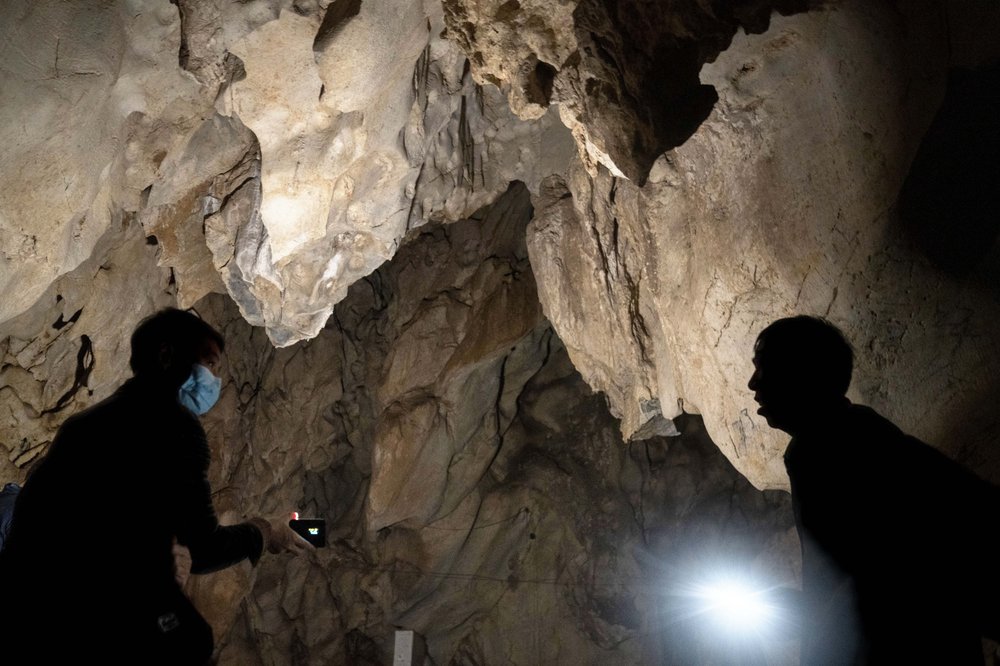
Visitors look inside the abandoned Wanling cave near Manhaguo village in southern China’s Yunnan province on Wednesday, Dec. 2, 2020. Villagers said the cave had been used as a sacred altar presided over by a Buddhist monk, precisely the kind of contact between bats and people that alarms scientists. (AP Photo/Ng Han Guan)
Since bats harboring coronaviruses are found in China and throughout Southeast Asia, the wild animal host of COVID-19 could be anywhere in the region, said Linfa Wang at Duke-NUS Medical School in Singapore.
“There is a bat somewhere with a 99.9% similar virus to the coronavirus,” Wang said. “Bats don’t respect these borders.
COVID-19 research is proceeding in countries such as Thailand, where Dr. Supaporn Wacharapluesadee, a coronavirus expert, is leading teams of scientists deep into the countryside to collect samples from bats. During one expedition in August, Supaporn told the AP the virus could be found “anywhere” there were bats.
Then the government restrictions kicked in. Data on the samples still has not been made public, and Xia did not respond to requests for an interview. Although Xia has co-authored more than a dozen papers this year, an AP review shows, only two were on COVID-19, and neither focused on its origins.
Today, the caves that scientists once surveyed are under close watch by the authorities. Security agents tailed the AP team in three locations across Yunnan, and stopped journalists from visiting the cave where researchers in 2017 identified the species of bats responsible for SARS. At an entrance to a second location, a massive cave teeming with tourists taking selfies, authorities shut the gate on the AP.
“We just got a call from the county,” said a park official, before an armed policeman showed up.
Particularly sensitive is the mine shaft where the closest relative of the COVID-19 virus — called “RaTG13” — was found.
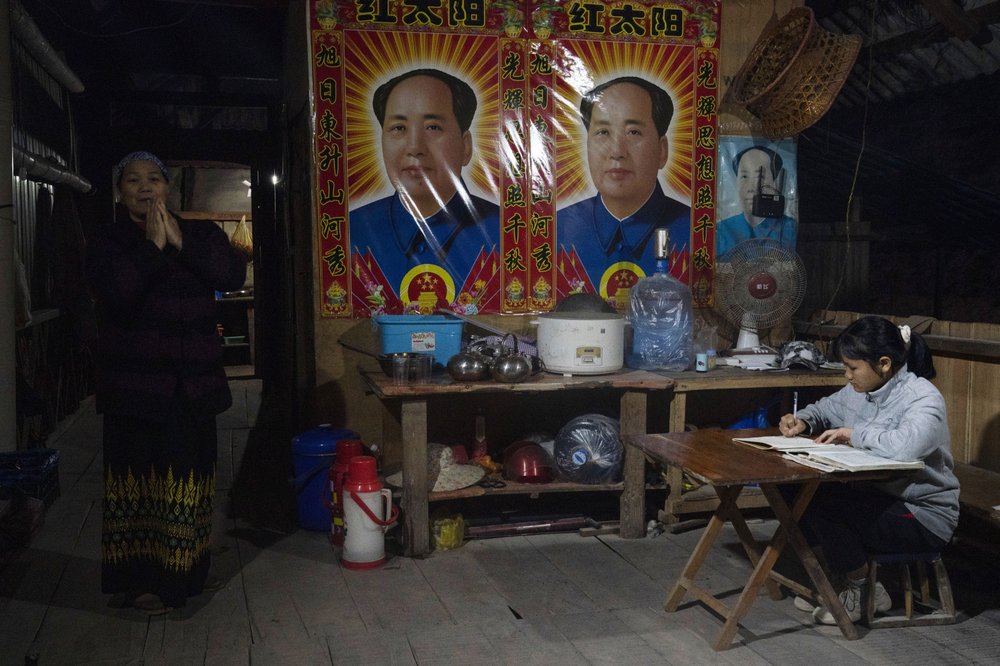
Villagers go about their evening near posters depicting Mao Zedong in Manhaguo village in southern China’s Yunnan province on Wednesday, Dec. 2, 2020. (AP Photo/Ng Han Guan)
RaTG13 was discovered after an outbreak in 2012, when six men cleaning the bat-filled shaft fell ill with mysterious bouts of pneumonia, killing three. The Wuhan Institute of Virology and the China CDC both studied bat coronaviruses from this shaft. And although most scientists believe the COVID-19 virus had its origins in nature, some say it or a close relative could have been transported to Wuhan and leaked by mistake.
Wuhan Institute of Virology bat expert Shi Zhengli has repeatedly denied this theory, but Chinese authorities haven’t yet allowed foreign scientists in to investigate.
Some state-backed scientists say research is proceeding as usual. Famed virologist Zhang, who received a 1.5 million RMB ($230,000) grant to search for the virus’ origins, said partnering scientists are sending him samples from all over, including from bats in Guizhou in southern China and rats in Henan hundreds of miles north.
“Bats, mice, are there any new coronaviruses in them? Do they have this particular coronavirus?” Zhang said. “We’ve been doing this work for over a decade. It’s not like we just started today.”
Zhang declined to confirm or comment on reports that his lab was briefly closed after publishing the virus’ genetic sequence ahead of authorities. He said he hasn’t heard of any special restrictions on publishing papers, and the only review his papers go through is a routine scientific one by his institution.
But scientists without state backing complain that getting approval to sample animals in southern China is now extremely difficult, and that little is known about the findings of government-sponsored teams.
_______
Even as they controlled research within China, Chinese authorities promoted theories that suggested the virus came from elsewhere.
The government gave Bi Yuhai, the Chinese Academy of Sciences scientist tapped to spearhead origins research, a 1.5 million RMB grant ($230,000),records show. A paper co-authored by Bisuggested an outbreak in a Beijing market in June could have been caused by packages of contaminated frozen fish from Europe.
China’s government-controlled media used the theory to suggest the original outbreak in Wuhan could have started with seafood imported from abroad — a notion international scientists reject. WHO has said it is very unlikely that people can be infected with COVID-19 via packaged food, and that it is “highly speculative” to suggest COVID-19 did not start in China. Bi did not respond to requests for an interview, and China has not provided enough virus samples for a definitive analysis.
The Chinese state press also has widely covered initial studies from Europe suggesting COVID-19 was found in wastewater samples in Italy and Spainlast year. But scientists have largely dismissed these studies, and the researchers themselves acknowledged they did not find enough virus fragments to determine conclusively if it was the coronavirus.
And in the last few weeks, Chinese state media has taken out of context research from a German scientist, interpreting it to suggest that the pandemic began in Italy. The scientist, Alexander Kekule, director of the Institute for Biosecurity Research, has said repeatedly that he believes the virus first emerged in China.
Internal documents show the Chinese government also has sponsored studies on the possible role of the Southeast Asian pangolin, a scaly anteater once prized in traditional Chinese medicine, as an intermediary animal host. Within the span of three days in February, Chinese scientists put out four separate papers on coronaviruses related to COVID-19 in trafficked Malayan pangolins from Southeast Asia seized by customs officials in Guangdong.
But many experts now say the theory is unlikely. Wang of the Duke-NUS Medical School in Singapore said the search for the coronavirus in pangolins did not appear to be “scientifically driven.” He said blood samples would be the most conclusive evidence of COVID-19’s presence in the rare mammals, and so far, no incriminating matches have been found.
WHO has said more than 500 species of other animals, including cats, ferrets and hamsters, are being studied as possible intermediary hosts for COVID-19.
The Chinese government is also limiting and controlling the search for patient zero through the re-testing of old flu samples.
Chinese hospitals collect thousands of samples from patients with flu-like symptoms every week and store them in freezers. They could easily be tested again for COVID-19, although politics could then determine whether the results are made public, said Ray Yip, the founding director of the U.S. CDC office in China.
“They’d be crazy not to do it,” Yip said. “The political leadership will wait for that information to see, does this information make China look stupid or not?…If it makes China look stupid, they won’t.”
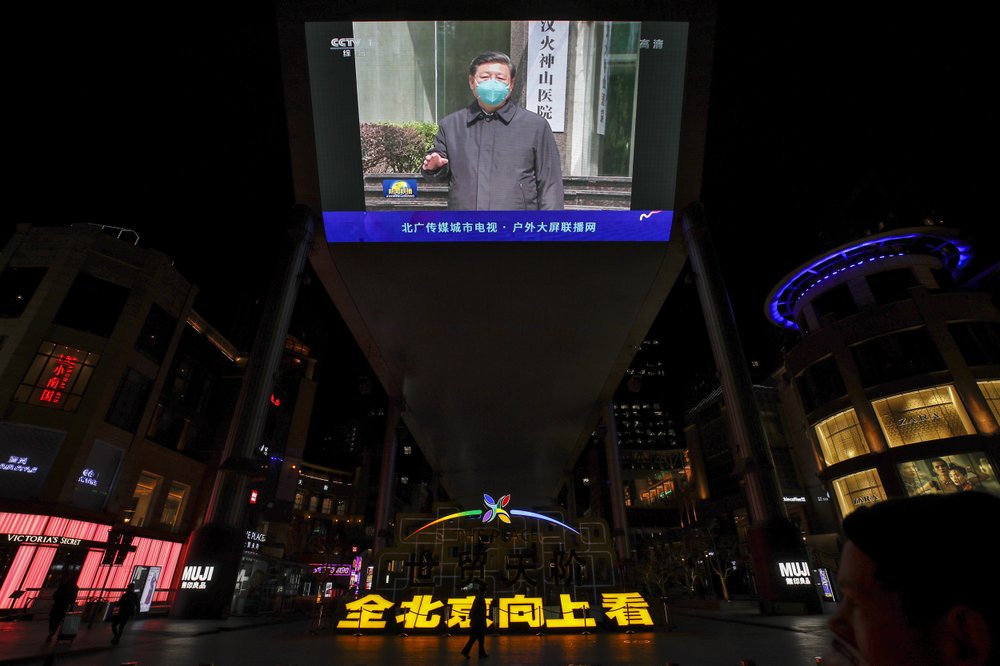
In this Tuesday, March 10, 2020 file photo, people walk by a giant TV screen at a quiet shopping mall in Beijing broadcasting news of Chinese President Xi Jinping talking to medical workers at the Huoshenshan Hospital in Wuhan in central China’s Hubei Province, as he visited the center of the global virus outbreak. (AP Photo/Andy Wong)
These enormous gaps in the research aren’t due just to a lack of testing but also to a lack of transparency. Internal data obtained by the AP shows that by Feb. 6, the Hubei CDC had tested over 100 samples in Huanggang, a city southeast of Wuhan. But the results have not been made public.
The little information that has dribbled out suggests the virus was circulating well outside Wuhan in 2019 — a finding that could raise awkward questions for Chinese officials about their early handling of the outbreak. Chinese researchers found that a child hundreds of miles from Wuhan had fallen ill with the virus by Jan. 2, suggesting it was spreading widely in December. But earlier samples weren’t tested, according to a scientist with direct knowledge of the study.
“There was a very deliberate choice of the time period to study, because going too early could have been too sensitive,” said the scientist, who declined to be named out of fear of retribution.
A WHO report written in July but published in November said Chinese authorities had identified 124 cases in December 2019, including five cases outside Wuhan. Among WHO’s aims for its upcoming visit to China are reviews of hospital records before December.
Coronavirus expert Peter Daszak, a member of the WHO team, said identifying the pandemic’s source should not be used to assign guilt.
“We’re all part of this together,” he said. “And until we realize that, we’re never going to get rid of this problem.”
_______
Kang reported from Beijing and Cheng reported from London. Associated Press journalists Han Guan Ng and Emily Wang in Wuhan, China, Haven Daley in Stinson Beach, California, and Tassanee Vejpongsa in Kanchanaburi, Thailand, contributed to this report.
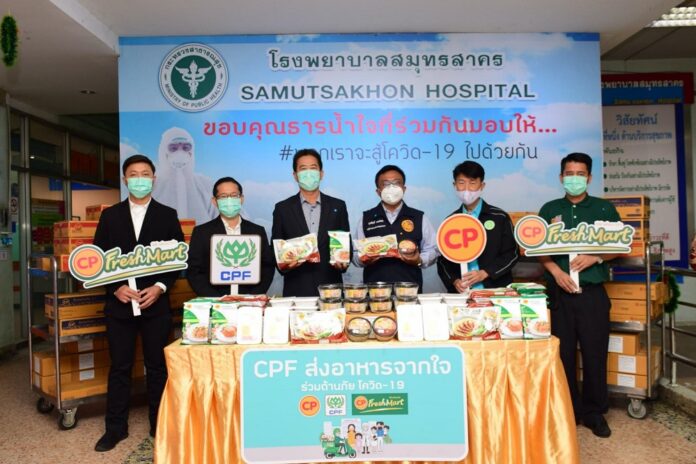
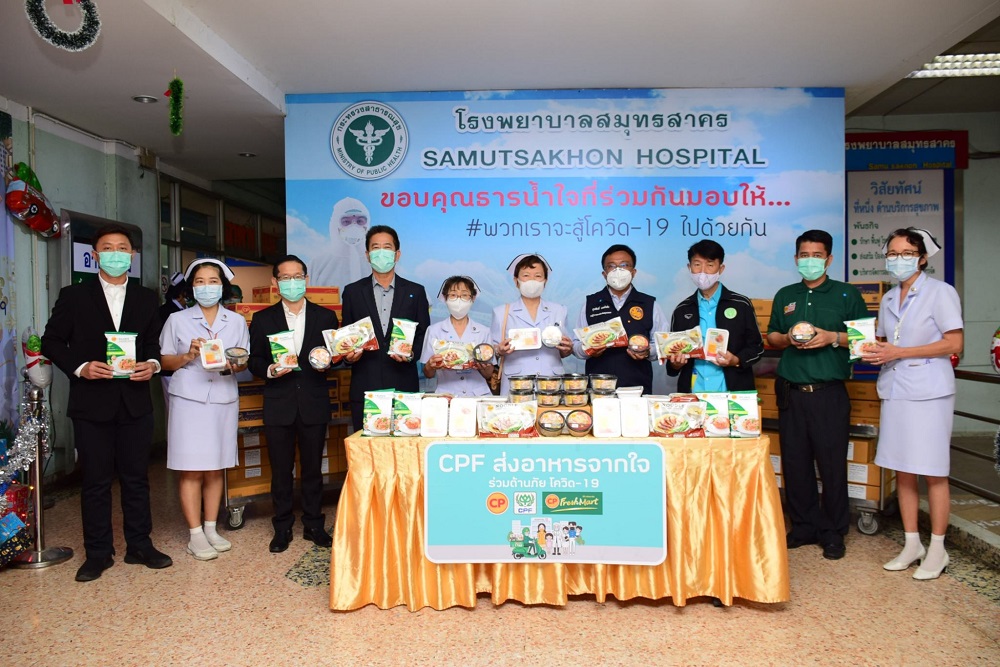
30 December 2020, Charoen Pokphand Group and Charoen Pokphand Foods PCL (CP Foods) have joined forces to provide high nutrition foods and masks to quarantine people, vulnerable group and people who live in high risk areas in Samut Sakhon during the emerging new phase of COVID-19.
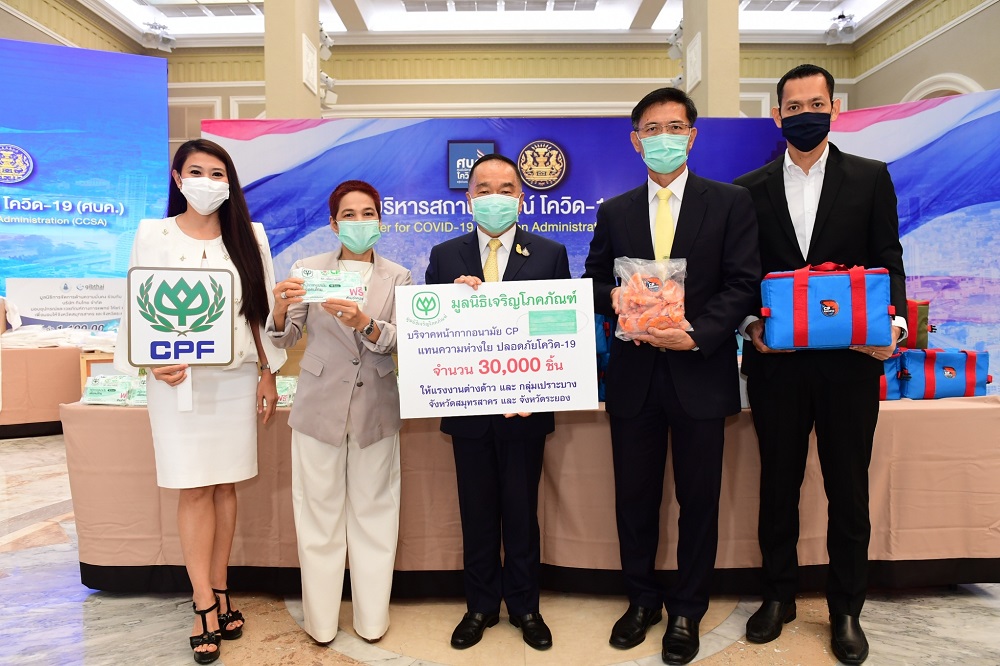
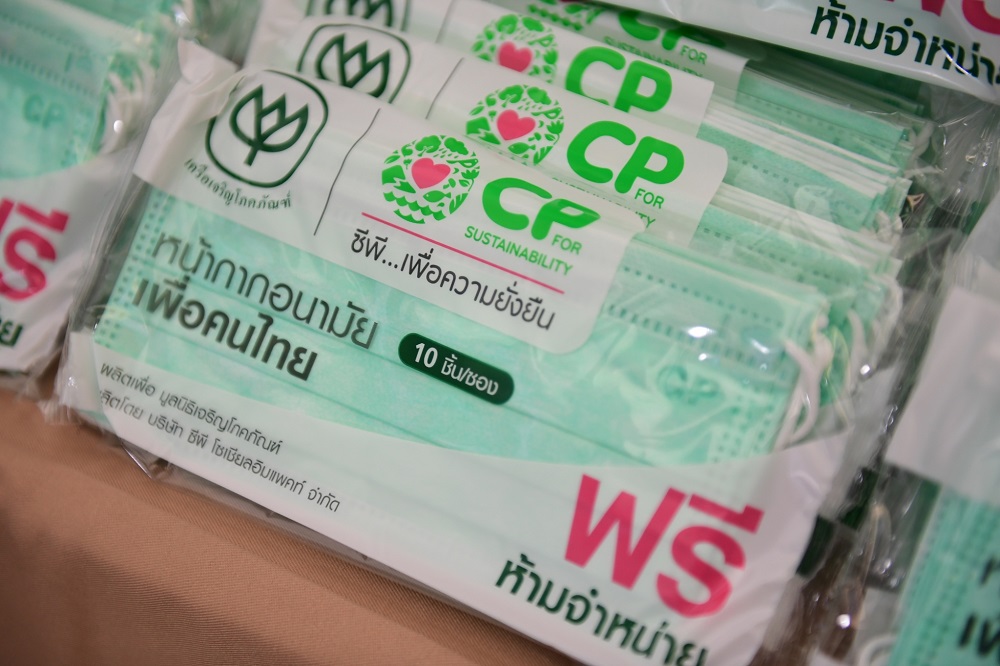
CP Group and CP Foods today delivered 200,000 masks and quality foods to migrant workers and vulnerable groups nationwide. Of the total, 30,000 masks is directly distributed to those workers and vulnerable people in Rayong and Samut Sakhon province.
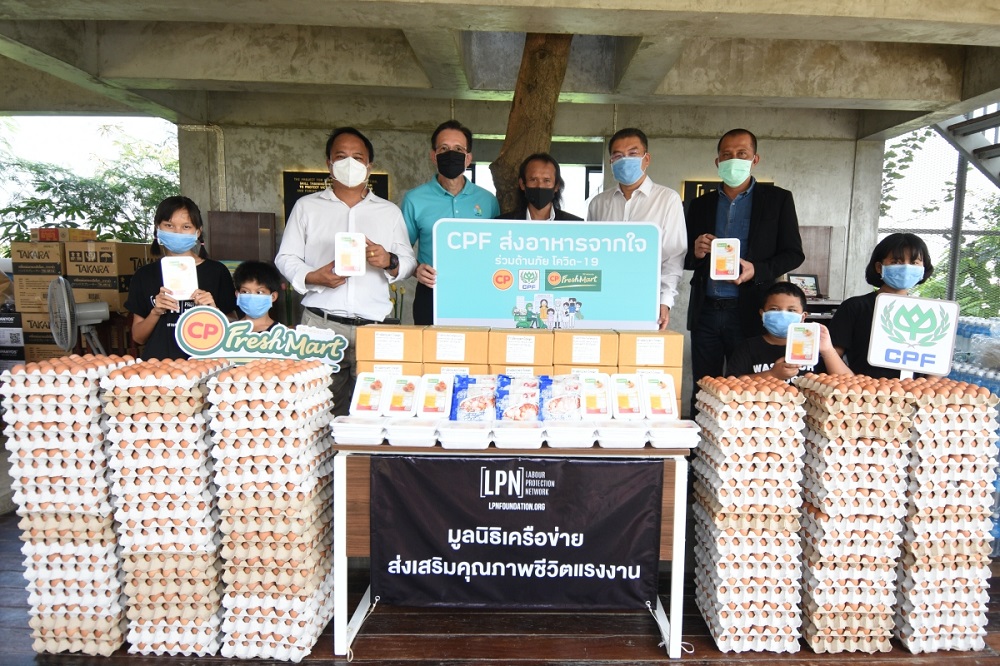
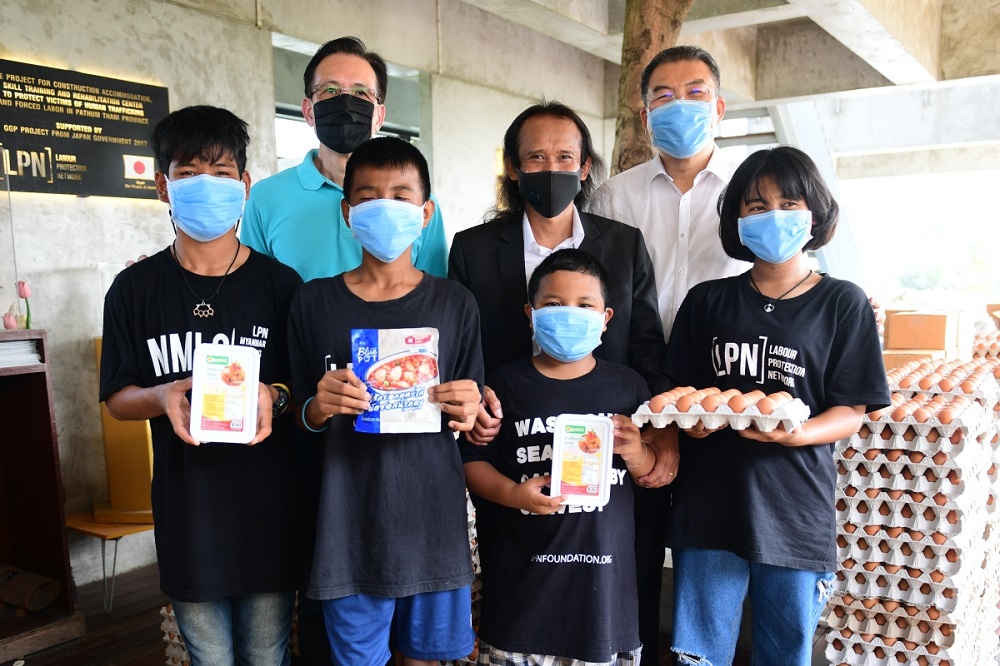
Moreover, CP Foods also collaborated with Labour Protection Network (LPN) to distribute 30,800 packs of meals and 10,000 eggs to migrant communities, particularly from Myanmar, under quarantine in Mahachai area of Samut Sakhon province.
The assistance is part of “CPF Food from heart aganst COVID-19” project, aims at encouraging those who are suffering from quarantine particularly foreign labours to have enough food supplies during the province’s lockdown. The company has continuously provided assistance to fight against the virus pandemic, which previously, 55,000 packs of ready-to-eat meals were distributed to the frontline medical staffs, COVID-patient at Samut Sakhon Hospital.
Recently, CP Foods’ CEO Prasit Boondoungprasert said that the company, as a Good Corporate Citizen and also has one operation plant in Samut Sakhon province, has reached out people without discrimination. All assistance draws to ensure that those targeted people have received safe and high quality food supplies and in turn improve health and wellbeing during the quarantine.
“CP Foods is using our expertises as a world’s leading food producer to deliver high nutrition foods quality to both Thais and migrants. Particularly during the virus crisis, we believe that social responsibility and collaboration with all parties are the upmost importances. We have to help each other in order to get through this global pandemic,” Mr. Prasit said.
Meanwhile, Mr. Sompong Srakaew, Director and Founder of LPN, added that there are around 4,000 people living around Mahachai shrimp market, including migrant workers, which mostly from Myanmar. These people are suffered from the lockdown as they cannot work and cannot go out of the quarantine area. Therefore, quality food supplies from CP Foods are essential for their daily living.
“This relief activity reflects friendship and goodwill of Thai people toward the migrant communities. They can be confident that Thai people will not leave them behind in this hard time,” he said
Since the outbreak started in early 2020, the company has made multiple COVID-19 relief’s activities to supports various groups of people, such as frontline staffs, people who returned from abroad to home quarantine, and vulnerable groups.
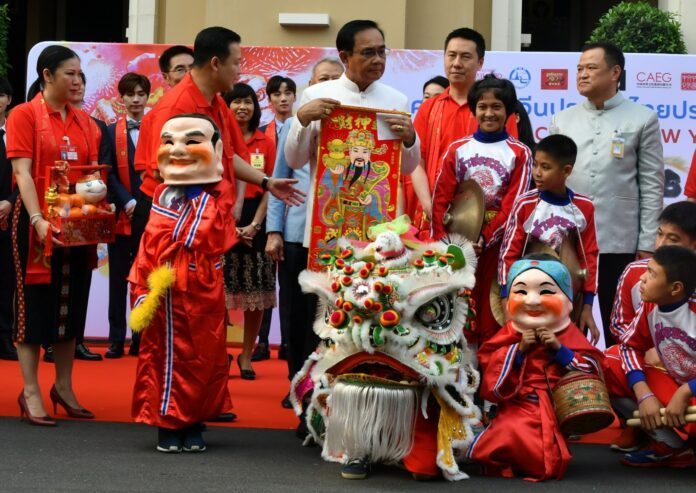
Prayuth Chan-ocha poses for photos with a lion dance troupe Jan. 14, 2020 at Government House to promote Chinese New Year, which fell on Jan. 25, 2020.
BANGKOK — Thai-Chinese civil servants will no longer need to ask for a day off to meet relatives for the Lunar New Year in the Year of the Ox – the government is set to designate it as an official holiday for the first time.
Chinese New Year is among four new occasions to be celebrated as government holidays in the next calendar year per a Cabinet resolution, deputy government spokeswoman Trisulee Trisoranakul said Tuesday. Holidays exclusive to some regions, based on local traditions, will also be introduced for the first time.
“The government’s measure of special holidays and regional holidays is to boost tourism and the economy. We’ve seen that during long holidays, people travel and spend, boosting the country’s economy,” Trisulee said.
But don’t book your flights for overseas vacation just yet (oh wait, you can’t anyway!). All of the extra holidays in 2021 are considered government holidays (วันหยุดราชการ) and not national holidays (วันหยุดนักขัตฤกษ์) – meaning that they will mostly apply to civil servants. Financial institutions and private corporations may or may not close down their businesses on those days. So check with your employers later.
Trisulee also said individual government agencies may choose to stay open during any of those extra holidays if they believe a closure will “affect members of the public” who require crucial services.
Last of all, note that the government said these new holidays are meant to be a one-time experimental addition exclusive to 2021, and not to reoccur in the following years.
Feb. 12: Chinese New Year
April 12: Extra Songkran, in addition to the existing dates of April 13 to 15
July 27: A substitute holiday for the beginning of Buddhist Lent on July 25 which falls on Sunday
Sept. 24: Mahidol Day, to commemorate the death of King Rama X’s grandfather in 1929
Government departments in the Northern Region also receive a holiday on March 26 for people to pay respect to Buddhist relics at temples (wai phra that). Isaan scores a holiday on May 10 for the Rocket Festival, while the South gets Oct. 6 off for the Sart Thai festival.
Bangkokians and central provinces, rejoice: Oct. 21 will be a government holiday to mark the end of Buddhist Lent.
But wait, there’s more. King Chulalongkorn Memorial Day will be moved from Oct. 23 to Oct. 22 to create a three-day weekend (it was initially moved to Oct. 25).
All in all, if things proceed as planned, these new dates will give civil servants a whopping 24 days off in the year!
BANGKOK — 2020 is the year of a lanky 22-year-old journalist pointing a mounted iPhone at a 53-year-old veteran correspondent who shows audiences from all over the world what’s really happening in Thailand, real-time.
Khaosod English reporters Tappanai Boonbandit and Pravit Rojanaphruk became a sort of a household name this year thanks to their candid and occasionally dangerous live broadcasts. They have covered everything from political protests shaking the foundations of Thailand to plant market tours – bickering with each other like an old married couple along the way.
Thank you so much for watching Tappanai and Pravit cover ground this year. We’ve picked seven Facebook Lives that showcased the best of the Gen X and Gen Z duo. See you again in 2021!
The beginning of the student-led protests
The dissolution of Future Forward, the chief opposition party extremely popular among the younger voters, back in February kicked off anti-government protests in a number of universities across Thailand – the first awakening of student activism in many, many years.
Pravit and Tappanai were there at Mahidol University on Feb. 25, when thousands of students gathered to vent their frustration at PM Prayut Chan-o-cha’s government, who has been in power since the May 2014 coup. The protest later snowballed into a nationwide movement that challenged not only PM Prayut’s grip on power, but also some of the most influential institutions of Thailand.
Oct. 16 crackdown on student protesters
After spending an entire afternoon broadcasting a large protest from the Pathum Wan Intersection in the heart of Bangkok’s shopping district, Pravit and Tappanai found themselves caught between a line of riot police and protesters’ barricades.
They were about to end the episode at the police line, but then companies of fully geared riot police suddenly advanced to the protest site. Water cannons moved in and water jets laced with irritants were fired on unarmed demonstrators.
It was the first act of police violence on demonstrators since the pro-democracy protests began and no one was prepared for it.
Top quote from the episode: “Come on, Tappanai. Don’t be scared!”
Live interview with Thanathorn Juangroongruangkit
Pravit sits down with the tycoon-turned-politician whose entry to politics led to a chain of consequences that few could have possibly imagined. Thanathorn was given a chance to speak out on the widespread accusations that he masterminded anti-monarchy plots, but he was also challenged with some hard questions by Pravit.
Clashes in front of the Parliament
With projectiles whizzing by, our duo continued the live broadcast from the protest in front of the Parliament on Nov. 17. Water cannons queued up one after another to drench demonstrators with water and teargas. Sounds of muffled voices could be heard on air as the pair struggled to speak inside a gas mask.
Police later withdrew from Kiek Kai Intersection after water cannons reportedly ran out of water, setting a stage for a violent confrontation between pro-democracy and ultraroyalist protesters that many Thais have dreaded to see.
Tappanai’s Graduation
While most other fresh graduates hire photographers to commemorate their graduation, the entire Khaosod English team recorded Tappanai’s graduation ceremony – Live.
Pravit then took the audience on a tour of the Thammasat University Tha Prachan campus, whose alumni include Thailand’s most progressive political forces, and grounds of which have been literally soaked with blood during some of Thailand’s darkest episodes.
Though Pravit is not a Thammasat alumnus, he appears to know more than Tappanai about the history behind the institution regarded as a bastion of democracy in Thailand.
Oct. 26 royalist protest at the German Embassy
We believe in giving space to all sides in the debate, regardless of how offensive they may be to the audience’s ears.
That is why Pravit chats up ultraroyalists as they rallied on Oct. 26 in front of the German Embassy in support of His Majesty the King, who often spends time in Germany. Later that evening, Pravit and Tappanai would hear a completely different version of the story from the pro-reform protest at the same venue.
Migrant workers and seafood Restaurants
In the wake of the second wave of COVID-19 outbreak in Thailand emanating from a shrimp market in Samut Sakhon, where many migrant workers live and work, our duo hit the ground immediately and sought to bring news to the audience amid the growing noises of panic and prejudice on social media.
Bonus: The Royal Convoy
Perhaps the strangest experience for Pravit and Tappanai was when they were interviewing two activists, Ekachai Hongkangwan and Bunkueanun “Francis” Paothong, during a protest in front of Government House on Oct. 16 – and then all of a sudden, police and a royal motorcade carrying none other than Her Majesty the Queen pushed through the crowd of demonstrators.
The incident was captured on our Facebook Live, though we were forced to delete it soon after due to concerns of possible legal actions. Ekachai and Bunkueanun were later charged with committing acts of violence on the Queen – a charge that could land them in prison for life, despite the fact that they did not even touch the convoy. It was indeed a strange episode.
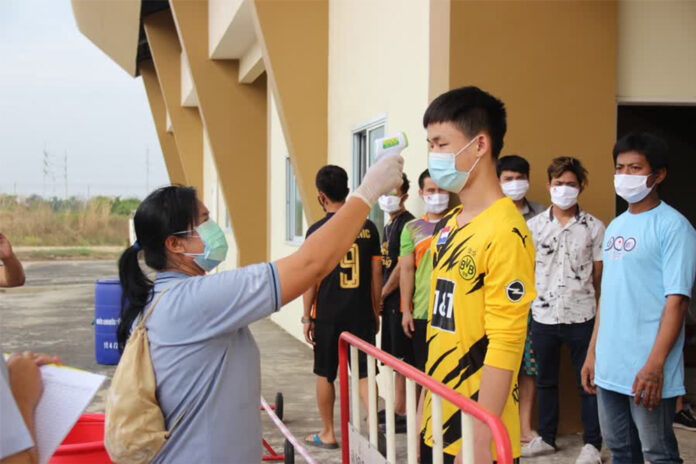
A migrant worker gets his body temperature checked at the provincial quarantine facility in Samut Prakan province on Dec. 24, 2020.
SAMUT PRAKAN — No charges have been filed against individuals who abandoned a group of migrant workers from Samut Sakhon on the roadside outside Bangkok so far, police said Tuesday.
Although investigators identified STI Precision plastic factory as the employer of the 18 workers, and the owner of the van that drove them out of the province before leaving on the Bangna-Trad Highway last week, no legal action was ever taken. Police said they needed to question more victims before filing any charges.
“Nothing much can be done right now as the migrant workers are currently placed under quarantine,” Bang Kaew police superintendent Mongkol Aonkaew said.
“We have already questioned representatives of the factory. They said they have nothing to do with the migrant workers since they’re not in control of factory operations.”
Col. Mongkol continued, “We have issued summon warrants for the drivers and they will come to meet us soon. Once we get all the testimonies, we can begin legal action.”
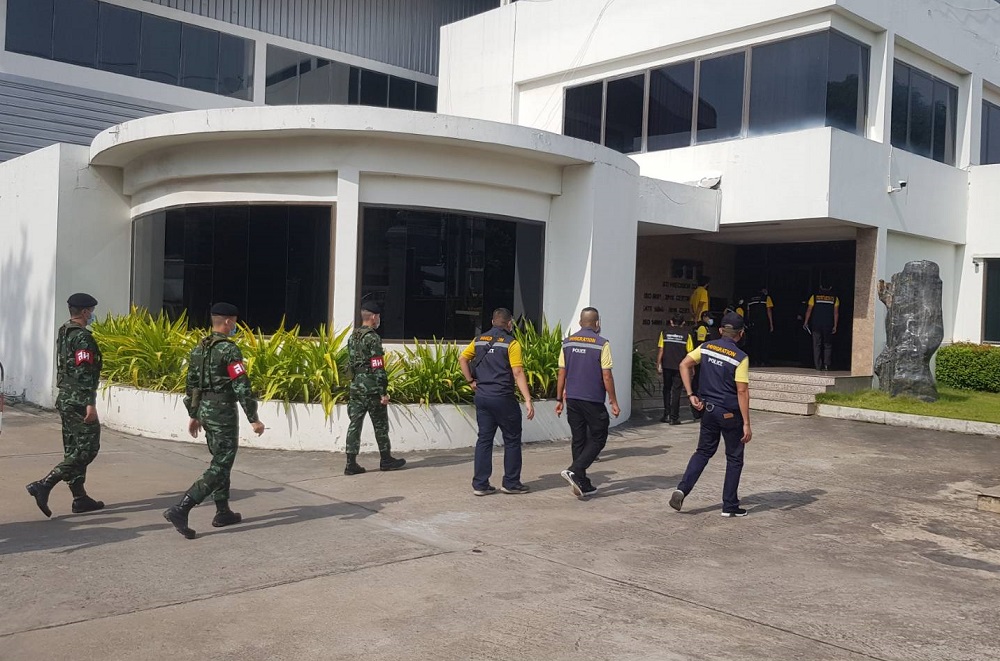
Security officers inspect STI Precision plastic factory in Samut Sakhon on Dec. 23, 2020.
The company could not be reached for comments as of publication time.
Police had previously said that individuals who drove the group out of Samut Sakhon could be charged for defying the Governor’s order on travel restrictions of migrant workers.
The order became effective on Dec. 19 in an effort to contain the spread of coronavirus, where a total of 1,381 migrant workers in the province became infected as of Tuesday.
Bang Kaew superintendent Mongkol said investigators are also checking with the immigration police whether the migrant workers hold a valid working document. If not, their employer may face charges under immigration laws as well, he said.
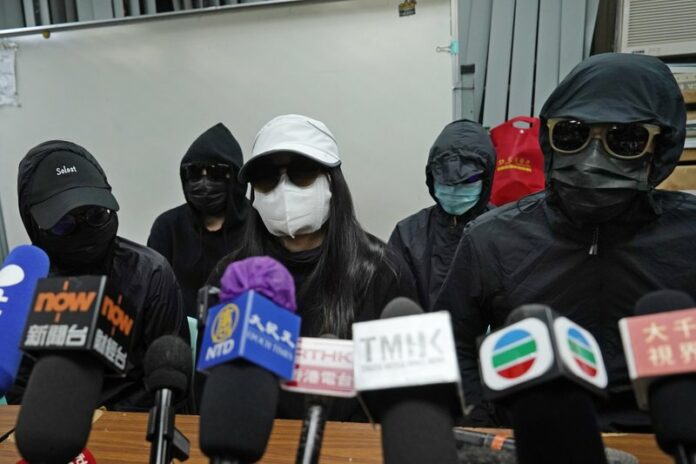
Relatives of 12 Hong Kong activists detained at sea by Chinese authorities, attend a press conference in Hong Kong, Monday, Dec. 28, 2020. (AP Photo/Kin Cheung)
HONG KONG (AP) — Relatives of the 10 Hong Kongers accused of fleeing the city by speedboat during a government crackdown on dissent say they’ve been informed that their family members pleaded guilty, according to a support group.
The families of the detainees were informed by court-appointed lawyers Tuesday that a court in the southern Chinese city of Shenzhen will deliver the verdicts on Wednesday, according to the 12 Hongkongers Concern Group, which is assisting the families.
It was not clear whether the 10 would also be sentenced on Wednesday, but Chinese courts often issue sentences at the same time as verdicts.
The 10 defendants all faced charges of illegally crossing the border, while two of them faced additional charges of organizing the attempt, according to an indictment issued in Shenzhen. The trials began on Monday afternoon, according to a statement issued by the Shenzhen Yantian District court.
Separate hearings were expected for two minors who were also aboard the boat that was apparently heading for Taiwan when it was stopped by the Chinese coast guard on Aug. 23.
The defendants are believed to have feared they would be prosecuted for their past activities in support of Hong Kong’s pro-democracy movement. Hong Kong media reports said at least one may have had a warrant out for his arrest under a tough new national security law imposed on the semi-autonomous territory by Beijing in June.
Relatives of the defendants say that they have been prevented from hiring their own lawyers and that the accusations are politically motivated. The defendants can be sentenced to up to a year in prison for crossing the border and seven years for organizing the trip.
They were picked up after entering mainland Chinese waters for crossing the maritime border without permission. While Hong Kong is part of China, travelers must still pass through immigration when going to and from the mainland. The defendants apparently needed to pass through Chinese waters to get to open seas.
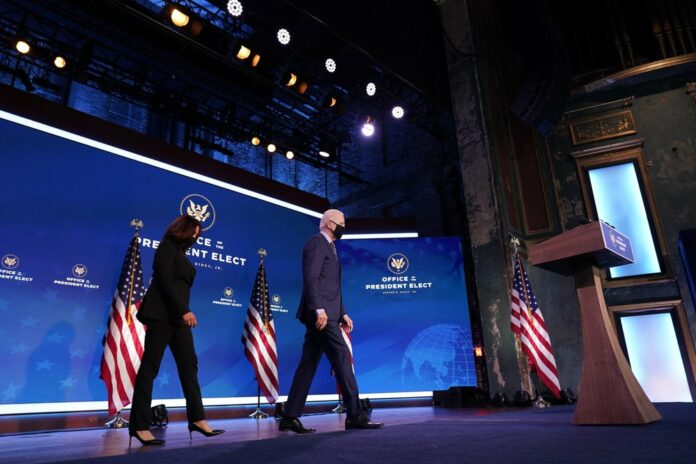
President-elect Joe Biden arrives to speak at The Queen theater, followed by Vice President-elect Kamala Harris, Monday, Dec. 28, 2020, in Wilmington, Del. (AP Photo/Andrew Harnik)
WILMINGTON, Del. (AP) — President-elect Joe Biden is warning of massive damage done to the national security apparatus by the Trump administration and “roadblocks” in communication between agency officials and his transition team that could undermine Americans’ security.
During remarks Monday in Wilmington, Delaware, Biden said his team has faced “obstruction” from the “political leadership” at the Defense Department and the Office of Management and Budget as they’ve sought to gather necessary information to continue the transition of power.
“Right now we just aren’t getting all the information that we need from the outgoing administration in key national security areas. It’s nothing short, in my view, of irresponsibility,” Biden said.
He warned that his team needs “full visibility” into the budget process at the Defense Department “in order to avoid any window of confusion or catch-up that our adversaries may try to exploit.” He also said they need “a clear picture of our force posture around the world and of our operations to deter our enemies.”
Biden’s remarks came after he was briefed by members of his national security and defense teams and advisers, including his nominees for secretary of State, Defense and Homeland Security, as well as his incoming national security adviser. The president-elect said his team found that agencies “critical to our security have incurred enormous damage” during President Donald Trump’s time in office.
“Many of them have been hollowed out in personnel, capacity and in morale,” he said. “All of it makes it harder for our government to protect the American people, to defend our vital interests in a world where threats are constantly evolving and our adversaries are constantly adapting.”
Trump has still refused to concede an election he lost by more than 7 million votes, and his administration did not authorize official cooperation with the Biden transition team until Nov. 23, weeks after the election. Biden and his aides warned at the time that the delay was hampering their ability to craft their own vaccine rollout plan, but have since said cooperation on that and other issues related to COVID-19 has improved.
Last week, however, Biden himself said that the Defense Department “won’t even brief us on many things” and suggested because of this, he didn’t have a complete understanding of the full scope of the recent cyberhack that breached numerous government systems.
On Monday, Biden said his team still gathering information about the extent of the cyberhack, but described the need to “modernize” America’s defense to deter future such attacks, “rather than continuing to over-invest in legacy systems designed to address the threats of the past.”
Pentagon officials pushed back on Biden’s characterization of the disconnect between the Defense Department and the Biden team. Acting Defense Secretary Christopher Miller said in a statement that the department has conducted 164 interviews with over 400 officials, and provided over 5,000 pages of documents, which is “far more than initially requested by Biden’s transition team.”
Miller also said that his team is continuing to schedule meetings for the remaining weeks of the transition and “answer any and all requests for information in our purview.”
Biden also spoke in length about the need to rebuild global alliances, which he said were necessary to combat climate change, address the COVID-19 pandemic and prepare for future epidemics, and confront the growing threat posed by China.
“Right now, there’s an enormous vacuum. We’re going to have to regain the trust and confidence of a world that has begun to find ways to work around us or without us,” he said.
Trump has implemented an “America First” foreign policy that saw the U.S. retreat from longstanding global alliances and treaties. The Trump Administration cut funding from the North Atlantic Treaty Organization, withdrew from the World Health Organization and the Paris Climate Accords.
The shift away from international diplomacy also precipitated an exodus of staff from key agencies, like the State Department. Trump himself has had a contentious relationship with the intelligence community, criticizing its findings that Russia interfered in the 2016 election to boost his candidacy. And still other national security agencies have faced staff cuts and unstable leadership throughout Trump’s time in office as the president frequently fired his department heads with little notice, often leaving departments with acting secretaries or vacant positions in their top ranks.
The situation has left what experts say is a major morale crisis throughout the federal government, and Biden said Monday that “rebuilding the full set of our instruments of foreign policy and national security is the key challenge” he and Vice President-elect Kamala Harris face when they take office on January 20.