





























30 C
Bangkok
Saturday, June 27, 2026
Home Blog Page 1159

Why Knowing Your Consumers Will Be Crucial in a Post-COVID-19 Era

By Mike Bernatz, Regional Business Director, Mintel

Consumer research is about people. What they see, what they do, what they buy. What they eat, what they drink. What they think, what they choose, what they aspire to. How they act, how they react, how they spend. And behind the whats and the hows, it’s always about the whys.

For brands and companies, knowing their consumers has always been important and COVID-19 hasn’t changed that. The pandemic has, in fact, changed what consumers value and, in turn, what they prioritise when choosing products and services. Consumer behaviour is evolving, keeping in mind the dynamic times. With this changing consumer behaviour, brands must become better listeners, and react faster than before to meet their changing lifestyles.

The businesses that have added the most shareholder value since the pandemic, have been those businesses that are centered around knowing what consumers want and why and serving up tailored products, recommendations and advertisements to them based on this unique knowledge. These companies know how consumer values and preferences change daily and use this information to their advantage.

Smart brands will be thinking about not just this moment of panic, but their longer-term positioning and the potential whitespace that comes with such a massive shift in the way consumers live their lives. Brands have an opportunity to become pillars of stability in an unstable world by offering realness and intimacy to consumers.

Catering to changing consumer lifestyles

Consumer products were historically successful as a result of manufacturing expertise, distribution and effective advertising. Now with digital shopping and product research becoming commonplace in Thailand, manufacturing and distribution are losing their competitive advantage—the consumer has many ways of finding products and buying them. According to Mintel’s latest research, 31% of Thai consumers said that they have increased the amount of shopping they do online, post the COVID-19 outbreak.

Today, the product features and the brand story are more important because the consumer is more informed and has more choice. Companies and brands must align their marketing, communications and branding strategies and keep the innovation pipeline ready, even during a crisis.

For brands research and knowing your consumers is and will be a fundamental and on-going task that every business will need to be focusing on post-COVID. This applies equally to B2B businesses, as knowing your customer’s customer so you can better help your customer sell to theirs. This means improving the way businesses capture their internal data and organising it in useful ways, working with the right external partners to fill in the gaps the internal data can’t answer. And, most importantly, building a process and information flow so that all of this information works together and is systematically delivered to the stakeholder regularly to make better decisions faster.

What we think

While the current situation is unique, we do have past virus crises like SARS and economic recessions to look back on and learn from. Luckily, Mintel has been around since 1972 and so can draw on our research from those difficult times to help our analyst provide thorough insight today. Just like we ask our analysts to ‘be bold’, we ask the same of our clients. Innovation is critical in a crisis and hand in hand with that comes good smart and agile research to make sure you understand your market and consumer which has changed dramatically. The winners of the future will be those companies that have the best information about their consumers and the ability to capitalise on it.
Advertisement

Rayong Casino Worker is 1st Virus Death Since New Outbreak Began

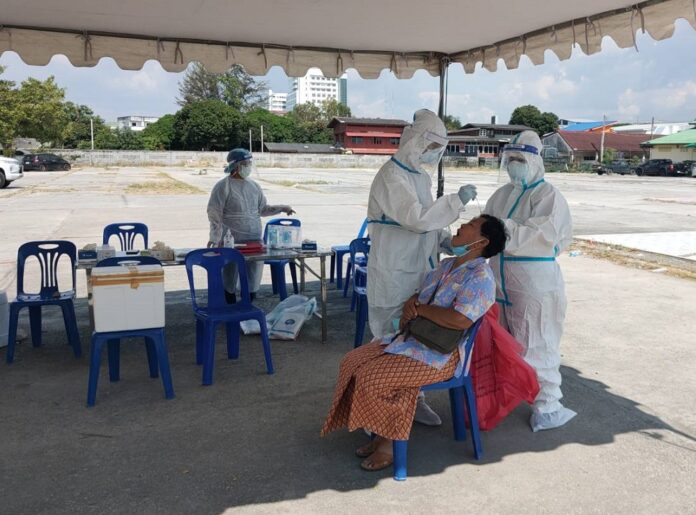
A woman receives a coronavirus test in Rayong province on Dec. 27, 2020.

BANGKOK — Thailand reported the first death associated with the coronavirus since the new wave of outbreak struck a little over a week ago.

Thailand’s 61st coronavirus fatality was a 45-year-old employee of an illegal gambling den in Rayong province, who also had heart disease and diabetes, deputy health minister Satit Pituthecha announced on his Facebook. The patient tested positive for infection on Sunday before he was rushed to a hospital when he had difficulty breathing this morning.

“New fatality reported at Rayong Hospital,” Satit wrote. “The 45-year-old man had an existing condition of ischemic heart disease and was considered at risk since he worked at the gambling den.”

His death is yet to be confirmed by the government’s pandemic response center.

Health authorities identified Rayong as one of the two clusters in the ongoing outbreak.

The province reported 56 new cases on Monday, raising the total tally of confirmed cases to 141. Officials said most of the cases were traced back to the suspected casino near the provincial bus terminal. Minister Satit said the man worked as a traffic attendant at the gambling den.

The last virus death in Thailand was reported in November, in which the victim was identified as a 66-year-old man who had diabetes and hypertension as pre-existing conditions.

The government’s pandemic task force logged 144 new cases on Monday. A total of 2,045 infected patients are being treated at hospitals, while 4,180 patients have recovered.

The country’s cumulative case number now stands at 6,285.

Advertisement

Reports: Infected Gambler Was at Parliament To Testify About Gambling

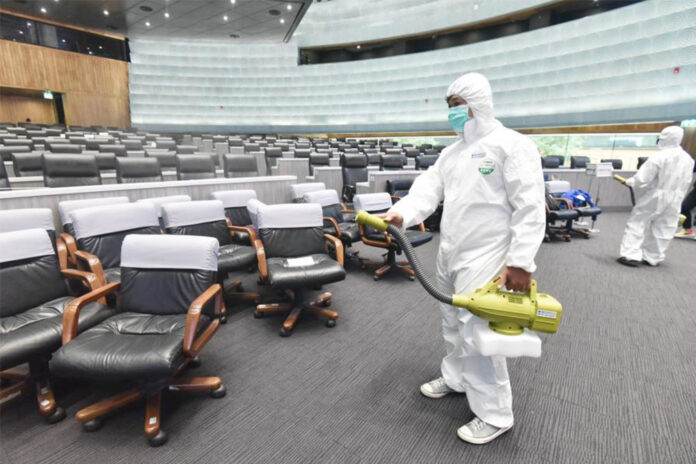
A worker disinfects the parliament's main chamber on Feb. 28, 2020.

BANGKOK — Staff at the Parliament on Monday were put on alert after reports say an infected gambler recently met with lawmakers to discuss gambling prevention measures.

The patient was identified as a 26-year-old man from Rayong province who visited the Parliament on Dec. 21 for a hearing on online gambling held by the House’s subcommittee. Lower House sec-gen Pornpit Petchcharoen said she has instructed 22 staffers who were in close distance with the man to get tested for COVID-19.

“We have always enforced coronavirus prevention measures,” Pornpit said. “The meeting room where the hearing was held will be closed for disinfection. All the relevant personnel, including food court staff, will undergo tests to ensure safety of all parliamentarians.”

At least 85 new coronavirus cases were discovered in Rayong as of Sunday; officials said many of them could be traced back to a gambling den in the city center.

Local media also report that the infected man is a son of the casino owner – though only a temple, the parliament, and a noodle restaurant were listed in his travel history released by health authorities.

Read: Cops Say Gambling Den in Rayong Outbreak Is Not Gambling Den

It also emerged that the man is part of deputy house speaker Suchart Tancharoen’s working group. Suchart said he is unaware of the man’s involvement in any criminal enterprises.

“I don’t know about it,” Suchart said. “We checked his criminal records and found no abnormalities.”

Deputy chairman of the subcommittee Jakkaphon Tangsuthitham said the meeting was attended by 30 people. He said it remains unclear whether the man caught the virus before or after he visited the Parliament.

“We have to wait for official test results,” Jakkaphon, who is also an MP for Pheu Thai Party, said. “ I have asked everyone in that meeting to isolate themselves and monitor their symptoms for 14 days.”

Advertisement

Cops Say Gambling Den in Rayong Outbreak Is Not Gambling Den

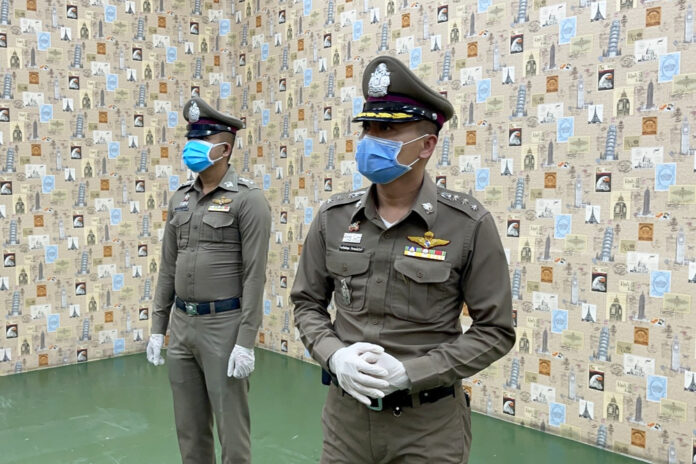
Rayong City police chief Phatsarut Watcharathonyothin at the gambling den on Chitrphan Road on Dec. 27, 2020.
Police officers raid the gambling den on Chitrphan Road in Rayong province on Dec. 27, 2020.

RAYONG — Rayong’s top police commander was removed from active duty on Monday after revelations that an illegal gambling den in the province was responsible for a cluster of coronavirus outbreak – though he insisted it was not classified as a gambling den.

At least 85 cases of coronavirus were found in the eastern province of Rayong in recent days. Health authorities said most of them were traced back to the suspected casino near the provincial bus terminal. However, when the police raided the scene yesterday, all they could find inside was empty windowless rooms lined with wallpapers.

Police immediately came to the conclusion that it wasn’t a casino.

“We inspected this venue following rumors on social media and found no gambling activities,” Rayong City police chief Phatsarut Watcharathonyothin said Sunday. “We believe it is only a warehouse. Rayong City police have always been strict on gambling. Over the past three months, we made 98 arrests.”

Read: Samut Sakhon Gov. Infected With Coronavirus; 144 New Cases Reported

His assertion was backed by his commander, who said there are no casinos operating in the province – only “a place where people engaged in illegal gambling.”

“I insist there are no gambling dens in Rayong,” provincial police chief Paphatdet Ketphan said Sunday. “It was only a place where people engaged in illegal gambling.”

His explanation was apparently insufficient to convince the central police force. Paphatdet was removed and sent to an inactive post on Monday, pending an investigation. The order was signed by national police commissioner Suwat Chaengyodsuk, who chided Paphatdet for trying to mislead the public.

“Investigators said the gambling den has been operating for a month already,” Gen. Suwat said. “He [Paphatdet] couldn’t say it like that. He must be responsible for what happened.”

Rayong Gov. Channa Ieamsang also said on Sunday that all of the 49 local transmissions discovered on that day were linked to the gambling den. He urged those who visited the venue to come forward and get tested for coronavirus.

“I’m concerned that the virus will spread since many people don’t want to disclose their travel history to the gambling den,” Channa said.

Contradicting police’s assertion, the gambling den’s location was even listed on Google Map (category: “a sports club”). Security cameras were also visible on Google Street View photos said to be taken in July, though they somehow disappeared when the police entered the premises.

A similar feat of verbal gymnastics was attempted by the police back in August, when senior police officers refused to admid that the gambling den in Bangkok where four people were shot dead was indeed a gambling den. 

Advertisement

Samut Sakhon Gov. Infected With Coronavirus; 144 New Cases Reported

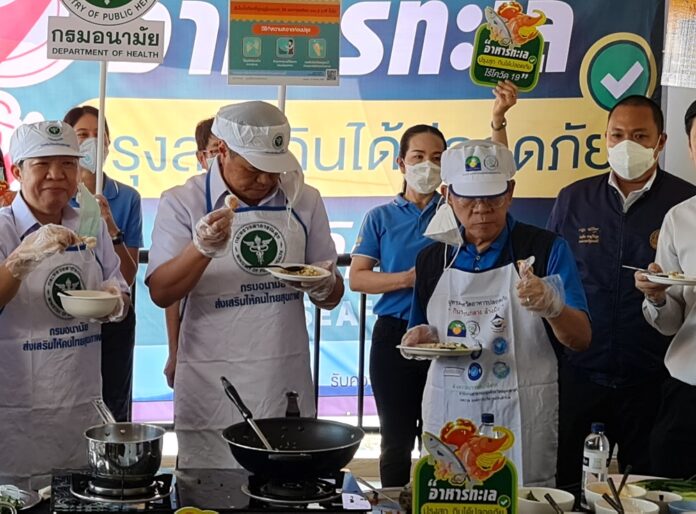
Samut Sakhon Veerasak Vijitsaengsri, wearing eyeglasses, stands next to health minister Anutin Charnvirakul during a public event on Dec. 27, 2020, to demonstrate safety of seafood.

SAMUT SAKHON — The Governor of the province at the center of a new wave of coronavirus outbreak tested positive for the virus, the government said Monday.

Samut Sakhon Gov. Veerasak Vijitsaengsri has been at the forefront of an effort to contain the pandemic in the province, which already saw more than 1,548 infections as of publication time. The news was announced by public health minister Anutin Charnvirakul, who shared close contact with the Governor at several meetings in recent days.

“The Governor was infected because he worked hard to take care of the public, to keep them from contracting the virus,” Anutin wrote online. “Even though he took good care to protect himself, there might have been a mistake.”

Anutin said he has been put in self-isolation. He was present with Veerasak at several occasions over the weekend, including a meeting and a public event to demonstrate safety of seafood in the coronavirus pandemic.

“Now that the Governor is infected, I am at risk as well,” Anutin said, adding that he tested negative for coronavirus today.

Weerasak is the highest level official to date to have been infected with the virus. On the same day, the government’s pandemic response center reported that the coronavirus has spread to 44 provinces – more than half of Thailand’s administrative regions.

“If we do nothing, the graph will spike up by the middle of next month,” spokesman Taweesin Visanuyothinr said Monday.

EoTvTjnVEAAzl5F
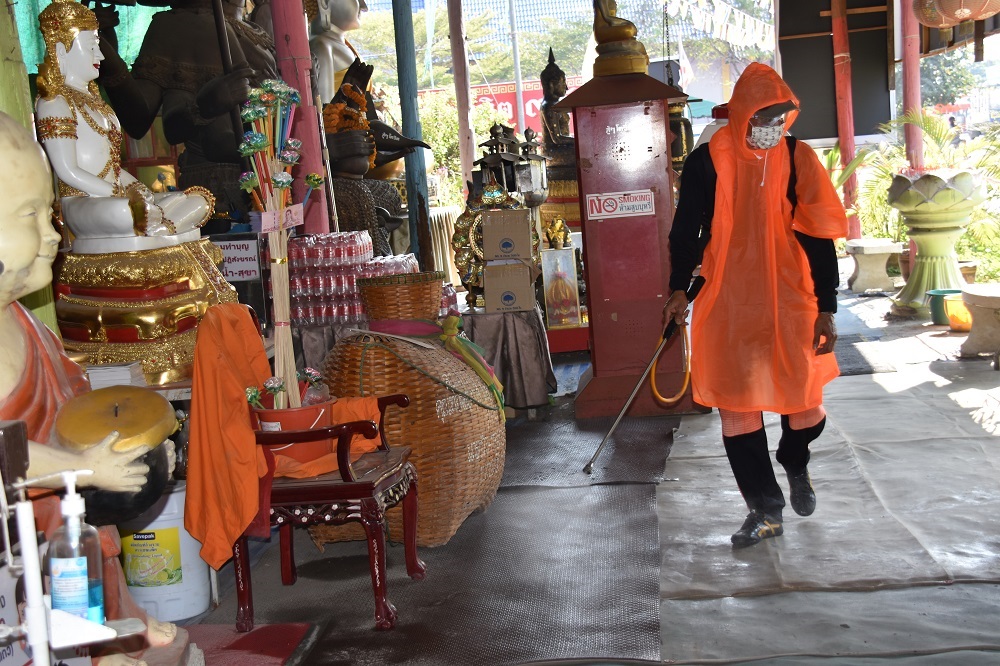
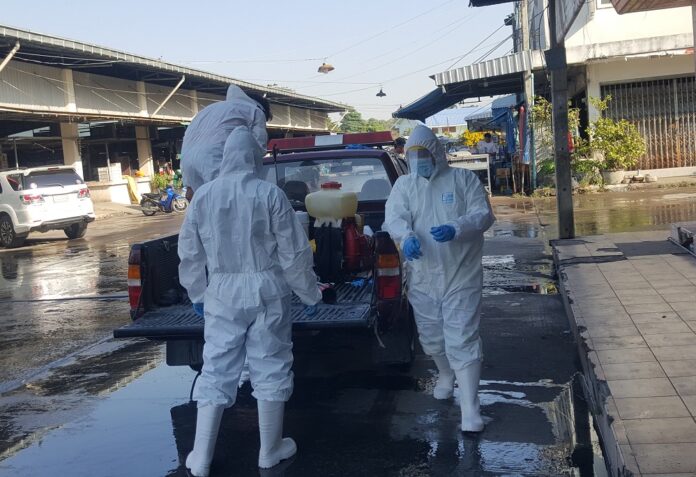
A worker disinfects a temple in Nakhon Pathom province amid a new coronavirus outbreak on Dec. 28, 2020.

Of the new 144 infections, the majority, or 115, are local transmissions. Fourteen are migrant workers while 15 are returnees in state-run quarantine, Taweesin said. 

The health authorities have identified at least two clusters in the ongoing outbreak: a shrimp market in Samut Sakhon’s Mahachai seafood bazaar, and a gambling den in Rayong – the province saw at least 56 infections alone.

New cases were also found in Nakhon Pathom (17), and in Bangkok (12). Six new provinces had confirmed cases Monday: Surin, Narathiwat, Nakhon Nayok, Chiang Mai, Sukhothai, and Lopburi.

There were no new deaths, and the cumulative number of infections is at 6,285.

Starting Monday, many venues in Rayong city center are ordered closed until further notice, including pubs, bars, schools, child and elderly care centers, massage parlours, fitness centers, beauty clinics, pools, museums, malls, and department stores.

Boxing stadiums, cockfight grounds, and billiards venues are closed down indefinitely across the entire province – apparently to prevent a similar ‘superspreader’ scenario at a boxing ring in Bangkok earlier this year.

Advertisement

This ‘Green’ Indian Chef Is Feeding Fine Diners and Homeless in Pandemic

Photos by Tappanai Boonbandit

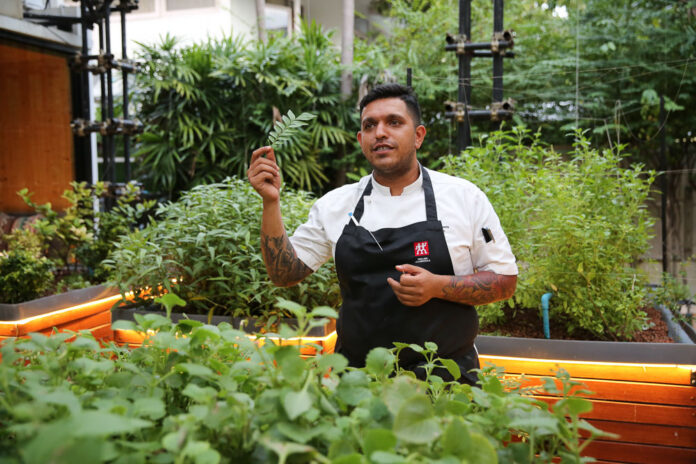
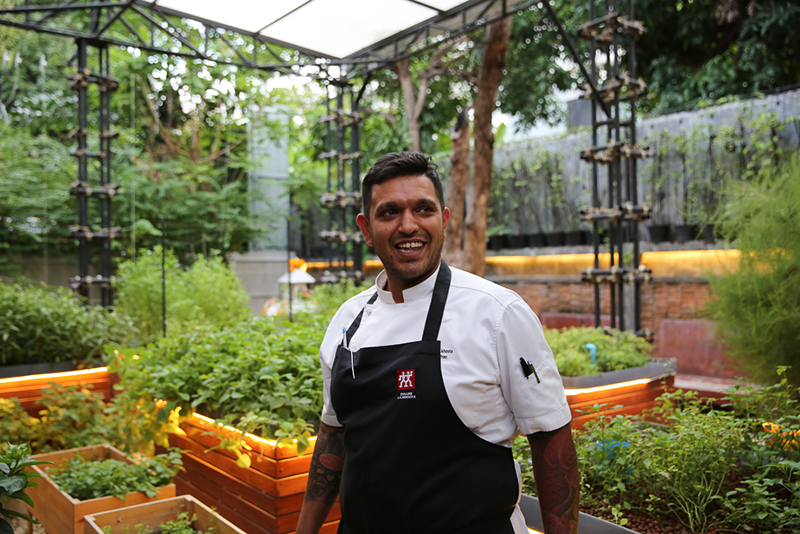
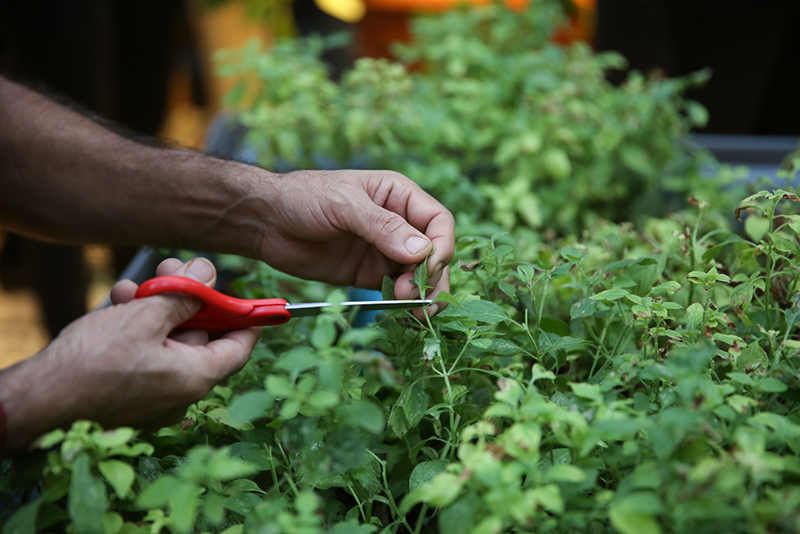
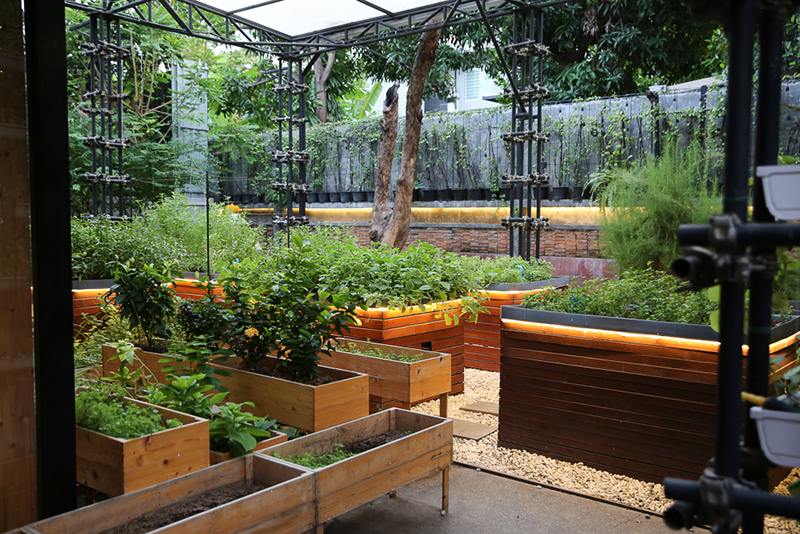
BANGKOK — Collected rainwater freshens a kitchen garden full of curry leaves and mint, harvested by migrant employee hands just before dinner. The herbs will be used to season the courses of a fine dining menu, as well as food packages for the destitute.

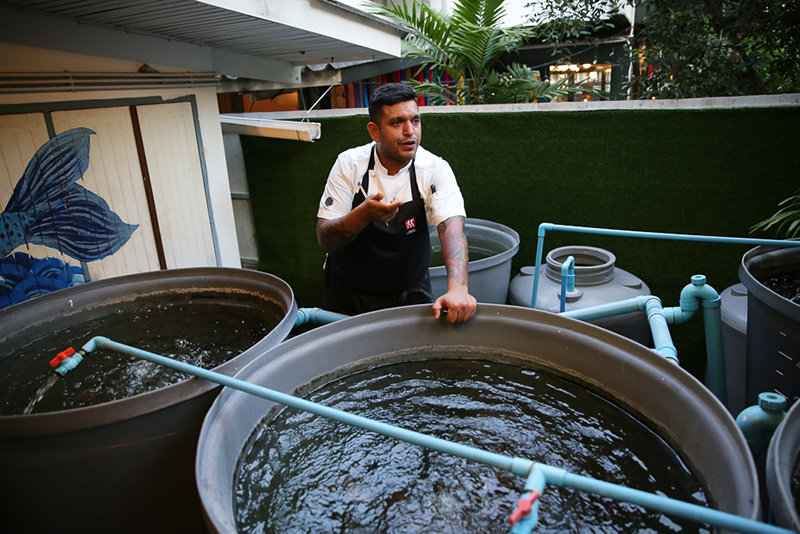
Any food waste scraps are made into compost or fish food for the sea bass that will grow to become next season’s menu – and the cycle begins anew.

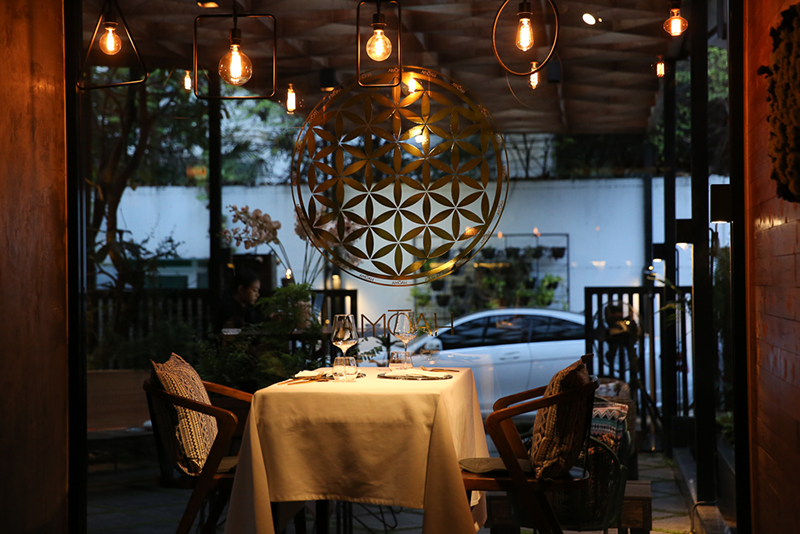
Such is the philosophy of sustainability at Haoma, a neo-Indian fine-dining restaurant that’s on a different spiritual plane due to owner Deepankar “DK” Khosla, who’s been running the venue for three years. But like any other earthly establishment, Haoma slammed into the same wall of COVID-19.

During the months from April to June when many businesses were ordered shut – including dine-in services – Khosla decided to turn the fine-dining restaurant into a “temple kitchen” where his staff could get unlimited rations of food as they prepped free meals for the homeless and poor. Since the lockdown measures were imposed, they’ve handed out 100,000 meals.

Why did he do it?

“The blood in my veins, and all the veins of all Thai chefs are red,” Khosla replied. “The air we breathe, the water we drink is not from Thailand or India, but from Mother Earth. If anyone is hungry, we can provide for each other.”

‘You Cannot Cheat With Nature’

For the god-fearing Hindu – Khosla has an arm tattoo of Ganesha and at the entrance of his restaurant – having a green kitchen garden for fresh herbs and keeping his team together during the pandemic are both in-line with his philosophy of sustainability.

“During lockdown, we have not sacked one person, not deducted 1 baht,” Khosla said. “Before the shutdown we had 24 staff. Today we have 24 staff,” he said.

IMG 8181 copy
Khosla in the garden at Haoma.

It’s especially important for his team, which include Thais as well as Myanmar and Cambodian migrant workers, to keep their jobs since many of their family members lost theirs during the pandemic.

“They still have their jobs, but their wives are maids or work in the hotel. And they all lost their jobs. Suddenly, with four people earning money for the family, it’s one,” he said.

Instead of having fifty extra seats for the restaurant, Haoma has a garden filled with more than 40 species of plants and herbs for fresh use. He bridled at the notion that “sustainability” is some sort of a cliche marketing buzzword.

“Sustainability is not just about nature. It’s the sustainability of mankind, of your team. It’s not a marketing gimmick,” Khosla said. “You cannot cheat with nature.”

Although Haoma is strangely absent from the pages of the Michelin Guide (“Maybe we’re not cool enough,” Khosla said), but has a three-star certification from Food Made Good, a UK company that certifies sustainable restaurants.

IMG 8221 copy
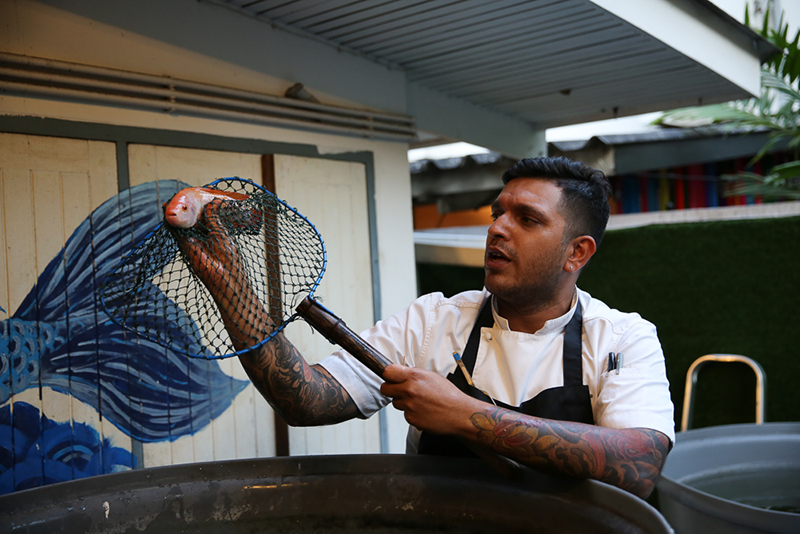
Khosla holds up a fish growing in tanks at the restaurant.

“Why is sustainability only in Khao Yai, in Chiang Mai? We need sustainability in the city. You and I aren’t leaving the city,” Khosla said.

Diners are presented with glasses of filtered rainwater – other fine-dining places in the city will slap you a hefty bill for an Evian, Perrier, or San Pellegrino.

More than a third of the restaurant’s electricity is solar-powered, while the harvested rainwater is used to water plants such as sorrel and Indian borage. A group of sea bass are growing in tanks in the back. All of the restaurant’s produce are sourced locally: either their garden here, their 3-rai farm in Chiang Mai, or Khlong Toei Market.

“If you get a slice of imported wagyu with some salt on it, the cow did all the work to make it taste good. If you get a cracker with four fucking pieces of uni on it, you’re just the middleman between the ocean and [the customer,]” he said. “We get these vegetables and we work our balls off to make them taste good. It’s all technique.”

IMG 8212 copy

“Haoma” is named after a divine plant and the elixir of life made from it in Zoroastrian and Hindu tradition. Having a hard time imagining it? That gigantic sculpture in Suvarnabhumi Airport depicts angels and demons tugging a Naga between them in a bid to extract the immortal nectar.

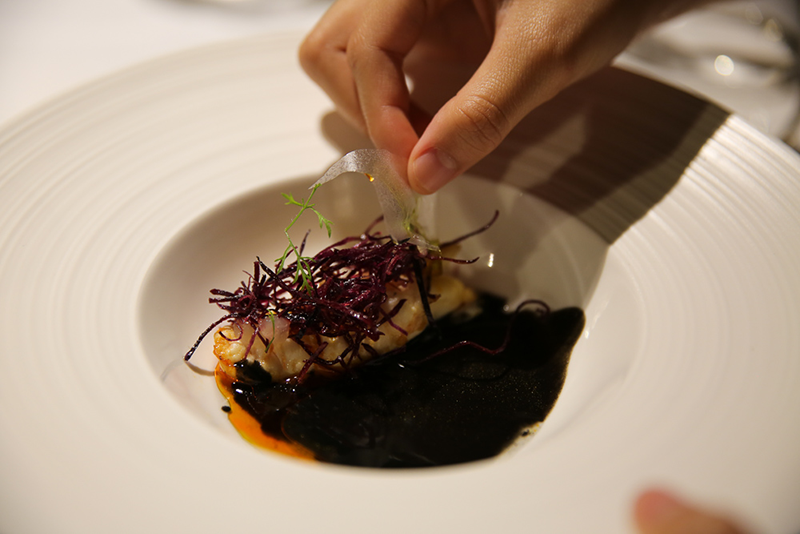
One dish that summarizes Haoma’s mission is the “Samudri Rassa” or “Dying Oceans” dish in the non-vegetarian menu that raises awareness for the oil spills of 2020. A lobster sits in a black seafood bisque, delicately strangled on top by a “net” made of sweet potato strands and a transparent, paper-thin piece of potato starch to represent plastic waste. 

“Samudri Rassa.”
“Samudri Rassa.”

Ancient Indian Food, Revived

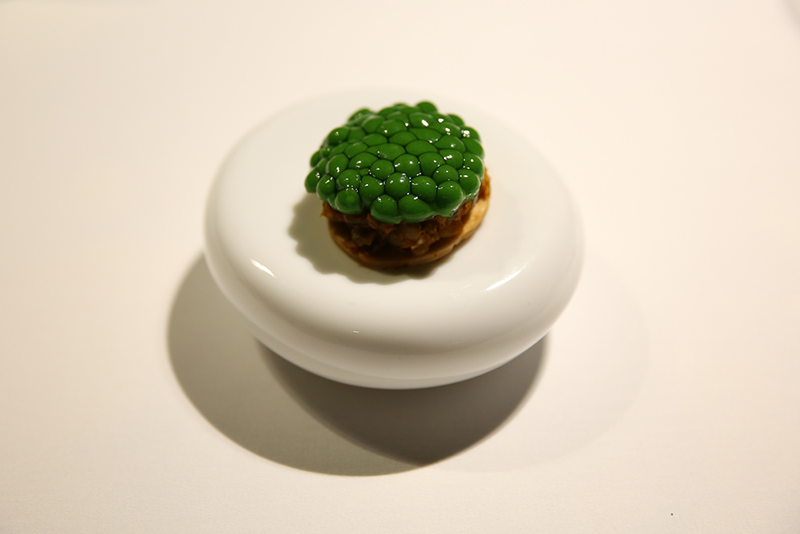
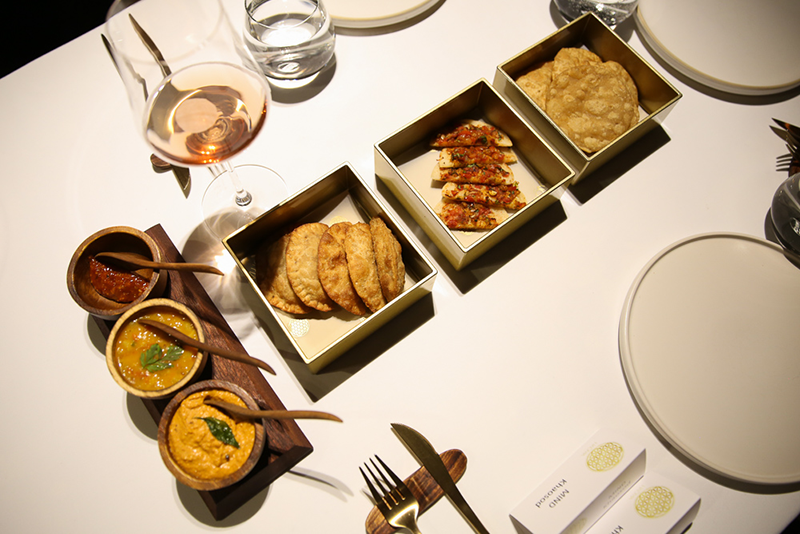
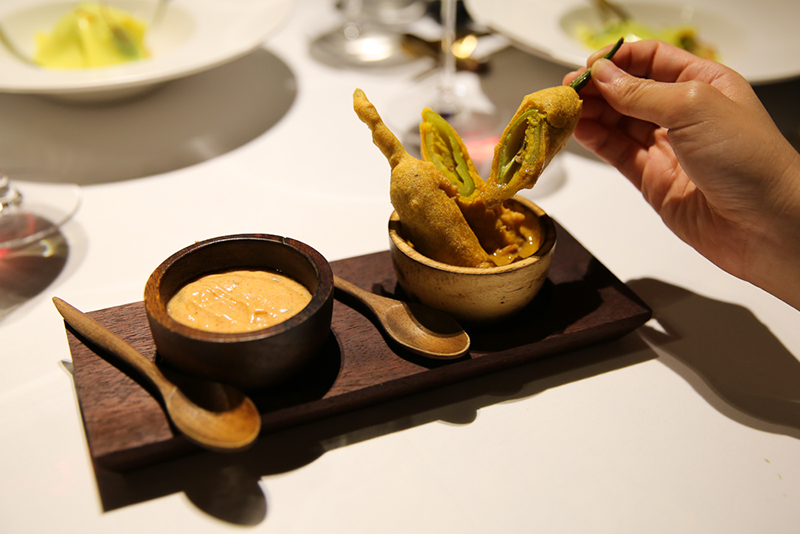
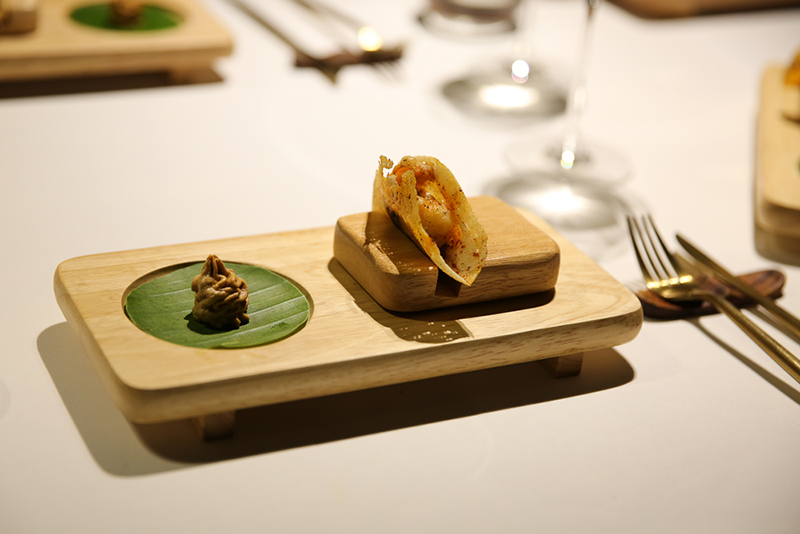
Luchi bread and salan peanut sauce with chilies are just some of the Vedic food that reappears in Haoma in modern form. The bread becomes a cracker topped with nilgiri qorma stew but made into green bubbles, while the peanut sauce is served with the same biryani rice that Khosla gives out to the homeless. 

IMG 8274 copy

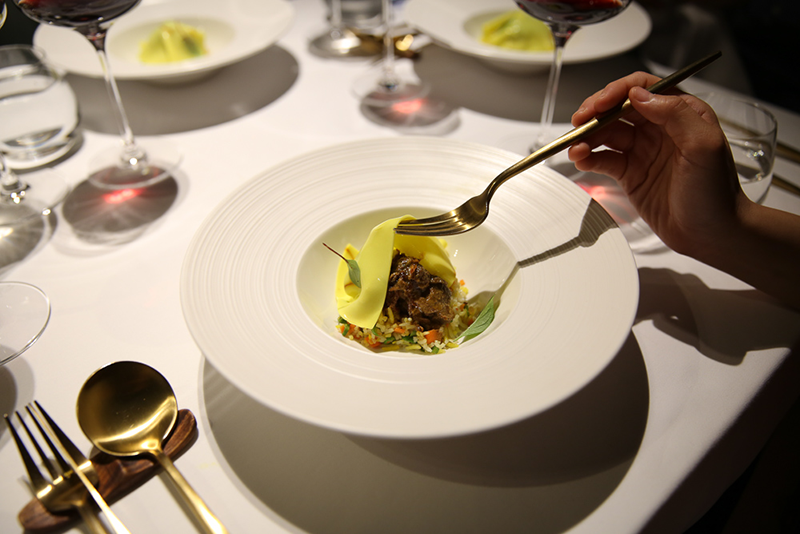
Usually the Haoma team gives out a dish of biryani due to its similarity to khao mok, or Thai biryani rice with chicken – the same one served in the fine dining menu. “You never know which homeless man will leave a Trip Advisor review,” he said, laughing. 

“Sustainability doesn’t mean the food is not delicious.  We don’t compromise on flavors or presentation,” Khosla said, and neither are compromised at all in the 10 course menus, 2,796 baht for both the non-vegetarian and plant-based dishes. 

IMG 8381 copy
The biryani rice dish at Haoma.

“In a city where Gaggan can take Indian food to the fusion level, I want to shift it to honest, unplagiarized, non-Westernized cuisine. I want to rediscover Indian cuisine for the Thai palate,” he said. 

Indeed, Haoma’s tastes and textures and many of the dishes are unlike any other experience of Indian (or Indian-inspired) food one might have had in Bangkok – no greasy, milky Butter Chickens or Chicken Tikka Masalas here.

“In the same way that you would look at someone in awe if they thought Thai food is just green curry and pad thai, I would look at them in awe if they thought Indian food is just chicken tikka masala and tanoori chicken,” Khosla said.

IMG 8277 copy

“What we know today is Indian cuisine that has been bastardized by colonial powers, the British, French, Portuguese, Dutch. It’s not the classic cuisine of India.”

Haoma focuses on finding the taste of pre-colonial India – there’s 3,500 years of Indian culinary heritage to draw from – and presenting it in a modern way. Or, as he said it, his grandma should be able to eat it and say that it’s real indian, but his presentation is on par with any top restaurant in the world.

IMG 8393 copy

A self-identified history nerd, Khosla spends part of his 18-hour workday poring through ancient Sanskirt texts for recipe inspiration.

Next time you’re at Haoma, chat him up about Vedic cuisine or his hometown of Allahabad in central India. Khosla’s grandfather moved there from Kashmir after answering Mahatma Gandhi’s call, making his area the confluence of cuisines from all over India.

This review was based on a hosted visit. 

IMG 8373 copy IMG 8250 copy IMG 8201 copy IMG 8178 copy

Related stories:

Expats Across Thailand Donate to Thais, Migrant Workers Hurt by Virus

Cooking up Kindness: The Eateries Who Offer Free Meals to Migrant Workers

Advertisement

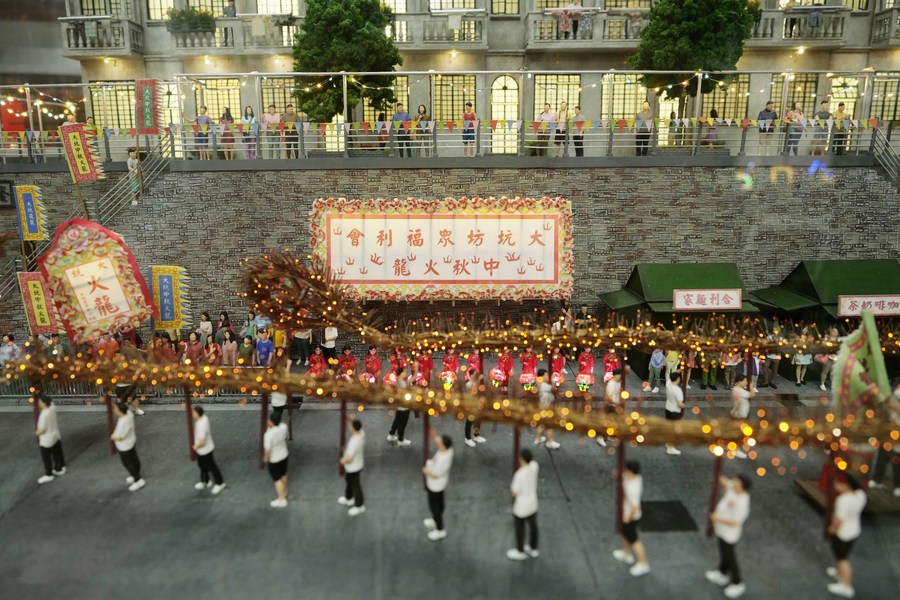
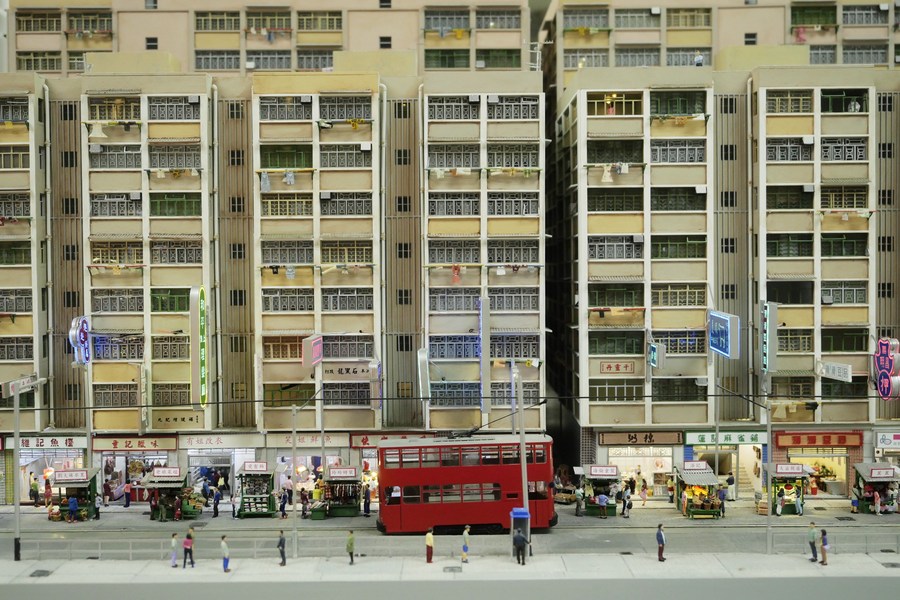
Artists Reshape Childhood Memories of Hong Kong Into Lilliputian World

Photo taken on Dec. 4, 2020 shows miniature artwork of Tony Lai and Maggie Chan in Hong Kong, south China. (Xinhua/Wang Shen)

HONG KONG (Xinhua) At seven o’clock in the morning, housewives rushed to a shared kitchen in the open corridors in the center of “H” shaped blocks of buildings, gossiping while preparing breakfast, with the sound of fire alarms triggered by old-fashioned kerosene stoves ringing in the background.

This is one of Tony Lai’s most precious childhood memories from the 1960s when he was living with his family in a seven-story building in Shau Kei Wan, the oldest public housing estate in Hong Kong.

While the rest of the world is moving forward, Hong Kong’s miniature artists are taking a leaf from the past and handing it back to the present in the magical world of Lilliput.

S 24150065
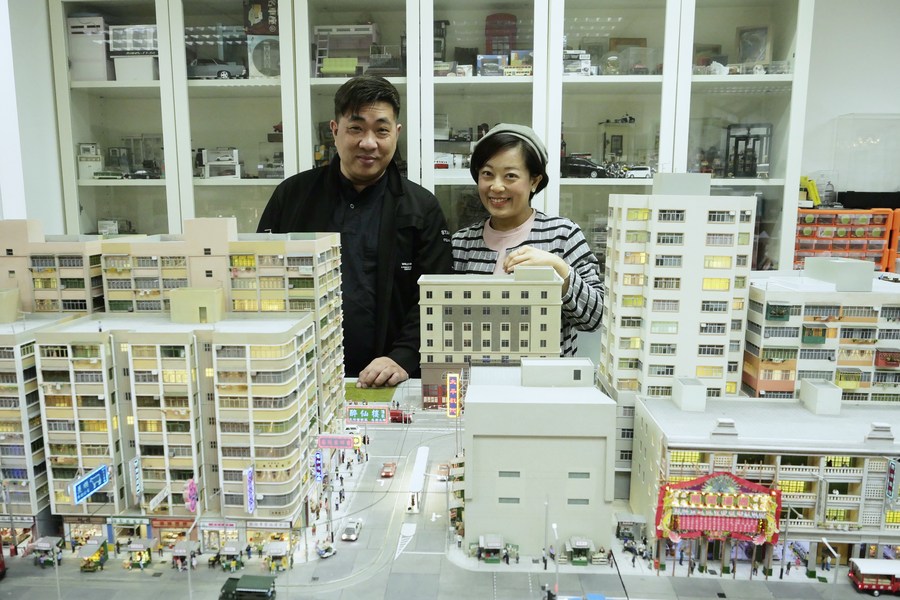
Tony Lai (L) and Maggie Chan stand at their studio in Hong Kong, south China, Dec. 4, 2020. (Xinhua/Wang Shen)

Lai, 53, and Maggie Chan, 46, have been miniature artists for more than 10 years. One good at building large models, the other making tiny dishes as small as fingernails. They “met” each other via an email during a miniature art exhibition in 2007 before bonding into a perfect team.

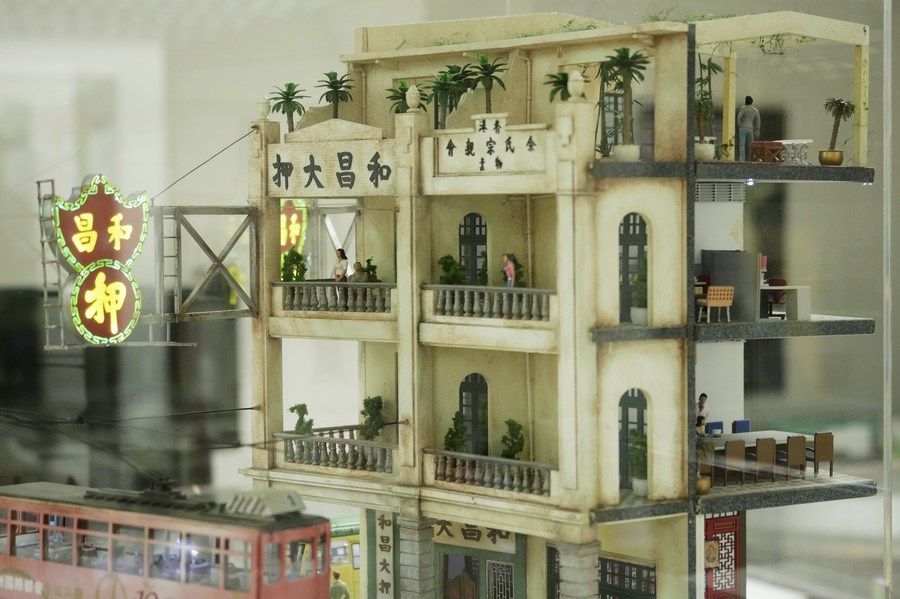
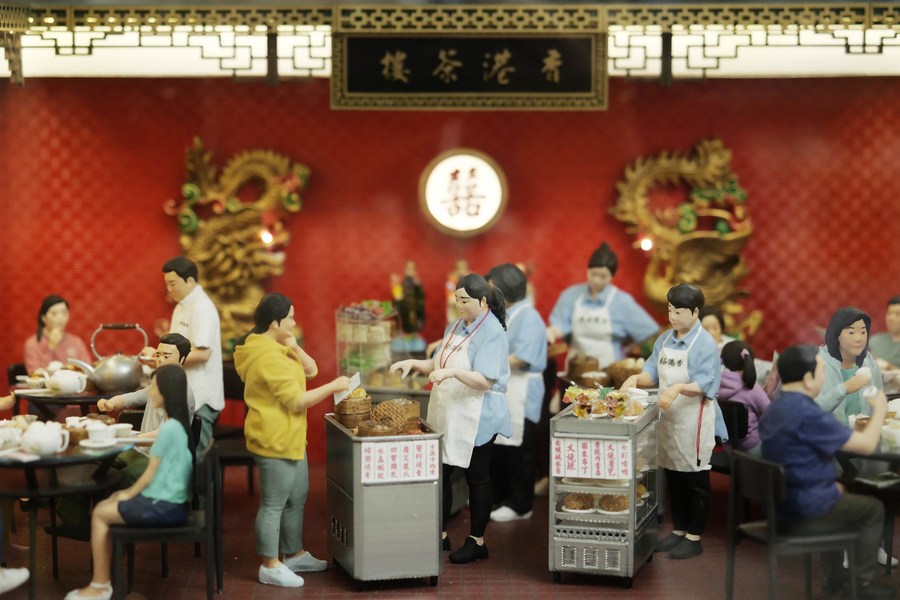
Hong Kong’s decades-old, but now-disappearing scenes like old-school barbershops, newspaper stalls, herbal tea shops, and cart stalls selling street food outside the theaters, are their beloved diorama themes.

“Every piece of the miniature artwork is a love letter to Hong Kong,” Carmen Poon, chairperson of Joyful Miniature, told Xinhua. The objects are mostly about Hong Kong people’s everyday lives, which distinguish themselves from the rest of the world, she said.

130587789 2929463060676866 3549436949958701088 o 7
Photo taken on Dec. 4, 2020 shows miniature artwork of Tony Lai and Maggie Chan in Hong Kong, south China. (Xinhua/Wang Shen)

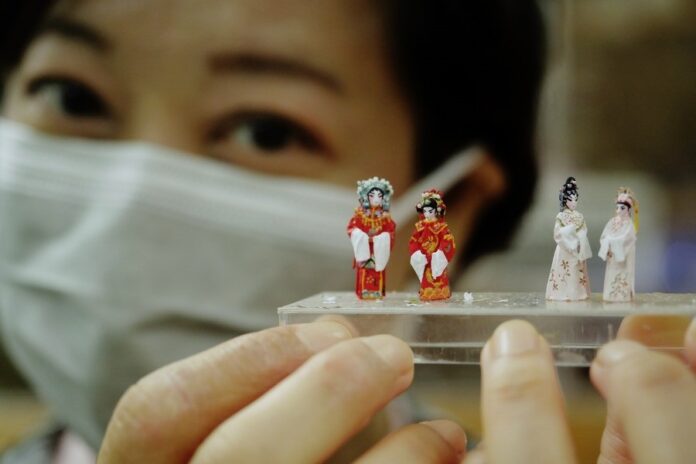
Miniature art, whose history can be dated back to European royal families in the medieval ages, condenses paintings, engravings or sculptured items into minimal sizes with their details preserved. The Hong Kong artists, however, have found their own way to reenact the lives of ordinary Hong Kong people.

Mount Davis Squatters, one of Lai’s most intricate pieces, depicts people going about their daily chores in a once dilapidated village. Lai got the inspiration from his childhood experience of taking the ferry to Lamma Island with his father, where he saw the now-demolished wooden houses in the village.

“Hong Kong is changing rapidly and a lot of things have disappeared,” said Chan. “Miniature art is more like a three-dimensional history book, through which we can keep our memories.”

130587789 2929463060676866 3549436949958701088 o 6
Photo provided by Tony Lai shows Lai’s miniature art Mount Davis Squatters that depicts people going about their daily chores in a once dilapidated village. (Xinhua)

The number of newspaper hawkers operating in Hong Kong has declined rapidly from highs reached in the 1990s, according to the Food and Environmental Hygiene Department in Hong Kong. The once-iconic State Theater once lined with cart stalls in North Point has also closed.

Instead of merely focusing on creative imagination, Chan said making art existing or having once existed in real life can resonate with the audience by striking them with a “sense of belonging.”

“Miniature art takes only a tiny place while including a much bigger picture about the real world,” said Poon. The small size makes it easier to survive in Hong Kong, but for the artists working full time in Hong Kong, the business still faces constraints and challenges.

87507 2
Photo taken on Dec. 4, 2020 shows miniature artwork of Tony Lai and Maggie Chan in Hong Kong, south China. (Xinhua/Wang Shen)

Compared with artists in other places, they are confronted with pressures from limited space, high rental costs and living expenses, which have pushed them to work in a high-efficiency Hong Kong style.

“After a close examination of the completed work, I always find room for improvement to make it more perfect,” said Lai, adding that their daily income can barely cover the rental costs if he focuses too much on quality ahead of strict deadlines.

Not having the budget to launch their business, Lai and Chan sold 10 of their works in 2017 to cover the daily operating expenditure of the newly-opened studio.

Their 100-square meter studio in an industrial building in the Kowloon district, sometimes doubles as Lai’s bedroom during the busiest times, when he can only sleep for a couple of hours.

EoTvTjnVEAAzl5F 1
Photo taken on Dec. 4, 2020 shows miniature artwork of Tony Lai and Maggie Chan in Hong Kong, south China. (Xinhua/Wang Shen)

While striking a subtle balance, their business has still been beset by the COVID-19 pandemic this year. “Some of our orders were canceled. You never know what will happen next year. It is hard to say,” he mused.

Lai and Chan are two of the few full-time craftspeople who have survived, as the profession can hardly make ends meet, despite the hard work that they have put in.

Though hurting his hands has become normal for Lai since he stepped into the industry, the art is no longer all about traditional craftsmanship. 3D printing has been applied nowadays, along with augmented reality (AR) technologies in exhibitions.

“We are doing our best to reproduce the things we love to inform the younger generation and give the old people a taste of the past,” said Chan. “I really love that.”

S 21848237
Photo taken on Dec. 4, 2020 shows miniature artwork of Tony Lai and Maggie Chan in Hong Kong, south China. (Xinhua/Wang Shen)

Lai’s dream is to make a long, bustling street stretching from the coast to the mountain top with shops, public housing estates and amusement parks.

“I am trying to work more and keep more memories while I am still capable,” Lai said, pointing at some of his grey hair, with a bandaged right index finger.

Lai sometimes heads to the rooftop of the industrial building during his most stressful times, carrying several cans of beer, where he takes a break and looks down at the city which feels far below and appears just like one of his miniature pieces of art.

Advertisement

Fauci: US Taking Hard Look at Variant of Coronavirus

In this Dec. 22, 2020, file photo Dr. Anthony Fauci, director of the National Institute of Allergy and Infectious Diseases, prepares to receive his first dose of the COVID-19 vaccine at the National Institutes of Health in Bethesda, Md. (AP Photo/Patrick Semansky, Pool, File)

WASHINGTON (AP) — U.S. health officials believe the coronavirus mutation that set off alarms in parts of Britain is no more apt to cause serious illness or be resistant to vaccines than the strain afflicting people in the United States but it still must be taken “very seriously,” the government’s top infectious disease expert said Sunday.

Dr. Anthony Fauci endorsed the decision of U.S. officials to require negative COVID-19 tests before letting people from Britain enter the U.S. He declined to weigh in on whether that step should have been taken sooner. He said the variant strain is something “to follow very carefully” and “we’re looking at it very intensively now.”

He said: “Does it make someone more ill? Is it more serious virus in the sense of virulence? And the answer is, it doesn’t appear to be that way.” British officials are telling their U.S. colleagues it appears that the vaccines being rolled out will be strong enough to deal with the new variant but, Fauci said, “we’re going to be doing the studies ourselves.”

Fauci said the U.S. is at a critical phase of the pandemic, with the worst probably still ahead. He predicted the general population would be getting immunized widely by late March or early April — beyond the front-line workers, older people and certain other segments of the public given priority for the vaccines.

Fauci spoke on CNN’s “State of the Union.”

Advertisement

New Virus Clusters Found in South and East; Lockdown Possible

Workers disinfect a market in Saraburi province on Dec. 27, 2020.

BANGKOK (AP) — Health officials in Thailand said Saturday that two new clusters of coronavirus cases have been found that appear to be linked to a major outbreak discovered a week earlier among migrant workers in an industrial province near Bangkok.

The new cases were found in 19 members of a motorcycling club who held a holiday gathering on Lanta island in the southern province of Krabi, and in nine people who were in a gambling den in the eastern province of Rayong, said the Disease Control Department.

The first of the motorcyclists to be diagnosed with the virus had come from Samut Sakhon province, where the outbreak among migrant workers occurred.

On Saturday morning, 110 new coronavirus cases were reported, bringing Thailand’s total to 6,020. Sixty of the 110 were linked to the Samut Sakhon outbreak.

At the beginning of December, Thailand had 4,008 cases. The death toll has remained at 60 since early November. Until recently, almost all new cases had been found among people who were quarantined upon arrival from abroad.

Cases linked to the Samut Sakhon outbreak, which was first found at a major seafood market, have now been reported in 33 provinces.

The Center for COVID-19 Situation Administration, which coordinates Thailand’s battle against the virus, said Friday that unless social distancing and other restrictions are observed, a nationwide lockdown might have to be implemented by March.

Thailand had been considered a success story in controlling the disease by taking early significant measures, including banning the arrival of virtually all foreign tourists. It has recently been seeking to restart its lucrative travel industry, but the discovery of more than 1,300 cases in Samut Sakhon among the migrant workers, mostly from Myanmar, has put the authorities on high alert.

Restrictions, including limiting the nighttime hours of public places and temporary closings of schools, have been tightened province by province according to the number of infections.

There are 40 active cases in Bangkok, and contact tracing has led to several restaurants and other businesses being closed for decontamination, and the city’s schools being shut down for 12 days.

Advertisement

Opinion: New COVID-19 Outbreak is a Test of Thailand’s Sanity

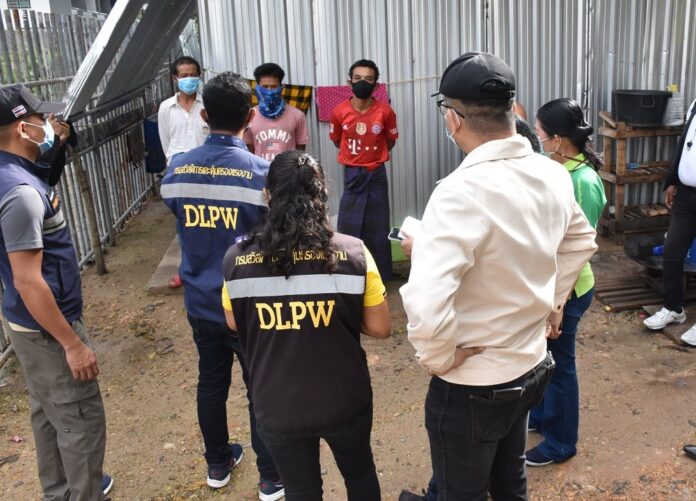
Administrative officials question migrant workers on their travel history in Nakhon Si Thammarat province on Dec. 26, 2020.

A week into the second wave of the coronavirus outbreak, the government is trying hard to keep the public from freaking out. Over 1,300 new infections have been registered – in a country that recorded about 5,000 cases prior to Dec. 17.

The job fell to no less than Taweesin Wisanuyothin, the spokesman of the government’s Center for COVID-19 Situation Administration. Taweesin was widely credited for instilling excessive fears among Thais regarding the peril of the pandemic over the past 10 months, through his near daily appearance on TV briefing the latest stats and figures to begin with.

On Friday, Taweesin acknowledges that people may have become too alarmed about the latest outbreak, however. Taweesin was asked if anything can be done by the COVID-19 center about growing refusal to accept goods, and not just shrimps, from Samut Sakhon province where the epicenter of the new outbreak emanated from its central shrimp market, by other Thai provinces.

“The state of panic is slightly excessive,” the charming Taweesin admitted, seemingly at wit’s ends, despite his medical training as a psychiatrist and uncanny abilities to mince so many words at the same time.

The spokesman added that the feeling of disdain, or avoidance or anything that has to do with Samut Sakhon has become “too strong” but was unable to offer any concrete solutions.

On Saturday, some members of the cabinet were instructed by Prime Minister Gen. Prayut Chan-ocha to eat shrimps to restore confidence that one couldn’t possibly become infected with coronavirus by eating cooked shrimps and seafood.

That show of confidence took place on Saturday, at least a day too late for shrimp seller Chawalit Inchan, 31, who hanged himself in Sa Kaeo. Chawalit said in a video clip before his suicide that the business went bankrupt, and he could not pay back a loan of 60,000 baht.

“I can’t go on. If the next life is real, I will be back to return all the debts,” Chawalit said in the clip. No one has died from COVID-19 in the latest outbreak, but the shrimp seller appears to have become the first fatal collateral damage.

The phobia of seafood is now a rage all over Thailand and it comes with the fears and disdain against migrant workers from Myanamr who made the biggest chunk of those infected in Samut Sakhon province.

It’s the new equivalence of panic selling of stocks for many Thais. Not only do many avoid eating shrimps, some told me they fear that migrant workers from Myanmar could infect food or cooking utensils at eateries at restaurants they work for outside Samut Sakhon.

Before people freak out even more in the days and weeks ahead, please note that over 3 million Thais have already become unemployed since the pandemic began in the beginning of this year. And as we are entering a new year, the latest outbreak threatens to sink the kingdom further into economic ruins and unwarranted panic and paranoia.

Many nations on earth are doing far worse than Thailand in terms of the death toll caused by coronavirus. Thailand has just 60 deaths from COVID-19 since the outbreak began early this year. She is ranked at number 144 out of some 200 nations, or the top 25 percent with it comes to the lowest number of those infected and killed. Compare 60 deaths in Thailand to 69,625 in the United Kingdom, 62,268 deaths in France, 3,050 in Japan, or 9,062 in the Philippines and let that sink in.

This latest crisis is a challenge to Thais and members of society to rise above the challenges. We must not go berserk and prove that we can be better people in the face of the new bout of pandemic.

Let us start by being sympathetic and compassionate to fellow human beings – particularly the millions of migrant labourers from Myanmar, both documented and non-documented, in Samut Sakhon, Bangkok and beyond.

No one wants to become infected – this much should be clear. Blaming a particular group of ethnic or nationality will not help the situation and likely make matters worse. Do not push these lowest-paid migrant workers from Myanmar into the abyss.

Life as it was before coronavirus was hard enough a struggle for them and if anything, they deserve sympathy, protections and assistance from Thais who can afford to do so, instead of having some selfish employers dumping them on the street.

Fingers pointing at migrant workers would send them into unemployment and hiding. Do not disdain them or treat them as pariahs or pandemic when you see them at restaurants serving us food, cleaning office buildings and shopping malls, toilets and tending gardens.

If you find it difficult to be compassionate and only think about yourself or the Thai economy, please be reminded that without them the Thai economy will grind to a halt and pushing them further underground or out of work risks spreading the virus even further. Official records show Bangkok alone hosts at least 300,000 workers from Myanmar – not including those without documents.

Even Taweesin has been trying his best this week on television urging Thais to think of migrant workers from Myanmar as brothers and sisters “sharing the same fate.”

No matter how beautiful that may sound, the reality at the lockdown migrant workers’ apartments is the opposite. There, at the epicenter of the infections, 4,000 workers are in a lockdown. Around 800 plus among them have been tested positive, or roughly one in four are infected. The uninfected do not know who among them are infected as they are kept there for 14 days.

On Sunday, as the lockdown began, Taweesin himself defended the adoption of the ‘Singaporean Model’ by saying many of those infected are young, strong and asymptomatic and keeping them with other migrant workers in the lockdown buildings was the best way of handling the situation.

But is that humane? Imagine yourself being kept in a compound where many are known to be infected. This is not just a health risks but a mental torture that is utterly inhumane, so inhumane that no one should be subjected to such treatment that could cause lasting psychological damage.

As COVID-19 spread to 33 out of 76 provinces in Thailand by press time, it’s worth reminding ourselves that the pandemic could bring the best of our humanity, not make us lose our humanity. It’s up to us to decide and this can be achieved by remaining calm, rational and empathetic.

Advertisement

Hot News

LATEST NEWS

Bangkok
overcast clouds
30 ° C
30 °
30 °
74 %
4.4kmh
100 %
Sat
29 °
Sun
36 °
Mon
35 °
Tue
33 °
Wed
32 °