
































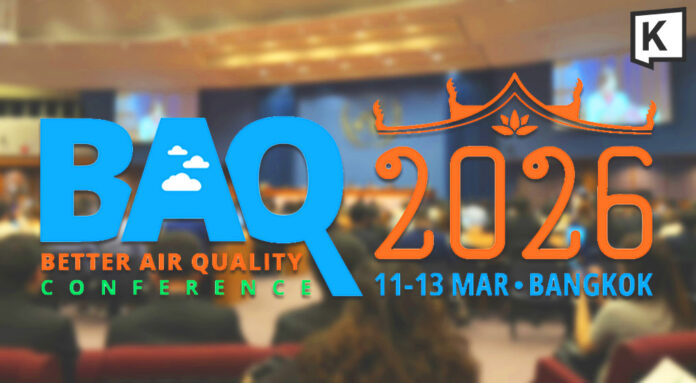
BANGKOK — Better Air Quality (BAQ) Conference 2026, bringing together policymakers, scientists and environmental experts from across Asia and beyond to address the region’s growing air pollution challenges.
The conference served as a key platform for governments, research institutions and international organisations to share strategies aimed at improving air quality and protecting public health. The event focused on practical solutions for reducing emissions, strengthening environmental policy and advancing clean technologies.
Participants included representatives from national and local governments, academic institutions, development agencies and non-governmental organisations. The Better Air Quality Conference is part of a long-running regional initiative that promotes collaboration on air pollution management in Asia. The 2026 conference highlighted innovative approaches to reducing pollution in rapidly growing urban areas. Workshops, panel discussions and technical sessions allowed participants to exchange research findings and policy experiences.
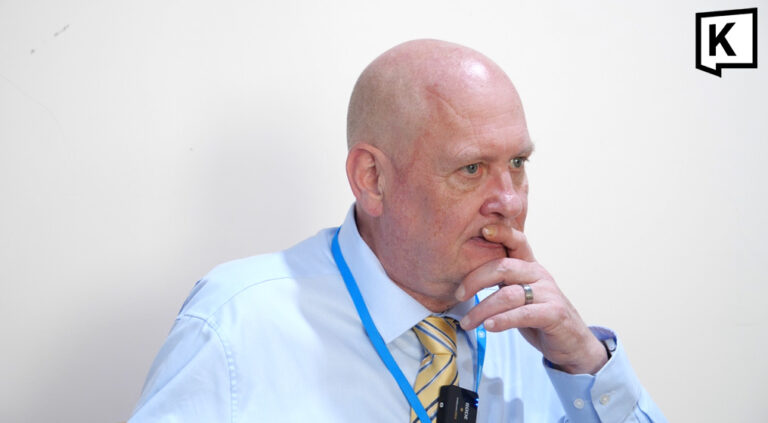
Bjarne Pedersen, executive director of Clean Air Asia, said BAQ is the largest conference in Asia focused on the links between air pollution, climate change and public health.
“The essence of BAQ is to bring all stakeholders together from across the region to focus on finding solutions and, most importantly, implementing them,” he said in an interview. “We all want clean air and better health for everyone. We want to breathe clean air, and the conference brings the major players together to achieve that goal.”
Pedersen said one of the conference’s major achievements was the launch more than five years ago of a guidance framework for improving air quality in Asian cities. The framework has since become a leading blueprint for urban air quality management and is being followed by several cities across the region. He said the conference has also helped broaden the regional conversation beyond air pollution alone. “Over the years we have managed to elevate the discussion to include air pollution, climate and public health,” he said. “When we address climate and air pollution together, we also improve public health and sustainability for the region.”
Another initiative launched at the most recent BAQ conference was a regional exchange of experiences programme designed to encourage Asian cities and countries to learn from one another. “In the past, many places looked outside the region for best practices,” Pedersen said. “But Asia already has a lot of valuable experience. It is important that cities and countries learn from each other.” He pointed to emerging cooperation between Beijing and Bangkok as an example of that approach. The partnership aims to help other cities in the region understand how to improve air quality for their residents. Pedersen said such collaboration could help Bangkok accelerate efforts to reduce air pollution beyond the progress already achieved.
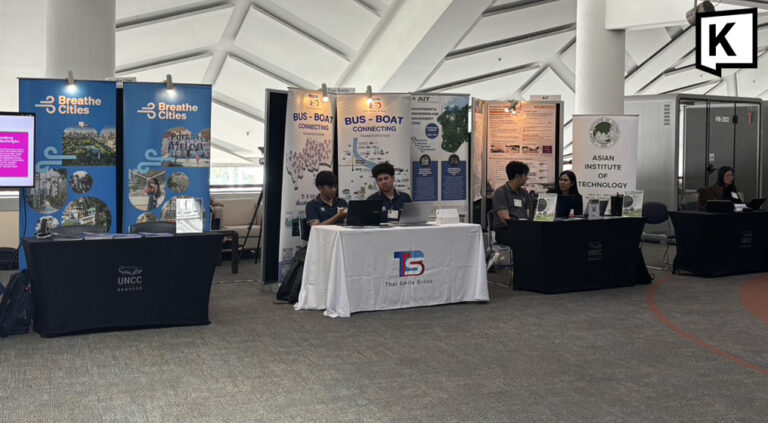
Despite improvements in Thailand’s air quality, Pedersen said the country now faces a more complex next phase of reforms.
He said Thailand has already made progress by implementing relatively straightforward measures, often described as “low-hanging fruit” that can quickly reduce emissions. “The next step usually requires bigger and more coordinated investments,” he said. “That includes infrastructure changes, expanding public transport, transitioning to cleaner energy and reducing reliance on fossil fuels.” Those challenges, he said, will shape Thailand’s next stage of air pollution policy.
Pedersen also addressed delays surrounding Thailand’s proposed Clean Air Act, which has yet to be implemented. “My recommendation is not to wait,” he said. “The issue is urgent, and there are actions that can already be taken to reduce pollution.” He said investment in cleaner urban transport systems should continue, including partnerships between the public and private sectors to expand electric mobility and charging infrastructure. Authorities should also prepare for a shift in pollution sources, he said.
Once transport emissions decline, industrial pollution often becomes more prominent. “Small and medium-sized enterprises will need support in reducing their emissions,” he said. Pedersen added that Thailand should also develop a clear roadmap for transitioning its energy system toward renewable sources. Finally, he said the country should focus on reducing so-called “super pollutants”, particularly methane, which can deliver rapid environmental benefits in the short term. “Methane reduction is a critical short-term measure,” he said.
Thailand’s role in tackling air pollution
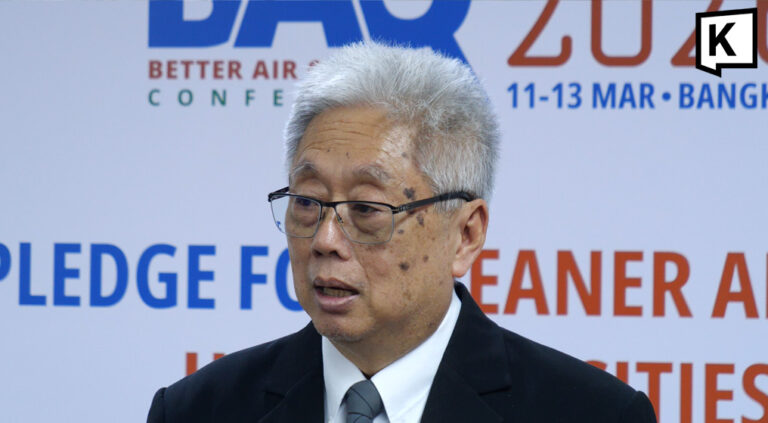
Dr. Supat Wangwongwatana, director of the Centre of Excellence on Air Pollution and Climate, said Thailand’s role as a co-host allows the international community to see the measures the country has taken to address air pollution. “It shows what we have done to solve air pollution problems and allows us to share our experience with other countries in Asia, some of which have even poorer air quality than we do,” he said.
Dr. Supat said air quality in Bangkok has improved compared with a decade ago. Levels of PM2.5, fine particulate matter that can penetrate deep into the lungs, have fallen by about 30% over the past 10 years. He cautioned, however, that progress takes time and requires sustained policies. “Measures that have been implemented are gradually reducing pollution levels,” he said.
Thailand previously set its annual PM2.5 standard at 25 micrograms per cubic metre, which was achieved in 2023. However, Dr. Supat said authorities chose to tighten the standard rather than remain satisfied with meeting the existing threshold. The annual standard has since been revised to 15 micrograms per cubic metre, aligning with the World Health Organization’s interim target level three. “In many areas of Bangkok today, the levels are already below that standard,” he said. “It is gradually improving, but it is not yet the best level. We still have to continue.”
Dr. Supat said road transport remains the main source of pollution in Bangkok, meaning stricter vehicle controls are needed. Thailand’s emission standards for new vehicles are now close to those used in Europe, although the Euro 6 standard has not yet been fully enforced for heavy trucks.
He said full implementation could significantly reduce emissions by requiring diesel vehicles to install particulate filters in exhaust systems, technology older engines lack. “In the past, whatever the engine emitted simply went straight into the air,” he said. “We have to rely on technology to help reduce emissions, and for that we need regulations to support it.” Thailand’s fuel quality standards, he added, are already on par with those in Europe and meet international benchmarks.
Dr. Supat said one policy approach discussed during the conference that could be applied in Bangkok is the use of low-emission zones. Given the city’s heavy traffic, authorities may need to restrict certain types of vehicles from entering designated areas during periods when poor air quality is forecast. “Otherwise it will be very difficult to reduce daily pollution levels,” he said. He noted that pollution sources vary across Thailand. While vehicle emissions dominate in Bangkok, northern provinces face a different challenge: smoke from biomass burning, including forest fires and the burning of agricultural residues.
Pollution levels in northern Thailand are already beginning to rise, he said, with air quality readings reaching the “orange” warning level in some areas. “If burning continues, next month we may see red-level pollution,” he said. Dr. Supat said stronger legislation could also play an important role in addressing air pollution.
Thailand has been considering a Clean Air Act, which would specifically focus on air quality management.
At present, authorities rely on a patchwork of laws, including environmental, factory and land transport regulations. “Sometimes cooperation between agencies is not complete, which makes solving the problem more difficult,” he said. A dedicated Clean Air Act could streamline enforcement and reduce reliance on multiple laws and agencies. It could also allow provincial authorities greater flexibility to manage air pollution within and across provincial boundaries. However, the legislative process was interrupted when parliament was dissolved. It will depend on the next government whether the bill is resubmitted once parliament reconvenes. If reintroduced soon, Dr. Supat said the draft could still move forward through Senate committee review before returning to the full legislature.
Asked how the BAQ conference might elevate Thailand’s role in tackling air pollution, Dr. Supat said progress ultimately depends on the country’s own policies and innovation. “International forums help, but in the end it depends on what we do ourselves,” he said.
He noted that Bangkok has already introduced several measures independently of such meetings. “What these international conferences do is allow cities to share experiences, what one city is doing, what another city is doing, and we can consider whether those measures suit Thailand’s context,” he said. At the same time, other countries can also learn from Thailand’s approach.
“It is about sharing knowledge and experience,” he said. “If we see that something works and fits our context, we can adopt it and improve what we are already doing.”
Bangkok is moving in the right direction
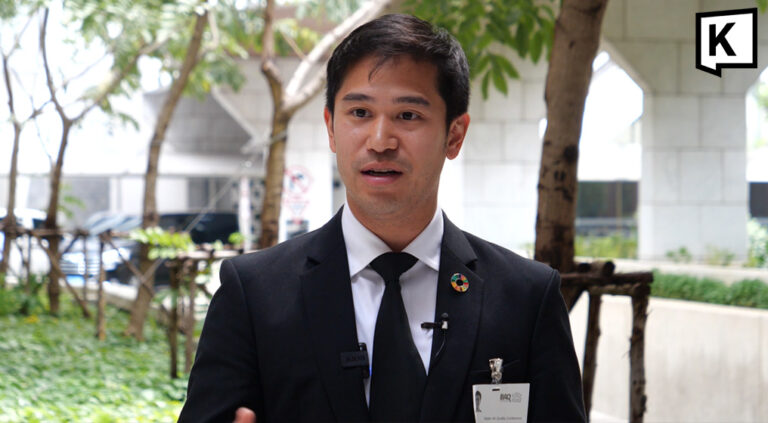
Pornphrom Vikitsreth, sustainability adviser to the governor of Bangkok, said the Better Air Quality (BAQ) conference had brought together experts from across the world, particularly from Asia, to exchange knowledge on pollution management. Speaking on behalf of the Bangkok governor at the opening session, Pornphrom said the city had shared both its achievements and remaining challenges in addressing air pollution. “We explained what we have done so far and what gaps remain,” he said. “The data show we are moving in the right direction.”
According to Pornphrom, the number of days with pollution levels exceeding safety standards in January and February has dropped by about half compared with the same period last year. Average particulate levels, measured in micrograms per cubic metre, have also declined significantly. He attributed the improvement to cooperation with neighbouring provinces where seasonal agricultural burning contributes to pollution, as well as efforts to support farmers in reducing crop burning.
Bangkok has also introduced stricter local measures targeting emissions from vehicles and industrial facilities. These include establishing low-emission zones and tightening smoke emission inspections for vehicles. Authorities have also asked the Department of Industrial Works to strengthen regulatory standards for factories.
Pornphrom said the city had also shared initiatives such as clean-air classrooms, dust-free rooms and urban tree-planting projects with international participants at the conference.
Despite progress, he acknowledged that more work was needed. Some improvements would require stronger legal frameworks to grant greater authority to local governments, while long-term investments would be necessary to tackle pollution sustainably. He said discussions with institutions such as the Asian Development Bank focused on potential long-term investments, including expanding electric bus fleets, improving mass transit systems and developing sustainable solutions for managing agricultural biomass to reduce open burning.
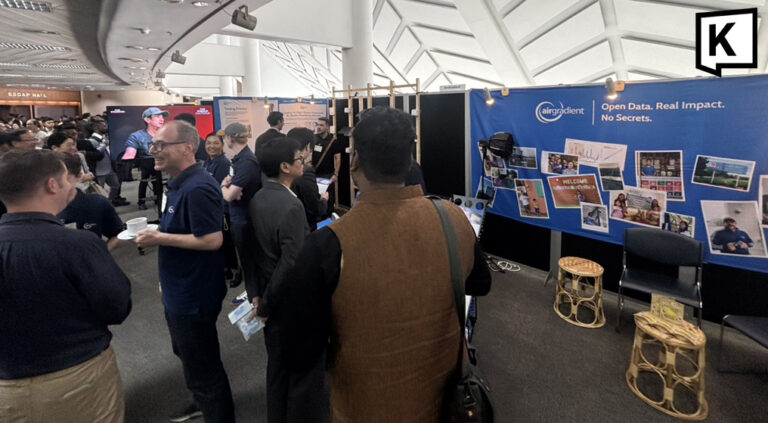
How well has Bangkok been doing so far?
Asked how he would evaluate the city’s performance so far, Pornphrom said he preferred to rely on scientific indicators rather than personal judgement. In January last year, pollution exceeded safety limits on 22 of 31 days, including 20 “orange” level days and two “red” level days. This January, there were 12 days above the standard. In February last year, pollution exceeded the standard for 12 days, compared with six days this year. Last year also saw three episodes of consecutive days with particularly high pollution levels in January. This year there has been only one such episode, and it was shorter in duration. “These figures are the scorecard that shows we are moving in the right direction,” he said.
Pornphrom said the conference had also highlighted innovations and policy approaches used in other countries that Bangkok could potentially adopt, although he noted that policies must be adapted to local conditions. Some cities, he said, are able to divert heavy vehicles through underground or outer-ring routes. Other countries have introduced special licence plate colours for electric vehicles, a policy that could be explored with Thailand’s Ministry of Transport, which oversees vehicle registration.
He added that international experts were particularly advanced in analysing the composition of particulate matter to determine its sources and in forecasting future pollution levels. Bangkok already has its own monitoring and forecasting systems, but Pornphrom said the city hopes to draw on international expertise to improve accuracy and help residents better understand pollution risks.
He emphasised that public participation is essential to solving the problem. “People are the most important part because all of us contribute to air pollution in some way,” he said. “Simply driving a car when we leave home is part of it.” He encouraged residents to shift towards public transport when possible and said the city was working to make rail systems more accessible.
Residents can also report smoke-emitting vehicles through the Traffy Fondue complaint platform. During severe pollution episodes, authorities have also encouraged remote work to reduce traffic and limit people’s exposure to outdoor pollution. Private companies also play an important role, Pornphrom said, noting that businesses can act quickly to support initiatives. For example, the private sector has cooperated with campaigns encouraging drivers to replace engine oil filters by offering discounts during promotional periods.
Academics and civil society groups also contribute valuable research and ideas, he said, and authorities are working to translate these proposals into practical policies and projects.

Looking at longer-term trends, Pornphrom said the year-on-year improvement was clear, although some observers questioned whether weather patterns such as La Niña this year and El Niño last year might have influenced pollution levels. To address that concern, officials compared data from the past four years. “When we compare this year with the past four years, we see clear improvement,” he said. “Over the governor’s four-year term, we have moved in the right direction.”
He added that the city now has a much deeper understanding of pollution sources, ranging from diesel emissions to agricultural burning. “In the past we might have thought that checking vehicle emissions alone would solve the problem,” he said. “Now we understand that pollution comes from many sources.” Authorities now use detailed data to track pollution down to specific districts, subdistricts and even villages in neighbouring provinces. “With better information, we can address the problem more precisely instead of only inspecting construction sites or vehicle emissions,” he said.
Asked about cooperation with neighbouring countries, Pornphrom said air pollution does not respect borders. “Dust doesn’t stay in one place, it moves,” he said. “It may be difficult to coordinate with neighbouring countries, but we will do our best. At the very least, we must ensure that our own emissions are reduced.”
Many countries in Asia that face a gap between air quality goals and available financing
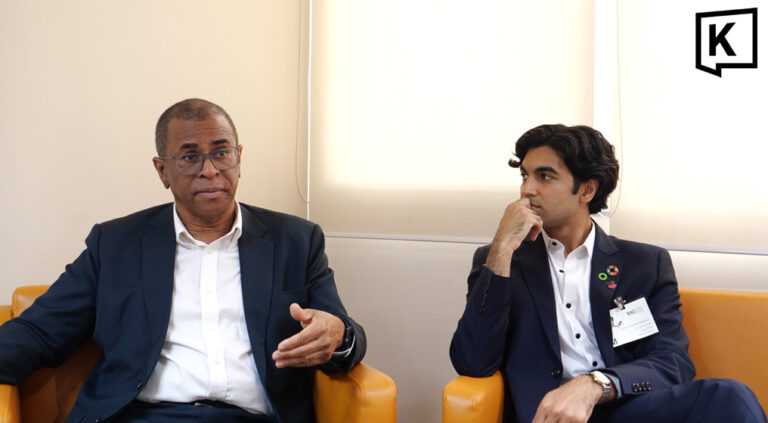
Elliott Harris, co-chair of the Climate and Clean Air Coalition’s Global Economic Assessment of Climate and Clean Air and former United Nations assistant secretary-general for economic development and chief economist, commented on the economic policy that could accelerate investment in clean air solutions in many countries in Asia that face a gap between air quality goals and available financing that financing must come from multiple sources. “Some of it has to come from governments, but much more will have to come from the private sector,” he said. To mobilise private investment, Harris said governments and institutions must present initiatives as well-structured projects capable of attracting private capital.
“It is not enough simply to say, ‘This is what we want to do,’” he said. “You have to show how it will be done, what benefits it will deliver and what kind of return investors can expect.” Private investors must see clean air initiatives as viable investments rather than purely public spending, he added. Blended finance, combining public funding with other sources, can also make projects more attractive. “But ultimately the private sector has to see the benefit of the investment,” Harris said. “Otherwise it will be impossible to mobilise the amount of private capital that we need.”
Asked, in the long run, what do you see as the most underestimated risks of delaying action on air pollution and climate mitigation, especially in rapidly growing Asian economies? Harris said research currently being finalised shows that delaying action on air pollution will significantly increase harm to human health. “If we delay action on reducing air pollution, we are increasing the damage done to people,” he said. Poor air quality leads to serious health consequences, reduced quality of life and millions of premature deaths.
What makes the situation particularly troubling, Harris said, is that much of the damage is avoidable. “The solutions are already known,” he said. “What is required is effort and action to implement them quickly.” Unlike some climate policies that take decades to show results, improvements in air quality can produce rapid benefits.
“If we reduce pollution levels, we can see improvements almost immediately,” Harris said. “Very soon afterwards you begin to see improvements in people’s health.” That, he said, highlights both the benefits of action and the costs of inaction. “It is not enough simply to decide to do something,” he added. “We have to make it happen.”

Air pollution often disproportionately affects marginalised communities
Saad Amer, founder of Justice Environment and a United Nations consultant, discussed on the topic of how can policymakers ensure that clean air strategies address environmental justice and equity, when air pollution often disproportionately affects marginalised communities. For example, in Thailand farmers are frequently blamed for burning biomass such as crop residue. He said the farmers and rural communities are often overlooked in policy discussions. “I am glad you are focusing on farmers because they are usually overlooked in these conversations,” he said.
Globally, around 99% of people breathe polluted air, contributing to roughly 8 million premature deaths each year. About 89% of those deaths occur in Asia and Southeast Asia, Amer said. “That means that the way the system is currently designed, we are effectively deciding which communities get to live longer, healthier lives and which communities are sacrificed,” he said.
Amer described parts of Southeast Asia as existing in a “sacrifice zone”, where communities disproportionately bear the burden of pollution. As governments develop policy solutions, he said they must identify which groups are most affected and place them at the centre of decision-making. That includes farmers as well as ethnic and religious minorities. Policymakers must also recognise cultural practices rather than dismissing them, Amer said.
“We should not disregard what people are doing or erase their ways of life through outside intervention,” he said. “Instead we need to meet communities where they are and design policies that work for them.” Listening to affected communities is essential for effective policy, he added. “I believe change is possible,” Amer said. “Pollution has increased rapidly over the past few decades, which shows how quickly systems can change. That means we can also change them in ways that are more productive and do not harm these communities.”
When asked, how can international frameworks better protect the most pollution-burdened communities and clean air initiatives on the ground? Amer said international agreements often adopt broad frameworks so they can apply to many countries, but national governments must translate them into targeted policies. “When countries design policies for their own people, they have to be more precise,” he said.
He pointed to examples in the United States, where many Black and Latino communities live near major pollution sources and experience higher rates of cancer, asthma and other health problems. “These communities’ voices are often ignored because they are far from the centres of power,” Amer said. He said governments must ensure that affected communities have a seat at the table. “They need to be able to share their stories and experiences so those perspectives inform policy decisions,” he said. Centering environmental justice can help address the root causes of pollution and lead to healthier communities, he added.
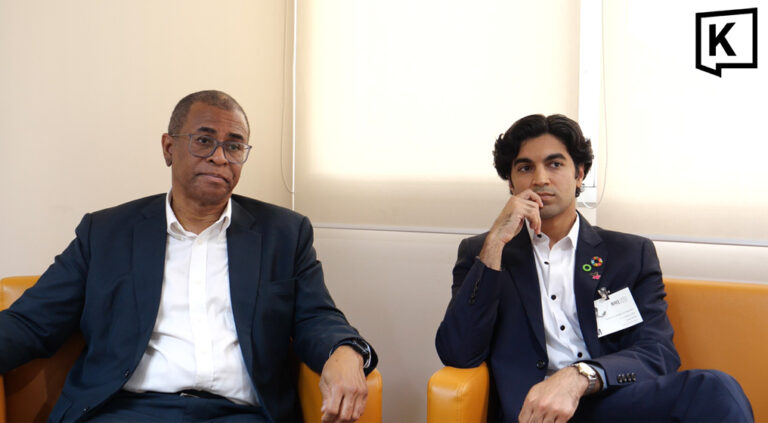
What can the BAQ conference achieve?
Harris said he hopes the conference will highlight how quickly improvements in air quality can produce tangible benefits. “There is a lot we could be doing, and doing better, that would generate improvements not in the second half of the century, but in the second half of this decade,” he said. Improving air quality can deliver immediate health and economic benefits while also helping slow global warming.
“One of the challenges is that climate debates often focus on long-term timelines,” Harris said. “We sometimes lose sight of the actions we can take today that improve our lives and our economies right now.” He also emphasised that financing should not be seen as the main barrier. “Finance is not the problem,” he said. “Implementation is the problem. If we implement the solutions, the finance will follow.”
Amer added that people should not feel powerless in the face of environmental challenges. “It can often feel like the economic and political systems we are born into are fixed,” he said. “But societies are shaped by their citizens.” If people collectively demand change, he said, systems can shift. “While there are high-level discussions happening here in Bangkok, people everywhere should understand that they also play a role,” Amer said. “Real change happens when citizens decide what kind of world they want to live in and push for it. If we demand faster change, it can and will happen.”
Bindu Lohani, Chairman, Board of Trustees, Clean Air Asia, emphasized during his closing remark “clean air must be understood not only as an environmental objective but as a human right.”