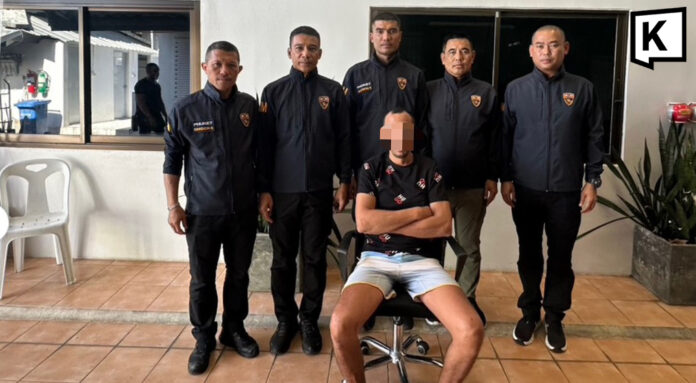
PHUKET — 12 March 2026, Thai immigration police have arrested a French national in Phuket who was wanted on an Interpol red notice for attempted murder in France, authorities said.
The arrest followed a crackdown ordered by senior immigration officials aimed at targeting foreign nationals hiding in Thailand while fleeing criminal cases abroad, as well as groups entering the country to commit transnational crimes.
Police said the French Embassy in Thailand coordinated with the Royal Thai Police’s Foreign Affairs Division to request assistance in locating, arresting and deporting the suspect, believed to have been hiding in Phuket province.
Immigration officers from Phuket located and detained the suspect, identified as Faisal, a 46-year-old French national, at a house in Rawai subdistrict in Muang district of Phuket.
According to authorities, the French Embassy requested cooperation after the man was identified as the subject of a French arrest warrant and an Interpol red notice on a charge of attempted murder with a weapon.
Police said the case stems from an incident in France in which a dispute escalated into gunfire, leaving another person injured. Faisal is suspected of being the gunman.
Investigators later determined that he had fled France and travelled to Thailand.
Immigration officials subsequently sought approval to revoke his permission to stay in the kingdom under the Immigration Act, citing the foreign arrest warrant issued against him.
After the revocation was approved, officers tracked him to a residence in Rawai and moved in to make the arrest.
Authorities said the suspect admitted his identity and confirmed that he was the person named in the warrant.
Records show he last entered Thailand on 23 January 2026 under a visa-exemption scheme, with permission to stay until 23 March 2026.
He was taken to Phuket Immigration for formal notification of the visa revocation through an interpreter and is being held for further legal proceedings and deportation.
The 2024 Pride Parade in Bangkok, Thailand (AP Photo/Sakchai Lalit)
BANGKOK — Thailand has advanced to the first round in its bid to host the global LGBTQ+ event WorldPride 2030, with Bangkok competing alongside London and Barcelona, officials said.
The development was discussed at a preparatory meeting on 11 March chaired by Natthriya Thaweevong, Permanent Secretary of the Ministry of Tourism and Sports, as authorities and partners coordinated efforts to strengthen Thailand’s proposal.
The meeting brought together representatives from the Ministry of Tourism and Sports, the Department of Tourism, the Tourism Authority of Thailand, the Thailand Convention and Exhibition Bureau and private-sector partner Narumit Pride Co., Ltd. at the Government Complex in Bangkok.
Natthriya said bidding to host WorldPride 2030 presents an important opportunity for Thailand to showcase its tourism potential, capacity to organise international events and commitment to social openness.
Participants discussed cooperation between government agencies, the private sector and civil society to prepare infrastructure, tourist facilitation, public relations campaigns and activities that meet international standards.
If Thailand secures the hosting rights, the event would help boost high-quality tourism, generate economic activity and enhance the country’s image as a diverse and welcoming destination, she said.
Thailand is promoting its recent progress on marriage equality and the strength of its LGBTQ+ community as key advantages in the bid, with hopes of becoming the first country in Asia to host the global pride festival.
WorldPride is a series of international LGBTQ+ pride events coordinated by InterPride, with host cities selected through bids voted on at the organisation’s annual general meeting.
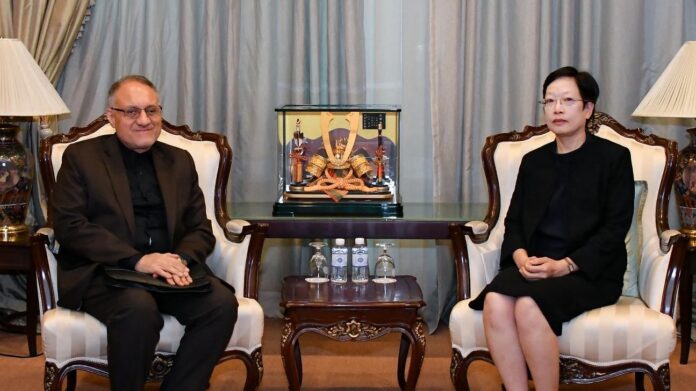
Sirilak Niyom, Deputy Permanent Secretary for Foreign Affairs of Thailand, meets Nassereddin Heidari, Ambassador of Iran to Thailand, at the Ministry of Foreign Affairs of Thailand in Bangkok on 12 March 2026.
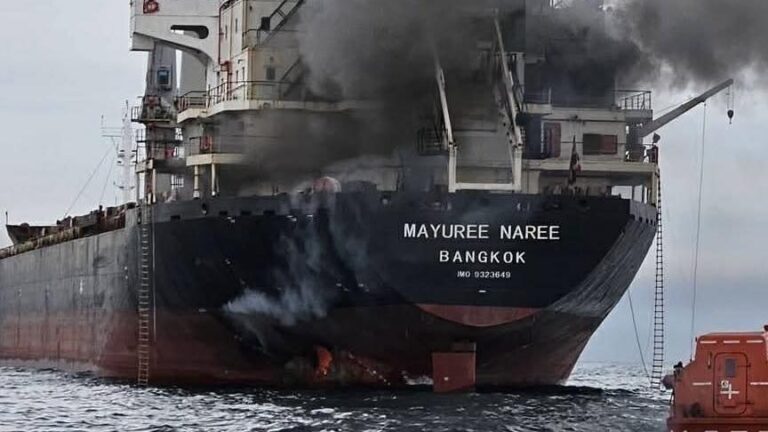
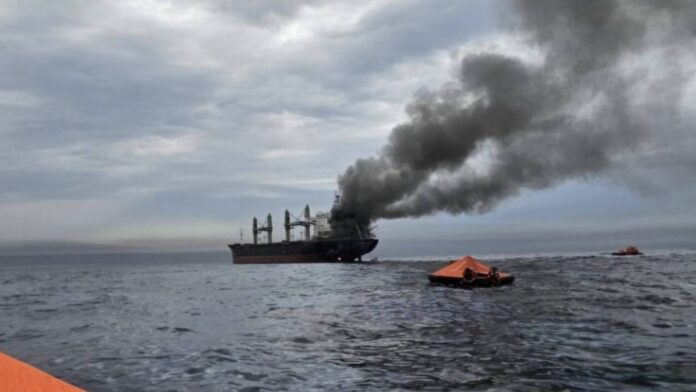
BANGKOK — Thailand has lodged a formal protest with Iran following an incident in which a Thai-flagged cargo ship was hit and damaged while sailing in the Strait of Hormuz, affecting 23 Thai crew members on board.
On 12 March 2026, Sirilak Niyom, Deputy Permanent Secretary for Foreign Affairs, held talks with Nassereddin Heidari, Ambassador of the Islamic Republic of Iran to Thailand, according to the Ministry of Foreign Affairs of Thailand.
During the meeting, Sirilak raised concerns over the incident involving the Thai-flagged cargo ship Mayuree Naree, which was struck and damaged while sailing through the strategic waterway after departing from Khalifa Port in the United Arab Emirates.
She conveyed Thailand’s strongest protest over the incident and requested that Iranian authorities issue a statement of apology and clarify the facts surrounding the event. The Thai side also expressed hope that such an incident would not occur again.
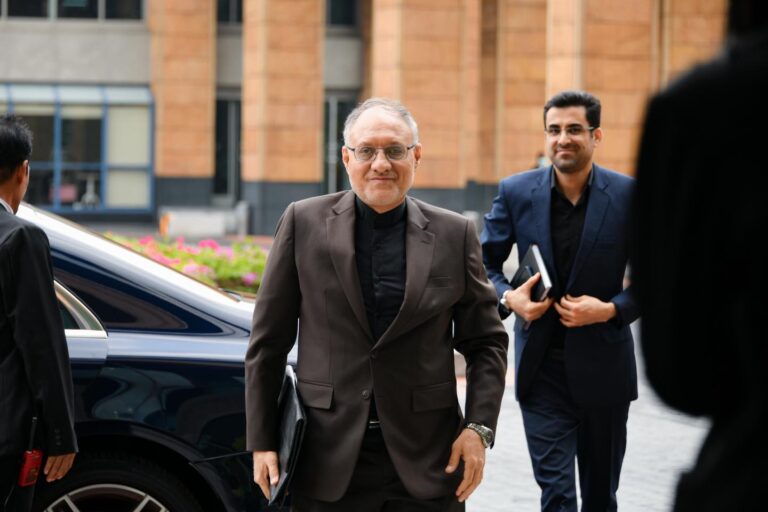
Nassereddin Heidari, Ambassador of the Islamic Republic of Iran to Thailand
The Iranian ambassador expressed condolences over the incident and said he would promptly convey Thailand’s protest to authorities in Tehran.
Sirilak also voiced concern over rising tensions in the region and called on all parties to exercise restraint, return to diplomatic dialogue and ensure the safety of civilians.
She also thanked the Iranian government for facilitating the evacuation of Thai nationals from Iran on 7 and 10 March 2026 and asked authorities to continue ensuring the safety of Thai students who remain in the country.
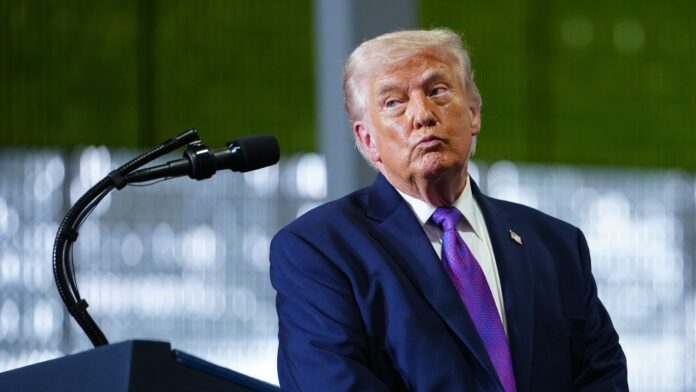
President Donald Trump pauses after a person in the crowd needed medical assistance as he speaks at Verst Logistics Wednesday, March 11, 2026, in Hebron, Ky. (AP Photo/Julia Demaree Nikhinson)
WASHINGTON — The administration of Donald Trump has launched new trade investigations into what it considers unfair trade practices, seeking to rebuild tariff pressure after the US Supreme Court struck down much of Trump’s global tariff programme last month.
On 11 March in Washington, D.C., the US government announced an investigation into excess industrial capacity among 16 major trading partners, including Thailand.
US Trade Representative Jamieson Greer said the probe under Section 301 of US trade law could lead to new tariffs on China, the European Union, India, Japan, South Korea and Mexico by this summer.
Other economies included in the investigation are Taiwan, Vietnam, Malaysia, Cambodia, Singapore, Indonesia, Bangladesh, Switzerland and Norway. Canada, the second-largest US trading partner, was not named as a target.
Greer said the investigation will focus on economies showing signs of structural excess capacity in manufacturing, such as large trade surpluses or underutilised production capacity.
He also said the US will open another Section 301 investigation on 12 March targeting imports made with forced labour, covering more than 60 countries worldwide.
The move comes as US officials led by Treasury Secretary Scott Bessent prepare to meet senior Chinese representatives in Paris this week, ahead of a possible meeting between Trump and Chinese President Xi Jinping in Beijing later this month.
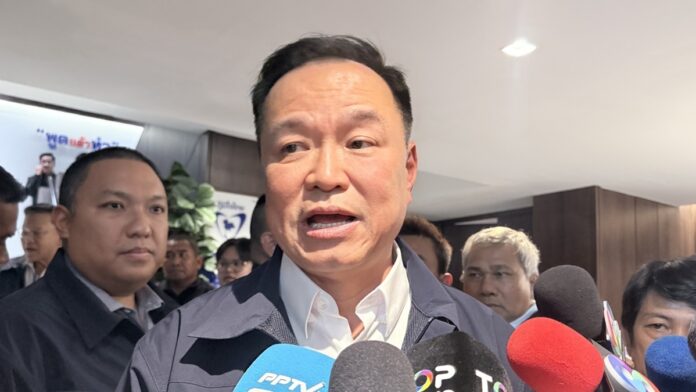
Anutin Charnvirakul at the headquarters of the Bhumjaithai Party
BANGKOK — Anutin Charnvirakul, prime minister of Thailand, said the Thai government is mobilising all available resources to assist three Thai crew members aboard the cargo vessel Mayuree Naree who remain near the Strait of Hormuz in Iran, expressing hope that the sailors will remain safe.
Speaking on 12 March at the headquarters of the Bhumjaithai Party, Anutin, who also serves as interior minister, said relevant government agencies have been instructed to take all possible steps to help the crew. He added that Thai diplomatic missions have been directed to reach the sailors and provide assistance, although travelling to the area may take time. Thai authorities have also coordinated with the country overseeing the crew’s situation.
Responding to questions about why the Thai-flagged cargo ship travelled through the strait despite warnings of possible attacks, Anutin said some reports suggested alerts had been issued but the exact circumstances of maritime operations remain unclear. He noted that the vessel may have been navigating in international waters or in a channel leading into a gulf, and authorities must wait for clearer information.
Thai cargo ship
“Some reports say there were warnings, but we still do not know how maritime routes are managed or whose guidance the vessel followed,” he said, adding that most Thai nationals in the area remain safe.
Asked whether Thailand would send a letter to Iran to clarify the situation, Anutin said the matter should proceed based on established facts. He added that Sihasak Phuangketkeow has been assigned to handle diplomatic coordination, including inviting the Iranian ambassador to Thailand for discussions.
Anutin said the circumstances must first be examined before assessing any impact on relations between Thailand and Iran, adding that attacking a Thai vessel would not be appropriate.
Regarding the private company that owns the cargo ship, he said it is likely communicating with relevant agencies such as the Ministry of Transport and the Ministry of Foreign Affairs of Thailand, which are responsible for handling the matter.
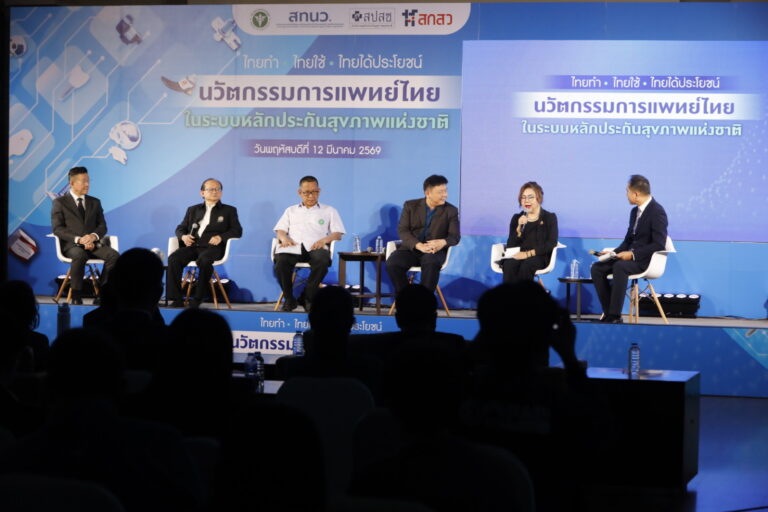
BANGKOK — The National Health Security Office (NHSO) is pushing to integrate Thai-developed medical innovations into Thailand’s universal healthcare scheme, with more than 7 billion baht already spent on domestically produced medical products to strengthen the healthcare system while boosting the national economy.
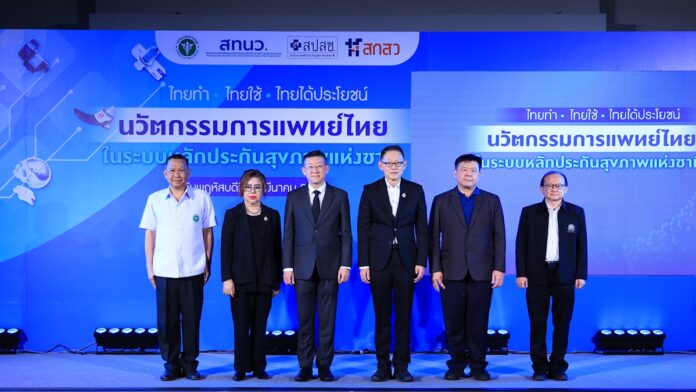
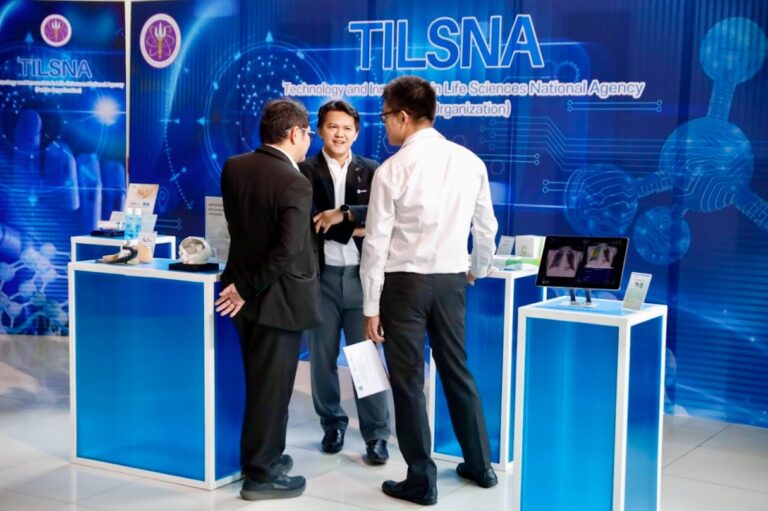
The policy direction was outlined at a forum titled “Thai-made, Thai-used, Thai benefits: Medical innovation in the universal healthcare system” held on 12 March at the Khaosod building in Bangkok. The event was organised by the NHSO in collaboration with the Ministry of Public Health, the Thailand Center of Excellence for Life Sciences (TCELS), and Thailand Science Research and Innovation (TSRI).
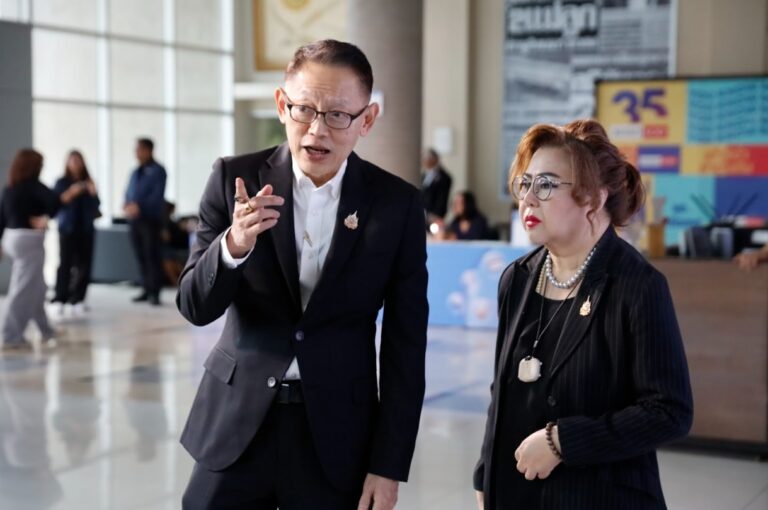
Participants included NHSO deputy secretary-general Dr. Atthaporn Limpanyalert, TCELS director Dr. Jitporn Thammajinda, Medical Device Control Division director Piya Chinmanee-wong, acting director of Mae Wong Hospital Dr. Preeda Prathumma, and Udon Thani Hospital physician Dr. Somsit Nitithananon. The forum also featured patients who have benefited from Thai-developed innovations, including dental implant recipient Pradit Buengklang and personalised titanium skull implant recipient Manisa Unanont.
Dr. Jadet Thammatacharee, secretary-general of the NHSO
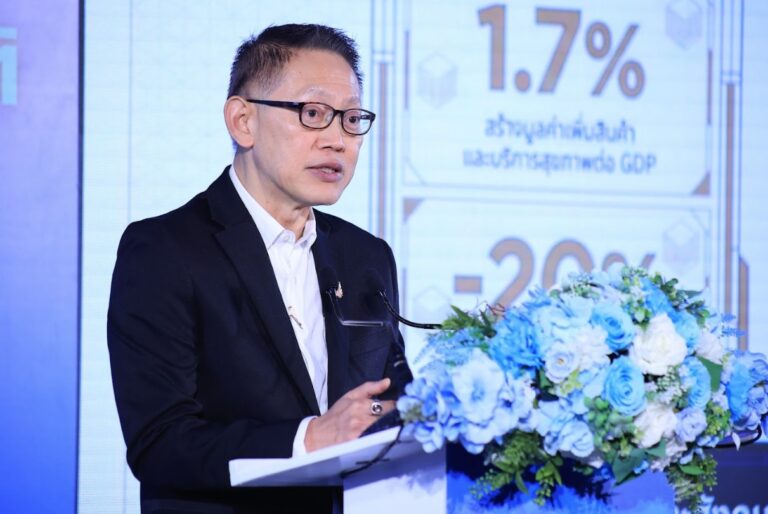
Dr. Jadet Thammatacharee, secretary-general of the NHSO, said the initiative stems from the management of Thailand’s large national health fund, which has an annual budget of nearly 200 billion baht and continues to grow each year. While rising healthcare spending is often seen as a cost burden, he said it could instead be used strategically to support domestic innovation and industry.
“Every year policymakers ask why healthcare spending continues to increase,” Dr. Jadet said. “But if we allocate part of this budget to products and innovations made in Thailand, the money will circulate within the country and benefit the economy through job creation and the development of the health industry.”
He said past crises, particularly shortages of imported medical equipment, highlighted the risks of relying heavily on foreign supplies. Strengthening domestic medical manufacturing and innovation is therefore crucial for the resilience of Thailand’s healthcare system.
Thailand is also entering an ageing society, which requires the economy to shift toward higher-value industries such as medical technology and health services. Under targets set in the 13th National Economic and Social Development Plan by the National Economic and Social Development Council, Thailand aims to expand the value of health-related goods and services to around 300 billion baht annually, or about 1.7% of gross domestic product, while reducing imports of medical products by roughly 20 billion baht.
Dr. Jadet said circulating such funds domestically could generate significant economic value. To support the policy, the NHSO has introduced mechanisms allowing Thai-developed medical innovations to enter the universal healthcare benefits system more easily through a special pathway known as the “Green Channel,” enabling research-backed products to be adopted more quickly.
The office can also support bulk procurement contracts lasting three to five years or longer, providing market certainty for manufacturers and researchers while allowing them to reinvest revenue into further innovation.
According to Dr. Jadet, the policy has already produced concrete results. In the past year alone, the NHSO purchased more than 7 billion baht worth of medical products and innovations manufactured in Thailand. However, this remains a small portion of the nearly 200-billion-baht annual health fund, and authorities aim to increase the share of locally produced medical technologies in the future.
Examples of Thai-developed innovations already entering the healthcare system include artificial intelligence-powered X-ray imaging systems, artificial skull implants, dynamic prosthetic feet that allow more natural movement, and diagnostic test kits developed by Thai researchers.
Other locally produced products include ostomy bags made from Thai natural rubber and dental implants manufactured domestically, which help reduce treatment costs and improve access to healthcare services. Thailand also has the capacity to produce important medicines, including antiviral drugs manufactured by the Government Pharmaceutical Organization, which can lower treatment costs and potentially be exported abroad.
Looking ahead, the NHSO is monitoring progress in advanced medical research such as targeted cancer therapy and personalised medicine being developed by Thai scientists. If successfully produced in Thailand, these innovations could be incorporated into the universal healthcare system, allowing patients to access advanced treatments at more affordable prices.
Dr. Jadet said the policy aims not only to strengthen Thailand’s healthcare system but also to stimulate the economy by promoting innovation, creating jobs and enhancing the country’s long-term competitiveness.
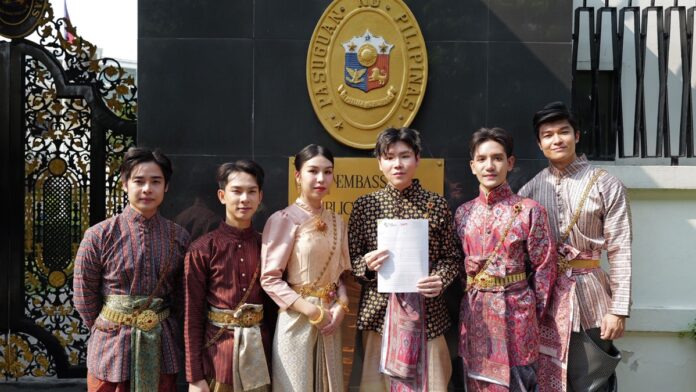
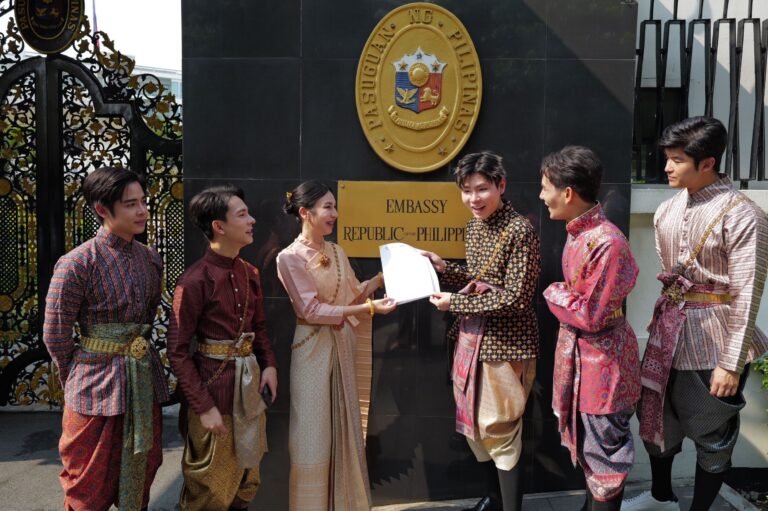
BANGKOK — Members of the Rak Chart Party on Thursday submitted a letter to the Embassy of the Philippines in Thailand, urging action over an ASEAN tourism promotional video they claim misrepresented Thai traditional dress.
The group delivered the letter at 13:00 on 12 March to the ambassador of the Philippines to Thailand. The Philippines currently serves as chair of the Association of Southeast Asian Nations.
Party spokesperson Chaiporn Jirawinijnan said the delegation requested clarification regarding a video promoting ASEAN tourism in which an actor representing Cambodia appeared wearing attire resembling Thai traditional dress, including a shawl-like sabai.
The party argued the costume was presented as Cambodia’s national dress, which they said caused confusion about cultural identity. They called on the Philippines, as ASEAN chair, to produce a revised promotional video and issue a statement clarifying that the costume shown is Thai traditional attire.
“As ASEAN chair, it is important to ensure that the culture of each member country is presented accurately and respectfully,” Chaiporn said. “We therefore ask the Philippines and the video producers to review and correct the presentation so that each nation’s cultural identity is properly represented.”
Deputy spokesperson Phum Sawasdee said the video had created “serious confusion and distortion,” noting that Cambodia’s traditional dress is the sampot. He claimed the outfit shown in the promotional clip closely resembled Thai clothing, including elements such as the sabai and chong kraben.
Phum said the video had since been removed but argued that deleting it was insufficient because the clip had already been widely shared online, potentially misleading international audiences.
He said the appropriate solution would be for the Philippines, as ASEAN chair, to produce a new promotional video or release an official statement clarifying that Thai national dress belongs to Thailand.
“Even though the clip can no longer be viewed, people have already seen it and formed misunderstandings,” he said.
Phum added that while Thailand and Cambodia share a long history as neighbours, cultural identities in the modern era should be clearly recognised. He urged Cambodia to take pride in its own traditions rather than claiming those of others.
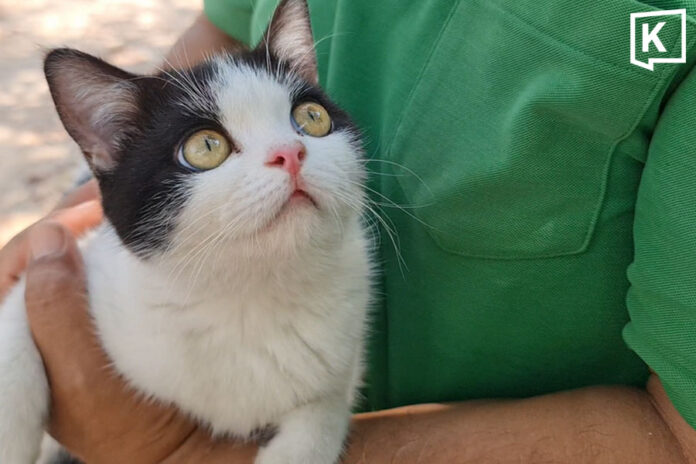
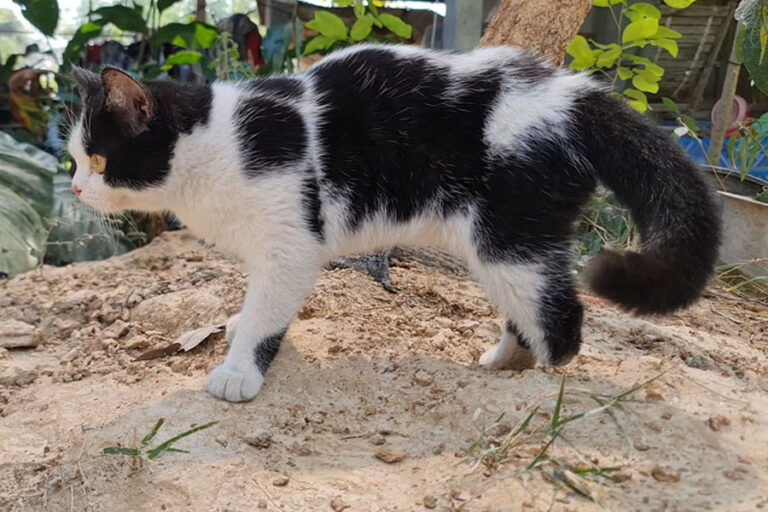
SUKHOTHAI — 11 March 2026, A disabled kitten named “Chanom” missing a paw has captured the hearts of social media users in Sukhothai’s Khiri Mat district.
The five-month-old female cat, with distinctive black-and-white markings, has been widely shared online due to her unusual condition and adorable appearance. Despite being born with only three functional paws, many commenters have jokingly asked if they could adopt her.
Her owner, 58-year-old Samer Inna, said Chanom has been disabled since birth. One of her hind legs did not fully develop and is missing a paw.
Chanom is a mixed-breed cat with Persian, Scottish Fold and American Shorthair lineage. According to Samer, the kitten’s first owner had posted online seeking a home for her, but no one came forward because she is both female and disabled.
“I felt sorry for her, so I decided to take her in,” he said.
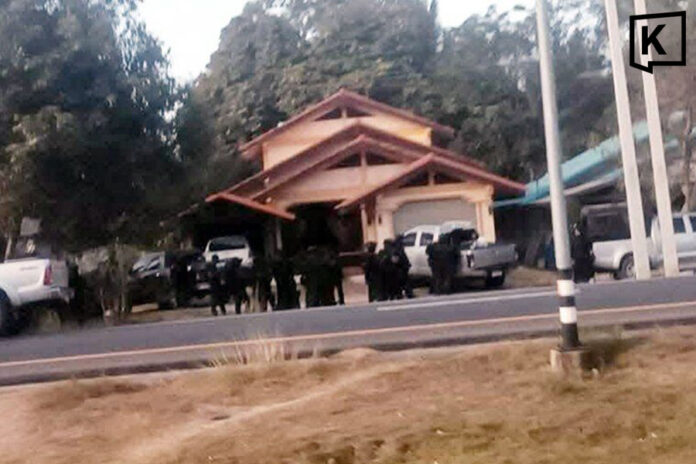
PATTANI — 11 March 2026, One suspected insurgent has been reported dead after a violent clash erupted during a security operation in Nong Chik district, officials said.
Join security forces moved to surround a house in Tha Kam Cham subdistrict after receiving information that a suspect linked to security-related offences was hiding inside the property.
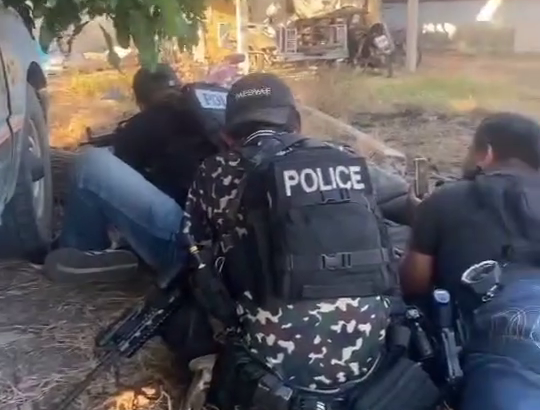
During the operation, gunfire was reported from inside the house, triggering an exchange of fire with security forces. Officials have continued to maintain a cordon around the area.
Initial reports indicate that one suspect was killed. Further details remain under investigation and authorities said updates will be provided as information becomes available.
Timeline of events as we know so far
15:35 — Security forces moved into the area and surrounded the target house.
16:50 — The suspect fired at a drone sent by officers to survey the house.
17:05 — The suspect opened fire at security officers.
17:13 — The suspect fired at officers again.
17:25 — The suspect threw an explosive device at officers, and clashes continued in the area
Police armed with assault rifles take cover behind a vehicle during the firefight
BANGKOK — Thailand has expressed grave concern over the worsening situation in the Middle East following Israeli and U.S. attacks and subsequent retaliation by Iran, warning that the ongoing hostilities could escalate tensions in the region and beyond.
In a statement released by the Ministry of Foreign Affairs, Thailand said the situation poses serious threats to the lives and safety of innocent civilians in neighbouring countries and elsewhere, including Thai nationals.
The ministry noted that the conflict is also affecting maritime security, after a Thai-flagged vessel was hit in the Strait of Hormuz with 23 Thai crew members on board.
“Respect for the Charter of the United Nations and principles of international law, such as the protection of civilians and civilian infrastructure, becomes imperative,” the statement said.
Thailand called on all parties to exercise the utmost restraint, immediately de-escalate tensions and return to dialogue, diplomacy and negotiations to prevent further escalation and safeguard regional and global peace and stability.