






























30.5 C
Bangkok
Saturday, June 27, 2026
Home Blog Page 1390

Passage to India: Trump Ready for Warm Embrace, Adulation

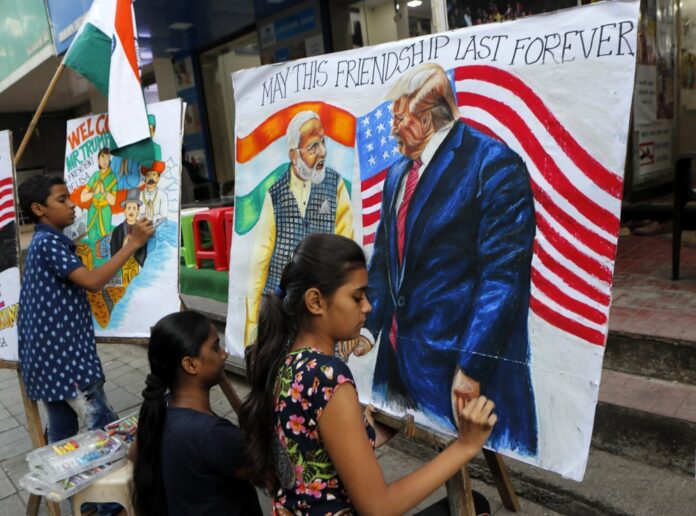
In this Feb. 21, 2020, file photo, children from an art school make paintings of U.S. President Donald Trump and India Prime Minister Narendra Modi ahead of Trump's India visit, in Mumbai, India. (AP Photo/Rajanish Kakade, File)

WASHINGTON (AP) — It was the Trumpiest of offers.

A rally at one of the world’s largest stadiums. A crowd of millions cheering him on. A love fest during an election year.

President Donald Trump’s packed two-day visit to India promises the kind of welcome that has eluded him on many foreign trips, some of which have featured massive protests and icy handshakes from world leaders. He is expected to receive a warm embrace from the ideologically aligned and hug-loving Prime Minister Narendra Modi, complete with a massive rally soon after his arrival Monday and then a sunset visit to the Taj Mahal.

After hosting Modi at a “Howdy Modi” rally in Houston last year that drew 50,000 people, Modi will return the favor with a “Namaste Trump” rally (it translates to, “Greetings, Trump”) at the world’s largest cricket stadium in the western Indian city of Ahmedabad. Tens of thousands are expected to line the streets.

Modi “told me we’ll have 7 million people between the airport and the event,” Trump said to reporters Tuesday, then raised the anticipated number to 10 million when he mentioned the trip during a Thursday night rally. Indian authorities expect closer to 100,000.

“I’ll never be satisfied with a crowd if we have 10 million people in India,” Trump said. And as he left the White House on Sunday for the flight to India, the upcoming spectacle was on the president’s mind again: “I hear it’s going to be a big event. Some people say the biggest event they’ve ever had in India. That’s what the prime minister told me — this will be the biggest event they’ve ever had.”

Trump’s motorcade will travel amid cheers from carefully picked and screened Modi loyalists and workers from his Bharatiya Janata Party. They will stand for hours alongside the neatly manicured 22-kilometer (14-mile) stretch of road to accord Trump a grand welcome.

Trump generally dislikes foreign travel and prefers being home in his White House bed; in fact, he noted to reporters upon his departure from the White House that it was a long trip to India and that he was only going to be there one night. But he has a particular affinity for India. He owned a hotel and casino in Atlantic City, New Jersey, named the Trump Taj Mahal, and he owns multiple properties in India.

“There’s a lot of color. This is a loud and boisterous country, and that exactly in some ways really fits with the Trump style,” said Tanvi Madan, a senior fellow and director of The India Project at the Brookings Institution. She said Trump is likely to get a king’s welcome from a country well-rehearsed in the art of adulation. A half-million people gathered to hear President Dwight D. Eisenhower speak in 1959; former President Jimmy Carter had a village named after him — Carterpuri.

“In some ways, American presidents go to India to feel loved,” said Madan. She predicted Trump would receive an even grander welcome because the Indians recognize it’s something Trump expects and that could keep them in his good graces.

“It’s not about him, per se, for them. It is the U.S. relationship for India is crucial,” she said.

India has spent weeks making preparations for the visit. At a cost of almost $14 million, the government is blanketing the city with ads of Trump and Modi and hastily erected a half-kilometer (1,640-foot) brick wall beside the road Trump will take to the stadium, which officials are rushing to finish in time for Trump’s arrival. Critics say the wall was built to block the view of a slum inhabited by more than 2,000 people. Stray dogs have been caught and exotic trees planted.

Trump’s foreign visits have typically been light on sightseeing, but this time, the president and first lady Melania Trump are to visit the Taj Mahal. Stories in local media warn of the monkeys that inhabit the landmark pestering tourists for food and, on occasion, menacing both visitors and slingshot-carrying security guards.

Presidents have often used trips overseas to bolster their electoral prospects. Images of American presidents being feted on the world stage stand in contrast to those of their rivals in the opposing party slogging through diners in early-voting states and clashing in debate.

This trip, in particular, reflects a Trump campaign strategy to showcase him looking presidential during short, carefully managed trips that provide counterprogramming to the Democrats’ primary contest and produce the kinds of visuals his campaign can use in future ads. His aides also believe the visit could help the president woo tens of thousands of Indian-American voters before the November election.

Some of Trump’s past trips have been overshadowed by diplomatic snafus and political gaffes. When Barack Obama was running for president, his reception in Germany in front of a massive crowd was featured prominently in an attack ad casting him as a mere “celebrity.”

Beyond the optics, there are serious issues to address as India faces a slumping economy and ongoing protests over a citizenship law that excludes Muslims.

Trade tensions between the two countries have escalated since the Trump administration imposed tariffs on steel and aluminium from India. India responded with higher penalties on agricultural goods and restrictions on U.S. medical devices. The U.S. retaliated by removing India from a decades-old preferential trade program.

Though trade will be on the agenda, Trump and administration officials are playing down expectations.

“Well, we can have a trade deal with India, but I’m really saving the big deal for later on,” the president said.

India has been embroiled in protests over its Citizenship Amendment Act. It provides a fast track to naturalization for some migrants who entered the country illegally while fleeing religious persecution, but excludes Muslims, raising fears that the country is moving toward a religious citizenship test. Passage has prompted large-scale protests and a violent crackdown.

Typically, Trump has not publicly rebuked world leaders for human rights abuses during his overseas trips. But one senior administration official said the U.S. is concerned about the situation and that Trump will tell Modi the world is looking to India to continue to uphold its democratic traditions and respect religious minorities.

Trump is also expected to weigh in on the fate of the disputed territory of Kashmir. The Muslim-majority territory claimed by both Hindu-nationalist led India and Pakistan. Trump has offered to mediate and has encouraged India and Pakistan to work together to resolve their differences.

But there is likely to be little public divide between Trump and Modi, two leaders with a similar love of bravado and adoration. At the “Howdy Modi” event last fall, which incongruously linked the Indian prime minister with Texas’ cowboy culture, the two world leaders took the stage hand in hand at a rock concert-like setting that will be dwarfed by the scene in Ahmedabad

“Get ready to say #NamasteTrump,” tweeted the city, the largest in Modi’s home state of Gujarat, as it geared up to welcome the American president on his maiden India visit as president. It also invited people to join “#theBiggestRoadShowEver.”___
Advertisement

Sanders’ 2016 Movement Now Has Political Machine to Push It

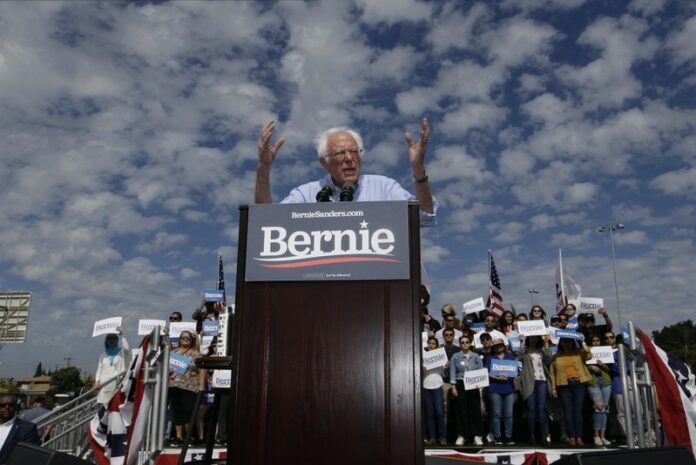
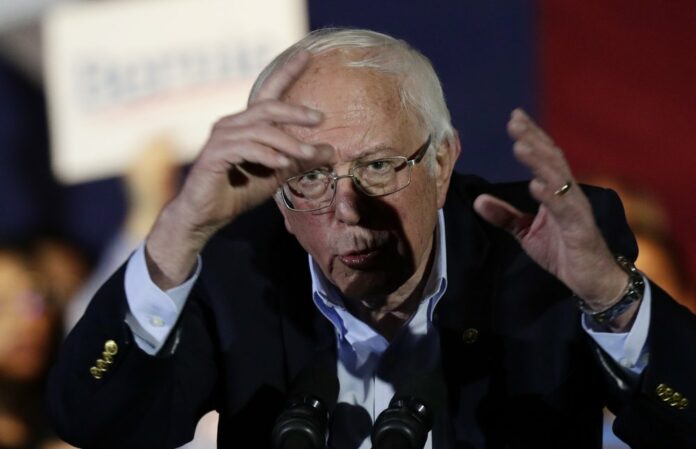
Democratic presidential candidate Sen. Bernie Sanders, I-Vt., speaks during a campaign event in San Antonio, Saturday, Feb. 22, 2020. (AP Photo/Eric Gay)

SAN ANTONIO (AP) — By the fall of 2018, when Democrats were promoting a slate of centrist candidates to topple Republicans in Congress, Bernie Sanders was seeing a very different picture.

The Vermont senator and avowed democratic socialist was convinced his most fervent supporters were as energized as ever, ready to rally around the political insurgency flag he planted in 2016. He could keep stoking the deep frustration and mistrust of the political system and attract backers who had felt too disillusioned to bother voting in the past — much like President Donald Trump had on the right.

Sanders, 78, the oldest candidate in the race, also saw his unwavering commitment to universal health care, combating climate change, canceling student debt, and tuition-free college continuing to excite young people, including Latinos who came to call him “Tio” (uncle) Bernie.

And, most importantly, he was sure he’d have the money, enough consistent financial backing built on mostly small donations made online from around the country, to finish what he started in 2016, rising from an unknown nationally to a credible challenger to Hillary Clinton for the Democratic presidential nomination.

This time, Sanders’ movement has a political machine to propel it.

“Last time, we really did not know how this would go with our fundraising model,” said Jeff Weaver, Sanders’ senior adviser. “It ended up being $240 million, but we had no way of knowing that in the spring of 2015, so we were very slow to staff-up in early states. This time, we did things very differently. We knew we were a front-runner.”

Now everyone else knows it, too. Sanders’ lopsided win Saturday in Nevada caps his remarkable transformation from political insurgent to possibly even a favorite to face off with Trump in November. Both have campaigns built on mobilizing die-hard loyalists but also disaffected voters — even though their politics are polar opposite.

“The Trump Democrats are people that got abandoned by the Democrat Party and Bernie was straightforward about that,” said Jim Hightower, a populist former Texas agriculture commissioner who endorsed Sanders in 2016 and remains loyal to him.

Sanders’ impressive campaign bank account has helped keep many others loyal to him as well. He raised nearly $96 million by the end of last year, raked in an additional $25 million in January and has vowed to raise and spend $1 billion to defeat Trump in November. His donors are like a faucet that he can turn on as needed because they contribute in small amounts, with little concern of exceeding federal limits.

1000 2 9
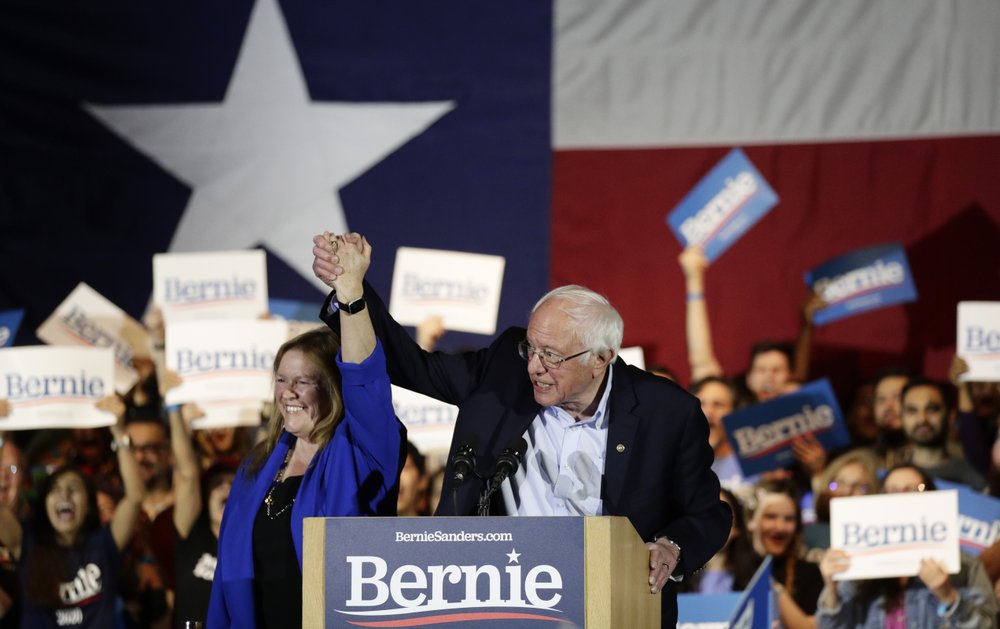
Democratic presidential candidate Sen. Bernie Sanders, I-Vt., right, with his wife Jane, speaks during a campaign event in San Antonio, Saturday, Feb. 22, 2020. (AP Photo/Eric Gay)

That stream of cash has also meant Sanders could build a more professional operation, with longer-range planning and better organizational structure.

His last campaign didn’t even have a human resources department, something that allowed multiple accusations of sexual harassment among staff to fester and forced Sanders to apologize before launching his 2020 bid. This time, Sanders has emphasized hiring more women and minorities to top positions, including Faiz Shakir, a Pakistani-American, who is the first Muslim to manage a major presidential campaign.

It’s a money advantage that few of his competitors can match.

Beyond money and organization, Sanders has also worked to better frame issues. After he struggled in 2016 with foreign policy, Sanders spent the years between presidential runs giving speeches about America’s place in the world and became an especially vocal critic of U.S. efforts to help Saudi Arabia fight a war against insurgents backed by Iran in Yemen.

He also worked for change within the structure of the national Democratic Party, muscling through rules changes that helped his campaign this time. “Superdelegates,” mainly elected officials and party leaders, helped Clinton secure the party’s nomination four year ago. Sanders supporters helped force a change to limit their influence during the national convention coming up this summer in Milwaukee.

And his campaign drove changes in the way that Iowa reported its caucus results by reporting voters’ first preference in addition to how many delegates a campaign won. That’s allowed Sanders to crow about edging Pete Buttigieg, the former mayor of South Bend, Indiana, in the popular vote, even though the pair essentially tied in the number of delegates awarded.

“One way to put it is the 2016 campaign was compost that the 2020 campaign has grown out of,” said Norman Solomon, co-founder of the activist group RootsAction.org and a Sanders delegate to the 2016 Democratic National Convention. “A lot of campaigns go boom and then go bust after they are over. Bernie is still booming.”

It didn’t always seem that way. Sanders joined the 2020 race with polling that was largely stable but not overly impressive, showing him among the leaders with former Vice President Joe Biden, but potentially with less room for growth than newcomers like Buttigieg.

To improve his standing, Sanders began hiring staff in Iowa, New Hampshire and Nevada far faster than in 2016 when “he wasn’t well-known and it took a while for people to catch on,” said Jane Sanders, the senator’s wife and close adviser.

“They didn’t know him throughout all of the country and that hurt,” she said. “They do now.”

Rather than introducing himself to voters, Sanders focused on attracting Iowans who traditionally didn’t vote, hiring students who lobbied their classmates. He ultimately won nine of the 13 precincts with more than 20% registered voters under 23.

Sanders also activated volunteers nationwide who supported him in 2016 and began pouring into Iowa as the election neared. By just before caucus night, his campaign said about 1,700 out-of-state volunteers had arrived.

“I think a lot of people wanted change in the Obama years and we didn’t see enough,” said Boyd Walker, a 51-year-old real estate investor who drove from his home in Virginia to volunteer in Iowa for Sanders in the weeks before the caucus. “Now we’re really ready for change.”

The campaign also concentrated on 87 satellite caucuses, sites which Sanders supporters had lobbied for and which were designed to make voting more accessible for people unable to attend traditional caucuses – which, in some cases, were college students and minority voters.

The campaign said it built similarly strong racially diverse support in heavily Hispanic Nevada, where Sanders advertised in Spanish-language media and organized more than 30 events in Spanish, including a town hall led by one of his top supporters, New York Rep. Alexandra Ocasio-Cortez.

It is attempting to do the same in California and Texas the largest states voting on March 2’s “Super Tuesday” and home to an estimated 13.5 million eligible Hispanic voters. During a Saturday night rally in San Antonio, organizers led the more than 1,500 people in the crowd — some of whom didn’t speak even basic Spanish — in cries of “Arriba Tio Bernie!”

Wooing minorities, especially African American Democrats throughout the South, was something Sanders was largely unable to do against Clinton in 2016. But his top advisers now say Nevada was a preview of their candidate’s improved appeal with people of color that can help carry him through not only this year’s primary but the general election against Trump.

Sanders’ core message, though, remains an economic one. He’s promising to reduce income inequality, appealing to Americans Sanders sees as most hurt by the current system, working-class people and those under 25 — even though they tend to vote in lower numbers.

“They are the hardest constituency to get out to vote,” Shakir said. “They’ve got other things on their mind.”

The results so far have been mixed. Sanders vowed to spark unprecedented Iowa caucus turnout and failed. Eight days later he won a New Hampshire primary that featured a record of nearly 300,000 Democratic ballots cast — but that total was inflated by the state’s voting-age population that’s increasingly rapidly.

Early in the campaign it seemed that Massachusetts Sen. Elizabeth Warren was ascendant, and Sanders adjusted. He replaced his state director in New Hampshire and in South Carolina, home to the South’s first primary.

And then there was Sanders’ heart attack Oct. 1.

“With that, I think he’s also reassessed the campaign. Similar to when you’re looking at your life and looking at a campaign, you’re trying to see what’s working, what’s not,” said Shannon Jackson, Sanders’ New Hampshire state director. “It was a great point for us to pivot and really focus on various parts of the campaign that can really hopefully lead us to victory.”

Indeed, Sanders was largely able to rebound not by overhauling his campaign, but by simply staying the same. Sanders’ top policy advisers say he focuses on making big ideas relatable to people who have felt left out of the political process.

One area the campaign had hoped to stress more this time compared to his 2016 run was Sanders’ personal side. In his announcement speech last March in Brooklyn, the senator spoke about growing up in “a three-and-a-half room rent-controlled apartment” nearby. In San Antonio on Saturday night, Sanders told a crowd about 150 miles from the U.S.-Mexico border that he understood the immigrant experience, speaking at length about his father arriving penniless in the U.S. from Poland.

While Sanders has made an undeniable connection with his voters, he hasn’t done it by revealing much about himself, something he acknowledged in an interview that aired on “60 Minutes” on Sunday.

“I’m a kind of — private person in a sense,” he said. “And … you know, I’m not particularly anxious to tell the world about everything personal in my life.”

The higher he rises, though, the harder that may become.

Advertisement

Russia to Denounce Attempts to ‘Rewrite History’ of WW2

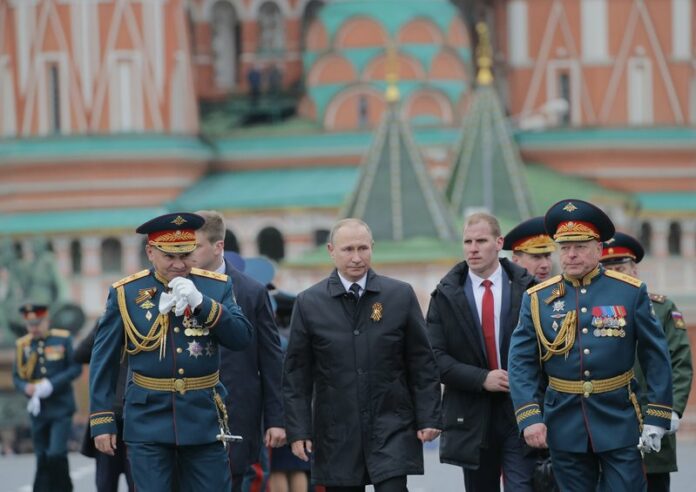
Russian Defence Minister Sergei Shoigu, left, Russian President Vladimir Putin, center, and Russian army Gen. Oleg Salyukov, right, walk along the Red Square during the Victory Day military parade to celebrate 72 years since the end of WWII and the defeat of Nazi Germany, in Moscow, Russia, on Tuesday, May 9, 2017. (Yuri Kochetkov/Pool photo via AP)

MOSCOW (TASS) — Russia will not allow the history of World War Two to be distorted and will expose any such attempts, Russian President Vladimir Putin said on Sunday speaking at a gala concert marking Defender of the Fatherland Day at Moscow’s State Kremlin Palace.

“Our duty is to remember forever the cost we paid for that victory [in the Great Patriotic War, the Soviet Union’s 1941-1945 war against Nazi Germany — TASS]. We will not allow this heroic page in history to be crossed out. We will be exposing any attempts to distort history and to let the spirit of alliance and of combat brotherhood be consigned to oblivion,” the Russian president pledged.

Putin recalled that not only did soldiers cast aggressors out from their homeland, they also fulfilled with honor the noble mission of liberation, helping other nations to get rid of invaders, of Nazis and their henchmen,” he said.

“On this holy and sacred for our nation day, we will pay tribute to the fallen heroes and will honor our respected veterans who we rightfully call a generation of victors,” the president said about the coming celebrations of the 75th anniversary of Victory Day.

Advertisement

Future Forward Says Gov’t Colludes in Malaysian 1MDB Scandal

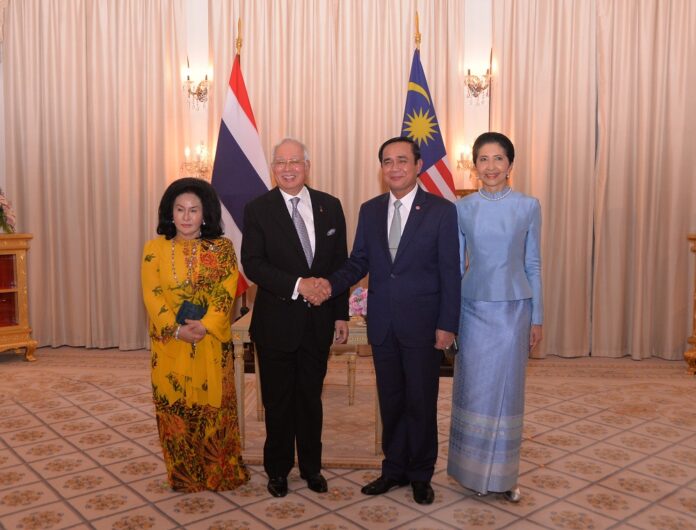
Malaysian PM Najib Razak visits Thai Government House in Bangkok on Sep. 6, 2016.

Bangkok (AP) — Thailand’s disbanded opposition Future Forward Party attacked the government Sunday for allegedly colluding with Malaysia’s former prime minister to cover up the 1MDB financial scandal, for which former Malaysian leader Najib Razak is now standing trial.

The accusation comes a day ahead of Monday’s launch of a no-confidence debate in the Thai parliament against Prime Minister Prayuth Chan-ocha and five other Cabinet members.

The Future Forward Party, which won the third highest number of seats in last March’s general election, was dissolved Friday by Thailand’s Constitutional Court for violating election laws by accepting a large loan from its leader, auto-parts billionaire Thanathorn Juangroongruangkit. Eleven party executives were kicked out of parliament immediately and banned from political office for 10 years, but the party’s remaining 65 lawmakers can keep their seats if they join another party within 60 days.

Party spokeswoman Pannika Wanich said at a news conference that because she was one of the lawmakers who lost their seats, she was presenting the case the party had prepared about the 1MDB scandal outside of parliament.

Government spokeswoman Narumon Pinyosinwat said the government was not involved in the case. “What Pannika said is groundless and vaguely connected,” she said.

The alleged mastermind behind the 1MDB scandal is fugitive Malaysian financier Low Taek Jho, better known as Jho Low, who is believed to be hiding out in China.

U.S. investigators say at least $4.5 billion was stolen from 1MDB by Prime Minister Najib’s associates and laundered through layers of bank accounts in the U.S. and other countries to finance Hollywood films and buy hotels, a luxury yacht, art works, jewelry and other extravagances. More than $700 million from the fund allegedly landed in Najib’s bank account.

Pannika’s assertions are generally known and break no new ground. However, all have previously been treated as sideshows to the case, and this is the first major effort to spotlight any involvement by Thailand.

The first involved Thailand’s arrest of Xavier Justo, a Swiss national who worked with a company implicated in the scandal and then leaked information essential to its exposure. Pannika alleged that Thai authorities had denied the U.S. FBI, which was investigating the case, access to the jailed Justo but allowed parties with a vested interest in covering it up to see him.

She also said that Jho Low had freely visited Thailand five times in 2016-2018 even though an Interpol “Red Notice” requested by Singapore seeking his arrest had been issued. China has also been widely reported to have allowed him entry during this period, when Najib was still in power. His party lost a May 2018 general election.

“The Red Notice of Jho Low, it was shocking that Thailand ignored Interpol’s Red Notice. And the only two countries who did, who do that continuously, are China and Thailand,” said Pannika. “And who are we? China is China but we are Thai. So this is unacceptable. We need a more responsible government.”

She also pointed out the links between two close associates of Jho Low and a Thai businessman who she did not identify by name.

The events she referred to all seem to have taken place before the current government under Prayuth took office last year. However, Prayuth also served as prime minister in the military government that held power before that, after staging a 2014 coup ousting an elected government.

The no-confidence debate in the lower house, scheduled to run three days, will be the first since the coup.

Prayuth will be the main target of the opposition, which is expected to attack his leadership in facing economic troubles, as well as a serious air pollution problem and the health threat from the new virus that first emerged in China.

The other five Cabinet members facing censure are deputy prime ministers Prawit Wongsuwan and Wissanu Krea-ngarm, Interior Minister Anupong Paochinda, Foreign Minister Don Pramudwinai and Deputy Agriculture Minister Thammanat Prompao. The latter was appointed to the Cabinet despite being convicted in 1994 of conspiring to import heroin to Australia and serving four years in prison there.


Associated Press writer Grant Peck contributed to this report.

Advertisement

Pfizer Thailand Aims for Improving Access to Innovative Healthcare (Pfizer × Khaosod English)

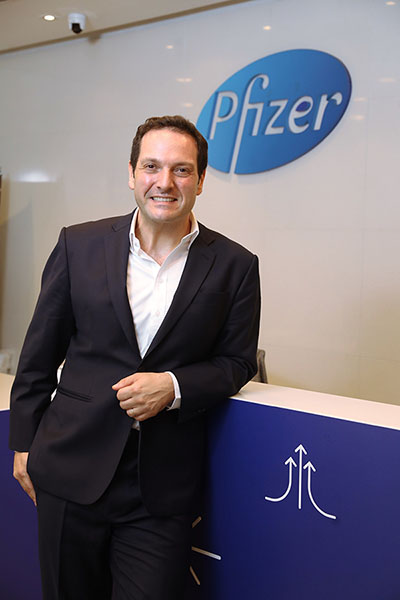
The pharmaceutical climate has changed over the past 5 years. Innovative medical treatments and cures for a large number of previously difficult to treat medical conditions have become available. However, making these solutions accessible to the patients that need them is not always an easy task.  Selim Sezgin, Country Manager, Pfizer Thailand and Indochina, discusses how the country is balancing between affordable healthcare and budget allocations.

          It has been forecasted that by 2021, Thailand will become a full-fledged aged society with the elderly comprising around 20% of the population. Long life expectancy rates demand progressive healthcare. Over the past year, the approval process for new medicine in Thailand has been expedited. Previously a 2-year process approval now takes less than 1 year for many products. Acceleration of the process enabled a rush of new products into the Thai market very quickly. For instance, Pfizer Thailand was able to bring four innovative products to the country in 2019. Accessibility to these products, however, is still limited to certain segments of the society.  The lack of affordable solutions continues to be a challenge to the progress of Thai healthcare.

           Pfizer Thailand is currently looking at different partnership opportunities with the government to introduce innovative access solutions to better serve the Thai population.  In a recent survey, the company found that for every dollar invested in clinical trials, as part of research and development, the economy sees a three-fold return on this investment. That is not to say that the budget is insufficient. Rather, healthcare in the country is falling short due to the insufficient allocation of funds that proliferate an ecosystem of innovation. Sezgin claims that savings that were generated through the healthcare spending should continuously be reinvested into ensuring that breakthroughs are spanned to every Thai citizen. The proper allocation of budget would allow a fair marketplace where “innovative products” multisource or generic products are given the same opportunity as ‘multi-source” innovative products. This environment results to a healthier competition and a more progressive society.

          Looking into the current Covid-19 outbreak, Sezgin states that the company is prioritizing the well-being of its people. Employees in affected areas have been instructed to stop working, and global donations of approved medicines are currently being dispatched. While no cure has been approved by the World Health Organization (WHO), the company strongly enforces preventive guidelines to its staff and continuously coordinates with governments to support the fight against the spread of Covid-19.

          In light of the matter, Sezgin takes the opportunity to instill the importance of immunization. Thailand, despite being one of the leading countries in Southeast Asia, is not in the forefront of national immunization. He states that extending the right amount of vaccinations to all citizens uplifts not only patient but also, the economy. The prevention of diseases minimizes hospital costs and administration fees. These expenditures tend to cause a strain on low-income areas. According to WHO, after clean water, vaccination is the most effective public health intervention in the world for saving lives and promoting good health. Allocating budget towards immunization, which is being increasingly perceived universal right, is an indispensable component of a progressive society.

          During Pfizer’s 61 years in Thailand, it has become the country’s leading pharmaceutical company with its largest segment catering to government institutions. In 2018, it was able to tap into 6 million patients, and it aims to double that figure in the next two to three years. Sezgin claims that the company owes much of its success to its dedicated employees who have worked hard to continuously improve the healthcare system of the country. He furthers that by stating the Pfizer’s employees in Thailand essentially work for a Thai company. The majority of the staff are Thai, and because of that, Pfizer Thailand has a duty to help improve the lives of the Thai people. The company is geared towards bringing 25 breakthroughs in the next five years. It is also pioneering the digitalization of communication channels between healthcare professionals. This technology aims to improve efficiency and cooperation among all stakeholders and beneficiaries within the healthcare system. Sezgin emphasized the importance of having a mutual understanding between all governing bodies on what innovation is.

          In its endeavor to ameliorate Thai healthcare, the company started Pfizer Thailand Foundation. In its 19 years of establishment, it has been able to provide scholarships to over 300 students and doctors. They are given the opportunity to work in regions of Thailand in need of resources. It has recently culminated a 3-year project focused on educating citizens on healthy aging. Aimed to develop awareness in terms of healthy living and financial well-being, the foundation has also worked with various agencies such as World Vision to reach less-privileged areas.

          Pfizer Thailand targets to reach every citizen in the country. By conducting quarterly visits to doctors and pharmacists in various areas of the country, Sezgin and his team are able to help cater to the needs of Thailand as a whole. The company prides itself in its long-term initiative to ensure that no citizen gets left behind in their ability to access the latest in innovative healthcare solutions.

pfizer2 copy
Advertisement

CPF Witnesses 139% Jump in Fourth-Quarter Earnings and Foresees Continued Growth

Charoen Pokphand Foods PCL (CPF) posted Bt140,794 million in sale revenue in the fourth quarter of 2019, a 2% decrease from the same period a year earlier. The revenue however would have increased by 9% year on year, but for the Thai baht appreciation and the enforcement of new accounting standards. Of total, sale revenue generated by overseas businesses accounted for 67% and the balance was generated by business units in Thailand.

Mr. Prasit Boondoungprasert, Chief Executive Officer of CPF, said that in the quarter, the Company’s net profit jumped 139% to Bt4,010 million from the corresponding period a year earlier, thanks mainly to the impressive performance of overseas businesses particularly that in Vietnam.

He noted that CPF witnessed a number of challenges in 2019 chiefly the fluctuation in foreign exchange rates and the African Swine Flu which led to a drop in pork supply. However, the annualized net profit increased by 19% on year to Bt18,456 million, thanks to the improvement in overseas operations in several countries particularly Vietnam which showed extraordinary performance in the fourth quarter.

Mr. Prasit said CPF expected the performance to remain rosy in 2020 due to pork shortages particularly in China and Vietnam, which would raise prices above the 2019 level. CPF maintains its strategy to expand business in potential markets, so as to raise the revenue contribution by overseas businesses to 80% of total in the next 5 years. CPF adopts 3 approaches to drive the strategy: raising the supply chain’s value through innovations; adaptation to digital transformation; and creating added value to all stakeholders with best practices in sustainable development.

The Board of Directors at the meeting on 20 February 2020 resolved to pay the dividend of Bt0.70 per share for the 2019 performance. As the interim dividend of Bt0.30 was paid to shareholders on 12 September 2019, the remaining Bt0.40 will come from after-tax earnings as dividend recipients are subjected to withholding tax under the criteria and conditions specified in the Revenue Code. Individual dividend recipients are not entitled to tax credit under the Revenue Code’s Section 47 (2). The Board of Directors accordingly set the XD date on 28 April 2020 and the dividend will be payable on 19 May 2020.

Advertisement

Russia Tries to Help Sanders Win Election: Report

Democratic presidential candidate Sen. Bernie Sanders, I-Vt., speaks at a campaign event at Valley High School in Santa Ana, Calif., Friday, Feb. 21, 2020. (AP Photo/Damian Dovarganes)

WASHINGTON (AP) — Democratic presidential candidate Bernie Sanders said Friday he was briefed by U.S. officials “about a month ago” that Russia has been trying to help his campaign as part of Moscow’s efforts to interfere in the 2020 presidential election.

“It was not clear what role they were going to play,” Sanders said during a campaign stop in California. “We were told that Russia, maybe other countries, are going to get involved in this campaign.”

The Vermont senator continued: “Here’s the message to Russia: Stay out of American elections.”

Sanders’ response was a sharp contrast from that of President Donald Trump, who has pushed back at the assessment of U.S. intelligence agencies that Russia has interfered in elections on his behalf. Minutes before Sanders condemned Russian interference, Trump dismissed reports that Russian President Vladimir Putin was trying to help him as well as “a rumor” started by Democrats.

Federal investigators in 2018 charged 13 Russians in a covert social media campaign that prosecutors said was aimed at dividing public opinion on hot-button social issues as well as propping up Sanders and Republican candidate Trump in the 2016 election while also denigrating Hillary Clinton, the eventual Democratic nominee.

Organizers of that Russian effort circulated an outline of themes for future social media content, with instructions to “use any opportunity to criticize Hillary and the rest (except Sanders and Trump—we support them),” according to the indictment.

Campaigning Friday in Las Vegas, Trump told supporters that he heard Democrats were trying to “start a rumor … that Putin wants to make sure I get elected.”

“Listen to this, so doesn’t he want to see who the Democrat is going to be? Wouldn’t he rather have, let’s say Bernie?” Trump asked. Sanders and his wife, Jane, in 1988 spent their honeymoon in the Soviet Union, Trump noted.

Sanders told reporters he had seen some of Russia’s “tweets and stuff,” which he said were aimed at sowing divisions.

“They try to divide us up,” Sanders said of the Russians. “That is the ugliest thing they’re doing. They’re trying to cause chaos, they’re trying to cause hatred in America. It’s an ugly business and all of us have got to say, sorry, you’re not going to do this in this election.”

Sen. Elizabeth Warren said her campaign has not received a briefing from intelligence officials, while billionaire philanthropist Tom Steyer’s campaign said it was briefed “months ago” but didn’t give any details.

Sanders appeared to suggest there was a political motive to the timing of the revelations, which were first reported by The Washington Post.

“One day before the Nevada caucus, why do you think it came out?” he said, adding sarcastically: “It was The Washington Post? Good friends.”


AP writers Eric Tucker and Aamer Madhani in Washington and Meg Kinnard in Columbia, S.C., contributed to this report.

Advertisement

Opinion: Trust Thai Army’s “Reform” at Your Own Peril

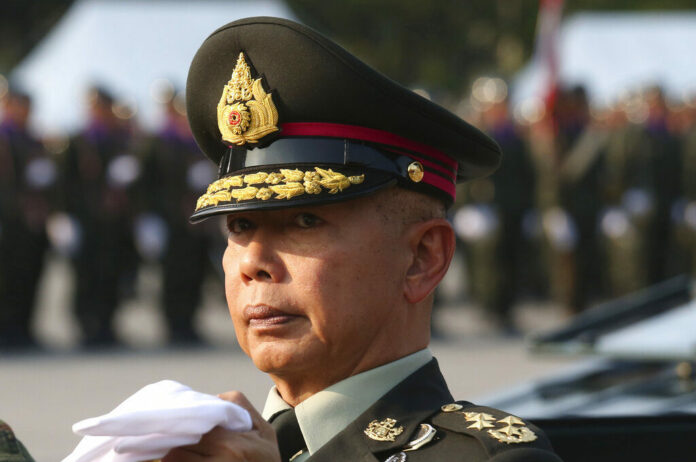
In this Friday, Jan. 18, 2019, file photo, Thai army chief Gen. Apirat Kongsompong reviews the guard of honor during the Royal Thai Armed Forces Day ceremony at a military base in Bangkok, Thailand. Photo: Sakchai Lalit / AP

Reforming the Thai army is much easier said than done. After all, the current army chief Gen Apirat Kongsompong himself called the Royal Thai Army a “sacred” organization, setting the tone of whatever debate the society may have.

When someone wants an organization to be treated as sacred, it’s often because they want it to be above criticism, accepting neither scrutiny nor accountability. These days, even the Vatican is no longer sacred because it can be openly criticized, yet Apirat said last week that people shouldn’t criticize the army because it’s a sacred organization.

Many people would like to believe in army chief Gen Apirat’s promise to push for reform in the aftermath of a disgruntled sergeant’s shooting rampage which killed 29, mostly civilians. The killings took place after the soldier allegedly got cheated in a land purchase by his own commander, raising concerns over shady business deals and mistreatment in the ranks.

But the sequences of things that followed were not reassuring. First of all, there is still no independent committee set up to investigate the mass shooting.

Or take Apirat’s promise to kick retired generals out of army-owned (read: taxpayers-funded) residences. Just two days later, exceptions were already made for a very long list of about 100 retired generals who are deemed still “contributing to society”.

They include Prime Minister Gen Prayut Chan-ocha, Interior Minister Anupong Paochinda, dozens of junta-appointed Senators, and even members of the Privy Council.

It was briefly comforting when I called ex-junta leader Gen Sonthi Boonyaratglin who led the 2006 coup, which ousted then premier Thaksin Shinawatra. Even the former coup leader agreed it’s wrong for retired generals to be living in public-funded housing, and said Gen. Apirat was right to kick them out.

“That’s how it should be. The regulation is that it’s for serving officers,” Sonthi told me.

Yet when I asked him when he left the army-owned residence, Sonthi, who retired in 2007, said he left almost a year ago.

The sense of entitlement and hypocrisy became more evident as Sonthi insisted that this was okay because he had permission from the army.

This man was a former army chief. When he staged the coup and became junta leader, many of the top generals today probably have him to thank for the promotions, so how could they ever say no to their ex-boss?

When I called Future Forward MP Pongskorn Rodchompoo, himself a retired lieutenant general, he also lambasted the generals’ habit of extending their stay in army quarters. Just days after the interview, it turned out that Pongskorn was also an overstayer himself, a freeloader and beneficiary on my tax payment.

In a twist of hypocrisy that nearly reached the point of absurdity, just hours before the truth that Pongskorn came out, he was haranguing the crowd at a rally about the needs to reform and promote transparency in the armed forces.

That Pongskorn knew all along that he has been staying rent-free at the expense of taxpayers for four years after retirement didn’t prevent him from being lauded by his party as the man who will spearhead armed forces reform. It bothers many, myself included, that the sense of military entitlement is indeed so deep-rooted that it bypasses political divisions.

A more promising aspect of reform introduced was army chief’s decision to set up a hotline to enable low-ranking officers to directly lodge a complaint to him for alleged abuse of power or corruptions by senior officers in the army.

Apirat promised to be judicious. The problem is he is now acting like a one-man kangaroo court as I have heard of no independent committee to review his decision.

On Tuesday he also told the press that he has just transferred an army colonel to an inactive post. No details were given to the public and even army spokesman Col Winthai Suvari told me on the phone that he has no details and only learned about it from the press.

It’s all down to whether you think you can trust Apirat or not.

But let’s give Apirat a little credit for honesty, however. Unlike his predecessor army chief Prayut, who insisted several times prior to seizing power in 2014 that he would not stage a coup, Apirat never committed himself to the same denial.

In fact, he made it clear early on when he took the post of army chief that it all depends on the situation. Let’s hope he approaches corruption within the army with the same frank self-awareness.

Advertisement

Opinion: 8 Tips for A Saner Digital Diet in These Viral Times

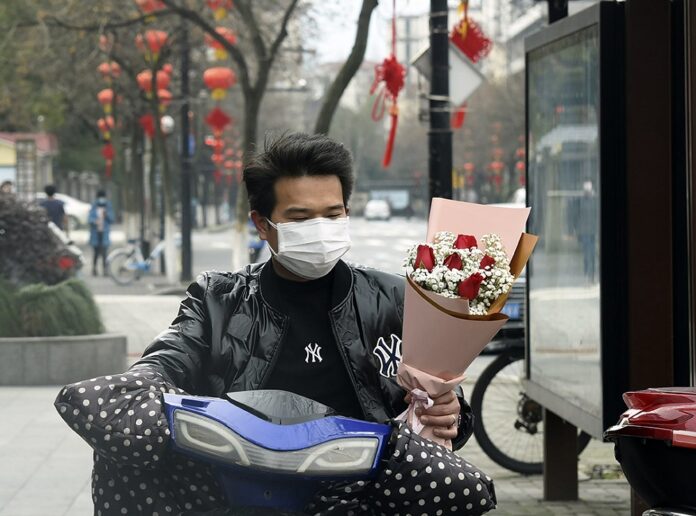
A man wearing a face mask carries a Valentine's Day bouquet as he rides a scooter in Hangzhou in eastern China's Zhejiang Province, Friday, Feb. 14, 2020. (Chinatopix via AP)

By Johanna Son, founding editor of Reporting ASEAN.

BANGKOK – A virus riding on another virus. That is how the ‘infodemic’ is raging in online spaces around the outbreak of the novel coronavirus called COVID-19, which has been on just about everyone’s radar since late January 2020.

As grave as the quest to manage the respiratory disease and cure those ill with it is not only the challenge of using facts versus fear – but how to create and keep avenues of information that withstand the unrelenting drip of skewed, confused, partially true to totally false information, to racist and prejudiced views, or a cocktail of these.

Fear and confusion accompany crises, but online habits and the popularity of social platforms have opened another front in the battle against the coronavirus, which originated from China’s central city of Wuhan in December.

Some of the nastiest rumors behave like multi-drug resistant strains of viruses, being replicated endlessly across countries.

Take the claim that COVID-19 ‘escaped’ from the laboratory of Chinese scientist She Zhengli, whose research into bats and coronaviruses has been of invaluable help in identifying this new coronavirus. At one point, She, who works with the National Biosafety Laboratory in Wuhan, posted on the Chinese social platform WeChat: “I swear with my life, (the virus) has nothing to do with the lab.”

Another mutation of this tale has it that COVID-19 is part of a Chinese program on biological warfare.

The myths that WHO counters on its website also say a lot about the prevalence of fear-based ‘information’. It assures that it is safe to receive mail pouches from China. Thinking of spraying alcohol all over your body or rinsing your nose with saline solution as a prevention measure? Not good or effective ideas, it cautions.

WHO said it is working 24 hours to spot the most prevalent rumours and refuting them.

To protect yourself and your loved ones from falling victims to the ongoing epidemic of hoaxes and racially driven prejudice, here are eight tips for making your way online in these viral times:

1. Remember that when online, you are never alone.

You may be alone in your room and have your screen all to yourself, but the World Wide Web is very public. Everything in it, true or manufactured, is amplified so they are louder, bigger, more shrill.

2. What you ‘chose’ or ‘found’ on the web are not purely your decisions.

Every time you go to the web, your online behaviour – what you buy, what you searched, which pages you visited – is tracked by the browsers, applications or social media platform you use. Algorithms track these continuously, and use them to let you ‘find’ what they calculated would ‘suit’ you.

So when your social media feed throws up more of a similar material, it’s not the universe sending you a message, or events necessarily happening more often. It’s the algorithmic formulas at work, so think before you click and be conscious that they can create echo chambers.

You may find it useful to download DuckDuckGo or Brave browsers, which do not keep track what you do. And yes, there is life outside Google.

3. Turn on your doubt gene. 

Avoid becoming a superspreader of poor-quality and harmful information. Train yourself to ask some basic questions when your phone pings with the latest passed-on information. Make this your default mode.

‘Where did this come from?’, ‘What is the original source?’, ‘Can it be verified?’ are some starter questions. You don’t need to get 100% of the answers, but if the material in question fails to meet even these minimums, it is a fail. Kill it.

Look for context to better understand the bigger picture, beyond the latest counts of people who died from the coronavirus disease or got sick. Many recover. The lack of context can distort facts, making a bad situation worse.

4. Racism does not fall under free speech or freedom of expression.

‘Othering’ cannot be classified as a human right. It is of no small import that issues of race are among the legal limitations on free speech in several countries. It is a form of hate speech – even if said or posted by a journalist, by politicians or community leaders. 

Viral infection isn’t the only harmful aspect of the epidemic. It also brings out doses of racism against Chinese nationals, also extended to Southeast Asians (‘the yellow peril’) in some places.

Prejudice festers within ethnic Chinese communities in the region, intensified by negative perceptions of China as a major power and unpopular issues like the online gambling operations by Chinese firms in the Philippines. There is also stigmatization within China against those from or have been to Wuhan. All are amplified several times over.

As has been said, fight the virus, not the victims.

5. Not everything that looks and sounds like news are news

‘Online content’ is by no means a synonym for news. It refers to any online material, including trash. A news story is the product of journalistic skills, which involve gathering data and stitching them together, then having it edited and discussed within a news production process before it is released to the public.

This allows a degree of vetting that is absent in blogs or many public posts, one that decreases the risk of misinformation (whether a story is well done is another matter).

If a website does not have a proper ‘about us’ section or background, or lacks information about its editorial team, it isn’t worth much of your screen time. The use of the phrase ‘reports say’, without attribution to sources, in stories and opinion pieces, is a red flag.

Put it this way: If you have to read bad news, let it at least be accurate.

6. Opt for the original, and go straight to the source.

You do have basic means, in just a few seconds, to verify an item you come across, by visiting a real and reliable news site. Believing and passing on material sent in the anonymity of chat groups, just because it was sent to you by someone you know, is risky.

Social media platforms filter what posts from the news sites you like/follow show in your feed, so it’s good practice to take back your power and sign up for the email newsletters of the news products you find useful.

Here are a few primary sources of information around the COVID-19 disease:

World Health Organization Coronavirus Disease 2019

The Lancet COVID-19 Resource Centre

New England Journal of Medicine 2019 Novel Coronavirus Page

7. Don’t forget: the internet is forever.

What you share in stressful times, in fearful or confused mode, is there forever. There is life after this outbreak, and your comments can be held up in front of you. Would you be comfortable about what you posted, say a year from now? 

8. Craft and consume a healthy digital diet.

Just as we watch the food that goes into our bodies, we choose what we feed our psyche from online spaces. Train your brain to resist the dopamine rush of Facebook and social media. Use technology, instead of letting it use you.

Take a break from your screens, which in today’s distracted world, is part of overall health and self-care. 

About the author
Johanna Son is a Bangkok-based journalist and editor who follows regional issues, and also is a media trainer. She is founder/editor of the Reporting ASEAN programme. This commentary is part of the Heinrich Boll Foundation Southeast Asia’s web series.

Advertisement

Future Forward Calls for Protest; Police Issue Warning

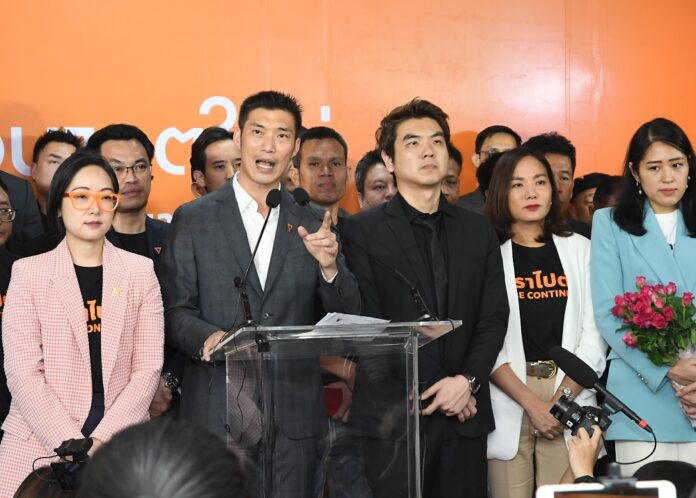
Future Forward Party leaders react to the verdict on Feb. 21, 2020.

BANGKOK — Leaders of the now-defunct Future Forward Party called on their supporters to come out in a show of force on Friday night and protest the court verdict that dissolved their party.

Speaking hours after the ruling by the Constitutional Court, party co-founder Piyabutr Saengkanokkul urged the supporters to gather at their party headquarters on New Phetchaburi Road tonight and oppose what he termed as a fresh act of legal injustice.

“If those in power think this will starve the fire off its oxygen, let me insist that they are wrong,” Piyabutr said to a cheer at the party HQ. “This will spread like wildfire.”

The court today disbanded the popular party, which placed third in the March 2019 election, on the charge of receiving illegal donations from its party founder Thanathorn Juangroongruangkit. Sixteen party executives, including Thanathorn and Piyabutr, are also banned from politics for 10 years.

But Piyabutr insisted he and other leaders will continue to campaign regardless of their status. He said the party will continue to serve as a vehicle for changes under the new name, “Order of the New Future.”

“This is not the end, but only a beginning,” the politician said. “We are a monster created by time to haunt people in the old world, who live in the old thoughts.”

Party supporters are encouraged to bring candles with them for the rally.

However, police warned that any gathering or response to the court verdict must be within the boundary of the laws.

“I’d like to warn and pass the words to the supporters to think carefully about what might be at risk of violating the law,” police spokesman Kissana Phatanacharoen said. “Once we take legal action, there won’t be a step back.”

Deputy metro police commander Somprasong Yenthuam also said 150 policemen will be deployed to the Future Forward HQ.

Advertisement

Hot News

LATEST NEWS

Bangkok
overcast clouds
30.5 ° C
32.2 °
30.5 °
76 %
4.9kmh
100 %
Sat
30 °
Sun
35 °
Mon
35 °
Tue
33 °
Wed
32 °