33.8 C
Bangkok
Saturday, June 20, 2026
Home Blog Page 1493

Russia to Sign Mega Deals With Saudi Arabia During Putin’s Visit

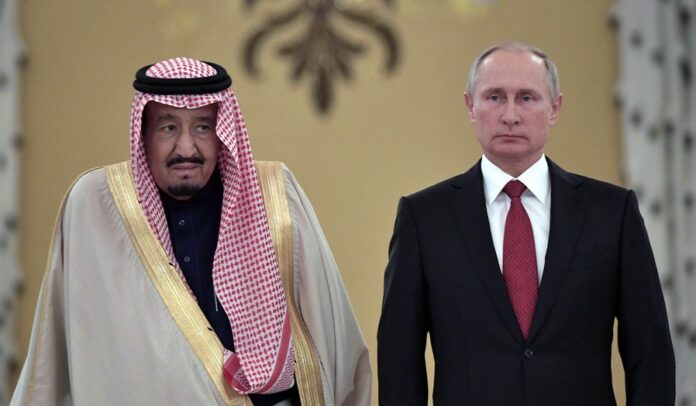
Russian President Vladimir Putin and Saudi Arabia's King Salman attend a welcoming ceremony ahead of their talks in the Kremlin in Moscow, Russia October 5, 2017. Photo: Sputnik / Reuters via Xinhua

MOSCOW, Oct. 10 (Xinhua) — The Russian Direct Investment Fund (RDIF) expects to sign 10 agreements with a total value of over 2 billion U.S. dollars when Russian President Vladimir Putin pays a state visit to Saudi Arabia on Oct. 14, the RDIF head said Thursday.

“These will cover various areas, including agriculture, the railway sector, the fertilizer sector, the petrochemical sector and so on,” RIA Novosti news agency quoted RDIF’s Chief Executive Officer Kirill Dmitriev as saying.

One of the deals will involve Saudi oil giant Aramco, he said, refusing to disclose details.

RDIF will also sign an agreement with Saudi colleagues on cooperation in artificial intelligence, he added.

A RDIF delegation led by Dmitriev will join Putin’s visit to Saudi Arabia.

RDIF is the main operator of investment between Saudi Arabia and Russia. RDIF and Saudi Arabia’s Public Investment Fund (PIF) created a long-term strategic partnership in 2015.

PIF has allocated 10 billion dollars to invest in projects with RDIF.

Advertisement

Typhoon Advancing Toward Tokyo Area on Holiday Weekend

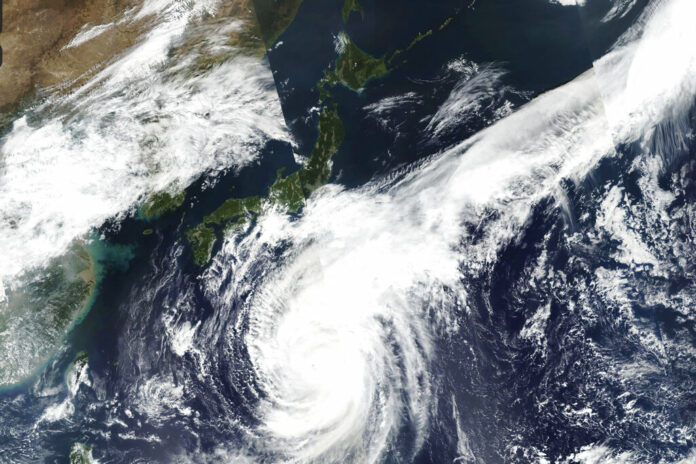
This Oct. 10, 2019, satellite photo taken by NASA-NOAA's Suomi NPP satellite shows typhoon Hagibis approaching Japan, center left. Japan’s weather agency is warning a powerful typhoon may bring torrential rains to central Japan over the weekend. Photo: NASA Worldview, Earth Observing System Data and Information System (EOSDIS) via AP

TOKYO (AP) — A powerful typhoon is advancing toward the Tokyo area, where torrential rains are expected this weekend.

The Japan Meteorological Agency said Typhoon Hagibis was in the Pacific advancing north-northwestward toward Japan’s main island. Its winds of 180 kilometers per hour (110 mph) with gusts to 250 kph (156 mph) as of Friday morning were expected to weaken before landfall Saturday.

Up to 800 millimeters (30 inches) of rain was forecast south and west of Tokyo. The capital region may see 600 mm (23.6 inches) of rain from Saturday morning to Sunday morning. It’s forecast to pass out to sea by Sunday afternoon.

The storm is expected to disrupt sports and holiday events on the three-day weekend that includes Sports Day on Monday. Two Rugby World Cup matches that were to be played Saturday have already been canceled. Qualifying for a Formula One auto racing in Suzuka was pushed to Sunday. And the Defense Ministry cut a three-day annual navy review to just Monday.

Airlines and train services are already making cancellations. All Nippon Airways grounded all domestic flights Saturday at Tokyo’s Haneda and Narita international airports. Japan Airlines and train services expected cancellations as well.

The typhoon is spreading fear especially in Chiba, near Tokyo, which was hit by Typhoon Faxai last month and where homes still have damage.

Chiba city distributed sandbags to shield against flooding and urged residents to make sure they have enough food, water and their phones are charged.

Advertisement

Hong Kong Metro System Scarred by Extensive Sabotage

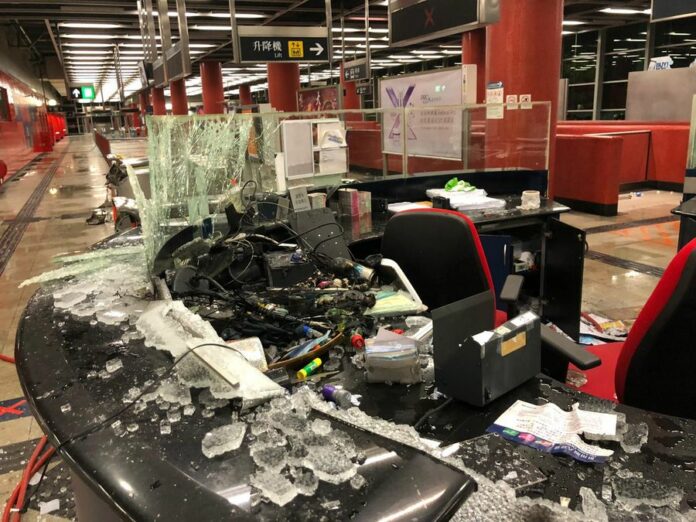
Photo shows an info counter at a MTR station smashed by rioters in Hong Kong. Photo: MTR via Xinhua

HONG KONG, Oct. 10 (Xinhua) — After days of closure, Central Station of Hong Kong’s Mass Transit Railway (MTR) system was reopened on Thursday, but traces of violent sabotage were still there.

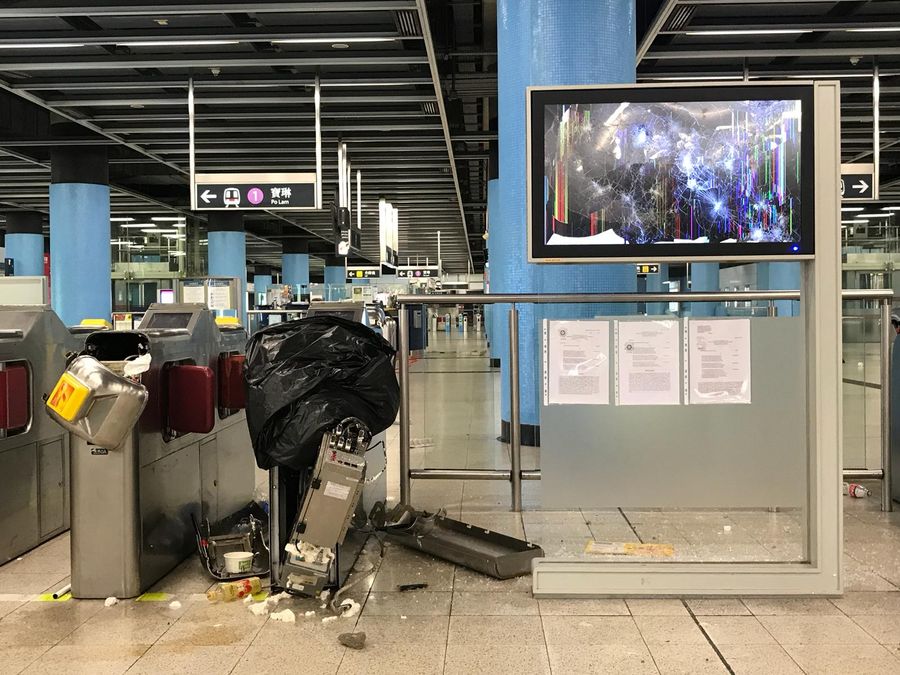
The iron railings rioters removed from roadside to block the station’s exits were piled on both sides of the gates, the smashed glass of the station was only covered by a foam board, the surveillance cameras that had been taken apart hung down from the ceiling, while the broadcasting repeated reminders that MTR system had been severely damaged and some stations may be closed at any time due to the damage.

A MTR staff told Xinhua that the shortage of equipment to replace those damaged facilities began about one month ago, and to maintain the basic services of some stations with high traffic, MTR had to removed equipment from other less-visited stations for replacement.

“We’ve done this for a while, but there are fewer and fewer stations free from damages as radical protesters grow more barbaric,” he said.

Hours after the Hong Kong Special Administrative Region (HKSAR) government announced on Oct. 4 an anti-mask regulation with an aim of curbing the violence by masked radicals, MTR system fell one of the major victims of escalated violence and vandalism by rioters.

The rioters wantonly smashed facilities and set fires at multiple MTR stations, left about 1,200 turnstiles, 800 ticket vending machines, 900 CCTV cameras, 40 lifts and 70 entrance rolling gates damaged, according to the MTR Corporation.

The corporation’s chief executive officer Jacob Kam described Oct. 4 as “the most devastating day” in history of the railway.

Kam said MTR had been striving to “keep Hong Kong moving,” which is also the mission of the company, but for the safety of passengers and the staff, MTR had no choice but to suspend the service of the entire network, including heavy rail, light rail, and shuttle bus.

Photo shows damages by rioters in Hang Hau MTR Station, Hong Kong. Photo: MTR via Xinhua

Due to massive destruction, MTR continued its suspension of its services after Oct. 4. Most stations were closed in the following days, while the rest which were open also had to be closed at around 8 p.m., much earlier than usual operation time.

The suspension of service of MTR, Hong Kong’s traffic lifeline that carries nearly 6 million passengers every day, caused great inconvenience for Hong Kong residents.

During the evening rush hour over the past days, long queues of hundreds of people could be seen at various bus stops on both sides of the Hennessy Road in Causeway Bay, a busy downtown area on Hong Kong Island. Many people who used to commute by metro train had to join the queues waiting for buses.

A Hong Kong resident surnamed Wong, whose office is in the nearby Happy Valley area, told Xinhua it usually takes half an hour for her to get home in Mong Kok from her workplace by MTR, but these days she had to spend twice more time waiting for buses and putting up with traffic jams due to the suspension of MTR service.

“My life’s completely messed up,” she complained.

Lee Chun-cheung, who lives in Islands District and works in Central District, likened the consequence of the rioters’ acts to “imposing a curfew” in Hong Kong.

With MTR closed much earlier than usual, Lee and his colleagues had to cancel all after-work social events because “everyone is worried about how to go home when MTR is out of service,” he said.

Advertisement

Iran Women Attend Fifa Soccer Game for First Time in Decades

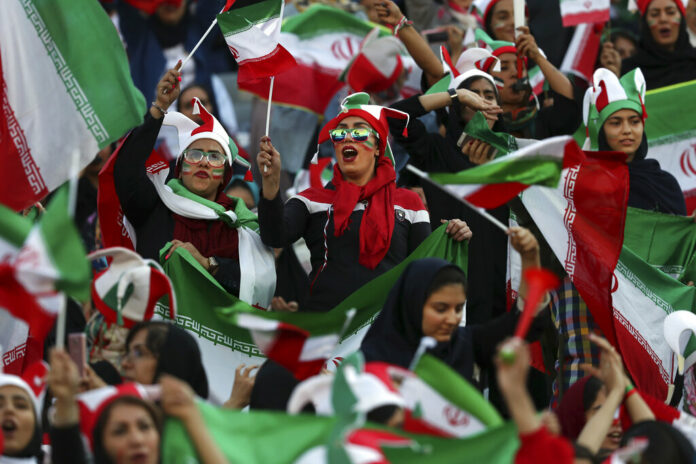
Iranian women cheer during a soccer match between their national team and Cambodia in the 2022 World Cup qualifier at the Azadi (Freedom) Stadium in Tehran, Iran, Thursday, Oct. 10, 2019. Photo: Vahid Salemi / AP

TEHRAN, Iran (AP) — They had to sit well apart from the men, and the stadium was practically empty, but thousands of Iranian women in merry jester hats and face paint blew horns and cheered Thursday at the first FIFA soccer match they were allowed to freely attend in decades.

In what many considered a victory in a decades-long fight by women in Iran to attend sporting events, they wrapped themselves in the country’s vibrant red, green and white colors and watched with excitement as Iran thrashed Cambodia 14-0 in a 2022 World Cup qualifier at Tehran’s Azadi, or Freedom, Stadium.

“We are so happy that finally we got the chance to go to the stadium. It’s an extraordinary feeling,” said Zahra Pashaei, a 29-year-old nurse who has only known soccer games from television. “At least for me, 22 or 23 years of longing and regret lies behind this.”

As one woman shouted from a passing minibus before the match: “We are here finally!”

So far, Iran’s hard-line Islamic theocracy is not willing to go as far some women would like. Authorities announced they will allow women to attend only international soccer matches.

Women have been banned from many sporting events in Iran since 1981, during the early years of the country’s Islamic Revolution. Iran is the world’s last nation to bar women from soccer matches. Saudi Arabia recently began letting women see games.

Under pressure from FIFA, Iran let a carefully controlled number of women into the stadium, allocating them 4,000 tickets in a venue that seats about 80,000 people, and arranged for 150 female security personnel in black chadors to watch them. They sat at least 200 meters (yards) from the few thousand men at the match.

Iranian state television, which long has been controlled by hard-liners, aired footage of women cheering, and commentators even acknowledged their presence.

“There can be no stopping or turning back now,” FIFA President Gianni Infantino said in a statement. “History teaches us that progress comes in stages, and this is just the beginning of a journey.”

Iran faced a potential ban from FIFA international matches if it didn’t allow women into the game. The pressure from FIFA and Iran’s soccer-loving public has grown since September, when an Iranian woman detained for dressing as a man to sneak into a match set herself on fire and died upon learning she could get six months in prison.

The self-immolation of 29-year-old Sahar Khodayari, who became known as the “Blue Girl” for her love of the Iranian team Esteghlal, whose uniforms are blue, shocked Iranian officials and the public.

At the match Thursday, a reporter with Iran’s state-run IRNA news agency posted a video online of chador-wearing officers trying to grab a woman she said had a sign in Khodayari’s honor. The crowd could be heard chanting, “Let her go!” The reporter wrote on Twitter that the woman slipped away from officers and ran off.

Hard-liners and traditional Shiite clerics, citing their interpretation of Islamic law, believe in segregating men and women at public events, as well as keeping women out of men’s sporting events.

The effort to allow women back into stadiums has gone through fits and starts.

In 2006, then-President Mahmoud Ahmadinejad said he wanted women to attend matches to “improve soccer-watching manners and promote a healthy atmosphere.” However, Supreme Leader Ayatollah Ali Khamenei, who has final say on all matters of state, opposed the decision.

Then, last year, Iranian authorities allowed a select group of women into Azadi Stadium by invitation only to watch the Asian Champion League final.

Infantino said that “FIFA now looks more than ever toward a future when ALL girls and women wishing to attend football matches in Iran will be free to do so, and in a safe environment.”

Activist groups outside of Iran remain suspicious of Tehran.

Amnesty International called the latest decision “a cynical publicity stunt by the authorities intended to whitewash their image.”

“Instead of taking half-hearted steps to address their discriminatory treatment of women who want to watch football, the Iranian authorities should lift all restrictions on women attending football matches, including domestic league games, across the country,” said Philip Luther, Amnesty’s Middle East and North Africa research and advocacy director.

Still, many in Iran embraced the move, like shopkeeper Amir Ali Bagheri, who sold Pashaei a Team Melli jersey ahead of the match.

Women “are so excited they are going to the stadium,” he said. “God willing, there will be freedom sooner so that they can attend all matches, not just the national team matches. That will be much better.”

After the match, Pashaei said she hoped authorities would open up more matches to women so she could attend them with her family.

“The ‘Blue Girl’ and her stories did help. Of course, efforts by women activists and feminists were very effective,” she said. “We are happy anyway and hope this will continue, not just in national team matches.”

___

Story: Amir Vahdat and Mehdi Fattahi. Associated Press writer Jon Gambrell in Dubai, United Arab Emirates, contributed to this report.


Advertisement

Sri Lanka to Print 66cm Long Ballot Paper for Presidential Polls

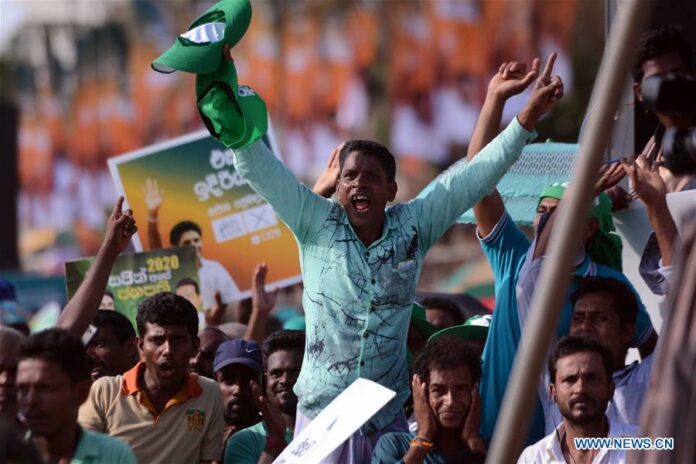
People attend an election campaign rally in Colombo, Sri Lanka, on Oct. 10, 2019. Sri Lanka's Elections Commission on Thursday said the ballot paper for the upcoming presidential elections would be 26 inches (66 cm), the longest in Sri Lankan history, due to a record number of 35 candidates running for presidency this year. Photo: Gayan Sameera / Xinhua
COLOMBO, Sri Lanka (Xinhua) — Sri Lanka’s Elections Commission on Thursday said the ballot paper for the upcoming presidential elections would be 26 inches (66 cm), the longest in Sri Lankan history, due to a record number of 35 candidates running for presidency this year.

Local media reports, quoting Elections Commissioner Mahinda Deshapriya, said that the ballot paper would incur additional printing costs and bigger ballot boxes would have to be set up in all voting centers cross the island country to store the longer ballot papers.

Voters will be required to mark the candidate of their choice on the ballot paper and fold it and insert it in the ballot boxes.

The ballot boxes will later be taken to the countering centers after voting ends.

According to the Elections Commission, this year’s number of candidates tops the previous record of 22 candidates who took part in the 2010 election.

Nearly 16 million out of Sri Lanka’s total population of 21 million will be eligible to vote in the election which will be held on Nov. 16.

The candidates running for presidency this year include Sajith Premadasa who is the presidential candidate of the ruling United National Front, Gotabaya Rajapaksa who is the presidential candidate of the main opposition, the Sri Lanka Podujana Peramuna, and Anura Kumara Dissanayaka, from the minority Janatha Vimukthi Peramuna.

Sajith Premadasa is the deputy leader of the United National Party, which is the largest party in the ruling United National Front Alliance while Gotabaya Rajapaksa is the brother of former president Mahinda Rajapaksa and he served as the defense secretary in the previous government.

Sri Lanka’s presidential polls are set nearly two months before the incumbent’s term ends.

Advertisement

Badminton Champion Ratchanok Cleared of Doping

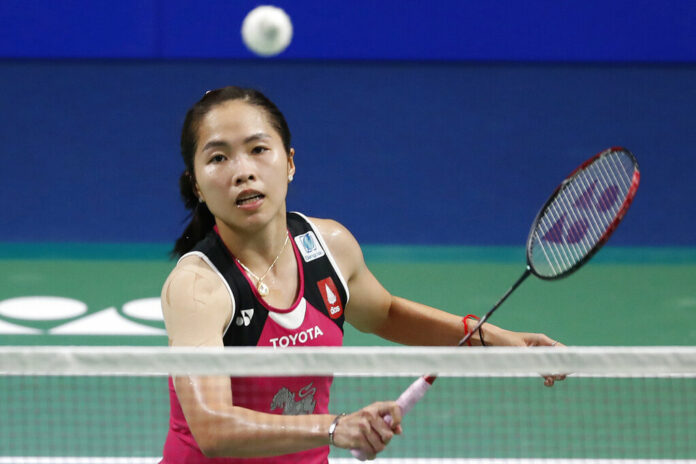
Thailand's Ratchanok Intanon returns a shot during women's semi-final match against Taiwan's Tai Tzu Ying at the Korea Open Badminton in Incheon, South Korea, Saturday, Sept. 28, 2019. Photo: Ahn Young-joon / AP

KUALA LUMPUR, Malaysia (AP) — Former world badminton champion Ratchanok Intanon of Thailand has been cleared of a doping violation because she proved she ate contaminated meat.

Ratchanok, ranked No. 5, tested positive for clenbuterol in an out-of-competition test in April, the Badminton World Federation said in a statement on Thursday.

She faced a four-year ban, but the federation said an ethics hearing panel ruled “she was found to bear no fault or negligence for the violation, and thus no period of ineligibility has been imposed on her.”

In her defense, she collected eight samples of beef and pork in July from a buffet restaurant she regularly eats at in Thailand, and testing discovered traces of clenbuterol, despite it being banned in Thailand since 2003. Because of that national ban, the panel agreed with her that she had no reason to know or suspect that she might eat contaminated meat.

Farmers add clenbuterol to cattle feed to reduce fat.

The panel also noted the clenbuterol in her system was also well below minimum levels of concern, and an anti-doping test of her two weeks beforehand was clean.

Ratchanok became the youngest world champion in 2013 at 18, and she became the first Thai to reach No. 1 in the world in 2016.

Advertisement

CP Foods’ Compartment Model to Protect ‘Avian Influenza’

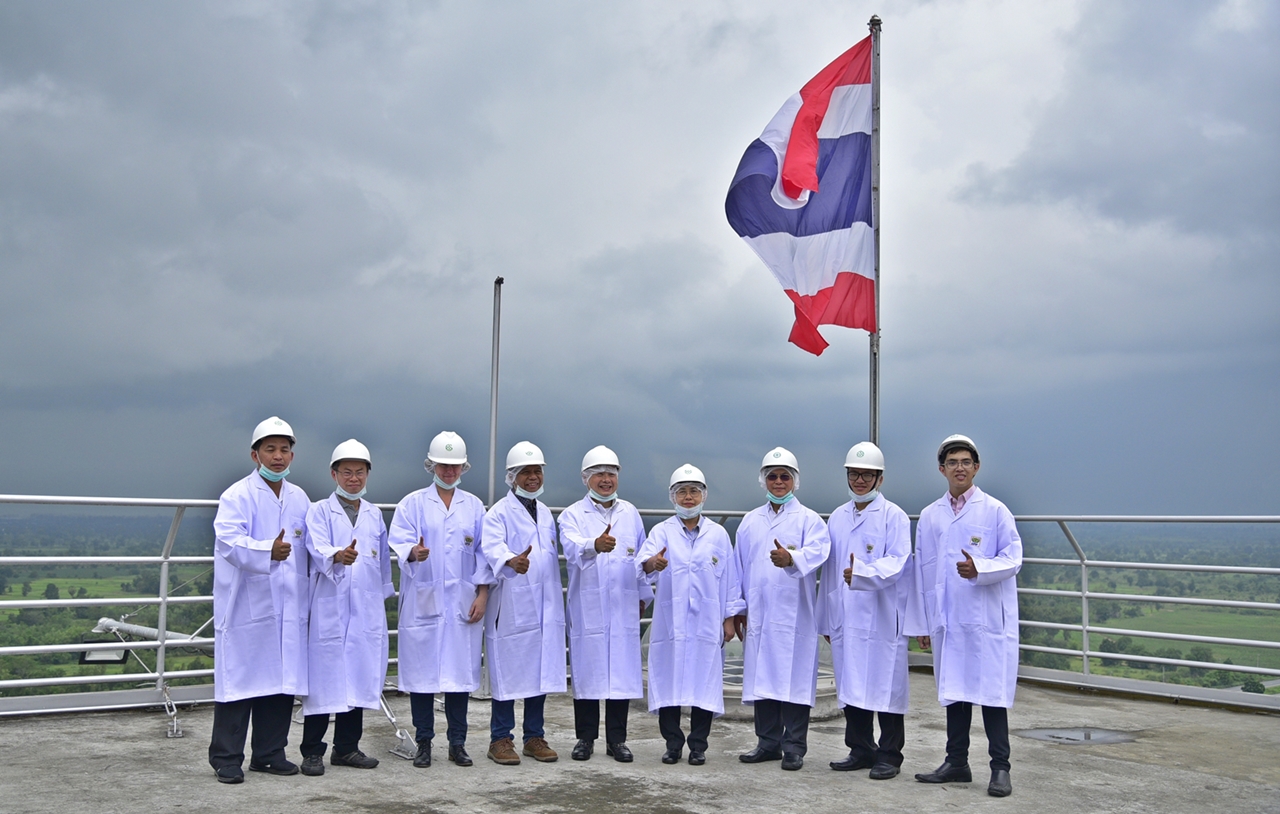
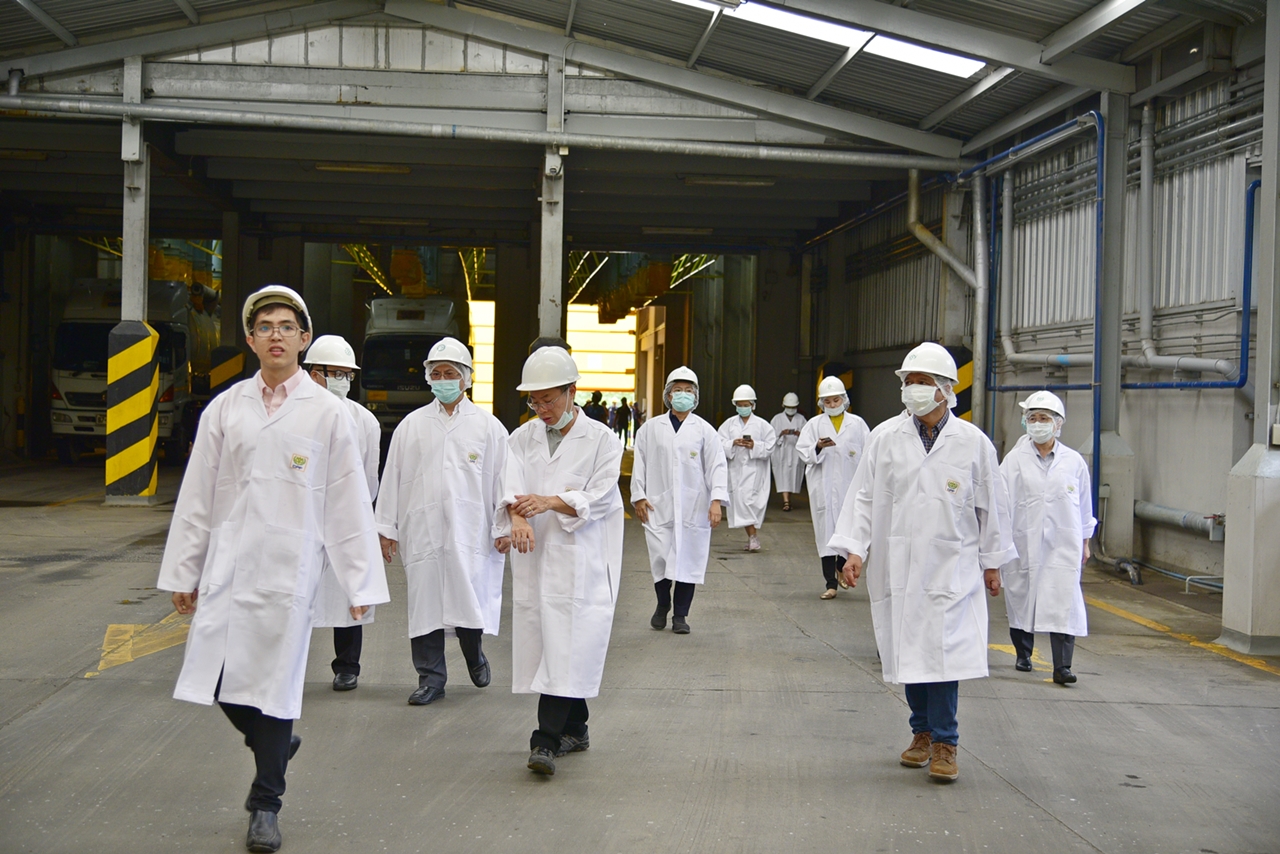
CP Foods’ compartment model has successfully restrained Avian Influenza (AI) as one of a strong practice. The World Organization of Animal Health will raise Thailand and CP Foods as a model to encourage bird flu free in the region.

CP Foods was the first Thai company that applied the compartmentalization principles of OIE as part of a key measure to shield Thailand against bird flu virus successfully. The proactive measures of principles comprised common biosecurity management, notifiable Avian Influenza (NAI) surveillance in compartment and buffer zone, control measures of NAI in compartment and buffer zone and traceability system. In addition, the principles have been implemented on buffer zone of one kilometer around farm to ensure distinct health status.

Dr. Payungsak Somyanontanakul (DVM), vice president and head of Animal Welfare Committee of CP Foods, said the company has implemented the compartmentalization system which strongly prevent the Avian Influenza particularly broiler chicken and duck integration. It also guarantees food safety of consumers since the flu virus wider spread in Thailand in 2004. Moreover, it has joined hands with the Department Livestock Development (DLD) to develop risk analysis for bird flu in line with Hazard Analysis Critical Control Points (HACCP). The practice was drawn to ensure precisely disease assessment.

“Despite without certification, former EU Commissioners, representatives of World Health Organization, OIE and other health organizations have praised CP Foods’ compartment procedures that supported national bird flu free strategies and ensuring our CP Foods Products free from bird flu. Thailand was also a pilot country in the region to launch OIE compartmentalization and successfully established to control avian influenza,” stressed Dr. Payungsak.

With the compartmentalization, it encourages traceability practices throughout the supply chain. The company also further develops the compartment system to prevent “emerging disease” in poultry farm to serve of international trade.

For sustainable biosecurity, CP Foods has also promoted the compartment system to its contracted farmers which they will be trained by veterinarian and experts from DLD.

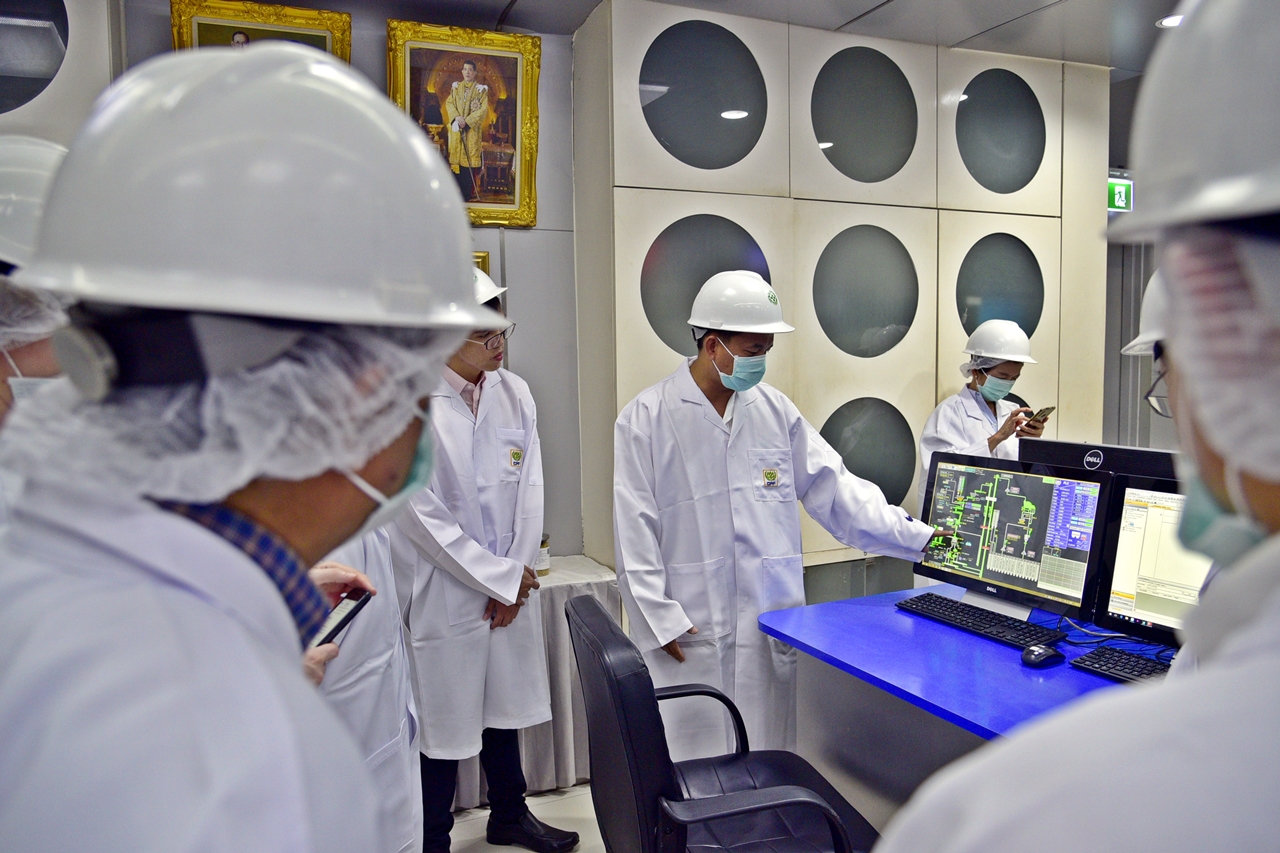
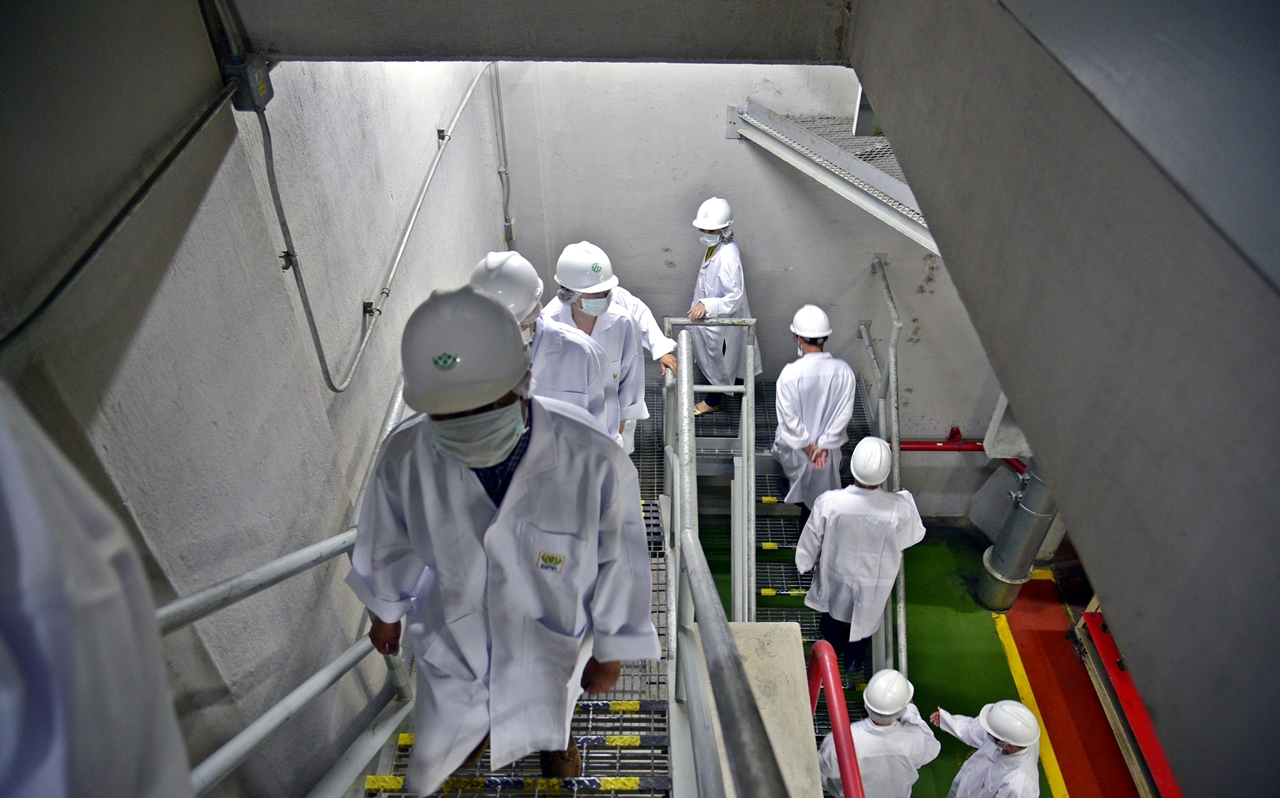
Dr, Payungsak added that OIE representatives recently visited the company from feed mill to processing plant in Nakhon Ratchasima to learn more on CP Foods’ successful compartment model. They will raise this model as a case study in the South-East Asia workshop on compartmentalization organized by OIE. The workshop is drawn to establish poultry disease free, particularly avian influenza in the region.

So far, CP Foods has extended the system to create higher quality meat through “Benja Chicken”, which is not only implemented compartmentalization but also raised without antibiotic. This premium product is raised to serve health conscious consumers.

01

02

03

04

Advertisement

High Quality Knee Replacement Costs in Thailand

Knee Replacement costs in Thailand are much lower than in most countries around the world. The benefit of having knee replacement surgery performed in Thailand is the quality of medical care.

Thailand has built an industry around its recognized ability to provide a level of quality in its medical services and care that far exceed comparable standards around the world.

People from all over the world travel to Thailand to take advantage of the country’s superior medical care and low costs. Medical tourism has become a major part of Thailand’s flourishing tourism industry. And the knee replacement costs in Thailand make it a popular destination for people who are forced to undergo knee replacement surgery.

Knee Replacement Procedure

Knee replacement surgery is often needed when the knee has experienced a large amount of damage due to various types of arthritis. The procedure is also called knee arthroplasty.

Plastic and metal parts are used to form a prosthesis. The metal parts of the prosthesis are in contact with the tibia and femur. The plastic parts serve as artificial cartilage between the tibia and femur to cushion the bones where they meet. This prosthesis takes the place of the original knee and is generally made up of three components.

The tibial component is placed at the top of the tibia (shin bone) and supports the bottom of the artificial knee. Likewise, the femur component is placed at the bottom of the femur and anchors the top of the prosthesis. Finally, an artificial patella (kneecap) is placed over the femur component to serve as a new kneecap. This protects the joint and provides a normal appearance. The knee’s natural ligaments on either side of the knee are preserved to hold the knee prosthesis together.

Knee Replacement Costs in Thailand

The costs of having a total knee replacement performed in Thailand average around THB 275,000, or about US $9,000. This includes after-care and medications. By comparison, a total knee replacement procedure averages around US $15,000 in both Germany and England and the USA averages US $50,000.

This is why medical tourism is a fast-growing industry. The costs of having this procedure performed are so high in other developed nations that people save money by taking a holiday and having the procedure performed in Thailand.

Recuperation in Thailand

People planning to have a total knee replacement procedure performed in Thailand should plan to spend at least a month in the country. The hospitalisation period after the procedure takes about five days. Several weeks of physical therapy are required after that.

Patients generally get around on crutches or walking frames during the recuperative period. You’ll be assigned to a physical therapist who will have you perform exercises during this period to build up the strength of the surrounding muscles and ligaments.

Vejthani Hospital is one of the leading hospitals in Thailand that provide total knee replacement surgery and medical care. Located in Bangkok, their team of doctors, nursed, physical therapists and medical specialists are experts at getting you back on your feet again.

Advertisement

Reduce Crimes Punishable by Death, Attorney Says

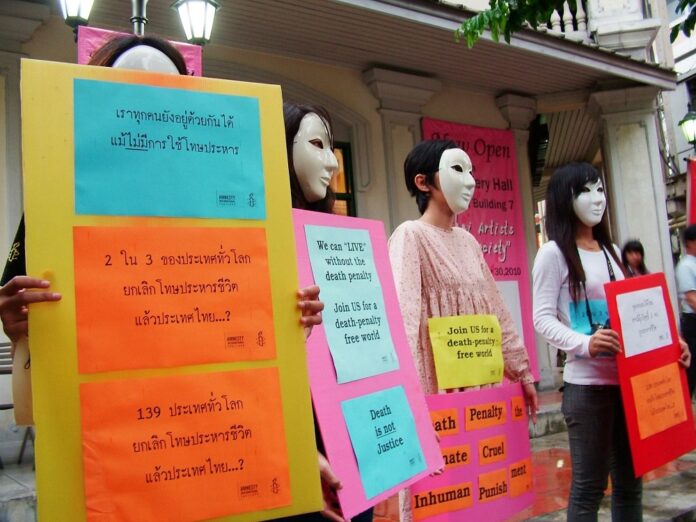
Protesters call for end of the death penalty in Bangkok in an undated file photo. Image: Amnesty International Thailand.

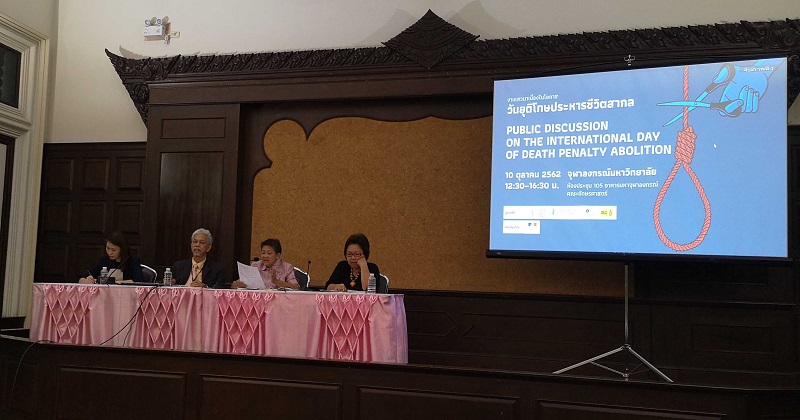
BANGKOK — The number of crimes punishable by execution in Thai laws should be reduced in an attempt to decrease death row inmates, an attorney who campaigns for the end of capital punishment said Thursday.

Namtae Meeboonsalang, a Juvenile and Family Cases attorney in Kanchanaburi, made the call alongside other activists at a panel discussion that seeks to strike down execution from Thai justice system. The latest execution in Thailand took place in June 2018 by lethal injection after a nine-year lull.

“There are 55 crimes punishable by death, including drug trafficking and arson,” Namtae said.

Read: Officials Silent on Thailand’s 1st Execution in 9 Years

The lawyer said keeping death penalty in the laws risks sentencing innocent people to their death, because some police officers could remove or distort evidence resulting in trumped-up charges.

“They could delete CCTV footage or erase the crime scene whichever way they like,” Namtae said.

He spoke days after a judge in Yala province shot himself in an apparent suicide attempt to protest alleged interference from his supervisor. In a statement prepared before the shooting, judge Khanakorn Pianchana said he was pressured to find five men guilty of murder, which would possibly send them to the execution chamber.

Human rights lawyer Somchai Homlaor conceded that much of the public might not be in favor of abolishing the death penalty. He cited a 2017 survey in which 87 percent of respondents say execution should be kept in the laws.

The seminar on Oct. 10, 2019.

Thailand is among 56 countries still maintaining the death penalty, while 106 countries have abolished capital punishment and another 28 have agreed to suspend it.

Campaigner Kessarin Tiawsakul said even when the death penalty is not actively enforced, it still imposes trauma on death row inmates. Kessarin said she conducted interviews with some of those prisoners in 2017, and found them to be suffering from emotional torture from not knowing when they would be executed.

“They live without knowing which day they would be taken to be executed. This is torture,” she said.

Unlike regular inmates, death row prisoners have no access to education, the campaigner said.

Several foreigners present at the seminar also urged Thailand to drop capital punishment, including French ambassador Jacques Lapouge who said ending death penalty in 1981 was a “obligation” for France.

French jurist Guillaume Simon also noted that a number of Asian countries and territories have already abolished the death penalty. Among them were Cambodia in 1989, Hong Kong in 1994 and Macau in 1979.

No representative from the Thai government attended today’s event.

Related stories:

Thailand’s Pledge to End Death Penalty in Doubt

Advertisement

No. 8 Bus Driver Fired After Ignoring Railway Crossing

BANGKOK — A bus driver for the notoriously dangerous No. 8 route was sacked for slamming his way past level crossing barriers in Bangkok earlier this week, transportation officials said Thursday.

Pratan Buaparn was fired after he admitted to the offense, which was captured in a video that went viral on social media, Bangkok Mass Transit Authority said in a statement. The company that runs the bus, 39 Group Ltd, was given a much lighter sentence of a 5,000 baht fine.

The bus in question was also banned from operating for seven days, the authorities said.

The video posted by one of the motorists at the scene shows the No. 8 bus crashing through a closing railroad crossing on Si Ayutthaya Road on Oct. 8.

Ignoring level crossings is a cause of frequent accidents in Thailand, often with deadly results. A motorcyclist and his passenger were decapitated in April after dodging past a crossing in Bangkok.

It’s also the latest traffic misconduct associated with No. 8 buses, which gained notoriety among Bangkokians for their reckless driving and long history of accidents.

Advertisement

Hot News

LATEST NEWS

Bangkok
overcast clouds
33.8 ° C
34.4 °
32.2 °
65 %
3.4kmh
100 %
Sat
34 °
Sun
36 °
Mon
37 °
Tue
36 °
Wed
36 °