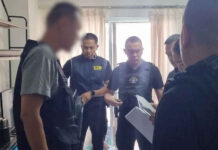
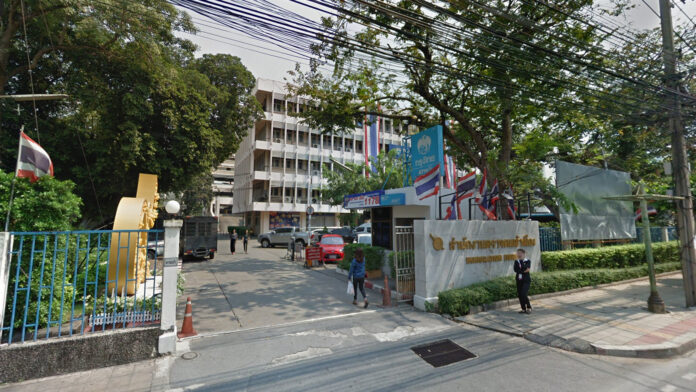
Entrance of the Immigration Bureau on Soi Suan Phlu, where Kris Janssens was detained on Oct. 3. Photo: Google Maps
BANGKOK — A spokesman for the national police on Monday confirmed that a Belgian journalist was detained ahead of his interview with an anti-government activist last week.
Col. Krissana Pattanacharoen said officers from the immigration bureau and Special Branch Police took Kris Janssens, a Belgian freelance reporter, to custody on Thursday morning for questioning. Krissana said Janssens was later released without charges.
“We escorted him away for inquiries because our intel suggested that he might have been a threat to national security,” Krissana said. He declined to elaborate.
The spokesman also insisted that the interrogation was a normal protocol and was not a violation of press freedom.
“It’s a normal practice for the immigration bureau to detain foreigners who do not act in accordance with the immigration act,” Krissana said.
Kris was reportedly approached by undercover police close to the hotel where he was staying and taken to the Immigration Bureau’s headquarters on Soi Suan Phlu.
The Foreign Correspondents’ Club of Thailand (FCCT) said in a Friday statement that Kris was advised by his interrogators not to go ahead with his plan to interview activist Anurak “Ford” Jeantawanich prior to his release.
The club also described the incident an act of “deeply disturbing” intimidation on foreign journalists, though Krissana disagreed.
“If there’s really been an intimidation, he should have filed a complaint by now,” the spokesman said. “I can assure you that he has been released without any charges.”
News of Kris’ detention surfaced when Anurak posted about it on Thursday morning, saying that he has lost contact with his would-be interviewer. The news was later confirmed by the FCCT.
Although Col. Krissana said he doesn’t know the reporter’s current whereabouts, Anurak said Kris is still safe in the country.
“I don’t know what makes officials think he [Kris] is causing trouble,” Anurak said over the phone. “But it’s strange that after the news broke, I haven’t heard a word from the authorities.”
Media freedom in Thailand took a plunge after the military seized power in 2014, according to multiple reports published by domestic and international watchdogs.
A 2019 report by Reporters Without Border identified Thailand’s press freedom as a “difficult situation,” while the US-sponsored Freedom House listed the country in its “Not Free” category.
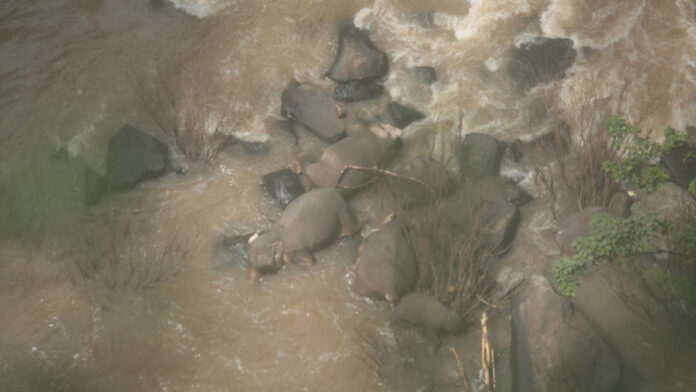
Drone footage of elephant carcasses at the base of Haew Narok Waterfall on Oct. 5.
Update: Environment minister Varawut Silpa-archa said on Tuesday that rangers found five more elephants died from the fall. A total of 11 elephants died in this tragedy.
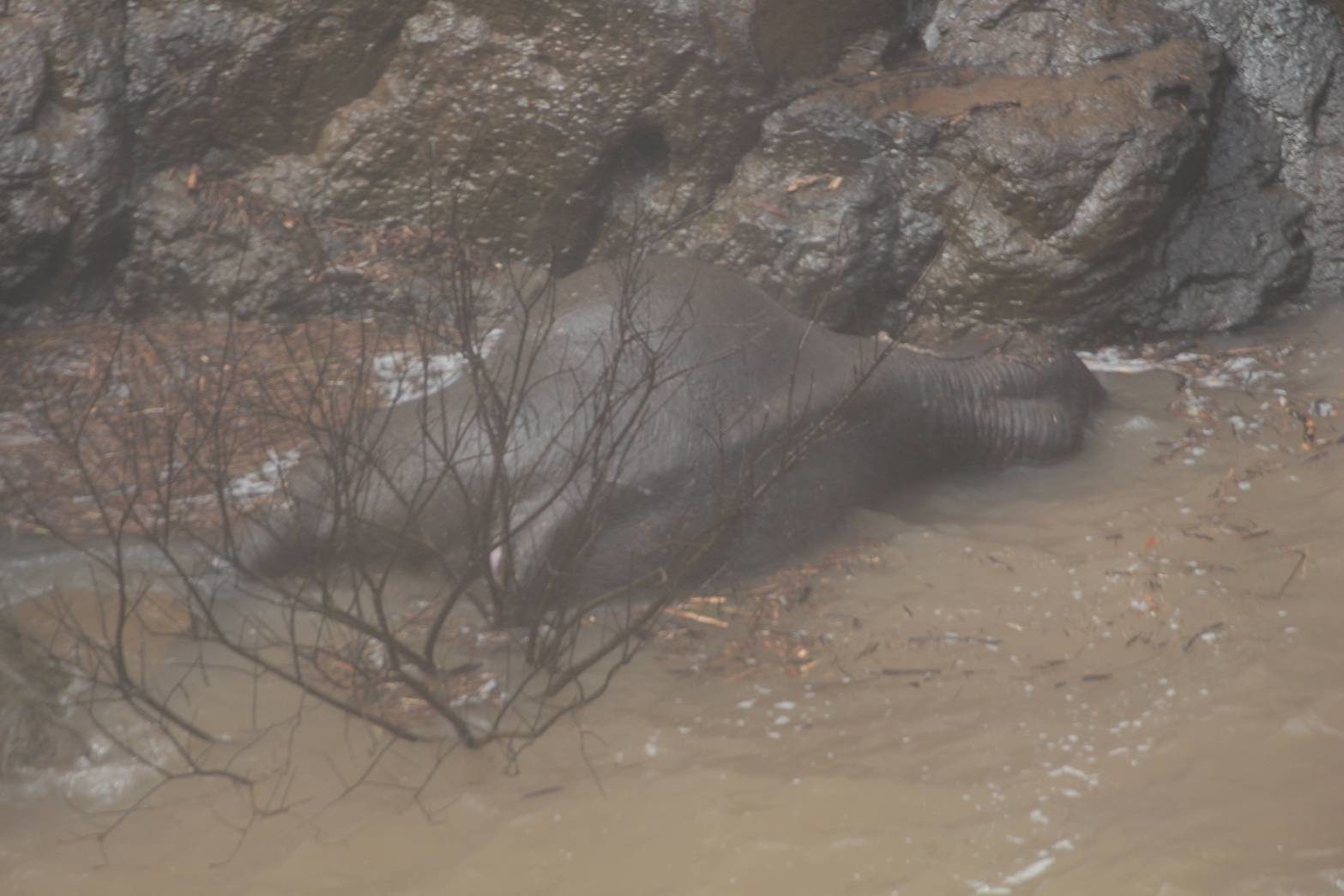
PRACHINBURI — Park officials on Monday are trying to retrieve the bodies of six elephants that fell to their death at Haew Narok Waterfall in Khao Yai National Park over the weekend.
Security officers were making their way down the waterfall Monday morning to reach the carcasses, which were washed away downstream, local wildlife official Witthaya Hongwiangchan said. The team will then try to secure the bodies with nets to prevent them from reaching and contaminating a major dam down the stream.
“Given the distance and the current’s strength, it would take four to five days for the carcasses to reach the net,” Witthaya said. “After that, monks will conduct rituals and veterinarians will dissect the bodies. They will be buried properly.”
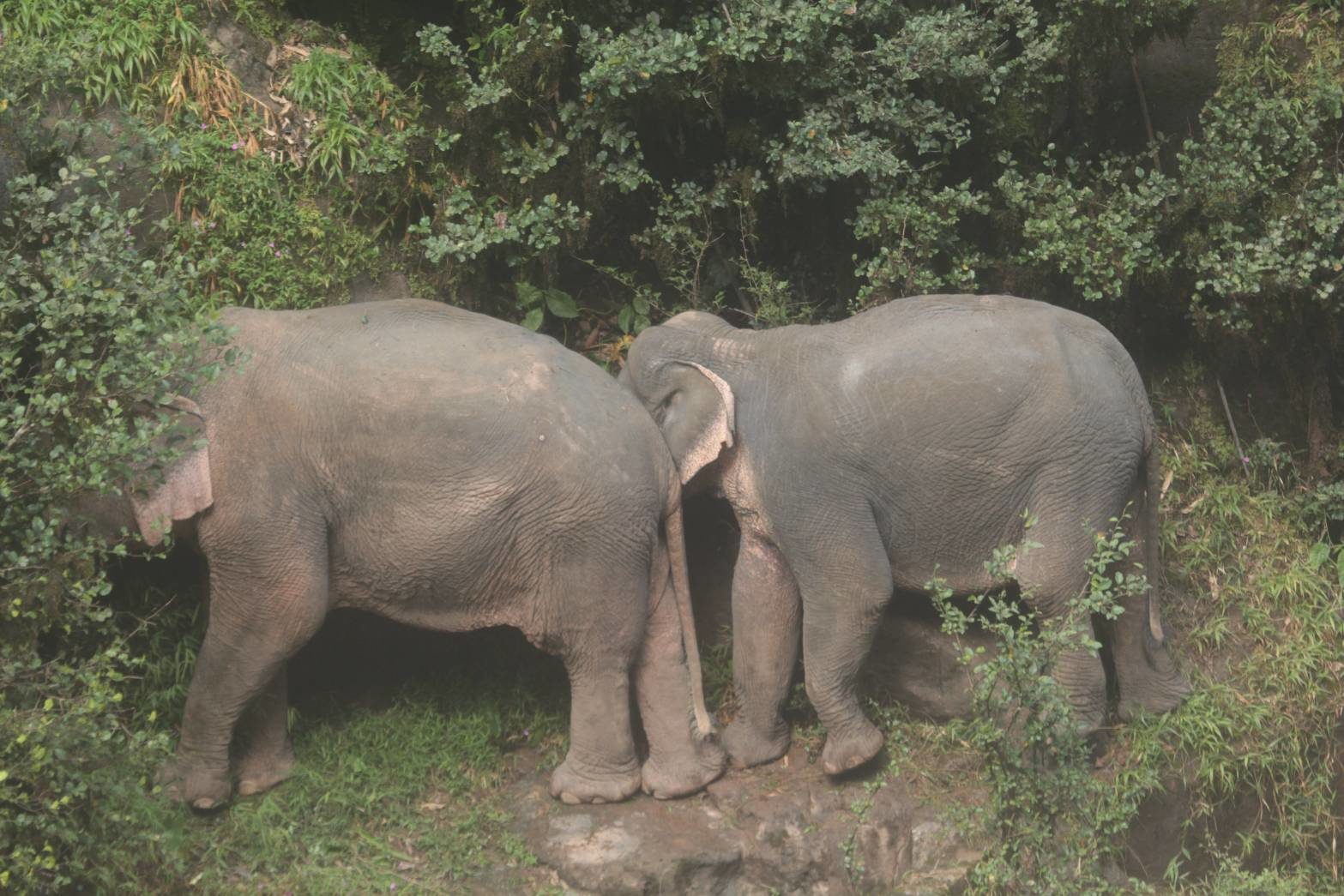
A herd of eight elephants plunged 80 meters down the Haew Narok Waterfall, literally “Hell’s Abyss,” on Saturday morning. Six died from the fall, while two, a mother and a calf, managed to push themselves out of the torrents and survived; they were later returned safely into the wild.
Khanchit Srinoppawan, chief of Khao Yai National Park, believed that the elephants might have fallen while trying to help their fellow friends in jeopardy.
“The incident might have occurred after a calf slipped over the waterfall,” Khanchit said. “As elephants are social animals, they attempted to help each other but failed, causing them to drown.”
The waterfall, which is the largest in Khao Yai National Park, will remain closed to tourists while the operation is underway.
This is not the first tragedy at the ravine. In 1992, eight elephants fell to their death at the same spot.
Khao Yai National Park is believed to be a home to more than 200 elephants. The 2,168 square kilometers park spans over four provinces and is part of the Dong Phayayen-Khao Yai Forest Complex, a UNESCO World Heritage Site.
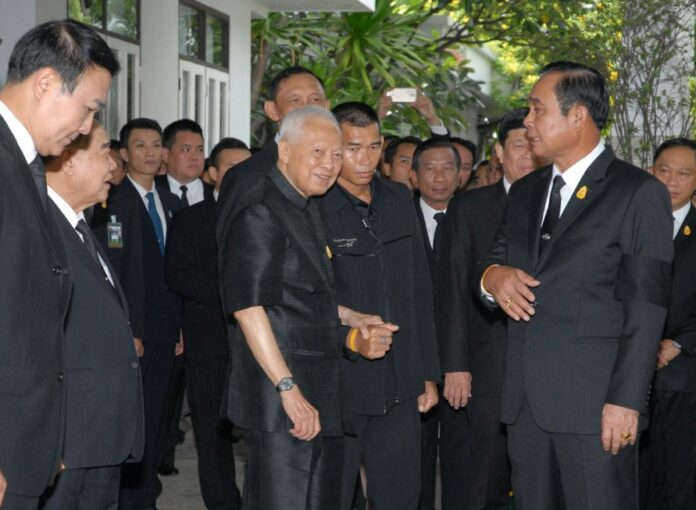
Gen. Prem Tinsulanonda greets junta chairman Prayuth Chan-ocha and his cabinet members on Aug. 24, 2017, at his home in Bangkok's Dusit district.
BANGKOK — The residence where former premier and king’s chief advisor Prem Tinsulanonda lived until his death in May could be set for a demolition, a report on a military news site said.
Lapluangprang website said the army will likely return the house to the Treasury Department, but the authorities have yet to declare what to do with it. The website said there is a possibility that the mansion might be bulldozed to make way for unspecified projects.
But army spokesman Winthai Suvaree said on Monday he hasn’t heard of any plans for the residence yet.
“I think the army will make a formal announcement later,” Col. Winthai said by phone. “Please wait for now.”
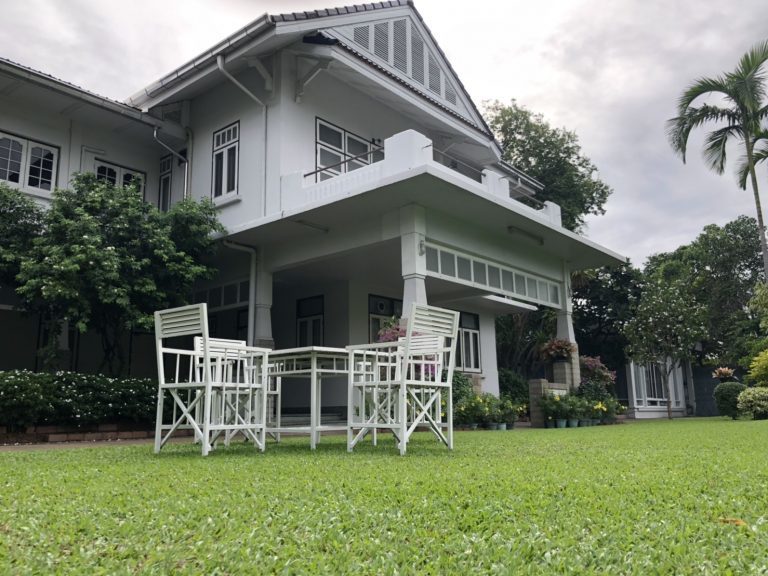
A file photo of Prem Tinsulanonda’s residence.
Prem died at 98 after a lifelong military and bureaucrat career, which includes the Prime Minister, the commander of the army, and the highest ranking advisor to His Majesty the King.
Although the property belonged to the state, Prem continued to live there long after he retired from the army in 1980, leading some critics to accuse him of “squatting” on taxpayers money.
The late statesman is set to be cremated on Oct. 18 following months-long funerary rites. Labluangprang said the army will likely hand over the residence to the government by Oct. 31.
The report also said Prem’s personal belongings and artifacts of historical values were already removed from the house, which suggests that turning it into a museum is unlikely.
Prem’s house is located in Dusit district, where a number of historic buildings were either demolished or shuttered in recent years, including the popular Dusit Zoo, a 102-year-old racecourse, and the former Parliament building.
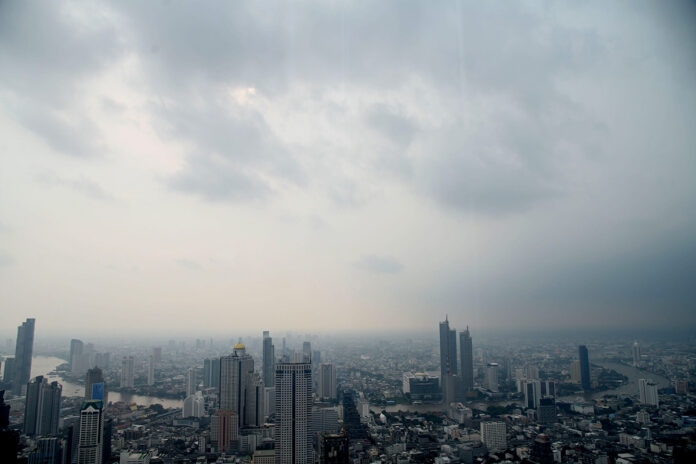
A view of cloudy skies over Bangkok from King Power MahaNakhon tower on Oct. 1, 2019.
BANGKOK — Thailand will have to weather the last of the rainy season’s storms before winter, the meteorological department said Monday.
Most provinces in Thailand will continue to see rain throughout the week until lower temperatures signal a transition from the rainy season to the cold season.
Bangkok will see up to a 60 percent chance of rain Monday before dropping to 30 percent from Tuesday through Saturday, with lows of 22C and highs of 34C.
A similar pattern is to be expected in the North, Isaan, central, and eastern provinces, but the south will continue to be battered by a 60 percent chance of rain throughout the week due to monsoons..
“This is the transition period from the southwest to the northeast monsoons,” Seree Supratid, director of the Climate Change and Disaster Center at Rangsit University said Monday. “It’s not yet officially winter, which requires more stable low temperatures.”
Seree said that Thailand is estimated to enter the winter season at the end of October.
Thailand’s seasons this year has been fraught with disaster, from a drought that dried up parts of the Mekhong, lakes, and farmland starting in late July to flash flooding due to tropical storms just a month later, killing dozens and inundating major parts of Ubon Ratchathani.
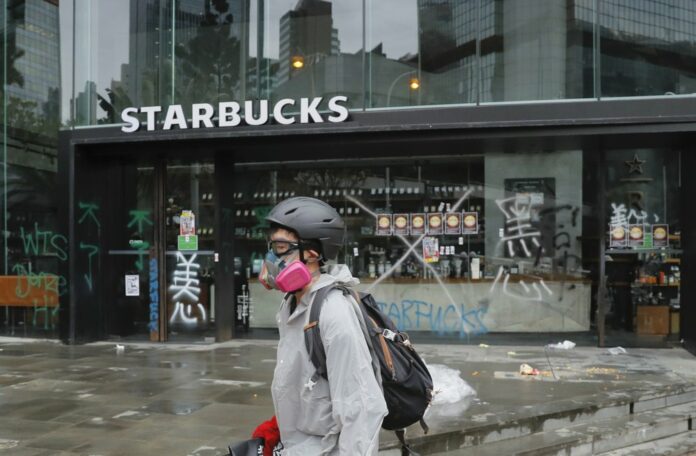
A protestor walks past a vandalized Starbucks outlet in Hong Kong, Sunday, Oct. 6, 2019. (AP Photo/Kin Cheung)
HONG KONG (AP) — Two protesters have been charged with violating Hong Kong’s new ban that criminalized the wearing of masks at rallies.
The charges filed Monday are the first prosecution under the ban that took effect Saturday under sweeping emergency powers to quash rising violence in four months of anti-government protests. But the ban sparked more anger with rallies and violence in the last three days in the semi-autonomous Chinese territory.
An 18-year-old student and a 38-year-old unemployed woman were detained early Saturday shortly after the ban took effect and charged Monday with illegal assembly and for violating the mask ban. They were both released on bail pending trial.
A conviction for violating the mask ban carries a penalty of up to a year in jail and a fine.
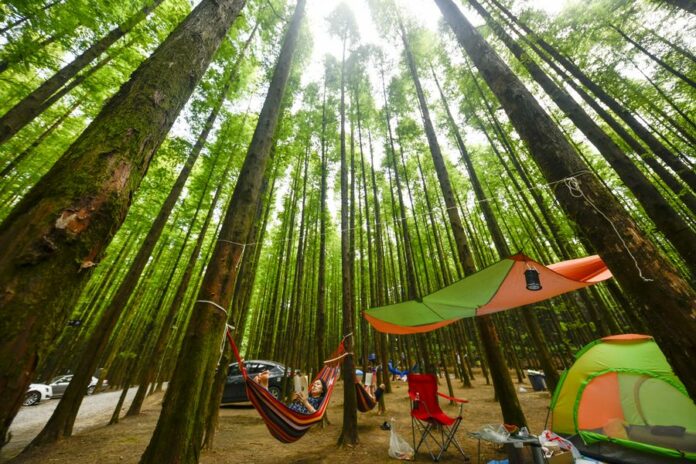
Tourists relax in a man-made forest at the Shanwangping Karst National Eco Park in southwest China's Chongqing, Aug. 21, 2019. (Xinhua/Liu Chan)
BEIJING (Xinhua)— China’s forest tourism saw steady growth in the first eight months of the year amid ongoing government efforts to boost the industry, official data showed.
The number of visitors in forest tourism increased 13 percent year on year to 1.2 billion in the January-August period, according to Cheng Hong, an official with the National Forestry and Grassland Administration.
Meanwhile, forest tourism generated 1.1 trillion yuan (about 156 billion U.S. dollars) in social output during the period, Cheng said.
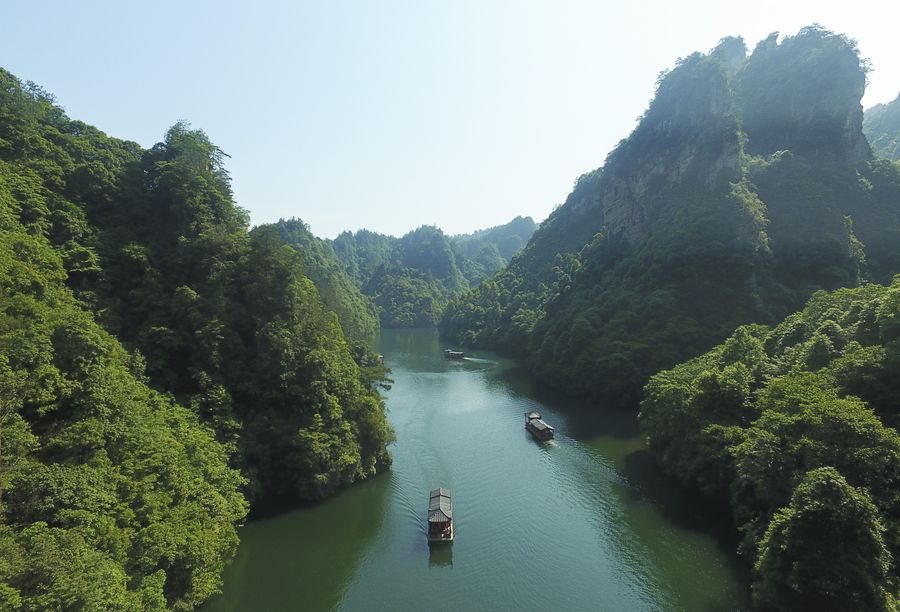
Image: Xinhua
The country’s forest tourism industry has maintained rapid development, with the average annual growth rate of visitors remaining above 15 percent in the past five years.
In 2018, visitors in the industry exceeded 1.6 billion, creating a social output of about 1.5 trillion yuan.
Forest tourism is making growing contributions to boosting rural revitalization and poverty alleviation, Cheng said.
BEIJING (Xinhua) — Domestic disaster film “The Captain” soared to lead the Chinese mainland box office on Saturday, the China Movie Data Information Network said Sunday.
It grossed 242.35 million yuan (around 34 million U.S. dollars) on the sixth day of its screening, accounting for more than 42 percent of the daily total.
“The Captain” is a cinematic portrayal of a real-life event that occurred on May 14, 2018, when a captain of Sichuan Airlines managed a safe emergency landing and brought home the 119 passengers and nine crew members on board safely.
Coming in second and third are “My People, My Country” and “The Climbers,” two domestically-produced films screened in celebration of the 70th anniversary of the founding of the People’s Republic of China.
The two films raked in 241.03 million yuan and 71.84 million yuan, respectively.
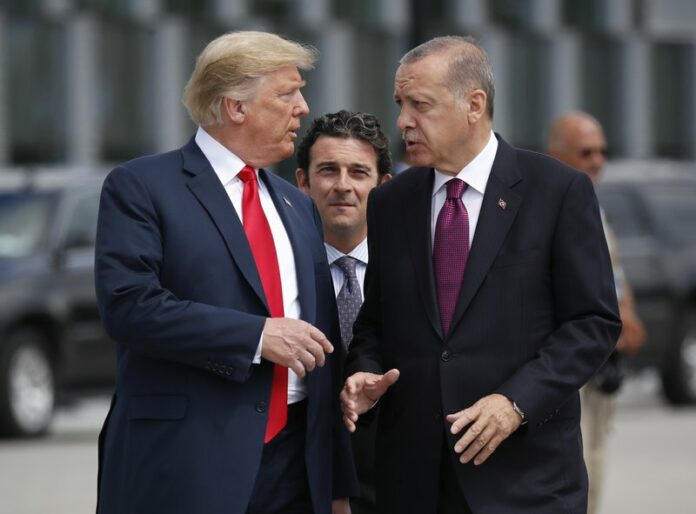
In this Wednesday, July 11, 2018, file photo, President Donald Trump, left, talks with Turkey's President Recep Tayyip Erdogan, as they arrive together for a family photo at a summit of heads of state and government at NATO headquarters in Brussels. (AP Photo/Pablo Martinez Monsivais, File)
WASHINGTON (AP) — The White House said Sunday that Turkey will soon invade Northern Syria, renewing fears of a slaughter of Kurdish fighters allied with the U.S. in a yearslong campaign against the Islamic State group.
For months, Turkish President Recep Tayyip Erdogan has been threatening to launch a military assault on the Kurdish forces in Northern Syria, many of whom his government considers terrorists. The Kurdish forces bore the brunt of the U.S.-led campaign against Islamic State militants, and Republicans and Democrats have warned that allowing the Turkish attack would send a troubling message to American allies across the globe.
U.S. troops “will not support or be involved in the operation” and “will no longer be in the immediate area,” in Northern Syria, White House press secretary Stephanie Grisham said in an unusual late-Sunday statement that was silent on the fate of the Kurds.
It was not clear whether that meant the U.S. would be withdrawing its 1,000 or so troops completely from northern Syria.
The announcement came after a call between President Donald Trump and Erdogan, the White House said.
In December, Trump announced he was withdrawing American troops from Syria but was met with widespread condemnation for abandoning Kurdish allies to the Turkish assault. The announcement prompted the resignation in protest of then-Defense Secretary Jim Mattis, and a coordinated effort by then-national security adviser John Bolton to try to protect the Kurds.
The White House statement Sunday said Turkey will take custody of foreign fighters captured in the U.S.-led campaign against the Islamic State group who have been held by the Kurdish forces supported by the U.S.
Ambassador James Jeffrey, the State Department envoy to the international coalition fighting the Islamic State group, and Trump have said there are about 2,500 foreign fighters captured in the fight against the Islamic State that the U.S. wants Europe to take.
Trump has repeatedly demanded that European countries, particularly France and Germany, take back their citizens who joined the militant organization.
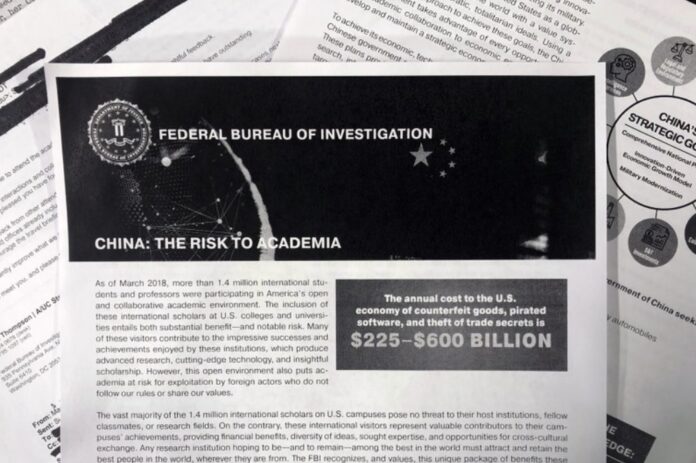
This Oct. 4, 2019 photo shows a copy of an FBI pamphlet and related emails. The FBI’s outreach to American colleges and universities about the threat of economic espionage includes this pamphlet that warns specifically about efforts by China to steal academic research. (AP Photo)
WASHINGTON (AP) — As the U.S. warned allies around the world that Chinese tech giant Huawei was a security threat, the FBI was making the same point quietly to a Midwestern university.
In an email to the associate vice chancellor for research at the University of Illinois-Urbana-Champaign, an agent wanted to know if administrators believed Huawei had stolen any intellectual property from the school.
Told no, the agent responded: “I assumed those would be your answers, but I had to ask.”
It was no random query.
The FBI has been reaching out to colleges and universities across the country as it tries to stem what American authorities portray as the wholesale theft of technology and trade secrets by researchers tapped by China. The breadth and intensity of the campaign emerges in emails The Associated Press obtained through records requests to public universities in 50 states. The emails underscore the extent of U.S. concerns that universities, as recruiters of foreign talent and incubators of cutting-edge research, are particularly vulnerable targets.
Agents have lectured at seminars, briefed administrators in campus meetings and distributed pamphlets with cautionary tales of trade secret theft. In the past two years, they’ve requested the emails of two University of Washington researchers, asked Oklahoma State University if it has scientists in specific areas and sought updates about “possible misuse” of research funds by a University of Colorado Boulder professor, the messages show.
The emails show administrators mostly embracing FBI warnings, requesting briefings for themselves and others. But they also reveal some struggling to balance legitimate national security concerns against their own eagerness to avoid stifling research or tarnishing legitimate scientists. The Justice Department says it appreciates that push-pull and wants only to help universities separate the relatively few researchers engaged in theft from the majority who are not.
Senior FBI officials told AP they’re not encouraging schools to monitor researchers by nationality but instead to take steps to protect research and to watch for suspicious behavior. They consider the briefings vital because they say universities, accustomed to fostering international and collaborative environments, haven’t historically been as attentive to security as they should be.
“When we go to the universities, what we’re trying to do is highlight the risk to them without discouraging them from welcoming the researchers and students from a country like China,” Assistant Attorney General John Demers, the Justice Department’s top national security official, said in an interview.
The effort comes amid a deteriorating relationship between the U.S. and China and as a trade war launched by President Donald Trump contributes to stock market turbulence and fears of a global economic slowdown. American officials have long accused China of stealing trade secrets from U.S. corporations to develop their economy, allegations Beijing denies.
“Existentially, we look at China as our greatest threat from an intelligence perspective, and they succeeded significantly in the last decade from stealing our best and brightest technology,” said William Evanina, the U.S. government’s chief counterintelligence official.
The FBI’s effort coincides with restrictions put in place by other federal agencies, including the Pentagon and Energy Department, that fund university research grants. The National Institutes of Health has sent dozens of letters in the past year warning schools of researchers it believes may have concealed grants received from China, or improperly shared confidential research information. The Justice Department launched last year an effort called the China Initiative aimed at identifying priority trade secret cases and focusing resources on them.
The threat, officials say, is more than theoretical.
In the past two months alone, a University of Kansas researcher was charged with collecting federal grant money while working full time for a Chinese university; a Chinese government employee was arrested in a visa fraud scheme that the Justice Department says was aimed at recruiting U.S. research talent; and a university professor in Texas was accused in a trade secret case involving circuit board technology.
The most consequential case this year centered not on a university but on Huawei, charged in January with stealing corporate trade secrets and evading sanctions. The company denies wrongdoing. Several universities including the University of Illinois, which received the FBI email last February, have since begun severing ties with Huawei.
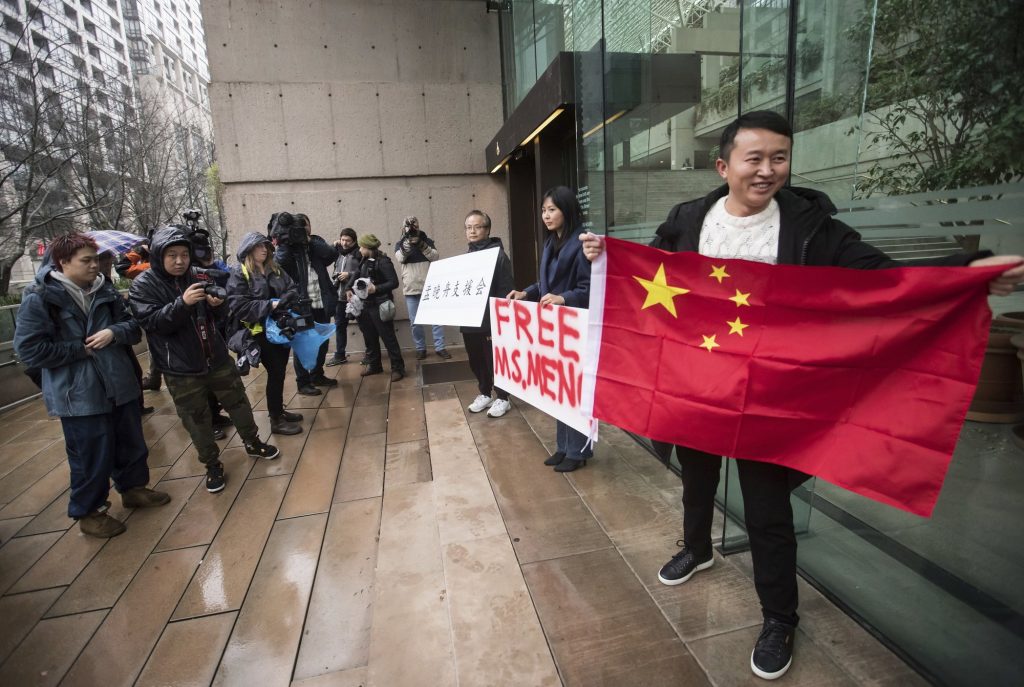
Supporters hold signs and a Chinese flag outside the British Columbia Supreme Court in Vancouver during the third day of a bail hearing for Meng Wanzhou, the chief financial officer of Huawei Technologies, on Dec. 11, 2018. (Darryl Dyck/The Canadian Press via AP)
The University of Minnesota did the same, with an administrator reassuring the FBI in an email last May that issues raised by a best practices letter an agent forwarded “have certainly been topics of conversation (and occasionally even action) in our halls for a while now.”
But the Justice Department’s track record hasn’t been perfect, leading to pushback from some that the concerns are overstated.
Federal prosecutors in 2015 dropped charges against a Temple University professor who’d been accused of sharing designs for a pocket heater with China. The professor, Xiaoxing Xi, is suing the FBI. “It was totally wrong,” he said, “so I can only speak from my experience that whatever they put out there is not necessarily true.”
Richard Wood, the then-interim provost at the University of New Mexico, conveyed ambivalence in an email to colleagues last year. He wrote that he took seriously the national security concerns the FBI identified in briefings, but also remained “deeply committed to traditional academic norms regarding the free exchange of scientific knowledge wherever appropriate — a tradition that has been the basis of international scientific progress for several centuries.
“There are real tensions between these two realities, and no simple solutions,” he wrote. “I do not think we would be wise to create new ‘policy’ on terrain this complex and fraught with internal trade-offs between legitimate concerns and values without some real dialogue on the matter.”
A University of Colorado associate vice chancellor equivocated in January on how to handle an agent’s request for a meeting, emailing colleagues that the request to discuss university research felt “probing” and like “more of a fishing expedition” than past occasions. Another administrator replied that the FBI presumably wanted to discuss intellectual property theft, calling it “bright on their radar.”
FBI officials say they’ve received consistently positive feedback from universities, and the emails do show many administrators requesting briefings, campus visits, or expressing eagerness for cooperation. A Washington State University administrator connected an FBI agent with his counterpart at the University of Idaho. The University of North Carolina-Chapel Hill requested a briefing last February with an administrator, saying “we would like to understand more about the role of the FBI and how we can partner together.” A University of Nebraska official invited an agent to make a presentation as part of broader campus training.
Kevin Gamache, chief research security officer for the Texas A&M University system, told AP he values his FBI interactions and that the communication goes both ways. The FBI shares threat information and administrators educate law enforcement about the realities of university research.
“There’s no magic pill,” Gamache said. “It’s a dialogue that has to be ongoing.”
The University of Nevada, Las Vegas vice president for research and economic development welcomed the assistance in a city she called the “birthplace of atomic testing. “We have a world-class radiochemistry faculty, our College of Engineering has significant numbers of faculty and students from China, and we have several other issues of concern to me as VPR. In all of these cases, the FBI is always available to help,” the administrator, Mary Croughan, emailed agents.
The AP submitted public records requests for correspondence between the FBI and research officials at more than 50 schools.
More than two dozen produced records, including seminar itineraries and an FBI pamphlet warning that China does “not play by the same rules of academic integrity” as American institutions observe. The document, titled “China: The Risk to Academia,” says Beijing is using “non-traditional collectors” like post-doctoral researchers to collect intelligence and that programs intended to promote international collaboration are being exploited.
Some outreach is more general, like an agent’s offer to brief New Mexico State University on “how the FBI can best serve and protect.”
But other emails show agents seeking tips or following leads.
“If you have concerns about any faculty or graduate researchers, students, outside vendors … pretty much anything we previously discussed — just reminding you that I am here to help,” one wrote to Iowa State.
In May, an agent sent the University of Washington a public records request for emails of two researchers, seeking references to Chinese-government talent recruitment programs the U.S. views with suspicion. A university spokesman said the school hasn’t investigated either professor.
Last year, an agent warning of a “trend of international hostile collection efforts at US universities” asked Oklahoma State University if it had researchers in encryption research or quantum computing.
The University of Colorado received an FBI request about an “internal investigation” into a professor’s “possible misuse” of NIH funding. The school said it found no misconduct involving the professor, who has resigned.
Other emails show schools responding internally to government concerns.
At Mississippi State, an administrator concerned about Iranian cyberattacks on colleges and government reports on foreign influence suggested to colleagues the school scrutinize graduate school applicants’ demographics. “Have to be careful so U.S. law is not violated re discrimination but where does one draw the line when protecting against known foreign states that are cyber criminals?” he wrote.
Though espionage concerns aren’t new — federal prosecutors charged five Chinese military hackers in 2014 — FBI officials report an uptick in targeting of universities and more U.S. attention as a result. The FBI says it’s seen some progress from universities, with one official saying schools are more reliably pressing researchers about outside funding sources.
Demers, the Justice Department official, said the focus reflects how espionage efforts are “as pervasive, as well-resourced, as ever today.
“It’s a serious problem today on college campuses.”
___
This story has been corrected to show the date that charges were dropped against the Temple professor was 2015, not 2017.
haroen Pokphand Foods PCL (CP Foods) will exhibit innovative food products from its socially- and environmentally-responsible production process at Anuga 2019, the world’s largest food and beverage fair which will take place in Cologne, Germany during 5-9 October.
Mr. Prasit Boondoungprasert, Chief Executive Officer of CP Foods, said the company will be among more than 7,600 leading food and beverage producers across the globe that participate in the fair. The company’s display this year will feature its forefront leadership in socially and environmentally-responsible innovation under the concept “Put Our Heart Into Food”, which is based on the company’s key principles – Innovation, People and Planet. The concept reflects a dedication to deliver a wide range of high-quality, safe and standardized products, through a responsible production process that highlights animal welfare, continuous food innovation development, customer satisfaction and environmental sustainability.
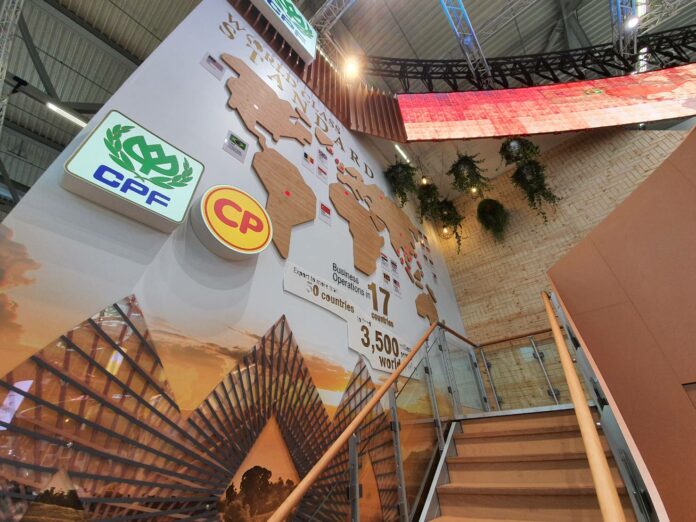
“The exhibition at Anuga 2019 affirms our “Kitchen of the World” vision. We are a leading food producer from Thailand that focuses on the production of high-protien and safe food products and innovation that addresses global trends and modern consumers’ demand, through our production network that covers 17 countries,” said Mr. Prasit.
Highlights of the exhibition include Benja Chicken, the U Farm-branded premium chicken meat. The chicken is raised by a purely natural process, being the first in the world to be fed with brown rice. It is certified by NSF International for zero use of antibiotics or growth hormones, earning the chicken a recognition as “Superfood” for the entire world. The chicken meat is warmly welcomed among Thai consumers.
Other highlights are innovative food products from its global production bases including PURE-branded Vegan Lasagna of Belgium-based Tops Foods Co., Ltd., a ready-to-eat meal that won THAIFEX 2019’s Innovation Award thanks to its eco-friendly wood pulp packaging; Charcoal-grilled ChickenSnack from CP Food (UK) which was unveiled at Anuga 2017; high-nutrition Smart Soup for the elderly and patients developed in collaboration with Mahidol University’s Faculty of Medicine Ramathibodi Hospital; and top-selling products around the world such as Korean-styled Crispy Chicken with Korean Hot & Spicy sauce that chalks in high sales in Singapore.
CP Foods is the first and only non-Europen producer that earns QS Standard for its chicken products from the European Union, recognized as the highest food standard among consumers in Germany and across Europe.
The company operates an integrated production model that aims to raise added value. A digital system has been developed to elevate the supply chain efficiency, to ensure consumers in 5 continents enjoy world-class safety and quality.
It has also emphasized sustainable development in the economic, social and environmental aspects, by integrating the United Nations’ Sustainable Development Goals into its operations. In focus are the attempts to reduce greenhouse gas emissions and plastic consumption, to raise the ratio of clean energy to 25% in 2025, and to improve waste management. It also strives to introduce environmental-friendly packaging and improve labor management under human rights best practices.
Thanks to sustainability-focused operations, CP Foods has been listed in globally recognized sustainability indexes including Dow Jones Sustainability Indices (DJSI) Emerging Markets 2019 for five consecutive years and FTSE 4 Good Emerging Index for three consecutive years.