




























30.2 C
Bangkok
Tuesday, June 9, 2026
Home Blog Page 1508

Robert Mugabe, Longtime Zimbabwe Leader, Dies at 95

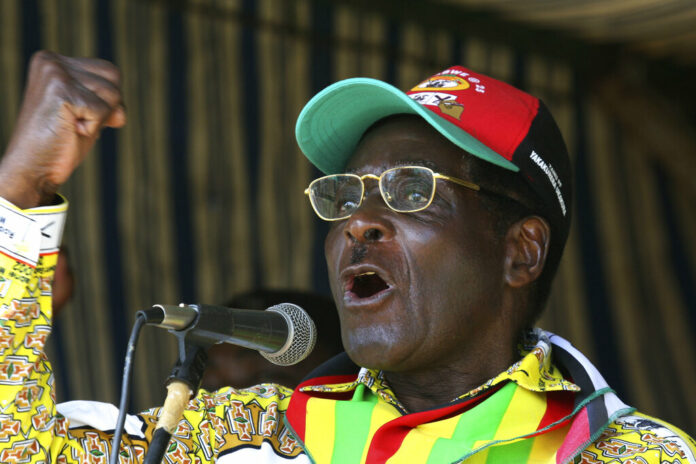
In this Tuesday, March 18, 2008 file photo, Zimbabwe President Robert Mugabe addresses party supporters at a rally in Gweru, about 250 kms. (155 miles) south of Harare. Photo: Tsvangirayi Mukwazhi / AP

HARARE, Zimbabwe — Robert Mugabe, the former leader of Zimbabwe forced to resign in 2017 after a 37-year rule whose early promise was eroded by economic turmoil, disputed elections and human rights violations, has died. He was 95.

His successor President Emmerson Mnangagwa confirmed Mugabe’s death in a tweet Friday, mourning him as an “icon of liberation.” He did not provide details.

Mugabe, who took power after white minority rule ended in 1980, blamed Zimbabwe’s economic problems on international sanctions and once said he wanted to rule for life. But growing discontent about the southern African country’s fractured leadership and other problems prompted a military intervention, impeachment proceedings by the parliament and large street demonstrations for his removal.

The announcement of Mugabe’s Nov. 21, 2017 resignation after he initially ignored escalating calls to quit triggered wild celebrations in the streets of the capital, Harare. Well into the night, cars honked and people danced and sang in a spectacle of free expression that would have been impossible during his years in power and reflected hopes for a better future.

On Feb. 21, 2018, Mugabe marked his first birthday since his resignation in near solitude, far from the lavish affair of past years. While the government that removed him with military assistance had declared his birthday as a national holiday, his successor and former deputy Mnangagwa did not mention him in a televised speech on the day.

Mugabe’s decline in his last years as president was partly linked to the political ambitions of his wife, Grace, a brash, divisive figure whose ruling party faction eventually lost out in a power struggle with supporters of Mnangagwa, who was close to the military.

Despite Zimbabwe’s decline during his rule, Mugabe remained defiant, railing against the West for what he called its neo-colonialist attitude and urging Africans to take control of their resources, a populist message that was often a hit even as many nations on the continent shed the strongman model and moved toward democracy.

Mugabe enjoyed acceptance among peers in Africa who chose not to judge him in the same way as Britain, the United States and other Western detractors. Toward the end of his rule, he served as rotating chairman of the 54-nation African Union and the 15-nation Southern African Development Community; his criticism of the International Criminal Court was welcomed by regional leaders who also thought it was being unfairly used to target Africans.

“They are the ones who say they gave Christianity to Africa,” Mugabe said of the West during a visit to South Africa. “We say: ‘We came, we saw and we were conquered.'”

Spry in his impeccably tailored suits, Mugabe as leader maintained a schedule of events and international travel that defied his advancing age, though signs of weariness mounted toward the end. He fell after stepping off a plane in Zimbabwe, read the wrong speech at the opening of parliament and appeared to be dozing during a news conference in Japan. However, his longevity and frequently dashed rumors of ill health delighted supporters and infuriated opponents who had sardonically predicted he would live forever.

“Do you want me to punch you to the floor to realize I am still there?” Mugabe told an interviewer from state television who asked him in early 2016 about retirement plans.

After independence, Mugabe reached out to whites after a long war between black guerrillas and the white rulers of Rhodesia, as Zimbabwe was known. He stressed education and built new schools. Tourism and mining flourished and Zimbabwe was a regional breadbasket.

However, a brutal military campaign waged against an uprising in western Matabeleland province that ended in 1987 augured a bitter turn in Zimbabwe’s fortunes. As the years went by, Mugabe was widely accused of hanging onto power through violence and vote fraud, notably in a 2008 election that led to a troubled coalition government after regional mediators intervened.

“I have many degrees in violence,” Mugabe once boasted on a campaign trail, raising his fist. “You see this fist, it can smash your face.”

Mugabe was re-elected in 2013 in another election marred by alleged irregularities, though he dismissed his critics as sore losers.

Amid the political turmoil, the economy of Zimbabwe, traditionally rich in agriculture and minerals, was deteriorating. Factories were closing, unemployment was rising and the country abandoned its currency for the US dollar in 2009 because of hyperinflation.

The economic problems are often traced to the violent seizures of thousands of white-owned farms that began around 2000. Land reform was supposed to take much of the country’s most fertile land — owned by about 4,500 white descendants of mainly British and South African colonial-era settlers — and redistribute it to poor blacks. Instead, Mugabe gave prime farms to ruling party leaders, party loyalists, security chiefs, relatives and cronies.

Mugabe was born in Zvimba, 60 kilometers (40 miles) west of the capital of Harare. As a child, he tended his grandfather’s cattle and goats, fished for bream in muddy water holes, played football and “boxed a lot,” as he recalled later.

Mugabe lacked the easy charisma of Nelson Mandela, the anti-apartheid leader and contemporary who became South Africa’s first black president in 1994 after reconciling with its former white rulers. But he drew admirers in some quarters for taking a hard line with the West, and he could be disarming despite his sometimes harsh demeanor.

“The gift of politicians is never to stop speaking until the people say, ‘Ah, we are tired,'” he said at a 2015 news conference. “You are now tired. I say thank you.”

___

Story: Farai Mutsaka and Christopher Torchia. Torchia reported from Johannesburg.
Advertisement

Not Just For Hipsters: Art Book Fair Back With Zines and Designs

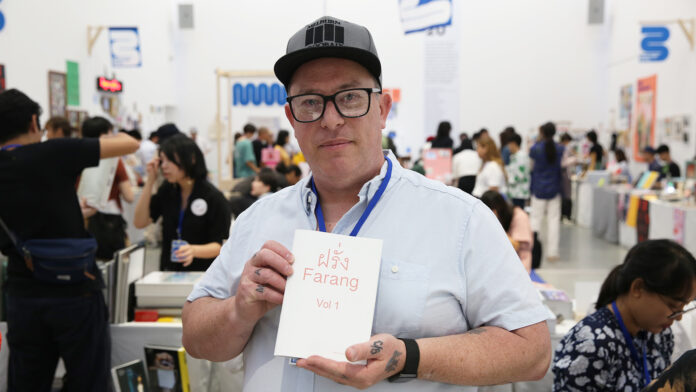
Nathan Larkin holding his latest publication “Farang Vol. 1” at Bangkok Art Book Fair on Sept. 5.

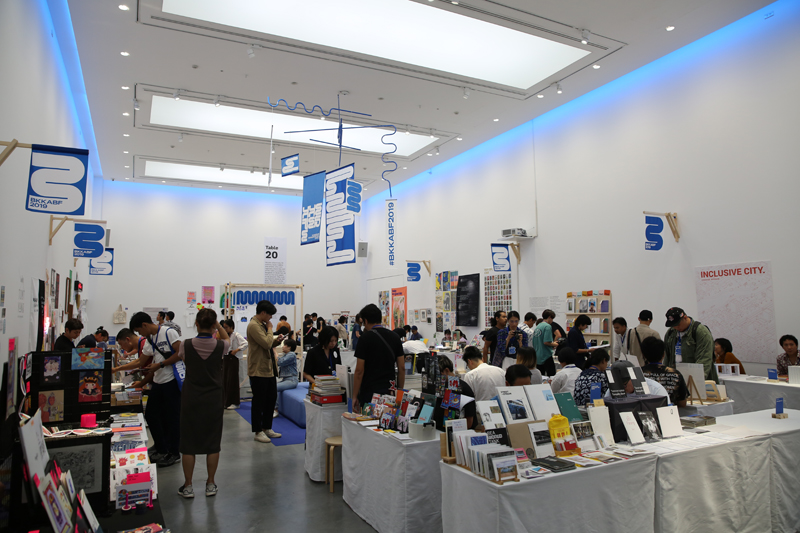
BANGKOK — From illustrated books to collectible postcards, there’s something for everyone at an annual art book fair this week.

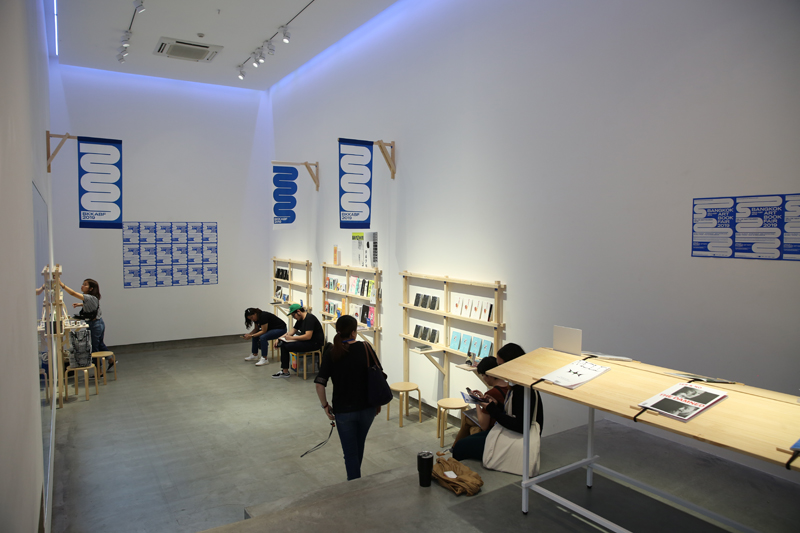
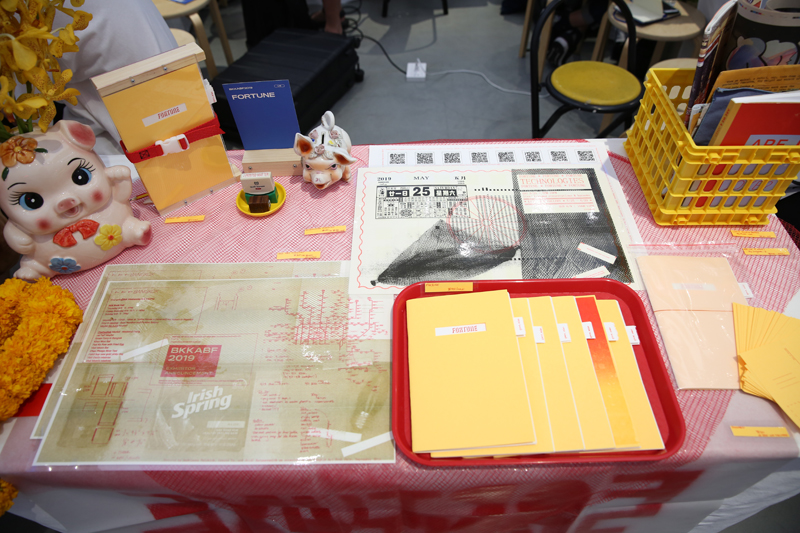
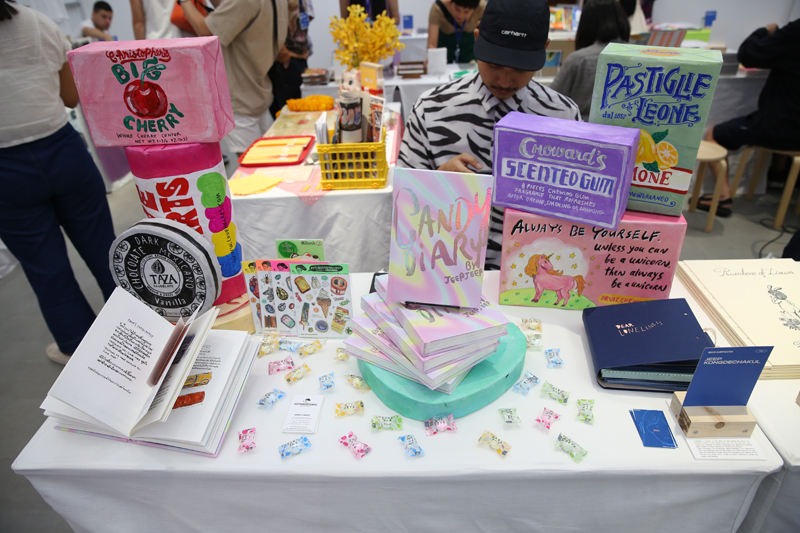
The Bangkok Art Book Fair returned for its third year to Bangkok CityCity Gallery this Thursday, with publishers and small-scale crafts curated from both Thailand and internationally. 53 booths will sell an array of zines, art and designs.

Our picks? Nathan Larkin, an artist from Australia, merges photographs and personal reflections in his latest book, “Farang Vol. 1.” The volume explores peculiarities in the Land of Smiles through the lens of a curious Westerner.

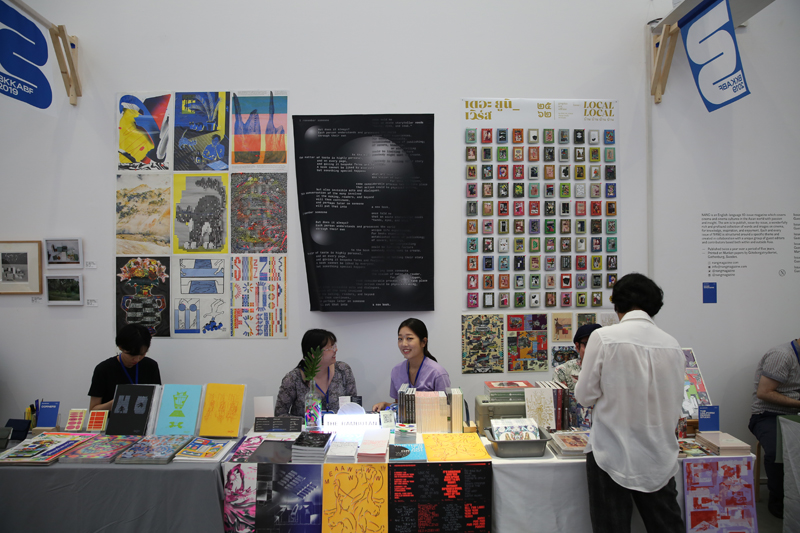
Meanwhile local designer Pariwat Anantachina of Uni_form Design Studio – the mastermind behind BNK48’s album covers – experiments and collaborates through DIY prints. The studio’s “Uni_verse” collates a collage of graphics by different artists in response to a different theme each year. There are only 100 copies for sale, and each copy is adorned with unique cover art.

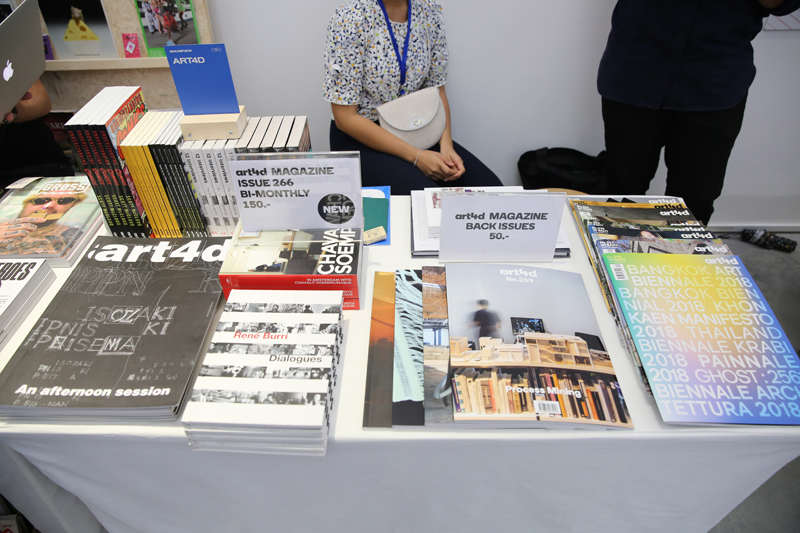
Alongside big names like Salmon Books and Art4d, there’ll be emerging artists present such as screen-printing group The Archivists, movie-themed prints from Spacebar Zines, and even student works from Chulalongkorn University.

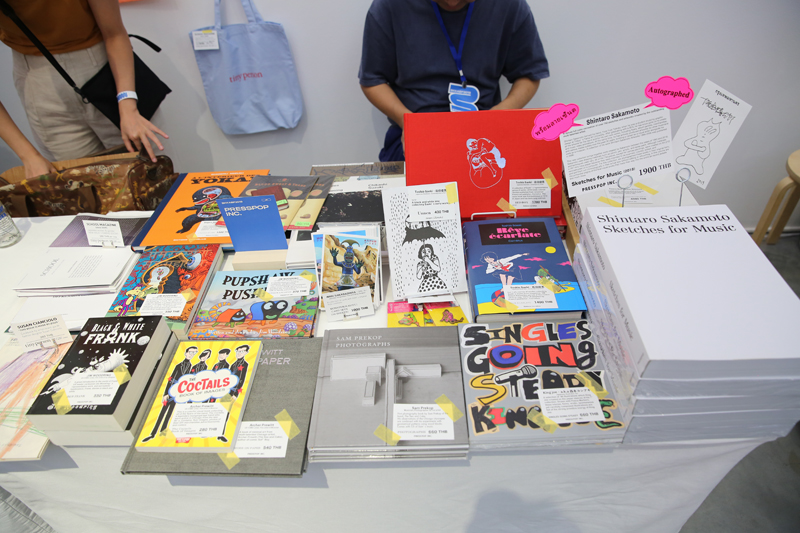
International artists and publishers from 10 different countries will also make their Bangkok debut. They include Corners, the risograph printing expert from South Korea; Nang, a magazine on Asian cinema culture from Italy; and indie magazine Stack from the UK.

But don’t get these unfamiliar names wrong. Pariwat says the event is attended by more than just hipsters and aesthetes.

“Although my target is those into art, these books can be enjoyed by everyone. Some of my customers are nurses or engineers,” Pariwat said.

There will be book launches on Friday, panels about zine-making on Saturday, and a bookmaking workshop for kids on Sunday. Evenings will feature live music.

The Bangkok Art Book Fair was founded by three graphic designers, Pat Laddaphan, Piyakorn Chaiverapundechm and curator Supamas Phahulo, to support independent art publishing houses and to expand the fanzine community.

IMG 3100

IMG 3101

IMG 3105

Romero Item from the US
Presspop Inc. from Japan
Fortune from the US
Fortune from the US
Jeep Kongdechakul
Jeep Kongdechakul
art4d
art4d

“Bangkok Art Book Fair” is being held at Bangkok CityCity Gallery on Soi Sathorn 1. The book fair is open from 1pm to 9pm from Sept. 5 to 8, except for the last day when the fair will run only until 7pm. The venue is reachable by a 10 minutes walk from MRT Lumphini exit No. 2. The admission fee is 100 baht for adults and 60 baht for students with valid ID.

Related stories:

Zines Celebrated: Bangkok Art Book Fair Returns in September

Advertisement

Thailand 0-0 Vietnam, Malaysia Beats Indonesia in Heated World Cup Qualifiers

Vietnam's Do Hung Dung, left, Thailand's Phitiwat Sukjitthammakul, center, and Vietnam's Do Duy Manh, right, fights for the ball during their World Cup Group G qualifying soccer match at Thammasat University stadium in Pathum Thani province, Thailand, Thursday, Sept. 5, 2019. Photo: Jirawat Srikong / AP

Mohamadou Sumareh scored in the seventh minute of injury time to give Malaysia a 3-2 win over neighboring rival Indonesia on Thursday in a game that had to be temporarily halted because of crowd trouble, as the second round of Asian World Cup qualifying got underway.

Malaysia had to come from behind twice to level the scores before the game was suspended for several minutes late in the second half because of clashes between fans from the two countries — who have a heated soccer rivalry. Video footage showed some supporters running onto the track surrounding the pitch, apparently trying to get to opposing fans.

When the game restarted, Sumareh met a low cross for a close-range finish deep into stoppage time.

Rabia Al-Mandhar also scored in injury time as Oman stunned India 2-1, while Mongolia and North Korea both picked up wins.

Sunil Chhetri gave India the lead midway through the first half but Al-Mandhar equalized in the 83rd minute before curling in a right-footed shot to decide the Group E match.

Mongolia, ranked 187th in the world and playing in the second round of qualifying for the first time, beat Myanmar 1-0 in Ulaanbaatar. Amaraa Dulguun scored the lone goal in the 17th minute of the Group F match.

North Korea defeated Lebanon 2-0 in Group H with Jong Il Gwan scoring both goals in Pyongyang, while Thailand and Vietnam drew 0-0.

The winner of each of the eight groups and the four best second-place teams will advance to the next round.

Story: John Duerden 

Advertisement

Spanish Navy Frigate Docks in Manila for First Time in 121 Years

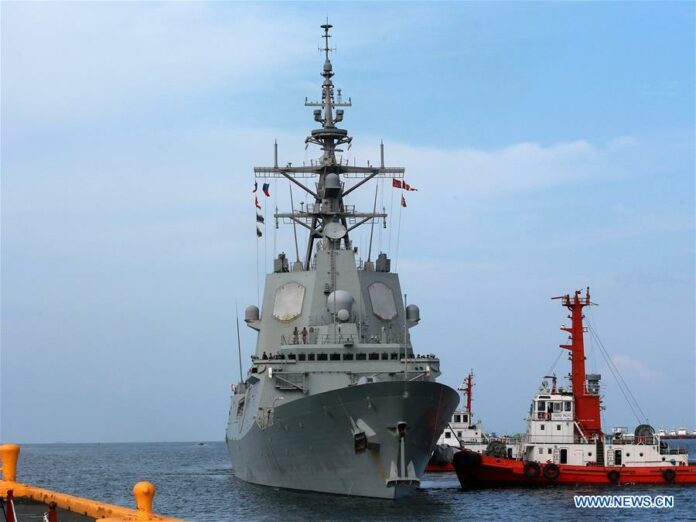
The Spanish Navy frigate Mendez Nunez (F-104) berths at a port in Manila, the Philippines, Sept. 5, 2019. Photo: Rouelle Umali / Xinhua

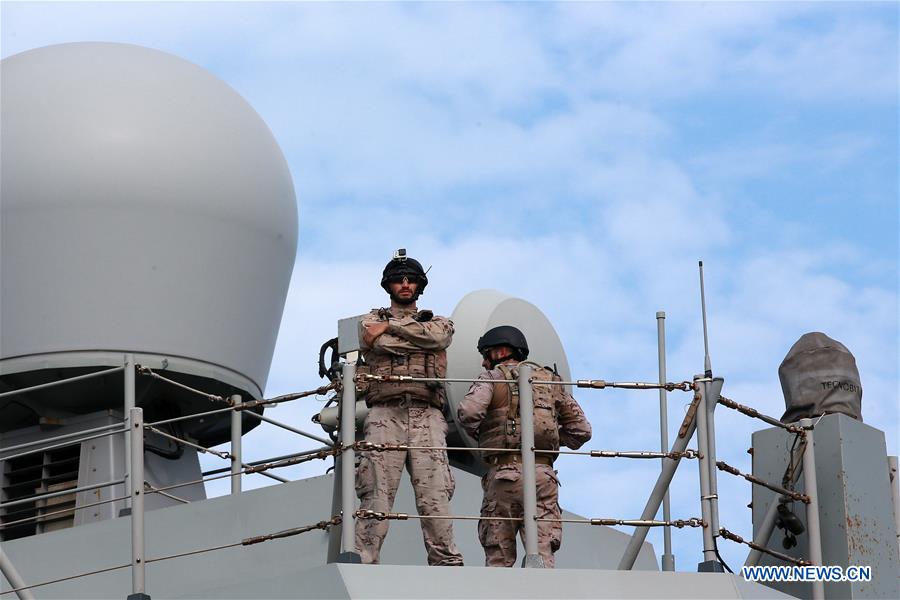
MANILA (Xinhua) —The Spanish Navy frigate Mendez Nunez (F-104) docked in Manila for a port call on Thursday, the first Spanish warship to visit the Philippines since 1898, the Philippine Navy has said.

The Philippine Navy said the Spanish Navy ship Mendez Nunez’s visit is the first visit by a Spanish Navy ship in 121 years to the Philippines since the infamous “Battle of Manila Bay” in 1898.

The “Battle of Manila Bay” broke out in 1898 during the Spanish-American War, which ended Spain’s colonial rule over the Philippines for almost 400 years.

The Alvaro de Bazan-class guided-missile frigate ESPS Mendez Nunez (F-104) has been tracing the Magellan-Elcano circumnavigation of the world 500 years ago as part of its current deployment, said Commander Antonio Gonzalez del Tanago de la Lastra, the ship’s commanding officer.

“We are conducting an 8-month deployment. Manila is one of the many important port visits, but it’s not the only one. This unique deployment is based on the commemoration of the first trip around the world. That’s my main mission,” he told reporters.

Acting public affairs officer of the Philippine Navy Lieutenant Commander Maria Cristina Roxas described the visit as “unprecedented”.

Members of the Spanish Navy stand guard on the Spanish Navy frigate Mendez Nunez (F-104) at a port in Manila, the Philippines, Sept. 5, 2019. The Spanish Navy frigate Mendez Nunez (F-104) docked in Manila for a port call on Thursday, the first Spanish warship to visit the Philippines since 1898, the Philippine Navy has said. Photo: Rouelle Umali / Xinhua

“It marks the first time that a Spanish Navy ship has once again traversed the waters off Cavite (province) and Manila after the post-independence period,” she said in a statement.

Roxas added the goodwill visit will also involve confidence-building joint activities between the Philippine and Spanish sailors, such as a shipboard tour, reciprocal receptions, and friendly games.

The commanding officer of the Spanish vessel and his crew are scheduled to pay a courtesy call on Philippine Navy chief Vice Admiral Robert Empedrad while in Manila.

F-104 is an Alvaro de Bazan-class frigate, manned by Gonzalez and more than 200 sailors.

On Saturday, the Philippine Navy said the ship will sail to Baler Bay in Aurora province for the commemoration of the 500th anniversary of the circumnavigation of the globe of Portuguese explorer Ferdinand Magellan. Juan Sebastian Elcano completed the expedition after Magellan’s death.

The ship will visit Baler Bay to honor the Spanish and Filipino soldiers who died in the Battle of Baler. The Siege of Baler marked the last stand of Spanish forces in the Philippines.

Advertisement

Asian Shares Rise on Optimism Over More Us-China Trade Talks

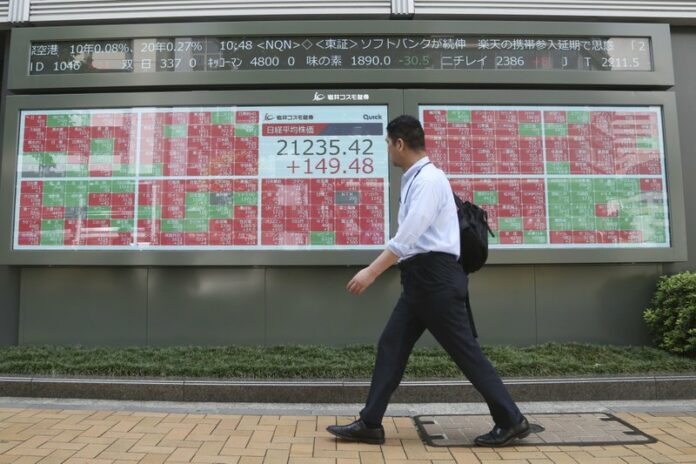
A man walks by an electronic stock board of a securities firm in Tokyo, Friday, Sept. 6, 2019. Asian shares rose Friday as investors cheered plans for more trade negotiations between Washington and Beijing and drew encouragement from positive data about the U.S. economy. Photo: Koji Sasahara / AP

TOKYO  — Asian shares rose Friday as investors cheered plans for more trade negotiations between Washington and Beijing and drew encouragement from positive data about the U.S. economy.

Japan’s benchmark Nikkei 225 gained nearly 0.7% in morning trading to 21,222.86. Australia’s S&P/ASX 200 rose 0.5% to 6,647.80. South Korea’s Kospi edged up 0.3% to 2,010.15. Hong Kong’s Hang Seng rose 0.6% to 26,661.47, while the Shanghai Composite inched up nearly 0.1% to 2,987.94.

“Indeed it is a positive sign that meetings will take place at multiple levels,” said Zhu Huani of the Asia & Oceania Treasury Department of Mizuho Bank, referring to the talks between the U.S. and China.

“As limited progress is expected, there will still be many twists and turns along the way and hurdle for more good news is substantially higher. Therefore, we think the rally could be short-lived without more breakthroughs.”

The Dow Jones Industrial Average surged nearly 400 points, bond yields jumped and the price of gold fell as investors regained a bigger appetite for riskier holdings.

Markets have been rattled this summer as the longstanding trade war between the U.S. and China escalated. Past rounds of negotiations have failed to yield progress. Even so, news Thursday that envoys from Washington and Beijing plan to hold talks next month elicited fresh optimism on Wall Street that the world’s largest economies may yet find a way to resolve their costly trade war.

Investors have been worried that uncertainty over the conflict and the fallout from tariffs goods imposed by both sides will exacerbate a slowdown in global economic growth and hurt corporate profits.

The S&P 500 gained 38.22 points, or 1.3%, to 2,976. The benchmark index is now 1.7% shy of its most recent all-time high set in late July. The Dow rose 372.68 points, or 1.4%, to 26,728.15. The average was briefly up by 480 points. The Nasdaq climbed 139.95 points, or 1.8%, to 8,116.83. Traders also favored smaller company stocks. The Russell 2000 index picked up 25.99 points, or 1.8%, to 1,510.75.

Negotiations between the world’s largest economies have been tenuous and the trade war has been escalating with expanded tariffs on each other’s products.

U.S. tariffs of 25% imposed previously on $250 billion of Chinese goods are due to rise to 30% on Oct. 1.

Positive data about the U.S. economy are also boosting shares. Payroll processor ADP reported that U.S. businesses added 195,000 jobs in August, well above economists’ expectations.

The private report frequently diverges from the government’s own employment report, which is scheduled to be released Friday. Economists expect that report will show 160,000 jobs were added.

The U.S. Labor Department reported that overall productivity rose 2.3% during the second quarter, also beating economists’ growth forecasts.

ENERGY:

Benchmark crude oil edged up 11 cents to $56.41 a barrel. It rose 4 cents to settle at $56.30 a barrel Thursday. Brent crude oil, the international standard, added 8 cents to $61.03 a barrel.

CURRENCIES:

The dollar rose to 107.02 Japanese yen from 106.72 yen on Thursday. The euro strengthened to $1.1033 from $1.1059.

___

Story: Yuri Kageyama. AP Business Writers Alex Veiga and Damian J. Troise contributed to this report.

Advertisement

Two Ancient Chinese Irrigation Sites Added to World Heritage Irrigation Structures List

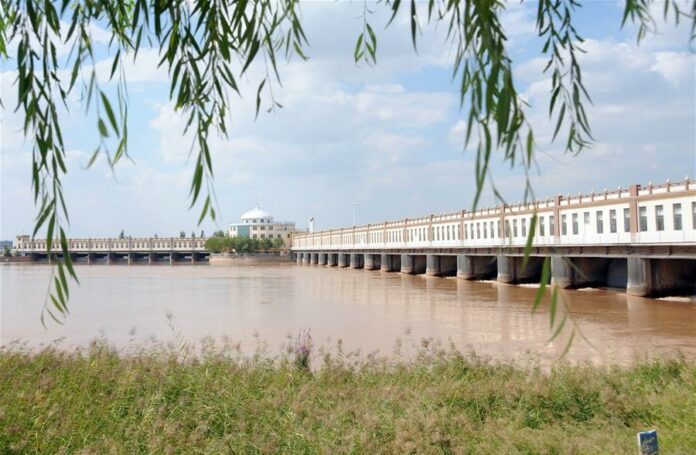
Photo taken on Sept. 4, 2019 shows part of the Hetao irrigation project in northern China's Inner Mongolia Autonomous Region. Photo: Li Yunping / Xinhua

BEIJING (Xinhua) — Two ancient Chinese irrigation works have been recognized as World Heritage Irrigation Structures (WHIS) by the International Commission on Irrigation and Drainage (ICID) at a conference held in Bali, Indonesia Wednesday, according to the Ministry of Water Resources of China.

It brings the total number of Chinese irrigation projects on the list to 19.

One of the newly awarded projects, Hetao irrigation project, is about 2,000 years old and has been diverting water from the Yellow River for irrigation of farmland in the Hetao plain in northern China’s Inner Mongolia Autonomous Region.

The other project, Qianjinpi irrigation project, about 1,200 years old, is located in Fuzhou, east China’s Jiangxi Province. It is a typical enclosed water conservancy project with various functions like irrigation, water transport, drainage and flood control in the middle reaches of the Yangtze River.

Besides the two Chinese projects, 17 irrigation projects from six countries, including Iran, Italy, Japan, Malaysia, Sri Lanka and the United States, were also awarded this year.

Established in 1950, the ICID is an international organization to boost scientific and technological exchange on irrigation, drainage and flood control.

The WHIS award, set up by the ICID in 2014, aims to protect and promote irrigation projects of historical value and their scientific experience. So far, 91 ancient irrigation projects around the world have been enlisted.

Gao Zhanyi, honorary chairman of the ICID and an expert of the China Institute of Water Resources and Hydropower Research, said the heritage of irrigation projects in China not only entails their technological benefits, but also the cultural memory of the Chinese nation, showing a nation’s cultural heritage and scientific and technological spirit.

Advertisement

Hurricane Death Toll in Bahamas at 30 as Aid Begins to Land

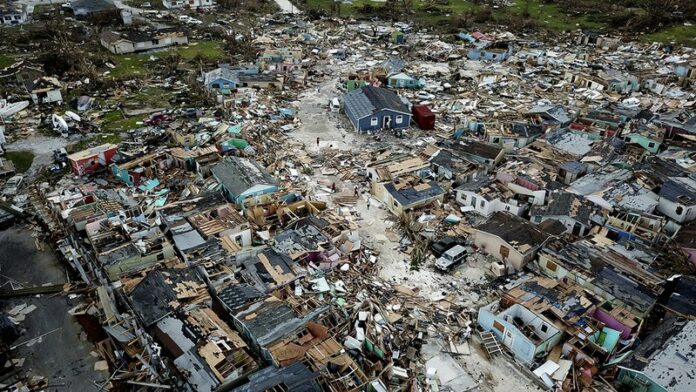
People walk through a neighborhood destroyed by Hurricane Dorian at Marsh Harbour in Great Abaco Island, Bahamas on Thursday, Sept. 5, 2019. Photo: Al Diaz / Miami Herald via AP

ABACO, Bahamas — Carrying possessions in plastic bags, some weary Bahamians whose homes were smashed by Hurricane Dorian waited Thursday for a flight out of the disaster zone as an international humanitarian effort to help the Caribbean country gained momentum. The death toll rose to 30.

A few hundred people gathered at the partly flooded Leonard M. Thompson airport on Abaco island in hopes of getting a seat on one of the small planes picking up the most vulnerable survivors, including the sick and the elderly. However, the evacuation was slow and there was frustration for some who said they had nowhere to go after the Category 5 hurricane tore through the area, shattering whole neighborhoods.

“They told us that the babies, the pregnant people and the elderly people were supposed to be first preference,” said Lukya Thompson, a 23-year-old bartender. But many were still waiting, she said.

Despite hardship and uncertainty, those at the airport were mostly calm. The Bahamian health ministry said helicopters and boats were on the way to help people in affected areas, though warned of delays because of severe flooding and limited access.

At least 30 people died in the hurricane and the number could be “significantly higher,” Bahamian health minister Duane Sands told The Associated Press in a telephone interview Thursday night. The victims are from Abaco and Grand Bahama islands and include some who had been injured and flown to New Providence island, he said.

The hurricane hit Abaco on Sunday and then hovered over Grand Bahama for a day and a half.

On Thursday, emergency officials fanned out across stricken areas to track down people who were missing or in distress. Crews began clearing streets and setting up aid distribution centers.

The United Nations announced the purchase of eight tons of ready-to-eat meals and said it will provide satellite communications equipment and airlift storage units, generators and prefab offices to set up logistics hubs. U.N. humanitarian chief Mark Lowcock said about 70,000 people “are in immediate need of life-saving assistance” on Grand Bahama and Abaco.

A British Royal Navy ship docked at Abaco and distributed supplies to hurricane survivors. On Grand Bahama, a Royal Caribbean cruise ship dropped off 10,000 meals, 10,000 bottles of water and more than 180 generators, as well as diapers and flashlights.

American Airlines said it flew a Boeing 737 from Miami to Nassau to drop off 14,000 pounds of relief supplies. The airline is also giving frequent-flyer points to customers who donate at least $25 to the Red Cross.

Troops from the Rhode Island National Guard will be heading to the Bahamas to help. The Guard will mobilize three C-130J cargo aircraft that will depart from the Quonset Air National Guard Base on Friday, state officials said.

Some dazed survivors of Hurricane Dorian made their way back to a shantytown where they used to live, hoping to gather up some of their soggy belongings.

The community was known as The Mudd — or “Da Mudd,” as it’s often pronounced — and it was built by thousands of Haitian migrants over decades. It was razed in a matter of hours by Dorian, which reduced it to piles of splintered plywood and two-by-fours 4 and 5 feet deep, spread over an area equal to several football fields.

A helicopter buzzed overhead as people picked through the debris, avoiding a body that lay tangled underneath a tree branch next to twisted sheets of corrugated metal, its hands stretched toward the sky. It was one of at least nine bodies that people said they had seen in the area.

“Ain’t nobody come to get them,” said Cardot Ked, a 43-year-old carpenter from Haiti who has lived 25 years in Abaco. “If we could get to the next island, that’s the best thing we can do.”

Ked was one of thousands of desperate people seeking help in Dorian’s aftermath. With winds of 185 mph (295 kph), the hurricane obliterated houses on the Bahamas’ Abaco and Grand Bahama islands.

Crews in Grand Bahama worked to reopen the airport and used heavy equipment to pick up branches and palm fronds. Lines formed outside gas stations and grocery stores.

“People will be out of jobs for months,” 67-year-old wood carver Gordon Higgs lamented. “They’ll be homeless, no food. Nothing.”

Total property losses, not including infrastructure and autos, could reach $7 billion, the firm Karen Clark & Co. estimated.

On Thursday, medical officials moved hundreds of people left homeless by the storm out of the main hospital in Abaco to shelters in schools and other government buildings. Some were angry at being asked to leave, or at not being allowed to freely enter to visit hurt relatives, and a shouting match erupted at the main door between a small group of hurricane victims and Bahamas marines.

Abaco and Grand Bahama islands are known for their marinas, golf courses and all-inclusive resorts and are home to many fishermen, laborers and hotel workers.

At the Leonard M. Thompson airport, Rashad Reckley, a 30-year-old saxophonist, played the Bob Marley song “Three Little Birds” for people who had lost their homes.

“I want to lift up everybody’s spirits after all the tragedy that happened,” said Reckley, who said he had exhausted his repertoire after playing for hours.

“They want me to play more,” Reckley said. “But I can’t think of songs to play.”

___

Story: Michael Weissenstein. Associated Press writers Danica Coto in San Juan, Puerto Rico; Marko Alvarez in Freeport, Bahamas; and Kelli Kennedy in Fort Lauderdale, Florida, contributed to this report.

Advertisement

China’s First Homemade Polar Icebreaker to Begin Maiden Voyage in October

The polar icebreaker

SHENZHEN, China (Xinhua) — China’s first domestically built polar icebreaker will begin its maiden voyage in October from the southern Chinese city of Shenzhen.

The voyage for “Xuelong 2,” or “Snow Dragon 2,” will start during the seventh China Marine Economy Expo, which will run from Oct. 14 to 17, according to Li Yuchun, deputy director of Shenzhen planning and natural resources bureau.

The expo will bring together more than 400 enterprises at home and abroad, including around 100 industry leaders or Fortune 500 companies, said Li.

On its maiden voyage, Xuelong 2 will sail for Antarctica together with “Xuelong,” the only Chinese icebreaker in service, in the country’s 36th research mission to the region, according to a previously announced plan.

The vessel is 122.5 meters long and 22.3 meters wide, with a displacement of 13,996 tonnes and a navigation capability of 20,000 nautical miles.

Xuelong 2 is able to turn quickly and has two-direction icebreaking capabilities with both its bow and stern. It can sail on 60-day expeditions to all regions of the globe, according to Hu Keyi, a technical director of Jiangnan Shipyard Group, the builder of the vessel.

“Xuelong 2 will become a major platform for China’s oceanic environmental survey and scientific research in polar regions,” said Qin Weijia, a director in charge of polar research with the State Oceanic Administration.

Advertisement

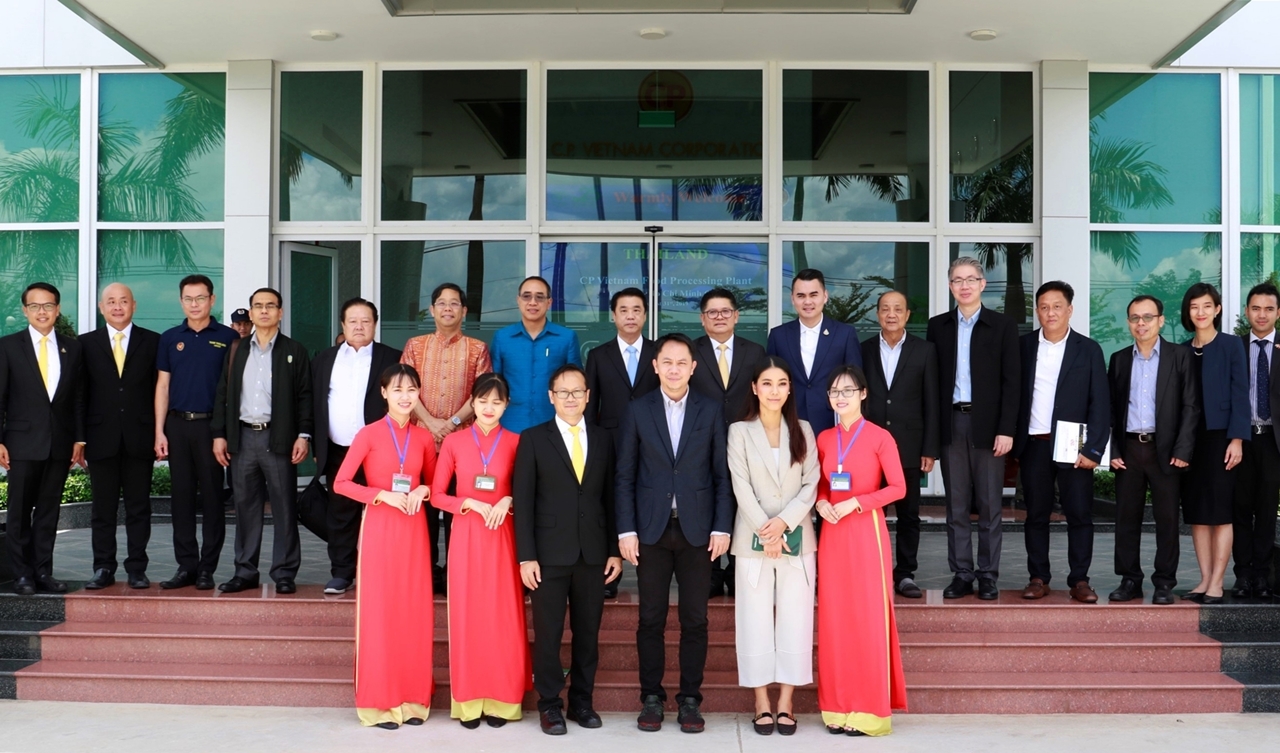
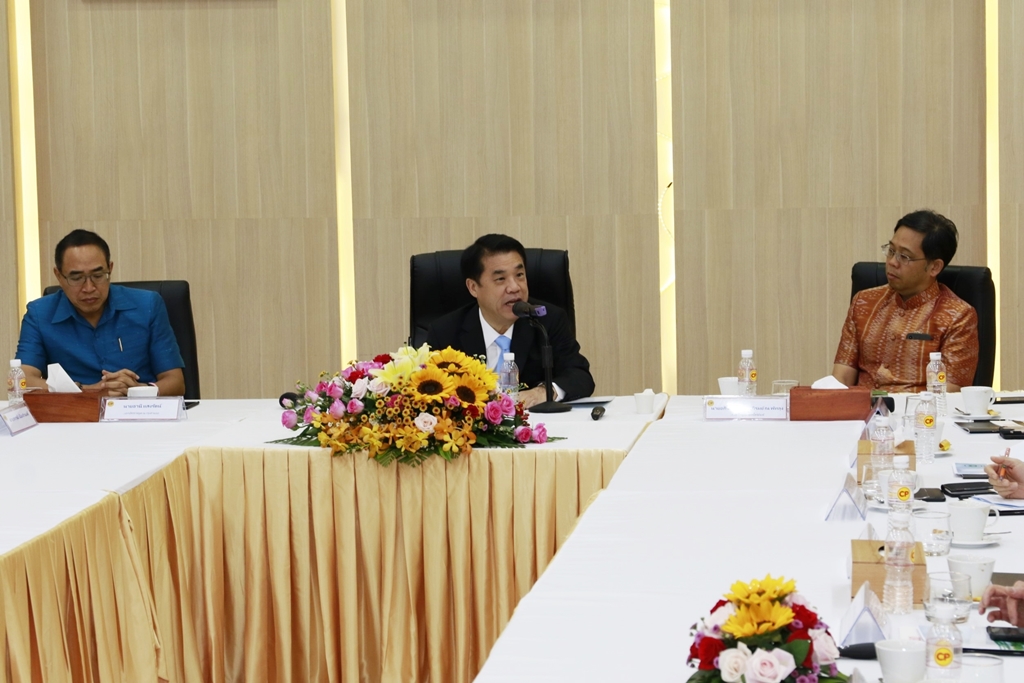
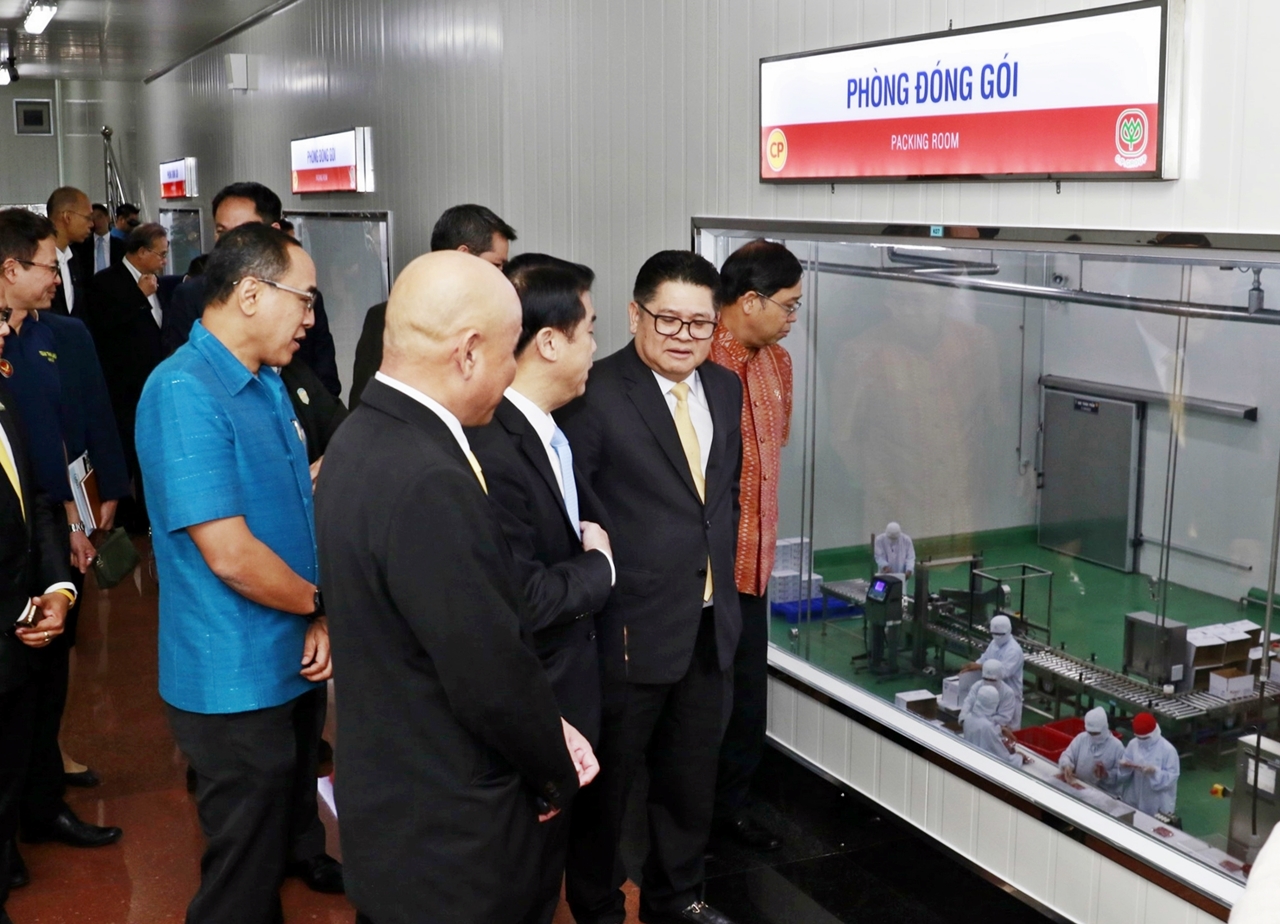
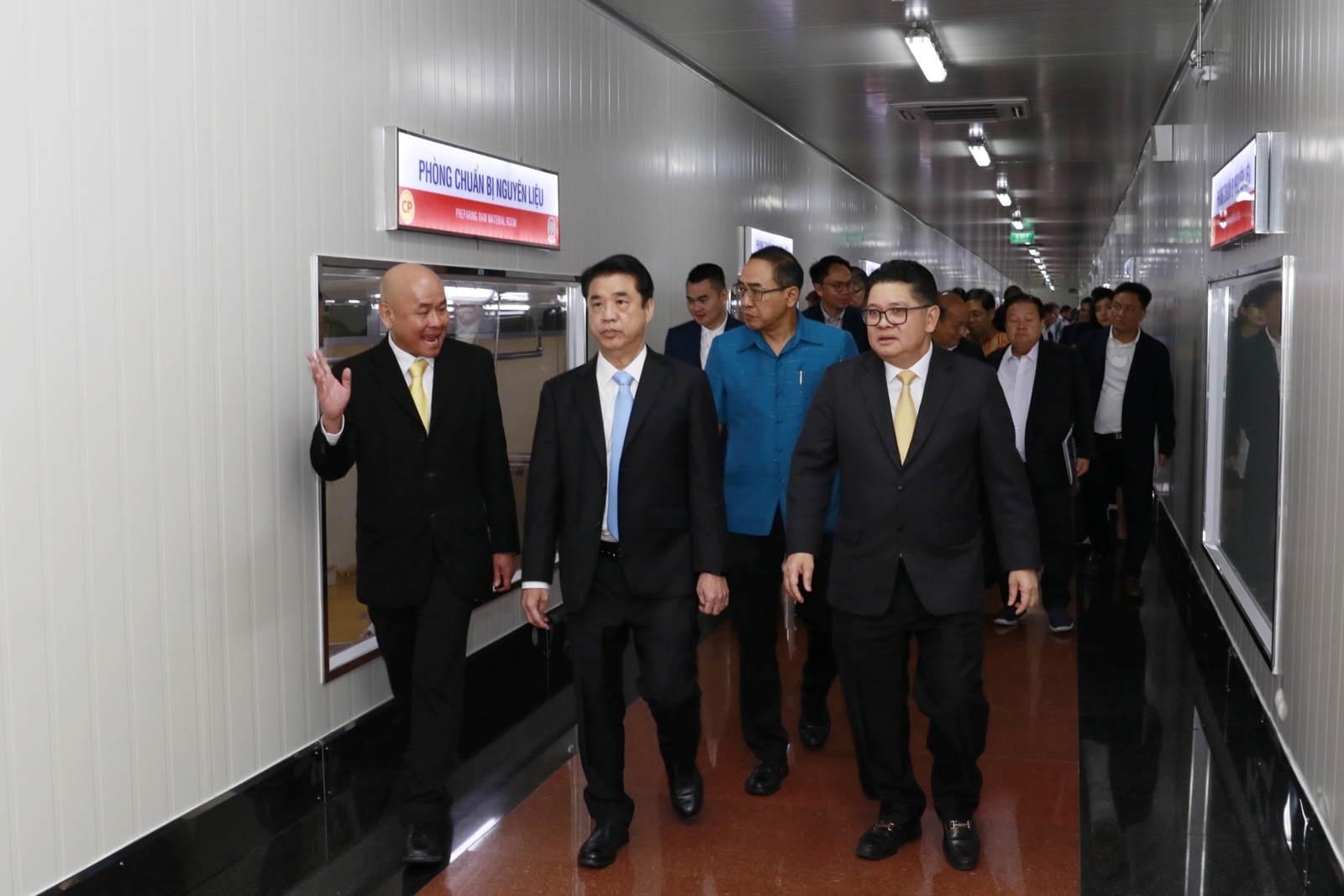
Minister of Industry Visits CP Vietnam Exploring Thai Overseas Investment

Mr. Suriya Juangroongruangkit, Minister of Industry, together with Mr. Tanee Sangrat, Ambassador of Thailand to Vietnam and Mr. Apirat Sugondhabhirom Na Badalung, Consul-General of Thailand to Ho Chi Minh City, led Ministry’s officials visited C.P Vietnam Food Processing Plant in Cu Chi to witness modern sausage manufacturing adhering international standards.

The visitors were welcomed by Mr. Montri Suwanposri, President of C.P Vietnam at Cu Chi Food Processing Plant in Ho Chi Minh City.

01 2

2

3

5

6

Advertisement

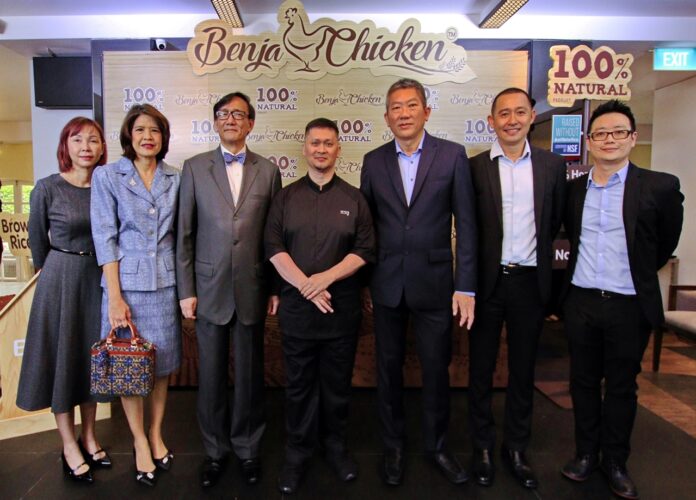
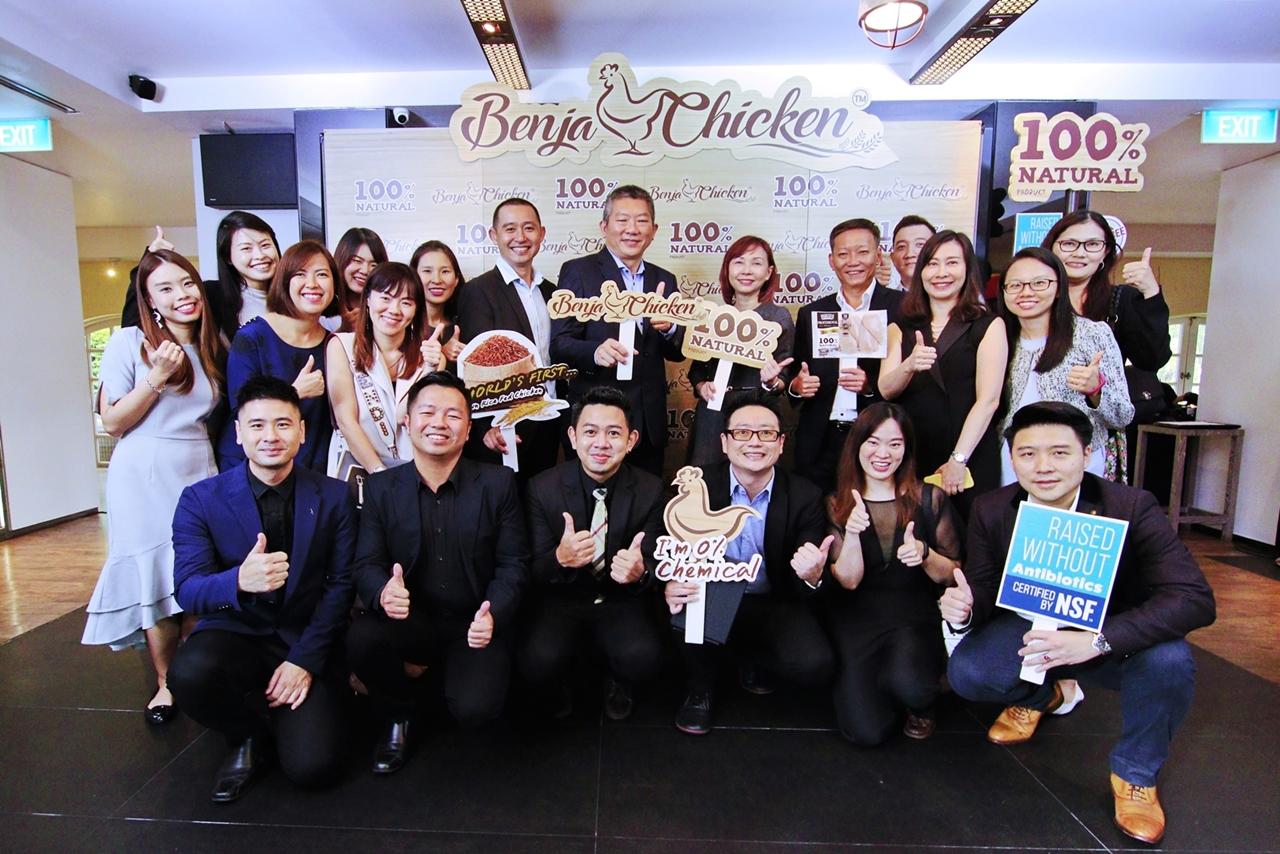
Thai Ambassador to Singapore Joinly Celebrated the Launch of Benja Chicken in Singapore

Mr. Manopchai Wongpakdee (3rd from left) Thai Ambassador to Singapore and his wife attended the gala dinner of Benja Chicken by U Farm at Alma by Juan Amador, 1 star-Michelin restaurant as the launching ceremony of Benja Chicken to Singaporean.

Special menus from Benja Chicken were initiated by Mr. Hai Kal Johari (Middle), Chef of Alma by Juan Amador, and were presented to guests at the event to taste this premium chicken.

Mr. Anat Julintron (3rd from right), Executive Vice President for International trading of CPF, presided over the event and introduced Benja Chicken to the participants at Alma by Juan Amador in Singapore.

02 1

03 1

04

05

06 1

Benja Chicken

Advertisement

Hot News

LATEST NEWS

Bangkok
overcast clouds
30.2 ° C
31.6 °
28.8 °
76 %
4.5kmh
100 %
Tue
34 °
Wed
34 °
Thu
35 °
Fri
31 °
Sat
31 °