32.2 C
Bangkok
Saturday, June 6, 2026
Home Blog Page 1529

Moscow Election Protest Attracts Huge Crowd, Spurs Spinoffs

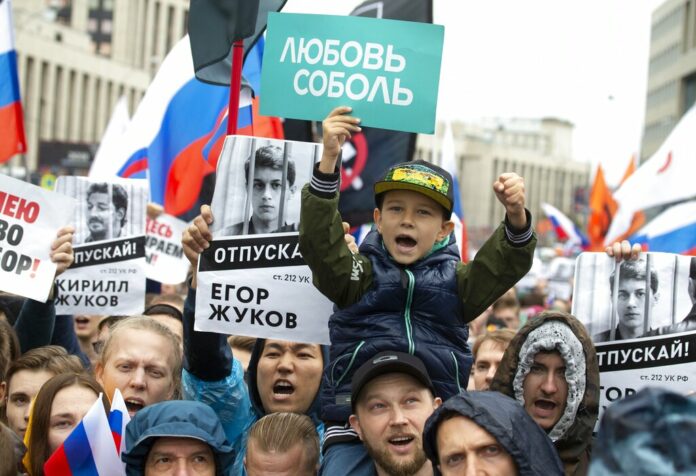
People with posters show portraits of detained protesters and a boy with a poster reads Lyubov Sobol react during a protest in Moscow, Russia, Saturday, Aug. 10, 2019. Tens of thousands of people rallied in central Moscow for the third consecutive weekend to protest the exclusion of opposition and independent candidates from the Russian capital's city council ballot. Photo: Alexander Zemlianichenko / AP

MOSCOW — Tens of thousands of people rallied Saturday against the exclusion of some city council candidates from Moscow’s upcoming election, turning out for one of the Russian capital’s biggest political protests in years.

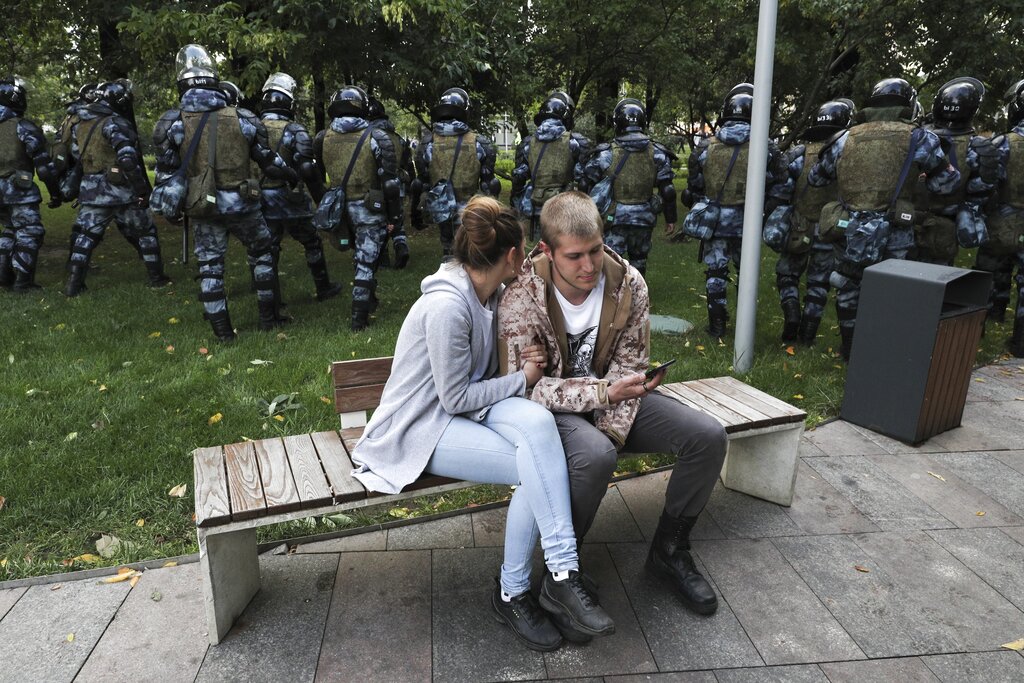
After the rally, which was officially sanctioned, hundreds of participants streamed to an area near the presidential administration building to continue with an unauthorized demonstration. They were confronted by phalanxes of riot police and the arrest-monitoring group OVD-Info said 136 people were detained.

The rally was the fourth consecutive weekend demonstration in Moscow over the local election. The determined opposition has prompted protests in other cities, reflecting widespread frustration with Russia’s tightly controlled politics.

The protest attracted some 50,000 people, said Beliy Schetchik, an organization that counts public meeting attendance.

OVD-Info also said 86 people were arrested Saturday in St. Petersburg at an unsanctioned demonstration in support of the Moscow protests.

Unlike the previous two Moscow rallies, where police harshly dispersed the crowds and detained thousands of demonstrators, Saturday’s gathering in a neighborhood with relatively few passers-by was officially sanctioned.

It was held on a street flanked by high buildings and sandwiched between two busy thoroughfares.

Lyubov Sobol, one of the city council candidates denied a place on the ballot and a spearhead of the election protest, was among those detained in Moscow on Saturday.

A video on Sobol’s Twitter feed showed officers breaking into her office as she demanded an explanation from them.

Small related protests also were reported in several Siberian cities on Saturday.

A couple sit in a boulevard as police walk to prevent protesters during a rally in Moscow, Russia, Saturday, Aug. 10, 2019. Tens of thousands of people rallied in central Moscow for the third consecutive weekend to protest the exclusion of opposition and independent candidates from the Russian capital's city council ballot. Photo: AP
A couple sit in a boulevard as police walk to prevent protesters during a rally in Moscow, Russia, Saturday, Aug. 10, 2019. Tens of thousands of people rallied in central Moscow for the third consecutive weekend to protest the exclusion of opposition and independent candidates from the Russian capital’s city council ballot. Photo: AP

Story: Jim Heintz.

Advertisement

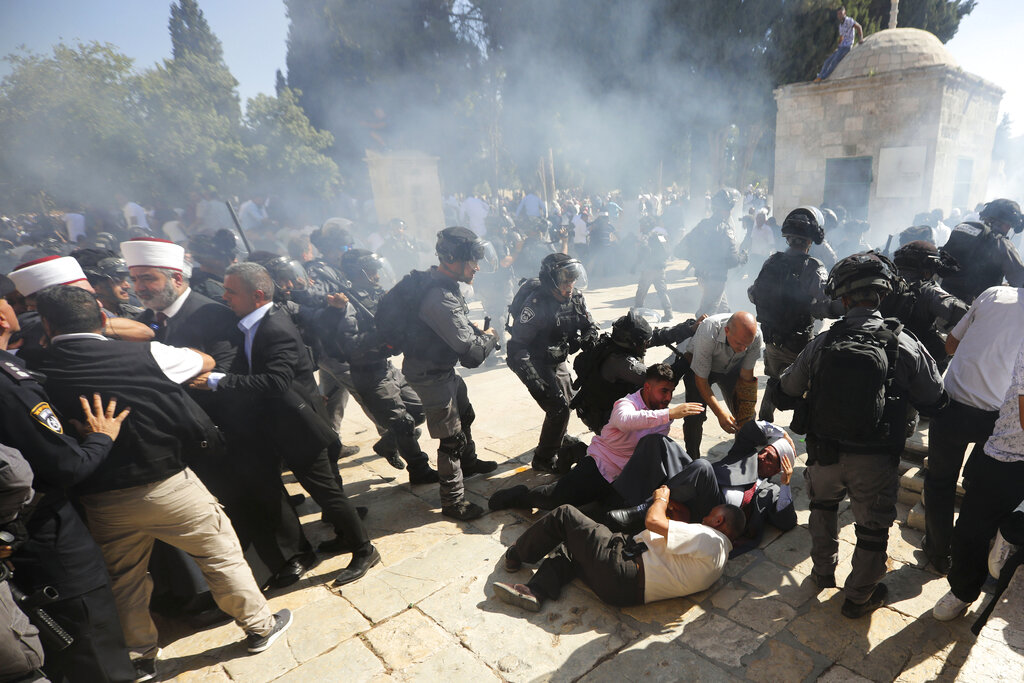
Muslims Clash With Israeli Police at Jerusalem Holy Site

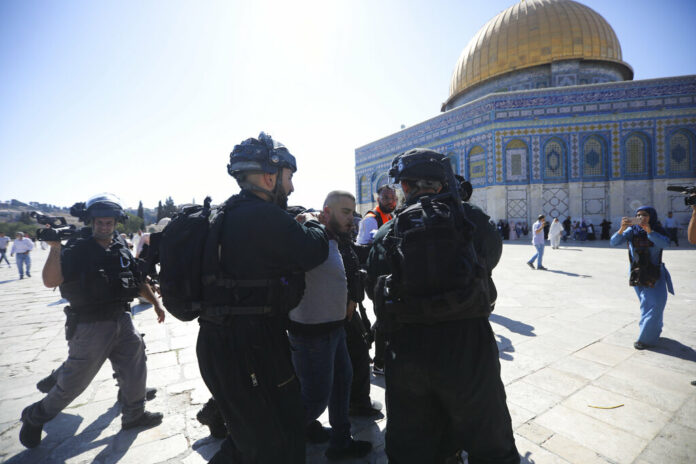
Israeli police arrests a Palestinian worshipper at al-Aqsa mosque compound in Jerusalem, Sunday, Aug 11, 2019. Photo: Mahmoud Illean / AP

JERUSALEM — Muslim worshippers and Israeli police clashed Sunday at a major Jerusalem holy site during prayers marking the Islamic holiday of Eid al-Adha.

Palestinian medics said at least 14 people were wounded, one seriously, in the skirmishes with police at the site, which Muslims refer to as the Al-Aqsa mosque compound and Jews refer to as the Temple Mount. Police said at least four officers were wounded. Witnesses said at least two people were arrested.

Clouds of tear gas swirled and stun grenades thundered across the stone-paved esplanade as masses of worshippers skirmished with police in the worst bout of fighting at the contested holy site in months.

The clashes came amid heightened tensions between Israel and the Palestinians, just days after an Israeli soldier was killed south of Jerusalem. On Saturday, Israeli troops killed four Palestinian militants who attempted to cross the Gaza border fence.

Tens of thousands of Muslims had flocked to the site in Jerusalem’s Old City early Sunday for holiday prayers, police said. Jews are also observing on Sunday the Ninth of Av, a day of fasting and mourning for the destruction of the two Biblical temples which stood at the site in antiquity.

The site is the holiest for Jews and the third holiest for Muslims, after Mecca and Medina in Saudi Arabia, and has long been a flashpoint at the epicenter of the Israeli-Palestinian conflict.

Jordan, which serves as the custodian of the holy site, said in a statement that it had sent a formal complaint to Israel and condemned what it called Israel’s “irresponsible provocations.” Sufian al-Qudah, a spokesman for the Jordanian Foreign Ministry, said Amman holds Israel completely responsible for the violence.

Large numbers of Palestinians had gathered at the gates of the compound early Sunday after rumors circulated that police would allow Jewish visitors to enter the site. The protesters chanted “Allahu Akbar” (God is greatest) and threw stones at police, who then charged into the compound while firing stun grenades and rubber-coated bullets.

Israeli police had initially barred entry to Jewish visitors, but reversed their decision after the clashes broke out and allowed them to enter. Several dozen entered the site under close police escort and Muslim worshippers began throwing chairs and other objects at the group. The Jewish visitors left the compound shortly thereafter.

Jerusalem District police commander Doron Yedid told Israeli media that the decision to allow Jewish visitors to enter the site was made “with the backing of the top political officials.” Police spokesmen could not be reached for comment.

Israeli police clashes with Palestinian worshippers at al-Aqsa mosque compound in Jerusalem, Sunday, Aug 11, 2019. Clashes have erupted between Muslim worshippers and Israeli police at a major Jerusalem holy site during prayers marking the Islamic holiday of Eid al-Adha. Photo: Mahmoud Illean / AP

The reversal came after Israeli Prime Minister Benjamin Netanyahu’s religious nationalist allies called for the site to be opened to Jewish visitors. Israelis are headed to unprecedented repeat elections next month after Netanyahu failed to form a government following April’s elections.

Jews are barred from praying at the compound under a longstanding arrangement between Israel and Muslim authorities. Jewish tradition also maintains that Jews should avoid entering the holy site.

But in recent years Israeli religious nationalists have stepped up visits to the site to challenge the arrangement. Jewish extremists have called for destroying the mosque and rebuilding the Biblical temple.

The Palestinians view such visits as provocations, and have long feared that Israel intends to take over the site or partition it. The Israeli government has repeatedly said it has no intention of changing the status quo.

Hanan Ashrawi, a senior leader in the Palestine Liberation Organization, said Israel was “fueling religious tensions in Jerusalem,” adding that Israeli officials are “fully responsible for its grave consequences.”

The compound is in east Jerusalem, which Israel captured in the 1967 war along with the West Bank and the Gaza Strip, territories the Palestinians seek as part of a future state. Israel views all of Jerusalem as its unified capital, while the Palestinians want east Jerusalem as the capital of their future state.

Israeli-Palestinian tensions have spiked following President Donald Trump’s decision in 2017 to recognize Jerusalem as Israel’s capital and move the U.S. Embassy there. The Israeli-Palestinian peace process has been moribund for at least a decade, and the Palestinians have cut ties with the Trump administration over what they see as its unfair bias toward Israel.

In a separate incident on Sunday, Israeli troops killed a Palestinian gunman after he opened fire on them from across the perimeter fence around the Gaza Strip.

The Israeli military said an “armed terrorist” approached the frontier early Sunday and opened fire toward troops on the other side, who responded by shooting at the attacker. The army said a tank also targeted a nearby military post operated by the Islamic militant group Hamas.

The Palestinian Health Ministry in Gaza identified the deceased as 26-year-old Marwan Nasser. It was not clear if he was a member of an armed group, and no one immediately claimed responsibility for the attack.

On Saturday, Israeli troops killed four Palestinian militants who the army said had tried to carry out a cross-border attack. Hamas, which has ruled Gaza since 2007, said the attack was an “individual act” carried out by youths frustrated at the Israeli-Egyptian blockade on Gaza and was not planned by the group.

Story: Ilan Ben Zion. Fares Akram in Gaza City, Gaza Strip contributed to this report.

Advertisement

Armed Man at Walmart Says He Was Testing Right to Bear Arms

In this undated booking photo provided by the Greene County, Missouri, Sheriff's Office shows 20-year-old Dmitriy Andreychenko. Five days after 22 people were killed at a Walmart store in El Paso, Texas, panicked shoppers fled a Walmart in Springfield, Missouri, after Andreychenko, carrying a rifle and wearing body armor walked around the store before being stopped by an off-duty firefighter. Police on Friday identified the man as Andreychenko, who lived in the Springfield area. Photo: Greene County Sheriff via AP
In this undated booking photo provided by the Greene County, Missouri, Sheriff's Office shows 20-year-old Dmitriy Andreychenko. Five days after 22 people were killed at a Walmart store in El Paso, Texas, panicked shoppers fled a Walmart in Springfield, Missouri, after Andreychenko, carrying a rifle and wearing body armor walked around the store before being stopped by an off-duty firefighter. Police on Friday identified the man as Andreychenko, who lived in the Springfield area. (Greene County Sheriff via AP) .

SPRINGFIELD, Mo. — Prosecutors on Friday filed a terrorist threat charge against a 20-year-old man who said he walked into a Missouri store wearing body armor and carrying a loaded rifle and handgun to test whether Walmart would honor his constitutional right to bear arms.

The incident, just days after 22 people were killed during an attack at another Walmart in El Paso, Texas, caused a panic at the Springfield, Missouri, store. Dmitriy Andreychenko walked through filming himself with his cell phone Thursday afternoon.

No shots were fired and Andreychenko was arrested after he was stopped by an armed off-duty firefighter at the store.

“Missouri protects the right of people to open carry a firearm, but that does not allow an individual to act in a reckless and criminal manner endangering other citizens,” Greene County Prosecuting Attorney Dan Patterson said in a statement announcing the charge. Patterson compared the man’s actions to “falsely shouting fire in a theater causing a panic.”

If convicted, the felony charge of making a terrorist threat in the second degree is punishable by up to four years in prison and a fine of up to $10,000, according to the prosecutor’s office. The charge means he showed reckless disregard for the risk of causing an evacuation or knowingly caused fear that lives were in danger.

“I wanted to know if Walmart honored the Second Amendment,” a probable cause statement released Friday with the charges quoted Andreychenko as saying.

Andreychenko started to record himself with his phone while he was still in the car parked at Walmart. He got the body armor from the trunk of his car and put it on before grabbing a shopping cart and walking into the store, according to the statement.

Andreychenko said his intention was to buy grocery bags. The rifle had a loaded magazine inserted, but a round was not chambered. A handgun on his right hip was loaded with one round in the chamber.

He said he bought the rifle and body armor because of three recent shootings and a stabbing, and said he wanted to protect himself.

His wife, Angelice Andreychenko, told investigators that she warned him it was not a good idea, adding that he was an immature boy.

His sister, Anastasia Andreychenko, said he had asked her if she would videotape him going into Walmart with a gun and she also told him it was a bad idea, according to the probable cause statement.

The statement does not allege that he pointed the weapons at anyone, although patrons in the surveillance video could be seen in the background running away.

Walmart issued a statement Friday that praised authorities for stopping the incident from escalating. It said Andreychenko is no longer welcome in its stores.

“This was a reckless act designed to scare people, disrupt our business and it put our associates and customers at risk,” said spokeswoman LeMia Jenkins. “We applaud the quick actions of our associates to evacuate customers from our store, and we’re thankful no one was injured.”

Since January 2017, Missouri has not required a permit to openly or conceal carry a firearm for those 19 years or older. Roughly 30 states allow the open carrying of handguns and rifles and shotguns in public without a permit.

San Francisco-based Giffords Law Center to Prevent Gun Violence said six states generally prohibit the open carrying of rifles and shotguns — California, Florida, Illinois, Massachusetts, Minnesota, and New Jersey — along with the District of Columbia, the law center said.

California, Florida and Illinois also generally ban the open carry of handguns, as do New York and South Carolina.

Springfield is about 165 miles (266 kilometers) south of Kansas City, Missouri.

Related stories:

Texas Governor: 20 Dead in El Paso Shopping Center Shooting

Advertisement

China Waiting out Hong Kong Protests, but Backlash May Come

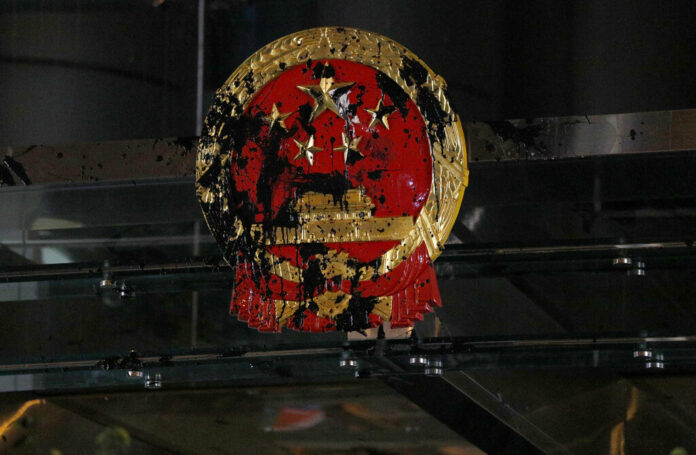
FILE - In this Sunday, July 21, 2019, file photo, the National Emblem of the People's Republic of China is covered in black paint thrown by protesters outside the Chinese Liaison Office in Hong Kong. China’s central government has dismissed Hong Kong pro-democracy protesters as clowns and criminals while bemoaning growing violence surrounding the monthslong demonstrations. Photo: Bobby Yip / AP File

BEIJING — China’s central government has dismissed Hong Kong pro-democracy protesters as clowns and criminals while bemoaning growing violence surrounding the monthslong demonstrations.

That’s partly out of concern that protesters’ demands for expanded democracy could inspire like-minded officials and intellectuals on the mainland.

Yet, Beijing shows no signs of preparing for a major crackdown, content instead to ignore the protests in the hopes that frustration will lead to further violence that will eventually turn the territory’s silent majority against the movement, according to experts.

“Hong Kong poses a serious problem for the Chinese government. It can’t allow the protesters to challenge its authority or deface symbols of its authority unpunished but it also does not want to attempt a military crackdown,” said Steve Tsang, director of the China Institute at London’s School of Oriental and African Studies.

Under those circumstances, Beijing would prefer to “isolate and undermine the protesters so the movement in Hong Kong fizzles out,” Tsang said.

The protests also come at a sensitive time for President Xi Jinping, who after removing presidential term limits last year effectively made himself leader for life. That has intensified criticism over his concentration of power, even as his propaganda machine relentlessly promotes his image and achievements ahead of the 70th anniversary of the founding of the People’s Republic on Oct. 1.

Meanwhile, China is grappling with a slowing economy and the ongoing impacts of the U.S.-China trade war, as well as pushback against its ambitious multi-billion dollar “Belt and Road” infrastructure program that is seen as miring poorer nations in debt.

China’s international image has suffered as well from its mass incarceration of members of its Uighur Muslim minority and aggressive moves in the foreign policy sphere, including what professor Anne-Marie Brady of New Zealand’s University of Canterbury described in a recent article as “uncharacteristically undiplomatic activity” by Chinese diplomats in Canada, Sweden, Britain, Australia and New Zealand.

China’s activities have included encouraging mainland Chinese students overseas in their attacks on supporters of the Hong Kong protests and Chinese human rights more generally, sparking calls from politicians in those countries for foreign policy adjustments to reduce Beijing’s influence.

Despite massive Chinese censorship, details of the events in Hong Kong have spread through southern China and among officials and intellectuals in major cities, raising concerns about potential calls for political freedoms like those enjoyed by Hong Kong.

“Beijing fears there might be a copy-cat effect in other cities in China,” said Willy Lam, a longtime observer of Chinese politics at the Chinese University of Hong Kong.

Attacks on police stations and symbols of Chinese authority and displaying disregard for the law are seen as “potentially very dangerous” because they challenge the legitimacy of Beijing’s rule in Hong Kong under the “one country, two systems,” Lam said.

At the same time, many Hong Kongers believe China has broken its promise to allow Hong Kong a high-degree of self-rule, driving protesters to rebel, Lam said. Beijing, he said, is seen as no longer having a “valid legitimacy to rule Hong Kong.”

The refusal to offer concessions or even open a dialogue with the protesters creates a “vicious circle” whereby those in the movement have no choice other than to continue demonstrating or tow Beijing’s line, said Joseph Cheng a political analyst now retired from the City University of Hong Kong.

“There’s no prospect for reconciliation. It’s now a contest of wills,” Cheng said.

And while Beijing condemns the violence, violence is “precisely what it is hoping for” in the expectation that frustrated protesters will provide more images of melees and fire bombings that will alienate the general population, Lam said.

However, one tactic Beijing is highly unlikely to use is deploying its military, as was used with deadly effect against pro-democracy protesters in Beijing’s Tiananmen Square in 1989, the last time the party saw such open defiance of its authority on the streets of a Chinese city.

Deploying the People’s Liberation Army would be an “irrevocable and fateful decision, which would have devastating consequences for Beijing,” Lam said. “China would lose face internationally because, after 20 years of Chinese rule, not only has Beijing failed miserably to win hearts and minds, but it now has to use brute force to enforce its will.”

Such a move would have an equally devastating effect on Hong Kong’s economy, possibly causing the local stock market that is key to funding the Chinese economy to crash and prompting a mass outflow of foreign investors and capital.

Based on Beijing’s fiery rhetoric, the numbers of arrests already made and the range of charges being brought — including rioting, which carries a potential 10-year prison sentence — Lam said the authorities are likely to come down much harder than after 2014 demonstrations.

“They hope to use those charges to serve as a warning, but so far the protesters have not been cowed,” Lam said.

Lam and others also expect Beijing to double down on what it terms patriotic education in an attempt to inculcate love and respect for the Chinese state. That will include more lessons on patriotism in the school curriculum, more spending on free tours of key sites in mainland China glorifying the party and economic inducements such as the offer of high-paying jobs in the Pearl River Delta surrounding Hong Kong.

Though it’s unclear such efforts will succeed, China has the determination and virtually unlimited funds to make young Hong Kongers “patriotic Chinese citizens,” Lam said.

“Ultimately, they hope people will just keep their heads down and focus on making money,” Cheng said. “But these issues are not resolved and there is a strong chance (a protest movement) will rise again.”

Story: Christopher Bodeen.

Advertisement

Prayuth Not Quitting for Botching Oath

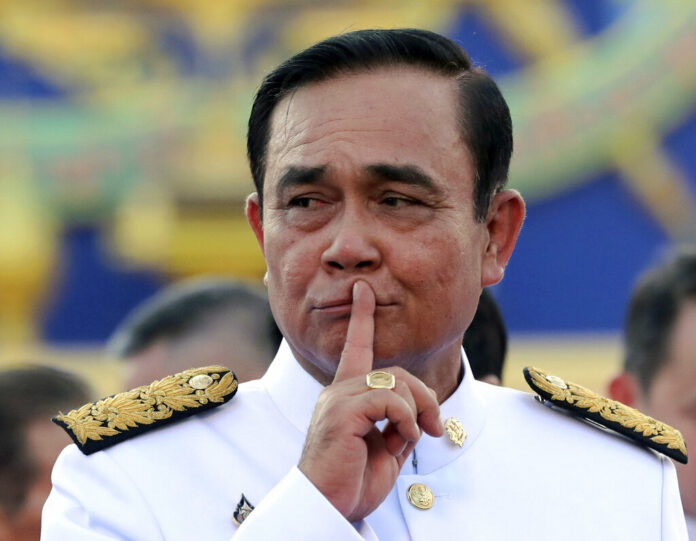
In this July 16, 2019, file photo, Thailand's Prime Minister Prayuth Chan-ocha gestures after a group photo with his Cabinet members at the government house in Bangkok, Thailand. Prayuth said Friday, Aug. 9, 2019 he is not quitting despite facing mounting criticism for failing to properly take his oath of office. Prayuth led members of his Cabinet to be inaugurated in a ceremony presided over by the Thai king on July 16. However, he omitted a phrase while taking the oath where he was supposed to pledge that he will uphold every aspect of the constitution. The omission has raised questions over whether the inauguration was legally valid. Photo: Sakchai Lalit / AP
In this July 16, 2019, file photo, Thailand's Prime Minister Prayuth Chan-ocha gestures after a group photo with his Cabinet members at the government house in Bangkok, Thailand. Prayuth said Friday, Aug. 9, 2019 he is not quitting despite facing mounting criticism for failing to properly take his oath of office. Photo: Sakchai Lalit / AP

BANGKOK — Thai Prime Minister Prayuth Chan-ocha said Friday he is not quitting despite facing mounting criticism for failing to properly take his oath of office.

Prayuth led the inauguration of his Cabinet in a ceremony presided over by the king on July 16.

However, he omitted a phrase in the oath of office in which he was supposed to pledge to uphold every aspect of the constitution. The omission has raised questions over whether the inauguration was legally valid.

Prayuth told reporters Friday that he was continuing to conduct his duties “to the best of my abilities because I am the prime minister.”

The oath of office is required under Article 161 of Thailand’s Constitution, which includes the complete oath and states it must be said to the king before Cabinet ministers take office.

Prayuth’s failure to recite the oath in full, which also led to other ministers making the same error because they repeated what he said, was pointed out by opposition politician Piyabutr Saengkanokkul during a Parliament session on July 25.

Legal activist Srisuwan Janya filed a complaint over the issue to the Office of the Ombudsman on Monday which has been accepted for consideration.

Prayuth led a military junta that seized power in 2014 and was dissolved with the inauguration of the new Cabinet. The junta had ruled with a heavy fist and regularly cracked down on its critics. It also introduced new election laws to favor Prayuth’s return as prime minister.

Mongkolkit Suksintaranont, a leader of a political party that was part of Prayuth’s coalition, said on Thursday that he and four other parties which hold single seats in the House of Representatives were leaving the coalition.

“I did not think that being part of the government coalition would mean that we would have such little freedom,” Mongkolkit said, adding that he had been told to refrain from criticizing the government in Parliament sessions.

When asked how he would handle the issue of the Cabinet’s incomplete oath of office, Mongkolkit said, “If I was prime minister, I would have resigned already.”

Advertisement

Foreign Ministry Mum on Serbia Making Yingluck a Citizen

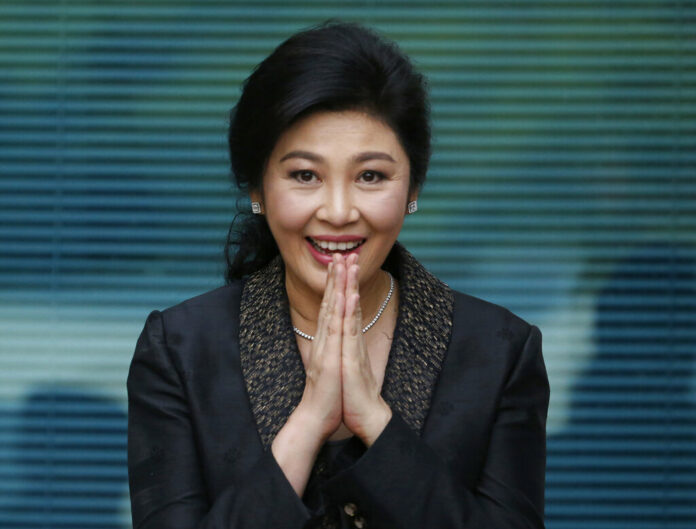
In this Aug. 1, 2017, file photo, Thailand's former Prime Minister Yingluck Shinawatra arrives at the Supreme Court to make her final statements in a trial on a charge of criminal negligence in Bangkok, Thailand. Photo: Sakchai Lalit / AP

BANGKOK — Thailand’s foreign ministry had no immediate reaction Friday to reports that the country’s former prime minister, Yingluck Shinawatra, has been granted Serbian citizenship, joining her brother as a fugitive globe-trotting Thai with foreign nationality.

Serbia’s state news agency Tanjug reported Thursday that she was granted citizenship “because it could be in the interest of Serbia.” A government decree confirming she was granted citizenship was published in June in Serbia’s official gazette. Serbian officials did not comment on the reason behind the decision.

Thai foreign ministry spokeswoman Busadee Santipitaks said Friday she was unable to comment on the report from Serbia, and that the Serbian foreign ministry had not contacted its Thai counterpart. She also declined to comment on any efforts to extradite Yingluck.

Yingluck fled Thailand in 2017 just days before she was convicted of negligence for implementing a revenue-draining rice subsidy scheme while she was prime minister. She was sentenced to five years’ imprisonment for in the case, which she and her supporters say was politically motivated.

Yingluck had been forced from office by a controversial 2014 court decision, and the government she had formed was toppled by a military coup shortly afterward.

Yingluck’s conviction was a chapter in a long-running power struggle between Thailand’s traditional ruling class and the powerful political machine founded by her brother Thaksin Shinawatra, a telecommunications tycoon.

Thaksin was prime minister in 2001-2006. He was ousted in a military coup amid accusations of corruption and likewise was sentenced to prison by a Thai court, on a conflict of interest charge he insists was politically motivated.

He fled abroad, maintaining residences in England and Dubai, and carries a passport from Montenegro, another Balkan nation, obtained in exchange for investing there. He is also reported to hold a passport from Nicaragua.

About a month after Yingluck fled, Thailand canceled her personal and official passports. She was believed to have fled through Cambodia, and since then has apparently been traveling freely.

There were reports in January this year that she holds a Cambodian passport, but Cambodian officials denied them. Cambodia’s Prime Minister Hun Sen enjoys good relations with her brother Thaksin, whom he at one point appointed as an economic adviser.

Thai police once said they were seeking an Interpol arrest warrant for Yingluck, but none is known to have been issued by the international police organization. Issuing such a warrant would be controversial because of the perception that the case against Yingluck is political in nature, which would not be allowed under Interpol’s rules.

Thai officials have from time to time announced efforts to extradite Yingluck and her brother from various countries, but it is not clear if they ever proceeded formally.

Story: Pitcha Dangprasith

Advertisement

Opinion: The Double Denial of Sex Work in Thailand

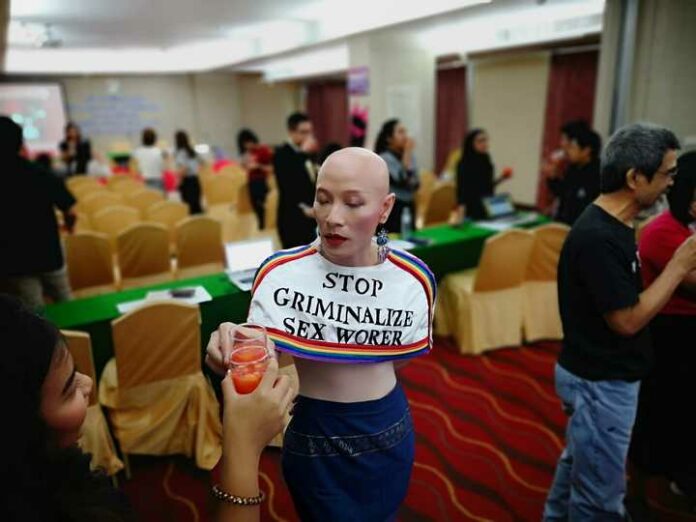
Activists give a toast to celebrate the police's new policies on sex workers on Aug. 8, 2019.

Emboldened by new police protocols mandating more humane treatment of sex workers during arrests, activists on Thursday announced their next goal – decriminalizing sex work.

Prostitution is illegal under the 1996 Anti-Prostitution Act, though it’s rare for sex workers to be sentenced to the maximum one-month prison term stipulated under the law. Instead, the red-light industry thrives in a grey area, regulated more consistently by mainstream morality which shames sex work and corrupt officials who extort protection money.

Sex workers and activists scored a victory Thursday when the national police released new protocols banning sexual intercourse during sting operations, parading sex workers in front of the press, and allowing reporters inside raided venues. Also banned are stamps on the passports of foreign sex workers specifying that they were arrested for prostitution. The reforms came after years of repeated complaints and demands by advocacy groups and the National Human Rights Commission.

Read: Activists Hail Police’s New ‘Humane’ Protocols on Sex Workers

But the fact that no major political party is committed to decriminalizing sex work is a sober reminder to sex workers and activists that the road to legalizing sex work will be a lonely struggle. This is despite the fact that there are up 300,000 sex workers in Thailand – a large constituency.

No major political party wants to be branded as immoral or as pushing for a policy that would shame the Kingdom. Never mind the reality that prostitution is a major underground industry.

Decades ago in 1993, Longman’s Dictionary of Contemporary English defined Bangkok as “a place where there are a lot of prostitutes,” which was greeted by nothing short of a national uproar that resulted in the banning of the dictionary. Many Thais don’t seem to care about reality. It’s the façade of a fictitious alternate that counts.

Nearly three decades after the Longman saga, Thai police shocked the world earlier this year when they inspected Pattaya’s infamous red-light district, known as Walking Street, and found not a single sex worker.

It’s a paradoxical reality: the existence of widespread prostitution is formally denied, while it’s a commonly known reality that many foreign tourists come to Thailand for sex. Even the Public Health Ministry estimates that 75 percent of Thai males have bought sex.

Some feel that deconstructing morality as a strategy to decriminalize prostitution is a losing battle. Veteran women’s rights activist Naiyana Suphaphueng warned after the release of the police protocols that it’s best not to confront society by challenging the prevailing moral standard.

“Thai society doesn’t accept selling sex like selling objects…We should frame it by talking about human rights and protection first,” said Naiyana.

She may be right, tactically speaking. Still, there is something very disturbing about morality that is based on the denial of reality. Thailand is a society in denial on so many levels, whether it’s about the lack of genuine democracy or the lack of substantial freedom.

Many would rather not face the truth. Many would rather let sex workers suffer silently when exploited by an underground industry, so that Thais can continue to smile.

Advertisement

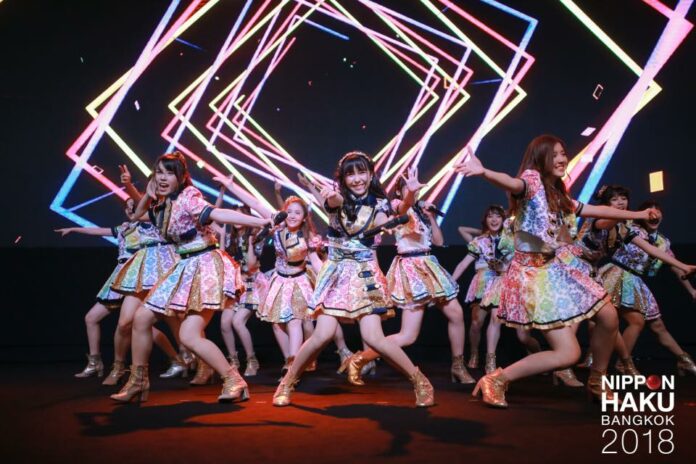
Eh?! Otakus to Convene at ‘Nippon Haku’ Fair at Siam Paragon

Photo: Nippon Haku Bangkok / Facebook

BANGKOK — Kyaaaa! Japanophiles take note, free concerts and Nippon goods will abound at Nippon Haku Bangkok 2019 fair from Aug. 30 to Sept. 1 at Siam Paragon.

World Order (you’ve seen their YouTube videos of their robotic, synchronized dancing) will be performing on Sept. 1 at 6:30pm, immediately before Thailand’s own franchise of AKB48, BNK48 at 7:30pm. Go on, chant for Cherprang like there’s no tomorrow!

Thai artist Zom Marie, along with ex-BNK48 Jan Chan, will also be singing on Aug. 31 from 4pm onwards.

Shamisen artist Niya will also be taking the stage on Aug. 31 and Sept. 1, although the times for his concert have not been finalized.

Booths will be selling Japanese food, and fan goods including a booth dedicated to lightsticks for cheering on your favorite idol. Peruse booths of Japanese crafts, tech, and even an exhibition by artist Akihiro Nishino.

Want to take your Nippon love to the next step? There’s also education and job fair booths, for those who just know that moving Tokyo will give them a fresh start.

Nippon Haku Bangkok 2019, from Aug. 30 to Sept. 1, will be open from 11am to 8pm, on the fifth floor of Siam Paragon mall, right next to BTS Siam. Admission is free.

Shamisen artist Niya.

Advertisement

‘Pothead’ Motosai Student Gets Warning, New Helmet

Image: Tanit Bussabong / Facebook

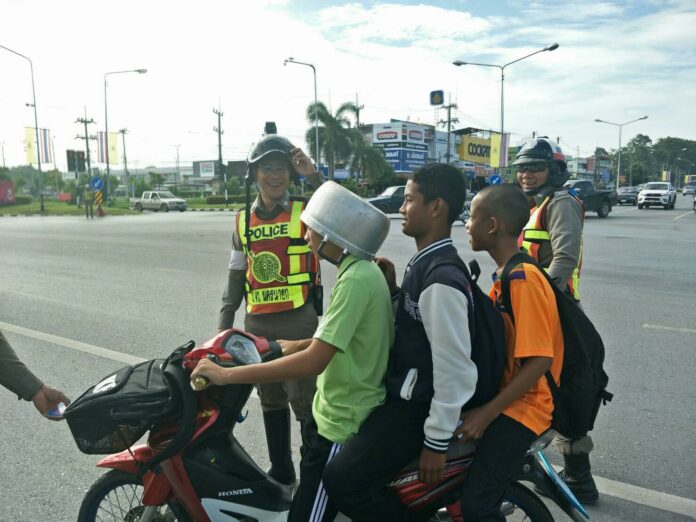
NAKHON NAYOK — A schoolkid who wore a kitchen pot as a motorcycle helmet earlier this week was given proper safety gear today, police said.

The student made headlines on Thursday when photos of police officers busting his makeshift helmet went viral on social media. In a followup to the latest nationwide sensation, police in Nakhon Nayok said they have handed the student a brand new helmet.

The student, named by police as Hirun, was riding a motorcycle to school with two other classmates when he was stopped.

Photos of Hirun wearing the kitchen pot while surrounded by smiling police officers were widely shared on social media, after they were first posted on Thursday morning by one of the policemen.
S 50618403
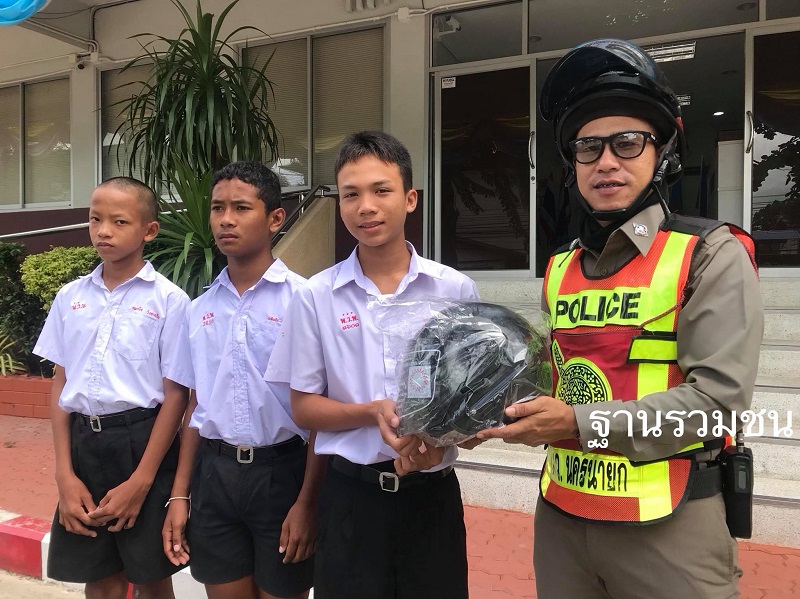
Policeman Tanit Bussabong hands a motorcycle helmet to the three students on Aug. 9, 2019. Image: ฐานรวมชน / Facebook

The officer, Tanit Bussabong, wrote that he even mistook the pot as a helmet at first.

“Nice try,” Tanit said, adding that he let the three go on their way with a warning. Police later said the trio were carrying kitchen utensils to school for class activities.

The post was shared at least 4,000 times by Friday afternoon. Most of the comments were amused at the students, though some raised concerns that they could have been hurt or worse in an accident.

At a brief ceremony to hand over the helmet, Tanit instructed Hirun and his friends to wear gear when riding in the future. In Thailand, the minimum age required to legally ride a motorbike is 15.

Motorcycle accidents have been ranked as the leading cause of injuries and deaths on Thai roads for years. According to 2017 data by the Thai Health Foundation, 83 percent of injuries in traffic accidents involve motorcycles.

About 87 percent of motorcyclists who were not wearing helmets at the time of their accidents ended up in serious conditions, the same data said.

62-08-09 น้องได้หมวกนิรภัยแล้วนะ

น้องๆเยาวชนชาย3คน หลังดังในสื่อออนไลส์เมื่อวาน ที่ใช้หม้อใบโตคลุมหัว จนเจ้าหน้าที่ตำรวจจราจรเห็นไกลๆคิดว่าเป็นหมวกนิรภัย แต่พอมาถึงกลายเป็นหม้อ จึงได้ว่ากล่าวตักเตือน และได้แซวน้องๆ พร้อมขอถ่ายรูป ก่อนปล่อยตัวให้น้องไปไปทำกิจกรรมที่โรงเรียน ขณะที่หลังจากนั้นได้โพสขอความตามหาน้องๆให้มารับหมวกนิรภัยที่สภ.เมืองนครนายกในเช้าวันนี้

โพสต์โดย ฐานรวมชน เมื่อ วันพฤหัสบดีที่ 8 สิงหาคม 2019

Advertisement

BTS Ha Yeak Lat Phrao Opens, Governor Caps Fare to 65 Baht

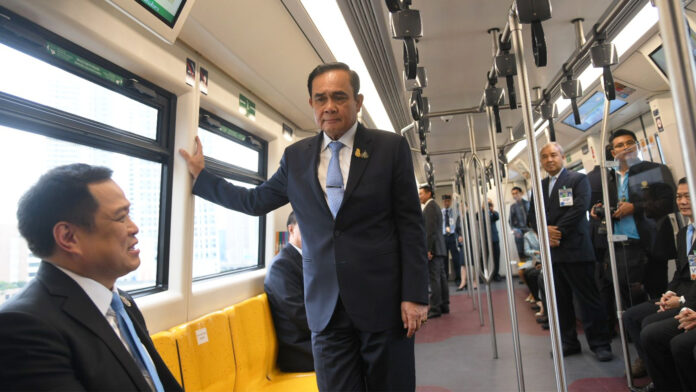
Prime Minister Prayuth Chan-ocha taking a ride from BTS Mo Chit to Ha Yaek Lat Phrao during the opening ceremony on August 9.

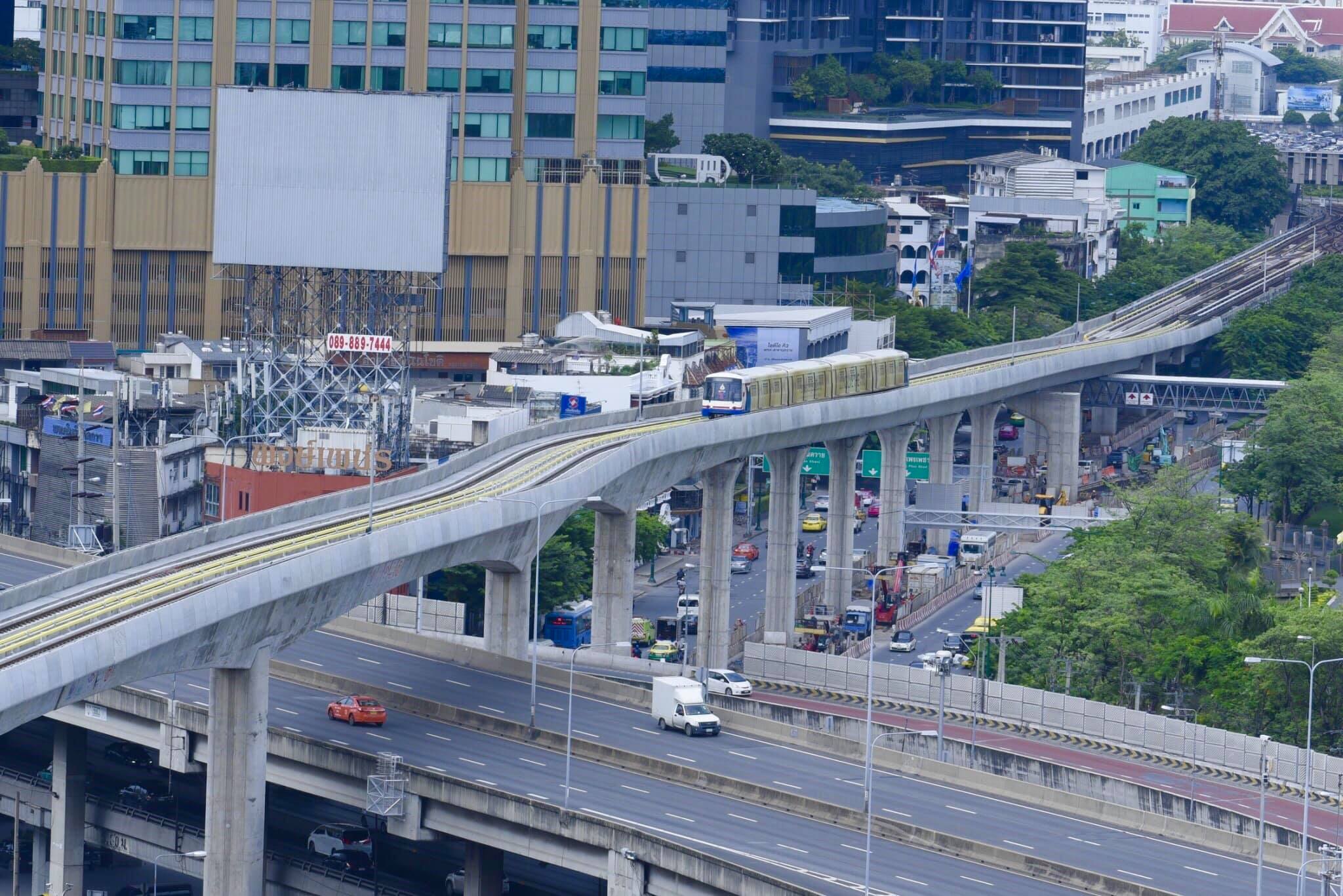
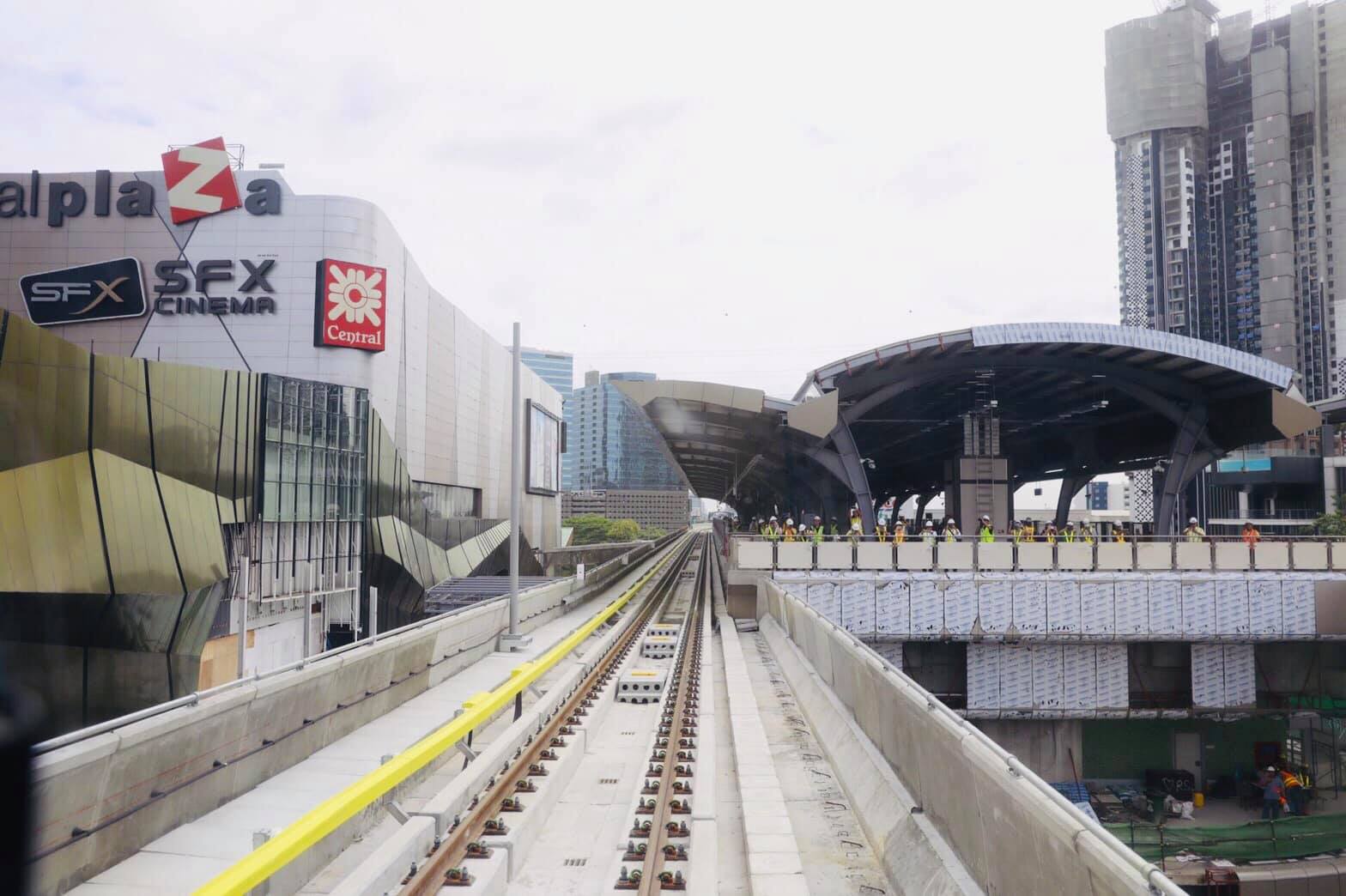
BANGKOK — The missing dots between Mo Chit and Lad Phrao have finally been connected, with the new BTS station linking them now open to the public for test rides.

Commuters no longer have to transfer to the metro or take a bus to reach shopping malls like Central Plaza Lad Phrao and Union Mall after the soft opening of BTS Ha Yaek Lat Phrao, which began 3pm on August 9. Test rides will operate daily for free, but trains will only run the full commute to BTS Ha Yaek Lat Phrao outside of rush hours.

During rush hours on weekdays – 7am to 9am, and 4.30pm to 8pm – trains will terminate at Mo Chit to accommodate more traffic, so commuters will need to transfer to another train on the opposite platform to reach the new station.

BTS Ha Yaek Lat Phrao is one of 16 stations along the northern extension of the Sukhumvit Line, stretching from the previous terminus at Mo Chit to the suburbs of Khu Khot in Pathum Thani.

In an opening ceremony attended by Prime Minister Prayuth Chan-ocha, ministers, and even construction tycoon Premchai Karnasuta, Prayuth asked the operator to extend the free rides to December 5 and rebuffed rumors that he would resign.

“I’m still your prime minister. I’m not going anywhere,” he said.

Four more stations along the route – Phaholyothin 24, Ratchayothin, Sena Nikhom, and Kasetsart University – will open in December, while the rest will be ready next year.

Governor insists 65 baht fare cap ‘inexpensive’

On top of the new station, a lowered fare scheme has also been announced. A day earlier, city governor Aswin Kwanmuang took to his Facebook to assert to a disgruntled public that the 65 baht BTS fare cap is “inexpensive.”

“Under the previous fare scheme, commuters traveling a long distance would have had to pay more,” read Aswin’s post on Thursday.

Under the previous fare scheme, traveling from one end of the line to the other would have cost 158 baht. The previous scheme calculated fares along the original Sukhumvit Line – operated by the Bangkok Mass Transit System Plc. (BTSC) – separately from the city hall-owned extensions stretching from it. Commuters who wanted to travel from the northern terminus Khu Khot to the southern terminus Kheha would have had to pay the 15 baht base fare twice for the two extensions, 3 baht for each station, on top of the 44 baht for traveling the full length of the original Sukhumvit Line.

The new scheme, hammered between city hall and the BTSC, will keep the maximum fare capped to 65 baht. However, commuters be warned: the BTSC is being granted a 30-year contract to operate the entire system, with the right to raise fares every two years.

Last month, transport minister Saksiam Chidchob promised to slash the fare to a 15-baht flat rate. He said such a rate is possible along the MRT Purple Line, which runs from Tao Poon to Khlong Bang Phai, and the Airport Rail Link, which connects the city center to Suvarnabhumi Airport.

But the future is dim for the BTS, as the government has refused to subsidize fares to the private operator.

Photo: BTS Skytrain / Facebook
Advertisement

Hot News

LATEST NEWS

Bangkok
overcast clouds
32.2 ° C
32.7 °
32.2 °
71 %
5.5kmh
100 %
Sat
35 °
Sun
36 °
Mon
35 °
Tue
35 °
Wed
33 °