





















28.8 C
Bangkok
Monday, July 6, 2026
Home Blog Page 1635

Rural Catholic Church Defies Sri Lanka Threats, Holds Mass

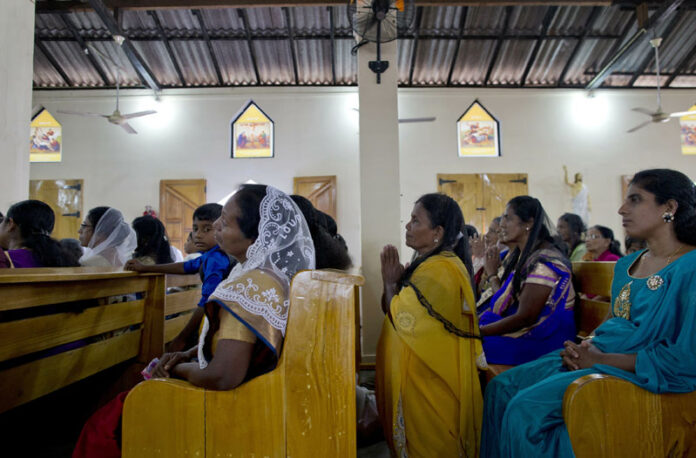
Catholics participate in Holy Mass at St. Joseph's church in Thannamunai, Sri Lanka, Tuesday, April 30, 2019. This small village in eastern Sri Lanka has held likely the first Mass since Catholic leaders closed all their churches for fear of more attacks after the Easter suicide bombings that killed over 250 people. Photo: Gemunu Amarasinghe / AP

THANNAMUNAI, Sri Lanka — The checkpoints started just outside of an east Sri Lanka village, the strictest seen in the days after Islamic State-aligned militants launched suicide attacks that killed over 250 people.

The trucks stopped first, soldiers digging through crates and produce. Buses disgorged their passengers. Cars lined up single file so soldiers could open their hoods to inspect engine blocks and pull everything out of trunks.

The reason became clear soon after, as the sound of hymns filled the air of Thannamunai.

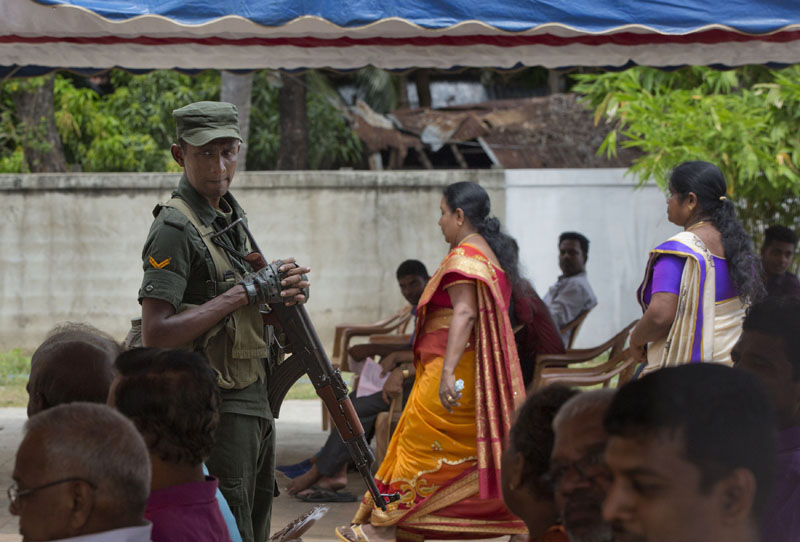
The small village in eastern Sri Lanka held likely the first Mass since Catholic leaders closed all their churches for fear of further attacks. Under incredibly tight security, worshippers watched a priest be ordained as they hoped for a future when Mass wouldn’t require hundreds of troops armed with assault rifles to defend it.

“People wanted to celebrate Mass, they wanted to participate in this, but they — even myself — were afraid,” Father Norton Johnson told Associated Press journalists who witnessed the Mass. “However, security personnel gave us good protection.”

The Mass in Thannamunai, about 225 kilometers (140 miles) northeast of the capital, Colombo, had been planned at least two weeks earlier to mark the ordination with the participation of some 200 priests. They had expected thousands to attend the ceremony at St. Joseph’s Catholic Church.

Then came Easter. The morning of April 21, suicide bombers attacked three churches and three hotels. Soon after, the U.S. Embassy in Colombo warned against attending services at any place of worship in the multiethnic nation of 21 million Buddhists, Christians, Hindus and Muslims.
AP19120246936626
A soldier stands guard amid Catholics attending Mass outside St. Joseph’s church in Thannamunai, Sri Lanka, Tuesday, April 30, 2019. Photo: Gemunu Amarasinghe / AP

Catholic leaders closed all their churches. Cardinal Malcolm Ranjith, the archbishop of Colombo, celebrated Mass this past Sunday at his residence, with the country’s leaders attending. The faithful prayed on their knees at home, watching his homily on television.

Ranjith said Tuesday that parishioners would form “vigilance committees” to check IDs at church doors and keep anyone with a bag from entering when some Masses resume this weekend.

But the invitations for the ordination in Thannamunai already had been sent out. After confirming with the military, Johnson and other Catholic leaders agreed to quietly hold the Mass for the community. Johnson said he believed it to be the first Mass held in the country, outside of small gatherings for prayers quietly held at believers’ homes.

What had been expected to be a crowd of 3,000 turned into several hundred. The 200 priests expected instead became 80. But still they came Tuesday morning, the priests laying their hands on the new priest’s forehead as he knelt before them.

Security personnel remained tense, in part because Thannamunai is wedged between Muslim neighborhoods and authorities believe militants remain at large. The alleged mastermind of the Easter bombings also preached a violent interpretation of the Quran nearby, promising heaven to those who killed nonbelievers. Islamic State leader Abu Bakr al-Baghdadi, who hasn’t been seen in nearly five years, appeared in a video Monday and praised the Sri Lankan attackers, who earlier pledged their loyalty to him.

During the service Tuesday, a Muslim woman rode past sitting side-saddle on a small motorbike, her black abaya billowing in the wind. Johnson made a point to say that those behind the Easter attacks were “only a few terrorists.”

Read: No Mass for Sri Lanka’s Catholics; No Veils for Muslim Women

“In every religion, every race, there are extremists. They do certain things. But we can’t blame one community for these problems,” the priest said. “The Muslim community, they are afraid, and they are sorry about this incident. And what I can say is we are with them.”

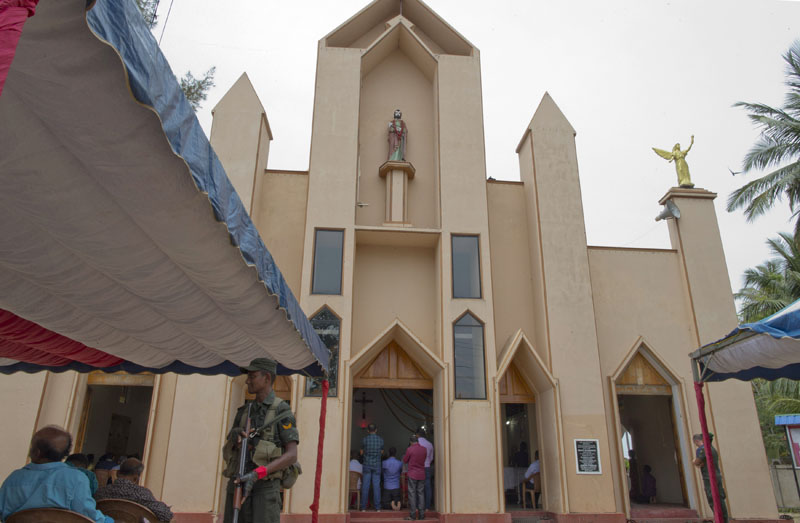
Police officers arranged separate lines for men and women outside of St. Joseph’s. The officers carefully patted down those entering the service. Around 300 soldiers, 60 police officers and special commandos stood guard, some behind the church looking at the blue still waters of a nearby lagoon.

“It’s a very risky thing,” said one army officer, smiling.

But inside, worshippers prayed with their eyes closed, some barefoot. A choir sang hymns backed by a synthesizer and drums, their Tamil verses peppered with hosannas, an exclamation to give praise to God. Orange streamers hung from the rafters. Bouquets of flowers ringed its chandeliers.

St. Joseph’s earlier was near the front lines of the government’s decades-long civil war against the Tamil Tigers. Mortars once struck the church, damaging it, Johnson recounted. But it was rebuilt, as he hoped peace would soon be across all of Sri Lanka.

“We are all the same,” he said before walking back into the church. “All of our blood is red.”
AP19120247452896
A soldier stands guard during a Catholic Mass outside St. Joseph’s church in Thannamunai, Sri Lanka, Tuesday, April 30, 2019. Photo: Gemunu Amarasinghe / AP

Story: Jon Gambrell
Advertisement

New Queen Appointed Ahead of Coronation

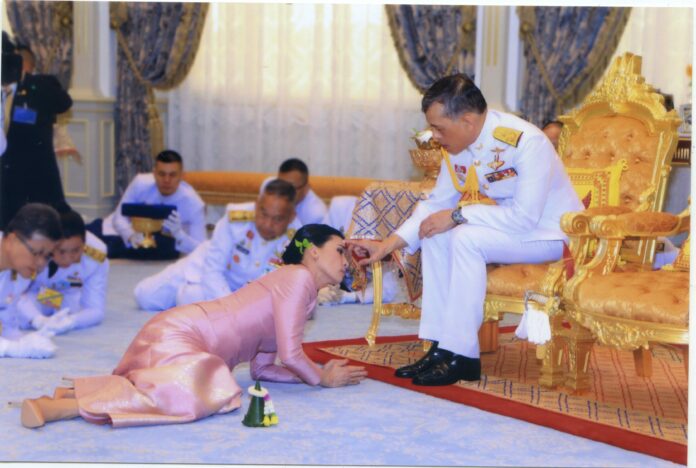
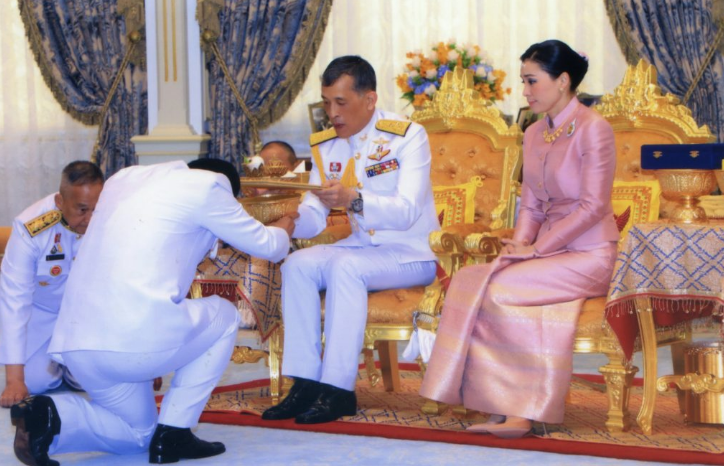
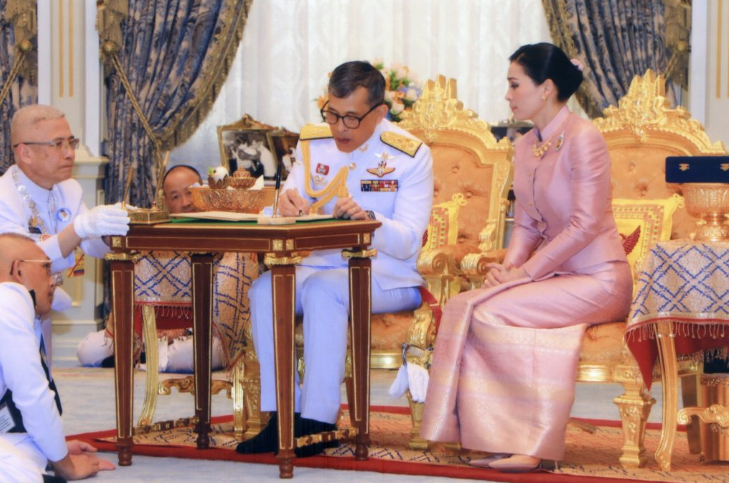
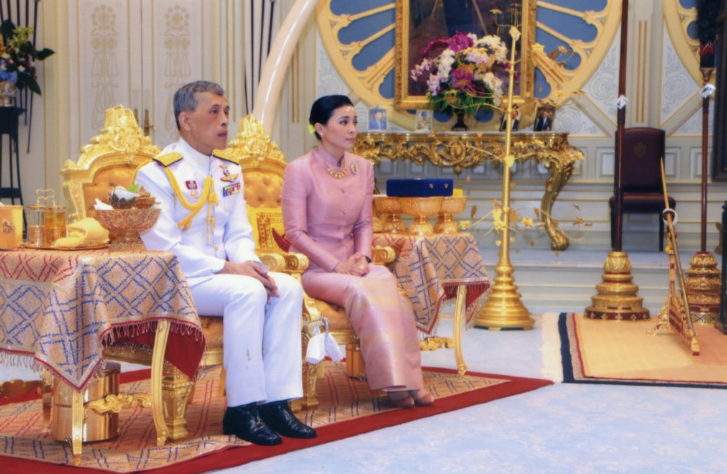
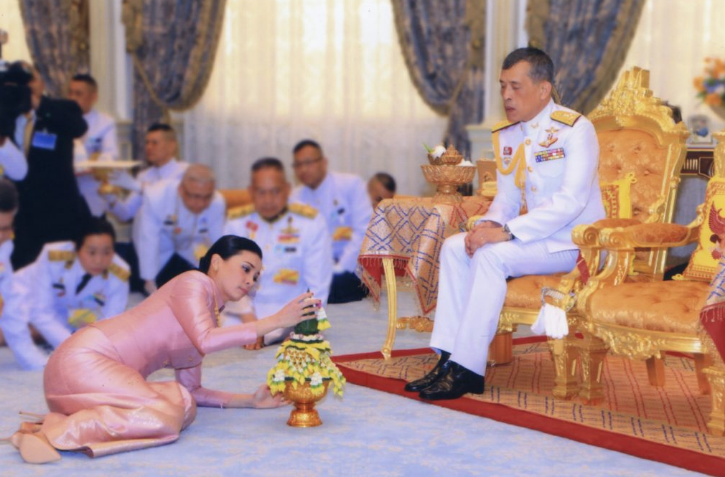
Queen Suthida and His Majesty the King in a wedding ceremony in footage released by the palace Wednesday night.

BANGKOK — A former commander of His Majesty the King’s bodyguards was named the new Queen of Thailand today.

A royal command issued on Wednesday, just three days before the formal coronation of King Vajiralongkorn is due to take place, announced that the King has married Gen. Suthida Vajiralongkorn na Ayudhya and therefore elevated her to be Queen Suthida.

News footage released by the Royal Household Bureau on Wednesday night shows the couple married at Dusit Palace in Bangkok.

Little is known about Thailand’s new Queen, though media reports say Suthida has been serving in the Ratchawanlop Guards, a unit of bodyguards protecting the then-Crown Prince, since 2013.

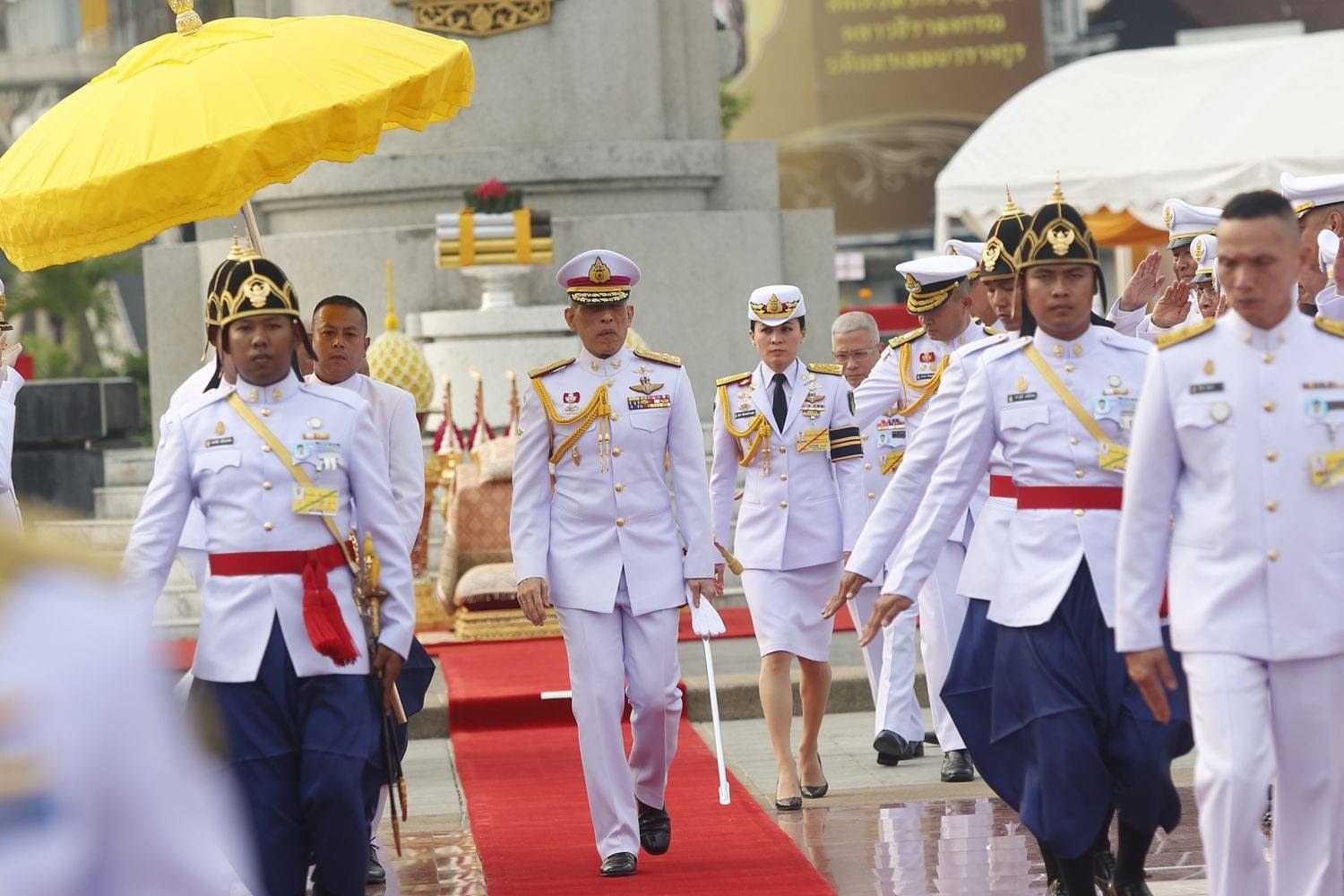
She is often seen escorting the King in a number of important state ceremonies.

In October 2016, Suthida was awarded the Rattanabhorn Medal by the King for serving as his bodyguard. A year later, he awarded her with another accolade, the Knight Grand Cross of the Most Illustrious Order of Chula Chomklao.

Screen Shot 2019 05 01 at 11.29.21 PM Screen Shot 2019 05 01 at 11.29.10 PM Screen Shot 2019 05 01 at 11.29.04 PM Screen Shot 2019 05 01 at 11.29.27 PM

This is a developing story.

Related stories:

Royal Decoration Awarded to King’s Chief Bodyguard

Royal Medal for Crown Prince’s Bodyguard

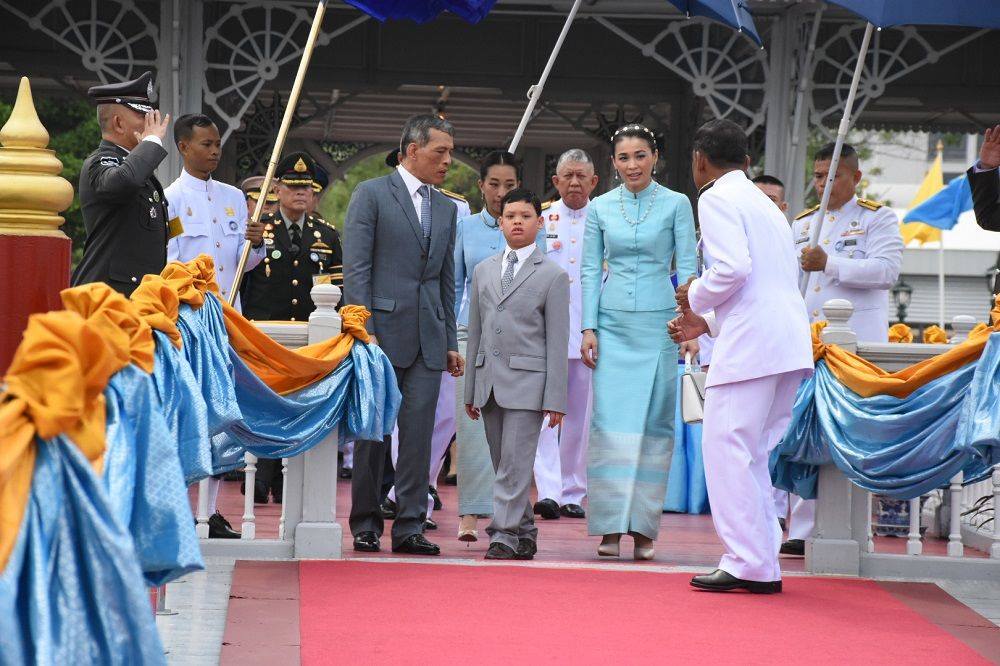
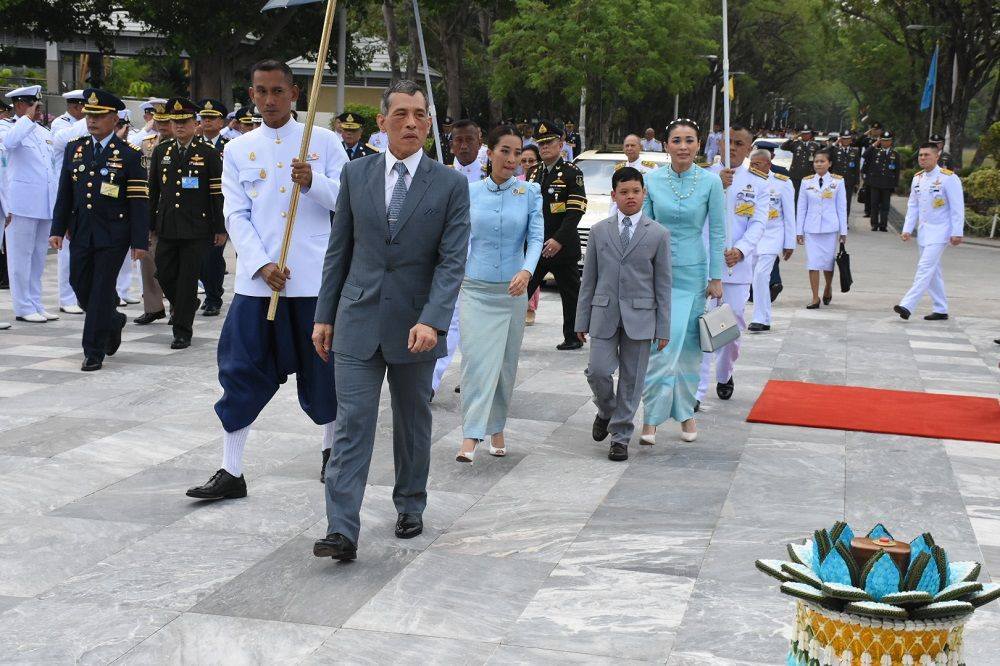
A file photo of Queen Suthida with His Majesty the King and Prince Dipangkorn.

59192816 2258931941101568 1800463488917700608 n

57462874 1532696516864849 4518834877096787968 n

Advertisement

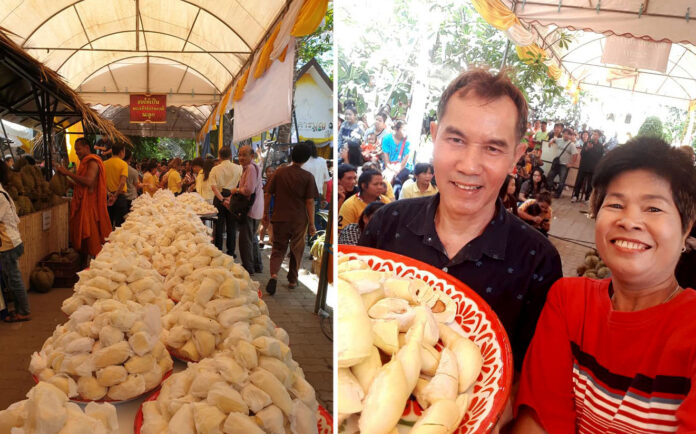
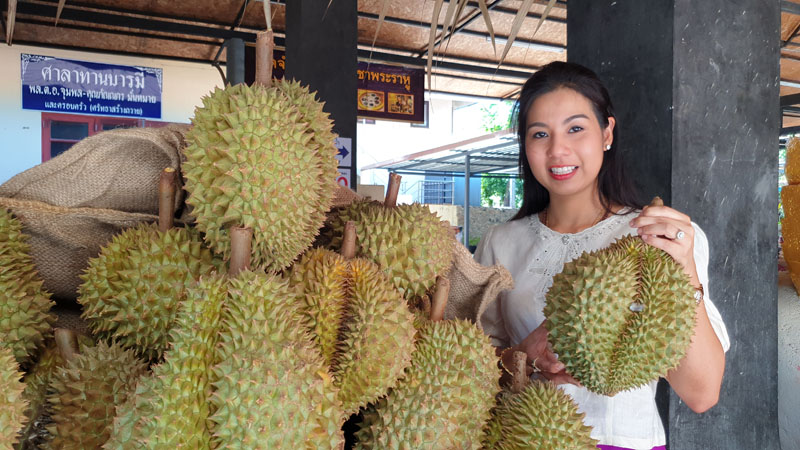
Wat Throws Free Durian Buffet for Labor Day

The durian buffet on May 1, 2019 at Wat Tha Mai. Left: Wat Tha Mai / Facebook. Right: Paporn Pibulporn / Facebook

SAMUT SAKHON — Crowds are flocking to a local temple that is holding a free-for-all durian buffet to celebrate Labor Day.

Wat Tha Mai in Krathum Baen district declared that May Day is also Durian Day and is serving free durian the entire day to celebrate.

“For visitors, if you want to stay the whole day, please go ahead. There’s lots of food to go around. There is no way the durian will run out,” said a temple spokesman in a live video posted on the temple’s Facebook page at 10am.

Other than durian, there’s also free kanom jeen noodles with chicken curry and naam prik chili dip. Other foods and products are being sold at the temple market at 10 percent off.

The temple first posted about their buffet on Monday, saying that the buffet is to honor King Rama X and to “help out our hard working laborers.”

But foreigners are also welcome to gorge on the spiky fruits, says the temple.

“Bring your whole family, your whole province…what could be a better joy that seeing the smiles of people and their happiness? Thai, Burmese, Mon, Karen, Cambodian, Chinese, Japanese, farang, Lao, Malay, Hong Kong, Vietnamese, and people from other countries all eat for free,” the post read. “If you’re not full, then don’t go home!”

Wat Tha Mai is located about an hour’s drive west from Bangkok.

20190430 111549


Advertisement

Islamic State Leader: Sri Lanka Attack Was Revenge for Syria

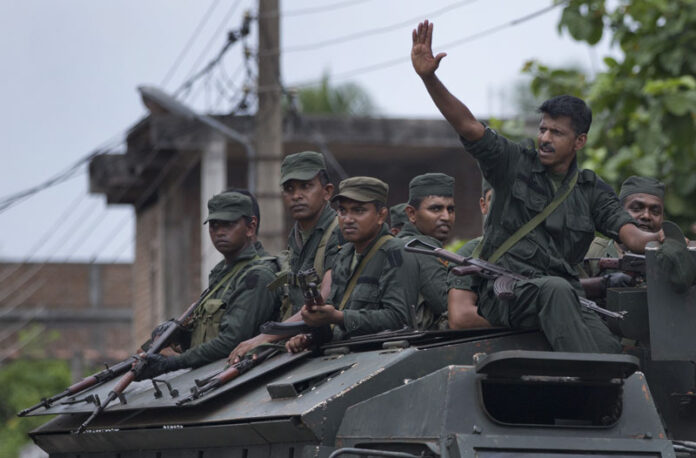
Soldiers return to their base following an operation searching for explosives and suspects tied to a local group of Islamic State militants in Kalmunai, Sri Lanka, Monday, April 29, 2019. Photo: Gemunu Amarasinghe / AP

BATTICALOA, Sri Lanka — The leader of the Islamic State group praised the Easter suicide bombings that killed more than 250 people in Sri Lanka in a video released Monday, calling on militants to be a “thorn” against their enemies in his first filmed appearance in nearly five years.

The video of Abu Bakr al-Baghdadi, to whom the suicide bombers in last week’s attack apparently pledged their loyalty, came as the top official in the Catholic Church urged Sri Lanka to crack down on Islamic extremists “as if on war footing.”

Meanwhile, a government ban on niqab face covering took effect as soldiers and police officers conducted raids in eastern Sri Lanka, the home of the alleged mastermind of the attacks.

The 18-minute video of al-Baghdadi included images of the extremist leader sitting in a white room with three others, assault rifles by their sides. He discussed Sri Lanka in an audio portion of the video, suggesting the April 21 attacks came after they filmed him.

Al-Baghdadi praised the attackers, saying they conducted the bombings as revenge for the fall of Baghouz, Syria, the last territory the extremist group held there or in Iraq.

“As for your brothers in Sri Lanka, they have put joy in the hearts of the monotheists with their immersing operations that struck the homes of the crusaders in their Easter,” al-Baghdadi said, according to a transcript from the U.S.-based SITE Intelligence Group.

He also called on Islamic State-pledged militants in the island nation off the southern tip of India to be “a thorn in the chests of the crusaders.”

Authorities initially blamed the Easter attacks, targeting three hotels and three churches, on a local militant named Mohammed Zahran and his followers. Then the Islamic State group on April 23 released images of Zahran and others pledging their loyalty to al-Baghdadi.

Police conducted a later raid in eastern Sri Lanka that saw militants detonate suicide bombs in violence that killed at least 15 people, including six children. Explosives recovered by authorities bore hallmarks of the Islamic State group as well.

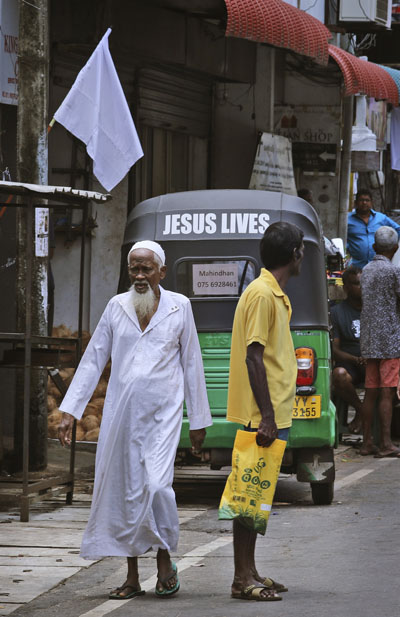
An elderly Sri Lankan Muslim man walks across a street in Colombo, Sri Lanka, Monday, April 29, 2019. Photo: Manish Swarup / AP

Anger against Sri Lanka’s government has grown after the country discovered its security services had prior, specific warnings an attack loomed.

Cardinal Malcolm Ranjith, the archbishop of Colombo and the Catholic Church’s top official on the island, said the church may not be able to stop people from taking the law into their own hands if the government doesn’t do more.

“All the security forces should be involved and function as if on war footing,” Ranjith told reporters.

“I want to state that we may not be able to keep people under control in the absence of a stronger security program,” he said. “We can’t forever give them false promises and keep them calm.”

Ranjith, however, sought to assure Muslims the church will not allow any revenge attacks against them.

Catholic churches cancelled Mass on Sunday, a week after the bombings, for fear of another attack. Catholics celebrated Mass in their homes while watching Ranjith preside over a televised service. Other denominations also closed their doors.

The church closing followed local officials and the U.S. Embassy in Colombo warning that more militants remained on the loose with explosives and places of worship remained targets.

President Maithripala Sirisena also appointed former army commander Shantha Kottegoda on Monday as the top official in the Defense Ministry. He earlier requested the resignation of his predecessor, Hemasiri Fernando, for intelligence failures that led to the bombings.

In the eastern Sri Lankan city of Kalmunai, Associated Press journalists saw police and soldiers conducting raids in a predominantly Muslim area. Such operations are likely to continue around the area Zahran once preached his extremist message glorifying killing non-Muslims.

Meanwhile, Sirisena’s ban on wearing the niqab face veil took effect. The niqab is a black veil made of thin fabric, often with a small opening from which a woman’s eyes can peer out.

While previously unseen in Sri Lanka, the niqab has grown in popularity in the last 10 years after the country’s civil war.

___

Story: Jon Gambrell and Krishan Francis. Associated Press writers Zeina Karam and Bassem Mroue in Beirut contributed to this report. Francis reported from Colombo, Sri Lanka.

Advertisement

Netflix Announces Deal for Film About Thailand’s Cave Boys

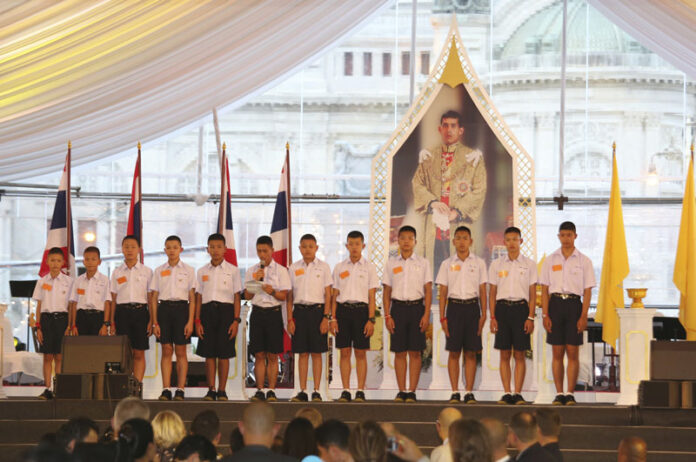
In this Sept. 6, 2018. file photo, members of the Wild Boars, the soccer team that was rescued from a flooded cave, give thanks in front of Thailand King Maha Vajiralongkorn's image during an event titled
In this Sept. 6, 2018. file photo, members of the Wild Boars, the soccer team that was rescued from a flooded cave, give thanks in front of Thailand King Maha Vajiralongkorn's image during an event titled "United as One" in Bangkok, Thailand. Photo: Sakchai Lalit / AP

BANGKOK — Netflix announced Tuesday it is joining with the production company for the movie “Crazy Rich Asians” to make a film about last July’s dramatic rescue of 12 village boys in northern Thailand who were trapped with their soccer coach in a flooded cave for more than two weeks.

Netflix and SK Global Entertainment said in Bangkok they have acquired the rights to the story from 13 Thumluang Co. Ltd., a company that Thailand’s government helped establish to represent the interests of the boys and their coach, who attended the news conference for the announcement.

Thailand’s Culture Ministry in March first unveiled the deal, announced as a miniseries. Deputy government spokesman Weerachon Sukoondhapatipakat was quoted then as saying that the families of the cave survivors would each be paid 3 million baht ($94,000).

The boys of the Wild Boars soccer team and their coach became a center of world attention after they became trapped in the cave on June 23 last year, with doubts they were able to find shelter from rising flood waters that poured in after unexpected rain. They were found by two British divers and brought out by an international crew of experienced cave divers who teamed up with Thai navy SEALs in a dangerously complicated mission that was successfully concluded on July 10.

“We are grateful for the opportunity to thank the people and organizations from Thailand and around the world who came together to perform a true miracle, by retelling our story,” said Ekapol “Ake” Chanthawong, the boy’s assistant coach who shared the ordeal with them. “We look forward to working with all involved parties to ensure our story is told accurately, so that the world can recognize, once again, the heroes that made the rescue operation a success.”

Tuesday’s announcement said 13 Thumluang “has committed to donating 15% of the revenues derived from bringing this story to global audiences to charity organizations that focus on disaster relief.”

Jon M. Chu, who helmed “Crazy Rich Asians,” and Nattawut “Baz” Poonpiriya, a Thai filmmaker, will be directors on the cave project.

“We are immensely proud to be able to support the retelling of the incredible story of the Tham Luang cave rescue,” Erika North, director of International Originals at Netflix, said in a statement. “The story combines so many unique local and universal themes which connected people from all walks of life, from all around the world. Thailand is a very important country for Netflix and we are looking forward to bringing this inspiring local but globally resonant story of overcoming seemingly insurmountable odds to life, once again, for global audiences.”

The rescue was a rare bit of feel-good news from Thailand, which has been mired in political conflict and heavy-handed military rule for more than a decade. The cave rescue also allowed the government of Prime Minister Prayuth Chan-ocha, who had seized power in a 2014 military coup, to share in some glory.

An independent film about the adventure, “The Cave,” was shot soon after the rescue and is supposed to be released later this year.

Advertisement

Japan’s Naruhito in 1st Speech Vows to Stay Close to People

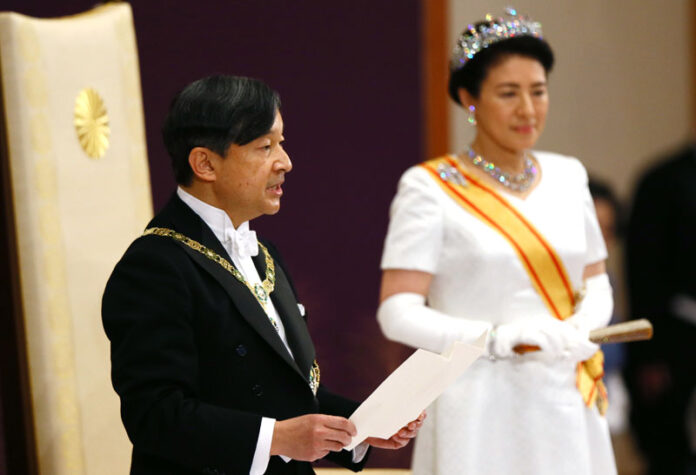
Japan's new Emperor Naruhito, accompanied by new Empress Masako, makes his first address during a ritual after succeeding his father Akihito at Imperial Palace in Tokyo, Wednesday, May 1, 2019. Photo: Japan Pool / AP

TOKYO — Japan’s new Emperor Naruhito inherited Imperial regalia and seals as proof of his succession and pledged in his first public address Wednesday to follow his father’s example in devoting himself to peace and staying close to the people.

Naruhito succeeded to the Chrysanthemum Throne at midnight after Akihito abdicated.

In his address to the people, Naruhito formally announced his succession and pledged to continue learning.

“When I think about the important responsibility I have assumed, I am filled with a sense of solemnity,” he said. Naruhito noted that his father was devoted to praying for peace and sharing joys and sorrows of the people, while showing compassion.

He said he will “reflect deeply” on the path trodden by Akihito and past emperors, and promised to abide by the Constitution to fulfill his responsibility as a national symbol while “always turning my thoughts to the people and standing with them.

“I sincerely pray for the happiness of the people and the further development of the nation as well as the peace of the world,” he said.

Read: Succession This Week Will Shrink Japan’s Imperial Heirs to 2

Naruhito was presented with the Imperial regalia of a sword and jewel, each in a box and wrapped in cloth, at a morning ceremony which was his first official duty in his new role.

His wife and daughter, Empress Masako and 17-year-old Princess Aiko were barred from the ceremony, where only adult male royals participated. Only his brother, now Crown Prince Fumihito, and his uncle Prince Hitachi were allowed to witness. Their guests included a female Cabinet minister, however, as the Imperial House Law has no provision on the gender of the commoners in attendance.

Japan was in a festive mood celebrating an imperial succession that occurred by retirement rather than by death. Many people stood outside the palace Tuesday to reminisce about Akihito’s era, others joined midnight events when the transition occurred, and more came to celebrate the beginning of Naruhito’s reign.

From a car window on his way to palace, Naruhito smiled and waved at the people on the sidewalk who cheered him. He and his family still live at the crown prince’s Togu palace until they switch places with his parents.

He is the nation’s 126th emperor, according to a palace count historians say could include mythical figures until around the 5th century.

The emperor under Japan’s constitution is a symbol without political power. Naruhito is free of influence from Japan’s imperial worship that was fanned by the wartime militarist government that had deified the emperor as a living god until his grandfather renounced that status after Japan’s 1945 war defeat.

Naruhito has promised to emulate his father in seeking peace and staying close to people. Palace watchers say he might focus on global issues, including disaster prevention, water conservation and climate change, which could appeal to younger Japanese.

He will also face uncertainties in the Imperial household. Only his younger brother, Prince Akishino, 53, and Akishino’s 12-year-old son, Prince Hisahito, can currently succeed him. The Imperial House Law confines the succession to male heirs, leaving Naruhito’s daughter, Aiko, now 17, out of the running.

Naruhito’s wife Masako is a Harvard-educated former diplomat who may prove an adept partner in his overseas travels and activities. But much will depend on her health, since she has been recovering from what the palace describes as stress-induced depression for about 15 years.

Naruhito, the first Japanese emperor to have studied abroad, is considered a new breed of royal, his outlook forged by the tradition-defying choices of his parents. Akihito devoted his three-decade career to making amends for a war fought in his father’s name while bringing the aloof monarchy closer to the people. Empress Emeritus Michiko was born a commoner and was Catholic educated. Together, they reached out to the people, especially those who faced handicaps and discrimination, and natural disasters.

Naruhito is also the first monarch raised by his own parents, as Akihito and Michiko, who was born a commoner, chose to take care of their children instead of leaving them in the hands of palace staff. They also supported his choice to attend Oxford University, where he researched the history of the Thames River transportation systems.

In an annual news conference marking his Feb. 23 birthday, Naruhito said he was open to taking up a new role that “suits the times.” But he said his father’s work will be his guidepost.

Story: Mari Yamaguchi

Advertisement

Big Battle Brings Record Viewing for HBO’s ‘Game of Thrones’

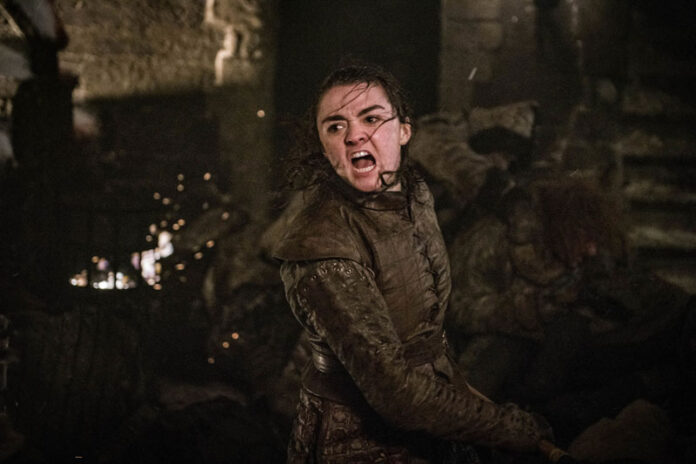
This image released by HBO shows Maisie Williams in a scene from
This image released by HBO shows Maisie Williams in a scene from "Game of Thrones," that aired Sunday, April 28, 2019. In the Associated Press' weekly "Wealth of Westeros" series, we're following the HBO fantasy show's latest plot twists and analyzing the economic and business forces driving the story. This week, Arya’s triumphant assassination of the king ice zombie has prompted an appreciation among us for the role of skills, in economics as well as medieval Westeros. Photo: Helen Sloan / HBO via AP)

LOS ANGELES — HBO’s “Game of Thrones” has once again ridden a high body count to a record viewer count.

Sunday’s big-battle episode, the third of the final season, drew 17.8 million viewers either live on the network at 9 p.m., streamed, on-demand or in a rerun that aired later that night, the Nielsen company said.

That made it the week’s most-watched show cable or broadcast and the most-watched one-day event ever in HBO’s four decades of existence, topping the “Game of Thrones” season eight premiere, which had 17.4 million viewers two weeks earlier.

The episode known as “The Long Night” was the longest in series history at 1 hour, 22 minutes. It featured a battle between the living and the dead — teased and anticipated since season one — that had a sky-high casualty count even for the famously bloody fantasy series.

Some 12.02 million people watched the episode live, a figure eclipsed only by the season seven finale.

The May 19 series finale is expected to break both records.

The numbers for Sunday’s episode are likely to grow considerably after delayed and repeat viewings. HBO said 38 million people have now watched the season eight premiere.

CBS shows dominated the rest of the week’s top 10, with “The Big Bang Theory” second, “Young Sheldon” third and “60 Minutes” fourth. That helped it win the week overall in prime time, averaging 4.4 million viewers. NBC had 3.4 million viewers, ABC had 3 million, Fox had 2 million, ION Television had 1.1 million, Telemundo had 1 million, Univision had 880,000, and the CW had 680,000.

Fox News Channel was the week’s most popular cable network, averaging 2.27 million viewers in prime time. TNT had 2 million, ESPN had 1.6 million, MSNBC had 1.58 million and HGTV had 1.2 million.

ABC’s “World News Tonight” topped the evening newscasts with an average of 8.5 million viewers. NBC’s “Nightly News” was second with 7.7 million and the “CBS Evening News” had 5.6 million viewers.

For the week of April 22-28, the top 10 shows, their networks and viewerships:

“Game of Thrones,” HBO, 12.02 million; “The Big Bang Theory,” CBS, 11.85 million; “Young Sheldon,” CBS, 10.49 million; “60 Minutes,” CBS, 9.27 million; “American Idol,” ABC, 8.74 million; “Chicago Fire,” NBC, 8.11 million; “Chicago Med,” NBC, 7.89 million; “Mom,” CBS, 7.85 million; “Blue Bloods,” CBS, 7.78 million; “The Voice,” NBC, 7.6 million.

___

ABC is owned by The Walt Disney Co. CBS is owned by CBS Corp. CW is a joint venture of Warner Bros. Entertainment and CBS Corp. Fox is owned by 21st Century Fox. NBC and Telemundo are owned by Comcast Corp. ION Television is owned by ION Media Networks.

Story: Andrew Dalton

Advertisement

Key Events Leading Toward Uprising in Venezuela

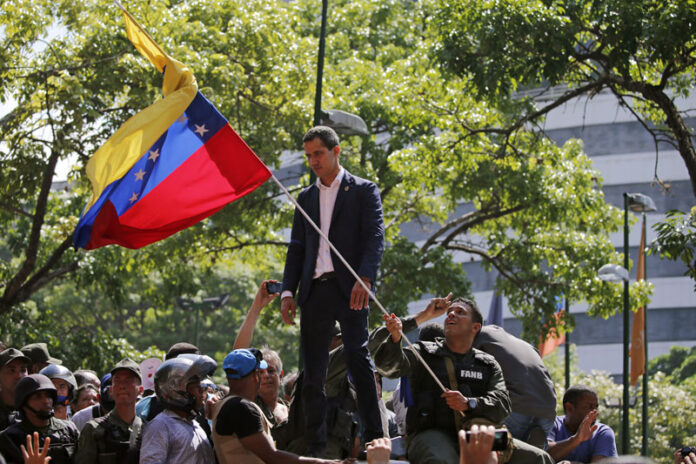
Venezuela's opposition leader and self-proclaimed President Juan Guaido stands before supporters as he addresses them outside La Carlota military air base in Caracas, Venezuela, Tuesday, April 30, 2019. Guaidó, accompanied by civilian protesters and a small contingent of heavily armed troops, called Tuesday for the military to rise up and oust socialist leader Nicolas Maduro. Photo: Fernando Llano / AP

CARACAS, Venezuela — Venezuelan opposition leader Juan Guaidó, accompanied by civilian protesters and a small contingent of heavily armed troops, called Tuesday for the military to rise up and oust socialist leader Nicolás Maduro. Here’s a timeline of recent events leading up to that revolt:

___

February 2014 — Opposition leader Leopoldo López is jailed after turning himself in to authorities on charges including terrorism and incitement to riot. He is later transferred to house arrest.

Jan. 5, 2019 — Venezuela’s opposition-controlled congress installs 35-year-old Juan Guaidó as president of the legislature. Guaidó calls President Nicolás Maduro a dictator.

Jan. 10 — Maduro is sworn in for a second term as president, but most Latin American countries, the United States and Canada denounce his government as illegitimate, arguing his re-election was a farce.

Jan. 15 — Opposition lawmakers try to pry the military’s loyalty away from Maduro, offering protection to members of the armed forces who support a transitional government.

Jan. 21 — Security forces put down a pre-dawn uprising by national guardsmen that triggered violent street protests. Socialist party chief Diosdado Cabello says at least 27 guardsmen were arrested.

Jan. 23 — Guaidó declares himself interim president before thousands of cheering supporters. The U.S. recognizes him as president and dozens of nations including Canada, Brazil, Argentina and Colombia follow suit.

AP19120602970692
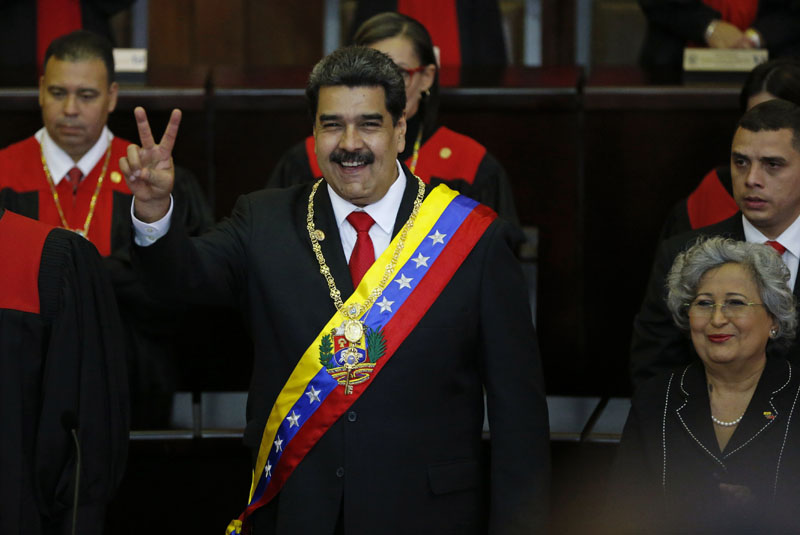
In this Jan. 10, 2019 file photo, Venezuela’s President Nicolas Maduro flashes a vee for victory during his swearing-in ceremony at the Supreme Court in Caracas, Venezuela. Maduro was sworn in for a second term as president, but most Latin American countries, the United States and Canada denounced his government as illegitimate, arguing his re-election was a farce. Photo: Ariana Cubillos / AP

Jan. 28 — The Trump administration sanctions Venezuela’s state-owned oil company, cutting off one of Maduro’s most important sources of income and foreign currency along with around $7 billion in assets of state-owned Petroleos de Venezuela SA. National Security Adviser John Bolton warns that any move by Maduro against Guaido “will be met with a significant response.”

Feb. 4 — More than a dozen European Union countries endorse Guaidó as the country’s interim president.

Feb. 22 — Defying orders banning him from leaving Venezuela, Guaidó appears at a star-studded aid concert in neighboring Colombia, joining thousands of other Venezuelans in pressuring Maduro to allow the delivery of U.S.-backed emergency food and medicine convoys.

Feb. 23 — Venezuelan security forces fire tear gas on protesters trying to deliver aid from Colombia and Brazil, leaving two people dead and some 300 injured. Troops block bridges to prevent the convoys.

March 7 — Much of Venezuela plunges into darkness for several days during the nation’s largest-ever blackout.

March 12 — The United States says it is withdrawing its last diplomats still in Caracas.

March 13 — Widespread looting is reported during blackouts in Maracaibo, Venezuela’s second-largest city.

March 18 — Colombia says about 1,000 members of the Venezuelan security forces have fled to Colombia since February, giving up weapons and uniforms as they abandon Maduro’s government.

March 21 — Intelligence agents detain Guaidó’s top aide.

March 25 — A new power outage spreads across much of Venezuela, knocking communications offline and stirring fears of a repeat of the chaos.

March 27 — Russia’s Foreign Ministry says that Russian military personnel have arrived in Venezuela to support Maduro.

March 29 — The International Federation of Red Cross and Red Crescent Societies says it will start distributing assistance to an estimated 650,000 people in Venezuela — an action permitted by Maduro’s government.

April 2 — A specially formed constitutional assembly loyal to Maduro strips Guaidó of parliamentary immunity, paving the way for possible prosecution for allegedly violating the constitution by declaring himself interim president.

April 30 — Guaidó takes to the streets with activist López and a small contingent of heavily armed troops in a bold and risky call for the military to rise up and oust Maduro.

Advertisement

Future Forward May Sue EC For Dereliction of Duty: Piyabutr

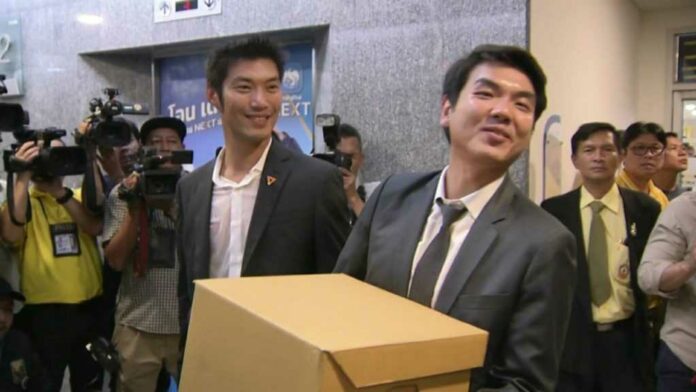
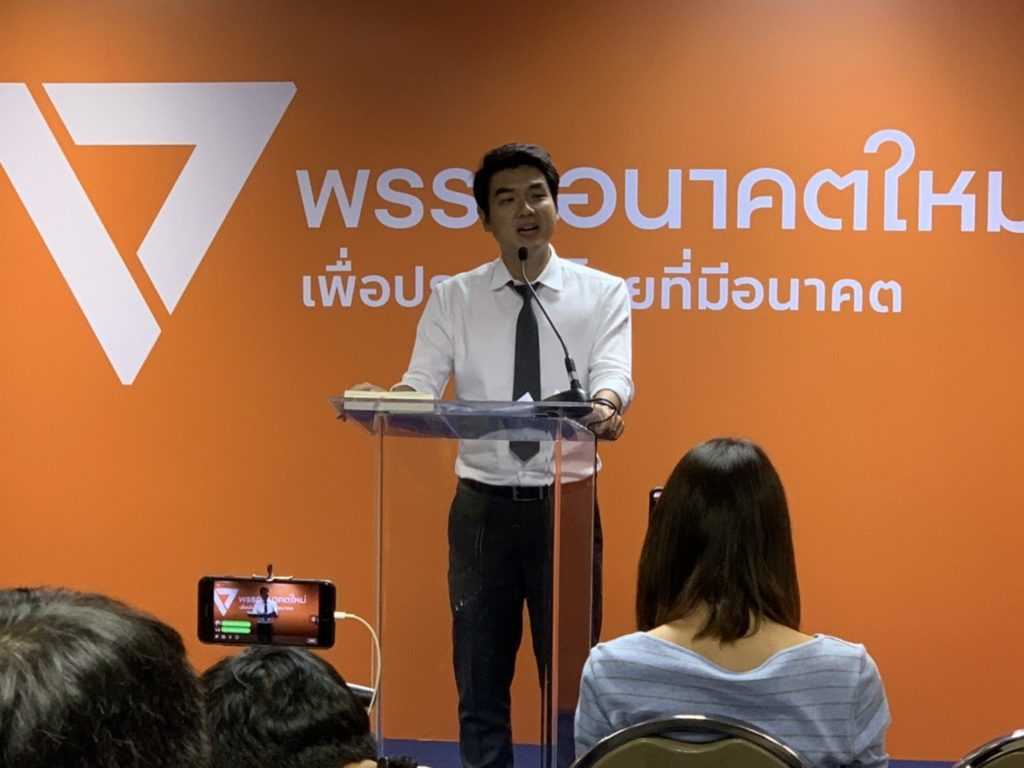
Future Forward Party leader Thanathorn Juangroongruamgkit, left, and party secretary general Piyabutr Saengkanokkul, right, at the Election Commission on Tuesday. Photo: Matichon

BANGKOK — Future Forward Party has threatened to sue the Election Commission for dereliction of duty if the commission goes ahead with a new formula for allocating party-list MPs that could see the party lose up to eight seats.

Piyabutr Saengkanokkul, secretary general of Future Forward Party, announced at a press conference this morning that the new formula could see his party lose seven or eight seats, down from a projected 88 MPs.

Under a previous formula released by the commission prior to the March 24 elections, it was expected that a party would need to win over 71,056 votes in order to gain one party-list MP seat. But under the latest formula being entertained, 30,000 to 69,000 votes may suffice – a lowering of the threshold that comes at the expense of parties with a large share of the popular vote, such as Future Forward.

“Future Forward Party may be directly and adversely affected…We reserve the right to take legal measures,” said Piyabutr, adding that Article 157 of the Criminal Code and Article 69 of the Election Commission Act both outlaw dereliction of duties by state official and organs.

Piyabutr added that under the Election Commission Act, commissioners could face up to five years in prison, fines of no more than 100,000 baht and the suspension of their electoral rights for 10 years. The maximum imprisonment term is 10 years for violating Article 157 of the Criminal Code.

In a related development, Meechai Ruchuphan, former chairman of the junta-appointed constitutional drafting committee, declined on Tuesday to comment on the appropriate formula for allocating party-list MPs. Meechai told reporters that he has completed his duty and that it’s now up to the Election Commission to make a decision on the matter.

Meanwhile, Future Forward Party leader Thanathorn Juangroongruangkit has submitted a box of evidence in support of his claim that he transferred his shares in the media company V-luck before running for a seat in parliament. Last week, the Election Commission accused Thanathorn of failing to transfer the shares before he registered his candidacy, which would constitute a violation of electoral law.

“I am feeling very good and very confident about making the clarification,” said Thanathorn on Tuesday.

Future Forward Party secretary-general Piyabutr Saengkanokkul.
Advertisement

Gov’t Hopeful Thai Massage Gets UNESCO Recognition

Image: Roberto Faccenda / Flickr

BANGKOK — The government said Tuesday it has petitioned the United Nations to recognise Thai massage as part of its intangible heritage.

Speaking to reporters today, Culture Minister Veera Rojpojanara said UNESCO will convene to make its decision in November. If accepted, Thai massage – or nuad thai – will be Thailand’s second entry in UNESCO’s intangible world heritage list. Last year, the agency granted a similar status to Thai traditional masked dance.

“We have already submitted it,” Veera said. “Right now it is under consideration.”

He said he has high hopes that UNESCO will recognize Thai massage as an important part of Thai culture.

“We have submitted very detailed information,” Veera told reporters. “And we have high expectations, because Thai massage is considered part of Thailand’s unique intangible heritage.”

In its submission, the Thai government said there are about 25,000 practitioners of the craft nationwide. It also said Thai massage is a manifestation of folk knowledge of the body’s workings that has been passed down for centuries.

“Nuad Thai is considered part of the art, science and culture of Thai traditional healthcare,” the government said in its application.

About 50 entries around the world are vying this year for recognition in UNESCO’s prestigious list of intangible heritage – a distinction given to oral traditions, performing arts, social practices, rituals, festivals and more.

Related stories:

Khon of Thailand, Khol of Cambodia Recognized by UNESCO

Advertisement

Hot News

LATEST NEWS

Bangkok
overcast clouds
28.8 ° C
28.8 °
28.8 °
81 %
3.6kmh
100 %
Mon
32 °
Tue
35 °
Wed
33 °
Thu
33 °
Fri
29 °