30 C
Bangkok
Monday, June 29, 2026
Home Blog Page 1641

Malaysia Revives China-Backed Rail Link

In this Aug. 30, 2018, file photo, a security official stands near a display showing different models of Chinese trains at a maintenance yard during a media tour ahead of the 2018 Forum on China-Africa Cooperation in Beijing. Photo: Mark Schiefelbein / Associated Press

KUALA LUMPUR, Malaysia — Malaysia’s government said Friday it has decided to resume a China-backed rail link project, after the Chinese contractor agreed to cut construction cost by one-third.

The deal ended months of vacillating over the 688-kilometer (430-mile) East Coast Rail Link, which connects Malaysia’s west coast to eastern rural states and is a key part of China’s Belt and Road infrastructure initiative.

The prime minister’s office said in a statement it welcomed the signing of a supplementary agreement between Malaysia Rail Link Sendirian Berhad and state-owned China Communications Construction Company Ltd. to revive the project. The agreement covering engineering, construction and other aspects of the project followed months of negotiations.

It said the construction cost of the first two phases of the project will be cut to 44 billion ringgit ($10.7 billion), down one-third from the original cost of 65.5 billion ringgit ($15.9 billion).

“This reduction will surely benefit Malaysia and lighten the burden on the country’s financial position,” the statement said. Prime Minister Mahathir Mohamad will give further details at a news conference on Monday, it added.

Since winning elections last May, Mahathir’s government has axed or reviewed large-scale infrastructure projects to rein in a surging national debt that it blames mostly on corruption in the previous government.

The government last year suspended works on the rail link pending renegotiations.

Mahathir initially suggested the rail project will be called off because the high cost could burden the country with debts for decades. But he later said negotiations were ongoing and the government hadn’t made a final decision.

The project is largely financed by China and the main contract was awarded in 2016 to CCCC by former Prime Minister Najib Razak. Mahathir’s government has said the final cost could balloon to over 100 billion ringgit ($24.2 billion) but bids to terminate the project pose a challenge to the government, which has to pay compensation and risk angering China, Malaysia’s largest trading partner.

Apart from the rail link, the government last year also cancelled two China-backed pipelines costing 9.3 billion ringgit ($2.3 billion) after discovering that 90 percent of the project’s costs had been paid but only 13 percent of work had been completed.

The government has said it is investigating whether any money in the rail project has been channeled by Najib’s government to repay debts at the 1MDB state investment fund. A massive financial scandal at 1MDB led to the shocking election loss of Najib’s coalition last May and Najib is currently on trial for multiple corruption charges linked to 1MDB.

Story: Eileen Ng

Advertisement

Drunk Driving Businessman Who Killed Cop Gets Murder Charge

Police and rescue workers stand at the scene of car crash Thursday night that killed a policeman and his wife in Bangkok.

BANGKOK — A businessman was charged with murder and drink driving on Friday for a car crash in western Bangkok that killed a police officer and his wife.

Police said Somchai Varojpiputhn, a 57-year-old owner of mechanical parts manufacturer, was arrested last night after his silver Mercedes-Benz collided with the officer’s car. The crash occurred just before midnight when the officer was on the road with his family in Bangkok’s Thawi Watthana district.

Lt. Col. Jatuporn Ngamsuwitchakul of the Crime Suppression Division, who was driving, died at the scene. His wife, Nuchanat Ngamsuwitchakul, died later at a hospital. Their 16-year-old daughter was critically injured and is being treated in an intensive care unit.

Investigators said Somchai was unhurt and appeared heavily intoxicated when they arrived at the scene. His blood alcohol level was later found to be in excess of the legal limit.

Somchai has been charged with multiple serious counts including murder, attempted murder, and fatal drunk driving. Police said he confessed to drinking four to five bottles of beer with friends at a nearby golf course before heading out at 11pm. He told police he then blacked out and woke up at the crash scene.

Police spokesman Wirachai Songmetta said the murder charge was included because Somchai knew he was too drunk to drive.

“He drove for just 400 meters before causing the crash by gliding into the wrong lane. The passing car was unable to divert because the road has only two lanes,” he said. “He must have realized the possible consequences as soon as he drove his car onto the road.”

Gen. Wirachai added that damage from the crash suggests Somchai was also speeding.

If convicted of murder, Somchai faces a prison term of up to 20 years or the death penalty. Police said he pleaded guilty to drink driving but maintained his innocence of murder and attempted murder.

Somchai has been identified as the owner of Thai Carbon & Graphite Co., Ltd., which claims on its website to be “the largest manufacturer of industrial brushes and mechanical carbon in Southeast Asia.”

Advertisement

Message of Love and Unity for Songkran From Junta Leader

Image: Prayut Official / Facebook

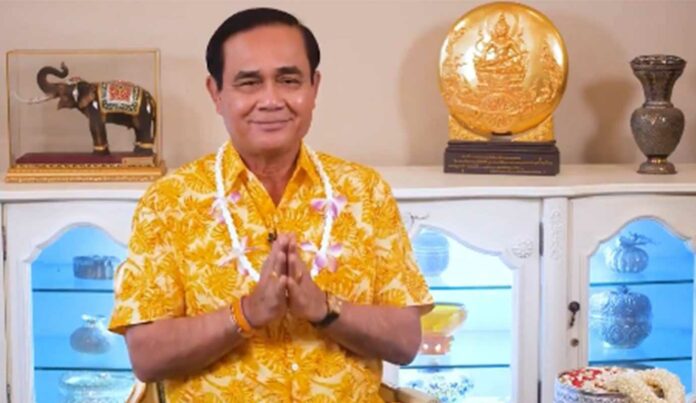
BANGKOK — Junta leader Gen. Prayuth Chan-ocha sent Thai New Year greetings asking people to unite to build the nation.

“Songkran falls on April 13, which is also considered the Day of the Elderly. Additionally, April 14 is also Family Day. I would like to ask all families to care for one another, be it both fathers and mothers, siblings, aunts and uncles, grandmothers and grandfathers. To love and respect one another is a demonstration of filial piety, which is a Thai charm that can no longer be found elsewhere in the world,” said Prayuth in a message released on social media on Friday.

The message came with a photo of Prayuth prostrating while wearing a yellow floral shirt and garland. He also emphasized his wish that all Thais be united.

“I would like to call upon all Thais to unite in love and strength and to turn this into a power for nation-building, to walk forward securely and sustainably,” said Prayuth, who made himself prime minister after the May 2014 coup.

Advertisement

Journalism Or Not? WikiLeaks’ Status in Media World Complex

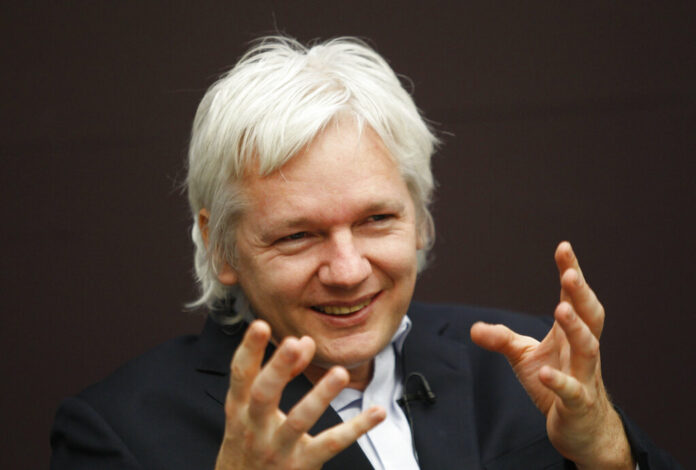
In this Dec. 1, 2011, file photo, WikiLeaks founder Julian Assange gestures as he speaks during a news conference in central London. Photo: Lefteris Pitarakis / Associated Press

NEW YORK — After the arrest of WikiLeaks founder Julian Assange in London, his lawyer was quick to characterize it as an assault against the rights of journalists all over the world who seek to uncover secrets.

But was it quite that clear? Does WikiLeaks do journalism, or is it something else?

The answer wasn’t evident when the organization burst into public consciousness at the top of this decade with the release of government documents about the wars in Iraq and Afghanistan. It seems even less so now.

Launched in 2006 as the vision of Australian computer hacker Assange, WikiLeaks produced raw data, not stories — things like Sarah Palin’s personal emails or membership rolls of neo-Nazi organizations. The thousands of memos, cables and other documents about U.S. war efforts revealed when Assange allegedly conspired with Chelsea Manning to break into a Pentagon computer took WikiLeaks to another level. Some viewed Assange as a hero, others as a traitor.

Either way, it was a heady time. WikiLeaks was considered a new type of news organization, fueled by the power of the Internet and democratization of information.

“There is a desperate need for our work,” WikiLeaks member Sarah Harrison explained in a 2016 column in The New York Times. “The world is connected by largely unaccountable networks of power that span industries and countries, political parties, corporations and institutions. WikiLeaks shines a light on these by revealing not just individual incidents, but information about entire structures of power.”

The organization’s methods can be — and sometimes are — seen as a threat to the journalism’s traditional gatekeepers of power. But journalism has encompassed many traditions over the decades and centuries.

WikiLeaks has been an influence in two positive trends for journalism over the past decade, says Lisa Lynch, a journalism professor at Drew University who has written about the organization. It emphasized the importance of data-driven journalism, an increasingly valuable tool. Since WikiLeaks was often willing to work with traditional outlets in how it released data, it encouraged news organizations to cooperate more in chasing stories. The 2016 “Panama Papers” investigation that revealed the offshore financial havens of political leaders showed what can happen when journalists team up.

Despite utopian ideals, though, real life is more complicated.

Information isn’t always merely information; government files can reveal wartime informants and put people’s lives in danger. And information can be weaponized through decisions about what to reveal and what not to reveal. For example: Many people saw Assange’s decision to publish the private emails of Hillary Clinton’s campaign chairman as a sign of coziness with Russia and a contributing factor in Donald Trump’s election as president.

Yet some of history’s most prominent journalists have been advocates as well, and have expressed clear points of view.

Upton Sinclair, a progressive “muckraker” in the early 20th century, made no secret of the fact that his exposé of the meatpacking industry, “The Jungle,” was an attempt at jump-starting reform. “I aimed at the public’s heart, and by accident I hit it in the stomach,” he wrote later. Today, news outlets across the political spectrum, from The National Review to Mother Jones, from Fox News to MSNBC, are considered to be journalism — albeit delivered from a distinct vantage point.

Add into the mix the rise of blogging and social media, which permit anyone with an internet connection to use the term “journalist” and be immediately and globally amplified, and the result is ambiguity about who is a journalist and who isn’t.

In that environment, Assange, too, presents an ambiguous image.

“I had trouble seeing him as a journalist from the start,” said Columbia University journalism professor Todd Gitlin, a frequent writer about the media. “But he certainly was a publisher. It turns out he was not just any old publisher, he was a publisher with a distinct angle. And his angle is anti-democratic.”

Certainly Assange, a prickly personality who may never be forgiven by many Democrats for WikiLeaks’ role in the 2016 election, doesn’t cut a sympathetic figure. Does that disqualify him from the mantle of journalist, though?

“People feel very differently about WikiLeaks now than they did in 2010,” Lynch said. “There’s no doubt about that. I feel very differently about WikiLeaks now. But that doesn’t mean I’m not just as concerned about what happens to WikiLeaks going forward.”

She added: “If we start drawing boxes around who is or isn’t a journalist in court and the conversation becomes about the way WikiLeaks used information, then we might end up with unintended consequences.”

David Boardman, dean of Temple University’s communications school and chairman of The Reporters Committee for Freedom of the Press, said one key thing sets WikiLeaks apart from news organizations: the accusations that Assange acted illegally with Manning to obtain the war documents.

“I consider it something different,” said Boardman, the former executive editor of The Seattle Times. “I don’t consider it a journalistic organization.”

Boardman considers the U.S. government’s case against Assange, as it is now outlined, as narrowly based upon his actions with Manning and thus not threatening to journalists. Others consider this a narrow reading of the case — one fueled, perhaps, by a discomfort with Assange’s methods and the idea of whether he should be considered a journalist at all.

Journalist Glenn Greenwald, himself no stranger to controversies about the release of information, tweeted Thursday: “If you’re a U.S. media star who has spent two years claiming to be so concerned about press freedoms over Trump’s mean tweets about your friends, but don’t raise your voice in protest over this grave attack on press freedom, take a hard look in the mirror.”

Story: David Bauder

Advertisement

Govt Mulls Tax Hike on Non-Alcoholic Beer

Photo: Igor Ovsyannykov / Pixabay

BANGKOK — The government said it’s considering a tax increase on alcohol-free beer in order to discourage drinkers from eventually switching to alcoholic drinks.

Patchara Anantasilpa, director general of the Excise Department, announced Thursday a possible increase in tax on zero-alcohol beer, a recent entry into the Thai beverage market.

Patchara said that the Health Ministry wants non-alcoholic beers to be branded as “malt drinks” instead of “beer” on the basis of public health concerns. He reasoned that once drinkers develop a taste for non-alcoholic beers, they will likely progress to the alcoholic version.

Non-alcoholic beer is currently taxed at 14 percent – around 5 to 12 baht per can – making prices anywhere between 39 to 99 baht per can. This is compared to the 22-percent tax slapped on alcoholic beer, according to Patchara.

Patchara added that there should be clarity on the matter after Songkran, or later next week. He also said that cough syrups, which sometimes contain minor amounts of alcohol, could be affected by the tax increase if approved. This is because non-alcoholic beer or “malt drinks” are actually defined by alcohol contents of 0.5 percent.

Advertisement

Boeing Makes 96 Flights to Test Software on Troubled Max Jet

A Boeing 737 MAX 8 airplane being built for India-based Jet Airways, top, lands following a test flight, Wednesday, April 10, 2019, at Boeing Field in Seattle. Photo: Ted S. Warren / Associated Press

DALLAS — Boeing’s CEO says crews have made 96 flights to test a software update for its troubled 737 Max jet and will make more in coming weeks as the company attempts to convince regulators to let the plane fly again.

Dennis Muilenburg also said Thursday that the company has met with pilots and airline officials in the U.S. and abroad, holding flight-simulator sessions to demonstrate the software changes.

The Federal Aviation Administration, which will consider whether the plane can resume flying in the U.S., plans to meet Friday with safety officials and pilots from American, Southwest and United, the three U.S. carriers that were using the Max jet.

An FAA spokesman said the agency wants to hear from the airlines and pilots before deciding what Boeing must do before the plane is allowed to fly.

Regulators around the world grounded the Max last month after deadly crashes involving the plane in Indonesia and Ethiopia.

In both cases, faulty information from a sensor caused anti-stall automation to kick in when it wasn’t needed and push the plane’s nose down. Pilots struggled to counter the plane’s actions but were unable to avoid crashing.

Regulators in Europe and China are conducting their own reviews of the plane, and company insiders and analysts expect foreign regulators to take longer than the FAA to approve the Max’s return to service.

Boeing representatives have visited the United Kingdom, Singapore and China to discuss its work on the Max with pilots and airline officials, including demonstrating the software update in flight simulators, Muilenburg.

The Boeing CEO spoke during a leadership forum at the George W. Bush Presidential Center in Dallas, as the former president sat in the front row. Muilenburg did not take any questions, and left immediately after his remarks.

Separately, Sen. Edward Markey and other Senate Democrats introduced a bill that would require aircraft makers to provide airlines with all safety equipment now considered optional and to do it at no extra charge.

The planes that crashed in Indonesia and Ethiopia did not have two optional displays that might have alerted the pilots to the malfunctioning sensors suspected of playing a role in the crashes. Markey said if they had been installed, the crashes might have been avoided.

The Air Line Pilots Association endorsed the legislation.

A Boeing spokesman said the company’s planes are equipped with “all critical features” necessary for safety. Boeing has said it will provide the two displays free of charge in the future.

Story: David Koenig

Advertisement

S. Korean Babies Born Dec. 31 Become 2-Year-Olds Next Day

In this April 9, 2019, photo, Lee Dong Kil's daughter Lee Yoon Seol sits to celebrate her the 100th day of the birth at Lee's house in Daejeon, South Korea. Photo: Ahn Young-joon / Associated Press

DAEJEON, South Korea — Just two hours after Lee Dong Kil’s daughter was born on New Year’s Eve, the clock struck midnight, 2019 was ushered in, and the infant became 2-years-old. She wasn’t alone, though it happened for her quicker than most: Every baby born in South Korea last year became 2 on Jan. 1.

According to one of the world’s most unusual age-calculating systems, South Korean babies become 1 on the day of their birth and then get an additional year tacked on when the calendar hits Jan. 1. A lawmaker is working now to overturn the centuries-old tradition amid complaints that it’s an anachronistic, time-wasting custom that drags down an otherwise ultramodern country.

For parents whose babies are born in December, it can be especially painful. One hour after his daughter’s birth in the central city of Daejeon at 10 p.m. on Dec. 31 of last year, Lee posted the news on social media. His friends immediately showered him with congratulatory messages.

“An hour later, when the New Year began, they phoned me again to say congratulations for my baby becoming 2-years-old,” said Lee, who is 32 internationally but 34 in South Korea. “I thought, ‘Ah, right. She’s now 2 years old, though it’s been only two hours since she was born. What the heck!'”

The origins of this age reckoning system aren’t clear. Being 1 upon birth may be linked to the time babies spend in their mothers’ wombs or to an ancient Asian numerical system that didn’t have the concept of zero.

Becoming a year older on Jan. 1? That’s even harder to explain.

It could be that ancient Koreans cared a lot about the year in which they were born in the Chinese 60-year cycle, but, without regular calendars, didn’t care much about the specific day they were born; so they mostly ignored the day of their birth and instead marked another year of age on the day of the Lunar New Year, according to senior curator Jung Yonhak at the National Folk Museum of Korea.

This may have then shifted to the solar New Year on Jan. 1 as the South began embracing the Western calendar. North Korea uses the Western age calculating system, but they have a twist: they follow their own calendar that’s based on the birth of national founder and president-for-life Kim Il Sung.

The year of your birth is still incredibly important in South Korea, and lumps those linked children together for life.

Other Asian countries, including Japan and Vietnam, abandoned the Chinese-style age system amid an influx of Western culture. Officially, South Korea has used Western-style calculations since the early 1960s. But its citizens still embrace the old-fashioned system in their daily lives because the government has done little to get people to change over to the Western style.

Most South Koreans are simply accustomed to living with two ages.

People don’t hold massive joint birthday parties on New Year’s Day; they just celebrate their birthday on the days they were born. Young people consider themselves another year old on solar New Year’s Day (Jan. 1) while older people often use the Lunar New Year’s Day. Many family restaurants don’t charge babies if they are 36-months-old or younger, so parents often calculate their babies’ ages under the Western method when they’re dining out.

Some South Koreans still worry that the practice makes their nation look odd on the international stage. Some feel confusion when meeting with foreigners. Associated Press journalists in Seoul must ask Koreans what year and month they were born to calculate their Western age for news stories.

There are also some who say the concept of “Korean age” encourages a fixation on age-based social standing in this seniority-based country. In South Korea, those born in the same year often treat each other as equals, while people must use honorific titles to address those born earlier, rather than directly using their names.

Ahn Chang-gun, from the southeastern city of Gimhae, said he felt “empty” when his first child became 2 on Jan. 1, 2013, about two weeks after his wife delivered him after eight years of marriage. “He was this precious baby that we finally had, but I felt that all of a sudden two years had just gone by and yet I hadn’t done anything for my baby,” said Ahn.

Parents whose babies are born in December often worry about their kids falling behind other children born earlier in the same year, though worries gradually disappear as their children age.

When Seo Hyo Sun from Buchon, just west of Seoul, was taken to the hospital to get a cesarean section on Dec. 29, she couldn’t stop weeping because her baby’s due date was supposed to be Jan. 7.

“Tears kept flowing. … My doctor told me the baby wanted to come out today so let’s just celebrate,” said Seo, 31 in international age. “When I awoke from my anesthesia, I felt really grateful … because my baby was born healthy. That was enough.”

In January, lawmaker Hwang Ju-hong tabled a bill aimed at requiring the government to put international ages in official documents and encouraging general citizens to go with their international ages in everyday life. It’s the first legislative attempt to abolish “Korean age.”

“It is aimed at resolving confusion and inefficiency caused by the mixed use of age-counting systems,” Hwang said in the proposed legislation.

Hwang’s office said a parliamentary committee discussion and a public hearing on the issue are expected in coming months.

Surveys in recent years showed more South Koreans supported international age though it wasn’t clear how seriously they wanted a change.

“If we use international age, things could get more complicated because it’s a society that cares so much about which year you were born,” said Lim KyoungJae, 46, head of the Seoul-based Miko Travel agency. “We should also definitely count the time of a baby being conceived and growing in its mother’s womb.”

Lim’s employee Choi Min Kyung, who is 26 internationally and 28 in South Korea, disagreed.

“It’s good to be two years younger … (especially) when you meet men” on blind dates, Choi said with a laugh. “There is a big difference between 26 and 28.”

Story: Hyung-jin Kim

Advertisement

46 Road Deaths on Songkran’s 1st ‘Dangerous Day’

A rescue worker stands near the scene of a fatal car accident early Thursday morning in Kanchanaburi province.

BANGKOK — Nearly 500 road accidents have already killed 46 people on the first day of the “seven dangerous days” of Songkran.

The Department of Disaster Prevention today said drunk driving was the No.1 cause of the accidents Thursday throughout the country, followed by speeding. Nearly 80 percent of the accidents, which have injured 482 people, involved motorcycles.

Officials said more than 163,000 people were arrested and charged with violating traffic laws yesterday.

The seven-day period, infamous for high road carnage, began Thursday and will last through Wednesday.

In 2018, the number of people killed in road accidents during the annual holiday was 418, slightly lower than the decade-high death toll of 442 in 2016.

Related stories:

Songkran Death Toll Surges to 418

39 Die on 1st ‘Dangerous Day’ of Songkran

Advertisement

Disney Unveils New Streaming Service to Debut Late This Year

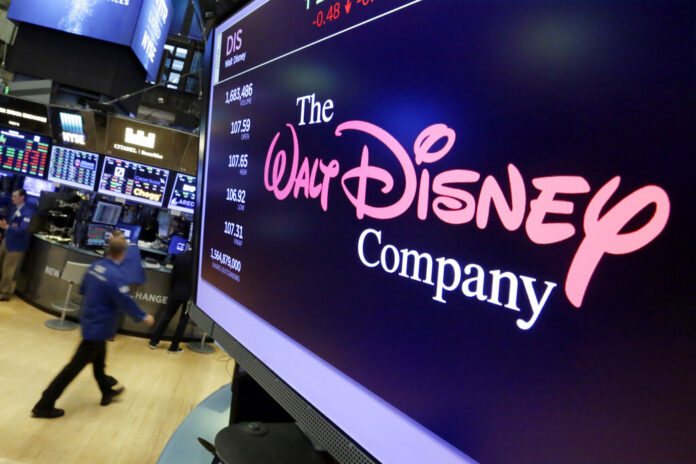
In this Aug. 8, 2017, file photo, The Walt Disney Co. logo appears on a screen above the floor of the New York Stock Exchange. Photo: Richard Drew / Associated Press

SAN FRANCISCO — Disney raised the curtain on a hotly anticipated video steaming service that’s aiming to topple industry pioneer Netflix, once a valuable ally of the Magic Kingdom.

The service, called Disney Plus, has been in the works for more than year, but Thursday marked the first time that the longtime entertainment powerhouse has laid out plans for its attack on Netflix and a formidable cast of competitors, including Amazon, HBO Go and Showtime Anytime.

Disney Plus will roll out in the U.S. on November 12 at a price of $6.99 per month, or $69.99 per year. That’s well below the $13 monthly fee Netflix charges for its most popular streaming plan, signaling Disney’s determination to woo subscribers as it vies to become a major player in a field that has turned “binge watching” into a common ritual.

Like Netflix, Disney Plus will be free of ads. Subscribers will be able to download all of the shows and movies on Disney’s service to watch offline.

Netflix will still have a far deeper video programming lineup after spending tens of billions of dollars during the past six years on original shows such as “House of Cards,” ”Stranger Things” and “The Crown.”

But Disney Plus will be able to draw upon a library of revered films dating back several decades while it also forges into original programming. Its animated classics, including “Aladdin” and “The Jungle Book” will be available on the service when it launches.

New shows already on tap include “The Mandalorian,” the first live action “Star Wars” series, created by Jon Favreau; a prequel to the “Star Wars” film “Rogue One,” starring Diego Luna; a series about the Marvel character Loki, starring Tom Hiddleston; a rebooted “High School Musical” series; and a new documentary series focused on Disney.
Disney is approaching the streaming industry from a “position of strength, confidence and unbridled optimism,” CEO Bob Iger said Thursday. Iger has led the company since 2005 and expects to step down when his contract ends in 2021.

The service’s entire lineup will cover five categories: Disney, Pixar, Marvel, Star Wars and National Geographic.

Although Disney has an enviable track record of producing shows and films that attract huge audiences, its attempt to build its own Netflix is risky. To make the leap, Disney ended a lucrative licensing relationship with Netflix, which had become the video streaming home for its latest films after their theatrical release, as well as many of its TV series and classic movies.

But now movies that came out in 2019, and going forward, will be streamed only on Disney Plus. That includes “Captain Marvel,” which came out earlier this year; “Avengers: Endgame,” which debuts in late April; and the upcoming “Toy Story 4,” live-action movies “The Lion King” and “Aladdin;” and “Star Wars Episode IX.”

In many ways, it’s hard to compare Netflix with Disney because of the widely different types of shows each offers, said eMarketer analyst Paul Verna.

“The interesting thing is both companies have ended up in the same place, but they’ve come to it from vastly different backgrounds,” he said.

Disney will also contend with a new streaming service from Apple, which is expected to be released in the fall. Apple has not yet said how much its service will cost or when exactly it will launch.

Last month, Disney completed its biggest deal yet with its $71 billion acquisition of Fox’s entertainment business. The first 30 seasons of “The Simpsons” will now stream exclusively on Disney Plus.

The Fox takeover helps Disney tighten its control over TV shows and movies from start to finish — from creating the programs to distributing them though television channels, movie theaters, streaming services and other avenues. Disney will also get valuable data on customers and their entertainment-viewing habits, which it can then use to sell advertising.

The Fox deal also gave Disney a controlling stake in Hulu. Iger has said Hulu will continue to offer general entertainment programming while Disney Plus will be focused on family fare.

Along with its strong brand, Disney has the advantage of having a clear strategy for each of its streaming services, Verna said, including Disney Plus, Hulu and ESPN Plus. Disney executives hinted the company would “likely” bundle the three at a discounted price, but declined to give more details.

Terminating its deal with Netflix will cost Disney about $150 million in licensing revenue alone during its current fiscal year ending in September.

Disney is betting its new service will quickly offset that. By dangling a mix of familiar franchises and beloved animated classics, along with original programming, it figures the new service will be irresistible to families, even if they already subscribe to other services. It expects Disney Plus to be profitable during its 2024 fiscal year.

The plunge into video streaming is likely to confront Disney with new challenges. One of the biggest dilemmas will center on how long Disney waits after a new film’s theatrical release to make it available on its new streaming service.

Disney said movies would become available on its streaming service only after the traditional theatrical release period and home movie debut, which includes DVDs and purchasing streaming videos. That puts its schedule behind that of some competitors. Netflix films such as the award-winning “Roma” and “The Ballad of Buster Scruggs” have either become available for streaming on the same day or just a few days after their short runs in theaters.

With nearly 140 million worldwide subscribers, Netflix already has proven its mettle while warding off one competitive threat after another in the 12 years since it pivoted from DVD-by-mail rentals to video streaming.

Now, Netflix is locking horns with a company that has been steadily expanding upon its Disney franchise during a shopping spree that has seen it snap up other major studios.

Story: Mae Anderson and Michael Liedtke

Advertisement

WikiLeaks’ Assange Arrested in London, Withdrawn Asylum Status

In this file photo dated Friday May 19, 2017, watched by the media WikiLeaks founder Julian Assange looks out from the balcony of the Ecuadorian embassy prior to speaking, in London. Photo: Matt Dunham / Associated Press

LONDON — Ecuador’s president said Thursday his government withdrew asylum status for WikiLeaks founder Julian Assange in Ecuador’s embassy in London, citing “repeated violations of international conventions and daily-life protocols.”

Lenin Moreno announced the “sovereign decision” in a statement accompanied by a video on Twitter after police in London said they’ve arrested Assange at the Ecuadorean embassy on a court warrant dating back to 2012, almost seven years after he sought refuge there.

In a statement, police said Assange has been taken into “custody at a central London police station where he will remain, before being presented before Westminster Magistrates’ Court as soon as is possible.”

Assange hasn’t left the embassy since August 2012 for fear that if he steps off Ecuador’s diplomatic soil he will be arrested and extradited to the U.S. for publishing thousands of classified military and diplomatic cables through WikiLeaks.

Advertisement

Hot News

LATEST NEWS

Bangkok
overcast clouds
30 ° C
35 °
30 °
52 %
7.3kmh
100 %
Mon
30 °
Tue
34 °
Wed
32 °
Thu
32 °
Fri
31 °