































30 C
Bangkok
Sunday, June 28, 2026
Home Blog Page 1665

FAA’s Close Ties to Boeing Questioned After 2 Deadly Crashes

A Southwest Airlines Boeing 737-300 before touching down in 2007 at McCarran International Airport in Las Vegas, Nevada, United States. Photo: Brian / Wikimedia Commons

For more than six decades, the Federal Aviation Administration has relied on employees of airplane manufacturers to do government-required safety inspections as planes are being designed or assembled.

But critics say the system, dubbed the “designee program,” is too cozy as company employees do work for an agency charged with keeping the skies safe while being paid by an industry that the FAA is regulating.

“There is a potential conflict of interest,” said Todd Curtis, a former Boeing Co. safety engineer and creator of airsafe.com, a website that focuses on airline safety. “They (the FAA) don’t have the money to do all of the oversight. It’s a question of being practical.”

The FAA’s oversight duties are coming under greater scrutiny after deadly crashes involving Boeing 737 Max jets operated by airlines in Ethiopia and Indonesia, killing a total of 346 people. The U.S. was nearly alone in allowing the planes to keep flying until it relented on Wednesday after getting satellite evidence showing the crashes may be linked.

The FAA concedes that it doesn’t have resources to keep up with a growing aviation industry, and experts say it lacks the personnel to inspect every component, especially those made in other countries. But the agency says the program’s results speak for themselves. The U.S. has the safest skies in the world. Until April of last year, U.S. passenger airlines had not had a fatality since 2009, while carrying several billion passengers.

But safety experts say it’s time to look into the agency’s relationship with Boeing. The FAA’s ties to the company were revealed when Boeing and the agency released similar messages shortly after the Indonesian airliner crashed in October and again this week, when the FAA announced that Boeing would upgrade the Max’s flight-control software, said Mary Schiavo, a former Transportation Department inspector general.

With the messages, the FAA “revealed that they were just parroting what Boeing told them,” she said.

The agency needs more people with technical skills to adequately monitor a company that makes machines as sophisticated as today’s jets, she said, contending that it didn’t understand the Max’s flight-control computer program.

“The FAA readily states they don’t understand the 4 million lines of code and the 150 computers,” Schiavo said. “What they do is see that Boeing followed the process, they checked the FAA boxes. The public thinks the FAA has more involvement.”

Indeed, the agency’s own website says that employees of manufacturers can approve design changes and aircraft repairs. “Using designees for routine certification tasks allows the FAA to focus its limited resources on safety critical certification issues,” it says.

Congress will examine the relationship between Boeing and the FAA. Rep. Peter A. DeFazio (D-Ore.), chairman of the House Transportation and Infrastructure Committee, said he would hold hearings on the FAA’s process for approving the planes.

The agency’s practice of delegating certification processes has come under scrutiny before. In a 1993 report, the Government Accountability Office warned that the FAA was falling behind the industry in technical competence because of lack of training and delegation of tasks to the manufacturers. The report said 95 percent of certification work for the Boeing 747-400 jetliner was delegated to the manufacturer in 1989. By comparison, 70 to 75 percent of that work was done by the FAA in the early 1980s, the report said.

In a separate report in 2005, the GAO said the FAA had no requirements for evaluating its designated certification workers within the industry. It also had incomplete records about safety violations that occurred during the inspection process.

FAA designees have also run afoul of the law. Last February, Edward Carl Fernandez, an FAA-designated representative in Florida, pleaded guilty to falsely certifying the airworthiness of aviation parts. Between 2010 and 2013, prosecutors said, Fernandez would sign off on parts from an aviation repair company in exchange for bribes.

Checks by the employees, who are paid by the airplane makers, are reviewed by government inspectors. In a 2017 video, FAA Assistant Administrator Peggy Gilligan said the agency had 6,000 engineers and aircraft inspectors overseeing 7,500 designees in aircraft certification and flight standards. Another 4,000 designees are working at FAA-approved companies, like parts suppliers.

Curtis, who worked for Boeing from 1991 to 2000, said the system is designed so that company employees defer to the FAA if they find something wrong.

Peter Goelz, a former NTSB managing director who now is an aviation safety consultant, said the system has worked well for years. “But at times like this, people start to question it,” he said.

He’s not one of them, though, saying that the proof is in the outcome. “We have had the safest aviation system in the world for a long time,” Goelz said. “The size of the bureaucracy you would need to move to a completely ‘gotcha environment’ simply would be unsustainable.”

James Hall, a former chairman of the National Transportation Safety Board, said he thinks the agency may have gotten complacent.

“We have a good system,” said Hall, the former NTSB chairman, “and sometimes people go to sleep when things are going well. It’s time to wake up.”

Story: Tom Krischer, David Koenig, Dee-Ann Durbin
Advertisement

US Senate Votes to Block Trump Border Declaration

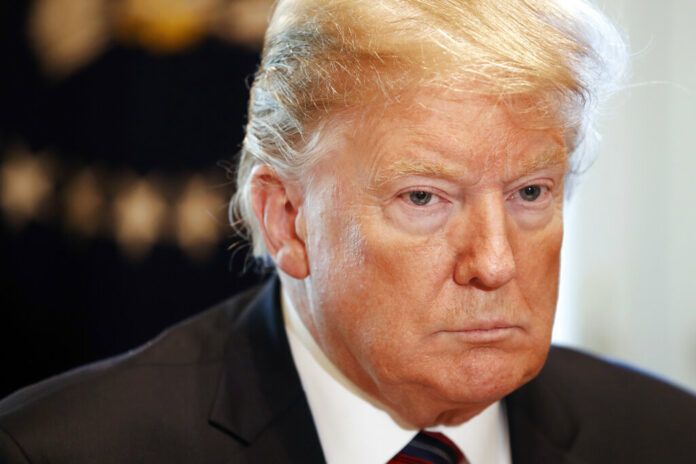
US President Donald Trump attends a round table discussion on border security with local leaders in January in the Cabinet Room of the White House. Photo: Jacquelyn Martin / Associated Press

WASHINGTON — A dozen defecting Republicans have joined Senate Democrats to block the national emergency that President Donald Trump declared so he could build his border wall with Mexico.

The rejection caps a week of confrontation with the White House as both parties in Congress strain to exert their power in new ways.

The 59-41 tally, following the Senate’s vote a day earlier to end U.S. involvement in the war in Yemen, promises to force Trump into the first vetoes of his presidency. Trump had warned against both actions. Moments after Thursday’s vote, the president tweeted a single word of warning: “VETO!”

Advertisement

Phi Phi Police Arrest 1 in Attack on Jacked US Samaritan

Photos: Trimbleezy / Instagram

KRABI — A suspect was being questioned by police Friday for allegedly attacking an American tourist who intervened in a purse theft on a Koh Phi Phi beach.

An unidentified 17-year-old man was held as one of three suspects in the assault last week of Stephen Trimble, a 26-year-old American tourist who shared details of what happened with his large social media audience.

According to Col. Sakchai Limcharoen, commander of Krabi Police, another suspect contacted the police to say he would turn himself in today as they continue to look for the third attacker.

Trimble wrote Tuesday on Instagram that he had stopped a local from stealing a woman’s purse as she swam in the sea. “A perfect payday for a piece of shit low life thief preying on a tourist,” Trimble wrote.

After seeing the man picked up the purse and walk away, Trimble said he yelled at him, causing him to flee. Minutes later, he wrote, the would-be thief returned with friends armed with large sticks and a kayak paddle to hand down a vicious beating.

“They came straight towards me and without hesitation began swinging on me. After about 15 strikes they take off down a dark alley at the at end of the beach,” Trimble wrote in his post. He sustained injuries to his head, arms and leg.

Trimble continued, warning tourists to not leave personal belongings unattended.

“DO NOT leave your shit on the beach without watching it. Some of the locals are scumbags and the police are most likely corrupt getting a pay cut from the stolen items. Also be careful at night, especially in these places known for partying, they’re also known for higher crime rates. Be smart, stay in groups when you can, keep your valuables on you.”

He claimed the “SUPER helpful” police officers he then found told him to go to the station at 10am the next morning.

Trimble is a photographer and blogger from Florida with over 40,000 Instagram followers.

Advertisement

Army Captain Gets Death for Killing Woman

Laem Oun-on carries a portrait of her daughter Juthaporn Oun-on to hear the verdict on Thursday in Si Saket province.

SI SAKET — A court in the northeastern province of Si Saket found a soldier guilty Thursday of murdering a woman and hiding her body in a case that drew national attention.

Though the judges said there were no eyewitnesses to the killing, they concluded sufficient evidence tied Capt. Supphachai Phaso to the murder and sentenced him to die. He was also ordered to pay compensation of 2 million baht. The family of the victim, Juthaporn “Oil” Oun-on, said they were satisfied with the verdict.

“My family and I are pleased to see justice,” Laem Oun-on, Juthaporn’s mother, told reporters outside the courtroom. “I’d like to tell the soul of my daughter that I will do my best to take care of her only daughter. I will make sure she has the best education.”

Laem also said her family is planning to appeal the case in civil court as the court-ordered compensation was less than requested.

The case dates back to July 2017, when Juthaporn – a local education official – disappeared  from her home. A frantic search effort was launched, and even psychics were called in to locate her, all to no avail.

Police later arrested Capt. Supphachai on suspicion of murdering the 37-year-old due to a financial dispute turned violent. Remains of her body were found hidden in a forest in October that year.

In its verdict, the court said phone signals obtained by police show Supphachai and Juthaporn were in the same location just after she disappeared. The location was also close to the site where Juthaporn’s remains were found, the court said.

As is typically the case in verdicts involving capital punishment, the defendant is expected to appeal.

Advertisement

New Zealand Police Have 4 in Custody, Defuse Bombs

Police escort witnesses away from a mosque Friday in central Christchurch, New Zealand Photo: Mark Baker / Associated Press

CHRISTCHURCH, New Zealand — Multiple people were killed in mass shootings at two mosques full of people attending Friday prayers, as New Zealand police warned people to stay indoors as they tried to determine if more than one gunman was involved.

Prime Minister Jacinda Ardern described it as “one of New Zealand’s darkest days” and said the events in the city of Christchurch represented “an extraordinary and unprecedented act of violence.”

One person was taken into custody but it was unclear if there were other people involved, Police Commissioner Mike Bush said. He said anybody who was thinking of going to a mosque anywhere in New Zealand on Friday should stay put.

Authorities have not said who they have in custody. But a man who claimed responsibility for the shootings left a 74-page anti-immigrant manifesto in which he explained who he was and his reasoning for his actions. He said he considered it a terrorist attack.

Ardern at her news conference alluded to anti-immigrant sentiment as the possible motive, saying that while many people affected by the shootings may be migrants or refugees “they have chosen to make New Zealand their home, and it is their home. They are us. The person who has perpetuated this violence against us is not.”

Authorities have not yet said how many people were killed and wounded. “It’s a very serious and grave situation,” Bush said.

The deadliest shooting occurred at the Masjid Al Noor mosque in central Christchurch at about 1:45 p.m.

Witness Len Peneha said he saw a man dressed in black enter the mosque and then heard dozens of shots, followed by people running from the mosque in terror.

Peneha, who lives next door to the mosque, said the gunman ran out of the mosque, dropped what appeared to be a semi-automatic weapon in his driveway, and fled.

Peneha said he then went into the mosque to try and help.

“I saw dead people everywhere. There were three in the hallway, at the door leading into the mosque, and people inside the mosque,” he said. “It’s unbelievable nutty. I don’t understand how anyone could do this to these people, to anyone. It’s ridiculous.”

He said he helped about five people recover in his home. He said one was slightly injured.

“I’ve lived next door to this mosque for about five years and the people are great, they’re very friendly,” he said. “I just don’t understand it.”

He said the gunman was white and was wearing a helmet with some kind of device on top, giving him a military-type appearance.

Police said there was a second shooting at the Linwood Masjid Mosque.

Mark Nichols told the New Zealand Herald he heard about five gunshots and that a Friday prayer-goer returned fire with a rifle or shotgun.

Nichols said he saw two injured people being carried out on stretchers past his automotive shop and that both people appeared to be alive.

The man who claimed responsibility for the shooting said he was 28-year-old white Australian who came to New Zealand only to plan and train for the attack. He said he was not a member of any organization, but had donated to and interacted with many nationalist groups, though he acted alone and no group ordered the attack.

He said the mosques in Christchurch and Linwood would be the targets, as would a third mosque in the town of Ashburton if he could make it there.

He said he chose New Zealand because of its location, to show that even the most remote parts of the world were not free of “mass immigration.”

Mass shootings in New Zealand are exceedingly rare. The deadliest in modern history occurred in the small town of Aramoana in 1990, when gunman David Gray shot and killed 13 people following a dispute with a neighbor.

Story: Mark Baker, Nick Perry

Advertisement

Opinion: 3 Days, 3 Key Votes – And No End in Sight for Brexit

Britain's Prime Minister Theresa May speaks in 2017 during a campaign visit to Norwich, England. Photo: Stefan Rousseau / Associated Press

By Scott L. Greer, Garret Martin, Holly Jarman from The Conversation

On Wednesday, the British Parliament overwhelmingly rejected – for a second time – a Brexit plan worked out by Prime Minister Theresa May.

A day later, the lawmakers voted against a “hard Brexit” – one without any approved plan.

Then, on Thursday, British lawmakers voted 412 to 202 to delay an exit from the European Union, which had been planned for March 29. They also voted not to call a second referendum to allow the British people to accept or reject Prime Minister May’s Brexit plan.

Three experts on the European Union consider the lasting effects of the delay and uncertainty.


A Damaging Spectacle

Another week of drama at the Palace of Westminster, host of the United Kingdom’s two houses of Parliament. The last three days witnessed a flurry of Brexit activities. Parliament scheduled multiple votes, debates, amendments. Factions inside Westminster jockeyed for control and Ministers resigned. And Prime Minister Theresa May literally lost her voice.

With the dust now settled, this much is clear. Members of Parliament (MPs), from across the major parties, still greatly dislike the withdrawal deal from the EU negotiated by Theresa May.

These same MPs also reject the option of crashing out of the EU without a deal. And they overwhelmingly supported requesting a delay for Brexit to happen, beyond the planned exit date of March 29, 2019. Such an extension, and its precise length, would still require the unanimous agreement of the 27 remaining states of the EU, which are scheduled to meet on Thursday and March 22.

In other words, no one knows when the Brexit saga will end.

There’s no denying that Brexit, with its intrigue and uncertainty, is compelling viewing. Political junkies may think of it as “Game of Thrones” without the dragons and violence. That day-to-day focus can, however, easily obscure the fact that Brexit has been a complete calamity, one for which the U.K. is already paying high costs, and will continue to do so.

First, the spectacle of Parliament repeatedly failing to agree on a deal has greatly tarnished the reputation of the U.K. as a well-managed country. It is now 994 days and counting since the referendum in June 2016, with no clear end in sight.

Second, the endless bickering in Parliament and inability to compromise is fueling a deep disenchantment with politics. More than two-thirds of the public in the U.K. does not feel represented by current political parties.

And third, the prolonged Brexit negotiations are only further polarizing an already very divided British society.

Like all good shows, Brexit will eventually come to an end. But its legacy will be felt for years to come.


The Brexit Unicorn Has Damaged British Democracy

In the two years since it took place, it’s become clear that the Brexit referendum campaign was a gross failure of democratic politics.

The campaign was suffused with campaign finance illegalities and foreign interference. But it was also a debate in which every key term was undefined. No one who voted in the referendum could be certain what Brexit would look like.

Here’s a comparison. When Scots were asked to vote on independence from Britain in 2014, the Scottish government offered them a 649-page policy document on everything from post-independence fisheries management to the status of the queen.

But when British voters were invited to vote on Brexit, they were offered nowhere near as much information. There was no specification of what leaving would mean, how it would work or what the costs might be. Into the vacuum of information rushed misperception and lies.

Brexit remains ill-defined because it promised the impossible – a mythical unicorn of sovereignty, wealth, national greatness and reduced immigration. Such a package is attractive, but unavailable to a country of the U.K.‘s size, position and wealth.

There is no form of Brexit, for example, that can improve the National Health Service, as we and co-authors showed in a recent article. But many voters supported Brexit in the belief, encouraged by the Leave campaign, that Brexit would mean more money for publicly funded health care.

Competing demands from different groups to deliver the impossible have damaged the U.K.’s political system. That’s because, for many politicians, the politics of Brexit are now about avoiding the blame for the consequences of a damaging decision.

The problem with the politics of casting and avoiding blame is that finger-pointing and dodging finger-pointing can get in the way of solving problems. Brexit is a clear case of that.

The politics of the U.K. are now focused not on managing or fixing problems, but on blaming others for them. The focus on blaming others for divisive and dangerous Brexit policies will scar Britain for decades, since the politics of disunity and blame will live long after 2019.

Advertisement

The Server Did It: Facebook Gives Vague Explanation For Outage

Facebook, Messenger and Instagram apps displayed on an iPhone in a photo taken Wednesday. Photo: Jenny Kane / Associated Press

NEW YORK — Facebook went down for almost a full day across parts of the world, but it’s still not saying exactly what happened.

All the social network said Thursday was that the outages, which affected users and advertisers worldwide, resulted from a “server configuration change.” It offered no further details.

Facebook and its apps — Instagram, Facebook Messenger and WhatsApp — started experiencing problems midday Wednesday on the U.S. East Coast. Facebook was still having sporadic issues Thursday morning.

Read: #FacebookDown? #IGDown? Thai Net Loses Will to Live.

Facebook did not say how many users were affected or why the outage took so long to fix. In a tweet about 24 hours after the problems began, Facebook apologized and thanked people for their patience. It didn’t elaborate on the server change.

The outage is yet another publicity problem for a company already dealing with privacy issues and regulatory probes.

The disruption isn’t likely to hurt advertisers much, since they usually pay for ads per click or impression. But they lose potential customers who might have seen their ads when the site and apps were down. Longer term, Facebook’s reputation with advertisers and investors could be damaged, said Wedbush Securities managing director Dan Ives.

It didn’t help that it took Facebook so long to explain what was going on, he said. Facebook said on Wednesday that the problem was not related to a “distributed denial of service” or DDoS attack, a type of attack that hackers use to interrupt service to a site, but didn’t provide any other details until Thursday.

“In these situations a lack of transparency is not a good look,” Ives said. “The longer something like this lasts, the more questions there are.”

The disruption seemed spotty, with some apps and parts of the apps working for some but not others. While some less active users may not have noticed that Facebook services were down, other frequent users and advertisers keenly felt its absence.

The Drummers Garden Center & Floral, a plant store in Mankato, Minnesota, was unable to hold a live video Q&A on Facebook that it had planned for weeks. Customers and employees were both confused.

“I hope our customers aren’t upset that we couldn’t communicate with them. We’re not used to it being down,” said Jackie Karsten, the marketing coordinator for the store. She said two people called the store to ask if they were doing something wrong on their end. The Q&A has been rescheduled for Monday — which the store announced in a post to its Facebook page.

Many users had a ready outlet for their frustrations: Twitter. Social media power user U.S. Rep. Alexandria Ocasio-Cortez, for example, lamented the lack of Instagram Wednesday evening on Twitter. “Is Instagram still down? Bc after 2 months almost furnitureless in DC I am trying to take you all on the riveting adventure of getting: a chair,” she tweeted with a smiley face emoji.

Users have learned to take social media breakdowns in stride, said Tim Bajarin, president of consultancy Creative Strategies.

“People have dealt with these types of outages for some time now,” he said. “While they are annoying, it has happened enough that a lot of people are now conditioned to roll with the punches.”

Steve Jones, a professor of communications at the University of Illinois at Chicago, said the fallout might have been far different if the outage took place ahead of or during a major news event, like an election.

“If today were the day before the next presidential election, how would we hold Facebook accountable for an outage with regard to an electoral outcome?” he asked. “We’re not going to redo an election.”

Story: Mae Anderson

Advertisement

Melons and Mellow Take Root on Thailand’s ‘Watermelon Island’

TRANG — On an island filled with watermelon farmers, be the one that plants seedless ones.

Koh Sukorn, a lesser-known attraction off the coast of Trang province long known for its watermelons, Tawatchai Kaimusik has been multiplying profits with his first harvest of a new breed: large, red and devoid of seeds.

“I’m the very first one to plant this type here,” Tawatchai said. “Unlike normal watermelon plants, which can be harvested once, this one can be harvested three times.”

Sukorn Island is home to about 2,500 people, including 40 watermelon farmers who work on a 150-rai (24-hectare) stretch of land. Among foreign tourists, it’s a place one can enjoy the rural lifestyle while snacking on fresh farm-grown melons – quite unlike the loud touristy vibes found in places such as Phuket.

Tawatchai planted a breed of watermelons called Happy Family, which weigh 6-12 kilograms and sell for about 20 baht per kilogram, as opposed to regular watermelons which sell for about 35 percent less.

Tawatchai says the watermelons have better yields, use less water and fertilizer and take up less space on his farm than normal watermelons, which all combined has taken his profit yields up from 6,000 baht per crop to 50,000 baht.

ปลกแตงโมไรเมลดรายแรกบนเกาะสกรตลาดรง 2 copy ปลกแตงโมไรเมลดรายแรกบนเกาะสกรตลาดรง 1 copy ปลกแตงโมไรเมลดรายแรกบนเกาะสกรตลาดรง 3 copy ปลกแตงโมไรเมลดรายแรกบนเกาะสกรตลาดรง 5 copy

Advertisement

Celebrate Summer with “Khao Chae Chao Wang” at Bangkok Marriott Marquis Queen’s Park (Sponsored)

BANGKOK — When the summer brings warm breeze to Bangkok, it’s time to put Khao Chae, a traditional signature summer snack, on the table to relieve the heat and soothe the mind. Fill the summer with savory and refreshing dish, the fragrance of jasmine flowers and 7 delectable condiments at Siam Tea Room and Goji Kitchen + Bar at Bangkok Marriott Marquis Queen’s Park throughout April and May 2019.

yVUEjTe4CYs42H3OsQbhDkCoMWSf2SA0heMEsnyfFgnYrwQrb7O9jU3attME67q4lKZuZuObfBugh68r0Mll5ofakChcvs3UZ0z781h1JK3I esxhgpX 7 v9QmrSn4b3Gv6suF4SkSo1cwWBQ

Siam Tea Room

Bangkok Marriott Marquis Queen’s Park, Bangkok’s largest luxury hotel, is meticulously craft summer’s favorite “Khao Chae Chao Wang” to put the heat at bay. Originally created in Ratchaburi, the recipe is prepared to offer as tribute to the heavenly gods and treat the monks during Thai traditional New Year or Songkran festival. Sao Hai rice is cooked and infused with aromatic smoke until supple and fragrant. The rice is then added with smoke-scented floral water made from 5 types of fragrant flowers – ylang-ylang, bread flower (chomanad), damask rose, white champaka and jasmine – that gives every bite a subtle, cooling floral scent.

The ice used is also made from jasmine flower-infused water to even further enhance the aroma.

I7VIz3olG78qlnSo nBKjniq4itj RsGH9z9djoHPFFOw8BBV2y3kggz2CWFRnV5CWfBRfI1R8f0lVcddb7dYmhRV0Ywx5VsU4ZMKUhGkDeG5dg 1 ibRyBFUlIiIRCPWG9t4g l40wJJPm 4Q

The floral rice is served alongside the 7 condiments. There’s deep-fried “look kapi” where fish, shrimp is mashed and mixed with shrimp paste and herbs, rolled into small balls, coated with egg and better then deep fried to golden. The stuffed bell pepper is made with de-seeded bell pepper that is stuffed with seasoned pork and shrimp, steamed and then wrapped in fried egg net before serving. The stuffed shallot is filled with seasoned grilled catfish that is then coated with egg and deep fried to crispiness. There are also pork floss made from boiled pork and caramelized sugar, sweet stir-fried ray fish where the meat is fluffed and added with sugar, sweet and salty stir-fried turnip and the crispy shrimp-stuffed butterfly pea flowers that are soft on the inside.

iGtzBWfopbKpL99qwlMc3d16rtWpljB7N8La SmDJb1tvG4oR cgIrLCQaaJrAYtLxCq44rEQDk6453rfbmKejx7VeFpe3UyqkUkL3OrWQj mFT27kh7LDK5fOiHAZuOma qy2u9MbTJn0Iw

Savor the traditional taste of Khao Chae Chao Wang from Ratchaburi at Bangkok Marriott Marquis Queen’s Park at Siam Tea Room daily from 1 April to 31 May 2019 between 11.30 hrs. – 17.00 hrs. at THB 490++ per set or THB 590++ for take-home.

VnfVkL2fBD43jhj79G73iPqW4m 1MEyIHyuw QoJ1xVRivTt8KRxwnQFv1kwLjz wGg1WjFjsS0vHIZfFF9CVGTO96t5mbYhOs5YwvGkPBMOxxPSMv4 AAf6uTjm2hMlCD8WgMbSBAXtEw7dNA

Goji Kitchen + Bar

Khao Chae is also included in the dinner buffet and Sunday Brunch at Goji Kitchen + Bar on 1-30 April 2019. The dinner buffet is served between 18:00 hrs. – 22:00 hrs. is priced THB 1,388++ per person from Sunday to Thursday and THB 1,978++ per person on Friday and Saturday.  Sunday Brunch is served from 11.45 hrs. to 14.30 hrs. at THB 2,128++ per person.

For more information and reservation, please contact +66 (0) 2 059 5999, email [email protected]

Or connect with us via these channels:

Website:                  www.bangkokmarriottmarquisqueenspark.com

Facebook:                  https://www.facebook.com/siamtearoom/

Line official account:          @siamtearoom

Advertisement

Thai Parties Woo Young Voters, but One May Hit the Mark

In this Saturday, Feb. 23, 2019, photo, youth band Rap Against Dictatorship, who's songs have condemned the military's involvement in government, perform in Bangkok, Thailand. Photo: Sakchai Lalit / Associated Press

BANGKOK — You could call it the 7 million-voter question: Will young people like the ones who turned out on a recent Saturday night to listen to politically hip rappers also make it to the polls for the upcoming general election? And do they share the anger at the established order being sung and shouted about onstage?

The country in which this year’s 7 million eligible first-time voters have grown up has experienced two army coups since 2006, violent political polarization and a nasty crackdown on freedom of expression by the military clique that has held the reins since a 2014 takeover.

Topping the recent concert bill was the group Rap Against Dictatorship, whose surprise hit, “My Country’s Got That,” lambasts the hypocrisy of Thai society. Some of the song’s milder lyrics describe Thailand as “the country whose Parliament is a parlor.”

The breakthrough song has garnered almost 59 million views since its release on YouTube last October. Judging by the crowd at the concert, most of its fans hail from the 18-to-35-year-old demographic that makes up roughly a quarter of Thailand’s 51 million-strong electorate.

This generation is too young to hold many memories of a Thailand that was not politically troubled.

If it is unsympathetic to army rule, it also does not harbor any nostalgic affection for former Prime Minister Thaksin Shinawatra, a billionaire populist whose 2006 overthrow ushered in a political dark age in what had been one of Southeast Asia’s most promising democracies.

Unlike Thaksin’s hardcore “red shirt” followers and his rabid “yellow shirt” opponents — groups whose violent street protests helped derail electoral politics — their allegiances are up for grabs.

Political parties are taking notice, mostly by showcasing their younger candidates.

The Democrat Party, the country’s oldest, has its “New Dem” group of 21 young politicians led by 26-year-old Parit Wacharasindhu, a nephew of party leader Abhisit Vejajjiva, a former prime minister who himself once capitalized on his youthful image. Another of its members is Surabot Leekpai, the 30-year-old son of another former Democrat prime minister, Chuan Leekpai.

Another group, Bhumjaithai, previously known as an old-fashioned patronage-driven regional party, has been rebranding with campaign posters hitting hot-button issues close to urban millennials’ hearts — liberalization of marijuana laws, clear legalization of ride-sharing services and the easing of repayment terms for student loans.

Even the Palang Prachatrath Party, more or less a proxy for the military that supports returning the current army-installed prime minister to office, showed off 30 young members at a news conference, many contesting parliamentary seats in the capital, Bangkok.

But it’s the Future Forward Party, founded last March, that seems to have captured the imagination of many young voters.

Party chief Thanathorn Juangroongruangkit, who can tap into a family fortune from the auto parts industry, projects an image similar to a Silicon Valley entrepreneur. Tall and trim, and favoring casual dress, the 40-year-old is tech-savvy and practices extreme sports. He also has a low-profile history of supporting progressive organizations, while most of his core team is younger and directly involved in activist groups promoting causes such as rights for the disabled, the LGBT community and the #MeToo movement.

“My idea is to make this party stand for democratic principles,” Thanathorn said at the party’s debut last year. “We will make democracy a part of every decision-making process from the choosing of party members, the determining of party direction and strategy, to the developing of party policies.”

Thanathorn formerly served on the board of Matichon Group, the parent company of Khaosod English.

The party’s broad-stroke policies are a response to Thailand’s political impasse: radically reforming the coup-inclined military and rewriting the military-imposed constitution to restore democracy.

“I think the conflict over the last 12 years has educated the people that politics is important to their lives,” Thanathorn said in an interview at a campaign event at Siam University in Bangkok. “Political awareness in this country has never been higher.”

Boonyanuch Prachasingh, a 20-year-old student at the university, said she is looking for a party with strong policies on education, democratization and transparency, and capable of change. She said Future Forward sounds interesting “because they are making a point of encouraging us to pay attention to politics.”

A fellow student, 21-year-old Kittiphum Pannadermitri, believes the economy is the most pressing issue.

“I think Thanathorn is from a new generation and has new ideas. I think he could help improve the economy, help Thai farmers, and tackle pollution problems,” he said.

Concertgoer Sawitree Puangngern, 23, said interest in the election is high among her peers, and she has already decided to vote for Future Forward.

“I am interested in the party that says they want change,” she said. “I want the military out from politics and I want people to have their rights back.”

Although Future Forward is hoping it can pick up as many as 50 to 70 parliamentary seats, it faces substantial hurdles as a newly established grass-roots party facing experienced opponents.

It also has drawn scurrilous attacks online from conservative elements of Thai society, who paint Thanathorn as a stalking horse for Thaksin because he espouses progressive policies that also are supported by Thaksin’s supporters. That his uncle was a top member of Thaksin’s party and served in one of his Cabinets heightens their suspicions.

Still, the party’s prospects for capturing the youth vote look good, said Prajak Kongkirati, a lecturer in political science at Bangkok’s Thammasat University.

“They are popular and their policies are popular,” he said. “They advocate change and radical reforms. So the youth who are frustrated with the stagnation of the country, they want to see a real change. And Thanathorn is kind of their hope, represents something new, speaks their own language and can connect to the youth.”

Story: Tassanee Vejpongsa

Advertisement

Hot News

LATEST NEWS

Bangkok
overcast clouds
30 ° C
31.6 °
30 °
75 %
3.5kmh
98 %
Sat
30 °
Sun
34 °
Mon
34 °
Tue
33 °
Wed
32 °