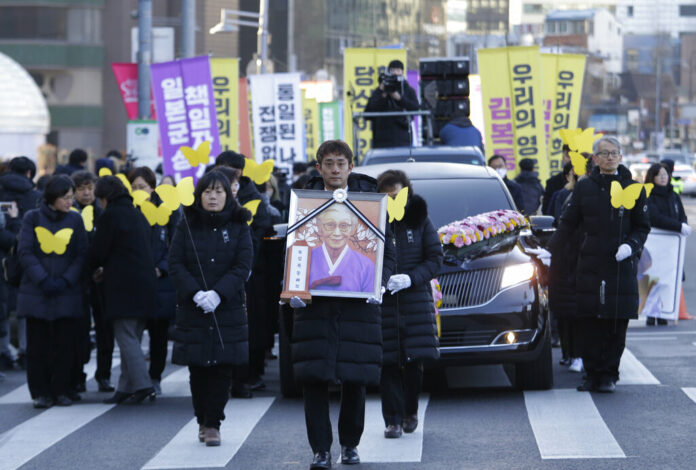
A mourner with a portrait of the deceased Kim Bok-dong, a former South Korean sex slave, marches toward the Japanese Embassy during her funeral ceremony Friday in Seoul, South Korea. Photo: Ahn Young-joon / Associated Press
SEOUL, South Korea — Hundreds of mourners gathered Friday near the Japanese Embassy in Seoul for the funeral of a South Korean woman forced as a girl into a brothel and sexually enslaved by the Japanese military in WWII.
The mourners, dressed mostly in black on a bitterly cold morning and holding paper cutouts of yellow butterflies, followed a hearse carrying Kim Bok-dong that stopped in front of a bronze statue of a girl representing the thousands of Asian women experts say the Japanese military forced into front-line brothels as it pursued colonial ambitions.
The scene near the embassy was the culmination of an hours-long march that wrapped up five days commemorating Kim, who had regularly led the rallies to demand that Japan more fully acknowledge the suffering of the so-called “comfort women,” the euphemism given to the women by the Japanese and embraced by some of the dwindling number of victims over the term “sex slave.”
Japanese leaders have repeatedly offered apologies or expressions of remorse, but many of the women and their supporters want reparations from Tokyo and a fuller apology. Of the 239 Korean women who have come forward as victims, only 23 are still alive.
Kim, who died at age 92 on Monday and had been suffering from cancer, had been a beloved leader of the protest movement, often sitting beside the bronze statue at weekly rallies that have been held since 1992 on a strip of sidewalk across from the embassy.
Her death has been met with grief around South Korea, with President Moon Jae-in crediting her relentless advocacy for giving South Koreans the “braveness to face the truth.”
As the limousine carrying Kim’s remains slowly rolled up to the statue Friday morning, mourners carried 94 vertical funeral banners that represented Kim’s age when counted in the traditional Korean manner and were marked with phrases thanking Kim and demanding Japanese reparations and remorse.
Many people cried during the march that started at City Hall and some shouted anti-Japan slogans such as “Japan formally apologize!” and “Japan provide formal compensation!”
Born in the South Korean town of Yangsan, Kim was dragged away from home at the age of 14 and forced to have sex with Japanese soldiers at military brothels in China, Hong Kong, Malaysia, Indonesia and Singapore from 1940 to 1945. She was one of the first victims to speak out in the early 1990s and break decades of silence over Japan’s wartime sexual slavery.
Kim traveled around the world testifying about her experience, including at the United Nations World Conference on Human Rights in 1993 and at a U.N. Human Rights Council panel in 2016.
Kim never married or had children.
A 1991-1993 Japanese government investigation concluded that many of the women were recruited against their will, leading to a landmark Japanese apology, although the investigation found no written proof in official documents.
Many South Koreans say past Japanese apologies didn’t go far enough. There’s also a sentiment that Tokyo’s past statements have been weakened by conservative Japanese leaders who have argued that the women weren’t coerced.
Japan insists that all wartime compensation issues were settled in a 1965 treaty that restored diplomatic ties between the countries and was accompanied by more than USD$800 million in economic aid and loans from Tokyo to Seoul, which was then under a military dictatorship. In recent years, South Korean courts, which are now fully independent, have ruled that the treaty cannot block the constitutional rights of individuals seeking reparations from Japan.
Kim’s death comes as relations between South Korea and Japan have sunk to their lowest point in years amid disputes over wartime history, which also includes Japan’s refusal to compensate forced Korean laborers during its colonial rule of the Korean Peninsula from 1910 through 1945.
Moon’s government in November announced plans to dissolve a foundation funded by Japan to provide payments to South Korean sexual slavery victims, which if carried out would effectively kill a controversial 2015 agreement between the countries to settle a decades-long impasse over the issue.
Many in South Korea believed that Seoul’s previous conservative government settled for far too less in a deal where Tokyo agreed to fund the foundation with 1 billion yen ($9 million). There’s also criticism that Japan still hasn’t acknowledged legal responsibility for atrocities during its colonial occupation of Korea.
Japan had said it didn’t consider the money it provided to the fund as formal compensation, repeating its stance that all wartime compensation issues were settled in the 1965 treaty.
A screencap of a promotional footage of VN-1 armored personnel vehicles. Image: Norinco
BANGKOK — The Royal Thai Army’s buying spree shows no signs of letting up with the disclosure Friday it has committed to spending another 2.2 billion baht on more military hardware from China.
According to it purchase orders published on the army’s ordnance department, the force will acquire three armored personnel carriers, 12 mobile artillery units, 10 maintenance vehicles, 12 armored command vehicles and three armored medical vehicles.
The purchase will also include more than 18,000 rounds of artillery shells, rifle grenades and other “high explosive projectiles.” There’s one line item for an unspecified “simulator” costing 151 million baht. In total, the deal will cost about 2.25 billion baht, the document reads.
The revelation came just weeks after the army announced it would buy 14 more battle tanks from the People’s Republic, in addition to the current stock of 39 Chinese-made tanks.
In a visit to Beijing last month, army chief Gen. Apirat Kongsompong said Thailand would work even more closely with the Chinese military throughout 2019.
BANGKOK — A month’s worth of events involving sacred waters and auspicious occasions for the coronation ceremony were released by the palace.
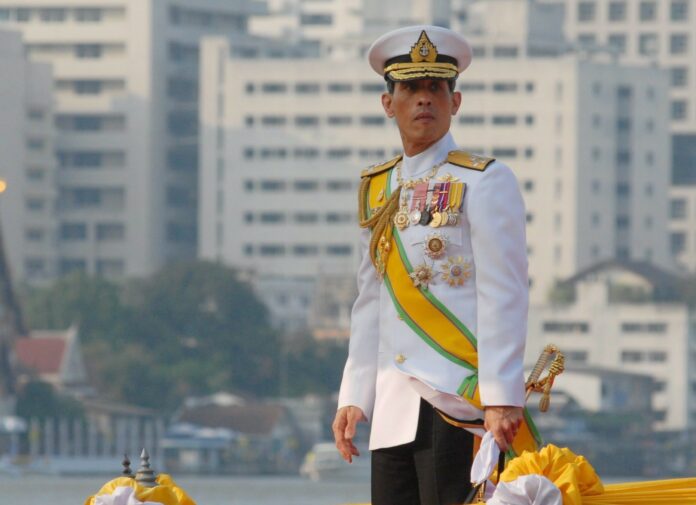
The palace on Thursday laid out the timeline for all royal ceremonies preceding and following King Vajiralongkorn’s official crowning on May 4. The schedule begins in April with events to take place across the country.
King Vajiralongkorn inherited the throne after his father King Bhumibol died in October 2016. The ceremony will officially mark the beginning of his reign.
April 6 Holy water drawing ritual: Hindu Brahmins will make offerings in Bangkok and 76 provinces to spirits at water sources that will be collected for later use.
April 8 Monks will ritually consecrate the water and light auspicious candles in honor of the king at provincial royal temples.
April 9 The auspicious candles will be extinguished and ritual Buddhist processions conducted around the temples.
April 18 The holy water collected nationwide will be sanctified at Wat Suthat in the capital.
April 19 The holy water will be moved to Wat Phra Kaew.
April 22-23 An engraving ceremony of the king’s name into a golden plate, a reading of the royal fortune, creation of the royal seal and designations of high-ranking royals will take place at Wat Phra Kaew.
May 2 The king will pay respect to previous kings and the capital’s spirits in the Royal Plaza and at the Memorial Bridge.
May 3 The king’s name, royal fortune and royal seal will be moved to the throne hall while the king pays respect to the Emerald Buddha and royal remains.
May 4 The official coronation ceremony will be held.
May 5 The inauguration of the king’s official name and signature, the re-establishment of the royal family members’ ranks and a royal parade will be held in the capital.
May 6 The king grants an audience to the public and foreign diplomats.
Later This Year These events will be followed by the Royal Barge Procession, which will be scheduled some time between May and November.
Chelita Dhanarajata as a second-year student at Chulalongkorn University. Photo: Boy321 / Courtesy
Projected at force, a hot tan vomit of soup, cocoa, wasabi and stomach acid shoots out of a student’s mouth onto the back of the classmate seated in front of him. Muttering apologies, the freshman is ushered to the outer rings of a spiral of 80 or so peers sitting cross-legged. Vomit slides over everyone as they move along the tarp.
“You’re worthless unless you help your friends drink it up!” yelled stern upperclassmen staring down at the initiates in a camp in Saraburi. The sophomores dragged in meter-and-a-half high vats filled with what then-freshman Sansern “Praise” Prapa-apirat called “fake puke.”
“Cocoa, rice krispies, tea, kaeng jeud soup, taro fish snacks, wasabi. They boiled random stuff together into 15 vats,” Praise recalls with audible stress. “There was just so much. That was the worst part. They didn’t tell us how many vats there were. They just kept coming.”
Seven years later, Praise still remembers the camp clearly. He had just graduated at 18 from the international school he had attended 13 years, where approachable foreign teachers taught all classes in English and extracurricular activities such as drama and sports were optional. Not the kind of place where you were screamed at or covered in vomit.
Yet there he was, after enrolling in a Thai university’s international program, subjected to the kind of hazing abuses defended under the creed of “Seniority, Order, Tradition, Unity and Spirit,” or SOTUS, that marked his re-entry to mainstream Thai education.
For many international school kids – called dek inter – who opt to attend Thai universities, their first brush with Thai education culture is SOTUS hazing. The students wrestle with degrading activities they weren’t taught to tolerate in their Western-style upbringing, but the feeling of obligation to assimilate and reconnect with their parent culture adds pressure. In response, rather than blow the whistle on abusive traditions, a new generation is making its own welcoming activities that bring together the best of both worlds: the Thai-style collective and the respectful and inclusive ways they are familiar with.
Hostile Receptions
Many international school graduates try to avoid SOTUS rituals when attending state universities due to unpleasant experiences they had with them, American educator Robin Montgomery noted in a doctoral thesis examining the integration of dek inter at state universities.
Seven of the 10 students she spoke to – all “educated by people who had a different worldview than their parents or than teachers at a Thai school” – used words such as “a very strange culture,” “extreme behavior,” “orientation slash hazing,” “second years yelling at first years who jump and dance” and “dumb” things that “we weren’t raised to do” to describe SOTUS.
When they return to their home culture, they expect the transition to be easy – after all, it’s a return home. But things change when you are away from home. And even more than things change – people change
“Over and over these students told me they did not understand how suffering by voluntarily doing stupid things that were ordered by older students would enhance their friendships,” she said.
At the Saraburi camp, Praise was also “encouraged” to go on a five-hour night trek which included a pit stop in a tent where freshmen had to pull their pants down to expose “half a butt” and be branded with a fake iron as Chula students.
“Some people were drunk and mean, but some weren’t. Of course, they were bluffing that the iron was hot. But I heard of a case where one upperclassman was really drunk, so it made a real wound,” Praise said. A professor ordered the activities toned down after someone was hospitalized with a head injury.
SOTUS is found in Thai universities nationwide, but the degree of hazing varies even between faculties within the same university, or different programs within the same faculty – architecture and technical faculties, for example, have a reputation for having extra-harsh initiations. The worst abuses of the tradition hit the headlines, with students hospitalized – or even dying.
Even my parents or my teachers never did this to me. So why did we let someone else do this to us?
Praise, 25, remembers yet another orientation event, a hot day full of yelling at his Faculty of Architecture at Chulalongkorn University.
Freshmen were corralled into different locales from 8am to 3pm, their phones confiscated sometimes under blindfolds. At one spot, freshmen had to take turns standing on a chair in a quiet room to yell a pledge to their faculty at the top of their voice.
“After you said three words, they would interrupt you and make you start over. I had to yell at the top of my lungs and scream the loudest and as aggressively as I could,” Praise said. “If they didn’t let you finish, then you couldn’t get off the chair.”
It took hours for everyone to finish take turns being verbally heckled on the chair.
“I was wearing the wrong pants,” Praise said. “So when I came to my turn, some of them were really angry at me. And if you looked back at their face, they would ask, ‘What the fuck are you looking at?’”
Chelita Dhanarajata as a second-year student at Chulalongkorn University. Photo: Boy321 / Courtesy
‘I Wanted to Understand’
Chelita Dhanarajata attended Harrow International School, where students didn’t have to wai their British teachers. So after enrolling at Chula, the then-16-year-old joined her faculty’s cheerleading team – feeling that connecting with Thais and Thai culture was necessary.
“The fact that a period of your life revolves around whatever a senior student says was really weird and new for me. But on the other hand, this is a once-in-a-lifetime experience,” Chelita said.
But for months, from 9am to late at night, upperclassmen forced her to run endless laps around her university buildings, wave her arms in cheerleading gestures and sprint somewhere to sing her lungs out. Her arms tired; her hands shook.
“I thought, what the hell is this? Why am I being punished so much? There should be a science behind it. Physical training shouldn’t be this harsh,” she said. “Even my parents or my teachers never did this to me. So why did we let someone else do this to us?”
It’s not about being Thai or not, it’s about having ownership of my own identity
In the space of the three weeks before an annual freshmen sporting event known as Freshy Games, Chelita ended up hospitalized three times with inflamed arm muscles from the toll. Five days before the games, she threw up her cheerleading arms and quit.
“I felt like they cared more about the performance than my health. I would be living in my body for the rest of my life, but the game happens once,” the 23-year-old said.
Montgomery, who spent a decade teaching in Thailand at an international school, found in her study that students going from international high schools to Thai universities often attempted to readjust to their home culture under the pressure that they must do so.
“A person expects to feel out-of-place in a foreign country, especially if they are surrounded by people who look differently than they do. But when they return to their home culture, they expect the transition to be easy – after all, it’s a return home,” she said. “But things change when you are away from home. And even more than things change – people change.”
“I’ll never think like them and there are certain things I’ll never agree on, like how procedural and time-consuming the seniority and Thai system was, but I wanted to understand,” Chelita said of her reason to voluntarily join the spirit squad.
Hate It? ‘Not Thai Enough.’
Dek inter’s adjustment “back” into Thai culture in university isn’t the same for everyone. Depending on the individual, it can range from lighthearted social gaffes with new friends to the extreme end of running up against a depressing inability to connect.
Montgomery documented students who were embarrassed when more “culturally Thai” peers didn’t understand their Western-style humor, as well as ones who entirely withdrew, eating lunch alone and chasing scholarships to take them overseas.
Bandhukavi “Keng” Palakawong na Ayudhya, Anti Sotus member, at a Sotus panel in November.
One can guess what harsh SOTUS traditions can tip the scale toward a positive or negative transition experience – and it doesn’t help that, coupled with the pressure to “become Thai again,” failure means being branded as “not being Thai enough.”
I’m just gonna come out and say it, if they came from a public school, they’re gonna submit
But those who see value in the practice often criticize SOTUS critics as iconoclasts disrespectful of tradition.
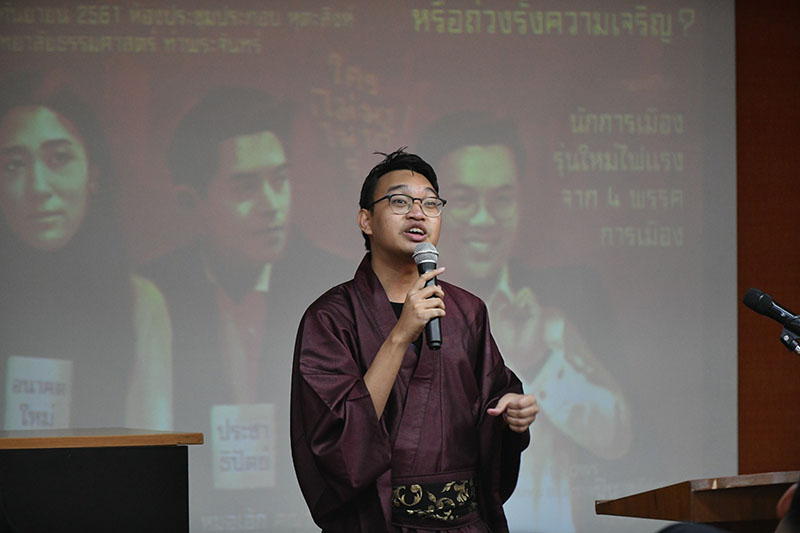
Bandhukavi “Keng” Palakawong na Ayudhya, is an anti-hazing activist and part of an online group called Anti Sotus. He’s the only one to study in an international university program. He said SOTUS upperclassmen often view dek inter who don’t participate as being disrespectful – but that perhaps it’s the traditions that need to change.
“Traditions need to be flexible to adapt to the modern era. If we don’t adapt these traditions, then people, not just dek inter, will equate Thainess with backwardness,” he said.
Chelita, the former cheerleader, also faced the “Thainess” dilemma. By going to the hospital three times due to physical practice for a university event, was she being Thai enough?
“Do you define Thainess by obedience? It’s not about being Thai or not, it’s about having ownership of my own identity,” she said.
Raising Eyebrows – But Not Whistleblowing
Dek inter are enculturated with different values and principles than they would have acquired from Thai schools. Both Montgomery, the educator, and Keng agree that growing this way gives them the cultural framework to object to more notorious SOTUS practices.
“Dek inter are able to refuse this silly brainlessness. Back at their schools, they had no one to wark them,” Keng said, referring to the practice of loud yelling endured by freshmen. “In Thai schools they don’t really train you to develop critical thinking. I’m just gonna come out and say it, if they came from a public school, they’re gonna submit.”
But avoiding hazing episodes is an easier way out than openly opposing it. In the past seven years that the Anti Sotus group has been active, members said none of the many reports they receive have come from dek inter.
Keng says that most dek inter try to avoid SOTUS activities, while others are roped in, not knowing that the initiation activities are not academically mandatory or succumbing to peer pressure to participate. The more adamant may refuse to pay SOTUS fees collected by upperclassmen by literally running away from approaching seniors or quickly paying them off to end the nagging.
Bandhukavi “Keng” Palakawong na Ayudhya, Anti Sotus member, at a Sotus panel in November.
Katherine Rachada Vanishprasertporn, an alumna of both RIS school and Thammasat University, said that although dek inter might raise eyebrows at some SOTUS activities, not making a social fuss is more important.
“We sort of doubt what they’re doing when we see it,” she said. “But the majority don’t question, we just go along with it. A lot of us want to assimilate and not cause drama.”
Montgomery agrees, saying that the zero number of reports by dek inter is due to having participated in such events, or an attempt to assimilate.
“They don’t want to get their peers in trouble over a tradition with a very long history. It’s hard to be a whistleblower. I can also imagine that at the time, some students might do things they are later ashamed of,” she said.
I’ll never think like them and there are certain things I’ll never agree on, like how procedural and time-consuming the seniority and Thai system was, but I wanted to understand
Praise recalls some of his peers became inculcated into the SOTUS culture, even socially banning each other for not going to SOTUS activities for years.
“They’ll be toxic until they grow up and realize it’s bullshit,” he said. “But it takes years for some people to grow up.”
Sending tips to a Facebook page isn’t the only avenue to have a say. In the run-up to general elections in which 7.4 million first-time voters are in play, political parties have been taking public positions on regulating or evening banning freshmen hazing outright.
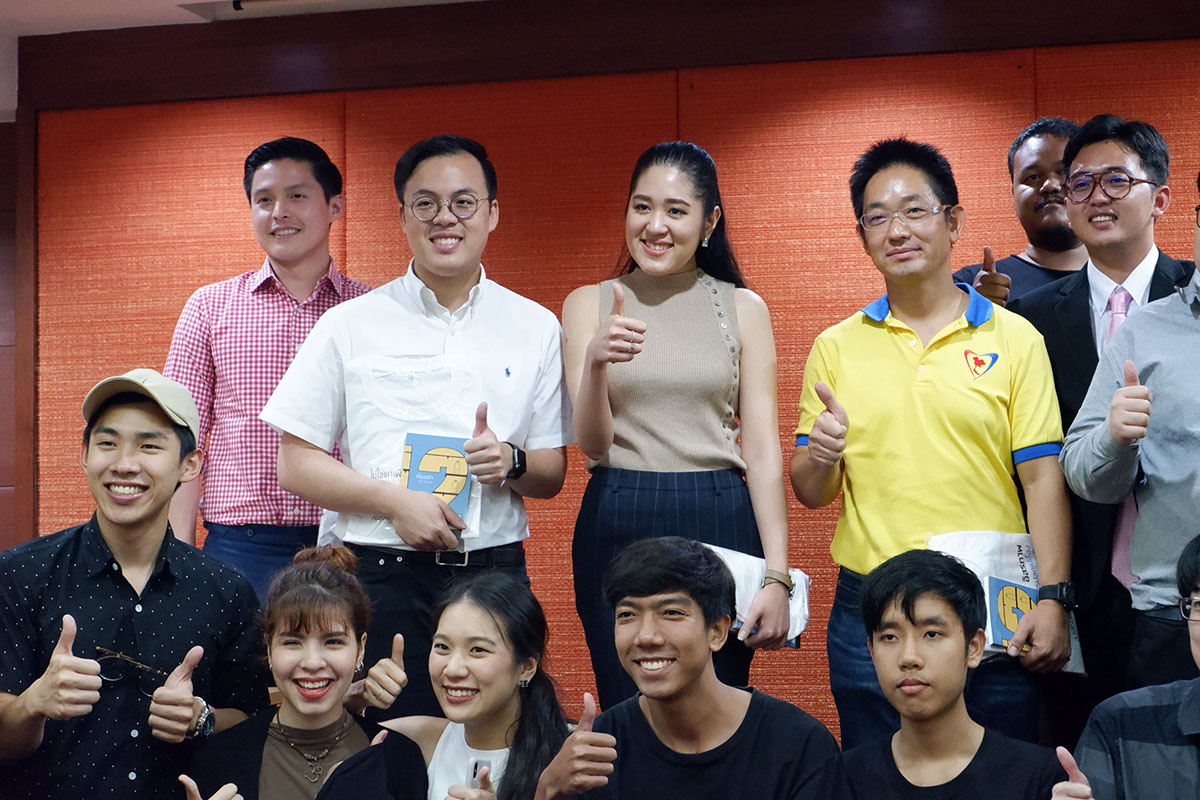
From left, Treerat Sirichantaropas of the Pheu Thai Party, Pannika Wanich of the Future Forward Party, Kanawat Chantaralawan of the Democrat Party and Phumjaithai Party’s Sathit Thepwongsirirat on Sunday at an Anti Sotus panel at Thammasat University in Bangkok.
Breaking the Cycle
Katherine, 28, was 11 when she moved back from the United States to Thailand and enrolled at the Ruamrudee International School. But it was when she matriculated to Thammasat University that her parents, who had read about SOTUS in the news, started to worry. The upperclassman assigned to act as her senior mentor, a role called p rahud, had to call her mother and convince her to let Katherine attend a three-day beach trip for orientation.
Like Praise, she had to drink some unsavory liquids, in her case, seawater. “It was strange and unclean,” she said. “I had to pretend to drink it.”
Katherine also recalls an activity called saphan dao (“Star Bridge”) in which upperclassmen laid their arms on the floor and had the freshmen walk over them.
“I didn’t want to walk all over their arms, but they told me to. So I did it but I kept apologizing while walking,” the soft-spoken woman said. “I guess they wanted us to feel like they do a lot for us.”
From her discomfort with that experience, Katherine decided things had to change when she became a senior at school.
They’ll be toxic until they grow up and realize it’s bullshit. But it takes years for some people to grow up
“The point of having welcoming activities is good, but things have to be changed up to be safer. I canceled strange things such as drinking saltwater and saphan dao,” Katherine said. “I think I did break the cycle.”
Katherine says adapting the welcoming activities to be more friendly and less “strange” helped her and younger classmates to socialize and befriend others, a process called kao sangkhom. Other students interviewed said they also wanted activities reformed rather than abolished.
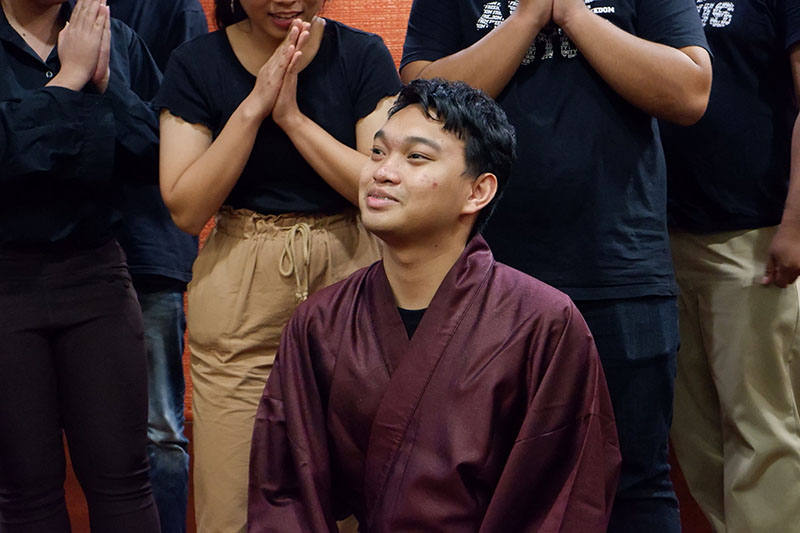
Indeed, many students found that the upside of SOTUS was gaining friends and participating in an authentic tradition. Chelita, for example, recalls the bai sri ceremony where seniors tied strings on the wrists of freshmen in a symbolic gesture of torch-passing. Bai sri is a folk ritual celebrated to welcome new developments in life or to welcome guests, and is often part of freshmen welcoming events.
A university bai sri ceremony. Photo: Bandhukavi Palakawong na Ayudhya / Courtesy
“There was the brotherhood and sisterhood, not just seniority. That’s not really found in international communities,” she said. “At the bai sri ceremony, you could feel one generation being passed onto another. It felt warm. Before, no upperclassmen tied stuff to my wrists and said they would help me. It felt sacred, too.”
Kor Vitoonwithlukck, 24, a Chula graduate who attended Bangkok Patana School, said he initially “didn’t get the dancing and singing songs around a drum” activities at all, but actively participated and enjoyed getting to know the upperclassmen and alumni.
“One of my favorite memories was when all the graduates gathered, including the alumni. Some of them were over 50,” he said.
Advice from Roon P
To incoming dek inter entering Thai universities, fake puke-survivor Praise suggested compromise by embracing the best of both worlds.
“Keep an open mind. Don’t stay in your own little bubble and think you’re the best in the world,” he said. “But if you experience something like I did, you’ve got critical thinking skills to judge if it’s over the line or not.”
Montgomery said students who were “able to get past SOTUS activities,” whether they participated or not, were able to make friends if they tried.
“Students who went in to university realizing that they needed to learn more colloquial Thai or who were ready to seek out clubs with like-minded people did quite well. They were able to form friendships,” Montgomery said. “Others who expected friendships to form easily faced challenges.”
“Don’t close yourself off and be ignorant. Be informed about what’s going on around you, whether it’s good or not,” former cheer team member Chelita said. “Don’t be obliged to participate if you don’t want to. Just do what’s right for you. If the activity is where I wanna go, then yeah, maybe I’ll join. If not, then what’s the point of going?”
U.S. President Donald Trump, left, and North Korea leader Kim Jong Un walk from their lunch at the Capella resort on Sentosa Island in Singapore on June 12, 2018. (AP Photo/Evan Vucci)
WASHINGTON — President Donald Trump said Thursday he will likely announce the site and date of a second summit with North Korean leader Kim Jong Un during the State of the Union address on Tuesday.
“They very much want the meeting,” Trump told reporters, saying his administration has made “tremendous progress” toward reining in the North’s nuclear ambitions. The summit is expected to take place around the end of February.
The president said that before he took office in January 2017, “it looked like we were going to war with North Korea. Now, there’s no missile testing. There’s no rocket testing, there’s no nuclear testing. We got back our prisoners, our hostages. We’re getting back our remains.”
Trump has long contended that his outreach to Kim and their initial summit in June in Singapore have put the U.S. and North Korea on the path to peace. But his list of concrete achievements has not grown in the months since that meeting, and his own intelligence chiefs believe there is little likelihood Kim will voluntarily give up his nuclear weapons or missiles capable of carrying them.
Director of National Intelligence Dan Coats told Congress on Tuesday that the government’s intelligence assessment does not support the idea that Kim will eliminate his nuclear weapons or the capacity for building more.
A skeptical Trump tweeted in response: “Perhaps Intelligence should go back to school!”
Private analysts, in several reports in the past four months, have drawn on commercial satellite imagery to determine that the North is continuing to develop its nuclear and missile technology despite the test suspension.
Secretary of State Mike Pompeo, who has led the diplomatic effort with North Korea, is sending a team to Asia to make preparations for the second Trump-Kim summit. He has not identified a venue for the meeting. Vietnam has been considered, along with Thailand, Hawaii and Singapore.
Pompeo’s point man on North Korea, Stephen Biegun, planned to travel to South Korea this weekend. He also was expected to see North Korean officials “to discuss next steps to advance our objective of the final fully verified denuclearization of North Korea,” according to the State Department.
In a speech Thursday at Stanford University, Biegun said the administration was ready to move “simultaneously and in parallel” with the North in reaching the goal. Biegun also credited the North Korean leader with agreeing to dismantle two military installations and open them to outside inspections
“While these sites are not critical parts of current North Korean missile or nuclear programs, after an interlude of 10 years in which no international inspections of any kind have occurred, they represent a step in the right direction for our two countries to renew cooperation on the steps necessary to give confidence to the process of denuclearization,” he said.
Still, Biegun said there must be a “dismantlement and destruction of North Korea’s plutonium and uranium enrichment facilities.”
Biegun stressed that denuclearization could not happen without the North first presenting a detailed accounting of its nuclear and missile facilities so that dismantling them under an eventual deal can be verified.
North Korea also must agree to have disarmament experts inspect its facilities to confirm they are no longer usable, he said.
Such a declaration and access for inspectors has been a sticking point in the past. The North has balked at submitting an accounting of its sites and demanded that the U.S. ease sanctions before it makes any concessions.
The U.S. has said repeatedly that sanctions will stay in place until denuclearization is complete, although it has held open the option of taking other confidence-building measures, including potential security guarantees.
BANGKOK — A marathon organized for this weekend in Bangkok will go ahead despite the hazardous levels of smog that have clouded Bangkok for weeks, the Tourism and Sports Ministry said Friday.
While many outdoor activities and all classes have been canceled this week due to air pollution, Sunday morning’s Amazing Thailand Marathon Bangkokwill go on as planned, according to Yuthasak Supakorn, director of the tourism authority.
Marathon and half-marathon runners will start at Rajamangala Stadium bound for the Democracy Monument on Ratchadamnoen Road.
Other runs, including 10K and 3.5K races, will start at Wat Ratchanatdaram and the Ministry of Agriculture and Cooperatives on Ratchadamnoen Road respectively, before heading to the finish line at City Hall.
Yuthana said organizers would check smog levels Saturday morning to consider whether to call the race off. He said participants would receive refunds if the event is canceled.
Marathoners paid upward of 1,500 baht to register for the race. Last year over 20,000 runners participated in the event’s first outing.
According to Yuthana, measures have been taken to reduce the unhealthy levels of smog, including spraying water on roads since Wednesday and asking nearby construction work to halt until Sunday.
Similar discredited methods have been carried out citywide to no discernible effect.
Yuthana’s comments come a day after Bangkok Gov. Aswin Kwanmuang called an emergency meeting of experts in which he said hedidn’t know how to tackle the city’s pollution levels. Medical personnel for the event will be increased from 35 to 90.
Other running events scheduled this week have been postponed. They included Sunday’s Thai Run for World Cancer Dayand Harathon, which was scheduled for Feb. 17.
This undated photo shows demonstrators holding up banners calling for the release of Hakeem Al-Araibi. Photo: Wanmai Phanomvan / Facebook
SYDNEY — Scores of demonstrators have rallied in Australia’s two largest cities to demand that Thailand release a detained Bahraini football player who has refugee status in Australia.
The demonstrations outside the Sydney Opera House and in Melbourne’s Federation Square on Friday opposed Hakeem al-Araibi’s potential extradition to Bahrain.
The rallies focused on Thailand and Indonesia’s proposed joint bid for Association of Southeast Asian Nations to host the World Cup in 2034.
The rallies also called for football’s international governing body, FIFA, to consider suspending Bahrain from future international competitions.
Al-Araibi had been living in Melbourne and played for a semi-professional football team there. The 25-year-old was detained upon his arrival in Bangkok in November. Thailand expects to decide within days whether to proceed with extradition to Bahrain.
The logo for Facebook appears in March 2018 on screens at the Nasdaq MarketSite in New York's Times Square. Photo: Richard Drew / Associated Press
NEW YORK — Facebook says it has removed 783 Iran-linked pages, accounts and groups from its service for what it calls “coordinated inauthentic behavior.” That’s the social network’s term for fake accounts run with the intent of disrupting politics and elections.
Facebook has been disclosing such purges more regularly in recent months, including ones linked to groups in Myanmar, Bangladesh and Russia.
The accounts on Facebook and Instagram typically misrepresented themselves as locals in more than two dozen countries ranging from Afghanistan, Germany, India, Saudi Arabia and the U.S.
Facebook said Thursday the accounts spent about USD$30,000 on advertisements, paid for in U.S. dollars, British pounds, Canadian dollars and euros.
The company said Twitter helped its investigation by sharing information about suspicious activity it found on its own service. The companies, along with others in the tech industry, have been cooperating more when it comes to such account takedowns by sharing information.
Such cooperation can help the companies avoid regulatory scrutiny by showing critics and lawmakers that they can set aside differences when it comes to battling outside threats that affect their users.
The latest removed accounts, Facebook said, typically represented themselves as locals in various countries, often using fake accounts and posting news stories on current events. This included using stories from Iranian state media about conflicts in Syria and Yemen.
A firefighter walks past an ice-encrusted home after an early morning house fire Wednesday, Jan. 30, 2019 in St. Paul, Minnesota. Photo: Jean Pieri / Associated Press
CHICAGO — At least three deaths in western New York are being blamed on the winter storm that has dropped more than 20 inches (50 centimeters) of snow and inflicted subzero wind chills.
Authorities said Thursday that a homeless man found frozen in a suburban Buffalo bus shelter may have been a fourth storm victim but an autopsy was needed to confirm his cause of death.
Two Buffalo-area men died clearing snow and a man died in Livingston County when his vehicle hit a snowdrift and crashed early Thursday.
The victims’ names and other details haven’t been released.
Erie County Executive Mark Poloncarz says one of the men who died clearing snow was shoveling and the other was operating a snowblower.
Buffalo schools will be closed for a third day Friday.
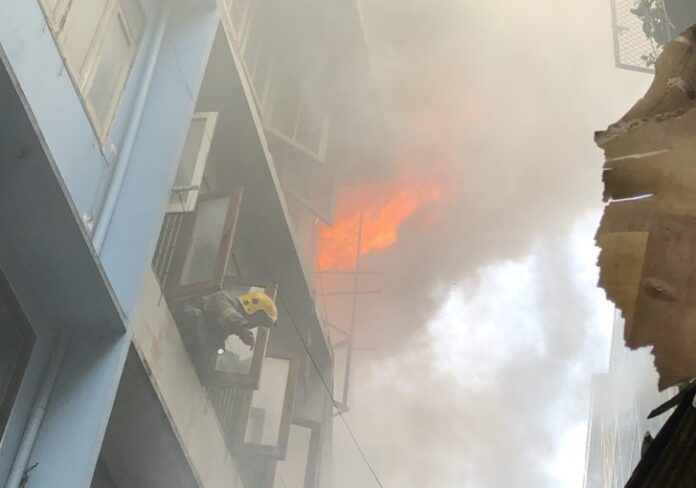
BANGKOK — A shophouse went up in flames Thursday in Chinatown just as the community there was gearing up to celebrate Chinese New Year.
The fire broke out at a shop selling “hell money” – piles of mock banknotes and gold and silver colored papers – on Texas Alley before it spread to a nearby building. After an hour of struggling to control the flames in the narrow and crowded alley, firefighters extinguished the blaze at about 11am.
Police have yet to determine the cause of the incident. Building owner Naruemon Pathamwattanakul told reporters she was away when the fire started. No injury is reported.
The incident came just two weeks after City Hall officials campaigned in Chinatown to raise awareness about fires during the Chinese New Year season, when papers and lit incense is widely used throughout the community.
Due to the capital’s ongoing pollution problem, the government also requested Sino-Thais to refrain from lighting incense and hell money during the celebration.