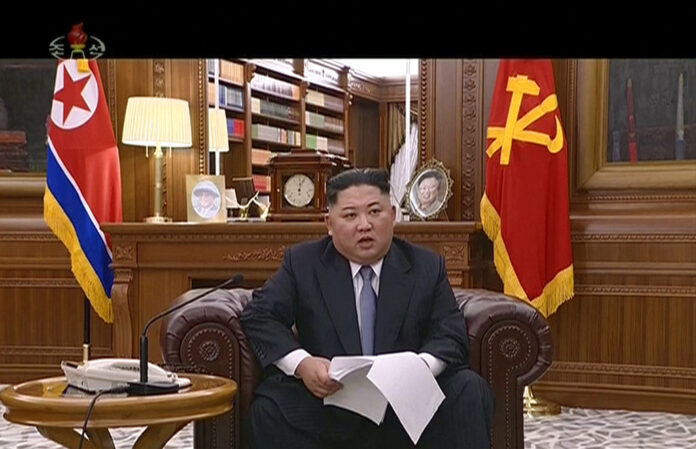
In this undated image from video distributed on Tuesday, Jan. 1, 2019, by North Korean broadcaster KRT, North Korean leader Kim Jong Un delivers a speech in North Korea. Photo: KRT via Associated Press
TOKYO — Looking almost banker-like in a business suit and sitting in an upholstered leather armchair, Kim Jong Un gave his annual televised New Year’s address on Tuesday.
The North Korean leader’s big curtain-raiser for 2019 comes after a couple of very tumultuous years. In 2017, his rapid-fire missile tests brought him to the brink with President Donald Trump and 2018 saw his sudden rise on the world stage with hints of detente, summits with China and South Korea and an unprecedented meeting with Trump in Singapore.
What’s ahead in 2019? Here are four big takeaways.
1. IT’S STILL ABOUT THE ECONOMY
About two-thirds of the entire speech was devoted to the economy.
Kim last year jettisoned his signature slogan of “simultaneous tracks” — developing nuclear weapons and the economy at the same time — in favor of claiming to focus everything on the economy, which is now the national buzz phrase.
Kim hasn’t given up on his nuclear weapons, he just says he has perfected the arsenal enough to shift the focus of “socialist construction” elsewhere. Kim also didn’t commit to anything in the speech like the kind of major, structural economic changes that might generate sustainable growth, but which could also undermine his own power.
Even so, he does appear to genuinely want to boost the standard of living of his nation and to grow the country’s economy. He underscored that desire by calling for an increased electricity supply and pointed to the possibility of developing nuclear power, along with the need for modernization and innovation across the board.
Despite repeated mentions during the speech of the North’s cherished principle of “Juche,” or self-reliance, Kim understands his country’s economic realities. He is openly seeking more foreign investment and trade.
And he’s hoping to enlist Seoul’s help in that endeavor.
2. KIM WANTS THE KOREAS TO BE TAKING THE LEAD
Though the attention was on his relationship with Trump, Kim’s biggest moves in 2018 were toward South Korea.
Kim’s pitch has been that it is high time Pyongyang and Seoul were leaders in determining their own fate, which is also a shot at the role of the United States on the peninsula.
Kim’s speech was broadcast simultaneously in South Korea.
Addressing both nations at once, he called on all Koreans to — in his decidedly North Korean manner — to “uphold the slogan “Let’s usher in a heyday of peace, prosperity and reunification of the Korean Peninsula by thoroughly implementing the historic North-South declarations!”
Those declarations include a good deal of joint efforts to help Kim with his economic goals, including the renovation and reconnection of the North’s railways to the South. He said he would support the reopening of an industrial park that relies on South Korean capital investments and a tourism zone on the North’s Mount Kumgang, or Diamond Mountain.
Such efforts can’t go very far until sanctions are lifted. Seoul is a lot more willing to forge ahead than Washington.
Pyongyang is also seeking an end to joint U.S.-South Korea military exercises, while Washington is pushing the South to pay more of the cost of keeping its troops there.
The growing Washington-Seoul discord is an added bonus for Kim.
Expect him to keep pushing those buttons.
3. THE NUKES AREN’T GOING ANYWHERE ANYTIME SOON
In the most tantalizing sentence of the speech, Kim hinted at a possible cap on nuclear weapons production if the U.S. takes equivalent steps, whatever that might mean.
He also stood by his commitment to the denuclearization of the Korean Peninsula, which, contrary to some wishful thinking in Washington and Seoul, does not mean the unilateral denuclearization of North Korea.
Both areas need to be further clarified in negotiations.
Kim’s calculus has never been to throw away his nuclear arsenal and hope for the best from a newly friendly and supportive administration in Washington. It has from the start been an effort to play the nuclear hand to its greatest advantage.
Kim sees nuclear weapons as a valuable deterrent to a U.S. military strike. Unless that threat is eliminated, he won’t give them up. He also believes his weapons put him in a position of strength from which he can make demands and extract concessions.
The North has been pretty clear about these points. But Kim spelled them out once again.
His message to Trump: Start addressing his concerns about security and sanctions relief soon or he will have no choice but to try a different, less friendly approach. And he is warning that he will be able to make a case to China, Russia and possibly even Seoul that if things fall Washington will be the one to blame.
4. KIM WANTS TO BE SEEN AS HIS OWN MAN
This year’s 30-minute speech was an exercise in making Kim look worldly, firmly in charge and comfortable in his own skin — as opposed to the caricatures of him that are so popular in the West.
Though not a stirring public speaker, Kim confidently delivered the pre-recorded address in a study with dark-wood paneling and the national and ruling party flags.
He was flanked by big portraits of his charismatic grandfather, national founder Kim Il Sung, and his father, the late leader Kim Jong Il, who was famously speech-averse and never spoke like this on New Year’s.
That lineage is as important as ever.
But the images beamed to the nation and to the world Tuesday of Kim delivering the speech were engineered to have a freshness to them that is uniquely his — and to leave the impression that Kim Jong Un is his own man, a modern, respectable leader who belongs on the world stage.
He may very well be sharing that stage next with Trump, for their second summit.
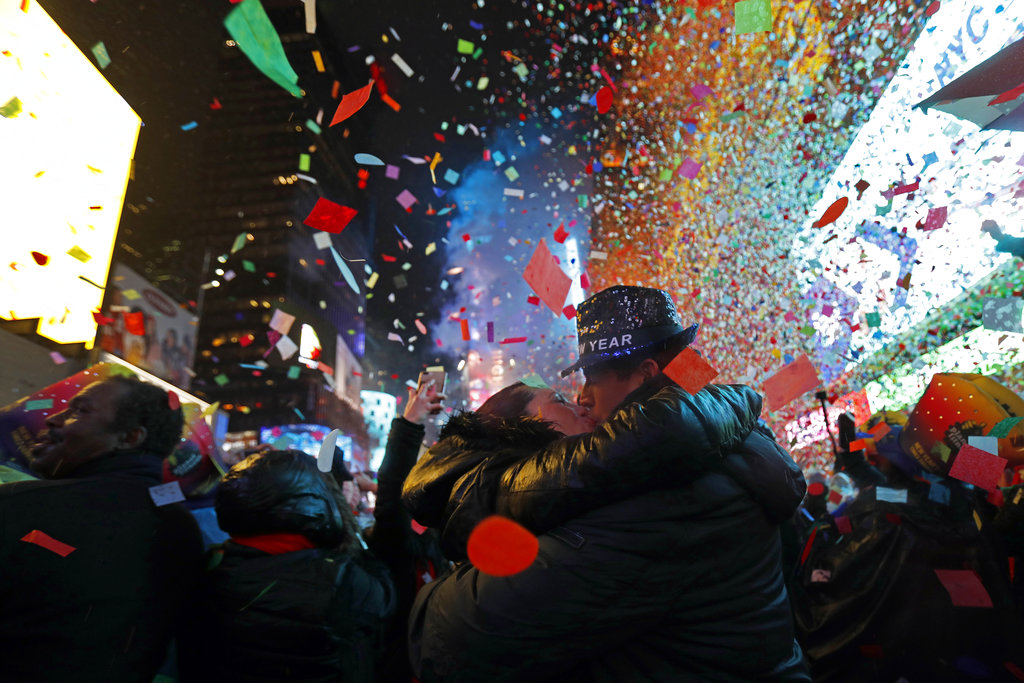
A reveler on Tuesday celebrates as confetti falls during a New Year's celebration in New York's Times Square. Photo: Adam Hunger / Associated Press
Fireworks, concerts, spiritual services and political addresses abounded to mark the transition to 2019 as revelers around the globe bid farewell Monday to a year filled with challenges to many of the world’s most basic institutions, including in the realms of politics, trade, alliances and religion.
A look at the world is ushering in 2019:
New York
A drenching rain couldn’t keep crowds from packing Times Square for the traditional crystal ball drop and a string of star performances.
Christina Aguilera pumped up the crowd, performing in a snow-white dress and coat while partygoers danced in their rain ponchos.
Bebe Rexha sang John Lennon’s “Imagine” just before the midnight ball drop.
The celebration took place under tight security. Partygoers were checked for weapons and then herded into pens, ringed by metal barricades, where they waited for the stroke of midnight.
Joey and Claudia Flores, of California, on Tuesday kiss as confetti falls during a New Year’s celebration in New York’s Times Square. Photo: Adam Hunger / Associated Press
But the weather forced police to scrap plans to fly a drone to help keep watch over the crowd.
Revelers paid up to $10 for plastic ponchos trying to stay dry. Umbrellas were banned for security reasons.
Rio de Janeiro
More than 2 million people celebrated the new year on Copacabana beach in Rio de Janeiro.
A 14-minute fireworks display ushered Brazil into 2019 only hours before far-right politician Jair Bolsonaro will be sworn in as president.
Many Brazilians were on the road to the capital of Brasilia on Monday night to watch the former army captain’s inauguration Tuesday afternoon.
The last evening of 2018 in Rio was 85 degrees Fahrenheit (29 degrees Celsius), and many Brazilians took a dip in the water and made their offerings to Yemanja, a sea goddess in the Afro-Brazilian Candomble faith.
London
Britons ushered in the new year with the familiar chimes of Big Ben, even though the world famous clock has been disconnected for more than a year because of a conservation project.
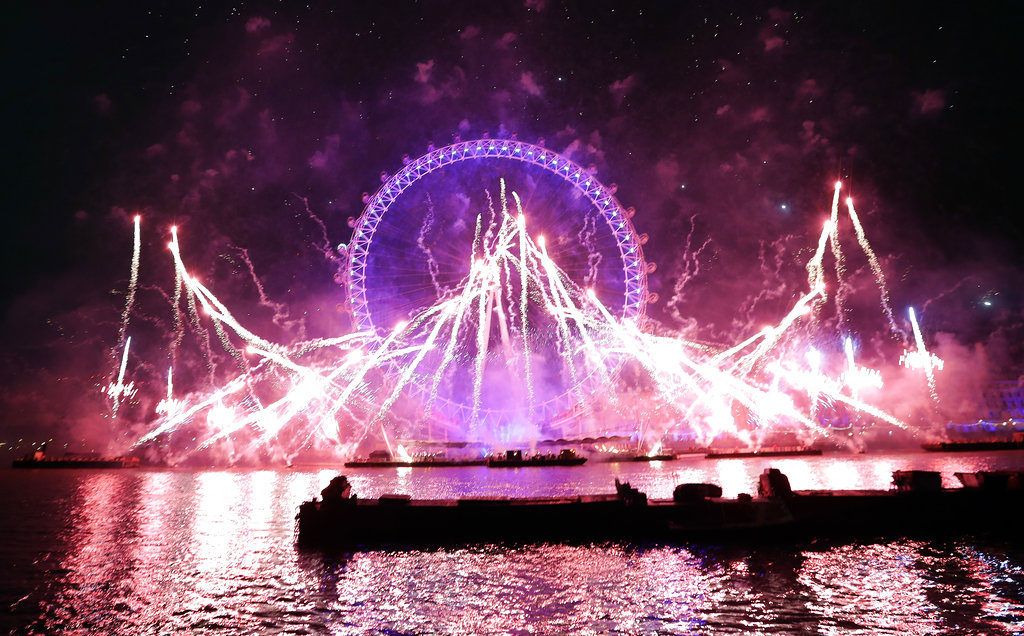
Fireworks on Tuesday explode over the London Eye during the New Year’s eve celebrations after midnight in London. Photo: Kirsty Wigglesworth / Associated Press
Parliament announced last week that the clock’s massive bell would sound to mark the new year with the help of a specially built electric mechanism to power the hammer, which weighs about 440 pounds (200 kilograms). The clock mechanism, which has kept time since 1859, has been dismantled as part of the renovation work.
New Year’s Eve without Big Ben would be positively un-British. The comforting chimes are used by TV and radio stations throughout Britain to herald the moment of transition from the old to the new year.
Paris
Parisians and tourists gathered on the Champs-Elysees to celebrate New Year’s Eve under heavy security.
Anti-government protesters from the yellow vest movement have issued calls on social media for “festive” demonstrations on the famous avenue.
Paris police set up a security perimeter in the area, with bag searches, a ban on alcohol and traffic restrictions. The Interior Ministry said Sunday that the heavy security measures are needed because of a “high terrorist threat” and concerns about “non-declared protests.”
President Emmanuel Macron gave his traditional New Year address to briefly lay out his priorities for 2019, as some protesters angry over high taxes and his pro-business policies plan to continue their demonstrations in coming weeks.
Ahead of midnight, a light show with the theme of brotherhood took place on the Arc de Triomphe monument at the top of the Champs-Elysees.
Berlin
Tens of thousands of people celebrated the start of 2019 at Berlin’s landmark Brandenburg Gate.
The annual New Year’s celebrations took place amid tight security, with about 1,300 officers deployed throughout the heart of the German capital and revelers banned from taking fireworks, bottles or large bags into the fenced-off party zone.
By midnight, Berlin police reported fewer incidents than in previous years.
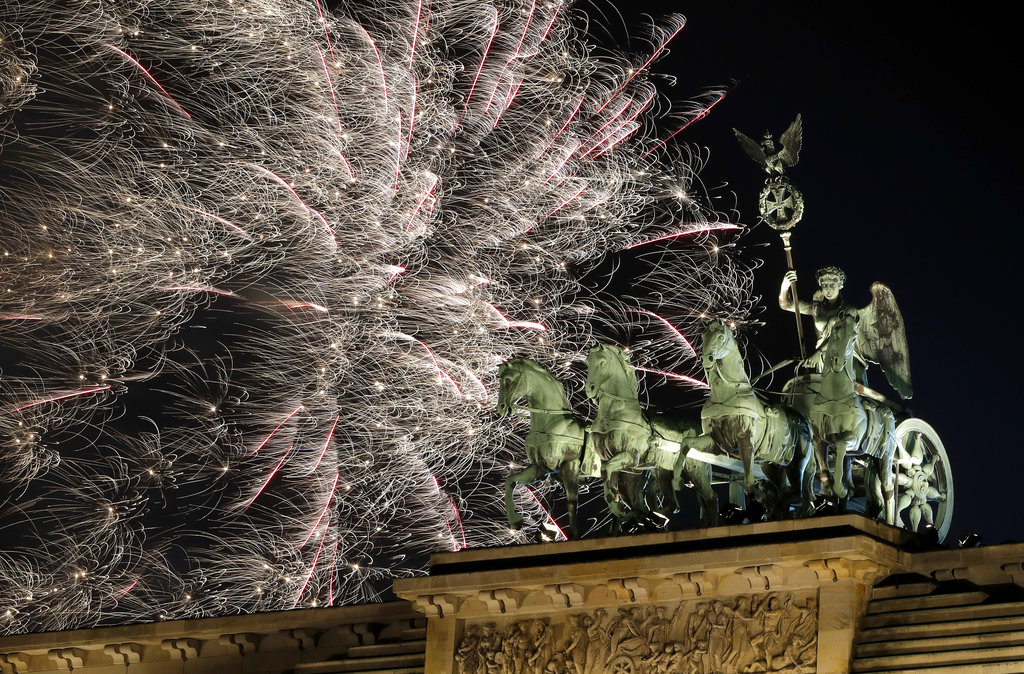
Fireworks on Tuesday light the sky above the Quadriga at the Brandenburg Gate shortly after midnight in Berlin, Germany. Photo: Michael Sohn / Associated Press
Vatican City
Pope Francis has rounded out the most problematic year of his papacy by presiding over a vespers service and praying before the Vatican’s giant sand sculpture Nativity scene.
During his homily Monday, Francis lamented how many people spent 2018 living on the edge of dignity, homeless or forced into modern forms of slavery.
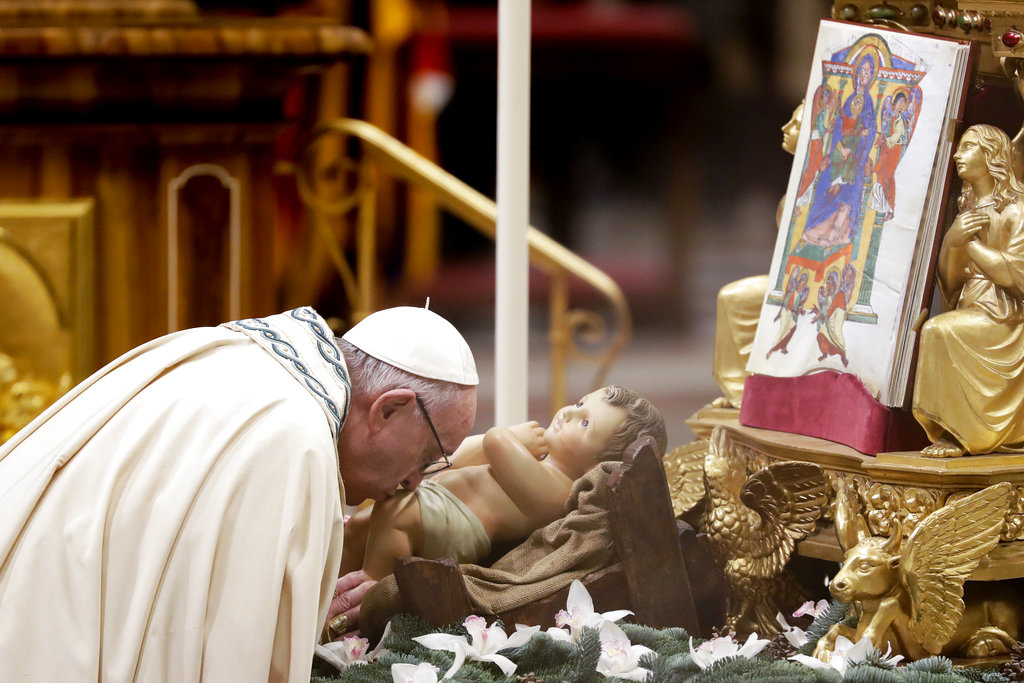
Pope Francis on Monday kisses a statue of Baby Jesus as he celebrates a new year’s eve vespers Mass in St. Peter’s Basilica at the Vatican. Photo: Andrew Medichini / Associated Press
Accompanied by his chief alms-giver, Francis then walked out into St. Peter’s Square, where he greeted pilgrims and prayed before the Nativity scene, carved out of 720 tons of packed sand.
On Tuesday, Francis will celebrate Mass to mark the start of a new year and officially leave behind 2018, which saw a new eruption of the clergy sex abuse scandal.
United Arab Emirates
Fireworks crackled at Dubai’s Burj Khalifa, the world’s tallest building, as hundreds of thousands of spectators gathered downtown to watch the spectacular display.
The fireworks replaced last year’s somewhat anticlimactic LED lightshow that ran down the facade of the 828-meter-tall (2,716-foot-tall) tower.
Cafes and restaurants with a view of the Burj Khalifa charge a premium for their locale on New Year’s Eve. Casual sandwich chain Pret a Manger, for example, charged $817 for a table of four. That price gets you hot and cold drinks and some canapes. For burgers near the action, fast food chain Five Guys charged $408 per person for unlimited burgers, hotdogs, fries, milkshakes and soda.
Elsewhere in the United Arab Emirates, the emirate of Ras al-Khaimah attempted to set a new Guinness World Record with the longest straight-line display of fireworks reaching 7.35 miles (11.83 kilometers).
Thailand
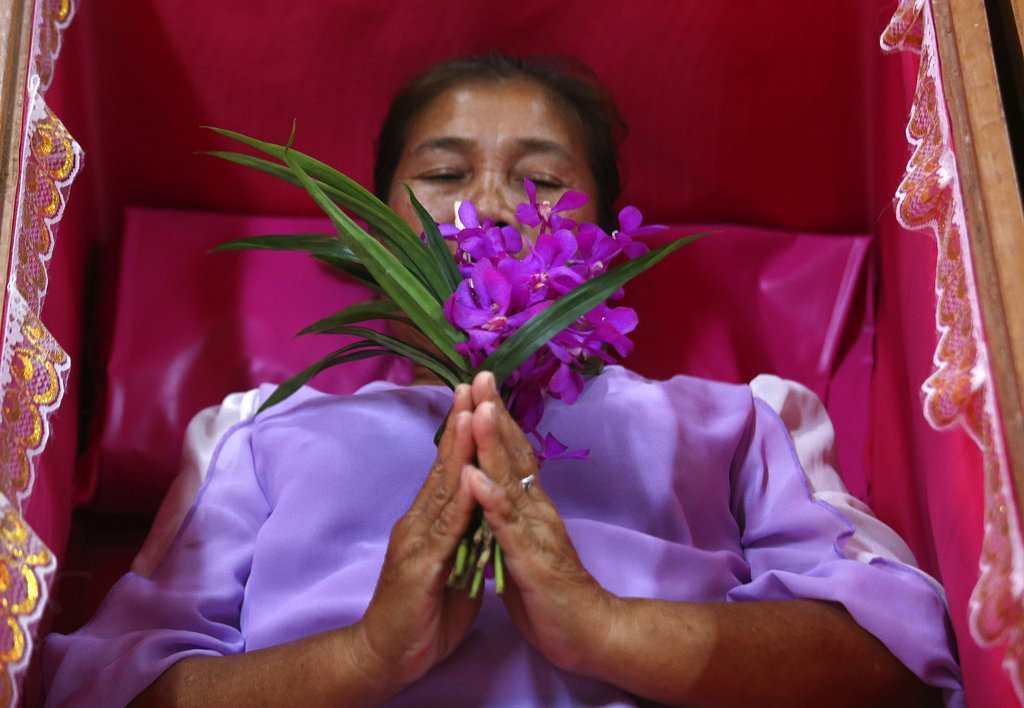
A worshipper on Monday prays as she takes her turn lying in a coffin at the Takien temple in suburban Bangkok, Thailand. Photo: Sakchai lalit / Associated Press
While many celebrate New Year’s Eve with fireworks, hundreds of Thais traveled to Takien Temple in a suburb of Bangkok to lie inside coffins for traditional funeral rituals.
Participants believe the ceremony — symbolizing death and rebirth — helps rid them of bad luck and allows them to be born again for a fresh start in the new year.
They held flowers and incense in their hands as monks covered them with pink sheets and chanted prayers for the dead.
“It wasn’t scary or anything. It is our belief that it will help us get rid of bad luck and bring good fortune to our life,” said Busaba Yookong, who came to the temple with her family.
Philippines
Dozens of people have been injured ahead of New Year’s Eve, when many across the Philippines set off powerful firecrackers in one of Asia’s most violent celebrations despite a government scare campaign and threats of arrests.
The Department of Health said it has recorded more than 50 firecracker injuries in the past 10 days. That is expected to increase as Filipinos usher in 2019.
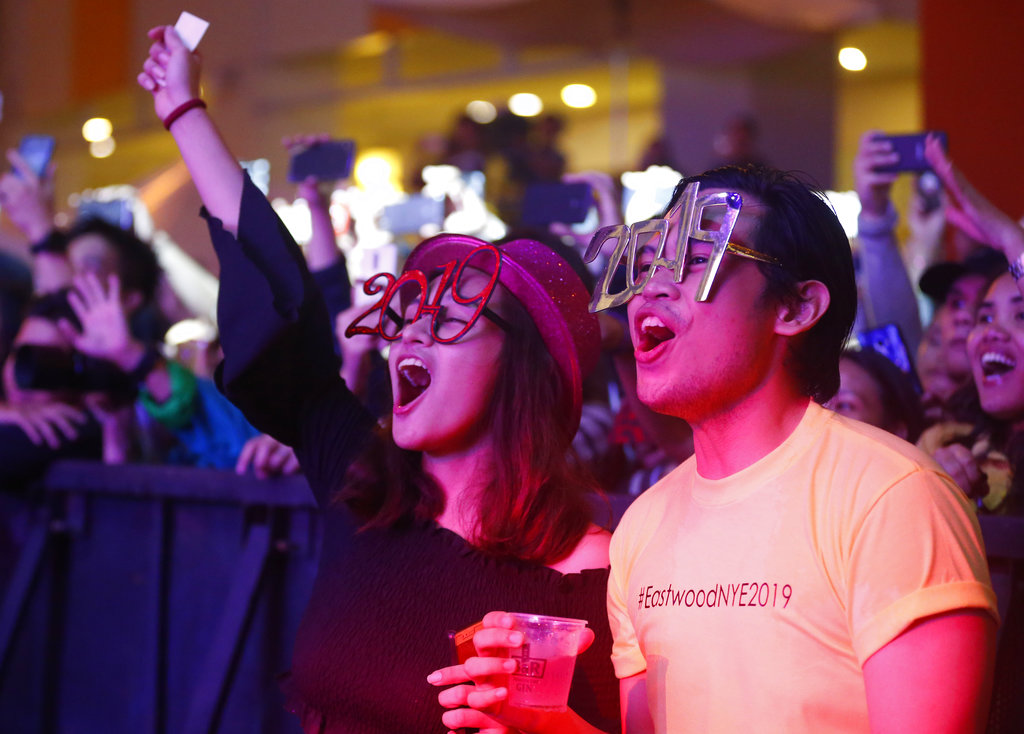
Filipinos on Monday night cheer during a New Year countdown at the Eastwood Shopping Mall in suburban Quezon city northeast of Manila, Philippines. Photo: Bullit Marquez / Associated Press
Officials have urged centralized fireworks displays to discourage wild and sometimes fatal merrymaking.
The tradition stems from a Chinese-influenced belief that noise drives away evil and misfortune.
Earlier Monday, suspected Muslim militants remotely detonated a bomb near the entrance of a mall in Cotabato as people did last-minute shopping ahead of celebrations. Officials said at least two people were killed and nearly 30 wounded.
China
New Year’s Eve isn’t celebrated widely in mainland China, where the lunar New Year in February is a more important holiday. But countdown events were held in major cities, and some of the faithful headed to Buddhist temples for bell-ringing and prayers.
Beijing held a gala with VIP guests at the main site of the 2008 Summer Olympics. The event looked ahead to the 2022 Winter Games, which also will be held in the Chinese capital.
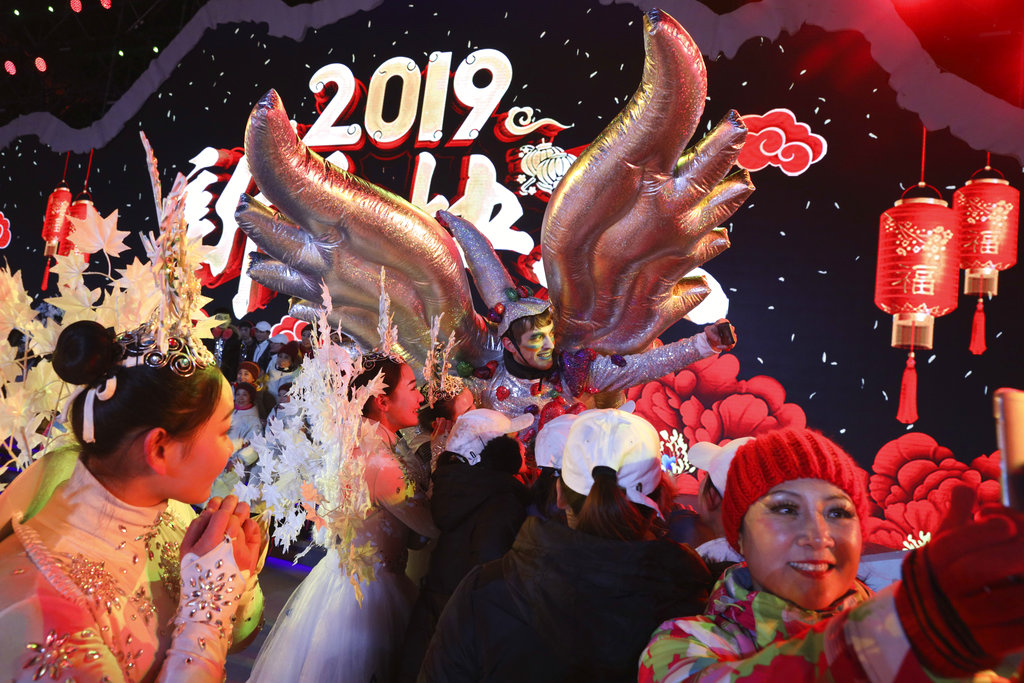
Performers on Tuesday take selfies at the end of a countdown to the new year event in Beijing, China. Photo: Ng Han Guan / Associated Press
Outdoor revelers in Beijing had to brave temperatures well below freezing.
Additional police were deployed in parts of Shanghai, where a New Year’s Eve stampede in 2014 killed 36 people.
In Hong Kong, festive lights on skyscrapers provided the backdrop for a fireworks, music and light show over Victoria Harbor on a chilly evening.
Kiribati
The Pacific island nation of Kiribati was the first in the world to welcome the new year, greeting 2019 with muted celebrations after spending 2018 on the front line of the battle against climate change.
Kiribati is made up of low-lying atolls along the equator which intersect three time zones, the first of which sees the new year 14 hours before midnight in London.
Much of the nation’s land mass, occupied by 110,000 people, is endangered by rising seas that have inundated coastal villages. The rising oceans have turned fresh water sources brackish, imperiling communities and raising doubts the nation will exist at the next New Year.
Former President Anote Tong said the only future for Kiribati may be mass migration.
The new year was welcomed in the capital, Tarawa, with church services and mostly quiet private celebrations.
Australia
An estimated million people crowded Sydney Harbor as Australia’s largest city rang in the new year with a spectacular, soul-tinged fireworks celebration.
One of the most complex displays in Australia’s history included gold, purple and silver fireworks pulsating to the tune of “(You Make Me Feel Like) A Natural Woman,” made famous by Aretha Franklin, who died in August. The show used 8.5 tons of fireworks and featured more than 100,000 pyrotechnic effects.
Earlier, a thunderstorm drenched tens of thousands of people as they gathered for the traditional display, creating a show of its own with dozens of lightning strikes.
In Melbourne, 14 tons of fireworks deployed on the ground and on roofs of 22 buildings produced special effects including flying dragons. In Brisbane, people watched as fireworks exploded from five barges moored on the Brisbane River.
South Korea
After an eventful year that saw three inter-Korean summits and the easing of tensions over North Korea’s nuclear program, South Koreans entered 2019 with hopes that the hard-won detente will expand into a stable peace.
Thousands of South Koreans filled the streets of the capital, Seoul, for a traditional bell-tolling ceremony near City Hall. Dignitaries picked to ring the old Bosingak bell at midnight included famous surgeon Lee Guk-jong, who successfully operated on a North Korean soldier who escaped to South Korea in 2017 in a hail of bullets fired by his comrades.
A “peace bell” was tolled at Imjingak, a pavilion near the border with North Korea.
Las Vegas
No place does flashy like Las Vegas. It will ring in 2019 with fireworks shot from casino-resorts and superstar performances from Lady Gaga, Celine Dion, Gwen Stefani and others.
Celebratory midnight toasts will be anchored by an 8-minute firework show on the Las Vegas Strip. The pyrotechnics will be choreographed to a soundtrack that includes Frank Sinatra’s “Luck Be a Lady,” Lionel Richie’s “All Night Long” and Dion’s version of “I Drove All Night”.
New Year’s Eve is worth more than $400 million to Vegas.
Security is a high priority for police on the Las Vegas Strip, where a gunman in 2017 opened fire on a country music festival, killing 58 people and injuring hundreds of others.
Police, including rooftop snipers and plainclothes and uniformed officers, will be out in full force along with federal agents. Authorities are also restricting revelers from bringing backpacks, ice chests, strollers and glass items to the street celebrations.
BANGKOK — Goodbye 2018. Last night the capital city showed how hungry it was for 2019.
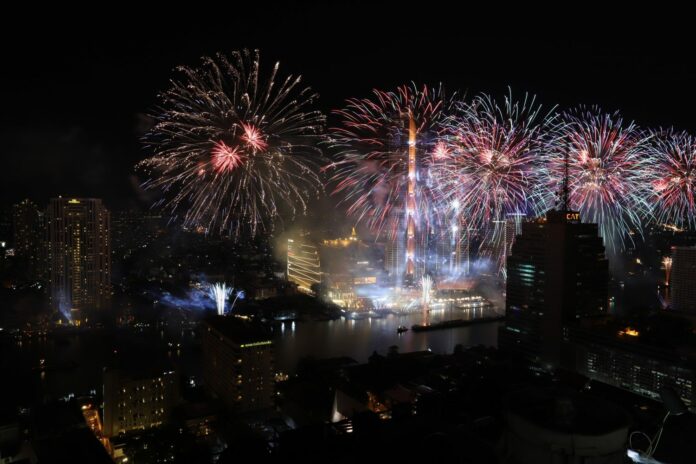
Vibrant New Year’s celebrations kicked off at venues around the city. Buddhists crossed into 2019 chanting prayers at the Temple of the Golden Mount, while thousands cheered impressive fireworks erupting at major shopping malls CentralWorld and Iconsiam.
This year, recently openedIconsiambecame a grand landmark to ring in the new year with its countdown event under the theme of The River of Prosperity.
Atop mountains such as best-known Phu Kradueng, tourists caught the first glorious sunrise of the new year.
At dawn today, people nationwide made merit by releasing animals and offering food to Buddhist monks.
Tourists see the first sunrise of 2019 on Phu KraduengTourists watch the sun rise on New Year’s Day at Doi Ta Pung in Chumphon province.People on New Year’s Eve chant prayers at Wat Phra Singh in Chiang Mai province.Local people in Songkhla province offered food to monks on New Year’s Day.Buddhists chanted on New Year’s Eve at Wat Saket aka “Temple of the Golden Mount” in Bangkok.
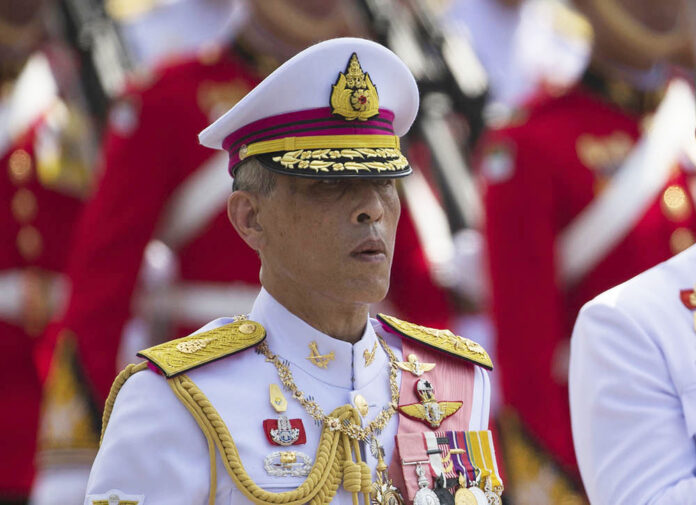
King Vajiralongkorn walks Thursday, Oct. 26, 2017, during a procession for his father. Photo: Wason Wanichakorn / Associated Press
BANGKOK — The coronation ceremony is scheduled for May 4 to May 6, the palace announced Tuesday.
King Vajiralongkorn has approved the date for the coronation ceremony, according to the statement released by the palace today. The king will officially be crowned on May 4.
May 5 will be for the inauguration of the king’s official name and signature, including re-establishment of the royal family members’ ranking. A royal parade will also be held this day.
The king will meet the public and foreign diplomats at the Grand Palace on May 6.
King Vajiralongkorn has been serving as monarch since his father King Bhumibol died in 2016, ending his 70-year reign.
KORAT — An artist’s rendering of a large protected bovine in Nakhon Ratchasima province proved too convincing for its own good.
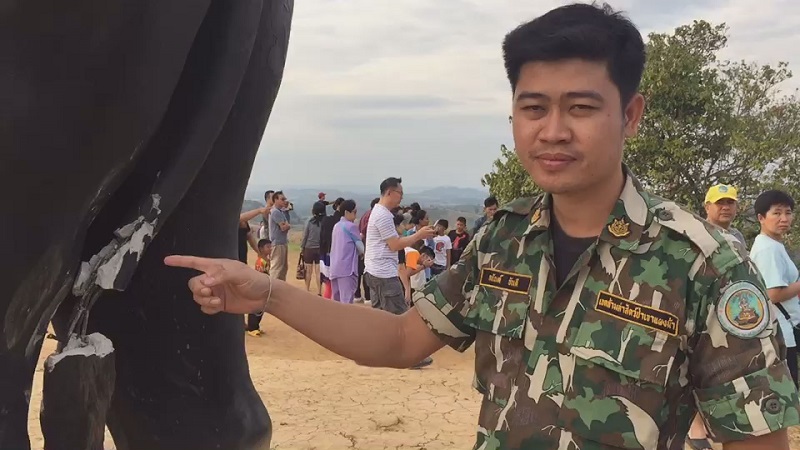
National park officials on Monday announced that a three-meter gaur statue gracing a scenic viewpoint in Khao Phaeng Ma forest was attacked by a raging bull recently. Officials initially suspect human vandals but closer inspection revealed gaur hair and marks of horn strikes on the statue.
Anan Khandee, head ranger, said a bull most likely came across the statue and charged at the giant imitation to defend its territory. Repairs will be made, Anan added.
Khao Phaeng Ma, a protected wildlife area, is famous for the numerous bulls that inhabit the woods. The viewpoint where the statue is located has attracted at least 1,000 tourists who are camping out today to witness the first sunrise of the year 2019.
Gaurs, the largest known bovines, are native to Southeast Asia and listed as a vulnerable species.
BEIJING — It’s not uncommon for individuals who speak out against the government to disappear in China, but the scope of the “disappeared” has expanded since President Xi Jinping came to power in 2013.
Not only dissidents and activists, but also high-level officials, Marxists, foreigners and even a movie star — people who never publicly opposed the ruling Communist Party — have been whisked away by police to unknown destinations.
The widening dragnet throws into stark relief the lengths to which Xi’s administration is willing to go to maintain its control and authority.
A look at some of the people who went missing in 2018 at the hands of the Chinese state:
FOREIGN PAWNS
China threatened “grave consequences” if Canada did not release high-tech executive Meng Wanzhou, shortly after the Huawei chief financial officer was detained in Vancouver in December for possible extradition to the U.S.
The apparent consequences materialized within days, when two Canadian men went missing in China. Both turned up in the hands of state security on suspicion of endangering national security, a nebulous category of crimes that has been levied against foreigners in recent years.
Former Canadian diplomat Michael Kovrig was taken by authorities from a Beijing street late in the evening, a person familiar with his case said. He is allowed one consular visit a month and has not been granted access to a lawyer, as is standard for state security cases.
Also detained is Michael Spavor, who organizes tours to North Korea from the border city of Dandong. China has not said whether their detentions are related to Meng’s, but a similar scenario unfolded in the past.
A Canadian couple was detained in 2014 on national security grounds shortly after Canada arrested Su Bin, a Chinese man wanted for industrial espionage in the U.S.
Like Spavor, Kevin and Julia Garratt lived in Dandong, where they ran a popular coffee shop for nearly a decade. They also worked with a Christian charity that provided food to North Korean refugees.
While Julia Garratt was released on bail, her husband was held for more than two years before he was deported in September 2016 — about two months after Su pleaded guilty in the U.S.
TAX-EVADING ACTRESS
Fan Bingbing was living the dream. Since a breakthrough role at the age of 17, Fan has headlined dozens of movies and TV series, and parlayed her success into modeling, fashion design and other ventures that have made her one of the highest-paid celebrities in the world.
All this made her a potent icon of China’s economic success, until authorities reminded Fan — and her legion of admirers — that even she was not untouchable.
For about four months, Fan vanished from public view. Her Weibo social media account, which has more than 63 million followers, fell silent. Her management office in Beijing was vacated. Her birthday on Sept. 16 came and went with only a handful of greetings from entertainment notables.
When she finally resurfaced, it was to apologize.
“I sincerely apologize to society, to the friends who love and care for me, to the people, and to the country’s tax bureau,” Fan said in a letter posted on Weibo on Oct. 3.
She admitted to tax evasion. State news agency Xinhua reported that Fan and the companies she represents had been ordered to pay taxes and penalties totaling 900 million yuan ($130 million).
“Without the party and the country’s great policies, without the people’s loving care, there would be no Fan Bingbing,” she wrote, a cautionary tale for other Chinese celebrities.
Xinhua concurred in a commentary on her case: “Everyone is equal before the law, there are no ‘superstars’ or ‘big shots.’ No one can despise the law and hope to be lucky.”
SECURITY INSIDER
Unlike most swallowed up by China’s opaque security apparatus, Meng Hongwei knew exactly what to expect.
Meng, no relation to the Huawei executive, is a vice minister of public security who was also head of Interpol, the France-based organization that facilitates police cooperation across borders.
When he was appointed to the top post, human rights groups expressed concern that China would use Interpol as a tool to rein in political enemies around the world.
Instead, he was captured by the same security forces he represented.
In September, Meng became the latest high-ranking official caught in Xi’s banner anti-corruption campaign. The initiative is a major reason for the Chinese leader’s broad popularity, but he has been accused of using it to eliminate political rivals.
Xi pledged to confront both high-level “tigers” and low-level “flies” in his crackdown on graft — a promise he has fulfilled by ensnaring prominent officials.
Meng was missing for weeks, before Chinese authorities said he was being investigated for taking bribes and other crimes. A Chinese delegation delivered a resignation letter from Meng to Interpol headquarters.
His wife Grace Meng told the AP that she does not believe the charges against her husband. The last message he sent her was an emoji of a knife.
DARING PHOTOGRAPHER
Lu Guang made his mark photographing the everyday lives of HIV patients in central China. They were poor villagers who had contracted the virus after selling their own blood to eke out a living — at a going rate of $7 a pint, they told Lu.
A former factory worker, Lu traversed China’s vast reaches to capture reality at its margins. He explored environmental degradation, industrial pollution and other gritty topics generally avoided by Chinese journalists, who risk punishment if they pursue stories considered to be sensitive or overly critical.
His work won him major accolades such as the World Press Photo prize, but his prominence likely also put him on the government’s radar.
This November, Lu was travelling through Xinjiang, the far west region that has deployed a vast security network in the name of fighting terrorism. He was participating in an exchange with other photographers, after which he was to meet a friend in nearby Sichuan province. He never showed up.
More than a month after he disappeared, his family was notified that he had been arrested in Xinjiang, according to his wife Xu Xiaoli. She declined to elaborate on the nature of the charges.
STUDENT MARXIST
In the past, the political activists jailed in China were primarily those who fought for democracy and an end to one-party rule. They posed a direct ideological threat to the Communist Party.
This year, the party locked in on a surprising new target: young Marxists.
About 50 students and recent graduates of the country’s most prestigious universities convened in August in Shenzhen, an electronics manufacturing hub, to rally for factory workers attempting to form a union.
Among them was Yue Xin, a 20-something fresh out of Peking University. Earlier this year, she made headlines by calling for the elite school to release the results of its investigation into a decades-old rape case.
This time, she was one of the most vocal leaders of the labor rights group, appearing in photographs with her fist up in a Marxist salute and wearing a T-shirt that said “Unity is strength” — the name of a patriotic Chinese communist song.
Yue, a passionate student of Marx and Mao Zedong, espoused the same values as the party. She wrote an open letter to Xi and the party’s central leadership saying all the students wanted was justice for Jasic Technology laborers.
Her letter quoted Xi’s own remarks: “We must adhere to the guiding position of Marxism.” Yue called Marx “our mentor” and likened the ideas of him and Mao to spiritual sustenance.
Nonetheless, she ended up among those rounded up in a raid on the apartment the activists were staying at in Shenzhen. While most have been released, Yue remains unaccounted for. She has been missing for four months.
___
Associated Press writer Rob Gillies in Toronto contributed to this report.
Police and rescue workers at the scene where a body was discovered in the Mekong River in Nakhon Phanom province. Photo: Courtesy
NAKHON PHANOM — Police in the northeast said Monday it’s too early to tell if a dead body found in the Mekong River belongs to a prominent anti-monarchy activist who went missing two weeks ago.
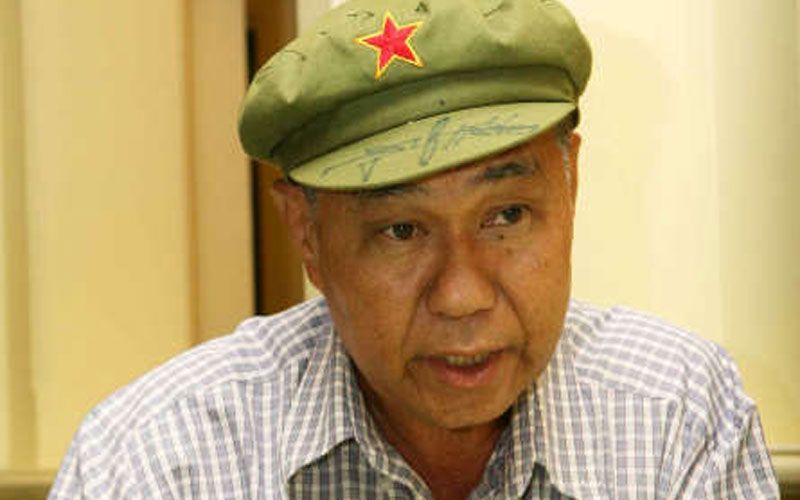
The unidentified man; whose throat was cut, intestines removed and hands locked in handcuffs; could have been the victim of narcotics traffickers, police in Nakhon Phanom province told the media. The fate of Surachai Danwattananusorn, 76, remains unknown.
The corpse was found inside a sack that washed ashore Saturday on the river border between Thailand and Laos. Another dead body was found in a similar manner just two days earlier. Both were sent to a hospital in Khon Kaen province for autopsies.
Surachai’s wife, Pranee Dawattanasunorn, told reporters she believes neither of the bodies is that of her husband, as they appear to have been men in their 30-40s. Surachai, a former lese majeste convict, fled to Laos after the coup in 2014 and has been missing since Dec. 9.
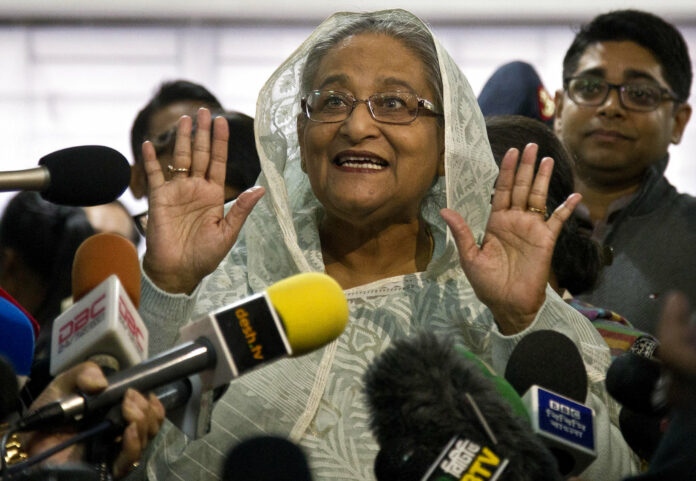
Bangladesh Prime Minister Sheikh Hasina speaks to the media after casting her vote Sunday in Dhaka, Bangladesh. Photo: Anupam Nath / Associated Press
DHAKA, Bangladesh — Bangladesh’s ruling alliance won virtually every parliamentary seat in the country’s general election, according to official results released early Monday, giving Prime Minister Sheikh Hasina a third straight term despite allegations of intimidation and the opposition disputing the outcome.
The coalition led by Hasina’s Awami League party won 288 out of 300 seats — 96 percent — in Sunday’s polls, Election Commission Secretary Helal Uddin Ahmed said. The opposition alliance led by prominent lawyer Kamal Hossain won only seven seats.
The opposition rejected the outcome, with Hossain calling the election “farcical” and demanding a new election be held under the authority of a “nonpartisan government.”
The opposition claims Hasina’s leadership has become increasingly authoritarian. More than a dozen people were killed in election-related violence on Sunday and the campaign preceding the vote had been dogged by allegations of arrests and jailing of thousands of Hasina’s opponents.
Hossain said late Sunday that about 100 candidates from the alliance had withdrawn from their races during the day. He said the alliance would hold a meeting Monday to decide its next course.
“We call upon the election commission to declare this election void and demand a fresh election under a nonpartisan government,” Hossain told reporters at a nationally broadcast news conference.
Calls to several Hasina aides seeking comment were not immediately returned.
Bangladesh’s leading newspapers made banner headlines, some in red, while television stations aired round-the-clock analysis. A headline in the country’s leading English-language newspaper, the Daily Star, read, “Hat-trick for Hasina, BNP found missing in polling; atmosphere festive, tuned only to ruling party,” referring to the opposition Bangladesh Nationalist Party.
In an editorial, the newspaper said “this was a one-sided election.”
“The blatant and starkest manifestation of an uneven state of affairs was the absence of polling agents of the opposition … in most, if not almost all, of the polling centers in the country,” it said.
Hasina’s main rival for decades has been former Prime Minister Khaleda Zia, the leader of the Bangladesh Nationalist Party, who a court deemed ineligible to run for office because she is in prison for corruption.
In Zia’s absence, opposition parties formed a coalition led by Hossain, an 82-year-old Oxford-educated lawyer and former member of Hasina’s Awami League party.
The secretary general of Zia’s party, Mirza Fakhrul Islam Alamgir, won a seat in a twist victory. Alamgir is a fierce critic of Hasina and he spearheaded the formation of the opposition alliance with Hossain at the helm. Alamgir had said Sunday he was rejecting any outcome, but it was unknown after his win was declared what he would do now.
In the run-up to the election, activists from both the ruling party and the opposition complained of attacks on supporters and candidates.
The Daily Star said 16 people were killed in 13 districts in election-related violence on Sunday.
The Associated Press received more than 50 calls from people across the country who identified themselves as opposition supporters complaining of intimidation and threats, and being forced to vote in front of ruling party men inside polling booths.
While rights groups have sounded the alarms about the erosion of Bangladesh’s democracy, Hasina has promoted a different narrative, highlighting an ambitious economic agenda that has propelled Bangladesh past larger neighbors Pakistan and India by some development measures.
Voters “will give us another opportunity to serve them so that we can maintain our upward trend of development, and take Bangladesh forward as a developing country,” Hasina said after casting her ballot along with her daughter and sister in Dhaka.
Some 104 million people in the Muslim-majority country were eligible to vote, including many young, first-time voters, in Bangladesh’s 11th general election since independence from Pakistan.
Both sides were hoping to avoid a repeat of 2014, when Zia and the BNP boycotted and voter turnout was only 22 percent. More than half of the 300 parliamentary seats were uncontested. The Awami League’s landslide victory was met with violence that left at least 22 people dead.
About 600,000 security officials, including army and paramilitary forces, were deployed to contain violence. The telecommunications regulator shut down mobile internet services nationwide to prevent the organizing of protests.
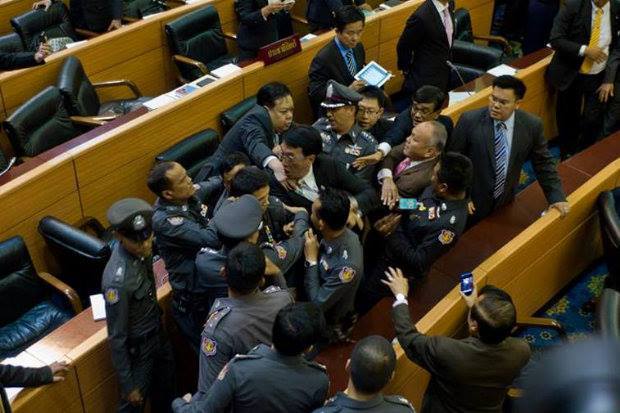
Lawmakers are locked in a scuffle during a particularly unruly session in May 2012.
BANGKOK — As proof of how volatile Thai political history is, the House of Parliament building is shutting down today for good after 44 years as the seat of the kingdom’s democracy.
The facility is being returned to the palace, and a new parliament building is under construction several kilometers away. The move marked the end of the site, which has witnessed its share of passionate debates, fistfights and even some casual pornography viewing.
These are some of the highlights of that soon-to-be history.
A Permanent Home
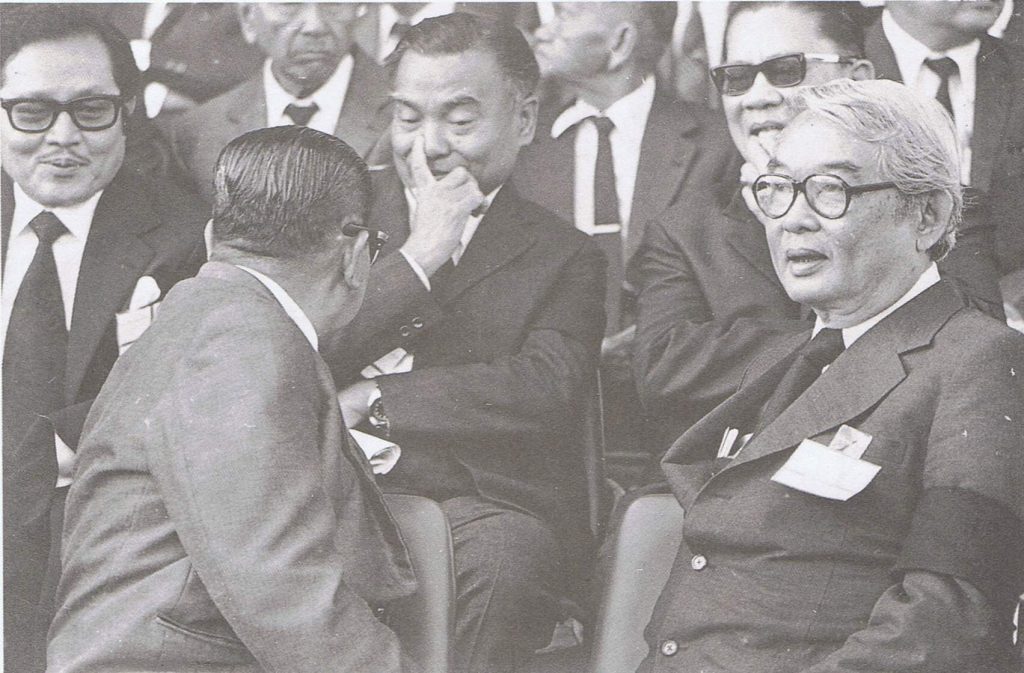
Future PM Kukrit Pramoj, at right, and other MPs meet on the benches of the Royal Turf Club in 1973 while a parliament is being built.
Construction of the parliament building began in 1969. Prior to that, the legislative branch had met in the Ananta Samakhom Throne Hall for its sessions, but a growing Thai population – which meant more representatives – forced lawmakers to find a new home.
Not that it mattered much, however: Thailand was ruled by a military dictatorship at the time, which did away with the parliament and its hassle of checks and balances.
But a popular uprising two years later brought back the parliament. Meetings were held at the Royal Turf Club before moving to the parliament after construction completed in 1974.
Taking a Stand
Thai politicians weren’t exactly known for their courage or as role models for democracy, but that changed in May 1992. Gen. Suchinda Kraprayoon, who led a coup the previous year, rigged a way to win the premiership, despite having pledged never to do so.
Opposition politicians decided they’d had enough. They showed up dressed in black to mock Suchinda, booed him when he tried to address the House and walked out in protest. Some would later join a growing protest against his rule.
The protest escalated into three days of violence known as Black May, which left at least 50 people dead and Suchinda tendering his resignation.
Pornocracy
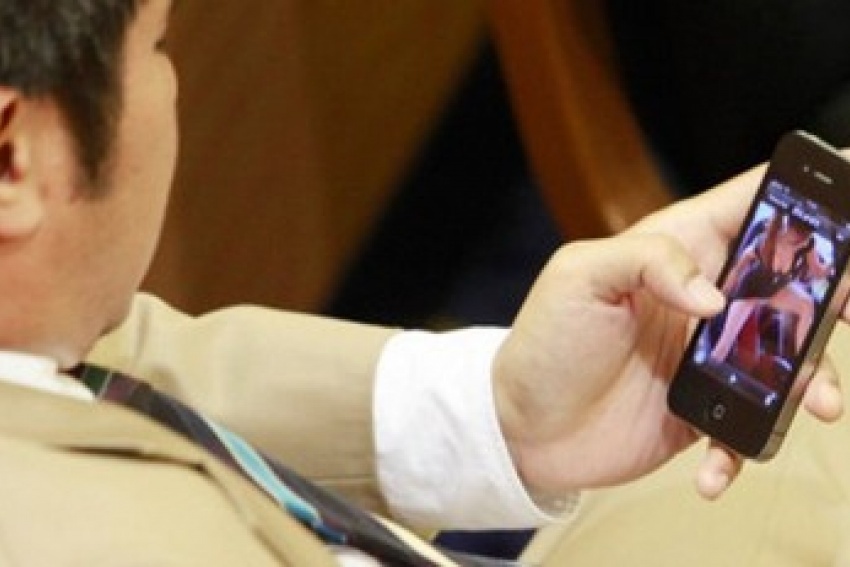
Democrat MP Nat Bantadtan conducts research on his phone during a parliament session.
But what many people will remember the most about the parliament’s history might be the times sex erupted on the floor.
In 2012, Democrat MP Nat Bantadtan was spotted scrolling through NSFW pics on his phone during a debate. Not to be outdone, Pheu Thai MP Pongpan Sunthornpan was caught doing the same on his iPad a year later.
Then there was that one time in April 2012 that some prankster got a screenshot of Japanese AV porn projected onto the big screen during an active legislative session. The person responsible was never caught.
‘Mr. Speaker, I Protest!’
And what’s a parliament without the frequent debates punctuated by insults, alleged misconduct and screaming challenges? Shouting matches are often interrupted by members of the belligerent parties standing up and protesting to the House Speaker, whose miserable job involves keeping order.
Fun fact: The parliament cafeteria for MPs is nicknamed the “U.N. Room” because courtesy holds that lawmakers must put aside their feuds and lunch together in peace.
Resisting the System
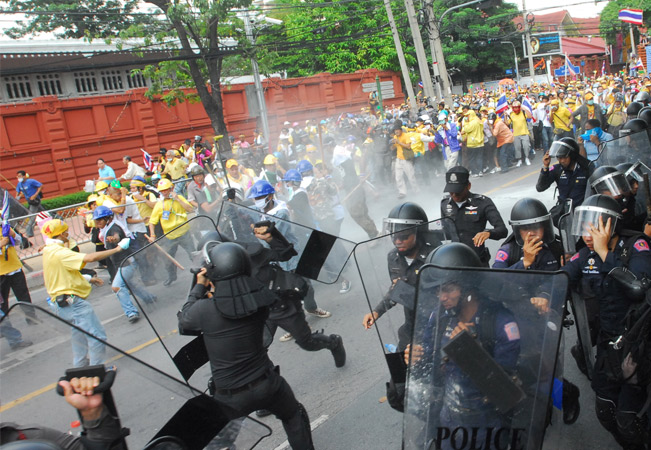
Riot police clash with protesters in front of the parliament on Oct. 7, 2008.
As the place where the laws get made, the parliament attracts many protests.
One group of activists stormed the building in 2007 to protest the interim lawmakers appointed by the junta at the time. The protesters climbed the wall, rushed inside and nearly pushed through the doors into to the main hall before police stopped them.
A year later, Yellowshirt protesters blocked the entrance to the building to stop politicians allied to former PM Thaksin Shinawatra from going to work. The government responded by ordering police to fire teargas into the crowd. The resulting chaos left two people dead.
Fighting in the War Room
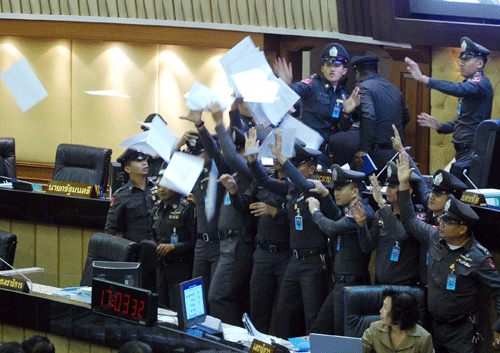
Police blocked stacks of paper thrown at the House Speaker on May 30, 2012.
The most spectacular parliament debate took place in 2012 when the government of Yingluck Shinawatra attempted to pass amnesty for protesters caught up in the 2010 political violence in which more than 90 people were killed.
Democrat MPs vehemently resisted the effort, accusing Yingluck of trying to sneak in amnesty for her brother, who was convicted of corruption. Fistfights broke out and Democrats tried to mob the House Speaker, who called for police backup.
But eventually the Dems were proven right. In a stealthy session held in the dead of the night in November 2013, Pheu Thai passed a blanket amnesty bill that would include Thaksin Shinawatra. The resulting outrage ignited street protests that would culminate in the May 2014 coup d’etat.
Rubber Stamp
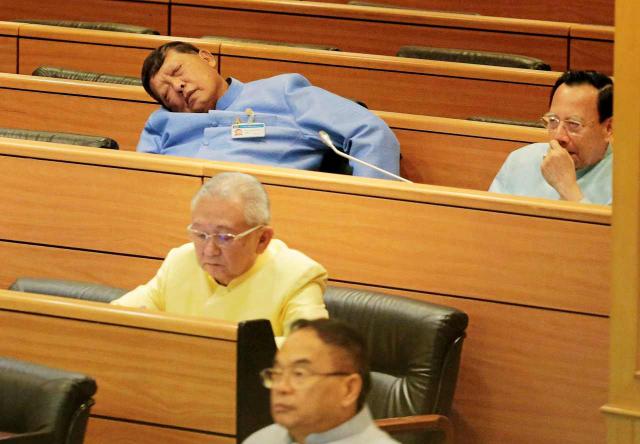
A member of the junta-appointed interim parliament dozes off during a session in June 2018.
It’s been nearly five years since Thailand had elected representatives. In their place, the junta appointed its own interim lawmakers, who have done little more than unanimously approve whatever bills the government has sent their way.
Critics also fear that the laws passed under the interim parliament – more than 300 of them – lacked debate and transparency, leaving potential legislative landmines to be dealt with for years to come.
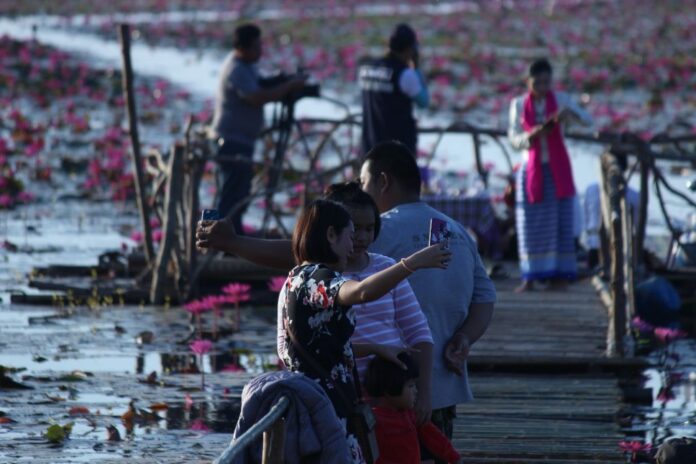
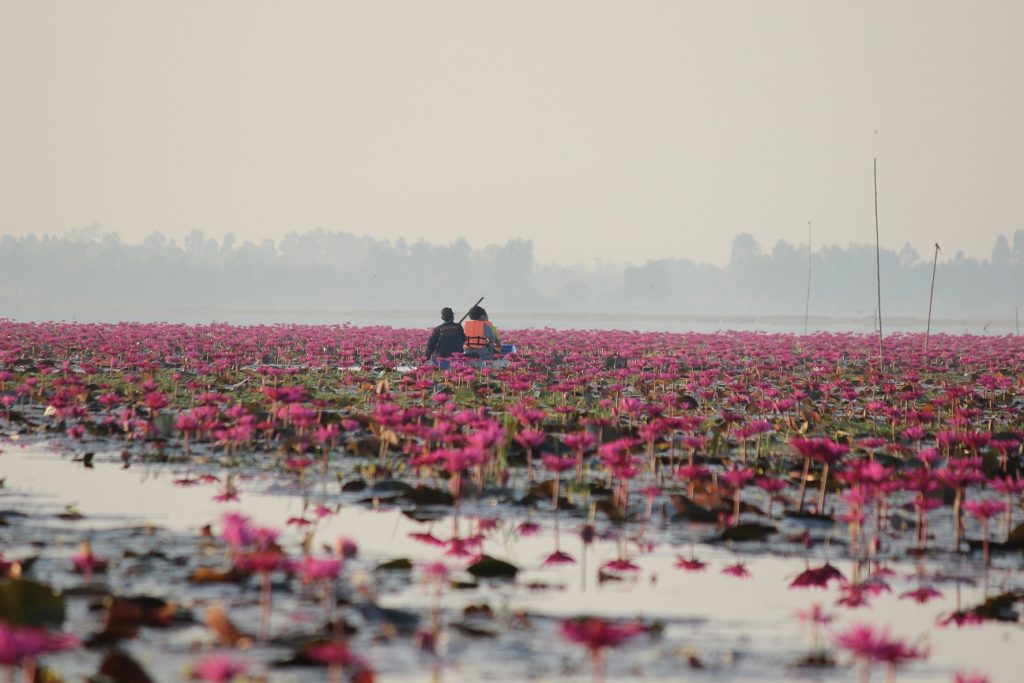
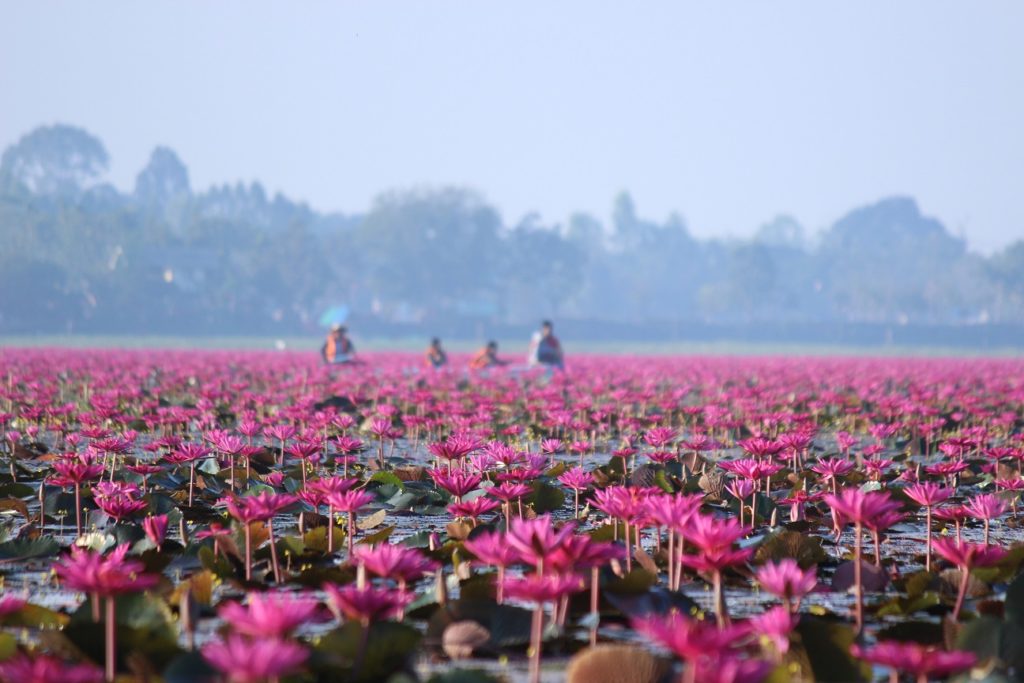
BUENG KAN — A swamp of pink lotuses and cool temperatures are drawing New Year’s crowds in the northeastern province of Buen Kan.
Temperatures dropped to 16C on Monday morning at the Norng Lerng swamp. Tourists are coming to the 3,605-rai swamp to see various species of bird which have migrated from winter elsewhere to tropical Thailand.
Local residents are offering boat trips on the swamp for 100 baht per person.
The swamp is located in Baan Santisuk, Bueng Karn province’s Phon Charoen district.