25.5 C
Bangkok
Sunday, July 5, 2026
Home Blog Page 1739

Millennia-Old Thai Antiquities Returned From US Collections

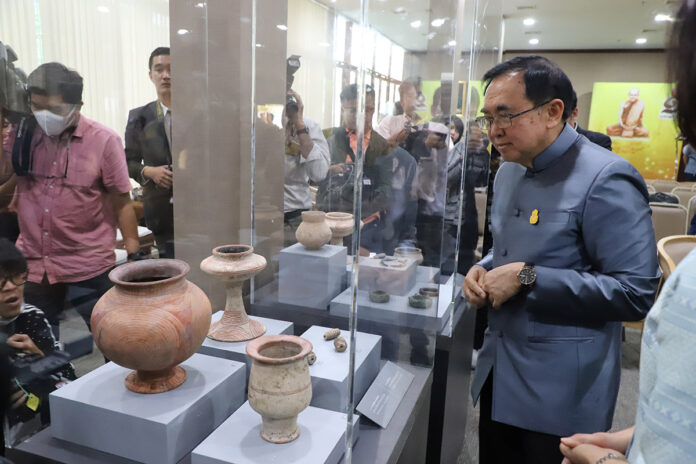
Culture Minister Vira Rojpojchanarat surveys Thai artifacts returned from the United States at the National Library on Thursday in Bangkok.

BANGKOK — Forty-six ancient artifacts aged thousands of years have been returned to Thailand from collectors in the United States, the Culture Ministry announced Thursday.

The relics; which include clay pottery, utensils and bronze jewelry estimated to be 1,800 to 4,000 years old; were delivered to the Foreign Affairs Ministry last month from unidentified private collectors, the ministry said. It’s the second time since August that ancient Thai antiquities were returned from the states.

The majority of the returned objects this round, like the last time, were from the Bang Chiang era, created by a prehistoric civilization in Udon Thani province about 5,000 years ago, according to Culture Minister Vira Rojpojchanarat.

Vira said the artifacts will be given to the Fine Arts Department for conservation and restoration at the National Museum’s central archive in Pathum Thani province.

In August, American collector Katherine Ayers-Mannix returned 12 artifacts to Thai authorities in response to an ongoing effort to repatriate Thai antiquities illegally exported to the United States, some of which are displayed in major museums there.

Vira said Thailand has received 751 artifacts from the states and Australia since 2014. He added that two ancient lintels from Buri Ram and Sa Kaeo provinces found at the Asian Art Museum in San Francisco are being reviewed by an American court and might be returned in the near future.

Advertisement

Gay Rights Group Takes Issue With Karen Pence’s New Employer

US Vice-President Mike Pence, left, and Second Lady Karen Pence walk pass the inaugural parade in 2017 reviewing stand in the 58th Presidential Inaugural parade in Washington D.C. Photo: Gabriel Silva / U.S. Army

WASHINGTON — Karen Pence’s return to teaching at a Virginia school that lists “homosexual or lesbian sexual activity” as among the disqualifying criteria for employees is drawing criticism from the nation’s largest gay rights advocacy group.

The office of the vice president’s wife said it was “absurd” to attack both her decision to resume teaching art to elementary students as well as the school’s religious doctrine.

Mrs. Pence began in the classroom at Immanuel Christian School in Northern Virginia on Tuesday and will teach twice a week until May. She has taught for 25 years, including previously at Immanuel Christian, before Vice President Mike Pence, who was a GOP congressman from Indiana, was elected governor.

The school’s employment application lists “homosexual or lesbian sexual activity” as among the criteria that violates the job qualifications spelled out for employees.

The Human Rights Campaign tweeted that the “Pences never seem to miss an opportunity to show their public service only extends to some.”

A spokeswoman for Mrs. Pence defended her return to the school where she had taught for a dozen years.

“It’s absurd that her decision to teach art to children at a Christian school, and the school’s religious beliefs, are under attack,” Kara Brooks said.

The school’s policy says it can refuse permission to an applicant or discontinue enrollment of a student if the conduct within the student’s home is counter to the “biblical lifestyle” the school teaches. Activities listed as counter to that lifestyle includes “homosexual activity or bisexual activity.”

The Huffington Post first reported the school’s policies and published the school’s employment application and admissions policy.

Advertisement

Rising Mekong No Cause for Alarm: Engineer

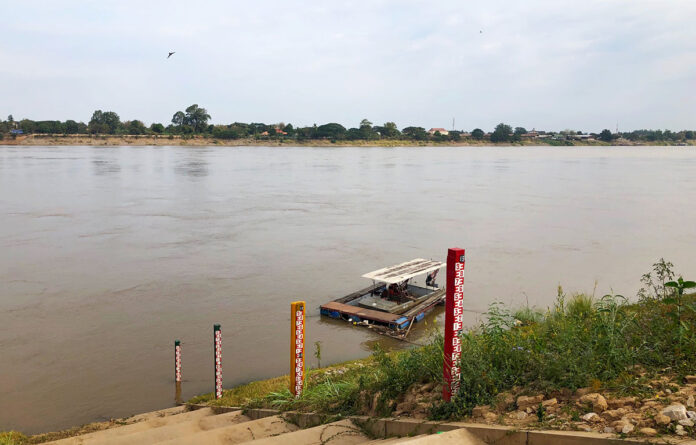
Posts mark water levels in the Mekong River on Jan. 15 in Nong Khai province.

CHIANG RAI — A state engineer Thursday dismissed panicked reports in the media and online that the Mekong River is about to flood.

Water released upriver from Thailand by a Chinese dam has caused levels to rise downriver between Thailand and Laos, but despite local news and social media reports of inundated vegetable plots, there’s no reason to worry, according to the irrigation department engineer.

“Growing vegetables by the sediment-rich riverside might look like a good idea to farmers, but if you ask an engineer, that’s gonna flood,” Methus Yeunprapan said.

Many local news outlets published a graphic showing a sudden surge in water levels in Chiang Rai province along with headlines saying they were are at a “historic high.”

It was published by the Mekong River Commission, the intergovernmental agency set up to manage river issues for Thailand, Laos, Cambodia and Vietnam. China is not a member.

Methus said that while levels are high for the dry season, they are the result of managed releases at China’s Jinghong Dam and others that needed to release water to make stretches of the river there navigable during the dry season.

“Water might wash over low zones of the river, but it won’t overflow the riverbanks,” Methus said.

Amnat Charoen farmer Weera Wongsuwan said the water rose 3 meters along a riverside tourist area there, damaging eateries by the water.

“So I guess the Mekong River isn’t a public river that everyone living in the river basin has control of? Is this just paying lip service to equality????” wrote Facebook user Mixmixka Naree, who claimed some crops in Ubon Ratchathani province had been damaged by overflowing water.

Concerns about the viability of life along the Mekong are warranted. China’s construction of dams has expanded beyond the river in its territory into Southeast Asia, where tens of millions rely on it for fishing, transport and irrigation.

Water in vegetable plots in Ubon Ratchathani. Photo: Mixmixka Naree / Facebook
Photo: Mixmixka Naree / Facebook


Advertisement

Rail Construction Halted, Drivers Fined as Smog Persists

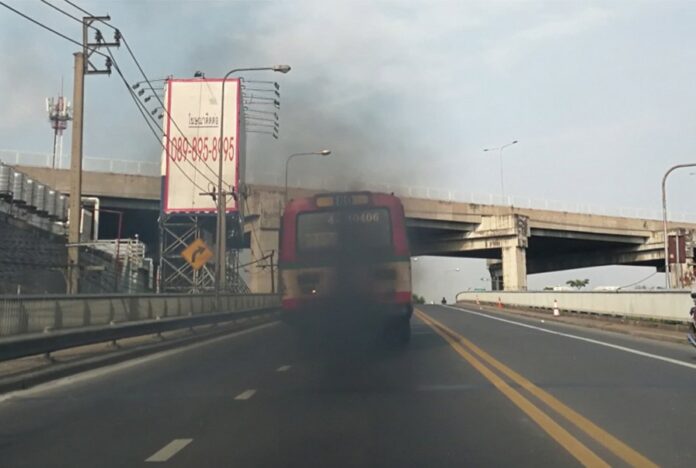
Black exhaust pours from a Bangkok bus in April 2018. Photo: @Shifthappensbkk / Twitter

BANGKOK — Major construction will be suspended and gross polluters busted across the capital as the authorities struggle to reduce the unhealthy smog levels which have plagued the capital for days.

Rail construction in areas including Lat Phrao and Ramkhamhaeng will be suspended until Tuesday in the most significant measure announced to mitigate pollution levels that remained at unhealthy levels as of Thursday morning.

The traffic police fined more than 1,000 drivers at 20 checkpoints since Tuesday for operating vehicles with emissions over the legal limit.

Read: Bangkok Pollution Has Always Been Bad – So Have the Solutions: Experts

The Bangkok Mass Transit Authority will also convert more than 2,700 buses to biodiesel and purchase nearly 2,200 green energy vehicles to service the capital in the near future, according to Transport Minister Arkhom Termpittayapaisith.

These were among many announced measures to address public concern over the worsening of air pollution since last month. They come on the heels of much-criticized efforts from City Hall that have included spraying water into the air and hosing down streets.

The Pollution Control Department on Thursday acknowledged that spraying water cannot reduce the amount of ultrafine PM2.5 particles – the most harmful type – but defended the effort for having helped curbing overall particulate levels.

Maj. Gen. Nithitorn Jintakanon, traffic police commander, said vehicles that exceed permitted emissions will be marked and given 30 days to fix the problem or risk seizure. The law says repeat offenders can be fined up to 5,000 baht.

Advertisement

Family Demands Justice Over Japanese Tourist’s Unsolved Murder

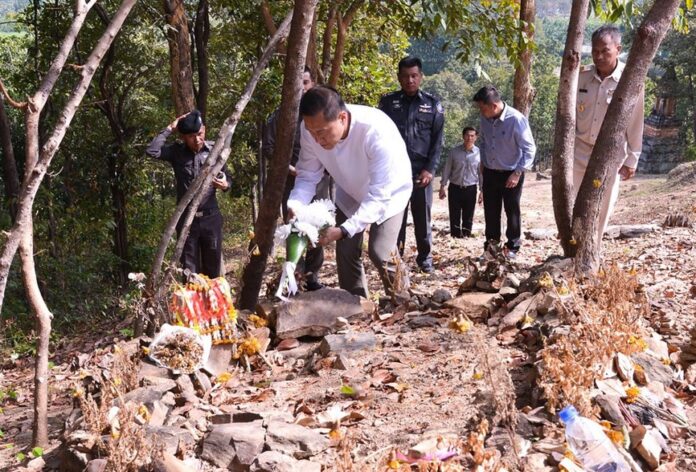
Tourism officials lay a wreath in December 2017 at the site where Tomoko Kawashita was found slain in Sukhothai province.

BANGKOK — The top justice official said Wednesday police are still looking for leads into who murdered a Japanese tourist in central Thailand 11 years ago.

Justice Minister Prajin Chanthong told reporters that police are set to increase the bounty being offered for tips leading to a conviction from 1.6 million baht to 2 million baht. Gen. Prajin said he hopes it will motivate those with knowledge of the crime to come forward.

“The Thai government will not abandon this case. We will follow it closely,” Prajin said.

6449 large
A file photo of Kawashita.

Prajin spoke after meeting with family members of the slain Japanese woman, Tomoko Kawashita, who was 25 at the time of her death. Kawashita was found with her throat cut November 2007 in Sukhothai province, where she had traveled to celebrate Loy Krathong.

Investigators said she was sexually assaulted before being killed.

Prajin said police have yet to identify a suspect, even after testing DNA samples found on Kawashita’s body with more than 300 people of interest.

Her family has made near-annual visits to petition the government over the unsolved murder.

The statute of limitations on her murder expires in 2027.

Advertisement

Southern Thai Politicians Campaign in Malaysia

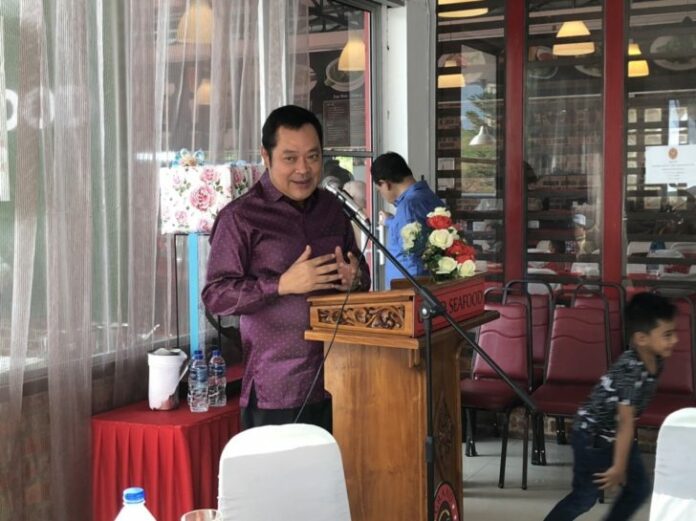
Prachachart Party secretary general Thawee Sodsong speaks to Thai-Malay migrant workers Thursday in Malaysia. Photo: Matichon

JOHOR BAHRU, Malaysia — The newly founded Prachachart Party became the first to campaign abroad when members went to Malaysia on Thursday to reach out to Thai laborers.

Party secretary general Thawee Sodsong, a police colonel who once led the National Security Agency, visited the capital of the southern Malaysian state of Johor to speak to some 400 Thai-Malay muslim migrant workers about how their policies could improve their livelihoods.

In Malaysia, Thai restaurants – sold at what are called “tom yum goong” eateries – are popular and many migrant Thai workers either own or work at them. Tens of thousand Thai workers, both legal and illegal, make a living in Malaysia.

Read: Deep South’s Drug Problems Need New Approach: New Party

Thawee said he met with the workers to hear of their plight and offer recommendations on improving their livelihood. Some told him that their entire families were in Malaysia illegally and were now stateless people in need of help from the government. They said that the future government should find ways to enable them to work legally.

Thawee said the party placed importance in assisting Thai restaurant workers as they remit billions of baht back to Thailand annually. He promised at the gathering that his party would help sold the problem of illegal labor and lack of citizenship if it becomes part of the government after the next election.

Prachachart is led by by Wan Muhamad Noor Matha, a former house speaker and veteran Thai-Malay politician.

The next poll, which had been expected in February, remains in limbo after a royal decree setting the date was not issued as expected.

Related stories:
Deep South’s Drug Problems Need New Approach: New Party
Muslim Political Bloc’s New Party Open to Backing Prayuth


Advertisement

Music For the Brain ‘Hippo Campus’ Coming to Bangkok

Photo: Hippo Campus / Facebook

BANGKOK — It’s neither the part of the brain associated with memory or a school for African herbivores, but an indie quintet taking a stand for the #Metoo movement.

Hippo Campus is heading to Bangkok as part of their Bambi Tour, according to local gig promoter Seen Scene Space, who recently co-organized November’s Mahorasop outdoor music fest.

The alternative pop rock outfit will perform March 22 at Live Arena in the RCA area. Bangkok’s catchy tropical indie band Gym and Swim will play as the opening act.

The concert is 20 and up.

Tickets purchased online are 1,000 baht and 1,200 baht at the door. They go on sale at noon on Saturday.

Hippo Campus was formed in 2013 in the American midwest and has performed at major music festivals such as South by Southwest and Lollapalooza. In September, their sophomore studio album “Bambi,” a thoughtful look at sexism and harassment post-#Metoo, won critical acclaim.

Advertisement

Silicon Valley Landlord Rents $1,500 Studio to 2 Cats

An undated photo by David Callisch shows cats Tina, at top, and Louise relaxing at home in San Jose, California.

SAN JOSE, California — Two cats are living large in a studio apartment costing USD$1,500 (47,500 baht) a month their owner rents for them in Silicon Valley, where a housing shortage has sent rents skyrocketing.

The Mercury News reports the 9-kilogram cats named Tina and Louise moved to the studio in San Jose after their owner moved away to college.

The student’s father, Troy Good, was unable to keep them and asked friend David Callisch to rent him the kitchen-less studio so he could keep his daughter’s beloved cats.

The newspaper reports Good and his cats got a decent deal because an average studio apartment in San Jose rents for $1,951 a month, according to RentCafe.

Callisch says he feels bad wasting valuable living space on animals during a housing shortage, but he wanted to help a friend.

Advertisement

Bolsonaro Loosens Gun Laws in Brazil, World Murder Capital

Brazil's President Jair Bolsonaro smiles during a ceremony where he signed a decree loosening restrictions on owning firearms Tuesday at Planalto presidential palace in Brasilia, Brazil. Photo: Eraldo Peres / Associated Press

RIO DE JANEIRO — President Jair Bolsonaro on Tuesday signed a decree making it easier for many Brazilians to own firearms, the first of many expected changes by the nascent administration to overhaul gun laws in the nation that leads the world in total homicides.

Bolsonaro signed the decree in a televised ceremony in the capital of Brasilia, arguing that it and other changes expected to be pushed in Congress would help people defend themselves. The former army captain and far-right leader, who won last year’s election on promises to crack down on crime, said citizens in Latin America’s biggest country have long made clear that they wanted to arm themselves.

“The people decided in favor of buying guns and ammunition and we can’t deny what the people wanted at that moment,” Bolsonaro said, referring to a 2005 referendum in which Brazilians voted against banning the manufacturing and selling of guns.

The decree established a wide range of categories for gun ownership qualification, and government officials said it was crafted to cover just about any citizen wanting a firearm.

The categories include citizens living in rural areas, in urban areas with high levels of homicide, business owners, gun collectors and hunters. Prospective gun owners must still meet other requirements, such as not having a criminal record, taking a psychological exam, completing a course at a gun club and being at least 25.

Before the decree, the law stipulated that civilians who wanted to own a gun had to justify their interest. Bolsonaro and other proponents of relaxing legislation argued that such a requirement was arbitrary — such reviews happened with a federal police official — and meant that in practice many would-be owners were denied.

The decree also extended from five to 10 years the period to renew the registration of each firearm, and increased from two to four the number of guns each person can own.

In one area that could be interpreted as tightening the law, it required gun owners have a safe with a key in any home with children, adolescents or a person with a mental disability.

While the decree allows more people to buy weapons, it remains illegal for most civilians to carry them in public. Bolsonaro and the so-called “Bullet Caucus” in Congress plan a legislative push to overturn that.

Security experts have long argued that more guns will lead to increased violence.

“If the Brazilian government is sincere about improving public security and fighting organized crime, it will enforce existing gun laws rather than dismantling them,” said Igarape, a Brazilian think tank, in a statement. “Specifically, it should strengthen national data gathering on seized firearms to disrupt trafficking. It must improve oversight over the arms holdings of police and private security companies.”

For decades, Brazil has been the world leader in annual homicides. Last year, nearly 64,000 were killed, the majority by firearms.

Despite tight gun laws, arms are widely available. Drug traffickers in slums are commonly seen brandishing automatic weapons. Many guns possessed illegally begin as legal, and were then stolen from police or military personnel or sold by corrupt people in those institutions.

Several studies, both in the United States and Brazil, have found a correlation between increased guns and homicide and suicide rates. However, some social scientists, and gun proponents, argue such data is inconclusive.

Bolsonaro and others in his administration have argued that allowing more Brazilians to carry guns would help combat criminality, one of his key campaign promises.

“Any criminal in any part of the world fears an armed citizen,” said chief of staff Onyx Lorenzoni minutes after the decree was signed.

“England saw its home assaults increased by 40 percent since guns were banned there,” he added, without providing more details.

Polls have consistently shown most Brazilians want tighter restrictions on guns.

A Datafolha poll published at the end of last year found that 61 percent believed firearms should be prohibited and posed a threat to others. The poll interviewed 2,077 people Dec. 18-19 and a had a margin of error of 2 percent.

There were many signs Tuesday that fights over gun laws were just beginning. In an editorial titled “Reckless Decree,” the newspaper O Globo criticized the changes for not being paired with better mechanisms to track guns.

Many Bolsonaro supporters took to Twitter to laud the changes or argue, in angry language, that the decree didn’t go far enough.

Shares of gun manufacturer Taurus, which has enjoyed steady gains the last several months in anticipation of sweeping changes, closed 22 percent down. Many interpreted that as sign investors had expected Bolsonaro to go further, particularly in the number of guns each person can have. Proponents of loosened laws have long pushed for no limit.

Meanwhile, Sou da Paz Institute, a rights group dedicated to violence reduction, launched an online campaign with ads blasting the government for its central argument for the change: that guns put people in a better position to protect themselves.

“When you are sick, the government doesn’t ask you to buy a scalpel and operate on yourself,” said one of the ads. “If you’re suffering because of crime, why do you have to protect yourself?”


Advertisement

Death Toll in Nairobi Attack Climbs to 21, Plus 5 Attackers

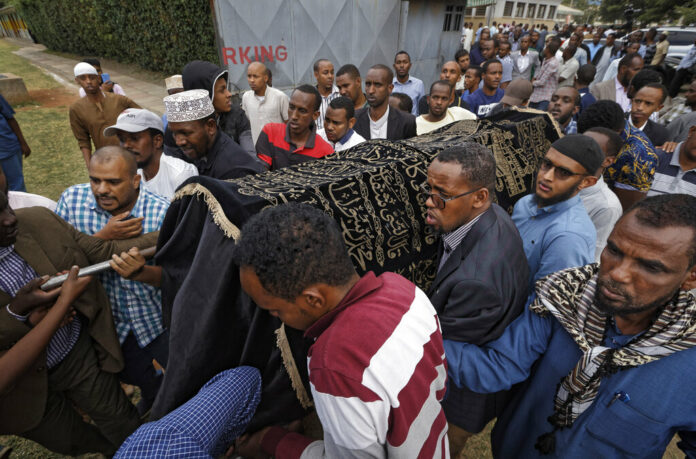
Mourners on Wednesday carry the body of Feisal Ahmed, who was killed with his colleague Abdalla Dahir in Tuesday's attack, as they leave a mosque and head to the funerals in Nairobi, Kenya. Photo: Ben Curtis / Associated Press

NAIROBI — The death toll from an extremist attack on a luxury hotel and shopping complex in Nairobi climbed to 21, plus the five militants killed, police said Wednesday in the aftermath of the brazen overnight siege by al-Shabab gunmen. Two people accused of facilitating the attack were arrested.

The number of those killed at the DusitD2 complex rose with the discovery of six more bodies at the scene and the death of a wounded police officer, said Joseph Boinnet, inspector-general of Kenyan police. Twenty-eight people were hurt and taken to the hospital, he said.

In a televised address to the nation earlier in the day, President Uhuru Kenyatta announced that the all-night operation by security forces to retake the complex was over and that all of the extremists had been killed.

“We will seek out every person that was involved in the funding, planning and execution of this heinous act,” he vowed.

In an attack that demonstrated al-Shabab’s continued ability to strike Kenya’s capital despite setbacks on the battlefield, extremists stormed the place with guns and explosives. Security camera footage released to local media showed a suicide bomber blowing himself up in a grassy area in the complex, the flash visible along with smoke billowing from the spot where he had been standing.

Of the civilian victims, 16 were Kenyan, one was British, one was American and three were of African descent but their nationalities were not yet identified, police said.

Al-Shabab, which is based in neighboring Somalia and allied with al-Qaida, claimed responsibility. The Islamic extremist group also carried out the 2013 attack at Nairobi’s nearby Westgate Mall that killed 67 people, and an assault on Kenya’s Garissa University in 2015 that claimed 147 lives, mostly students.

While U.S. airstrikes and African Union forces in Somalia have degraded the group’s ability to operate, it is still capable of carrying out spectacular acts of violence in retaliation for the Kenyan military’s campaign against it.

The bloodshed in Kenya’s capital appeared designed to inflict maximum damage to the country’s image of stability and its tourism industry, an important source of revenue.

The government said late Tuesday that buildings were secure. However, gunfire continued into Wednesday morning, and dozens of trapped people were rescued overnight. Several loud booms were heard Wednesday as teams sought to clear the complex of booby traps and other explosives.

Kenyatta’s announcement that the security operation was complete came about 20 hours after the first reports of the attack.

The Kenyan Red Cross said about 50 people were unaccounted for. But many of those were believed not to have been in the complex during the attack.

Ken Njoroge, CEO of a company in the DustiD2 complex that offers mobile banking services, said he was unable to locate several employees. “It’s very difficult for the families because the passage of time only makes the problem bigger,” he said.

The American killed in the attack was identified as Jason Spindler, co-founder and managing director of San Francisco-based I-DEV International. Spindler’s father, Joseph, said his son worked with international companies to form business partnerships in Kenya that would boost local economies.

The Houston-raised Spindler had a brush with tragedy on 9/11: He was employed by a financial firm at the World Trade Center at the time of the 2001 terrorist attack but was running late that morning and was emerging from the subway when the first tower fell, according to his father. He became covered in dust and debris as he tried to help others, the elder Spindler said.

In the Nairobi attack, a man who gave only his first name, Davis, described how he had escaped with colleagues by fleeing down a fire escape.

“It’s a traumatic experience. It shakes you,” he said. Still, Davis said he was impressed by the “inner strength” and compassion of people who helped each other in the midst of danger.

His own thoughts, he said, were: “Get people out and get out yourself. That’s it.”

Story: Christopher Torchia

Advertisement

Hot News

LATEST NEWS

Bangkok
overcast clouds
25.5 ° C
26.1 °
25.5 °
46 %
2.4kmh
100 %
Sun
30 °
Mon
31 °
Tue
36 °
Wed
31 °
Thu
33 °