31.1 C
Bangkok
Tuesday, June 9, 2026
Home Blog Page 196

84-Year-Old German Tourist Found Dead in Phuket Hotel Room

An officer inspect the body of an 84-year-old German tourist found kneeling at the foot of his hotel bed in Phuket on Nov. 30., 2025

PHUKET — An 84-year-old German tourist was found dead in his hotel room near Kamala Beach after a friend reported being unable to reach him, Phuket police said Monday.

Deputy Inspector Surasit Wandee of the Kamala police station said officers were called to the hotel around 7 p.m. Sunday, November 30. Staff and police entered the room through the balcony after a housekeeper discovered the door was locked from the inside with a chain.

The body of the man, identified as Lothar, from Kranz, Germany, was found kneeling at the foot of the bed with his hands and head resting on the mattress, police said. He was shirtless and appeared to have been dead for several hours.

german died phuket2
Medication found in the German tourist’s hotel room in the Kamala Beach area, Phuket, on November 30, 2025.

The Myanmar housekeeper, identified as Soe, told police she had knocked on the door in the morning to clean the room but received no answer. Later in the evening, a foreign friend of the visitor informed the hotel that he could not reach him by phone. When staff attempted to unlock the door, the chain prevented it from opening, prompting the housekeeper to climb down from the fourth floor fire escape to reach the balcony and look inside.

Police said there were no signs of a struggle or forced entry, and medication for cholesterol and high blood pressure was found in the room. An autopsy was conducted with a forensic physician from Vachira Phuket Hospital. Authorities have notified the German Embassy to contact the man’s relatives.

______

Advertisement

Death Toll in Hong Kong Apartment Complex Blaze Rises to 146 as the City Mourns

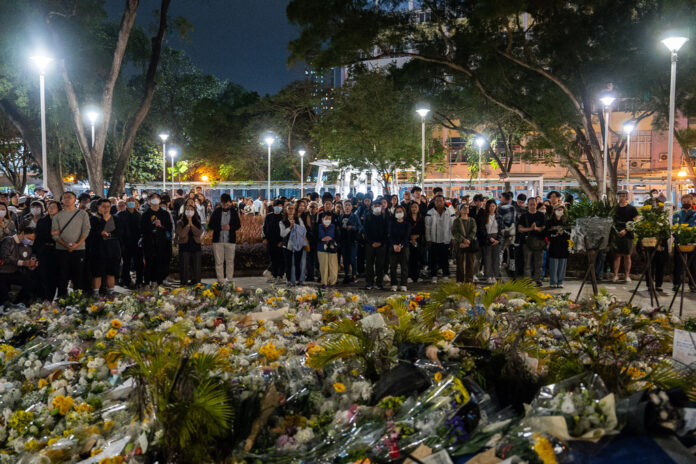
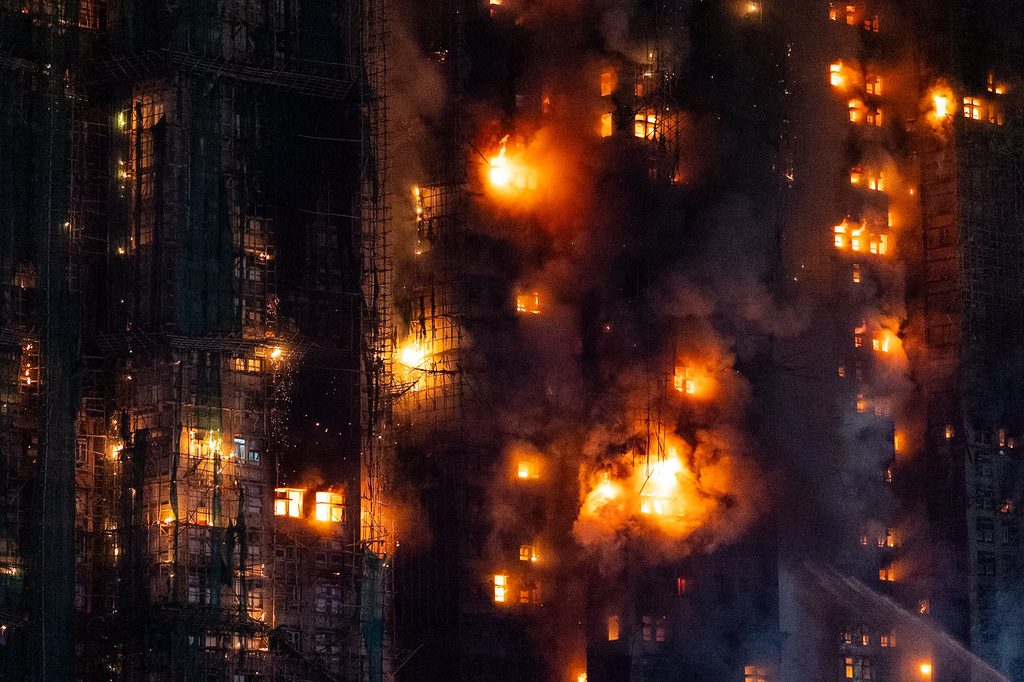
People offer flowers for the victims near the site of a deadly Wednesday fire at Wang Fuk Court, a residential estate in the Tai Po district of Hong Kong's New Territories on Sunday, Nov. 30, 2025. (AP Photo/Chan Long Hei)

HONG KONG (AP) — The death toll in Hong Kong’s apartment complex blaze rose to 146 on Sunday as investigators discovered more bodies in the burned-out buildings. A steady stream of people placed bouquets of flowers at an ever-growing makeshift memorial at the scene of the disaster, among the worst in the city’s history.

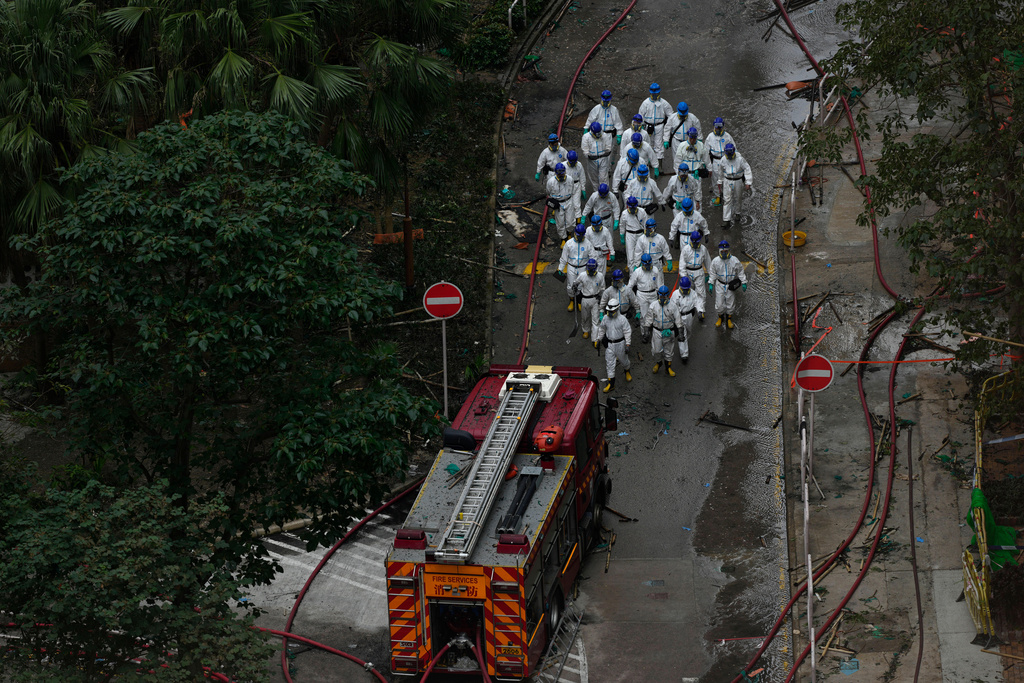
The Hong Kong police Disaster Victim Identification Unit has been going through the buildings of the Wang Fuk Court complex meticulously and has found bodies both in apartment units and on the roofs, said the officer in charge, Cheng Ka-chun.

The buildings remain structurally sound, but the search has been slow, he told reporters, still wearing his white coveralls with his hard hat and respiratory mask at his side. “It is so dark inside, and because of the low light, it is very difficult to do the work, especially in places away from the windows.”

So far the team has examined four of the seven blocks, Cheng said.

The latest searches turned up another 30 bodies, including 12 that had already been discovered by firefighters but hadn’t been recovered, said Tsang Shuk-yin, the head of the Hong Kong police casualty unit.

Another 100 people are unaccounted for and 79 have been injured, Tsang said.

AP25334300049514
Emergency crew leaves the site of a deadly Wednesday fire at Wang Fuk Court, a residential estate in the Tai Po district of Hong Kong’s New Territories on Sunday, Nov. 30, 2025. (AP Photo/Ng Han Guan)

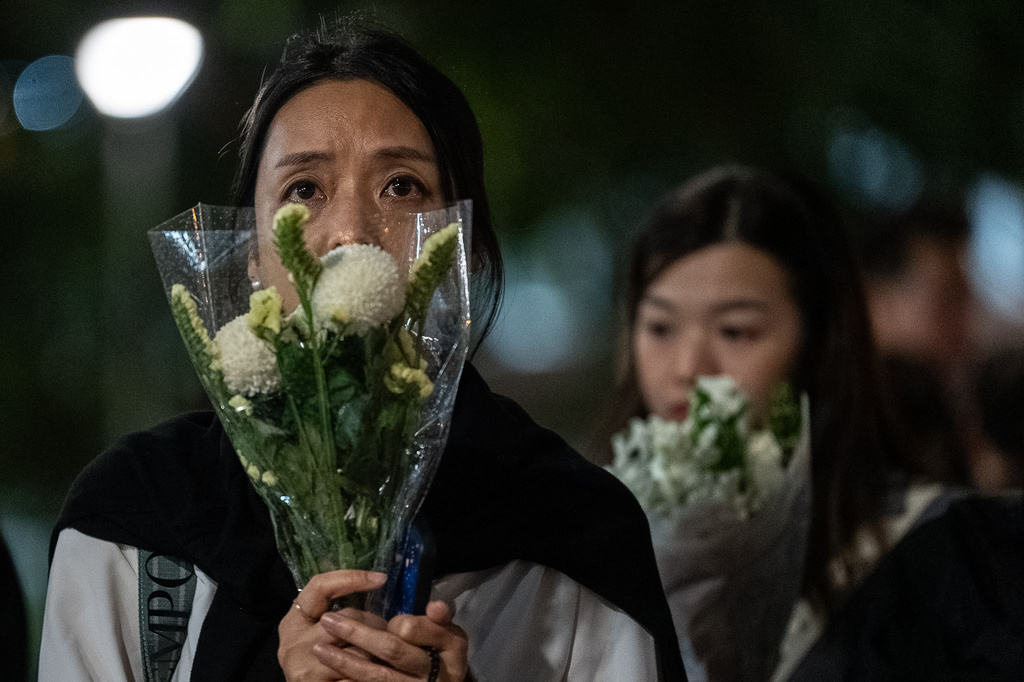
At the scene, well-wishers bowed and said short prayers, or left handwritten notes among the flowers.

“This really serves as a wake-up call for everyone, especially with these super high-rise buildings,” said Lian Shuzheng, who waited in a line of hundreds of people to add her flowers to the growing cluster.

People have also donated supplies to those who lost everything in the blaze, which started Wednesday and took until Friday to fully extinguish.

The eight buildings of the Wang Fuk Court complex in the suburb of Tai Po had all been clad in bamboo scaffolding draped with nylon netting for renovations, with windows covered by polystyrene panels. Authorities were investigating whether fire codes were violated.

Other constructions by the same builder are halted

Hong Kong officials announced late Saturday they had ordered the immediate suspension of work on 28 building projects undertaken by the same contractor, the Prestige Construction & Engineering Company, for safety audits.

“The five alarm fire at Wang Fuk Court, Tai Po, exposed serious deficiencies of PC&E in site safety management, including the extensive use of foam boards to block up windows during building repairs,” the government said in a statement.

The company did not answer calls Sunday for comment.

Three men — the directors and an engineering consultant of a construction company — were arrested the day after the fire broke out on suspicion of manslaughter, and police said company leaders were suspected of gross negligence. Police did not identify the firm by name.

Those three were released on bail but then rearrested by Hong Kong’s anti-corruption authorities, who have also arrested a further eight suspects including scaffolding subcontractors, directors of an engineering consulting company and the renovation project managers.

AP25334465276742
People offer flowers for the victims near the site of Wednesday’s fire at Wang Fuk Court, a residential estate in the Tai Po district of Hong Kong’s New Territories on Sunday, Nov. 30, 2025. (AP Photo/Chan Long Hei)

Faulty fire alarms and foam panels under investigation

The apartment complex of eight, 31-story buildings in Tai Po, a suburb near Hong Kong’s border with mainland China, was built in the 1980s. It had almost 2,000 apartments and more than 4,600 residents.

Many are now housed in short-term emergency shelters or city hotels, and authorities are working on longer-term solutions.

“It’s heartbreaking,” said Jeffery Chan, a civil servant who came to pay his respects on Sunday.

“As a Hong Konger, seeing people in the place where we live lose their families, lose everything in just one night — if you put yourself in their shoes, it is unbearable. They need encouragement, support and help from the people of Hong Kong,” he said.

Preliminary investigations showed the fire started Wednesday afternoon on a lower-level scaffolding net of one of the buildings, and then spread rapidly inside as the foam panels caught fire and blew out windows, according to Chris Tang, Hong Kong’s secretary for security. Winds helped the flames jump from building to building and soon seven of the eight were engulfed.

First responders found that some fire alarms in the complex, which housed many older people, did not sound when tested, according to Andy Yeung, the director of Hong Kong Fire Services.

AP25330585083460
Firefighters work to extinguish a fire which broke out at Wang Fuk Court, a residential estate in the Tai Po district of Hong Kong’s New Territories, Wednesday, Nov. 26, 2025. (AP Photo/Chan Long Hei)

The dead included seven Indonesian migrant workers, and several dozen are still unaccounted for, the Indonesian Foreign Ministry said. One Filipina domestic helper was also killed and 12 others remain unaccounted for, according to the Philippines Consulate General in Hong Kong.

On Sunday afternoon, several hundred Filipinos packed a pedestrian street in central Hong Kong, saying prayers and singing hymns in tribute to the fire victims.

In Beijing, the Ministry of Emergency Management announced a nationwide inspection of high-rise buildings to identify and remove fire hazards.

“Bamboo scaffolding, non-flame-retardant safety nets… and firefighting facilities and equipment such as fire hydrant systems, automatic sprinkler systems and automatic fire alarm systems, will be among the main items to be inspected,” the ministry said.

The Wang Fuk Court fire is the worst on record since a warehouse blaze in 1948 killed 176 people.

The deadliest fire in Hong Kong’s recorded history was the 1918 Race Course Fire, in which more than 600 people were killed, according to the city’s Antiquities and Monuments Office.

_____

Advertisement

Thai Forces Find Another Landmine at Site Where Chinese Man Lost Leg

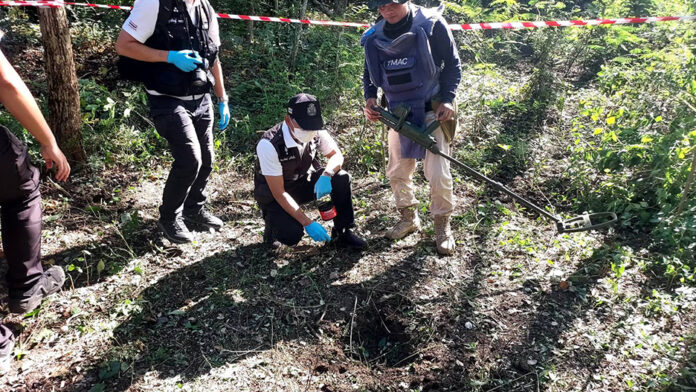
Army explosives experts discovered a second PMN mine approximately 2 meters from the blast site where a Chinese man lost his leg in Khok Sung district, Sa Kaeo province, Saturday, Nov. 29, 2025.

SA KAEO — A Chinese national lost his leg after stepping on a land mine in a known danger zone near Thailand’s border with Cambodia, Thai military officials said Sunday, the latest incident highlighting persistent threats in disputed frontier areas where mine clearance operations remain incomplete.

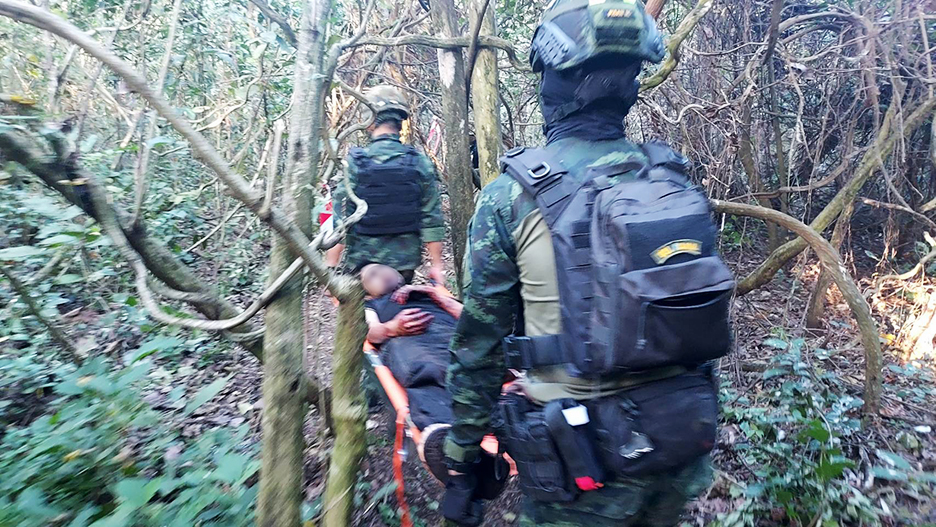
Thai army forces and the 1st Humanitarian Mine Action Unit recovered an additional mine Saturday near Ban Nong Chan in Khok Sung district, Sa Kaeo province, where the 26-year-old Chinese man identified as Shi Jingui from Yunnan Province was injured.

The victim was transferred from Khok Sung Hospital to Aranyaprathet Hospital for surgery and is currently recovering, military officials said.

Army explosives experts identified the device as a PMN anti-personnel mine, an older model. They discovered a second PMN mine approximately 2 meters from the blast site.

chinese landmine1
Thai military personnel from Humanitarian Demining Unit 1 carry out an urgent rescue operation for a Chinese national injured by a landmine in Khok Sung district, Sa Kaeo province, Saturday, Nov. 29, 2025.

The incident occurred in what authorities classify as a suspected hazardous area where mine clearance operations have been underway since November 11. Military units have cleared 16,453 square meters of a 288,457-square-meter zone, recovering 22 anti-personnel mines including 20 PMN mines, one POMZ-2 mine and one PMD-6M mine.

Army spokesperson Maj. Gen. Winthai Suvaree said the area where the incident took place, claimed by Thailand as part of Sa Kaeo province, “is contaminated with land mines that Thai authorities are in the process of clearing according to plan.”

A statement from the Chinese Embassy in Thailand did not name the victim but described him as being in stable condition.

The mine explosion comes after seven Thai soldiers were injured by land mines along the border this year. Land mine incidents earlier this year helped trigger five days of intense fighting in late July between Thai and Cambodian forces.

chinese landmine4
Thai army explosives experts examine a second PMN anti-personnel mine found approximately 2 meters from where a Chinese man lost his leg to a landmine blast near the Thai-Cambodia border, Saturday, Nov. 29, 2025.

Disputes over the exact demarcation of the border have strained relations between the two countries for decades. Additional mine incidents injuring Thai troops have threatened a ceasefire that ended the brief July conflict.

In Saturday’s statement, the Thai army repeated previous accusations, saying “the abundance of evidence points to the continued use of new mines” by Cambodia. Both nations continue to exchange blame over responsibility for the mines, even as they are supposed to be cooperating on clearance operations.

Winthai said Cambodia “has not cooperated with Thailand in clearing mines along the shared border, despite Thailand’s repeated proposals in bilateral meetings.”

Nongrat Chanthama, a representative of residents from Ban Nong Chan and Ban Ang Sila villages who own land along the Thai-Cambodia border, said what border residents want most is completion of border demarcation so barriers can be built to prevent such incidents.

_________

Advertisement

​Hat Yai Flood: A Flood of Failures and Irresponsibilities

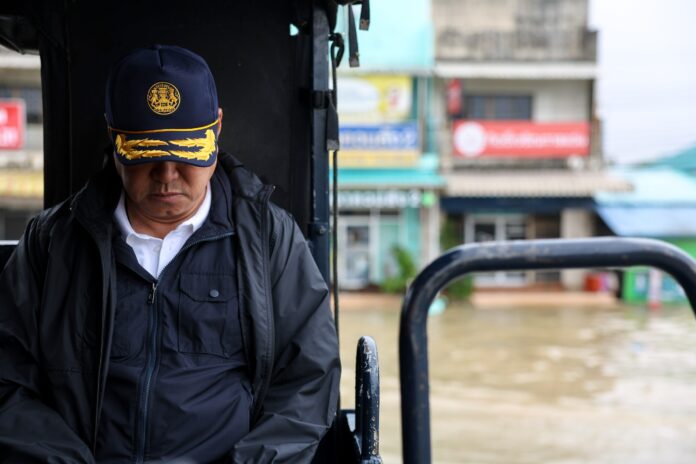
FILE - Anutin Charnvirakul, Prime Minister and Minister of Interior, used a military vehicle to survey the flood water levels at the bridge crossing the irrigation canal in Ban Bang Faep Pattana, Khuan Lang sub-district, Hat Yai district, Songkhla province, on November 26, 2025.(KHAOSOD Photo/Chavalit Panyong)

​A fter a week of a major flood submerging the southern city of Hat Yai, the region’s largest city and a major tourist destination, and what appeared to be a systematic failure in warning people to evacuate and handling the up to 5 metres deep of flood water in some areas, Prime Minister Anutin Charnvirakul admitted yesterday that it was his fault.

​“The government is at fault. I acknowledge that. When people die, no matter where, when people are injured and cannot stay at home, it all falls on the Prime Minister. It is all the Prime Minister’s fault.”

​The acknowledgment was too little too late. Anutin still failed to even explain why the government, both local and national governments had failed so miserably, as the official death toll as of late yesterday in Songkhla Province where the city is located reached 126.

​From what can be gathered, one week after the flood, the Meteorological Department failed to even try to convince related agencies to evacuate the people and tourists before it was too late, leading tens of thousands to be trapped for three days or more, some without food and water, some swept away by the strong and swift current.

​There was a record of the Meteorological Department issuing a heavy to very heavy rain warning—but that was it. One wonders why they did not try to cajole related agencies to evacuate people in time. Was it their lack of precise knowledge of the weather and water conditions that stopped them from doing so? Or was it their fear of being held responsible if an evacuation took place but the flood wasn’t severe?

​I must ask this question not because I am being pedantic, but because two decades ago, when the Indian Ocean earthquake and tsunami occurred, resulting in over 5,300 deaths in Thailand alone, an official at the Meteorological Department told me almost right after the incident that an emergency meeting of the top Department officials was held, but they decided not to issue a tsunami warning because they could not be certain that the type of the undersea earthquake was horizontal or vertical, and also because if it turned out to be a false warning, immense damage to the economy of Phuket and nearby areas would have been caused due to the evacuation of Thais and foreign tourists.

​When I wrote this news, which was published on the front page of The Nation newspaper where I worked back then, some foreign news agencies picked up the news. Eventually, then-PM Thaksin Shinawatra ordered a probe led by former Meteorological Department chief Smith Thammasaroja to investigate and come up with a report on whether the Meteorological Department had failed in its duty.

​Smith was even quoted by American media NBC as saying Thai meteorologists were “afraid to make a decision”. However, in the end the report was never even written, with Smith basically telling me back then face-to-face that such a report could lead to very expensive compensation lawsuits filed by relatives of foreign tourists killed.

​Back to the present, it wasn’t just the Meteorological Department which appears to have to have taken a proactive action, but the Department of Disaster Prevention and Mitigation, which is under the Ministry of Interior, in which PM Anutin is concurrently the Minister of Interior. The Department said earlier this week that the final decision to call for an evacuation rests on that of the governor of Songkhla Province, who is a part of the Local Administration Department that is also a Department under the Interior Ministry, again, also directly under Anutin.

​Then you have the local elected mayor of Hat Yai Municipality by the name of Mr Narongporn Na Phatthalung, who reassured the public in a video just one day before it was too late for most to evacuate that the local government was prepared and could handle the situation. After the municipality Facebook page went silent for three days and flood water began to subside, Narongporn showed up to publicly apologise. His excuse for failing miserably was that he has only been the mayor for only four months and the municipality has less than 5 boats, and all were very old. This was followed by netizens digging up an old video clip taken back in April featuring him bragging in front of other mayoral candidates how knowledgeable and prepared he is in dealing with possible Hat Yai flood in the future.

​One flood victim told BBC Thai-language service in a clip released on Saturday, a week after the flood: “‘The reason people didn’t move their belongings was because they believed in the municipality, which said there was no need — that everything would be fine.’”

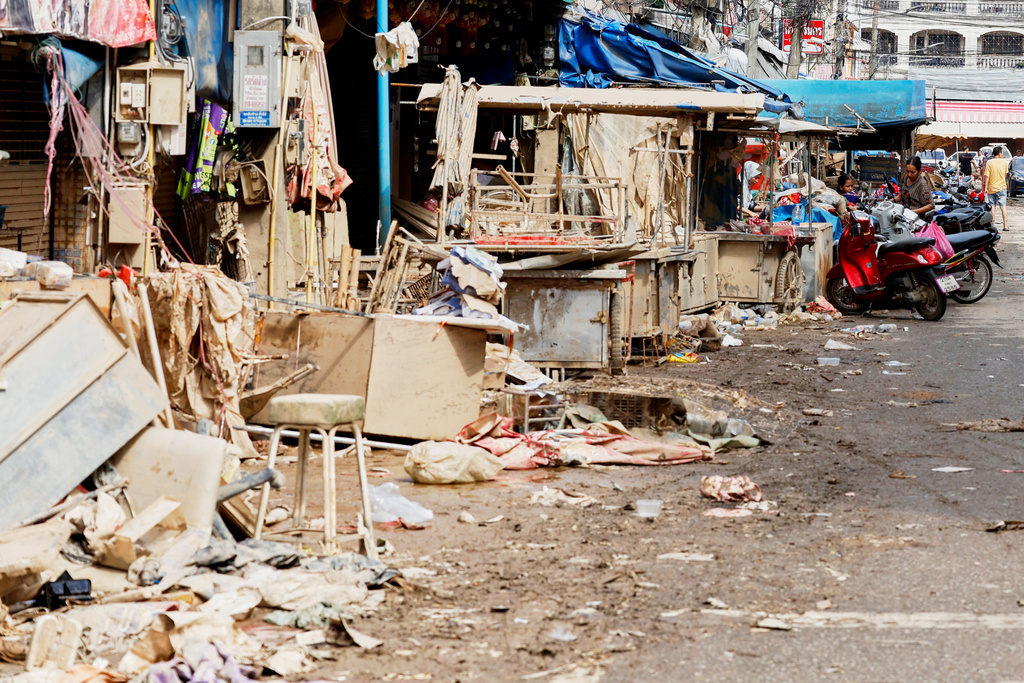
​The interviewee added that at the popular Kim Yong Market area, many have lost everything and “don’t know how to even start again” after being flooded for an entire week without any assistance.

​It’s not just how the government has failed to initiate timely evacuation orders. The death toll is now being subjected to questionable and suspicious revision in order to reduce the level of public anger. On the same day yesterday, just a few hours after the government’s centre for the handling of the flood announced that 126 have died, the Public Health Ministry insisted in a separate press conference that the number of flood-related deaths was actually 65 as of November 29, adding that other cases were non lood-related deaths.

​This came less than two days after the Public Health Ministry mysteriously deleted its own announcement on its Facebook page that 400 body bags and 1,500 body bags donated by the public will arrive in Hat Yai on Saturday. There was no explanation as to why the post was removed.

​Meanwhile, former National Police Chief Pol Surachate Hakparn claims the real number is likely in excess of 1,000 deaths. Surachate, AKA Big Joke, also accuses Anutin of turning Hat Yai deaths into “a joke.”

​Yesterday, Surachate posted screenshots of a chat from a LINE group, stating:

​“A senior official at the Ministry of Public Health could no longer tolerate Prime Minister Anutin’s behaviour and sent me this conversation.

​“It made me see clearly that he does not genuinely care about the deaths of the people in Hat Yai. He even made jokes about the 1,000 fatalities. He only wants this position as a trophy for his family lineage. Someone like him must resign and stop playing politics for the rest of his life.

​“He not only refuses to donate his own vast wealth to help, but also mocks the deaths, suffering, and grief of the people of Hat Yai [by posting a ghost figure on the Line App communication following the now-deleted Ministry of Public Health FB post on the 400 plus 1,500 body bags.]

​“I ask that he leave the Hat Yai area immediately, because his heart and purpose lie only in winning more MPs, while the deaths of Hat Yai residents are just a joke that amuses him. Is this what he calls ‘alleviating suffering and fostering well-being’ as Prime Minister and Interior Minister? Please leave Hat Yai and never return…”

​Anutin may have expressed a sense of contrition. However, we should not accept even a mere apology; we need a systematic investigation to determine where and how the handling of the Hat Yai Flood failed miserably and tragically.

​This includes examining: the flood prevention planning, the Meteorological Department’s weather forecasting role, false reassurance from the mayor just one day before it was too late, the Department of Disaster Prevention and Mitigation’s failures, the chaotic rescue and relief efforts during the first 2–3 days, the mismanagement and blame game, the possible spinning of death figures, and the broader culture of neglecting disaster prevention and citizen safety.

​The government and parliament must establish an independent fact-finding committee composed of qualified experts in relevant fields and credible public figures who are impartial and independent. The committee should take 2–4 months to investigate tfacts and report to both the government and the public: identify the weakest link/s, points of failure, determine who should be held accountable, who should face punishment, or even legal prosecution, and submit recommendations in order to prevent future warning and response failures that could cost more unnecessary loss of lives and massive economic impact.

​A no-report written like what happened in the aftermath of the Boxing Day 2004 tsunami is unacceptable.

__________

Advertisement

Korean Snorkeler, British and Russian Tourists Die in Separate Thai Incidents

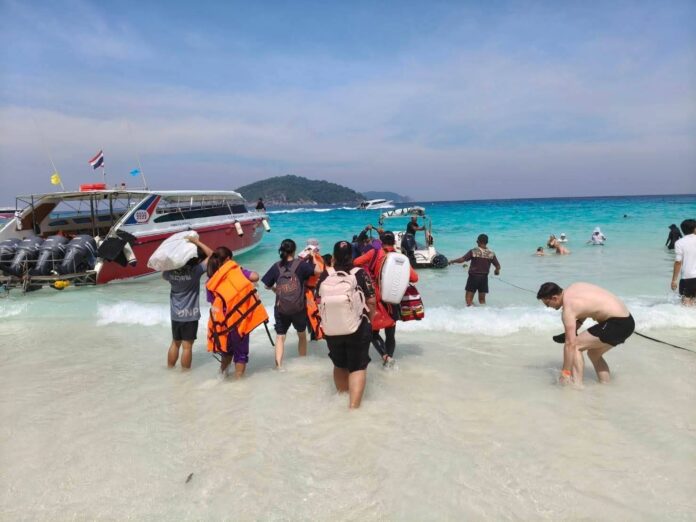
Similan Islands park rangers rush an unconscious South Korean snorkeler onto a boat for transfer to Khuk Khak Medical Center in Phang Nga on Nov. 28. He was later pronounced dead.

PHUKET — A South Korean snorkeler and two tourists from Britain and Russia died in separate water incidents in southern Thailand this week, Thai authorities said.

Police in Phang Nga’s Khuk Khak district said a 65-year-old South Korean tourist, identified only as Mr. Lee, was pronounced dead Friday after losing consciousness while snorkeling near Island No. 9 in the Similan archipelago.

Lee had traveled from Phuket’s Nai Yang area to join a tour to the Similan Islands on the morning of November 28. Park rangers noticed him floating face down and unresponsive despite wearing a life jacket. Staff pulled him onto a rubber boat and performed CPR while transferring him to a medical boat headed to Ko Miang.

similaan korean1
Similan Islands park rangers rush an unconscious South Korean snorkeler onto a boat for transfer to Khuk Khak Medical Center in Phang Nga on Nov. 28. He was later pronounced dead.

He arrived at Khuk Khak Medical Center at about 2:51 p.m. and was declared dead five minutes later. Doctors could not determine an immediate cause of death and sent the body for a full autopsy at Vachira Phuket Hospital. Police said Lee had a history of heart disease and have contacted the South Korean Embassy to notify his family.

In a separate case, a 37-year-old British man drowned late Saturday morning off Freedom Beach in Phuket’s Patong area.

Police said the victim, identified as Jason from Ipswich, arrived in Phuket with his family on November 19. He and his wife went swimming at Freedom Beach around 10 a.m. on November 29 when he disappeared under the water. Lifeguards pulled him ashore and attempted CPR, but he was later pronounced dead at Patong Hospital. His family told police they do not suspect foul play.

british drown freedom
Tourists and lifeguards carry a 37-year-old British man who drowned at Freedom Beach in Phuket to a waiting vehicle for transport to the hospital, where he was pronounced dead.

In a separate incident at midday on November 30, Patong police responded to Patong Hospital after a 69-year-old Russian man, identified as Sergey, was pronounced dead following a drowning off Patong Beach.

His companion, Natalia, 47, told police they had been vacationing in Patong since Nov. 18 and planned to stay until Dec. 16. She said Sergey swam every morning as part of his routine. She believed strong currents or a sudden health problem may have caused him to drown.

russian drown
Rescue workers perform CPR on a 69-year-old Russian tourist who drowned at Patong Beach on Nov. 30, 2025.

_____

Advertisement

Haenyeo of Jeju: Aging Seawomen Fight to Keep Diving Tradition Alive

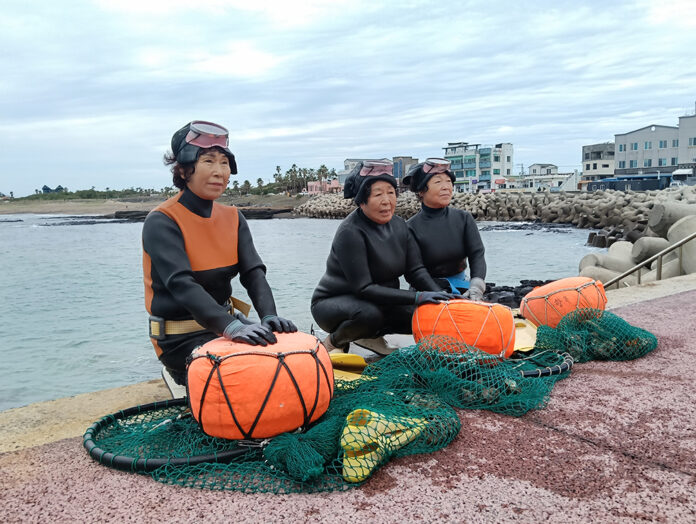
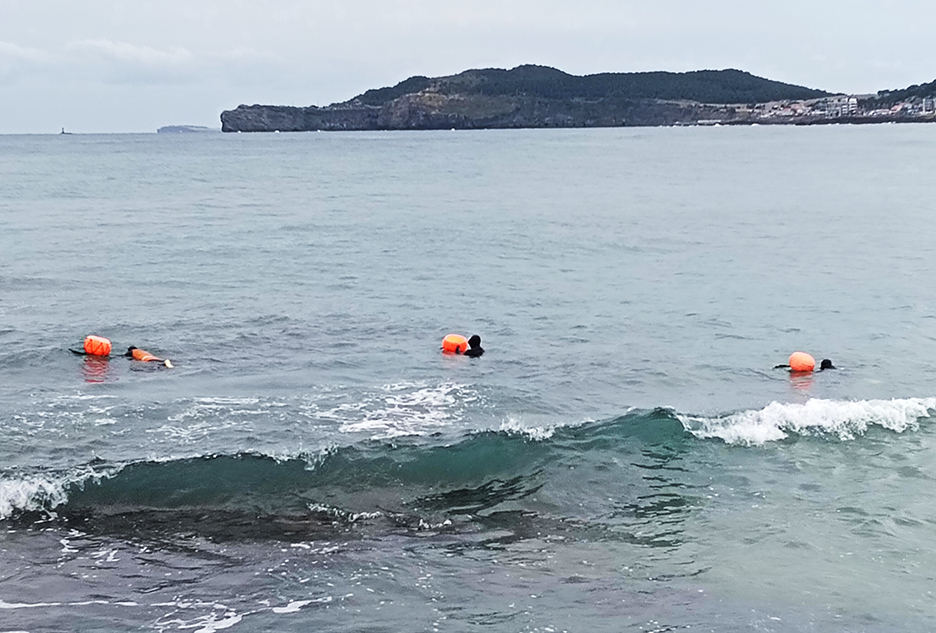
Jeju haenyeo divers. From left: Lee Bok-soo, Kim Su-seon, and Lee Han-ok.

JEJU ISLAND — On the windswept shores of this volcanic island, three women ready themselves for another dive into the cold sea. Lee Bok-soo, 71, adjusts her rubber diving suit, tightening the straps around her shoulders. Lee Han-ok, 68, checks her weight belt. Kim Su-seon, 74, stretches her limbs, taking deep, measured breaths.

Despite their ages, all three will plunge into Jeju’s brackish waters, holding their breath for nearly a minute as they have done for decades, continuing a tradition that has shaped this island for generations.

They are haenyeo, Jeju’s legendary female divers and a vanishing symbol of the island’s cultural and economic heritage. Once tens of thousands strong, the haenyeo population had dwindled to 2,839 by 2024, with over 90% older than 60. Few of their children follow in their footsteps, leaving a generational gap that threatens to erase centuries of knowledge and skill.

jeju elderly3

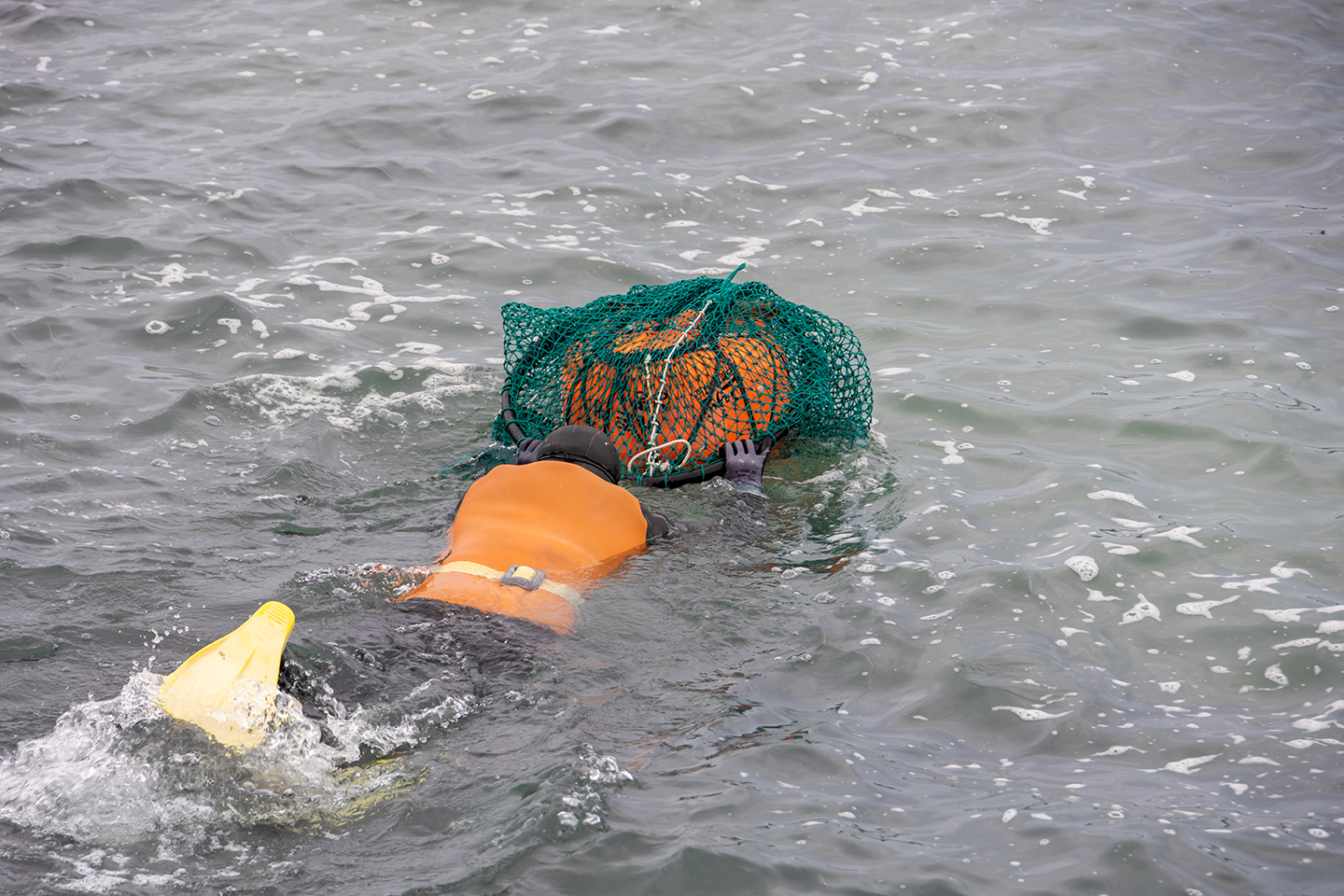
Yet these women continue their work, diving for abalone, sea urchins, conchs and seaweed, relying on physical strength, deep knowledge of tides and extraordinary breath-holding capacity.

“The sea is not just where we work,” Lee Bok-soo says. “It is where we learn patience, courage and endurance. Every dive is a conversation with the ocean and with our ancestors who came before us.”

A 400-Year Tradition

The haenyeo tradition stretches back more than four centuries. Historically, these women were the economic backbone of Jeju communities, providing essential seafood while maintaining households in a largely patriarchal society. Unlike fishermen who required costly boats and equipment, haenyeo needed only their bodies, a mask, a snorkel and a weight belt.

Their independence and resilience earned them a unique place in Korean history. In 2016, UNESCO recognized haenyeo culture as an Intangible Cultural Heritage of Humanity.

jeju elderly4

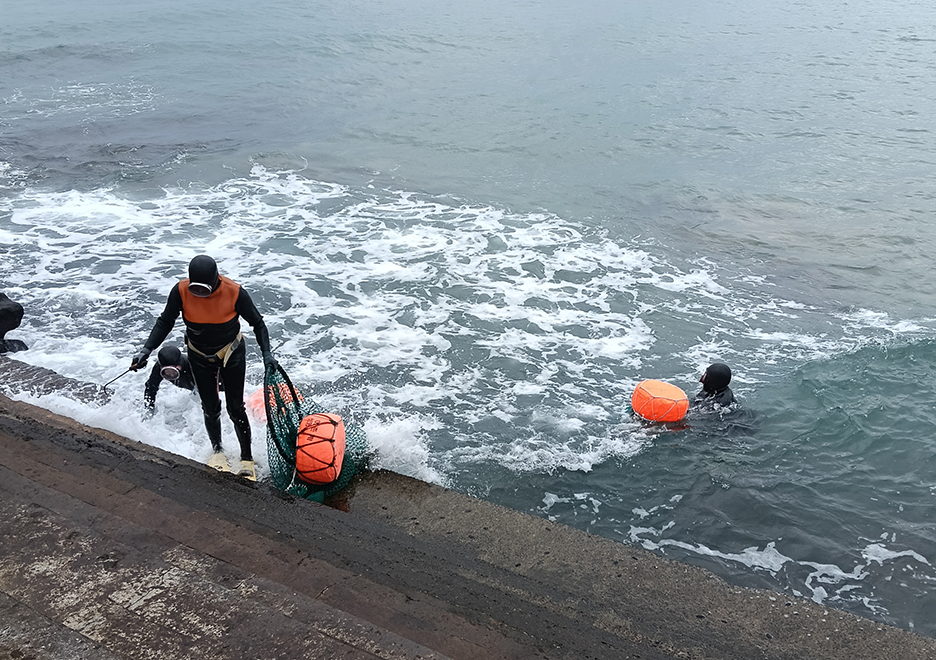
The work is grueling. Divers descend 5 to 20 meters underwater, holding their breath for 60 to 90 seconds while navigating treacherous rocks, shifting tides and icy waters. Heavy lead belts, sometimes over 10 kilograms, add to the physical toll. Decades of labor have left many haenyeo with chronic back pain, arthritis, headaches and dental issues.

Lee Bok-soo began diving at 17, following her mother’s footsteps. The skills she acquired were vital for raising her children and supporting her family. Today, she primarily harvests conchs, though she recalls when abalone was her most prized catch.

“Every dive is a challenge,” Lee Han-ok says. “But it is also part of who we are. This is our life, our culture, our connection to the sea.”

Crisis of Succession

Today, haenyeo confront a dual crisis: aging and lack of successors. The median age is over 60, with few young women willing to take on the physically demanding profession. Economic pressures, complex certification processes and inherent risks deter new entrants.

jeju elderly2

“The younger generation wants a different life,” Lee Han-ok explains. “They see our work as too hard, too dangerous and with little financial reward. None of our children want to follow this path.”

To address this, the Jeju Provincial Government offers a settlement fund of at least 500,000 won ($350) per month for three years to women aged 40-44 who commit to becoming haenyeo. Additional subsidies help elderly haenyeo cover village association fees and health care costs to reduce physical strain.

Despite these measures, recruitment remains slow.

Economic Impact Beyond Diving

Haenyeo are more than cultural icons—they are vital to Jeju’s local economy. Their direct income averages around 6.8 million won ($4,800) per year, but their broader economic impact is significant. Tourists flock to witness haenyeo in action, supporting hospitality, dining and local crafts.

Cultural tourism, media exposure and experiential businesses like Haenyeo Kitchen diversify income streams and strengthen Jeju’s identity as a cultural destination.


Haenyeo also play a key role in conservation. By monitoring marine ecosystems and advocating for marine protected areas, they help sustain fisheries that support both their livelihoods and the wider community.

An Uncertain Future

Educational programs now teach young people about diving techniques, history and marine conservation. Cultural tourism initiatives allow visitors to experience haenyeo traditions firsthand.

Yet Lee Bok-soo faces a painful truth.

“Our children see the hardships and do not want to follow,” she says. “Our generation may be the last to dive like this.”

For Lee Bok-soo, who has been diving for over 50 years, each dive carries risk—unpredictable currents, cold temperatures and the ever-present danger of hypoxia. Yet she continues, motivated by duty to her community and the ocean that has sustained her family for decades.

jeju7 1
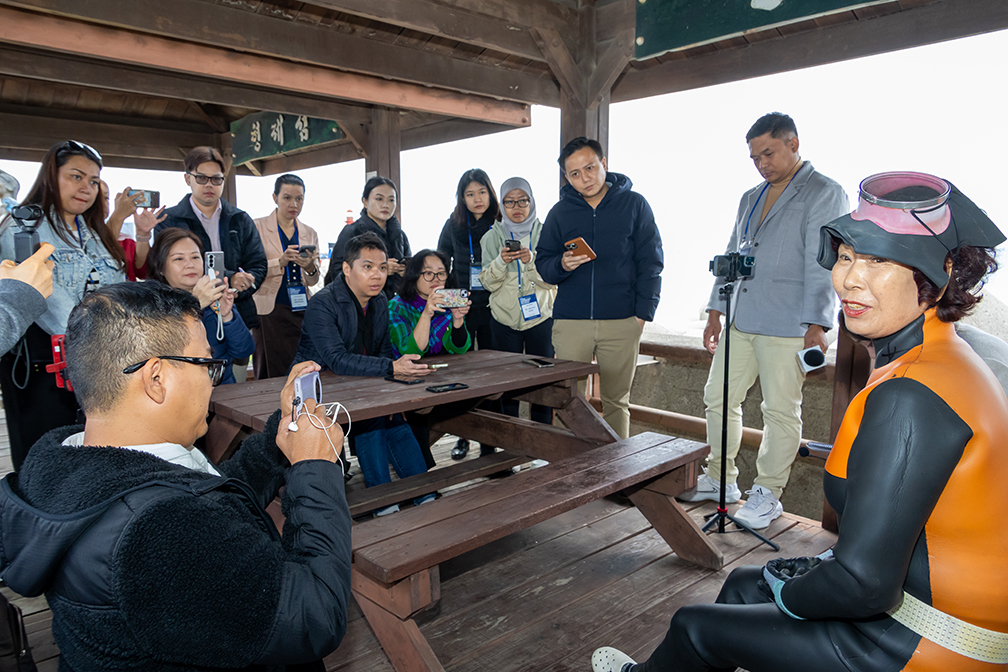
Lee Bok-soo, who has been diving for over 50 years, speaks to ASEAN media.

“The ocean is my life,” she says. “It gives, it takes and it teaches. I cannot stop now, even as my body aches and my friends retire. Someone must carry this legacy forward.”

Some envision a hybrid model in which haenyeo combine diving with cultural, scientific and tourist activities—guardians of tradition and ambassadors to the world.

For Kim Su-seon, Lee Bok-soo and Lee Han-ok, the horizon is both literal and symbolic. Waves crash cold and unyielding, yet their resolve remains steadfast.

“Every dive tells a story,” Lee Bok-soo says. “It is about family, community, survival and respect for the sea. Even as our numbers decline, our spirit continues.”

________

Advertisement

Indonesian Rescuers Search for Survivors as the Death Toll from Floods and Landslides Tops 300

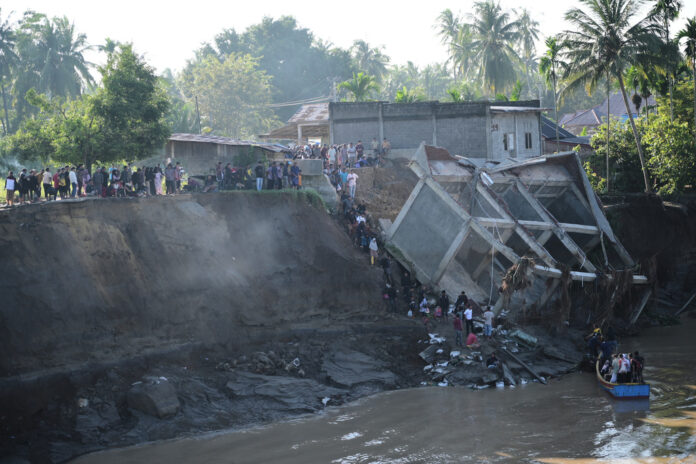
People walk down the embankment of a river to take a boat ride across after a bridge nearby collapsed during a flood in Bireun, Aceh province, Indonesia, Saturday, Nov. 29, 2025. (AP Photo/Reza Saifullah)

AGAM, Indonesia (AP) — Improved weather on Saturday helped rescuers on Indonesia’s Sumatra island recover more bodies as they struggled to reach several areas that were hit by landslides and flash floods that left more than 300 dead and scores missing.

Parts of Sumatra, known for its lush rainforests, volcanoes and mountain ranges, were cut off by damaged roads and downed communications lines, and relied on transport aircraft to deliver aid supplies. Rescue efforts were also hampered by a lack of heavy equipment.

Monsoon rains over the past week caused rivers to burst their banks. The deluge tore through mountainside village, swept away people and submerged thousands of houses and buildings in the three provinces of North Sumatra, West Sumatra and Aceh.

AP25333097542484
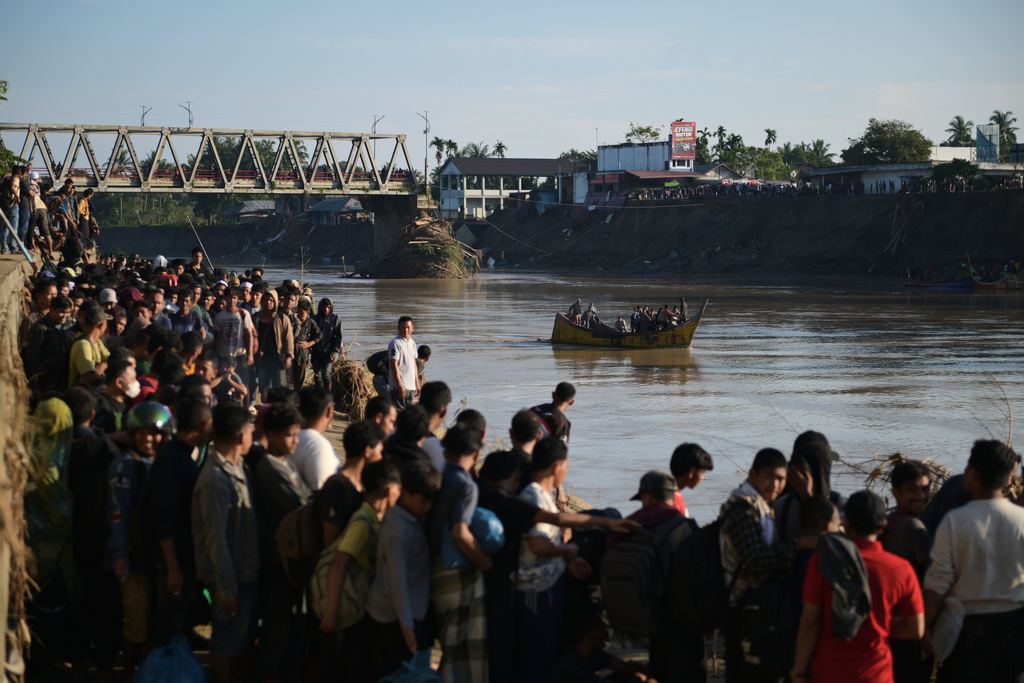
People wait for a boat to ride across a river after a bridge nearby collapsed during a flood in Bireun, Aceh province, Indonesia, Saturday, Nov. 29, 2025. (AP Photo/Reza Saifullah)

The death toll in North Sumatra rose to 166, while 90 people died in West Sumatra. Rescuers also retrieved 47 bodies in Aceh, said Suharyanto, head of the National Disaster Management Agency. About 59,660 displaced families fled to temporary government shelters.

Authorities used cloud seeding, which involves dispersing particles into clouds to create precipitation, to redirect rainfall away from the areas where search and rescue efforts were ongoing, said Suharyanto, who goes by a single name like many Indonesians.

AP25333039485032
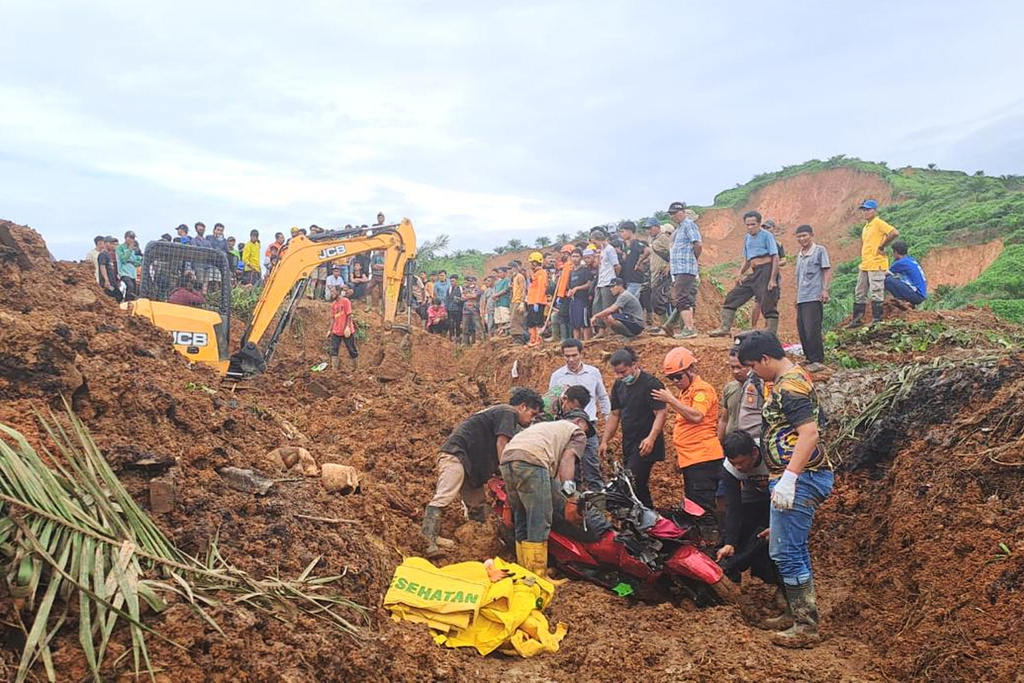
In this photo released on Saturday, Nov. 29, 2025 by the Indonesian National Search and Rescue Agency (BASARNAS), rescuers remove a scooter buried in the mud as they search for victims at a village hit by a landslide in Batu Goading, North Sumatra, Indonesia. (BASARNAS via AP)

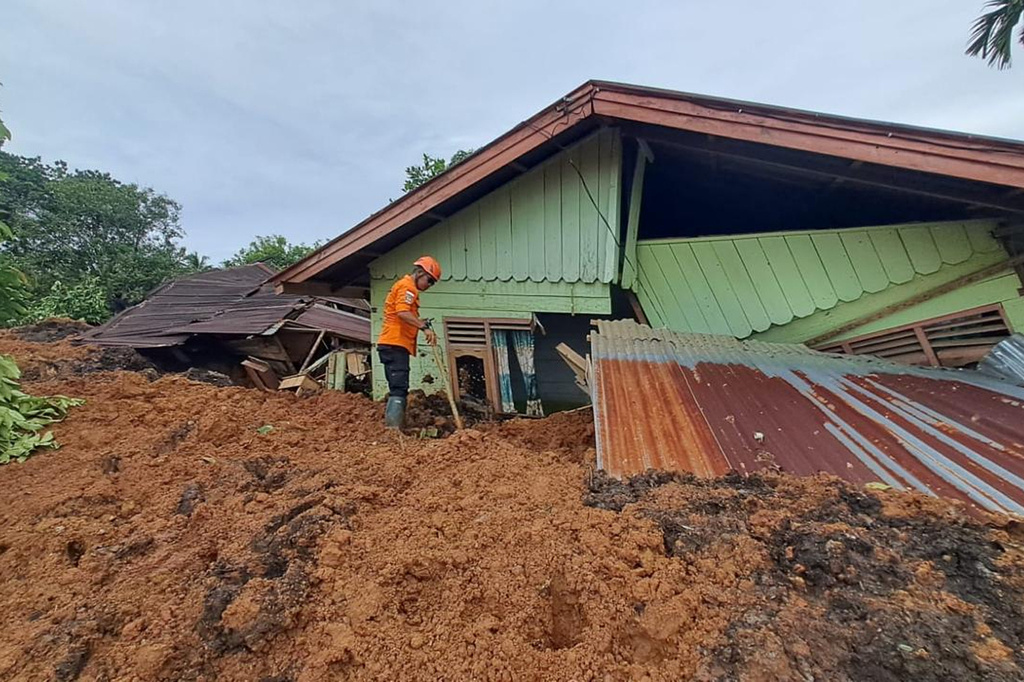
In the Agam district in West Sumatra province, nearly 80 people were missing in three village, buried under tons of mud and rocks. There was a desperate need for heavy equipment to reach possible survivors. Relatives wailed as they watched rescuers pull bodies from a buried house in Salareh Aia village.

Images also showed massive piles of logs washed ashore on West Sumatra’s Air Tawar Beach, sparking public concern over possible illegal logging that may have contributed to the disaster.

In Aceh province, on the northern tip of Sumatra, authorities had difficulty deploying tractors and other heavy equipment. Hundreds of police, soldiers and residents dug through the debris with bare hands, shovels and hoes as heavy rain pounded the region.

AP25333039461672
In this photo released on Saturday, Nov. 29, 2025 by the Indonesian National Search and Rescue Agency (BASARNAS), rescuers search for victims at a village hit by a landslide in Batu Goading, North Sumatra, Indonesia. (BASARNAS via AP)

“The death toll is believed to be increasing, since many bodies are still missing, while many have not been reached,” said Suharyanto, the head of the government’s disaster relief agency, who like many Indonesians only uses one name.

TV reports showed two rescuers battling strong currents in a small rubber boat, moving toward a man clinging to a coconut tree.

“There are many challenges,” Aceh Gov. Muzakir Manaf said after declaring a state of emergency until Dec. 11 to address the disaster. “We have to do many things soon, but conditions do not allow us to do so.”

AP25333142789649
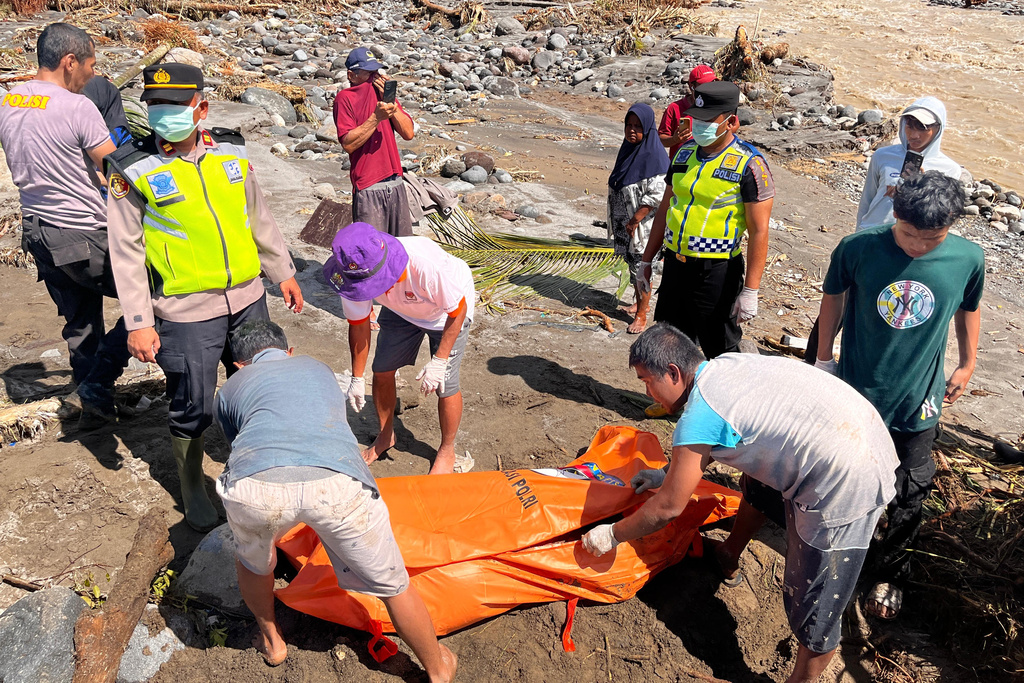
Rescuers put the body of a flood victim recovered from a river inside a body bag in Padang Pariaman, West Sumatra, Indonesia, Saturday, Nov. 29, 2025. (AP Photo/Ade Yuandha)

Local media said that flash floods in Bireuen district in Aceh collapsed ine bridges, paralyze two-way transportation from North Sumatra’s Medan city to Banda Aceh, and forced residents to cross the river from village to village by boat.

It was the latest natural disaster to hit Indonesia, which is frequently struck by earthquakes, volcanic eruptions and tsunamis because of its location on the “Ring of Fire,” an arc of volcanoes and fault lines in the Pacific Basin.

Seasonal rains frequently cause flooding and landslides in Indonesia, an archipelago of 17,000 islands where millions of people live in mountainous areas or near fertile flood plains.

___

Advertisement

Air Arabia Launches Inaugural Direct Flight from Sharjah to Krabi

Air Arabia's inaugural Sharjah-Krabi flight arrives at Krabi International Airport on November 29, 2025.

KRABI — The Tourism Authority of Thailand (TAT) welcomed the inaugural Air Arabia flight on the new direct route between Sharjah, United Arab Emirates, and Krabi province on Saturday, marking a significant expansion of connectivity between the Middle East and southern Thailand.

The flight departed Sharjah on November 28 and arrived in Krabi on November 29, with Deputy Interior Minister Sasithorn Kittidhornkul presiding over the welcoming ceremony alongside Krabi Governor Angkul Silatewakunl and local tourism partners.

Santi Sawangcharoen, TAT’s Regional Director for the Americas, Middle East, and Africa, said the new route expands on existing Sharjah-Bangkok and Sharjah-Phuket services and will add capacity for over 5,220 passengers per month.

“The launch of this direct route represents another important step in driving TAT’s Airline Focus strategy, which uses aviation partnerships as a key mechanism to stimulate quality tourist arrivals to Thailand, particularly from the high-spending Middle Eastern market,” Santi said.

air arabia3
Deputy Interior Minister Sasithorn Kittidhornkul and Krabi Governor Angkul Silatewakunl welcome passengers from Air Arabia’s inaugural Sharjah-Krabi flight at Krabi International Airport on November 29, 2025.

Daily Service on Modern Aircraft

The route, which began operations on November 28, operates daily using Airbus A320 and A321 aircraft with seating capacity of 174-215 passengers per flight. The service provides an important connection not only for Middle Eastern travelers but also for passengers from Europe and North Africa seeking convenient access to southern Thailand through Air Arabia’s hub network.

Air Arabia (IATA: G9) is the largest low-cost carrier in the Middle East and North Africa region, currently serving over 206 routes connecting the Middle East, North Africa, Asia, and Europe.

Over the past two years, Air Arabia has more than doubled flight frequencies on its Sharjah-Bangkok and Sharjah-Phuket routes, expanding from one daily flight to 2-3 flights per day during peak tourism seasons, reflecting growing demand for travel to Thailand.

air arabia1
Air Arabia’s inaugural Sharjah-Krabi flight arrives at Krabi International Airport on November 29, 2025.

High-Value Tourist Market

Tourists from Gulf Cooperation Council (GCC) countries – including the UAE, Saudi Arabia, Qatar, Kuwait, Bahrain, and Oman – are known for their high per-capita income and preferences for wellness tourism, family travel, and luxury accommodations, matching Thailand’s strengths in quality products and services.

From January 1 to November 23, 2025, over 728,340 tourists from the Middle East visited Thailand, with an average stay of 10 days and average spending of approximately 100,000 baht per trip. TAT expects the region to generate more than 850,000 visitors by year-end 2025.

Supporting Sustainable Growth

The route expansion is designed to distribute tourists and revenue to other Thai destinations while supporting TAT’s “Value over Volume” strategy, which emphasizes economic value creation over simply increasing visitor numbers.

The new flights are expected to benefit local businesses including hotels, restaurants, spas, halal tourism services, sports facilities, and wellness activities, generating employment and new investment opportunities in the region.

The expansion also demonstrates airline and investor confidence in Thailand’s infrastructure, service standards, and international-level tourism support systems, aligning with the country’s Bio-Circular-Green (BCG) economic model that prioritizes sustainable and balanced growth across economic, social, and environmental dimensions.

_____

Advertisement

Owner of the Only Dry House in Flooded Songkhla Explains How He Achieved It

Wicharit Leelakorn's house is located in Na Mom sub-district, Na Mom district, Songkhla province (Photo: Wicharit Leelakorn)

SONGKHLA — The owner of the only house in the Songkhla neighborhood that escaped flooding has shared details about the most crucial piece of equipment he used, how he managed to set everything up within just one hour, and how he handled the drainage system, with results that exceeded his expectations.

The case went viral after a Facebook user named Wicharit Leelakorn posted photos showing that his house was the only one in his housing project that remained unflooded during the recent disaster in Songkhla province. The post attracted significant attention online, with many people asking him for detailed steps and techniques to protect their own homes.

The homeowner Wicharit Leelakorn told Khaosod Online that his house is located in Na Mom sub-district, Na Mom district, Songkhla province, near Hat Yai, an area that usually experiences flash floods rather than prolonged inundation.

Before this event, the Meteorological Department had issued warnings of heavy rainfall. Once the rain began, he noticed the water was rising faster than usual. Previously, floods in the area would last only about two hours, but this time was the most severe.

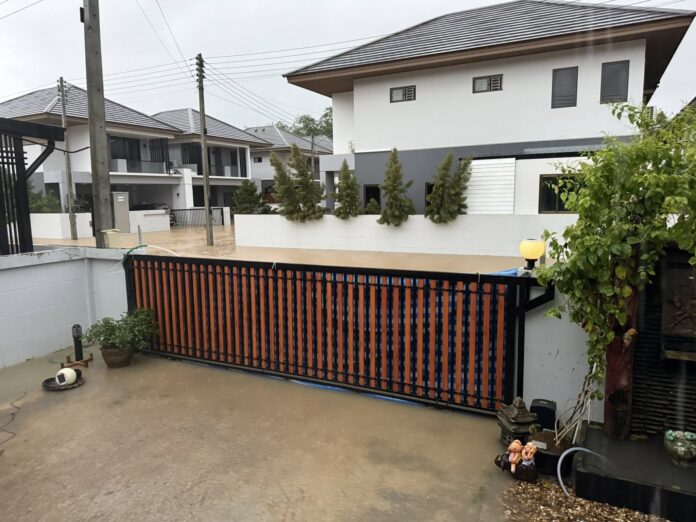
house not flood1
Photo: Wicharit Leelakorn

On the first night when water poured into his house, he barely had time to prepare. After finishing some errands with his partner, it was already dark. When he saw the water briefly recede and cars start moving again, he rushed out to buy a generator, tarpaulins, and other equipment, anticipating that the situation was far from over.

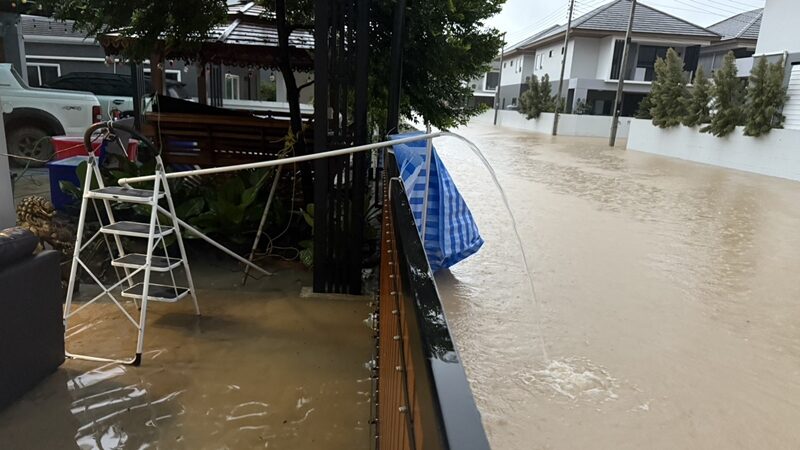
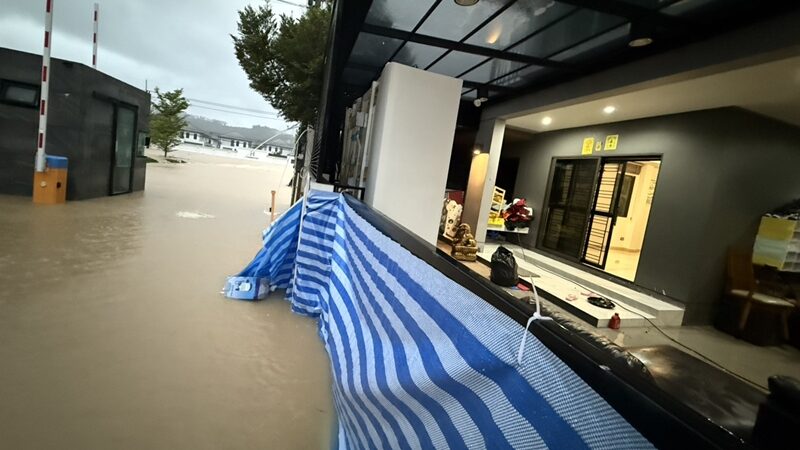
He hurried back to the village as the water began rising again. Together with his partner, he quickly assembled a flood-protection system. It took only an hour to complete, and when the water surged again later, his house remained dry, though some seepage still occurred.

He said the most important item was the generator, because if the power went out, he would not be able to run the water pumps needed to drain water from the house. Fortunately, he already had several pumps because he raises fish. The main protective materials he used were tarpaulins and metal bars.

He measured the tarpaulin to fit tightly across the front door, secured it with metal bars, and tied it to the fence to withstand the water pressure. He also plugged the drainage pipes with cloth and stones to prevent water from flowing back into the house.

house not flood4
Photo: Wicharit Leelakorn

He said the entire idea came from watching YouTube videos and learning from overseas practices, which he then adapted for his home and the results turned out far better than he expected. He admitted that if he had done this during the first surge, his home would not have been flooded at all.

Additionally, his house was the only one in the project that did not lose power. As a result, more than 20 neighboring households came to charge their mobile phones, power banks, and other devices throughout the day. He allowed them to use electricity for free, saying that as the village headman, he wanted to help everyone during a crisis.

Wicharit concluded that flood prevention is not difficult if people prepare in advance, especially in areas where floodwater is not too high. He urged flood victims not to rely solely on government agencies, as officials may be delayed during severe floods. “Help yourself as much as possible,” he said, adding that whenever evacuation warnings are issued, residents should leave immediately for their own safety and that of their families.

house not flood2
Photo: Wicharit Leelakorn

________

Advertisement

Thai PM Faces Tough Questions as Late Apology for Deadly Floods

Prime Minister Anutin Charnvirakul, who also serves as interior minister, speaks to reporters after meeting ministers and senior officials on additional flood relief measures at Government House on Nov. 29, 2025.

BANGKOK — Only a week ago, Thai Prime Minister Anutin Charnvirakul appeared buoyant as he welcomed political defectors to his Bhumjaithai Party, projecting confidence ahead of elections expected early next year. Today, that optimism has evaporated.

A sudden and severe flooding crisis in Thailand’s southern provinces — a region that helped propel Bhumjaithai and its Kla Tham allies to major gains over the Democrats in 2023 — has become the biggest test of Anutin’s premiership. His government now faces mounting criticism that its disaster response was slow, disorganized, and politically damaging.

As of November 29, flooding persisted across nine provinces, affecting more than 3.17 million people and 1.14 million households, according to the Department of Disaster Prevention and Mitigation. At least 162 people have died. Some local figures, including Surachet Hakparn, president of the Southern People’s Association, say the toll could be far higher and have urged the government to release full casualty counts.

anutin 28 11 2025
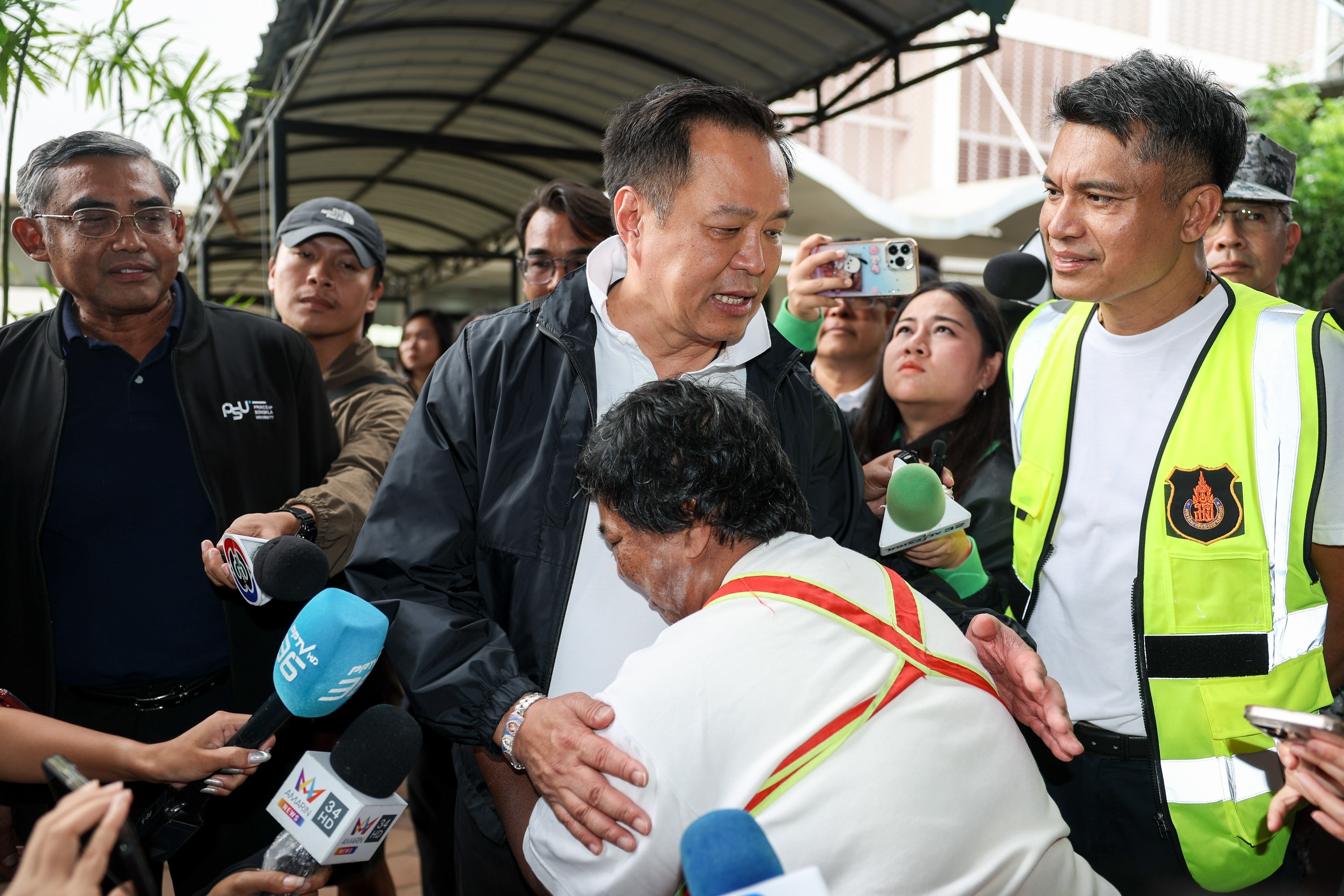
Prime Minister Anutin Charnvirakul is embraced by a flood victim during his inspection of Hat Yai district on November 28, 2025.

On Saturday, Anutin — who also serves as interior minister — convened ministers and senior officials to consider additional relief measures. He also ordered police to speed up the identification of bodies found in flood-hit areas and demanded a “big cleaning” effort to restore Hat Yai within two weeks.

But his public apology came only after five to six days of escalating criticism. The delay has fueled questions about his leadership at a politically sensitive moment.

“Everyone who dies during this flood disaster is considered a flood-related death,” Anutin said earlier in the week, vowing to take responsibility and promising compensation of 2 million baht per deceased person, alongside debt-relief measures expected to reach the Cabinet soon. “I feel stressed seeing people suffer like this … we must urgently find ways to help.”

His assurances have not stopped the backlash.

AP25333284229819
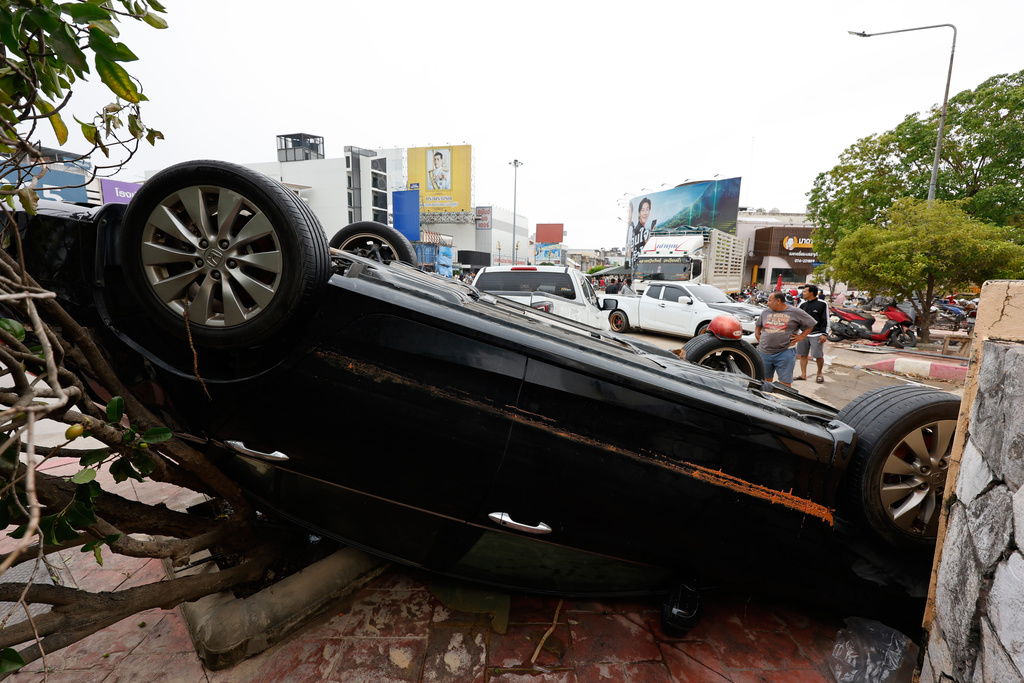
The damaged shops are seen following flooding in Songkhla province, southern Thailand, Saturday, Nov. 29, 2025. (AP Photo/Sarot Meksophawannakul)

Royal Message Highlights Urgency of Crisis

The political pressure intensified after His Majesty the King issued a Royal Command directing an expansive state response to the crisis. The message, relayed to Anutin by the Royal Private Secretary, expressed deep concern for affected communities and placed the deceased under Royal Patronage.

Key directives included a 100 million baht ($3.1 million) grant for Hat Yai Hospital, encouragement to medical teams in the region, and the deployment of drones for search operations and food delivery. The King had issued a similar message earlier on Nov. 24, urging full mobilization of the military and relevant agencies.

The Royal Command triggered a more visible government response, but came after days of public frustration — including an incident where a minister walked out of a press conference when pressed about allegations of mismanagement.

AP25332326080636
A man stands behind a damaged car following floods in Songkhla province, southern Thailand, Friday, Nov. 28, 2025. (AP Photo/Sarot Meksophawannakul)

Damage to the “Blue Camp”?

The slow response and late apology now threaten the prime minister’s popularity in a region crucial to his party’s electoral fortunes. Attacks have come not only from opposition Pheu Thai figures but also from residents who lost family members, and from social media users who accuse the government of reacting too late.

Whether the apology can repair the political damage remains uncertain.

Coalition Tensions Also Surface

The fallout has spread to the People’s Party — the “orange party” — whose votes helped Anutin form a minority government. Critics have resurfaced a speech by party leader Natthaphong Ruengpanyawut during the September prime ministerial vote: “We didn’t choose Khun Anutin to run the country, but to amend the constitution and dissolve parliament within four months.”

As People’s Party members now “advise” the government on disaster management, observers note the contrast with their previous stance as fierce critics when Pheu Thai held power. Their shift has also attracted scrutiny.

A Political Price Still Unpaid

What began as a natural disaster has morphed into a political crisis. The government insists there was no delay or mismanagement. Many in the South say otherwise. And as the death toll rises, the prime minister’s belated apology may prove to be only the first step in a long effort to restore public trust — and protect his party ahead of a looming election.

________

Advertisement

Hot News

LATEST NEWS

Bangkok
overcast clouds
31.1 ° C
31.6 °
28.3 °
73 %
3.7kmh
100 %
Mon
29 °
Tue
35 °
Wed
34 °
Thu
34 °
Fri
28 °