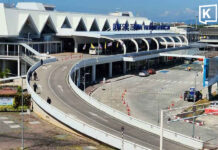
































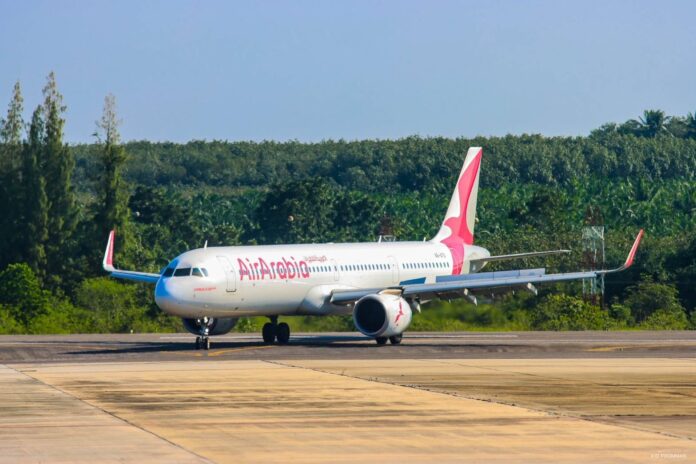
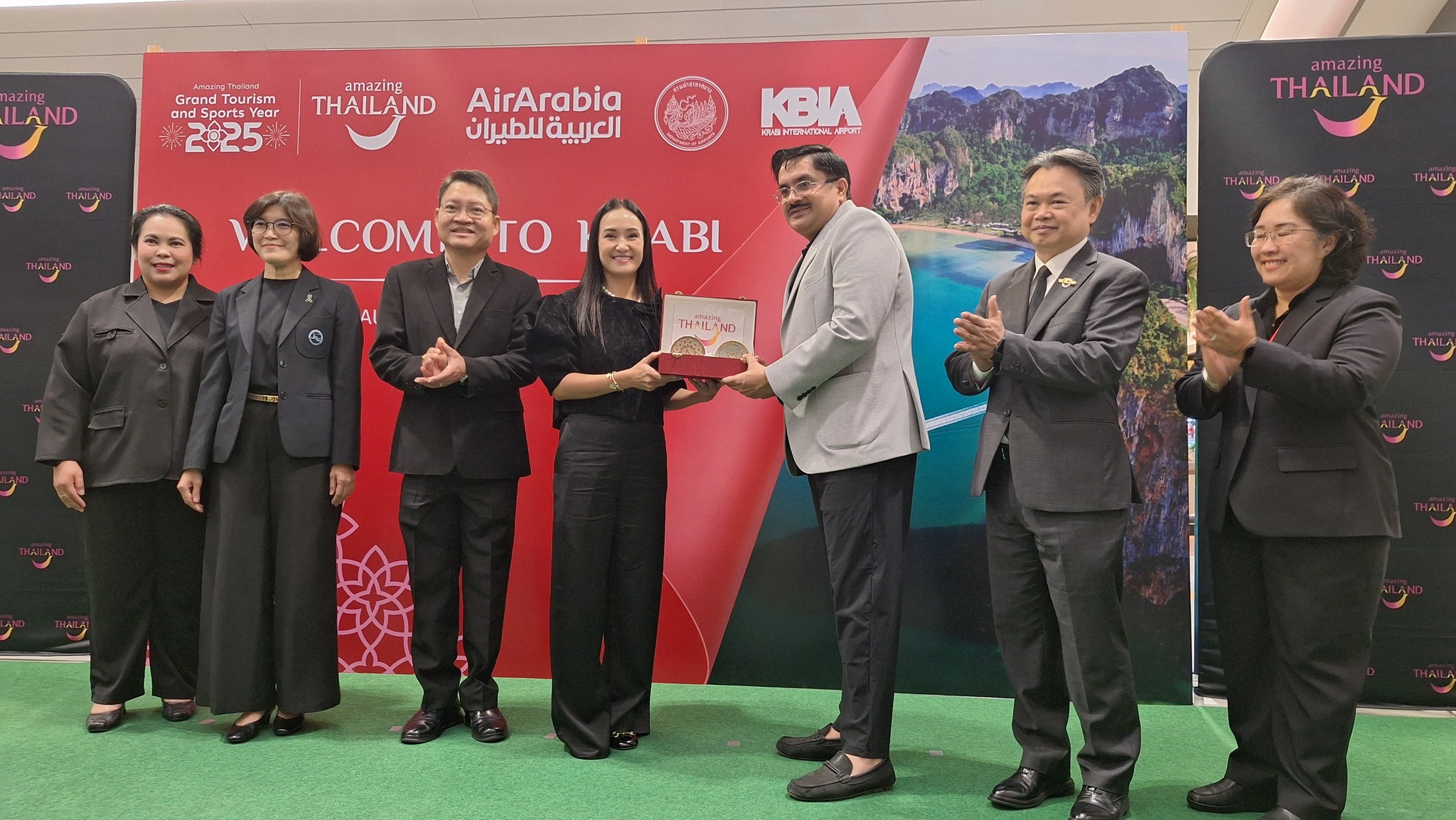
KRABI — The Tourism Authority of Thailand (TAT) welcomed the inaugural Air Arabia flight on the new direct route between Sharjah, United Arab Emirates, and Krabi province on Saturday, marking a significant expansion of connectivity between the Middle East and southern Thailand.
The flight departed Sharjah on November 28 and arrived in Krabi on November 29, with Deputy Interior Minister Sasithorn Kittidhornkul presiding over the welcoming ceremony alongside Krabi Governor Angkul Silatewakunl and local tourism partners.
Santi Sawangcharoen, TAT’s Regional Director for the Americas, Middle East, and Africa, said the new route expands on existing Sharjah-Bangkok and Sharjah-Phuket services and will add capacity for over 5,220 passengers per month.
“The launch of this direct route represents another important step in driving TAT’s Airline Focus strategy, which uses aviation partnerships as a key mechanism to stimulate quality tourist arrivals to Thailand, particularly from the high-spending Middle Eastern market,” Santi said.
Daily Service on Modern Aircraft
The route, which began operations on November 28, operates daily using Airbus A320 and A321 aircraft with seating capacity of 174-215 passengers per flight. The service provides an important connection not only for Middle Eastern travelers but also for passengers from Europe and North Africa seeking convenient access to southern Thailand through Air Arabia’s hub network.
Air Arabia (IATA: G9) is the largest low-cost carrier in the Middle East and North Africa region, currently serving over 206 routes connecting the Middle East, North Africa, Asia, and Europe.
Over the past two years, Air Arabia has more than doubled flight frequencies on its Sharjah-Bangkok and Sharjah-Phuket routes, expanding from one daily flight to 2-3 flights per day during peak tourism seasons, reflecting growing demand for travel to Thailand.

High-Value Tourist Market
Tourists from Gulf Cooperation Council (GCC) countries – including the UAE, Saudi Arabia, Qatar, Kuwait, Bahrain, and Oman – are known for their high per-capita income and preferences for wellness tourism, family travel, and luxury accommodations, matching Thailand’s strengths in quality products and services.
From January 1 to November 23, 2025, over 728,340 tourists from the Middle East visited Thailand, with an average stay of 10 days and average spending of approximately 100,000 baht per trip. TAT expects the region to generate more than 850,000 visitors by year-end 2025.
Supporting Sustainable Growth
The route expansion is designed to distribute tourists and revenue to other Thai destinations while supporting TAT’s “Value over Volume” strategy, which emphasizes economic value creation over simply increasing visitor numbers.
The new flights are expected to benefit local businesses including hotels, restaurants, spas, halal tourism services, sports facilities, and wellness activities, generating employment and new investment opportunities in the region.
The expansion also demonstrates airline and investor confidence in Thailand’s infrastructure, service standards, and international-level tourism support systems, aligning with the country’s Bio-Circular-Green (BCG) economic model that prioritizes sustainable and balanced growth across economic, social, and environmental dimensions.
_____