28.3 C
Bangkok
Sunday, June 28, 2026
Home Blog Page 2170

Iran Says at Least 140 Killed, 300 Hurt in Quake

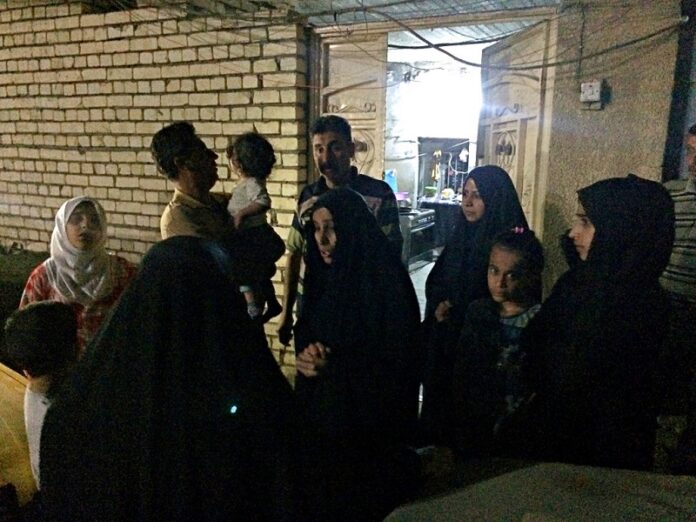
People stand in the street Sunday after feeling aftershocks from an earthquake in Baghdad, Iraq. Photo: Hadi Mizban / Associated Press

TEHRAN, Iran — Iran’s state-run IRNA news agency says the death toll in the powerful 7.2-magnitude earthquake along the borders of Iran and Iraq has risen above 140.

IRNA also said over 860 people were injured in the quake that shook the region Sunday.

The report Monday morning said 141 had been killed in cities and towns in the western Iranian province of Kermanshah.

It said rescuers worked through the night and the operations will be accelerated during the day Monday.

The U.S. Geological Survey said the quake was centered 19 miles (31 kilometers) outside the eastern Iraqi city of Halabja.

Iran sits on many major fault lines and is prone to quakes. In 2003, a magnitude 6.6 earthquake flattened the historic city of Bam, killing 26,000 people.

Advertisement

What Some Filipinos Think of the Trump-Duterte Meeting

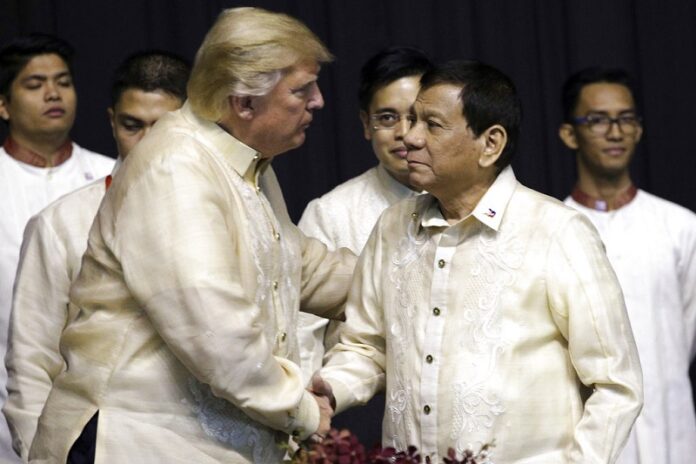
President Donald Trump shakes hand with Philippines President Rodrigo Duterte in 2017 during the gala dinner marking ASEAN's 50th anniversary in Manila, Philippines. Athit Perawongmetha / Associated Press

MANILA — President Donald Trump will formally meet his equally bombastic Philippine counterpart, Rodrigo Duterte, on the sidelines of an international summit Monday in one of the most-anticipated moments in the U.S. leader’s first presidential trip to Asia. Both have tested the bounds of statesmanship with their foul language, devil-may-care verbal harangues against enemies and strongman tendencies.

Both rose to power in an era of authoritarian, populist leaders, both have quarreled with the press and both have been condemned for making lewd remarks against women. Duterte’s bloody campaign against illegal drugs includes widespread accusations of extrajudicial killings, raising global alarm from governments and rights group yet has been praised by Trump.

A sampling of what some Filipinos think of their meeting:

“These two presidents both have brusque personalities. They are both tactless but, most likely, they will not clash because the twine of their intestines are identical, they will probably have a meeting of minds and even exchange strategies in solving problems.”  Marius Daniel Garcia, a 34-year-old hotel guard in Manila.

“The entertainment value is huge but in terms of policy impact, I would have to say, minimal … Trump doesn’t have a clear Asia policy yet. It seems to be developing. Right now, they seem to be more concerned with just giving a reassurance to Asia that they are not leaving, that’s all. But concrete initiatives, nothing.”  Jay Batongbacal, an associate law professor and director of the Institute for Maritime Affairs and Law of the Sea at the state-run University of the Philippines.

“They’re of the same color (laughs), they’re both OK! They only have one color, one line of thinking. I think it’s time that President Duterte came into our lives and Trump in America, and that they have one similar attitude. They might be crass when they talk but what they say has truth.”  Florentino Lucido as he took pictures of his wife in front of an ASEAN sign near the summit venue.

“No, of course when there are two toughies you always have this fear that there can be a confrontation, but they understand the same language, they have the same goals. In this case, both just like a better life for their people so, sometimes, two toughies become very close and end up as true friends.”  Philippine Foreign Secretary Alan Peter Cayetano, when asked by reporters if “sparks” can be expected in the meeting of two leaders with very strong personalities.

“Both of them feel beseeched, both of them talk about destabilization, both of them talk about overturning existing order, both of them talk about their nation first. So, Duterte, in many ways, also talks about, you know, ‘make Philippines great again’. So, in that sense, there’s this sense of personal solidarity and Trump relates to people who are very much like him.”  Manila-based analyst Richard Heydarian.

Advertisement

Myanmar’s Suu Kyi Now Benefits From Southeast Asia’s Silence

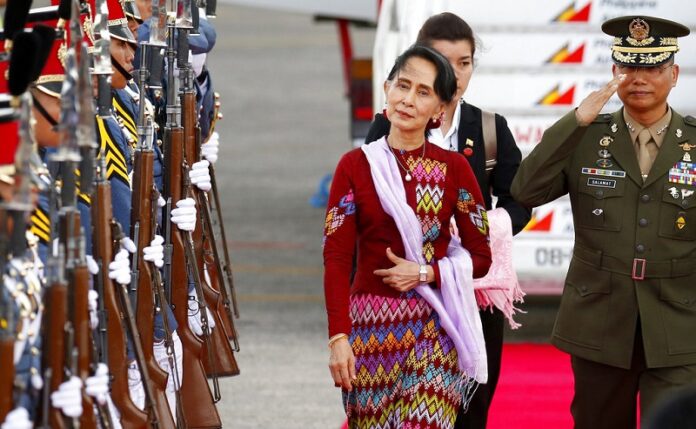
Myanmar leader Aung San Suu Kyi arrives last year at Clark International Airport, north of Manila, Philippines to attend the 31st ASEAN Summit and Related Summits in Manila. Photo: Bullit Marquez / Associated Press

YANGON — When Aung San Suu Kyi led the fight for democracy against Myanmar’s despotic military rulers two decades ago, she bristled at the collective reluctance of Southeast Asian governments to intervene in her nation’s plight.

In a newspaper editorial published in 1999, the former opposition leader slammed the 10-member Association of Southeast Asian Nations, saying its “policy of non-interference is just an excuse for not helping.”

“In this day and age,” she wrote in an editorial in Thailand’s The Nation newspaper on July 13 of that year, “you cannot avoid interference in the matters of other countries.”

Today, Suu Kyi leads Myanmar. And when she attends the ASEAN summit in Manila on Monday, she’s likely to be counting on the bloc to keep silent while her government engages in a crackdown on Rohingya Muslims using tactics the U.N. has described as ethnic cleansing to force them to leave the Buddhist-majority country.

It’s unclear whether the crisis will be on ASEAN’s official agenda, although Malaysia and Indonesia are likely to bring it up in talks on the meeting’s sidelines. Bangladesh, where more than 600,000 Rohingya have arrived since late August, is not part of ASEAN.

But little is expected to be done.

“ASEAN summits are not designed to actually construct policy responses to major human rights issues that affect the whole region,” said David Mathieson, a former human rights researcher who is now an independent analyst based in Myanmar. “Right now, Suu Kyi’s government is benefiting from ASEAN’s culture of inaction.”

The refugee crisis began Aug. 25 after Rohingya insurgents attacked several Myanmar police posts in northern Rakhine state. Security forces responded with brutal “clearance operations” that human rights groups say killed hundreds of people and left hundreds of Rohingya villages burned to the ground. Survivors have described arson, rape and shootings by Myanmar soldiers and Buddhist mobs for the purpose of forcing Rohinya to leave.

Myanmar has long denied them citizenship and most people insist the Rohingya are illegal immigrants though they’ve lived in Myanmar for generations.

Suu Kyi was awarded the 1991 Nobel Peace Prize for her “non-violent struggle for democracy and human rights,” in the words of the Nobel committee, but has been reluctant to defend the Rohingya. In a September speech, Suu Kyi asked for patience from the international community and suggested the refugees were partly responsible for the crisis. She also tried to play down the gravity of the exodus, saying more than half of the Rohingya villages in Myanmar had not been destroyed.

Though Suu Kyi has been the de facto head of Myanmar’s civilian government since her party swept elections in 2015, she is limited in her control of the country by a constitution written by the military junta that ruled Myanmar for decades. The military is in charge of the operations in northern Rakhine, and ending them is not up to Suu Kyi.

Still, her government has staunchly defended the army’s actions.

When the U.N. Security Council last week called for Myanmar to “end the excessive military force and intercommunal violence that had devastated the Rohingya community,” Suu Kyi’s office responded that it regretted the council’s statement.

In an apparent reference to China, which has backed Myanmar, the government praised Security Council members who “upheld the principle of non-interference in the internal affairs of sovereign countries.”

Non-interference has long been a bedrock of ASEAN, which celebrates its 50th anniversary this year.

Myanmar presidential spokesman Zaw Htay said he did not know what would be discussed at the summit this week, so “we can’t say how we are going to respond to it.”

Chandra Widya Yudha, director of the ASEAN Political and Security Cooperation at Indonesia’s Foreign Ministry, told The Associated Press that his government would address the Rohingya crisis at the meeting. “We cannot keep silent because we have to help them,” Yudha said.

Malaysia in particular has been critical of Myanmar’s disproportionate use of force. Earlier this month, the predominantly Muslim country dissociated itself from an ASEAN statement expressing concern over the crisis because it said the statement misrepresented the reality of the situation, omitted reference to Rohingya Muslims as one of the affected communities and was not based on consensus.

Khin Zaw Win, a Yangon-based political analyst, said that both Myanmar’s previous military junta and Suu Kyi’s government have benefited from ASEAN’s reticence, but that the bloc should “take a firmer position” on the Rohingya issue.

“It has to be taken up if ASEAN is to remain credible,” he said.

Writing in The Nation in 1999, Suu Kyi said that when ASEAN invokes the principle of non-interference, it does so “not with a clear conscience.”

“They are afraid that there may be some aspects of their countries that might invite criticism,” she said. “Our position is that if they have problems that invite legitimate criticism, let there be criticism. If not, they have nothing to fear.”

Story: Esther Htusan

Advertisement

11th Day of 11th Month: War Dead Honored on Armistice Day

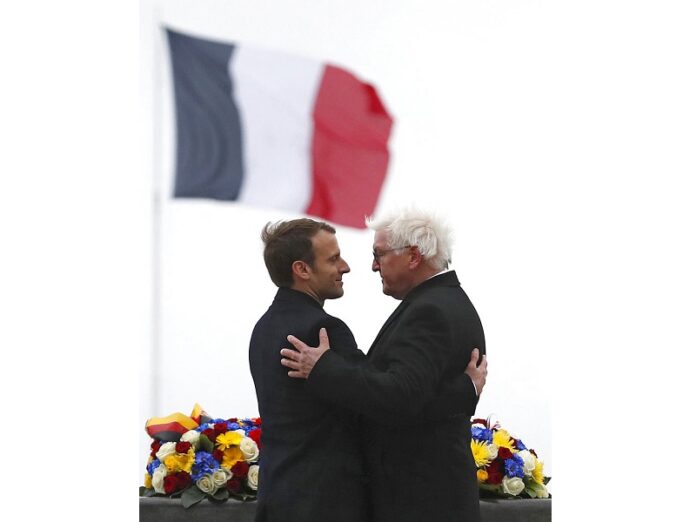
French President Emmanuel Macron, left, and German President Frank-Walter Steinmeier left, attend a commemoration ceremony at the World War I Vieil Armand "Hartmannswillerkopf" battlefield Friday in the Alsace region, eastern France. Photo: Christian Hartmann / Associated Press

LONDON — Millions of people in Britain and France paused to remember the victims of war Saturday on Armistice Day, which marks the anniversary of the end of World War I.

Across Britain, people stopped in streets, squares and railway stations for two minutes of silence starting at 11 a.m. The moment – the 11th hour of the 11th day of the 11th month – marked 99 years since the guns fell silent at the end of the Great War on Nov. 11, 1918.

In London, the bell of Parliament’s Big Ben clock tower sounded the hour for the first time since it was halted for repairs in August.

Many Britons wore red paper poppies, symbolizing the flowers that bloomed amid the carnage of WWI’s Western Front. Armistice Day originally commemorated the millions who died in the Great War, but now also remembers those killed in World War II and subsequent conflicts.

Across the Channel, French President Emmanuel Macron led a solemn ceremony on Paris’ Champs-Elysees, laying a wreath at the statue of wartime French Prime Minister Georges Clemenceau, a key architect of peace between the great powers. Macron then inspected French troops and laid a wreath at the Tomb of the Unknown Soldier at the Arc de Triomphe.

Former French Presidents Nicolas Sarkozy and Francois Hollande also attended the ceremony, which attracted crowds despite the drizzle.

On Sunday, Queen Elizabeth II, British political leaders and dignitaries will attend a Remembrance Sunday ceremony at the Cenotaph war memorial in London.

Next year France will host a grand Armistice centenary, marking 100 years since the war’s end in 1918 with envoys from 80 nations.

Poland also held events Saturday to celebrate the nation’s Independence Day, when it regained its sovereignty at the end of World War I after being wiped off the map for more than a century.

Flags fluttered across the country and television news presenters wore pins in the colors of the national flag.

In Warsaw, Polish President Andrzej Duda oversaw ceremonies at the Tomb of the Unknown Soldier, walking past a military guard before flags were raised and cannons rang out in a salute. After delivering a speech, he took part in a wreath-laying ceremony at the monument.

Advertisement

Chinese Spend Billions Shopping Online on ‘Singles Day’

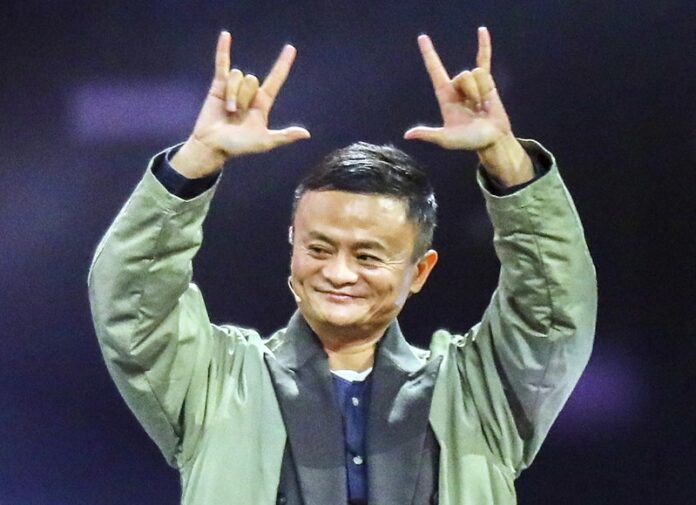
Jack Ma, founder of China's biggest e-commerce giant Alibaba Group, attends a star-studded 2017 Tmall 11.11 Global Shopping Festival gala, Friday in Shanghai, China. Photo: Associated Press

BEIJING — Chinese consumers have spent billions of dollars shopping online for anything from diapers to diamonds on “Singles Day,” a day of promotions that has grown into the world’s biggest e-commerce event.

China’s largest e-commerce giant, Alibaba Group, said Sunday sales by the thousands of retailers on its platforms for the 24-hour period on Saturday amounted to 168.3 billion yuan (USD $25.3 billion), setting a new record for the company. It was 39 percent more than sales clocked last year on Alibaba’s platforms of 120.7 billion yuan.

By comparison, American shoppers last year spent more than USD $5 billion shopping online on Thanksgiving Day and Black Friday, according to Adobe, which tracks such data. Shoppers also spent USD $3.39 billion on Cyber Monday last year, the largest single online shopping day in the U.S., Adobe said.

In China, Alibaba’s main rival, online retailer JD.com, did not provide a sales figure only for Saturday but said cumulative sales over the 11-day period starting on Nov. 1 through Saturday totaled 127 billion yuan (USD $19 billion).

Starting at midnight Friday, diamonds, Chilean frozen salmon, tires, diapers, beer, shoes, handbags, and appliances were shipped out from JD.com’s distribution centers on trucks bound for deliveries across China.

China is already the world’s largest e-commerce market and the share of online shopping that makes up all consumer spending grows every year. Boston Consulting Group forecasts online spending will rise by 20 percent a year, hitting USD $1.6 trillion by 2020, compared with 6 percent growth for off-line retail.

Singles Day was begun by Chinese college students in the 1990s as a version of Valentine’s Day for people without romantic partners.

Zhang Jingjing, a 30-year-old clerk for an engineering company, prepared for Singles Day by building a shopping list on Alibaba’s retail platform Tmall and watching for when prices dip. She then clicks and snags a long-sought item at a discount.

“I have often emptied my ‘shopping cart’ on Singles Day,” Zheng said. “I have been watching those goods for a long time and know very well their original prices.”

The spending gives a boost to the ruling Communist Party’s efforts to nurture consumer-based economic growth and reduce reliance on trade and investment. China has 731 million internet users, up 6 percent from 2016, according to government statistics.

Story: Sam McNeil

Advertisement

Mo Farah Encourages ‘Toon Bodyslam’ on Cross-Country Charity Run

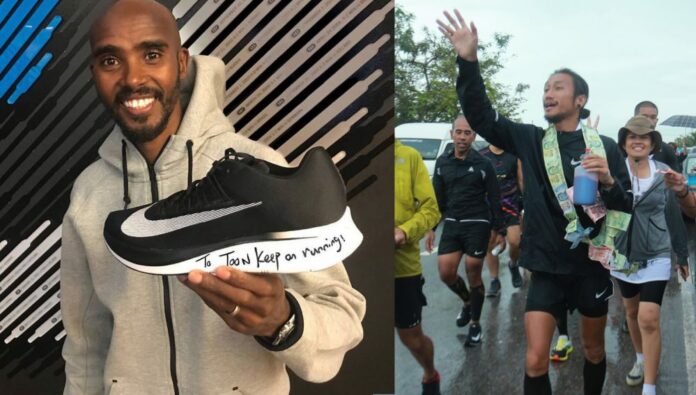
Left, Mo Farah holds up a shoe to encourage Artiwara. Right, Artiwara “Toon Bodyslam” runs Saturday in Nakhon Si Thammarat.

LONDON — A British Olympic gold medallist sent his well-wishes to a Thai rockstar running a cross-country marathon to raise money for local hospitals Saturday afternoon.

On the eleventh day of Artiwara “Toon Bodyslam” Kongmalai’s 2,191-kilometer charity run from Yala to Chiang Rai, Olympic runner Mohamed Muktar Jama Farah, or Mo Farah, sent the Thai rocker his encouragement, to the praise of netizens.

“Keep running @artiwara. Leave all your records behind. The next step is a new start. #breakthrough #break2191k,” wrote Farah on his Facebook page, accompanied by a photo of him holding a shoe with “To Toon Keep on running!” written on it.

Read: Rock Star Sets Off on Cross-Country Charity Run

Thai netizens, already on the edge of their seats since Artiwara started running on Nov. 1, welcomed Farah’s comments with open arms.

“As a Thai, I humbly thank you for recognizing this simple and brave project. I am sure this post will help boost up the awareness of this project much more,” commented Gong Love Octains in English.

Facebooker Somkiat Rangkla, who said that he was the only Thai engineer working on the London 2012 Olympics Park and saw Farah win the gold medal back then, pitched an invitation to the runner.

“Today, you’ve shown a great spirit and support to our hero (Toon) who dedicated his time and effort raising the fund for the hospitals. Why don’t you come to Thailand and joining Toon? [sic] To show the world that there is no boundary or any obstacle if we want to achieve something extraordinary together,” Somkiat wrote.

So far, Artiwara has run more than 408 kilometres in 11 days from Yala to Nakhon Si Thammarat and raised more than 171 million baht for public hospitals across the country. Sunday, he is set to run from 4:30am to 8pm through the latter province. The run is set to finish on Christmas Day in Chiang Rai’s northernmost point.

Farah won four Olympic gold medals – two a piece at the 2012 and 2016 games – six athletics World Championship medals and eight European Athletics Championships medals. Somali-born, he is the most decorated British track athlete in history.

Donations for Artiwara’s run can be made by messaging “T” to 4545099, transferring money to the charity’s account 111-393-5263, via PromptPay to 0994000005261 or at any 7-Eleven store.

His progress can be followed through charity Facebook page Kao Kon La Kao.

c2 e1510468534313
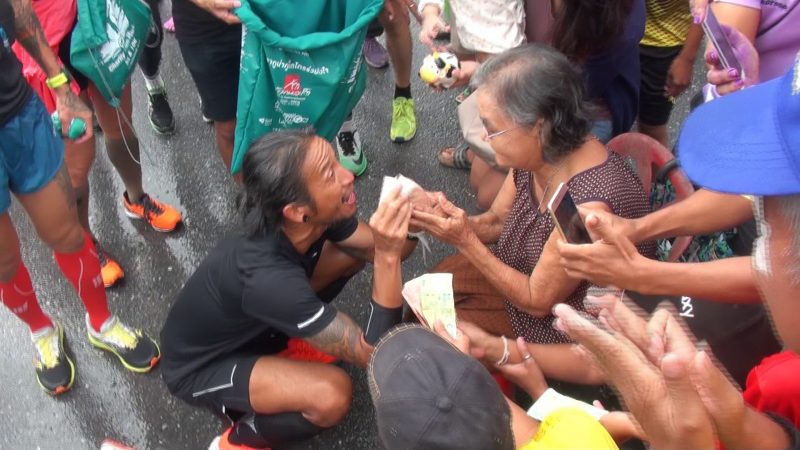
Artiwara greets a supporter Sunday in Nakhon Si Thammarat.

Related stories:

Rock Star Sets Off on Cross-Country Charity Run

Advertisement

Voranai: How Thailand Lost Its Democracy

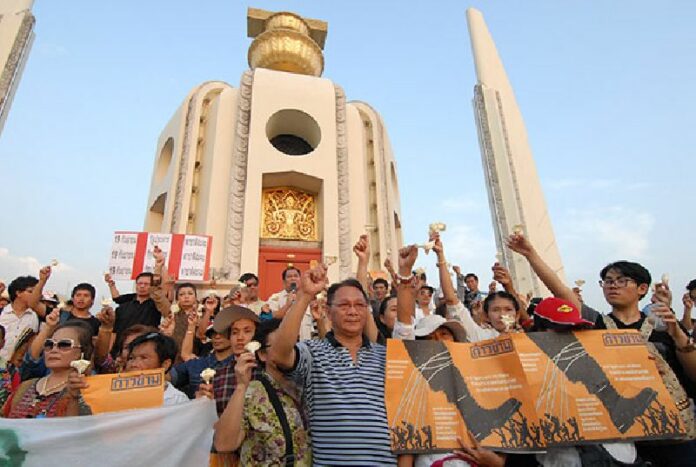
Demonstrators rally in 2015 at Democracy Monument on the ninth anniversary of the 2006 coup which removed former Prime Minister Thaksin Shinawatra from power.

Voranai Vanijaka

People’s power is a wonderful and dangerous thing. In 2010, the United Front for Democracy against Dictatorship, or UDD, marched against the Democrat Party-led coalition government.

The reason given was that the government came into power illegitimately, through a parliamentary coup d’etat. Throw in the Supreme Court’s verdict to seize 46 billion baht of Thaksin Shinawatra’s assets, and that was the final straw. Therefore, the UDD marched and demanded dissolution of the government.

And they won.

The government agreed to new elections. Here’s a chance for the people to vote out the so-called illegitimates and vote in the government of their choosing.

Between November 2013 and May 2014, the People’s Democratic Reform Committee, or PDRC, also took to the streets. They marched against the democratically elected Pheu Thai government. The reason given was corruption over the government’s rice-pledging scheme.

And they won.

The government offered a new round of elections. Here’s a chance for the people to vote out the so-called cheaters and vote in the government of their choosing.

If both the UDD and the PDRC had stopped there, they would have done Thailand’s fledgling democracy a huge favor. They would have shown the country and the world the potency of the power of the people in a democracy. How the people can unite and impact changes through the democratic process.

Of course – it was unfortunate that between the start of the two protests to when each respective governments bowed to new elections – laws were broken, property destroyed, violence committed and lives lost. All said and done however, both the UDD and the PDRC won, and won by the power of the people. So why then is Thailand currently under a military dictatorship? It is because both the UDD and the PDRC said “no” to democracy.

The UDD refused to disband and continued to protest because its leaders feared they would have to face trial for laws broken. The PDRC refused to disband and continued to protest because its leaders knew another round of elections would yield the same result, victory for a Thaksin Shinawatra nominee party.

But democracy could still be saved. On May 19, 2010, the military moved in to disband the UDD. The death toll of the entire tragic ordeal from since the start of the protest is 87 deaths. Of which, 79 were civilians and eight were soldiers.When the smoke cleared and order restored, three things should have happened.

First, protest leaders who instigated violence and law breaking should have faced justice.

Second, military personnel who used excessive force that led to unnecessary deaths and casualties should have faced justice.

Third, a new round of elections.

Only one of the three happened, elections. Be that as it may, the democratic process pushed on, battered and bruised though it may be.

In the 2014 protest, we faced a similar situation, but with a drastically different result. On May 22, the military once again moved in to restore order. But this time, instead of restoring the rule of law on behalf of the democratically elected government, the military took over the country in a coup d’etat.

Bitter and sarcastic though it may be, the question then is: Why not? If the people on both sides of the political factions said “no” to democracy, for whatever reason, then why not? Why not a coup d’etat? Why not a military dictatorship? If self-interest and factionalism are placed above democracy as the national aspiration, then why not?

The world is not all sunshine and rainbows; it is what we make of it. We live under a military dictatorship, because the people are blinded by political factionalism and consumed by tribal allegiance. Where self-interest and partisanship are championed at the expense of national progress.

We didn’t lose democracy. We gave it away.

The superstitious among us may say we are caught in some sort of a karmic cycle. We first won democracy through a coup d’etat in 1932. We lost democracy through a coup d’etat in 2014. Altogether, in the past 85 years since 1932, there have been 20 coup d’etats, both successful and failed. Get out a calculator, and we have one coup d’etat every 4.25 years. They’re almost as frequent as the Olympics or World Cup.

But Thailand is a fortunate nation. Somehow we always find ourselves back to some semblance of democracy. We will again have elections and democracy, once the power-that-be is done consolidating power. It will be a semi-, quasi- or fractional-democracy at first, but at least it’s a step forward, after a big tumble backward.

The question then is, how to break the cycle of coup d’etats? No one person has all the answers, but one thing is for certain. If we the people don’t make democracy a national pursuit. If we don’t make freedom, liberty and human rights our national identity. Then surely we would end up giving democracy away again. Bear in mind that there are many in this country who still prefer the absolutism of a totalitarian regime.

There is no mystical karmic cycle, just foolishness in repeating the same pattern, while making offerings to holy shrines and mythical gods and spirits, praying for a different result. People’s power is a wonderful and dangerous thing. The consequence of our action is exactly as we deserve.

Thailand is, and will be, what we make of it.

Advertisement

Trump Taunts Kim: ‘I Would NEVER Call Him Short and Fat’

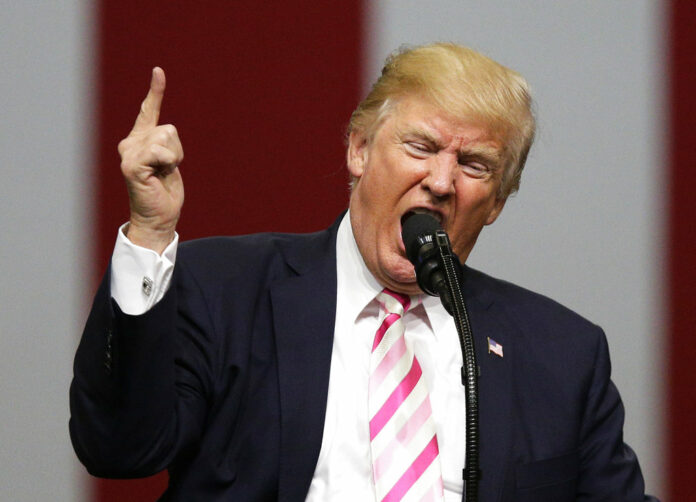
US President Donald Trump speaks in 2017 at a campaign rally in support of Sen. Luther Strange, in Huntsville, Alabama. Photo: Brynn Anderson / Associated Press

HANOI — President Donald Trump is exchanging school yard taunts with North Korea’s Kim Jong Un.

In a response to North Korea calling Trump’s speech in South Korea “reckless remarks by an old lunatic,” Trump tweeted from Hanoi on Sunday morning: “Why would Kim Jong-un insult me by calling me ‘old,’ when I would NEVER call him ‘short and fat?'”

Trump goes on to say sarcastically, “Oh well, I try so hard to be his friend — and maybe someday that will happen!”

Trump has been working to rally global pressure against North Korea’s nuclear weapons program on a trip to Asia. That includes a stern speech delivered in South Korea’s National Assembly on Tuesday, in which he said: “Do not underestimate us. And do not try us. … The weapons you’re acquiring are not making you safer, they are putting your regime in grave danger. Every step you take down this dark path increases the peril you face.”

On Saturday, Kim’s government responded by accusing Trump of trying to demonize North Korea, keep it apart from the international community and undermine its government.

“Reckless remarks by an old lunatic like Trump will never scare us or stop our advance,” the North’s Foreign Ministry said in a statement. “On the contrary, all this makes us more sure that our choice to promote economic construction at the same time as building up our nuclear force is all the more righteous, and it pushes us to speed up the effort to complete our nuclear force.”

North Korea is not known to have tested any of its missiles or nuclear devices since Sept. 15, a relative lull after a brisk series of tests earlier this year.

Asked at news conference with Vietnam’s president later Sunday if he could become friends with the North Korean leader, Trump replied it “might be a strange thing to happen but it’s certainly a possibility.”

He said he doesn’t know if that friendship will develop, but added it would be “very, very nice if it did.”

Advertisement

Thanet Chimtoum, ‘90s Boyband Idol, 44

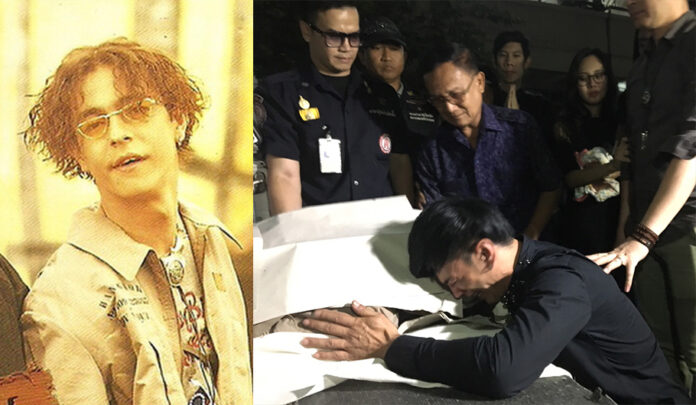
Left, Thanet Chimtoum on the cover of Boyscout’s 1993 album. Right, Chanis Yaisamer cries and holds onto Thanet’s body as Thanet’s father looks on early Saturday morning.

BANGKOK — A member of a ‘90s boy band died early Saturday morning onstage after suffering a heart attack during a concert.

Singer Thanet Chimtoum, aka Joe Boyscout, suffered a heart attack at about 1am while performing onstage at Color Bar in Soi Lat Phrao 94. He was pronounced dead on the way to Ladprao General Hospital.

“When Joe fell it was past midnight. Dip and I were with him the whole time,” band mate Chanit “Ta Boyscout” Yaisamer told reporters Saturday. “When we realized our friend was no longer with us, I was so shocked. Someone can just be gone so quickly. I was so close to him. Yesterday we were just sound-checking on the afternoon before the concert.”

Band mates Chanit and Thanapong “Dip Boyscout” Klaipongphphotan, were crying and holding onto Thanet’s body when he was pronounced dead.

Both Chanit and Thanet’s father said they were unaware Thanet had health issues. Doctors are further investigating the cause of his death but said he most likely died from the heart attack. He also was experiencing hyperglycemia.

S 6250505 e1510389256515
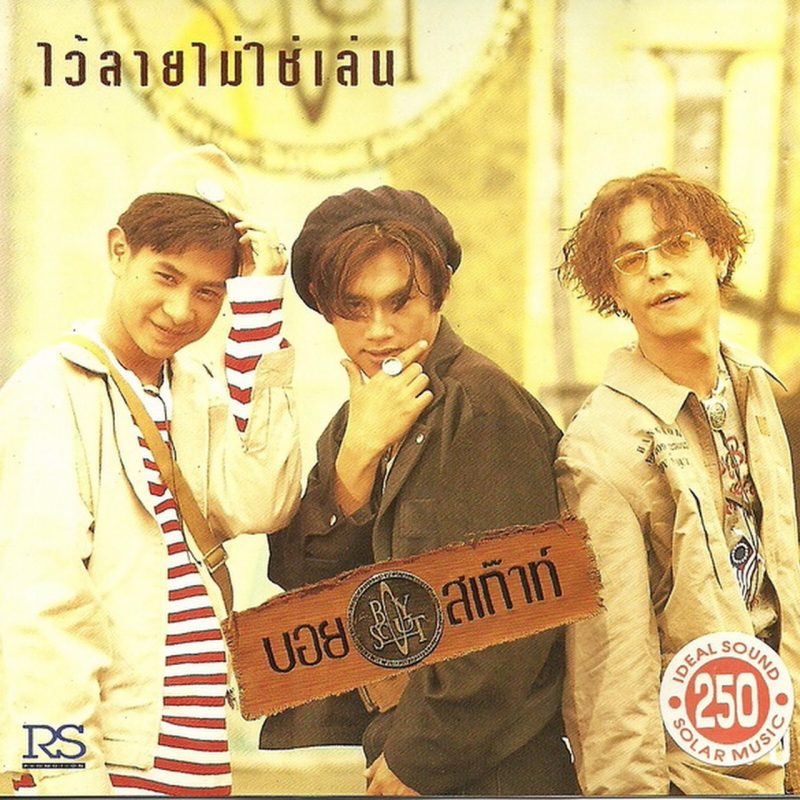
‘Boyscout Wai Lai Mai Chai Len’ album cover, released in 1993. Thanet Chimtoum, or Joe Boyscout, is on the right.

Thanapong said the band started performing at Color Bar at about 11:30pm on Friday and had sung about 14 songs when he saw Thanet sit down for a rest. As the band was about to sing their final song, Thanet collapsed on stage. Chanis and Thanapong, who thought he was playing a prank, cracked some jokes before they approached him and realized he was suffering a heart attack.

“Joe and I have been friends for 27 years. It’s beyond friendship. We’re like family,” Chanis said Saturday.

Boyscout was a  boyband consisting of Thanet, Chanis and Thanapong, active from 1993 to 1996. The group disbanded due to Chanis’ drug problems.

The band’s two ‘90s albums, “Boyscout Wai Lai Mai Chai Len” and “Gang Jai Ngai” were released in 1993 and 1995 respectively. They reunited in 2011 to produce a special reunion album “The Small Dream Project” and perform as acts in various concerts.

Thai-American Thanet was an assistant project manager for sporting events company Siamsport Organizer. He also starred in various films and soap operas including, “E Nung Kid Teung Por Sungkep” (1992), “Jenny!” (1996), “Phi Hua Kaat 2″ (2004) and “Bangkok Adrenaline” (2009).

Boyscout’s 1993 song, “Kor Keun.”

Boyscout’s 1993 dance hit “Pod Pod.”

Boyscout’s 1993 pop hit, ‘Kiku Anone.’

Gang Jai Ngai‘ from Boyband’s 1995 album of the same name.

Advertisement

Only If It Serves The State: North Korea’s Online Experience

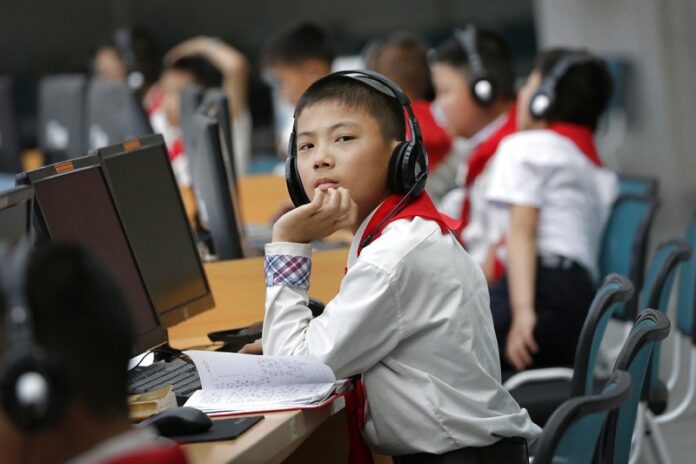
North Korean students use computer terminals at the Sci-Tech Complex in June in Pyongyang, North Korea. Photo: Wong Maye-E / Associated Press

PYONGYANG, North Korea — Ever so cautiously, North Korea is going online.

Doctors can consult via live, online video conferencing, and lectures at prestigious Kim Il Sung University are streamed to faraway factories and agricultural communes. People use online dictionaries and text each other on their smart phones. In the wallets of the privileged are “Jonsong” or “Narae” cards for e-shopping and online banking. Cash registers at major department stores are plugged into the web.

It’s just not the World Wide Web. This is all done on a tightly sealed intranet of the sort a medium-sized company might use for its employees.

The free flow of information is anathema to authoritarian regimes, and with the possible exception of the African dictatorship of Eritrea, North Korea is still the least Internet-friendly country on Earth. Access to the global Internet for most is unimaginable. Hardly anyone has a personal computer or an email address that isn’t shared, and the price for trying to get around the government’s rules can be severe.

But for Kim Jong Un, the country’s first leader to come of age with the Internet, the idea of a more wired North Korea is also attractive. It comes with the potential for great benefits to the nation from information technology – and for new forms of social and political control that promise to be more effective than anything his father and grandfather could have dreamed of. It also allows for the possibility of cyber-attacks on the West.

Pyongyang’s solution is a two-tiered system where the trusted elite can surf the Internet with relative freedom while the masses are kept inside the national intranet, painstakingly sealed off from the outside world, meticulously surveilled and built in no small part on pilfered software.

The regime created, in other words, an online version of North Korea itself.


Surfing The Internet

Rising from Ssuk Island in the Taedong River, which divides Pyongyang east and west, is a building shaped like a colossal atom.

The “knowledge sector” is a key priority for Kim Jong Un, and the sprawling, glassy Sci-Tech Complex, a center for the dissemination of science-related information throughout the country, is one of his signature development projects. It houses North Korea’s biggest e-library, with more than 3,000 terminals where factory workers participate in tele-learning, kids in their bright red scarves watch cartoons and university students do research.

Pak Sung Jin, a 30-year-old postgraduate in chemistry, came to work on an essay. It’s a weekday and the e-library is crowded.

Unlike most North Koreans, Pak has some experience with the Internet, though on a supervised, need-only basis. If Pak needs anything from the Internet, accredited university officials will find it for him. As a scholar and a scientist, Pak says, it’s his patriotic duty to be on top of the most up-to-date research.

He echoes the official condemnation that the Internet has been poisoned by the American imperialists and their stooges. “There ought to be a basic acceptance the Internet should be used peacefully,” he says.

Today, he is relying on the Internet’s North Korean alter ego, the national intranet.

Below a red label that states his black “Ullim” desktop computer was donated by Dear Respected Leader Kim Jong Un, what’s on Pak’s screen is for North Korean eyes only. The IP address, 10.76.1.11, indicates he’s on the walled-off network North Koreans call “Kwangmyong,” which means brightness or light.

Using the “Naenara” browser – the name means “my country” but it’s a modified version of FireFox – Pak visits a restaurant page, his university website, and cooking and online shopping sites.

There are very few actual sites on Kwangmyong. An official at the Sci-Tech Center said they number 168.

They are spread across separate networks for government agencies, schools and libraries, and companies. It’s all domestically run, though government-approved content culled from the Internet can be posted by administrators, primarily for researchers like Pak.

North Korea’s national intranet concept is unique and extreme even when compared with other information-wary countries. China and Cuba, for example, are well known for the extent of control the government exerts over what citizens can see. But that is done primarily through censorship and blocking, not complete separation.

Like most North Korean computers, the desktops at the Sci-Tech Complex run on the “Red Star” operating system, which was developed by the Korea Computer Center from Linux open-source coding.

Red Star 3.0 has the usual widgets: the Naenara browser, email, a calendar and time zone settings, even “kPhoto” (with an icon that looks a lot like iPhoto). Older versions featured a Windows XP user interface but it now it has a Mac design, right down to the “spinning beach ball” wait icon.

Versions of Red Star that have made it out of North Korea and into the hands of foreign coding experts also reveal some rather sinister, and for most users invisible, features.

Any attempt to change its core functions or disable virus checkers results in an automatic reboot cycle. Files downloaded from USBs are watermarked so that authorities can identify and trace criminal or subversive activity, a security measure that takes aim at the spread of unauthorized content from South Korea, China and elsewhere.

Red Star also uses a trace viewer that takes regular screenshots of what is being displayed. The screenshots can’t be deleted or accessed by the typical user but are available for checking if a trained government official decides to take a look.

Outside North Korea, Android phones have a similar trace-viewer feature, noted Will Scott, who taught computer science at the Pyongyang University of Science and Technology in 2013 and is now a doctoral student at the University of Washington. But the Red Star version reflects the regime’s very specific surveillance and violation-busting priorities. It doesn’t collect much more than the Android would; however, it is designed to make getting at that information easier for a local authority who isn’t an expert programmer.

Scott said the North has been “very effective” in using such technology to serve its goals.

Nat Kretchun, deputy director of the Open Technology Fund, said the kinds of censorship and surveillance software in Red Star and the mobile operating systems of phones and tablets reveal a new information control strategy.

Under Kim Jong Un’s predecessors, the flow of information was primarily controlled through a resource-intensive human network – the State Security Ministry’s “thought police,” for example, or Pyongyang’s iconic traffic controllers – that kept tabs on what people were up to. But the advent of the Internet and advances in communication technology poked holes in that strategy, particularly among the better educated, younger and more affluent, the very segment of society that could be most likely to pose a political threat.

So, while maintaining its old school tactics on the ground and enforcing the blackout of the global Internet, North Korean officials have learned to adapt by using the online devices themselves as yet another tool for surveillance.

“In North Korea cell phones and intranet-enabled devices are on balance pro-surveillance and control,” said Kretchun, who has been studying North Korea’s relationship to the Internet for years.


The Azalea Smartphone and The Ryonghung iPad

The most common online experience for North Koreans isn’t on a laptop or desktop. It’s on a smart phone.

A decade ago, only a small cadre of select regime and military officials had access to smart phones. Now, according to the main provider’s most recent financial reports, there are an estimated 2.5-3 million mobile phones in North Korea, a country of 25 million.

The rapid spread of mobile phones is one of the biggest success stories of the Kim Jong Un era. After a couple of false starts, the North’s foray into mobile telecoms began in earnest in 2008 under Kim Jong Il. But it has truly blossomed over the past five years with the introduction of 3G services, thanks in large part to two foreign investors – Loxley Pacific of Thailand and Egypt’s Orascom Telecom Media and Technology.

Like the walled-off intranet, North Korea’s phones deny access to the outside world.

Local phones allow North Koreans to call and text each other, play games, surf the domestic intranet and access some other services. Users have hundreds of ring tones to choose from, and can get weather updates, look words up in dictionaries and snap selfies. But they cannot receive or place calls to numbers outside that network – the rest of the world, in other words.

It’s easy enough for North Koreans to buy phones, though the phones must be registered and approved. A good “Pyongyang” or “Arirang” model smart phone costs from $200 to $400. More basic phones go for much less, especially if the phone is second-hand.

On the second floor of the Pottonggang IT center, a clerk stands behind a glass display cabinet filled with tablets and USB flash drives. Signs on the wall behind her advertise anti-virus software and apps to put on mobile phones, which they can do by Bluetooth at the store. One of the most popular apps is a role playing game based on “Boy General,” a locally created hit anime series. It costs $1.80.

Foreigners in North Korea are relegated to a different network and cannot make calls to, or receive calls from, local numbers. They can buy local phones if they want, but the devices will be stripped of the apps and features that they normally carry and securely coded so that the apps can’t be added on later. Wi-fi use is banned for North Koreans, and tightly restricted and monitored to block surreptitious piggybacking on foreigners’ signals.

North Korea undoubtedly imports and rebrands some of its IT products. But over the past few months, two companies have generated quite a stir among Apple fans with products billed to be wholly domestic: the “Jindallae (Azalea) III” mobile phone and the “Ryonghung iPad.”

The gadgets’ insouciant similarity to Apple products, and the flat-out appropriation of the “iPad” name, isn’t especially surprising. Kim Jong Un likes Apple products – he has been photographed with a MacBook Pro on his private jet, and even had a 21-inch iMac on the desk beside him when state media showed him reviewing a nuclear “U.S. mainland strike plan” four years ago.

It seems North Korean coders have also lifted some ideas from Apple.

Outside experts believe a program similar to what Apple uses in its OS X and iOS is believed to be the basis of the booby-trap that thwarts attempts to disable security functions in Red Star. It’s now a staple on North Korean phones. And by 2014, all mobile phone operating systems had been updated to include the watermarking system to reject apps or media that don’t carry a government signature of approval.

It’s the same mechanism used by Apple to block unauthorized applications from the App Store, but in North Korea’s case serves instead to control access to information.

“The stakes are infinitely higher in North Korea, where communications are monitored and being caught talking about the wrong thing could land you in a political prison camp,” Kretchun noted.


Wired Elites and Cybersoldiers

While blocking off the masses, North Korea allows more Internet access to a small segment of society, including the country’s elite and its cybersoldiers.

To create a snapshot of the online behavior of the elite, U.S.-based cyber threat intelligence company Recorded Future and Team Cymru, a non-profit Internet security group, analyzed activity in IP ranges believed to be used by North Korea from April to July this year. They found that the limited number of North Koreans with access to the Internet are much more active and engaged in the world and with contemporary services and technologies than many outsiders had previously thought, according to Priscilla Moriuchi, Recorded Future’s director of strategic threat development and a former NSA agent.

“North Korean leaders are not disconnected from the world and the consequences of their actions,” she said.

How deep the access goes isn’t known. Recorded Future and Team Cymru officials contacted by The AP refused to comment on details of their dataset, including how many “elite” users were observed and how foreign tourists or residents in the North were excluded.

Even so, it stands to reason at least some members of the North Korean leadership have the access they need to keep up on world events and that specialist agents are allowed to monitor and cull intelligence from the internet.

There is also strong evidence that North Korea allows people involved in hacking or cyber operations the access necessary for a deep engagement in cyberattacks and cybercrime.

According to the FBI, the North’s bigger hacks include the recent WannaCry ransomware attack, which infected hundreds of thousands of computers in May and crippled parts of Britain’s National Health Service. It has been linked to attacks on the Bangladeshi central bank last year and on banks in South Korea going back to 2013. There was also the 2014 hack of Sony Pictures over the release of the “Interview,” a black comedy that graphically portrayed Kim Jong Un being killed. U.S. authorities recently dubbed North Korea’s cyber presence “Hidden Cobra.”

Weaponizing cyberspace is a logical option for the North because it can be done at relatively low cost and at the same time denied, according to a Congressional report submitted in August.

Pyongyang has denied hacking allegations, but the ability to carry out sophisticated cyber operations is a powerful military weapon in the hands of a state. Just as assuredly as North Korea is developing its nuclear and missile capabilities, most experts assume, it’s honing its cyber warfare tool box.

Beau Woods, the deputy director of the Cyber Statecraft Initiative at the Atlantic Council, cautioned of a “preponderance of question marks” regarding North Korea’s cyber skills. But he warned of how potentially devastating a more cyber-active North Korea could be.

Those concerns are turned on their head back at the Sci-Tech Center in Pyongyang.

Pak, the chemist, supports the official line in North Korea that the increasing danger of cyberattacks and slanderous Internet propaganda comes from the U.S. against Pyongyang. The government says that justifies “protective” walls to shield the masses from aggressive propaganda, and virtually requires extensive cybersecurity measures in the name of national defense.

“Don’t you see how severe the anti-Republic slander of our enemies on the Internet is?” Pak said, although the restrictive policies make it difficult for him to carry out his research. “There are a lot of cases where the Internet is being used to raise hostility against us.”

Story: Eric Talmadge

Advertisement

Hot News

LATEST NEWS

Bangkok
overcast clouds
28.3 ° C
28.3 °
28.3 °
77 %
3.5kmh
100 %
Sun
34 °
Mon
33 °
Tue
33 °
Wed
33 °
Thu
33 °