28.2 C
Bangkok
Thursday, August 20, 2026
Home Blog Page 24

Anutin says UN expert heard only Cambodia’s side on border clashes

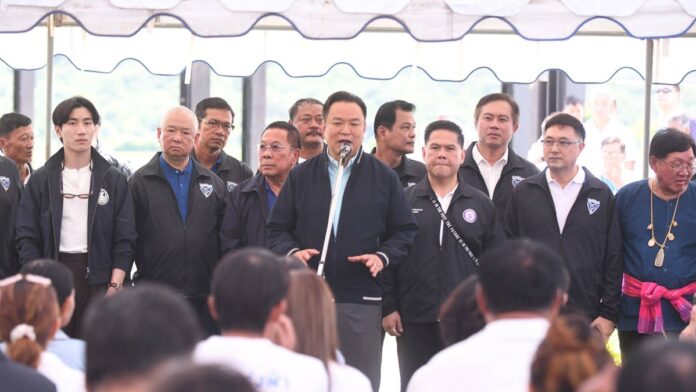
BANGKOK Prime Minister Anutin Charnvirakul on Monday rejected comments by a United Nations human rights expert regarding the recent Thailand-Cambodia border clashes, saying the official had not yet heard Thailand’s side of the story.

Anutin was responding to a statement by Tom Andrews, the UN special rapporteur on the situation of human rights in Cambodia, who said around 650,000 Cambodian people had been displaced following the border clashes.

“The Foreign Ministry will provide details. At this stage, Mr. Andrews’ statement was made without hearing information from the Thai side,” Anutin told reporters on 3 August 2026.

“Thailand does not accept that opinion,” he said, urging the public to wait for clarification from the Foreign Ministry.

The prime minister also addressed Cambodia’s plan to submit a letter to the United Nations on 7 August 2026 seeking recognition of the 2000 Memorandum of Understanding (MOU 43) and a 1:200,000 scale map as a basis for border negotiations with Thailand.

Anutin said Thailand had maintained a clear position on the agreement and that any negotiations must follow established principles.

“We have always adhered to our principles regarding MOU 43. If Cambodia wants to negotiate with Thailand, it must first consider the conditions required for talks to take place,” he said.

“No one can force us, regardless of where they submit complaints. We are confident in our position and do not need to explain ourselves to anyone,” Anutin added.

Regarding maritime boundaries, Anutin said that after the cancellation of the 2001 MOU (MOU 44), discussions would need to proceed through compulsory conciliation under the United Nations Convention on the Law of the Sea (UNCLOS) 1982.

Advertisement

Myanmar says Aung San Suu Kyi met Red Cross representative in Naypyitaw

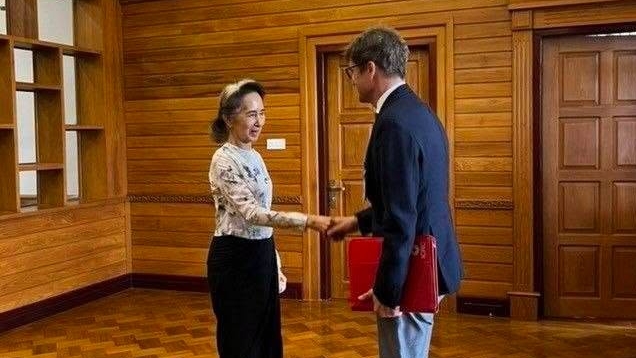
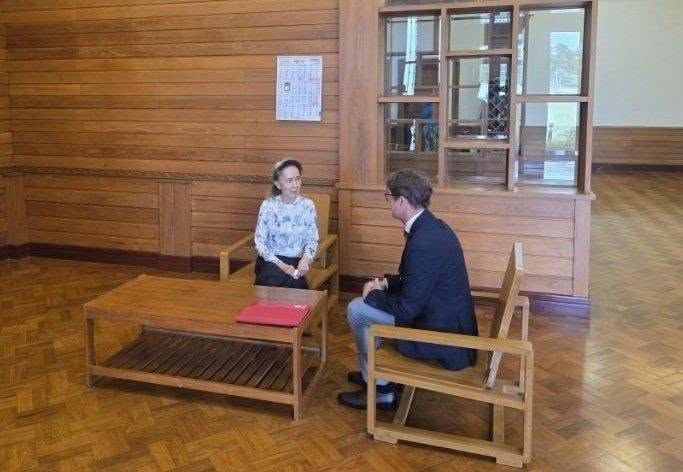
Detained Myanmar leader Aung San Suu Kyi met with a representative of the International Committee of the Red Cross (ICRC) in Naypyitaw on Monday, government spokeswoman Khine Khine Soe said.

Khine Khine Soe confirmed the meeting took place in the Myanmar capital but did not disclose details of the discussion.

The meeting comes amid concerns over the health of the 81-year-old Nobel Peace Prize laureate, who has been detained since the military takeover in February 2021 plunged Myanmar into political turmoil and armed conflict.

762623834 1030253429720379 5091981568367548991 n

The announcement also comes ahead of Myanmar President Min Aung Hlaing’s scheduled visit to Bangkok on 6-7 August.

Suu Kyi, who led Myanmar’s civilian government before the coup, has remained in detention while serving multiple prison sentences handed down by military-controlled courts. Her supporters and rights groups have raised concerns over her health and treatment in custody.

Advertisement

Chiang Mai Buddhist office denies bribery allegations

CHIANG MAI — 2 August 2026, The Chiang Mai Provincial Office of Buddhism has denied allegations that monks in the province were being asked to pay money to retain important ecclesiastical positions.

The office issued a statement on Sunday in response to media reports alleging that money had been demanded from monks seeking to protect their positions within Chiang Mai’s monastic administration.

According to the statement, the regional ecclesiastical chiefs representing both Thailand’s Mahanikaya and Dhammayut Buddhist orders confirmed that no such incident or issue had occurred in Chiang Mai.

The office urged anyone possessing relevant information, evidence or other leads to submit them directly to its director so the allegations could be properly investigated and all parties treated fairly.

Information may be submitted to the Chiang Mai Provincial Office of Buddhism at Chiang Mai Provincial Hall on Chotana Road in Chang Phueak subdistrict, Mueang Chiang Mai district, or by calling 081-951-4434.

Advertisement

Bangkok residents seek help after attack by Norwegian man

BANGKOK — 2 August 2026, Two Bangkok residents have sought assistance from the Sai Mai Must Survive organisation after alleging that a Norwegian man assaulted them, damaged a mobile phone and threatened to kill them near Bang Na intersection.

The incident allegedly occurred at about 08:30 on Saturday on the skywalk above Bang Na intersection, near Sanphawut Road in Bang Na district.

The complainants, identified by the pseudonyms T, 29, and Y, 28, approached the organisation on Sunday to request legal assistance and raise concerns for their safety.

T said he had been walking across the skywalk on his usual route to work when he heard a foreign man shouting behind him.

He alleged that the man suddenly kicked him in the right arm, causing his mobile phone to fall from his hand.

According to T, the man picked up the phone, removed its case and threw it forcefully onto the ground, cracking the screen.

T said the man then began behaving aggressively towards other people in the area. He claimed the man appeared to be under the influence of a substance, although this has not been independently confirmed.

T ran towards the road to seek help and encountered Y, a close friend, nearby.

Y said she approached the man and asked why he had attacked her friend. She alleged that he responded by saying he was exercising and that, had he intended to hurt Ton, he would have cut his throat with a knife.

She also claimed that he threatened her in English, saying: “I will kill you.”

1785659955833

When Y attempted to record the incident on her phone, the man allegedly ran towards her and knocked her to the ground.

The pair said they fled towards a group of motorcycle taxi drivers as the man chased them. He reportedly stopped pursuing them after seeing the group and crossed the road, where he allegedly caused further disturbances at nearby shops.

Both complainants said they had never met the man before and had no previous dispute with him.

T said he regularly used the skywalk to travel to work and now feared encountering the man again. He has temporarily begun taking a motorcycle taxi instead of walking.

The suspect was later identified by the complainants as a Norwegian national known as Erling.

Ekkaphop Luangprasert, founder of the Sai Mai Must Survive Facebook page, said the organisation had contacted Bang Na Police Station and asked investigators to locate the man.

He urged authorities to act quickly, expressing concern that the suspect could leave Thailand before legal proceedings were completed.

Police had not publicly announced any arrest or charges as of Sunday afternoon.

3795057 0

Advertisement

Thailand names 282-athlete squad for Asian Para Games, targets 24 gold medals

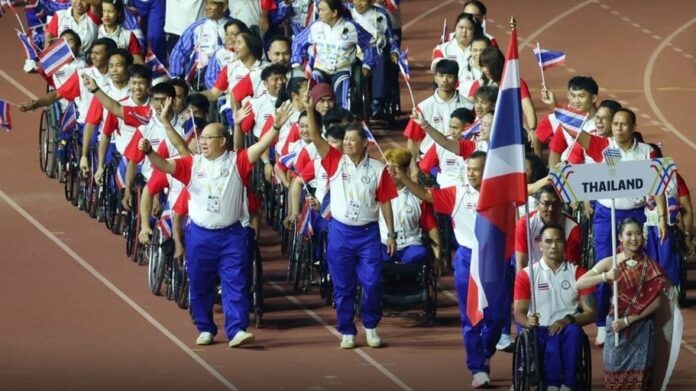
Thailand will send 282 athletes to compete at the 5th Asian Para Games in Japan this October, with officials setting a target of 24 gold medals.

The Games will be held in Nagoya and Aichi Prefecture from 18-24 October 2026.

Sports Authority of Thailand (SAT) Governor Kongsak Yodmanee said the SAT, the Paralympic Committee of Thailand and four national disability sports associations have finalized preparations for the Games.

Thailand will compete in 18 sports, including archery, athletics, badminton, boccia, cycling, football, goalball, judo, powerlifting, shooting, sitting volleyball, swimming, table tennis, taekwondo, wheelchair basketball, wheelchair fencing, wheelchair rugby and wheelchair tennis.

“Our para athletes are well prepared in terms of training camps, athlete support and sports science,” Kongsak said.

Thailand’s gold medal target of 24 was jointly set by the participating sports associations.

The largest contribution is expected from the Sports Association for the Disabled of Thailand, which is targeting 17 gold medals, including six from wheelchair racing and five from table tennis.

The Cerebral Palsy Sports Association is aiming for five golds, mainly in boccia, while the Thailand Association of the Blind is targeting two gold medals in athletics.

Kongsak said athletes were selected based on international qualification standards and world rankings, expressing confidence that the Thai team could achieve its target.

At the 2022 Asian Para Games, held in Hangzhou in 2023 due to the COVID-19 pandemic, Thailand finished seventh in the medal table with 27 gold, 26 silver and 55 bronze medals. Host China topped the standings with 214 gold medals.

Advertisement

Thailand pushes back on UN expert’s Cambodia conflict statement

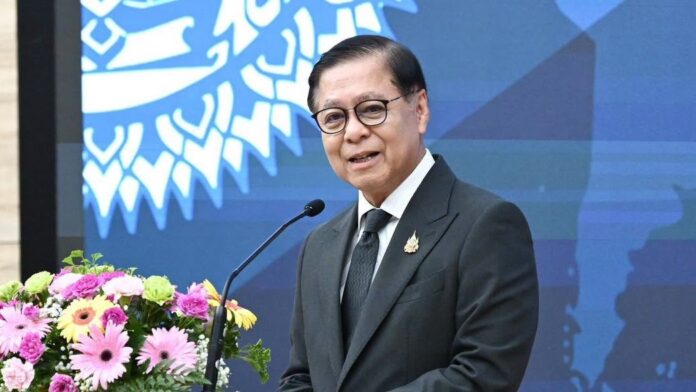
Sihasak Phuangketkeow , Deputy Prime Minister and Minister of Foreign Affairs of the Kingdom of Thailand

Thailand’s Ministry of Foreign Affairs has responded to a recent statement by the UN Special Rapporteur on human rights in Cambodia, saying it wished to clarify several points related to the Thailand-Cambodia conflict.

In a statement released after Tom Andrews concluded his visit to Cambodia, the ministry said Thailand did not initiate the conflict and claimed the situation resulted from “indiscriminate attacks” by Cambodia targeting civilian areas in Thailand.

Andrews, the UN Special Rapporteur on the situation of human rights in Cambodia, highlighted the humanitarian impact of the conflict in his end-of-mission statement on 31 July, including displacement, the return of Cambodian migrant workers from Thailand and economic disruption caused by border closures.

Regarding the UN expert’s reference to around 650,000 internally displaced persons (IDPs) in Cambodia, Thailand said the figure included some Cambodians living in areas where Thailand had opened temporary shelters as part of humanitarian assistance in the late 1970s.

The ministry said those individuals remained in the areas despite improvements in their situation and repeated requests from Thailand for their return to Cambodia. Thailand argued that they should not be classified as internally displaced persons.

“Thailand is of the view that the right of return should not be exploited for political purposes or propaganda,” the statement said, while stressing that Cambodia has a responsibility to provide protection and assistance to citizens affected by internal displacement.

On the return of Cambodian migrant workers, the ministry disputed Andrews’ figure of 900,000 people, saying the number included both legally employed workers and those who had entered or worked in Thailand illegally.

Thailand said Cambodian workers returned voluntarily following calls from the Cambodian government and rejected any suggestion that it had a policy of expelling migrant workers.

“The Thai Government has always stated its commitment to ensuring the safety of Cambodian migrant workers in Thailand and has never had a policy to expel these migrant workers from the country,” the statement said.

The ministry also urged UN human rights mechanisms to uphold independence, impartiality and objectivity, saying assessments should take into account information from credible and verifiable sources as well as perspectives from all sides.

Thailand reaffirmed its commitment to human rights and international humanitarian law, saying it has consistently cooperated with UN human rights mechanisms and provided relevant information on the situation.

The statement said Thailand remains ready to rebuild relations with Cambodia but stressed that both sides must create conditions for dialogue by reducing tensions, avoiding provocative actions and implementing the Joint Statement issued on 27 December 2025.

Thailand said border-related issues should continue to be addressed through peaceful means and existing bilateral mechanisms.

Advertisement

UN Special Rapporteur exposes “living hell” inside Cambodia scam centres

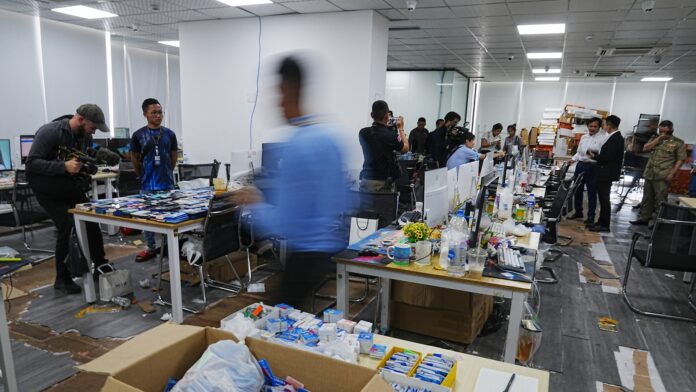
Journalists take a tour of a scam center in Phnom Penh, Cambodia, Wednesday, March 11, 2026. (AP Photo/Heng Sinith)

Victims of Cambodia’s cyber scam networks have described a “living hell” of violence, torture and forced labour inside compounds where trafficked workers are held captive, according to the UN Special Rapporteur on human rights in Cambodia.

In an end-of-mission statement released on 31 July, Tom Andrews said the expansion of transnational cybercrime networks has become one of Cambodia’s biggest human rights challenges, with thousands of people allegedly forced to operate online scams generating billions of dollars in illegal profits.

“Scam compounds often resemble prisons,” Andrews said, describing facilities with iron-barred windows, high fences topped with razor wire and heavily guarded entrances.

He said trafficked workers have faced torture, solitary confinement, food deprivation and other forms of punishment designed to force them to meet scam targets. Reports of sexual violence and killings have also emerged.

During his first official mission to Cambodia, Andrews said he spoke with trafficking victims who were lured to the country with promises of legitimate jobs in administration or customer service.

Instead, they discovered they had been taken to scam compounds where they were detained and forced to work.

One victim described a “living hell” of violence and torture after asking to return home, Andrews said. Some victims were eventually freed when guards abandoned compounds, but many were left without money or passports and struggled to survive after escaping.

Hundreds of thousands affected

The UN expert said the exact scale of Cambodia’s cyber scam industry remains difficult to determine, but credible reports suggest 100,000 or more people have been trafficked to Cambodia and forced to participate in scam operations.

Cambodian officials told Andrews that around 300,000 people involved in scam operations have voluntarily left the country.

Many scam compounds are located inside casinos, hotels or resorts, he said.

Crackdown continues, but challenges remain

Andrews acknowledged that the Cambodian government has taken steps to combat online scams, including through the Commission for Combating Online Scams led by Prime Minister Hun Manet.

Authorities have reportedly closed more than 600 scam locations, launched criminal proceedings against around 3,000 alleged operators, suspended or revoked licences of 29 casinos, and arrested some major scam network leaders.

However, Andrews warned that scam operations continue to exist, with some groups relocating or changing their methods.

He also raised concerns about corruption, saying some scam operators may receive advance warnings before raids.

Victims left without support

Andrews said another major concern is the treatment of people released from scam compounds.

While Cambodian officials said they are screening released individuals to identify trafficking victims and providing assistance, Andrews said some officials acknowledged the country lacks sufficient capacity to properly assess and support survivors.

Human rights experts and aid workers told him that many victims have instead been treated mainly as illegal migrants and returned to their home countries without adequate support.

“There are potentially thousands of trafficking victims currently in desperate situations in Cambodia,” Andrews said, warning that many are receiving little or no assistance from governments or humanitarian organisations.

He urged Cambodia to strengthen efforts to dismantle scam networks and ensure that powerful individuals allegedly connected to the industry are held accountable.

Advertisement

Deepening green cooperation: Building a shared ecological future for China and Thailand

Editor’s note: This article was written by Meng Dong, a special commentator for CGTN and an observer on international affairs.

China and Thailand are close friendly neighbors and important partners working hand in hand to advance green development and pursue a sustainable future. In recent years, guided by the principles of mutual benefit, win-win results and collaborative governance, the two countries have steadily deepened practical cooperation in ecological environment and climate change. Focusing on key areas including environmental governance, ecological conservation, low-carbon transition and people-to-people bond, they have advanced policy alignment, technology sharing, capacity building and industrial collaboration, delivering fruitful outcomes. These efforts have injected strong green impetus into the building of a more stable, prosperous and sustainable China-Thailand community with a shared future, and contributed wisdom and strength to ecological governance and climate resilience across Southeast Asia.

Two-way Exchange of Governance Experience Forges Consensus on Environmental and Climate Cooperation

Building on their respective needs in ecological governance and climate action, China and Thailand have deepened experience sharing in environmental and climate governance practices. The environmental authorities of the two countries have established regular, professional channels for personnel exchanges and mutual learning under bilateral and multilateral frameworks. Thailand has actively shared its practices in the Bio-Circular-Green (BCG) economy model, while China has systematically introduced the development path of the Beautiful China initiative. Through in-depth interactions, the two sides have built consensus, learned from each other’s strengths, and fostered a sound pattern of coordinated progress.

Targeted Environmental Governance Delivers Regional Cooperation Benchmarks

To address the shared challenge of haze pollution in Southeast Asia, China and Thailand have joined forces to advance technology empowerment and experience sharing. The two sides jointly launched the Bangkok Clean Air project and built an atmospheric environment super observation station, which provides data support for the formulation and implementation of pollution control policies in Bangkok, and helps the city establish a more scientific air quality monitoring, assessment and early warning system. Meanwhile, the two countries co-hosted the International Symposium on Haze Governance in Northern Thailand, where participants shared practical experience on core topics such as agricultural straw burning control and agricultural waste recycling, jointly advancing regional atmospheric governance.

Deep Integration of Low-Carbon Industries Powers High-Quality Green Transition

Aligned with carbon peaking and carbon neutrality goals, China and Thailand have deepened cooperation in clean energy, low-carbon technologies, green finance and green value chains, expanding ecological cooperation from environmental governance to industrial green upgrading and fostering a sustainable green economic growth model. Chinese enterprises have played an active role in Thailand’s photovoltaic sector, supporting floating PV projects at the Sirindhorn Dam and Srinagarind Dam. The 180 MW floating PV facility at Srinagarind Dam, once fully operational, will cut carbon dioxide emissions by roughly 180,000 tonnes annually, helping optimize Thailand’s clean energy mix. In addition, seven Chinese automakers have set up manufacturing bases in Thailand with cumulative investment exceeding 3 billion US dollars, and Chinese new energy firms have built EV battery plants in the country, supporting the upgrading of Thailand’s new energy industrial chain.

Coordinated Land and Marine Conservation Reinforces Regional Biodiversity Shield

Putting ecological protection first, China and Thailand have carried out all-round joint conservation efforts covering coastal ecological restoration, marine ecological monitoring and biodiversity protection. The two countries have established the Joint Laboratory on Climate and Marine Ecosystems and deployed Thailand’s first in-situ real-time video monitoring system for coral reefs. The system has successfully captured footage of critically endangered marine species including hawksbill turtles, providing continuous data support for regional coral reef protection and marine biodiversity monitoring. The two sides have also jointly built coastal land-sea integrated monitoring stations and deployed self-developed monitoring equipment, providing solid technical support for coastal vulnerability management and marine ecological restoration.

Integrated Livelihood and Ecological Progress Boosts Sustainable Community Resilience

China-Thailand ecological cooperation always puts people at the center and delivers tangible benefits to the public, with a focus on strengthening community-level capacity to address climate risks and adapt to climate change. Under the joint climate-resilient community demonstration project, 800 Thai households have received household emergency supply kits to prepare for extreme weather events such as rainstorms and floods. Complementary climate adaptation training has also been provided to improve communities’ practical capabilities in emergency evacuation and climate risk self-rescue. This people-centered, warm-hearted cooperation has consolidated the popular foundation of China-Thailand friendship.

In July 2026, Thai Prime Minister Anutin Charnvirakul paid an official visit to China. The two governments issued the Joint Statement towards a  China-Thailand Community with a Shared Prosperous Future, under which both sides will strengthen cooperation in climate change, low-carbon economy, marine resources and environment, air and water pollution governance, and clean energy technologies, to deliver more practical outcomes in the building of the China-Thailand community with a shared future over the next 50 years.

To Deepen Regional Collaboration in Key Areas. The two countries will focus on priority areas including air pollution control, watershed ecological protection and climate change adaptation, and continue to deepen technical exchanges and experience sharing. As current co-chairs of the Lancang-Mekong Cooperation (LMC) mechanism, China and Thailand will work closely with other member states to jointly address regional environmental and climate challenges, build a green economic development belt in the Lancang-Mekong basin, and strengthen the green driving force of “LMC 2.0”. The two countries will also work together to advance the ASEAN-China Beautiful Homeland initiative, elevate the ASEAN-China Comprehensive Strategic Partnership, and build an even closer ASEAN-China community with a shared future.

To Strengthen Convention Implementation and Green Transition Support. Centering on international conventions on climate action, biodiversity conservation, ozone layer protection, persistent organic pollutants (POPs) and mercury pollution prevention and control, the two sides will deepen tripartite collaboration among governments, research institutions and industries. They will continue to explore innovative models of green finance enabling ecological governance, and support the green and low-carbon transformation of industries and infrastructure in both countries.

To Upgrade Green Value Chain and Low-Carbon Industrial Cooperation. The two countries will deepen green economic cooperation under the framework of the China-ASEAN Free Trade Area (CAFTA) 3.0 upgrade protocol, promote the R&D and application of low-carbon technologies, and share good practices in low-carbon development to facilitate green and sustainable trade connectivity. They will jointly implement the Initiative on International Economic and Trade Cooperation Framework for Digital Economy and Green Development, advance digital and green transformation, and jointly foster a resilient and dynamic green economic growth model.

To Build a Long-term Knowledge Sharing and Capacity Building System. The two sides will continue to pool quality practices and technical achievements of China and Thailand in green development, climate governance and ecological protection, and carry out policy exchanges, talent training and joint research for developing countries at large, jointly contributing wisdom to building an inclusive, resilient and sustainable green future for the region and the world.

Connected by mountains and rivers, China and Thailand walk side by side on the path of green development. Looking ahead, the two countries will take ecology as a bond and win-win progress as the direction, continue to deepen practical green cooperation, jointly safeguard regional ecological security, advance green and low-carbon transition, and share the fruits of sustainable development. These efforts will further enrich the green foundation of the China-Thailand community with a shared future, and contribute to global ecological governance and climate action.


Advertisement

Thai tourist’s graceful curtsy to King’s Guard goes viral with over 4 million views

A Thai tourist has won widespread praise online after a video of her performing a graceful curtsy while visiting the King’s Guard in London attracted more than 4 million views.
The clip was shared by the official Facebook page London Kings Guards, which captioned the video: “Thai Tourist Show HUGE RESPECT for the King’s Guard.”

In the video, the woman, dressed in an elegant traditional Thai outfit, performs a graceful curtsy as she passes the King’s Guard.

The clip quickly went viral, amassing more than 4 million views and drawing praise from both Thai and international viewers.

Many commenters applauded the tourist for showcasing Thai grace and etiquette, saying her gesture reflected the elegance of Thai culture and left a positive impression on audiences around the world.

Advertisement

Farmer killed after tractor overturns into Ayutthaya canal

PHRA NAKHON SI AYUTTHAYA — 1 August 2026, A 61-year-old farmer was killed after his tractor overturned into an irrigation canal and trapped him underwater in Bang Ban district on Saturday.

Police were alerted to the accident at about 14:00 along an irrigation canal road in Moo 1, Kop Chao subdistrict.

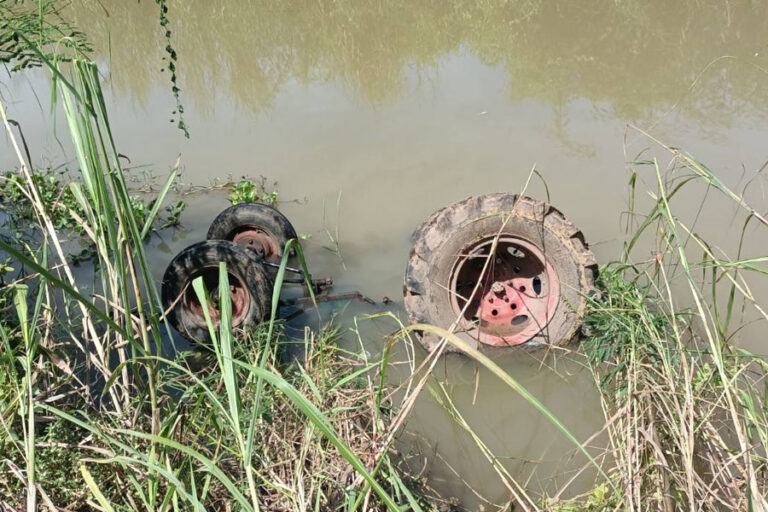
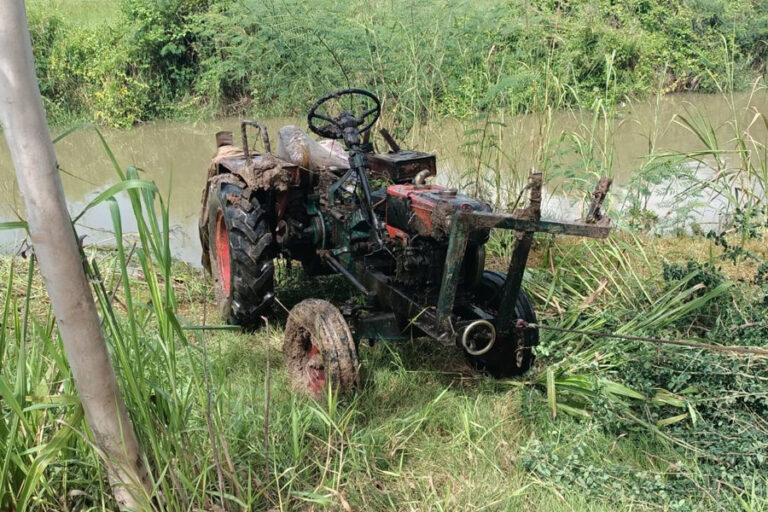
Officers and rescue workers arriving at the scene found the tractor overturned in the canal, with its wheels pointing upwards and about half of the vehicle submerged.

1 web 1

The driver, identified as 61-year-old Samran Charitkhuan, was found trapped beneath the tractor. A crane was brought in to lift the vehicle from the water before rescuers recovered his body.

Relatives and family members gathered at the scene as the recovery operation was carried out.

Neighbour Sangwan Buaprasert, 61, said Samran would normally leave home early in the morning to work in his rice fields and return home for lunch.

When he failed to return at midday, his family became concerned and began searching for him.

Samran’s wife later found the tractor submerged in the canal and alerted relatives and neighbours. One relative entered the water to investigate and discovered that Samran was trapped beneath the vehicle, but he could not be rescued in time.

Police said it was not immediately clear when the accident occurred.

Investigators initially believe Samran was driving down from the canal-side road towards a rice field when the tractor lost control on a bend, overturned and fell into the canal.

He was apparently pinned beneath the vehicle and drowned.

Police documented the scene and said further inquiries would be conducted to establish the exact cause of the accident.

The body was taken to Bang Ban Hospital for a post-mortem examination before being released to the family for religious rites.

3 web 2

Advertisement

Hot News

LATEST NEWS

Bangkok
light rain
28.2 ° C
28.9 °
27.9 °
78 %
3.2kmh
100 %
Thu
28 °
Fri
29 °
Sat
28 °
Sun
31 °
Mon
32 °