SoftBank store in Osaka, Japan. Photo: Wikimedia Commons
TOKYO — Japanese telecommunications, internet and solar company SoftBank Group Corp. is buying U.S. investment company Fortress Investment Group for USD$3.3 billion.
The deal was announced by both sides Wednesday. New York-based Fortress, which manages global investments, said its senior professionals will stay to keep up its fund performance.
Tokyo-based SoftBank has been aggressive in global acquisitions. Chief Executive Masayoshi Son was recently seen with President Donald Trump, who praised his promise to invest $50 billion in U.S. startups to create 50,000 jobs.
“Fortress’ excellent track record speaks for itself, and we look forward to benefiting from its leadership, broad-based expertise and world-class investment platform,” Son said in a statement.
He said the acquisition will immediately contribute to his strategy for growth.
SoftBank owns the U.S. wireless company Sprint Corp. and Britain’s ARM Holdings. ARM is known as an innovator in the “internet of things,” and in technology used in smartphones.
It has set up a $25 billion private fund for technology investments that it says may grow to $100 billion.
Fortress co-chairmen Pete Briger and Wes Edens praised Son as “visionary,” noting the companies had much in common, and said the deal will benefit shareholders.
“We join a company with tremendous scale and resources, and a culture completely aligned with our focus on performance, service and innovation,” they said in a joint statement.
SoftBank, the first carrier to offer the iPhone in Japan, also sells the Pepper human-shaped companion robot. The company, founded in 1981, has within its investment empire financial technology and ride-booking services.
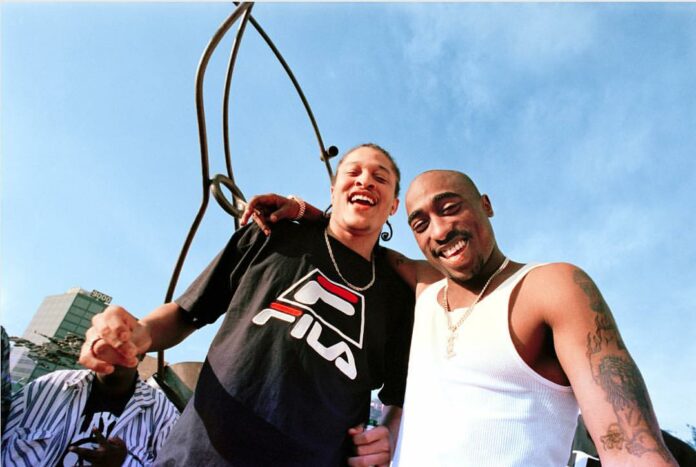
Yaki Kadafi and Tupac in 1995 in Los Angeles. Photo: Chi Modu / Facebook
BANGKOK — See Tupac alive and smiling in a look at the golden era of hip-hop through iconic and rare photographs showing this month.
Nigerian-born, New Jersey-based photographer Chi Modu will show his snaps of the hip-hop legends from the early ‘90s from the late Tupac, Notorious B.I.G and Snoop Dogg at A Portrait of Hip Hop.
The opening reception starts at 6pm today with Chi Modu there to talk and sign.
Admission is free. The exhibition runs until the end of March at Uncon Bangkok. The multi-brand clothing store is located between sois Thonglor 15 and 17.
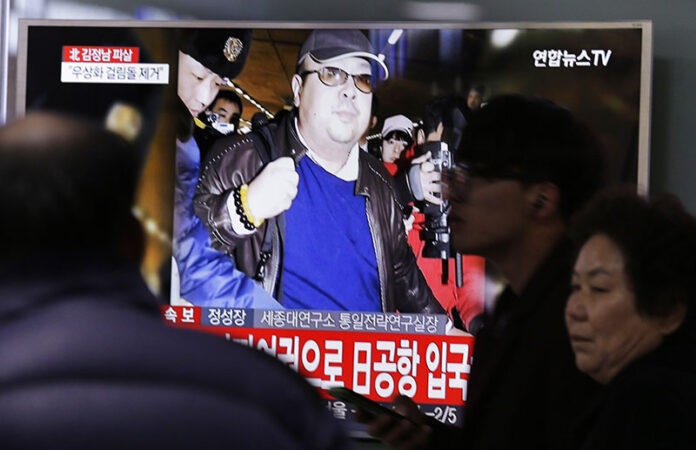
A TV screen at the Seoul Railway Station in February shows a picture of Kim Jong Nam, the older brother of North Korean leader Kim Jong Un. Photo: Ahn Young-joon / Associated Press
KUALA LUMPUR — A North Korean man died after suddenly becoming ill at a Malaysian airport, officials said Tuesday, amid reports that the half brother of North Korea’s leader was assassinated.
District police chief Abdul Aziz Ali said he could not confirm South Korean media reports that the man was Kim Jong Nam, the older half brother of leader Kim Jong Un.
He said the man was waiting for a flight to Macau at the Kuala Lumpur airport on Monday when he fell ill and died en route to a hospital.
Multiple South Korean media reports, citing unnamed sources, said Kim Jong Nam was killed at the airport by two women. TV Chosun, citing unidentified “multiple government sources,” said the women were believed to be North Korean agents and used poison needles to kill Kim. It said they fled in a taxi and were being sought by Malaysian police.
Selangor state police chief Abu Samah Mat said the man went to the airport clinic complaining that he had been sprayed by some liquid and was in pain, and died on the way to Putrajaya Hospital. He said the man held a North Korean passport but “we do not know his identity.”
Kim Jong Nam reportedly fell out of favor in North Korea after being caught trying to enter Japan on a false passport in 2001, saying he wanted to visit Tokyo Disneyland. He is believed to be in his mid-40s and has reportedly been living in recent years in Macau, Singapore and Malaysia.
Kim Jong Nam and Kim Jong Un have the same father, late dictator Kim Jong Il, but have different mothers.
A member of the staff at the emergency ward at Putrajaya Hospital said the deceased North Korean was born in 1970 and was identified only as Kim. The staff person, who wasn’t authorized to talk to the media and spoke on condition of anonymity, said the man’s body was now in the forensic department for a post-mortem examination.
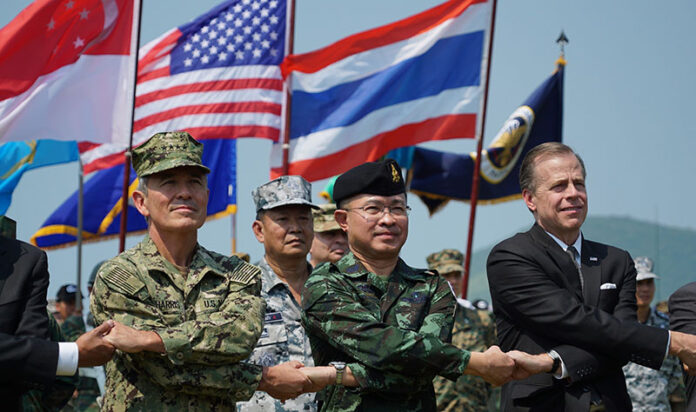
Head of U.S. Pacific Command, Adm. Harry B. Harris, at left, Thai Chief of Defense Forces Gen. Surapong Suwana-Adth, center, and US Ambassador Glyn T. Davies, right, pose for a photo at the opening ceremonies of the Cobra Gold Thai-US military exercise on Tuesday. Photo: Dake Kang / Associated Press
SATTAHIP — The highest-ranking U.S. official to visit Thailand since a 2014 coup urged the country to restore democracy while reaffirming the partnership between the two nations, saying Tuesday that America needs “a strong and stable ally” in Southeast Asia.
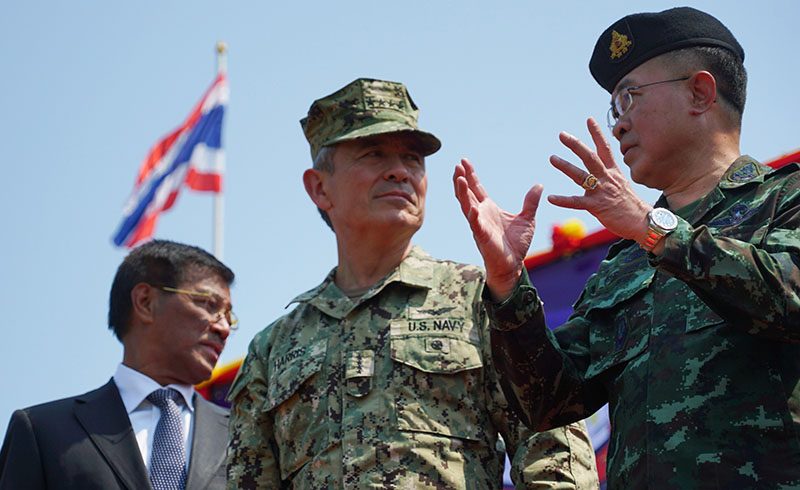
Adm. Harry B. Harris, the head of the U.S. Pacific Command, spoke at the start of the annual Cobra Gold Thai-U.S. joint military exercises, the largest in the Asia-Pacific region.
“We look forward to Thailand’s reemergence as a flourishing democracy because we need Thailand as a strong and stable ally,” Harris said. “We need Thailand to get back to being the regional and global leader that it always has been.”
Thai Chief of Defense Forces Gen. Surapong Suwana-Adth, at right, speaks to the head of U.S. Pacific Command, Adm. Harry B. Harris, middle, at the opening ceremonies of the Cobra Gold Thai-US military exercise on Tuesday. Photo: Dake Kang / Associated Press
But even as he asked Thai leaders to step up, he made it clear the U.S. remains committed to the countries’ military relationship. Harris’ visit, planned under the Obama administration, is widely seen as a signal that the U.S. will continue to back Thailand.
“Folks, our alliance is a big deal,” Harris said. “Nations don’t enter security treaty alliances lightly. It means we’re in it for the long haul.”
Twenty-nine countries, including China, India and Malaysia, are participating in or observing the exercises. Some 3,600 American troops are attending this year, hundreds more than last year.
Cobra Gold comes at an uncertain time for Thailand’s relations with the U.S., China and Russia.
Thailand, for decades a stalwart American ally, saw relations with the U.S. cool after its military overthrew a democratically elected government in 2014. In response to the coup, the U.S. froze millions in military aid.
In the past few years, the Thai army has turned to Chinese and Russian tanks and helicopters to replace outdated American equipment. It also has been ramping up joint military exercises with China, and last year the army announced it would buy three Chinese submarines in a deal worth about $1 billion.
China frightens many in Southeast Asia with expansionist policies in the South China Sea. However, China’s claims do not clash with Thai territorial waters, paving the way for friendly relations.
“It’s like a balancing scale,” said Panitan Wattanayagorn, a professor at Bangkok’s Chulalongkorn University and an adviser to Thailand’s defense minister. “Thailand is a small country between superpowers, and it has to balance to make sure the scale doesn’t tip too much in one way.”
With an eye on China, the U.S. has been trying to draw Thailand closer again recently, despite political differences.
“Washington is sorely trying to show the Thai junta and Southeast Asian governments that it prioritizes formal relations with them,” said Paul Chambers, research director at the Institute of Southeast Asian Affairs. “In other words, geopolitics is more important than liberal values, regardless of human rights violations.”
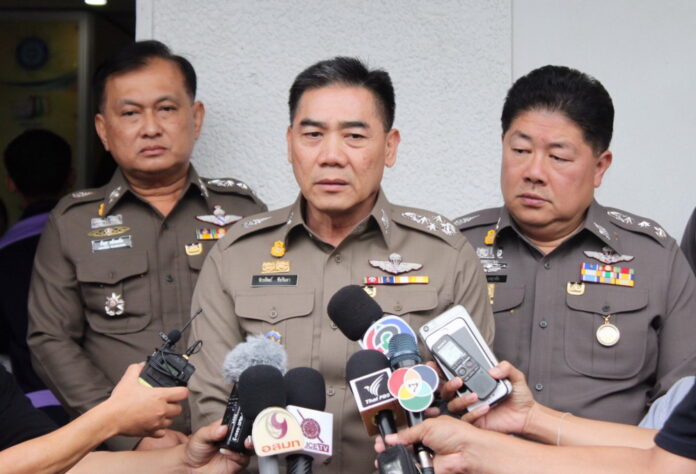
National police chief Chakthip Chaijinda speaks to reporters on Jan.10 in Bangkok.
BANGKOK — Police on Friday filed a libel lawsuit against speakers of an academic forum for criticizing their performance.
The suit was filed at Lumpini Police Station, four days after national police chief Chakthip Chaijinda ordered the police’s legal affairs department to look into the Jan. 26 forum, which he deemed defamatory toward police nationwide, said Bangkok police chief Sanit Mahathavorn Tuesday.
“The suit relied on the consideration of the Official of Legal Affairs and Litigation,” Police Col. Worawit Yanchinda, who was appointed to file the case, said Tuesday. He said he did not know which part of the speech was specifically identified as being problematic.
The suit addressed two out of four speakers in the forum, Sangsit Piriyaransan from Rangsit University and Police Col. Wirut Sirisawasdibutr, former member of the National Reform Council.
A recent case in which massive fraud was suspected to have taken place during entrance examinations led the public to heavily question police integrity. That inspired the Anti-Corruption Organization of Thailand to hold a discussion on the topic called “What’s the point of having Thai Police?” at Queen Sirikit National Convention Center.
The forum addressed a host of problems involving Thai police such as corruption, bribery and involvement in crime and drug trafficking.
The other two speakers were Police Capt. Vichien Tansirikongkhon from Burapha University and a media professional Pattanadech Asasappakij.
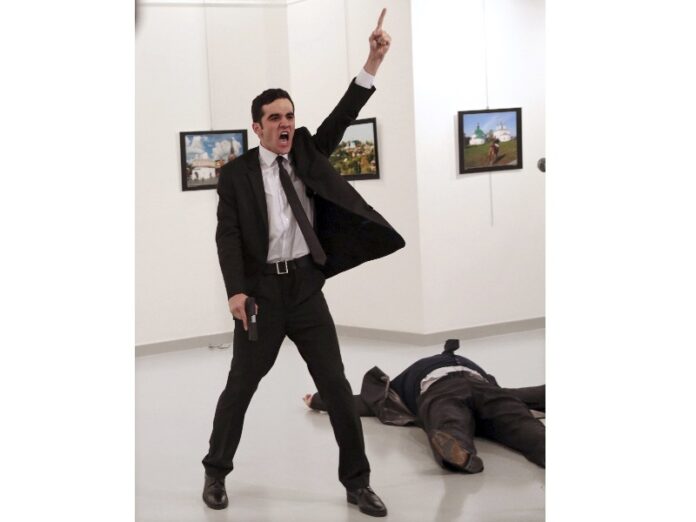
Mevlut Mert Altintas shouts after shooting Andrei Karlov, right, the Russian ambassador to Turkey, last December at an art gallery in Ankara, Turkey. Photo: Burhan Ozbilici / Associated Press
AMSTERDAM — As an off-duty policeman who had just assassinated Russia’s ambassador to Turkey stood in front of Burhan Ozbilici waving a gun, the veteran Associated Press photographer summoned the composure to stand his ground and keep taking pictures.
“I immediately decided to do my job because I could be wounded, maybe die, but at least I have to represent good journalism,” Ozbilici said Monday as his image of gunman Mevlut Mert Altintas looming over the body of Ambassador Andrei Karlov was named World Press Photo of the Year.
Ozbilici’s image of a political murder’s immediate aftermath was part of a series titled “An Assassination in Turkey” that also won the Spot News – Stories category in the prestigious awards. The photos were captured in the moments before and after Altintas drew a handgun and shot Karlov at an Ankara gallery on Dec. 19.
“Burhan’s striking image was the result of skill and experience, composure under extreme pressure and the dedication and sense of mission that mark AP journalists worldwide,” AP Executive Editor Sally Buzbee said. “We are enormously proud of his accomplishment.”
In the winning photo, the assassin, wearing a suit and tie, stands defiantly, pistol in his right hand pointed at the ground and with his left hand raised, his index finger pointing upward. His mouth is wide open as he shouts angrily. The ambassador’s body lies on the floor just behind Altintas.
Pacing near the body of his victim, the gunman appeared to condemn Russia’s military role in Syria, shouting: “Don’t forget Aleppo! Don’t forget Syria!” Altintas, who was a policeman, was later killed in a shootout with Turkish police.
Ozbilici said his professional instincts kicked in despite the shocking scene unfolding in front of him.
Explaining how he remained collected enough to keep taking pictures, he said: “I understood that this was big history, it was history, (a) very, very important incident.”
The winning image announced Monday was among 80,408 photos submitted to the prestigious competition by 5,034 photographers from 125 countries. The World Press jury awarded prizes in eight categories to 45 photographers from 25 countries.
Jury chairman Stuart Franklin called Ozbilici’s image “an incredibly hard-hitting news photograph” and part of a strong series documenting the assassination.
“I think Burhan was incredibly courageous and had extraordinary composure in being able to sort of calm himself down in the middle of the fray and take the commanding pictures that he took,” Franklin said. “I think as a spot news story it was terrific.”
But Franklin said after the presentation that he did not vote for Ozbilici’s photo to win the overall prize, despite the quality of the image and the bravery involved in capturing it.
He said he had a philosophical issue with recognizing as the world’s top photograph a picture showing the victim and shooter in the same frame because he thinks it gives the shooter the publicity he sought by carrying out the shooting as he did.
Buzbee said the AP considers Ozbilici’s image a rare, unscripted insight into one of the world’s most intractable problems, that of violent extremism, and thus the opposite of propaganda, which the news agency refrains from publishing.
Denis Paquin, AP’s acting director of photography, said Ozbilici’s actions that day were typical of his professionalism.
“Burhan would tell you he was just doing his job. His humble professionalism, combined with incredible courage, enabled him to capture these unforgettable images,” Paquin said.
Ozbilici said that while he kept his camera trained on the gunman, he felt as if journalists around the world were saying, “Hey man, you are representing all of us. Don’t go away! Stand! We are supporting you, we are praying for you.”
The eclectic selection of winners in the photo competition’s eight categories highlighted the dominant news topics of the last year – including conflict in Syria and Iraq, Europe’s migrant crisis, the death of longtime Cuban leader Fidel Castro and the Olympic Games in Rio.
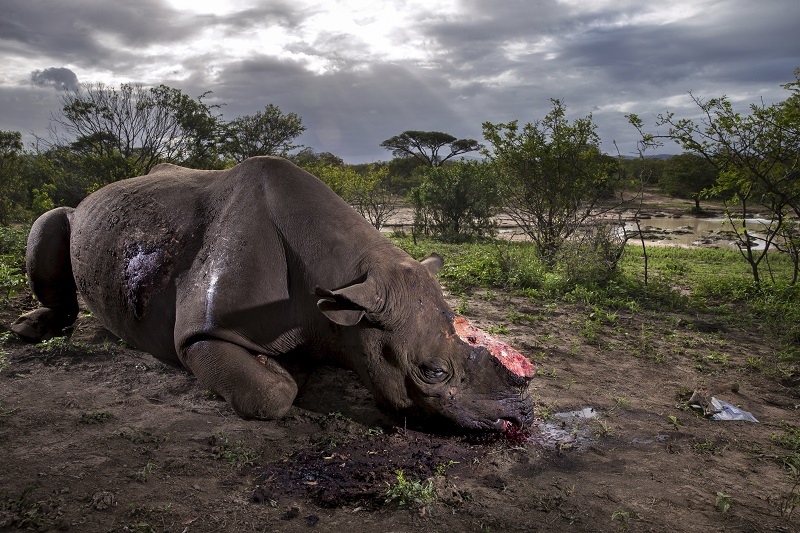
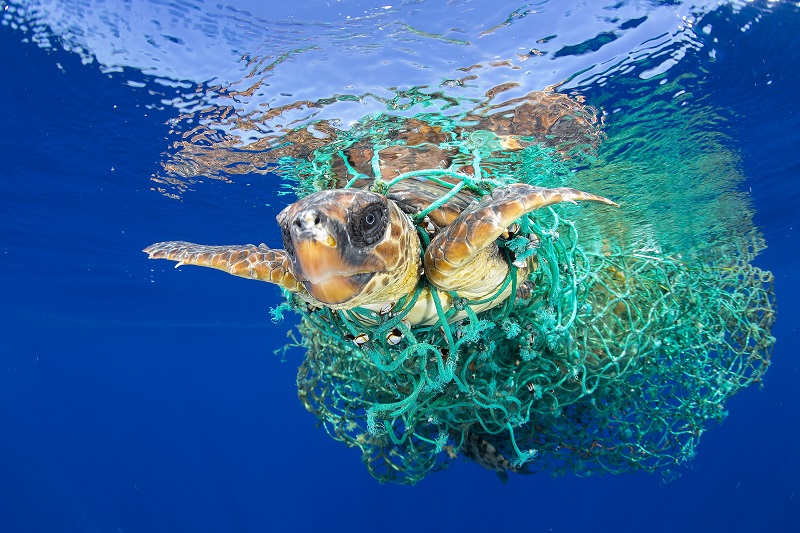
Winning nature photos included images depicting humanity’s devastating effect on wildlife, such as a gruesome photograph of a poached rhino with its horn hacked off and another showing a turtle swimming while enmeshed in a green fishing net.
“Rhino Wars” by photographer Brent Stirton, Getty Images for National Geographic Magazine, which won first prize in the Nature, Stories, category of the World Press Photo contest shows a dead Black Rhino Bull, poached for its horns less than 8 hours earlier at Hluhluwe Umfolozi Game Reserve, South Africa. Photo: Brent Stirton / Associated Press“Caretta Caretta Trapped” by photographer Francis Perez, which won first prize in the Nature, Singles, category of the World Press Photo contest shows a sea turtle entangled in a fishing net swims off the coast of Tenerife, Canary Islands, Spain. Photo: Francis Perez / Associated Press
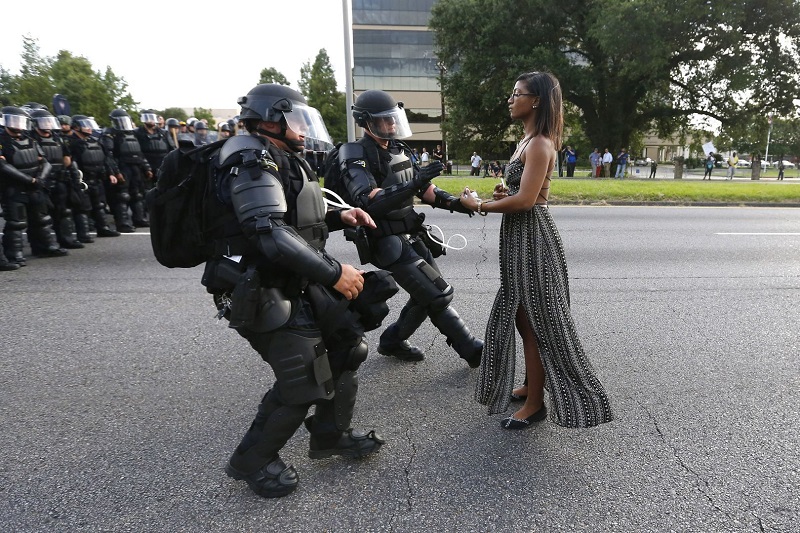
Jonathan Bachman of the United States, a photographer for Thomson Reuters, won the Contemporary Issues – Singles category with an image of Ieshia Evans being detained in Baton Rouge during a July 9 protest over the death of Alton Sterling, a black man killed by police. Evans stands bolt upright in a flowing dress as two police officers in body armor and helmets move to take her into custody.
“Taking A Stand In Baton Rouge” by photographer Jonathan Bachman for Thomson Reuters which won first prize in the Contemporary Issues, Singles, category of the World Press Photo contest shows lone activist, Leshia Evans, standing her ground while offering her hands for arrest as she is charged by riot police during a protest against police brutality outside the Baton Rouge Police Department in Louisiana, U.S.A. Photo: Jonathan Bachman / Associated Press
Franklin called Bachman’s image “an unforgettable sort of comment on passive resistance. It’s really a lovely photograph. You’ll never forget it.”
AP photographer Vadim Ghirda, based in Romania, won second prize in the Contemporary Issues – Singles category with an emotionally charged photo of migrants crossing a river as they attempt to reach Macedonia from Greece.
Another AP photographer, Felipe Dana, came third in the Spot News – Singles category for his image of an explosion in Mosul, Iraq. And Santi Palacios won second in the General News – Singles category for a photo that ran on the AP wire of two Nigerian children who said their mother died on a rescue boat in the Mediterranean Sea of the coat of Libya.
For the first time, the World Press Photo awards for still images were announced at the same time as those for Digital Storytelling in the categories of Innovative Storytelling, Immersive Storytelling, Long Form and Short Form.
The digital award winners covered issues that included modern relationships, the rise of walls and fences around the world, and the story of an American boxer from Flint, Michigan. Among media whose work was recognized were The New York Times, The Washington Post and smaller independent producers.
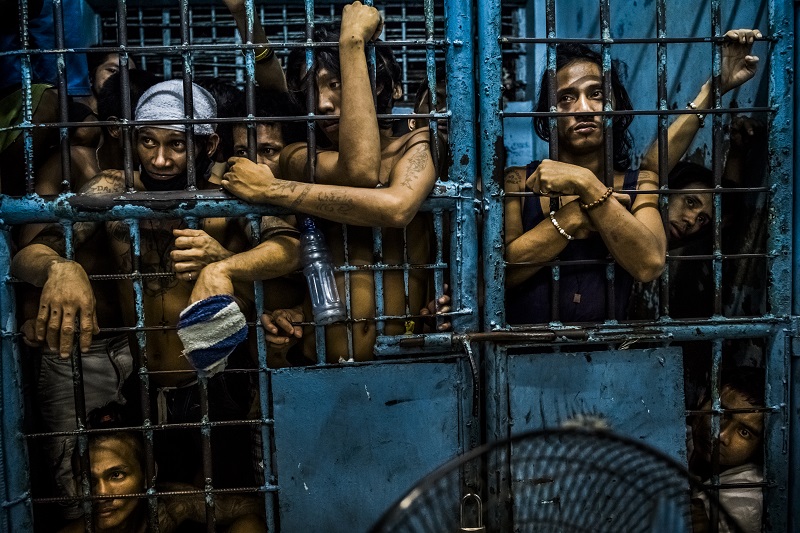
“They Are Slaughtering Us Like Animals” by photographer Daniel Berehulak for The New York Times, which won first prize in the General News, Stories, category of the World Press Photo contest shows inmates watching as drug suspects are processed inside a police station in Manila, Philippines. Photo: Daniel Berehulak / Associated Press
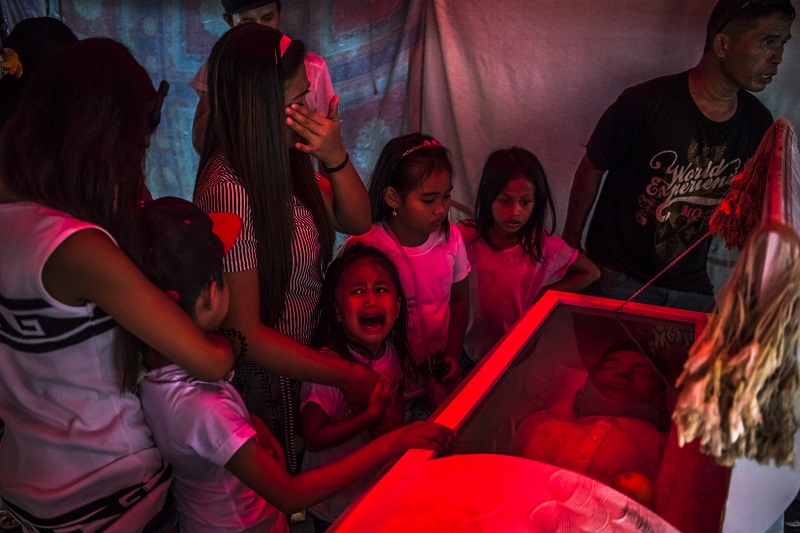
“They Are Slaughtering Us Like Animals” by photographer Daniel Berehulak for The New York Times, which won first prize in the General News, Stories, category of the World Press Photo contest shows six-year-old Jimji crying in anguish as she screams “papa” before funeral parlor workers move the body of her father, Jimboy Bolasa, from the wake at the start of the funeral to Navotas Cemetery in Manila, Philippines. Photo: Daniel Berehulak / Associated Press
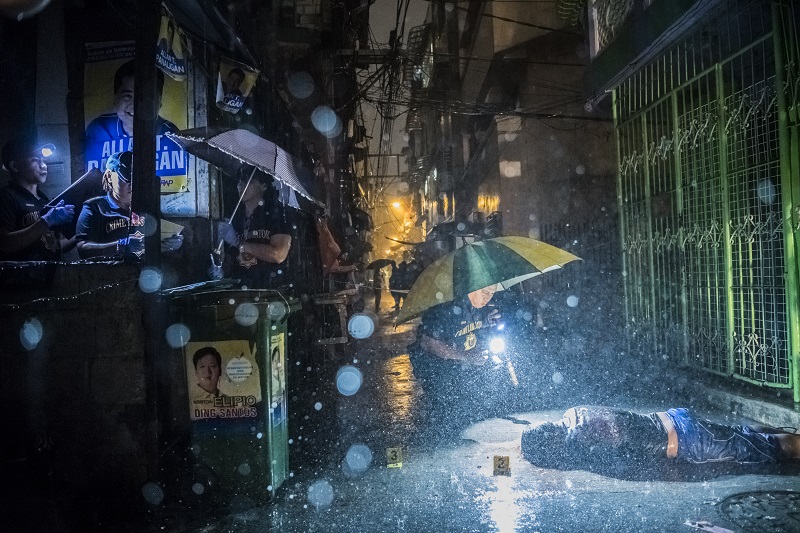
“They Are Slaughtering Us Like Animals” by photographer Daniel Berehulak for The New York Times, which won first prize in the General News, Stories, category of the World Press Photo contest shows heavy rain pouring as police operatives investigate inside an alley where a victim, Romeo Joel Torres Fontanilla, 37, was killed by two unidentified gunmen riding motorcycles in the early morning in Manila, Philippines. Photo: Daniel Berehulak / Associated Press
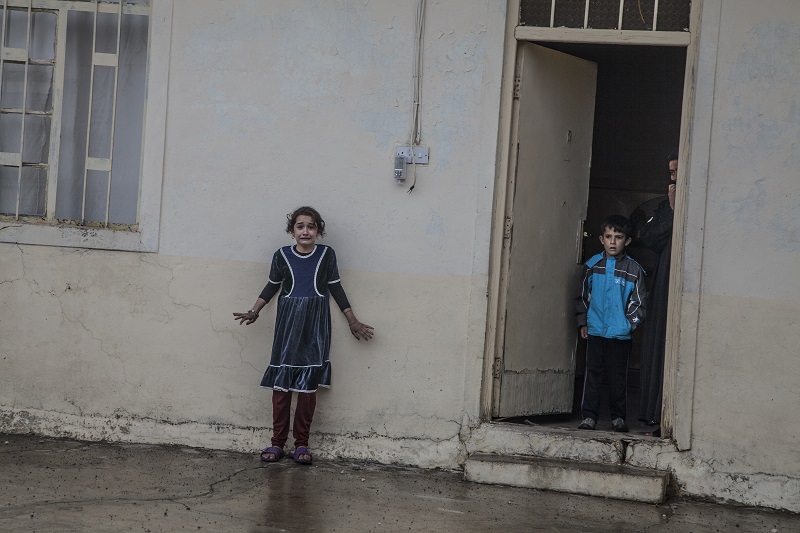
“Offensive On Mosul” by photographer Laurent Van der Stockt, Getty Reportage for Le Monde, which won first prize in the General News, Singles, category of the World Press Photo contest shows Iraqi Special Operations Forces searching houses of Gogjali, an eastern district of Mosul, Iraq, looking for Islamic State members, equipment, and evidence. Photo: Laurent Van der Stockt / Associated Press
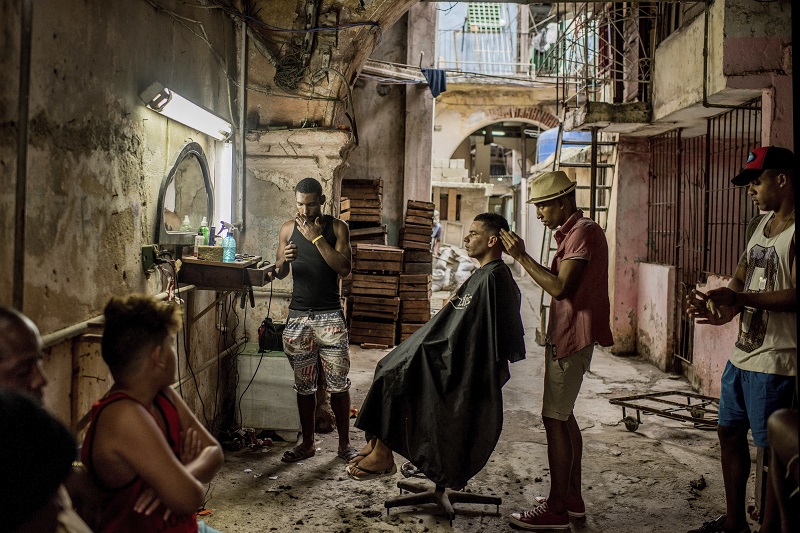
“Cuba On The Edge Of Change” by photographer Tomas Munita for The New York Times, which won first prize in the Daily Life, Stories, category of the World Press Photo contest shows a weathered barber shop in Old Havana, Cuba. Photo: Tomas Munita / Associated Press
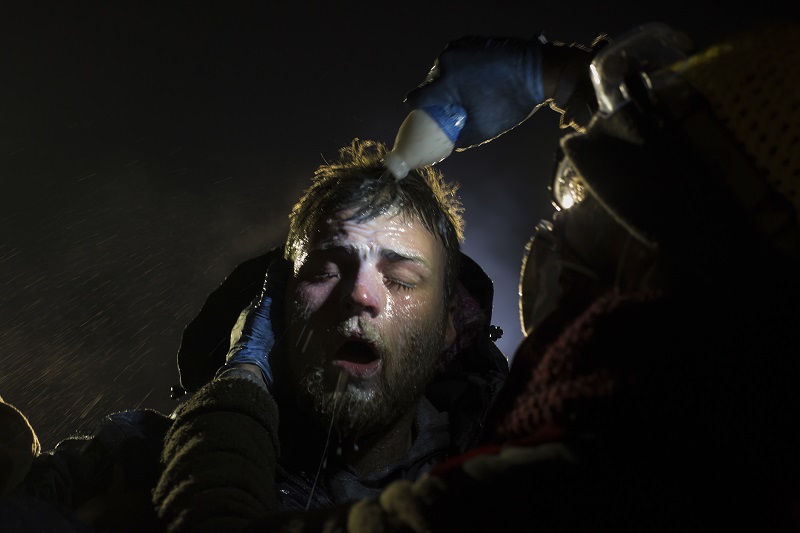
“Standing Rock” by photographer Amber Bracken which won first prize in the Contemporary Issues, Stories, category of the World Press Photo contest shows a man who is treated with milk of magnesia after being pepper sprayed by police at the blockade on highway 1806. Photo: Amber Bracken / Associated Press
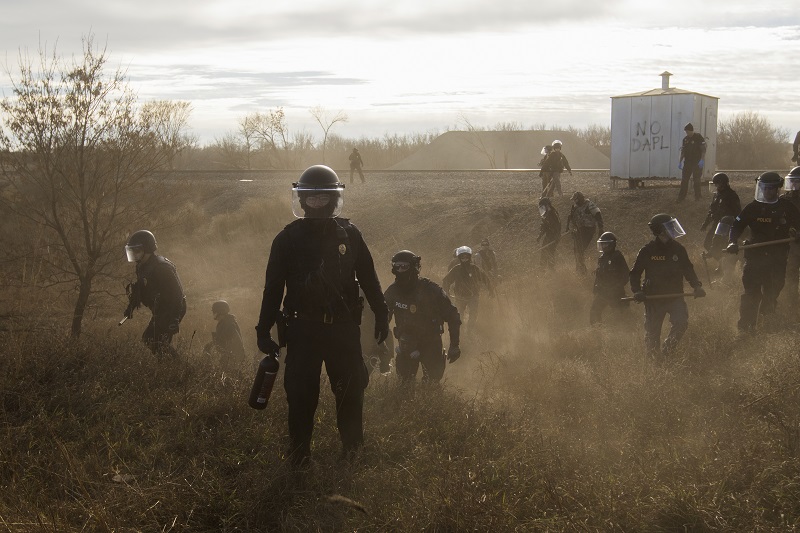
“Standing Rock” by photographer Amber Bracken which won first prize in the Contemporary Issues, Stories, category of the World Press Photo contest shows Morton County Sheriffs, riot police clear marchers from a secondary road outside a Dakota Access Pipeline (DAPL) worker camp using rubber bullets, pepper spray, tasers and arrests. Photo: Amber Bracken / Associated Press
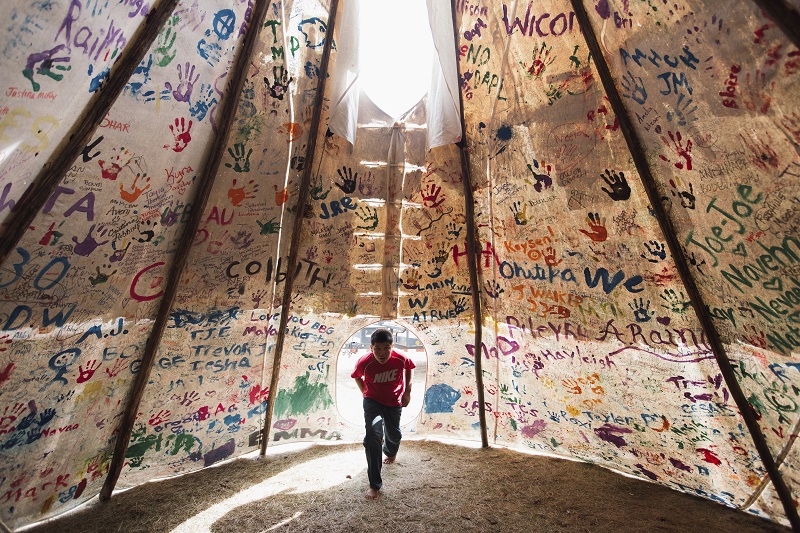
“Standing Rock” by photographer Amber Bracken which won first prize in the Contemporary Issues, Stories, category of the World Press Photo contest shows Jesse Jaso, 12, as he enters the Unity Teepee, at the Sacred Stone Camp. Photo: Amber Bracken / Associated Press
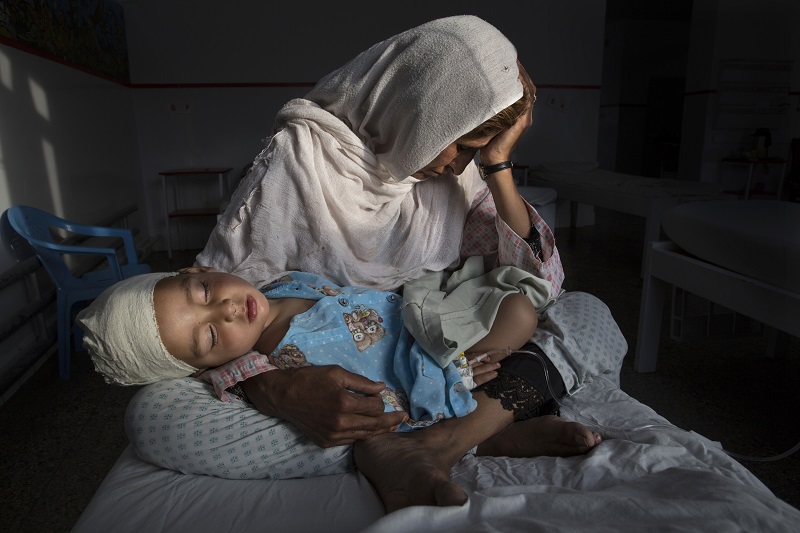
“The Silent Victims Of A Forgotten War” by photographer Paula Bronstein for Time Lightbox / Pulitzer Center For Crisis Reporting, which won first prize in the Daily Life, Singles, category of the World Press Photo contest shows Najiba at the hospital holding her two-year-old nephew Shabir who was injured from a bomb blast in Kabul, Afghanistan. Paula Bronstein / Associated Press
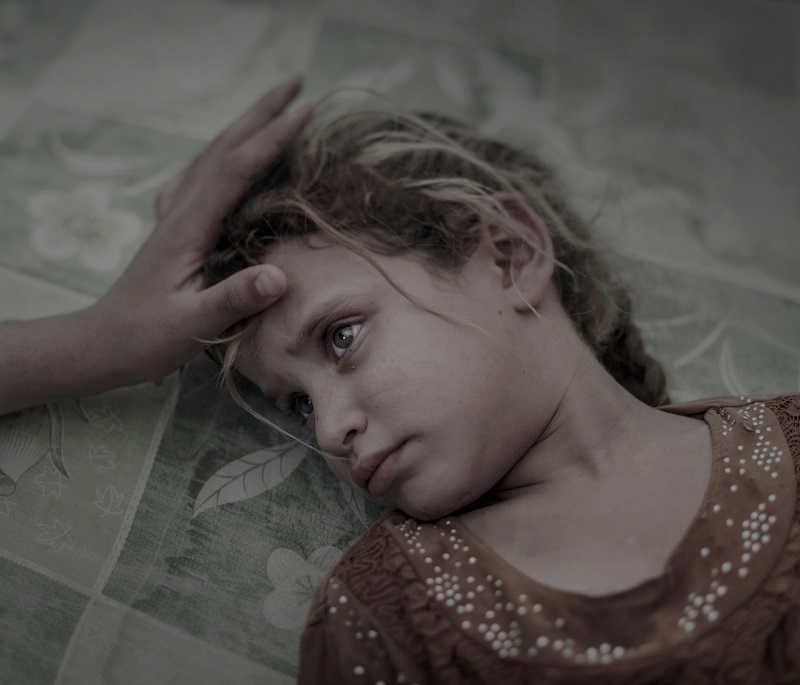
“What ISIS Left Behind” by photographer Magnus Wennman, Aftonbladet, which won first prize in the People, Singles, category of the World Press Photo contest shows five-year-old Maha laying on a dirty mattress in the overcrowded transit center in Debaga refugee camp. Photo: Magnus Wennman / Associated Press
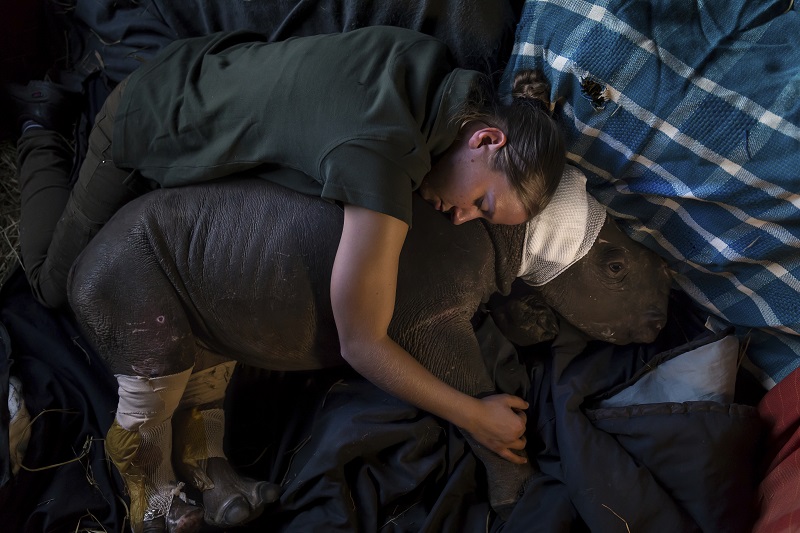
“Rhino Wars” by photographer Brent Stirton, Getty Images for National Geographic Magazine, which won first prize in the Nature, Stories, category of the World Press Photo contest shows Care for Wild Africa, a donor run organization that specializes in caring for wounded animals in Nelspruit, South Africa. Photo: Brent Stirton / Associated Press
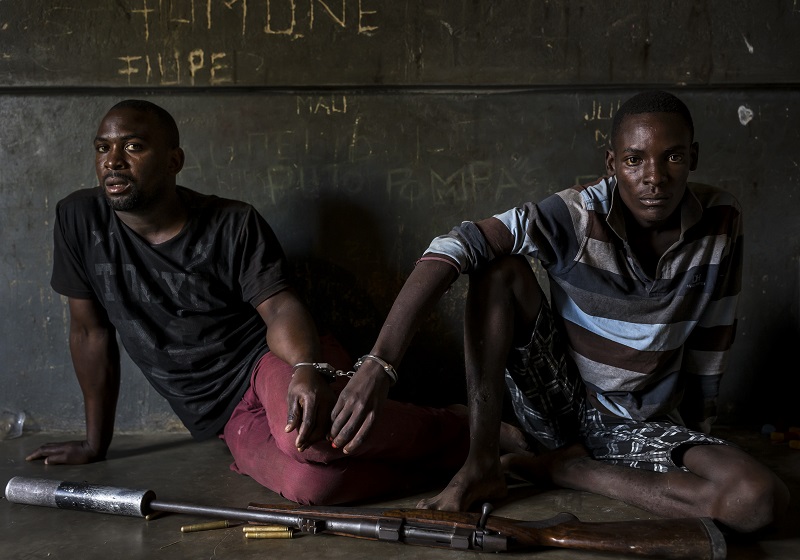
“Rhino Wars” by photographer Brent Stirton, Getty Images for National Geographic Magazine, which won first prize in the Nature, Stories, category of the World Press Photo contest shows Two rhino poachers, one 19, the other 28 years old, apprehended by an anti-poaching team in Mozambique close to Kruger National Park border, South Africa. Photo: Brent Stirton / Associated Press
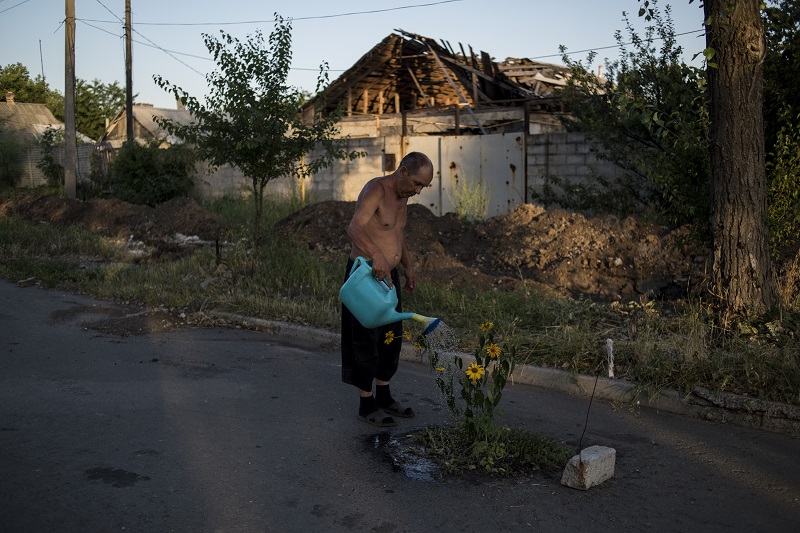
“Black Days Of Ukraine” by photographer Valery Melnikov for Rossia Segodnya, which won first prize in the Long-Term Projects category of the World Press Photo contest shows a man watering flowers on a street in the destroyed village of Spartak, Ukraine. Photo: Valery Melnikov / Associated Press
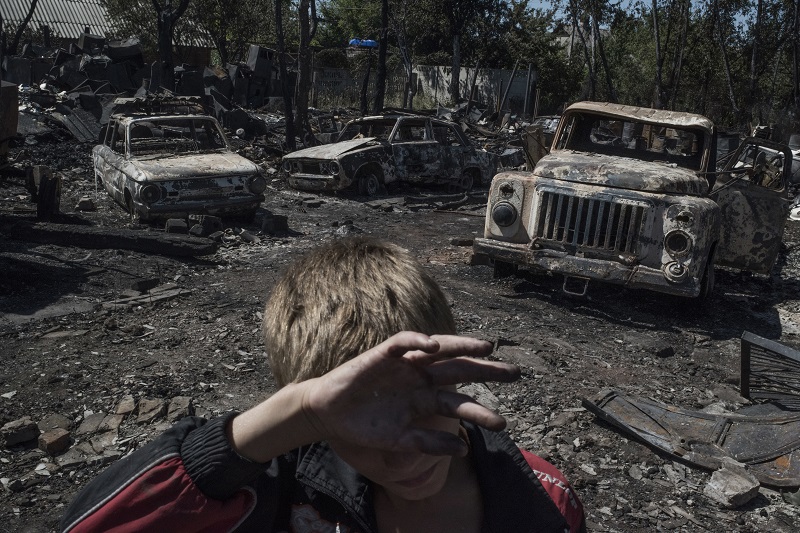
“Black Days Of Ukraine” by photographer Valery Melnikov for Rossia Segodnya, which won first prize in the Long-Term Projects category of the World Press Photo contest shows cars burned by gunfire. Photo: Valery Melnikov / Associated Press
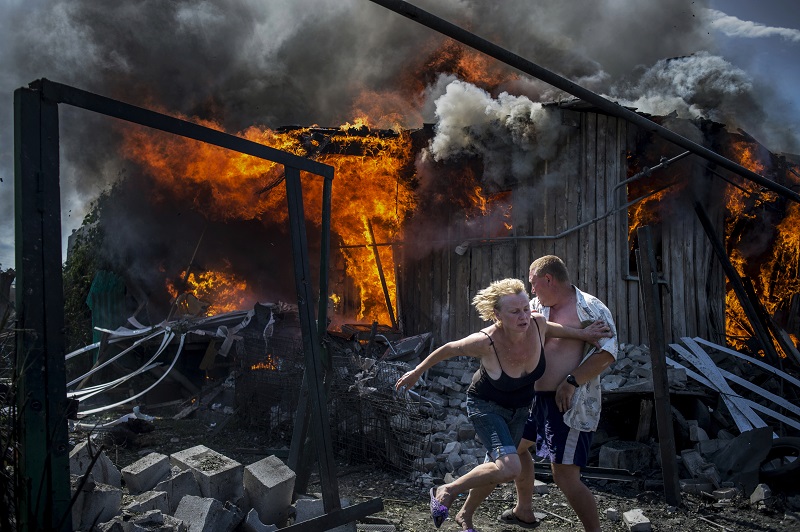
“Black Days Of Ukraine” by photographer Valery Melnikov for Rossia Segodnya, which won first prize in the Long-Term Projects category of the World Press Photo contest shows civilians escaping from a fire at a house destroyed by an air attack in the Luhanskaya village. Photo: Valery Melnikov / Associated Press
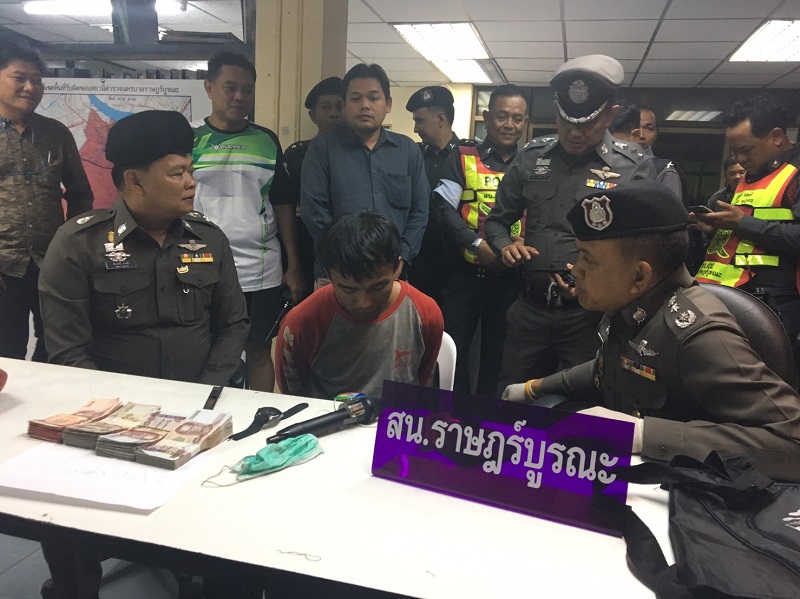
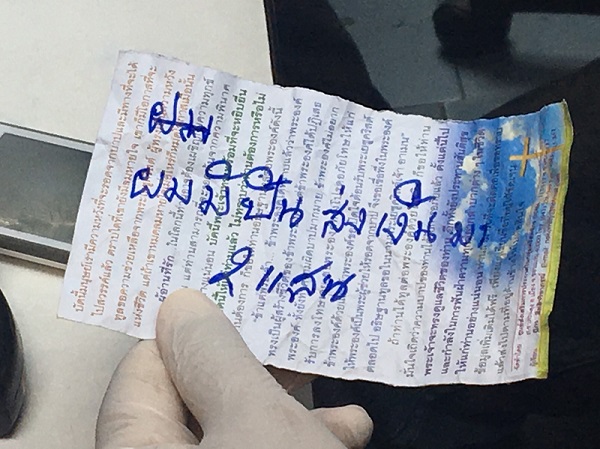
Footage captured Monday night through a security camera shows the moment in which a Laotian man by the name of Chan handed over a note to a bank teller demanding she hand over 200,00 baht in Bangkok’s Rat Burana District.
BANGKOK — A 26-year-old Laotian man was arrested Monday evening after he robbed almost 300,000 baht from an unguarded bank using a toy gun.
The man, identified only as Chan, went to a Kasikornbank branch in Rat Burana – which lacked a security guard – and passed a paper note to a lady behind the counter. The note read “I have a gun, hand me 200,000 baht.” Shocked the teller ran away.
Succeeding in scaring bank staff, Chan fled with 286,000 baht.
“He learned it from some movie scenes he watched on YouTube,” Capt.Yossawat Rattanasri of Ratburana Police Station said Tuesday.
Police were alerted after the robbery took place. Chan then took a taxi to go to Soi Suksawat 27. The taxi driver, Phongsathorn Boontem, 38, told police he first refused to take Chan after spotting a gun hidden under his shirt.
The Laotian man then pulled out a cutter and forced Phongsathorn to drive. The taxi driver said Chan gave him 100 baht when they arrived at the destination.
Police chased the taxi Chan took to Soi Suksawat 27. In an effort to evade capture, Chan ran into Soi 29 and tried to climb up the roof of a house. His attempt failed and he fell to the ground. Locals took this opportunity to capture him and then handed him over to the police, who later arrived at the scene.
Chan was charged with robbery and with carrying a knife in public.
Chan was questioned by police Monday at Ratburana Police Station in Bangkok.The paper Chan handed to bank teller Monday. It said ““I have a gun, hand me 200,000 baht.”
SAN FRANCISCO — Naked women are back in Playboy magazine, ending a year-old ban on the nudity that made the magazine famous.
Playboy celebrated the reversal on Twitter and Facebook with the hashtag #NakedIsNormal.
The about-face came Monday with the release of Playboy’s March-April issue. The 63-year-old magazine had banished naked women from its print edition because it felt the content had become passe in an era of online porn that is just a click away on personal computers and smartphones.
The decision to show less skin was made under the regime of Playboy Enterprises CEO Scott Flanders, who left the Los Angeles company last May to run eHealth Inc., a health insurance exchange.
Cooper Hefner, Playboy’s chief creative officer and the son of magazine founder Hugh Hefner, called the nudity ban a mistake Monday in a post on his Twitter account.
“Nudity was never the problem because nudity isn’t a problem,” Cooper Hefner wrote. “Today we’re taking our identity back and reclaiming who we are.”
Playboy declined further comment.
Magazine expert Samir Husni said the prohibition on nudity probably alienated far more readers than it attracted.
“Playboy and the idea of non-nudity is sort of an oxymoron,” said Husni, a journalism professor at the University of Mississippi. “They are always going to have the stereotype as a nude magazine.”
Now that nudity is back in its fold, Playboy is still going to have to figure out how to appeal to a younger audience that has grown up in a digitally driven age where nudity has become commonplace.
“The people who grew up with Playboy magazine are starting to fade away so they will have to figure out what the millennial generation wants in the 21st century if they are going to survive,” Husni said.
That challenge may fall largely on Cooper Hefner, 25, who replaced his 90-year-old father as Playboy’s chief creative officer last summer.
Playboy re-embraced nudity with an issue boasting several pictorial spreads of naked women, including Miss March, Elizabeth Elam, and Miss April, Nina Daniele. The issue also features an interview with actress Scarlett Johansson and pieces on actor Adam Scott and CNN host Van Jones for those who say they only read Playboy for the articles.
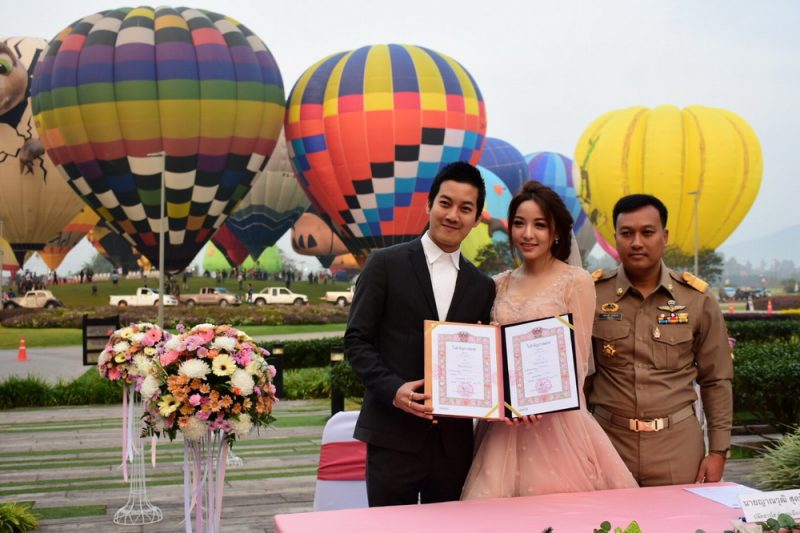
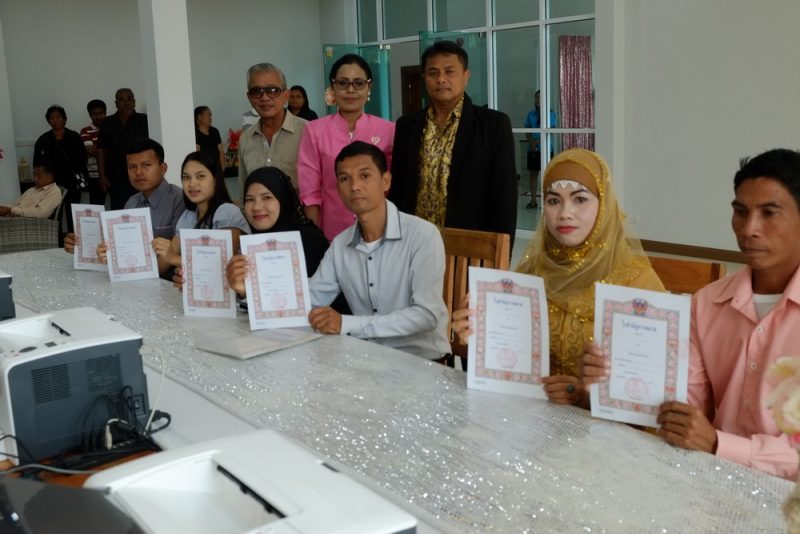
A marriage registration event in Chiang Rai takes place next to an international hot air balloon festival.
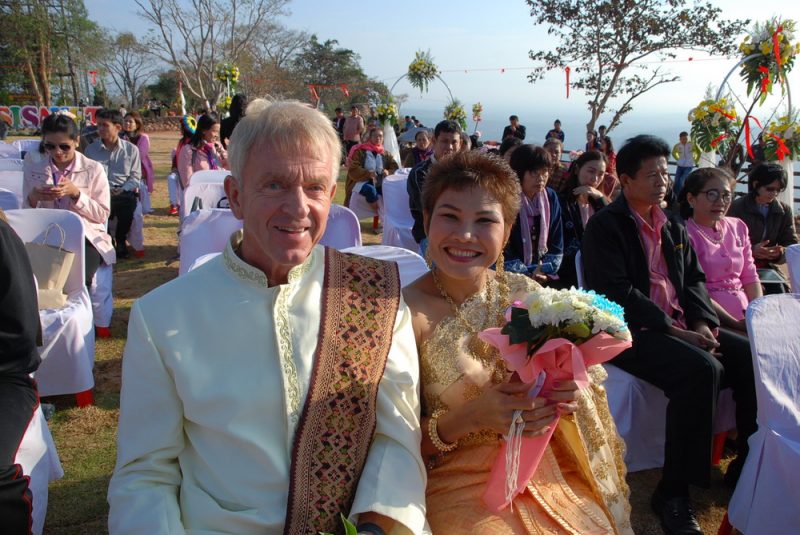
Despite the annual nay-saying by grumpy puu yai about dangers of Valentine’s Day, this Western tradition is alive and well in Thailand this year as ever, with mass wedding events taking place throughout the realm.
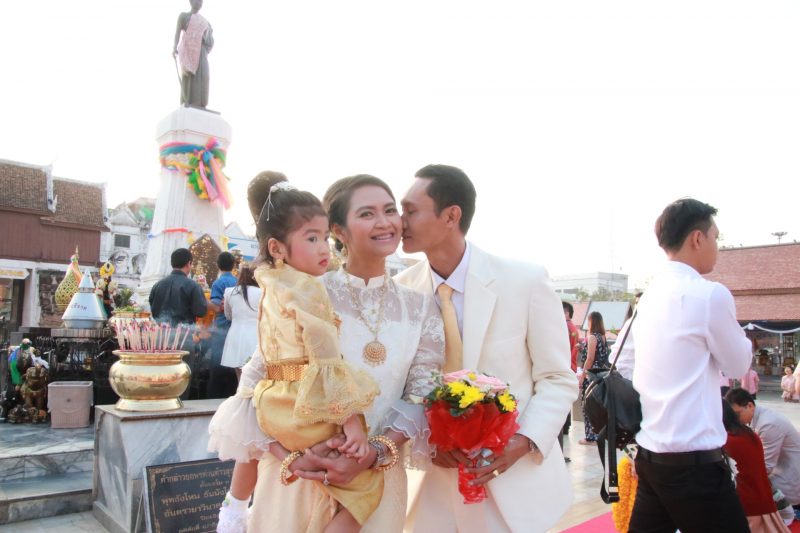
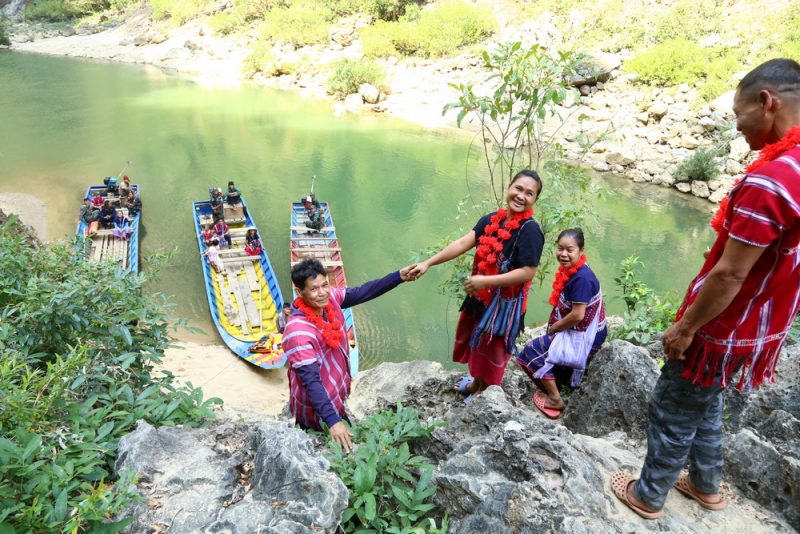
Forget the cliche marriage registrations in the capital district of Bang Rak (Place of Love), here are photos from some of these events up and down the Land of Smiles:
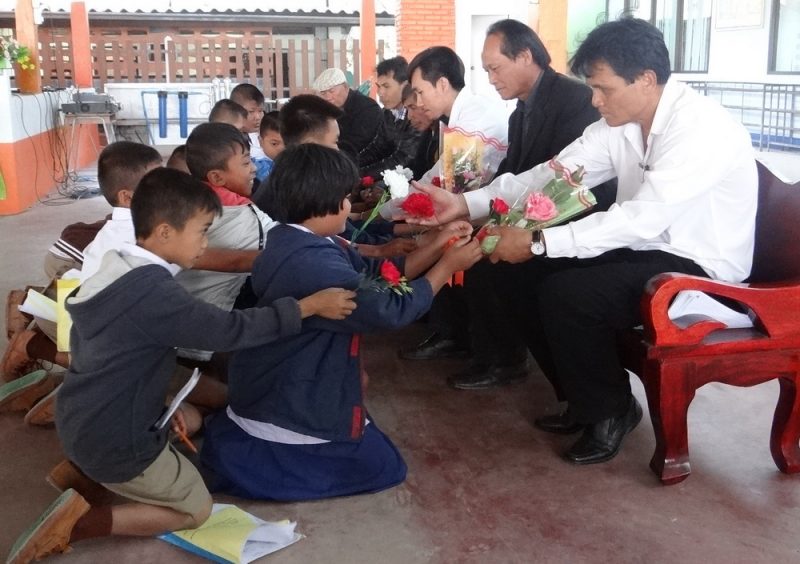
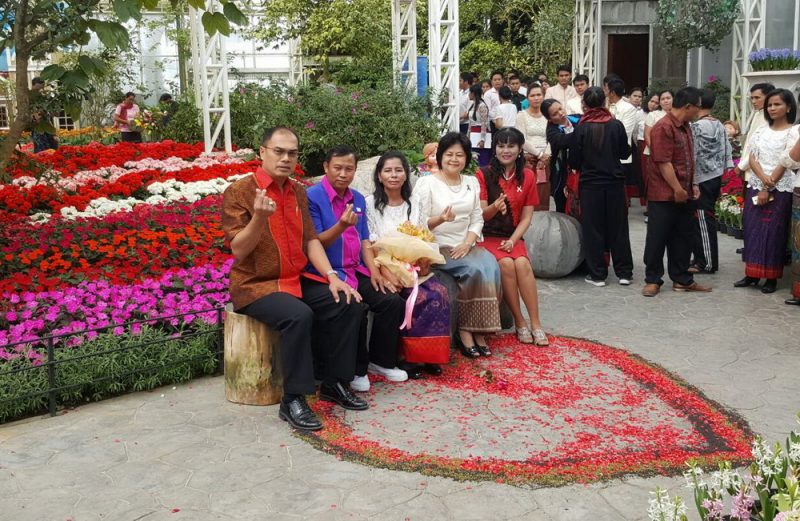
Students give roses to teachers at a school in Roi Et.More than 20 couples get married in a tulip garden in Buriram .A marriage registration event in Chiang Rai takes place next to an international hot air balloon festival.Buddhist and Muslim couples register their marriages side by side in Krabi.One of about 30 couples to get married at Mo E Daeng Cliff in Si Saket.A mass wedding event is held in front of Thao Suranari Statue in Korat, joined by 21 couples.Officials in Tak organize a wedding in tradition of local hill tribes on a bank of Moei River.
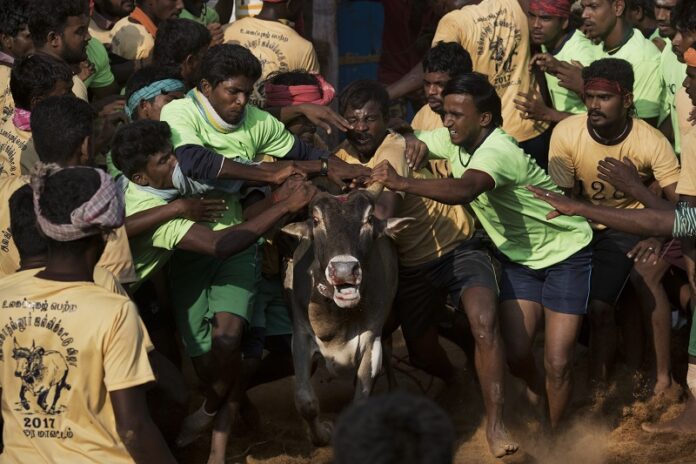
Tamers try to control a bull run during a traditional bull-taming festival called Jallikattu, Friday in the village of Allanganallur, near Madurai, Tamil Nadu state, India. Photo: Bernat Armangue / Associated Press
ALLANGANALLUR, India — In the darkness just before dawn, the southern Indian town buzzed with excitement and energy as revelers began arriving for the spectacle of Jallikattu, the region’s version of running with the bulls.
The deeply held religious ritual had been banned in Tamil Nadu for two years after India’s Supreme Court found it cruel. Jallikattu returned to Tamil Nadu in January after tens of thousands of people protested for weeks and forced the government to rush new legislation exempting it from animal cruelty laws.
And so the revelry returned to Alanganallur village in Madurai district, one of the main areas steeped in the tradition.
The spectators began arriving at the main arena, along with all the elements that create a carnival in small-town India – the tiny stalls selling hot tea and coffee, cold drinks and fried snacks. Policemen with sniffer dogs secured the venue. Then the trucks with the bulls arrived.
First bulls from the local temples are worshipped and decorated with flowers. They gently amble through the crowds and no one is allowed to tame them.
Then the serious bull-running begins.
By the end of the day, hundreds of bulls were let loose through the wildly excited crowds, with people trying to grab the bull by its hump and hang on to the terrified, bucking animal for at least a hundred meters.
One by one the bulls are led from a pen to a corridor into the packed arena. The bull runs into the crowds as spectators cheer and commentary is broadcast.
Some bull runs are clean, others more chaotic like when a bull ran back to the pen, surprising its trainers who had to hop onto a fence.
Some bulls run fast, others defy the tamers and try to gore. The adrenaline rises and tamers argue after a failed catch or a scuffle.
If the tamers can control the angry, panicking animal they win. If a bull can’t be tamed, the prize, everything from pots and pans to flat-screen TVs and even small cars, goes to its owner.
For 18-year-old Santosh, who goes by one name, Friday was a lucky day. Of the six bulls his family brought to the Jallikattu event at Allanganallur, at least five weren’t controlled by a tamer. Now the family gets to go home with five gold coins, 5,000 rupees ($75) and sundry household items.
The bulls that his family trains through the year are fed a special diet and don’t have to work the land.
Trainers like Santosh see the bulls they train as special animals, part of a sacred ritual that symbolizes Tamil culture and a centuries-old religious ritual performed during the four-day “Pongal,” or winter harvest festival.
Animal rights activists petitioned the courts for a ban because they say bulls brought to Jallikattu have chili powder rubbed into their eyes and have their tails broken as tamers try and ride them. Locals say the animal cruelty claims are exaggerated and bulls in the Jallikattu ritual have a better life than bulls used to work the land.
When a much-loved prize bull dies, it’s mourned and given a proper funeral. A temple bull is buried within the temple compound.
What it finally comes down to is how strongly the ritual is etched in the psyche of the Tamil.
For tamer Arun Kumar, the return of the tradition is an emotional moment. “Catching a bull is one of the top moments for me. It’s a sign of pride for me and my family.”