





























30 C
Bangkok
Sunday, June 28, 2026
Home Blog Page 2456

In Shift, Trump Warns Israel Against New Settlements

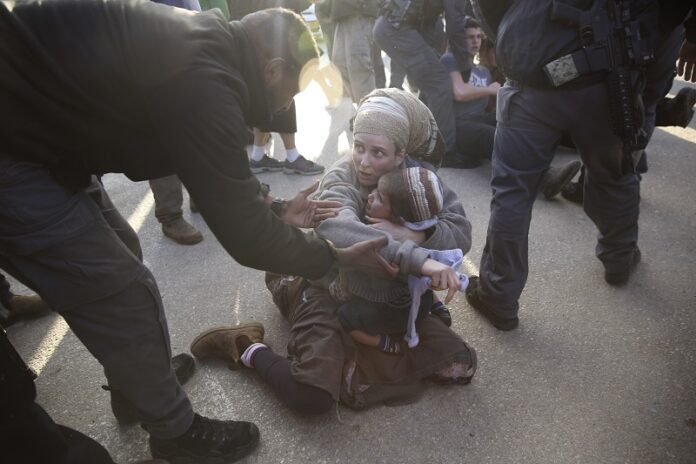
Israeli police on Thursday evicts settlers from the West Bank settlement of Ofra, following the evacuation of Amona outpost. Photo: Oded Balilty / Associated Press

WASHINGTON — President Donald Trump on Thursday warned Israel that constructing new settlements “may not be helpful” to Middle East peace efforts, shifting toward a tougher line with Israeli Prime Minister Benjamin Netanyahu’s government.

Still, the White House made clear that the Trump administration “has not taken an official position on settlement activity,” departing from previous administrations that have considered the settlements illegitimate.

Trump has been perceived as sympathetic to the settlements. Shortly before taking office, he vigorously criticized the Obama administration for not vetoing a United Nations Security Council measure condemning settlements.

But in a statement Thursday, the White House said, “While we don’t believe the existence of settlements is an impediment to peace, the construction of new settlements or the expansion of existing settlements beyond their current borders may not be helpful in achieving that goal.”

The White House said the president would discuss the issue with Netanyahu when he travels to Washington later this month. The two leaders are scheduled to meet at the White House on Feb. 15.

The U.S. statement came hours after Netanyahu vowed to establish the first new West Bank settlement in over two decades “as soon as possible,” promising to make up for the court-ordered demolition of an illegal settler outpost. It was his latest step to expand Israeli settlement construction in the wake of Trump’s inauguration.

Netanyahu repeatedly clashed with President Barack Obama during the Democrat’s eight years in office, and Trump has vowed to be a better partner for Israel. Following the U.N. vote, Trump tweeted, “Stay strong Israel, January 20th is fast approaching!”  referring to the date of his inauguration.

Trump has already appeared to slow his promises to move the U.S. Embassy in Israel from Tel Aviv to Jerusalem  a promise often made by presidential candidates, but never carried out in office because of fears the move would inflame tensions in the region.

Newly sworn-in Secretary of State Rex Tillerson spoke by phone Thursday with Netanyahu.

The prime minister’s vow to establish new West Bank settlements came as Israeli security forces were completing the evacuation of Amona, where they broke into a synagogue to remove dozens of Israeli protesters who had barricaded themselves inside. Netanyahu’s pro-settler government had unsuccessfully tried to block the evacuation of Amona, but Israel’s Supreme Court rejected all appeals after determining the outpost was built illegally two decades ago on private Palestinian land.

Speaking at a ceremony in the West Bank settlement of Ariel, Netanyahu expressed “great pain” over the removal of Amona.

According to the Israeli anti-settlement watchdog Peace Now, Israel has not officially broken ground on a new settlement since 1992.

Since that time, however, it has greatly expanded its existing settlements and allowed dozens of unauthorized outposts to sprout up, in some cases subsequently legalizing them. In all, some 400,000 Israelis now live in West Bank settlements, in addition to 200,000 others living in east Jerusalem.

The Palestinians claim both areas, captured by Israel in the 1967 Mideast war, as parts of a future independent state. The international community has opposed the settlements, built on occupied lands sought by the Palestinians, as obstacles to peace.

Britain and Germany, close Israeli allies, as well as the European Union criticized Netanyahu’s approval this week of 3,000 new settlement homes in the West Bank.

“This spike in settlement activity undermines trust and makes a two-state solution  with an Israel that is safe from terrorism and a Palestinian state that is viable and sovereign  much harder to achieve,” said Britain’s minister for the Middle East, Tobias Ellwood.

Amona has emerged as a symbol of settler defiance. On Thursday, Israeli police completed the evacuation of the wind-swept community, where hundreds of Jewish activists joined residents in resisting the pullout.

Police began the evacuation Wednesday, but dozens of activists remained holed up in the synagogue. Police initially said 200 had barricaded themselves inside but later revised the number to about 100.

On Thursday, several hundred Israeli forces surrounded the building, and officers wearing goggles and wielding plastic shields broke through the doors and sprayed water to push back defiant protesters.

“The officers faced especially tough and violent resistance,” police said in a statement. Protesters sprayed fire extinguishers at police and threw rocks, paint bottles and wooden planks, police said.

Slogans including “Death to Zionists” and a swastika comparing the Israeli police to Nazis were scrawled on the synagogue walls. The police later began dragging young protesters out of the building.

Speaking to Israel Radio from inside the synagogue, the rabbi of Amona said the protesters were peacefully resisting the uprooting of the outpost. He spoke above loud noises and shouting in the background. Earlier Thursday, police removed protesters holed up in a small home nearby.

Police said 24 officers were lightly injured throughout the evacuation, and 13 young protesters were arrested.

Amona is the largest of about 100 unauthorized outposts erected in the West Bank without formal permission but with tacit Israeli government support. It witnessed violent clashes 11 years ago when police demolished nine homes found to have been built on private Palestinian land.

The Supreme Court last year determined that the entire outpost was built illegally and ordered it demolished.

Story: Julie Pace, Alon Bernstein
Advertisement

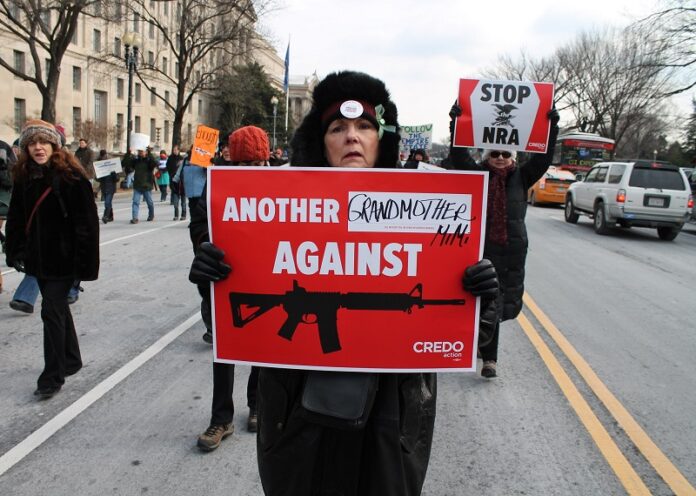
US Scraps Rule Barring Gun Ownership by Mentally Disabled People

Protesters holds signs denouncing gun laws in 2013 in Washington. Photo: Elvert Barnes / Flickr

WASHINGTON — The Republican-controlled Congress on Thursday scrapped Obama-era rules on the environment and guns, counting on a new ally in the White House to help reverse years of what the GOP calls excessive regulation.

The Senate gave final approval to a measure eliminating a rule to prevent coal mining debris from being dumped into nearby streams, while the House backed a separate resolution doing away with extended background checks for gun purchases by some Social Security recipients with mental disabilities.

The Senate’s 54-45 vote sends the repeal of the stream protection rule to President Donald Trump. The gun measure awaits Senate action.

The White House said Thursday night that Trump supports both measures and is likely to sign them.

Republicans and some Democrats say the coal-mining rule could eliminate thousands of coal-related jobs and ignores dozens of federal, state and local regulations already in place.

The Interior Department, which announced the rule in December, said that it would protect 6,000 miles of streams and 52,000 acres of forests, preventing coal mining debris from being dumped into nearby waters.

The vote was the first in a series of actions Republicans are expected to take in coming weeks to reverse years of what they call excessive regulation during President Barack Obama’s tenure. Rules on fracking, federal contracting and other issues also are in the cross-hairs as the GOP moves to void a host of regulations finalized during Obama’s last months in office.

Senate Majority Leader Mitch McConnell, R-Ky., called the stream rule “an attack against coal miners and their families” and said it would have threatened coal jobs and caused major damage to communities in Kentucky and other coal-producing states.

“The legislation we passed today will help stop this disastrous rule and bring relief to coal miners and their families,” McConnell said.

Democrats called the vote an attack on clean water and a clear win for big coal-mining companies and other polluters.

Sen. Maria Cantwell, D-Wash., said the stream rule had nothing to do with the decline of coal, which faces stiff competition from cheap natural gas.

“This rule was not in place” when coal production began declining in the past half-dozen years, Cantwell said.

In the House, the issue was an Obama rule extending background checks for disabled Social Security recipients mentally incapable of managing their own affairs. The House voted 235-180 to scuttle it.

Under the rule, the Social Security Administration had to provide information to the gun-buying background check system on recipients with a mental disorder so severe they cannot work and need someone to handle their benefits. The rule, also finalized in December, would have affected an estimated 75,000 beneficiaries.

“There is no evidence suggesting that those receiving disability benefits from the Social Security Administration are a threat to public safety,” said Rep. Bob Goodlatte, R-Va., chairman of the House Judiciary Committee.

“Once an unelected bureaucrat unfairly adds these folks to the federal background check system, they are no longer able to exercise their Second Amendment right,” he said.

After the 2012 school massacre in Newtown, Connecticut, Obama directed the Justice Department to provide guidance to agencies regarding information they are obligated to report to the background check system.

In Newtown, 20 children and six educators were shot to death when a gunman entered the Sandy Hook Elementary School on Dec. 14, 2012. The gunman had earlier killed his mother inside their home, and he used a gun and ammunition that she had purchased. His mental health problems have been extensively reported since the shooting.

Democrats said Republicans were doing the bidding of the National Rifle Association, which opposed the Social Security Administration’s rule.

“These are not people just having a bad day,” Rep. Mike Thompson, D-Calif., said. “These are not people simply suffering from depression or anxiety or agoraphobia. These are people with a severe mental illness who can’t hold any kind of job or make any decisions about their affairs, so the law says very clearly they shouldn’t have a firearm.”

The NRA said overturning the regulation will protect a broad class of vulnerable citizens from government overreach. And the American Civil Liberties Union agreed, telling lawmakers that a disability should not constitute grounds for the automatic denial of any right or privilege, including gun ownership.

Republicans are employing a rarely used tool to roll back some of the rules issued in the final months of Obama’s tenure. The Congressional Review Act provides a temporary window for a simple majority of both chambers to invalidate a rule. The president has to sign the disapproval measure for the regulation to be deemed invalid.

The law also prevents the executive branch from imposing substantially similar regulations in the future.

On the coal mining vote, Sen. Susan Collins of Maine was the sole Republican to oppose the repeal measure, which was supported by four Democrats: Joe Donnelly of Indiana, Heidi Heitkamp of North Dakota, Joe Manchin of West Virginia and Claire McCaskill of Missouri. All four face re-election next year in states Trump won.

Story: Kevin Freking, Matthew Daly

Advertisement

Trump Pledges to End Political Limits on Churches

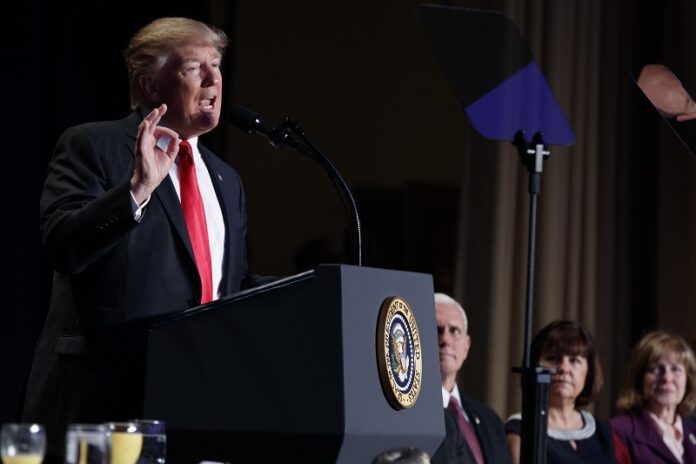
President Donald Trump speaks during the National Prayer Breakfast, last month in Washington. Photo: Evan Vucci / Associated Press

WASHINGTON — Declaring that religious freedom is “under threat,” President Donald Trump vowed Thursday to repeal a rarely enforced IRS rule that says pastors who endorse candidates from the pulpit risk losing their tax-exempt status.

“I will get rid of and totally destroy the Johnson Amendment and allow our representatives of faith to speak freely and without fear of retribution,” Trump said at the National Prayer Breakfast, a high-profile event bringing together faith leaders, politicians and dignitaries.

Trump’s pledge was a nod to his evangelical Christian supporters, who helped power his White House win. So far he has not detailed his plans for doing away with the rule, which he has previously promised to rescind. Named after then-Sen. Lyndon Johnson, the regulation has been in place since 1954 for tax-exempt charities, including churches, though it is very rare for a church to actually be penalized.

Abolishing the amendment would require action by Congress, though Trump could direct the IRS to disregard the rule. The tax code does allow a wide range of political activity by houses of worship, including speaking out on social issues and organizing congregants to vote. But churches cannot endorse a candidate or engage in partisan advocacy.

Lloyd Mayer, a law professor at the University of Notre Dame, said an IRS move could prompt lawsuits, if the rule was repealed for churches but not other charities.

Mayer also noted that a full repeal of the rule could open up churches to the possibility of spending their resources to openly try to influence elections  and for donors to get tax breaks for political contributions.

While some conservative Christians would like to see the rule abolished, others, especially the younger generation, support a clear separation of church and political endorsements. Many liberal churches are also active on policy issues, and could potentially get more involved in partisan politics.

Mayer noted that for some religious leaders, the IRS rule has given them a way to avoid political pressure for an endorsement.

“Now a church that wants to say no has an easy answer, it’s illegal,” Mayer said.

Repeal does not appear to have widespread public support. Eight in 10 Americans said it was inappropriate for pastors to endorse a candidate in church in a poll released last September by Lifeway Research, a religious survey firm based in Nashville.

For many religious conservatives, a more pressing issue they hope he will address is protection for faith-based charities, schools and ministries who object to same-sex marriage and abortion.

The president made no mention at the prayer breakfast of other steps he may take, saying only that religious freedom is a “sacred right.”

Kelly Shackelford, head of First Liberty Institute, a non-profit legal group that specializes in religious freedom cases said that “there’s a number of things he laid out that we expect we’ll eventually see action on.”

Trump also defended his recent executive order on immigration, decrying “generous” immigration policies and arguing that there are people who seek to enter the country “for the purpose of spreading violence or oppressing other people based upon their faith.” He also pledged to take more immigration action in the name of religious liberty.

“In the coming days we will develop a system to help ensure that those admitted into our country fully embrace our values of religious and personal liberty and that they reject any form of oppression and discrimination,” Trump said.

LGBTQ groups have been anxious that the president could use his executive powers to curb legal advances they have made. Emily Hecht-McGowan, chief policy officer for the Family Equality Council, said that she was “anticipating more to come,” noting that some draft documents have been circulating, suggesting plans for a more sweeping order.

White House spokesman Sean Spicer said Thursday that “there’s nothing new on that front.”

Earlier this week, the Trump administration announced that the president would leave intact a 2014 executive order that protects workers for federal contractors from anti-LGBTQ discrimination, saying in a statement that Trump “continues to be respectful and supportive of LGBTQ rights, just as he was throughout the election.”

Religious conservatives, who saw a series of defeats on same-sex marriage, abortion and other issues under former President Barack Obama, have been bolstered by Trump’s win. In a letter last year to Roman Catholics, Trump pledged, “I will defend your religious liberties and the right to fully and freely practice your religion, as individuals, business owners and academic institutions.”

Trump’s Supreme Court pick this week was also considered a positive sign for conservatives.

A favorite of conservatives, Neil Gorsuch serves on the 10th U.S. Circuit Court of Appeals, where he sided with Hobby Lobby and the Little Sisters of the Poor when they mounted religious objections to the Obama administration’s requirement that employers provide health insurance that includes contraceptives.

During his remarks, Trump also took a dig at Arnold Schwarzenegger, the new host of “The Apprentice,” the reality TV show Trump previously headlined. Trump said that since Schwarzenegger took over, the show’s ratings have been down, and he asked the audience to “pray for Arnold.” Schwarzenegger tweeted in response that he and Trump should switch jobs and Americans would sleep better.

Story: Chatherine Lucey

Advertisement

CIA Spymaster Who Oversaw Torture at Thai Black Site Named to Top Post

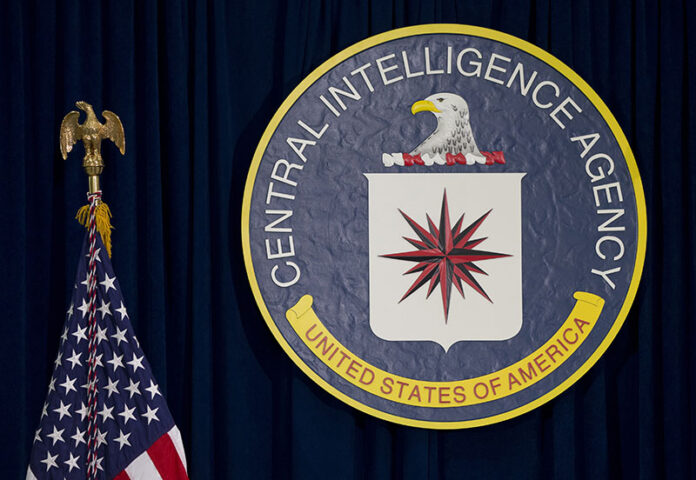
The seal of the Central Intelligence Agency at CIA headquarters in Langley, Virginia, on April 13, 2016. Photo: Carolyn Kaster / Associated Press

WASHINGTON — The new deputy director of the CIA is a career spymaster who once ran a CIA prison in Thailand where terror suspects were waterboarded  a harsh interrogation technique President Donald Trump has supported.

CIA Director Mike Pompeo announced Thursday that he has selected Gina Haspel to be the first female career CIA officer to be named deputy director. She has extensive overseas experience, including several stints as chief of station at outposts abroad. In Washington, she has held several top senior leadership positions, including deputy director of the National Clandestine Service and deputy director of the National Clandestine Service for Foreign Intelligence and Covert Action.

She also had a role in the CIA’s former covert program where suspected terrorists were subjected to harsh interrogation methods, including waterboarding, which simulates drowning. More than a decade after it was last used, the CIA is still haunted by the legacy of a tactic that the U.S. government regarded as torture before the Bush administration authorized its use against terrorist suspects.

It’s unclear if Pompeo’s pick signals an attempt to restart the harsh interrogation and detention program. Last week, news organizations obtained a copy of a draft executive order that would order up recommendations on whether the U.S. should reopen CIA detention facilities outside the United States. It also orders a review of interrogation methods used on terror suspects and calls for suggested modifications that would not violate the U.S. legal ban on torture.

Haspel briefly ran a secret CIA prison where accused terrorists Abu Zubayadah and Abd al Rahim al-Nashiri were waterboarded in 2002, according to current and former U.S. intelligence officials, who spoke earlier to The Associated Press on condition of anonymity. She also helped carry out an order that the CIA destroy its waterboarding videos. That order prompted a lengthy Justice Department investigation that ended without charges.

Trump, who has pushed for tougher interrogation techniques, said he would consult with Pompeo and Defense Secretary Jim Mattis before authorizing any new policy. But he said he had asked top intelligence officials: “Does torture work? And the answer was ‘Yes, absolutely.’ ”

Christopher Anders, deputy director of the American Civil Liberties Union’s Washington office, said he was “gravely concerned” about Pompeo’s decision to choose Haspel.

“Pompeo must explain to the American people how his promotion of someone allegedly involved in running a torture site squares with his own sworn promises to Congress that he will reject all forms of torture and abuse,” Anders said.

Asked during his confirmation hearing whether he would restart the CIA’s use of harsh interrogation techniques that fall outside what is lawful in the Army Field Manual, Pompeo said: “Absolutely not. Moreover, I can’t imagine that I would be asked that” by the president.

But Pompeo also said he’d consult with CIA and other government experts on whether current restrictions on interrogation were an “impediment to gathering vital intelligence to protect the country” or whether any rewrite of the Army Field Manual is needed.

In the CIA’s announcement, Haspel’s career was lauded by veteran intelligence officials, including former Director of National Intelligence James Clapper, who recently retired.

“It speaks well of him for picking a seasoned veteran of the agency who is widely and deeply respected by the workforce as well as those outside the agency,” Clapper said in a statement. “She has also been a strong proponent for integration, not only within CIA, but across the intelligence community.”

Story: Deb Riechmann

Advertisement

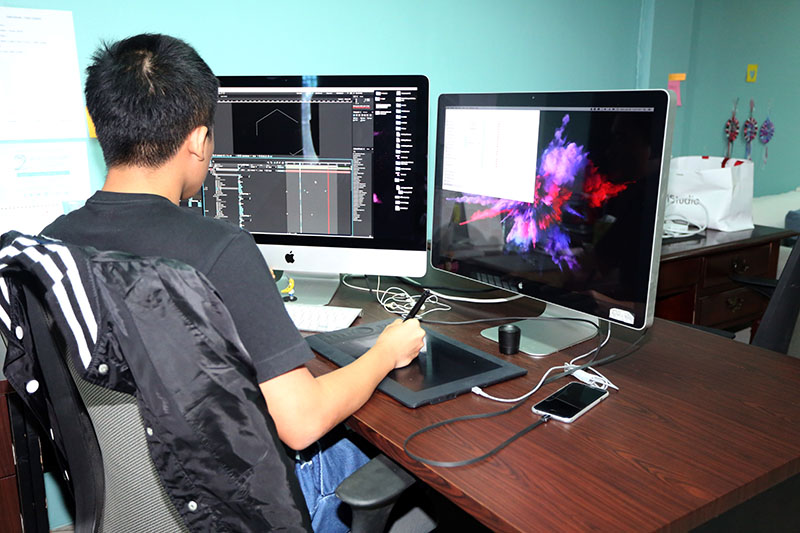
The Lights Fantastic: Bangkok Team Makes Music For Eyes

Photo: Swerb / Facebook

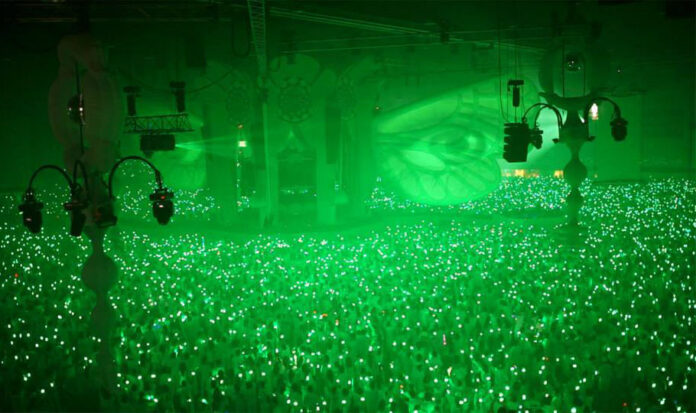
Hit a club night, rave or concert and see that the experience is not just about the music. From soaring Jumbotron screens and dazzling LED displays to surreal projection-mapped scenes, motion graphics have become indispensable at events meant for Generation YouTube.

Notes from the Underground - Mongkorn 'DJ Dragon' TimkulTraced back to late-1960s psychedelia a la The Joshua Light Show, visuals today are used to tell stories, create suspense and give crowds a heightened sense of euphoria using next-gen technology.

Simple light projectors and color wheels have given way to massive LED displays that animate in sync to the music and mapping projectors that create illusions by matching shapes and outlines of structures.

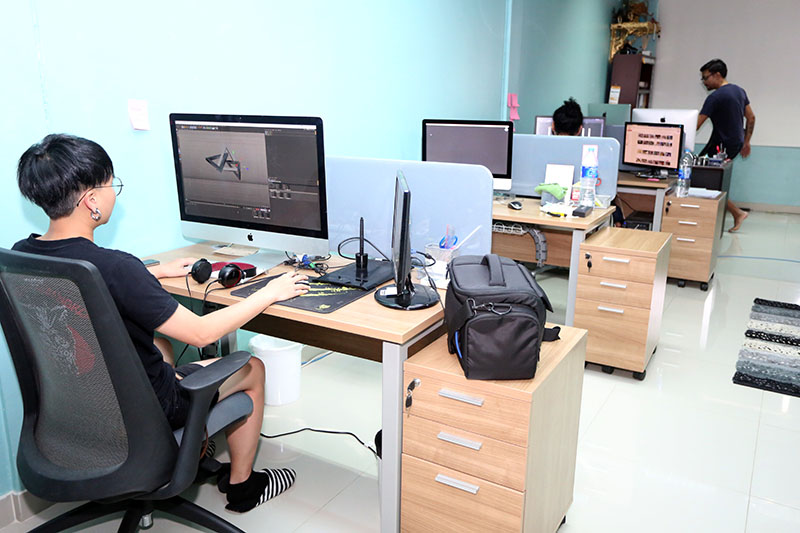
In Bangkok, motion graphics outfit Swerb has risen through the ranks in its six years to become a leader in the field. Founded in 2010 by Mont Watanasiriroch, later joined by creative partner Jay Plodpai, the firm was born of 34-year-old Mont’s interest in electronic music.

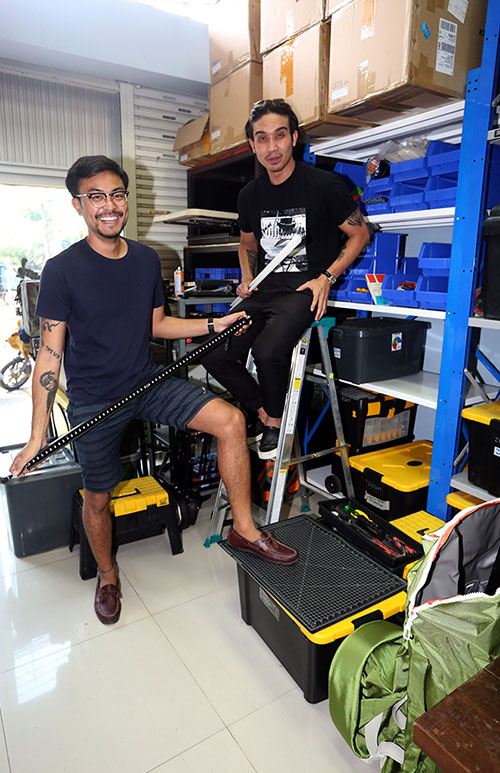
GEAR HEADS: Swerb's Mont Watanasiriroch, at left, and Jay Plodpai at their Bangkok offices.
GEAR HEADS: Swerb’s Mont Watanasiriroch,
at left, and Jay Plodpai at their Bangkok offices.

He was a regular at the early Cafe Democ parties of the last decade. Jay got involved after he met Mont at an electronic music party in Bangkok where Mont was operating a lighting installation.

“Mont brought a few TVs and was playing his graphics on them, this really got me interested and [I] realized that this was the missing element because, besides the music, there was something pleasing for the eyes as well,” Jay says.

The two went on to earn props in the festival and club scenes, and their resume now includes the biggest events in the industry. This month alone they’ll be working their magic at Gypsy Carnival, Wonderfruit, and Maya Festival.

But this weekend they’ll be busy with the Mystic Valley Festival, Thailand’s first big fest electronic music orgy, from techno and house to Drum ‘n Bass and EDM.

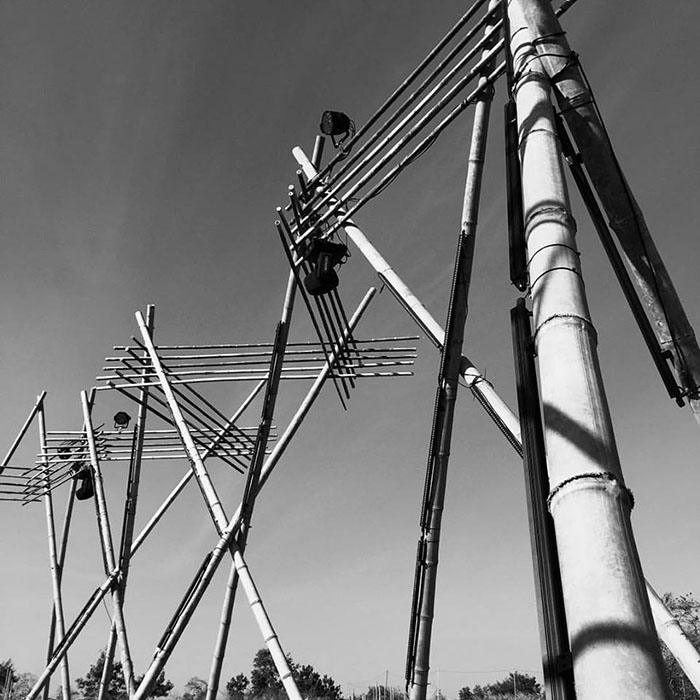
There they will showcase The Bear Trap, their biggest latest LED art installation to date with 120 LED bars and 19 large scale-power supplies.

When it comes to creating visuals for such fests, Jay and Mont say they try to compliment a DJ or band’s style.

“We love to create something that has an impact on people’s experience,” Mon says. “Today, some DJs will send us content to play along their live set, but most of the time we have to come up with graphics from scratch, and that means listening to their music and getting ideas from that.”

Swerb's 'The Bear Trap' goes up for this weekend's Mystic Valley Festival near Khao Yai. Photo: Zieght Project / Facebook
Swerb’s ‘The Bear Trap’ goes up for this weekend’s Mystic Valley Festival near Khao Yai. Photo: Zieght Project / Facebook

Most important, Jay adds, it must be awesome.

“It’s really important to have a wow factor in all of our visuals because I think people have short attention spans and we really want to get their full attention,” he says.

Mont said they turn to everything they see and experience, from the arts to travel and parties and people for inspiration.

“We love the vibes that we can feel when these elements are brought in,” he said.

Check out Swerb and The Bear Trap at Mystic Valley’s Sunn Stage this weekend, with DJ headliners Sven Vath and Nakadia.

Mystic Valley Festival is three days and nights with more than 50 primo DJs in the lineup. The event starts Friday at the Mountain Creek Golf Resort and Residences in Nakhon Ratchasima province, a three- or four-hour drive from Bangkok. Tickets are 2,990 baht and available online.

Until next time, Dub be good to you.


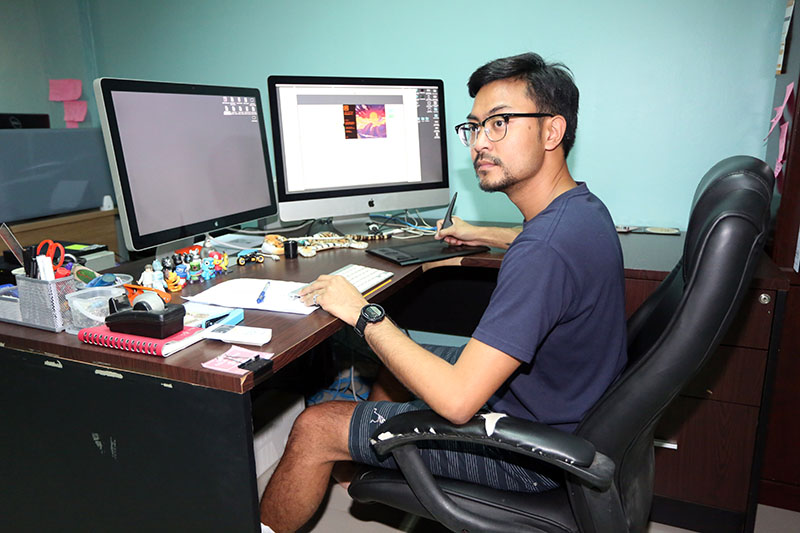
Swerb's Mont Watanasiriroch at their Bangkok office.

Swerb’s Mont Watanasiriroch at their Bangkok office.

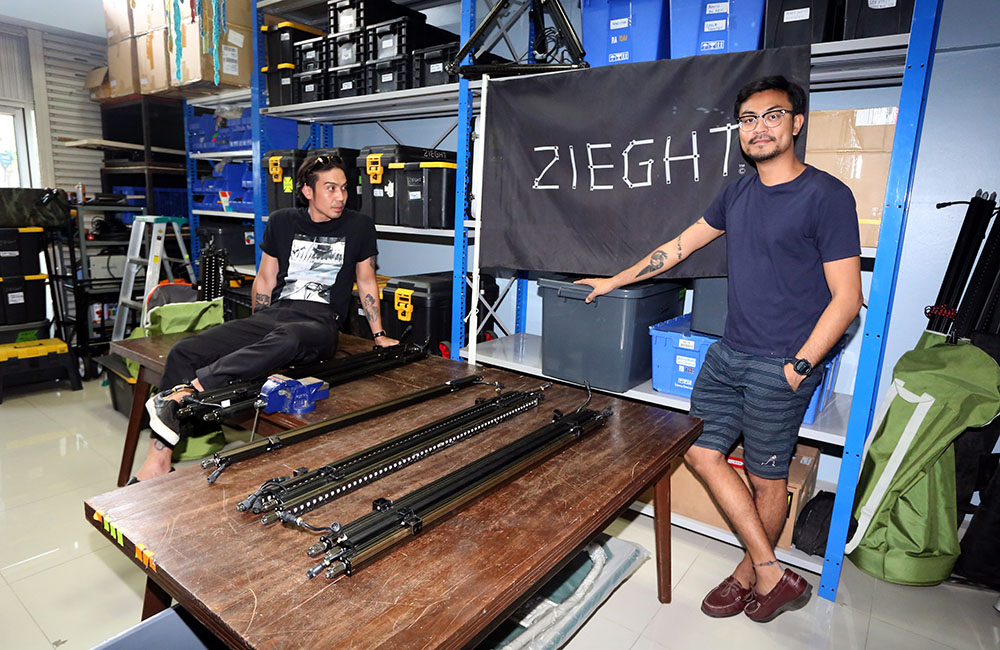
GEAR HEADS: Swerb's Jay Plodpai, at left, and Mont Watanasiriroch at their Bangkok office.
GEAR HEADS: Swerb’s Jay Plodpai, at left, and Mont Watanasiriroch at their Bangkok office.
Swerb's Bangkok office.
Swerb’s Bangkok office.

swerb10

Advertisement

Tweaks Ordered for Media Bill, But Oversight Council to Stay

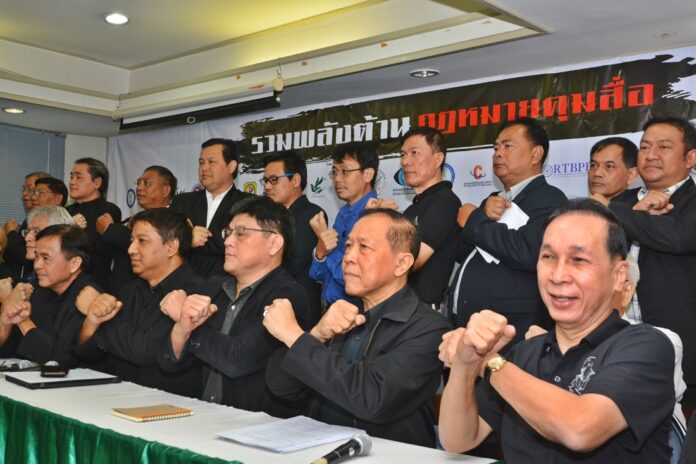
Representatives from 30 media associations gather on Sunday to voice their opposition to a new media law that would require all reporters to have licences.

BANGKOK — A media law that would empower a council to license journalists was kicked back for changes by a junta-appointed reform body.

The bill, which has won the opposition of just about every journalist organization, was sent back to its drafters by the National Reform Steering Assembly for changes to details that do not concern the establishment of a national council to regulate – and enable possible censorship of – the media.

“The assembly’s resolution is that we agree in principal to have a media professional council legally,” said assembly spokesman Kamnoon Sidhisamarn.

Kamnoon said the assembly decided to push the draft back to its media reform subcommittee to amend some details. They did not identify a timeframe but said it would not take long.

Also Thursday, four former news media editors who had participated in devising the law with media reform committee resigned in protest. They said the most recent draft was different from what they had worked on, so they decided to fight against it as outsiders.

The media reform committee has said the bill will protect press freedoms and establish ethical standards. If it goes into effect, the bill will make it mandatory for journalists to obtain a license subject to review and revocation under the same council, no matter which platform they work for.

Media professionals have been protesting it, as they say it will suppress media freedoms. The main concern is that four out of the 13 council members would be drawn from government officials not publicly accountable.

Before the assembly sent the draft back for revision, representatives of the 30 media organizations which gathered recently to voice opposition resubmitted their petition against the draft to the assembly Thursday morning.

Kamnoon said the assembly raised the issue that the media council must come from diverse backgrounds, and the bill must be consistent with the referendum-approved constitution.

Many journalists have also campaigned against the draft by changing their social media profiles and cover photos to bring attention to the campaign opposing the bill.


Related stories:

Genteel Protest to Media Censorship Swatted Aside

Thailand’s Media Protests Law to ‘License’ All Journalists

Prayuth Named ‘Press Freedom Predator’ – Again

Govt Deplores Foreign Media Coverage, BBC Coverage Blocked

Junta Grants Authorities Legal Immunity to Regulate Media


Advertisement

Wheelchair Basketball Distracts War-Stricken South Sudan

JUBA, South Sudan  Warnings of possible genocide hang over the world’s youngest nation, but here on a basketball court under a fierce morning sun, South Sudan’s civil war seems like another country.

Flashing up and down the court in blue and yellow jerseys, the players laugh and sweat as their wheelchairs jostle for position.

This wheelchair basketball tournament in South Sudan’s capital, Juba, is the culmination of a two-week training session run by Jess Markt, a coach from Colorado who has led similar programs in countries ravaged by conflict.

The disabled young South Sudanese men, drawn from various ethnic groups, are split into four teams that compete as dozens of spectators cheer them on.

“The biggest lesson I have learned from these guys is the power of positive thought and perseverance,” Markt said. “They are very poor. Many of them are living in a camp outside the city or they live in rural areas that are very difficult situations, especially for disabled persons, and yet they are on the court playing, laughing and joking as though they don’t have any care in the world.”

Many of the players were injured in South Sudan’s decades-long struggle for independence from Sudan that ended with the creation of the new nation in 2011. The country has known little peace since 2013, when the rivalry between President Salva Kiir and deputy Riek Machar descended into a civil war in which thousands have been killed amid ethnic tensions.

The wheelchair basketball training marked the first time some of the men had been involved in sports, and Markt said he had to teach them how to work together as a team.

James Amoudit Makuei, 19, who traveled hundreds of kilometers (miles) to take part, said he hopes to share his skills with other disabled people in his hometown of Yirol.

“I had never played basketball before,” he said. “But I have learned a lot of things from the coaches here. … And now I consider myself a basketball player.” He said he dreams of playing for the national team.

Peter Bol Wal, a player-coach who was among the first South Sudanese to play wheelchair basketball, said more disabled people in the capital are embracing the sport. He knew only about 11 players in Juba in 2011 but the number has grown to two dozen, he said.

“This basketball has helped unite us as people with disabilities,” he said. “We love each other and we do not talk about our tribal differences.”

The International Committee of the Red Cross, which invited Markt to Juba, supports three physical rehabilitation centers that provide mobility devices and therapy in South Sudan. The aid group works with the South Sudan Wheelchair Basketball Association to put on weekly games.

Markt, who began playing wheelchair basketball at age 19 after a spinal cord injury, has been coaching since 2009 and has trained teams in Afghanistan, India, Palestine and Cambodia.

Markt described his experience in South Sudan as “unforgettable.” He recalled one young man, a polio victim, who shouted “Oh my God!” when he scored for the first time after struggling to settle into the rhythm of the game.

“That, to me, is the greatest thing about this type of program,” Markt said. “It is helping people who have amazing challenges that they are dealing with in their lives realize how powerful they can be.”

Story: Charlton Doki

Advertisement

Trump’s Clash With Australia Strains Alliance

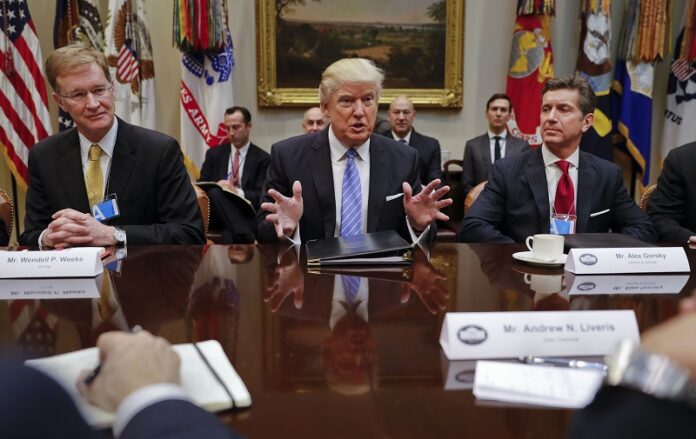
President Donald Trump speaks while hosting a breakfast with business leaders in the Roosevelt Room of the White House in January in Washington. Photo: Pablo Martinez Monsivais / Associated Press

SYDNEY — For decades, Australia and the U.S. have enjoyed the coziest of relationships, collaborating on everything from military and intelligence to diplomacy and trade. Yet an irritable tweet President Donald Trump fired off about Australia and a dramatic report of an angry phone call between the nations’ leaders proves that the new U.S. commander in chief has changed the playing field for even America’s staunchest allies.

Prime Minister Malcolm Turnbull was left scrambling to defend his country’s allegiance to the U.S. after The Washington Post published a report on Thursday detailing a tense exchange that allegedly took place during the Australian leader’s first telephone call with Trump since he became president. During the call, the Post reported, Trump ranted about an agreement struck with the Obama administration that would allow a group of mostly Muslim refugees rejected by Australia to be resettled in the United States. The newspaper said Trump dubbed it “the worst deal ever” and accused Turnbull of seeking to export the “next Boston”  a reference to Tamerlan and Dzhokhar Tsarnaev, U.S. citizens born in Kyrgyzstan who set off explosives at the 2013 Boston marathon.

Though Turnbull declined to confirm the report, he also didn’t deny it, apart from rejecting one detail  that Trump had hung up on him. The prime minister insisted his country’s relationship with the U.S. remained strong, and that the refugee deal with the U.S. was still on.

Yet shortly after, Trump took to Twitter to slam the agreement, tweeting: “Do you believe it? The Obama Administration agreed to take thousands of illegal immigrants from Australia. Why? I will study this dumb deal!”

Australians, long accustomed to a chummy friendship with the U.S., were stunned by the drama. Not since the Vietnam War  when Australia’s then-Prime Minister Gough Whitlam criticized a series of bombings authorized by then-President Richard Nixon  has there been such obvious friction between the leaders of the two nations.

“You can’t help but think the signal this sends to world leaders: That you have to be very, very careful doing business with this administration, particularly with the president and the people around him,” said Simon Jackman, CEO of the U.S. Studies Center in Sydney. “And that can’t help but put a chill on relations between allies.”

Yet the only surprising thing about Trump’s reaction to the deal is that Australians were surprised at all, said Nick Economou, a political analyst at Monash University in Melbourne. Members of Turnbull’s conservative party probably assumed  perhaps naively  they still had a special relationship with conservatives in the U.S., based on the close ties the parties enjoyed during previous administrations. But if Trump has taught the world anything, Economou said, it’s that he has little patience for tradition.

“I suspect that there is a feeling that, ‘Oh no, we’ve dealt with Republicans before, we were very close to George W. Bush, we should be fine with Mr. Trump and he’ll agree to this deal,'” Economou said. “But the thing is, of course he’s not going to agree to this deal! Obama entered into it and whatever Obama was for, Donald Trump is against.”

Australia has long been one of America’s strongest allies. The nation has fought alongside the U.S. in every major conflict since World War I, including the Korean War, Vietnam War and, more recently, in the Middle East. Australia is also part of the “Five Eyes” intelligence-sharing program with the U.S., along with Canada, Britain and New Zealand.

And while few believe the spat over the refugee deal will permanently damage those ties, it will likely prompt changes in how America’s allies approach their dealings with Washington.

The businessman-turned-president’s response  lashing out at a deal that had already been on the table  could be a negotiation tactic he is borrowing from his days in real estate, said Norman Abjorensen, a political analyst at the Australian National University. And like it or not, he said, it’s a tactic Australia may need to accept.

“The way of doing business  Australia’s going to have to adjust to it,” Abjorensen said. “There’s not going to be adjustments at the other end, for sure. The wind has shifted quite dramatically.”

But while politicians may be able to adjust to Trump’s whims, the Australian public may not be so forgiving, Abjorensen said.

“People are going to read this and think, ‘Hang on, this is something a little bit different. Doesn’t he like us? What’s changed?'” Abjorensen said. “It might bring about a gradual rethinking of the relationship, certainly at the level of the people.”

Despite the drama, Turnbull insisted that his country remained loyal to the U.S, calling the relationship “rock solid.”

“Our alliance is built on commitments on service, on courage, on partnership of millions of Australians and Americans going back generations,” Turnbull told Melbourne radio station 3AW. “And it will continue and strengthen during my time as prime minister and I’m sure President Trump’s time as president.”

Still, despite the upbeat message Turnbull delivered publicly, most analysts suspect he  like most Australians  was left stunned by the slight.

“I think Mr. Turnbull has come across something he’s probably never encountered before in his political career, his legal career or his business career. The ‘Trump experience,’ day one!” Abjorensen said with a laugh. “This is how you treat your friends? Heaven help those who are a little bit further down the list of being in favor.”

Story: Kristen Gelineau

Advertisement

Find Exquisite Thai Textiles at Little-Known Bangkok Museum

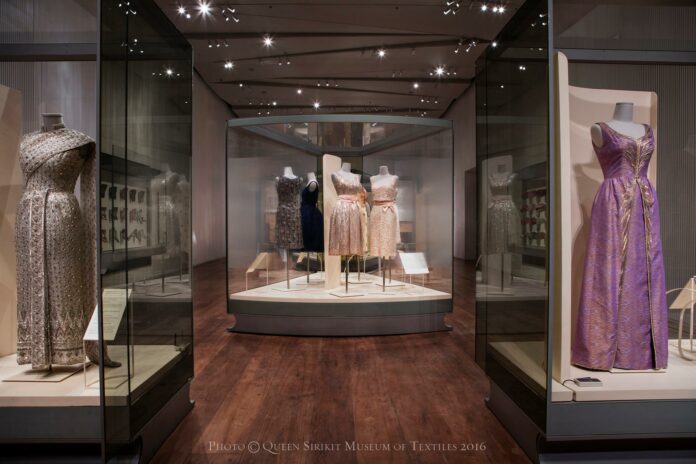
HM Queen Sirikit’s dresses at Queen Sirikit Museum of Textiles posted on Jan. 8. Photo: Queen Sirikit Museum of Textiles / Facebook.

BANGKOK — Go Inside the gates of the Grand Palace to find a little-known textiles museum exhibiting Queen Sirikit’s elegant garments and colorful costumes of traditional dance, or Khon.

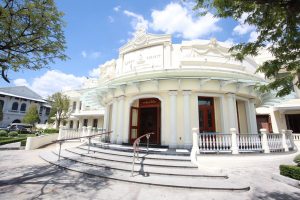
While those flocking to the popular tourist destination may only focus on the Emerald Buddha, architecture and looming demons, more demons – and monkeys and princes – can be found inside a two-story, Victorian-style building near the main entrance: the Queen Sirikit Museum of Textiles.

On the second floor find two exhibitions: Khon costumes and Queen Sirikit’s creations made by by French designer Pierre Balmain.

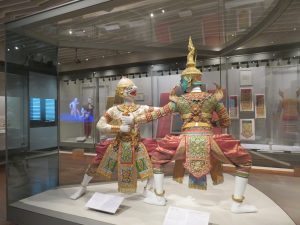
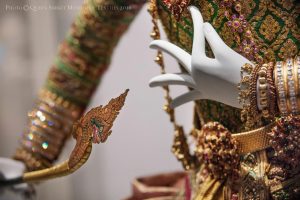
Dressing Gods & Demons Costumes for Khon at the Queen Sirikit Museum of Textiles. Photo: Queen Sirikit Museum of Textiles / Facebook.

Entering the first two rooms, visitors will be introduced to Khon through textiles. Although similar to royal attire, Khon costumes and jewelry use different styles and materials.

The exhibition describes the origins of Khon from the Ayutthaya period to its revival by Queen Sirikit through royal performances in 2007 to bring it back to the public. Three film clips show what Khon was like in the past and some of the processes of costume-weaving and embroidering.
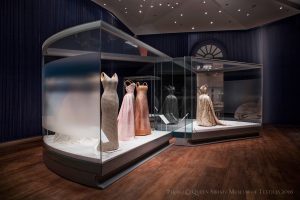
The two last rooms present the museum’s highlight: Costumes designed by renowned Parisienne couturier Balmain worn by the Queen during a six-month tour of the United States and Europe in 1960 with King Bhumibol, when she was toasted as the height of fashion.

HM Queen Sirikit’s dresses at Queen Sirikit Museum of Textiles posted on Jan. 11. Photo: Queen Sirikit Museum of Textiles / Facebook.

The collection includes short and long dresses, and hats and shoes of various styles. What makes them unique is the fine combination of Thai patterns and local textile fused with Western clothing to represent a Thai identity on the international stage. The partnership between the Queen and Balmain paid off, as the queen named the best-dressed woman in 1965 by what was then the influential International Best-Dressed List’s Hall of Fame.

While looking at the clothing, see photographs of Her Majesty wearing the exhibited pieces along with high-quality footage of Their Majesties during their visits abroad from 1960 to 1973.

The museum is well-curated with an impressive display of clothing, especially the use of invisible mannequin techniques to make the dresses stand out in their glittering display windows.

Activity room at Queen Sirikit Museum of Textiles posted on Jan. 13. Photo: Queen Sirikit Museum of Textiles / Facebook.

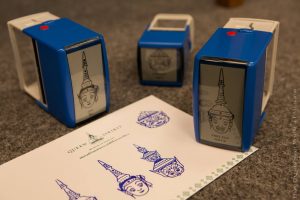
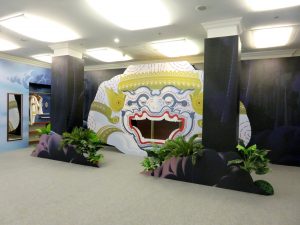
Visitors young or old can also have fun dressing up as their favorite Khon character in a tunic for photos, coloring Khon costumes or stamping characters and handwoven textiles onto souvenir cards.

The exhibitions launched Aug. 12 to celebrate the Queen’s 84th birthday and runs through June 2018.

Admission is 150 baht for adults, 80 baht for seniors over 65, and 50 baht for students and children. Children under 12 and visitors to the Grand Palace who purchase the palace tickets get in free. Visitors in wheelchairs are welcome.

The museum is open daily from 9am to 4:30pm. Last admission at 3:30pm.

The exterior of the Queen Sirikit Museum of Textiles. Photo: Queen Sirikit Museum of Textiles / Facebook
Dressing Gods & Demons Costumes for Khon at the Queen Sirikit Museum of Textiles. Photo: Queen Sirikit Museum of Textiles / Facebook.
HM Queen Sirikit’s dresses at Queen Sirikit Museum of Textiles posted on Jan. 11. Photo: Queen Sirikit Museum of Textiles / Facebook.
Activity room at Queen Sirikit Museum of Textiles posted on Jan. 13. Photo: Queen Sirikit Museum of Textiles / Facebook.

Advertisement

Trump Ready to Send Troops to Stop ‘Bad Hombres’ in Mexico

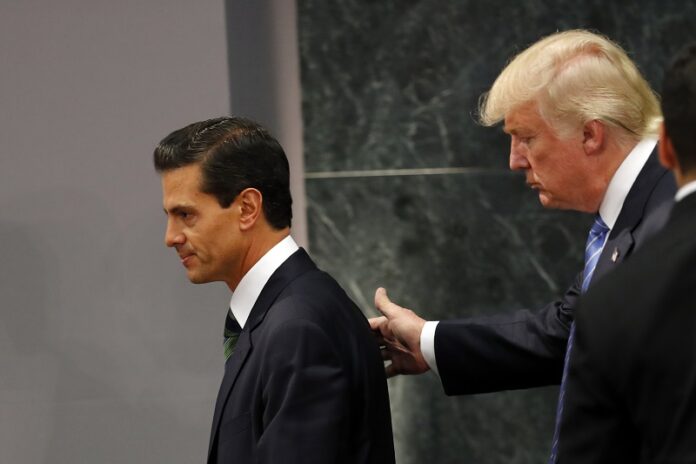
Republican presidential nominee Donald Trump walks with Mexico's President Enrique Pena Nieto in August at the end of their joint statement at Los Pinos, the presidential official residence, in Mexico City. Photo: Dario Lopez-Mills / Associated Press

WASHINGTON — President Donald Trump warned in a phone call with his Mexican counterpart that he was ready to send U.S. troops to stop “bad hombres down there” unless the Mexican military does more to control them, according to an excerpt of a transcript of the conversation obtained by The Associated Press.

The excerpt of the call did not detail who exactly Trump considered “bad hombres,” nor did it make clear the tone and context of the remark, made in a Friday morning phone call between the leaders. It also did not contain Mexican President Enrique Pena Nieto’s response. Mexico denies that Trump’s remarks were threatening.

Still, the excerpt offers a rare and striking look at how the new president is conducting diplomacy behind closed doors. Trump’s remarks suggest he is using the same tough and blunt talk with world leaders that he used to rally crowds on the campaign trail.

Eduardo Sanchez, spokesman for Mexico’s presidential office, denied the tone of the conversation was hostile or humiliating, saying it was respectful.

“It is absolutely false that the president of the United States threatened to send troops to Mexico,” Sanchez said in an interview with Radio Formula on Wednesday night.

A White House spokesman did not respond to requests for comment. The Mexican Foreign Relations Department had earlier told The AP: “The negative statements you refer to did not occur during said telephone call. On the contrary, the tone was constructive.”

The phone call between the leaders was intended to patch things up between the new president and his ally. The two have had a series of public spats over Trump’s determination to have Mexico pay for the planned border wall, something Mexico steadfastly refuses to agree to.

“You have a bunch of bad hombres down there,” Trump told Pena Nieto, according to the excerpt given to AP. “You aren’t doing enough to stop them. I think your military is scared. Our military isn’t, so I just might send them down to take care of it.”

A person with access to the official transcript of the phone call provided only that portion of the conversation to The Associated Press. The person gave it on condition of anonymity because the administration did not make the details of the call public.

The Mexican website Aristegui Noticias on Tuesday published a similar account of the phone call, based on the reporting of journalist Dolia Estevez. The report described Trump as humiliating Pena Nieto in a confrontational conversation.

Mexico’s foreign relations department said the report was “based on absolute falsehoods.”

Americans may recognize Trump’s signature bombast in the comments, but the remarks may carry more weight in Mexico.

Political analyst and former presidential spokesman Ruben Aguilar notes Pena Nieto had enjoyed an apparent spike in his low approval levels, as Mexicans rallied around him for publicly challenging Trump in the border wall dispute.

The latest remarks could undercut that, if Pena Nieto is viewed as “weak,” he said.

Trump has used the phrase “bad hombres” before. In an October presidential debate, he vowed to get rid the U.S. of “drug lords” and “bad people.”

“We have some bad hombres here, and we’re going to get them out,” he said. The phrase ricocheted on social media with Trump opponents saying he was denigrating immigrants.

Trump’s comment was in line with the new administration’s bullish stance on foreign policy matters in general, and the president’s willingness to break long-standing norms around the globe.

Before his inauguration, Trump spoke to the president of Taiwan, breaking long-standing U.S. policy and irritating China. His temporary ban on refugees and travelers from seven Muslim-majority countries, aimed at reviewing screening procedures to lessen the threat of extremist attacks, has caused consternation around the world.

But nothing has created the level of bickering as the border wall, a centerpiece of his campaign. Mexico has consistently said it would not pay for the wall and opposes it. Before the phone call, Pena Nieto canceled a planned visit to the United States.

The fresh fight with Mexico last week arose over trade as the White House talked of a 20 percent tax on imports from the key U.S. ally to finance the wall after Pena Nieto abruptly scrapped his Jan. 31 trip to Washington.

The U.S. and Mexico conduct some USD $1.6 billion a day in cross-border trade, and cooperate on everything from migration to anti-drug enforcement to major environmental issues.

Trump tasked his son-in-law and senior adviser, Jared Kushner  a real estate executive with no foreign policy experience  with managing the ongoing dispute, according to an administration official with knowledge of the call.

At a press conference with British Prime Minister Theresa May last week, Trump described his call with Pena Nieto as “friendly.”

In a statement, the White House said the two leaders acknowledged their “clear and very public differences” and agreed to work through the immigration disagreement as part of broader discussions on the relationship between their countries.

Story: Vivian Salama

Advertisement

Hot News

LATEST NEWS

Bangkok
overcast clouds
30 ° C
31.6 °
30 °
75 %
3.5kmh
98 %
Sat
30 °
Sun
34 °
Mon
34 °
Tue
33 °
Wed
32 °