Rescue workers collect remains at the scene, where a British motorcyclist lost control of his big bike and was run over by three vehicles, on Chiang Mai-Lampang Road in the early hours of October 9, 2025.
CHIANG MAI — A British motorcyclist died instantly after losing control of his big bike and being struck by three vehicles in the Juvenile Court underpass on Chiang Mai-Lampang Road early Thursday morning.
The fatal accident occurred at 12:20 a.m. on October 9 in the outbound lane of the underpass in Mueang District. Chiang Mai Emergency Rescue teams arrived at the scene to find a black big bike overturned in the main traffic lane on the upward slope of the underpass, with motorcycle parts and bloodstains scattered across the roadway.
Witnesses sit in shock on the roadside after a British motorcyclist lost control of his big bike and was run over by three vehicles in the Juvenile Court underpass on Chiang Mai-Lampang Road in the early hours of October 9, 2025.
The victim, identified as Craig D, a 51-year-old British national, was thrown from his motorcycle and run over by three cars traveling behind him. His body was found in severely damaged condition at the scene.
Multiple rescue units worked to manage traffic flow and illuminate the area for the on-duty doctor and investigating officers to document evidence. The victim’s body was subsequently transported for autopsy.
Authorities are urging motorists to exercise extreme caution, especially during nighttime hours and on inclined roads. Officials warn that water or dust on road surfaces can cause vehicles to lose traction easily, and high-speed driving significantly increases the risk of fatal accidents.
Police officers escort a rescued Thai woman (left) from a luxury Jomtien hotel on October 8, 2025, while a Chinese suspect in a white shirt (center) is taken into custody.
PATTAYA — Police freed a 20-year-old woman from a luxury Jomtien hotel on October 8, 2025, after she was kidnapped by a Chinese criminal gang posing as job recruiters.
The rescue operation began at 6:00 a.m. when a local resident identified as “Bird” rushed to Pattaya City Police Station to report his sister’s abduction. Officers quickly tracked down the victim’s location and launched a successful raid.
Bird told investigators he had received a distress message from his sister, Ms. Phimnipa, 20, along with the hotel’s GPS coordinates.
From Job Offer to Captivity
Phimnipa explained she had responded to a Facebook post recruiting people to open “mule accounts”—bank accounts used for money laundering. Struggling financially and needing rent money, she contacted the recruiters.
After being picked up near Walking Street in South Pattaya, she was driven around the city and Sri Racha area in multiple vehicles before being taken to the upscale Jomtien hotel.
Mr. Bird (left, in black shirt) speaks with police officers and Explosive Ordnance Disposal (EOD) personnel outside the luxury Jomtien hotel after authorities successfully rescued his sister from Chinese kidnappers on October 8, 2025.
Once inside, a group of 6-7 Chinese nationals seized her phone and ATM cards, forcing her to withdraw cash. The gang then accused her of causing over 200,000 baht ($6,155) to vanish from accounts under her name and threatened violence unless she took responsibility. She was held captive in the hotel room, blindfolded during transport to prevent her from identifying the location.
Quick-Thinking Escape
Phimnipa managed to trick her captors by requesting her phone back, claiming she needed to contact friends to open more accounts for them. Instead, she secretly messaged her brother with a plea for help and the hotel’s exact location, enabling the police rescue.
Officers found one Chinese man guarding the victim and arrested him. The suspect has refused to cooperate during questioning at Pattaya City Police Station. Authorities are holding him for further investigation and working to dismantle the broader criminal network.
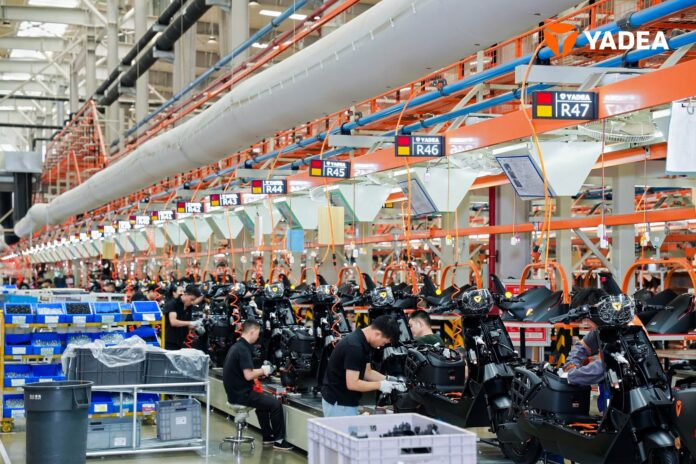
YADEA's factory in Bang Sao Thong district, Samut Prakan province, is being developed as the company's ASEAN manufacturing center.
BANGKOK — Chinese electric motorcycle manufacturer YADEA is positioning Thailand as its regional manufacturing base after receiving official investment promotion certification from the Board of Investment (BOI), with plans to expand production capacity to 600,000 units within three years.
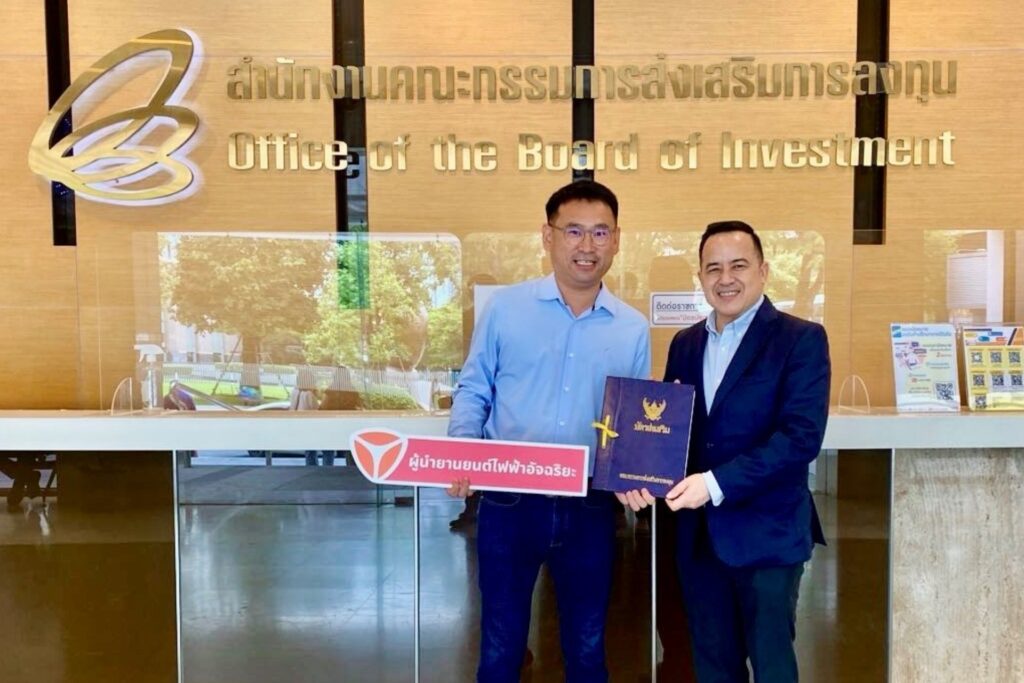
Jack Yang, CEO of YADEA Thailand, announced that the company has officially received its Investment Promotion Certificate from the BOI, presented by Deputy Secretary-General Sutthiket Thudpitak.
“This marks a significant milestone in YADEA’s investment strategy and manufacturing expansion in Thailand,” Yang told Prachachat Business. “It reaffirms to consumers that YADEA electric motorcycles can be legally registered in Thailand and are eligible for tax benefits.”
The company has set an initial target of becoming Thailand’s number one electric motorcycle brand.
Jack Yang, CEO of YADEA Thailand, receives the Investment Promotion Certificate from Sutthiket Thudpitak, Deputy Secretary-General of the Board of Investment (BOI), on September 26, 2025.
ASEAN Manufacturing Hub
YADEA’s factory in Bang Sao Thong district, Samut Prakan province, is being developed as the company’s ASEAN manufacturing center with an initial production capacity of 500,000 units per year, expandable to 600,000 units within three years.
The facility will employ over 80% Thai workers, creating more than 500 jobs for Thai nationals. Strategically, the company aims to establish the site as an innovation and smart manufacturing center for the ASEAN market.
“Receiving BOI certification is a crucial step for us. We’re not just building a factory—we’re integrating world-class innovation with in-depth research using smart manufacturing systems similar to our Super Factory in China, to deliver intelligent electric motorcycles created specifically for Thai consumers,” Yang said.
YADEA currently operates more than 70 dealerships nationwide.
Legal Registration and Tax Benefits
Following BOI certification, all YADEA electric motorcycles manufactured in Thailand can be legally registered and qualify for tax benefits, ensuring quality and service standards. Popular models include the Velax, VoltGuard, RS20, and Ova, designed for general commuting and urban travel.
YADEA currently operates more than 70 dealerships nationwide and plans to expand to over 100 locations by year-end, ensuring consumers across the country have convenient access to products and after-sales services.
Commerce Ministry supports opportunities for Thailand's 3 million influencers to expand into international markets.
BANGKOK — The Ministry of Commerce is mobilizing Thailand’s rapidly growing influencer industry—now exceeding 3 million creators nationwide—to help boost Thai local brands in global markets through a strategic partnership with the Thai Influencer Association.
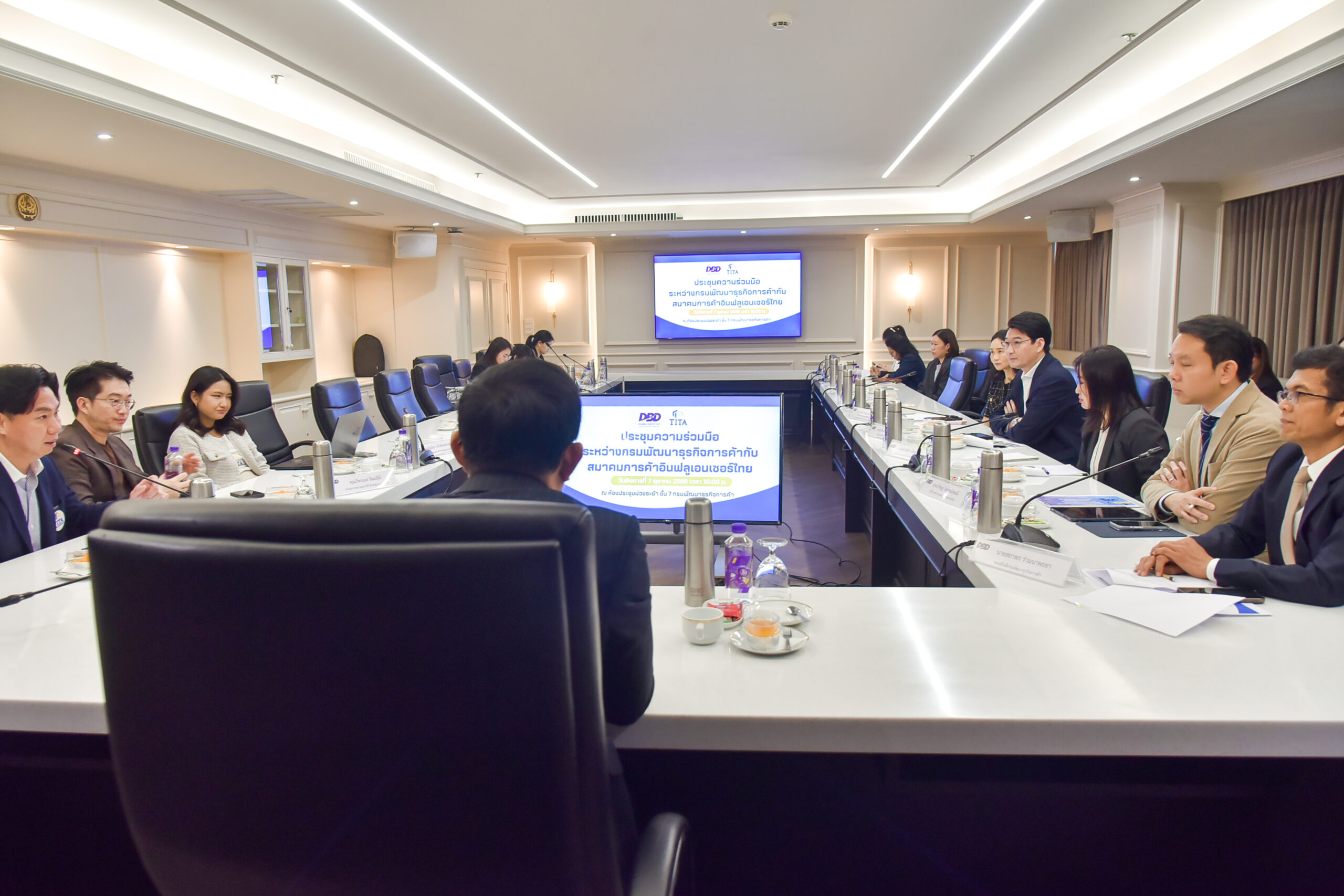
Poonpong Naiyanapakorn, Director-General of the Department of Business Development (DBD), announced on October 7 that the Department held a meeting with the Thai Influencer Association to discuss promoting sustainable and standardized growth in Thailand’s influencer industry while leveraging it to support Thai entrepreneurs in expanding internationally.
Building Professional Standards
The Thai Influencer Association has focused on raising professional and ethical standards by developing a code of conduct in collaboration with the Consumer Protection Board. It has also worked to connect influencers with entrepreneurs by organizing training programs on product publicity, content creation, and influencer marketing, while supporting opportunities for Thai influencers to expand into international markets.
The association has been building networks and collecting data to strengthen the industry. It provides guidance for businesses on selecting influencers whose content aligns with their products and encourages the use of micro-influencers, who are cost-effective and able to reach niche target audiences effectively.
Influencers are also advised to adapt to platform algorithms by using the “three contents, one live” strategy to increase visibility and expand their online reach.
Department of Business Development meets with Thai Influencer Association at the Ministry of Commerce on October 8, 2025.
Driving Economic Growth Through Digital Marketing
The DBD and the Thai Influencer Association discussed promoting entrepreneurs at all levels, including community-based businesses, by integrating storytelling and influencer marketing to drive national economic growth and export expansion.
“Business models have changed significantly, and one key factor influencing consumer purchasing decisions today is the role of influencers, who have become crucial players in the online and e-commerce markets,” Poonpong said.
Tapping Into the Global Creator Economy
The initiative comes as the global creator economy expands rapidly, with over 60 million content creators worldwide generating more than $20 billion in annual economic value. This demonstrates the power of content in motivating consumers and effectively connecting them with products.
The partnership aligns with the Department of Business Development’s mission to support Thai entrepreneurs in building brands, expanding marketing channels, and enhancing competitiveness, particularly by encouraging the use of digital technologies and online media to drive sustainable sales and business growth.
The collaboration demonstrates the Department’s commitment to strengthening Thai entrepreneurs through cross-sector partnerships, with the goal of creating a robust business ecosystem and driving the growth of Thailand’s digital economy and export sector.
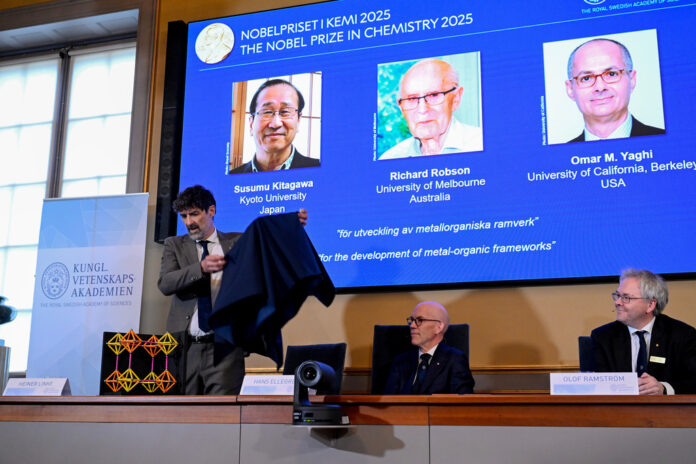
Chair of the Nobel Committee for Chemistry Heiner Linke makes a demonstration, next to Secretary General of the Swedish Academy of Sciences Hans Ellegren, and Member of the Nobel Committee for Chemistry Olof Ramstrom, right, after they announce Susumu Kitagawa, Richard Robson and Omar Yaghi, on screen behind, as the recipients the Nobel Prize in Chemistry, at the Nobel Assembly of the Karolinska Institutet, in Stockholm, Sweden, Wednesday, Oct. 8, 2025. (Fredrik Sandberg/TT News Agency via AP)
STOCKHOLM (AP) — Scientists Susumu Kitagawa, Richard Robson and Omar M. Yaghi won the Nobel Prize in chemistry on Wednesday for their development of metal–organic frameworks that could play a part in solving some of humanity’s greatest challenges. An expert likened the discovery to Hermione Granger’s enchanted handbag in the fictional “Harry Potter” series.
From capturing carbon dioxide from the atmosphere or sucking water out of dry desert air, the trio’s new form of molecular architecture can absorb and contain gases inside stable metal organic frameworks.
The frameworks can be compared to the timber framework of a house, and Hermione’s famous beaded handbag, in that they are small on the outside but very large on the inside, according to Olof Ramström, a member of the Nobel Committee for Chemistry.
The chemists worked separately but added to each other’s breakthroughs, which began in 1989 with Robson.
“Metal-organic frameworks have enormous potential, bringing previously unforeseen opportunities for custom-made materials with new functions,” Heiner Linke, chair of the Nobel Committee for Chemistry, said in a news release.
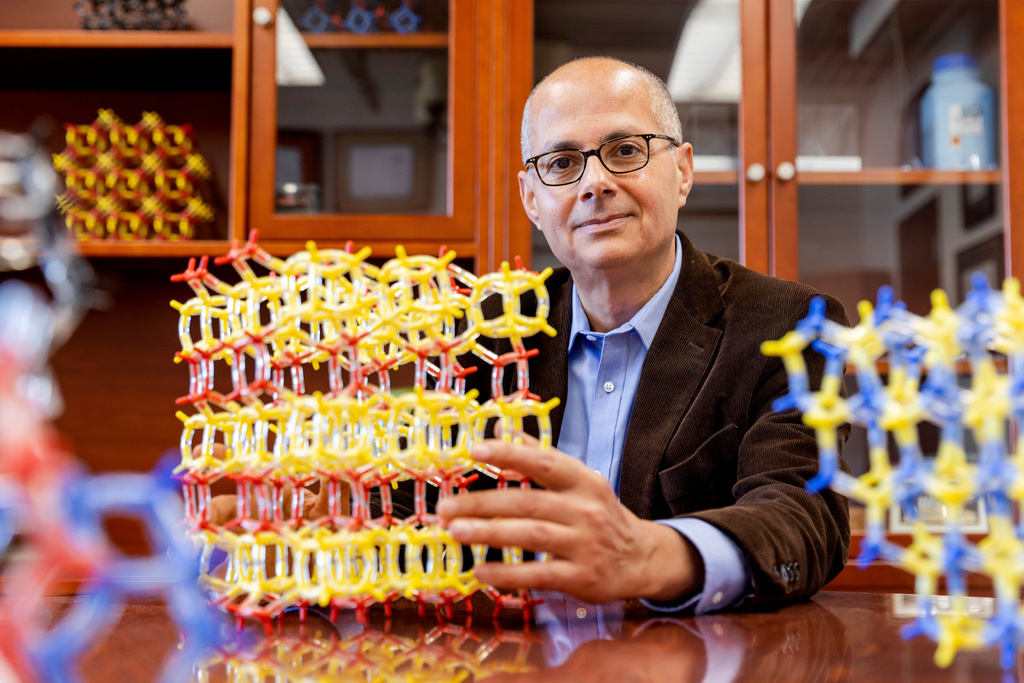
This undated image provided by the University of California, Berkeley shows Omar Yaghi, who was one of three scientists awarded the Nobel Prize in Chemistry. (Brittany Hosea-Small, University of California, Berkeley via AP)
Perfluoroalkyl and polyfluoroalkyl substances, or PFAS, are a group of chemicals that have been around for decades and have now spread into the air, water and soil. They are also referred to as “forever chemicals.”
Hans Ellegren, secretary-general of the Royal Swedish Academy of Sciences, announced Wednesday’s prize in Stockholm. It was the third prize announced this week.
Robson, 88, is affiliated with the University of Melbourne in Australia. Kitagawa, 74, is with Japan’s Kyoto University and Yaghi, 60, with the University of California, Berkeley.
Kitagawa spoke to the committee, and the press, over the phone Wednesday after his win was announced.
“I’m deeply honored and delighted that my long-standing research has been recognized,” he said.
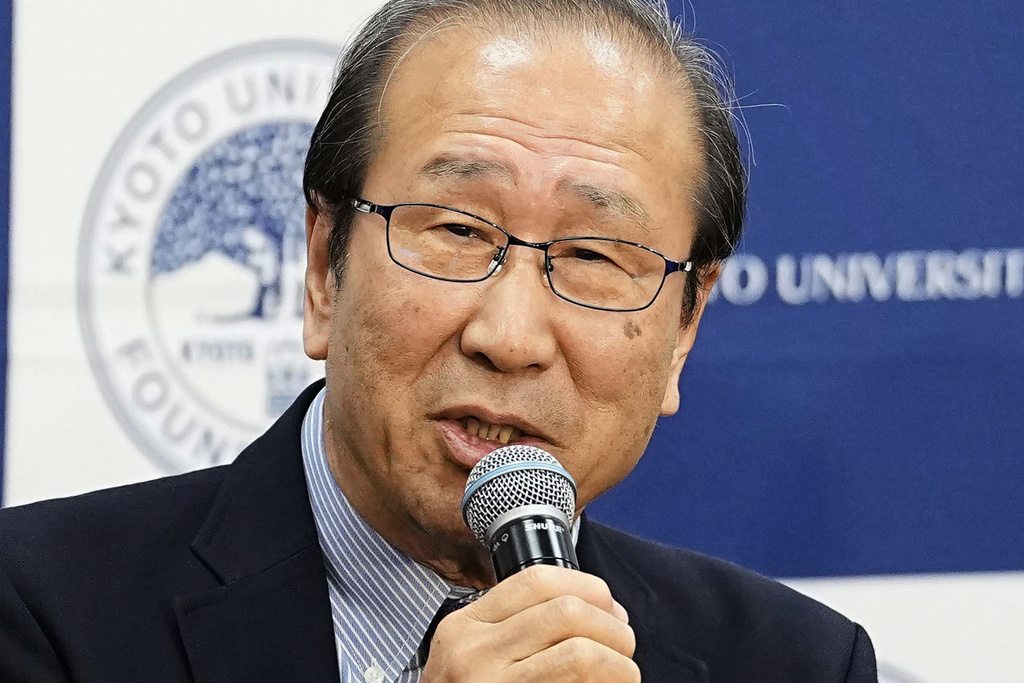
Kyoto University professor Susumu Kitagawa speaks during a news conference at the university in Kyoto, near Osaka, Wednesday, Oct. 8, 2025, after he won the Nobel Prize in chemistry. (Ren Onuma/Kyodo News via AP)
The 88-year-old Robson, in a phone call with The Associated Press, said he was “very pleased of course and a bit stunned as well.”
“This is a major thing that happens late in life when I’m not really in a condition to withstand it all,” he said. “But here we are.”
The 2024 prize was awarded to David Baker, a biochemist at the University of Washington in Seattle, and to Demis Hassabis and John Jumper, computer scientists at Google DeepMind, a British-American artificial intelligence research laboratory based in London.
This undated image provided by the University of Melbourne, shows Richard Robson, who was one of three scientists awarded the Nobel Prize in Chemistry. (Paul Burston, University of Melbourne via AP)
This year’s Nobel announcements continue with the literature prize Thursday. The Nobel Peace Prize will be announced Friday and the economics prize next Monday.
The award ceremony will be held Dec. 10, the anniversary of the death of Alfred Nobel, who founded the prizes. Nobel was a wealthy Swedish industrialist and the inventor of dynamite. He died in 1896.
In a world where trade and investment fuel economic growth, cross-border transactions are vital to Thailand’s prosperity. Yet, behind this global exchange lies a silent danger—bribery—a form of corruption that quietly erodes investor confidence, weakens governance, and damages the nation’s reputation.
How Cross-Border Bribery Works This corruption often occurs when illegal payments are made to government officials to fast-track processes, evade taxes, or bypass inspections—especially at customs checkpoints where goods and officials converge. Such actions may seem small, but they create deep systemic distortions that undermine fair competition and public trust.
The Hidden Costs Bribery doesn’t just benefit a few; it harms everyone. It drains government revenue, weakens honest enterprises, and puts public safety at risk when unchecked goods enter the market. For instance, exporters who pay for faster clearance may compromise product quality, while fuel smugglers bribing officials contribute to economic and environmental losses.
ONACC’s Stand: Together Against Bribery (TaB) To combat this threat, the Office of the National Anti-Corruption Commission (ONACC) has initiated “Together Against Bribery” (TaB) — a nationwide movement promoting integrity in trade and investment. Through inter-agency cooperation, public awareness, and preventive mechanisms, ONACC aims to dismantle bribery networks at their source.
A Collective Responsibility Fighting bribery requires all of us. Citizens, businesses, and public officials must join forces—refusing to pay, accept, or ignore corruption. By standing firm, reporting wrongdoing, and upholding transparency, we can ensure Thailand’s economy grows with fairness and integrity.
Together, we can crack the code of cross-border bribery and build a future where honesty is not an exception—but the rule.
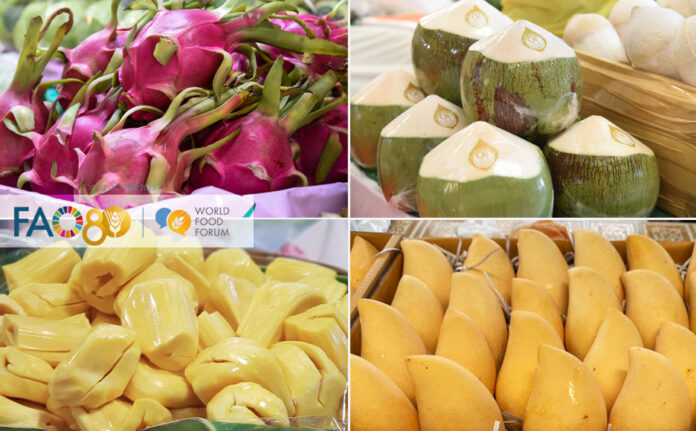
Thai fruits including dragon fruit, fragrant coconut, jackfruit, and Nam Dok Mai mango that the Agricultural Marketing Organization (AMO) will showcase at the World Food Forum 2025 in Rome, Italy, from October 10-13, 2025.
BANGKOK — The Agricultural Marketing Organization (AMO) is advancing its “Thailand Agri Intertrade 2025” initiative by bringing Thailand’s high-value agricultural products and Smart Farming innovations to the World Food Forum 2025 in Rome, Italy, from October 10-13, 2025.
The participation aims to create trade opportunities and sustainable prosperity for Thai farmers while positioning Thai agricultural products on the global stage under the BCG Economy Model (Bio Economy, Circular Economy, Green Economy).
Business Matching for Thai Farmers
Panithan Meechaiyo, Director of AMO, said the forum represents a crucial step in elevating Thai tropical agricultural products to international markets. The organization is committed to supporting Thai farmers and agricultural institutions by introducing knowledge, technology, and innovation to enhance production capabilities and competitiveness while ensuring sustainability in Thailand’s agricultural sector.
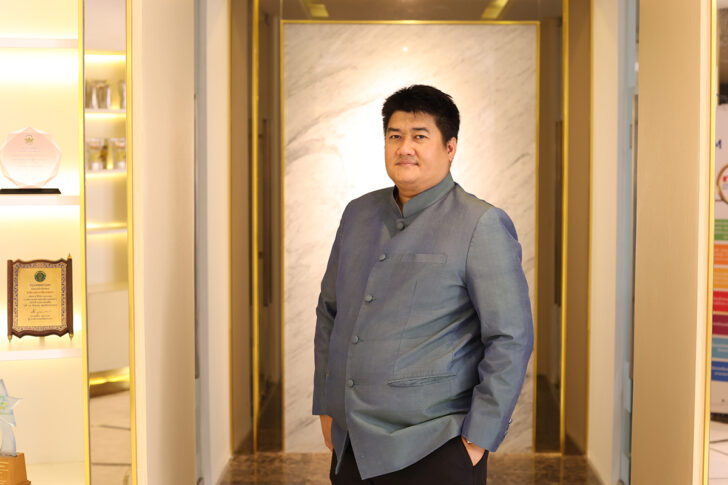
Panithan Meechaiyo, Director of AMO
“We aim to make Thai agricultural products internationally recognized and push them from regional markets to global markets in a stable and sustainable manner,” Panithan said.
The event will feature business matching sessions, allowing foreign buyers and entrepreneurs to negotiate directly with Thai farmers and producers.
Premium Thai Fruits on Display
Thailand will showcase high-quality agricultural products at the forum, including popular fruits such as Nam Dok Mai mango, fragrant coconut, dried pineapple, dried guava, dragon fruit, roselle, and jackfruit—all known for their exceptional taste and expected to attract strong interest from international consumers.
Strategic Opportunity for Thai Agriculture
This international participation not only generates income for farmers but also elevates Thai agricultural standards to meet the expectations of global investors and consumers. The forum provides a vital opportunity to connect Thai producers with world markets, fostering both business-to-business (B2B) partnerships and direct business-to-consumer (B2C) channels.
“This will enhance the competitiveness of Thai farmers and firmly establish ‘Thai agricultural products’ as a top choice on the global trade stage,” Panithan added.
About World Food Forum 2025
The World Food Forum 2025, organized by the Food and Agriculture Organization of the United Nations (FAO), will take place at Park of Porta Capena in Rome from October 10-13, 2025. The forum serves as a platform for stakeholders to innovate and take action toward transforming food and agricultural systems sustainably.
The event aligns with AMO’s mission to build a stable and sustainable economy under the BCG Economy Model, which encompasses:
Bio Economy: Using innovation to add value to products
Green Economy: Utilizing agricultural resources in a balanced and sustainable manner
AMO positions itself not merely as a marketplace provider but as a strategic partner supporting Thai farmers in developing standards, generating income, and opening new markets both domestically and internationally.
Veterinary student "Mint" Kanyawee (left) seeks help from Pavena Foundation president Pavena Hongsakul regarding her mother's suspicious death in Japan, October 7, 2025.
PATHUM THANI — A 20-year-old veterinary student has sought help from the Pavena Foundation for Children and Women to investigate her mother’s suspicious death at a massage spa in Yuki, Ibaraki Prefecture, Japan.
Kanyawee “Mint” Nanongthum reported that her mother, Nongnaphat “Toon,” 47, was found dead naked on a massage bed at the spa on October 5. The student suspects foul play and is seeking assistance to bring her mother’s body back to Thailand.
Suspicious Circumstances
Mint told foundation president Pavena Hongsakul that she last spoke with her mother via video call at 11 p.m. on October 4. During that conversation, her mother recounted being choked by an apparently mentally unstable Japanese customer the previous day. The mother said she threatened to call police, prompting the man to release her.
After that call, Mint could no longer reach her mother. Messages went unread, and the spa owner initially lied, claiming the woman had left with a man—despite already knowing she was dead.
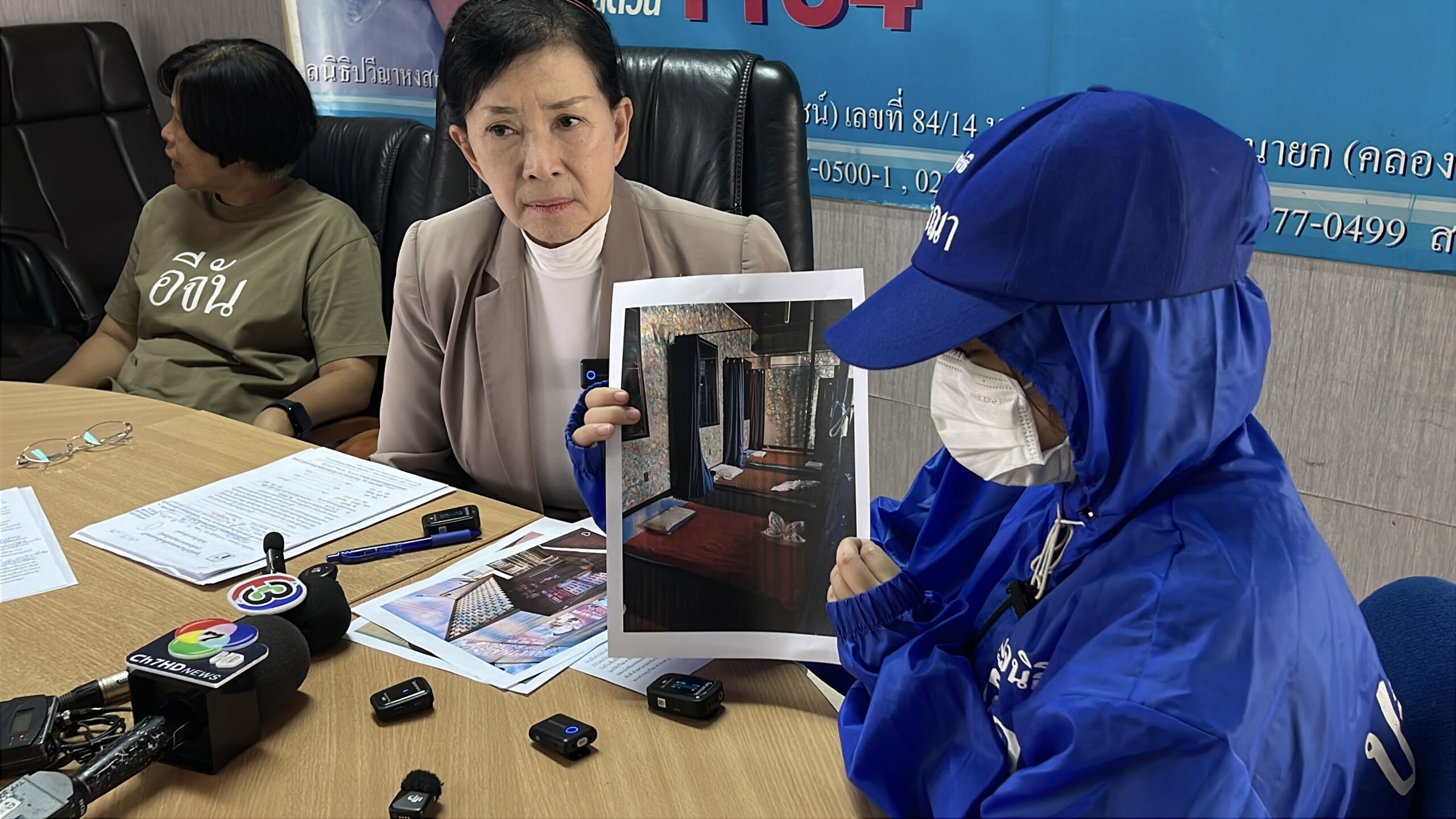
Kanyawee “Mint” Nanongthum (right) shows media a photograph of the massage spa in Japan where her mother, Nongnaphat, worked before being found dead under suspicious circumstances, during a press conference at the Pavena Foundation for Children and Women on October 8, 2025.
“The owner deleted my mother’s photos from the shop’s page and told me to delete my missing person posts because it was damaging their business,” Mint said. “I don’t understand what I did wrong.”
Mother Worked to Support Daughter’s Education
The mother had been working at the Thai-owned spa in Japan for about six months, sending money to support her daughter’s medical studies. Mint, who lives with her 73-year-old grandmother, also relies on student loans for tuition.
“My mother was the pillar of our family. She went to Japan to earn money so I could finish my veterinary degree,” Mint said. “She wasn’t sick before this. Finding her naked and dead on a massage bed is completely abnormal.”
The Thai Spa in Yuki, Ibaraki, Japan, where Thai massage therapist Nongnaphat was found dead on a massage bed on October 5, 2025.
Foundation Steps In
Pavena said she has coordinated with Pol. Col. Suraphan Thaiprasert, Commander of the Foreign Affairs Division of the Royal Thai Police, and the Foreign Ministry to work with Japanese authorities and the Thai embassy to investigate the death and arrange repatriation.
Bringing the body home is expected to cost around 200,000 baht. The Foreign Ministry has offered to provide a loan, which Mint would need to repay. The foundation is seeking public donations and has pledged to support Mint’s education until graduation.
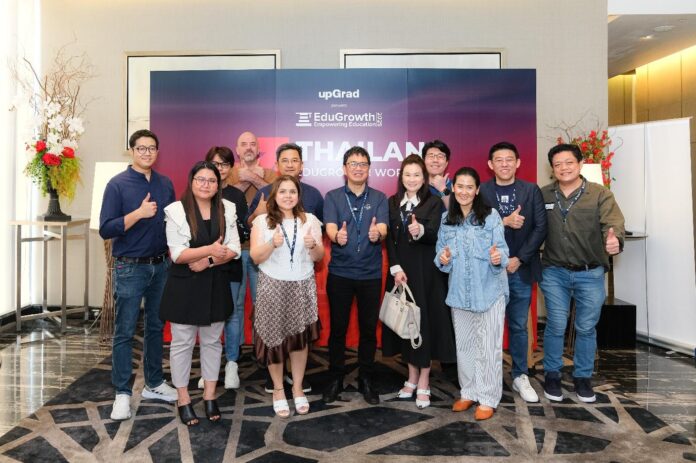
At the recent upGrad Coffee Talk, titled “Take the Next Step to a Global Degree with upGrad” in Bangkok, professionals and learners gathered to explore the realities of pursuing international higher education while balancing demanding careers and personal responsibilities. The event provided a platform for Thai learners to hear first-hand experiences from those who have successfully navigated the challenges of global education, demonstrating that international degrees are not merely aspirational but achievable.
The session featured inspiring speakers, including Mr. Werachon Wangkawe, Managing Director at TENET R&D Co., Ltd., and an alumnus of Liverpool John Moores University (UK); and Ms. Kwanchanok Rungrattanawanich, a current Doctor of Business Administration (DBA) candidate at Golden Gate University (USA) and a member of the Parent-Teacher Association of the Demonstration School of Ramkhamhaeng University.
Both speakers shared insights on managing work, study, and personal life while emphasizing the transformative impact of international education on professional development. Their narratives highlighted the practical benefits of global degrees, including enhanced career opportunities, expanded professional networks, and strengthened leadership skills.
Ms. Kwanchanok Rungrattanawanich shared “I chose upGrad because of the strong support team that guided me through my application and SOP. The online format also gives me the flexibility to balance work, family, and studies. I can learn when it’s most convenient—whether late at night, after work, or on weekends—and still connect with professors and classmates during live sessions. For me, this journey is not only about advancing knowledge, but also about building pride for my family. I want my children to look up to their mother’s achievement and feel inspired to aim higher in their own education. ”
The Coffee Talk offered participants a unique opportunity to engage with authentic experiences from Thai learners who have successfully advanced their education with upGrad. Attendees gained practical strategies for managing the demands of academic, professional, and personal responsibilities, while also connecting with like-minded professionals exploring their next academic step. This combination of real-life insights, actionable guidance, and community interaction made the event particularly valuable for those considering international higher education.
upGrad: Bridging Global Education with Local Access
Founded in India, upGrad is one of Asia’s largest online higher education platforms, with a presence across Southeast Asia in Singapore, Vietnam, Indonesia, the Philippines, and Thailand. By partnering with globally recognized universities, including Northeastern University, Golden Gate University, Edgewood University, and Liverpool John Moores University, upGrad delivers world-class programs designed for professional advancement. upGrad’s portfolio includes a range of programs tailored to meet diverse career goals: Master of Business Administration (MBA), Doctor of Business Administration (DBA), Dual MBA & DBA, Master of Education (M.Ed.), Doctor of Education (Ed.D.), Dual M.Ed. & Ed.D., and Master of Science in Data Science.
Supporting Thai Learners in Overcoming Key Challenges
Many Thai professionals encounter challenges when considering international higher education, such as balancing demanding careers, personal commitments, financial factors, and evaluating program quality and accreditation.
To address these challenges, upGrad provides a holistic, learner-centered approach that combines flexible online learning, globally recognized programs, and dedicated academic support to help learners overcome these barriers with confidence.
Flexible, fully online programs, including weekend live sessions, recorded lectures, and extensive digital resources, allow learners to study at their own pace while balancing professional and personal obligations. Continuous support from faculty, mentor, peer forums, and interactive discussions ensures engagement and guidance throughout the learning journey. While the programs are delivered fully online, learners also have the opportunity to participate in immersion trips to partner university campuses, enhancing their academic journey with real-world exposure and global networking opportunities
Along with flexible learning, upGrad provides convenient payment options and affordable fees. With installment plans and program costs much lower than full-time study abroad, learners can continue advancing their careers without interruption. The immediate applicability of newly acquired knowledge ensures a high return on investment, allowing learners to enhance their professional performance while studying.
Many learners remain concerned about the credibility of programs and the availability of reliable information when pursuing international education. To address these concerns, upGrad partners with top-ranked universities and provides access to local academic counselors in Bangkok. A growing community of Thai learners benefits from workshops, immersion programs, and networking events. The curricula are practical and work-ready, featuring case studies, simulations, and applied projects, which help professionals smoothly transition into new fields or deepen expertise in their current roles.
Recently, Professor Jay from Golden Gate University traveled to Thailand to lead an exclusive dissertation workshop for upGrad learners, followed by a dynamic networking session that helped participants build meaningful professional connections. This type of engagement not only reassures learners of program credibility but also brings the global classroom experience closer to home.
In conclusion:
The success of the upGrad Coffee Talk in Bangkok demonstrates that Thai professionals are ready to embrace global educational opportunities. By offering flexible learning formats, affordable tuition plans, accredited programs, and strong local support, upGrad equips learners with the tools and support needed to confidently pursue their academic and professional goals. Through credible partnerships, practical curricula, and personalized assistance, upGrad makes global higher education both accessible and directly relevant to the career growth of Thai professionals.
A portrait of Gandhi at the Presidential Palace in New Delhi. (Photo: Pravit Rojanaphruk)
“The world is not just different; the very structure of the international order is undergoing a profound transformation. American nationalism, the rise of China, the saga of Brexit and the rebalancing of the global economy are often cited as the more dramatic examples of change. In fact, the phenomenon is far more pervasive than just these illustrations. We have seen a return of old empires like Russia, Iran or Turkey through greater energy and influence in proximate regions. West Asia is in ferment, even by its exceptionally volatile standards. The centrality of ASEAN to Asia is not what it used to be….”
“When India decided to look more to the East a quarter of a century ago, it was the beginning of a profound correction in its foreign policy…” S. Jaishankar, External Affairs Minister of India, in his book entitled: The India Way: Strategies for An Uncertain World, p. 71 and p. 160, first published in India in 2020.
Five years after the seminal book was first published by Indian External Affairs Minister S. Jaishankar, a 10-day visit by this writer to India reflects the optimism and confidence about the rise of India and its emerging role in Asia and beyond.
At the Confederation of Indian Industry (CII) in New Delhi, we were reminded that India’s goal is to become a developed nation by 2047, or a century after it gained independence from Great Britain.
The world’s most populous nation is already the fifth largest economy, and is poised to become Number 4 when it replaces Japan. With that comes “the burgeoning middle class,” said a speaker who directed our attention to a graphic containing a projection by the World Economic Forum that with the current pace of economic growth, India will have 44 percent of its households categorised as upper middle class, or 168 million households, by the year 2030, or five years from now, while the percentage of the poor household will be reduced to 15 percent, or 55 million households – if the annual growth rate holds at 7.5 percent.
As it is, Indian tourists are already among the Top 3 foreign tourists to Thailand and the fastest growing group among the Top 10 nations.
Thailand had a total of 24,115,328 foreign tourists arrive in the country from January 1 – September 30, according to the latest Thai government figures as reported on Khaosod English on Saturday, October 4, 2025.
The top 10 foreign tourist markets visiting Thailand in the first nine months of 2025 are:
Malaysia 3.47 million people (down 7.05 percent)
China 3.41 million people (down 34.97 percent)
India 1.77 million people (up 15.28 percent)
Russia 1.27 million people (up 9.71 percent)
South Korea 1.13 million people (down 17.7 percent)
Japan 800,000 (up 5.39 percent)
United Kingdom 750,000 (up 13.66 percent)
United States 740,000 (up 5.59 percent)
Taiwan 730,000 (down 9.14 percent)
Singapore 680,000 (down 1.65 percent)
Given the proximity of air travel between India and Thailand (less than four hours between Bangkok and New Delhi, or Bengaluru), there is no reason why many more newly affluent Indians cannot travel to Thailand, or eventually become the largest group of foreign tourists to Thailand in the years ahead.
In fact, it might be accurate to say Indians are in a honeymoon phase when it comes to Thailand – Thailand is relatively affordable, not too far, with some dishes favourably received by Indians (green curry and tom yam were common at a 5-star hotel buffet in New Delhi where we stayed).
In the southern city of Bengaluru (Bangalore) the fascination among some Indians regarding Bangkok was reflected in an article on the Hindustan Times which partly stated recently on September 27, 2025:
“Bengaluru woman compares Koramangala Friday night to Bangkok in viral post, netizens agree. The post highlights how Koramangala has increasingly become a nightlife hotspot in Bengaluru…”
The headline followed this post on X.
“Sometimes you can just take a walk in Koramangala on a Friday night and suddenly be in Bangkok,” wrote Aditi Srivastava (@adviosa on X) on Sep 26, 2025.
With India’s median age at 29.8 years, (2024 estimate), according to The CIA World Factbook 2025-2026, more newly affluent Indians can be expected to visit Thailand and Southeast Asia. (Thai median age is 41.5, BTW.)
At an upscale supermarket in Bengaluru, this writer noted a decent selection of Thai consumer goods, although some Thai sauces were actually made in Malaysia. On my flight back to Bangkok from Bengaluru, the Air Asia flight on late Thursday night last week was nearly full, with many who look like Indian tourists.
As for Air India, the airline is already flying from two Indian cities to Bangkok – New Delhi and Mumbai. Meanwhile, Air India Express flies between Lucknow, Pune, and Surat to Bangkok. And we are not counting Thai Airways, Air Asia and more.
This should not be a one-way street, however. The Indian government will have to try harder to promote tourism in India to Thais and others in Southeast Asia. The potential is there as India offers some of the most beautiful buildings and palaces in the world, including the Taj Mahal, Jama Masjid, and much more beyond the holy sites of Buddhism such as Bodhgaya. Its culinary richness will take many visits to fully appreciate and visiting India is a sensory journey although one must be mindful of possible health impact from food poisoning and somewhat chaotic traffic and infrastructure. All in all, it is a relatively safe country to visit and people are friendly, if not very friendly.
Taj Mahal remains a top tourist attraction in India but the country has moved on to become a major power, offering more than just historic tourist attentions.
We were told they are improving on the tourism experience, including pink police booths for female tourists, and better infrastructure. The relatively new Terminal 2 in Bengaluru, for example, is clean, modern and full of real plants that would put many airports in Southeast Asia, including Don Mueang, to shame.
Beyond tourism, an executive at CII said Thailand can serve as a base for Indian pharmaceutical industry to explore the rest of Southeast Asia.
At another meeting, Dr Rajiv Dahl, a director general at the Indian Council for Medical Research (ICMR) was asked by an American journalist during our meeting in New Delhi if the goal of seeing India becoming a developed nation by 2047 is realistic. Dahl’s answer reflected the determination and confidence of leading Indian officials today that I would hear time and again during our 10-day stay in India.
“We will become a developed country. We’re definitely going to get there.”
Dahl, who worked for the World Health Organization (WHO) prior to joining the Indian government, later added: “Vision needs to be set. Vision is set to be achieved. If we never think like that, we will never be [a developed nation].”
Whether India becomes a developed nation by the year 2047 or not (its current literacy rate is still 74.4 percent, according to the same CIA Factbook), we cannot discount the fact that India is also a major power, the most populous nation on earth, the world’s largest democracy, and a juggernaut in Asia (the word juggernaut is befittingly of Indian origin).
India’s strong presence in Southeast Asia is already multifaceted although the country may have been too busy to make it explicitly known until this trip for foreign journalists, including those from most ASEAN member states.
Here are a few examples:
Road connectivity from Northeast India through Myanmar to Thailand’s western province of Tak is being constructed, hopefully it will link India all the way to Vietnam by road. (The completion is partly pending on the political solution in Myanmar, however.)
India for nearly two decades has been assisting ASEAN member states such as Cambodia, Vietnam, Laos and Myanmar in restoring and conserving their major historical sites, including Angkor Wat and Bagan. An MOU to help conserve Indonesia’s Prambanan Temple Complex is about to be signed.
Executives at Indian Space Research Organisation (ISRO), told us that they are now among the world’s Top 6 in terms of space exploration. Its goal is to have its own space station in 2035. In August 2023, Chandrayaan-3 “became the first mission in the world to have successfully landed near the Moon’s south pole, making a historic milestone for space exploration,” according to a printed manuscript handed to us while visiting ISRO.
India has also established a ground station in Vietnam and is training ASEAN officials on using the data for agricultural and weather forecasting purposes. We should see more co-operation in the area as India, according to the CIA Factbook, “has one of the world’s largest space programs; designs, builds, launches, operates, and tracks the full spectrum of satellites, including communications, navigation, remote sensing (RS)…”
Hosting Indian Ocean Information Centre just outside New Delhi, with 82 countries participating, including Thailand, Indis helps monitor sea safety on the Indian Ocean all the way east to the Straite of Melacca.
India is able to produce domestically-made light fighter jets, known as Tejas, and sold some to Malaysia already.
India’s top institutes, such as the Indian Institute of Sciences (IISc), the National Law University in Bengaluru, and the Indian Institute of Management Bengaluru (IIMB) are already among top-rated schools in Asia, although it will have to try harder to promote their brands in order to attract top students from Southeast Asia. (IIMB, for example, admitted only one student from Southeast Asia, or from Singapore, last year.)
At the Office of Research and Information System for Developing Countries (RIS) our group were told that India is one of the most adversely affected countries when it comes to Trump’s tariff, with a lot of layoffs occurring.
“Trump talks like a hooligan,” an Indian speaker told us. “Some say India and the US are not friends anymore.”
The solution? Diversifying into other markets. “We want a multipolar Asia at the end of the day,” said, Atul Kaushik, an Indian speaker at RIS.
At RIS, we were told that India is a “genuine leader in pharmaceutical sector.” This is an area where Thailand can deepen the relationship, particularly given that medicines from India are generally more affordable than those from the West.
Conclusion: As India is looking East, Thailand, and not just its government but the Thai people, should look West to India as well, not just for more Indian tourists, and economic interests, but to balance the power between the US and China in Thailand.
What’s more, Thais would do well to discover parts of their cultural roots – Buddhism, Hinduism, and the language, that can be traced back to India. These will potentially have a profound positive impact on Thai culture and society in the future.
_________
Note: Pravit Rojanaphruk was in India on the invitation of India’s Ministry of External Affairs and would like to thank the Ministry, including the Embassy of India in Bangkok, for its kind hospitality.