


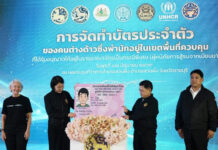
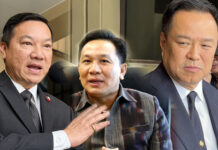
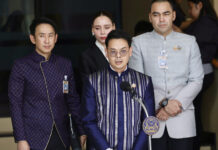
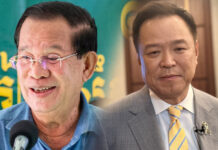




























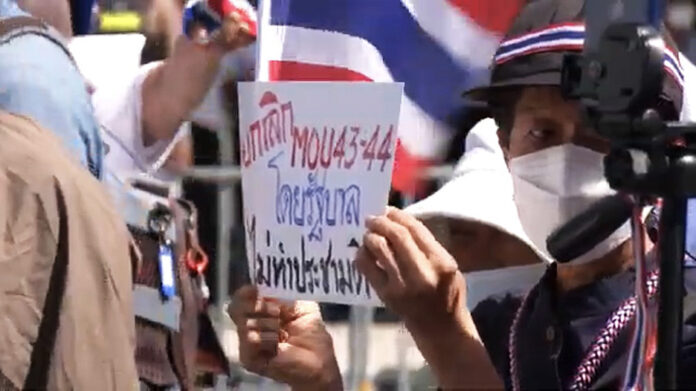
BANGKOK — Conservative protest groups linked to the former Yellow Shirt movement gathered outside Government House on Tuesday to present a petition to Prime Minister and Interior Minister Anutin Charnvirakul, demanding action on contentious border agreements with Cambodia.
The protesters are calling for a government decision on the fate of two Memorandums of Understanding (MOUs) signed with Cambodia in 2000 and 2001, which have guided bilateral border negotiations for over two decades.
Referendum Proposal Sparks Backlash
Amid mounting nationalist pressure to scrap the agreements, Prime Minister Anutin recently proposed putting the matter to a public referendum, tentatively scheduled alongside general elections expected in late March or early April.
However, the suggestion has drawn criticism from multiple quarters, with opponents arguing that matters of international relations and national security should not be decided by popular vote alone.
Pichit Chaimongkol, representing the People’s Reform Network and the Dhamma Army, accused the government of attempting to “shift responsibility onto the public” and insisted officials should make the decision themselves. While rejecting a referendum, his group supported public forums for debate, emphasizing that “this is about the country, not about which side wins; Thailand must win.”
Paradorn Prissanananthakul, Minister to the Prime Minister’s Office, accepted the petition and pledged to consult with the foreign affairs and defense ministries. He endorsed the idea of public forums where both sides could debate the issue rationally ahead of any potential referendum.

Foreign Minister Urges Caution
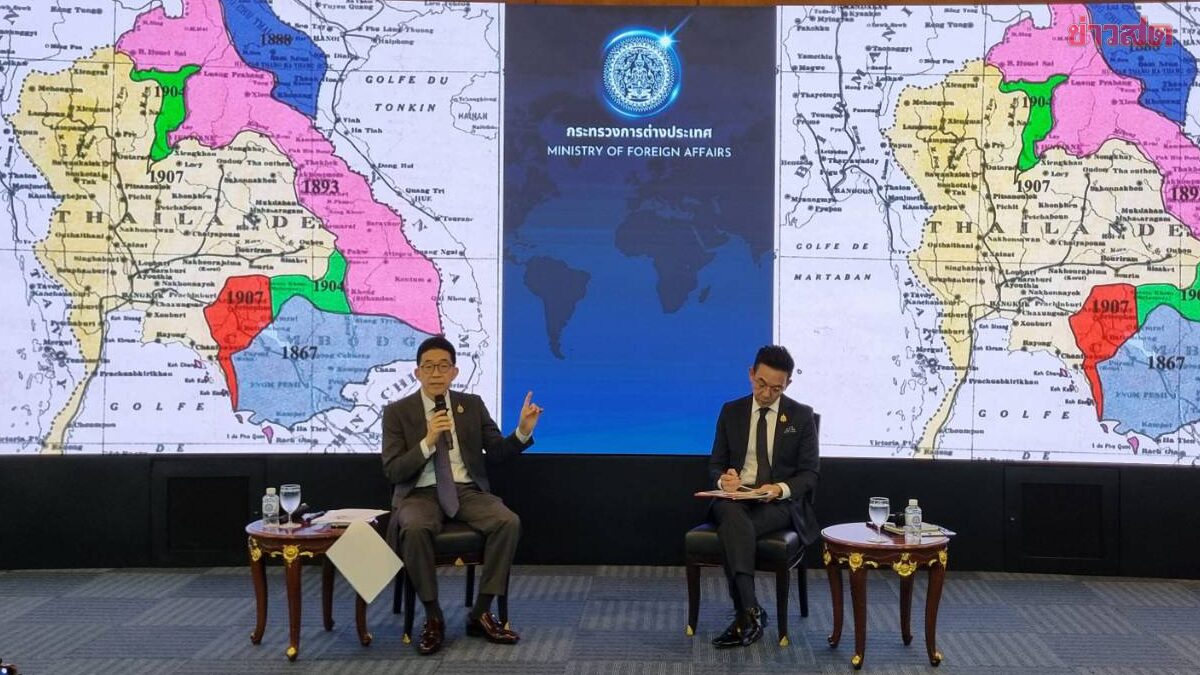
Foreign Affairs Minister Sihasak Phuangketkeow said his ministry is working to provide comprehensive information to the public but warned against hasty decisions.
“At this moment, there has been no discussion about cancellation,” he said, noting that a parliamentary committee is still reviewing the issue. “Everything must be done carefully, as it concerns the national interest. If the people are to participate in decision-making, they must be provided with as much information as possible.”
Opposition Questions Public Readiness
People’s Party leader Natthaphong Ruengpanyawut raised concerns about voter preparedness, citing a recent NIDA Poll showing approximately 70% of respondents did not understand the MOU contents.
“What is more important than the day people cast their votes is the process itself,” Natthaphong said. “These MOUs are detailed and complex. I doubt any public forums could fully educate people on all aspects.”
He noted that some parliamentary sessions on the issue must be held in secret because full disclosure could harm Thailand’s negotiating position, making balanced public education difficult in a polarized society.
Calls for Information Campaign
Noppadon Pattama, a Pheu Thai Party member and former foreign minister, urged the government to launch an intensive public education campaign over the next four months. He proposed creating a concise reference guide summarizing the key points of both MOUs—minus classified details—and distributing it online.
“Before asking the public to vote in a referendum about six months from now, I previously proposed that the government assign the National Security Council to study the pros and cons,” Noppadon said. He argued that agencies with over 20 years of experience implementing the MOUs, including the Foreign Ministry, armed forces, and survey departments, should provide expert assessments.
He emphasized the technical complexity of the issue, involving international law and border demarcation, noting that even seasoned observers hold widely differing opinions that may lack proper factual or legal grounding.
_________