























30 C
Bangkok
Saturday, June 20, 2026
Home Blog Page 2510

Mosul Doctors Struggle to Save Civilians on Iraq Front Line

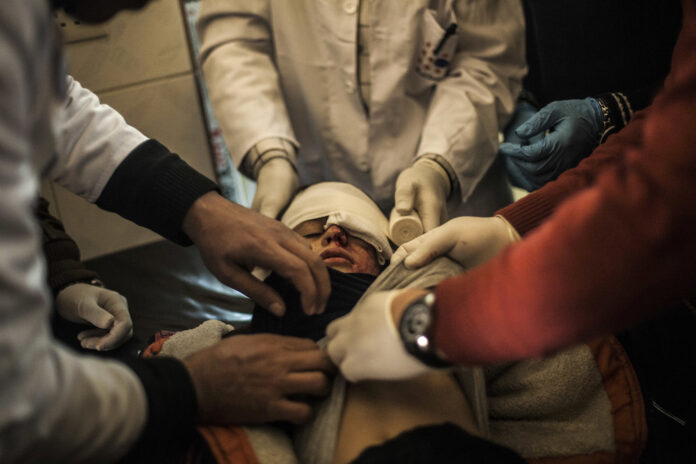
Yousuf Odey, 10, wounded in the eye by Islamic State militants is treated by doctors at a clinic in Zahra district in Mosul, Iraq on Dec. 7, 2016. Photo: Manu Brabo / AP.

MOSUL, Iraq — A crowd of men rushed through the narrow hallway of Mosul’s al-Zahra clinic carrying a slight 10-year-old boy. Yousef Oday’s face was covered in blood.

A team of doctors quickly gathered around his cot. “What happened to you?” one of the men asked.

“I have no idea. I was bleeding on one side,” the boy said. He didn’t make another sound, lying motionless as a doctor put an IV into his arm. His eyes were wide and pupils dilated.

Oday was hit in the side of his head with a stray bullet as he was waiting in line to gather water from a well in eastern Mosul. Two other young men waiting with him were also shot. Dr. Ahmed Hussam methodically tended to Oday’s wounds. “He’s in shock,” he explained.

While Iraqi forces announce daily advances, the city’s civilians continue to be killed and maimed by indirect fire, clashes and counterattacks.

The Mosul front line in the city’s east is being pushed forward in two columns: one led by the Iraqi army’s 9th Division and the other by the special forces. In some places, Iraqi forces are just over two kilometers (1.2 miles) from the Tigris River that splits the city. But along the main highway that cuts through the center of Mosul’s eastern half, Iraqi forces have made hardly any advances at all.

The jagged edge leaves troops vulnerable to counterattacks, but also thousands of civilians exposed to ongoing clashes as the operation slowly grinds forward.

Oday was shot in al-Zahra, a neighborhood declared liberated nearly a month ago. Since then, Iraqi forces have captured nearly half a dozen other neighborhoods and districts, but have not managed to completely secure al-Zahra so that aid groups and supply trucks can access the hundreds of civilians still living there.

“This is nothing,” whispered one of the nurses in the emergency room where Oday was being treated. “We have people who come in here without any arms or legs,” she said, asking to only be identified by her first name, Malkiya, out of concern for her safety.

Doctors in the small clinic in eastern Mosul say that since the operation to retake the city began nearly two months ago, they’ve only received intermittent deliveries of supplies. Nurses say they’re running out of basic items like clean bandages. In a hallway that’s been converted into an emergency room, doctors say all they have are bottles of saline solution, gauze and iodine. Like nearly all of Mosul, the clinic also lacks running water.

Hundreds of other patients also filled the dim hallways waiting for antibiotics, cough syrup, allergy medicine or insulin. A woman and her three daughters said they walked 3 kilometers (1.8 miles) across a front line to reach the clinic to obtain antibiotics. Since the operation to retake Mosul began, temperatures have dropped and, without electricity or fuel, her children have all gotten sick.

The women spoke on condition of anonymity as they were still living in a Mosul neighborhood controlled by IS. “We have no protection,” the mother said, walking inside the examination room and lifting the black veil she wore to travel to the clinic. He youngest daughter screamed as the nurse gave her an immunization shot.

During the first few battles of the Mosul operation, IS fighters largely fled the villages around the city, giving Iraqi and coalition commanders hope they would do the same inside the city. But as the battle reached the city’s edge, intense resistance has repeatedly stalled advances and at times forced Iraqi forces to retreat.

Unlike in past fights where civilians were moved out of the way of front-line clashes, in Mosul, Iraqi Prime Minister Haider al-Abadi has asked civilians to stay in their homes. The move prevents massive displacement — Mosul is still home to an estimated one million people — but it also leaves thousands in harm’s way and thousands more out of reach of aid organizations wary of operating close to the front.

The clinic inside Mosul estimates it has treated at least 800 severely wounded civilians since Iraqi forces first pushed into the city in early November.

“All we can do is work as a stabilization unit,” said Dr. Muhammad Hassan Ali, explaining that without the ability to perform surgery, most of the emergency cases he receives need to be transferred to a hospital in Irbil more than an hour’s drive away across bad roads and through half a dozen checkpoints.

Oday, the young boy, lost his left eye, but the doctors at the clinic were able to bandage his wound and slow the bleeding. As quickly as he was rushed into the building, he was carried out into an ambulance bound for Irbil.

“He’ll live,” said Hussam, the doctor who treated him. “He’s very lucky.”

Story: Susannah George 
Advertisement

Kissinger Asks for Patience Despite Trump’s Provoking Ideas

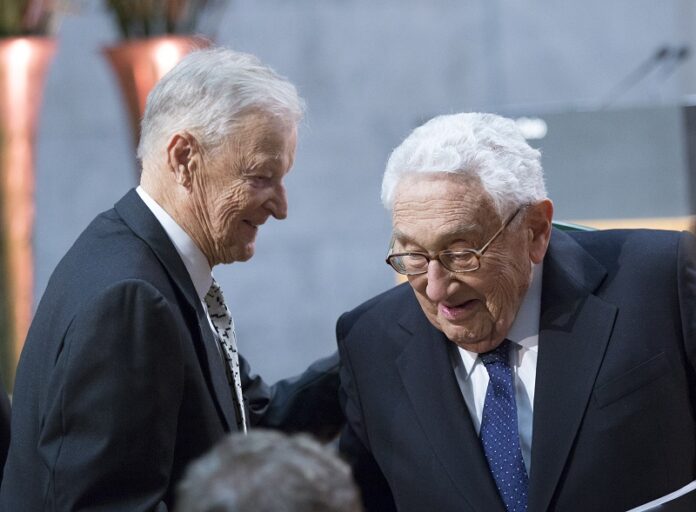
Former US National Security Advisor Zbigniew Brzezinski, left, greets Former US Secretary of State Henry Kissinger Sunday at the Nobel Peace Prize Forum in Oslo. Photo: Terje Bendiksby / Associated Press

HELSINKI — Former U.S. Secretary of State Henry Kissinger has described President-elect Donald Trump as being a personality that has “no precedent in modern American history,” but cautioned against judging him on his campaign rhetoric.

The Nobel Peace laureate says that before “postulating an inevitable crisis,” the new administration should be given a chance to present its international policies, despite the “rhetorical elements … (and) challenging patterns” presented during Trump’s campaign.

Kissinger, who was awarded the 1973 peace prize, was speaking Sunday at the newly-established Nobel Peace Prize Forum Oslo.

He shared the award with Vietnamese politician and diplomat Le Duc Tho for their efforts in negotiating the Paris Peace Accords aimed at ending the Vietnam War. Tho, however, declined the award.

Advertisement

Myanmar Town Wants The Secret Out: George Orwell Slept Here

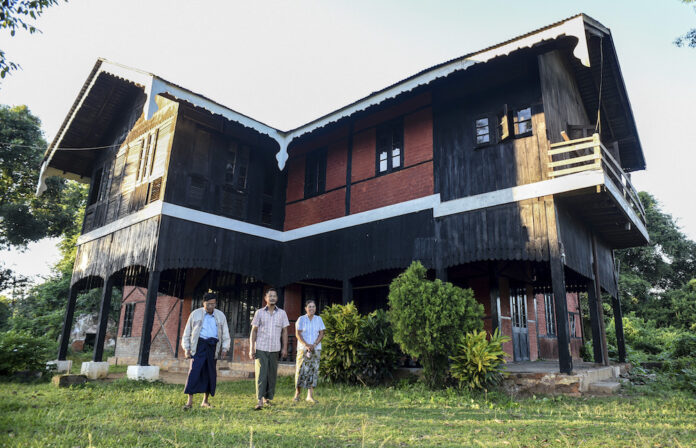
Amateur George Orwell scholar Nyo Ko Naing, center, leaves the house of the former British commissioner in Katha with the caretaker, right, and Kyal Ni, member of the local office of the National League for Democracy, in Katha, Myanmar. Photo: Aung Naing Soe / AP.

KATHA, Myanmar — In the 1990s, Nyo Ko Naing noticed that the handful of foreign tourists who made it to his remote hometown were carrying their own maps and looked like they were searching for something. Someone, it turns out, by the name of George Orwell.

Katha was Eric Blair’s last posting in the Imperial Police before he sailed back to England in 1927, adopted the nom de plume Orwell and launched a writing career that would produce powerful novels and commentary. Seven years after leaving the sleepy town on the Irrawaddy River, he immortalized it as the setting of his first novel, the vehemently anti-colonial “Burmese Days,” though he called it not Katha but “Kyauktada.”

The British Club, where much of the novel’s scheming, fighting, drinking and sweating takes place, still stands, as do other sites mentioned including a tennis court, a pagoda and a prison. A house believed to have been Orwell’s home in Katha remains in use.

Nyo Ko Naing, a graphic designer and cartoonist, didn’t know much about “Burmese Days” at first, but soon grasped how important it was to the future of the town.

He has since become the town’s preservationist, in-house historian, amateur Orwell scholar and literary tour guide, keen to market Katha as a tourist destination. He’s helping to renovate the 19th-century house of the former British commissioner for use as a museum that is expected to open next year.

“It is not easy to get attention from the world,” the 45-year-old said in a recent interview. “So it’s like Katha won the lottery.”

Orwell-related tourism has grown in Myanmar, also known as Burma, since a half-century of military rule ended in 2011, though numbers remain small. Nyo Ko Naing estimates that Katha sees 300 to 400 such visitors per month.

In 2012, he founded the Katha Heritage Trust and mounted a campaign through the media to save the commissioner’s house from a local businessman who wanted to turn the property into a skating rink.

The first floor is now full of archival photos, including one of Orwell as a young policeman, and several portraits of the writer painted recently by local artists.

“We’re collecting materials for the museum right now, such as photos, data and other heritage of Katha. And we’re also renovating that house by maintaining its own original style. That’s why it takes time,” he said.

“Now we have spent 4 million kyats ($3,000) and some tourists have donated,” he added. “We will renovate more whenever we get money.”

The museum will also focus on Katha’s history, with information about nearby battles during World War II and other aspects of the area deemed significant.

Nyo Ko Naing hopes Orwell will be a magnet for foreign tourists who will linger for other attractions, such as Katha’s traditional elephant camps, which the government is exploring turning into eco-tourism destinations amid a wide-ranging ban on logging.

A 12-hour train ride from Mandalay, Katha is a small, idyllic town in the Sagaing region. The atmosphere is as tranquil as the flowing Irrawaddy. As the sun sets, visitors and families stroll along the promenade as mountains darken in the distance.

In the past five years, Myanmar has been rapidly modernizing, and Katha is no exception. There are shiny new bank branches and new hotels. Mobile phone shops proliferate. Many colonial buildings have been left alone, giving the place a timeless feel, though many structures are dilapidated.

Both the tennis court and the prison are still in use. The British Club is now a local business cooperative.

The Hotel Katha, which opened last year, has seized on the Orwell connection. Built to resemble a red-brick colonial home, it offers brochures at the front desk with maps guiding visitors to key sites from the novel. Guests can read copies of “Burmese Days” and Orwell’s essays in the lobby or dine at the Kyauktada Cafe & Restaurant. Meeting rooms are named “Flory,” ”Elizabeth,” and “Macgregor,” after three of the book’s characters.

“I want visitors to feel like they are in the book,” said the owner, Bran Aung, in a phone interview. “I want to add more about Orwell. I am still collecting.”

Best known for “1984” and “Animal Farm,” Orwell is also admired for his condemnation of colonialism in “Burmese Days,” depicting the British denizens of Kyauktada largely as racist exploiters. Yet the novel was more read and celebrated abroad than in Burma.

Censorship was lifted in 2012. A year later, Maung Myint Kywe won the government’s most prestigious literary award for his Burmese translation of “Burmese Days.”

“He told me that his translation had been sleeping in the hands of the publisher for more than 30 years,” Thurein Win, who has translated Orwell’s essays, wrote in an email interview. Maung Myint Kywe died in 2014.

Orwell wrote darkly about British and Burmese alike. “Some Burmese don’t like him for his provocative words, but others love his writing,” Thurein Win said.

Nyo Ko Naing’s most impressive Orwellian work may be tracking down the author’s house, which he had previously confused with the commissioner’s. He used a colonial-era map to pinpoint the residence as a two-story teak home on the main road, not far from the Katha Hotel.

In a twist that might amuse Orwell, it is still occupied by a police officer.

“My colleagues said that the house you are going to stay in belongs to the English writer George Orwell,” said Police Chief Myint Aung, who was recently transferred to Katha. He didn’t know anything about the writer, but he is embracing the former resident.

Although the home isn’t officially open to tourists, he lets curious visitors poke around, and he has allowed the trust to hang a banner on the porch explaining some basic history.

“The town of George Orwell is lovely as well as interesting,” the sign says.

Story: Ung Naing Soe 

Advertisement

Turkey Blasts Claimed by Kurdish Militants; Country Mourns

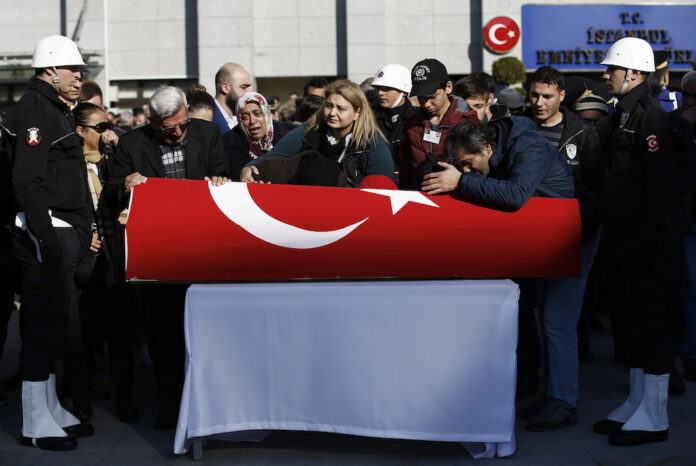
Family members mourn as ministers and colleagues attend a memorial for police officers killed outside the Besiktas football club stadium late Saturday, in Istanbul. Photo: Emrah Gurel / AP.

ISTANBUL — Turkey declared a national day of mourning and paid tribute to the dead Sunday after two bombings in Istanbul killed 38 people and wounded 155 others near a soccer stadium. The carnage was claimed by a Turkey-based Kurdish militant group.

The Kurdistan Freedom Falcons, or TAK, said two of its members had sacrificed their lives in the Saturday night attack that targeted security forces outside the Besiktas stadium shortly after the conclusion of a match.

“Two of our comrades were heroically martyred in the attack,” according to a statement posted on TAK’s website.

It described the blasts as reprisal for state violence in the southeast and the ongoing imprisonment of Abdullah Ocalan, the leader of the Kurdistan Workers’ Party, or PKK. TAK is considered by authorities as a PKK offshoot.

The twin car-and-suicide bombings near the stadium enraged top officials, including President Recep Tayyip Erdogan, who vowed to hunt down the perpetrators. The attack was the latest large-scale assault to traumatize a nation confronting an array of security threats.

Turkey is a NATO member and a partner in the U.S.-led war against the Islamic State group.

The attack targeted police officers, killing 30 of them along with seven civilians and an unidentified person, Turkish Interior Minister Suleyman Soylu told reporters. He said 13 people had been arrested in connection with the “terrorist” act.

In an address at a funeral for the slain police officers before TAK’s statement was released, a furious Soylu condemned Kurdish rebels and their allies in the West, referring to the PKK as “animals.”

“Have you accomplished anything beyond being the servants, pawns and hit men of certain dark forces, of your dark Western partners?” he asked.

Turkish officials didn’t make any further comments after the TAK claim of responsibility was posted.

The battle between the PKK and the Turkish state has resulted in the deaths of tens of thousands of citizens. Turkish officials frequently accuse the West of supporting the Kurdish insurgency and of interfering in Ankara’s fight against the militants.

Erdogan vowed his country would fight “the curse of terrorism till the end” after paying a visit to some of the wounded at Haseki Hospital in Istanbul.

Hundreds of flag-carrying demonstrators marched along Istanbul’s coastline toward the stadium at the heart of the blast area. Flags flew at half-staff across the country and at Turkey’s foreign missions. Passers-by placed flowers on barriers surrounding the soccer stadium.

The first and larger explosion took place about 10:30 p.m. Saturday after Besiktas beat Bursaspor 2-1 in the Turkish Super League. Erdogan said the attack’s timing aimed to maximize the loss of life, but most fans had left before the detonation.

Soylu said the first blast was caused by a passing vehicle that detonated in an area where police special forces were located at the stadium exit. A riot police bus appears to have been the target. Moments later, a person who had been stopped in nearby Macka Park committed suicide by triggering explosives, according to the minister.

He said 136 people remained hospitalized Sunday after the attack, including 14 in intensive care.

TAK claimed the Turkish people weren’t their target but warned “no one should expect a comfortable life” as long as the ruling party “continues to torture the mothers of Kurdistan every day.”

Armed conflict between the Turkish state and Kurdish militants resumed in July 2015 after peace talks unraveled. While much of the violence has concentrated in the impoverished and pre-dominantly Kurdish southeast, it has also spread to other cities, including the capital, Ankara, where TAK has claimed February and March suicide bombings.

Experts have determined that up to 400 kilograms (880 pounds) of explosives were used in the car bomb, Deputy Prime Minister Numan Kurtulmus told CNN Turk.

To the mournful sound of trumpets, funeral services were held at Istanbul’s police headquarters for some of the slain officers. Their comrades solemnly carried the coffins, which were draped in the Turkish flag, as a sea of mourners wept around them.

Erdogan presided over a security meeting after the funeral ceremony and hospital visit.

Soccer fans proved their resilience by showing up to watch a game pitting Istanbul’s Galatasaray and Gaziantepspor at a different stadium.

“What happened last night was extremely saddening but they need to know that Turkish people will not yield to such things,” Galatasaray supporter Erkan Duman told The Associated Press. “It’s not like we will give up things, especially things we love, just because they want us to.”

Turkey has witnessed a spate of IS and Kurdish-linked attacks this year. Saturday’s bombings were one of the bloodiest to hit Istanbul, a city at the crossroads of Europe and Asia, until recently a popular tourist destination.

That changed after a series of IS-linked suicide bombings targeting tourists, including a sophisticated attack on the city’s Ataturk Airport in June that killed 44 people and wounded scores of others. PKK-linked militants have claimed other deadly attacks in Ankara, Istanbul and areas in southeast Turkey.

A state of emergency is in force following a failed July 15 coup attempt and the resulting government crackdown on alleged coup sympathizers has landed thousands in jail and forced tens of thousands of people from their jobs. Critics call the move a witch hunt.

Story: Dominique Soguel

Advertisement

Panel Puzzles Over Thailand’s 84-Year Split Between Dictatorship, Democracy

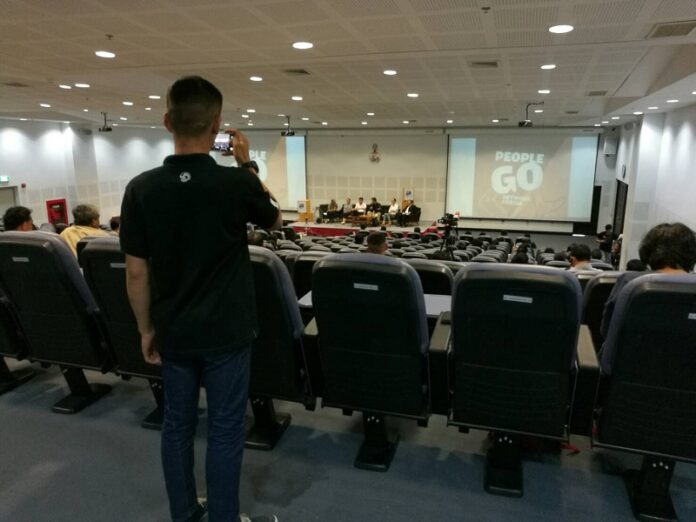
An unidentified man photographs audience members throughout a discussion of Thailand's uneasy relationship with democracy on Saturday at Chulalongkorn University in Bangkok.

BANGKOK Since 1932, when Thailand officially entered the company of democratic nations, its citizens have spent more years living under dictators than democracy.

That was a reminder shared by Bundit Chanrojanakit, a Ramkhamhaeng University political science professor at a panel discussion on Thailand’s search for democracy Saturday at Chulalongkorn University.

Organized by the Internet Law Reform Dialogue, or iLaw, the panel held as part of a broader conference on social issues this weekend drew about 70 people to hear speakers take turns defending the virtues of a democratic system and examining its shortfalls in Thailand.

Read: Censorship is Acceptable Compromise at Chula Conference on Social Issues

As it proceeded, a man took pictures of the crowd from different angles. When it came time for questions and comments at the end, the moderator asked if he should turn off the Facebook Live stream so participants could speak freely.

It was arranged in place of a more pointed panel organized by a student pro-democracy group to dissect the constitution pushed through earlier this year by the military regime. That session, planned by the New Democracy Movement, was canceled under pressure by the authorities.

Chulalongkorn University historian Suthachai Yimprasert said democracy is the least evil of systems because people can disagree and find solutions together. He said dictatorship also has a mechanism to solve conflicts, but it is based on coercion.

He added that some Thais say electoral democracy is “four-second democracy,” because voters only have power in that fleeting span of time when casting a ballot, because power shifts into the hands of elected politicians afterward.

“This is still better than not even having a second of democracy,” Suthachai told the audience.

Chiang Mai University law lecturer Somchai Preechasilpakul made a specific reference to junta-leader-cum-premier Gen. Prayuth Chan-ocha, saying no democratic regime would point a finger and order people to do various things such as exercise.

Somchai was making reference to Prayuth’s recent pet project of “Workout Wednesdays” for government officials, which has carried over into public events where he has instructed crowds to spontaneously exercise.

Human rights around the world, such as the U.S. Civil Rights Movement which improved the status of black Americans, have only advanced under democratic systems, according to Pongkwan Swasdipakdi of Thammasat University.

Pongkwan, a lecturer in Thammasat’s political science department, added that Thais should think about why some support military coups and see them as legitimate.

Yuthaporn Isarachai, vice rector of Sukhothai Thammathirat Open University said the fact some still doubt if Thailand is suited for democracy means the nation must do more to deepen its democratic roots.

Advertisement

Bombing at Egypt’s Coptic Christian Cathedral Kills 25

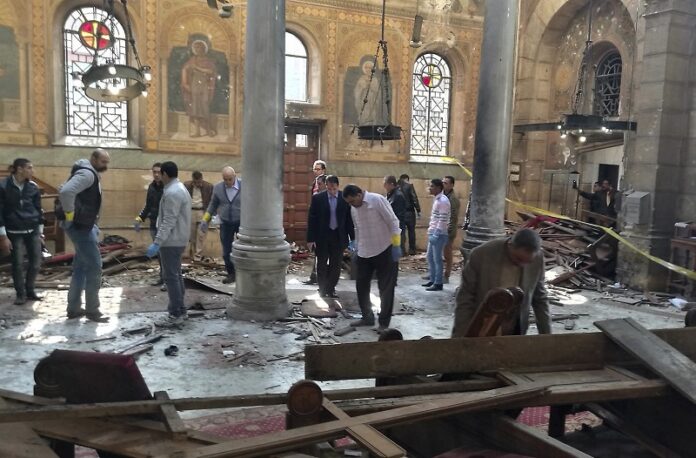
Egyptian security forces examine the scene inside St. Mark Cathedral in central Cairo, following a bombing on Sunday. Photo: Omar El-Hady / Associated Press

CAIRO — A bombing at a chapel adjacent to Egypt’s main Coptic Christian cathedral killed 25 people and wounded another 49 during Sunday mass, in one of the deadliest attacks carried out against the religious minority in recent memory.

The attack came two days after a bomb elsewhere in Cairo killed six policemen, an assault claimed by a shadowy group that authorities say is linked to the outlawed Muslim Brotherhood. Islamic militants have targeted Christians in the past, including a New Year’s Day bombing at a church in the Mediterranean city of Alexandria in 2011 that killed at least 21 people.

Egypt’s official MENA news agency said an assailant lobbed a bomb into a chapel close to the outer wall of St Mark’s Cathedral, seat of Egypt’s Orthodox Christian church and home to the office of its spiritual leader, Pope Tawadros II, who is currently visiting Greece.

Egyptian state TV and the Health Ministry gave the casualty toll.

Witnesses said the explosion may have been caused by an explosive device planted inside the chapel. Conflicting accounts are common in the immediate aftermath of attacks.

The blast took place as a Sunday mass being held in the chapel was about to end and coincided with a national holiday in Egypt marking the birth of Islam’s Prophet Muhammad. Most of the victims are thought to be women and children.

State television aired calls by several Cairo hospitals for blood donations.

An Associated Press reporter who arrived at the scene shortly after the blast saw blood-stained pews and shards of glass scattered across the chapel’s floor. Men and women wailed and cried outside. AP photos showed a broken pair of ladies’ spectacles on the ground next to a girl’s boots with leopard spots and a pink ribbon.

“I found bodies, many of them women, lying on the pews. It was a horrible scene,” said cathedral worker Attiya Mahrous, who rushed to the chapel after he heard the blast. His clothes and hands were stained with blood and his hair matted with dust.

“I saw a headless woman being carried away,” Mariam Shenouda said as she pounded her chest in grief. “Everyone was in a state of shock. We were scooping up people’s flesh off the floor,” she said.

“There were children. What have they done to deserve this? I wish I had died with them instead of seeing these scenes,” she added.

There was no immediate claim of responsibility for Sunday’s attack, which has drawn a flurry of condemnations by government and religious leaders as well as assertions of unity between Egypt’s Muslim majority and Christians, who account for about 10 percent of the country’s 92 million people. A crowd of several hundreds gathered outside the cathedral to condemn the attack, as scores of policemen sealed off the area.

Egypt has seen a wave of attacks by Islamic militants since the military overthrew President Mohammed Morsi, a freely elected leader who hailed from the Brotherhood, in 2013. Many of Morsi’s supporters blamed Christians for supporting the overthrow, and scores of churches and other Christian-owned properties in southern Egypt were ransacked that year.

The authorities have since 2013 waged a sweeping crackdown, jailing thousands of mostly Islamist dissidents and killing hundreds in clashes sparked by demonstrations.

Egypt’s Christians have long complained of discrimination in Egypt, contending they are denied top jobs in a wide range of fields, including academia and security apparatuses. Many Christians were relieved when Morsi and his Muslim Brotherhood were ousted in 2013 after just one year in power.

The church and many Christians have since rallied behind el-Sissi, although there have been growing voices of dissent within the community, arguing that little has changed in their lives under his rule, with their churches and property frequently attacked or torched by mobs of villagers led by militants in provinces south of Cairo.

Story: Mariam Fam, Hamza Hendawi

Advertisement

Twin Blasts Near Istanbul Stadium Kill 29, Wound 166

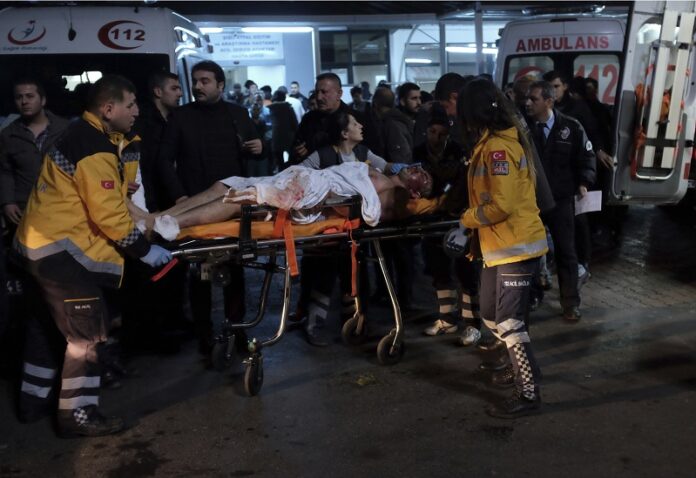
Rescue and medics carry a wounded person after attacks in Istanbul, late Saturday. Photo: Cansu Alkaya / Associated Press

ISTANBUL — Twin attacks by a suicide bomber and a car bomber near an Istanbul soccer stadium Saturday night killed 29 people and wounded 166 others in the latest large-scale assault to traumatize a nation confronting an array of security threats.

The bombs targeted police officers, killing 27 of them along with two civilians, Turkey’s Interior Minister Suleyman Soylu told reporters early Sunday. He added that 10 people had been arrested in connection with the “terrorist attack.”

The civilian death toll was lower because fans had already left the newly built Vodafone Arena Stadium after the soccer match when the blasts occurred. Witnesses also heard gunfire after the explosions.

“We have once again witnessed tonight in Istanbul the ugly face of terror which tramples on every value and decency,” Turkish President Recep Tayyip Erdogan said in a statement.

The first bomb went off just outside the facility known popularly as Besiktas Stadium after the local team and neighborhood. The second blast that came moments later was attributed by authorities to a suicide bomber.

Police cordoned off the area as smoke rose from behind the stadium and ambulances began ferrying the wounded to hospitals. Glass from the blown-out windows of nearby buildings littered the pavement.

There was no immediate claim of responsibility. This year, Istanbul has witnessed a spate of attacks attributed by authorities to the Islamic State group or claimed by Kurdish militants. A state of emergency is in force following a failed July 15 coup attempt.

Soylu acknowledged the country was struggling against “many elements” trying to compromise its fight against terrorism.

Turkey is a partner in the U.S.-led coalition against the Islamic State and its armed forces are active in neighboring Syria and Iraq. It is also facing a renewed conflict with an outlawed Kurdish movement in the southeast.

Ned Price, a spokesman for the White House National Security Council, said Washington condemns the attack in “the strongest terms.”

“We stand together with Turkey, our NATO Ally, against all terrorists who threaten Turkey, the United States, and global peace and stability,” Price said in a statement.

A taxi driver at the site of the Istanbul bombings said their force made him hit his head on the taximeter and that his ears were still ringing from the blasts and screaming that followed.

“Amid the screams I heard an officer saying ‘do not shout! Do not make them (the perpetrators) be satisfied,” said Ismail Coskun.

The first and larger explosion took place about 7:30 p.m. GMT after the home team Besiktas beat visitor Bursaspor 2-1 in the Turkish Super League. Erdogan said the timing of the attack aimed to maximize the loss of life and vowed the nation would overcome terrorism.

Soylu said the first explosion was caused by a passing vehicle that detonated in an area where police special forces were located at the stadium exit right after the match. A riot police bus appears to have been the target.

Kurdish militants often target security forces while Islamic State-linked attacks have targeted tourists and the broader public.

Deputy Prime Minister Numan Kurtulmus said a person who had been stopped in the nearby Macka Park committed suicide by triggering explosives.

Investigators, including Istanbul Police Chief Mustafa Caliskan, were quickly on the scene. Forensic experts in white uniforms scoured the vicinity of the stadium and the vast park where the suicide bombing took place.

The Besiktas sports club “strongly condemned” the attack and said an employee of one of its stores was among the fatalities, as well as a member of its congress who was also responsible for security at the stadium.

Bursaspor reported that none of the wounded were fans and issued a statement wishing “a speedy recovery to our wounded citizens.”

Health Minister Recep Akdag said six of the wounded remained in intensive care, with three of them in critical condition.

Aleksander Ceferin, president of European soccer’s governing body UEFA, and European Union Enlargement Commissioner Johannes Hahn, also made statements condemning the attack.

“Violence has no place in a democratic society,” Hahn wrote on Twitter.

EU foreign policy chief Federica Mogherini expressed the bloc’s “solidarity with Turkish citizens'”

The U.S. Consulate General in Istanbul, meanwhile, urged its citizens to avoid the area which is also home to a Ritz Carlton hotel.

Turkey’s radio and television board issued a temporary coverage ban citing national security concerns. It said “to avoid broadcasts that can result in public fear, panic or chaos, or that will serve the aims of terrorist organizations.”

Story: Dominque Soguel, Cinar Kiper, Ayse Wieting and Mehmet Guzel, Rob Harris

Advertisement

Censorship is Acceptable Compromise at Chula Conference on Social Issues

Black paper covers portions of informational displays at a conference on social issues Saturday at Chulalongkorn University in Bangkok.

BANGKOK — On Constitution Day, a two-day conference and workshops on social issues went ahead Saturday with one notable exception: a panel on politics and democracy.

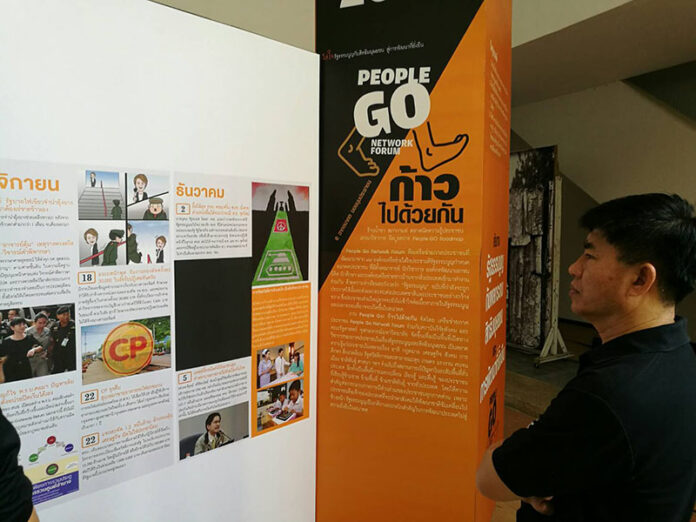
Hosted by Chulalongkorn University’s Faculty of Political Science, which was pressured to drop the panel in question, 109 organizations participated in the People Go Network Forum, which otherwise went ahead as planned, though black paper was used covering portions of an informational display about lese majeste prosecutions.

Siriphorn Chaiphet of the Thai Volunteer Service Foundation said she was content most activities were allowed to proceed by the military regime and university, despite the last-minute cancelation of the panel under pressure from the university and authorities.

“We take a long-term view,” she said at Saturday’s conference, which addressed issues including politics, economics, education and the environment. “The struggle will continue for much longer.

It was the first semi-political event held since a year of national mourning was declared upon the death of His Majesty the Late King Bhumibol in October.

Siriphon said there’s an urgent need to rally rural residents of different political alignments to fight on issues such as adverse impacts by the mining industry and more.

She said the military called the organizer Friday night asking for further details about the event.

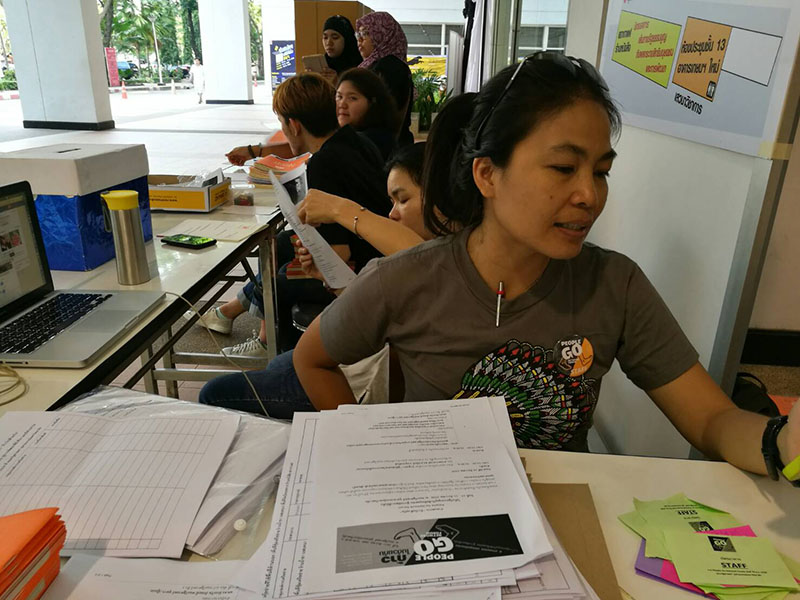
Siriphorn Chaiphet of the Thai Volunteer Service Foundation registers visitors to the People Go Network Forum on Saturday at Chulalongkorn University in Bangkok.

Of the canceled event organized by a student pro-democracy group opposed to military rule, she said compromise was inevitable.

“We can’t do much under the circumstances. But the Faculty of Political Science has at least provided a space for civil society,” Siriphorn said.

Members of the New Democracy Movement had planned to discuss the junta-sponsored charter passed under pressure in an August referendum.

Siriphon said they were just one the organizers among the network, some of whom are pro-democracy and others who are not.

Rangsiman Rome, a student leader of the New Democracy Movement, said he believed the Faculty of Political Science changed its mind after having earlier given a green light because it was afraid it would invite trouble for them.

The situation is such that there will be less space for political expression next year under the extended mourning period, according to Unusorn Unno, dean of Thammasat University’s Sociology Faculty, who’s involved in an academic civil rights group.

“The junta’s men are also increasingly inserting themselves into institutional structures,” he said of the appointment of three generals into the new Privy Council.

Anusorn said rural citizens facing various problems are unable to act because of the curbing of civil and political rights. He said there’s a growing desperation, and  the situation is likely to become more severe.

Censorship was palpable over at an area of standing exhibition panels, where three issues were plastered over by black paper.

A source who asked not to be named due to the sensitivity of the situation said the three censored texts had to do with people prosecuted under the lese majeste law, including that of Jatupat “Pai” Boonpattararaksa, who was charged with defaming the monarchy for sharing an online biography of the new King produced by BBC Thai one week ago.

When the conference wraps Sunday, the network said it will release a declaration detailing its issues and demands.

Advertisement

Go Paperless, Live the Change, Be the Social Contract

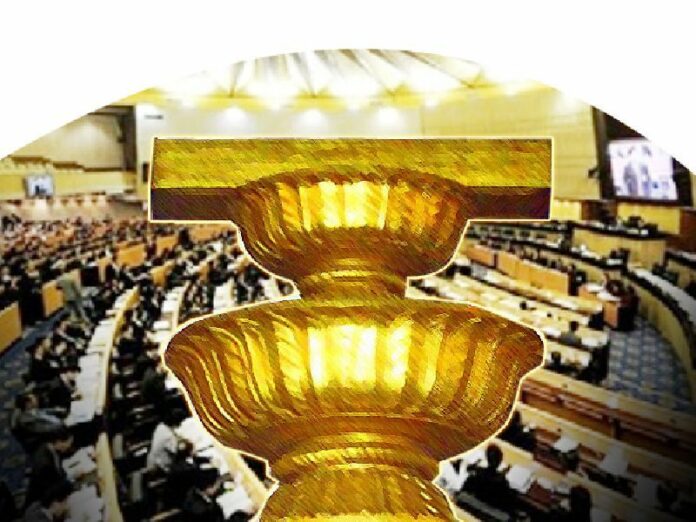
The symbolic representation of democracy and the Thai Constitution, which sits atop the Democracy Monument in Bangkok

Retention

Today is Constitution Day. To many it means just another day off work despite the fact that for two decades after the 1932 revolt, it was celebrated with a festival that two years later even added a beauty pageant.

A Friday poll claimed that 81.5 percent of its respondents have never read a constitution. If true, they deserve some sympathy. During the 84 years since the end absolute monarchy, Thailand has gone through 19 of them and is about to launch No. 20. Calling each a “permanent constitution” is a joke with a punchline repeated every four years, on average.

This means a typical Bangkok bus is in service longer than the average constitution.

Put simply, so many hours and money have gone into writing and rewriting one charter after another, and I haven’t met anyone who believes the next “permanent constitution,” written by junta-appointed drafters and passed in a less-than-fair referendum, will be the last.

That time – and fat, taxpayer-sourced salaries for the drafters – if put to other endeavors, could easily have gone to building the kind of lasting mega-edifices that would please any dictator, or possibly some schools or hospitals to the benefit of the people.

Thailand needs a constitution, a written charter which serves as a social contract. The problem is, what is supposed to be the venerable “Law of the Land” is crumpled and tossed aside so often and with such disregard it no longer carries and deep meaning to the average citizen.

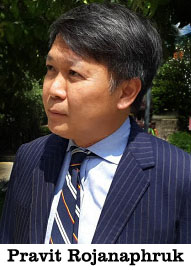
Pravit RojanaphrukInstead they have become merely a set of temporary rules written after military coups and expected to last until the next coup.

Many citizens, except maybe law students, politicians, activists or political-beat journalists, feel alienated by the ephemeral nature of Thailand’s permanent constitution to the point where they couldn’t care less. Instead of being a sacred social contract citizens can recite with pride, the Thai constitution is a technical text best left to pundits.

While rewriting our social contract is a seemingly never-ending process, we have neglected to create an unwritten social contract that would be more lasting: democratic culture, respect for the rights and opinion of others and tolerance.

Some may say this is impossible, particularly given that we have diminishing freedoms and democracy, but people can foster a democratic culture by encouraging greater participation and respect for differing political views in their immediate social milieu independent of the larger political context, or what’s written in the latest permanent constitution. Each of us can foster and defend these values in our own ways, no matter how small, and no matter what’s written that authored by the junta.

The culture of queuing is one example of success. Forty or thirty years ago, queuing was not observed in Thailand, but many Thais over the decades have learned to fall in line and wait their turn. The same can be said of littering, or respecting the rights of nonsmokers in public areas. Improvements have been achieved over the past few decades.

We have learned to adopt these new norms, and there’s no reason we cannot create a more democratic Thailand where respect for human rights, tolerance and freedom of expression are deeply ingrained in our culture. It can be achieved if we put in just half the effort and time spent writing one permanent constitution after another.

Advertisement

Army Says 6 Drug Smugglers Killed in Chiang Mai

BANGKOK — Six drug smugglers were fatally shot in a gunbattle in northern Thailand when they were confronted by soldiers, the military said.

An army statement said the soldiers were tipped off about a drug smuggling route in the northern province of Chiang Mai. When they saw a group of men with backpacks hiking past their stakeout late Wednesday night, they ordered them to stop for an inspection but were met with gunfire.

It said six of the men were killed and two wounded in a 15-minute firefight. Soldiers seized 554,000 methamphetamine tablets, 30 kilograms of heroin, 1 kilogram of opium, an AK-47 assault rifle and a short-barreled rifle, it said. Several suspects were believed to have escaped and were being pursued.

Northern Thailand is part of the infamous drug production area known as the Golden Triangle where the borders of Thailand, Laos and Myanmar meet. Long a major source of opium and its refined product, heroin, the area especially Myanmar now is also notorious for the production of methamphetamine.

Advertisement

Hot News

LATEST NEWS

Bangkok
overcast clouds
30 ° C
30 °
27.7 °
76 %
2kmh
95 %
Sat
30 °
Sun
36 °
Mon
37 °
Tue
36 °
Wed
36 °