26.1 C
Bangkok
Saturday, June 20, 2026
Home Blog Page 2943

Phuket Bus Crash Injures 17 Chinese Tourists

A tour bus crashed in Phuket province, injuring 17 Chines tourists on 26 July 2015.

PHUKET – Seventeen tourists from China were wounded after their bus toppled into a roadside ditch in the southern province of Phuket today.

Police say the accident took place during a rainstorm this morning on the outbound side of Chalerm Prakiat Rama IX Road in Mueang district.

All but two passengers on the double-decker bus, which was operated by a company called BRT Travel, were injured in the accident.

Rescue workers struggled to evacuate the wounded from the flipped vehicle, and some of the tourists are in serious conditions, police said.

A police investigation into the incident is ongoing. 

For comments, or corrections to this article please contact: [email protected]

You can also find Khaosod English on Twitter and Facebook
http://twitter.com/KhaosodEnglish
http://www.facebook.com/KhaosodEnglish

Advertisement

German Man Found Dead in Southern Thailand

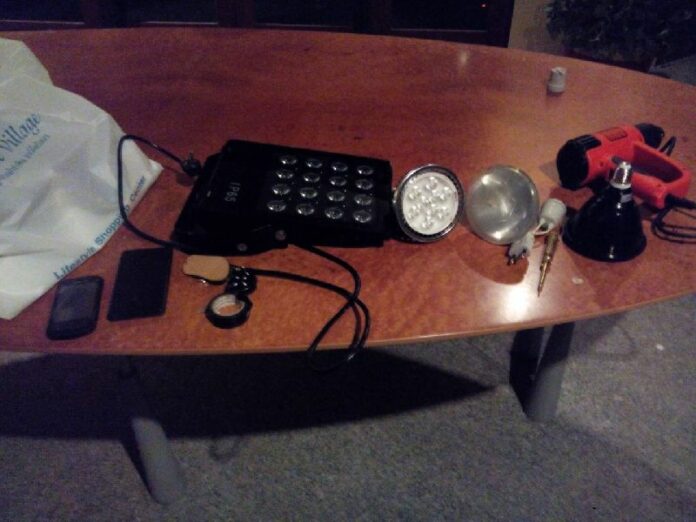
A table with lightbulbs and other tools next to a German man who police found dead in Prachuap Kiri Khan province on 26 July 2015.

PRACHUAP KIRI KHAN — Police say a 55-year-old German man was found dead in front of a house in Prachuap Kiri Khan province early this morning.

Local residents alerted the police after they saw the man lying face-up on the lawn of a home at 1am, said Pol.Lt. Nattapol Piewpad, an officer at Sam Roi Yot Police Station.

Police arrived to find the German national dead. Khaosod English is withholding his name until it is confirmed that his next of kin has been notified. 

According to Pol.Lt. Nattapol, police also found light-bulbs, a flashlight, a screwdriver and other tools on a table near where the man was found. No one was at the house at the time. 

Based on testimonies from local residents, Pol.Lt. Nattapol said the house belongs to another German national who asked the deceased to install light-bulbs while the homeowners were traveling abroad, Pol.Lt. Nattapol said.

The body has been sent to a hospital for an autopsy to determine the cause of death. Pol.Lt. Nattapol did not mention whether the man had any visible wounds on his body. 

Police said the investigation is ongoing. 

For comments, or corrections to this article please contact: [email protected]

You can also find Khaosod English on Twitter and Facebook
http://twitter.com/KhaosodEnglish
http://www.facebook.com/KhaosodEnglish

Advertisement

2 Bars Closed Down Under Junta's Sweeping Booze Ban

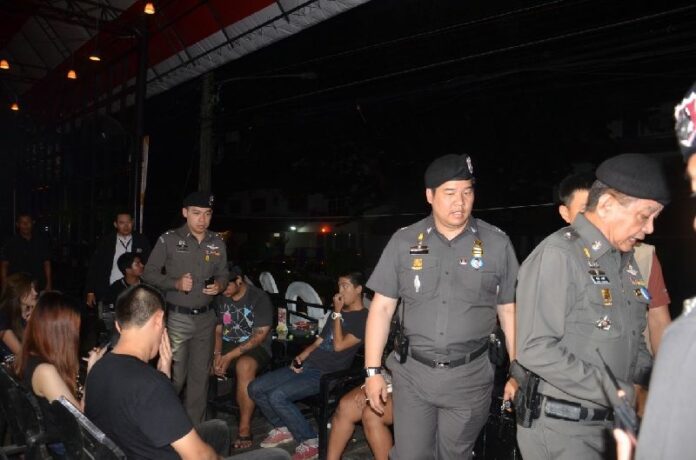
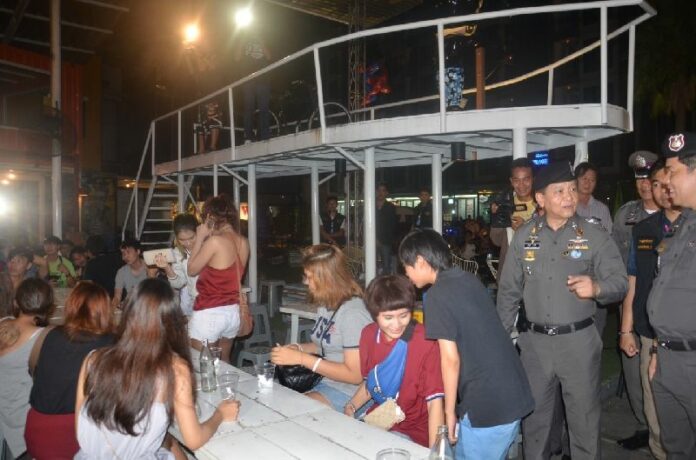
Police raid a bar in Pathum Thani that violated the junta's new booze ban by selling alcohol within 300 meters of a university, 25 July 2015.

PATHUM THANI — Two bars in a northern suburb of Bangkok were the first establishments to be shut down under a new order issued by the military junta that bans selling alcohol within 300 meters of universities and schools throughout the country.

Junta chairman and Prime Minister Prayuth Chan-ocha issued the ban on 23 July by invoking Section 44 of the interim charter, which grants him authority to unilaterally enact legally-binding orders.

The ban prohibits the sale of alcohol "in the vicinity of educational establishments" and student dormitories.

Thai officials have said that "vicinity" refers to a 300 meter radius around any educational establishments, a term defined in existing laws as including schools, vocational colleges, and universities. The maximum penalty for bar owners who violate the prohibition is the revocation of their liquor license. 

Acting under the new order, police officers raided two bars close to Rangsit University in Pathum Thani province shortly after midnight on 25 July and shut both places down. 

"Both bars are situated close to an educational establishment and student dormitories, which is considered an offense under the NCPO's order about selling alcohol near educational establishments," said  Pol.Lt.Gen. Prawut Thawornsiri, deputy chief of the Thai police, using the formal name of the junta, the National Council for Peace and Order.

The two bars are called Bungalow and M.3/2. 

Pol.Lt.Gen. Prawut told reporters that the bars have been shut down, and the owners have been stripped of their licenses to sell alcohol.

The owners, Wasan Dokmaikrue and Kitthanet Amornlertthanon, are also facing additional criminal charges for admitting customers under the age of 20, operating without proper permits, and failing to adhere to the midnight closing time prescribed under existing laws. 

The new booze ban was issued by Gen. Prayuth as a part of the junta's effort to stamp out vice and impose public order at nighttime.

The junta leader also signed new measures to crack down young street racers – known to Thais as dek vans – that regularly roam the roads of major cities at night. The new measure permits police officers to break up groups of people gathering with the intention to organize illegal races. 

The booze ban is unlikely to be strictly enforced, as it would render bars and nightclubs in many popular nightlife districts illegal. For instance, Khaosan Road, a favorite party destination for foreign backpackers, is less than 300 meters from Satri Witthaya School, and the notorious red light district of Patpong is less than 300 meters away from Chulalongkorn University. 

Since staging the coup d'etat against an elected government in May last year, the junta has launched several campaigns focused on moral education and wiping out corruption and organized crime. Soldiers have also been reuglarly assisting police officers with arrests and other law enforcement duties. 

Read more:
Note to Readers: Clarification on New Laws Curbing Alcohol Sales in Thailand

For comments, or corrections to this article please contact: [email protected]

You can also find Khaosod English on Twitter and Facebook
http://twitter.com/KhaosodEnglish
http://www.facebook.com/KhaosodEnglish

Advertisement

2 Bars Closed Down Under Junta's Sweeping Booze Ban

Police raid a bar in Pathum Thani that violated the junta's new booze ban by selling alcohol within 300 meters of a university, 25 July 2015.

PATHUM THANI — Two bars in a northern suburb of Bangkok were the first establishments to be shut down under a new order issued by the military junta that bans selling alcohol within 300 meters of universities and schools throughout the country.

Junta chairman and Prime Minister Prayuth Chan-ocha issued the ban on 23 July by invoking Section 44 of the interim charter, which grants him authority to unilaterally enact legally-binding orders.

The ban prohibits the sale of alcohol "in the vicinity of educational establishments" and student dormitories.

Thai officials have said that "vicinity" refers to a 300 meter radius around any educational establishments, a term that is used in existing laws to include schools, vocational colleges, and universities. The maximum penalty for bar owners who violate the prohibition is the revocation of their liquor license. 

Acting under the new order, police officers raided two bars close to Rangsit University in Pathum Thani province shortly after midnight on 25 July and shut both places down. 

"Both bars are situated close to an educational establishment and student dormitories, which is considered an offense under the NCPO's order about selling alcohol near educational establishments," said  Pol.Lt.Gen. Prawut Thawornsiri, deputy chief of the Thai police, using the formal name of the junta, the National Council for Peace and Order.

The two bars are called Bungalow and M.3/2. 

Pol.Lt.Gen. Prawut told reporters that the bars have been shut down, and the owners have been stripped of their licenses to sell alcohol.

The owners, Wasan Dokmaikrue and Kitthanet Amornlertthanon, are also facing additional criminal charges for admitting customers under the age of 20, operating without proper permits, and failing to adhere to the midnight closing time prescribed under existing laws. 

The new booze ban was issued by Gen. Prayuth as a part of the junta's efforts to stamp out vice and impose public order at nighttime. The junta leader also signed new measures to crackdown on young street racers – known to Thais as dek vans – that regularly roam the roads of major cities at night. The new measure permits police officers to break up groups of people gathering with the intention to organize illegal races. 

The booze ban is unlikely to be strictly enforced, as it would render bars and nightclubs in many popular nightlife districts illegal. For instance, Khaosan Road, a favorite party destination for foreign backpackers, is less than 300 meters from Satri Witthaya School, and the notorious red light district of Patpong is less than 300 meters away from Chulalongkorn University. 

Since staging the coup d'etat against an elected government in May last year, the junta has launched several campaigns focused on moral education and reducing corruption and organized crime. Soldiers have also been regularly assisting police officers with arrests and other law enforcement duties. 

Read more:
Note to Readers: Clarification on New Laws Curbing Alcohol Sales in Thailand


For comments, or corrections to this article please contact: [email protected]

You can also find Khaosod English on Twitter and Facebook
http://twitter.com/KhaosodEnglish
http://www.facebook.com/KhaosodEnglish

Advertisement

Buddhist Groups Condemn Murder of Monk in Deep South

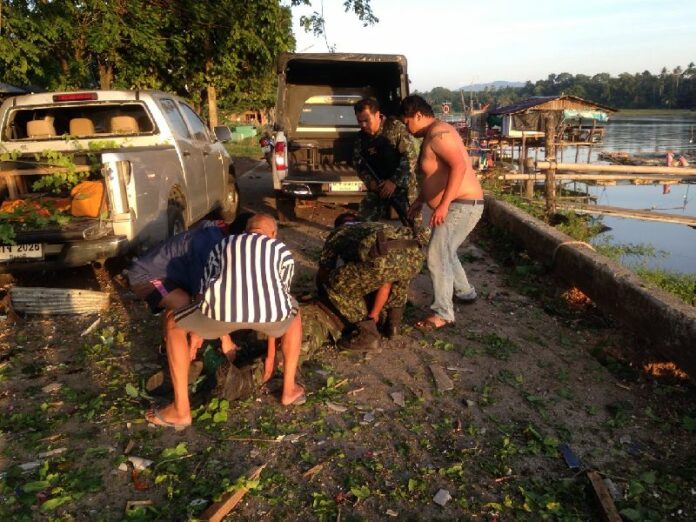
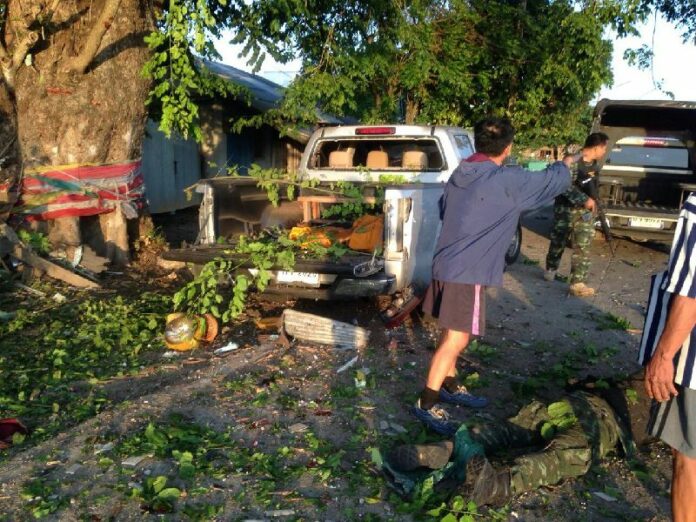
The scene where a roadside bomb killed one monk and one soldier in Pattani province on 25 July 2015.

PATTANI — A Buddhist monk and a soldier were killed in a bomb attack in Thailand's southern border province of Pattani yesterday morning.

The homemade explosive was planted beneath a tree on the side of a road in Saiburi district, and manually detonated when two monks and three soldiers passed by at around 6:30 am on 25 July, police said. 

The blast killed one monk and one soldier, and injured the three others. The deceased, Phrai Ekpol Sri-osot, 39, and Corporal Wanmai Rakhano, 28, were pronounced dead at Pattani Hospital. 

According to police, the soldiers were escorting the two monks during their daily alms collection. The attack reportedly took place while the group was walking back to board their pick-up truck.

Police believe the bomb, which consisted of a 10 kg gas canister, was planted by Muslim separatists who stage near-daily attacks in the region in an attempt to secede Pattani and the neighboring provinces of Narathiwat and Yala from Thailand. 

The Muslim-majority region, known as the Deep South, was once an independent Islamic nation called Patani. It was annexed by Thailand, then-known as Siam, in the early 20th century. 

Yesterday's bomb attack was condemned by Pattani's regional chapter of the Sangha Council, Thailand's state-sponsored Buddhist authority. In a statement released to the press, the Sangha called the attack "a cruel and inhumane act against Buddhist monks."

The statement also urged Thai authorities to find and prosecute the perpetrators and provide adequate security to monks in the region. 

Suwapan Tanyuwattana, the Minister of the Prime Minister's Office who also oversees the National Office of Buddhism, said officials are giving assistance to the monk and soldiers who were wounded in the bomb attack. 

"The people who committed this act have evil hearts. They cannot differentiate right from wrong," Suwapan said. "They are inciting hatred among the people in order to accomplish their violent methods, and to obstruct a peaceful co-existence among the people."

Suwapan said local religious leaders should play in active role in curbing insurgent violence, which has killed more than 6,000 people, mostly civilians, since 2004. 

Col. Banpot Poonpian, a spokesperson of the counter-insurgency agency the Internal Security Operation Command (ISOC), blamed the attack on "people without religion," a euphemism regularly used by Thai authorities to describe Muslim insurgents in the Deep South. 

"This act is likely committed by the extremists, who are minority people and are being increasingly isolated by a peace effort in the present day," Col. Banpot told reporters yesterday. "They want to sow discord and suspicions among different religions by using terrorism, which is the method of people without religion." 

The colonel also asked the media not to publish photos of the victims at the crime scene, because it could be viewed as free publicity for the insurgents. 


For comments, or corrections to this article please contact: [email protected]

You can also find Khaosod English on Twitter and Facebook
http://twitter.com/KhaosodEnglish
http://www.facebook.com/KhaosodEnglish

Advertisement

Buddhist Groups Condemn Murder of Monk in Deep South

The scene where a roadside bomb killed one monk and one soldier in Pattani province on 25 July 2015.

PATTANI — A Buddhist monk and a soldier were killed in a bomb attack in Thailand's southern border province of Pattani yesterday morning.

The homemade explosive was planted beneath a tree on the side of a road in Saiburi district, and manually detonated when two monks and three soldiers passed by at around 6:30 am on 25 July, police said. 

The blast killed one monk and one soldier, and injured the three others. The deceased, Phrai Ekpol Sri-osot, 39, and Corporal Wanmai Rakhano, 28, were pronounced dead at Pattani Hospital. 

According to police, the soldiers were escorting the two monks during their daily alms collection. The attack reportedly took place while the group was walking back to board their pick-up truck.

Police believe the bomb, which consisted of a 10 kg gas canister, was planted by Muslim separatists who stage near-daily attacks in the region in an attempt to secede Pattani and the neighboring provinces of Narathiwat and Yala from Thailand. 

The Muslim-majority region, known as the Deep South, was once an independent Islamic nation called Patani. It was annexed by Thailand, then-known as Siam, in the early 20th century. 

Yesterday's bomb attack was condemned by Pattani's regional chapter of the Sangha Council, Thailand's state-sponsored Buddhist authority. In a statement released to the press, the Sangha called the attack "a cruel and inhumane act against Buddhist monks."

The statement also urged Thai authorities to find and prosecute the perpetrators and provide adequate security to monks in the region. 

Suwapan Tanyuwattana, the Minister of the Prime Minister's Office who also oversees the National Office of Buddhism, said officials are giving assistance to the monk and soldiers who were wounded in the bomb attack. 

"The people who committed this act have evil hearts. They cannot differentiate right from wrong," Suwapan said. "They are inciting hatred among the people in order to accomplish their violent methods, and to obstruct a peaceful co-existence among the people."

Suwapan said local religious leaders should play in active role in curbing insurgent violence, which has killed more than 6,000 people, mostly civilians, since 2004. 

Col. Banpot Poonpian, a spokesperson of the counter-insurgency agency the Internal Security Operation Command (ISOC), blamed the attack on "people without religion," a euphemism regularly used by Thai authorities to describe Muslim insurgents in the Deep South. 

"This act is likely committed by the extremists, who are minority people and are being increasingly isolated by a peace effort in the present day," Col. Banpot told reporters yesterday. "They want to sow discord and suspicions among different religions by using terrorism, which is the method of people without religion." 

The colonel also asked the media not to publish photos of the victims at the crime scene, which he said could be considered free publicity for the insurgents. 


For comments, or corrections to this article please contact: [email protected]

You can also find Khaosod English on Twitter and Facebook
http://twitter.com/KhaosodEnglish
http://www.facebook.com/KhaosodEnglish

Advertisement

Koh Tao Murder: Top Forensic Scientist to Testify for Defense

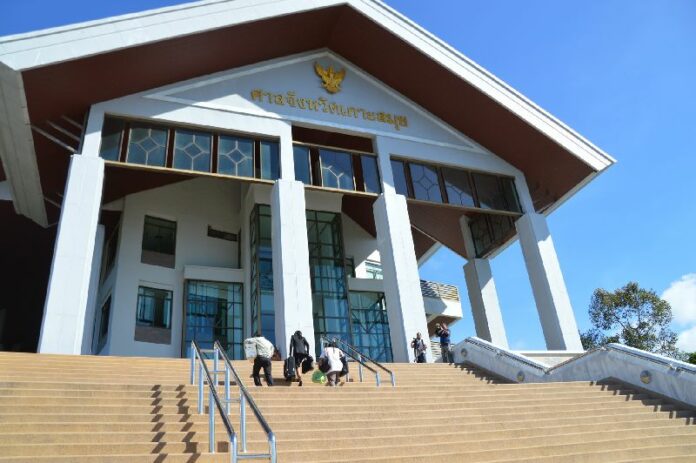
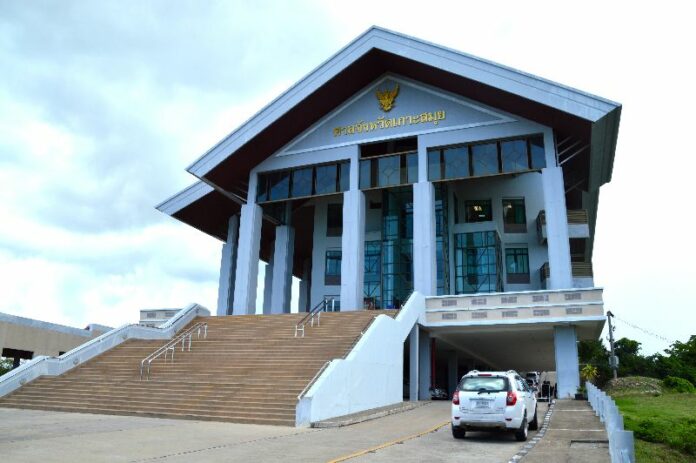
The court house in Koh Samui where two Burmese men are being tried for allegedly murdering two British tourist on Koh Tao,  22 July 2015.

SURAT THANI — The head of Thailand's Central Institute of Forensic Science will testify in defense of two Burmese men accused of killing two British backpackers in southern Thailand last year.

Judges ruled on Friday to add an additional day to the trial to allow for CIFS director Pornthip Rojanasunand to take the witness stand at Koh Samui Provincial Court on 11 September. 

Pornthip’s appearance was requested by the defendants’ lawyers because her agency, which falls under the jurisdiction of the Ministry of Justice, is re-examining pieces of forensic evidence from the case that have only been tested privately by police. Pornthip is well-known in Thailand for disagreeing with police in several high-profile cases.

Four items collected from the crime scene on Koh Tao's Sairee beach, including the garden believed to be used in the murder, have already been sent to the CIFS for a second examination. On Thursday, the court learned that solutions containing DNA traces taken from the victims’ bodies may also be available for a re-test.

Defense lawyer Nakhon Chompuchat said his team is still discussing which additional evidence to send to the forensic institute.

"We want to consult with Dr. Pornthip first," Nakhon told Khaosod English on Friday. 

The defense lawyers have expressed concern about their inability to access ‘chains of custody’ from the investigation, which are documents tracking the collection, movement, processing, and current location of all physical evidence. The lawyers, who have requested the documents but not recieved them, said they want to confirm that no evidence was tampered with in the process. 

The prosecutor said he could not comment on the case while the trial is ongoing.

The suspects, Zaw Lin and Wai Phyo, have spent the past year in jail and are facing the death penalty on charges of murdering David Miller, 24, and raping and murdering Hannah Witheridge, 23, on the night of 15 September 2014.

Zaw Lin and Wai Phyo have insisted on their innocence, and said they initially confessed to police because they were beaten and threatened by officers who interrogated them without a lawyer.  

The men, who originally hail from Myanmar’s Rahkine state, had been working on Koh Tao for less than a year before they were arrested. The are both 22 years old and around 150cm tall.

“We are confident they didn’t do it,’” said Andy Hall, a migrant workers’ rights activist from the UK who is assisting the defense team. “And we are confident that the court will deliver justice.”

Controversial CIFS Chief

Pornthip led the CIFS from 2008 until 2013, when the government of then-Prime Minister Yingluck Shinawatra declined to extend her career. She was later re-instated as CIFS director in June 2014 by the military junta that toppled Yingluck's government less than a month earlier. 

Pornthip pioneered the Thai justice system's focus on DNA evidence during her tenure at CIFS, but has also become a household name in Thailand for her connection to several controversies.

For years, she publicly defended the Thai military's use of "bomb detectors," called GT200s, which were later proven to be completely ineffective and sold to the Thai military by a British conman who was ultimately convicted for fraud. 

Earlier this month, the Medical Council of Thailand also found Pornthip guilty of an ethics breach for giving false testimony as an expert in the inquest of a businessman who was found dead in his mansion in 1999. She will appeal the Council's ruling, Daily News reported. 

DNA implicates defendants: police

In court yesterday – the final day of the trial’s second session of prosecution witnesses – judges heard from two police officers who said they tested evidence collected from the crime scene that matched the DNA of the suspects.

The second witness, Pol.Col. Wathee Asawutthimangkul from the Institute of Forensic Medicine, told the court that he was provided with genetic profiles of the suspects that matched semen collected from Witheridge's body that he tested in his lab. 

All forensic officers in court this week told the judges that their testing was conducted in accordance with regulations, their machines met international standards, and they had no knowledge that any evidence was tampered with.

The trial is taking place over several staggered sessions and will conclude in late September, with a verdict expected in October.


For comments, or corrections to this article please contact: [email protected]

You can also find Khaosod English on Twitter and Facebook
http://twitter.com/KhaosodEnglish
http://www.facebook.com/KhaosodEnglish


Advertisement

Koh Tao Murders: Top Forensic Scientist to Testify for Defense

The courthouse on Koh Samui where 2 Burmese men are being tried for the murder of British tourist on Koh Tao, 24 July 2015.

SURAT THANI — The head of Thailand's Central Institute of Forensic Science will testify in defense of two Burmese men accused of killing two British backpackers in southern Thailand last year.

Judges ruled on Friday to add an additional day to the trial to allow for CIFS director Pornthip Rojanasunand to take the witness stand at Koh Samui Provincial Court on 11 September. 

Pornthip’s appearance was requested by the defendants’ lawyers because her agency, which falls under the jurisdiction of the Ministry of Justice, is re-examining pieces of forensic evidence from the case that have only been tested privately by police. Pornthip is well-known in Thailand for disagreeing with police in several high-profile cases.

Four items collected from the crime scene on Koh Tao's Sairee beach, including the garden believed to be used in the murder, have already been sent to the CIFS for a second examination. On Thursday, the court learned that solutions containing DNA traces taken from the victims’ bodies may also be available for a re-test.

Defense lawyer Nakhon Chompuchat said his team is still discussing which additional evidence to send to the forensic institute.

"We want to consult with Dr. Pornthip first," Nakhon told Khaosod English on Friday. 

The defense lawyers have expressed concern about their inability to access ‘chains of custody’ from the investigation, which are documents tracking the collection, movement, processing, and current location of all physical evidence. The lawyers, who have requested the documents but not recieved them, said they want to confirm that no evidence was tampered with in the process. 

The prosecutor said he could not comment on the case while the trial is ongoing.

The suspects, Zaw Lin and Wai Phyo, have spent the past year in jail and are facing the death penalty on charges of murdering David Miller, 24, and raping and murdering Hannah Witheridge, 23, on the night of 15 September 2014.

Zaw Lin and Wai Phyo have insisted on their innocence, and said they initially confessed to police because they were beaten and threatened by officers who interrogated them without a lawyer.  

The men, who originally hail from Myanmar’s Rahkine state, had been working on Koh Tao for less than a year before they were arrested. The are both 22 years old and around 150cm tall.

“We are confident they didn’t do it,’” said Andy Hall, a migrant workers’ rights activist from the UK who is assisting the defense team. “And we are confident that the court will deliver justice.”

Controversial CIFS Chief

Pornthip led the CIFS from 2008 until 2013, when the government of then-Prime Minister Yingluck Shinawatra declined to extend her career. She was later re-instated as CIFS director in June 2014 by the military junta that toppled Yingluck's government less than a month earlier. 

Pornthip pioneered the Thai justice system's focus on DNA evidence during her tenure at CIFS, but has also become a household name in Thailand for her connection to several controversies.

For years, she publicly defended the Thai military's use of fake "bomb detectors," called GT200s, which were later proven to be fradulent equipment sold to the Thai military by a British conman who was ultimately convicted for fraud. 

Earlier this month, the Medical Council of Thailand also found Pornthip guilty of an ethics breach for giving false testimony as an expert in the inquest of a businessman who was found dead in his mansion in 1999. She will appeal the Council's ruling, Daily News reported. 

DNA implicates defendants: police

In court yesterday – the final day of the trial’s second session of prosecution witnesses – judges heard from two police officers who said they tested evidence collected from the crime scene that matched the DNA of the suspects.

The second witness, Pol.Col. Wathee Asawutthimangkul from the Institute of Forensic Medicine, told the court that he was provided with genetic profiles of the suspects that matched semen collected from Witheridge's body that he tested in his lab. 

All forensic officers in court this week told the judges that their testing was conducted in accordance with regulations, their machines met international standards, and they had no knowledge that any evidence was tampered with.

The trial is taking place over several staggered sessions and will conclude in late September, with a verdict expected in October.

Timeline of the Koh Tao murder investigation 

For comments, or corrections to this article please contact: [email protected]

You can also find Khaosod English on Twitter and Facebook
http://twitter.com/KhaosodEnglish
http://www.facebook.com/KhaosodEnglish

Advertisement

Turkish Airstrikes Target Islamic State in Syria

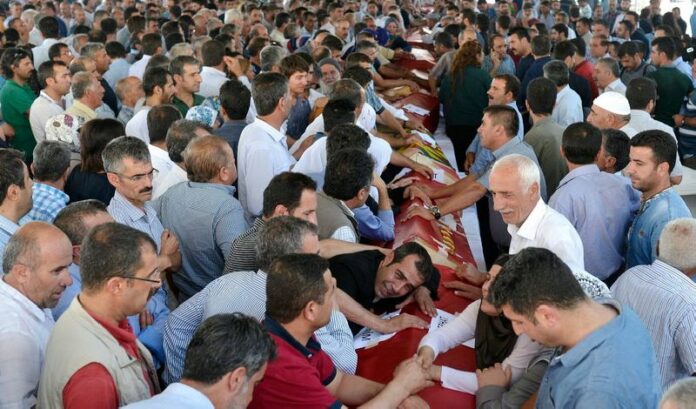
Friends and relatives of the victims of the bombing in Suruc, near the border between Turkey and Syria, mourn at the funerals of 16 of those killed, in Gaziantep, Turkey. EPA/DENIZ TOPRAK

ISTANBUL (DPA) – Turkish F16 jets launched pre-dawn airstrikes Friday against the Islamic State group in Syria, the prime minister's office said.

The strikes followed cross-border clashes on Thursday between the Turkish army and the Islamic State in which one Turkish soldier and five militants were killed, according to the army.

Prime Minister Ahmet Davutoglu decided on the military response to the border clash at a top level security meeting on Thursday, a statement from his office said.

It has been a week of turmoil in Turkey after a suicide bombing, blamed on the Islamic State, killed at least 32 at a gathering of pro-Kurdish activists on Monday in Suruc, near the Syrian border.

The bomber, according to initial reports, was a 20-year-old Turkish citizen who may have fought in Syria for the extremist group.

It emerged on Thursday that Turkey had agreed to allow the United States to use the US-Turkish Incirlik air base, broadening its ability to strike Islamic State targets.

Washington has long been pressing Ankara to take a more active role in the fight against the militant group, which controls large swathes of territory in Iraq and Syria and has launched numerous attacks further afield.

Syrian-Kurdish fighters from the People's Protection Units (YPG) are the main US ally on the ground in the fight against the Islamic State group in Syria, sparking concern in Ankara about stoking nationalist sentiment within its own Kurdish minority.

The Kurds have pushed the Islamic State back from most territory it seized last year along the border with Turkey. The Kurds now control about 400 kilometres of territory along the Turkish border, while the Islamic State holds about 80.

The YPG are often seen as a sister organization of the armed Kurdistan Workers' Party (PKK), which has been engaged in a peace process with the government since a ceasefire was agreed in 2013.

The PKK said it killed two Turkish police officers this week, alleging they had collaborated with the Islamic State to orchestrate the attack in Suruc.

Tensions have been rising in recent weeks between the state and the PKK and there have been sporadic violent incidents.

Kurdish officials have repeatedly complained the armed group's jailed leader, Abdullah Ocalan – who has spearheaded talks with the government – has been unable to receive visitors since April.

Adding to the volatile situation, Turkey currently has an interim government. The ruling Justice and Development Party (AKP) is seeking a coalition partner after losing its parliamentary majority in last month's elections for the first time since 2002.

Turkey could be forced to hold fresh elections later this year if no deal is reached.

Advertisement

Koh Tao Murder: More Forensic Evidence Available for Re-Test, Witness Reveals

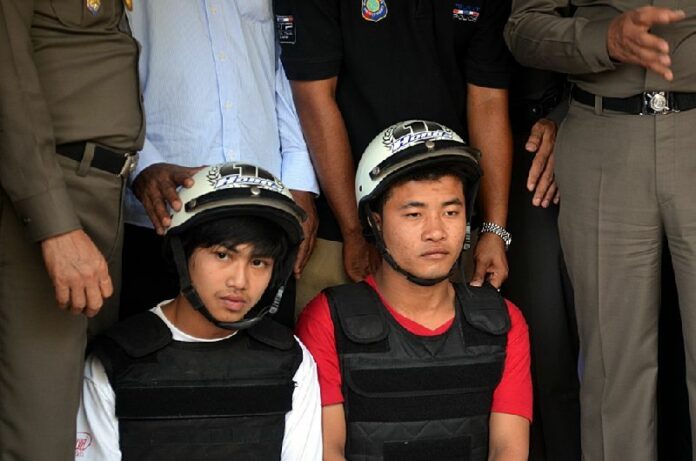
Zaw Lin and Wai Phyo during police conference on Koh Tao on 10 October 2014.

SURAT THANI — Challenging previous testimony provided by police, a forensic expert told the court where two Burmese men are being tried for murdering British tourists on a Thai island that more evidence is available for the independent re-test requested by the defense team earlier this month.

Her testimony contradicted what police witnesses told the court during the first three days of the trial on July 8-10: that only four items were available for re-examination because other key pieces of evidence, such swabs of DNA taken from the victims’ bodies, were "used up."

Today’s witness, a scientist from police’s forensic division named Kewalee Chanpan, said that "all" genetic material tested in the lab is replicated for future processing.

Pol.Lt.Col. Kewalee, who was in charge of testing several items in the investigation, also said that original pieces of evidence, such as a condom found at the crime scene, are still in police custody, though she added that DNA traces on objects diminish over time.

The availability of more forensic evidence is seen as a huge victory for the defense team, which has repeatedly protested their inability to access the alleged DNA match that police say incriminates the two suspects, whose names are Zaw Lin and Wai Phyo.

The pair has been charged with raping and murdering Hannah Witheridge, 23, and murdering David Miller, 24, on the island of Koh Tao in September 2014. If found guilty, the 22-year-olds could face the death penalty.

Police’s internal processing of the forensic tests – which were conducted privately in police lab – and the prosecution’s efforts to evade an independent re-examination of the evidence have fed long-running suspicions that the two Burmese migrant workers were framed.

The pair, who were arrested following two-weeks of police gaffes and investigative dead ends, say they were beaten by police into making initial confessions, which they later retracted after speaking to lawyers in prison.

In court this week, the two men, who must wear metal shackles around their ankles, have appeared engaged with the proceedings, but generally relaxed inside the courtroom.  

Although the forensic witness said today that all genetic material is replicated as a matter of protocol in the police lab, she did not specifically confirm which samples can be retrieved for further examination.

According to the prosecution, the key pieces of incriminating evidence are semen found in the female victim’s body, and DNA on cigarette stubs found close to the crime scene.

The defense team told Khaosod English that they will discuss which pieces of additional evidence they would like send to the Central Institute of Forensic Science, a lab administered by the Ministry of Justice.

"We have to be specific about what we want retested, and for what purposes," said Nakhon Chompuchat, one of the defendants’ lawyers. "But at least our perception of things is now clearer."

He said the institute is still processing the items that were sent for a retest earlier this month, which included the bloodied garden hoe police believe was used in the murder, and a shoe, sock, and bag found at the crime scene.

The mothers of Zaw Lin and Wai Phyo with their  defense lawyers outside the Koh Samui court, 23 July 2015.

Pol.Lt.Col. Kewalee, who conducted police’s original testing of the garden hoe, told the court today that only Witheridge’s blood was found on the weapon. No other DNA was found on the tool, she said.

When pressed by the defense about why there was no DNA found on the hoe that matched the suspects, who presumably had to grip its handle tightly, Pol.Lt.Col. Kewalee said that skin cells from the hand are not as likely to adhere to an object as blood. 

She also did not supply the full documentation of the results she gathered in her forensic testing, citing a policy that bars scientists from providing investigative officers with detailed graphs of a person’s genetic makeup. 

The defendants’ lawyer, Nakhon, said he was suspicious of this reasoning, and has requested access to all of the material in order to ascertain whether any documents were tampered with.

 "The prosecutor tried to be evasive by saying that no law supports giving the graphs and tables to the investigative officers, which is true," he said. "But once you testify to the court, you must show them."

He added, "I have already requested this information, but they won't give us. That is why I am suspicious."

According to Nakhon, the defense has not received a number of  requested documents from the prosecution, including photographs taken during the post-mortem examinations, and required paper trails – known as a ‘chains of custody’ – that document the collection, movement, and current location of all physical evidence.

"We haven’t received any of this," he said.

The trial is taking place in a court on the neighboring island of Koh Samui over 18 staggered days. The second session will conclude tomorrow, with a third round of prosecution witnesses scheduled to take the stand in August. A verdict is expected in early October.

Among those who attended today’s court hearing were the defendants’ mothers, a representative for relatives of Miller and Witheridge, an official from Myanmar’s Embassy in Thailand, a representative from the Burmese NGO, one foreign correspondent, and several expats who have organized local support for the suspects.


For comments, or corrections to this article please contact: [email protected]

You can also find Khaosod English on Twitter and Facebook
http://twitter.com/KhaosodEnglish
http://www.facebook.com/KhaosodEnglish


Advertisement

Hot News

LATEST NEWS

Bangkok
overcast clouds
26.1 ° C
26.1 °
22.7 °
93 %
1.9kmh
100 %
Fri
25 °
Sat
33 °
Sun
35 °
Mon
37 °
Tue
37 °