27.2 C
Bangkok
Saturday, July 18, 2026
Home Blog Page 2993

Asian Stocks Fall on Greece's Worsening Debt Woes

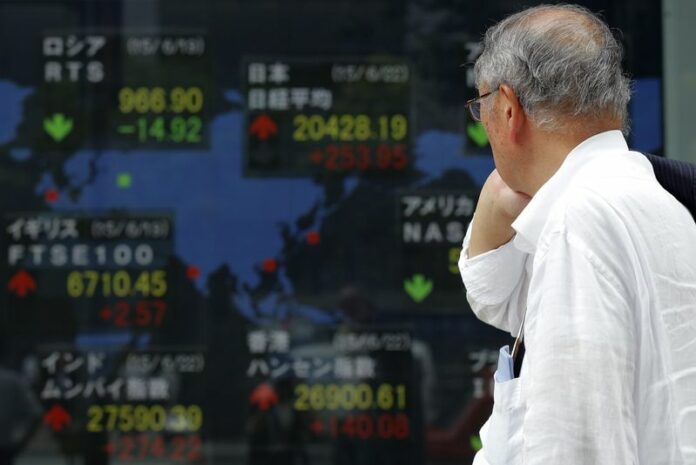
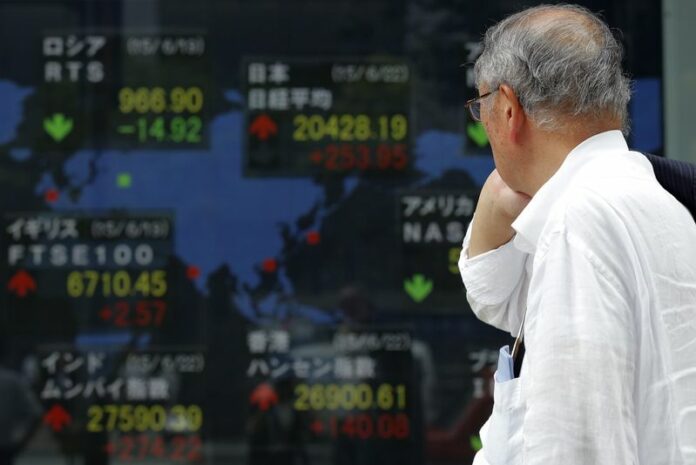
A man looks at a monitor showing prices on Tokyo's Nikkei Stock Average in Tokyo, Japan, 22 June 2015. EPA/KIYOSHI OTA

MANILA (DPA) — Asian stock markets slumped Monday on jitters over Greece's worsening debt crisis and its impact on the global economy.

Japan's benchmark Nikkei 225 Stock Average plunged 2.88 per cent, while China's Shanghai Composite was down 3.75 per cent and Hong Kong's Hang Seng fell 2.68 per cent

South Korea's Kospi index dropped 1.4 per cent, while Singapore's Straits Times Index lost 1.3 per cent.

The regional decline came as Greece imposed capital controls and shut down banks after creditors refused to extend a bailout programme.

"This crisis has been haunting the global markets for the longest time and it's the 11th hour and there is no quick fix we're seeing at the moment," said Astro del Castillo, a Philippine-based fund manager.

"Greece is bracing for the impact, it is way past deadline," he said. "The concern is there will be a domino effect if Greece defaults."

India's 30-share benchmark Sensex index also plunged 2.13 per cent, while Australia's ASX 200 plummeted 2.1 per cent after the market opened.

Greece has scheduled a referendum on July 5 on the term of the bailout offered by creditors, which rejected Greece's appeal to extend its bailout into July.


For comments, or corrections to this article please contact:[email protected]

You can also find Khaosod English on Twitter and Facebook
http://twitter.com/KhaosodEnglish
http://www.facebook.com/KhaosodEnglish


Advertisement

Thai Ice Cream Company Apologizes for Celebrating US Gay Marriage With 'Offensive' Joke

Stuart Gaffney and John Lewis, plaintiffs in the 2008 Defense of Marriage Act case, celebrate while traveling along Market Street during the annual Gay Pride Parade in San Francisco on June 28, 2015. [AFP]

BANGKOK — An ice cream company in Thailand has apologized for referencing a derogatory term for anal sex in a Facebook post intended to celebrate the US Supreme Court's landmark ruling to legalize same-sex marriage in all 50 states.

Over the weekend, Wall's Thailand, a subsidiary of the international ice cream brand Wall's, posted a photo of black bean flavored ice cream on Facebook with the caption: "Wall's supports all form of love. #lovewins." 

\

Many commentators on social media criticized the post for alluding to "black bean," a slang term in Thai for anal sex that is often used to demean gay men.

According to an article published by Naewna newspaper in 2007, the term originated around 70 years ago when a man named black bean (tua dam in Thai) was arrested in 1935 for allegedly having anal sex with underage boys in Bangkok.

Several hours after a stream of angry comments began to surface on Wall's Thailand's Facebook page, the company removed the photo and replaced it with a new post featuring a rainbow colored popsicle.

However, commentators continued to demand an apology, leading the company to post a statement on their Facebook page yesterday morning. 

The statement said: 

"Wall's would like to apologize and express our regret if we caused any misunderstanding with the aforementioned post. We did not intend to make anyone uncomfortable. The company has already removed the message that caused the misunderstanding."

In a lengthy post published on Medium.com, a Thai user called Hima argued that the ice cream company’s joke would perpetuate the stereotype that gay men promiscuous and sex-obsessed.  

"It will only make people misunderstand gay men even more," he wrote.

It's not the first time the company has used black bean ice cream to reference the offensive slur. On Valentine's Day this year, Wall's Thailand also posted a photo of a black bean ice cream pop with the caption "I love you, buddy," in a reference to the title of 2007 Thai film about gay men.

Gay marriage is not recognized in Thailand, despite a concerted campaign by LGBT groups in recent years. Although the LGBT community is much more visible and accepted in Thailand than in neighboring countries like Malaysia or Myanmar –  there are no "sodomy laws" in Thailand, for instance – gay men and women do still face discrimination in the workplace and other areas of life. 

In its latest report on the status of human rights in Thailand, the US State Department noted that "there was some continued commercial discrimination based on sexual orientation and gender identity."

"For example, some life insurance companies refused to issue policies to gay men, although some companies expressed willingness to sell policies to LGBT citizens with provisions for full transfer of benefits to same-sex partners," the report said. "NGOs reported that more insurance companies had begun to accept same-sex partner beneficiaries, but it remained at the company’s discretion. NGOs alleged that some nightclubs, bars, hotels, and factories denied entry or employment to LGBT individuals, particularly transgender persons."

The report also noted that police tend to downplay sexual crimes that have been committed against gay men and women. 


For comments, or corrections to this article please contact: [email protected]

You can also find Khaosod English on Twitter and Facebook
http://twitter.com/KhaosodEnglish
http://www.facebook.com/KhaosodEnglish

Advertisement

No Redshirt Protests Expected During Prayuth's Visit to Chiang Mai

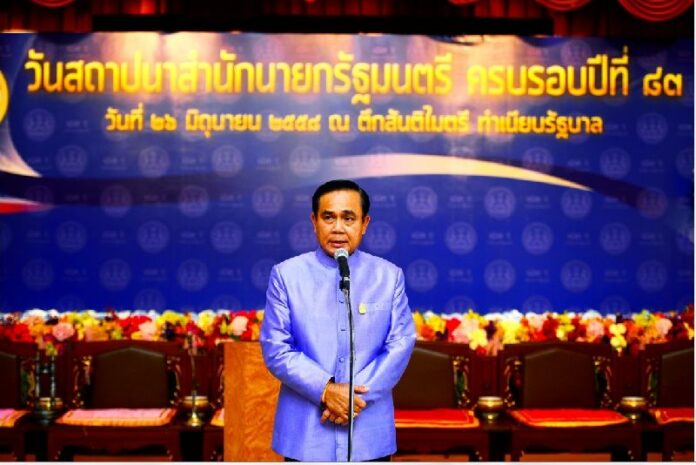
Junta chairman Gen. Prayuth Chan-ocha at the Government House on 26 June 2015.

BANGKOK — A Redshirt leader in northern Thailand says there will be no protests during junta chairman Prayuth Chan-ocha’s visit to Chiang Mai – a major stronghold of the largely anti-coup Redshirt movement.

"It is not yet the time for dissent or opposition," said Pichit Tamoon, who leads the Redshirts’ Chiang Mai chapter. "We are still giving the government a chance to work, solve problems, and fix the economy. But we do ask them to stick to the road map, and organize a democratic election that will return power to the people."

Gen. Prayuth Chan-ocha, who toppled a Redshirt-backed government thirteen months ago, is scheduled to arrive in Chiang Mai today for a two-day visit. Over 2,000 police officers have been mobilized to maintain security during his trip, according to the commander of the Fifth Region Police.

"As for any possible movement from various groups that may oppose or make demands to the government or the Prime Minister, the fifth region police have already coordinated with the military to collect intelligence and meet with all the groups." Pol.Lt.Gen. Thanitsak Teerasawasdi said. "There will be no movements related to politics. The overall situation is normal." 

Thailand’s junta has maintained a strict ban on political activities and protests since the May 2014 coup. Redshirt leaders and activists have largely kept quiet under the military’s watchful eye, while those who do speak out are often summoned by the army for "attitude adjustment." Last month, the government revoked the license of a Redshirt-run TV channel for airing "politically divisive" content.

As the birthplace of the exiled leader of the Redshirt movement, former Prime Minister Thaksin Shinawatra, Chiang Mai has long been considered home turf for the Redshirts, most of whom hail from rural, rice-farming provinces in northern and northeastern Thailand. 

However, speaking to reporters yesterday, a government spokesperson said that the junta "does not see Chiang Mai as a space that exclusively belongs to Redshirts or any other color."

"There may be several people or a small group of people who don't understand us, but society can judge them on its own," said Maj.Gen. Sansern Kaewkamnerd. "It is not the time to use emotion and say things like, 'we want to oppose the coup.'" 

In November 2014, five university students in northeastern Thailand interrupted a speech by Gen. Prayuth by raising the three-finger anti-coup salute. The five student activists were arrested and later released without charges, but are now being held in a Bangkok prison along with nine other activists for staging a peaceful pro-democracy demonstration last week. 


Advertisement

Thailand's Lone MERS Patient Cleared of Virus

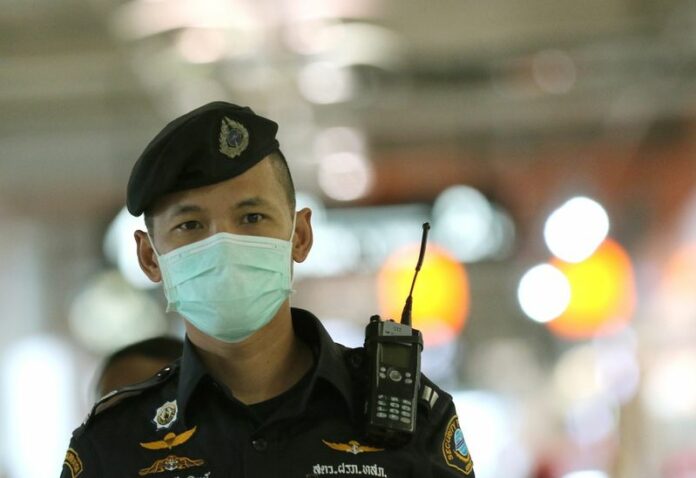
An airport security officer wears a protective mask against Middle East Respiratory Syndrome (MERS) at Suvarnabhumi airport, Bangkok, Thailand, 21 June 2015. EPA/NARONG SANGNAK

BANGKOK (DPA) — A 75-year-old Omani man who was Thailand's only known MERS patient has recovered, health officials said Monday.

The Ministry of Public Health said the latest tests on the patient showed up negative for the Middle East Respiratory Syndrome virus.

The man will be released from quarantine but monitored closely, said Sophon Mekthon, the ministry's head of disease control.

Sophon also said all people who came in contact with the patient had been accounted for, and that the ministry was monitoring 36 of them as a precaution.

For comments, or corrections to this article please contact:[email protected]

You can also find Khaosod English on Twitter and Facebook
http://twitter.com/KhaosodEnglish
http://www.facebook.com/KhaosodEnglish

Advertisement

Thailand's Lone MERS Patient Cleared of Virus

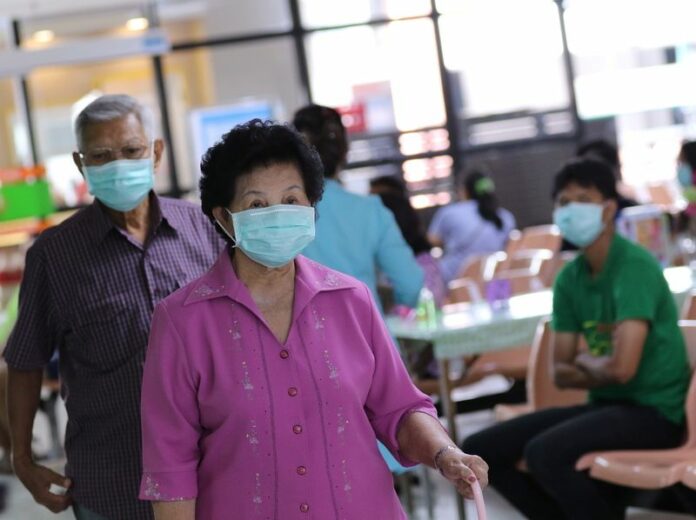
Thai patients wear protective masks against Middle East Respiratory Syndrome (MERS) as they enter the Bamrasbaradura Infectious Diseases Institute, Nonthaburi province, on the outskirts of Bangkok, Thailand, 19 June 2015. EPA/NARONG SANGNAK

BANGKOK (DPA) — A 75-year-old Omani man who was Thailand's only known MERS patient has recovered, health officials said Monday.

The Ministry of Public Health said the latest tests on the patient showed up negative for the Middle East Respiratory Syndrome virus.

The man will be released from quarantine but monitored closely, said Sophon Mekthon, the ministry's head of disease control.

Sophon also said all people who came in contact with the patient had been accounted for, and that the ministry was monitoring 36 of them as a precaution.

For comments, or corrections to this article please contact:[email protected]

You can also find Khaosod English on Twitter and Facebook
http://twitter.com/KhaosodEnglish
http://www.facebook.com/KhaosodEnglish
Advertisement

Asian Stocks Fall on Greece's Worsening Debt Woes

A man looks at a monitor showing prices on Tokyo's Nikkei Stock Average in Tokyo, Japan, 22 June 2015. EPA/KIYOSHI OTA

MANILA (DPA) — Asian stock markets slumped Monday on jitters over Greece's worsening debt crisis and its impact on the global economy.

Japan's benchmark Nikkei 225 Stock Average plunged 2.88 per cent, while China's Shanghai Composite was down 3.75 per cent and Hong Kong's Hang Seng fell 2.68 per cent

South Korea's Kospi index dropped 1.4 per cent, while Singapore's Straits Times Index lost 1.3 per cent.

The regional decline came as Greece imposed capital controls and shut down banks after creditors refused to extend a bailout programme.

"This crisis has been haunting the global markets for the longest time and it's the 11th hour and there is no quick fix we're seeing at the moment," said Astro del Castillo, a Philippine-based fund manager.

"Greece is bracing for the impact, it is way past deadline," he said. "The concern is there will be a domino effect if Greece defaults."

India's 30-share benchmark Sensex index also plunged 2.13 per cent, while Australia's ASX 200 plummeted 2.1 per cent after the market opened.

Greece has scheduled a referendum on July 5 on the term of the bailout offered by creditors, which rejected Greece's appeal to extend its bailout into July.


For comments, or corrections to this article please contact:[email protected]

You can also find Khaosod English on Twitter and Facebook
http://twitter.com/KhaosodEnglish
http://www.facebook.com/KhaosodEnglish
Advertisement

Lawyers of Jailed Student Activists Accuse Police of Misconduct

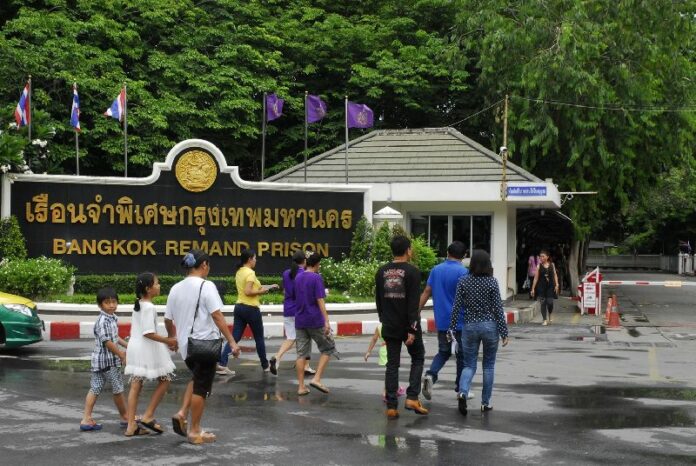
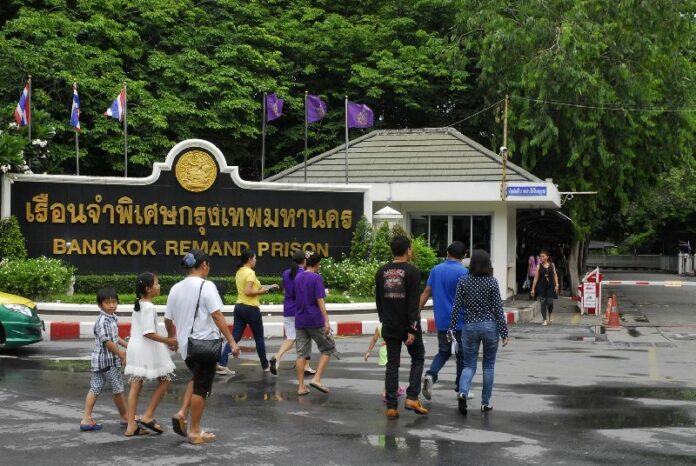
Friends and relatives of jailed activists arrive at Bangkok Remand Prison on 28 June 2015.

BANGKOK — Lawyers representing the fourteen activists who have been sent to prison for organizing a pro-democracy march in Bangkok have accused police of trampling on their clients' legal rights.

Kritsadang Nutcharus, a member of the activists' legal team, said police are planning to interrogate the group without letting them consult with their lawyers, as is required by the law. 

The fourteen, eleven of whom are university students, are facing up to seven years in prison on charges of sedition and violating the junta's ban on political gatherings for staging a peaceful demonstration against the military regime in Bangkok on 25 June. They were arrested on the following day and sent to prison to await trial in a military court, which the ruling junta has assigned to oversee cases that affect "national security."

"The investigative officers said they would interrogate the students, even though we have insisted that we are not ready yet, because according to the Criminal Procedure Code, the suspects have the right to consult their lawyers first," Kritsadang said. 

Police reportedly told Kritsadang that they may assign lawyers of their own choosing to represent the students during the interrogation, which Kritsadang said would also violate the laws.

"The fourteen students have told us they only want us to be their lawyers. According to the Criminal Procedure Code, interrogation can only be done in front of lawyers who are trusted and chosen by the suspects," Kritsadang said. "We have already sent a letter to the Lawyer Council informing that the students only want this set of lawyers to represent them. So the council need not dispatch its lawyers to the police."

He added, "If the Council does, it will be in violation of the Lawyers Act, because lawyers cannot represent any individual who already has his or her own lawyer." 

According to Thailand’s Lawyers Act, "A lawyer cannot try to take another lawyer's client unless there is consent by the previous lawyer, or there is justified cause to believe that the client has already withdrawn the former lawyer, or that the former lawyer has already rejected the client's case.”

Yaowalak Anuphan, another lawyer representing the fourteen activists, criticized police's decision to seize her colleague’s car after she parked it outside of Bangkok’s martial court on the night of 26 June. Police said the vehicle contained "vital evidence" related to the activists. Officers searched the car after returning with a court warrant, and took away five mobile phones that some activists had left with the lawyer prior to their arrests. The car was returned 15 hours later. 

"This is an act of intimidation and violation of freedom," Yaowalak said.  

Speaking to reporters yesterday, the commander of Bangkok's police force defended the decision to seize the car and mobile phones.

"We had received information that vital evidence related to wrongdoing of the students  was being hidden in the [car] that was parked next to the Bangkok military court," Pol.Lt.Gen. Sriwarah Rangsipramkul said.

He also told reporters that police have not "officially" recognized anyone as the legal representative of the fourteen activists, and hinted that more arrest warrants may be issued on individuals who are connected to the group, including the lawyer who owned the seized car, Sirikan Charoensiri.

Asked to comment on the activists' demand that they be tried by a civilian court and not a military one, Pol.Lt.Gen. Sriwarah said, "The current laws clearly permit it [martial court's jurisdiction over civilians]. If you don't agree with it, please change the laws." 

He added, "Let me insist that this is not about politics. Police only perform their duty and interrogate the cases as the laws requires them." 


For comments, or corrections to this article please contact:[email protected]

You can also find Khaosod English on Twitter and Facebook
http://twitter.com/KhaosodEnglish
http://www.facebook.com/KhaosodEnglish

Advertisement

Lawyers of Jailed Student Activists Accuse Police of Misconduct

Friends and relatives of jailed activists arrive at Bangkok Remand Prison on 28 June 2015.

BANGKOK — Lawyers representing the fourteen activists who have been sent to prison for organizing a pro-democracy march in Bangkok have accused police of trampling on their clients' legal rights.

Kritsadang Nutcharus, a member of the activists' legal team, said police are planning to interrogate the group without letting them consult with their lawyers, as is required by the law. 

The fourteen, eleven of whom are university students, are facing up to seven years in prison on charges of sedition and violating the junta's ban on political gatherings for staging a peaceful demonstration against the military regime in Bangkok on 25 June. They were arrested on the following day and sent to prison to await trial in a military court, which the ruling junta has assigned to oversee cases that affect "national security."

"The investigative officers said they would interrogate the students, even though we have insisted that we are not ready yet, because according to the Criminal Procedure Code, the suspects have the right to consult their lawyers first," Kritsadang said. 

Police reportedly told Kritsadang that they may assign lawyers of their own choosing to represent the students during the interrogation, which Kritsadang said would also violate the laws.

"The fourteen students have told us they only want us to be their lawyers. According to the Criminal Procedure Code, interrogation can only be done in front of lawyers who are trusted and chosen by the suspects," Kritsadang said. "We have already sent a letter to the Lawyer Council informing that the students only want this set of lawyers to represent them. So the council need not dispatch its lawyers to the police."

He added, "If the Council does, it will be in violation of the Lawyers Act, because lawyers cannot represent any individual who already has his or her own lawyer." 

According to Thailand’s Lawyers Act, "A lawyer cannot try to take another lawyer's client unless there is consent by the previous lawyer, or there is justified cause to believe that the client has already withdrawn the former lawyer, or that the former lawyer has already rejected the client's case.”

Yaowalak Anuphan, another lawyer representing the fourteen activists, criticized police's decision to seize her colleague’s car after she parked it outside of Bangkok’s martial court on the night of 26 June. Police said the vehicle contained "vital evidence" related to the activists. Officers searched the car after returning with a court warrant, and took away five mobile phones that some activists had left with the lawyer prior to their arrests. The car was returned 15 hours later. 

"This is an act of intimidation and violation of freedom," Yaowalak said.  

Speaking to reporters yesterday, the commander of Bangkok's police force defended the decision to seize the car and mobile phones.

"We had received information that vital evidence related to wrongdoing of the students  was being hidden in the [car] that was parked next to the Bangkok military court," Pol.Lt.Gen. Sriwarah Rangsipramkul said.

He also told reporters that police have not "officially" recognized anyone as the legal representative of the fourteen activists, and hinted that more arrest warrants may be issued on individuals who are connected to the group, including the lawyer who owned the seized car, Sirikan Charoensiri.

Asked to comment on the activists' demand that they be tried by a civilian court and not a military one, Pol.Lt.Gen. Sriwarah said, "The current laws clearly permit it [martial court's jurisdiction over civilians]. If you don't agree with it, please change the laws." 

He added, "Let me insist that this is not about politics. Police only perform their duty and interrogate the cases as the laws requires them." 


For comments, or corrections to this article please contact:[email protected]

You can also find Khaosod English on Twitter and Facebook
http://twitter.com/KhaosodEnglish
http://www.facebook.com/KhaosodEnglish

Advertisement

Can China Beat Deflation ?

By Yu Yongding

BEIJING – At a time of slowing economic growth and massive corporate debts, a deflationary spiral would be China’s worst nightmare. And the risk is mounting. The producer price index (PPI) has been in negative territory for 39 consecutive months, since February 2012. The growth of China’s consumer price index (CPI), though still positive, has also been falling steadily, from 6.5% in July 2011 to 1.2% in May. If past experience is any indication, China’s CPI will turn negative very soon.

In China’s last protracted bout of deflation, from 1998 to 2002, persistent declines in prices were the result of monetary and fiscal tightening that began in 1993, compounded by the lack of exit mechanisms for failed enterprises. After peaking at 24% in 1994, inflation began to decline in 1995. But GDP growth soon began deteriorating rapidly. In an effort to revive growth in a difficult global environment and buffer exports against the impact of the Asian financial crisis, the Chinese government loosened monetary and fiscal policy beginning in November 1997.

But it was too little too late. By 1998, when CPI inflation began to fall, producer prices had already been declining for eight months, and remained negative for a total of 51 months, with CPI growth beginning to recover after 39 months.

An obvious lesson is that the government should have switched to loosening earlier, and more forcefully. But this experience also underscores the impotence of monetary policy in a deflationary environment, owing to the unwillingness of banks to lend and of enterprises to borrow. The fact that loss-making enterprises were allowed to churn out cheap products, eroding the profitability of high-quality enterprises (and thus their incentive to invest), prolonged the deflation.

Nonetheless, China eventually managed to rid itself of deflation and return to rapid economic growth. For starters, a decline in investment during the deflationary period – together with firm closures, mergers, and acquisitions – reduced overcapacity, clearing the way for investment to rebound strongly in 2002. At the same time, expansionary fiscal policy increased effective demand, while the government, backed by its strong public-finance position, was able to tackle nonperforming loans effectively, thereby increasing commercial banks’ willingness to lend and firms’ ability to borrow.

Moreover, housing-market reforms and the development of a mortgage-loan market in the late 1990s fueled rapid growth in real-estate investment, which reached an annual rate of over 20% in 2000. As a result, real-estate development became the most important contributor to economic growth, even as exports boomed following China’s accession to the World Trade Organization.

The problem with the emergence of these new growth engines is that it enabled China’s leaders to delay important structural reforms. As a result, China now faces many of the same challenges it faced in the late 1990s – beginning with overcapacity.

After 15 years of rapid growth in real-estate development, this is not surprising. But that does not make it any less risky. In fact, if overcapacity is allowed to continue putting downward pressure on prices, China’s economic growth will not stabilize at a rate consistent with its potential; instead, the economy will be pushed into a vicious spiral of debt deflation.

At this point, the authorities could eliminate overcapacity through firm closures, mergers and acquisitions, and other structural measures. They could also seek to eliminate excess capacity by using expansionary monetary and fiscal policies to stimulate effective demand. In theory, the long-term solution would be to pursue structural adjustments that would improve the allocation of resources. But that would be painful and slow. Striking a balance between the short- and long-term approaches will prove to be a major challenge for China’s leadership.

Complicating this effort is the fact that, unlike in 1997-2002, China cannot absorb overcapacity by stimulating real-estate investment and exports. And no one knows whether the much-discussed “innovative industries” can have the impact that real-estate investment and exports did – not least because there is so much excess capacity in the traditional industries.

China must do what it takes to avoid falling into the debt-deflation trap. Fortunately, China still has room to invest in growth-enhancing infrastructure and innovative industries. Policies to expand social security and improve the provision of public goods could support these efforts, boosting domestic consumption by allowing households to reduce their precautionary savings.

At the same time, however, China’s leadership must continue to pursue its agenda of structural reform and adjustment, even if it may have an adverse impact on growth in the short run. China simply cannot afford to continue to kick the reform can down the road.

As Mark Twain once purportedly said, “History doesn’t repeat itself, but it does rhyme.” China should brace itself for a period of deflation, which may be even more protracted than the last one. But, with the right approach – and a bit of good luck – it can make sure that, this time, it recovers more sustainably than in the past.


Yu Yongding, a former president of the China Society of World Economics and director of the Institute of World Economics and Politics at the Chinese Academy of Social Sciences, served on the Monetary Policy Committee of the People’s Bank of China from 2004 to 2006.


Copyright: Project Syndicate, 2015.
www.project-syndicate.org

 
For comments, or corrections to this article please contact: [email protected]

You can also find Khaosod English on Twitter and Facebook
http://twitter.com/KhaosodEnglish
http://www.facebook.com/KhaosodEnglish

 

Advertisement

Bangkok's Shopping Malls – An Overdose on Retail Therapy?

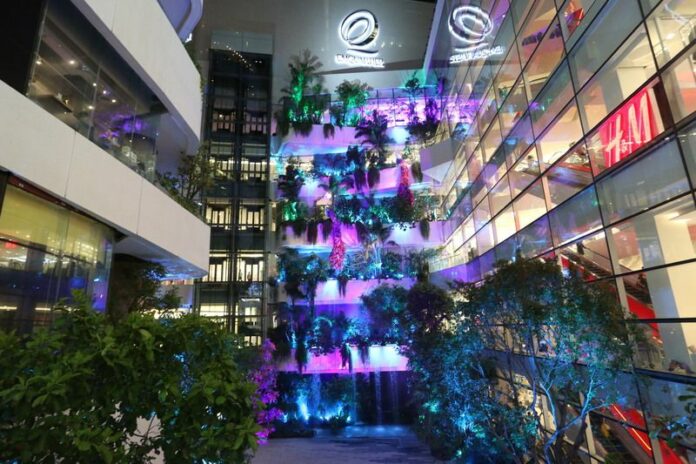
The inside of Bangkok's newest luxury shopping mall, EmQuartier. [DPA]

BANGKOK (DPA) — Bangkok’s newest luxury mall rises above one of the Thai capital's busiest commercial districts like an uneven jigsaw of white curves and sparkling glass.

A collection of three buildings joined by walkways and separated by what developers describe as "the tallest man-made waterfall in South-East Asia," the EmQuartier mall is the latest addition to Bangkok's indoor shopping scene.

The restaurant section on the highest floors wraps itself around a hanging garden that looks like something out of the James Cameron film Avatar, while a skyscraper of office blocks tops off the edifice on the central Sukhumvit road.

Facing EmQuartier across the road is the Emporium, another luxury shopping centre owned by The Mall Group.

Two hundred metres down the road, construction is starting on the EmSphere development, part of plans to rebrand the whole area as the "EmDistrict."

"Bangkok has always wanted to become a world-class city [with] the tallest buildings, the most glamorous hotels, the biggest malls," said Tao Rugkhapan, a city planner who previously worked with the government.

Its projects may be grand, but The Mall Group is not the biggest player in Bangkok's mall wars. Its main rival, Central Group, is the largest retail holding company in Thailand.

Its flagship Central World mall receives 150,000 visitors per day, comprised mostly of Thais but 20 per cent are tourists from Asia and beyond, the company says.

Tourists are expected to spend over 12 billion dollars in Bangkok in 2015, according to credit card company Mastercard, with many coming to Thailand especially for its reputation as a shoppers' paradise.

But with 31 major shopping malls on Bangkok's urban rail route – which itself has only 23 stations – and more than half of these built in the last decade, many are now wondering if Bangkok's embrace of high-end consumer culture has come at too high a price.

The spate of mall-building has brought problems for the city below, Tao says, citing worsening congestion on already busy roads and the displacement of local shops and communities.

"I hate the modernization of these areas. We have lost our sense of locality," said Pavich Supapipat, who has been living in Bangkok's busy Thonglor district, a 10-minute walk from the planned EmDistrict, for more than 20 years.

At least three new malls are planned for the thoroughfare, already lined with brand new and older condominium blocks.

"We are supposed to deal with this huge influx of people but we still have the same number of small roads and streets," Pavich said.

"It's just sad that the urban poor, the majority, have never been part of the city's planning," said Tao.

Many Bangkok residents echo these sentiments.

A campaign group called Makkasan Hope has gathered over 25,000 signatures to petition the Bangkok Metropolitan Administration (BMA) to not sell a large swathe of state land in central Bangkok to developers, but instead create a green space like New York's Central Park.

Their frustration is aimed at malls like Central Embassy: a 557-million-dollar, high-end shopping centre that occupies 140,000 square metres of central Bangkok but sits largely devoid of shoppers just one year after its grand opening, leading many to dub it the "Central Empty."

Even without customers, experts say such malls survive partly by selling retail space to global chains like Gucci and Chanel, which can in turn absorb the losses if sales disappoint.

Central Group had revenues last year of around 700 million dollars.

"Of course museums and parks would be better for everyone but there are not enough incentives for landowners to make those choices," said Prinya Reunprapan, a business development executive.

The "default choice" for developers of prime real estate "will be a shopping mall or condominium, because they are seen as the safest bet for the landowner."

While the developers are concerned with the risks to their sizeable investments, others express reservations about the equally significant impacts of the large-scale projects.

Siam Paragon, which bills itself as one of the largest malls in the world and houses a huge aquarium, consumes twice as much electricity per year as the northern province of Mae Hong San and its 250,000 residents, according to environment and development monitor group Mekong Commons.

Neither Central Group nor The Mall Group would comment on issues of traffic congestion, the displacement of small shop owners or sustainable energy usage.

These are indeed far from their main customers' concerns.

"I can just come here and get everything done without having to walk outside. I don't want to walk outside especially in this weather," said Natchanok Passapiti, 28, as she left Central World loaded with new purchases.

When asked why it was necessary to build two luxury malls across the street from one another, The Mall Group's public relations department replied that "Emporium is for luxury shoppers while EmQuartier is more of a lifestyle outlet."

As for the EmSphere to come, "we still have not completely decided what will be inside the mall," said press officer Suthicha Rouenkon. "But we imagine that it will be a place for the ultra-luxury shoppers, yachts and supercars and such."

(Reporting by Cod Satrusayang)

For comments, or corrections to this article please contact:[email protected]

You can also find Khaosod English on Twitter and Facebook
http://twitter.com/KhaosodEnglish
http://www.facebook.com/KhaosodEnglish

Advertisement

Hot News

LATEST NEWS

Bangkok
overcast clouds
27.2 ° C
27.2 °
27.2 °
81 %
3.5kmh
100 %
Sat
35 °
Sun
37 °
Mon
36 °
Tue
31 °
Wed
36 °