































36.6 C
Bangkok
Wednesday, June 24, 2026
Home Blog Page 2996

Thai Junta Leader Asks Media to Let Navy Handle Migrant Crisis

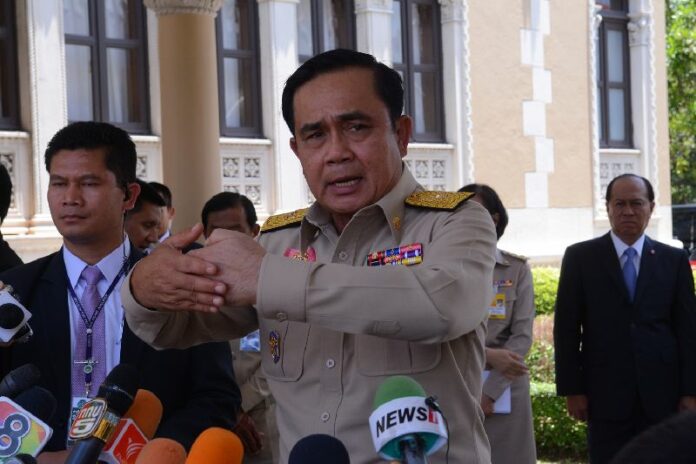
Thai junta chairman Gen. Prayuth Chan-ocha speaking to reporters in Bangkok, 17 May 2015.

BANGKOK — Thailand’s military leader has asked journalists to let the Thai navy document any encounters with the boat people from Myanmar and Bangladesh who are languishing off shore as no country in the region races to rescue them.

"Naval officers will inspect the boats. Reporters don't have to board the boats," Gen. Prayuth Chan-ocha said today. "Navy officers will ask where they want to go. We will document all kinds of evidence: photos, videos." 

\
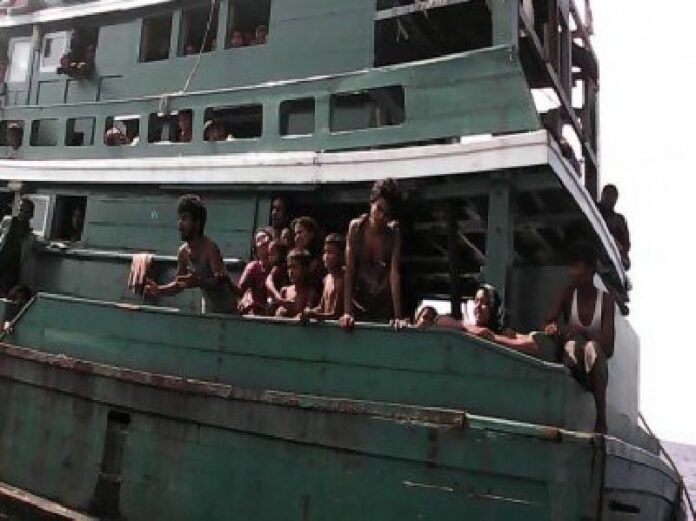
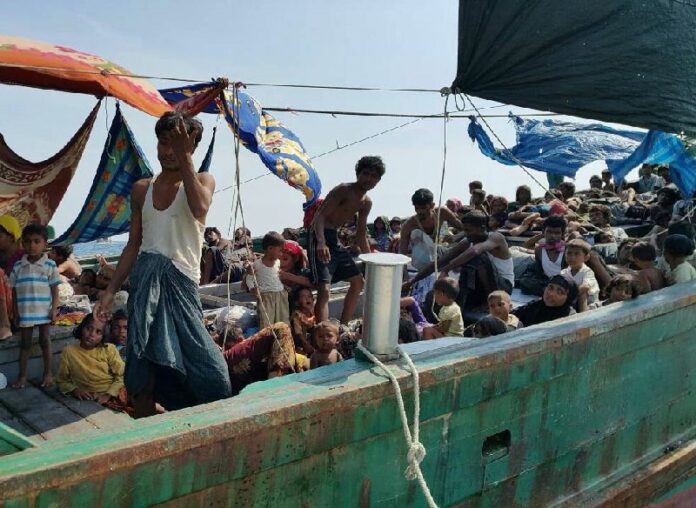
A boat of abandoned refugees from Myanmar found by reporters and naval officers off the coast of Satun province on 14 May 2015. [Photo: Royal Thai Navy]

Over the past week, Thailand, Indonesia, and Malaysia have towed overcrowded boats of migrants back and forth across their waters, unwilling to shoulder the responsibility of dealing with the thousands of asylum-seekers from Myanmar and economic migrants from Bangladesh.

Gen. Prayuth’s comment came several days after a New York Times reporter helped the Thai navy locate a boat of approximately 350 Rohingya migrants near a Thai island in the Andaman Sea. After the navy then barred reporters from accompanying their mission to provide food and water to the ship, journalists from the New York Times and BBC rented their own speedboat to make contact with the passengers.

The Rohingya refugees, which included women and children, told reporters they had been abandoned by the boat’s crew without enough food or water, and that at least ten people had died onboard.

The Thai Navy then provided provisions and repaired the boat’s engine before towing it back out to sea. 

According to the Thai government, the migrants requested the push-back because they said they were headed for Malaysia, but a Channel 3 journalist who spoke to the boat’s passengers said that not all of them wished to be sent back.

Thai authorities say their policy is to provide humanitarian assistance to boats off shore, and inform migrants that they can either continue to another destination, or disembark in Thailand and face prosecution for illegal entry.

"We have our laws. Once they enter the country illegally, they will be prosecuted," Gen. Prayuth said today. "If they are in the water, we will take care of them under humanitarian principles, but it will be up to them to decide where they want to go. If they are outside our waters, we cannot do anything to them. But once they enter Thailand, it is considered illegal. Illegal entry to the Kingdom. Every country has to respect that. Every country has its own laws."

The general also repeated that Thailand will not build permanent refugee camps for the Rohingya, a stateless Muslim minority that has faced violent persecution in Buddhist-majority Myanmar.

"We don't have enough space," he said. "If they keep coming, what can we do? I have instructed officials to look for space to control these people. But I insist that it's [temporary] detention center, not a shelter center or a refugee center."

Thailand is scheduled to host an international summit to discuss the migrant crisis on 29 May, but the United Nations and other human rights agencies say twelve days is too long to wait, as an estimated 8,000 migrants risk starvation and other dangers off shore. 

In a statement released today, Amnesty International called upon governments in the region to "immediately step up and co-ordinate efforts for search and rescue in the region and to protect the rights of people stranded at sea."

When a reporter asked Gen. Prayuth whether Myanmar will send representatives to the summit, Gen. Prayuth replied, "As far as the Ministry of Foreign Affairs told me, all countries say they will attend. But if the news is too loud, there will be limitations. Because many countries have their own internal problems. If we pressure them too much, or if we put blame on them, they won't want to attend the meeting because they feel they are being targeted."

Myanmar, whose state-sanctioned discrimination against the Rohingya is considered a root cause of the exodus, has expressed ambivalence over attending the regional summit.

"We do not accept it if they (Thailand) are inviting us just to ease the pressure they are facing," a Burmese official told AFP on Friday.

Gen. Prayuth sought to dispel this notion today, promising that ASEAN countries would not "pick a fight with eachother" over the issue.

"I and leaders of other countries have understanding about everything," he said. "I am well aware that each country has its own limitations and restrictions. We always give moral support to each other."

Thailand assures UN of its 'humanitarian practice'

Yesterday, Secretary-General of the United Nations Ban Ki Moon spoke on the phone to Gen. Prayuth and other leaders in the region about the mounting humanitarian crisis. 

Ban expressed concern over the plight of the refugees and stressed the need to "protect lives" and go forward with a "timely disembarkation," according to a UN statement

Gen. Prayuth assured Ban that Thai authorities have been strictly adhering to "humanitarian principles," said Thai government spokesperson Maj.Gen. Weerachon Sukhonthapatipak.

"The practices of Thailand do not only rest on the humanitarian principles, but also on the principles of international laws, maritime laws, and other related laws," Maj.Gen. Weerachon told reporters yesterday. "The Prime Minister has stressed [to Mr. Ban] that every country has its own laws concerning practices toward the ongoing situation. Therefore, any procedures must consider that fact." 

He continued, "In the latest case Thai officials were asked to repair the [refugees'] boats, and to give assistance in terms of food, water, medicine, and fuel for their journey toward the third country that they voluntarily requested." 

The Prime Minister also told the UN Secretary-General that the upcoming summit on 29 May will "show the solidarity of ASEAN in its mission to take responsibility for humankind," Maj.Gen. Weerachon said. 


For comments, or corrections to this article please contact: [email protected]

You can also find Khaosod English on Twitter and Facebook
http://twitter.com/KhaosodEnglish
http://www.facebook.com/KhaosodEnglish
Junta Orders Families to Cancel 2010 Crackdown Memorial Service
Advertisement

Thai Junta Leader Asks Media to Let Navy Handle Migrant Crisis

A boat of abandoned refugees from Myanmar found by reporters and naval officers off the coast of Satun province on 14 May 2015. [Photo: Royal Thai Navy]

BANGKOK — Thailand’s military leader has asked journalists to let the Thai navy document any encounters with the boat people from Myanmar and Bangladesh who are languishing off shore as no country in the region races to rescue them.

"Naval officers will inspect the boats. Reporters don't have to board the boats," Gen. Prayuth Chan-ocha said today. "Navy officers will ask where they want to go. We will document all kinds of evidence: photos, videos." 

\
Thai junta chairman Gen. Prayuth Chan-ocha speaking to reporters in Bangkok, 17 May 2015.

Over the past week, Thailand, Indonesia, and Malaysia have towed overcrowded boats of migrants back and forth across their waters, unwilling to shoulder the responsibility of dealing with the thousands of asylum-seekers from Myanmar and economic migrants from Bangladesh.

Gen. Prayuth’s comment came several days after a New York Times reporter helped the Thai navy locate a boat of approximately 350 Rohingya migrants near a Thai island in the Andaman Sea. After the navy then barred reporters from accompanying their mission to provide food and water to the ship, journalists from the New York Times and BBC rented their own speedboat to make contact with the passengers.

The Rohingya refugees, which included women and children, told reporters they had been abandoned by the boat’s crew without enough food or water, and that at least ten people had died onboard.

The Thai Navy then provided provisions and repaired the boat’s engine before towing it back out to sea. 

According to the Thai government, the migrants requested the push-back because they said they were headed for Malaysia, but a Channel 3 journalist who spoke to the boat’s passengers said that not all of them wished to be sent back.

Thai authorities say their policy is to provide humanitarian assistance to boats off shore, and inform migrants that they can either continue to another destination, or disembark in Thailand and face prosecution for illegal entry.

"We have our laws. Once they enter the country illegally, they will be prosecuted," Gen. Prayuth said today. "If they are in the water, we will take care of them under humanitarian principles, but it will be up to them to decide where they want to go. If they are outside our waters, we cannot do anything to them. But once they enter Thailand, it is considered illegal. Illegal entry to the Kingdom. Every country has to respect that. Every country has its own laws."

The general also repeated that Thailand will not build permanent refugee camps for the Rohingya, a stateless Muslim minority that has faced violent persecution in Buddhist-majority Myanmar.

"We don't have enough space," he said. "If they keep coming, what can we do? I have instructed officials to look for space to control these people. But I insist that it's [temporary] detention center, not a shelter center or a refugee center."

Thailand is scheduled to host an international summit to discuss the migrant crisis on 29 May, but the United Nations and other human rights agencies say twelve days is too long to wait, as an estimated 8,000 migrants risk starvation and other dangers off shore. 

In a statement released today, Amnesty International called upon governments in the region to "immediately step up and co-ordinate efforts for search and rescue in the region and to protect the rights of people stranded at sea."

When a reporter asked Gen. Prayuth whether Myanmar will send representatives to the summit, Gen. Prayuth replied, "As far as the Ministry of Foreign Affairs told me, all countries say they will attend. But if the news is too loud, there will be limitations. Because many countries have their own internal problems. If we pressure them too much, or if we put blame on them, they won't want to attend the meeting because they feel they are being targeted."

Myanmar, whose state-sanctioned discrimination against the Rohingya is considered a root cause of the exodus, has expressed ambivalence over attending the regional summit.

"We do not accept it if they (Thailand) are inviting us just to ease the pressure they are facing," a Burmese official told AFP on Friday.

Gen. Prayuth sought to dispel this notion today, promising that ASEAN countries would not "pick a fight with eachother" over the issue.

"I and leaders of other countries have understanding about everything," he said. "I am well aware that each country has its own limitations and restrictions. We always give moral support to each other."

Thailand assures UN of its 'humanitarian practice'

Yesterday, Secretary-General of the United Nations Ban Ki Moon spoke on the phone to Gen. Prayuth and other leaders in the region about the mounting humanitarian crisis. 

Ban expressed concern over the plight of the refugees and stressed the need to "protect lives" and go forward with a "timely disembarkation," according to a UN statement

Gen. Prayuth assured Ban that Thai authorities have been strictly adhering to "humanitarian principles," said Thai government spokesperson Maj.Gen. Weerachon Sukhonthapatipak.

"The practices of Thailand do not only rest on the humanitarian principles, but also on the principles of international laws, maritime laws, and other related laws," Maj.Gen. Weerachon told reporters yesterday. "The Prime Minister has stressed [to Mr. Ban] that every country has its own laws concerning practices toward the ongoing situation. Therefore, any procedures must consider that fact." 

He continued, "In the latest case Thai officials were asked to repair the [refugees'] boats, and to give assistance in terms of food, water, medicine, and fuel for their journey toward the third country that they voluntarily requested." 

The Prime Minister also told the UN Secretary-General that the upcoming summit on 29 May will "show the solidarity of ASEAN in its mission to take responsibility for humankind," Maj.Gen. Weerachon said. 

For comments, or corrections to this article please contact: [email protected]

You can also find Khaosod English on Twitter and Facebook
http://twitter.com/KhaosodEnglish
http://www.facebook.com/KhaosodEnglish

Advertisement

Contact Lost With Stranded Boats: Fisherman Takes Latest Photo

A photograph of a boat of migrants provided to Phuketwan by a Thai fisherman.

(Phuketwan)

SATUN — Contact has been lost with four asylum-seeking boats with hundreds of increasingly desperate men, women and children on board. The vessels are still believed to be in international waters off Thailand, Malaysia and Indonesia. 

\
The photograph above was taken by a Thai fisherman at 1pm on Saturday in what's thought to be the last confirmed sighting of one of the vessels, carrying fleeing Rohingya and Bangladeshis seeking a haven from poverty and persecution

''One of the men on the boat jumped overboard and swam up beside our boat,'' the fisherman toldPhuketwan ''But we told him to go back. 

Read more here

Note: Khaosod English is not responsible for content on other websites.

Advertisement

39 Bombs Rock Southern Thailand Over Weekend, Injuring 22

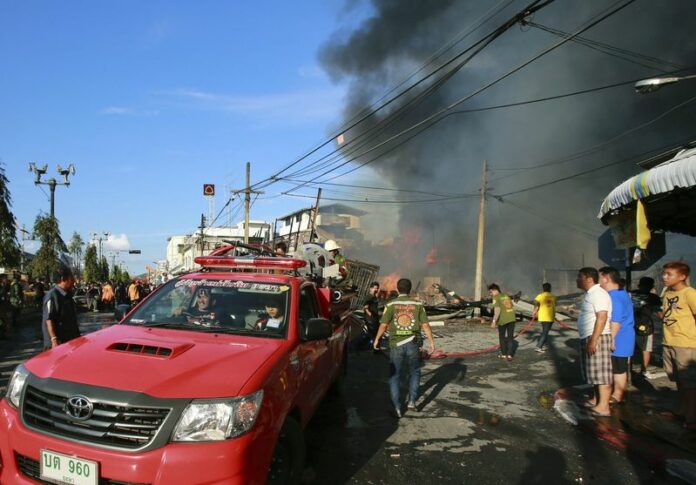
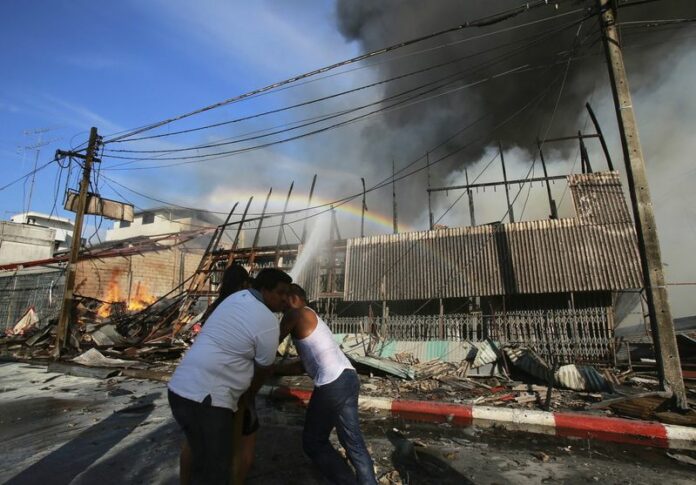
Thai firemen and volunteers try to extinguish a fire after a bomb attack in Yala, southern Thailand, 06 April 2014. Up to 39 explosions injured 22 people over the past three days in Thailand's restive southern province of Yala. EPA/NAKHARIN CHINNAWORNKOMOL

BANGKOK (DPA) — Up to 39 explosions injured 22 people over three days in Thailand's restive southern province of Yala, an army official said Monday.

"There were 36 to 39 bombs from Thursday to Saturday," said a spokesman for the Internal Security Operations Command.

Most victims suffered minor injuries, but two remained in hospital, he said. No fatalities were reported.

The first bombs went off Thursday night in the provincial capital, also called Yala. Many were planted near electricity posts, apparently to cause blackouts, but failed, according to investigators.

Security measures were increased Monday, the first day of the school year in the country.

The southernmost region of Buddhist-majority Thailand is predominantly Muslim.

The conflict and violence has been ongoing for more than five decades but has become increasing violent over the past decade, killing more than 5,000 since 2004.

The military central government has been working to resolve the violence since they came in power in May 2014.


For comments, or corrections to this article please contact: [email protected]

You can also find Khaosod English on Twitter and Facebook
http://twitter.com/KhaosodEnglish
http://www.facebook.com/KhaosodEnglish

Advertisement

39 Bombs Rock Southern Thailand Over Weekend, Injuring 22

Thai firemen and volunteers try to extinguish a fire after a bomb attack in Yala, southern Thailand, 06 April 2014. Up to 39 explosions injured 22 people over the past three days in Thailand's restive southern province of Yala. EPA/NAKHARIN CHINNAWORNKOMOL

BANGKOK (DPA) — Up to 39 explosions injured 22 people over three days in Thailand's restive southern province of Yala, an army official said Monday.

"There were 36 to 39 bombs from Thursday to Saturday," said a spokesman for the Internal Security Operations Command.

Most victims suffered minor injuries, but two remained in hospital, he said. No fatalities were reported.

The first bombs went off Thursday night in the provincial capital, also called Yala. Many were planted near electricity posts, apparently to cause blackouts, but failed, according to investigators.

Security measures were increased Monday, the first day of the school year in the country.

The southernmost region of Buddhist-majority Thailand is predominantly Muslim.

The conflict and violence has been ongoing for more than five decades but has become increasing violent over the past decade, killing more than 5,000 since 2004.

The military central government has been working to resolve the violence since they came in power in May 2014.


For comments, or corrections to this article please contact: [email protected]

You can also find Khaosod English on Twitter and Facebook
http://twitter.com/KhaosodEnglish
http://www.facebook.com/KhaosodEnglish

Advertisement

Redshirt Leader: No Gathering to Mark 5th Anniversary of Crackdown

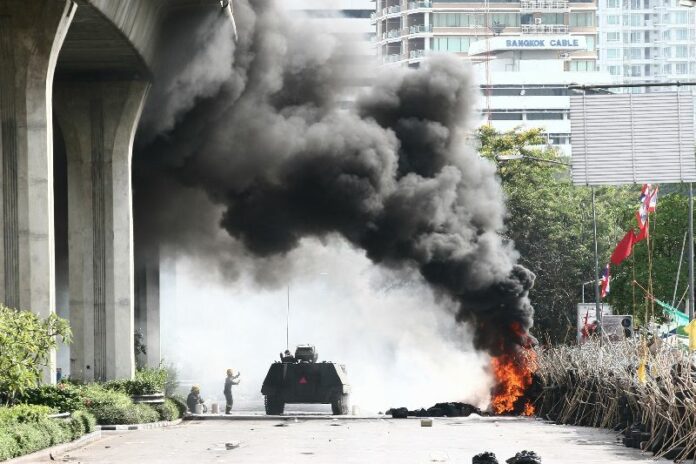
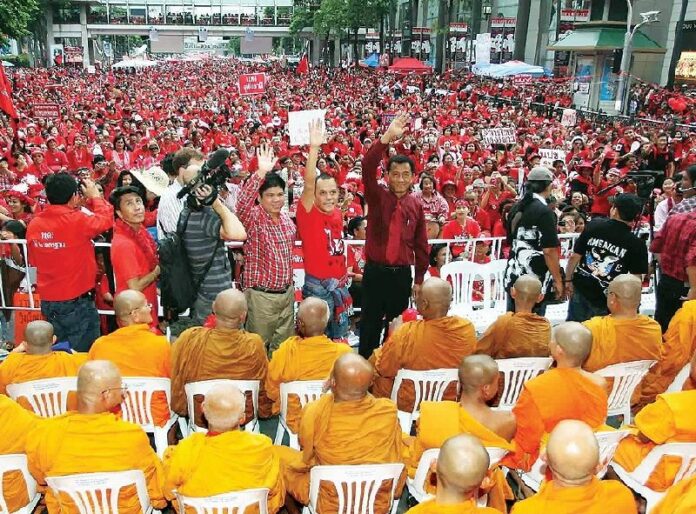
Soldiers storming the Redshirts encampment in Bangkok financial district on May 19, 2010.

BANGKOK — Redshirts will not gather publicly to mark the fifth anniversary of the military assault on Redshirt protesters tomorrow, in compliance with the junta's ban on political activities, according to a top leader of the movement.

Thida Thawornseth, deputy chairperson of the Redshirts' official umbrella organization, the United Front of Democracy Against Dictatorship (UDD), said a large gathering like in previous years could draw "trouble" from the junta, which outlawed public gatherings after seizing power from a Redshirt-backed government one year ago.

\
Redshirts rally at Ratchaprasong Intersection in Bangkok to commemorate the first anniversary of the 19 May crackdown, 19 May 2011

"Relatives of the deceased will hold separate religious ceremonies in different places on their own," Thida told Khaosod yesterday. "Redshirts will also hold religious ceremonies in small groups."

On 19 May 2010, the military mounted a violent assault on thousands of Redshirt demonstrators who had been occupying Bangkok's financial district for a month and a half. The crackdown followed weeks of skirmishes between the protesters and security forces, transforming parts of Bangkok into a war zone. More than 90 people, mostly civilians, were killed in the unrest.

In the past, tens of thousands of Redshirts have assembled in Bangkok to mark two key events of the crackdown – the military assaults of 10 April and 19 May. Yet the ruling junta’s tight lid on political activities has forced Redshirts to scrap both plans this year.

Last month, the junta blocked Redshirts' attempt to organize a religious ceremony commemorating the bloody confrontation of 10 April 2010. After the public event was canceled, soldiers went further and asked relatives of victims who died in the crackdown to conduct private ceremonies at their homes, instead of attend a Buddhist ceremony at the same temple.

Speaking to Khaosod yesterday, Thida said she hoped the junta would allow Redshirts and relatives of the victims to commemorate the anniversary in peace tomorrow. 

"If the government still prevents them from holding [private ceremonies], it means that the government is too hostile to the people," Thida said. "I don't mind obstructing people who intend to hold political rallies, but in this case, they are even paranoid of people who want to hold religious ceremonies. That is a human rights violation."

The chairman of the junta, Gen. Prayuth Chan-ocha, was one of the commanders behind the crackdown five years ago.

Yesterday, a small group of Redshirts held a religious ceremony in Ratchaburi province in memory of Maj.Gen. Khattiya Sawasdipol, a rogue general who sided with Redshirts during the protests in 2010. Maj.Gen. Khattiya, aka Commander Red, was shot by a sniper on 13 May 2010 and died in the hospital four days later. 

Security officers did not interfere with the ceremony. 

Compensation fund inquiry

Thida, the UDD's deputy chairperson, also criticized Thailand’s anti-corruption agency for launching an investigation into members of the previous government who oversaw a program that provided financial compensation to families of the 2010 crackdown victims. 

The National Anti-Corruption Commission (NACC) has charged former Prime Minister Yingluck Shinawatra and 34 of her Cabinet members with abuse of power for the payments, totaling 1.9 billion baht, which the NACC said was delivered to maintain political support from the Redshirts. 

"It is considered an abuse of power that damaged the country's finances and budgets, because 1.921 billion baht payment was handed out with the intention to score political gain," said NACC member Vicha Mahakhun on 14 May.

Thida said the Yingluck administration processed the payments legally, and noted other precedents, such as the government's financial compensation to victims of the pro-democracy uprising in 1992. 

"Does the NACC want the relatives of the deceased to return the money?" Thida said. "They may return the money to you, but can you give back lives of their relatives?"

Payao Akhard, who daughter was killed in the crackdown on 19 May 2010, said she was angered by the NACC's suggestion that the compensation money was unusually high.

"They say 7.5 million baht per [deceased] person is too high, so how much does the NACC value these people's lives?" Payao asked. "And how much do you [NACC members] value your own lives?" 


For comments, or corrections to this article please contact: [email protected]

You can also find Khaosod English on Twitter and Facebook
http://twitter.com/KhaosodEnglish
http://www.facebook.com/KhaosodEnglish


Advertisement

Redshirt Leader: No Gathering to Mark 5th Anniversary of Crackdown

Redshirts rally at Ratchaprasong Intersection in Bangkok to commemorate the first anniversary of the 19 May crackdown, 19 May 2011.

BANGKOK — Redshirts will not gather publicly to mark the fifth anniversary of the military assault on Redshirt protesters tomorrow, in compliance with the junta's ban on political activities, according to a top leader of the movement.

Thida Thawornseth, deputy chairperson of the Redshirts' official umbrella organization, the United Front of Democracy Against Dictatorship (UDD), said a large gathering like in previous years could draw "trouble" from the junta, which outlawed public gatherings after seizing power from a Redshirt-backed government one year ago.

\
Soldiers storming the Redshirts' encampment in Bangkok's financial district on 19 May 2010.

"Relatives of the deceased will hold separate religious ceremonies in different places on their own," Thida told Khaosod yesterday. "Redshirts will also hold religious ceremonies in small groups."

On 19 May 2010, the military mounted a violent assault on thousands of Redshirt demonstrators who had been occupying Bangkok's financial district for a month and a half. The crackdown followed weeks of skirmishes between the protesters and security forces, transforming parts of Bangkok into a war zone. More than 90 people, mostly civilians, were killed in the unrest.

In the past, tens of thousands of Redshirts have assembled in Bangkok to mark two key events of the crackdown – the military assaults of 10 April and 19 May. Yet the ruling junta’s tight lid on political activities has forced Redshirts to scrap both plans this year.

Last month, the junta blocked Redshirts' attempt to organize a religious ceremony commemorating the bloody confrontation of 10 April 2010. After the public event was canceled, soldiers went further and asked relatives of victims who died in the crackdown to conduct private ceremonies at their homes, instead of attend a Buddhist ceremony at the same temple.

Speaking to Khaosod yesterday, Thida said she hoped the junta would allow Redshirts and relatives of the victims to commemorate the anniversary in peace tomorrow. 

"If the government still prevents them from holding [private ceremonies], it means that the government is too hostile to the people," Thida said. "I don't mind obstructing people who intend to hold political rallies, but in this case, they are even paranoid of people who want to hold religious ceremonies. That is a human rights violation."

The chairman of the junta, Gen. Prayuth Chan-ocha, was one of the commanders behind the crackdown five years ago.

Yesterday, a small group of Redshirts held a religious ceremony in Ratchaburi province in memory of Maj.Gen. Khattiya Sawasdipol, a rogue general who sided with Redshirts during the protests in 2010. Maj.Gen. Khattiya, aka Commander Red, was shot by a sniper on 13 May 2010 and died in the hospital four days later. 

Security officers did not interfere with the ceremony. 

Compensation fund inquiry

Thida, the UDD's deputy chairperson, also criticized Thailand’s anti-corruption agency for launching an investigation into members of the previous government who oversaw a program that provided financial compensation to families of the 2010 crackdown victims. 

The National Anti-Corruption Commission (NACC) has charged former Prime Minister Yingluck Shinawatra and 34 of her Cabinet members with abuse of power for the payments, totaling 1.9 billion baht, which the NACC said was delivered to maintain political support from the Redshirts. 

"It is considered an abuse of power that damaged the country's finances and budgets, because 1.921 billion baht payment was handed out with the intention to score political gain," said NACC member Vicha Mahakhun on 14 May.

Thida said the Yingluck administration processed the payments legally, and noted other precedents, such as the government's financial compensation to victims of the pro-democracy uprising in 1992. 

"Does the NACC want the relatives of the deceased to return the money?" Thida said. "They may return the money to you, but can you give back lives of their relatives?"

Payao Akhard, who daughter was killed in the crackdown on 19 May 2010, said she was angered by the NACC's suggestion that the compensation money was unusually high.

"They say 7.5 million baht per [deceased] person is too high, so how much does the NACC value these people's lives?" Payao asked. "And how much do you [NACC members] value your own lives?" 


For comments, or corrections to this article please contact: [email protected]

You can also find Khaosod English on Twitter and Facebook
http://twitter.com/KhaosodEnglish
http://www.facebook.com/KhaosodEnglish


Advertisement

Royal Coffin for Northeast Thailand’s Famed Monk

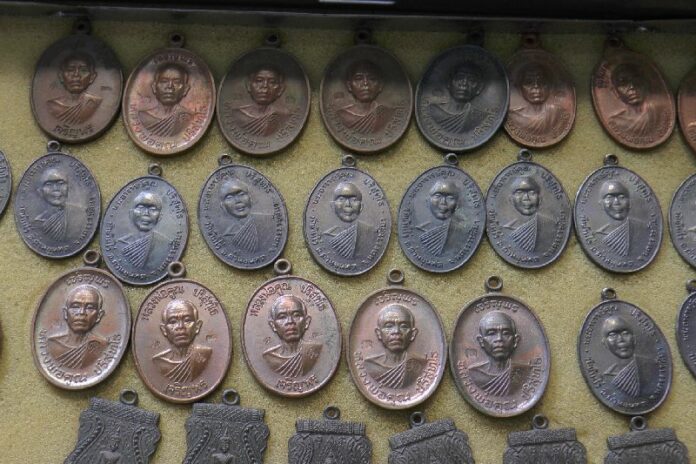
Amulets bearing faces of Luang Phor Koon at a market in Nakhon Ratchasima province, 16 May 2015

BANGKOK – Thailand’s King has bestowed a royal coffin to a widely-revered monk who died this morning at the age of 92.

Luang Phor Koon, the abbot of Wat Ban Rai temple in the northeastern province of Nakhon Ratchasima, died at 11:45am at a hospital in the province today. Doctors said he suffered from internal bleeding and a respiratory malfunction.

Luang Phor Koon was one of Thailand’s most celebrated monks. His audience was requested by many prominent figures, including high-profile politicians, businessmen, and even His Majesty the King. The monk also presided over the manufacturing of numerous amulets, which are highly sought after by his supporters.

As a token of respect, the Royal Household Bureau announced that His Majesty has bestowed a royal coffin for Luang Phor Koon, describing it as an “extraordinary case.”

In a will written in 2000, Luang Phor Koon requested a simple funeral, and asked to have his body donated to Khon Kaen University’s Faculty of Medicine for anatomy studies. After his body is returned, it will be cremated and his ashes will be scattered along Mekong River, the will requests.

Luang Phor Koon joined the monkhood at age 21.

Advertisement

Nearly 800 Migrants Rescued From Sinking Boats in Indonesia

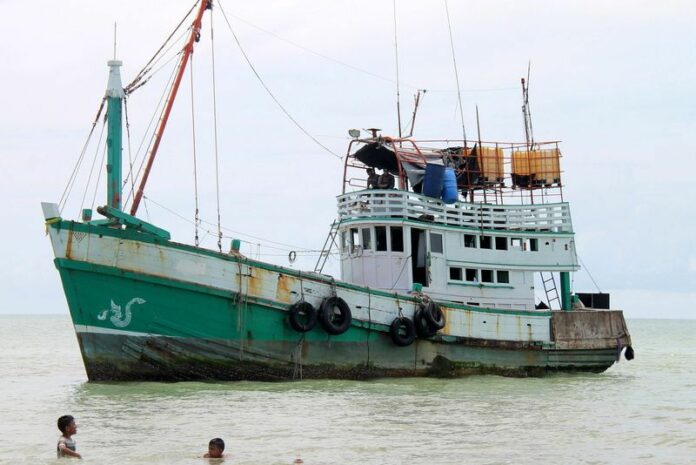
A picture made available on 12 May 2015 shows a traditional Thai style fishing boat which was used by Myanmar Rohingya refugees, stranded in Seunedon village of North Aceh, Sumatra, Indonesia, 11 May 2015 [DPA]

JAKARTA (DPA) — Indonesian fishing boats and marine police rescued nearly 800 migrants Friday from a sinking vessel, a military official said, as South-East Asia's migrant crisis continued to unfold.

The migrants, believed to be mostly of the Rohingya ethnic group from Myanmar and Bangladesh, were initially prevented from reaching the shore pending a consultation with the Indonesian Foreign Ministry, military spokesman Fuad Basya said.

However, because their boat was about to sink off Aceh province, local fishermen and marine police moved to rescue the migrants and took them to the Kuala Langsa port in Aceh's Langsa city.

"Our job is to prevent undocumented ships from entering our territory, but if it is a humanitarian situation we will help," Fuad said.

Langsa police chief Sunarya Sik said the boat was crowded, and passengers were jostling when fishermen spotted the vessel.

"According to information from the migrants, they had entered Malaysian waters, but Malaysian security authorities turned them away," the police chief was quoted as saying by news website Tempo.co.

Indonesia is not a party to the 1951 United Nations refugee convention but in the past has sheltered migrants pending verification of their refugee status by UN refugee agency UNHCR.

The military said it towed a migrant boat Monday out of Indonesian waters, insisting that the migrants intended to go to Malaysia.

Nearly 600 Bangladeshis and Rohingyas were rescued from another boat Sunday off Aceh.

In Kuala Lumpur, Malaysian Prime Minister Najib Razak called Friday for an international solution to the worsening situation.

"This is an issue of international and regional importance," he said. "We are in contact with all relevant parties with whom we share the desire to find a solution to this crisis."

Malaysia's Maritime Enforcement Agency beefed up patrols to prevent migrants from entering the country, after more than 1,000 Rohingya and Bangladeshi boat people landed this week on the northern island of Langkawi.

On Wednesday, Malaysian maritime patrols intercepted two vessels carrying about 1,000 migrants.

One of the vessels was escorted out of Malaysian waters while the other – which suffered damage – was undergoing repairs before it would be sent back to its point of origin.

Thai authorities on Friday turned back a boat thought to be carrying hundreds of Rohingya migrants from Myanmar.

The Thai Navy spotted a boat late Thursday off the south-west coast, and towed the vessel back out to sea after giving the migrants food, water and medicine.

"About 10 people died during the journey," one of person on the boat shouted in Rohingya to a boat of reporters that drew alongside. "We threw their bodies into the water."

The policy of pushing migrant boats back out to sea is putting the lives of migrants at serious risk, said Zeid Ra'ad al-Hussein, UN high commissioner for human rights. He said such practices were "incomprehensible and inhumane" and would "inevitably lead to many avoidable deaths."

In Washington, White House spokesman Eric Schultz called the situation "heartbreaking" and said the US would continue to pressure the Myanmar government to address the crisis.

US President Barack Obama raised concerns about ethnic minorities when he visited Myanmar last year, after the US resumed ties with the country, in the wake of a restoration of civilian rule.

"The reforms that are happening in Burma are important, are significant, but the process isn't done," Schultz said. "The United States is going to continue to raise concerns with that government and underscore the urgent need to fulfil that government's commitment to respecting these human rights."

Zeid said the Bangladeshi and Rohingya migrants need protection: "Just because they have taken to boats, does not mean they forfeit the human rights afforded to every human being under international law."

Some 920 mostly people from the Muslim Rohingya minority in Myanmar died between September and March in the Bay of Bengal, according to the UN rights chief's office.

Thailand has proposed temporary camps for migrants on its territory, but would wait until a May 29 regional meeting because Bangkok "cannot go it alone," a security advisor to the government was quoted as saying.

Thousands of Rohingya, a stateless minority in predominately Buddhist Myanmar, travel each month through Thailand to reach Muslim-majority Malaysia or Indonesia.


For comments, or corrections to this article please contact: [email protected]

You can also find Khaosod English on Twitter and Facebook
http://twitter.com/KhaosodEnglish
http://www.facebook.com/KhaosodEnglish

Advertisement

Nearly 800 Migrants Rescued From Sinking Boats in Indonesia

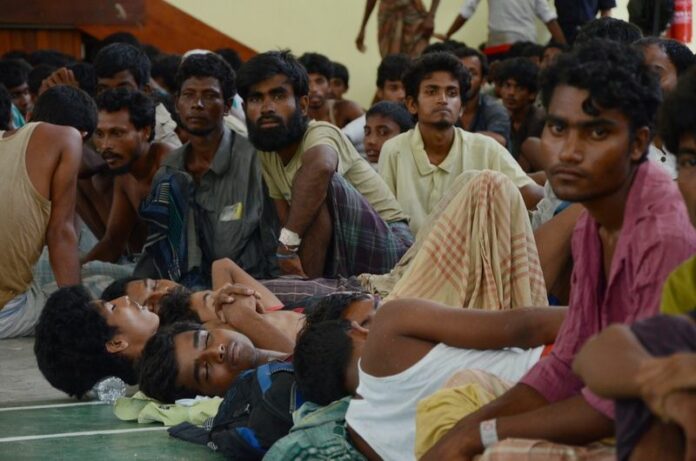
Migrants from Myanmar and Bangladesh sit at a police station in Kuah, Langkawi. In Malaysia 1,018 migrants were found in two operations Sunday on the island of Langkawi, about 400 kilometres north of Kuala Lumpur. EPA/STR

JAKARTA (DPA) — Indonesian fishing boats and marine police rescued nearly 800 migrants Friday from a sinking vessel, a military official said, as South-East Asia's migrant crisis continued to unfold.

The migrants, believed to be mostly of the Rohingya ethnic group from Myanmar and Bangladesh, were initially prevented from reaching the shore pending a consultation with the Indonesian Foreign Ministry, military spokesman Fuad Basya said.

However, because their boat was about to sink off Aceh province, local fishermen and marine police moved to rescue the migrants and took them to the Kuala Langsa port in Aceh's Langsa city.

"Our job is to prevent undocumented ships from entering our territory, but if it is a humanitarian situation we will help," Fuad said.

Langsa police chief Sunarya Sik said the boat was crowded, and passengers were jostling when fishermen spotted the vessel.

"According to information from the migrants, they had entered Malaysian waters, but Malaysian security authorities turned them away," the police chief was quoted as saying by news website Tempo.co.

Indonesia is not a party to the 1951 United Nations refugee convention but in the past has sheltered migrants pending verification of their refugee status by UN refugee agency UNHCR.

The military said it towed a migrant boat Monday out of Indonesian waters, insisting that the migrants intended to go to Malaysia.

Nearly 600 Bangladeshis and Rohingyas were rescued from another boat Sunday off Aceh.

In Kuala Lumpur, Malaysian Prime Minister Najib Razak called Friday for an international solution to the worsening situation.

"This is an issue of international and regional importance," he said. "We are in contact with all relevant parties with whom we share the desire to find a solution to this crisis."

Malaysia's Maritime Enforcement Agency beefed up patrols to prevent migrants from entering the country, after more than 1,000 Rohingya and Bangladeshi boat people landed this week on the northern island of Langkawi.

On Wednesday, Malaysian maritime patrols intercepted two vessels carrying about 1,000 migrants.

One of the vessels was escorted out of Malaysian waters while the other – which suffered damage – was undergoing repairs before it would be sent back to its point of origin.

Thai authorities on Friday turned back a boat thought to be carrying hundreds of Rohingya migrants from Myanmar.

The Thai Navy spotted a boat late Thursday off the south-west coast, and towed the vessel back out to sea after giving the migrants food, water and medicine.

"About 10 people died during the journey," one of person on the boat shouted in Rohingya to a boat of reporters that drew alongside. "We threw their bodies into the water."

The policy of pushing migrant boats back out to sea is putting the lives of migrants at serious risk, said Zeid Ra'ad al-Hussein, UN high commissioner for human rights. He said such practices were "incomprehensible and inhumane" and would "inevitably lead to many avoidable deaths."

In Washington, White House spokesman Eric Schultz called the situation "heartbreaking" and said the US would continue to pressure the Myanmar government to address the crisis.

US President Barack Obama raised concerns about ethnic minorities when he visited Myanmar last year, after the US resumed ties with the country, in the wake of a restoration of civilian rule.

"The reforms that are happening in Burma are important, are significant, but the process isn't done," Schultz said. "The United States is going to continue to raise concerns with that government and underscore the urgent need to fulfil that government's commitment to respecting these human rights."

Zeid said the Bangladeshi and Rohingya migrants need protection: "Just because they have taken to boats, does not mean they forfeit the human rights afforded to every human being under international law."

Some 920 mostly people from the Muslim Rohingya minority in Myanmar died between September and March in the Bay of Bengal, according to the UN rights chief's office.

Thailand has proposed temporary camps for migrants on its territory, but would wait until a May 29 regional meeting because Bangkok "cannot go it alone," a security advisor to the government was quoted as saying.

Thousands of Rohingya, a stateless minority in predominately Buddhist Myanmar, travel each month through Thailand to reach Muslim-majority Malaysia or Indonesia.


For comments, or corrections to this article please contact: [email protected]

You can also find Khaosod English on Twitter and Facebook
http://twitter.com/KhaosodEnglish
http://www.facebook.com/KhaosodEnglish

Advertisement

Hot News

LATEST NEWS

Bangkok
few clouds
36.6 ° C
36.6 °
34.4 °
49 %
4kmh
12 %
Wed
37 °
Thu
39 °
Fri
37 °
Sat
36 °
Sun
37 °