


























32.8 C
Bangkok
Saturday, June 27, 2026
Home Blog Page 3026

Car Stolen From Deep South Used in Samui Mall Bombing

SURAT THANI – Police have confirmed that a car stolen from the restive southern border province of Yala was used to stage a bomb attack at a prominent shopping mall on Koh Samui island last night.

The car bomb exploded at the parking lot of Central Festival Samui at around 10.30 pm yesterday. The blast injured at least six Thais and one 12-year-old Italian girl, rescue workers say. 

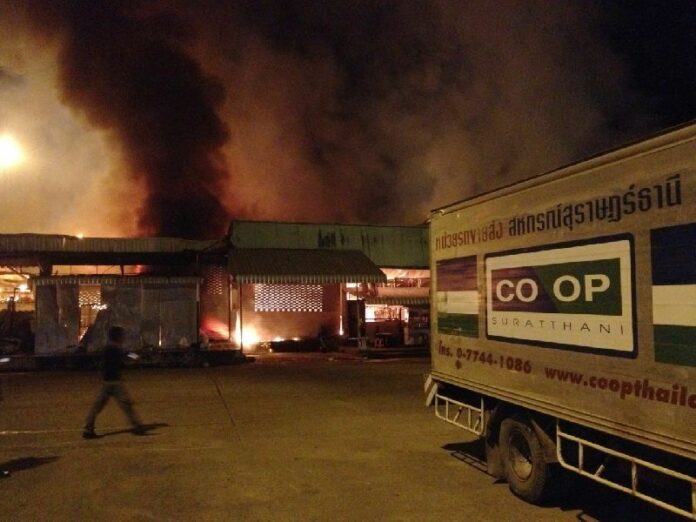
Almost simultaneously, a fire erupted at Surat Thani Cooperative Store, known among the locals as Co-op, in the mainland, though it has not been confirmed whether the two incidents are linked. 

According to police, witnesses said they heard "two loud explosions" from the Co-op building shortly before the fire started.

The incidents came at a time when the country was preparing to celebrate the occasion of Thai traditional New Year, or Songkran, which takes place between 13 and 15 April. Koh Samui island is also a popular destination for Thai and foreign tourists. 

Pol.Gen. Somyot Pumpanmuang, commander of the Royal Thai Police, told reporters today that the car bomb vehicle that targeted Central Festival mall was reported stolen in Yala province on 31 March. The car was bearing a forged license plate when it was found at the bomb site, Pol.Gen. Somyot added.

"We found evidence that the perpetrators installed explosives in the car," Pol.Gen. Somyot said as he visited the bomb site, "But we are still investigating what type of bomb it was."

The southern provinces of Pattani, Yala, and Narathiwat have been the hotbed of the separatist insurgency for the last decade. Shadowy Islamic militants regularly stage bomb attacks, arson, and shootings against the security force and civilians in the bid to revive the independent sultanate of Patani, which was annexed by Thailand in early 20th century. 

More than 6,200 people are believed to have been killed since the secessionist campaign broke out in the region, known as the Deep South, in 2004. The violence occasionally spilled to the neighboring province of Songkhla, though Surat Thani has been spared from the bloody insurgency so far. 

No group has claimed responsibility for the attacks last night. Pol.Gen. Somyot said it is too early to determine motives of the incidents. However, he suggested that the arson of the Co-op store may have been politically-motivated.

"We are investigating whether politics is involved, because Co-op is owned by Phra Suthep, or Mr. Suthep Thaugsuban," Pol.Gen. Somyot said, referring to the leader of the street protests that preceded the coup d'etat on 22 May 2014. 

The police commissioner continued, "As for our intelligence, there has been no previous warning of any unrest during Songkran festival, but police have been vigilant all the time. I would like to condemn the perpetrators. They have no good will toward the country."

"I admit that the bombing will certainly affect tourism, because the area has many Thai and foreign tourists. I will instruct all units to step up security measures," Pol.Gen. Somyot said. 

Meanwhile, police have detained a man who identified himself as owner of the car used in the bombing. Abdulrasae Dumeedae, a 52-year-old Yala resident, said he informed the police that his car was stolen on 31 March. 

Abdulrasae is currently being detained at a paramilitary ranger base in Yala for interrogation, said  Pol.Maj.Gen. Thanongsak Wangsupha, commander of Yala police force.

"Mr. Abdulrasae gave contradictory testimonies about the incident. He has not provided us with any useful information," Pol.Maj.Gen. Thanongsak said. 


For comments, or corrections to this article please contact: [email protected]

You can also find Khaosod English on Twitter and Facebook
http://twitter.com/KhaosodEnglish
http://www.facebook.com/KhaosodEnglish

Advertisement

Car Stolen From Deep South Used in Samui Mall Bombing

Fire at Surat Thani Cooperative Store, 10 April 2015

SURAT THANI – Police have confirmed that a car stolen from the restive southern border province of Yala was used to stage a bomb attack at a prominent shopping mall on Koh Samui island last night.

The car bomb exploded in the parking lot of Central Festival Samui at around 10.30 pm yesterday. The blast injured at least six Thais and one 12-year-old Italian girl, rescue workers say. 

Almost simultaneously, a fire erupted at Surat Thani Cooperative Store, known among the locals as Co-op, on the mainland, though it has not been confirmed whether the two incidents are linked. 

According to police, witnesses said they heard "two loud explosions" from the Co-op building shortly before the fire started.

The incidents came amid preperations to celebrate the Thai traditional New Year, known as Songkran, which takes place between 13 and 15 April. Koh Samui island is also a popular destination for Thai and foreign tourists. 

Pol.Gen. Somyot Pumpanmuang, commander of the Royal Thai Police, told reporters today that the vehicle that housed the car bomb was reported stolen in Yala province on 31 March. The car had a forged license plate when it was found at the bomb site, Pol.Gen. Somyot added.

"We found evidence that the perpetrators installed explosives in the car," Pol.Gen. Somyot during a visit the bomb site. "But we are still investigating what type of bomb it was."

Police have detained a man who identified himself as owner of the car used in the bombing. Abdulrasae Dumeedae, a 52-year-old Yala resident, said he informed the police that his car was stolen on 31 March. 

Abdulrasae is currently being detained at a paramilitary ranger base in Yala for interrogation, said  Pol.Maj.Gen. Thanongsak Wangsupha, commander of Yala police force.

"Mr. Abdulrasae gave contradictory testimonies about the incident. He has not provided us with any useful information," Pol.Maj.Gen. Thanongsak said. 

The southern provinces of Pattani, Yala, and Narathiwat have been the hotbed of a separatist insurgency for the last decade. Shadowy Islamic militants regularly stage bomb attacks, arson, and shootings against security forces and civilians in a bid to revive the independent sultanate of Patani, which was annexed by Thailand in early 20th century. 

More than 6,200 people are believed to have been killed since the secessionist campaign broke out in the region, known as the Deep South, in 2004. The violence occasionally spills into the neighboring province of Songkhla, though Surat Thani has been spared from the bloody insurgency so far. 

No group has claimed responsibility for the attacks last night. Pol.Gen. Somyot said it is too early to determine motives of the incidents. However, he suggested that the arson of the Co-op store may have been politically-motivated.

"We are investigating whether politics is involved, because Co-op is owned by Phra Suthep, or Mr. Suthep Thaugsuban," Pol.Gen. Somyot said, referring to the leader of the anti-government street protests that preceded the coup d'etat on 22 May 2014. 

The police commissioner continued, "As for our intelligence, there has been no previous warning of any unrest during Songkran festival, but police have been vigilant all the time. I would like to condemn the perpetrators. They have no good will toward the country."

"I admit that the bombing will certainly affect tourism, because the area has many Thai and foreign tourists. I will instruct all units to step up security measures," Pol.Gen. Somyot said. 


For comments, or corrections to this article please contact: [email protected]

You can also find Khaosod English on Twitter and Facebook
http://twitter.com/KhaosodEnglish
http://www.facebook.com/KhaosodEnglish
Advertisement

Bombing on Thai Resort Island Samui Wounds Several People

SAMUI (DPA) – Seven people were injured late on Friday when a car bomb went off in the car park of the Central Festival shopping mall on the Thai island of Samui, 700 kilometers (435 miles) south of the capital, Bangkok.

Police on the resort island said those injured included six Thais and a 12-year-old Italian girl.

A spokesperson from the island's disaster prevention office said all the victims have since been released from hospital after treatment.

Bomb squad experts have been searching the site for clues as to who might be responsible for the attack.

A twin bomb attack at a luxury shopping mall in Bangkok in February that injured two people was blamed by authorities on elements wanting to destabilize the military government, which came to power in a May coup.

The junta lifted martial law last week, but the military still maintains extensive security powers to counter what it says is the threat of political unrest.

The government has been trying recently to persuade tourists – a key factor in the country's economy – that Thailand is safe to visit after the months of sometimes violent political turmoil that led to last year's coup.


For comments, or corrections to this article please contact: [email protected]

You can also find Khaosod English on Twitter and Facebook
http://twitter.com/KhaosodEnglish
http://www.facebook.com/KhaosodEnglish
Advertisement

Drunken Motorist Attempts to Run Over Loei Governor

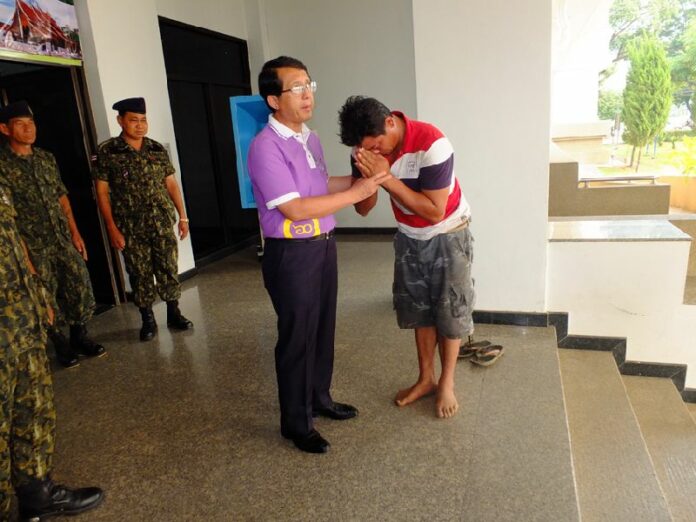
Thanawat Jamruri (right) apologizing to Loei Governor Viroj Jivarangsan at Loei City Hall, 10 April 2015

LOEI — A 34-year-old man tried to run over the governor of Loei province with his pick-up truck this morning, after the governor asked him not to litter on the highway.

The governor, Viroj Jivarangsan, told reporters he was riding his bike on Maliwan Road at around 6 am today when he spotted a man throwing an empty beer can from his vehicle onto the road. Viroj said he stopped the motorist and asked him not to litter.

"The driver ignored me," Viroj said.

Viroj said he continued cycling, and then realized that the driver had accelerated his vehicle and was trying to run him over. Viroj said he had to swerve off the road to avoid the crash, and immediately phoned Pol.Col. Torsak Aranyakanond, a local police commander, about the incident. 

Pol.Col. Torsak said police tracked down and arrested the pick-up driver an hour later. The driver, Thanawat Jamruri, 34, appeared to be intoxicated at the time, he said. 

Thanawat confessed to police that he had been drinking because he was devastated by the death of his father, who passed away in a hospital last night. He told police he tried to hit Viroj, who he did not recognize as the governor, in a momentary outburst of rage. Police brought Thanawat to City Hall to apologize to the governor in person.

"I admit my guilt. I did it because of a sudden burst of anger," Thanawat said at City Hall. "What happened will be a big lesson for me … I will use this lesson to tell other people not to do what I did." 

Viroj forgave Thanawat and said he will not press charges against him.

"We are Thais. We must forgive each other. Losing his beloved father must have had a big impact on his mind," said Viroj. "I hope this will be a lesson for him." 


For comments, or corrections to this article please contact: [email protected]

You can also find Khaosod English on Twitter and Facebook
http://twitter.com/KhaosodEnglish
http://www.facebook.com/KhaosodEnglish
Advertisement

Prayuth Asks Media to Expose Redshirt Violence in 2010 Crackdown

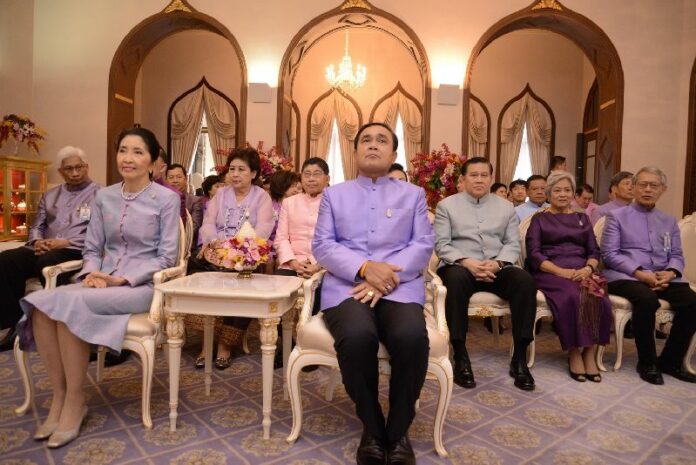
Gen. Prayuth Chan-ocha at a Songkran ceremony on 9 April 2015.

BANGKOK — On the anniversary of the military crackdown on Redshirt protesters in 2010, Thai junta chairman Prayuth Chan-ocha has asked media agencies to help tell the "true" story of the violence that claimed more than 90 lives.

"Media, help me. Don't throw away the evidence. I saw you taking many photographs," Gen. Prayuth said in a videotaped speech that will be aired on national television tonight. He was referring to the clashes between Redshirt demonstrators and soldiers, which started five years ago today.

\
Redshirts clash with soldiers in Bangkok on 10 April 2010. 

"Hundreds of you reporters walked behind soldiers, you dodged the bullets with them," said Gen. Prayuth, who is considered an architect of the 2010 crackdown. "Why don’t you help me by speaking out? Okay?"

The events of the 2010 crackdown, which lasted between April and May, are still widely disputed among Thais. While Redshirts, human rights groups, and a series of court inquests say soldiers were responsible for most of the deaths, army commanders and the leaders of the government at the time have continued to blame militants who were allied to the protesters.

The operation was ordered by then-Prime Minister Abhisit Vejjajiva to disperse the tens of thousands of Redshirts who had descended on Bangkok to demand a new election. On 10 April 2010, clashes erupted between soldiers and the so-called Blackshirt militants, killing at least 20 civilians and five soldiers that first night.

By the time Redshirt leaders surrendered on 19 May 2010, more than 90 people, mostly civilians, had died.

In his speech today, Gen. Prayuth stressed that the military had no intention of harming civilians.

"Who would want to harm the people? Soldiers, police, officials, they have hearts too, you know," Gen. Prayuth said. "The government had to take care of you. The situation was not peaceful, so the government had to solve the problem. By which method, that has to be discussed. Whether it is right or wrong has to be ruled by the legal procedure. Don't distort facts or cause misunderstanding in the country, or among foreign countries. It’s embarrassing."

Abhisit and his former deputy, Suthep Thaugsuban, are currently facing “abuse of power” charges for authorizing the operation. If proven guilty, the two Democrat Party politicians could be retrospectively impeached and banned from politics for five years.

Under orders from the junta, this is the first year that Redshirt activists will not gather in Bangkok to honor the victims of the crackdown.

The junta, which seized power from a Redshirt-backed government last May, has imposed a ban on all political gatherings, and specifically ordered Redshirt leadership not to organize any events to mark the crackdown's anniversary.

Yesterday, the junta also ordered the cancellation of a Buddhist ceremony organized by the families of victims in the crackdown. The memorial service was scheduled for today at a Buddhist temple in Pathum Thani, and was only open to close relatives of the deceased. However, military officers said they feared "ill-intentioned individuals" would "infiltrate" the event and make the ceremony a political affair. 

"When I use my legal power, you say I restrict freedom, but how has freedom fared in the past?" Gen. Prayuth said today in the speech taped for Friday night. "Can it run the country? Were there protests? And when there were protests, who used weapons of war to shoot at demonstrators? … The group of people who did it in 2010 was the same group with 2013 and 2014."

Gen. Prayuth appeared to be referring to the shadowy assailants who attacked demonstrators opposed to the Redshirt-backed government in 2013 – 2014. Nearly 30 people died in the six months of anti-government protests, which culminated in the 22 May coup, led by Gen. Prayuth.

The anti-government protesters accused Redshirts of employing the Blackshirt militants to launch the attacks, but Redshirt leaders have repeatedly denied the accusation. 


For comments, or corrections to this article please contact: [email protected]

You can also find Khaosod English on Twitter and Facebook
http://twitter.com/KhaosodEnglish
http://www.facebook.com/KhaosodEnglish
Advertisement

Old Versus New at Thailand's Songkran Festival

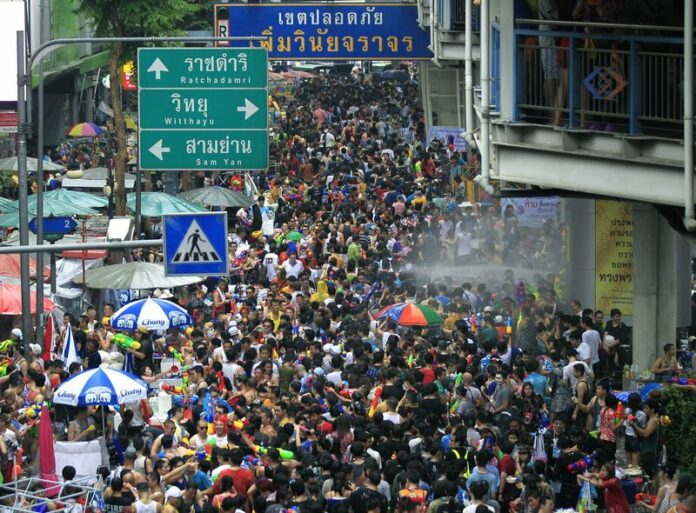
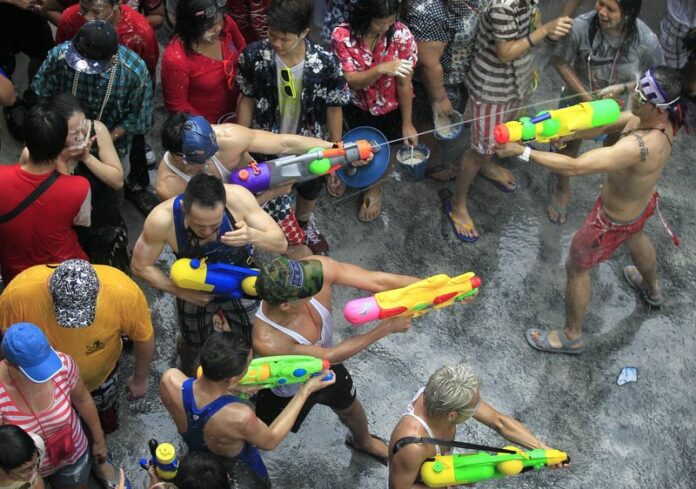
A file photo shows Thais and tourists joining the annual Songkran Festival celebration, the Thai traditional New Year, also known as the water festival in Silom district of Bangkok, Thailand, 13 April 2014. EPA/NARONG SANGNAK

BANGKOK (DPA) — Warm, wet and wild is the best way to describe Thailand's Songkran Festival.

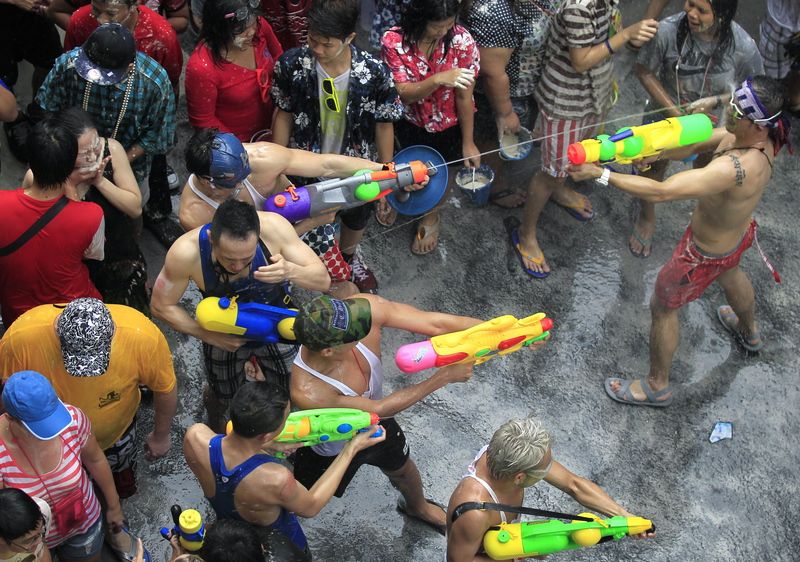
Celebrated each year in mid-April, when the temperatures are at their hottest, Thai New Year is marked by a three-day, nationwide water fight, as people in every province drench one another with water guns and hoses, and smear white powder onto each other's faces.

\
A file photo shows Thais and tourists joining the annual Songkran Festival celebration, the Thai traditional New Year, also known as the water festival in Silom district of Bangkok, Thailand, 13 April 2014. EPA/NARONG SANGNAK

But among traditionalists, including some in the government, there is growing concern over Songkran's wilder aspects, which includes heavy alcohol consumption and skimpy clothing.

"I think Songkran these days involves too much drinking, too many public displays of affection and too many obscene gestures," said 84-year-old Yisoon Laohateeranonda.

"I wish it was more traditional and family-oriented."

In response to such complaints, the government and local authorities have said they will ban revealing clothing, along with the sale and consumption of alcohol and high-pressure water guns in some areas.

The Bangkok mayor's office says it will enforce the bans in Silom, one of the most popular areas to celebrate in the Thai capital.

The tighter controls, outlined in an eight-point official plan, has upset some Songkran revellers.

"This is a special occasion for celebration," said Yuthawit Boonkhoom, a 21-year-old university student. "People should be able to celebrate how they want to."

Existing laws already address such issues as drunk driving, public nudity and sexual harassment, Yuthawit said.

"Additional restrictions are making it less enjoyable. But I want to drink and have a good time, so nothing will stop me," he added.

Although Songkran has not been Thailand's official new year since 1888, when the country adopted the Western calendar, it remains one of the most important national holidays.

Many Thais try to promote traditional ways of celebrating Songkran. In the government's eight rules, people are encouraged to wear traditional Thai clothes and participate in activities that promote Thai values.

People are advised to sprinkle water on to Buddha images and monks to receive blessings, to pour water onto elderly family members' hands to show respect, and to throw water at each other in a friendly way, according to a book published by the cultural promotion department.

"Songkran was very low key when I was younger," said Yisoon, the 84-year-old. "It was quite religious. We would go to temples and there was very little water splashing going on."

The festival's humble beginnings involved family gatherings and water blessings. Water is traditionally used to symbolize purification, washing away the bad and welcoming the good for the coming year.

"Songkran has undergone dramatic change," said Mike Robinson, a cultural heritage professor at the University of Birmingham in Britain. "The performances and practices that we see today are largely a reinvention from the 1950s … It has evolved into a tourism event for both Thais and foreigners."

The celebrations have turned into large, riotous street parties.

Convoys of pickup trucks loaded with people and water tanks cruise around town soaking passersby. Armies of people roam city streets to splash and get splashed. The atmosphere is high-energy and cheerful, usually with lots of laughter and smiles.

Commercialized celebrations in major cities like Bangkok, Chiang Mai and Khon Kaen attract people from around the world.

Thailand's tourism industry has seen a surge in foreign tourist arrivals the past few decades, tripling since the late 1990s.

More than 2.6 million people are expected to visit this year during the holiday period, generating more than 446 million US dollars in revenue for the economy, according to the national tourism authority.

"The festival has been adapted to fit the growing number of tourists," said Robinson. "What were once small practices during the festival have become magnified so the sprinkling of water has been transformed into the throwing of water."

"I know that Songkran should be spent visiting family and going to temples," said Theeradet Suphannabut. "But that shouldn't stop me from having fun and enjoying myself during the holiday."

"I can balance spending time with my family and throwing water or partying with friends," he said.

"Songkran has combined old and new ways," said Robinson.

Bangkok exemplifies that combination with all kinds of celebrations, from traditional riverside events and live cultural performances to hotel pool parties and electronic dance music festivals.

Over time, all festivals evolve and adapt themselves to different social, cultural, economic and political situations. There is no right or wrong, but rather only what is appropriate for the local community, according to Robinson.

"Festivals symbolise and enact change," he said. "They are about allowing people and societies to change and help them celebrate the change."

(Reporting by Siraphob Thanthong-Knight)


For comments, or corrections to this article please contact: [email protected]

You can also find Khaosod English on Twitter and Facebook
http://twitter.com/KhaosodEnglish
http://www.facebook.com/KhaosodEnglish
Advertisement

Japanese Reporter Honored on 5th Anniversary of Thailand's Deadly Crackdown

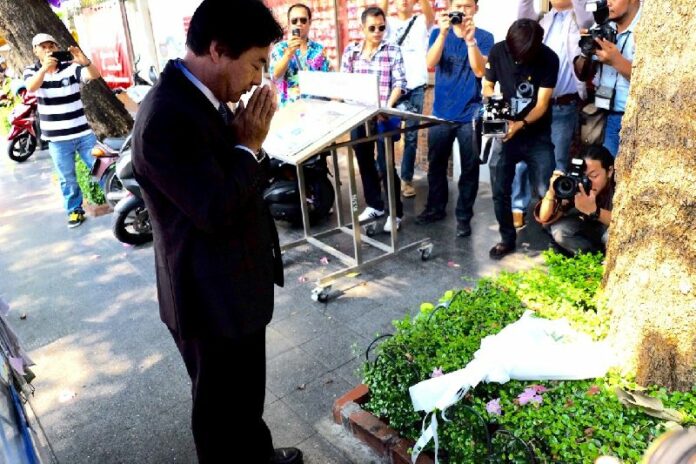
Osamu Isawa, charge d'affairs of the Japanese Embassy in Bangkok, lay flowers on the spot where Hiroyuki Muramoto was shot dead in 2010, 10 April 2015.

BANGKOK — The Japanese Embassy commemorated the death of the Japanese journalist who was killed five years ago today during the military crackdown on Redshirt protesters in Bangkok.

Osamu Isawa, charge d'affairs of the Japanese Embassy in Bangkok, lay flowers on the spot where Hiroyuki Muramoto was shot dead while filming clashes between soldiers and Redshirt protesters on the night of 10 April 2010.

\
Osamu Isawa, charge d'affairs of the Japanese Embassy in Bangkok, lay flowers on the spot where Hiroyuki Muramoto was shot dead in 2010, 10 April 2015.

Hiroyuki, who was working for Reuters at the time of his death, was one of at least 20 civilians who died in the violence. Five soldiers were also killed, including Col. Romklao Thuwatham, the commander of the military operation. In total, more than 90 people died in the crackdown, which lasted until 19 May 2010.

Osamu said he commemorated Hiroyuki's death on behalf of the Japanese Embassy in Thailand, and added that the Japanese government is still waiting for the result of the investigation into the reporter's death. 

The court inquest tasked with determining who shot Hiroyuki is due on 30 April. 

Around 20 plain-clothed security officers observed today's brief commemoration from a distance. 

The 2010 crackdown was ordered by then-Prime Minister Abhisit Vejjajiva on 10 April in an effort to disperse tens of thousands of Redshirts who were rallying in Bangkok to demand a new election. As dusk set in, clashes between security officers and shadowy "Blackshirt" militants who were allied to the demonstrators broke out on Ratchadamnoen Avenue in Bangkok, killing 25 people.

The military later launched another assault on the Redshirts in late May 2010, forcing the movement’s leaders to surrender and call off the protests on 19 May 2010.

\
Soldiers begin crackdown on Redshirt protests in Bangkok on 10 April 2010. 

Under orders from the junta, this is the first year since 2010 that Redshirt activists will not gather in Bangkok to honor the victims of the crackdown, which is considered the bloodiest period of political unrest in recent Thai history. 

The ruling military junta, which seized power from a Redshirt-backed government last May, has imposed a ban on all political gatherings, and specificially ordered Redshirt leadership not to organize any events to mark the bloody crackdown.

Yesterday, the junta ordered the cancellation of a Buddhist ceremony organized by the families of victims in the crackdown. The memorial service was scheduled for today at a Buddhist temple in Pathum Thani, and was only open to close relatives of the deceased. However, military officers said they feared "ill-intentioned individuals" would "infiltrate" the event and make the ceremony a political affair. 

This morning, several security officers were stationed outside the temple where the ceremony was schedueld to take place. 

Several military commanders who played major role in the 2010 crackdown are leaders of the current government, including junta chairman and Prime Minister Gen. Prayuth Chan-ocha, and Minister of Defense Gen. Prawit Wongsuwan. 


For comments, or corrections to this article please contact: [email protected]

You can also find Khaosod English on Twitter and Facebook
http://twitter.com/KhaosodEnglish
http://www.facebook.com/KhaosodEnglish
Advertisement

Old Versus New at Thailand’s Songkran Festival

A file photo shows Thais and tourists in the annual Songkran Festival celebration, the Thai traditional New Year, also known as the water festival in Silom district of Bangkok, Thailand, April 13, 2014. Photo: Narong Sangnak / EPA

BANGKOK (DPA) — Warm, wet and wild is the best way to describe Thailand’s Songkran Festival.

Celebrated each year in mid-April, when the temperatures are at their hottest, Thai New Year is marked by a three-day, nationwide water fight, as people in every province drench one another with water guns and hoses, and smear white powder onto each other’s faces.

But among traditionalists, including some in the government, there is growing concern over Songkran’s wilder aspects, which includes heavy alcohol consumption and skimpy clothing.

“I think Songkran these days involves too much drinking, too many public displays of affection and too many obscene gestures,” said 84-year-old Yisoon Laohateeranonda.

“I wish it was more traditional and family-oriented.”

14286601551428660174l
A file photo shows Thais and tourists joining the annual Songkran Festival celebration, the Thai traditional New Year, also known as the water festival in Silom district of Bangkok, Thailand, 13 April 2014. EPA/NARONG SANGNAK

In response to such complaints, the government and local authorities have said they will ban revealing clothing, along with the sale and consumption of alcohol and high-pressure water guns in some areas.

The Bangkok mayor’s office says it will enforce the bans in Silom, one of the most popular areas to celebrate in the Thai capital.

The tighter controls, outlined in an eight-point official plan, has upset some Songkran revellers.

“This is a special occasion for celebration,” said Yuthawit Boonkhoom, a 21-year-old university student. “People should be able to celebrate how they want to.”

Existing laws already address such issues as drunk driving, public nudity and sexual harassment, Yuthawit said.

“Additional restrictions are making it less enjoyable. But I want to drink and have a good time, so nothing will stop me,” he added.

Although Songkran has not been Thailand’s official new year since 1888, when the country adopted the Western calendar, it remains one of the most important national holidays.

Many Thais try to promote traditional ways of celebrating Songkran. In the government’s eight rules, people are encouraged to wear traditional Thai clothes and participate in activities that promote Thai values.

People are advised to sprinkle water on to Buddha images and monks to receive blessings, to pour water onto elderly family members’ hands to show respect, and to throw water at each other in a friendly way, according to a book published by the cultural promotion department.

“Songkran was very low key when I was younger,” said Yisoon, the 84-year-old. “It was quite religious. We would go to temples and there was very little water splashing going on.”

The festival’s humble beginnings involved family gatherings and water blessings. Water is traditionally used to symbolize purification, washing away the bad and welcoming the good for the coming year.

“Songkran has undergone dramatic change,” said Mike Robinson, a cultural heritage professor at the University of Birmingham in Britain. “The performances and practices that we see today are largely a reinvention from the 1950s … It has evolved into a tourism event for both Thais and foreigners.”

The celebrations have turned into large, riotous street parties.

Convoys of pickup trucks loaded with people and water tanks cruise around town soaking passersby. Armies of people roam city streets to splash and get splashed. The atmosphere is high-energy and cheerful, usually with lots of laughter and smiles.

Commercialized celebrations in major cities like Bangkok, Chiang Mai and Khon Kaen attract people from around the world.

Thailand’s tourism industry has seen a surge in foreign tourist arrivals the past few decades, tripling since the late 1990s.

More than 2.6 million people are expected to visit this year during the holiday period, generating more than 446 million US dollars in revenue for the economy, according to the national tourism authority.

“The festival has been adapted to fit the growing number of tourists,” said Robinson. “What were once small practices during the festival have become magnified so the sprinkling of water has been transformed into the throwing of water.”

“I know that Songkran should be spent visiting family and going to temples,” said Theeradet Suphannabut. “But that shouldn’t stop me from having fun and enjoying myself during the holiday.”

“I can balance spending time with my family and throwing water or partying with friends,” he said.

“Songkran has combined old and new ways,” said Robinson.

Bangkok exemplifies that combination with all kinds of celebrations, from traditional riverside events and live cultural performances to hotel pool parties and electronic dance music festivals.

Over time, all festivals evolve and adapt themselves to different social, cultural, economic and political situations. There is no right or wrong, but rather only what is appropriate for the local community, according to Robinson.

“Festivals symbolise and enact change,” he said. “They are about allowing people and societies to change and help them celebrate the change.”

(Reporting by Siraphob Thanthong-Knight)


Advertisement

Park Ranger Murdered for Arresting Poacher: Police

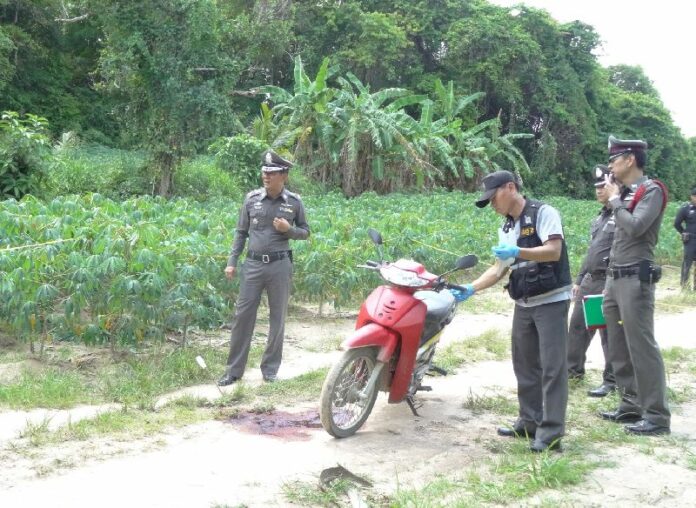
Police inspect the scene where a park ranger was shot and killed on 9 April 2015.

CHONBURI — A national park ranger was shot dead in a revenge attack by the father of an illegal wildlife poacher in Chonburi province today, police say.

Likhit Somboon, a 45-year-old ranger in charge of protecting animals in Khao Kheow Khao Chompoo Wildlife Sanctuary, was found dead 500 meters away from his residence this morning, said Pol.Cpt. Sophonwit Mitprapan. 

Likhit's wife told police her husband was driving a motorcycle to meet the Minister of Natural Resources and Environment, who was visiting the national park office today. Likhit was reportedly shot dead at point blank range three times in the head. 

After collecting evidence and testimony from witnesses, police arrested Inta Uijai, 52, on suspicion of murdering Likhit. Police also confiscated two rifles and one handgun near Inta's house, which is located around 1 kilometer away from the crime scene. 

Pol.Col. Thittawat Suriyachai, investigative officer at Chonburi provincial police force, said Inta confessed to shooting Likhit with his handgun because the ranger was trying to track down his son for hunting wildlife in the park without permission two days ago. Inta told police he stopped Likhit on his way to work this morning and tried to convince him to drop the investigation, but Likhit refused.

"So the perpetrator used his 11 mm. handgun to shoot him out of rage before he fled the scene," Pol.Col. Thittawat said. "He didn't expect that police would find out about the crime." 

Amnuay Trakulsupphachai, director of the wildlife sanctuary, described Likhit as a hardworking official who is known among colleagues for his tough stance against poaching. 

Amnuay said Likhit informed him two days ago that he was trying to track down and arrest a teenager seen hunting animals in the national park. 

"He's straightforward," Amnuay said, "Even though some wrongdoers who were arrested tried to bribe him, he refused that. He just sent them for prosecution. He's liked by his colleagues." 


For comments, or corrections to this article please contact: [email protected]

You can also find Khaosod English on Twitter and Facebook
http://twitter.com/KhaosodEnglish
http://www.facebook.com/KhaosodEnglish

Advertisement

Junta Orders Families to Cancel 2010 Crackdown Memorial Service

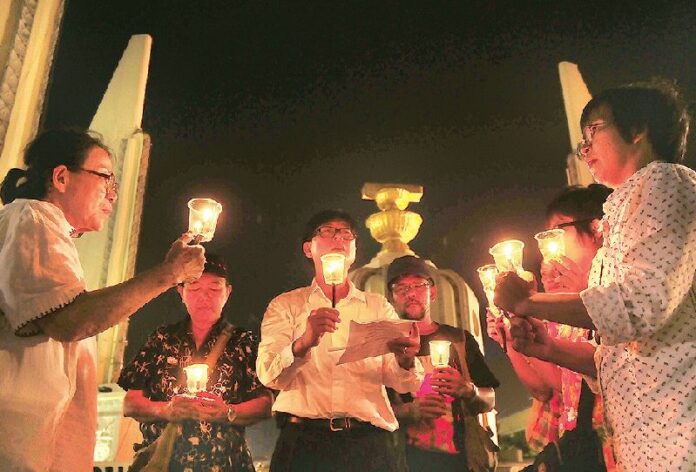
Redshirts remember the victims of the 2010 crackdown on 10 April 2014.

BANGKOK — The Thai junta has reportedly ordered relatives of those who died in the military crackdown on Redshirt protests in 2010 to cancel a Buddhist ceremony dedicated to the victims.

The merit-making ceremony was scheduled to take place at a temple in Pathum Thani province on Friday, the fifth anniversary of clashes between soldiers and Redshirt protesters that left at least 20 civilians and five soldiers dead. In total, more than 90 people died in the crackdown, which lasted until 19 May 2010.

Redshirts initially planned to organize their annual memorial service at Khok Wua intersection, the site of the clashes, but changed the venue and made the ceremony a strictly religious affair after the junta said the event would violate its ban on political gatherings. Redshirt leaders also said yesterday that the ceremony would only be attended by family members of the victims, and asked other supporters of the Redshirt movement to stay home in compliance with the junta’s orders.

However, a group of military and police officers arrived at the temple where families were preparing for the ceremony today, and asked them to cancel the event entirely, Redshirt leader Jatuporn Prompan told Khaosod English.  

According to Jatuporn, who was not at the temple, the commanders leading the soldiers and police asked to speak to him on the phone when they arrived. The chief of police in Pathum Thani, Pol.Maj.Gen. Montri Yimyaem, reportedly told him over the phone that the junta had received intelligence reports that Redshirt leaders would attend the ceremony. Jatuporn said he insisted that the ceremony would only be attended by relatives of the victims, but after a short deliberation, the officers told him the event must be canceled altogether.

"I am disappointed to see that those in power do not use their humanity in making decisions," the Redshirt leader told Khaosod English. "I understand that in the current climate we cannot hold anniversary protests like we did in previous years. That’s why we decided to hold only Buddhist ceremonies."

Yesterday, a junta spokesperson expressed concern that the ceremony could be infiltrated by "indiviudals with ill intentions," who could "misuse" the event for political purposes. The junta banned all political gatherings after seizing power from a Redshirt-backed government in May 2014.

Banjerd Fungklinchan, whose son died in the crackdown, said Pol.Maj.Gen. Montri told the group that he was ordered by the junta to cancel the event. The officer added that the families were free to hold personal merit-making ceremonies at their respective homes, Banjerd said.

"I will just hold a ceremony for my son at my own home, for the sake of peace of mind of the officers and of myself," Banjerd said. 

In addition to Pol.Maj.Gen.Montri, the group of security officers and officials were led by Col. Somchai Onsomchit, deputy commander of 2nd Anti-Aircraft Artillery Battalion, and Phachai Poriyanond, chief of Klong Luang district. 

The 2010 crackdown was ordered by then-Prime Minister Abhisit Vejjajiva on 10 April in an effort to disperse tens of thousands of Redshirts who were rallying in Bangkok to demand a new election. As dusk set in, clashes between security officers and shadowy "Blackshirt" militants who were allied to the demonstrators broke out on Ratchadamnoen Avenue in Bangkok. At least 25 people were killed in the violence, including the commander of the military operation and a Japanese journalist. 

The military later mounted another assault on the Redshirts in late May 2010, forcing the movement’s leaders to surrender and call off the protests on 19 May 2010.

Since 2010, Redshirt activists have gathered in Bangkok every 10 April to honor the victims and commemorate the crackdown, which is considered the bloodiest period of political unrest in recent Thai history. 

Several military commanders who played major role in the 2010 crackdown are leaders of the current government, including junta chairman and Prime Minister Gen. Prayuth Chan-ocha, and Minister of Defense Gen. Prawit Wongsuwan. 


For comments, or corrections to this article please contact: [email protected]

You can also find Khaosod English on Twitter and Facebook
http://twitter.com/KhaosodEnglish
http://www.facebook.com/KhaosodEnglish
Junta Orders Families to Cancel 2010 Crackdown Memorial Service


Advertisement

Hot News

LATEST NEWS

Bangkok
overcast clouds
32.8 ° C
36.6 °
32.7 °
68 %
3.3kmh
100 %
Sat
37 °
Sun
36 °
Mon
35 °
Tue
34 °
Wed
33 °