
































30 C
Bangkok
Saturday, July 4, 2026
Home Blog Page 3081

More than 100 whales died in New Zealand

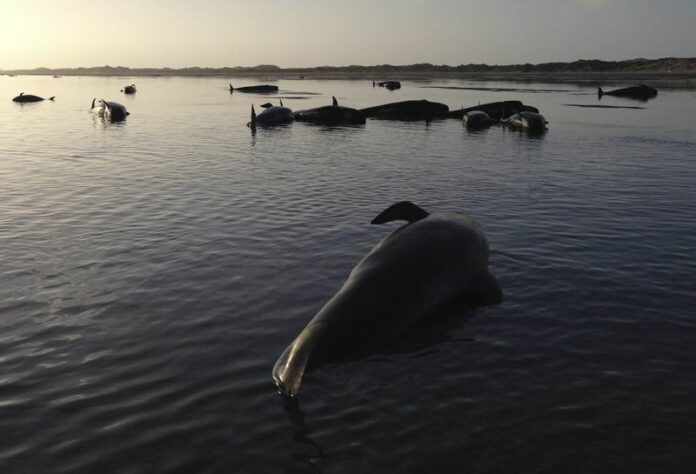
About three dozen pilot whales are refloated and heading out to sea, after surviving a mass stranding of nearly 200 whales on Friday.

Wellington (dpa) – About 60 pilot whales had been refloated and were heading out to sea Saturday night, after surviving a mass stranding of nearly 200 whales on Friday, the Department of Conservation said.

More than 100 whales died after the pod became stuck at Farewell Spit, a narrow sandbar at the northern tip of the South Island. It was one of the country's largest mass beachings.

Golden Bay Conservation Services manager Andrew Lamason said Saturday's refloat at high tide had gone well.

"They are grouping together and they are all heading south which is a really good thing, they are heading out into deeper and deeper water all the time so we are packing up our operations for the night and it is looking pretty positive at this stage.

"We will have people back out scanning the beaches first thing in the morning and we will be putting a plane in the sky to see where they are."

He said the whales were in good condition through Saturday with volunteers using buckets, sheets and shovels to keep them wet through the day.

Lamason said earlier he was concerned that the whales would suffer if they continued to re-strand, and that the department would consider euthanizing the surviving whales if Saturday night's attempt at refloating was unsuccessful.

He was more optimistic after the surviving whales stayed in good condition throughout a day of cooler temperatures and light rain.

"We've got to be hopeful but if we get through to Monday lunch time and there is a low tide, then if we have got whales that are stranded then, we will probably start euthanizing at that point."

Lamason said it was not safe for volunteers and staff to stay in the water with the animals after darkness fell.

"There is no way we can put people in the water in the dark around a 2-ton wild animal. I would be looking for people washed up on the sand as well," Lamason said.

New Zealand has one of the highest stranding rates in the world, with an average of about 300 dolphins and whales stranding each year, according to marine mammal conservation group Project Jonah.

Advertisement

Vietnamese Director Urges Filmmakers Not to Fear Censors

An undated handout picture provided by the Berlin Film Festival on 12 February 2015 shows Vietnamese actors Truong The Vin, Truong Van Hoang, Mai Quoc Viet and Le Cong Hoans in a still from the film 'Big Father, Small Father and Other Stories' (Cha va con va) by Vietnamese director Phan Dang Di. The movie will be presented in out of competition of the 65th annual Berlin Film Festival 'Berlinale', which runs from 05 to 15 February. EPA

By Andrew McCathie

BEIJING (DPA) – Vietnamese director Phan Dang Di on Friday urged filmmakers from his country not to be wary of the nation's sometimes heavy-handed censorship.

"I don't think you have to be afraid of that censorship," Phan told a press conference marking the premiere of his new movie Cha Va Con Va (Big Father, Small Father and Other Stories) at the Berlin Film Festival.

"Censorship is still a problem in Vietnam," Phan said. "But there are more avenues opening up. I shoot the films that I want to shoot. I don't shoot them in anticipation of the censors."

"I believe that censorship will disappear at some point in Vietnam," he said.

Set in Saigon in the mid-1990s, Phan's film is about a group of friends trying to find their place in a Vietnam still struggling with the aftermath of 20 years of war.

Cha Va Con Va takes the audience on a journey through the grey underworld of communist Vietnam where the young would-be photographer Vu and his friends spend a large part of their time.

But trouble with the law and a bunch of urban thugs forces the friends to flee to the Mekong Delta, where they reconnect through the swampy landscape and impenetrable jungles to life outside the city.

"This was a time when Vietnam and the world were moving into a new century," Phan told the press conference.

It was also about two decades after the end of the Vietnam War,  when the country was in the grip of an economic downturn triggered by the Asian financial crisis that engulfed the region in the mid-1990s.

"There was a surge in the population and young people were eager to get into the labour market but there were not enough jobs," he said.

This means that for some, as Phan's film shows, selling drugs, gambling and prostitution were some of the few means for making money.   

In telling his story, Phan draws a strong contrast between the violence and dangers of the city and the beauty of the Vietnamese countryside by painting a striking portrayal of the Mekong Delta environment.

"If we live in the city we need to have some refuge," said Phan. "And if we destroy the environment we will not have a refuge."

Ultimately, the friends return to Saigon but the dangers have not disappeared and the friends find themselves battling again to keep their heads above water and to pay off past debts.

"Violence is part and parcel of life in Vietnam. Just as we have a sense of order, violence bursts open at some points," the director said.

In the end, the friends decide to sign up to a government programme which pays modest money to volunteers to help stem the nation's population pressures by having a vasectomy.

Cha Va Con Va is a film about a group of young men who decide in the end against being fathers and forging a new generation in the country, said Phan.

Vietnamese filmmakers have over the years gained recognition on the international film festival circuit with Tran Anh Hung winning the Cannes Film Festival's Camera d'Or in 1993 for his first feature film The Scent of the Green Papaya.

Several other festival prizes followed for other Vietnamese directors.

However, the Vietnamese movie industry has for the most part struggled over the last three decades to have its voice heard in the country following the government's moves to modernize the nation's communist-era command economy.

This has left them often competing with television and a burgeoning DVD industry.

Phan also concedes that money is in short supply in Vietnam for independent filmmakers.

"It would not be possible to make any independent film in Vietnam," he said. "We were free to make a film (because of international financial assistance)."

Advertisement

Clashes with rebels in northern Myanmar leave 47 soldiers dead

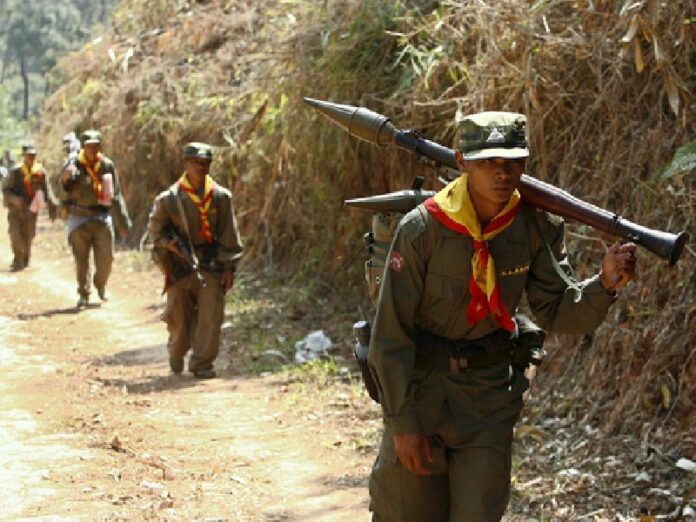
A file photo showing a group of armed Shan State Army (SSA) guerrillas patroling near the rebel jungle stronghold of Doi Tailang in Myanmar's Shan state, 06 February 2007. Myanmar troops clashed with rebels in Shan State, leaving 47 soldiers dead this week. EPA

Myanmar troops clash with rebels in Shan State leaving 47 soldiers dead this week.

Yangon (dpa) – Myanmar troops clashed with rebels in Shan State leaving 47 soldiers dead this week, the state-run media reported Friday.

The army launched an operation Monday after rebels from the Myanmar National Democratic Alliance Army (MDNAA) of Kokang province seized eight weapons from a local militia, the Global New Light of Myanmar reported.

A series of clashes with the rebels over the following four days left a total of 47 soldiers dead, 73 wounded and four military vehicles destroyed, the report said.

"We also lost at least 20," MNDAA spokesman Htun Myat Linn said.

"And I know that 10 more soldiers were killed in fighting today, according to reports from our troops," he told dpa Friday.

Other ethnic rebel groups including the Kachin Independence Army, the Ta'ang National Liberation Army, the Arakan Army and Shan State Army-North in the Shan state joined them to fight government troops, he said.

The army was using helicopter gunships and fighter jets to attack rebel positions in Laukkai Township in Shan state since Tuesday, media reports said.

"We saw helicopters flying over Laukkai town, but doing nothing near the town," said Min Min, a businessman working in the town. "We heard they are striking the rebels far from the town."

"We heard several hundred people from nearby area are now heading to Laukkai town to escape the fighting. But I'm not sure the place is safe also as rebels were trying to take the town," he said.

Thousands of people in the region have crossed the border and fled into China to escape the fighting, rebels said.

"About 2,000 residents are now sheltering in Yunnan province of China," Htut Myat Linn said.

The MNDAA and allied rebel groups were fighting to retake the Kokang self-administered zone, which the MNDAA controlled between 1989 and 2009.

The army seized back the area when the MNDAA refused to reform into the Border Guard Force under the control of central military in 2009.

"The MNDAA just demands to be a group signing the nationwide ceasefire accord, but Myanmar government didn't accept our demand," " Htut Myat Linn said. "What else can we do other than fighting against them to retake our region?"

In December, seven soldiers from Myanmar's military were killed and 20 others wounded in an attack by the MNDAA on an army outpost in Shan state around 30 kilometres from the Chinese border. 

Advertisement

Human Rights Watch : Thailand Should End Military Detention of Civilians

News Release from Human Rights Watch


Thailand: End Military Detention of Civilians
Lawmakers Should Reject Military Power Grab to Legalize Prolonged Detention

FEBRUARY 13, 2015

Brad Adams, Asia director

(New York) – Thailand’s lawmakers should reject a proposed revision to the Military Court Act that 

would broadly empower the armed forces to detain civilians without charge for nearly three 

months, Human Rights Watch said today.

Before the end of February 2015, the military-appointed National Legislative Assembly is expected 

to consider a draft amendment to the 1955 Statute of the Military Court Act, which the 

government of Prime Minister Gen. Prayuth Chan-ocha submitted on December 9, 2014. Article 46 

of the amended law would allow local military commanders to detain civilians for up to 84 days 

without charge or judicial oversight.

“Thailand’s government is trying to hand the military unchecked authority to detain civilians,” said 

Brad Adams, Asia director. “Thai lawmakers should reject this military power grab that puts all 

citizens at risk of prolonged detention without charge.”

The proposed amendment will allow the military to bypass judicial oversight under the Criminal 

Procedure Code. Intervention by judges under the procedural code has been the sole safeguard 

against prolonged arbitrary detention since the military coup on May 22, 2014.

Three days after the coup, the National Council for Peace and Order (NCPO) junta, issued order 

number 37, replacing civilian courts with military tribunals for trying some offenses. The order 

empowers the military court to prosecute all crimes in the Thai penal code, including lese majeste 

crimes for insulting the monarchy and national security and sedition offenses. In addition, people 

who violate the NCPO’s orders are also subject to trial by military court.

Over the past eight months, the military has arbitrarily detained hundreds of civilians under martial 

law powers and tried many in military courts in Bangkok and other provinces, in violation of 

international law. Those held have been denied access to lawyers and family members. The NCPO 

has disregarded and refused to seriously investigate detainees’ allegations of torture and ill-

treatment.

The proposed amendment to the military court law would violate Thailand’s obligations as a party 

to the International Covenant on Civil and Political Rights (ICCPR) to ensure due process and fair 

trial rights. Under article 9 of the ICCPR, no one may be subjected to arbitrary arrest or detention, 

and shall be promptly informed of the reasons for their arrest. A person detained on suspicion of a 

criminal offense is to be brought promptly before a judge. The Human Rights Committee, the 

international expert body that monitors state compliance with the ICCPR, has interpreted 

“promptly” to mean within a few days. The proposed amendment ensures none of the protections 

against wrongful detention provided under international law.

Furthermore, governments are prohibited from using military courts to try civilians when civilian 

courts can still function. The Human Rights Committee has stated in its General Comment on the 

right to a fair trial that “the trial of civilians in military or special courts may raise serious problems 

as far as the equitable, impartial and independent administration of justice is concerned.” This is 

particularly problematic in Thailand where every element of military courts functions within the 

Defense Ministry’s chain of command, which has been controlled by the NCPO since the May 

coup.

“The proposed amendment is just the junta’s latest broken promise to return the country to 

rights-respecting, democratic rule,” Adams said. “Enshrining detention without charge and military 

trials of civilians will perpetuate dictatorship – not democracy – in Thailand.”

Advertisement

Thai Press Freedom Index Down After Coup

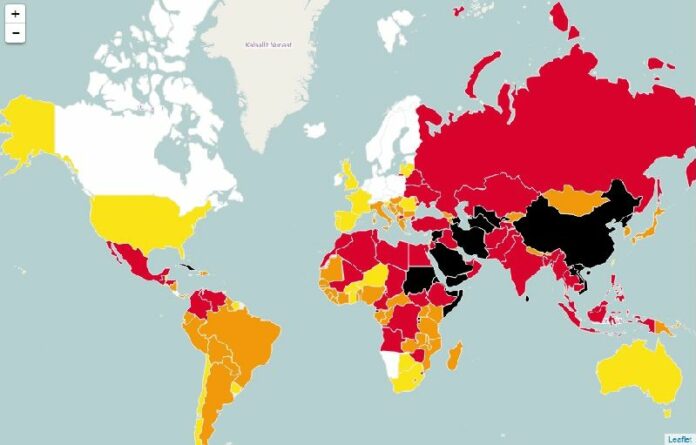
A map from Reporters Without Borders' 2015 Press Freedom Index.

(Prachatai English)

BANGKOK – Press freedom in Thailand has fallen on the Reporters Without Borders index from a ranking of 130 in 2014 to 134 in 2015. Thailand still remains the second best among the ten members of the ASEAN.

Reporters Without Borders or Reporters Sans Frontières (RSF), the France-based international NGO for the promotion of freedom of the press, on Thursday released the 2015 Press Freedom Index, an annual ranking of countries based upon the organization's assessment and questionnaires answered by local media-related professionals.

Read more here

Note: Khaosod English is not responsible for content on other websites.

Advertisement

Thai Govt to Teens: 'Dinner Only' This Valentine's Day

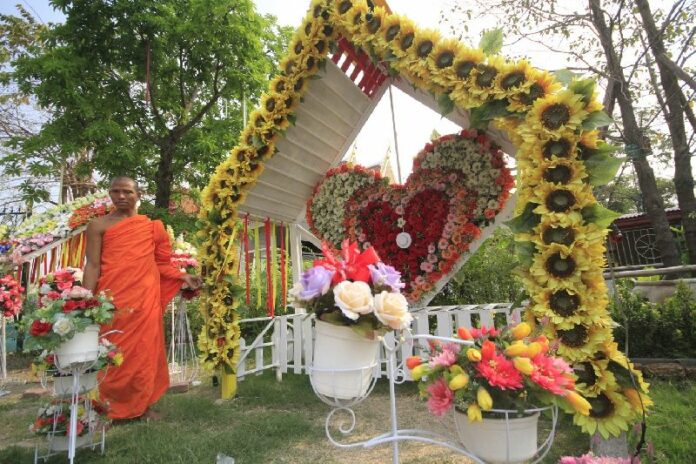
Monks at Wat Kasankh Temple in Ayutthaya province built decoration for couples who will visit the temple on Valentine's Day, 12 Feb 2015.

BANGKOK – Thailand’s Ministry of Culture has urged teens to celebrate Valentine's Day this year by having dinner, and not sex, with their romantic partners.

The campaign, called "This Valentine's Day, Dinner Only," was announced by Chaweerat Kasetsunthorn, assistant of the Minister of Culture, in a press conference at yesterday.

Chaweerat explained that the Ministry is deeply concerned by a recent survey in which 83 percent of young people interviewed said they planned to have sex on Valentine's Day. 

"It will lead to moral problems, especially pregnancy at an age when they are not ready. This problem has the potential to keep escalating," Chaweerat said. "One of the reasons for this is young people’s  free and convenient access to online media."

Valentine’s Day has become a widely-celebrated in Thailand in recent decades. Despite the country's reputation as a top destination for sex tourism, Thailand's socially-conservative authorities frown upon the holiday, which is perceived to encourage premarital sex. Every year, police and state agencies launch a campaign to ensure that Thai youths refrain from "inappropriate activities."

Chaweerat explained how romantic rituals associated with Valentine's Day put young people at risk of having sex.

"They express their love by receiving flowers, telling their partners they love them, having dinner, watching a movie, and then they will invite each other to nightclubs and bars, where they will kiss, hug, and touch each other," Chaweerat said. "Some couples end up having sex."

Narathip Pumsap, director of the Moral Promotion Center, urged all Thai teenagers to use the "hashtag" #DinnerOnly on social media this Valentine's Day.

"We want to reflect the idea that new-era teenagers have morality and ethics in their love," Narathip said. "What's important: parents and teachers should create correct understanding about Valentine's Day with children. Teenagers can do many other activities on that day, such as showing love to the family, society, themselves, and the country."

Related coverage:
Thai Police Warn Parents of Valentine's Day 'Dangers'

For comments, or corrections to this article please contact: [email protected]

You can also find Khaosod English on Twitter and Facebook
http://twitter.com/KhaosodEnglish
http://www.facebook.com/KhaosodEnglish

Advertisement

Thai Govt to Teens: 'Dinner Only' This Valentine's Day

School students visit a flower shop selling roses for Valentine's Day in Chonburi province, 12 February 2015.

BANGKOK – Thailand’s Ministry of Culture has urged teens to celebrate Valentine's Day this year by having dinner, and not sex, with their romantic partners.

The campaign, called "This Valentine's Day, Dinner Only," was announced by Chaweerat Kasetsunthorn, assistant of the Minister of Culture, in a press conference at yesterday.

Chaweerat explained that the Ministry is deeply concerned by a recent survey in which 83 percent of young people interviewed said they planned to have sex on Valentine's Day. 

"It will lead to moral problems, especially pregnancy at an age when they are not ready. This problem has the potential to keep escalating," Chaweerat said. "One of the reasons for this is young people’s  free and convenient access to online media."

Valentine’s Day has become a widely-celebrated in Thailand in recent decades. Despite the country's reputation as a top destination for sex tourism, Thailand's socially-conservative authorities frown upon the holiday, which is perceived to encourage premarital sex. Every year, police and state agencies launch a campaign to ensure that Thai youths refrain from "inappropriate activities."

Chaweerat explained how romantic rituals associated with Valentine's Day put young people at risk of having sex.

"They express their love by receiving flowers, telling their partners they love them, having dinner, watching a movie, and then they will invite each other to nightclubs and bars, where they will kiss, hug, and touch each other," Chaweerat said. "Some couples end up having sex."

Narathip Pumsap, director of the Moral Promotion Center, urged all Thai teenagers to use the "hashtag" #DinnerOnly on social media this Valentine's Day.

"We want to reflect the idea that new-era teenagers have morality and ethics in their love," Narathip said. "What's important: parents and teachers should create correct understanding about Valentine's Day with children. Teenagers can do many other activities on that day, such as showing love to the family, society, themselves, and the country."

Related coverage:
Thai Police Warn Parents of Valentine's Day 'Dangers'


For comments, or corrections to this article please contact: [email protected]

You can also find Khaosod English on Twitter and Facebook
http://twitter.com/KhaosodEnglish
http://www.facebook.com/KhaosodEnglish

Advertisement

Taxi Driver Busted for Stealing Tourists’ Bags at BKK Airport

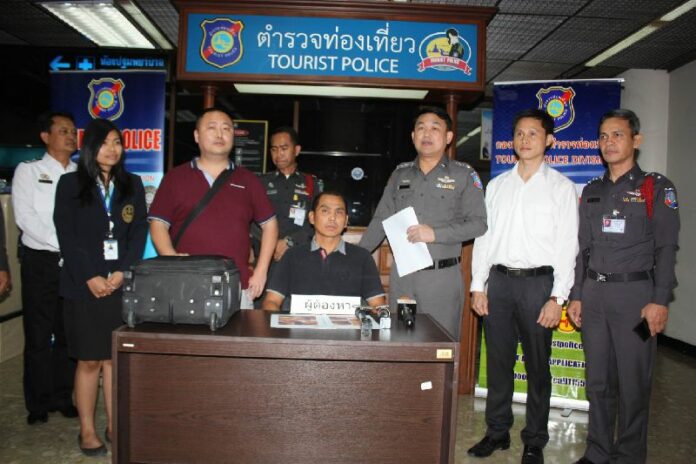
Tourist police press conference following the arrest of a taxi driver who allegedly stole luggage from Chinese tourists at the airport, 11 Feb 2015.

BANGKOK — A taxi driver has been arrested for allegedly stealing luggage from Chinese tourists at Don Mueang Airport in northern Bangkok.

Three Chinese tourists told police on Feb 8 that a taxi driver dropped them off at the airport’s departure platform and sped away before they could collect their luggage from the trunk.

Police investigated the complaint and identified the taxi driver as Mongkolsetthi Udomsap. Mongkolsetthi initially denied the allegation, but later confessed after police found the cab with the tourists’ luggage parked outside of his home in Bangkok’s Lat Prao district.

“The suspect then confessed,” said Pol.Col. Pinit Chuaikul, deputy commander of Tourist Police.

Mongkolsetthi has been charged with theft inside a transport facility, which carries a heavier penalty than ordinary theft charges.

Advertisement

NACC Threatened With Lawsuit for Delay in 2010 Crackdown Case

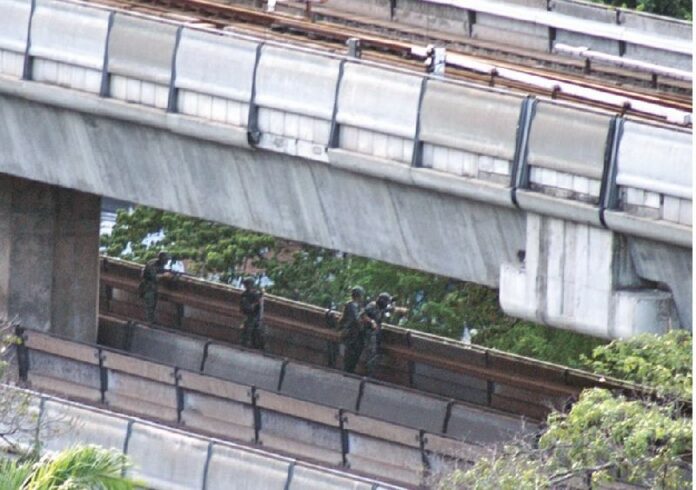
A screencap of the video footage that shows soldiers firing into Wat Pathumwanararm Temple, where six people were killed, on 19 May 2010

BANGKOK — The brother of a volunteer medic killed in the 2010 crackdown on Redshirt protesters has vowed to file a lawsuit against Thailand’s national anti-graft agency for its slow progress in prosecuting those responsible for the violence.

Nattapat Akhart, whose sister Kamolkate Akhart was shot dead by soldiers during the military operation, has accused the National Anti-Corruption Commission (NACC) of deliberately dragging its feet in prosecuting the Democrat Party politicians who authorized the crackdown.

"It's been almost five years since the crackdown in 2010, but there has been no progress at all," Nattapat said yesterday. "It is obvious that many civilians were killed by soldiers. It's not complicated like the corruption case of the rice-pledging scheme."

Nattapat was referring to the NACC’s prosecution of former Prime Minister Yingluck Shinawatra for her alleged failure to stop corruption in her government's rice policy. Last month the agency presented the case to the junta’s interim parliament, which voted to impeach Yingluck and ban her from political office for five years.

Critics accuse the NACC of harboring political bias against Yingluck and other politicians allied to the Redshirt movement.

"Such discrimination by the NACC has made me decide to file a lawsuit," Nattapat said. He said he will accuse the agency of violating Section 157 of the Criminal Codes, the same dereliction of duty charge that the NACC filed against Yingluck. 

In August 2014, the NACC was granted jurisdiction over charges filed against former Prime Minister Abhisit Vejjajiva and his deputy Suthep Thaugsuban for authorizing the 2010 crackdown, which led to more than 90 fatalities, mostly civilians.

Abhisit and Suthep were originally charged with murder by the Division of Special Investigation in 2010, but the Criminal Court threw out the case last year on the grounds that the former leaders should be charged with "abuse of power" by the NACC instead.

The New York-based Human Rights Watch condemned the ruling as a "serious setback for accountability efforts in Thailand" and "an affront to basic justice and international law."

Speaking at a press conference yesterday, sec-gen of the NACC Sansern Poljiak denied accusations that the commission is purposefully stalling. 

"All the cases get the same treatment. We are not dragging our feet," Sansern said. "The facts in this case have been processed and submitted to the commission, but they are still too broad. They are not concise, so I have assigned officials to revisit them and report back to the commission by 24 February."

This week, the Supreme Court's Division for Holders of Political Office accepted a separate lawsuit filed by the NACC against leaders of  a Redshirt-backed government who ordered a crackdown on Yellowshirt protesters in 2008. 

Two people were killed in suspicious circumstances during the crackdown. The government at the time said the two died from explosives unrelated to the police operation, but Yellowshirt leaders insist that the victims were killed by malfunctioning tear gas canisters fired by police.


For comments, or corrections to this article please contact: [email protected]

You can also find Khaosod English on Twitter and Facebook
http://twitter.com/KhaosodEnglish
http://www.facebook.com/KhaosodEnglish

Advertisement

NACC Threatened With Lawsuit for Delay in 2010 Crackdown Case

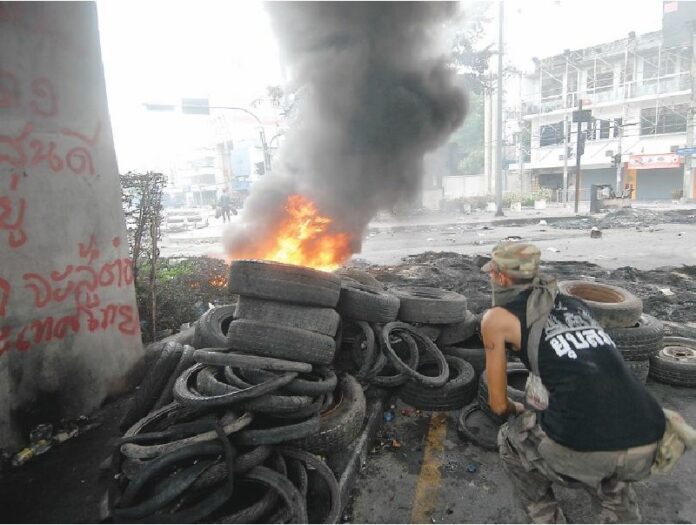
A Redshirt demonstrator hides behind a pile of burning tires while he watches the movement of soldiers in Din Daeng district, 18 May 2010

BANGKOK — The brother of a volunteer medic killed in the 2010 crackdown on Redshirt protesters has vowed to file a lawsuit against Thailand’s national anti-graft agency for its slow progress in prosecuting those responsible for the violence.

Nattapat Akhart, whose sister Kamolkate Akhart was shot dead by soldiers during the military operation, has accused the National Anti-Corruption Commission (NACC) of deliberately dragging its feet in prosecuting the Democrat Party politicians who authorized the crackdown.

"It's been almost five years since the crackdown in 2010, but there has been no progress at all," Nattapat said yesterday. "It is obvious that many civilians were killed by soldiers. It's not complicated like the corruption case of the rice-pledging scheme."

Nattapat was referring to the NACC’s prosecution of former Prime Minister Yingluck Shinawatra for her alleged failure to stop corruption in her government's rice policy. Last month the agency presented the case to the junta’s interim parliament, which voted to impeach Yingluck and ban her from political office for five years.

Critics accuse the NACC of harboring political bias against Yingluck and other politicians allied to the Redshirt movement.

"Such discrimination by the NACC has made me decide to file a lawsuit," Nattapat said. He said he will accuse the agency of violating Section 157 of the Criminal Codes, the same dereliction of duty charge that the NACC filed against Yingluck. 

In August 2014, the NACC was granted jurisdiction over charges filed against former Prime Minister Abhisit Vejjajiva and his deputy Suthep Thaugsuban for authorizing the 2010 crackdown, which led to more than 90 fatalities, mostly civilians.

Abhisit and Suthep were originally charged with murder by the Division of Special Investigation in 2010, but the Criminal Court threw out the case last year on the grounds that the former leaders should be charged with "abuse of power" by the NACC instead.

The New York-based Human Rights Watch condemned the ruling as a "serious setback for accountability efforts in Thailand" and "an affront to basic justice and international law."

Speaking at a press conference yesterday, sec-gen of the NACC Sansern Poljiak denied accusations that the commission is purposefully stalling. 

"All the cases get the same treatment. We are not dragging our feet," Sansern said. "The facts in this case have been processed and submitted to the commission, but they are still too broad. They are not concise, so I have assigned officials to revisit them and report back to the commission by 24 February."

This week, the Supreme Court's Division for Holders of Political Office accepted a separate lawsuit filed by the NACC against leaders of  a Redshirt-backed government who ordered a crackdown on Yellowshirt protesters in 2008. 

Two people were killed in suspicious circumstances during the crackdown. The government at the time said the two died from explosives unrelated to the police operation, but Yellowshirt leaders insist that the victims were killed by malfunctioning tear gas canisters fired by police.


For comments, or corrections to this article please contact: [email protected]

You can also find Khaosod English on Twitter and Facebook
http://twitter.com/KhaosodEnglish
http://www.facebook.com/KhaosodEnglish

Advertisement

Hot News

LATEST NEWS

Bangkok
overcast clouds
30 ° C
30 °
30 °
70 %
4.5kmh
100 %
Fri
30 °
Sat
30 °
Sun
31 °
Mon
30 °
Tue
31 °