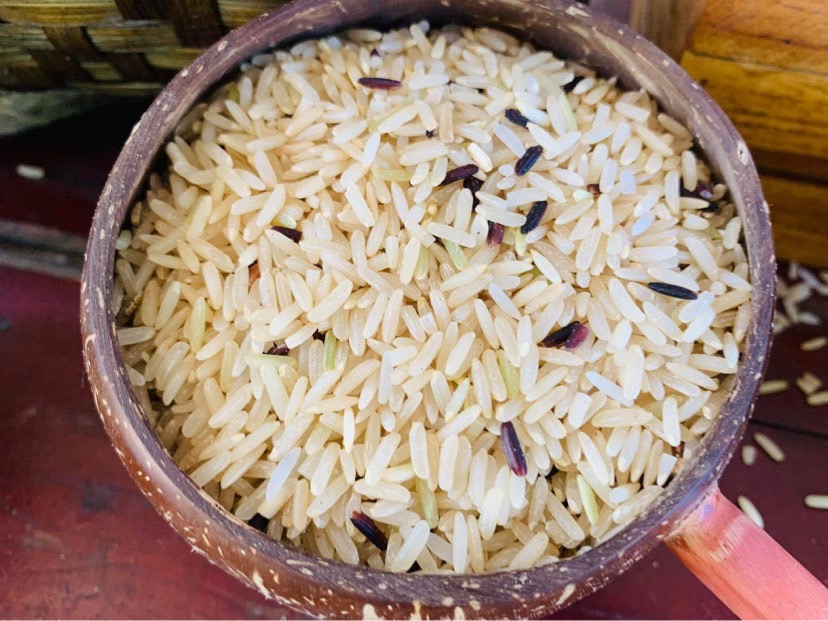
BANGKOK — Thailand exported 7,448,941 tons of rice worth 172.019 billion baht in the first nine months of 2024 (January-September), an increase of 22 percent in volume and 45.8 percent in value compared to the same period in 2023, according to Pol. Lt. Col. Charoen Laothamatas, President of the Rice Exporters Association of Thailand.
He stated that white rice led exports with 4,702,455 tons (up 42 percent), followed by jasmine rice with 1,233,108 tons (up 9 percent), parboiled rice with 814,791 tons (down 28.2 percent), Thai fragrant rice with 487,587 tons (up 42.5 percent) and glutinous rice with 211,000 tons (up 15.7 percent).
The top five importers of Thai rice were Indonesia (1,092,128 tons, up 20.7 percent), Iraq (907,715 tons, up 25.1 percent), the United States (609,430 tons, up 19.5 percent), South Africa (580,288 tons, down 20.6 percent) and the Philippines (399,493 tons, up 246.7 percent).
India remained the world’s largest rice exporter in the first nine months, followed by Thailand, Vietnam, Pakistan and the United States.
In September 2024, Thailand exported 878,711 tons of rice worth 19.463 billion baht, down 0.8 percent in volume and 3.5 percent in value from August 2024, due to a decline in exports of parboiled and broken rice, while exports of white rice and jasmine rice remained strong.
For October, The country is expected to export no less than 700,000 tons, driven by demand from African countries preparing for Christmas and New Year and pending contracts from the previous month.
The Rice Exporters Association of Thailand foresees intense competition in the market as India lifts its export restrictions, which should allow Indian exporters to expand their exports of white and parboiled rice, potentially impacting Thailand’s market share in these categories.
At the end of October 2024, Thai rice prices showed signs of decline amid increased price competition. Thai 5 percent white rice was at 507 US dollars per ton, compared to 524-528 US dollars for Vietnam, 444-448 US dollars for India and 461-465 US dollars for Pakistan. Thai parboiled rice cost 522 US dollars per ton, while Indian and Pakistani parboiled rice cost 439-443 US dollars and 493-497 US dollars respectively.
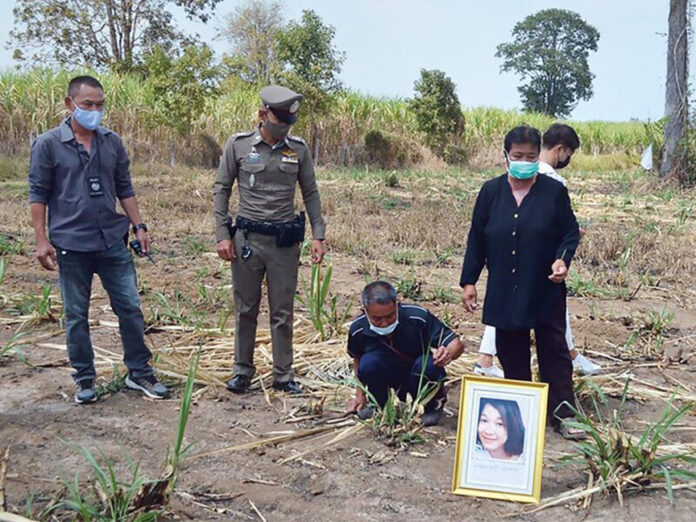
The location where Miss Liu's body was discovered in a sugarcane field in Moo 13, Tha Kwian Sub-district, Watthana Nakhon District, Sa Kaeo Province on May 13, 2012.
SA KAEO — The Supreme Court’s final verdict in a 12-year-old murder case has not only brought justice to a slain 19-year-old woman but also revealed serious gaps in Thailand’s missing persons system and ongoing concerns about violence against women.
The prosecution and punishment of perpetrators of violence against women is crucial in combating the ongoing violence in society, both in major cases and everyday incidents.
On October 31, at Sa Kaeo Provincial Supreme Court in Tha Kasem subdistrict, Mueang district, Sa Kaeo province, the court read its verdict in the case of Ms. Mayuree Yodpanao, or “Liu,” a 19-year-old factory worker who disappeared and was later found murdered by a school director who was 47 years old at the time.
Liu disappeared on May 5, 2012, after going to work at Industrial Estate 304 in Sri Mahaphot district, Prachinburi province. She had parked her motorcycle at a retail store near the industrial estate. Someone later sent an SMS to her family saying she had gone to work abroad and not to worry.
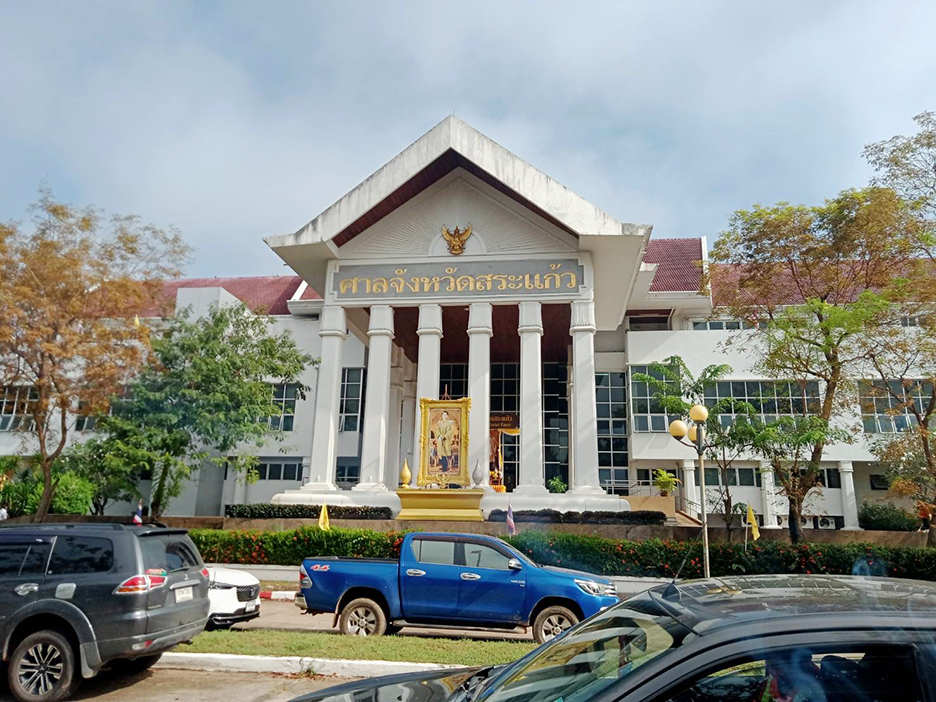
Sa Kaeo Provincial Court
However, after many years passed without any contact from Liu, in 2019, her family saw news about the Mirror Foundation, which works on missing persons cases, and sought their help. The foundation’s team investigated unidentified bodies from that period, coordinating with hospitals in Chonburi, Chachoengsao, Prachinburi, and Sa Kaeo provinces. They found three suspicious unidentified female bodies, all murder victims whose bodies had been hidden.
DNA Finally Solved the Case
When Sureewan Yodpanao, Liu’s mother, participated in DNA testing, results from late 2013 confirmed that an unidentified female body reported to police on May 13, 2012, found in a sugarcane field in Moo 13, Tha Kwian Sub-district, Watthana Nakhon District, Sa Kaeo Province, was Liu’s. After DNA collection, the body had been kept at a private cemetery in Chonburi Province.
The family then filed a request to reopen the case on January 28, 2021. The investigation led to a school director in Don Pru subdistrict, Si Prachant district, Suphan Buri province, who had been romantically involved with Liu and was previously the director of her school. Family members had learned from Liu’s close friends and coworkers that she had been in a relationship with an older man and had previously tried to end the relationship.
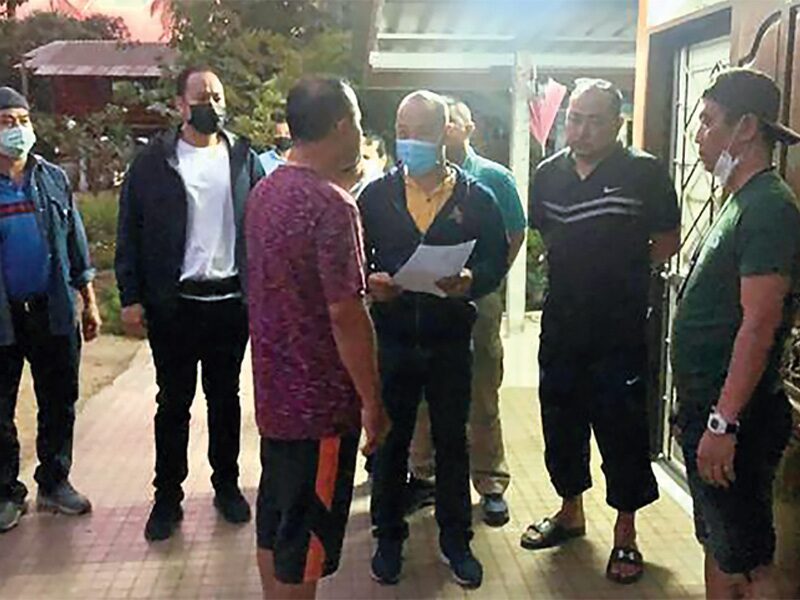
The Watthana Nakhon Police investigation team and Sa Kaeo provincial police arrested Mr. Jumpon Suphaphong, or “Director Tu,” in Suphan Buri on February 18, 2021. Though he denied the charges, investigators gathered evidence, particularly bullet casings found in a well behind his house in Suphan Buri that matched the murder weapon. He was prosecuted at Sa Kaeo Provincial Court for intentional murder.
Watthana Nakhon Police investigation team arresting Mr. Jumpon Suphaphong, or ‘Director Tu,’ at his residence in Suphan Buri province on February 18, 2021. (Khaosod Photo)
The lower court considered the weapon evidence, DNA results, and testimony from the victim’s friends conclusive enough to find the defendant guilty. He was sentenced to life imprisonment and ordered to pay compensation of 1,788,000 baht plus 7.5% annual interest from May 13, 2012.
On October 31, 2023, the Appeals Court upheld the life sentence. On October 31, 2024, the Sa Kaeo Supreme Court spent about 20 minutes reading its verdict, which upheld both lower court decisions.
Somsak Yodpayao, Liu’s 65-year-old father, came to hear the Supreme Court’s verdict at Sa Kaeo Provincial Court with his son. Sureewan, now 59, was ill and receiving hospital treatment, so she couldn’t attend. He expressed great joy that the court had provided justice for his family and daughter. He plans to consult with the Mirror Foundation about pursuing the court-ordered compensation, feeling that justice has been served.
“When we get home, I will light incense and tell Liu that I’m happy the court has given her justice. As for the person who did this to Liu, let him live his life that way. Whoever creates karma must receive karma,” he said with tears in his eyes.
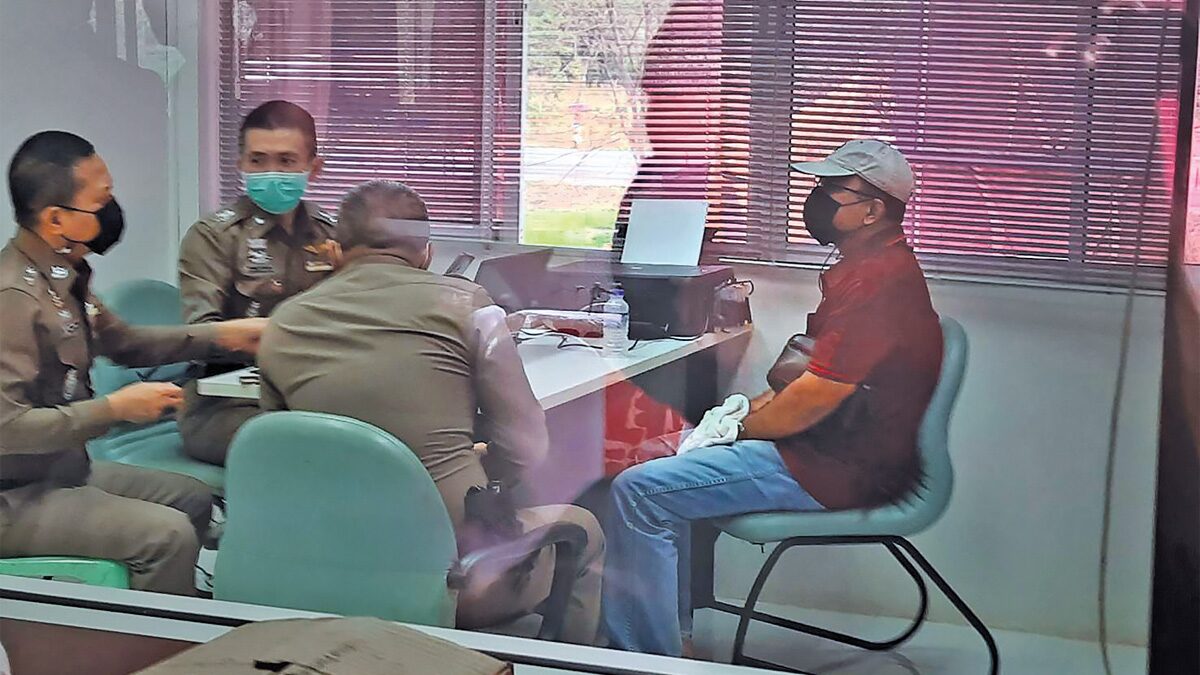
Police officers questioning school director Jumpon Suphaphong on February 18, 2021. (Khaosod Photo)
Better Missing Persons Data System Needed
Ekkalak Lumchumkae, head of the Missing Persons Information Center at the Mirror Foundation, who attended the Supreme Court’s verdict reading, said that after learning about the case from Liu’s parents, they investigated and found no record of Liu leaving the country. Her ID card had expired without renewal, leading them to suspect foul play. Their investigation revealed relationship issues at the time of her disappearance.
After searching through unidentified bodies across nearly 5 provinces and almost 10 hospitals, they found three female bodies from the same timeframe as the disappearance. DNA samples from the mother were compared, leading to a match with one body found in Tha Kwian subdistrict, Watthana Nakhon district, Suphan Buri province. The body showed evidence of gun-related homicide.
Ekkalak added that upon discovering this information, they coordinated with Watthana Nakhon Police Station and central investigation police. Police Colonel Sathit Mitrak, then-superintendent of Watthana Nakhon Police Station, conducted a thorough investigation that led to the perpetrator’s arrest, bringing some justice to the missing person’s family after 12 full years.
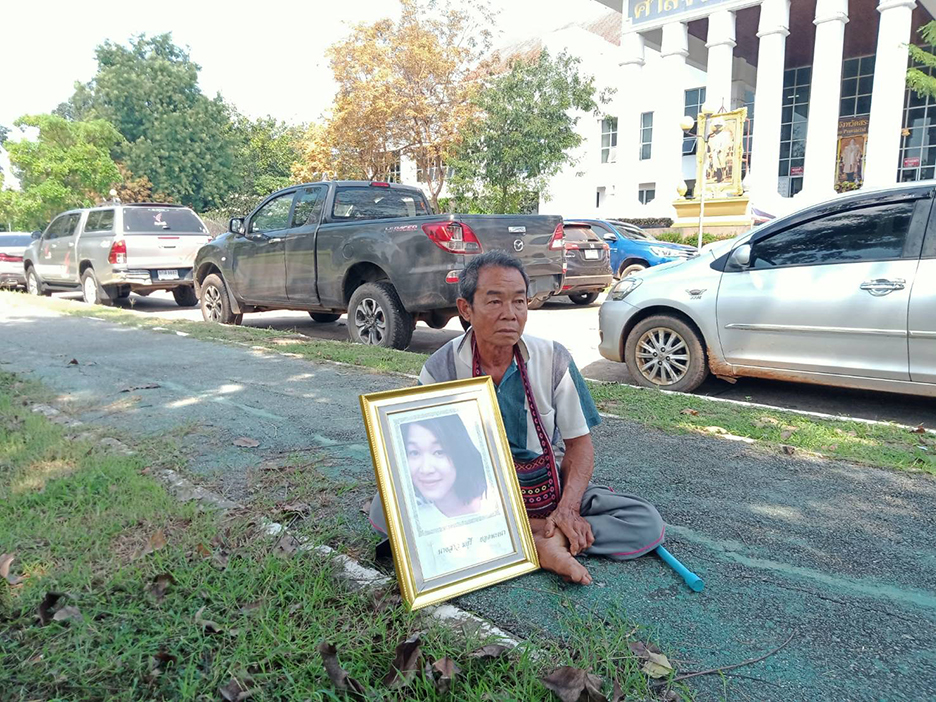
Somsak Yodpayao, 65, Liu’s father, holding his daughter’s photo while arriving to hear the Supreme Court’s verdict at Sa Kaeo Provincial Court on October 31, 2024. (Khaosod Photo)
“Liu’s family has received partial justice – a life lost cannot be exchanged for the perpetrator’s punishment, as the loss is immense. However, at least some justice has been restored, and the perpetrator will serve his sentence according to law. If Liu’s spirit knows, she would be at peace that her parents received justice,” said the head of the Missing Persons Information Center.
Ekkalak further noted that Liu’s murder case highlights Thailand’s lack of systematic management of unidentified bodies’ data. The foundation had to manually search through autopsy records at various hospital morgues in the area, where information was recorded by hand in notebooks, before finally discovering that the missing person had been murdered and found in the middle of a forest.
However, the family couldn’t retrieve the body as the cemetery had already been cleared. This emphasizes the importance of proper missing persons data management as crucial evidence for bringing justice to many families.
According to the Mirror Foundation’s statistics, someone goes missing every 4 hours. Currently, there are 18,887 recorded missing persons cases, with 16,315 (86%) found, and 2,232 still under investigation.
The Central Institute of Forensic Science revealed that the number of missing persons reports, unidentified persons, and unidentified bodies has been steadily increasing from October 2021 to February 2024. The cumulative figures show 201 missing persons reports, 273 unidentified persons, and 380 unidentified bodies, with an upward trend expected to continue.
After captivating fans across Asia with his role as Lee Cheong-san in the zombie high school series All of Us Are Dead, and transforming from a weak young man to a dangerously charming gangster in the series High School: Return of a Gangster, Yoon Chan Young is ready to fly to Thailand for the 2024 Yoon Chan Young Fan Meeting in Thailand, “Making Memories with Chan Young.”
This will be his first fan meeting in Thailand, aimed at bringing joy to everyone as the year comes to a close.
Organized by Thailand Society, 8Eighty6, i.mage, Vita500 and Thai-Korean partners, this event is set to create lasting memories and showcase various sides of Yoon Chan Young that many have not yet experienced, beyond his captivating roles that have made him a heartthrob.
With over 10 years of experience in the entertainment industry and numerous works, Yoon Chan Young is an exceptionally talented actor. He is very excited for this first fan meeting in Thailand and has prepared thoroughly to join fans in fun and memorable moments.
Leading up to the event, Yoon Chan Young sent a greeting video inviting everyone to join: “Hello everyone, I’m Korean actor Yoon Chan Young. I have an announcement for my Thai fans: on Sunday, November 24, at Phenix Grand Hall, I will hold my first fan meeting. It’s my first time meeting Thai fans, and I’m very excited! We’ve prepared a lot for this event. I hope many of you will come and have fun together. Wishing you all good health, and I’ll see you on November 24 at Phenix Grand Hall!”
Get ready for Yoon Chan Young’s first fan meeting in Thailand at the 2024 Yoon Chan Young Fan Meeting in Thailand, “Making Memories with Chan Young,” on Sunday, November 24, at Phenix Grand Ballroom. Ticket prices are 6,500 / 4,500 / 3,500 / 2,500 THB, Tickets go on sale on November 1, 2024 available at www.Ticketmelon.
This event will provide fans with exclusive benefits, so if you’ve ever fallen for him on screen, don’t miss this opportunity to support him in person!
For more information, check the FB page: ThailandSociety or IG: thailandsociety.
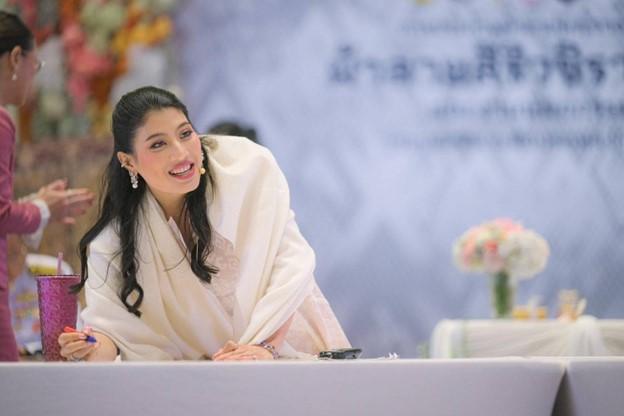
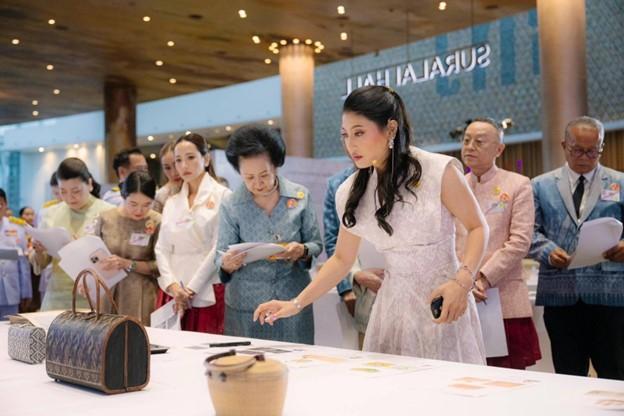
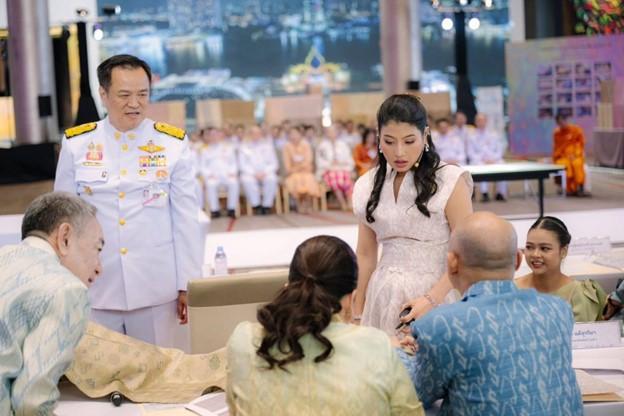
BANGKOK — Her Royal Highness Princess Sirivannavari Nariratana graciously presided over the final judging of the 2024 “Sirivajiraporn Royal Pattern Fabric” and handicrafts competition, held at Suralai Hall, 7th floor, ICONSIAM, Bangkok.
This prestigious event is part of Her Royal Highness’s visionary initiative, “Thai Fabrics: Wear it with Pride,” which aims to elevate the quality and global recognition of Thai textiles and crafts. Organized by the Ministry of Interior through the Community Development Department, the competition has become an annual event of great significance.
It marks its fourth consecutive year in promoting Thai fabric heritage and celebrating the dedication of artisans committed to preserving and innovating within this cultural legacy.
This year, submissions were welcomed from textile producers, OTOP fabric and clothing entrepreneurs, as well as artisans from across Thailand’s four regions. Held from June 1 to August 15, 2024, the competition attracted a total of 8,651 entries.
Of these, 78 exceptional works progressed to the national finals, comprising 72 pieces of fabric across 14 categories—including mixed technique, ethnic group fabrics, batik, embroidery, ikat, and large and small brocade fabrics—and six handicraft pieces.
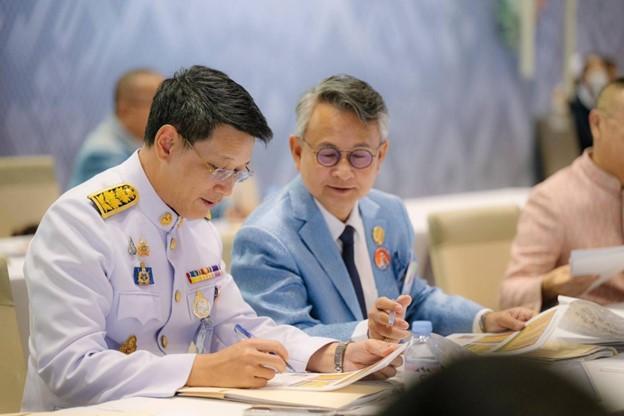
A distinguished panel, including senior officials from the Ministry of Interior, textile experts, natural dye specialists, and prominent designers, conducted evaluations based on various criteria such as clarity of the royal pattern, use of natural colors and materials, fabric width, craftsmanship, weaving uniformity, creativity, and adaptability.
The “Sirivajiraporn” pattern was presented by Her Royal Highness on February 22, 2024, during her visit to Ban Khum Phun in Warin Chamrap District, Ubon Ratchathani Province. Inspired by textile designs across Thailand,
Her Royal Highness created the “Sirivajiraporn” pattern in honor of His Majesty the King’s auspicious 6th-cycle birthday on July 28, 2024. This exquisite pattern comprises four distinctive designs:
“Wachiraphak,” symbolizing the initial “W” in His Majesty’s name
“Princess Sirivannavari’s Monogram 2024,” which builds on previous royal monogram patterns
“Heart,” embodying the love and care extended by the royal family to the people
“Royal Love for the People,” symbolizing the profound connection between the monarchy and the Thai people.
The royal pattern was designed for adaptability across four textile types—Kab Bua fabric, brocade, ikat, and batik—encouraging local craftsmanship to blend with traditional designs and support sustainable livelihoods creatively.
The awards for the 2024 competition are categorized into two main distinctions. The first is the Special Award category, featuring the highly coveted Best of the Best award for the overall top prize-winning piece.
The second category encompasses Royal Medals: The Gold Medal for the highest-ranking piece, the Silver Medal for the first runner-up, the Bronze Medal for the second runner-up, and honorable mentions with certificates.
This year’s Best of the Best honor was awarded in the large brocade category for the “Sirivajiraporn Royal Court Fabric” from the Arts of the Kingdom Museum, Queen Sirikit Institute.
Her Royal Highness is scheduled to personally present the awards to the winners in November, underscoring the royal family’s enduring commitment to preserving and advancing Thailand’s textile heritage on a global stage.
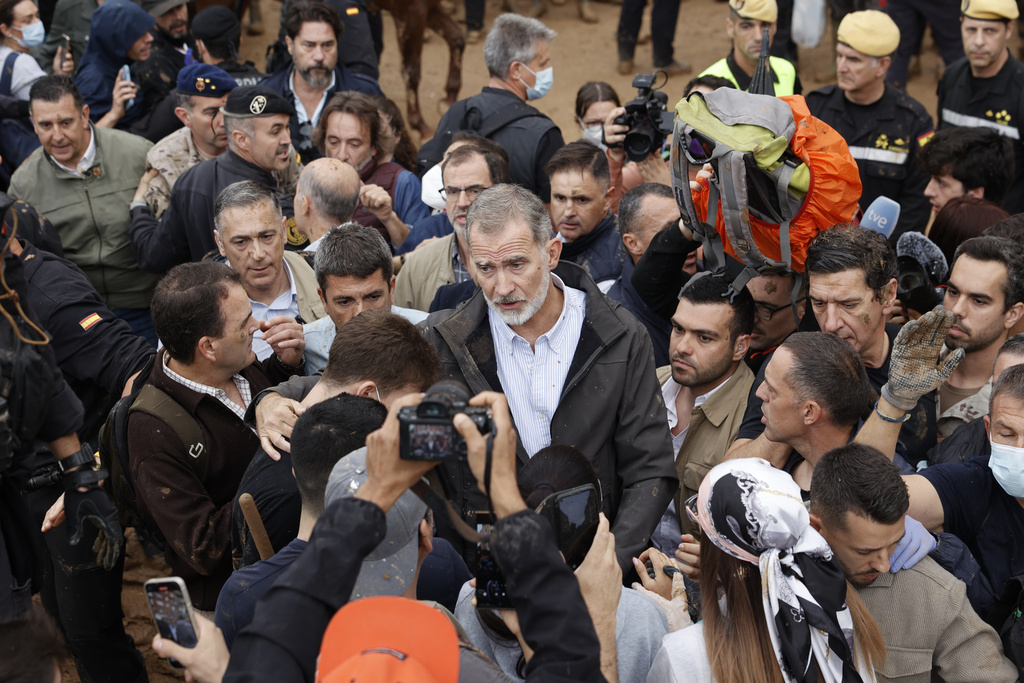
Spain's King Felipe VI, centre, speaks with protesters in Paiporta, near Valencia, Spain, Sunday Nov. 3, 2024. A crowd of angry survivors of Spain's floods have tossed mud and shouted insults at Spain's King Felipe VI and government officials when they made their first visit to one of the hardest hit towns. (Biel Alino/EFE via AP)
PAIPORTA, Spain (AP) — A crowd of enraged survivors hurled clots of the mud left by storm-spawned flooding at the Spanish royal couple on Sunday during their first visit to the epicenter of their nation’s deadliest natural disaster in living memory.
Spain’s national broadcaster reported that the barrage included a few rocks and other objects and that two bodyguards were treated for injuries. One could be seen with a bloody wound on his forehead.
It was an unprecedented incident for a royal house that carefully crafts the image of monarchs adored by their country of more than 48 million people.
The fury had been unleashed against a state that appears overwhelmed and unable to meet the needs of people used to living under an effective government.
Officials also rushed Prime Minister Pedro Sánchez from the scene soon after his contingent started to walk the mud-covered streets of one of the hardest-hit areas, where over 60 people perished and thousands of lives were shattered. The disaster fueled by climate change killed at least 205 people in eastern Spain.
Spain’s King Felipe VI, centre, speaks with protesters in Paiporta, near valencia, Spain, A crowd of angry survivors of Spain’s floods have tossed mud and shouted insults at Spain’s King Felipe VI and government officials when they made their first visit to one of the hardest hit towns. (Biel Alino/EFE via AP)
“Get out! Get out!” and “Killers!” the crowd in the town of Paiporta shouted, among other insults. Bodyguards opened umbrellas to protect the royals and other officials from the tossed muck.
Police had to step in, some officers on horseback, to keep back the crowd of several dozen, some wielding shovels and poles.
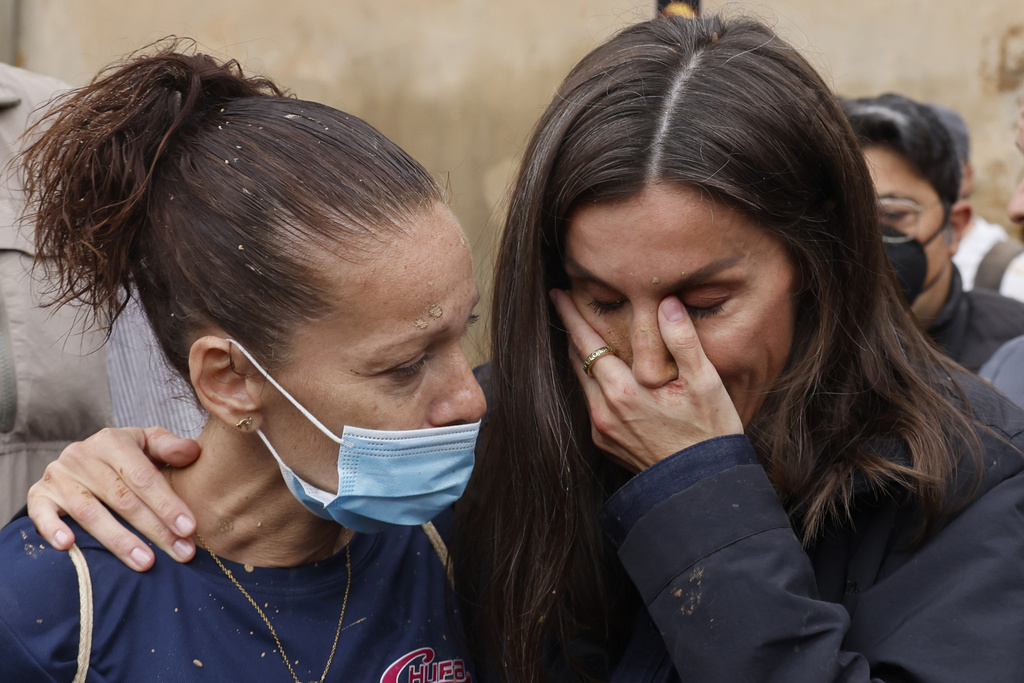
Queen Letizia broke into tears sympathetically after speaking to several people, including one woman who wept in her arms. Later, one of the queen’s bodyguards had a bloody wound on his forehead
But even after being forced to seek protection, King Felipe VI, with flecks of mud on his face, remained calm and made several efforts to speak to individual residents. He insisted on trying to speak with people as he tried to continue his visit. He spoke to several people, patting two young men on their backs and sharing a quick embrace, with mud stains on his black raincoat.
Still, one woman smacked an official car with an umbrella and another kicked it before it sped off.
While far from awakening the passion that the British hold for their royals, Felipe and Letizia’s public events are usually greeted by crowds of fans.
Spain’s Queen Letizia reacts as she conforts a woman affected by the floods in Paiporta, near Valencia, Spain, Sunday Nov. 3, 2024. A crowd of angry survivors of Spain’s floods have tossed mud and shouted insults at Spain’s King Felipe VI and government officials when they made their first visit to one of the hardest hit towns. (Ana Escobar/EFE via AP)
The 56-year-old Felipe took the throne when his father, Juan Carlos, abdicated in 2014 after he was tarnished by self-made financial and personal scandals. Felipe immediately cut a new figure, renouncing his personal inheritance and increasing the financial transparency of his royal house. He and the 52-year-old Letizia, a former journalist, dedicate a significant part of their public agenda to cultural and scientific causes.
Visits to sites of national tragedies are also part of the royal duties for monarchs seen as a stabilizing force in a parliamentary monarchy restored following the death of dictator Francisco Franco in 1975.
But the public rage over the haphazard management of the crisis has been building. Felipe heard some jeers when he took part in a tribute to the dead of a deadly 2017 terror attack in Barcelona, but that was nothing comparable to Sunday’s reception.
The queen had small glops of mud on her hands and arms as she spoke to women.
“We don´t have any water,” one woman told her.
Many people still don’t have drinking water five days after the floods struck. Internet and mobile phone coverage remains patchy. Most people only got power back on Saturday. Stores and supermarkets are in ruins and Paiporta, population 30,000, still has many city blocks completely clogged with piles of detritus, countless totaled cars and a ubiquitous layer of mud.
People react as Spain’s King Felipe VI speaks with people amidst angry Spanish flood survivors in Paiporta, near Valencia, Spain, Sunday Nov. 3, 2024. (AP Photo/David Melero)
Thousands have had their homes destroyed by a tsunami-like wave of muck and indignation at mismanagement of the disaster has begun.
The floods had already hit Paiporta when the regional officials issued an alert to mobile phones. It sounded two hours too late.
More anger has been fueled by the inability of officials to respond quickly to the aftermath. Most of the cleanup of the layers and layers of mud and debris that has invaded countless homes has been done by residents and thousands of volunteers.
“We have lost everything!” someone shouted.
Shouts Sunday included demands aimed at regional Valencia President Carlo Mazón, whose administration is in charge of civil protection, to step down, as well as “Where is Pedro Sánchez?”
“I understand the indignation and of course I stayed to receive it,” Mazón said on X. “It was my moral and political obligation. The attitude of the king this morning was exemplary.”
Spanish national broadcaster RTVE reported that the barrage aimed at the royals included a few rocks and other hard objects were tossed and that two bodyguards were treated for injuries, and the monarchs and officials called off another stop Sunday at a second hard-hit village, Chiva, about half an hour to the east of Valencia city.
Thailand's floating train makes its premiere journey across Pasak Jolasid reservoir on November 3, 2024 with regular weekend services.
LOPBURI — Thailand’s unique “floating train” service launched its inaugural run in the first week of the year, attracting many tourists who were thrilled by the full-water scenery at Pasak Jolasid Dam in Lopburi Province.
On November 3, the State Railway of Thailand (SRT), in collaboration with the Tourism Authority of Thailand (TAT), Lopburi Province, and Pasak Jolasid Dam, organized the premiere special train service that runs along tracks extending across the c creating the illusion of floating on water.
The special train consists of 14 carriages, accommodating 1,200 passengers per trip. The journey begins at Bangkok’s Hua Lamphong Station and ends at the floating train tourist attraction at Pasak Jolasid Dam. Services run every Saturday and Sunday, one trip per day, from November 2024 to January 2025 (except during New Year holidays on December 28-29, 2024, and January 4-5, 2025), totaling 21 days.
This tourism initiative supports domestic travel recovery in line with government policy, creating jobs, generating income distribution, and strengthening grassroots economy and community sustainability.
The trip’s highlight includes a 20-minute photo stop at a viewpoint where tourists can admire the beautiful scenery of the full dam. This offers a unique experience in Thai railway history.
The journey also includes a 30-minute stop at Ban Khok Salung Station where tourists can shop for local OTOP products, including food, souvenirs, and community products, supporting local income generation.
Thailand’s unique ‘floating train’ service launches its inaugural run across Pasak Jolasid reservoir on November 3, ahead of regular weekend services starting 2024 to January 2025.
The train then returns to Pasak Jolasid Dam Station, where tourists can participate in various activities around the dam area, including photographing the first sunflower field of Lopburi Province at Ban Kluai Khai, before departing at 3:30 p.m.
The floating train track was originally part of the Bangkok-Bua Yai-Nong Khai railway line in the Pasak River basin in Pattana Nikhom district, Lopburi. The area was later developed into Pasak Jolasid Dam, a Royal Initiative project by King Rama 9 for water storage and public welfare.
The elevated railway was constructed above the water to maintain transportation links to other provinces. As the train runs along the reservoir’s edge, it appears to be floating on water, hence the name “floating train.”
Interested tourists can purchase tickets and make reservations through the D-Ticket system or at any railway station nationwide. Group travelers can rent special carriages to be attached to the tourist train.
The Airport Interdiction Task Force (AITF) seized 89 kilograms of cannabis in two separate cases, involving one female and two male suspects during November 1-2, 2024.
SUVARNABHUMI — Thai authorities from ONCB, Suvarnabhumi Airport Police, and Customs Department jointly intercepted international cannabis network bound for Italy and UK – 89 kilograms seized.
On November 3, Police Lieutenant General Phanurat Lakboon, Secretary-General of the Office of Narcotics Control Board (ONCB), revealed the results of intercepting cannabis smuggling attempts from Thailand to Europe. The Airport Interdiction Task Force (AITF) seized 89 kilograms of cannabis in two separate cases, involving one female and two male suspects.
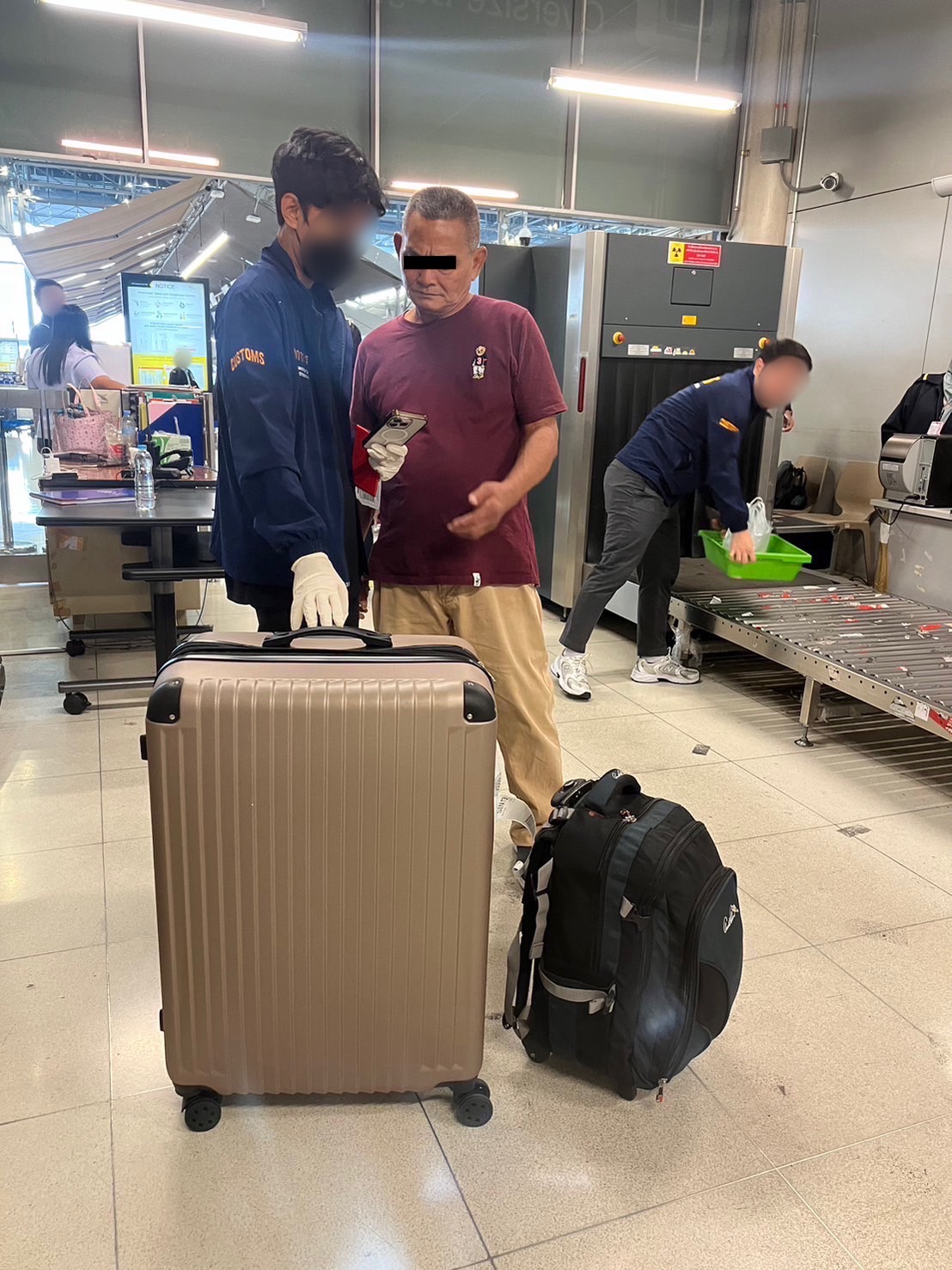
In the first case, AITF officers arrested one Singaporean suspect on November 1 after discovering 19 kilograms of cannabis flowers concealed in luggage while attempting to travel to Singapore en route to Italy.
AITF officers arrest a Singaporean man on November 1 after discovering 19 kilograms of cannabis flowers concealed in luggage while attempting to travel to Singapore en route to Italy.
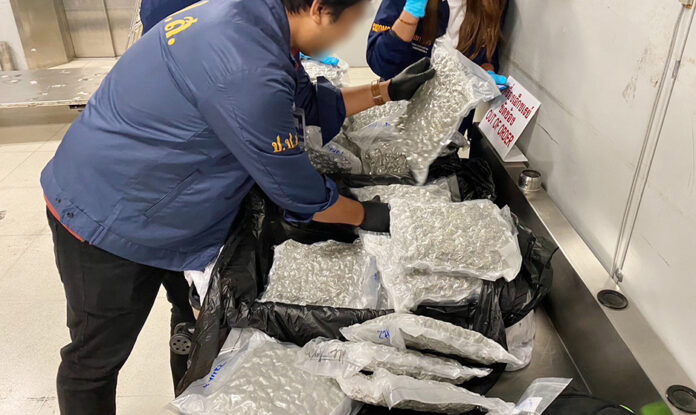
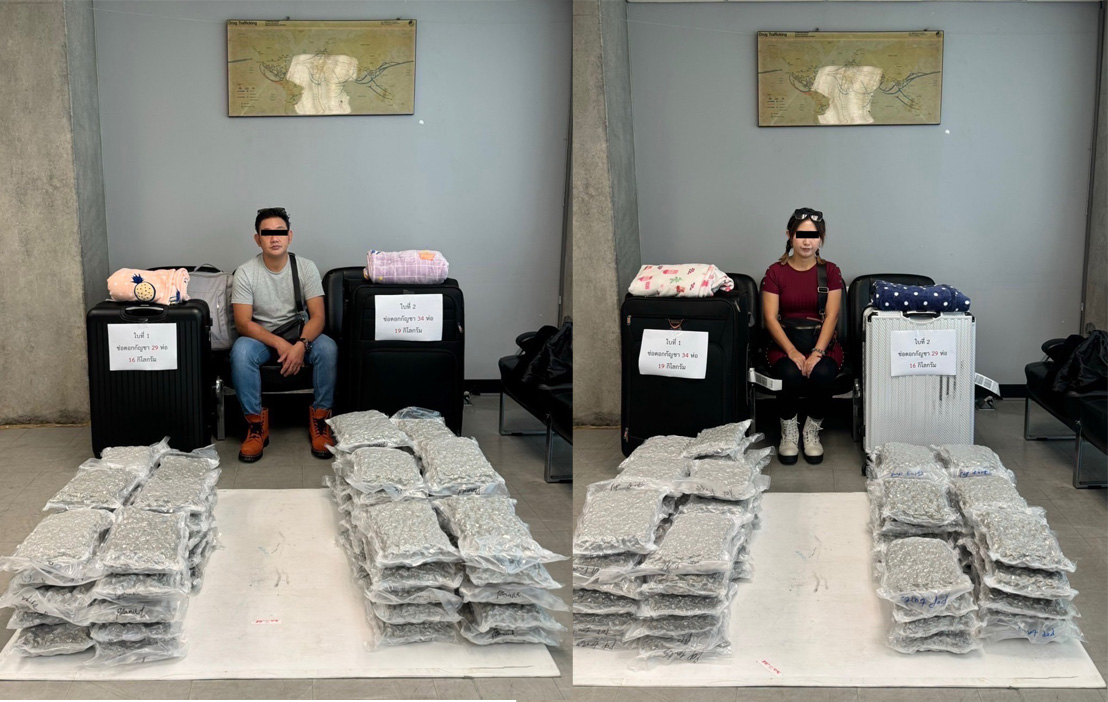
On November 2, 2024, AITF officers arrested two Malaysian suspects – one female and one male – who were scheduled to travel from Bangkok to Singapore before connecting to London, UK. A search of their luggage revealed cannabis hidden in four bags, totaling 70 kilograms.
Suspects in both cases were charged with “attempting to export controlled herbal plants (cannabis flowers) out of the kingdom without a permit and failing to declare items according to customs law.”
Police Lieutenant General Phanurat added that this successful operation resulted from close coordination between AITF agencies, including ONCB, Suvarnabhumi Airport Police, and Customs Department, in intercepting and preventing drug trafficking and illegal items, particularly at airports which serve as crucial connection points for transnational drug trafficking routes.
AITF officers arrested two Malaysian suspects – one female and one male – who were scheduled to travel from Bangkok to Singapore before connecting to London, UK on November 2, 2024..
Drug traffickers often use Thailand as a transit route to third countries. He emphasized the importance of preventing and intercepting drugs that tend to use Thailand as a transit route. The public can report drug-related tips or information through the ONCB hotline at 1386, available 24 hours.
In August this year, the British Embassy in Bangkok issued a warning against attempting to smuggle cannabis into the UK, following a rise in the number of arrests of air passengers arriving from Thailand, Canada and the US.
Around half of all arrests (184) in 2024 related to cannabis that originated in Thailand, while 75 arrests related to cannabis originating from Canada and 47 related to cannabis from the US.
Thailand has approximately 60 ethnic groups, representing a population of 6 million people, or about 10% of the country's total population, distributed across all provinces. (Khaosod Photo)
Thailand took the right step earlier this week when the Cabinet of Prime Minister Paetongtarn Shinawatra approved new criteria to accelerate the process of granting Thai citizenship and legal status to nearly half a million people who are long-term residents in the kingdom. Beneficiaries include 19 ethnic minority groups, children born in Thailand who are registered as children of long-term residents.
The Paetongtarn government deserves to be commended for finally approving the bold initiative which would also significantly reduce the processing time from 270 days to 5 days, decentralize the approval process to the provinces as well as streamlining documentation requirements.
Virtually all these 480,000 or so people in Thailand have either been born in the kingdom or are people who lived here for many decades and there is no reason why they should be denied Thai citizenship. They will now have access to publicly-funded healthcare, education and other social services. They will no longer be treated as outsiders but as Thais, and part of Thai society, thus it’s expected that they will feel invested in this society.
Keeping them “alien” can only make them feel unwelcome, and not part of Thailand, and would risk pushing them into criminalities and a feeling of alienation.
The move comes as Thailand is becoming a greying society in need of more working-age population as the birth rate continues to decline.
What’s equally important, if not more important, is that the move, which is expected to be implemented within 30-60 days, is a just thing to do.
To continue to deny these people statehood by keeping them, particularly young people, not recognized as Thai is cruel and a violation of their fundamental right as a member of this society.
In the days since the Cabinet made this important decision, some xenophobes have accused the Paetongtarn government of selling Thailand out to foreigners and alleged that it would lead to increasing criminalities as some of these people with exploit their newly granted Thai citizenship to engage in illicit activities that would undermine national security.
While it’s possible that some of these nearly half a million new Thai citizens will turn into criminals, keeping them as outsiders with little or no basic rights accorded to them as Thai citizens will likely turn more of them into criminals.
In Japan, for example, it’s a known fact that many Yaguza gangsters were originally of Korean ethnicity and were unable to be fully accepted as equal. With less than equal legal job opportunities, by the straitjacket Japanese society, they ended up becoming part of the criminal underworld.
Also, the integration and inclusion of Chinese migrants over the centuries was a success and many Chinese-looking Thais who descended from these immigrants are now full-fledged Thais, patriotic, speak Thai as their mother tongue, and have contributed to all aspects of Thai society and not just in the business sector.
Most of these half a million new Thai citizens will likely not leave the kingdom, thus a policy of inclusion is actually the solution and will strengthen Thai society, and not the opposite.
The government deserves praise but it can also do more.
Thailand hosts millions of migrant workers, chiefly from Myanmar but also from Cambodia and Laos, and even if most will not be granted Thai citizenship soon or ever, it’s also to the benefit of Thai society to make them feel more welcomed as guest workers in Thailand. The same can be said about better-to-do Western, Japanese, Korean, Chinese and other expats in Thailand. Thailand can and should find ways to make them feel more at home.
Dashboard camera footage shows a female taxi driver being confronted by a local motorcycle taxi rider (not visible in this frame) who opened the back door and intimidated her in front of foreign tourist passengers before forcing them out of the vehicle.
PHUKET — The motorcycle taxi rider from the viral clip, who was seen forcing tourists out of a Bolt taxi service and confronting the female driver, has been arrested by Phuket police.
The incident occurred on October 31 around 5:30 p.m., when a female taxi driver, Ms. Thanaporn, age 32, picked up foreign Asian tourists who had booked through the Bolt application at Loma parking lot in Patong, Kathu district, intending to take them to the airport.
Before they could leave, a taxi rider approached, opened the taxi door, and confronted Ms. Thanaporn for picking up passengers in his territory. Despite her explanation that the tourists had booked through the app themselves, the man wouldn’t listen and ordered the two tourists to get out of the car. Both Ms. Thanaporn and the tourists were frightened, and the tourists complied and left the vehicle.
A Patong police officer questions Mr. Champen, a motorcycle taxi rider who forced tourists out of a Bolt service vehicle, at Patong Police Station on November 2, 2024.
On November 2, Patong police tracked down the taxi rider using his vehicle registration number to Thawiwong Road in Patong. They found him riding erratically like a drunk person. When he stopped near Laem Petch monastery, police searched under his motorcycle seat and found a half-empty bottle of Thai whiskey.
The police identified the man as Mr. Champen, age 53, and took him to Patong Police Station. An alcohol breath test showed 75 mg%, exceeding the legal limit. They confirmed he was the same person who had threatened the female taxi driver and foreign tourists.
Mr. Champen was charged with drunk driving, using a vehicle not registered for its current use, not wearing a helmet, not carrying a vehicle registration copy, lacking a public transport driver’s license, and failing to pay annual vehicle tax.
At 1:00 p.m. the same day, Ms. Thanaporn gave her statement to investigators to pursue additional charges against Mr. Champen for intimidation, which carries a maximum penalty of 1 month imprisonment or a fine up to 10,000 baht, or both.
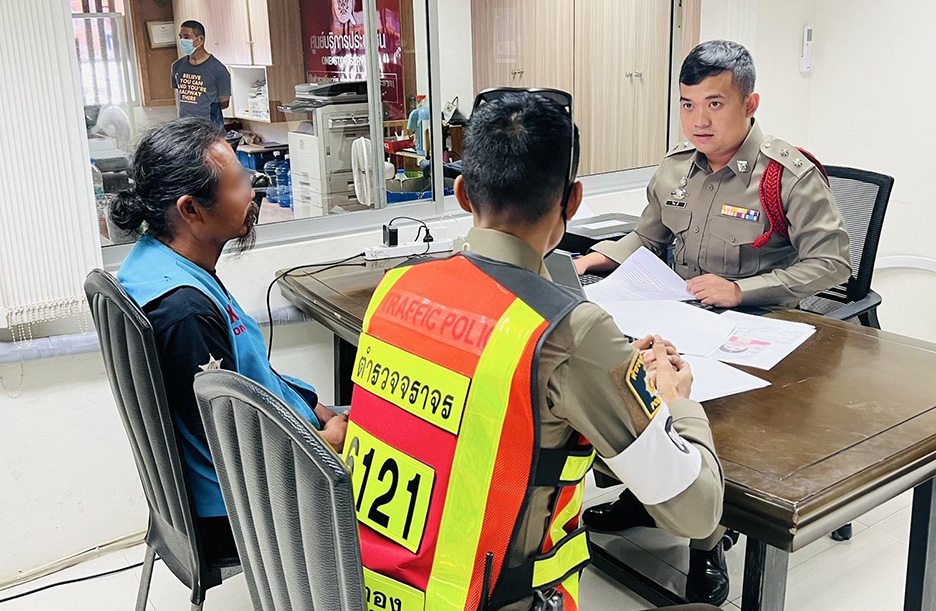
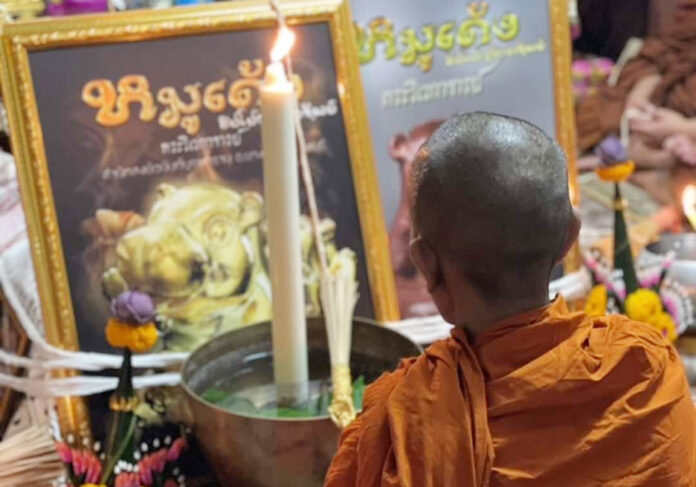
Facebook page 'Srithanyaland: Land of Smiles' posts a photo of Phra Samuh Thanawut (Ajarn Chin) blessing small Moo Deng figurines on October 31, 2024.
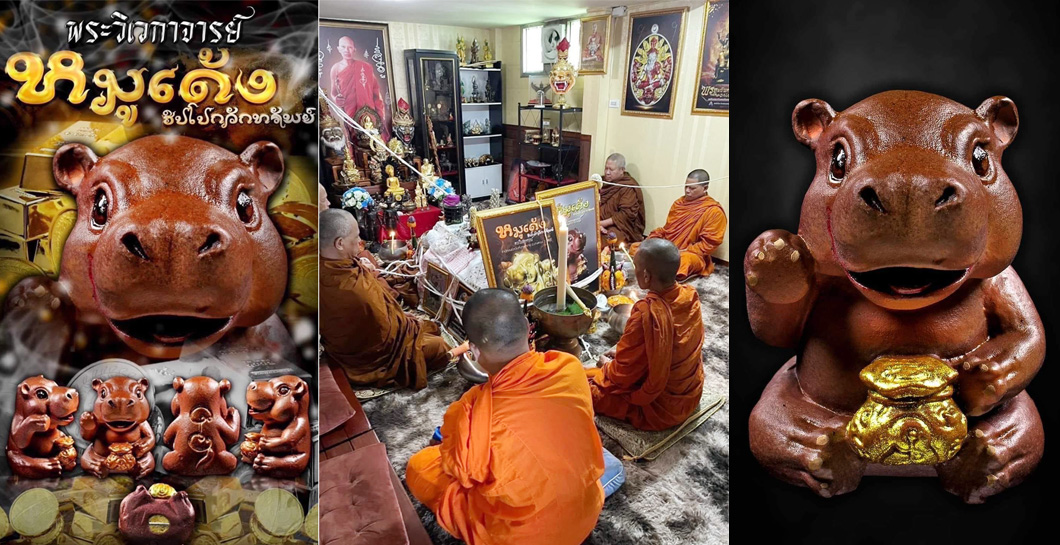
CHONBURI — A district ecclesiastical chief in Chonburi Province has ordered ‘Phra Ajarn Chin’ to leave his temple within 7 days after blessing figurines of ‘Moo Deng,’ the world-famous pygmy hippopotamus, in a wealth-beckoning pose, which drew widespread criticism.
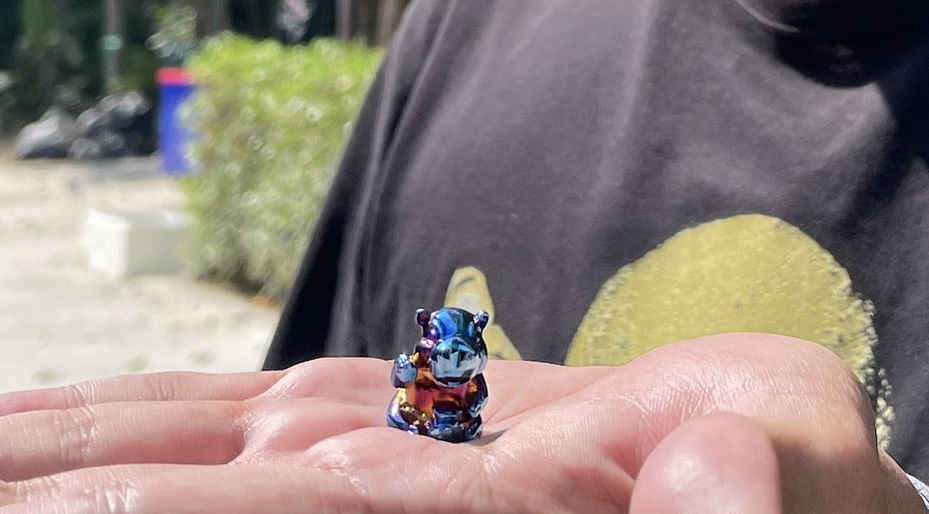
Although Moo Deng, the pygmy hippo at Khao Kheow Open Zoo in Chonburi who will turn 4 months old on November 10, has become a star bringing fame and revenue to the zoo and licensed businesses, when she became linked to Thai amulet culture, it sparked widespread criticism and opposition, resulting in the monk who created these amulets being asked to leave his temple.
The incident became news when a Facebook page ‘Srithanyaland: Land of Smiles‘ posted photos of monks blessing small Moo Deng figurines on October 31 at Anant Burapharam Buddhist Monastery in Huai Yai Sub-district, Bang Lamung District, Chonburi Province.
Facebook page ‘Srithanyaland: Land of Smiles’ posts photos of monks blessing small Moo Deng figurines on October 31, 2024.
The post showed the hippo in a wealth-beckoning pose, drawing criticism from netizens with comments like ‘Have we really come to this point?’ and ‘This business has gone too far.’
The Zoo Director Attaporn Sriheran warned that people shouldn’t be superstitious about Moo Deng as she is just a wild animal. He said while he doesn’t object to Moo Deng merchandise like clothes, bags, or shoes, using her image for religious or supernatural beliefs is inappropriate.
On November 2, the Bang Lamung District ecclesiastical chief ordered Phra Samuh Thanawut (Ajarn Chin) to leave the district’s ecclesiastical jurisdiction within 7 days.
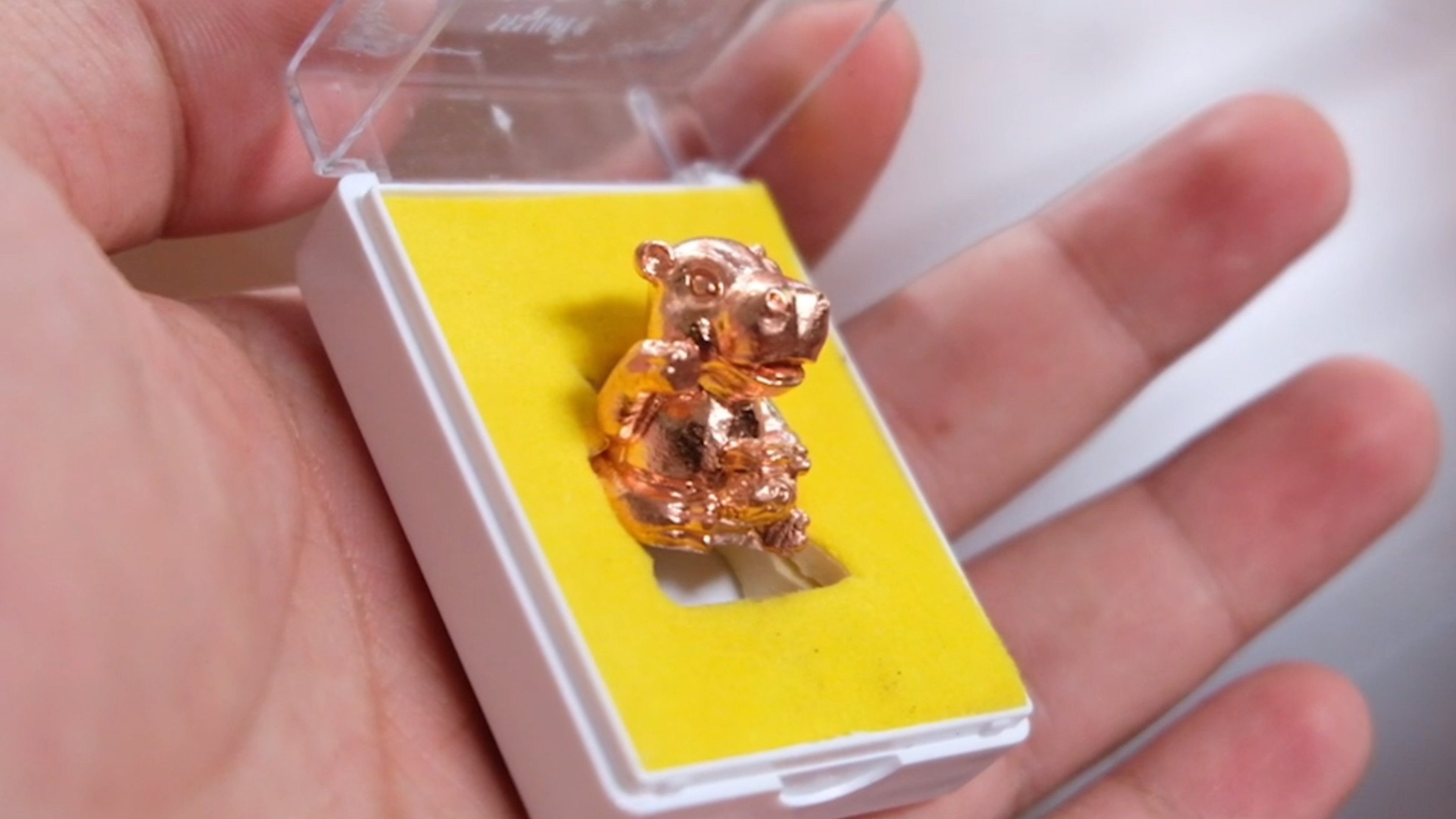
Facebook page ‘Srithanyaland: Land of Smiles’shows a small Moo Deng figurines on October 31, 2024.
In an interview with Khaosod, Ajarn Chin said he accepted the order without resistance and wanted to apologize to Buddhists and society, acknowledging his actions were ‘inappropriate’ and apologizing for affecting people’s faith.
He accepted teachings from senior monks and reminded Buddhists that amulets are meaningless if one commits sins, emphasizing that following Buddhist precepts and practices is most important.
His disciple, Songyot Soncha, expressed regret about the order and clarified that disciples had created the amulets and invited the monk to bless them, insisting the blessing didn’t occur within temple grounds.”
The Zoo Director Attaporn Sriheran warned that people shouldn’t be superstitious about Moo Deng as she is just a wild animal.
The story highlights the tension between traditional Buddhist values and commercial exploitation of popular culture in Thailand, particularly regarding the case of Moo Deng, a baby hippo that has become a national sensation.
The controversy over the Moo Deng amulets comes amid broader debates in Thai society about Buddhism, where some people have fallen for unusual practices and beliefs, while others oppose the exploitation of superstition for profit—practices that deviate from Buddha’s core teachings of mindfulness and wisdom in daily life.