26.3 C
Bangkok
Tuesday, October 6, 2026
Home Blog Page 5

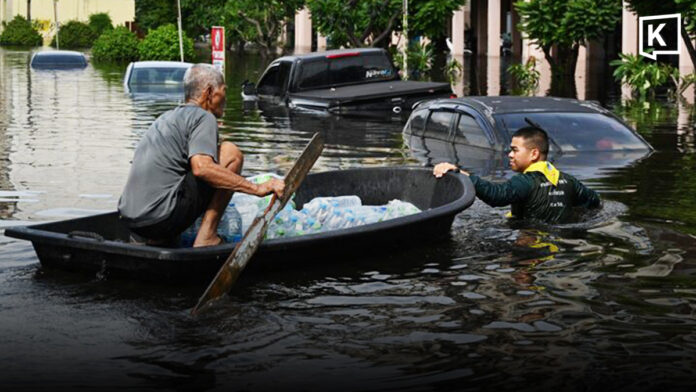
Thai Expert Warns Plastic-Wrapping Cars During Floods Could Cause Mold, Floating Risks

Thai Expert Warns Plastic-Wrapping Cars During Floods Could Cause Mold, Floating Risks

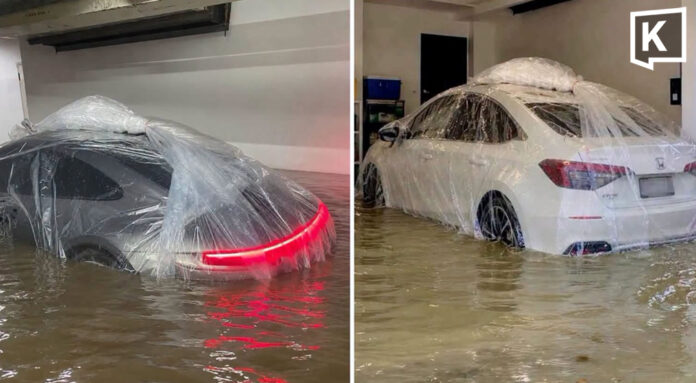
BANGKOK — A Thai biology lecturer has warned motorists against leaving their cars wrapped in giant plastic bags for extended periods to protect them from floodwater, saying the method could lead to mold growth and even cause vehicles to float away.

Assoc. Prof. Dr. Jessada Denduangboripant, a lecturer in the Department of Biology at Chulalongkorn University, issued the warning on his Facebook page, Jessada Denduangboripant, after images of large plastic covers designed to seal entire vehicles from floodwater circulated online.

Jessada said such covers may be considered an emergency option for people who cannot move their vehicles to higher ground before flooding. However, he urged motorists not to leave cars sealed inside the covers for too long.

Trapped moisture can cause mold

According to Jessada, similar plastic covers were used during Thailand’s major floods in 2011. Some vehicle owners later found extensive mold growing inside their cars after they were left sealed for several days.

The problem occurs because the plastic cover traps air and moisture around the vehicle. With little or no ventilation, moisture can accumulate and create conditions favorable for mold to grow.

Mold can spread across seats, steering wheels and other fabric or interior surfaces, potentially causing extensive damage.

Cars can float away

Jessada also highlighted a less obvious risk: a plastic-covered vehicle can potentially float.

Although cars are heavy, the air trapped inside a large waterproof cover can provide enough buoyancy for the covered vehicle to move with floodwater. In strong currents, a car could potentially drift away from its parking area and collide with other vehicles or objects.

For that reason, he said the method is more suitable for vehicles parked inside a property where the cover can be securely anchored.

Anyone who chooses to use such a cover should take measures to prevent it from floating away, he said. If the cover is punctured or torn after hitting another object, floodwater could quickly enter and reach the vehicle.

Moving to higher ground remains the preferred option

Jessada advised motorists who have enough time to prioritize moving their vehicles to higher ground rather than relying on a giant plastic cover.

“If it is not necessary or a genuine emergency, don’t use this type of car cover,” he warned.

For those who have no alternative and decide to use one, Jessada suggested securing or weighting the cover to prevent it from floating. He also suggested placing moisture-absorbing products inside the enclosed area to reduce humidity.

The warning comes as giant vehicle-sized plastic flood covers have been promoted online as an emergency measure for motorists preparing for flooding.

Jessada stressed that while such covers may prevent floodwater from directly reaching a vehicle, they do not eliminate the risks associated with prolonged moisture exposure or the buoyancy created by trapped air.

Advertisement

Sofia Montgomery Wins Thailand’s 13th Gold in Women’s Dinghy at Asian Games

Sofia Montgomery Wins Thailand’s 13th Gold in Women’s Dinghy at Asian Games

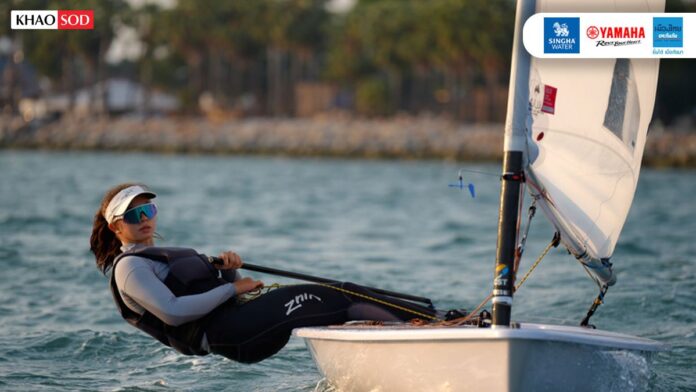
AICHI, Japan — 2 October 2026, Thai-American sailor Sofia Montgomery won gold in the women’s Dinghy (ILCA6) event at the 20th Asian Games, securing Thailand’s 13th gold medal at the Aichi-Nagoya 2026 Games.

Montgomery entered the final race as the leader after an impressive qualifying round, finishing first overall after nine races with 21 penalty points, with her highest-scoring race discarded.

In the final, Montgomery competed in two races and accumulated just five additional penalty points. She finished with 26 penalty points overall, the lowest total among the competitors, to claim the gold medal.

The silver medal went to a sailor from Singapore, while India took the bronze.

Montgomery’s victory adds another gold medal to Thailand’s campaign at the Aichi-Nagoya 2026 Asian Games.

Advertisement

Tokyo court grants legal protection to human voices in AI clone case

TOKYO (AP) — A Tokyo court has awarded legal protection to the human voice in a landmark case in which a popular Japanese anime voice actor demanded that TikTok close an account over its unauthorized use of an artificial intelligence clone of his trademark baritone.

The Tokyo District Court’s decision Wednesday was the first acknowledgment of the right to one’s voice in Japan. The ruling was good news for many anime voice actors at a time when they are increasingly concerned about the use of AI-generated versions of their voices on social media.

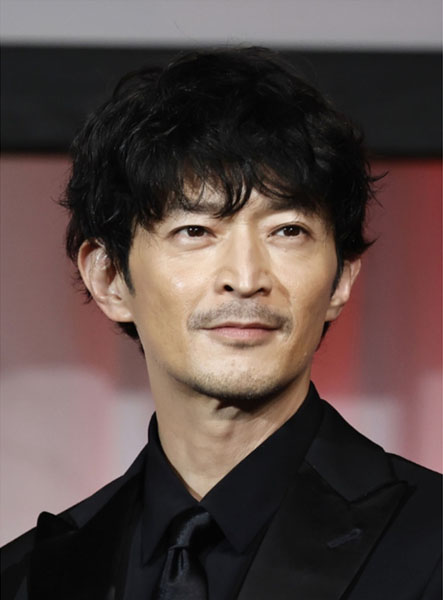
The plaintiff, Kenjiro Tsuda, is an actor best known for his “lustrous and deep” voice in starring characters such as Kento Nanami in “Jujutsu Kaisen,” a popular anime series.

1 ap 1
Kenjiro Tsuda, a Japanese actor is seen on a stage, November, 2024, in Tokyo, Japan. (Kyodo News via AP)

In his lawsuit, Tsuda said that the anonymous operator of the TikTok account “Nanami” wrongfully profited by attracting viewers with his voice narrating in more than 180 videos about urban legends and paranormal phenomena, and asked for the material to be deleted.

“The human voice is symbolic of individual personality, just like one’s portrait,” Presiding Judge Aya Takahashi said, according to a court document seen by The Associated Press.

It is appropriate to consider the unauthorized use with an obvious intention to take advantage of the commercial appeal of Tsuda’s voice “an infringement of publicity rights,” Takahashi said.

As of November 2025, the account had more than 210,000 followers, with viewers often noting the similarities between the narrator’s voice and Tsuda’s.

The defendant argued that the videos used an AI-generated voice that sounded like Tsuda’s but was not his, and that the videos did not damage the actor’s reputation as a voice actor.

The ruling dismissed Tsuda’s demand that all the videos using his voice be deleted, because the account had already been closed.

Wednesday’s decision comes at a time of growing concern among Japanese voice actors about the AI cloning of their trademark voices in anime.

In 2024, OpenAI announced plans to halt the use of one of its ChatGPT voices after “Her” actor Scarlett Johansson said it sounded “eerily similar” to her own.

Last year, Oscar-winning actors Michael Caine and Matthew McConaughey made deals with voice-cloning company ElevenLabs to allow its AI technology to replicate their voices.

Advertisement

‘Dying unnoticed’ cases surge eightfold in northern Bangkok

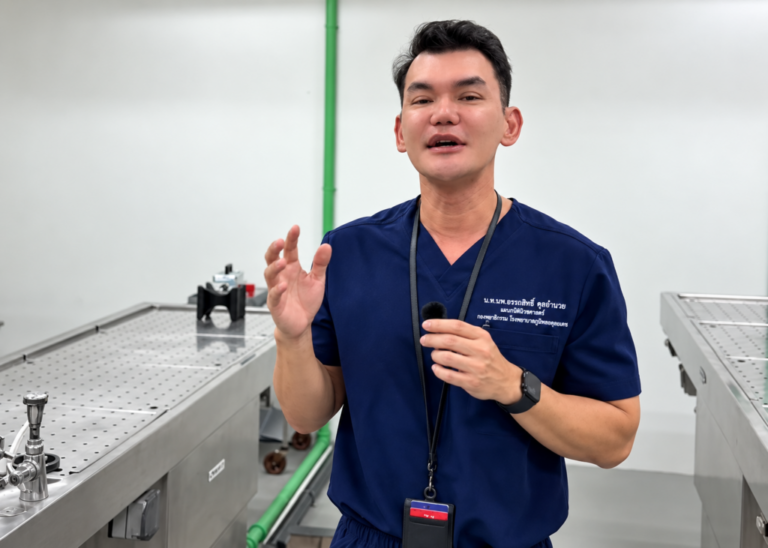
Deaths of people found alone in their homes only after several days have increased eightfold in northern Bangkok, reflecting growing social isolation in the capital, according to a forensic doctor at Bhumibol Adulyadej Hospital.

Lt. Cmdr. Dr. Atthasit Dulamnuay of the hospital’s forensic medicine department said that when he was a resident specialising in forensic medicine at Siriraj Hospital around 2016, he encountered about one decomposed body a month. Siriraj primarily covers Bangkok’s Thonburi side.

After moving to Bhumibol Adulyadej Hospital, which covers northern Bangkok including Bang Khen, Don Mueang, Sai Mai and nearby areas, he initially saw a similar number of cases. But the number has steadily increased.

From 10 cases a year to 70–80

Dr. Atthasit said records from Bhumibol Adulyadej Hospital’s coverage area show that the number of such cases increased from about 10 a year to 70–80 annually.

The hospital now encounters an average of about one case a week. During some periods, particularly hot weather, the number can rise to three cases a week.

“From just over 10 cases a year, it has now become 70–80 cases a year,” Dr. Atthasit said.

Northern Bangkok now sees about five to eight decomposed bodies a month, out of around 40–50 bodies undergoing autopsy each month. Such cases therefore account for more than 10% of the area’s autopsy workload, with the trend continuing to rise.

Dr. Atthasit said cases can become more frequent during hot periods, particularly around April. Some weeks have seen as many as three cases, showing that the problem is no longer an occasional occurrence but has become a regular part of forensic work.

Working-age people also dying alone

Those found dead range from about 20 to 80 years old and are not limited to elderly people. Among younger victims are working-age people and workers who live alone.

Dr. Atthasit said that if a working-age person falls ill and fails to report to work for two or three consecutive days, an employer may notice something is wrong and look for them. If the person lives in rented accommodation, a neighbour may notice an unusual smell and alert authorities.

A body may not have a strong smell on the first day after death, he said, but decomposition becomes more apparent after about three days, when people nearby may notice the smell and police may be called to inspect the room.

In cases involving elderly people, many still have children or relatives. However, their children may work in other areas, leaving their parents alone at home without regular visits or contact. Some families may speak once a week or once a month, meaning they may not discover that a parent has died until the body has decomposed.
5 2 1024x731 1

From extended families to living alone

Dr. Atthasit said one factor behind the increase is the changing structure of Thai families.

Thailand traditionally had extended families in which parents, grandparents and children lived together. Today, families are more often nuclear, while some people remain unmarried or couples live separately.

When someone dies, there may therefore be no one nearby to notice.

The problem is not limited to elderly people but reflects an urban society in which people increasingly have less interaction with those around them. Even people living next door or in the same condominium may not know each other’s names, jobs or daily routines.

If someone becomes ill or dies inside their room, nobody may know until the body begins to decompose and a smell emerges.
9 25 1024x731 1

‘Not deliberately abandoned’

Dr. Atthasit stressed that many of those who die alone still have children and families. The issue is that family members do not live together and do not communicate every day.

In some cases, a child’s last conversation with a parent may have been about a week earlier. The child may only learn of the death when rescuers or authorities call to say that the parent has died and the body has begun to decompose inside the home.

“Everyone is not deliberately abandoning their parents. Everyone has work and responsibilities to take care of their own families,” Dr. Atthasit said.

After learning of the death, some relatives feel guilty that they did not check on or return to see their parents sooner, he said.

Even a message can help

Regular contact is therefore important, Dr. Atthasit said. Even a simple greeting by message, or an elderly person sending a Line message about something as ordinary as a cartoon or other content, should not be dismissed as meaningless.

At the very least, such contact lets relatives know that someone living alone is still alive and reachable.

If regular contact suddenly stops, it can also signal that something is wrong and prompt someone to check on the person sooner.

Decomposed bodies require autopsies

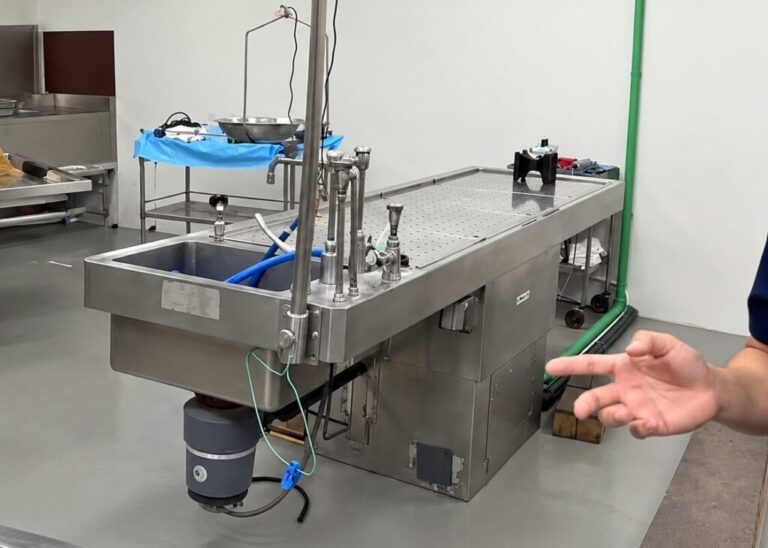
From a forensic perspective, decomposed bodies must undergo autopsy because changes to the body can make it difficult to determine the cause of death from an external examination.

Dr. Atthasit said decomposition changes the colour of the skin and makes injuries difficult to examine. Doctors therefore need to conduct a detailed autopsy to determine whether the person suffered injuries before death, such as from a fall or assault, or whether another cause was involved.

This is necessary to avoid missing important evidence related to the death.

The increase also creates additional work for forensic doctors and costs for relatives and property owners. Homes or rooms where a decomposed body has been found often require specialist cleaning because of the smell, with costs ranging from several thousand baht to tens of thousands of baht depending on the condition of the property.

It can happen to anyone

Dr. Atthasit said people should not assume that those found dead in a decomposed state are necessarily poor or living in rented rooms.

Such cases occur across social and economic groups, he said.

Some people live alone in large homes and have pensions or other financial resources, while their children live in other provinces or overseas. If the person dies, nobody may know immediately.

The issue therefore reflects urban isolation rather than a problem affecting any particular social group, he said.

Thailand lacks a system for people living alone

Asked about support systems for people living alone, Dr. Atthasit said Thailand currently has no clear system for addressing the problem. Deaths in homes that go undiscovered until decomposition have received relatively little attention.

Some countries, particularly in Scandinavia, have systems to support elderly people and those living alone. One model involves a caregiver system in which people accumulate hours spent caring for others as credits. When they become elderly or can no longer care for themselves, they can use those accumulated hours to receive care.

Such approaches can reduce costs and allow elderly or sick people to remain at home rather than necessarily moving into care facilities, he said.

For Thailand, Dr. Atthasit said technology could help, including monitoring devices for elderly people or those living alone, alert systems that detect unusual activity, and cameras that allow families to check on people living alone.

‘Death is natural, but nobody should die unnoticed’

Dr. Atthasit said death is something nobody can prevent, but society should not allow someone to die inside their home without anyone knowing for several days until the body decomposes.

“It should not happen in an urban society. We should have a system to detect people before they decompose,” he said.

For example, if someone who normally goes to work every day suddenly stops showing up, or someone who is normally in regular contact suddenly disappears, there should be a mechanism for colleagues, landlords or people nearby to check on them.

If someone is found on the first day, they may still be able to receive help, rather than dying alone and remaining undiscovered until decomposition.

The issue is therefore not simply the absence of someone living with a person, but the declining level of interaction between people in urban society. People live increasingly separate lives, and when something happens, those nearby may not even know where someone who lives next door or whom they regularly see has gone.

Society needs systems to detect problems

Dr. Atthasit said that if the trend continues, such cases could become even more frequent, particularly in Bangkok and other large cities where populations are dense but people increasingly live separately.

“It is already happening in Bangkok,” he said, adding that based on the trend, the number of such cases could reach a point where decomposed bodies are found every day within the next two to three years.

Forensic doctors see more than just numbers in the autopsy room, Dr. Atthasit said. The cases reflect changes in family structures, working patterns, living arrangements and relationships between people.

People may choose to live alone, but society should not allow someone to die alone without anyone knowing. By the time they are discovered, it may be not simply a case of finding someone who has died, but of finding a body that has already decomposed — meaning that the window in which help could have been provided or something unusual could have been detected has already passed.


SEO snippet

~127 characters, so comfortably within 160 characters and likely within the 920px limit.

Focus keyword

dying alone in Bangkok

Advertisement

Anutin signs order to revoke Thai citizenship for Israeli-born man

Prime Minister and Interior Minister Anutin Charnvirakul (File photo)

BANGKOK — 1 October 2026, Prime Minister and Interior Minister Anutin Charnvirakul has signed an order revoking the Thai citizenship of Ariel Blustin, formerly an Israeli national, after authorities found that he continued to use his original nationality and concealed another nationality during his naturalisation application.

The Interior Ministry’s announcement said Blustin obtained Thai citizenship through naturalisation under Sections 10 and 11(1) of the Nationality Act BE 2508 (1965). His Thai citizenship was published in the Royal Gazette on 3 April 2019, and he received his first Thai national ID card on 14 June 2019.

However, authorities found that on the same day he obtained the ID card, Blustin travelled to Hong Kong using an Israeli passport. He returned to Thailand on 23 June 2019 using the same passport, which the ministry said constituted continued use of his former nationality in breach of the conditions for Thai naturalisation.

The announcement also said Blustin holds Uruguayan citizenship and had used it to travel abroad several times before applying for Thai citizenship. It said he did not disclose this nationality to officials or show an intention to renounce it.

The ministry said the evidence met grounds for revoking Thai citizenship under the Nationality Act, including continued use of a former nationality and making false statements or concealing material facts during a naturalisation application.

It said concealing his Uruguayan citizenship could cause serious harm to the public and the state if left unaddressed.

Using powers under Section 19 of the Nationality Act, Anutin ordered Blustin’s Thai citizenship revoked, effective from the announcement dated 1 October 2026.

Advertisement

Thai women’s sepak takraw reach Asian Games semifinals

Thai women’s sepak takraw reach Asian Games semifinals

NAGOYA, Japan — 2 October 2026, Thailand’s women’s sepak takraw team defeated India 2-0 in their final Group A match at the 20th Asian Games, Aichi-Nagoya 2026, on 2 October to advance to the semifinals.

Thailand won the match 15-10, 15-4.

The Thai team comprises Waratsamee Thongsod, Somrudee Prueprak, Wipada Jitpornawan and Ratchaneekorn Sae-heng.

Thailand finished the group stage with two wins and one loss, placing second in Group A.

The result sent Thailand through to the semifinals, where they will face Indonesia, the Group B winner, at 12:00 Thailand time.

Advertisement

Man dies in construction-site cave-in on Soi Pridi Banomyong 14

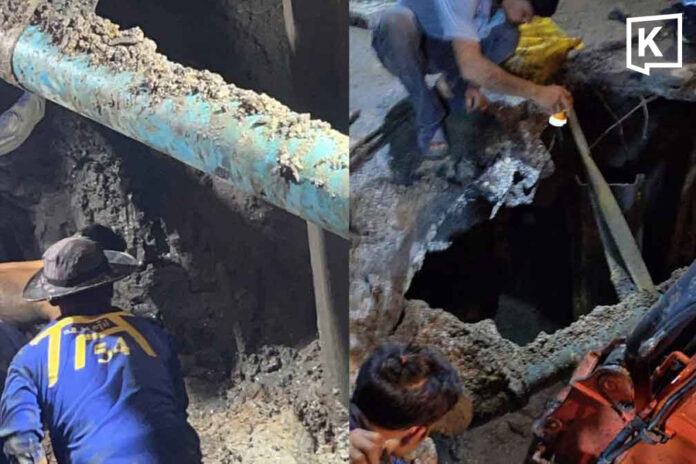
BANGKOK — A man died after becoming trapped about 3 metres underground in a soil collapse at a construction site in Soi Pridi Banomyong 14 on Thursday evening.

Rama 199 Radio Centre received a report through the 199 emergency hotline at 18:47 of a person trapped inside a pipe at the site in Phra Khanong Nuea, Watthana district, off Sukhumvit 71 Road.

Firefighters and rescuers from Phra Khanong Fire and Rescue Station arrived at 19:02pm and found one man trapped underground at a depth of about 3 metres.

Rescuers worked to free him, but Rama 199 reported at 19:50 that he had died. His body was recovered and handed over to local police for further action.

Advertisement

Canadian diver who helped rescue Wild Boars dies at 44

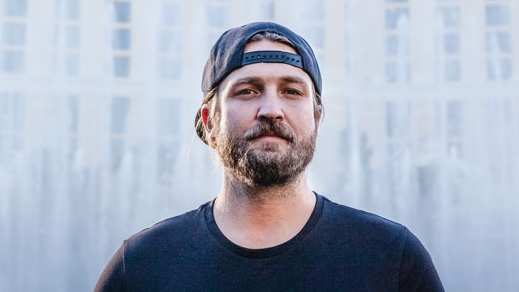
Canadian diver Erik Brown, who helped rescue 12 young footballers and their coach from Thailand’s Tham Luang cave in 2018, has died aged 44.

Brown’s death was announced by friends and family on 26 September. His cause of death has not been publicly confirmed.

Originally from British Columbia, Brown was based on Koh Tao, Surat Thani, where he founded Hydronauts Diving.

He joined the international team of divers involved in the rescue of the Wild Boars football team after the 12 boys and their coach became trapped inside the Tham Luang Nang Non cave complex in Chiang Rai on 23 June 2018.

Heavy monsoon rain caused floodwaters to rise inside the cave, cutting off the group’s way out. British divers found all 13 alive nine days later, prompting a multinational rescue operation.

Brown supported the diving operation by carrying air cylinders and other equipment through flooded passages, laying and maintaining guide ropes and assisting the team of divers working to bring the group out.

He later recorded spending 63 hours inside the cave over nine days and seven missions.

The rescue was carried out over three days from 8 to 10 July, with all 13 members of the team brought safely out of the cave.

Brown’s contribution was later recognised by Canada, which awarded him the Medal of Bravery in 2019.

Canada’s Governor General said Brown repeatedly risked his life while travelling through about three kilometres of flooded cave passages, navigating strong currents, narrow sections and other obstacles to maintain a vital route for the rescue.

In Thailand, Brown was also awarded The Most Admirable Order of the Direkgunabhorn, First Class, by His Majesty the King of Thailand for his contribution to the rescue operation.

Advertisement

​Flood Damage, Losses, and Government Incompetence

​In the end, repeated apologies by Prime Minister Anutin Charnvirakul were insufficient.

Angry residents affected by the floods in Bangkok confronted the visiting Prime Minister for two nights. By Tuesday night, Anutin resorted to a controversial tactic in a bid to appease some flood-affected locals: he handed out 1,000-baht banknotes from his own pocket — 20,000 baht in total. The moment was captured on video, went viral, and was widely reported.

​The incident took place late Tuesday night at Baan Eua-Arthorn Permsin in Bangkok’s Sai Mai district.

​Anutin also instructed all cabinet ministers to suspend foreign travel for the duration of the emergency flood response. He also cancelled his own scheduled foreign trips for the next two to three weeks to remain in Thailand and oversee operations directly.

But by Wednesday, Anutin asked local reporters to stop asking him about persistent questions and criticisms over the government’s flood-handling measures (or lack thereof). Apparently, he wants to move on prematurely.

​Handing out cash from his own pocket was a bad political move that will not solve any problems in a significant way.

The Toll

Since the flooding began, 700,000 people have been affected across more than 300,000 households, according to Bangkok Deputy Governor Tavida Kamolvej on Monday. On Wednesday, government spokesman Ekkapob Pianpises said 40 people had died nationwide, citing the Public Health Ministry. Four of those deaths were in Bangkok, according to the Department of Disaster Prevention and Mitigation.

Flooding has been reported in 42 districts, with eight still affected as of Wednesday: Lat Krabang, Bang Kapi, Min Buri, Saphan Sung, Suan Luang, Bueng Kum, Khlong Sam Wa, and Sai Mai.

As for total economic losses, the University of the Thai Chamber of Commerce estimated them at 12.3 billion baht overall. Estimates ranged from 5.9 billion to 20.6 billion baht, depending on recovery speed.

The Voices

​On Sunday afternoon, the second day of the downpour, I visited flood-affected areas in Bang Kapi, watching dozens of people wading through waist-deep floodwater to buy food and necessities.

​I asked one flood victim whether he had any requests for the government; he said he only wished the government had given them clearer warnings earlier.

​On Wednesday night, Residents in Ayutthaya were calling for earlier flood warnings as levels rose rapidly.

The Failures

​Anutin has failed. Bangkok Governor Chadchart Sittipunt was overconfident late last week and has also failed. The Meteorological Department has also failed to ensure that proper and timely warnings were issued.

​Thai society needs a government that is competent, ever-prepared, communicates flood warnings clearly, and responds quickly to flooding — not a prime minister handing out 1,000 baht notes from his own pocket to a few residents who have been suffering through five days of flooding, seemingly to ease public anger towards the government.

As Tourism and Sports Minister Surasak Phancharoenworakul told Thai Airways executives over the baggage backlog at Suvarnabhumi Airport: if you are not ready to do the job competently, you should consider stepping down. The same could be said about Anutin, Chadchart, and the bigwigs at the Meteorological Department.

The History

​The Meteorological Department, in particular, has a checkered record of giving inadequate warnings — or even giving no warning at all for fear of backlash if the situation turned out not to be as severe as predicted.

​Back in 2004, I played an investigative role in exposing the department’s failure when it prioritised commercial interests over public safety during the 26 December 2004 Indian Ocean tsunami.

​Writing for The Nation newspaper at the time, I discovered that senior Meteorological Department officials had convened an emergency meeting shortly after the initial earthquake off Sumatra was detected — well before the tsunami struck Thailand’s coast.

​A key source within the department disclosed to me that officials deliberately refrained from issuing a warning or calling for evacuations out of fear of disrupting the peak Christmas tourist season. Hotel occupancy was near 100% at the time, and officials worried about financial and reputational liability if a warning turned out to be a false alarm.

​After the report was published, Prime Minister Thaksin Shinawatra ordered an independent fact-finding panel to investigate the Meteorological Department’s failures.

​Smith Dharmasaroja, a former head of the department who had spent years publicly warning of Thailand’s tsunami vulnerability, was brought back by Thaksin to head the task force and lead the development of Thailand’s national early-warning system. But the report prepared by the task force headed by Smith was never made public. Smith told me it was never even written, because officials feared that foreign tourists killed by the tsunami would sue the Thai government for huge compensation.

The Lesson

​These events illustrated how administrative hesitation, bureaucratic fear of backlash, and economic considerations led directly to the failure to issue a timely alert, leaving thousands of residents and tourists unprepared when the waves struck.

​More than two decades later, I wonder how many thousands of vehicles would have been spared from being submerged, and how much damage and pain reduced, if the Meteorological Department, the government, and the Bangkok governor had been more competent.

And it is not over. Just today, another deluge hit Bangkok. Dams nearing capacity have been forced to release more water downstream. All over Thailand, citizens still wait for timely warnings.

Advertisement

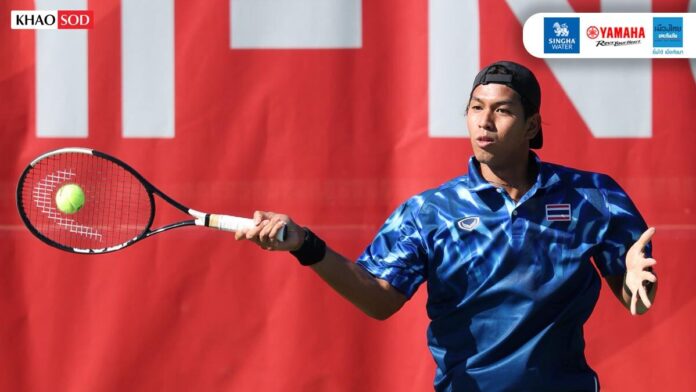
Thailand’s Kasidit loses to top seed Wong in Asian Games quarters

Thailand’s Kasidit loses to top seed Wong in Asian Games quarters

NAGOYA — Thailand’s top-ranked men’s tennis player, Kasidit Samrej, was eliminated in the quarterfinals of the men’s singles competition at the 20th Asian Games, Aichi-Nagoya 2026, on 1 October.

Kasidit, ranked No. 382 in the world and seeded No. 12, faced Hong Kong’s Coleman Wong, the tournament’s top seed and world No. 108, in the quarterfinal at the Asian Games in Nagoya, Japan.

The Thai player fought hard but was defeated 0-2, losing 3-6, 0-6.

The result ended Kasidit’s run in the tournament and ruled him out of contention for an Asian Games medal.

Wong advanced to the semifinals, where he will face the winner of the match between Uzbekistan’s Khumoyun Sultanov, ranked No. 437 and seeded No. 14, and Taiwan’s Teng Chun-hsin, ranked No. 212 and seeded No. 6.

Advertisement

Hot News

LATEST NEWS

Bangkok
light rain
26.3 ° C
27.2 °
26.1 °
90 %
0.5kmh
100 %
Mon
27 °
Tue
31 °
Wed
34 °
Thu
32 °
Fri
33 °