Northern Agricultural Products Center, Chiang Mai Province
BANGKOK — Thailand Commerce Ministry reveals September exports valued at 25,983.2 million USD, up 1.1%, marking three consecutive months of growth due to increased agricultural and industrial exports. Expects good growth in final quarter to meet 2% annual target.
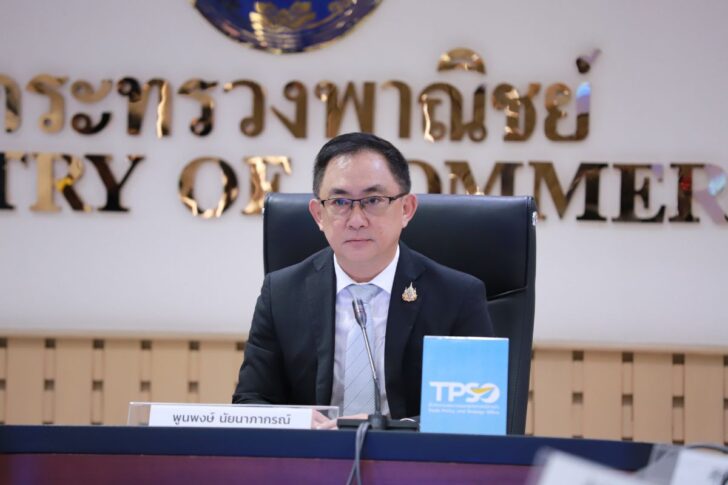
On October 28, Poonpong Naiyanapakorn, Director of the Trade Policy and Strategy Office (TPSO), Ministry of Commerce, announced that September 2024 exports reached 25,983.2 million USD, increasing by 1.1% – the third consecutive month of positive growth. In Thai Baht terms, this equals 889,074 million Baht.
Imports valued at 25,589 million USD, up 9.9%, equivalent to 886,336 million Baht, resulting in a trade surplus of 394.2 million USD or 2,738 million Baht.
For the first 9 months of 2024 (Jan-Sep):
Exports: 223,176 million USD, up 3.9% (7,957,895 million Baht)
Imports: 229,132.8 million USD, up 5.5% (8,264,589 million Baht)
Trade deficit: 5,956.8 million USD
The export growth was driven by agricultural and agro-industrial products, which increased by 3.5%, with agricultural products rising by 0.2% and agro-industrial products growing by 7.8%. Key products showing expansion include rice, rubber, canned and processed seafood, pet food, processed chicken, and plant and animal fats and oils.
Poonpong Naiyanapakorn, Director of the Trade Policy and Strategy Office (TPSO), Ministry of Commerce
Meanwhile, products that contracted include fresh, chilled, frozen, and dried fruits, tapioca products, sugar, fresh/chilled/frozen chicken, and canned and processed vegetables. For the first 9 months of 2024, agricultural and agro-industrial exports increased by 5.4%.
Industrial exports increased by 2%, with key growing products including computers, equipment and parts, machinery and parts, and air conditioners and parts. Meanwhile, major products showing decline include automobiles, equipment and parts, gems and jewelry, plastic pellets, iron, steel and products, and internal combustion piston engines and parts. For the first 9 months of 2024, industrial exports increased by 3.8%.
Key export markets mostly showed expansion, with major markets growing by 2.6%:
United States: +18.1%
European Union (27): +4.1%
CLMV: +8.3%
China: -7.8%
Japan: -5.5%
ASEAN (5): -6.7%
Secondary markets increased by 1.3%:
Australia: +12%
Middle East: +3.5%
Africa: +1.6%
Latin America: +15%
United Kingdom: +29.3%
South Asia: -1.6%
Russia and CIS: -9.8%
Other markets: +39.3%
Export trends for the remaining three months (October, November, and December) are expected to show continued growth, despite facing several challenges including: U.S. elections, geopolitical issues, strong baht appreciation. flooding impacts on agricultural production, and changes in India’s rice export policy that may affect Thai rice exports.
The TPSO Director stated that if exports average 22,533 million USD monthly in the final quarter, annual growth will reach 2% with total value of 290,000 million USD, setting a new record after 2023’s 287,000 million USD.
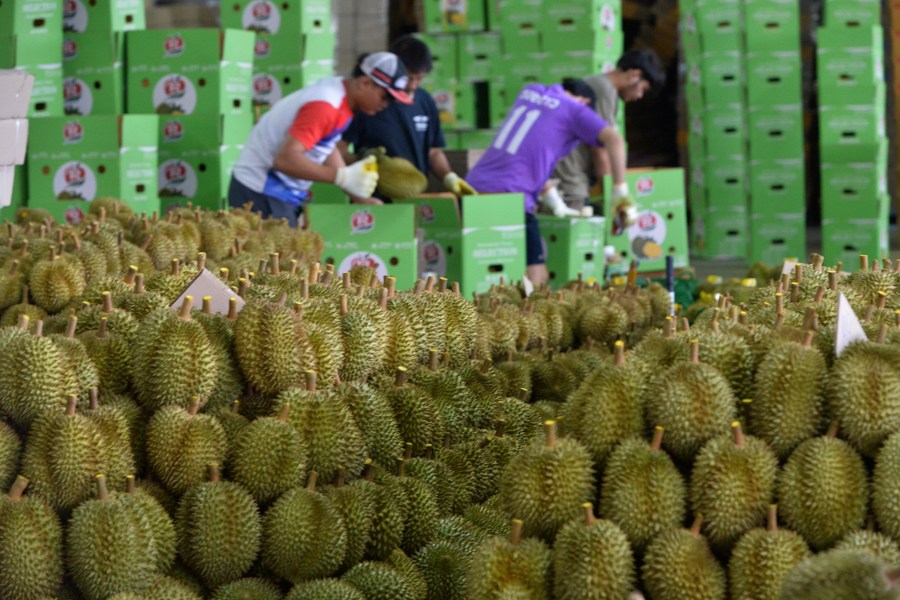
Workers pack durians at a durian processing factory in Chanthaburi, Thailand, May 7, 2024. (Xinhua/Rachen Sageamsak)
Earlier, the Ministry of Commerce has reported that in the first eight months of 2024 (January-August) Thailand’s agricultural products exports globally expanded 8% year on year, valued at US$19,826 million. The exports to the Free Trade Area (FTA) partners amounted to US$12.7 billion (430 billion baht), making Thailand the largest exporter of agricultural products in the ASEAN region and eighth globally.
Major importers include China, ASEAN countries, Japan, and South Korea. In August, the top five agricultural exports from Thailand were fresh and frozen fruit (US$604 million), rice (US$562 million), rubber (US$497 million), chicken (US$392 million), and cassava products (US$260 million).
The Government is reducing obstacles and improving conditions to help Thai exporters do more business. It is anticipated that the country could climb to the fifth-largest agricultural exporter globally.
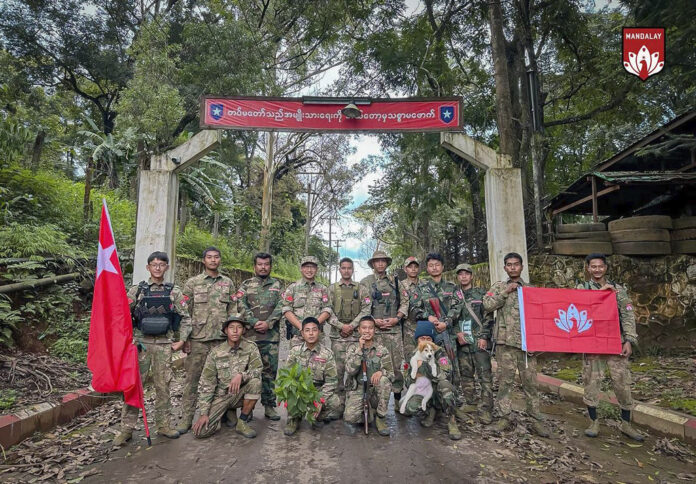
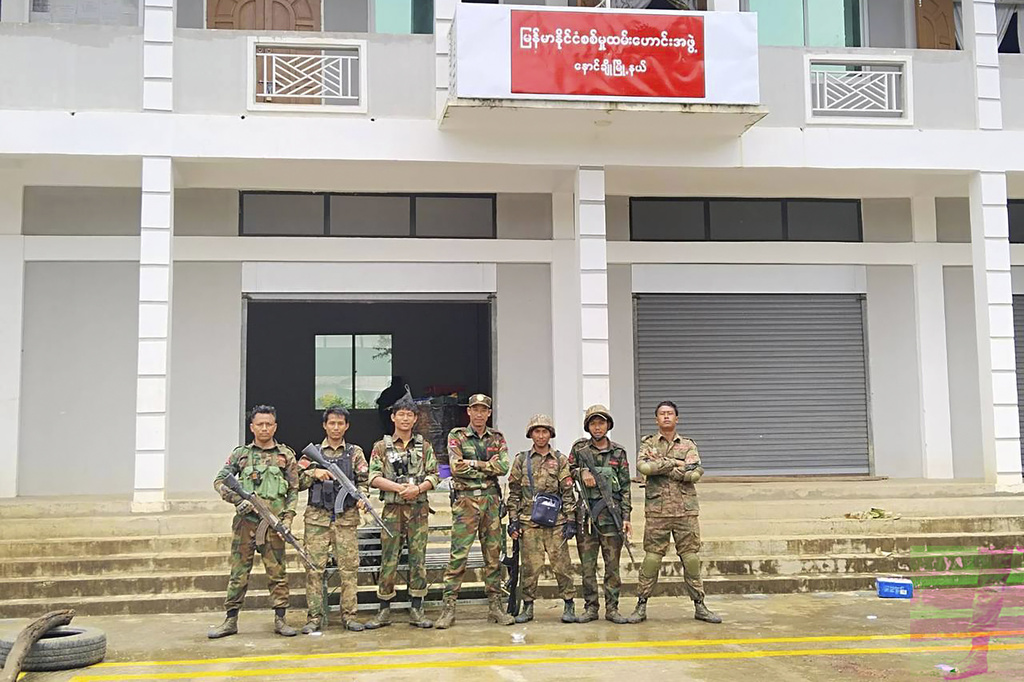
In this photo provided by Mandalay People's Defence Force, its members pose for a photograph in front of the gate of the captured army battalion in Mogok township in Mandalay region, Myanmar, on July 25, 2024. (Mandalay People's Defence Force via AP)
BANGKOK (AP) — Three well-armed militias launched a surprise joint offensive in northeastern Myanmar a year ago, breaking a strategic stalemate with the regime’s military with rapid gains of huge swaths of territory and inspiring others to attack around the country.
Before the offensive, the military’s control had seemed firmly ensconced with its vast superiority in troops and firepower, and aided with material support from Russia and China. But today it is increasingly on the back foot, with the loss of dozens of outposts, bases and strategic cities that even its leaders concede will be challenging to regain.
How did the offensive unfold?
The military seized power from the elected government of Aung San Suu Kyi in February 2021, giving rise to intensified fighting with long-established armed groups associated with Myanmar’s ethnic minority groups, and sparking the formation of new pro-democracy militias.
But until the launch of Operation 1027, eponymously named for its Oct. 27 start, the military, known as the Tatmadaw, had largely been able to prevent major losses around the country.
Operation 1027 brought coordinated attacks from three of the most powerful ethnic armed groups — the Myanmar National Democratic Alliance Army, the Arakan Army and the Ta’ang National Liberation Army, together known as the Three Brotherhood Alliance — and they were able to quickly capture towns and overrun military bases and outposts along the Chinese border in northeastern Shan state.
In this photo provided by Mandalay People’s Defence, members of the Ta’ang National Liberation Army, one of the ethnic armed forces in the Brotherhood Alliance, and Mandalay People’s Defence Force pose for a photograph in front of the captured building of the Myanmar’s War Veterans’ Organisation in Nawnghkio township in Shan state, Myanmar, on June 26, 2024. (Mandalay People’s Defence Force via AP)
Two weeks later the Arakan Army launched attacks in its home western state of Rakhine, and since then other militia groups and PDFs have joined in around the country.
A year later into the offensive, resistance forces now fully or partially control a vast horseshoe of territory that reaches from Rakhine state in the west, across the north, and then south into Kayah and Kayin states along the Thai border. The Tatmadaw has pulled back toward the center around the capital Naypyidaw and largest city of Yangon.
What comes next?
Many expect the military to launch a counteroffensive when the rainy season soon comes to an end, bolstered with the influx of some 30,000 new troops since activating conscription in February and its continued complete air superiority.
But at the same time, resistance groups are closing in on Mandalay, Myanmar’s second largest city in the center of the country.
Facing threats from all around the country, “it doesn’t look like there’s any viable route back for the military to recapture any of the territory that it’s lost,” said Connor Macdonald of the Special Advisory Council for Myanmar advocacy group.
“The military is on the defensive all over the country, and every time it puts its energy into one part of the country, it basically has to shift troops and then is vulnerable in other parts,” he said.
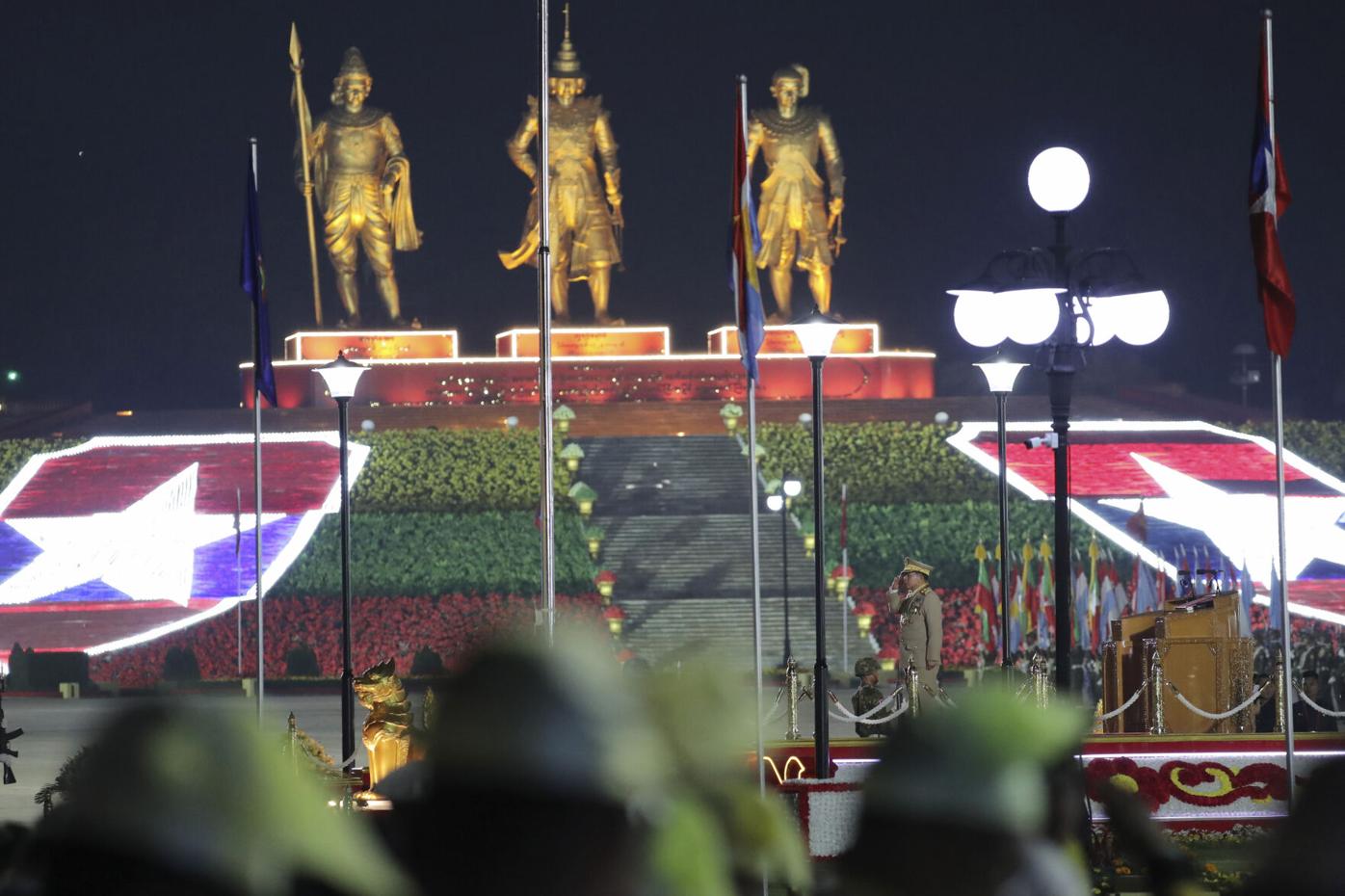
Senior Gen. Min Aung Hlaing, head of the military council, salutes on stage during a parade to commemorate Myanmar’s 79th Armed Forces Day, in Naypyitaw, Myanmar, Wednesday, March 27, 2024. (AP Photo/Aung Shine Oo)
What has happened to Myanmar’s civilian population?
As the military has faced setbacks in the fighting on the ground, it has been increasingly relying on indiscriminate air and artillery strikes, resulting in a 95% increase in civilian deaths from airstrikes and a 170% increase in civilians killed by artillery since the 1027 offensive began, according to a report last month by the United Nations’ Office of the High Commissioner for Human Rights.
The Tatmadaw has been accused of deliberately targeting civilians in retribution for perceived support for the resistance militias, something it denies.
Hundreds of thousands of civilians have been displaced by the fighting, and there are now more than 3 million internally displaced people in Myanmar overall, and some 18.6 million people in need, according to the U.N.
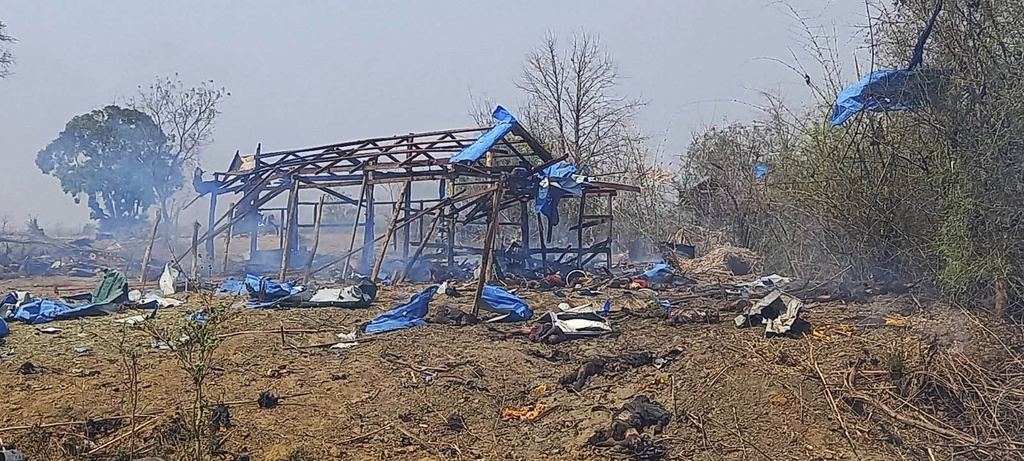
This photo provided by the Kyunhla Activists Group shows aftermath of an airstrike in Pazigyi village in Sagaing Region’s Kanbalu Township, Myanmar, Tuesday, April 11, 2023. (Kyunhla Activists Group via AP)
What happens if the military regime falls?
As the front has expanded it has seen militias advancing out of their own ethnic areas, like when Rakhine-based Arakan Army in January seized the Chin town of Paletwa, which has given rise to some friction between groups — foreshadowing possible future problems should the Tatmadaw eventually fall.
At the moment there is a degree of solidarity between the disparate ethnic groups with the focus on a common enemy, but Aung Thu Nyein, director of communications for the Institute for Strategy and Policy-Myanmar think tank said that does not translate to common aspirations.
Should the Tatmadaw fall, that could lead to the fragmentation of Myanmar unless the groups work hard to resolve political and territorial differences.
“The resistance being able to bring down the junta is unlikely, but I cannot discount this scenario,” he said. “If we cannot build trust and common goals, it could lead to the scenario of Syria.”
Complicating the political picture is the influence of neighboring China, which is believed to have tacitly supported the 1027 offensive in what turned out to be a successful bid to shut down organized crime activities that had been flourishing along its border.
In January, Beijing used its close ties with both the Tatmadaw and the Three Brotherhood groups to negotiate a ceasefire in northern Shan, which lasted for five months until the ethnic alliance opened phase two of the 1027 offensive in June, accusing the military of violating the ceasefire.
China has been displeased with the development, shutting down border crossings, cutting electricity to Myanmar towns and taking other measures in a thus-far unsuccessful attempt to end the fighting.
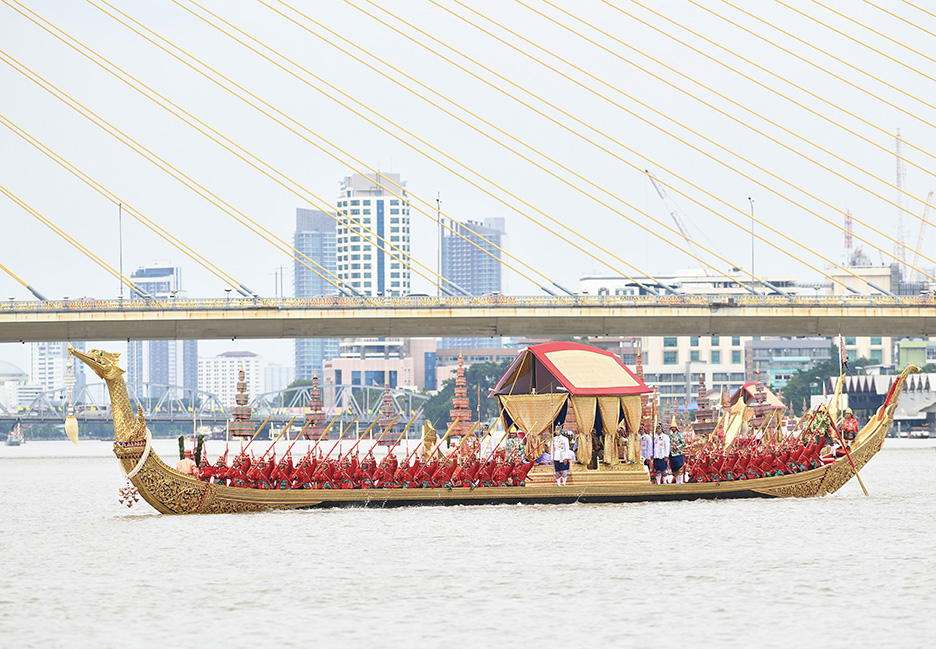
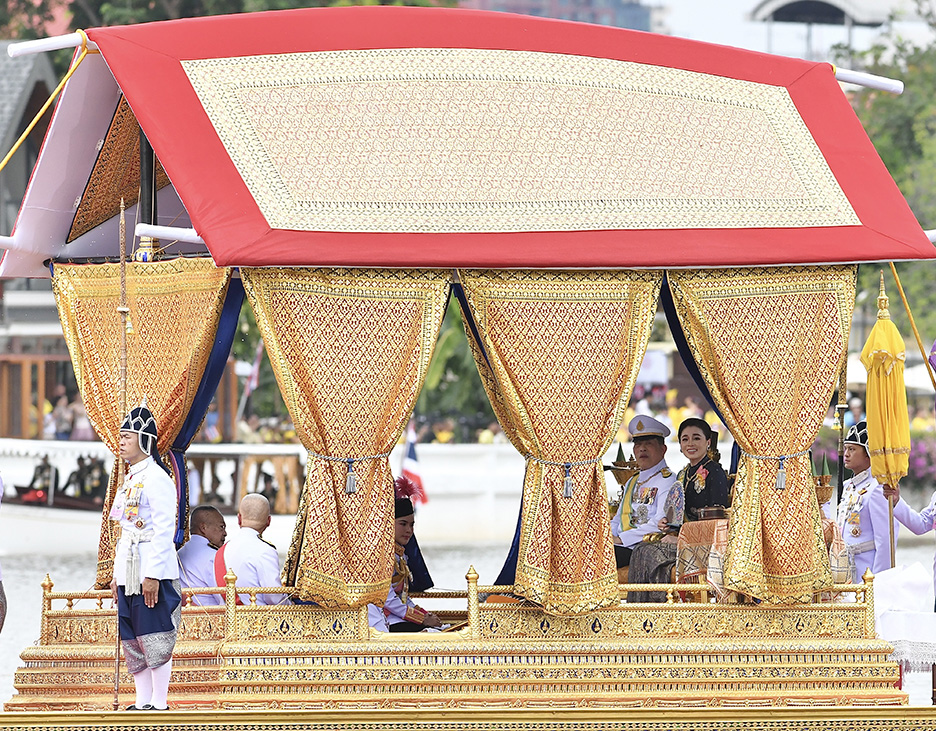
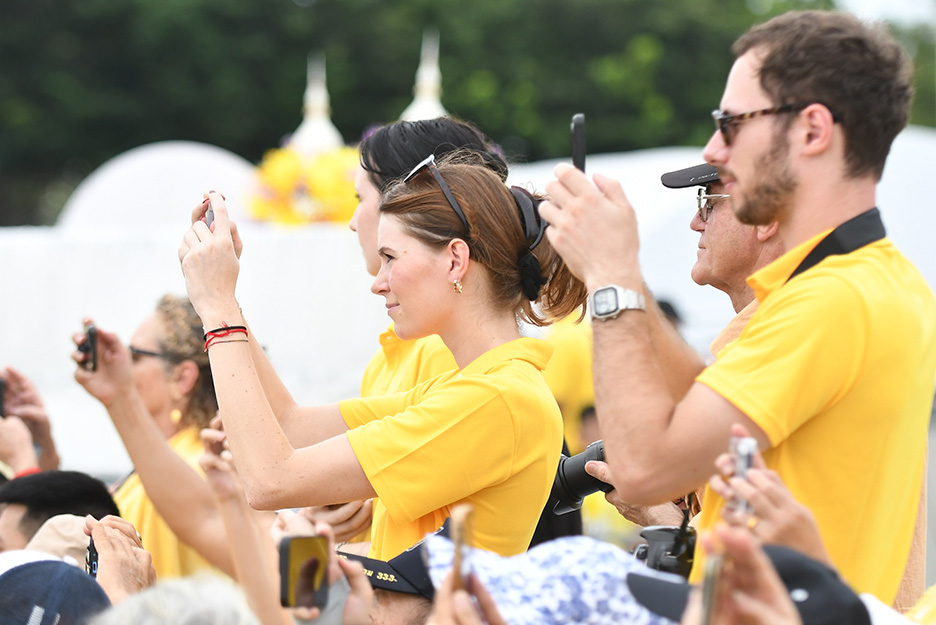
Oarsmen paddle the royal barge carrying King Maha Vajiralongkorn, left, and Queen Suthida during the Royal Barge Precession on the Chao Phraya River in Bangkok, Thailand, Sunday, Oct. 27, 2024. (Khaosod Photo/Yokin Charoenying)
BANGKOK — The Royal Barge Procession for the Royal Kathin ceremony on the Chao Phraya River concluded smoothly. His Majesty the King remarked to the Commander of the Royal Thai Navy that it was “very beautiful… beautiful.”
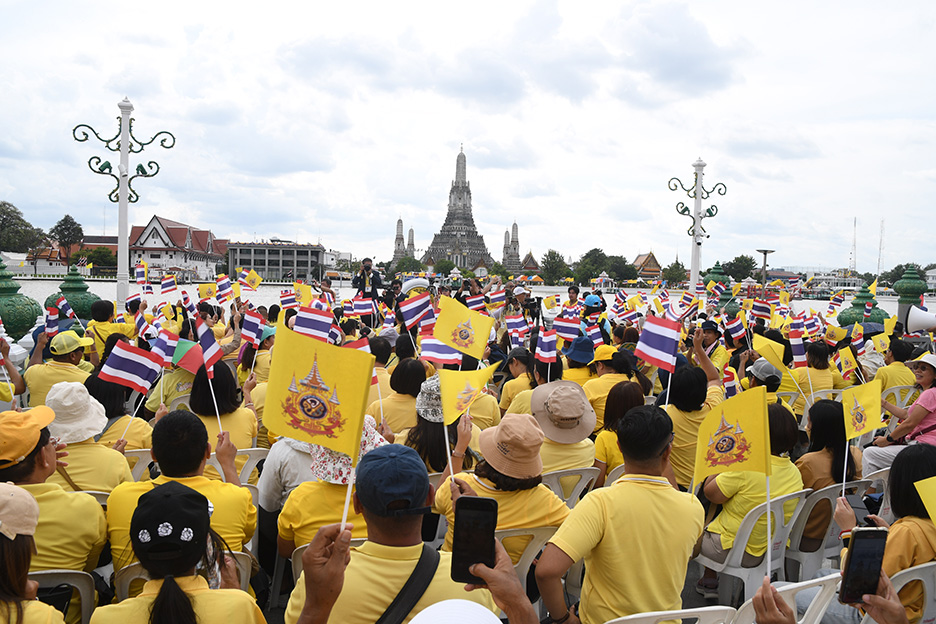
On Sunday, October 27, the sky was clear and sunny throughout the ceremony. The Bangkok Metropolitan Administration provided facilities for the public and tourists to witness the procession along the route without any obstacles. This was in contrast to the unexpected “rain bomb” phenomenon that occurred during the final rehearsal on October 22.
This Royal Barge Procession was organized following ancient royal traditions with a long history, conducted with dignity to celebrate the special occasion of His Majesty’s 6th Cycle Birthday Anniversary on July 28, 2024.
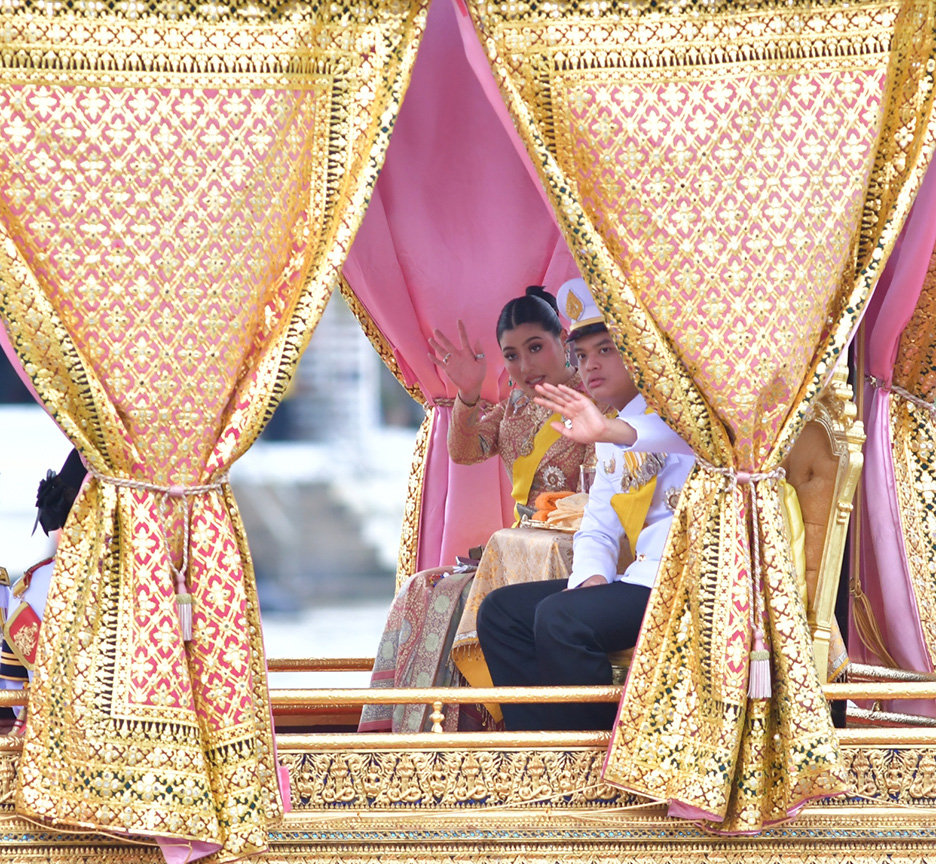
Oarsmen paddle the royal barge carrying King Maha Vajiralongkorn, left, and Queen Suthida during the Royal Barge Precession on the Chao Phraya River in Bangkok, Thailand, Sunday, Oct. 27, 2024. (Khaosod Photo/Todsaporn Lohkhunceam)Oarsmen paddle the royal barge carrying King Maha Vajiralongkorn, left, and Queen Suthida during the Royal Barge Precession on the Chao Phraya River in Bangkok, Thailand, Sunday, Oct. 27, 2024. (Khaosod Photo/Todsaporn Lohkhunceam)Oarsmen paddle the royal barge carrying Princess Sirivannavari Nariratana, left, and Prince Dipangkorn Rasmijoti, during the Royal Barge Precession on the Chao Phraya River in Bangkok, Thailand, Sunday, Oct. 27, 2024. (Khaosod Photo/Worapong Charoenpol)
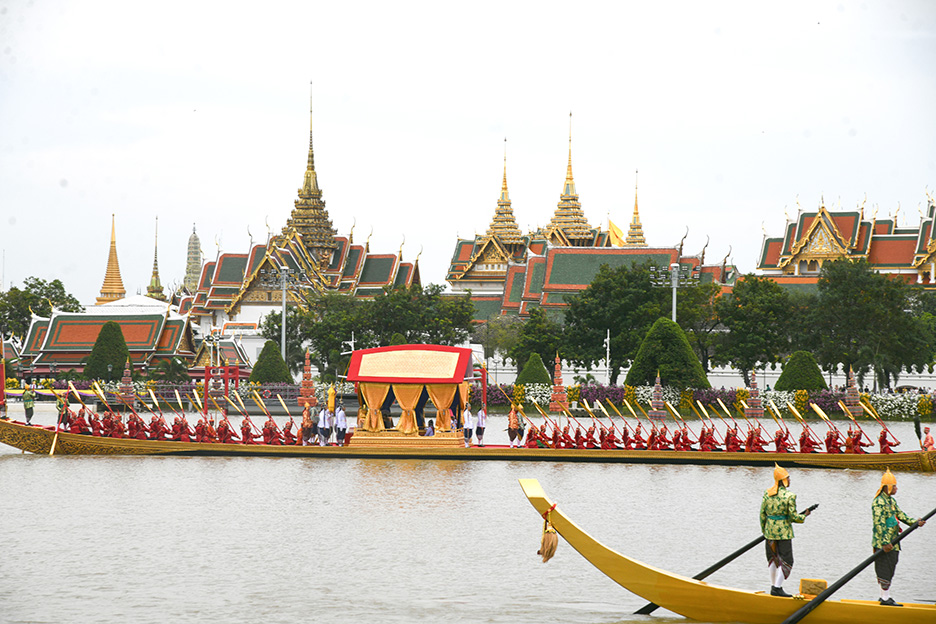
The procession consisted of 52 royal barges, including 4 major royal barges:
The Anantanakkharat Royal Barge carrying the Royal Kathin robes
The Suphannahong Royal Barge carrying Their Majesties the King and Queen
The Anekchattibhuchong Royal Barge carrying Princess Sirivannavari Nariratana and Prince Dipangkorn Rasmijoti
The Narai Song Suban Royal Barge of King Rama IX as a reserve vessel
Oarsmen paddle the royal barge during the Royal Barge Precession on the Chao Phraya River in Bangkok, Thailand, Sunday, Oct. 27, 2024. (Khaosod Photo/Somjit Jaichuen)People welcome the Royal barge procession along the Chao Phraya River. The Royal barge ceremony, a merit-making procession on the Chao Phraya River to Wat Arun Ratchawararam (Temple of Dawn), takes place following the end of Buddhist Lent, on October 27. (Khaosod Photo/Yokin Charoenying)Tourists witness the Royal barge procession along the Chao Phraya River to Wat Arun Ratchawararam (Temple of Dawn), on October 27, 2024. (Khaosod Photo/Pattarayoot Phukpol)
The formation consisted of 5 rows in 3 columns, spanning 1,280 meters in length and 90 meters in width, with 2,412 oarsmen. Additionally, the Air and Coastal Defense Command was responsible for 5 escort vessels.
At Wat Arun, His Majesty the King performed the Royal Kathin ceremony, with Prince Dipangkorn presenting additional Kathin offerings to the monks. After the ceremony concluded, they departed by royal vehicle.
Following the successful event, the Royal Thai Navy issued a letter of thanks to all personnel involved, noting the King’s praise.
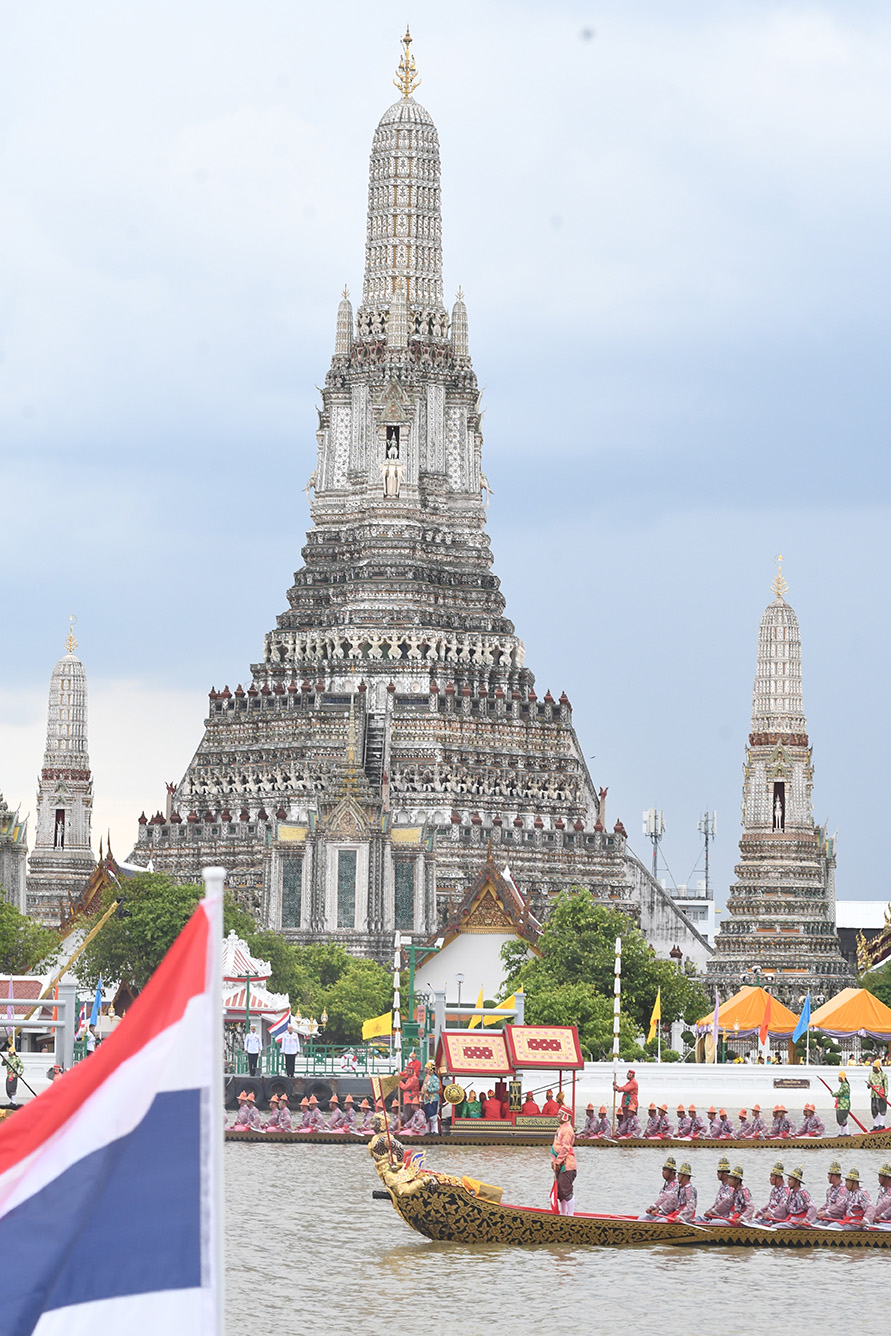
Oarsmen paddle their boat down the Chao Phraya River during Royal Barge Procession in front of Wat Arun, Bangkok, Thailand, Sunday, Oct. 27, 2024. (Khaosod Photo/Yokin Charoenying)
“Now that the ceremony has concluded smoothly, gracefully, and with appropriate royal dignity – with His Majesty remarking to the Commander of the Royal Thai Navy that it was ‘very beautiful, beautiful’ – we would like to thank all personnel who participated in their duties, from the planning and preparation stages, through rehearsals and various support roles, to the actual performance. The successful execution has earned public admiration and enhanced the reputation and image of both the nation and the Royal Thai Navy,” the letter stated.
Prime Minister Paetongtarn Shinawatra also expressed gratitude to all government agencies, military and civilian personnel who participated in organizing the ceremony, and praised the volunteers who assisted the public and tourists.
She emphasized how the event demonstrated the loyalty and bond between the monarchy and the people, as well as the unity of all sectors in organizing this occasion.
BANGKOK — Thailand’s ride-hailing market is on the rise, with projections showing a market value of $1.33 billion in 2024, expected to grow to $1.48 billion by 2029, according to Statista. This growth presents a “golden opportunity” for the industry, where competition is fierce with nine major players, including Grab, AirAsia Ride, Robinhood Ride, Bolt, Line Man, and inDrive.
Founded in 2012 in Yakutsk, Siberia, inDrive emerged as a response to the harsh competition for transportation during peak times in cold weather. The platform was designed to offer fair, safe, and affordable rides without the surge pricing common in high-demand periods. inDrive stands out with its unique business model, charging only a 10% commission fee comparing to others app with mostly charging 20-30% of commission and allowing passengers to choose their drivers—features that help build loyalty among both drivers and users.
inDrive entered the Thai market in 2019 and has since gained popularity. The app’s standout feature is its negotiation-based pricing, allowing drivers and passengers to agree on a fare before confirming the ride. This model has contributed to its status as the world’s second-most downloaded ride-hailing app. The company has ambitious plans for Thailand, aiming to expand its presence and services by 2025.
Varoontape Tanlamai, Head of Business Development for Thailand at inDrive, told Khaosod English that Thailand remains a critical region for the company. By 2025, inDrive plans to strengthen its driver engagement and grow its user base through targeted campaigns. Key cities like Bangkok, Chiang Mai, Phuket, and Pattaya are central to the company’s expansion strategy, as they are not only urban hubs but also major tourist destinations.
“In addition to ride-hailing, we also offer inter-provincial transportation, delivery services, and even the option to book a maid or mechanic survices,” said Tanlamai. “Since entering the Thai market, we’ve grown to become one of the top five ride-hailing apps in the country.”
inDrive’s low commission structure is a key factor in its appeal, allowing drivers to retain more of their earnings—a significant advantage in a competitive market. This transparent approach benefits both drivers and passengers, making inDrive a reliable and affordable option.
inDrive plans to roll out a series of driver-focused initiatives in 2025, including a 0% commission rate during peak hours in Bangkok, a move designed to boost driver earnings and foster loyalty. Additionally, the company will introduce new features to address the needs of Thai drivers, including enhanced safety measures and real-time fare adjustments.
inDrive also sets itself apart with its rigorous background screening process for driver partners, ensuring passenger safety. To further incentivize drivers, the company is launching special campaigns that offer exclusive benefits and rewards. Regular feedback sessions and community events will be held to maintain strong relationships with drivers and ensure their needs are met.
Mohamed Khalil, Regional Driver Acquisition & Activation Team Lead at inDrive Southeast Asia, highlighted the company’s global reach, with operations in 40 countries and over 700 cities across the Americas, Asia, and the Asia Pacific. He views the Asia-Pacific region as a high-growth market due to its increasing urbanization and purchasing power.
“InDrive is the second-largest ride-hailing service provider outside of China, with our biggest markets in Kazakhstan, Mexico, and Egypt,” said Khalil. “Thailand, in particular, has shown exceptional digital growth, with more people accessing the internet via smartphones each year. This and a favorable outlook for ride-hailing apps keep the market open and competitive.”
Khalil also stressed that inDrive’s 10% commission rate is a key differentiator from competitors, who typically charge higher fees. This policy reflects inDrive’s commitment to fairness for both drivers and passengers and is consistent across all 40 countries where the company operates.
With its innovative approach and driver-centric focus, inDrive is poised for significant growth in Thailand’s ride-hailing market in the years ahead.
In addition to its ride-hailing services, inDrive is expanding its offerings to include freight and financial services, varying availability by country based on market demand and regulatory requirements. The company aims to transform into a comprehensive urban mobility platform, offering various services beyond transportation.
inDrive plans to introduce services like parcel delivery and courier solutions to cater to diverse transportation needs. On the technology front, the company is heavily investing in real-time route enhancements and AI-driven safety features to improve operational efficiency and ensure safety, positioning itself as one of the safest platforms on the market.
With its competitive advantage, inDrive is poised to capitalize on the growing demand in Thailand’s dynamic ride-hailing market. As part of its 2025 strategy, the company is focusing on expanding its user base, aiming to become a trusted platform for both locals and tourists in Thailand.
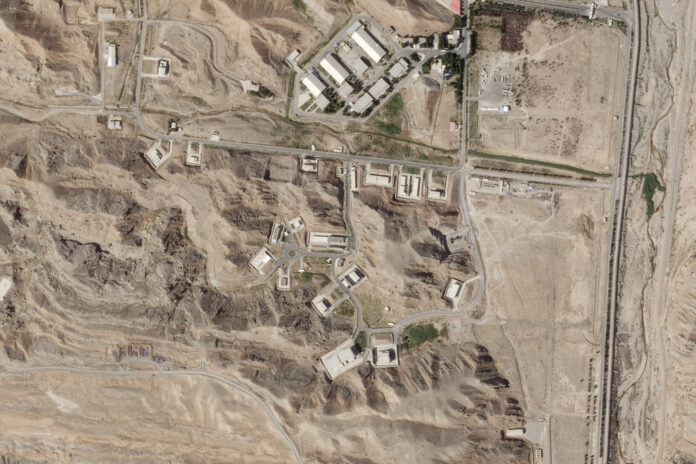
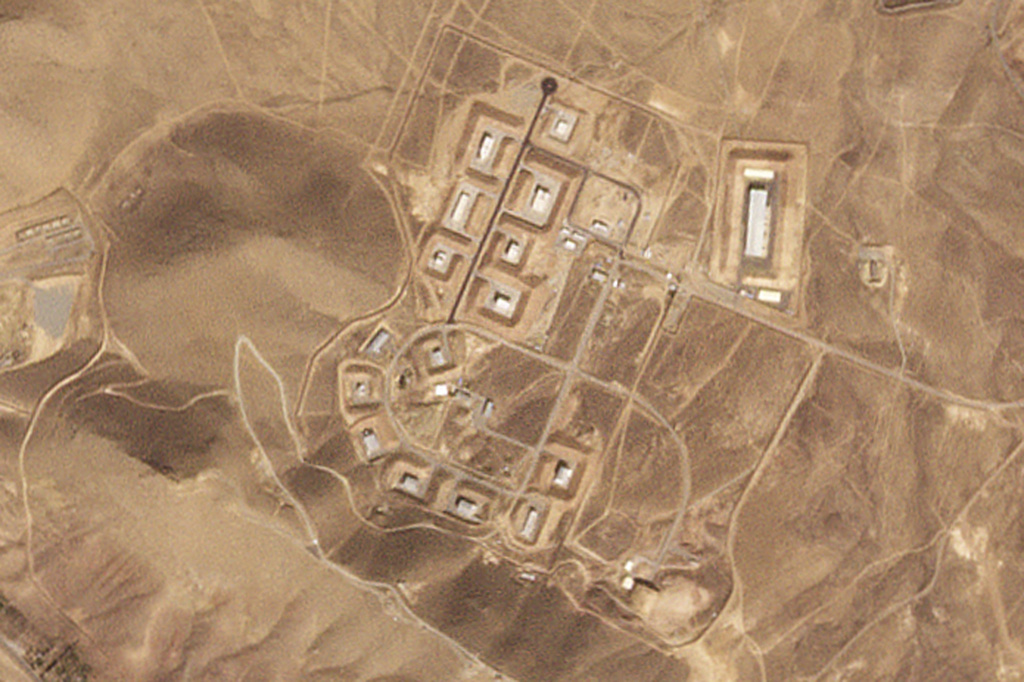
This satellite photo from Planet Labs PBC shows at Iran's Parchin military base outside of Tehran, Iran, Sept. 9, 2024. An Israeli attack on Iran damaged facilities at a secretive military base southeast of the Iranian capital that experts in the past have linked to Tehran's onetime nuclear weapons program and at another base tied to its ballistic missile program, satellite photos analyzed Sunday, Oct. 27, 2024, by The Associated Press show. (Planet Labs PBC via AP)
DUBAI, United Arab Emirates (AP) — An Israeli attack on Iran damaged facilities at a secretive military base southeast of the Iranian capital that experts in the past have linked to Tehran’s onetime nuclear weapons program and at another base tied to its ballistic missile program, satellite photos analyzed Sunday by The Associated Press show.
Some of the buildings damaged sat in Iran’s Parchin military base, where the International Atomic Energy Agency suspects Iran in the past conducted tests of high explosives that could trigger a nuclear weapon. Iran long has insisted its nuclear program is peaceful, though the IAEA, Western intelligence agencies and others say Tehran had an active weapons program up until 2003.
The other damage could be seen at the nearby Khojir military base, which analysts believe hides an underground tunnel system and missile production sites.
Iran’s military has not acknowledged damage at either Khojir or Parchin from Israel’s attack early Saturday, though it has said the assault killed four Iranian soldiers working in the country’s air defense systems.
Iran’s mission to the United Nations did not immediately respond to a request for comment. The Israeli military declined to comment.
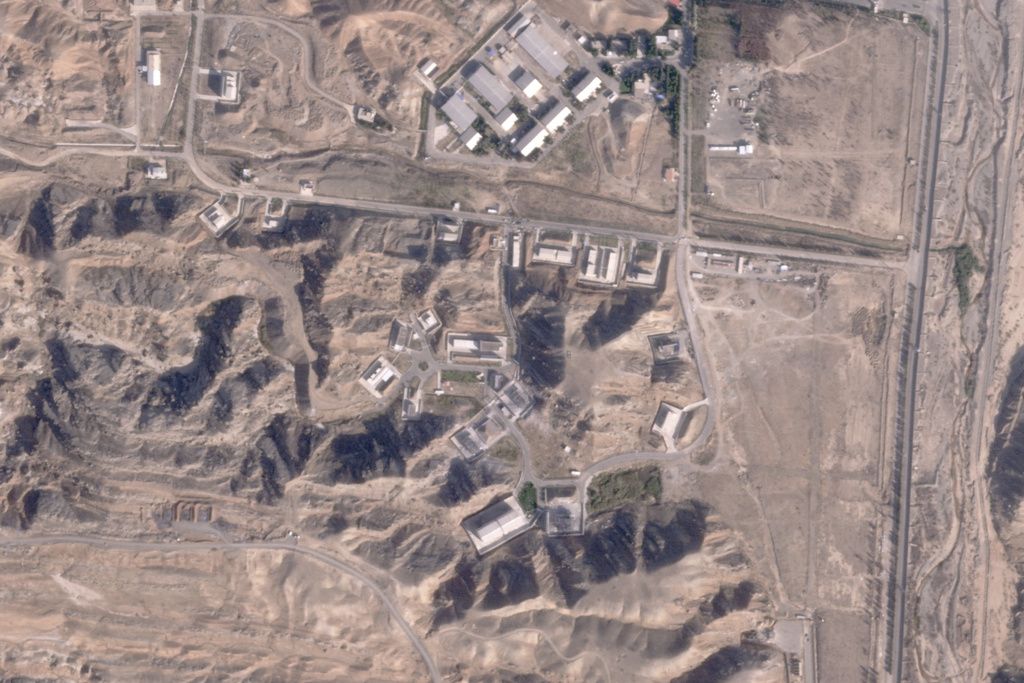
This satellite photo from Planet Labs PBC shows damaged buildings at Iran’s Parchin military base outside of Tehran, Iran, Sunday, Oct. 27, 2024. An Israeli attack on Iran damaged facilities at a secretive military base southeast of the Iranian capital that experts in the past have linked to Tehran’s onetime nuclear weapons program and at another base tied to its ballistic missile program, satellite photos analyzed Sunday by The Associated Press show. The damaged structures are in the bottom right corner and bottom center of the image. (Planet Labs PBC via AP)
However, Iranian Supreme Leader Ayatollah Ali Khamenei on Sunday told an audience that the Israeli attack “should not be exaggerated nor downplayed,” while stopping short of calling for an immediate retaliatory strike. Israeli Prime Minister Benjamin Netanyahu separately said Sunday that Israel’s strikes “severely harmed” Iran and that the barrage “achieved all its goals.”
Damage spread across three Iranian provinces
It remains unclear how many sites in total were targeted in the Israeli attack. There have been no images of damage so far released by Iran’s military.
Iranian officials have identified affected areas as being in Ilam, Khuzestan and Tehran provinces. Burned fields could be seen in satellite images from Planet Labs PBC around Iran’s Tange Bijar natural gas production site in Ilam province on Saturday, though it wasn’t immediately clear if it was related to the attack. Ilam province sits on the Iran-Iraq border in western Iran.
The most telling damage could be seen in Planet Labs images of Parchin, some 40 kilometers (25 miles) southeast of downtown Tehran near the Mamalu Dam. There, one structure appeared to be totally destroyed while others looked damaged in the attack.
At Khojir, some 20 kilometers (12 miles) away from downtown Tehran, damage could be seen on at least two structures in satellite images.
Analysts including Decker Eveleth at the Virginia-based think tank CNA, Joe Truzman at the Washington-based Foundation for Defense of Democracies and former United Nations weapon inspector David Albright, as well as other open-source experts, first identified the damage to the bases. The locations of the two bases correspond to videos obtained by the AP showing Iranian air defense systems firing in the vicinity early Saturday.
This satellite photo from Planet Labs PBC shows damaged buildings at Iran’s Khojir military base outside of Tehran, Iran, Oct. 8, 2024. An Israeli attack on Iran damaged facilities at a secretive military base southeast of the Iranian capital that experts in the past have linked to Tehran’s onetime nuclear weapons program and at another base tied to its ballistic missile program, satellite photos analyzed Sunday, Oct. 27, 2024, by The Associated Press show. (Planet Labs PBC via AP)
Base linked to Iran’s onetime nuclear weapons program
At Parchin, Albright’s Institute for Science and International Security identified the destroyed building against a mountainside as “Taleghan 2.” It said an archive of Iranian nuclear data earlier seized by Israel identified the building as housing “a smaller, elongated high explosive chamber and a flash X-ray system to examine small-scale high explosive tests.”
“Such tests may have included high explosives compressing a core of natural uranium, simulating the initiation of a nuclear explosive,” a 2018 report by the institute says.
In a message posted to the social platform X early Sunday, the institute added: “It is not certain whether Iran used uranium at ‘Taleghan 2,’ but it is possible it studied the compression of natural uranium hemispheres, which would explain its hasty and secretive renovation efforts following the IAEA’s request to access Parchin in 2011.”
It’s unclear what, if any, equipment would have been inside of the “Taleghan 2″ building early Saturday. There were no Israeli strikes on Iran’s oil industry, nor its nuclear enrichment sites or its nuclear power plant at Bushehr during the assault.
Rafael Mariano Grossi, who leads the IAEA, confirmed that on X, saying “Iran’s nuclear facilities have not been impacted.”
“Inspectors are safe and continue their vital work,” he added. “I call for prudence and restraint from actions that could jeopardize the safety & security of nuclear & other radioactive materials.”
Damage seen at facilities for Iran’s ballistic missile program
Other buildings destroyed at Khojir and Parchin likely included a warehouse and other buildings where Iran used industrial mixers to create the solid fuel needed for its extensive ballistic missile arsenal, Eveleth said.
In a statement issued immediately after the attack Saturday, the Israeli military said it targeted “missile manufacturing facilities used to produce the missiles that Iran fired at the state of Israel over the last year.”
Iran’s overall ballistic missile arsenal, which includes shorter-range missiles unable to reach Israel, was estimated to be “over 3,000” by Gen. Kenneth McKenzie, then-commander of the U.S. military’s Central Command, in testimony to the U.S. Senate in 2022. In the time since, Iran has fired hundreds of the missiles in a series of attacks.
There have been no videos or photos posted to social media of missile parts or damage in civilian neighborhoods following the recent attack — suggesting that the Israeli strikes were far more accurate that Iran’s ballistic missile barrages targeting Israel in April and October. Israel relied on aircraft-fired missiles during its attack.
However, one factory appeared to have been hit in Shamsabad Industrial City, just south of Tehran near Imam Khomeini International Airport, the country’s main gateway to the outside world. Online videos of the damaged building corresponded to an address for a firm known as TIECO, which advertises itself as building advanced machinery used in Iran’s oil and gas industry.
Officials at TIECO requested the AP write the company a letter before responding to questions. The firm did not immediately reply to a letter sent to it.
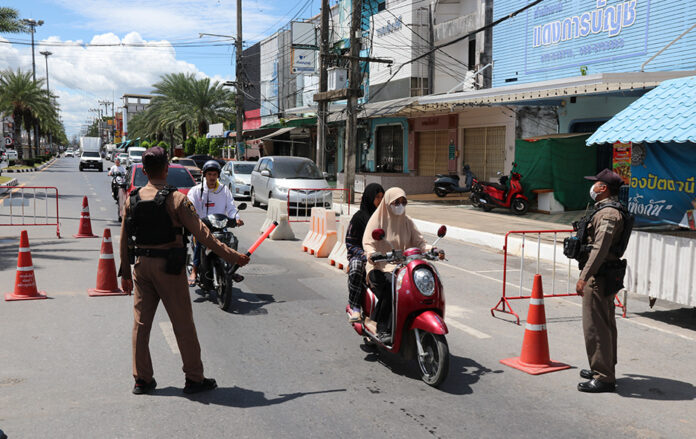
Security officers in Pattani province have heightened security measures at all checkpoints, conducting inspections of motorcycles and cars entering and exiting Pattani following the expiration of the statute of limitations in the Tak Bai case on October 25, 2024.
In the end, by the end of Friday, October 25, the forlorn hope for “a miracle” expressed by Justice Minister Thawee Sodsong that some of the 14 people wanted in relation to the 2004 Tak Bai massacre, where 7 Thai-Malay-Muslim protesters died during the protest dispersal and 78 died of suffocation while being transported to a military camp in Narathiwat province due to suffocation, didn’t not materialized before the 20-year statute of limitations expire.
In the immediate aftermath of the statute expiry, Defence Minister Phumtham Wechayachai said on Saturday, the Tak Bai case is closed.
Yes, no police can now arrest any of the 14 people, which include then Tak Bai district police chief Pol Lt Gen Saksommay Phuttakoon, then Narathiwat governor Vichom Thingsom, and most notably, then Fourth Army Region Commander Gen Phisal Wattanawongkiri, who eventually became a Pheu Thai MP only to resign after the arrest warrant was issued, but for relatives of those killed, they told the Thai press they cannot simply forget how their loved ones died while being transported (like animals) piled on top of one another, hand tied to their backs, on the back of army trucks.
To the separatist movement, it is another pretext and justification for them to continue to wage the armed insurgency in hope of establishing a free and independent homeland of Patani.
The BRN (Barisan Revolusi Nasional), a secessionist movement, quickly announced via its spokesman that the failure of the Thai state to bring any of the 14 to justice was a result of the Thai government’s protecting these people from the reach of the justice system.
This writer will not speculate on whether the Thai state had willfully protected the 14 people or not although one can fairly conclude that they have utterly failed to arrest even one of the 14 and it will definitely raise suspicions.
What Thailand needs is not a “miracle” as the Justice minister said earlier this week but empathy among the general Thai public, particularly the predominantly Buddhists, or non-Thai-Malay Muslims.
Instead of trying to ensure that there’s equal justice for all, some ultranationalist Thai Buddhists lash out at fellow Thais who expressed empathy as supporters of the separatist movement and terrorists. They asked why people like myself do not make noise when Thai Buddhists, soldiers, and police were killed in Narathiwat, Pattani, and Yala provinces.
I told them I feel sympathetic to any loss of lives, and all should face justice, but the Tak Bai case was clearly a failure by the state, which should have protected its own citizens, and it led to many needless deaths – at best a crime committed by the state through its negligence.
They are unable to remove their ultra-nationalist lenses and see that from the views of some Thai-Malay-Muslims, their violent struggle is aimed at gaining independence for the former kingdom of Patani (that’s how they spell it in English, with one “t”, not Pattani) and it’s not that different from when General Taksin waged a war to repel the Burmese invaders from Siam in 1767.
A mid-term solution for Thai civil society is to support moves that would make Thai-Malay-Muslims feel less of a second-class citizen and decentralize the deep south in hope that the vast majority of them can feel proud of their dual identities. Failing to achieve this means more people on both sides will become casualties of the ongoing decades-long conflicts.
The Thai government has failed. Now, we cannot allow the general public to fail as well. We all should strive to support equal rights and decentralizations for our brothers and sisters in the deep south for this is the just thing to do.
For example, one of the 14 wanted until October 25 was then the governor of Narathiwat province. Governor Vichom was appointed by the Interior Ministry in Bangkok. I wonder if the governor of Narathiwat province at the time would have handled the situation differently if he or she was elected by the local people.
As long as Thai-Malay-Muslims feel that they are second-class citizens, it is pointless to be wishing for peace, or a miracle, in the deep south.
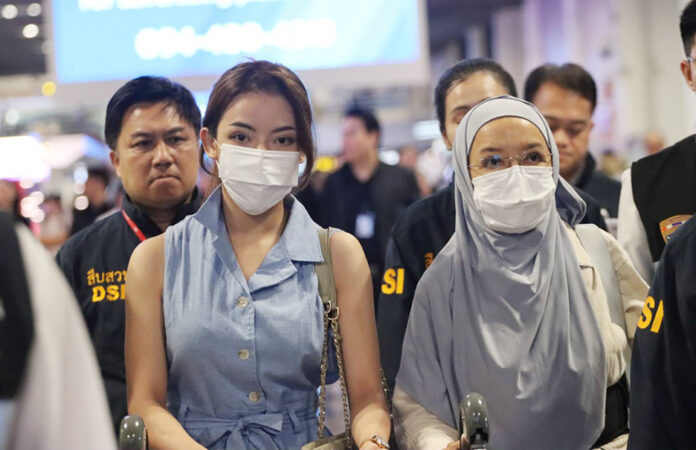
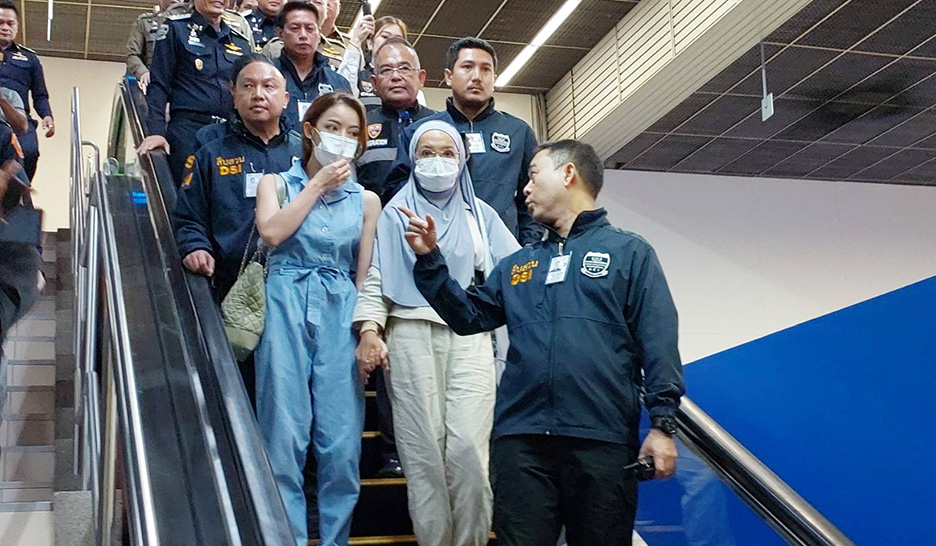
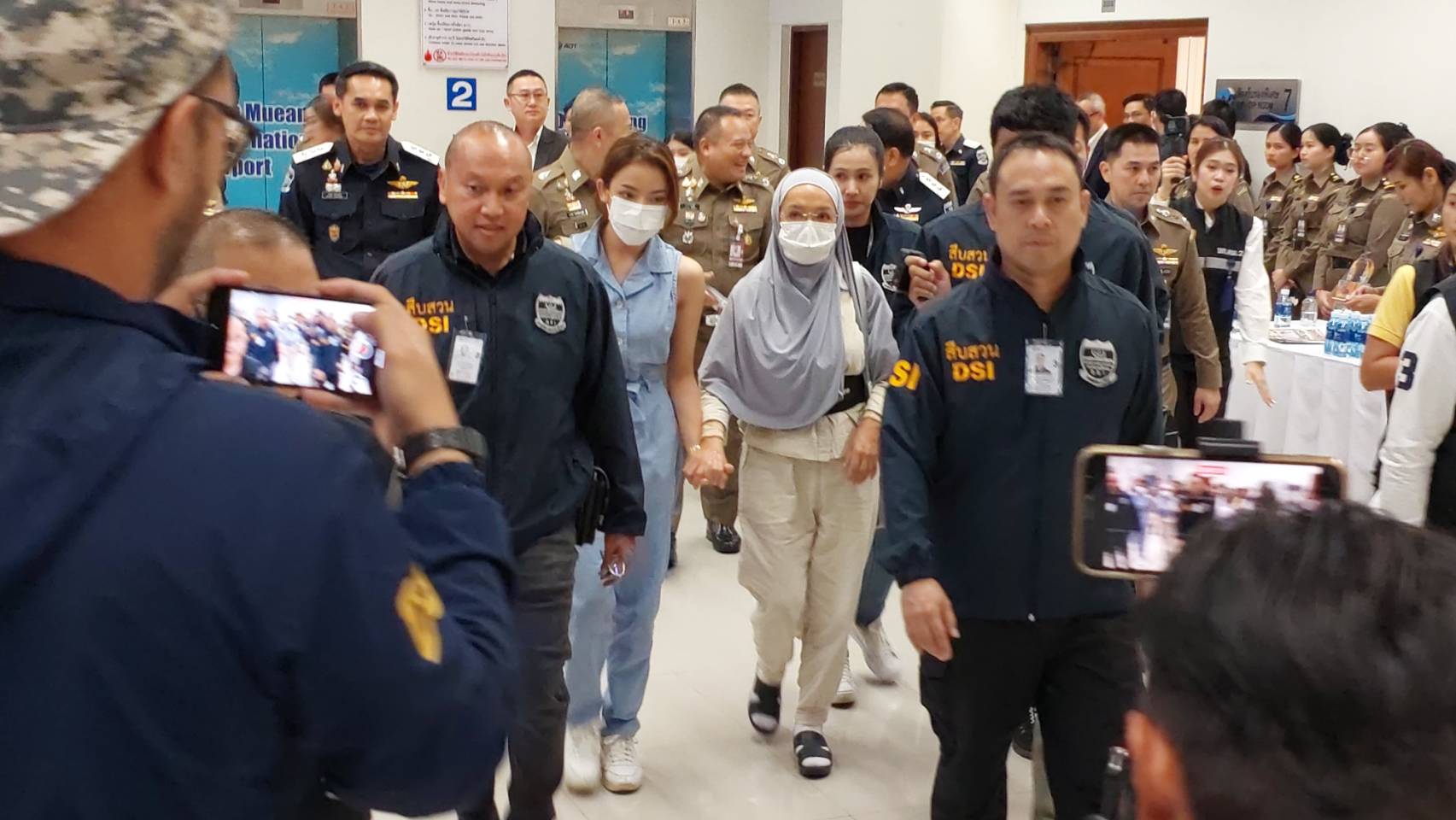
Nuttamon Kongjak or Nutty and her mother Thaniya are extradited from Indonesia, arriving at Suvarnabhumi Airport under the custody of Department of Special Investigation officers for interrogation on October 25, 2024.
BANGKOK — Nuttamon Kongjak or “Nutty”, a 31-year-old Thai YouTuber and influencer, is the latest social media celebrity facing fraud charges. She allegedly deceived over 6,000 victims through a stock trading scheme, causing damages worth more than 2 billion baht ($60 million).
She and her mother, Thaniya, age 66, were issued arrest warrants by the Criminal Court on September 12, 2022, on charges of public fraud and entering false, distorted, or fraudulent information likely to cause damage to others or the public. Nutty alone had 13 arrest warrants for the same charges, while her mother had 2 warrants.
Both fled to Indonesia in July 2022 through natural routes in southern Thailand, heading to Kuala Lumpur, Malaysia, and then smuggling themselves by boat to Indonesia.
Nuttamon Kongjak or Nutty and her mother Thaniya are extradited from Indonesia, arriving at Suvarnabhumi Airport under the custody of Department of Special Investigation officers for interrogation on October 25, 2024.
They worked illegally as food delivery workers to make a living while hiding to avoid arrest by Indonesian police for illegal entry. On October 2, 2024, they were caught by Indonesian police in Dumai, Riau Province, on Sumatra island, and were extradited to Thailand on October 25.
The Department of Special Investigation (DSI) then took both to detention at the Ratchada Criminal Court from October 26 to November 6, opposing bail because they were accused of defrauding many people, affecting the economic system. There were concerns they might flee again if released temporarily.
Notably, neither relatives nor lawyers appeared to file bail requests with assets. Prison officials therefore took Nutty and her mother to the Central Women’s Correctional Institution in Bangkok.
Police Lieutenant General Thatchai Pitaneelaboot, Assistant Commissioner-General of the Royal Thai Police, said the mother and daughter were prosecuted by Indonesian police for illegal entry before being sent back. Police are still hunting for Nutty’s female secretary, believed to be abroad. The DSI will investigate those who helped the three suspects while they were fugitives abroad.
A 2014 appearance on Channel 3’s variety show ‘At Ten’ may provide authorities with answers, as the mother-daughter duo discussed their time in Malaysia during the program.
Nutty, identified in legal documents as Suchada, said her mother – formerly known as Saranya but now going by Thaniya – once had wealth from running a karaoke business in Chiang Mai, earning 2 million baht ($60K) monthly and dreaming of saving tens or hundreds of millions. However, when she invested in stocks, the family faced financial problems.
Nutty appeared on the TV show ‘At Ten’ in 2014, sharing her life’s dramatic turn from extreme wealth to poverty, and her arranged marriage at age 13.
Thaniya brought Nutty to Malaysia, where she negotiated a deal with a 48-year-old tycoon who would provide 2 million baht in exchange for marrying her then-13-year-old daughter. She claimed she set the condition of “marriage in name only” with no sexual relations, but later the tycoon tried to have relations with Nutty.
When she saw Nutty becoming stressed and suffering from migraines, the mother took her daughter to escape to Pattaya. After saving over 2 million baht, they returned the money to the Malaysian tycoon and filed for divorce in the Malaysian juvenile court, ending that chapter.
After returning to Thailand, Nutty became a YouTuber with the channel “Nutty’s Diary,” creating various content including singing, playing, dancing, traveling, and Korean dance covers, before turning to teaching stock trading, enticing people with promises of hundreds of thousands to millions in profits.
Nutty posted photos flaunting her beauty and wealth on social media while running her stock trading business that deceived numerous victims.
She then started accepting investments from others, claiming high returns like 25% profit in 3 months or 35% in 12 months. People could apply through an application with minimum investments of 5,000 baht up to 5 million baht per bill, with no limit on the number of bills per person. This attracted many investors, making Nutty successful on social media.
In April 2022, people began exposing on social media that they were deceived by Nutty, who allegedly used the money for personal extravagances and couldn’t return it when needed. Out of 6,000 victims, 445 people have filed complaints, with total damages exceeding 2 billion baht.
Nuttamon Kongjak or Nutty and her mother Thaniya are extradited from Indonesia, arriving at Suvarnabhumi Airport under the custody of Department of Special Investigation officers for interrogation on October 25, 2024.
Nutty was hunted during a time when Thailand was experiencing major fraud cases from direct sales business The iCon Group, involving CEO “Boss Paul” Waratthapon Warutthaworakun, age 41, and celebrities like Min Peechaya Wattanamontri, a 35-year-old nationally famous actress, and Gun Kantathavorn, a 38-year-old host and actor, who all displayed luxurious lifestyles with watches and brand-name goods while presenting images of building wealth through online business.
But eventually, reality emerged, similar to other fraud cases like Forex 3D, which evolved from Ponzi schemes, and online gambling cases, where celebrities and influencers with suspiciously wealthy and luxurious lifestyles are being held accountable.
BANGKOK — The entertainment complex project will be considered by the cabinet later this year, despite public and political debate over the stimulus package, particularly the inclusion of casinos.
Julapun Amornwiwat, deputy finance minister, said on October 24 that the Finance Ministry has completed its study on opening an entertainment complex. Public consultations have resulted in an 82 percent approval rating, with suggestions from various sectors on issues such as ethics, structural concerns and business benefits.
Julapun clarified: “We take note of all recommendations, but not every comment can be incorporated into legislation. The feedback will be documented and incorporated into the official process. The next step is to submit the proposal to the Cabinet by the end of the year, followed by review by the Council of State and submission to the House of Representatives.”
The House of Representatives will convene its regular session from mid-December 2024 to April 2025. During this process, the exact details of the project’s location and budget will not be disclosed. However, the registered capital required to operate the company will be 10 billion baht.
Julapun pointed out the great interest of the private sector and emphasized that the project could create new tourist attractions. A study by the Fiscal Policy Office (FPO) shows that the complex could increase tourism by 5-20 percent, boost GDP during the construction and investment phases and increase the average spending of foreign tourists from 40,000 to 60,000 baht per person. The project is also expected to create employment opportunities for locals.
The bill allows Thai citizens to enter casinos with a maximum entry fee of 5,000 baht per visit. The project will offer licenses with an initial term of 30 years, renewable every 10 years. Each license will cost 5 billion baht upfront, with an additional annual fee of 1 billion baht.
The project gained traction after the Cabinet acknowledged the feasibility study on April 9, 2024, to address illegal gambling and stimulate the economy. On June 4, 2024, Prime Minister Srettha Thavisin tasked the Ministry of Finance with expediting the process, preparing the legal framework, and coordinating with other relevant agencies.
The main elements of the proposed legislation are:
Establishment of the Entertainment Business Policy Board, chaired by the Prime Minister, with responsibility for setting policy, issuing licenses and setting license fees and regulations.
Administrative Board to oversee the fund and handle complaints related to the complex.
Regulatory Authority (with legal status, independent of government agencies) to develop strategic plans, monitor compliance and stop casino activities when necessary.
Licensing requirements: Applicants must be registered companies in Thailand with a minimum capital of 10 billion baht and submit land use plans and financial sources.
The complex will initially require an investment of at least 100 billion baht. It will include sports facilities, theaters, parks, water parks and amusement parks, with casinos accounting for only 5 percent of the total area. A special fund will also be set up to deal with the social impact of the complex and will initially be financed by the government.
The government expects to receive revenue from:
License fees, which vary according to project size (S, M, L, XL), with upfront and annual payments.
Gambling taxes, based on gross gaming revenue (GGR), are similar to the models in Las Vegas (10 percent) and Singapore (17 percent), where VIP and general customers are taxed differently to attract high-rollers.
Entry fees to prevent disadvantaged Thai groups from gaining access to casinos, with fees adjusted to local income levels.
Several large corporate groups have expressed an interest in investing in the project:
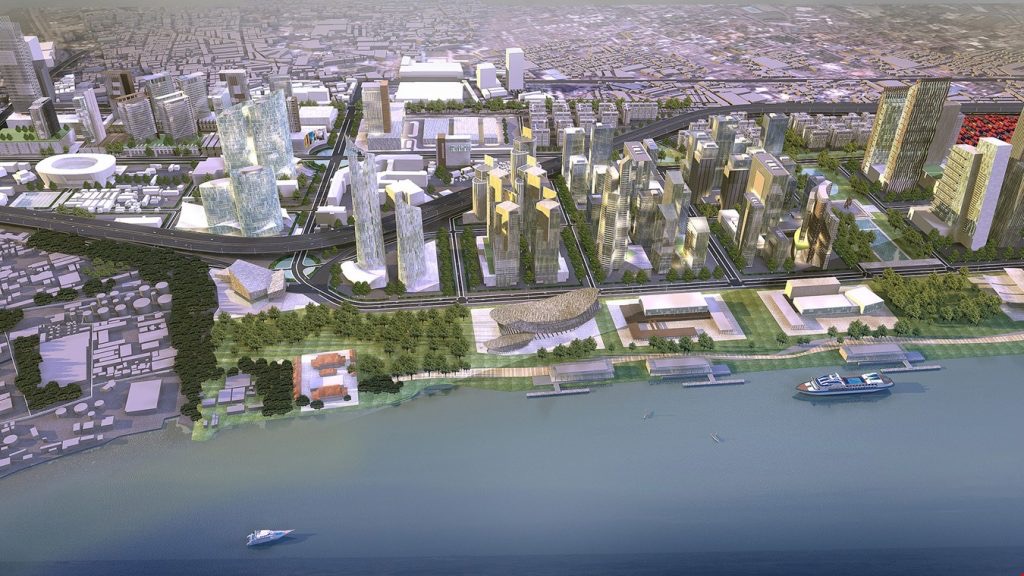
Ratchadamnoen Club & Royal Sport Complex (RSC) said that they are negotiating with four partners and are considering three sites in Bangkok: Nong Chok (1,000 rai), Lat Krabang (2,000 rai) and Khlong Toei Port (2,300 rai). Their project, “The Royal Siam Haven”, is scheduled to start around 2025 with a 7-year development plan.
UTA Group: Comprising Bangkok Airways, BTS Group Holdings and Sino-Thai Engineering and Construction, which plans to combine the entertainment complex with the U-Tapao Airport and Eastern Aviation City development projects.
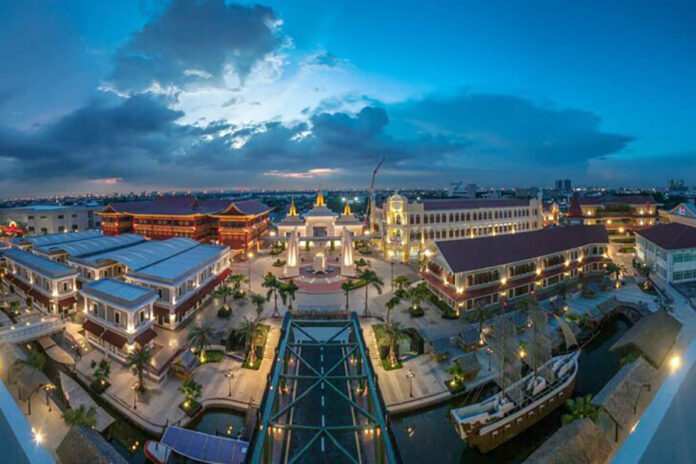
Siam Park City Group: The operators of Siam Amazing Park (Suan Siam) plan to expand the adjacent area by 217 rai to a total of 500 rai, taking advantage of easy access from Don Mueang and Suvarnabhumi airports.
Global casino giants: Interest has also been shown by companies such as Las Vegas Sands Corporation, Wynn Resorts, Caesars Entertainment, MGM China Holdings Limited and Hard Rock Café.
This ground-breaking initiative aims to combine entertainment, tourism and economic growth. The first phase requires significant investment to build a diverse complex that could potentially redefine Thailand’s tourism landscape.
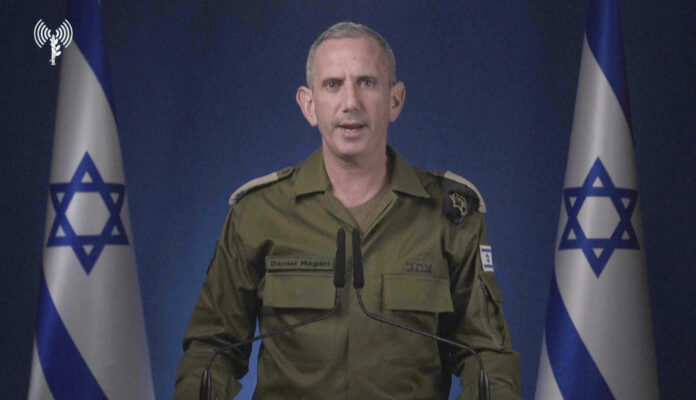
In this image taken from video released by the Israel Defense Forces early Saturday, Oct. 26, 2024, Israeli military spokesperson Rear Adm. Daniel Hagari announces that the IDF is conducting strikes on military targets in Iran. (Israel Defense Forces via AP)
DUBAI, United Arab Emirates (AP) — Israel pounded Iran with a series of airstrikes early Saturday, saying it was targeting military sites in retaliation for the barrage of ballistic missiles the Islamic Republic fired upon Israel earlier in the month.
Explosions could be heard in the Iranian capital, Tehran, though the Islamic Republic insisted they caused only “limited damage.”
Saturday marked the first time Israel’s military has openly attacked Iran, which hasn’t faced a sustained barrage of fire from a foreign enemy since its 1980s war with Iraq.
Israel’s hourslong attack ended just before sunrise in Tehran, with the Israeli military saying it targeted “missile manufacturing facilities used to produce the missiles that Iran fired at the state of Israel over the last year.” It also said it hit surface-to-air missile sites and “additional Iranian aerial capabilities.”
Israel offered no initial damage assessment.
Initially, nuclear facilities and oil installations all had been seen as possible targets for Israel’s response to Iran’s Oct. 1 attack, but in mid-October the Biden administration won assurances from Israel that it would not hit such targets, which would be a more severe escalation.
“The regime in Iran and its proxies in the region have been relentlessly attacking Israel since Oct. 7, … including direct attacks from Iranian soil,” Israeli military spokesperson Rear Adm. Daniel Hagari said in a prerecorded video statement early Saturday. “Like every other sovereign country in the world, the state of Israel has the right and the duty to respond.”
Iran’s military said the strikes targeted military bases in Ilam, Khuzestan and Tehran provinces and caused “limited damage,” without elaborating.
The United States warned against further retaliation, indicating that the overnight strikes should end the direct exchange of fire between the Israel and Iran.
Israel’s military said explosions have been heard over northern Israel following its activity in southern Lebanon, but there “is no indication of a security incident.”
Iran downplays Israel’s attack
Iran’s state-run media acknowledged blasts that could be heard in Tehran and said some of the sounds came from air defense systems around the city.
But beyond a brief reference, Iranian state television for hours offered no other details and even began showing what it described as live footage of men loading trucks at a vegetable market in Tehran in an apparent attempt to downplay the assault.
A Tehran resident told The Associated Press that at least seven explosions could be heard in the first wave of attacks, which rattled the surrounding area. The resident spoke on condition of anonymity for fear of reprisals.
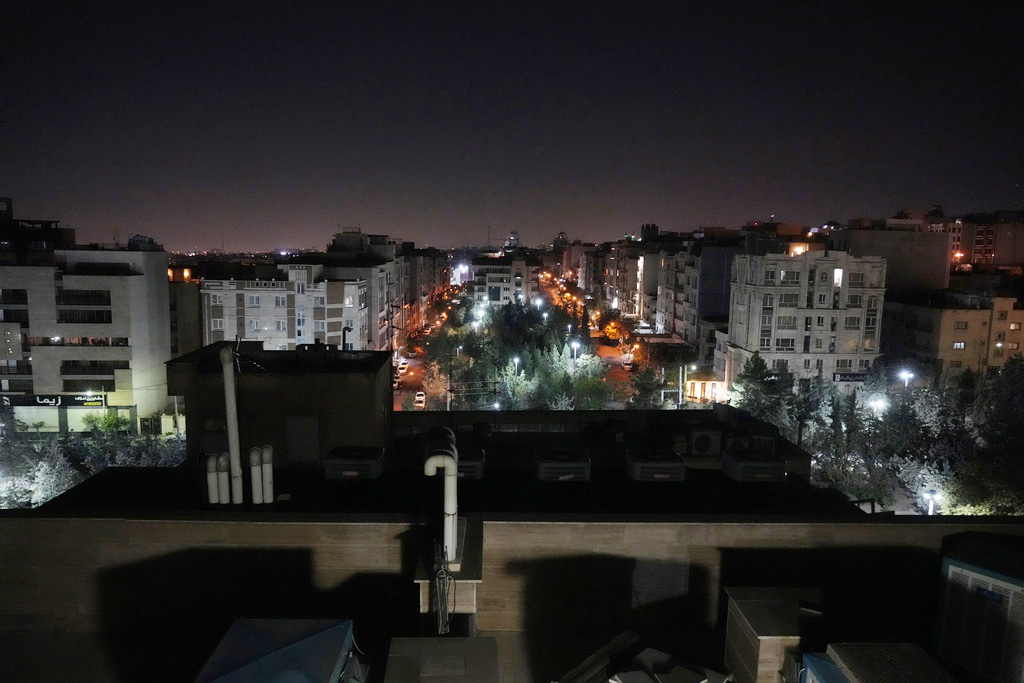
A view of Tehran capital of Iran is seen, early Saturday, Oct. 26, 2024. (AP Photo/Vahid Salemi)
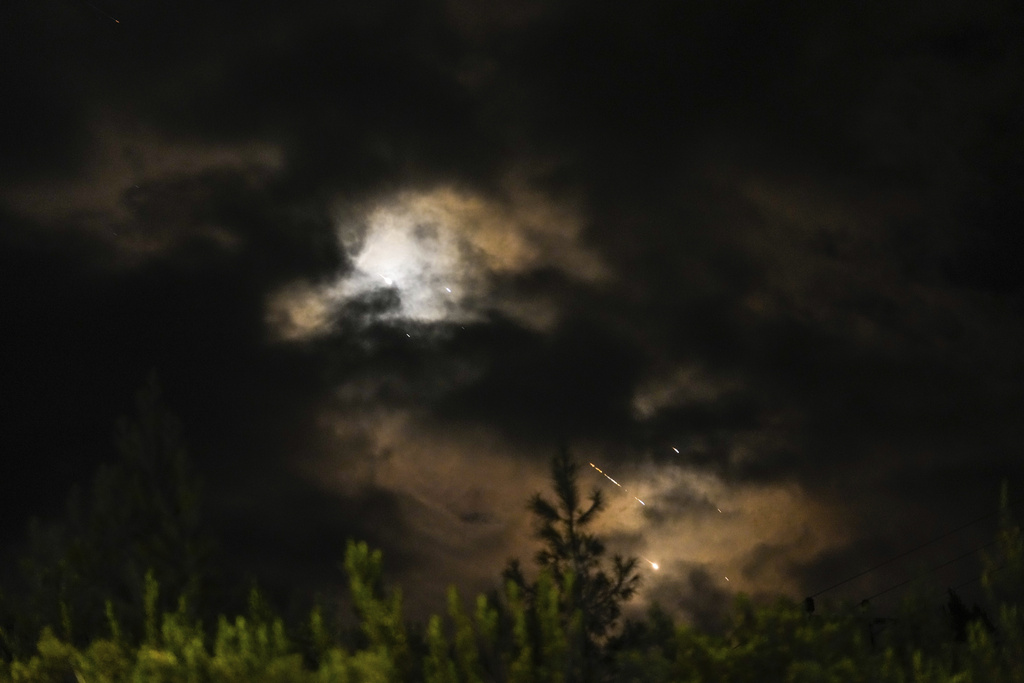
As explosions sounded, people in Tehran could see what appeared to be tracer fire light up the sky. Other footage showed what appeared to be surface-to-air missiles being launched.
Iran closed the country’s airspace early Saturday, and flight-tracking data analyzed by AP showed commercial airlines had broadly left the skies over Iran, and across Iraq, Syria and Lebanon.
Iran’s move to quickly downplay the attack may offer an avenue for it not to respond, which could risk a further escalation.
“The Israel Defense Forces has fulfilled its mission,” Hagari said in a later video. “If the regime in Iran were to make the mistake of beginning a new round of escalation, we will be obligated to respond.”
Israel’s assault was a response to Iranian attacks
Iran fired a wave of missiles and drones at Israel in April after two Iranian generals were killed in an apparent Israeli airstrike in Syria on an Iranian diplomatic post. The missiles and drones caused minimum damage, and Israel — under pressure from Western countries to show restraint — responded with a limited strike it didn’t openly claim.
Iran launched at least 180 missiles into Israel on the evening of Oct. 1, sending Israelis scrambling into bomb shelters but causing only minimal damage and a few injuries. Iran said the barrage was retaliation for attacks in recent months that killed leaders of Hezbollah, Hamas and the Iranian military. Israeli Prime Minister Benjamin Netanyahu immediately said Iran had “made a big mistake.”
Before Iran’s October attack, Israel had landed a series of devastating blows against Hezbollah, which has been firing rockets into Israel near-daily for over a year — ever since the deadly Hamas attack against Israel that sparked the war in Gaza.
Projectiles fly through the sky in central Israel as a siren sounds a warning of incoming missiles fired from Iran towards Israel, Tuesday, Oct. 1, 2024. (AP Photo/Ohad Zwigenberg)
Israel has said it will continue to strike Hezbollah until it is safe for Israeli citizens displaced from their homes near the Lebanon border to return. Hezbollah has vowed to keep firing rockets into Israel until there is a cease-fire in Gaza.
The US warns against retaliation
The White House indicated that Israel’s strikes on Iran should end the direct exchange of fire between the two enemy countries, while warning Tehran of “consequences” should it respond.
A senior White House official said the administration believed the Israeli operation should “close out” the direct military exchange between Israel and Iran, and said other allies were in agreement.
United States President Joe Biden was updated throughout Israel’s operation, the official said, while underscoring that the U.S. had no involvement in the attack.
The official, who briefed reporters on the condition of anonymity under ground rules set by the White House, said the Israeli operation “was extensive, it was targeted, it was precise.”
U.S. Defense Secretary Lloyd Austin spoke with his Israeli counterpart, Yoav Gallant, about Israel’s strikes on military targets in Iran, Maj. Gen. Pat Ryder said late Friday.
Austin reiterated that the U.S. was committed to its ally’s security and that Israel has a right to defend itself, though Washington was determined to prevent the conflict from expanding, the Pentagon press secretary said in a statement.
Israel’s strike is the latest in the Mideast wars
When Hamas and other militants attacked Israel on Oct. 7, 2023, they killed 1,200 people, mostly civilians, and took some 250 hostages into Gaza. In response, Israel launched a devastating air and ground offensive against Hamas, and Netanyahu has vowed to keep fighting until all of the hostages are freed. Some 100 remain and roughly a third are believed to be dead.
More than 42,000 Palestinians have been killed in Gaza, according to local health officials, who don’t delineate between civilians and combatants but say more than half of the dead are women and children.
Israel and Iran have been bitter foes since the 1979 Islamic Revolution. Israel considers Iran to be its greatest threat, citing its leaders’ calls for Israel’s destruction, their support for anti-Israel militant groups and the country’s nuclear program.
During their yearslong shadow war, a suspected Israeli assassination campaign has killed top Iranian nuclear scientists and Iranian nuclear installations have been hacked or sabotaged, all in mysterious attacks blamed on Israel.
Meanwhile, Iran has been blamed for a series of attacks on shipping in the Middle East in recent years, which later grew into the attacks by Yemen’s Houthi rebels on shipping through the Red Sea corridor.
Since Hamas’ Oct. 7 attack, the shadow war has increasingly moved into the light.
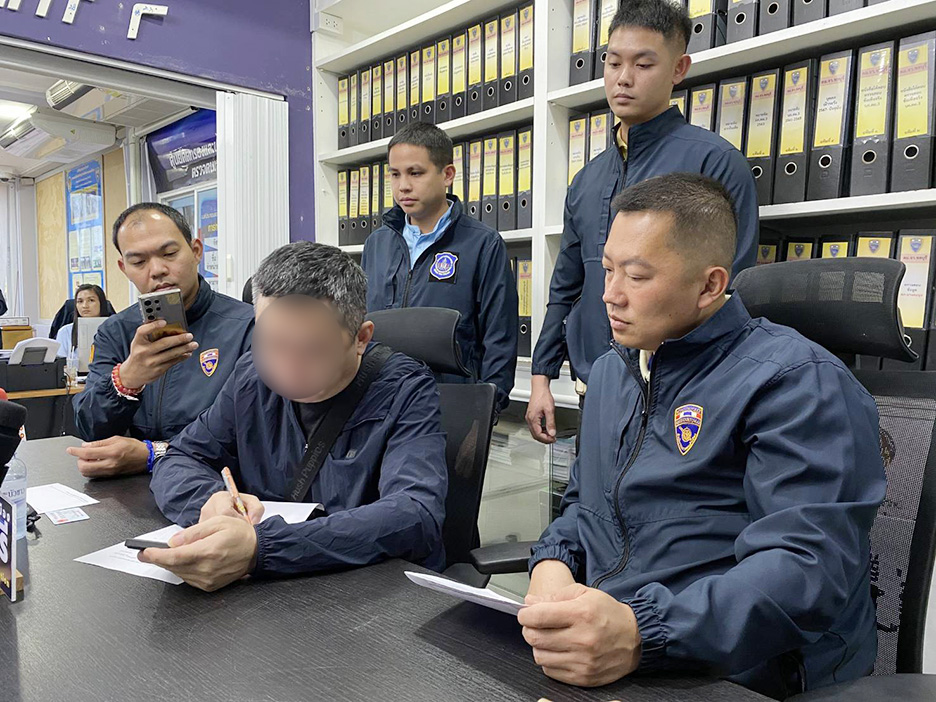
Chonburi Immigration Police arrest Mr. Wang, the suspect, in his hotel room in Pattaya on October 25, 2024.
PATTAYA — A former Chinese bank executive accused of orchestrating a $6 million loan fraud has been arrested at a Thai beach resort after a two-month manhunt, immigration officials said Friday.
Mr. Wang, 49, was apprehended in his hotel room in Pattaya om October 25, following a tip-off from the Chinese Embassy in Thailand. He was found with approximately $5,000 in cash.
According to Col. Naphatphong Khositsuriyanee of the Chonburi Immigration Police, Wang allegedly forged documents to fraudulently obtain loans worth 45 million yuan ($6.3 million) while serving as deputy manager at a bank in China’s Hebei province.
Mr. Wang, the suspect, signs a statement for Chonburi Immigration Police on October 25, 2024.
“The suspect confessed to entering Thailand illegally through the Cambodian border,” Khositsuriyanee said. “He claims the fraud was committed to settle personal debts.”
Chinese authorities had issued an arrest warrant for Wang on charges of fraud and document forgery. He had been hiding in Thailand for approximately two months before his capture.
Local police in Pattaya are now handling the case, with deportation proceedings expected to follow.