































28.3 C
Bangkok
Friday, July 24, 2026
Home Blog Page 6

PARAMETER apologises after customer finds glass in gelato

PARAMETER apologises after customer finds glass in gelato

BANGKOK — 21 July 2026, Renowned Thai gelato brand PARAMETER has issued a public apology after a customer said she found shards of glass in her gelato, leaving her with injuries to her mouth and prompting widespread criticism on social media over the company’s food safety standards and handling of the incident.

The controversy began after the customer shared her experience in the Facebook consumer group “พวกเราคือผู้บริโภค (We Are Consumers)”, saying she bit into a hard object while eating the shop’s gelato and later discovered it was broken glass.

She said the incident left cuts to her tongue and inner cheek, causing bleeding, while some fragments were swallowed, requiring hospital treatment.

The customer stated that after reporting the incident, the shop covered her medical expenses and refunded the cost of the gelato. However, she said she was disappointed by the company’s communication and accountability, arguing that a senior executive or the owner should have contacted her personally to apologise, explain how the incident had occurred, and outline measures to prevent it from happening again.

Following widespread attention on social media, PARAMETER released the following clarification and official statement of apology to the customer, reproduced in full:

“Following the circulation on social media of reports concerning a customer who was injured by a piece of glass while using our services at PARAMETER,

PARAMETER would like to express our sincere regret and heartfelt apology to the customer for the incident. We fully recognise that what happened has affected the customer’s feelings and confidence in us, and we regard that trust as our highest priority.

As soon as we became aware of the incident, our management and staff provided the customer with every possible assistance. We advised the customer to seek medical treatment, accepted responsibility for the medical expenses incurred, and have continued to monitor the customer’s condition.

In addition, after the incident and following the publication of information on social media, our staff contacted the customer to listen to their concerns and to express our willingness to provide any further support or assistance that may still be required.

At the same time, PARAMETER has reviewed and strengthened safety measures at every stage of our operations, including the handling of glass containers, pre-service inspections, operational procedures and staff training, in order to prevent similar incidents from occurring again.

This incident has been an important lesson for us and has reinforced our determination to further improve our customer care and safety standards.

We sincerely accept all feedback and would like to thank every customer for their trust and valuable suggestions.

PARAMETER will demonstrate our responsibility through continuous improvements so that every customer can feel confident each time they visit us.”

Earlier, the customer said her intention in sharing the incident was not to attack the shop or seek compensation, but to highlight her experience and encourage food businesses to improve their production processes, quality control and response procedures to help prevent similar incidents from happening to other customers in the future.

Advertisement

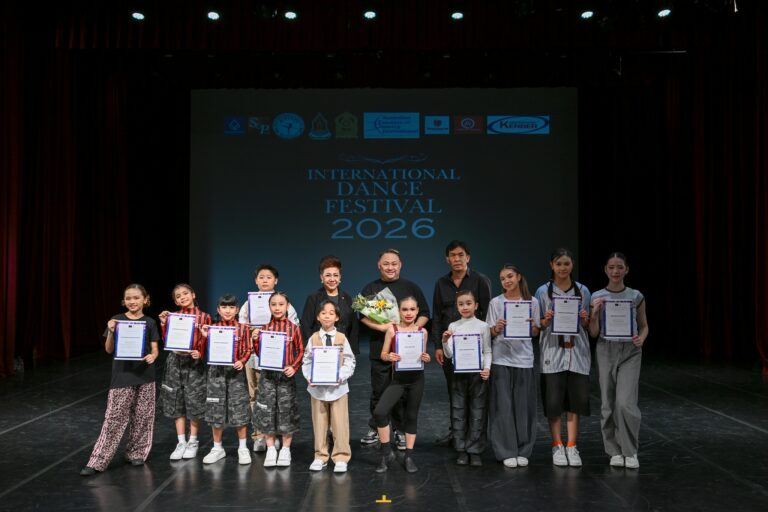
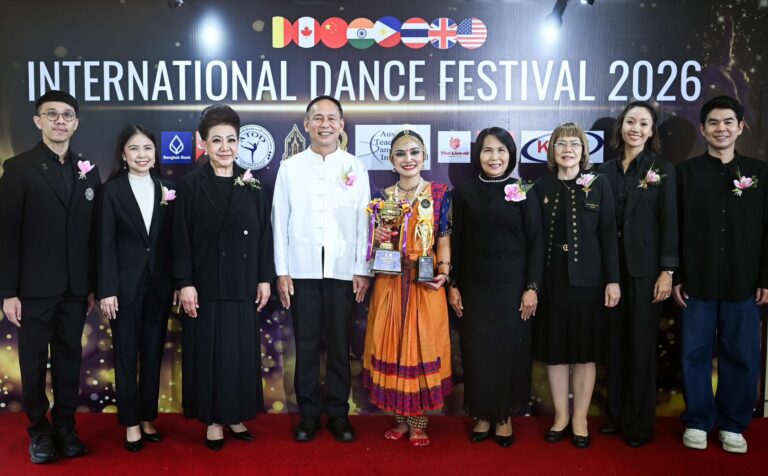
Dance Without Borders: International Dance Festival 2026 Unites Eight Nations in Chiang Mai

Dance Without Borders International Dance Festival 2026 Unites Eight Nations in Chiang Mai

ATOD Children and Youth Development Association Hosts International Dance Festival (IDF) 2026, Positioning Chiang Mai as an International Performing Arts Hub

The ATOD Children and Youth Development Association, in collaboration with the Committee for the Coordination and Promotion of Non-Formal and Informal Education, successfully hosted the International Dance Festival (IDF 2026) on 11–12 July 2026 at the National Theatre, Chiang Mai College of Dramatic Arts, Chiang Mai.

The festival was led by Dr Mom Luang Preeyapun Sridhavat, President of the ATOD Children and Youth Development Association, and brought together a broad network of organisations dedicated to youth development, education and culture. The event was proudly supported by the Ministry of Education, the Ministry of Culture, Australian Teachers of Dancing International (ATODI), Thai Lion Air, S&P Syndicate Public Company Limited, Bangkok Bank Public Company Limited, Kenber Geotechnic (Thailand) Co., Ltd., and Haidilao Thailand.

Together, these partners reaffirmed their shared commitment to promoting dance as a powerful platform for nurturing young talent and showcasing the excellence of Thai youth on the international stage.

The festival welcomed competitors from eight countries, featuring 203 performances from 40 dance institutions. Participants competed across a diverse range of disciplines, including Classical Ballet, Jazz, Contemporary Dance, Contemporary National Dance, and Hip Hop, reflecting the richness and diversity of the global performing arts community.

S 25444431

One of the highlights of the festival was the presentation of two prestigious awards:

  • The Overall Highest Score Trophy, awarded on behalf of H.E. Mr Prasert Jantararuangtong, Minister of Education
  • The Highest Score in Contemporary National Dance Trophy, awarded on behalf of H.E. Ms Sabeeda Thaised, Minister of Culture

The Opening Ceremony was presided over by Mr Boonlue Thamtharanurak, Vice Governor of Chiang Mai Province, and was honoured by the presence of distinguished guests, including Mr Harada Masaru, Consul-General of Japan in Chiang Mai; Dr. Yupin Buakhom, Inspector-General, Minister of Education, Acting Regional Education Officer, Regional Education Office No.15; Mrs Kornwan Summart, Chiang Mai Provincial Cultural Officer; and Dr Wilaiwan Wannachotphawet, Chairperson of the Committee for Coordination and Promotion of Non-Formal Private Education, Chiang Mai Province who jointly presented the awards.

The Highest Overall Score Trophy, presented on behalf of the Minister of Education, was awarded to Miss Chanisara Tharanatham, with Dr Yupin Buakhom presenting the trophy as the Minister’s representative.

The Highest Overall Score in Contemporary National Dance Trophy, presented on behalf of the Minister of Culture, was awarded to Miss Tanaporn Weeradetch, with Mrs Kornwan Summart, Chiang Mai Provincial Cultural Officer, presenting the trophy on behalf of the Minister.

In addition to the competition, participants benefited from educational sessions and professional guidance delivered by an esteemed panel of internationally recognised dance specialists, including:

  • Kru Ommi Nattanaree Pipit-Suksun, one of Thailand’s leading ballet artists and a pioneer in the international ballet community; 
  • Kru Jane Aditep Buanoi, an internationally acclaimed Contemporary Dance specialist; and 
  • Kru Art Asakorn Sirisujarittham, an accomplished choreographer and artistic director with extensive experience across the international performing arts sector. 

These masterclasses provided young dancers with valuable artistic insight, technical expertise and professional inspiration, enriching their learning experience beyond the competition itself.

ครูอาร์ต

The success of International Dance Festival (IDF 2026) reflects the strong collaboration between the public sector, private organisations and educational institutions in harnessing the performing arts as a powerful vehicle for youth development. Through dance, young people are encouraged to cultivate creativity, discipline, confidence, resilience and the skills required to thrive on the global stage.

The festival also represents another significant milestone in positioning Chiang Mai as a leading destination for international performing arts and cultural exchange. By bringing together talented young dancers, distinguished adjudicators and respected organisations from around the world, International Dance Festival 2026 has further strengthened Thailand’s reputation as an emerging centre of excellence for dance education and international artistic collaboration.

Advertisement

Firecracker thrown at Khao Yai elephant sparks outrage

Welfare groups demand inquiry into elephant firecracker case

The Thailand Society for the Prevention of Cruelty to Animals (TSPCA) and the Friends of the Asian Elephant Foundation, together with partner organisations, have called for an investigation into an incident in which a volunteer allegedly threw a firecracker at Plai Salika, a well-known wild elephant at Khao Yai National Park.

The move follows widespread criticism after photos and video of the incident, which occurred on 12 July 2026 near Ban Sarika at the entrance to Sarika Waterfall in Nakhon Nayok province, circulated on social media.

On 20 July 2026, the organisations submitted a letter to the chairman of the Animal Cruelty Prevention and Animal Welfare Committee, who is also the Permanent Secretary of the Ministry of Agriculture and Cooperatives, requesting an official investigation.

The groups urged authorities to establish the facts surrounding the incident and enforce relevant laws where appropriate.

They also called on the government to accelerate amendments to expand legal protections for animals living in the wild under Thailand’s Animal Cruelty Prevention and Animal Welfare Act B.E. 2557 (2014). They said broader protections should cover wildlife that frequently comes into contact with people, as well as other wild animals and imported species vulnerable to cruelty.

Park officials defend operation

Responding to the controversy, Chaiya Huaihongthong, chief of Khao Yai National Park, said the person seen using the pyrotechnic device was a member of the park’s rapid-response team assigned to monitor and drive wild elephants away from communities.

He said the video’s camera angle made the distance between officers and the elephant appear much closer than it actually was, insisting that personnel maintained a safe operating distance throughout the incident.

Chaiya thanked members of the public for raising concerns and said the park would use the incident to improve public communication and clarify operational guidelines.

He added that the park had appointed a committee to conduct a comprehensive fact-finding investigation, with the findings to be made public and used to improve future wildlife management procedures.

Officials say elephant was in musth

Sathaporn Theerawat, head of National Park Management Area 6, said Plai Salika had been regularly driven away from nearby communities, but had entered musth over the past two months, making the elephant more aggressive, less responsive to its surroundings and more likely to confront obstacles.

He said gentler methods that had previously proved effective were no longer sufficient.

According to park officials, Plai Salika had led a herd of more than 20 wild elephants into local durian orchards on the day of the incident, damaging crops and posing a risk to nearby residents.

Because of the urgency of preventing the herd from entering residential areas, officials said they opted to use a handheld pyrotechnic device instead of loud explosive deterrents.

They said the device produced a visual flash without a loud blast, allowing officers to briefly distract the elephant and interrupt its movement without causing hearing damage or physical injury.

The park said it had instructed operational teams and volunteers to review and improve their procedures, while increasing early monitoring of Plai Salika’s movements, conducting daily risk assessments with wildlife experts and working more closely with local communities to reduce food sources that attract elephants out of the forest.

Advertisement

Sin Sod: The Thai wedding tradition that sparks debate over money, marriage and culture

A recent wedding controversy involving a Thai bride and foreign groom has once again brought attention to one of Thailand’s most debated marriage customs: Sin Sod (สินสอด).

Often translated as a “dowry” or “bride price,” Sin Sod requires the groom or his family to provide money, gold or other valuables as part of the marriage ceremony.

To some Thai families, it is a long-standing tradition that shows respect toward the bride’s parents. But to others, the practice raises questions about whether marriage should involve a financial transaction.

A tradition rooted in the past

Historically, Thai society placed strong importance on family relationships. Marriage was not only a union between two people but also an arrangement connecting two families.

hand bride receiving holy water from elders thai culture wedding ceremony

Sin Sod was traditionally seen as compensation for the bride’s upbringing and as proof that the groom was financially capable of supporting a family.

The amount displayed at weddings could also serve as a public symbol of the groom’s social and economic status.

From tradition to controversy

While Sin Sod remains common in many Thai weddings, the practice has become increasingly controversial.

Critics argue that it can create the impression that a woman’s value is measured by money, education, appearance or family background.

Some also question why the bride’s family should receive payment when both partners are entering the marriage as equals.

Others argue that the expectation of large Sin Sod payments can place financial pressure on couples, especially when weddings become competitions over status and wealth.

What happens to the money?

In many cases, Sin Sod is not kept permanently by the bride’s family.

Some families return the money to the couple after the wedding as financial support for their new life together. However, practices vary widely depending on each family’s agreement.

Foreign marriages and misunderstandings

Sin Sod can become especially complicated in marriages between Thai citizens and foreigners.

asian bride caucasian groom have romantic time with thailand dress

Some foreign partners misunderstand the tradition, seeing it as paying money to “buy” a bride. Meanwhile, some Thai families view refusing Sin Sod as a sign of disrespect.

The reality is that expectations differ from family to family. Some Thai families insist on following the tradition, while others choose a symbolic amount or abandon it entirely.

A changing tradition

As Thai society changes, Sin Sod is also being questioned and reinterpreted.

For some, it remains an important cultural ceremony. For others, it represents an outdated practice that does not fit modern ideas of equality in relationships.

The debate surrounding Sin Sod reflects a broader conversation in Thailand about how traditions should evolve — preserving cultural identity while reconsidering customs shaped by older social structures.

Advertisement

Thailand, China agree to launch new 2+2 security dialogue

Thailand, China agree to launch new 2+2 security dialogue

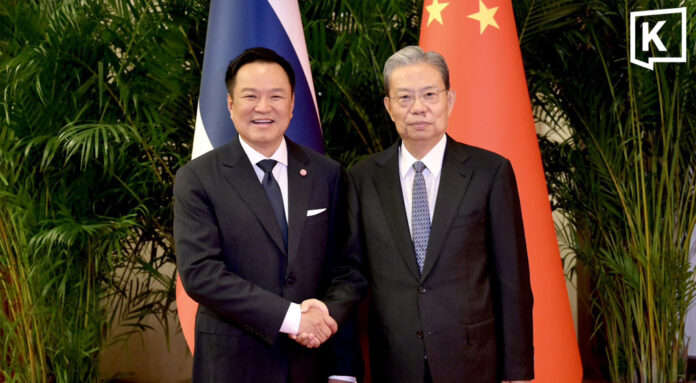
BEIJING — Thailand and China have agreed to establish a new 2+2 security dialogue between their foreign and defence ministers, strengthening cooperation against transnational crime, including call centre scam networks, human trafficking and money laundering.

Deputy Prime Minister and Foreign Minister Sihasak Phuangketkeow announced the agreement on 20 July 2026 during an official visit to China with Prime Minister and Interior Minister Anutin Charnvirakul.

Speaking after talks with Chinese President Xi Jinping, Sihasak said both countries had agreed to establish the new ministerial-level security mechanism to enhance policy coordination and bilateral security cooperation. China has offered to host the inaugural meeting.

Sihasak said Thailand had placed the fight against call centre scam syndicates at the top of the agenda, with both sides agreeing to expand cooperation in law enforcement, anti-human trafficking operations, anti-money laundering efforts and intelligence sharing to combat transnational criminal networks.

He added that tackling scam operations and organised crime would require broader regional cooperation, particularly with Myanmar and Cambodia, to dismantle cross-border criminal networks more effectively.

Sihasak also raised concerns over grey businesses operating in Thailand, urging China to help address the issue.

He stressed that the Thai government welcomes only high-quality, sustainable investment and expects all foreign investors to fully comply with Thai law.

While describing grey businesses as a small proportion of overall Chinese investment in Thailand, Sihasak said illegal activities involving such operators could undermine public confidence and negatively affect Thai public sentiment.

“We want China to take the feelings of the Thai people into consideration,” he said, referring to the impact of illegal business activities on public confidence.

Advertisement

Thai court gives Netiwit suspended jail term for military draft evasion

SAMUT PRAKAN — 20 July 2026, A Thai court on Monday sentenced prominent student activist Netiwit Chotiphatphaisal to six months in prison, suspended for one year, after finding him guilty of evading compulsory military conscription.

The Samut Prakan Provincial Court convicted Netiwit under Sections 27 and 45 of the Military Service Act, which criminalise failure to comply with military conscription requirements.

The court ruled that Netiwit’s challenge to the constitutionality of the Military Service Act could not succeed because the Constitutional Court had previously determined that the law does not violate the constitution.

Judges also rejected his argument that he refused military service on the grounds of religious belief and conscientious objection, ruling that neither constitutes a legal exemption under the Military Service Act.

The court suspended the six-month prison sentence for one year, citing Netiwit’s lack of any previous prison record.

Netiwit was not present when the verdict was delivered. He is currently in the United States after being admitted to Harvard University Divinity School for a postgraduate programme.

Long-running challenge to conscription

The case stems from Netiwit’s refusal to participate in Thailand’s military conscription process, which he has opposed for years on moral and religious grounds.

In 2018, Netiwit reported for the annual military draft in Samut Prakan but publicly declared that he would not submit to conscription, identifying himself as a conscientious objector. At the time, he argued that forcing individuals to serve in the military against their will violated freedom of thought, conscience and religion.

He subsequently sought to challenge the constitutionality of the Military Service Act, arguing that the law failed to accommodate conscientious objectors and discriminated against those whose beliefs prevented them from bearing arms.

His legal team also asked the Constitutional Court to determine whether the provisions of the Military Service Act conflicted with constitutional protections for individual rights and freedoms. However, the Constitutional Court later ruled that the legislation was constitutional, clearing the way for the criminal case to proceed.

What is conscientious objection?

Conscientious objection refers to the refusal to perform military service because of sincerely held religious, ethical or moral beliefs. In many countries, conscientious objectors are allowed to perform alternative civilian service instead of joining the armed forces.

International human rights bodies, including the United Nations Human Rights Committee, have recognised conscientious objection as deriving from the right to freedom of thought, conscience and religion under international human rights law. However, countries differ in how they implement that principle.

Thailand’s Military Service Act does not recognise conscientious objection or religious belief as grounds for exemption from compulsory military service. Legal exemptions are generally limited to categories specified by the law, such as certain medical conditions, educational deferments and other statutory exceptions.

Thailand’s courts have consistently applied the Military Service Act as written, leaving conscientious objectors without a legal exemption. Netiwit’s challenge sought to change that interpretation but was ultimately unsuccessful.

The Samut Prakan court reaffirmed that position on Monday, ruling that conscientious objection has no legal standing under Thailand’s current military conscription system.

A prominent activist

Now 30, Netiwit first gained national attention as a student activist campaigning for education reform and freedom of expression while studying at Chulalongkorn University. He later became known internationally for advocating democratic reforms, civil liberties and changes to Thailand’s military conscription system.

His activism has earned both praise and criticism, making him one of Thailand’s most recognisable student activists over the past decade.

Despite Monday’s conviction, Netiwit will not serve time in prison unless he violates the conditions of the one-year suspension. He is currently pursuing postgraduate studies in the United States after being accepted into Harvard University Divinity School.

Advertisement

Japan to provide patrol boats, equipment to Cambodian military under security aid program

Japan will provide patrol boats and communications equipment to Cambodia’s military under its Official Security Assistance (OSA) program, marking the first time Phnom Penh has received support through the framework.

The agreement was signed on Sunday at Cambodia’s Defence Ministry by Japanese Ambassador to Cambodia Ueno Atsushi and Cambodian Defence Minister Tea Seiha.

The aid package, worth ¥500 million (about US$3 million), includes patrol boats and communication devices aimed at strengthening security cooperation between the two countries.

Japan’s OSA program provides defence equipment and other materials to partner countries that share common security interests. Tokyo has previously supplied coastal surveillance radar systems to the Philippines under the program and agreed to provide disaster response and rescue equipment to Thailand.

Cambodia is also planning to establish a military communications school, with possible cooperation from Japan’s Ground Self-Defense Force.

The agreement comes as Japan seeks to expand security ties with countries in the region amid growing strategic competition in the Indo-Pacific.

Advertisement

Cambodia’s UNCLOS move closes door to land border talks, Thai FM says

BEIJING, China — Thailand’s Deputy Prime Minister and Foreign Minister Sihasak Phuangketkeow said Cambodia’s decision to pursue compulsory conciliation under the United Nations Convention on the Law of the Sea (UNCLOS) has undermined bilateral trust and made negotiations over the two countries’ land border increasingly difficult.

Speaking in Beijing on Monday, Sihasak said Thailand had proposed during a meeting between the two countries’ leaders on the sidelines of the ASEAN Summit in Cebu that all outstanding issues be resolved through bilateral dialogue to build mutual trust.

Instead, he said, Cambodia chose to move forward with compulsory conciliation over maritime boundary disputes rather than engaging in direct talks first.

“At this point, it has effectively closed the door to discussions on the land border. That makes things much more difficult,” Sihasak said.

He noted that UNCLOS provides several dispute-settlement mechanisms, including voluntary conciliation, and said compulsory conciliation should not have been pursued before both sides had exhausted bilateral negotiations.

Sihasak welcomed China’s offer to facilitate dialogue between Thailand and Cambodia if needed, but stressed that border issues should ultimately be resolved directly between the two countries.

“We appreciate China’s goodwill, but this is a matter that Thailand and Cambodia must discuss directly,” he said.

He added that China could play a constructive role by encouraging Cambodia to honor the commitment made in Cebu to resolve disputes through bilateral dialogue while maintaining a neutral position.

Sihasak also said Prime Minister Anutin Charnvirakul had conveyed Thailand’s appreciation to Chinese President Xi Jinping for Beijing’s neutral approach to Thai-Cambodian relations.

However, he expressed concern over Cambodian media coverage of China’s delivery of tanks to Cambodia, saying the reports came at a sensitive time when the ceasefire remains fragile and could further complicate relations between the two neighbors.

On Chinese investment in Thailand, Sihasak said Thailand welcomes quality, sustainable investment that complies with Thai law. While acknowledging that so-called “grey businesses” represent only a small portion of overall Chinese investment, he said such activities have affected public sentiment and urged China to address the issue.

Advertisement

Malaysia hopes to host FIFA World Cup, deputy PM says

Kuala Lumpur, Malaysia

Malaysia hopes to one day host the FIFA World Cup, Deputy Prime Minister Ahmad Zahid Hamidi said, outlining an ambitious vision for the country’s football future.

Speaking at a public viewing of the World Cup final between Argentina and Spain on Sunday, Zahid said he also hoped Malaysia’s national football team would qualify for the tournament and represent Southeast Asia.

“God willing, one day we aspire to make Malaysia a host of the World Cup,” he said.

“Hopefully, by then, the Malaysian team will be among the World Cup participants representing Southeast Asia.”

Malaysia has never hosted the FIFA World Cup or qualified for the men’s tournament. The country’s national team, known as Harimau Malaya, is currently ranked 136th in the latest FIFA men’s world rankings.

Advertisement

Fisherman rescues exhausted monkey found swimming at sea

Fisherman rescues exhausted monkey found swimming at sea

PHUKET — A fisherman has been praised online after rescuing an exhausted monkey found struggling in the sea off Phuket, with the animal believed to have swum more than five kilometres before being brought to safety.

The heartwarming rescue was shared on 19 July 2026 by the Phuket Times Facebook page.

According to the post, the incident occurred at around 09:30 hrs while the fisherman was anchored in waters near Koh Maphrao (Coconut Island).

news148191 3ai0XuAdyu1784477655

He spotted a monkey swimming alone in the open sea and appearing to be close to exhaustion.

The monkey is believed to have entered the water from Koh Siray, a journey of more than 5 kilometres, leaving it fatigued after a prolonged swim.

Realising the animal was struggling, the fisherman carefully manoeuvred his boat alongside it, allowing the monkey to climb aboard before transporting it safely back to shore.

news148191 QYi7bq88Hp1784477656

The story has drawn widespread praise on social media, with many users commending the fisherman for his compassion and quick response.

Many commenters described the rescue as a reminder that every life is precious, while others jokingly suggested the monkey would probably choose a boat instead of attempting another long swim in the future.

news148191 mq3YzVc96p1784477656

Advertisement

Hot News

LATEST NEWS

Bangkok
overcast clouds
28.3 ° C
28.3 °
25.5 °
81 %
3.1kmh
100 %
Thu
27 °
Fri
36 °
Sat
37 °
Sun
31 °
Mon
34 °